Cultures in Comparison

Not surprisingly, I am constantly asked about the differences and similarities between Poland and the United States. Luckily, Tucker and I are observing these every day and absolutely love to talk about them! One of my favorite things about traveling is finding out how different people live; there are so many different ways of thinking, solving problems, and simply surviving everyday life. It’s been amazing to get a more in-depth view of some of the differences between Poland and the United States. In my first post, back in October, I gave my first impressions of Poland and its people, which undoubtedly contained some of the differences that were immediately noticeable. However, we’ve now been here a few more months, and have logged many more observation hours. Here is my list of some notable (and fun) comparisons:

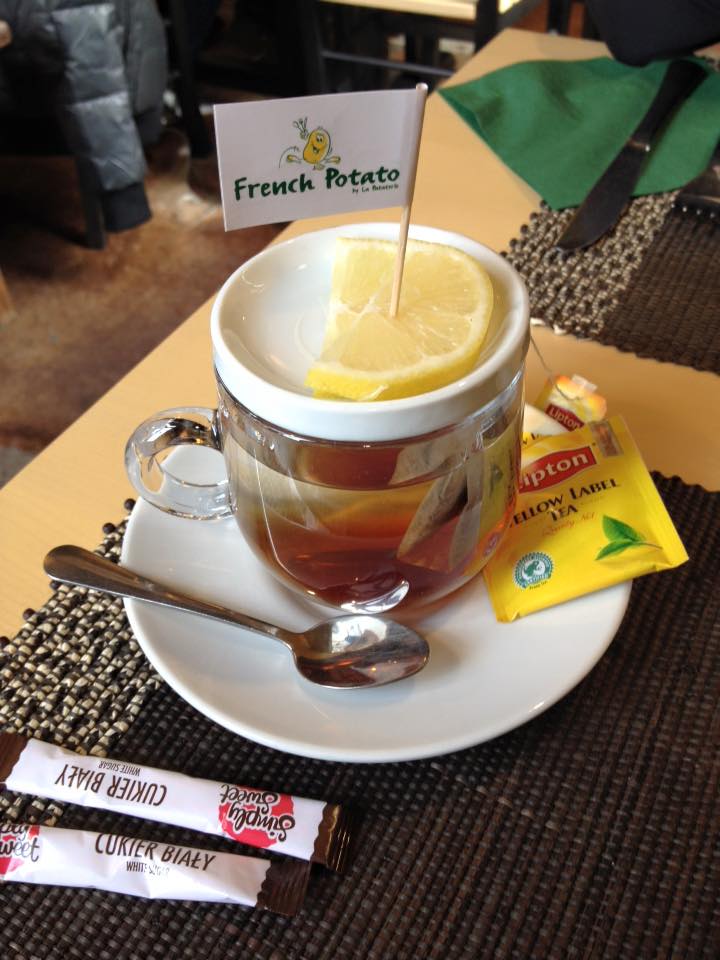
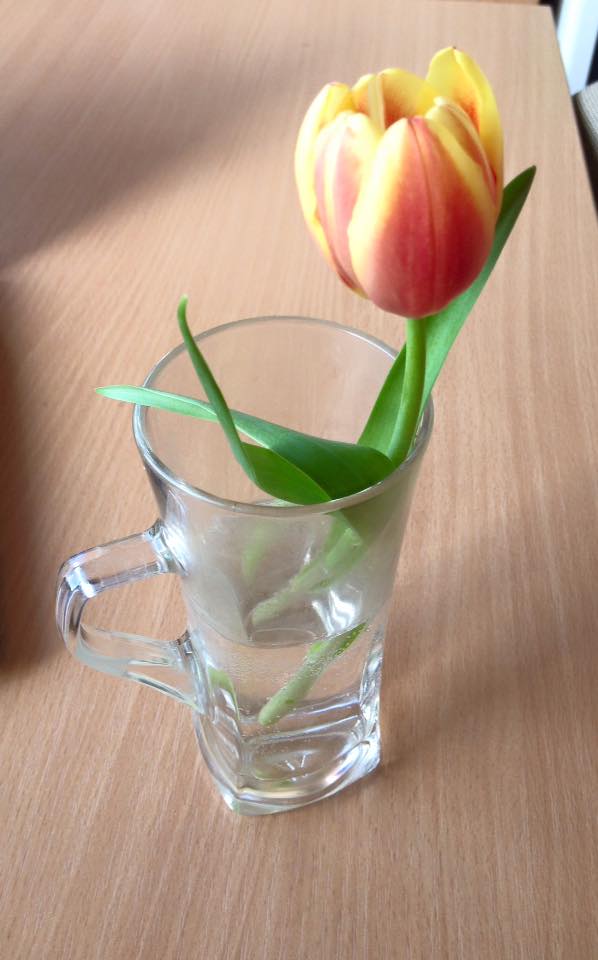
There’s always time for a cup of tea!

Timing, scheduling, and decision-making: There is a Polish proverb that says something like “A ‘must’ is in Russia. In Poland, we do what we want.” I rather like this proverb and feel like it is a good representation of the pace set in Poland. In Lodz the public transportation sort of runs on time, meetings start close to their proposed times, and all necessary decisions are made eventually. The pace is a bit slower (quite literally in fact, we’ve seen several tractors riding on city roads), and procrastination is seen as a natural state of human existence. In my experience here, it has been common to have numerous meetings or email exchanges before a solution or a decision is even close to being presented. Poles like to take their time considering all the options and make absolutely sure everyone gets to have a say in whatever the choice may be. That, and it’s always nice to push the responsibility off on someone else! Another difference would be the mealtimes of Poland. Breakfast is about the same – 7-8am (maybe a little earlier because the Polish working hours are a bit ahead of the US standard 9-5). However, lunch or “obiad” is not until around 3-5pm. To me, that’s a little too much like dinner, which in Poland is much later – around 8-9pm. This difference has often resulted in Tucker and I dining in empty restaurants simply because we go to lunch at noon and dinner around 6pm. But if you are wondering how Poles possibly make it from 7am to 4pm without any food, it should be mentioned that they regularly partake in second breakfast “drugie śniadanie”, which I think the US needs to adopt right away.

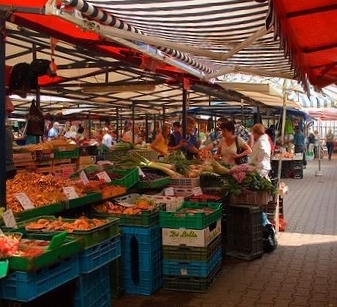
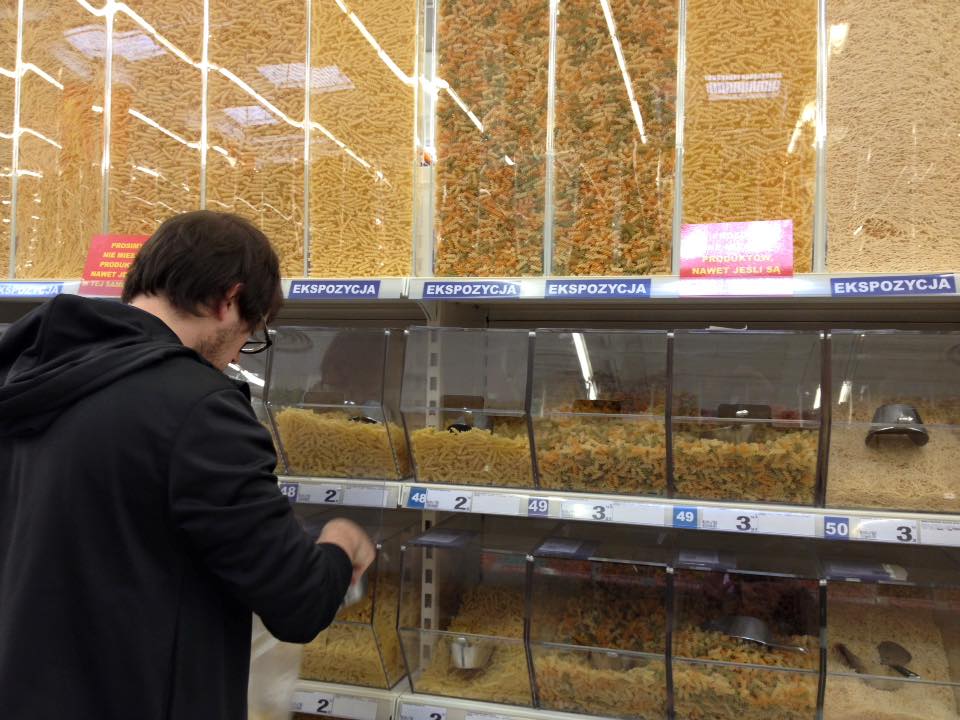
Look at that variety though!

Food, cooking, and ingredients: The food in Poland is delicious. Restaurants are plentiful, groceries are fresh, and everything is cheap (compared to the US). However, if you aren’t going out, then you have some work to do. Poles typically prefer to make their own everything: salad dressing, soups, desserts, wine, you name it. And while this is extremely cost effective and probably tastier, it is also time-consuming and very different from my ready-made/instant meal life. I intensely miss macaroni and cheese from a box, pre-made Caesar dressing, and cans of soup (particularly Campbell’s). In Poland, some popular foods to eat at home are sausage, ham, bread, dumplings, pickles, coleslaw, sauerkraut, and apples. Especially, apples. Poland is one of the world’s largest apple producers. In fact, quite a bit of the produce you can buy in groceries stores here is grown locally – that’s why it is so fresh and cheap! It’s also generally healthier than what we buy in the US. Poles pride themselves on the simpleness of their products. They like the fact that their bread only has three ingredients total, as opposed to the many preservatives American companies add. Although I will say that without those preservatives (and because of our tiny refrigerator), we are having to shop for groceries much more frequently than we ever did back home – about every 4 days.

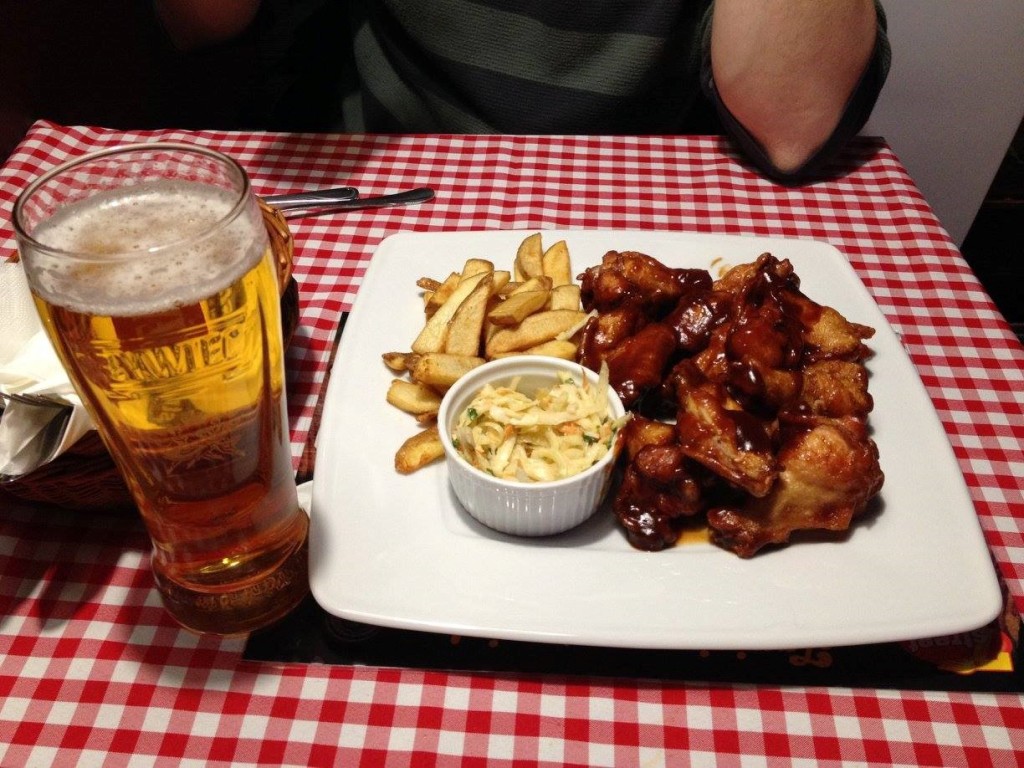
Oh yeah, beer is also typically cheaper than water at restaurants!
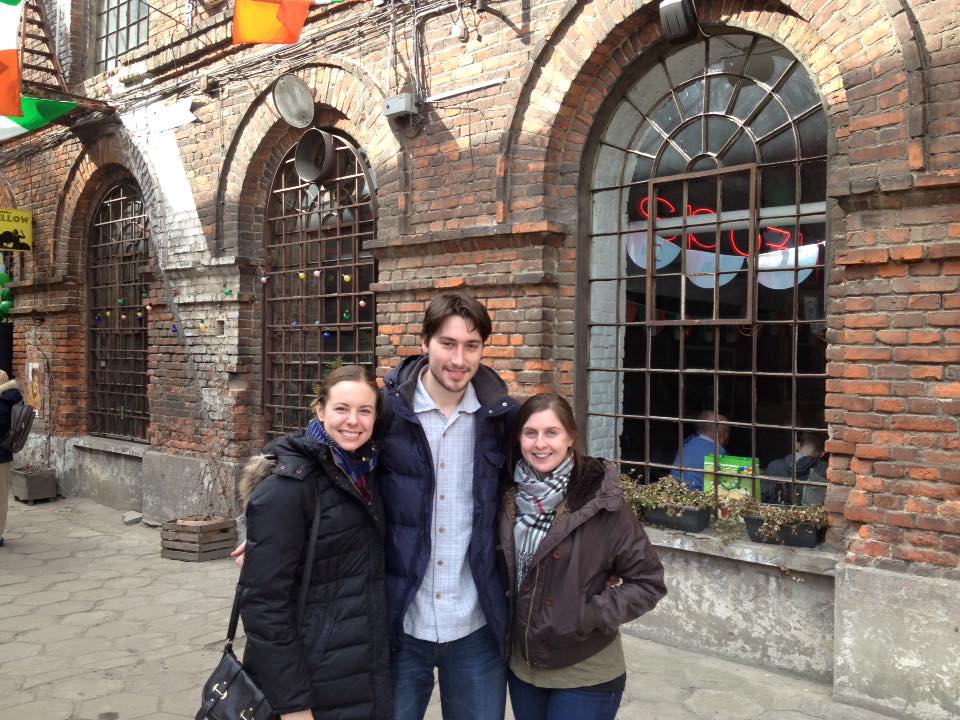
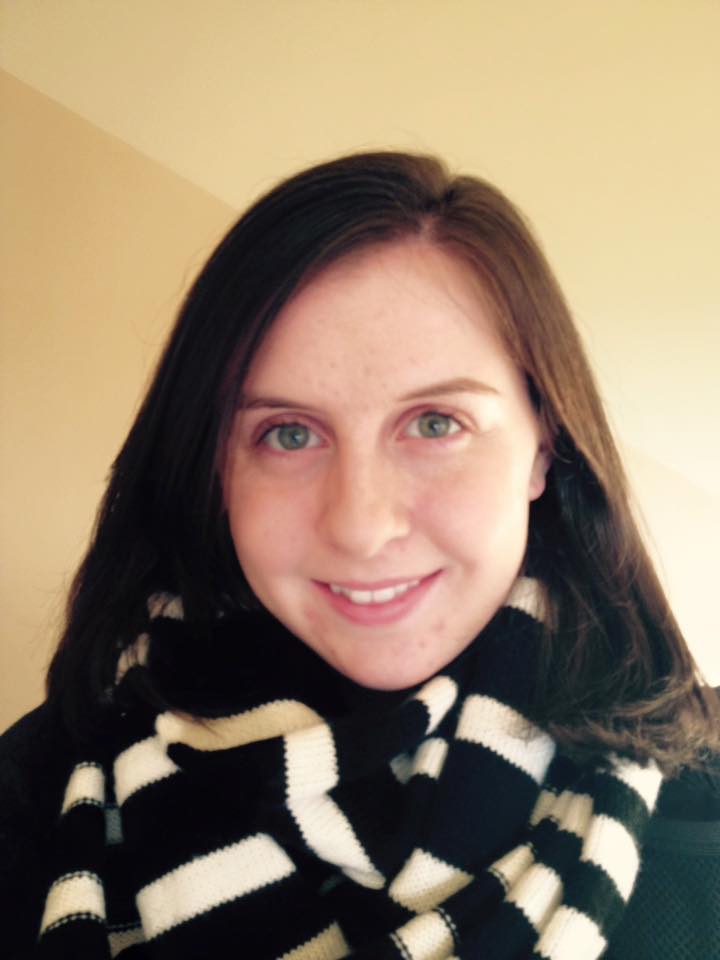
Blending right in!

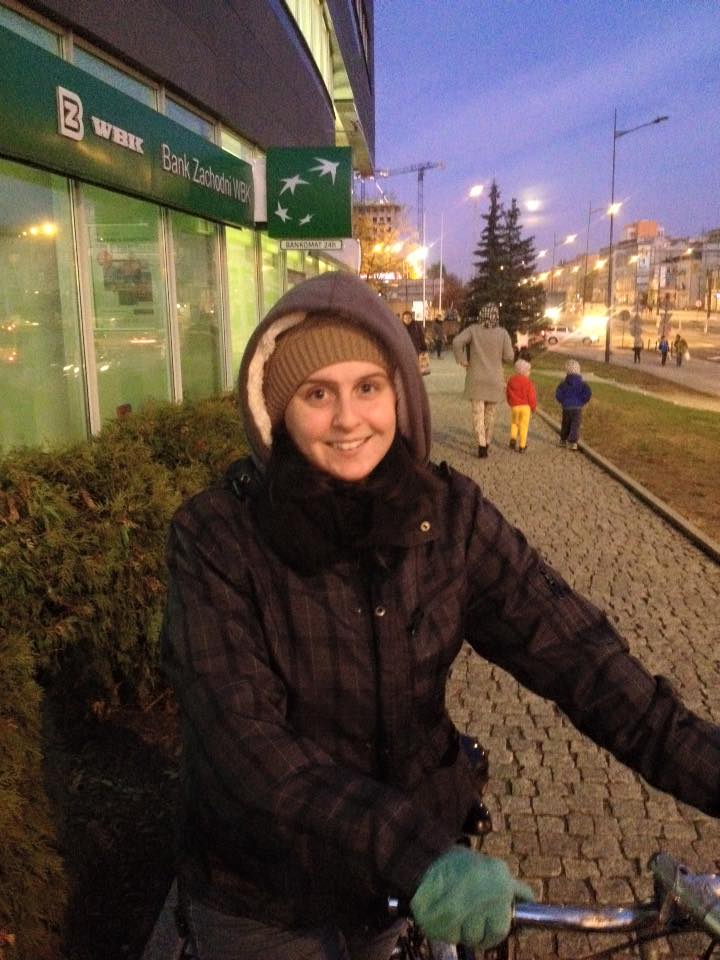
Weather and dressing for winter: Right now, it is pretty darn cold in Poland, and we have (quite regularly) been getting significant amounts of snow. I thought I was prepared for this. Obviously places in the US deal with these winter-y things as well, but coming from Atlanta, we are experiencing some differences. For one, winter tires exist, and if you don’t have them, you are a nuisance. We (thankfully) use public transportation, but I have heard Poles on numerous occasions complaining about people who are driving on summer tires! Idiots! (Their words, not mine). Another difference is the amount of time it takes me to enter or exit a building. I generally wear a jacket, a sweatshirt, a scarf, a hat, and gloves, which I feel is quite normal for the current weather conditions outside, but absolutely unbearable inside, right? Not really. In Poland, I find that I am one of the only ones who walks indoors and must immediately shed my many layers. Here, I see people shopping in their coats, sitting in class in their coats, etc. and somehow, they don’t sweat to death! Side note – if you can’t constantly wear your coat or don’t want to struggle as I do, juggling all my outerwear in my hands, every building comes equipped with a coat check. It feels a little like going to a gala or something because you walk in, they take your coat, and give you a ticket – every day. Pretty fancy. The last difference I’ll mention here is the scarf style of Poland. In the US and Norway my scarves totally fit in. They are not too bulky, nor very long, but they cover my neck and keep me warm. In Poland, people wear scarves that could function as blankets.

People – names, attitudes, and diversity: In Poland, names, in general, are quite long. For example, we live off a street called Piłsudskiego and most of my students have last names like Wojciechowski or Gruszczyńska (not to mention the infamous Brzęczyszczykiewicz). Eventually, you hear the names enough times and can imitate them pretty well, but I’ll admit to practicing in my head prior to having to use them. Another interesting name difference in Poland is that there are rarely repeated surnames. Out of my 85+ students I only have one duplicate. However, the first names here are much less diverse – I swear, there are like 9 Martas in my classes. In an earlier post I described Poles as being hardworking and hospitable, and to me these still hold true. However, now I would probably add pessimistic to the list. Poles complain a lot and generally have a bleak outlook on life. This is sort of good news for me because I feel right at home and can now use the excuse “it’s in my blood” whenever anyone calls me on it. Although I must say, sometimes, I feel really American when I catch myself smiling at a stranger. Awkward. Lastly, a word on diversity in Poland: there isn’t much. Luke (another Fulbrighter), Tucker, and I had an amusing conversation once when someone asked about “black eyes”, which was heard as “black guys”. After which, it was decided that black eyes were indeed more common than black guys in Poland. There are definitely some international students at the university, but overall Poland is very white.

The bill usually comes in a cute little box!

Language and speaking: As a linguist, I know all languages are roughly equal in difficulty – some have super complex tense systems, others have difficult/irregular pronunciation, etc. However, as a learner, Polish seems impossible to master! Even Poles feel sorry for me trying to learn the complex case system, three genders, and ridiculous pronunciation. I could really go on for days about the differences in English and Polish grammar, but I know many people would be a little bored with those comparisons. However, some of the most adorable language-related differences are actually vocabulary-based. For example, “capital letters” are called “duże litery”, which literally means “big letters”, and I can’t help but feel like a 5-year-old when asking if I should use a big letter or a little letter. Another cute difference is when you are asked to enter your PIN at a restaurant to pay by card (yes, they always come to the table with the card-reader, and yes, you absolutely have to ask for the check or it will never come), the server will ask you to put in the number and press “the green”. This refers to the green enter button and is adorable! Another larger language difference has to do with the aforementioned case system. Because of the cases, the ends of words in Polish are particularly important, and thus are never shortened or trailed off. This is something I’ve noticed Tucker and I do when we speak (a very prominent feature of American English), which sometimes results in misunderstandings with Poles.

Okay, so I could probably go on to write a book on this subject, but since this is just a monthly blog post, here is a quick list of some smaller differences that we have come across:

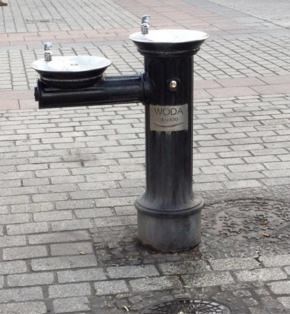
A rare sight indeed!

Poles prefer square pillows on their beds. In general, the population has very neat handwriting. Movie theaters have assigned seats. Juice is an acceptable and common drink for dinner, although drinks (in general) with meals are very small. Poles typically avoid using cooking spray and clothes dryers. Many Poles say “goodbye” to the strangers they leave in a train compartment or an elevator. Folders here do not have traditional pockets, but instead have three flaps on one side and an elastic band to keep it closed. Notebooks all use graph paper and are about half the size of an 8 x 11.5 sheet. Almost every female name in Poland ends with the letter “a”. Kebabs are one of the most popular types of fast food here. Discussing political views is a great way to start a conversation. Minimum wage is the equivalent of $3.20/hour. Poles do not like/trust their tap water; therefore, water fountains are almost non-existent. Ibuprofen comes in packs of 12 or smaller. Whole rabbits can be bought from the deli at many grocery stores. And dogs are not forbidden from entering every shop/store.

Of course, I realize (and I hope it is apparent to everyone) that I still have a quite limited realm of experience. Everything I mentioned here is based off of what Tucker and I have seen around us in public places such as restaurants, movie theaters, public transportation, the university where I work, etc. – all in all, a very small scope of Polish culture. This is also absolutely seen and written from my personal perspective, which is not always (or even often) the same as others. While I like to highlight the differences and poke fun here and there, I really think the differences are the best part of cultural exchanges. They allow us to see things from a new perspective, and often also shed light on the enormous amount of similarities we, as humans, all share. I hope you enjoyed my post! Thanks for reading!

Christmastime in Poland

Tucker and I have now been in Poland for over three months, and one of my favorite things about being here long-term is getting to see how people in Poland celebrate the holidays! We’ve been through several Polish-exclusive holidays (like All Saint’s Day, Andrzejki, etc.) and shared our American customs for holidays like Thanksgiving, but Christmas is the first holiday that both countries have in common, and it’s a big one. We had read and heard about many Polish Christmas traditions, but experiencing them was so much better! I didn’t take near enough photos, but here is my written description of our Polish Christmas:

Mikolajki – The Christmas season in Poland, much like in the US, lasts more than just a few days. We started seeing Christmas decorations in mid-November – there’s no Thanksgiving here, so no one fights over when to start decorating! There are also a few extra days of Christmas-related celebrations, such as Mikolaijki. Mikolaijki (or Saint Nickolas’ Day) is associated with Santa and seems to be mainly celebrated with children in school. Typically games are played, songs are sung, and children receive gifts of candy or sweets. As an adult, it doesn’t mean quite as much as we all still had to go to work, but it’s certainly a fun way to begin the holiday season.

Wigilia – Next is Wigilia (or Christmas Eve), which is the main day of Polish celebrations. Most people work half-days on Christmas Eve, and celebrate with their families in the evening and for the next few days. There are many articles, videos, etc. describing some of the customs Polish families observe on this evening, but it really differs from family to family. Some traditions include starting the evening meal after the first star can be seen, putting hay under the tablecloth, and always leaving an empty chair at the table for an unexpected guest. These particular traditions were ones we read about, but the families we celebrated with this year, didn’t observe them. Perhaps they are a little antiquated, like caroling in the US – we talk about it, but I’ve never seen it.

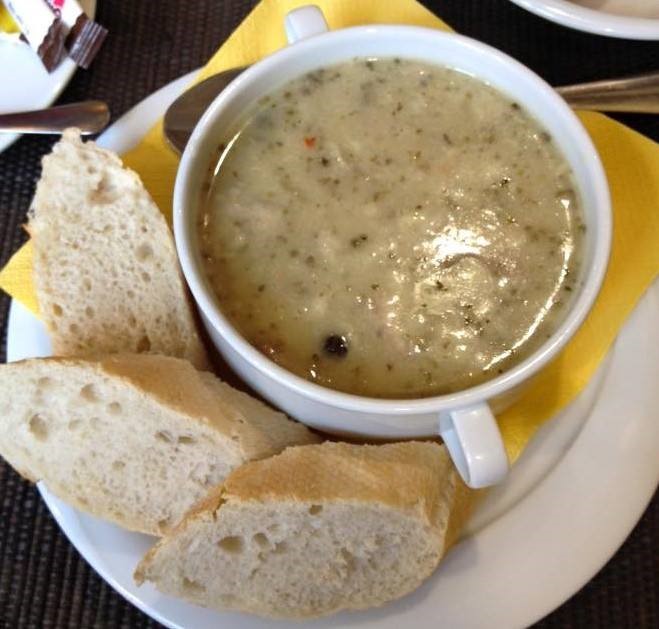
For our Wigilia, we were invited by our friend, Mateusz (who is also our Polish teacher) to his family’s house in Łask, Poland. Łask is a small town about 30 minutes outside Łódź, which allowed us to experience not only a Polish Christmas, but also Polish life outside the city. When we arrived, we were joined by Mateusz’s mom, brother, and brother’s girlfriend. The six of us then sat down for a truly amazing homemade Polish meal. There are typically 12 dishes served for Wigilia, and they usually only appear on Polish tables once a year. We had mushroom soup, cabbage pierogies with mushroom sauce, carp, cod, Greek fish, herring in a milk broth with potatoes, barscht, and I (alone) was also given a croquette (since I’m not a big ryby-eater). Traditionally, there is no meat served on Christmas Eve – fish obviously doesn’t count. To drink we had homemade wine, dried fruit compote, eggnog (made by Tucker), and ajerkoniak (Poland’s much stronger version of eggnog). For dessert there was sernik (cheesecake), szarlotka (apple pie), makowiec (poppy seed cake roll), and a very delicious cream/custard cake.

The food was delicious and unlike anything we had had before, but most exciting was the company. We got to use our very minimal Polish (plus our brilliant translator, Mateusz) to talk about food, family, and the differences between life in the US and Poland. We were also able to experience the feeling of family while we were there: everyone helping to clear the table, laughing and poking fun at each other, etc . It was very fun for us to see how Polish family members interact. Perhaps not so shockingly, it’s very much like in the US (and I suspect in most families worldwide). After dinner and conversation, we walked around the city of Łask listening to stories about the town’s history and asking a variety of Poland-related questions. Eventually, it was time to go home and open up our presents! In Poland, presents are opened on Christmas Eve, so in an effort to be both Polish and American, Tucker and I opened our gifts just after midnight (technically on the 25th).

Boże Narodzenie – Christmas day in Poland is similar to the day after Christmas in the US: more food and more family! Tucker and I decided to be very American and have steak for breakfast, but later in the day we headed over to my friend (and colleague) Weronika’s apartment for Christmas dinner. Weronika and her family welcomed us on the stairs and we, again, immediately felt like part of the family. We had amazing conversations ranging from German vocabulary to movies of the seventies, played games in English and Polish, and, of course, ate more than seems possible. For dinner we had mushroom soup, beetroot and herring, a variety of dips and sauces (many of which I forgot to ask the names of), bread with butter, and bigos (a sort of cabbage and meat stew). Everything, very typical in Poland, was again homemade: even the cakes and pierniczki (gingerbread cookies) we had for dessert. It’s really getting difficult to defend our lazy American habits! Sadly, after the wine and cookies, we had to say “dobranoc” and head back home to our empty apartment. Christmas is a difficult time to be away from family, but our incredibly generous Polish friends made sure that not only did we learn about how they celebrate the holidays, but that we felt like we were a part of them. Tucker and I are so thankful for the people we have met here in Poland and can’t wait for them to visit us in the US (or wherever we are) in the future!

Ultimately, Tucker and I had an amazing Polish Christmas, and we’re looking forward to the Nowy Rok and all the other upcoming holidays! I hope you enjoyed reading about our experience this Christmas, and I wish I could share every detail. But for now: Wesołych Świąt i Szczęśliwego Nowego Roku!

Merry Christmas!

What Am I Doing Here?

I’ve been living in Poland for two months now, and I still can’t believe how lucky I am! I will be forever grateful to Fulbright, to the University of Łódź, and to each and every person who helped make this dream a reality (which come to think of it, is quite a lot of people). To most of you reading this, it isn’t surprising that I’m loving every second of living abroad. Many of you have heard me ramble on about the places I’ve been and the places I’d like to go, or maybe we’ve traveled together and you’ve seen my excitement firsthand. Or maybe you’ve had classes with me, where I incessantly and passionately discuss every topic within the realm of language and culture. It’s fairly obvious that I’m in my element just being in a foreign country, but what exactly am I doing with my time spent over here? And why did I choose Poland as my second country of residence? These are just a few questions that I’m asked on a regular basis, so I thought I’d take some time to explain what led me here and what exactly I’ll be doing for the next year.

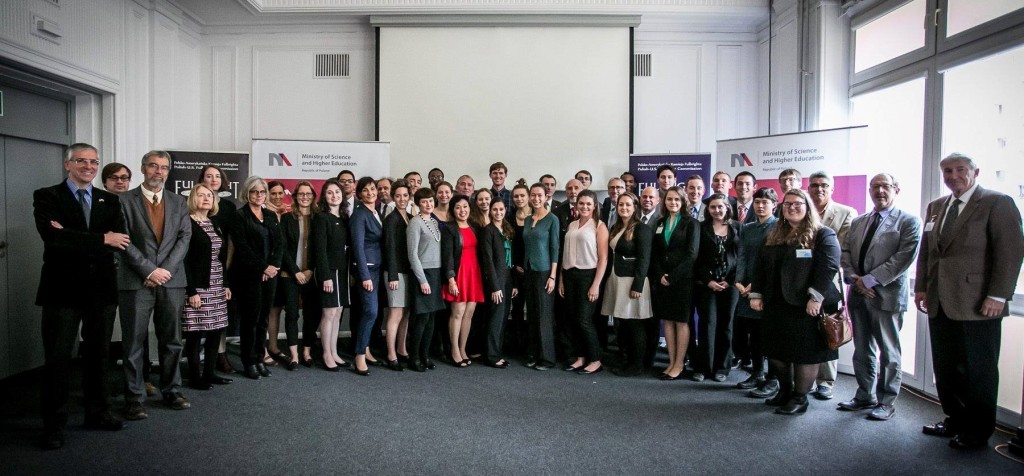
As many people already know, I am in Poland on a Fulbright grant. What many people might not know is that Fulbright is an amazing program that promotes international exchange by selecting students, teachers, scholars, professionals, researchers, and artists to share their talents and establish mutual understanding between their home and host countries. Fulbright Grantees include some of the most brilliant and ambitious individuals I have ever met, and I am extremely thankful to be a part of this prestigious family.

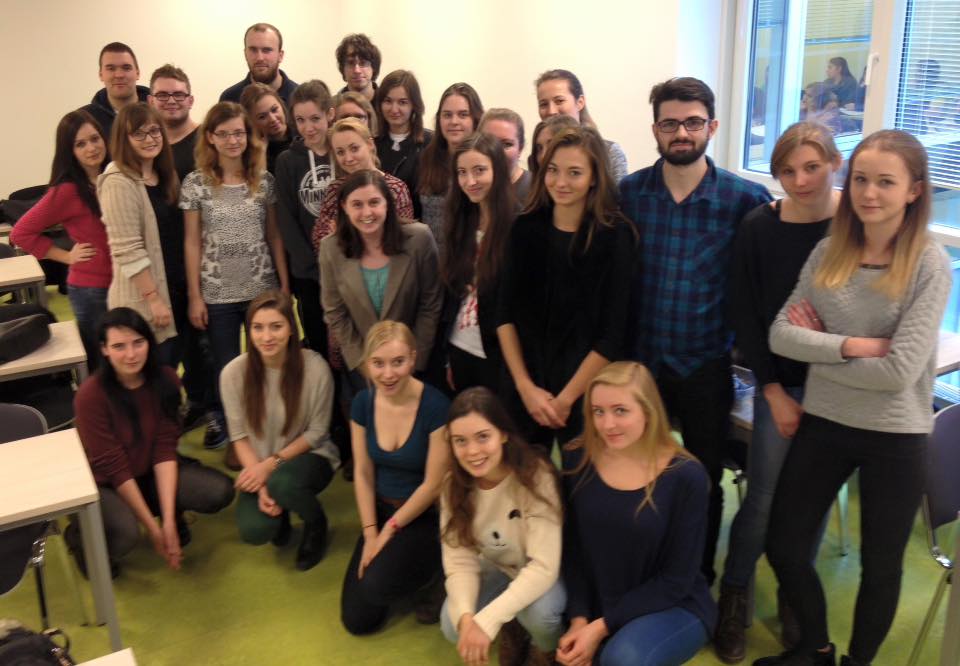
My role within Fulbright is that of an English teacher, thus most of my time is allocated to the teaching of Philology majors at the University of Łódź. I teach four classes in total: two sessions of Integrated Skills to BA students in their final year of study, and Academic Writing to first year MAs and last year BAs. My students fall into the Philology department, but are divided into different specializations including Linguistics, Methodology, Translation, and Literature. The majority are from Poland, but several are from other European countries and a few from as far away as Colombia. I love getting to know my students, and I am thankful for their positivity and support while I continue to navigate the challenges of teaching in a completely unfamiliar system.

University of Łódź

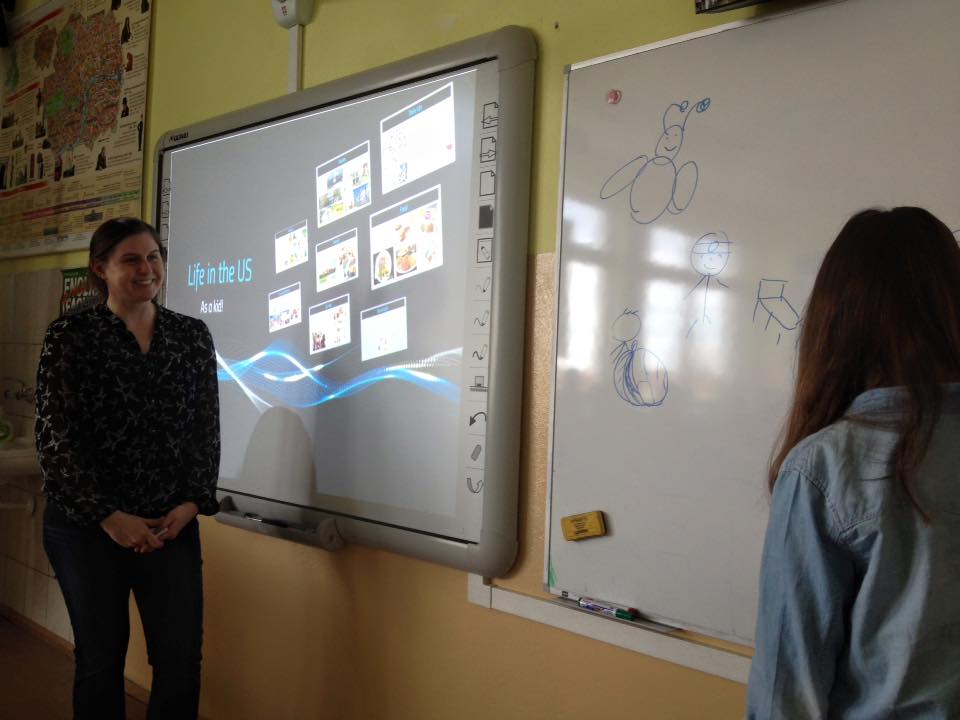
While my paying job is at the university, I am also here as a representative of Fulbright and of the United States; therefore, I spend a good amount of time volunteering in the community. Most of my volunteering thus far has been within public education – I am a teacher after all! So far I have been able to visit two inner city primary schools in Łódź to talk about US holidays and customs, play games, sing songs, and just be a part of the kids’/teachers’ day. I have also been helping out in the American Corner in Łódź, which is a resource center created by a partnership between the university and the Public Affairs section of the US embassy. In the American Corner I help lead a conversation club each week, where we discuss a variety of topics and subsequently keep our English language skills sharp. I also give presentations on topics related to the United States and the English language, which have allowed me to share my culture and experiences while gleaning information about Poland’s perception of such subjects.

During this time in Poland, Fulbright also gives us time and resources to conduct research. At first, my mind was spinning with all the possibilities, but after many long, thoughtful hours on public transportation, I have decided to research grammatical gender in language and its effect on gender roles and societal perception. I would like to take both a quantitative and qualitative approach with this project: quantitatively measuring grammatical gender in a language and qualitatively assessing the effects through interviews and observations. Obviously I will begin with Polish, which is highly gendered and eventually move on to a moderately gendered language and finally a gender neutral language. I’m hoping to see a correlation between the amount of gender in a language and the fluidity of gender roles and perceptions.

Another goal of mine (partially research-driven) is to learn as much Polish as is possible. I absolutely love the language and am lucky to not only have Polish classes every week, but to also be fully immersed in the culture. It can’t get any better than this! I do have to admit, however, that while the Polish language is a linguist’s dream, it seems to be a learner’s nightmare. Seven grammatical cases, three genders, a multitude of consonant clusters, many conjugation exceptions, and the list goes on. To give you a taste of what I’m working with, here is a list of the 17 grammatical versions of the number “2”: dwa, dwie, dwoje, dwóch (or dwu), dwaj, dwiema, dwom (or dwóm), dwoma, dwojga, dwojgu, dwojgiem, dwójka, dwójki, dwójkę, dwójką, dwójce, i dwójko. Who wants to learn Polish with me?!

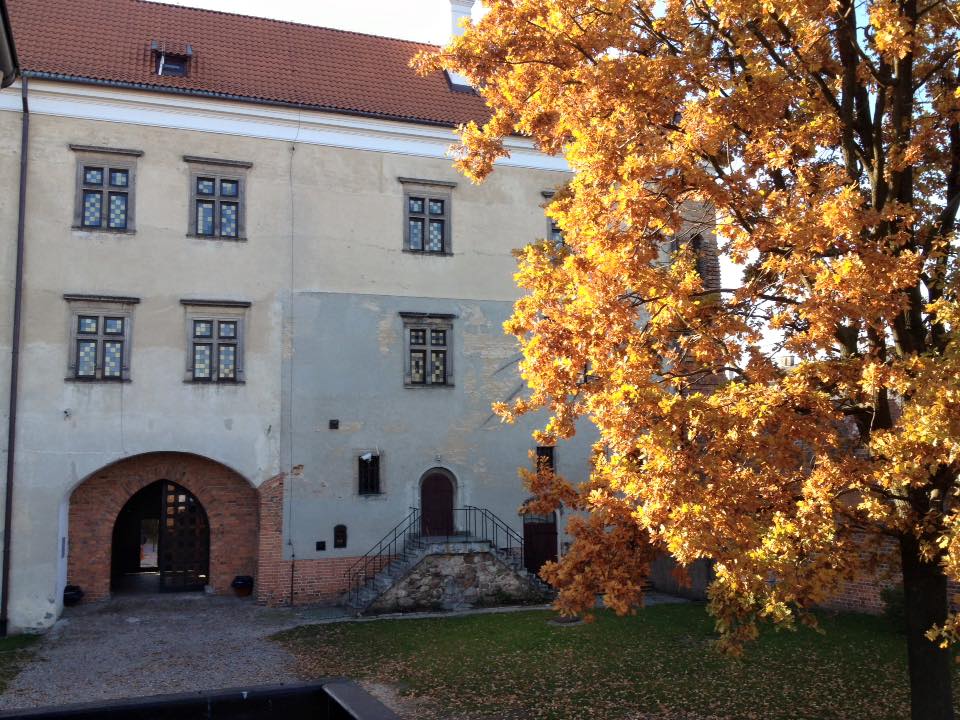
Last, but not least on my to-do list is travel. I’m living in Europe! How could I not take advantage of this amazing location? While I’m here, I am hoping to see as much of this continent as I can; however, I am starting with Poland. I chose to apply for a Fulbright grant in Poland for several reasons: my heritage, my love of Slavic languages, its location in the heart of Europe, etc. Everyday I’m here my connection to Poland is increasing; I want to get to know this country and these people as well as I can. To me, that means spending time as they spend time and getting to know the places they know. I am lucky enough to have gone through this process in the United States, and I feel like it gave me a great view of my country and the people who live there. Now I’d like to repeat the process in Poland. So far we’ve visited Warszawa, Łódź, Łęczyca, Kraków, Gdańsk, and Sopot, but there are many more cities on our list!

Łęczyca

Well, that was probably more detail than anyone (except my family) would have wanted! If you’re still reading and have any questions, I’d love to answer them. It’s difficult to share absolutely everything I’m doing over here, but I’m happy to try. Fulbright is a program of international exchange. Half of my job is sharing my experiences with the people I meet in Poland, but the other half is sharing them with you!

Dziękuję za przeczytanie!

My First Impressions of Poland and its People

I really should have written something about my expectations of Poland prior to our arrival, but alas I did not have that foresight. What I can share is that I did not expect what we have seen/experienced thus far. Maybe my prior experiences in Europe shaped my preconceptions, but I learned very quickly that Poland is not like anywhere else I have been. When traveling, it is impossible for me not to make comparisons. Comparisons to the life I know in the United States, comparisons to my time abroad in other countries, and comparisons to what I have been told about the destination. To me these comparisons are extremely interesting and informative. They always show new ways of thinking and living, but they also shed light on how I view myself and the world, which is why travel and intercultural communication is so awesome! Many of us already know all of this, but some people might not have ever had feelings or experiences like this, so despite my aversion to 1) creative writing, 2) using technology more than absolutely necessary, and 3) sharing personal details about myself online, I have decided to write and share this blog-like thing about my time living and teaching in Poland.

So, Poland. What do people think of when they think of Poland? I thought of long, cold winters, colorful traditional dresses, accordions, vodka, potatoes, and my dad’s family. And maybe those things are associated with Poland (and other places), but what I realize now is that I had a very superficial understanding of Poland. I knew where it was on a map, and I knew a little of its history, but I did not take much time thinking about how those things would translate into a culture. You may or may not be surprised to learn that Poland highly values security and order. They seem to obey even the most trivial (to me) of rules. For example: jaywalking. We’ve been here 24 days and have yet to see someone walk across a street without getting the OK sign from the little green man. Even when it’s snowing and there are no cars in sight, everyone patiently waits for the crossing symbol. I’ve never seen anything like it! But it completely makes sense when you think about their history. Security and safety are relatively new concepts here, and the people respect that. We now do, too.

Another virtue I have seen in the people of Poland is hospitality. This surprised me because in other European countries I have noticed a certain value placed on independence. Sort of a keep-to-yourself-and-don’t-bother-anyone vibe. But in Poland, we’ve had several people ask us for directions or just start up a conversation on the sidewalk (both in Polish and English). We’ve seen strangers chatting and joking while waiting for a bus, and on the day we arrived (with our 5 suitcases and 2 carry-ons) we had people at every turn offering to help us get up the stairs or on the train. The hospitality here is also shown in their attitudes towards foreign languages. Last week I witnessed the tech-person at the University correctly observe that I “feel bad” when I have to use English in Poland. He was right, and he went on, “You feel that way because in your country everyone is expected to speak the native language, but we do not feel that way here.” I was blown away with how concisely and accurately he summed up my feelings, and with how quickly he diminished my angst. Poles really try to make everyone feel comfortable, and for someone who rarely feels comfortable around people, I’m amazed with their success.

There really are so many things I could say about Poland, and so many stories I could tell (and we’ve not even been here a full month!). I will do my best to share some of my experiences, thoughts, and reflections with you in this form, but, of course, I will also be continuously posting things on Facebook and in the captions of my many photos. Please, ask questions if you’ve got them, and I would love to hear what you think about what I’ve shared. Until next time, Do widzenia!