
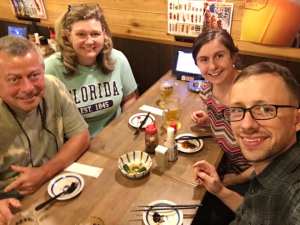
Japan was absolutely amazing! This summer, we spent over three weeks there, traveling from Tokyo to Kyoto, Nara, and Osaka, up to Hokkaido (Otaru, Kutchan, and Sapporo), and back down to Tokyo and Fuji – shout out to the JR Rail Pass for all that travel! During our trip, there were so many interesting tidbits that I wanted to share, but I think what I most want everyone to know about Japan is how incredibly unique and delicious the food is! As a non-seafood eater, my expectations going in were a little low. Prior to our trip, when I thought about Japanese food, I thought of things like sushi, tempura-fried shrimp, and wriggling octopus tentacles…so I was a little afraid that I’d be spending the three weeks eating chicken teriyaki while everyone else sampled the bounty from the sea. However, after only a few days, I began to realize that the Japanese cuisine in my mind was seriously off the mark. Here are some of the abundant, delicious, not-so-seafood-in-your-face meals we enjoyed on our latest trip:

Omurice – As you might have guessed, omurice is a combination of the words “omelet” and “rice”, and that’s exactly what this dish consists of. Fried rice wrapped in a fluffy omelet covered in sauce. What’s not to love about that?! The original version is covered in ketchup, but in many restaurants, they’ll have demi-glace or cream sauce instead – the ultimate comfort food.
Katsu – Pork katsu is a Japanese dish I had heard of but didn’t really try until moving to China (where it became one of my favorites at a nearby Japanese chain). In Japan though, it was easily ten times better! Crispy breaded and fried pork cutlet served with rice and a crisp cabbage salad – so good! Plus, of course, Tucker loved all the dipping sauce options. In addition to the traditional katsu dishes, we also loved the katsu sandwiches that often came in the ekiben (boxed meals sold on the go). These were great for train rides and baseball games, and although they look quite simple, the sauce is so delicious!


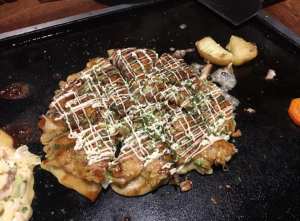
All that Yaki – Yaki means “grilled” in Japanese, and there are a lot of variations beyond the teppanyaki that we know in the States. Okonomiyaki, yakiniku, and yakitori were probably my three favorites (although the takoyaki “grilled octopus” might have been the most popular). Okonomiyaki roughly translates to something like “everything you like grilled”. Basically, you choose all your favorite ingredients and fry them up in a thick pancake/hashbrown thing on a griddle that’s set into the table in front of you. Think Waffle House meets Hibachi – truly a one of a kind combination! Yakiniku is more like what I always call Korean BBQ. Lots of meats and veggies all grilled to perfection right at your table! Yakitori (or grilled skewers), on the other hand, don’t require any table-side cooking. Typically the skewers are ordered in sets and come covered in the most delicious sauces. Chicken is the most popular yakitori, but we also had beef, quail eggs, okra, mushrooms, etc.


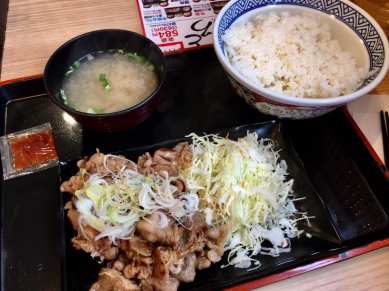
Gyudon – Gyudon means “beef bowl” in Japanese, and while it is incredibly simple, it might be my favorite thing I ate while in Japan. A pile of beef and onions simmered in soy sauce, mirin, and dashi sitting atop a mound of sticky white rice served with fresh cabbage: as a lover of plain, simple foods, I was in heaven! I stumbled into this dish when we first ate at Yoshinoya, a Japanese fast food chain, after which I subsequently ordered it three times at various restaurants and eateries!
Karaage – Karaage is a Japanese-style fried chicken that pretty much blew my mind. Unlike the fried chicken I know, which really only comes in two flavors: spicy and regular, karaage has a plethora of options. Some of my favorites included soy sauce, ginger, and spicy garlic. And the absolute best part? No bones! A popular spot to enjoy karaage is at a local izakaya, or Japanese pub. Cheap beer paired with fried chicken, always a great combination!


Curry – Tucker and I love curry. Thai curries, Indian curries, homemade curries: we eat them fairly often, but we had definitely never had Japanese curry before. It’s usually dark brown and served with either chicken or pork katsu, and although it looks similar to other curries, it’s really quite a bit different. Japanese curry is much sweeter and thicker than the typical renditions, and aside from the katsu addition, it also occasionally comes with a hard boiled egg.

Ramen – Ah, my favorite type of men…ramen! Before our trip, this is one of the dishes Tucker and I were most excited about. We really love ramen in all its forms abroad, so surely in Japan it would be amazing! Well, I’m happy to say that it absolutely was! All the bowls we had were massive, and the broth was literally worth slurping out of the bowl. I was surprised with how many variations of ramen there are though, from a more traditional soy sauce base to the sweet corn miso broth famous in Sapporo – they were all delicious!
Sushi – Of course I can’t write about eating in Japan without mentioning sushi. Surprisingly, even as someone who doesn’t enjoy eating anything from the water, eating sushi in Japan was a highlight for me. We went to one of the sushi conveyor belt restaurants, which are always fun, and we blindly let Tucker do the ordering – the insane number of possibilities of ingredients, preparations, pairings, etc. was really quite impressive. Ultimately, the food was beautiful, and with enough wasabi, I tasted nothing seafood-y. Haha!


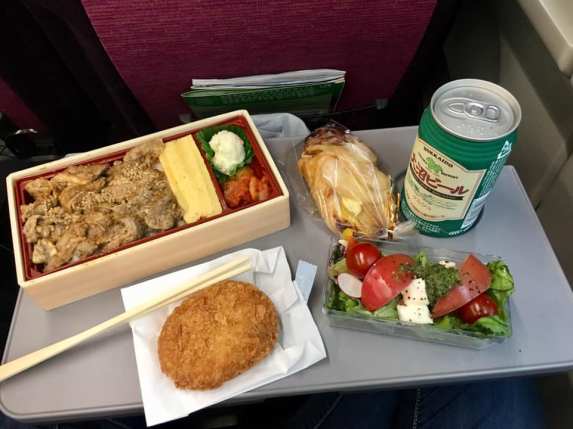
Bento – Train food is always a guilty pleasure of mine. In Poland, we got little ham sandwiches, in China, instant noodles, and in Japan: bento boxes. Bento boxes are pre-packaged meals, that are typically quite beautiful as well as delicious! Each little compartment in the box has a different dish, which also gives a lot of variety even when cooped up on a train/plane all day. We paired our bentos with some bīru (beer), and had a wonderful train ride along the coast of Hokkaido.

Otaru Cheesecake – Sometimes you run into a “famous” dish or cuisine on accident, and that’s what happened to us with the cheesecake in Otaru. We stayed in the small port city of Otaru towards the beginning of our trip, and as we were walking around the city, there were signs everywhere for a local cheesecake. Of course, we tried it, and were blown away by how good it was! We never associated Japan with cheesecake before, but it was clear that other tourists did because we then saw this brand of cheesecake for sale all over Tokyo, in the airport, as gift-wrapped souvenirs, etc. I like to think it was much better at the source though.

Other Snacks and Experiences:
Onigiri – flavored rice balls often wrapped in nori
KitKats – the infamous crazy flavors of the beloved candy bar
Shabu Shabu – Japanese hotpot or fondue, usually all you can eat
Croquettes – creative new take on the fried food classic, I loved the green tea ones
Gyoza – Japanese fried dumplings
Uni – sea urchin (tastes like buttery sea water)
Matcha – green tea power, which can be found in anything and everything
Mochi – sweet, squishy rice cakes
Cheese Dogs – corn dog plus, especially since we had ours in colorful Harajuku
Vending Machine Meals – everything from fried chicken to corn soup







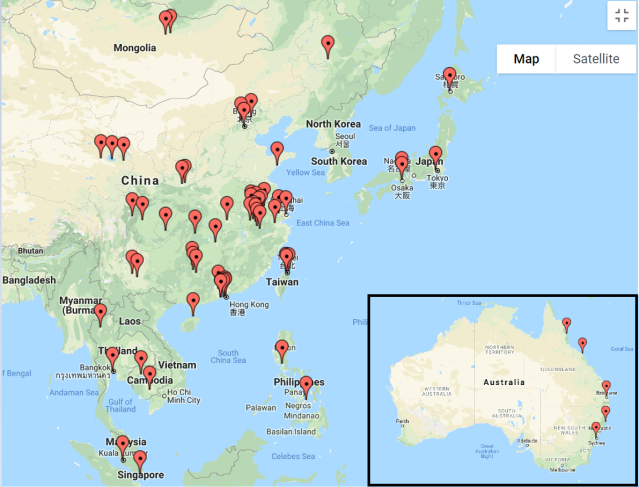
 The second New Year (also known as the Chinese New Year or the Lunar New Year) has come and gone, and with it, possibly our last long winter break off together. Just like last year, the Chinese university semester break coincides with the holiday giving us several weeks off, which, of course, we put to good use! My program had its mid-year meeting and conference in the Philippines this year, and somehow, Tucker and I managed to squeeze in three (and a half) other destinations on our island hopping itinerary. You might have seen the hundreds of photos on Facebook, but I’d also like to share a few words about our time traveling in South Asia. To be honest, it’s a little surreal to be writing this as I watch the snow fall outside, but here we go!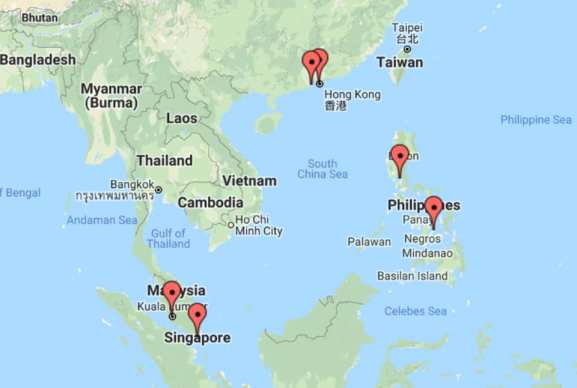
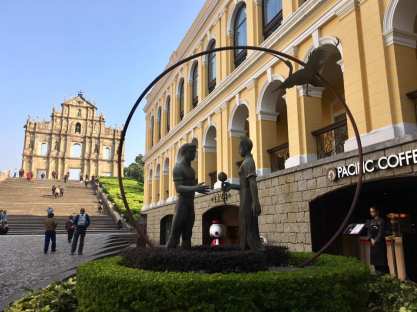 Our first stop was Macau, a “special administrative region” of China. It gets this rather long name due to it being somewhere in between a province and another country entirely. It’s a part of China, but it’s also not China, which is actually one of the reasons we wanted to visit. We wanted to see if there were any noticeable differences. We also wanted to visit because we were eager for another taste of Portugal. Macau used to be a Portuguese colony and has retained quite a bit of the Portuguese flair in architecture, food, and language.


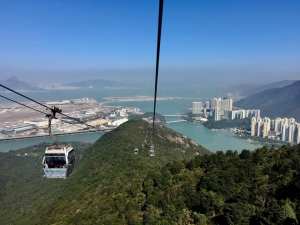 After a few days of strolling around Macau’s narrow alleyways, we took a massive speed boat (TurboJet) to our next destination just across the water: Hong Kong. This was actually our second trip to Hong Kong, but last time we didn’t quite get to everything on our list – this short stopover on the way to Midyear was our second chance. We had less than 24 hours in the city, but we managed to make it out to Lantou Island to see the incredible Buddha and cableway there, we took the bus to the top of Victoria Peak to watch the sunset over the city, and we went to Tim Ho Wan for the world’s cheapest Michelin Star eats. While I definitely preferred Macau’s laid back, European vibes, it’s hard to not like Hong Kong as well. Macau and Hong Kong are a couple of tiny islands (and respective peninsulas) that I highly recommend everyone to visit! No visas needed for US citizens! :)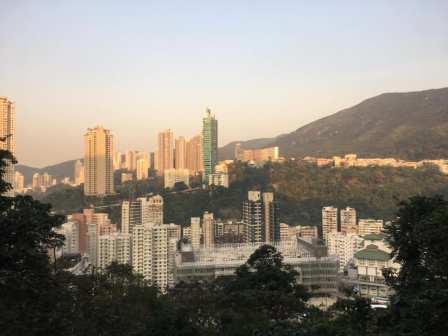
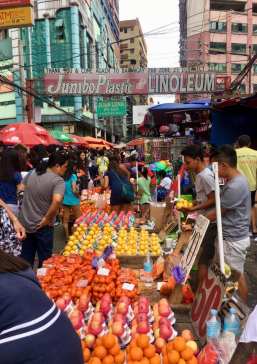 All too soon it was time to fly to the Philippines and get to work. When we first landed in the Philippines it was chaos! Passengers getting up and grabbing their bags before the plane had stopped moving; people sitting on seemingly every inch of the floor in the airport; signs for flight changes being moved by hand from gate to gate; loud cover songs of 2000’s hits playing in every corner of the terminal, etc. All I could think was “Well, we’re definitely not in China anymore.” As we sat waiting for our flight though, the newness wore off, and it was easy to see that the Philippines are just plain fun! In fact, their national slogan is “It’s more fun in the Philippines”, and I totally got it. Smiles were everywhere! The flight attendants wore bright yellow polos and hummed songs as we boarded. Fellow passengers sang along with the music they heard on the plane. The joy was contagious!
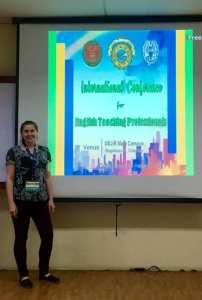 The first week we were in the Philippines I had to “work”. I attended meetings with the other Fellows, we planned and executed various group activities, and generally bonded and reconnected after our last five months apart in our various host cities/countries. For this part of Midyear, we were put up in a resort on Mactan Island, which was incredibly fancy and not the sort of place Tucker and I usually go for (I’ve never heard so many “yes ma’ams” and “hello sirs” in my life). It was beyond beautiful though, and luckily Tucker was able to take full advantage of the beach, the snorkeling, the infinity pool, etc. However, after a few days completely devoid of local culture, I was definitely ready to get to our next location: Cebu City. It was here that we attended and presented at a local teacher training conference held at the University San Jose Recoletos. Easily my favorite part of Midyear, I was able to meet and interact with many local Filipina/o teachers and get a much better feel for what life in the Philippines is really like.

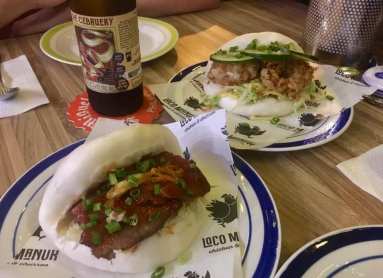 Once the conference and Midyear were officially over, Tucker and I hadn’t quite had our fill of the Philippines, so we headed to Manila for some good old-fashioned touristing. Manila is an incredible city with some of the best food I’ve had in a long while. Their specialty seemed to be fusion restaurants. We had super interesting and delicious food at Loco Manuk (Filipino, Peruvian, and Chinese) and El Chupacabra (Filipino and Mexican), and saw a Japanese-French Cafe that looked amazing as well! In addition to the incredible food, we also had a great time walking around Manila Bay, grabbing a drink in Intramuros (the Old Town), and watching the Super Bowl at a local expat bar. The Philippines boasts an amazing mix of languages and cultures, and it was so fun for us to be able to use English (commonly spoken there) to ask about a million questions of our taxi drivers, servers, and any other local we could find. We learned about the strong influence of Catholicism in the Philippines, the new-ish movement towards environmental clean up, and most of all, we learned how welcoming and friendly the people are.


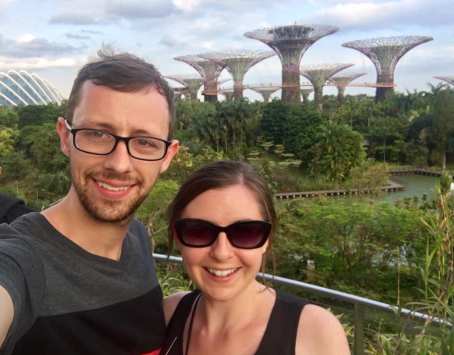
 At this point we were over the halfway mark of our trip, and my body had had enough. I left Manila with a fever and several other ailments (not so fun to describe), but I was still super excited to see Singapore! We watched Crazy Rich Asians on another leg of this trip in preparation, but the movie doesn’t do the city justice. It is by far the cleanest city I’ve ever seen, and has represented its multicultural population incredibly well! Singapore is made up of large groups of ethnic Chinese, Malays, and Indians, and each has a dedicated area of the city where you can find their respective religious buildings, restaurants, and specialized grocery stores. Even with the diverse neighborhoods in place, the city as a whole really seems to cater to each group in so many ways. Colorful, artistic, and clearly very well-off, there are so many lovely parks and public spaces in this city, where we saw families wearing everything from tank tops and sundresses to saris and hijabs. I often talk about places where there is a mix of cultures, but its usually a watered down mix, where clearly one culture has dominated, but in Singapore they were all there loud and proud. It was amazing!


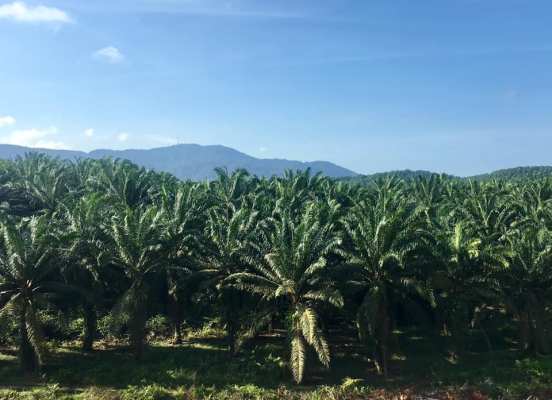
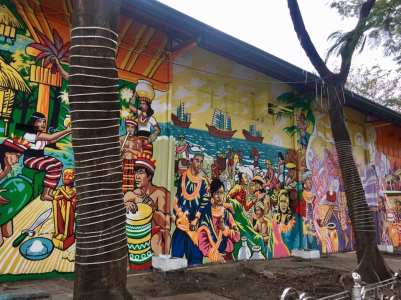
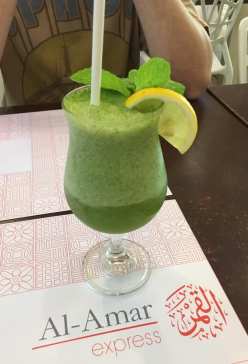 It turns out KL was full of surprises for us. The majority of people living in Malaysia are Muslim, so it was much more conservative than I was expecting. Most everyone wore long sleeves and pants despite the high temperatures, and the presence of beautiful and delicious “mocktails” was at an all time high for me. KL is actually not on an island, and to us, it seemed like we lost that friendly, carefree island-vibe as soon as we arrived. Interactions were a bit more abrupt and businesslike – like they usually are, I suppose. Another surprise was the color we saw all around us – both the Philippines and Singapore were incredibly colorful cities, but I think any city would be hard pressed to match the vibrancy of KL. Brightly colored murals everywhere, some of the lushest, greenest trees I’ve ever seen against the bluest of skies, and the insanely colorful Batu Caves just outside the city made for some incredible scenes (and photos).

 Dani Francuz Rose