Catalogue of Canadian Cuisine

The time has come, once again, for me to share what I know about the unique food scene of our new home. To be honest, this was a little easier to do in Poland, China, and Mexico, where the respective cuisines are a tad more well-defined, but Canada, too, has its fair share of fun foodie finds, not to mention a plethora of food fusions thanks to its mosaic of multiculturalism. So, without further ado, here is my catalogue of Canadian cuisine.

Savory Things:

Poutine – The first entry obviously has to be poutine. This Quebecois dish is probably the most well-known outside of Canada, which makes sense because it’s absolutely delicious (albeit rather unhealthy). French fries and cheese curds covered in a brown gravy – what’s not to love?

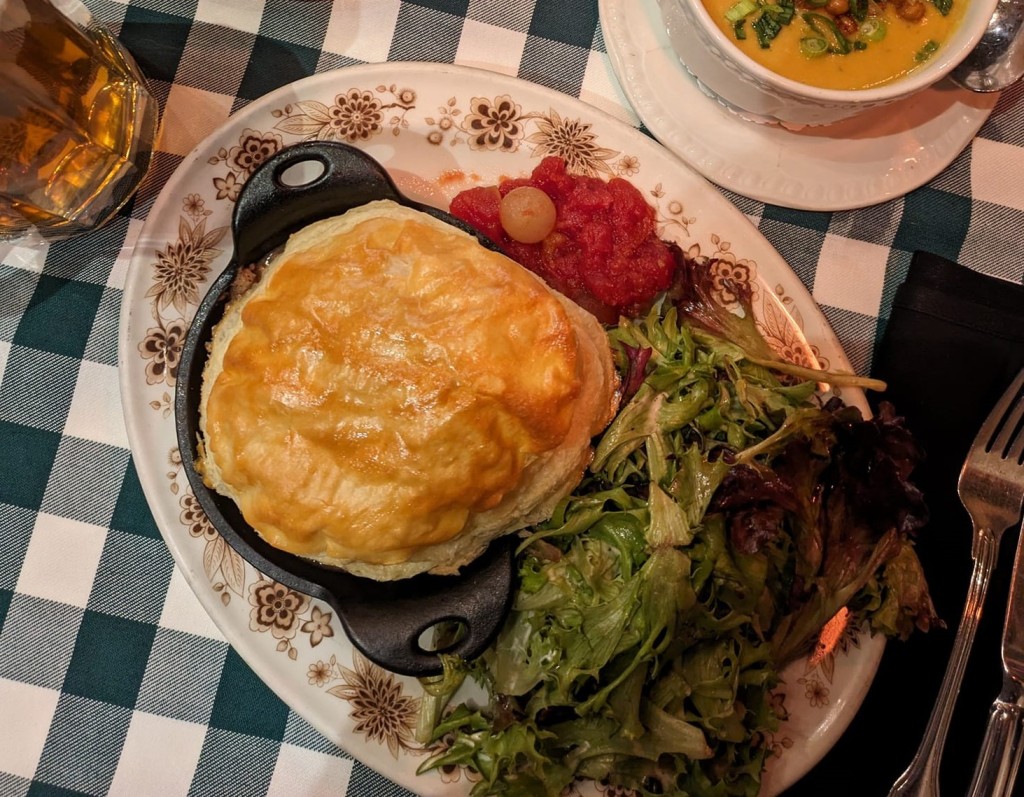
Tourtière – Pronounced “tor-tee-air”, this dish, somewhat unsurprisingly, also comes from Quebec. It’s a massive baked meat pie popular around the holidays in Quebec and New Brunswick, and it might just be one of the most comforting dishes you can have in winter!

Montreal Smoked Meat – Montreal has quite a few regional specialties, but one of the most famous has to be the Montreal smoked meat. It’s a kosher-style deli meat, similar to pastrami, that is most often eaten piled high on a rye-bread sandwich slathered with mustard.

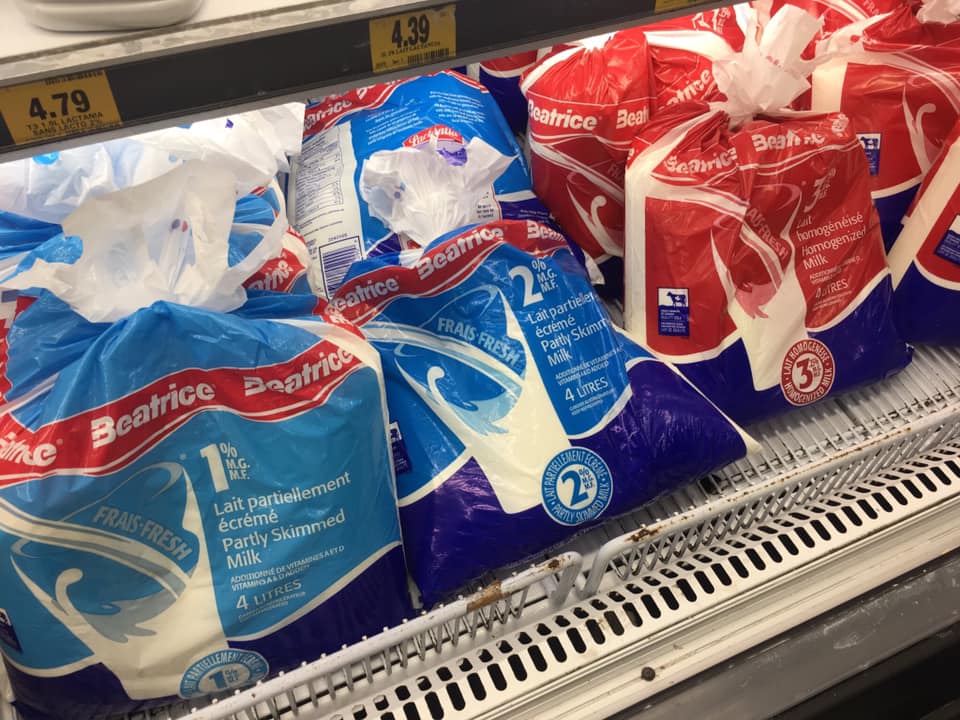
Halifax Donair – One of only two things on this list that I, personally, haven’t tried yet, the Halifax Donair is a great example of the many food fusions that exist in Canada. A version of the more traditional Doner kebab, Nova Scotia’s variant is usually a spiced ground beef on Lebanese flatbread covered in a sweet “Donair” sauce, which is made of condensed milk, vinegar, sugar, and garlic.

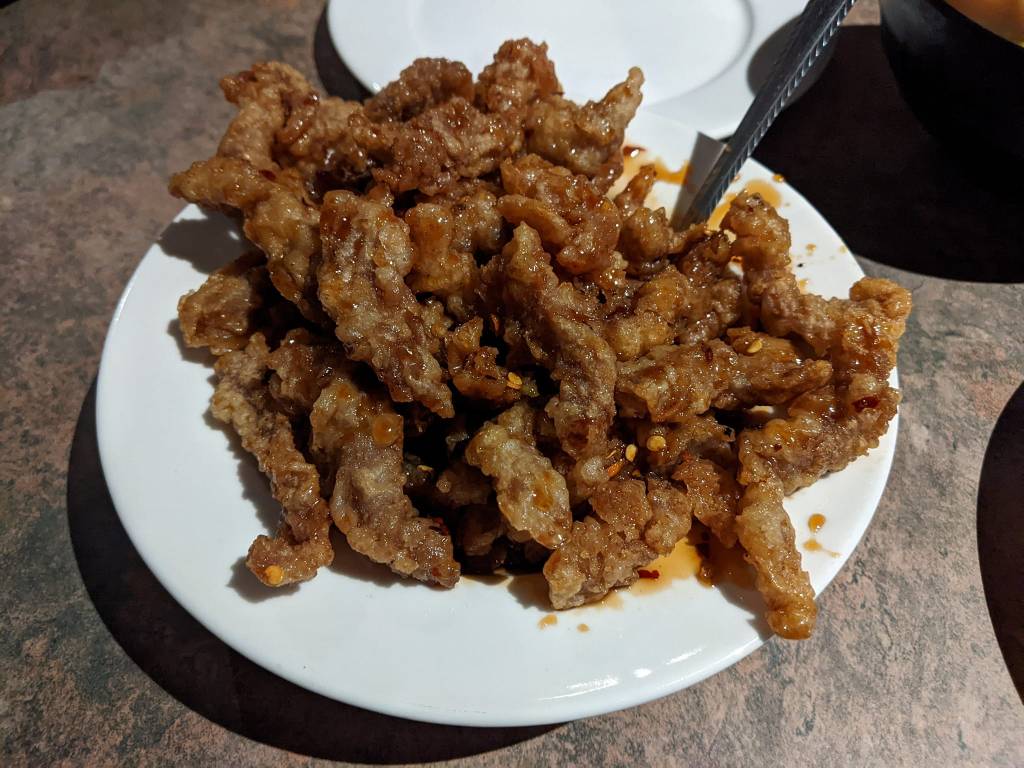
Ginger Beef – An Alberta specialty this time, introduced to the country (and the world) by Chinese-Canadians, ginger beef is a hearty dish of deep-fried strips of beef coated in a sweet, sticky ginger sauce. Another fantastic fusion for the win!

Hawaiian Pizza – Yes, you read that right. Hawaiian pizza does in fact come from Canada. The name wasn’t really even a reference to the US state, it was just the brand of pineapple they used at the time. Fun facts!

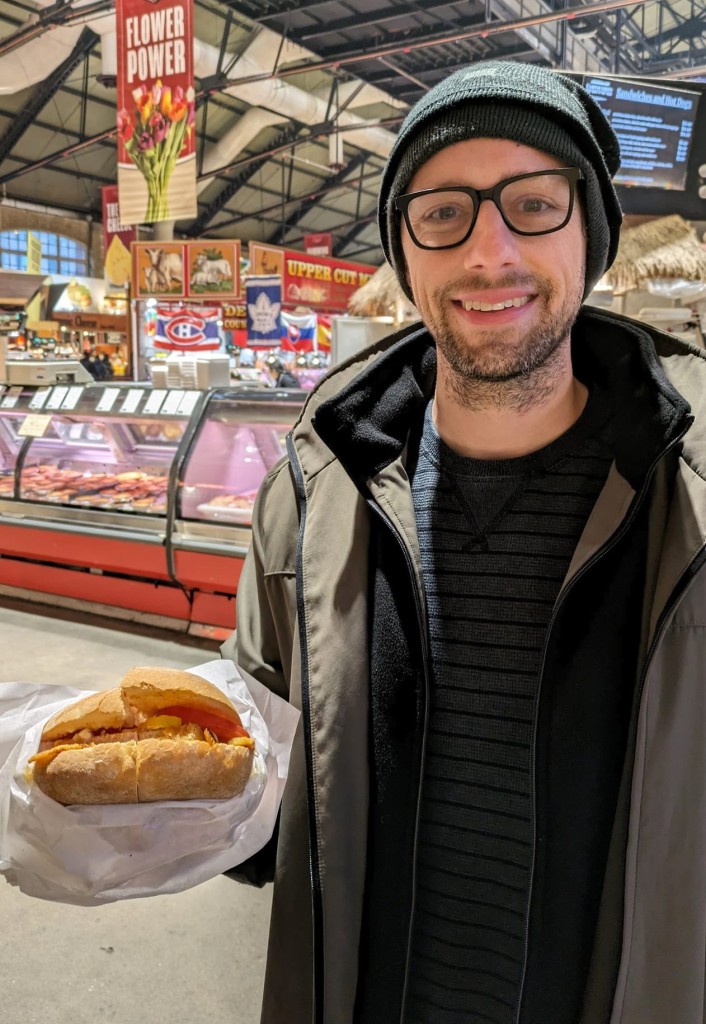
Peameal Bacon – Sometimes erroneously thought to be the same as “Canadian” bacon, peameal bacon is actually so much better! It’s a very lean piece of cured pork that is then rolled in cornmeal (previously crushed yellow peas, thus the name) and is eaten much like bacon, either as a breakfast staple or on various sandwiches.

KD – If you know me, you know I love macaroni and cheese, so I couldn’t leave Kraft Dinner off the table. I mean list. KD looks a lot like Kraft Mac & Cheese, and it is from the same company, but the Canadian version definitely tastes and hits different, trust me.

Ketchup Chips – Canadians love their ketchup, so it’s no surprise that one of the most popular and abundant chip flavors here is ketchup. It makes sense, right? We eat French fries with ketchup. Why not potato chips? Do they really taste like ketchup though? Umm…kind of?

All-Dressed Chips – Usually one of the first signs we’re back in Canada is an all-dressed chips sighting. A bold favor combination of ketchup, BBQ, sour cream & onion, and salt & vinegar; you either love ‘em or hate ‘em, and I love ‘em!

Sweet Things:

Butter Tarts – Butter tarts are super Canadian, eh! I eat them, and I think Anne of Green Gables, a warm fireplace on a cold winter night, kids playing hockey on the lake out back, etc. They’re small, sweet, gooey pastries that are simply delicious.

Maple Taffy – If butter tarts represent classic Canadiana, maple taffy (or tire d’érable) is pure Quebecois bliss. In truth, there are several maple syrup items I could have put on this list, but I went with maple taffy because it’s both a food and an experience.

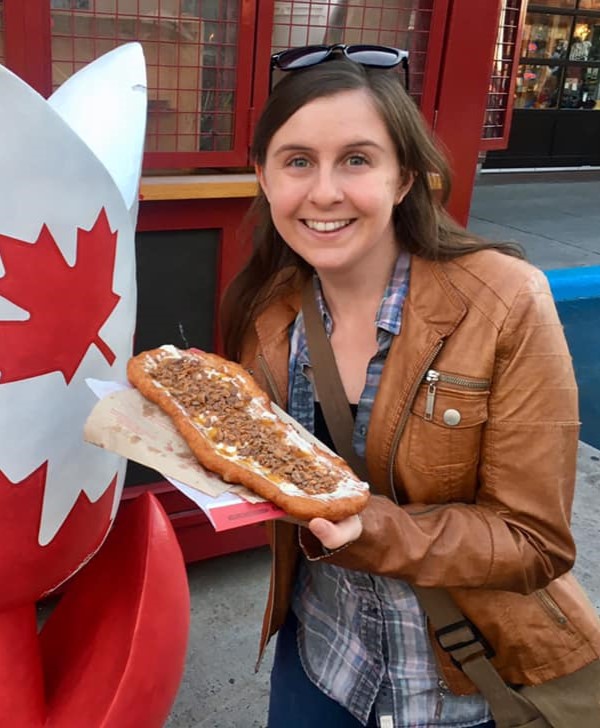
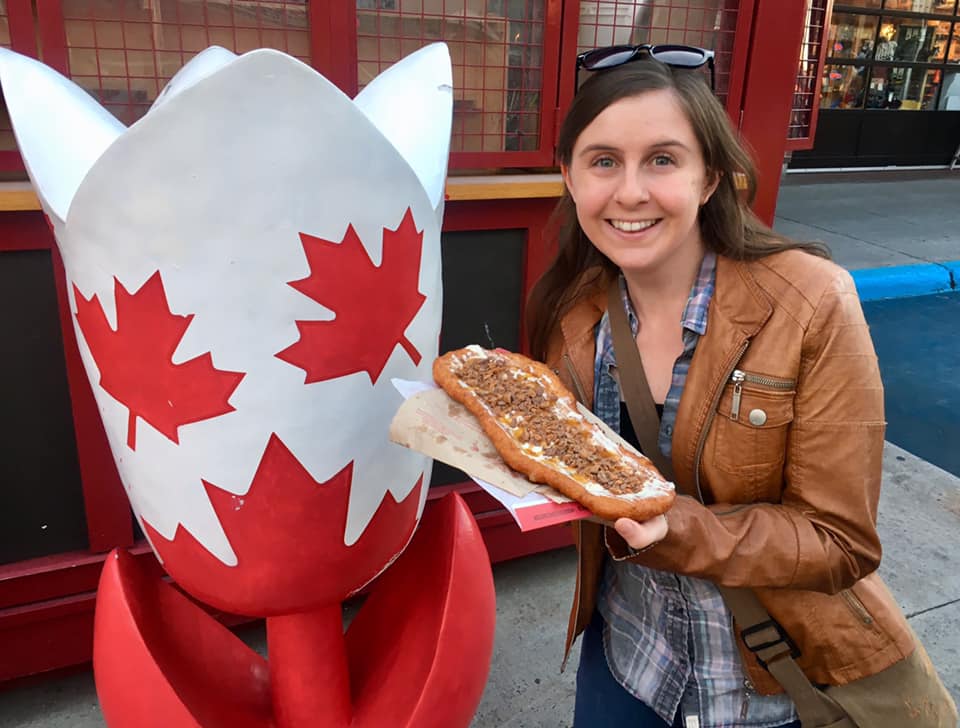
Beavertails – Easily my favorite sweet treat in Canada, a beavertail is a piece of fried dough (in the shape of a beavertail, obviously) that is covered in a variety of toppings. A classic option is cinnamon, sugar, and lemon juice, which is just perfection.

Timbits – Another sign you’re in Canada (or at least near some Canadians) is the presence of a Tim Horton’s. Colloquially know as Tim’s or Timmy’s, this is where you must go to get Timbits, which are famous Canadian donut holes that come in surprising flavors such as sour cream, honey dip, and apple fritter.

Nanaimo Bars – Coming all the way from British Columbia, the Nanaimo bar is another classic Canadian dessert. Traditionally three layers: a coconutty wafer on the bottom, a thick custard in the middle, and a chocolate ganache on top; it’s basically the perfect no-bake combination.

Pouding Chômeur – Or “Poor Man’s Pudding” is a dessert that came about during the Great Depression. It’s as simple as it is delicious: yellow cake or bread smothered in hot syrup or caramel.

Saskatoon Berries – The other item on this list that I have yet to try, Saskatoon berries are a locally grown and historically important ingredient in Canadian cuisine. In fact, I recently learned that the city Saskatoon actually got its name from the berry, not the other way around.

Coffee Crisp – Coming from the US, I’m spoiled for choice when it comes to candy bars, but we have nothing like the Coffee Crisp. I’m not even a coffee-drinker, and I love this candy bar!
Sippable Things:

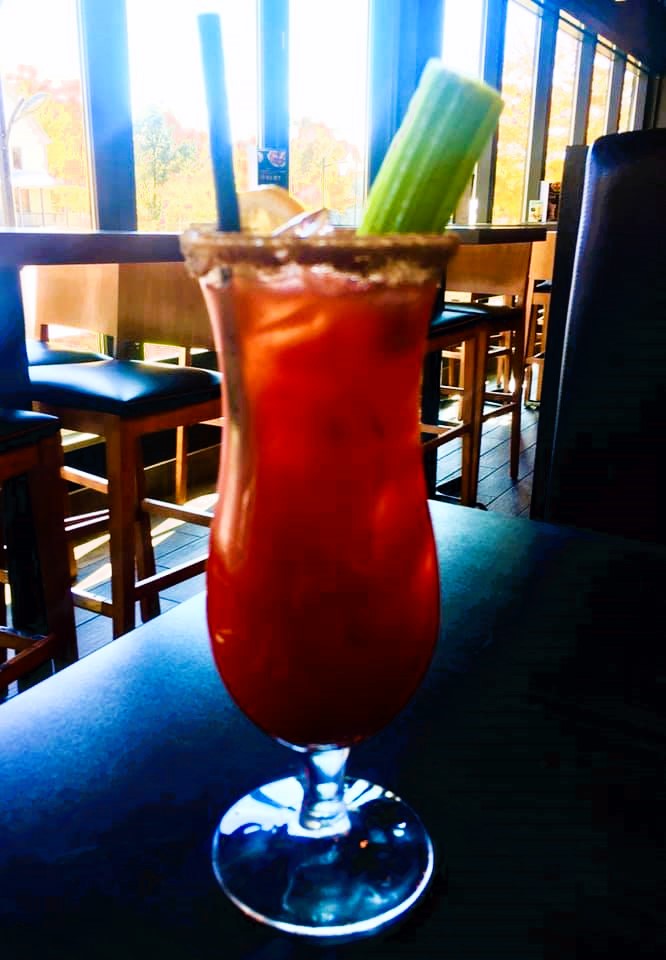
Caesar – Canada’s version of the Bloody Mary, this cocktail contains vodka, Clamato juice, hot sauce, Worcestershire sauce, celery salt, and various garnishes. When I first tried one, I had no idea what Clamato juice was…cue my complete surprise at tasting seafood in my drink!

Sortilège – Another surprise (of a much more pleasant variety), Sortilège is a maple liqueur made with Canadian whisky. So smooth, so tasty, and quite strong, this is peak Canadian alcohol, which is really saying something.

And that’s my list! At least for now, because I’m sure we’ll run into many more Canadian treats as we continue on in the Great White North. I do hope you enjoyed reading about some of Canada’s finest creations, and be sure to tell me which ones you want to try whenever you visit! Bon appétit !

Ice Ice Baby

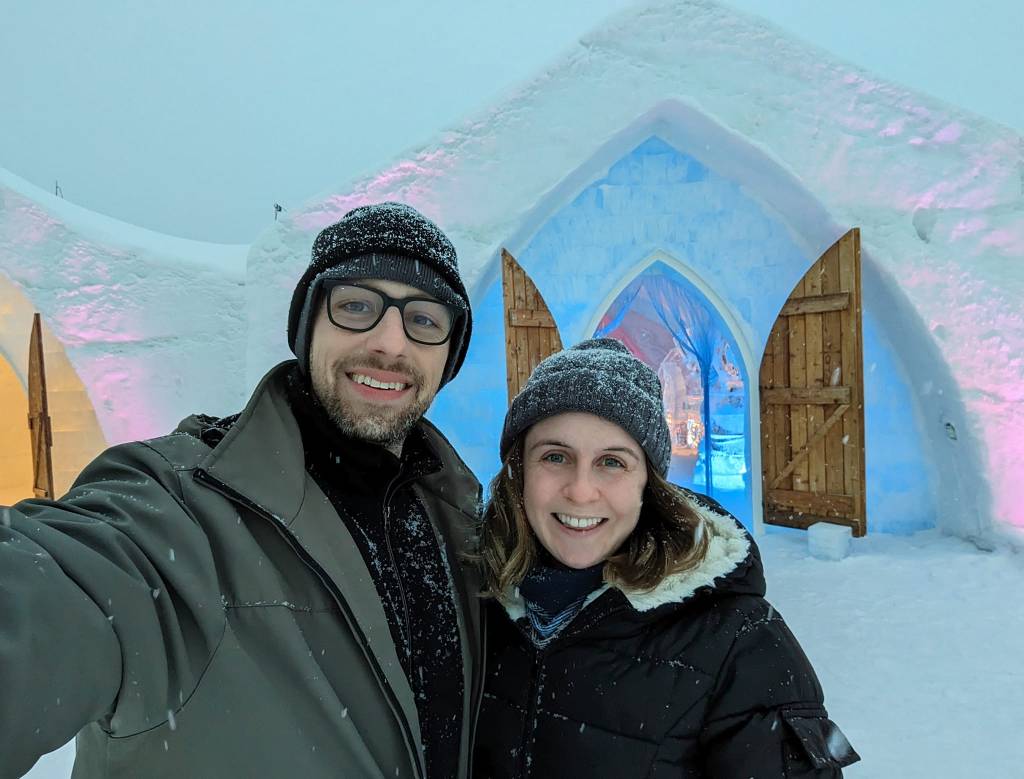
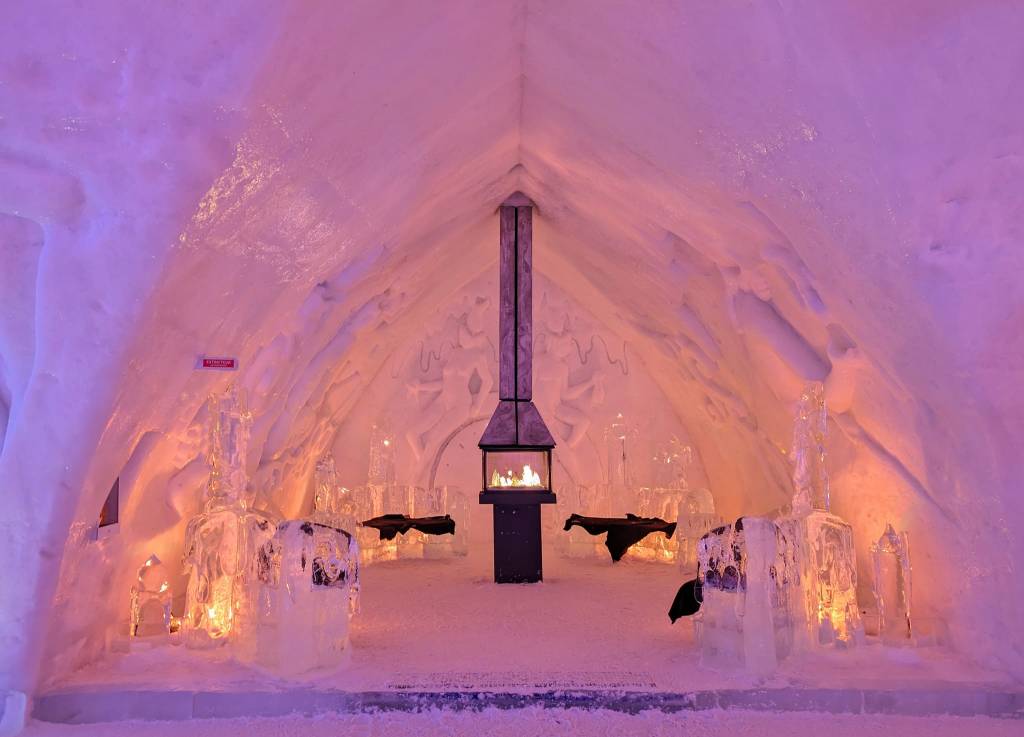
Well, we’re officially waist-deep into winter, and even though we’ve been ice skating, snowboarding, and snowduck making for months now, I still feel like I haven’t got my fill! So, in order to up our winter games even further, we spent last weekend in Québec City, a winter wonderland if ever there was one, and even more spectacularly wintery, we also spent a night at the Hôtel de Glace (aka the Ice Hotel).

This was definitely a once in a lifetime kind of experience, and I don’t want to forget any of the specifics, so this month, I’m sharing a detailed timeline of events as recorded by the many pictures I took throughout our stay. Bundle up and enjoy!

17:00 – Check in

Technically check-in started at 4pm, but we were a little late getting to the resort area for a few reasons. One, it was snowing, so everyone was driving slower than usual, and two, we totally forgot to bring our bathing suits and had to make a pitstop at Value Village. It happens. Luckily, the Hôtel de Glace and all of Village Vacances Valcartier is only 20-30 minutes outside of Québec City.

Once we arrived and found our way to the correct front desk (this place is massive, so it wasn’t as easy as you’d think), we got the usual check-in spiel plus a few irregularities. When you stay at the Ice Hotel you actually get two rooms: one outside made of ice and snow and one inside the Valcartier Hotel where you can put your bags, shower, brush your teeth, and at some point, finally take off your hat and gloves!

But before you can don your all-access pass of sorts, you have to watch a safety video and sign a waiver. The safety video talked a lot about what to wear and what not to wear overnight and expressed many times over that you must completely dry off after showering or hot tubbing before you go into your rooms at night. They also gave us maps of the premises and showed us where we could go if we needed help during the night.   

17:45 – First look around

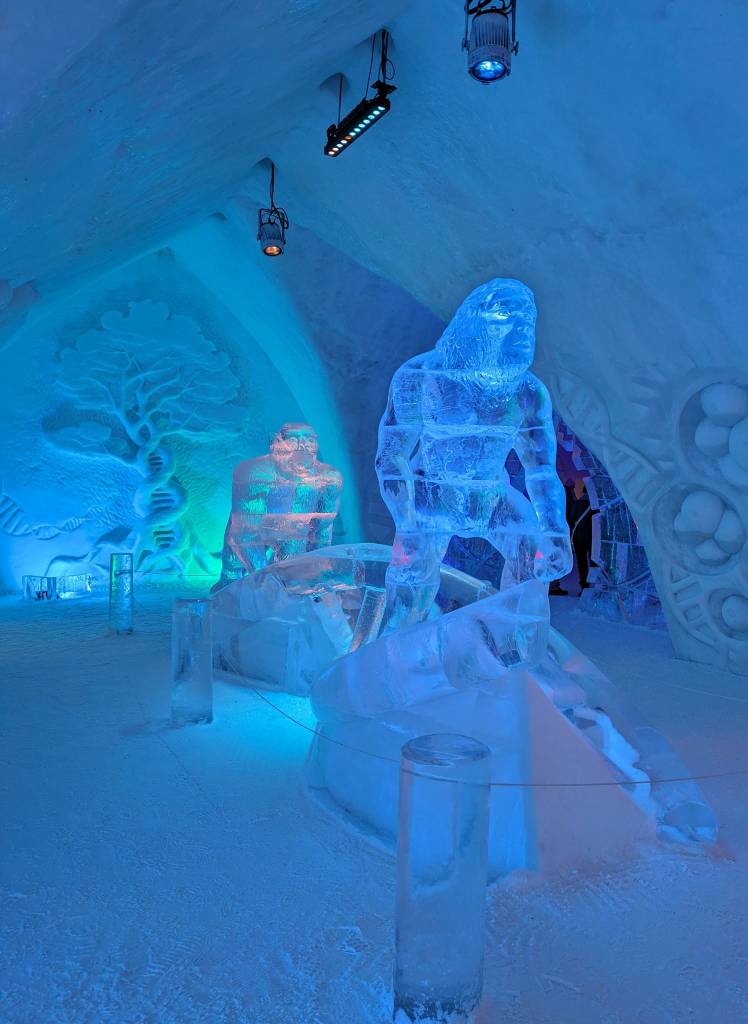
Needless to say, the excitement levels always increase when there’s a waiver to sign, so we quickly dropped off our stuff in our “dry room” and went to see what the Ice Hotel was all about. It’s divided into roughly three sections: the chapel, the communal rooms, and the individual rooms. The chapel was beautiful, but there wasn’t a wedding that day/night, so it was pretty empty. The communal rooms included several galleries, seating areas, the ice bar, and an ice slide. To say there was a lot to look at would be a gross understatement.

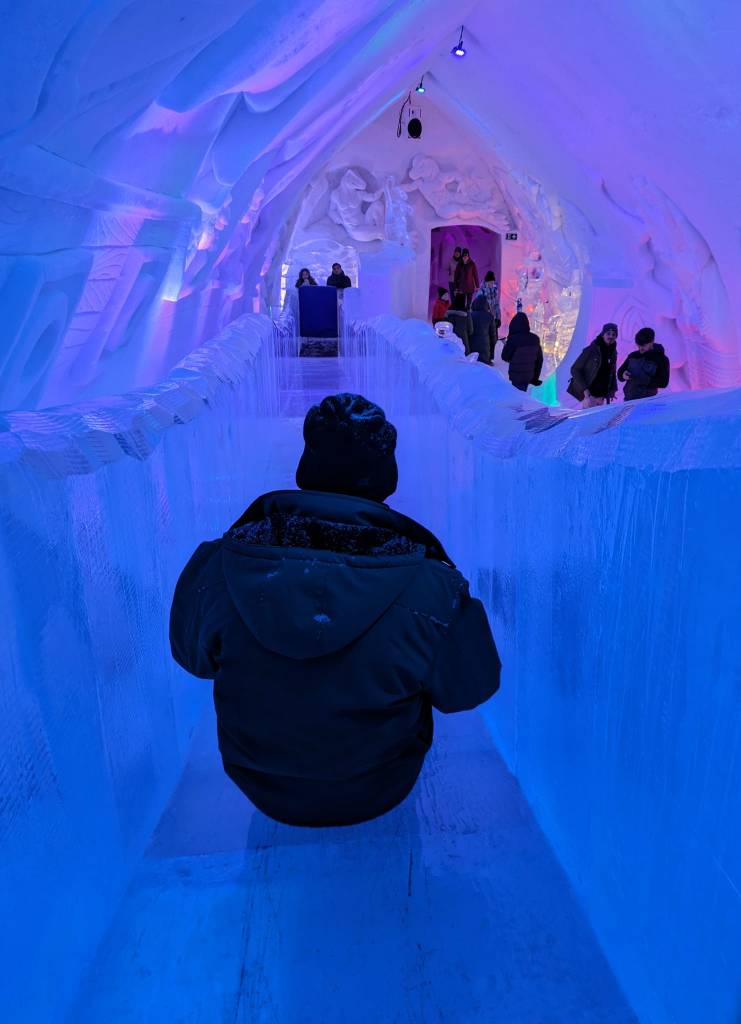
Between the ice sculptures, snow carvings, lights, and music, my senses were on overdrive. I think my favorite room was the “club room” with light-up instruments and DJ-ing composers on every wall. Tucker liked the “fire room”, which, although no warmer than anywhere else in the Ice Hotel, definitely felt cozier with the heatless fireplace, warm colors, and fur-lined benches. Of course, the ice slide was also super fun – it was in the “dinosaur room” and had us laughing hysterically as we scooted our way down the slide. You know what’s not very slippery? Jeans.

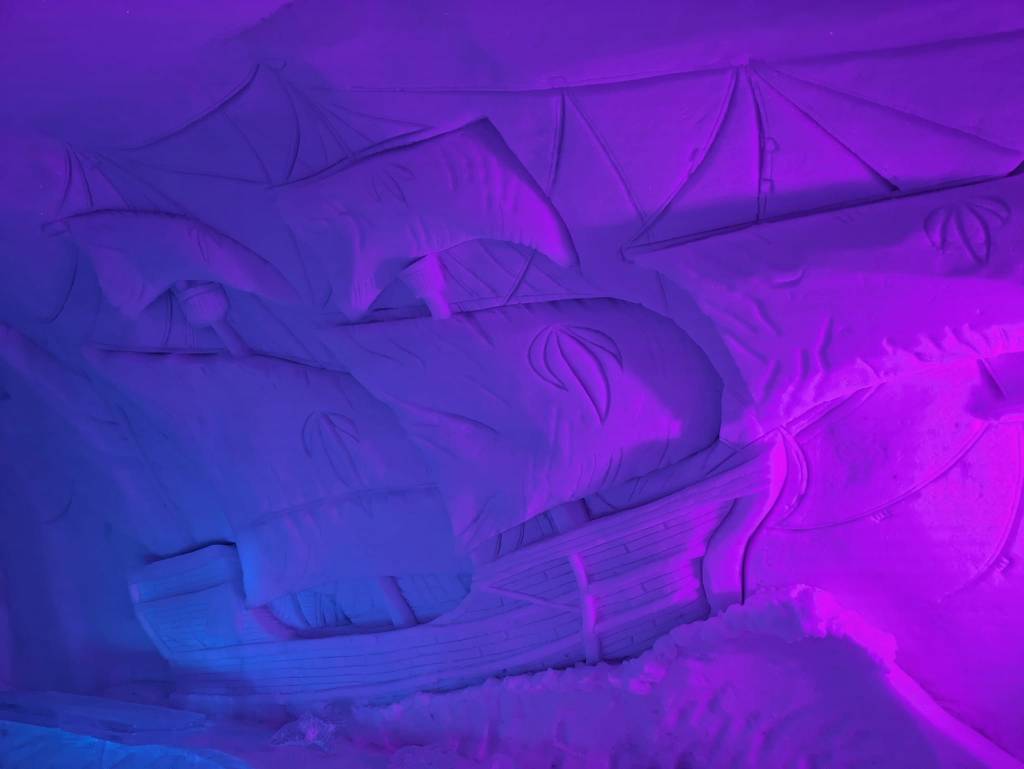
The individual rooms are also open for viewing during the day (of course, they did have ropes near the doors, so you couldn’t get on the beds or mess with any of the lights or anything). This year there were 30 guest rooms. The vast majority were single bed rooms, but there were a few doubles and even a triple as well. Every room had a theme and was designed by a different artist. My favorite was probably the exploration room with huge ships, maps, and a compass on the walls. Tucker liked the science-y ones, of which there were many.

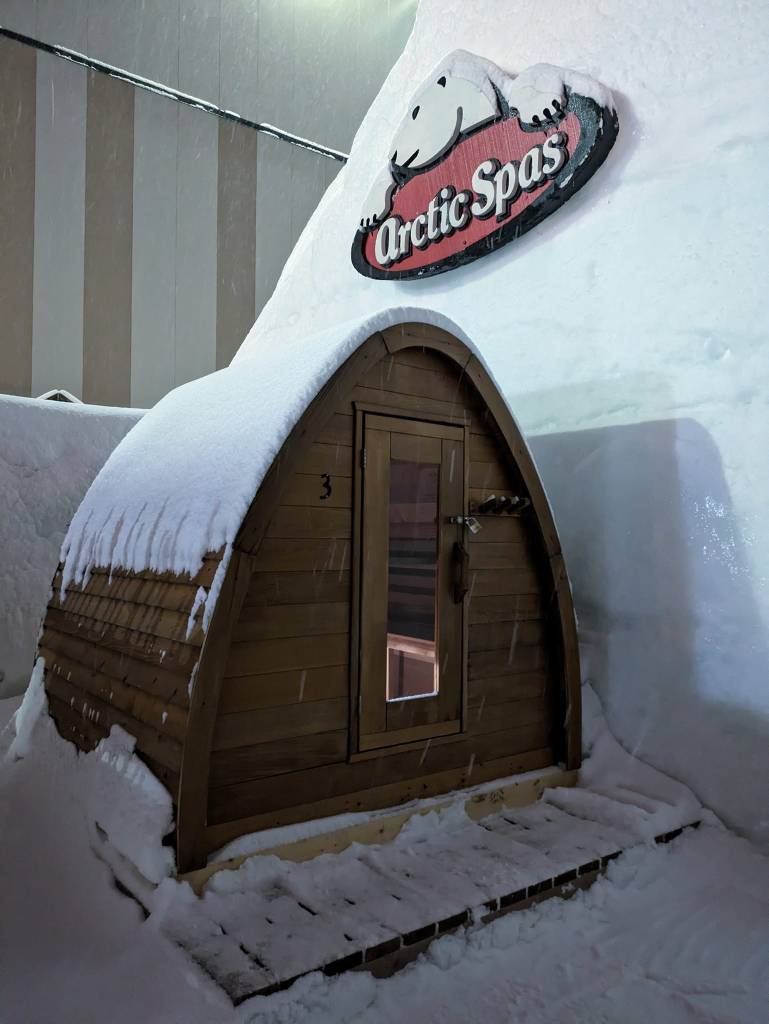
It honestly took us quite a while to see all the rooms because this part of the hotel is very maze-like, and we weren’t always sure if we had been in any given hallway before or not. The walls of the hallways were also covered with art, and there was a workshop room off to one side, which housed photos taken and machines used during the building process. During this part of our initial walk around, we also noted the hot tubs and sauna (free for guests to use) and started thinking about how we were going to manage that in the heavy snow with only our thrifted bathing suits and big winter boots.

19:30 – Drinks at the Ice Bar

But before we dealt with being cold and wet, we decided to cash in our complimentary drink tickets. The ice bar was SO COOL! Yes, pun-intended. The bartender was all bundled up as she mixed our drinks, the “Lave-Glace” and the “Accident de Ski-doo” (clever because it had a splash of red Grenadine and a little sprig of juniper in it) and poured them into ice glasses. The drinks were beautiful and tasty, and the glasses, well, the glasses were challenging. They were obviously really cold, but also very heavy and had very thick edges – not the easiest thing to sip on. Despite the odd mouth positioning required, we still felt pretty amazing drinking our fancy cocktails in the très chic Hôtel de Glace.

In hindsight, I should have held on to my ice glass since we opted to bring our own beers into our room later, alas we were too excited to shatter them (prematurely) into the collection bins. We also debated getting another drink at the bar because they had a lot of interesting cocktails and were surprisingly not that overpriced. But after another short walk through, we opted to hit the hot tubs instead, hopefully while they were still empty and we had enough time to enjoy them and fully dry off before heading to our frozen beds.  

20:45 – Hot tub and sauna in the snow

I really want to do a polar plunge before we leave Canada, and perhaps now I understand just how uncomfortable that will be when it happens. Running from our “dry room” to the hot tubs wasn’t so bad (I did wear my socks and boots with my bathing suit lol), but running to the sauna after the hot tub was painful, especially for my feet. From the crazy hot water to the crazy cold snow made my feet feel like they were burning! Stepping into the sauna was very welcome…that is until we had to get out and do it again.

Ultimately, lots of lessons were learned, like: the more towels you can take with you, the better; be sure to remember to take your shoes with you when you go back and forth, and also, just like we’re not really beach people, we’re not really hot tub or sauna people either, which is apparently a lesson we’re still in the process of learning.

22:50 – Final preparations

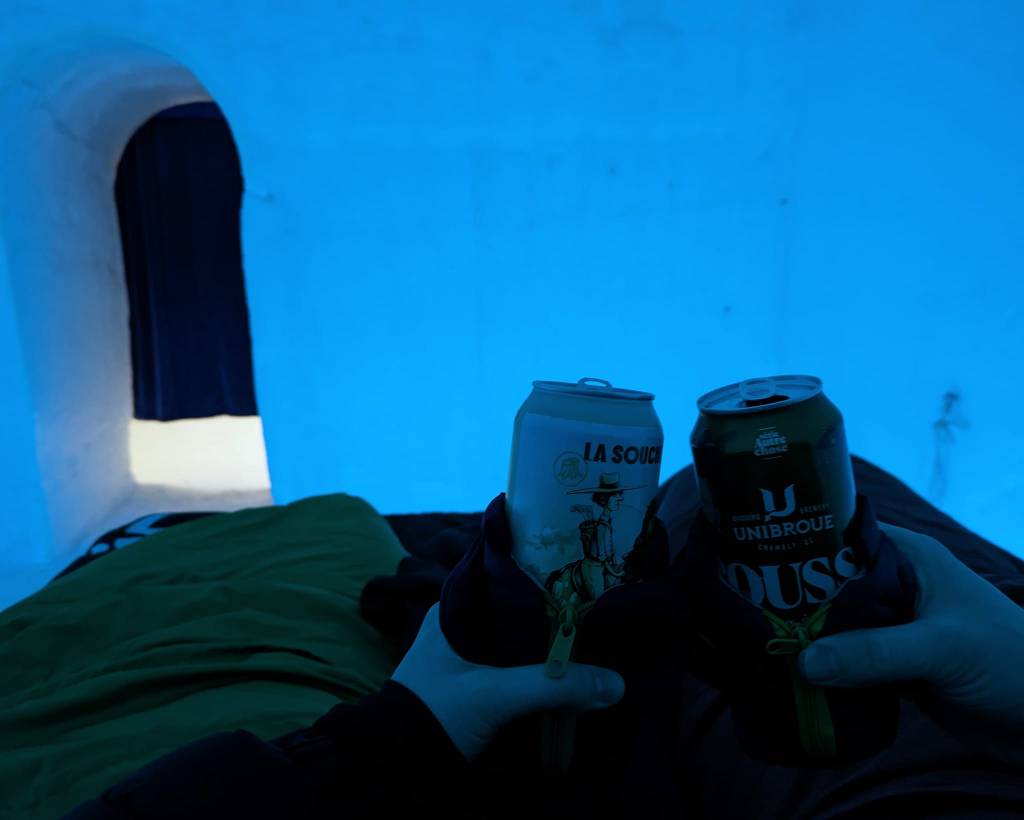
After we had our fair share of extreme temperature fun, it was time to prepare ourselves for sleeping overnight in a room that was approximately -5°C (23°F). First, as per the instructions, we had to be completely dry. Then, we had to decide what to wear and what to bring with us into the room. I don’t think I’ve ever planned my pajamas quite so carefully. In the end, we went for having as many options as we could – layers that we could take off or leave on depending on how warm we were in the sleeping bags they gave us. As for the snacks (much more important, obviously), we brought some local Québec beers, the rest of our Québec mix popcorn, and some chocolates from La Fudgerie. It was perfect!

23:30 – Bedtime snacks and hunkering down

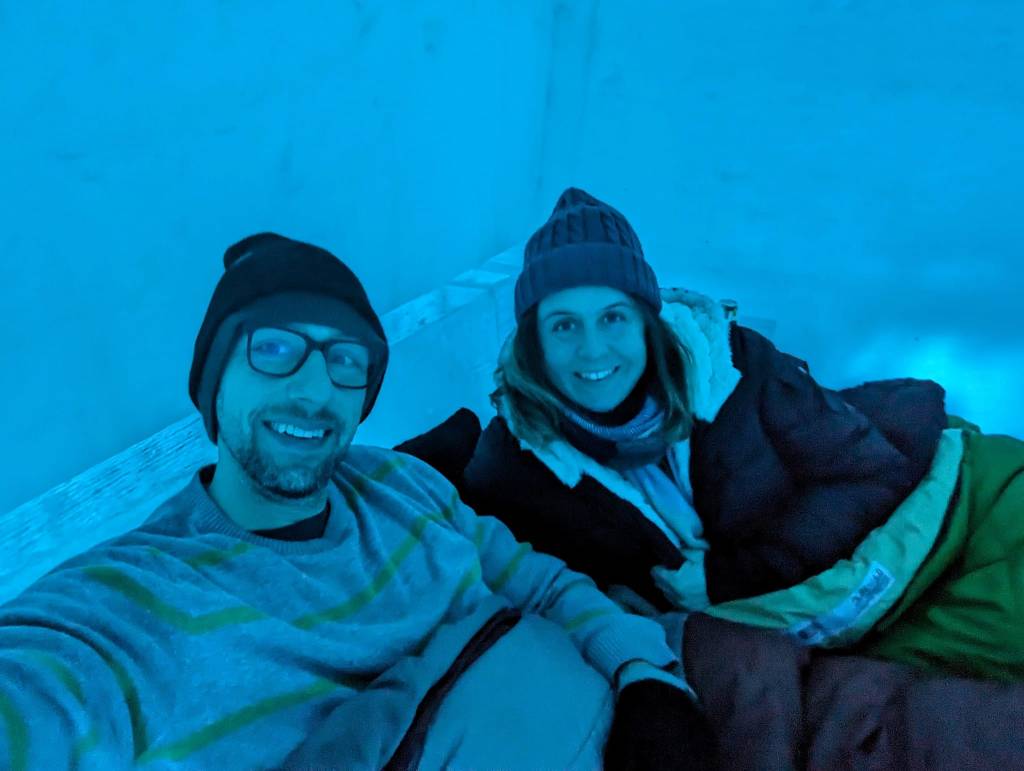
Between 8-9pm the individual rooms portion of the hotel was closed off for the staff to clean and prepare the rooms for the overnight guests. When we pulled back the velvet curtain of our room, we were surprised to see they had raked the floors in addition to changing the sheets and leaving the sleeping bags. It felt very Zen and very cold. But we were ready! We rolled out our sleeping bags (rated for up to -30°C/-22°F), got into the liners as instructed, and put our outerwear away for the night. After enjoying our little picnic and watching a few videos, we zipped ourselves fully into the sleeping bags (well, mostly), and drifted to sleep.

4:17 – Slight panic

I say “mostly” because I actually struggled with zipping mine up over my head. I felt super claustrophobic and ended up choosing to be slightly colder than necessary just to keep my face from being covered. Unfortunately, in the middle of the night I woke up and the sleeping bag had fallen away from the top/back of my head a little, and I was very cold. That got my thoughts and heart racing as I wondered if I was doing irreparable damage to my system. You know, the normal things that keep a person up at night. Thankfully, I was able to calm myself down, readjust, and fall back asleep.

8:00 – Wake up call

As part of the check-in process, they informed us that someone would come to wake us up the next morning at 8am. This was in part to make sure that everyone would be up and out before they had to clean up and open for business again and also to make sure everyone was alive and well. Fortunately, we were! The sleeping bags, if anything, kept us too warm, and the main struggle we had was just getting comfortable enough to sleep through the night. Even without the claustrophobia issue, the sleeping bag was a bit like a strait jacket – not much movement possible, and if you’re not a back sleeper, good luck falling asleep as you lie there feeling like a mummy in a fluffy sarcophagus.

8:15 – Back to sleep

So, after not the best night’s sleep we’d ever gotten, we were very happy to return to our “dry room” once again and sleep in our nice, warm king size bed for a few more hours. Usually, we say there’s no place like your own bed, but honestly, this one was definitely a close second, especially in that moment!

11:00 – Check out

And just like that, our stay was at its end. We packed up our bags, scraped the snow and ice off the car, and headed back home to enjoy the rest of winter from our very own “dry room”.  

Canadian English, Eh?

On one of our very first trips to Canada I remember finding Canadian English extremely intriguing: the vowel differences! The mixed spelling system! The use of the quintessential “eh”! I love it all, but I think what has surprised me most as a freshly-carded, permanent resident of Ontario has been all the new English vocabulary I’ve been learning! And as the good little linguist I am, of course, I’ve kept a list of these Canadian English gems to share. 😊

Washroom (aka bathroom/restroom)

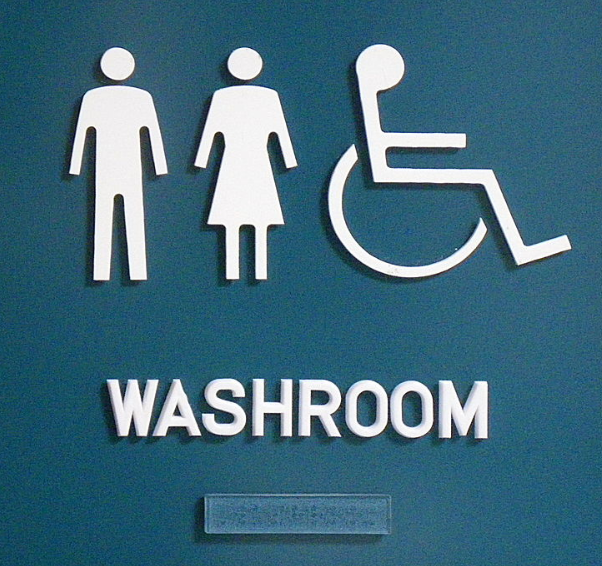
This was one of the first linguistic differences that stood out to me oh-so long ago. “Washroom” is virtually the ONLY way Canadians will ever refer to this place. In restaurants, airports, shopping malls, someone’s house, anywhere you go, if you throw out a “restroom” or a “bathroom”, it’ll likely be met with either blank stares or comments about what exactly Americans do when going to the toilet.

Hydro (aka electricity)

This one really threw us off when we were searching for our apartment. Sometimes utilities are included in the rental agreements here, and we’d see places mention both “hydro” and “water” in some form or another, which had us thoroughly confused. “Hydro” seems like a synonym for “water” to us, silly Americans, but with enough listings, we eventually realized we never saw “electricity” or “power” listed and were able to deduce. Evidently hydropower is so common here in Canada that the shortened form will do.

Tuque/toque (aka hat/beanie)

Another one we learned early on and have all but adopted ourselves is “tuque”. Such an important part of the Canadian wardrobe, a tuque is a winter hat that might be called a variety of things south of the border, but up here, it’s most definitely a tuque (which rhymes with “Luke”). Where this word comes from, much like its spelling, is hotly debated, but whatever you want to call it, just be sure you’ve got a good dozen before winter sets in.

Parkade (aka parking garage)

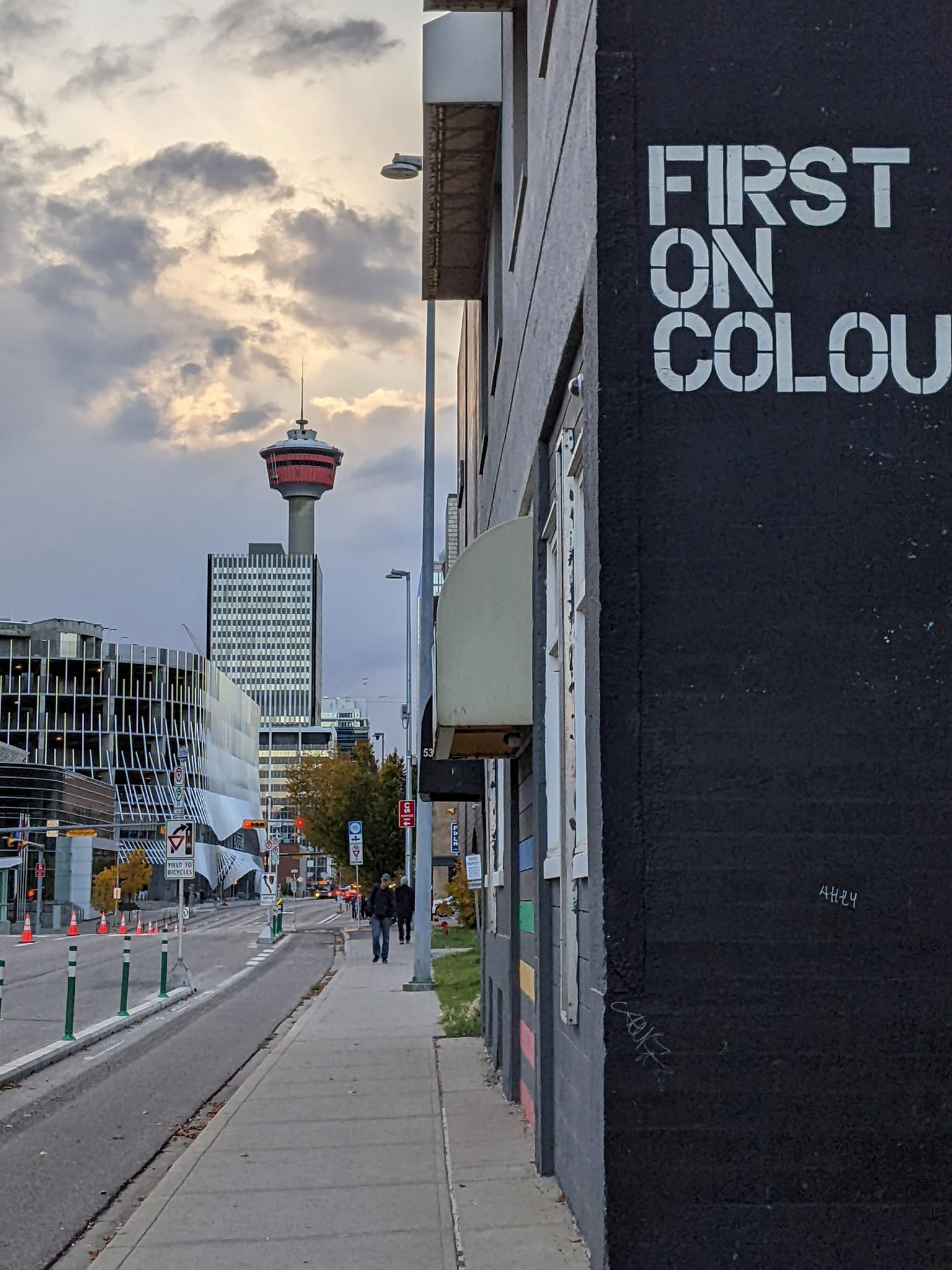
Like many large countries, you’ll get a bit of a variety in how people refer to certain things from one region to another, which is exactly the case with “parkade”. We first saw signs for a parkade in downtown Calgary and had all sorts of wild imaginings of what went on there, but as it turns out, it’s just a Western Canadian way of saying “parking garage”, not nearly as exciting as we thought.

Dart (aka cigarette)  

I’m surprised these things even come up anymore, haven’t we all but killed smoking in North America? But somehow, we actually have heard “dart” used in casual conversation a few times. I feel like it’s mostly used jokingly among those under a certain age, but if you want to understand some really niche Canadian jokes, you do have to know that they call cigarettes “darts”, which is actually much less offensive than some other countries’ alternatives…

Keener (aka over-achiever)

A bit more abstract of a word, “keener” was a little harder to suss out from context alone; however, since it’s used pretty regularly, we were still able to catch on pretty quickly. To call someone a keener means you think they are an over-achiever. They’re the ones who do all the extra credit assignments or get overly excited about something they’re very passionate about, like me with English dialects, for example.

Pogos (aka corndogs)

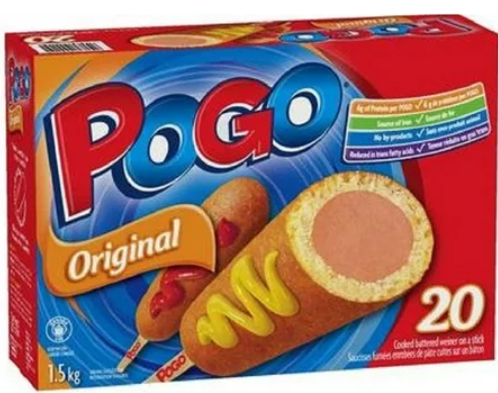
Here we have our first Kleenex situation. Pogo is a popular brand of corndogs in Canada, and because of their superb timing (and marketing), their name will forever be entwined with that of the famous sticked festival food. How do the makers of Pogo Sticks feel about this? I have no idea, but it is now definitely on my Canadian bucket list to have a Pogo pogo.

Soccer baseball (aka kickball)

I’m pretty sure I burst out laughing when I first heard this one. You know that sport we all played in school? The one that’s basically baseball, but you kick the ball instead of hitting it with a bat? Yeah, Canadians very creatively call that sport “soccer baseball”, which is just so deliciously on-the-nose!

Bristol board (aka poster board)

When we officially moved in, one of the first things we wanted to get set up was a small sound proof area for work, and for that, we needed a large tri-fold poster board, which proved to be extremely difficult to source. That is until we realized we weren’t using the most common word for the item we wanted. I mean, “Bristol board”? Really? How do you even learn things like this unless you participate in a local science fair?

Duotang (aka folder with brads)

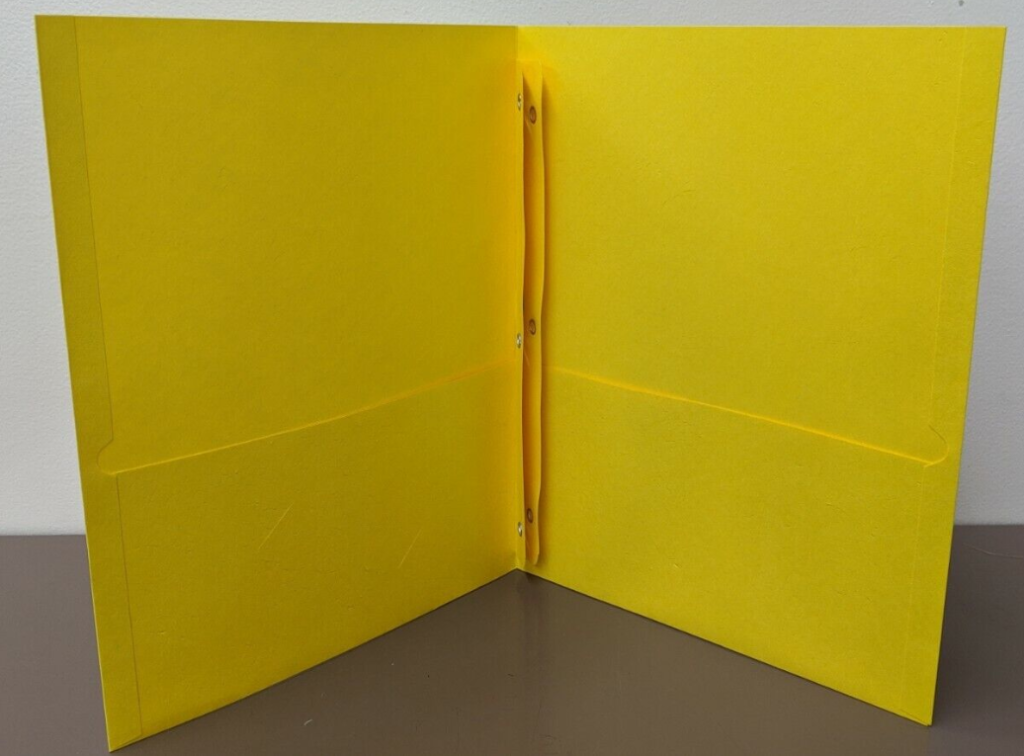
And while we’re on the topic of office supplies, another one that really threw me off was “duotang”. I wasn’t even sure that this was English at first, but evidently, it’s what Canadians call a very specific style of folder: the two-pocket ones with the brads in the center. Yeah, as far as I know, we don’t have a specific word for this in the US, so maybe it’s worth picking up?

Molsen muscle (aka beer belly)

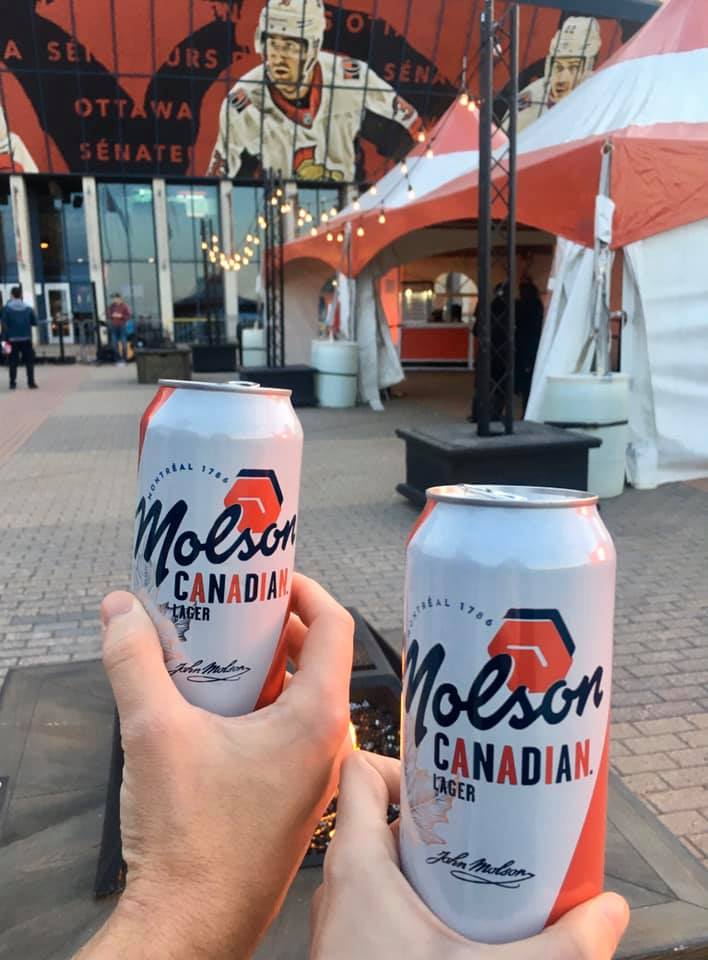
Possibly my absolute favorite Canadian expression has to be the beloved “Molsen muscle”. Molsen is the most popular national beer brand in Canada, and if you are particularly fond of them, you might have your very own Molsen muscle, which is, in my opinion, a much cooler way of saying “beer belly”.

Cobra chicken/Canada goose (aka Canadian goose)

Another joke-turned-expression is the good ol’ “cobra chicken” – half cobra, half chicken, that’s right, it’s the Canada goose. And while “cobra chicken” is really just for fun, Canadians actually do say “Canada goose” and never “Canadian goose” as we do. I guess they haven’t applied for citizenship yet.

So that’s my list as it stands now! Stay tuned for more Canadianisms as we continue to learn and adapt to life Up North.

Beautiful Banff

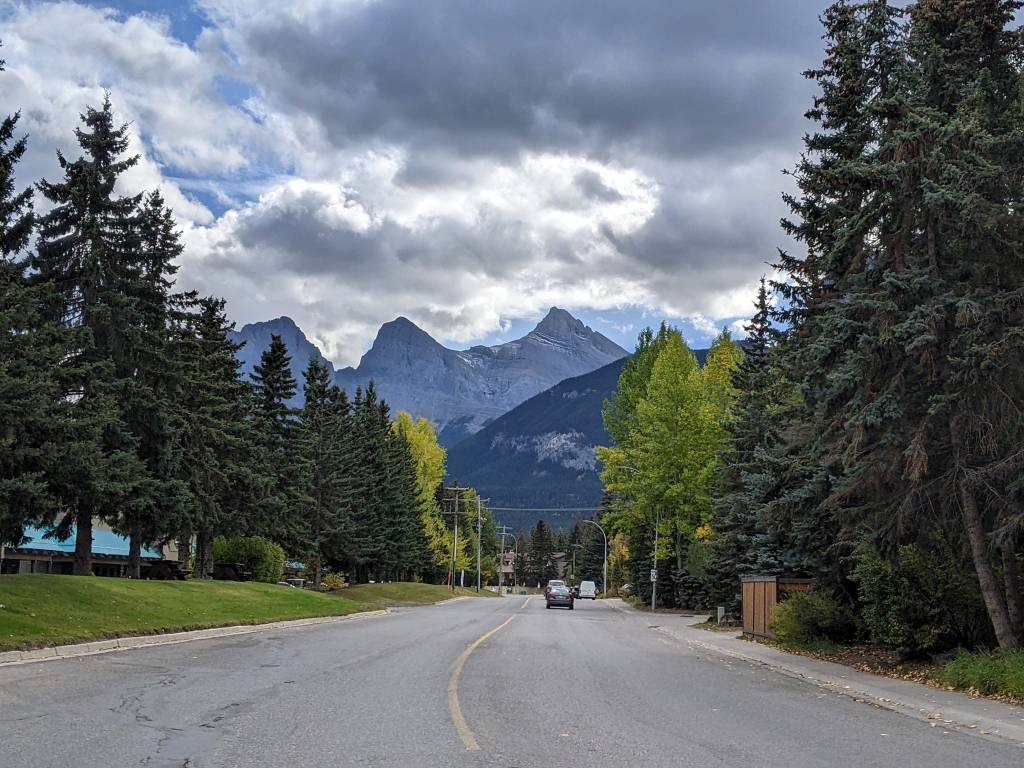
Last month, Tucker and I continued our Canadian explorations with a trip to Banff, Alberta. Of course, Banff had been on our list long before we knew we’d be living in Canada, and we can now say with absolute certainty that it should be on everyone’s bucket list! We were truly blown away with the seemingly infinite number of stunning views, trails, waterfalls, glaciers, and all sorts of other incredible landscapes. In fact, I had trouble narrowing down our plans to fit neatly into a one-week trip (many people spend weeks or months trekking around Banff and Jasper National Parks, and I now know why). But since most of us can’t do that, I thought I’d share our experience, which could be useful to others in planning their own epic trip to Banff!

Calgary, Alberta

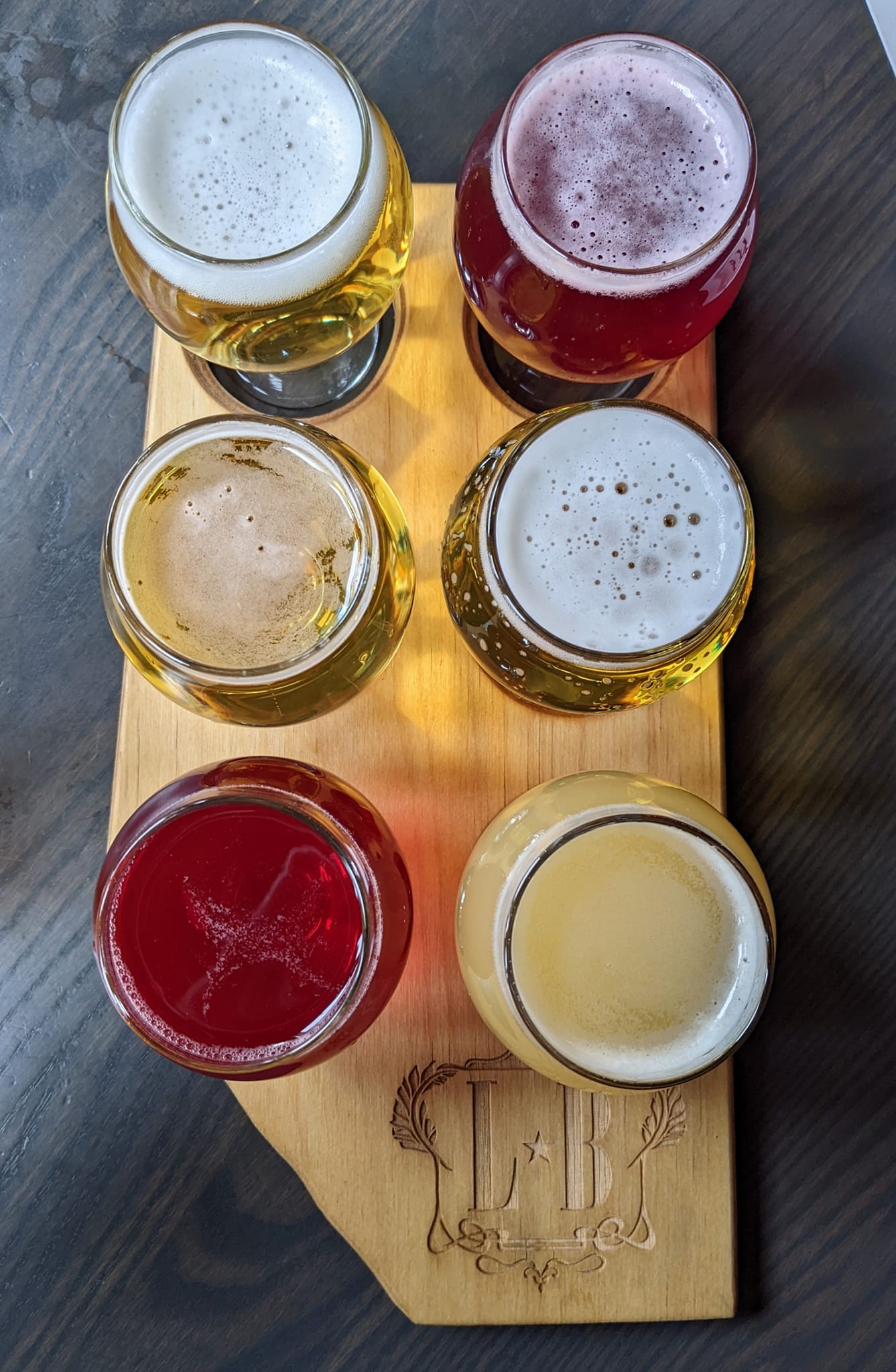
But before we get to the city of Banff, we have to get to the province of Alberta. The vast majority of visitors fly into Calgary, which is the nearest major city. This is what we did although we also considered flying into Edmonton and driving down through Jasper as an alternative. Ultimately, Calgary won out because it was closer and the flights were cheaper. I’m happy this was our choice though because it meant we got to spend several days in Calgary, which turned out to be a really fun city: two beautiful rivers running through it with gorgeous parks throughout, a very lively and impressive brewery scene, and several bar and restaurant streets where we were able to try the famous Albertan ginger beef. Seriously, don’t let the airport be the only thing you see in Calgary!

Of course, our main reason for being in Alberta wasn’t the cities, it was the beautiful Rocky Mountains, so how to get out there? Well, they’re really only about an hour drive from downtown Calgary, and you have several options. There are buses and shared cars aplenty, but we, like most people, ended up renting a car. The price was as expected: reasonable if you return it to the same place, outrageous if you don’t. In hindsight, having your own car is absolutely paramount if you want to see anything outside the teeming tourist bubble. One of the best parts about driving ourselves around Alberta was that we could (and did) stop at every possible turnoff for views, trails, signs, etc. not to mention the total freedom we had when driving the Icefields Pkwy. But if you’re sticking close to Banff (as in Banff City and the lakes) you really wouldn’t need a car at all if you didn’t want one.

Canmore & Banff

Once you’re successfully into the mountains, you have another choice to make: where to stay. If you’re camping, the options are limitless, but if you’re afraid of bears and/or you’re not a millionaire, you basically have two choices: Banff City or Canmore. Canmore is a little further from the main attractions and isn’t quite as touristy; therefore, it’s slightly cheaper, but there’s much less to do, which means you’ll likely be driving (and having to find parking) more often, or so we heard from fellow hikers. We stopped in Canmore both on the way out of and back into Calgary, and we really enjoyed it. It’s basically a baby Banff, and I think it’s a solid option, especially if you prefer a more low-key home-base.

We ended up staying in Banff though since this was our first time, and we had no idea what to expect. Since we went at the end of September (right before a lot of attractions and roads are to be closed for the season), there was a plethora of visitors. Options for accommodations were somewhat limited either by availability or by price. Fair warning – Banff is beautiful, but it is not cheap. We chose to stay in a private room at a hostel about 1.5 miles (2kms) from the city center. It was an easy walk, but there is also an amazingly quick and efficient public bus that runs through town and out to many of the resorts as well. Several hotels/hostels give free passes for the duration of your stay, but you can also buy a day pass for $5CAD.  

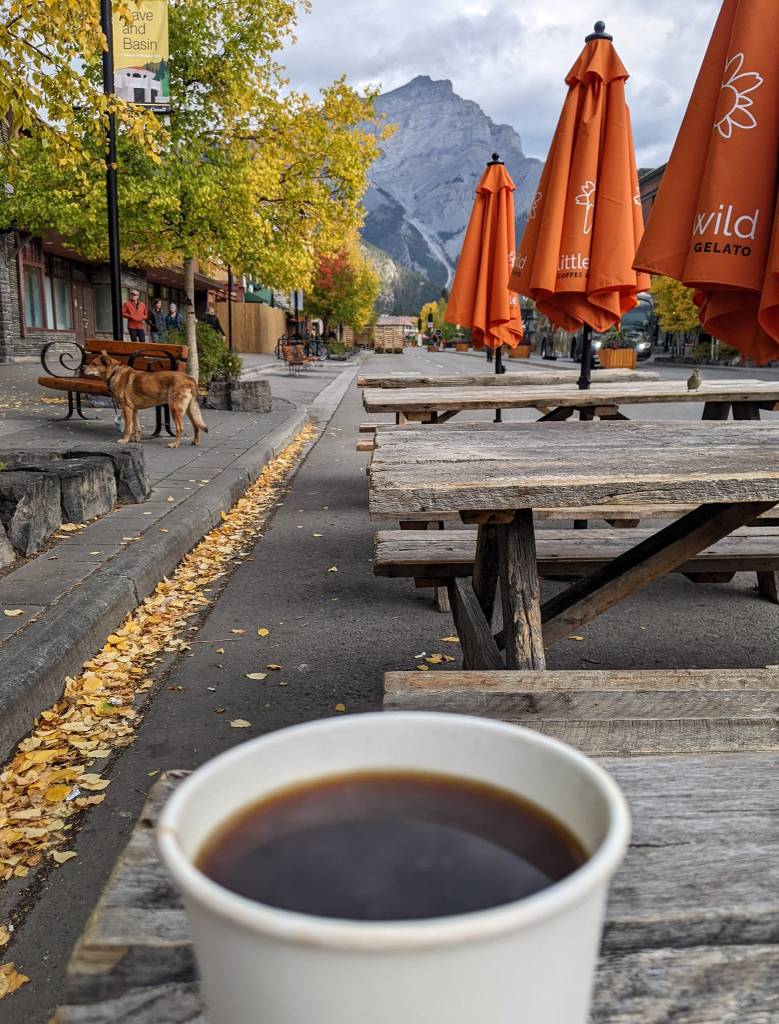
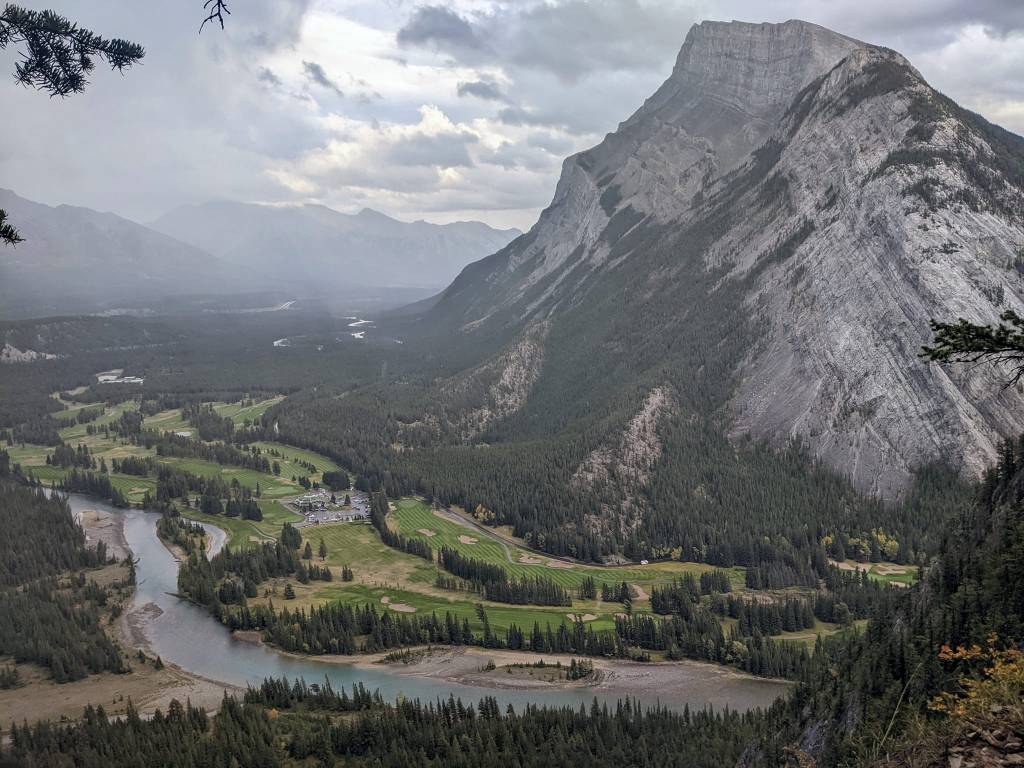
The city of Banff has much more to do than we originally thought. On our first evening, we climbed the nearby Tunnel Mountain, and there were countless other trails into the surrounding mountains and valleys. Evidently, there’s also a famous golf course there – who knew? And the town itself is well-worth a wander. Little shops selling everything from mountain gear to homemade fudge, lots of cozy cafés, and restaurants that run the gamut: we saw a McDonald’s right down the street from an extremely lavish steakhouse. We ended most of our days in Banff eating and drinking after spending the day outside hiking, and the choices were surprisingly diverse for such a small town.

Lake Louise & Moraine Lake

Likely two of the most famous views in all of Canada (maybe even North America) are those of Lake Louise and Moraine Lake. No matter how you feel about large-scale tourism or throngs of tourists, you can’t come all the way to Banff and NOT see these two icons. Somewhat recently, Parks Canada decided to close off the roads to the lakes for all private vehicles. The only way to visit them now is to take a shuttle (or a tour) from a parking lot/ski lodge just outside the park. This was very confusing to us when reading about it online, probably because it’s new, but it was actually really easy to do. You reserve a time slot and a direction (either LL->ML or ML->LL) and then present your digital “ticket” to the bus driver. The buses leave every 20 minutes, and as long as you get on within your window, you’re fine.

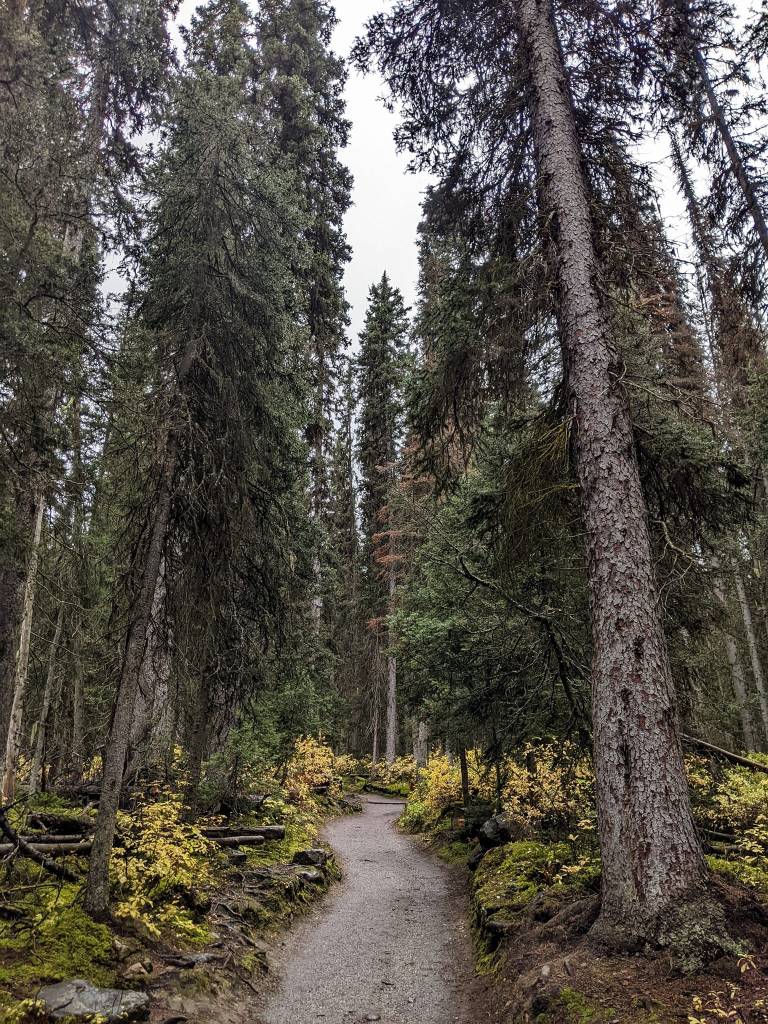
Lake Louise is huge. There are trails on either side of the lake and up the mountains on both sides with bird’s-eye views. You can also rent canoes and take to the water if you want ($145 for 30 minutes – yikes!) My advice for Lake Louise is to play it by ear depending on the time you’re there, what the weather is like, how many people you see going in either direction, etc. We were there in the afternoon, and it was quite crowded, so we took the path less traveled up to the Fairview Lookout on the lefthand side and found it absolutely perfect. There are signs everywhere showing the lengths and difficulty levels of all the trails, so you can pretty easily decide once you’re there. Just remember to bring water and snacks because there’s not a lot of options once you’re on the tourist circuit.  

Moraine Lake is not as big, and because of how it sits, you’re sort of on top of everyone else trying to see/take pictures of the lake. There are several trails here too, but most of them take you away from the lake. We did the 4-mile (6-km) trail to the Consolation Lakes and felt that they lived up to their name lol. In hindsight, I’d have rather brought a picnic and found a nice place to sit and eat while looking over one of the lakes. All the hikes were lovely, of course, but the views of the lakes were better. Also, we did see signs about hiking/traveling in larger groups because of bears, which we didn’t take very seriously then. After recent events, we plan to be more aware and prepared next time, and I would urge anyone else to do the same.

Icefields Pkwy & Jasper National Park

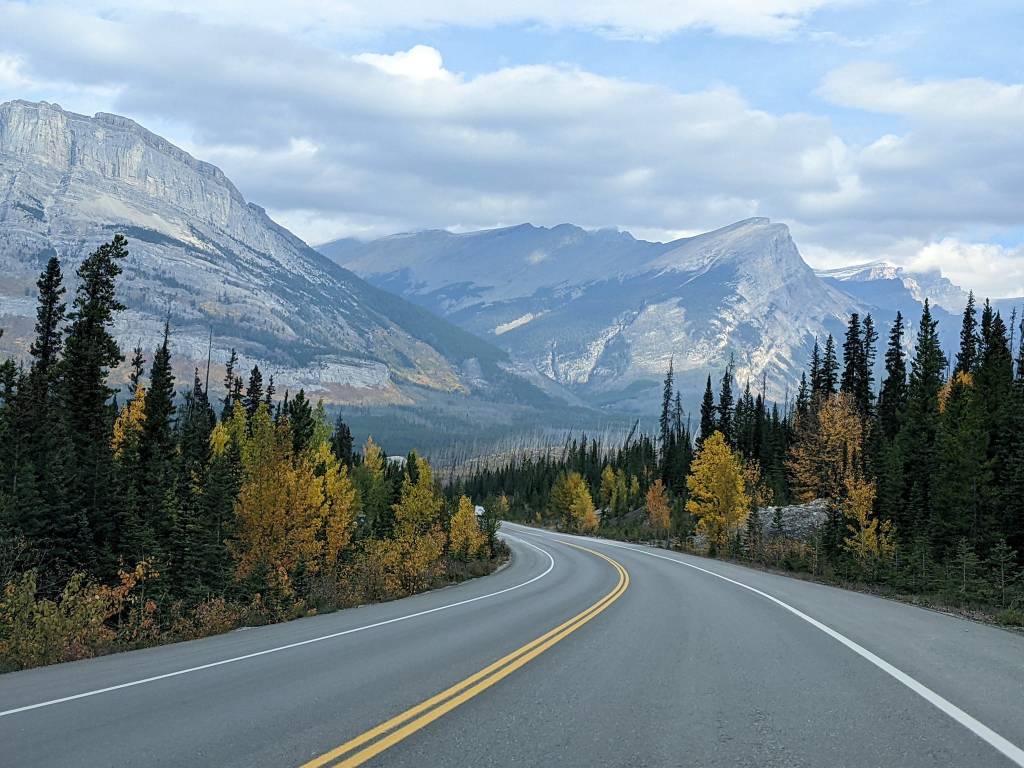
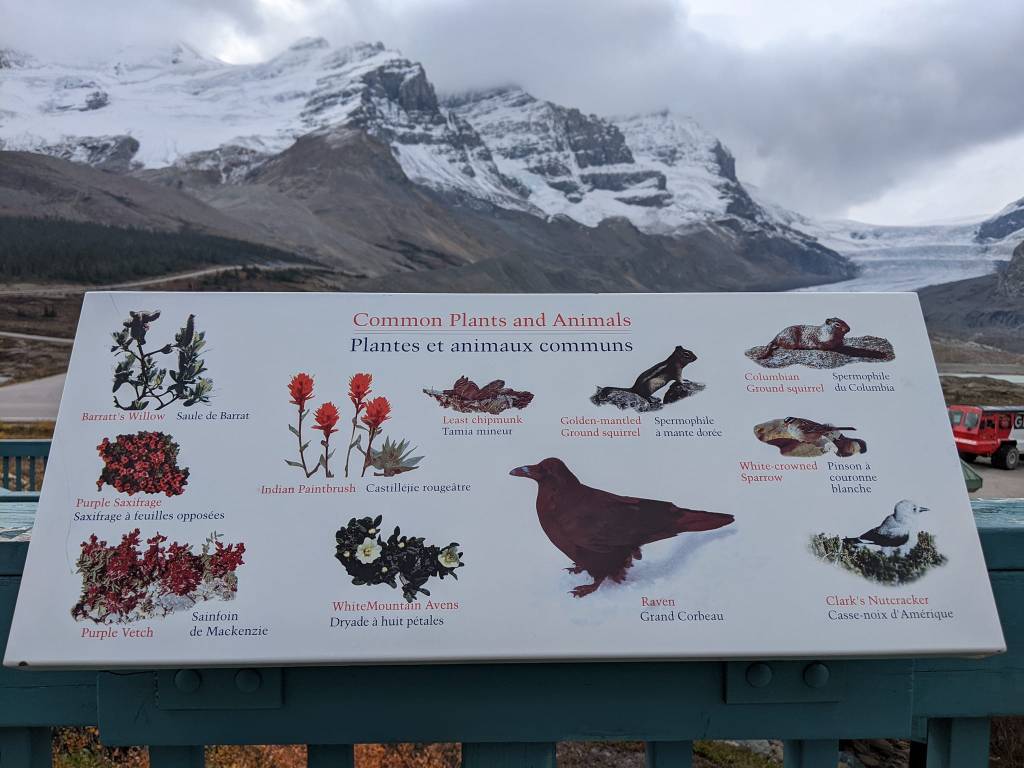
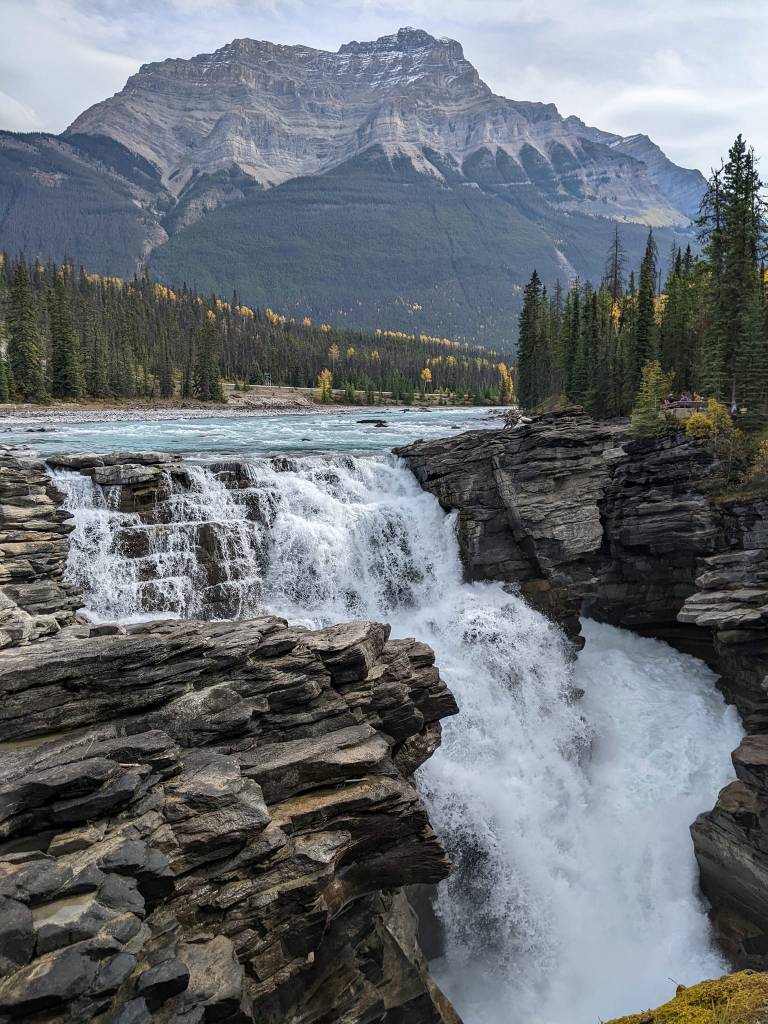
Our last great adventure in the Canadian Rockies was a drive from Banff City up to Athabasca Falls in Jasper National Park and back. This stretch of road is known as the Icefields Parkway because there are over 100 glaciers along this path, which gave us some of the most incredible views we’ve ever seen from a car. It’s only about 3 hours up to Athabasca Falls, but it took us over 4 because of all the stops we made along the way: the Columbia Icefield, Sunwapta Falls, Mistaya Canyon, Peyto Lake, and dozens of other incredible stop-offs. This drive was easily my favorite part of the trip, especially in the fall. We didn’t see very many people along the way, but there were endless signs teaching us all about the region, the various landforms, flora, fauna, you name it. It was very much like a DIY field trip, which, of course, I loved!

Ugh! After writing this and reliving all these incredible moments, I’m ready to plan a trip back to Alberta. Somehow, I feel like this might be a Huangshan (Yellow Mountain) situation, in which you haven’t really seen it until you’ve seen it in all four seasons. I do hope I’ve inspired you to put your plans to visit Banff into action not only because it’s one of the most beautiful places in the world, but also because some of these places won’t always be there for us to see in the future. Time really is of the essence, so bon voyage!

Fun Facts: Canada Edition

Less than 100 days in, and we’ve already had three guests come to see us in Ottawa, which means we’ve been learning (and sharing) A LOT about our new home. In fact, I’ve got so many fun facts swimming around in my head that I feel they deserve their own post! Who doesn’t love a little Canadian trivia, eh? So, without further ado, here are 20 interesting facts about our new home:

#1 Surely, we have to start with the name of the country, right? The word “Canada” actually comes from the Huron-Iroquois word “kanata”, meaning “village” or “settlement”. Its first usage was intended to specify one village in particular; however, early French explorers used it to describe not only the village, but also the surrounding area, which kept expanding, eventually giving name to the entire region.

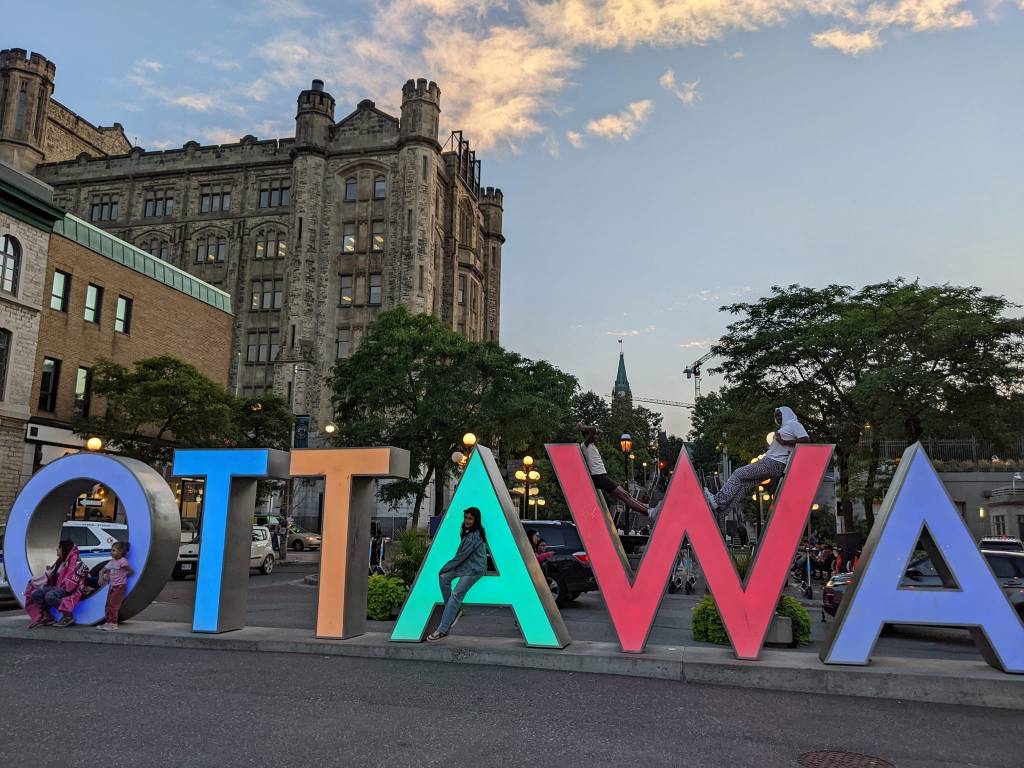
#2 Interestingly, Ottawa (or Outaouais, as it’s called across the river) gets its name from a different indigenous language. “Ottawa” is derived from the Algonquin word “adawe”, which means “to trade”.  

#3 Of course, everyone associates Canada with English and French, but I was delighted to read that there are over 70 distinct indigenous languages spoken here as well. Who’s up for learning a little Inuktitut with me?

#4 No matter how you get to Canada (by boat, by car, or by plane), you’ll likely notice there’s a lot of water here. Canada actually has the most lakes of any country in the world, about 880,000 in all.

#5 The crazy number of lakes should really be of no surprise given the fact that Canada is the second largest country in the world. Only Russia is larger.

#6 Canada does beat out Russia (and every other country in the world) for longest coastline though. There really is water everywhere here!

#7 Speaking of Canada’s coast, Canada is surrounded by oceans: the Atlantic to the east, the Arctic to the north, and the Pacific to the west, which is why you frequently hear Canadian announcers say “from coast to coast to coast”, which I think is brilliant!

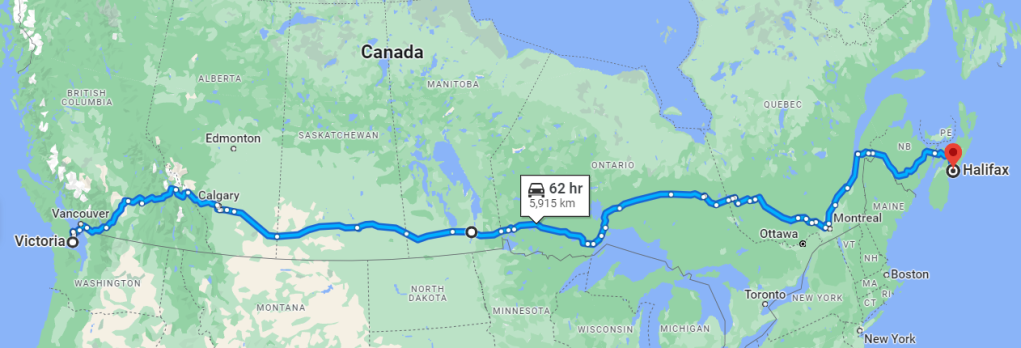
#8 Their roadways are also pretty impressive. There’s one highway, the fittingly named Trans-Canada Highway, that traverses some 7,800km (4,800 miles) from one end of the country to the other.

#9 For such a large country, there really aren’t a lot of people living in Canada. With a little under 40 million people, Canada is one of the least densely populated countries in the world with about 4 people per square kilometer (or 10 per square mile). For reference, the US has about 37 per km² (96 per mi²).

#10 But there are still quite a few famous Canadians among us! Celebrities like Keanu Reeves, Ryan Reynolds, Rachel McAdams, William Shatner, Pamela Anderson, Nelly Furtado, Michael J Fox, Jim Carrey, Ryan Gosling, Celine Dion, Drake, Elliot Page, and so many more all hail from the Great White North.

#11 Other notable Canadians include two of the most famous dog breeds in the world: the Labrador Retriever and the Newfoundland, coming somewhat obviously from Newfoundland and Labrador.

#12 Canada has ties to many animals, such as the moose, the polar bear, the orca, the Canada goose, etc. but none of those are the national animal. The national animal of Canada is the humble beaver, which I recently learned is actually classified as a rodent.

#13 Another symbol of Canada is the maple leaf, which has been associated with the region since the early 1800s. Surprisingly though, it only made it onto the flag in 1965, meaning the Toronto Maple Leafs logo is about 40 years older.

#14 Speaking of maple leaves, Canada produces about 80% of the world’s maple syrup.

#15 In addition to giving the world maple syrup (and poutine, of course), there is a huge number of other internationally famous Canadian inventions: basketball, lacrosse, insulin, peanut butter, IMAX, pagers, egg cartons, Hawaiian pizza, and the snowblower just to name a few.  

#16 Canola oil happens to be another Canadian specialty. Canola was first bred (in Canada) as a healthier alternative to rapeseed and has become one of the most ubiquitous cooking oils in the world. The name “Canola” is actually a portmanteau of “Can”, as in Canada, and “OLA” meaning “oil, low acid”. Half a century later, and Canada is still the world’s largest producer of Canola oil.

#17 The US and Canada have a lot of historical similarities, so it’s not surprising that we both celebrate Thanksgiving. The two holidays have similar origin stories and similar commercial influence, but are ultimately celebrated in different months. Canada celebrates their Thanksgiving on the second Monday of October.

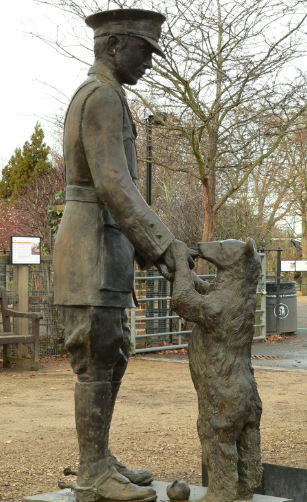
#18 Another somewhat random fact we recently learned about Canada is that the “Winnie” in Winnie the Pooh is actually short for Winnipeg (like the city). The stuffed bear was named after a real Canadian black bear that went by the name Winnipeg.

#19 Many of our fun facts stem from our observing differences between the US and Canada, and one of these interesting differences is the legal drinking age here. In three Canadian provinces (Alberta, Manitoba, and Quebec) it’s 18, and in the other provinces and territories it’s 19.

#20 And finally a few cold facts for you! Canada is without a doubt one of the coldest countries on the planet. In fact, a city in Yukon once recorded -63°C (-81°F), which is about the average temperature on Mars. Ottawa is often listed as one of the top 10 coldest capitals in world, with an average high of -5°C (23°F) for the month of January. Winter is coming for us…

Well, there you have it, my first Canadian facts round-up! I hope you found these tidbits as interesting as we did, and I hope you make it up to Canada soon to learn a few more in-person! Thanks for reading!

So Canada, eh?

And just like that, we’ve already been living full-time in Canada for over a month! It’s absolutely crazy how fast it goes! It’s also crazy just how quickly we can fall into a routine and feel extremely comfortable with so many new things, like seeing Canadian plates on our car, switching from “buenos días” to “hello, bonjour”, and/or re-adapting to hot, humid summers back down at sea level. As always, we’re so excited to be in a new place, learning new things about a country that we’re honestly a little surprised to find ourselves in! Actually, I think it has surprised a lot of people because some of the most common questions I get these days are: “Why Canada?”, “How did you choose Ottawa?”, “Why not somewhere in the States?”, and the ever-popular, “Where are you going next?” All great questions that I’m going to do my best to answer in this post!

Why Canada?

It was pretty tough 😅

To answer the “why Canada” question, we’ll have to go back in time a little, back to when we made the decision about which country to move to after living in China for two years. Picture it: it was 2019; there was no hint of a pandemic, but after two years of studying Mandarin and struggling to find work squarely in his field, Tucker really wanted to go somewhere English-speaking. Of course, I wanted a country with any other language because that’s a huge reason I love living abroad: the constant language practice. So, we narrowed down our search to bilingual countries, and with the shorter flights for family visits and the possibility of driving our pup home with us, Canada jumped to the top of the list!

Even now, after so much time has passed and so many things have changed (pandemics, cars, jobs, etc.) Canada still offers the amazing opportunity for me to work with French-speakers and Tucker to work with English-speakers, with both of us able to diversify and grow our careers in our respective fields simultaneously. This is how we chose Ottawa. While there are a lot of truly amazing bilingual cities in Canada, Ottawa seems to be one of the most evenly split. It’s the nation’s capital, representing bilingualism both in practice and by law, and it’s also located right on the border of Ontario and Quebec, meaning that every time we cross the river (aka the provincial line) we’re guaranteed a language switch. It really is the best of both worlds! Not to mention, it’s an incredibly beautiful city surrounded by so much nature and history!

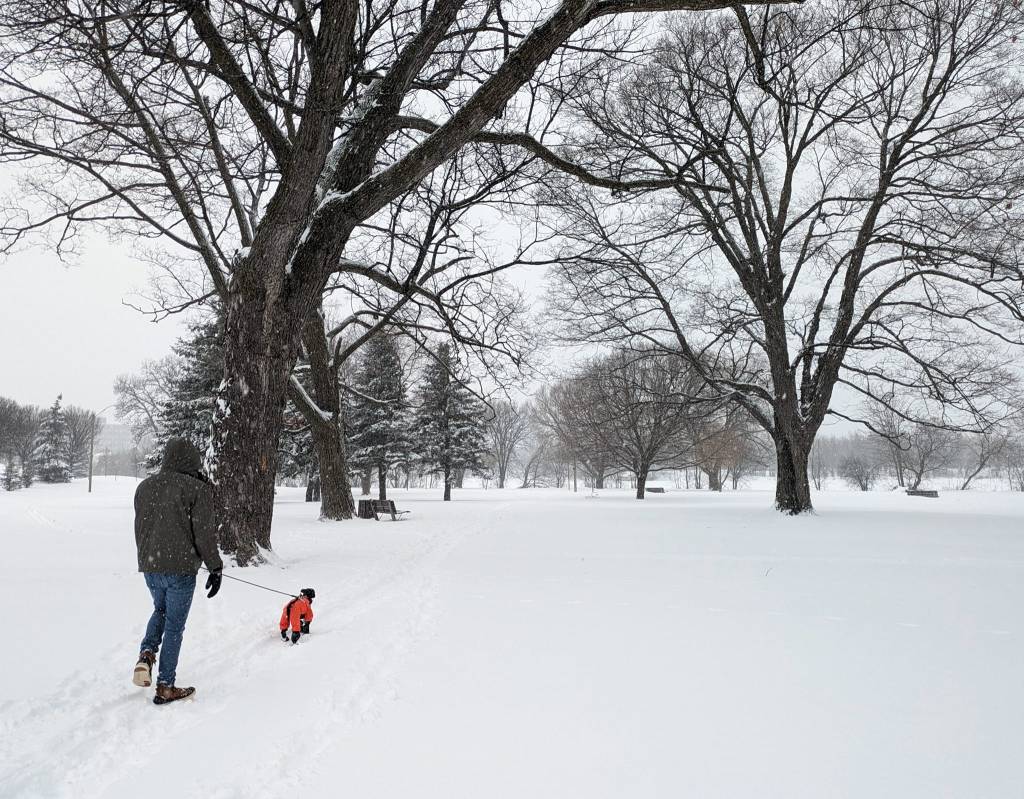
In addition to the languages/work prospects available here, we both just seriously missed winter. I know when I say things like this, a lot of people roll their eyes and think “just you wait”. But I really think everyone underestimates just how much we love the cold, and especially the snow. We’re so excited to get back into snowboarding regularly. We can’t wait to try snowshoeing, natural-rink ice-skating, curling, snowmobiling, and maybe even hockey at some point. Winter people are our people, and we are ecstatic to be back in a country full of them! It’s finally our chance to really test our love of winter! This time as adults with a car to scrape ice off of and a dog to walk in minus-20 degree weather – sounds like fun, no?

Things like this do give us pause though…

Why not the US?

But, of course, the US gets pretty cold too, and there are many places there with languages other than English spoken. So why not go somewhere in the US? Another good question that I’m asked pretty frequently. Along with “do you think you’ll ever live in the US again?” To these, my answer is always the same: I lived in the US for 25 years. I have visited all 50 states. My job for the last decade has been teaching people all about the language and culture of my home country. The reason I want to live abroad is the simple fact that I enjoy discovering what else is out there! I love being immersed in a culture different from the one I grew up in. I love learning about another country’s history, language, customs, etc. Of course, I love the US too, and I write about it often: like about our incredible national park system, the joys of eating in Chicago, and what exactly I think makes the US so unique. But I also know how much else there is to explore and how much easier it is to do so if you can live it and be immersed in it every single day.

So, would we ever move back to the US? Probably not. There are 195+ other countries for us to potentially call home! How could I go back when there’s so much out there still to discover! Of course, we are starting to think more about the challenges of moving every few years and how much paperwork that requires year after year, which is why we’re also starting to consider citizenship in other countries. We’d never revoke our US citizenship, but having duel or even triple citizenship would give us so many more options as time goes on – who knows, maybe we’ll have a three-country rotation in our retirement years! We’ve also discussed the possibility of buying a boat and becoming nomads of the sea! Haha! Ultimately, there are just so many options available to us, and it seems a shame not to take advantage of them while we can. So, as much as I love the US (flaws and all), for the foreseeable future, we’re definitely planning to continue our signature country-hopping.

So where else?

This constant state of unsettled-ness tends to beg a few more questions, like: where will we go after Canada? And how do we decide which countries we ultimately move to? Really, I’d love to say it’s all extremely well-thought-out and carefully planned and executed step by step, but in reality, we have several concurrent plans as to where we might go in the future, and no idea which ones will pan out in the end! At the moment, our short list of contenders would be: Argentina, Ireland, Romania, Turkey, Tunisia, Thailand, and/or a South Pacific Island. We generally choose based on things like residency requirements, airports/travel times to and from, quality of life, how similar or different our day-to-day lives would be there, etc. However, every one of these aspects (and so many others) are changing every day, so our list has to be pretty fluid. Ultimately, we try to have a variety of possibilities (with plenty of contingencies) sometimes years in advance (because immigration/residency paperwork is no joke), but we also happily embrace the ambiguity and flexibility that comes with being perpetual expats. C’est la vie, non ?

So, where does that leave us? Well, we’ve definitely settled on two years here in Ottawa, followed by potentially two in Montreal, but if we can’t hack the winters here or if I get tired of all the English, we might be off to a different continent. Isn’t the unknown exciting? We’ll just have to see where the wind takes us! In the meantime, I hope this answered some of the “why”s and “what next”s. And as always, I’ll be sure to keep everyone updated as everything unfolds – starting with our upcoming Canadian capers! Should be fun, eh?

We Have Arrived!

We did it! We finally made it to Canada! We first applied for our residencies and came up to look for jobs/apartments way back in 2019, so to finally be here with any degree of longevity/stability feels so surreal! But how did we get here? What have we been doing these first few weeks? And what are we thinking for the future?

Getting to Canada:

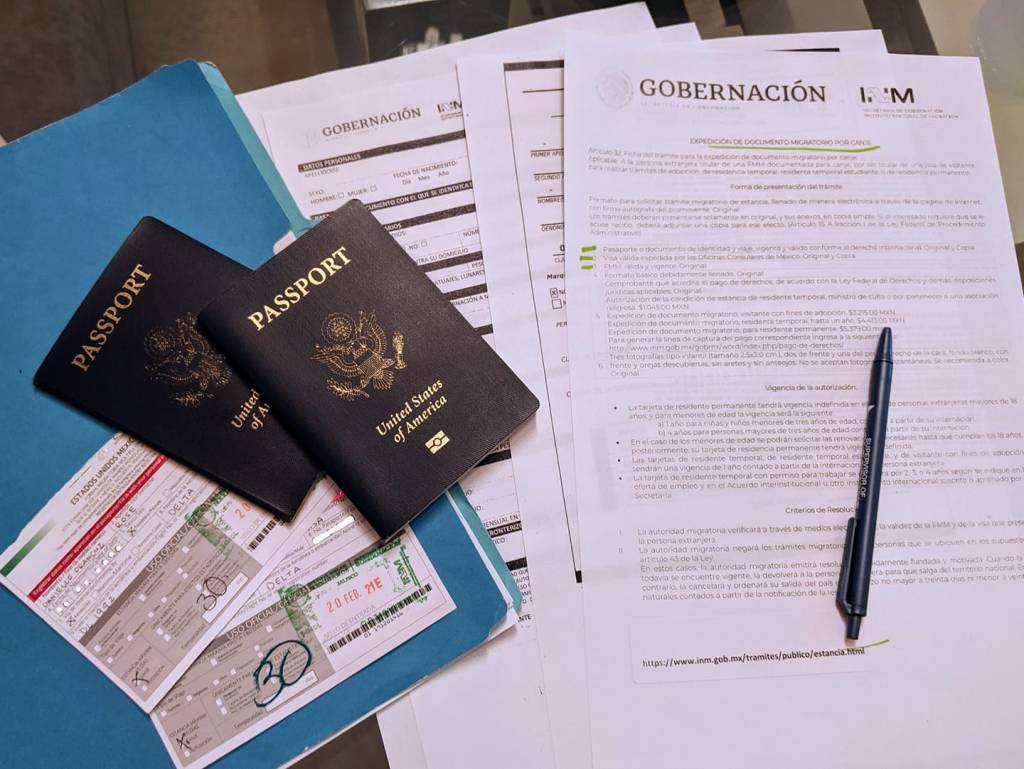
Where do I even begin with our journey to Canada?! I feel like I’ve relayed bits and pieces of our incredibly long and complicated paperwork journey in several posts throughout the last five years, so this time I’ll stick to describing our physical trip up to the Great White North.

Yay!

For this particular move, we opted to split it into two rounds: one by air and one by car. I documented a few things about our initial fly-up on Facebook, but as a quick recap: back in early May, Tucker and I flew up to Ottawa with several suitcases in order to 1) get our apartment keys and 2) clean/set up a few things before the big drive up/move in. In theory, it was supposed to be a somewhat relaxed way of getting our feet wet in Canada, giving us more time to focus on apartment things, and also freeing up a little more space in the car for what was going to be a very long drive. Turns out, we didn’t get near enough done in that short amount of time, little issues kept turning into bigger issues, and in the end, the car was fuller this time than when we originally drove down to Mexico. Lots of lessons learned though, so at least there’s that.

Spent WAY too much time here though…

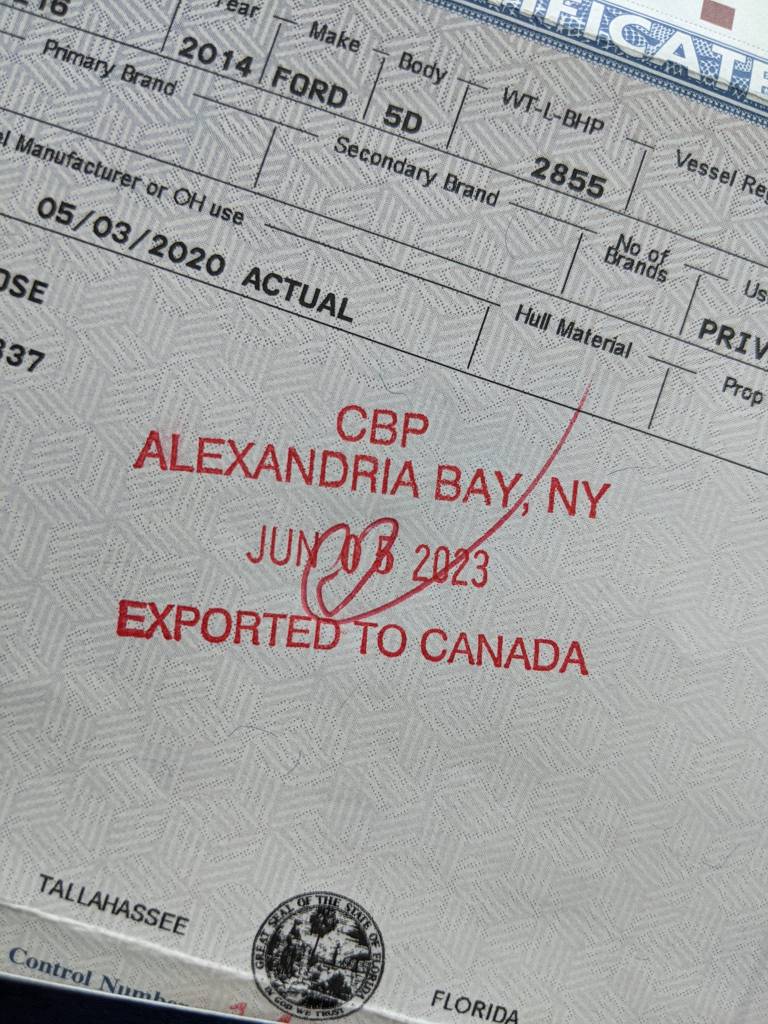
The actual driving part of round two went beautifully! Guadalajara to Laredo, Laredo to Little Rock, Little Rock to Tucker’s Dad’s place in Kentucky, Tucker’s Dad’s place to Watertown, and Watertown to Ottawa. 48 hours in total, but pretty smooth, all things considered. The issues we encountered actually occurred at either end of the trip, with the first problem cropping up a few days before we even left GDL. We already knew that we were going to have to export and import our car when we crossed into Canada, and we had everything we needed to complete that process. However, at some point, we read that the export office is only open Monday through Friday 9 to 4, and we were planning on arriving around 6pm on a Saturday. Oops. And that’s why our drive ended up taking a few extra days, and we got an unexpected stop in Watertown, NY. Fun times!

The next problem (that we absolutely should have foreseen, but totally didn’t) was the fact that all of our stuff no longer fit in the car. We were so optimistic in thinking that by bringing 4 suitcases up to Canada pre-drive, we would free up plenty of space in the car…but no, over the years, we have acquired quite a few additional household things like a Roomba, an Instant pot, a laundry basket, small trash cans, a paper towel holder, a cooler, and other items that we’d never think of buying and/or keeping had we been flying to our new home. Alas, we fell into the trap of thinking, “oh, we’ll just toss that in the car at the end”. Well, I did my best Tetris-ing work, trying to fit everything into what I now realize is quite a small car, but in the end, there were still a few things we could have used in Canada that my friends are now enjoying in Mexico! More lessons learned…

Yikes!

Setting up shop:

So, aside from having a pile of immigration tasks to accomplish upon rolling up to our new home, we also had quite a few things we needed to buy for the apartment. But before we could get to all that fun, we first had to shelter in place. The week we were making our way to Ottawa, which lies on the border of Quebec and Ontario, an unusual number of forest fires broke out in both of these provinces. Extreme fires, it turns out, the smoke of which blew its way down to us and then into several NE states as well. This was an unexpected wrench in our first few days, but not too detrimental to our plans because I actually had a lot of work to catch up on, and staying home wasn’t a tough ask after a week on the road. Not to mention, we were categorically prepared with a plethora of masks and DIY air purifier skills!

After the smoke had cleared, we were able to successfully apply for and request all the documents we’ll be needing (and/or make appointments for them). In the next few weeks, we should be receiving our PR cards, ON driver’s licenses, Social Insurance Numbers, vehicle registration, and OHIP cards. Fingers crossed! We were also able to get the vast majority of our apartment set up (unfortunately, still waiting on a few things to make their way to us, but photos to come soon, I promise!). In the midst of all this running around, we also hosted our very first guest (who thankfully brought her own bed in the form of an air mattress), which means we’re now prepared for any/all future guests! Of course, we’ve also begun to dip our toes into what our new neighborhood has to offer by sampling a few of the many, many restaurants and pubs that surround us.

We <3 Lowertown!

Looking ahead:

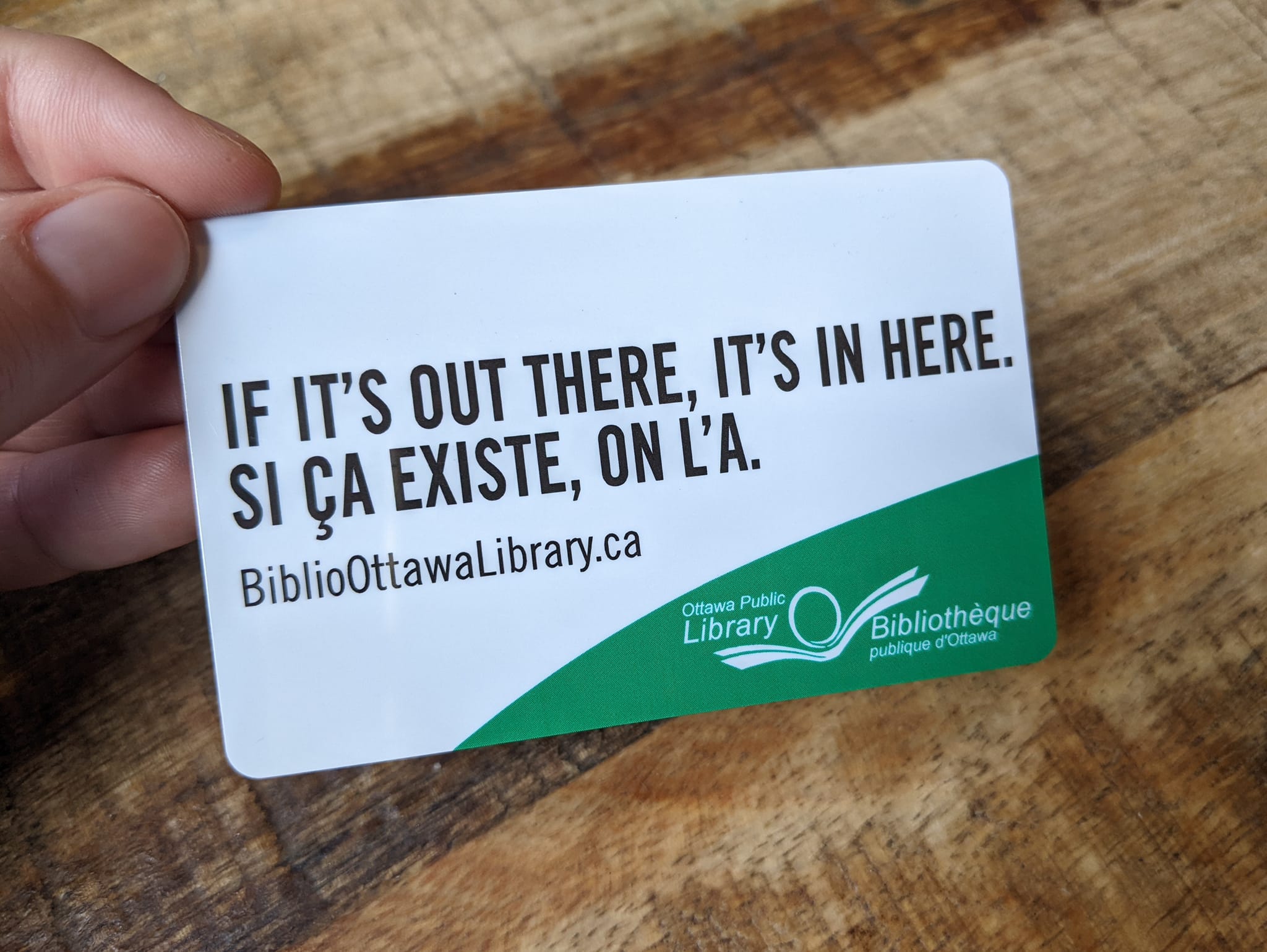
So, what’s next? Well, the usual, I suppose: trying all the delicious restaurants, walking the entirety of our neighborhood, getting familiar with our new grocery stores, and everything else that comes with finding our place in a new city. I’m super excited to report that we’ve already got library cards, a reservation for weekly trivia, and a growing list of observations to share about the differences we’re already experiencing between the US vs. Canada and Quebec vs. Ontario. As always, there’s so much to learn and explore, and for now, that’s exactly what we plan to do. At some point, we might even break out into something other than the five-block radius between us and the supermarket. Look out, Ottawa, we’re coming!

You might also be wondering just how long we have to explore here (aka how long we plan to stay this time). Good question, but I really never know. Our Canadian residency doesn’t have to be renewed until 2027, and if we stay in Canada for a total of 3 years, we can actually apply for citizenship and never worry about immigration paperwork here again, but honestly, we have no idea if we’ll stay that long. We do know that our current lease here in Ottawa is good until June 2024, so we’ll definitely be in this exact location for at least a year (and, honestly, after all this apartment set-up, we’re already leaning towards two lol). Ottawa is such a beautiful city with so many activities for us to enjoy; plus, Montreal is only an hour away, so I think we’ll definitely need at least two years to do the National Capital Region justice!

As for the more distant future, who knows? Two years in Ottawa could be followed by two in Quebec City (if we do end up loving the winters) or maybe we’ll head back to Guadalajara to thaw out? Or maybe onto Argentina, the Mediterranean, back to Poland or Asia, literally all of these options and more have been discussed, so place your bets! Either which way though, our time in Canada is likely going to fly by, so be sure to come up and visit us while you have the chance! We can definitely host you in Ottawa, or we can meet up somewhere else in this vast and beautiful country. I’m once again aiming to see as many provinces as we can, so you can bet there are already trips planned from coast to coast to coast! Hello, bonjour, Canada! We have arrived!

Pandora’s Paperwork-filled Box

This month’s post might be a little different than usual. Actually, at this point I’m not convinced this isn’t just a form of catharsis (if I write it all down, I can let it go, right? Right?) We’ll see what happens. In reality, I hope this will be more than just my venting about my last few months in paperwork hell. I would actually like for this to serve as a record in case I have to do some of these things again and perhaps also as a guide for anyone else that has to go through these incredibly tedious processes. So, all I can say is buckle up as I endeavor to take you on a journey of a thousand citas (or “appointments”).

Okay, you might at this point be wondering what the heck I’m even talking about in this post. To clarify (and to account for any absenteeism these last few months), Tucker and I have been absolutely elbow-deep in various administrative processes. It all started in January when Canadian immigration (which we applied for back in 2019) contacted us needing updated and additional documentation to continue their processing of our permanent residency status. They needed another “up-front medical exam” and a copy of my renewed passport.

Up-Front Medical Exam

While not the most complicated of our soon-to-be mountain of administrative tasks, getting a medical exam in a foreign country always comes with a few added challenges. For one, Canada requires the exams be performed by one of their IRCC-approved doctors, of which there are only 12 in Mexico. Super unfortunately, none of these twelve happened to be in Guadalajara. However, there was one clinic in Monterrey, which we knew we’d be driving through in February while on another paperwork errand. The next (and probably somewhat obvious) issue with medical exams abroad is the language barrier. I had to call and make our appointments in Spanish and, of course, all the background questions and instructions throughout the exam were also en español. I learned quite a few new words throughout this process (como altura, vejiga, aguja, y radiografía), and I even made a joke about Tucker needing a paleta after his scary, scary blood draw.

Happy to have an excuse to visit Monterrey, honestly

Passport Renewal

The next request from Canada was for my renewed passport information. This was a tricky one because they needed me to renew it 6 months before it expired! When you live abroad your passport is your main ID, so to change it before we renewed our Mexican residency would have been impossible. We also knew we’d be going back to the border in February, so for this one, I actually appealed to Canadian immigration and asked for an extension. I was somewhat successful.

I think they’re just as sick of me at this point…

Mexican Residency Renewal

Truly our 2nd home in GDL

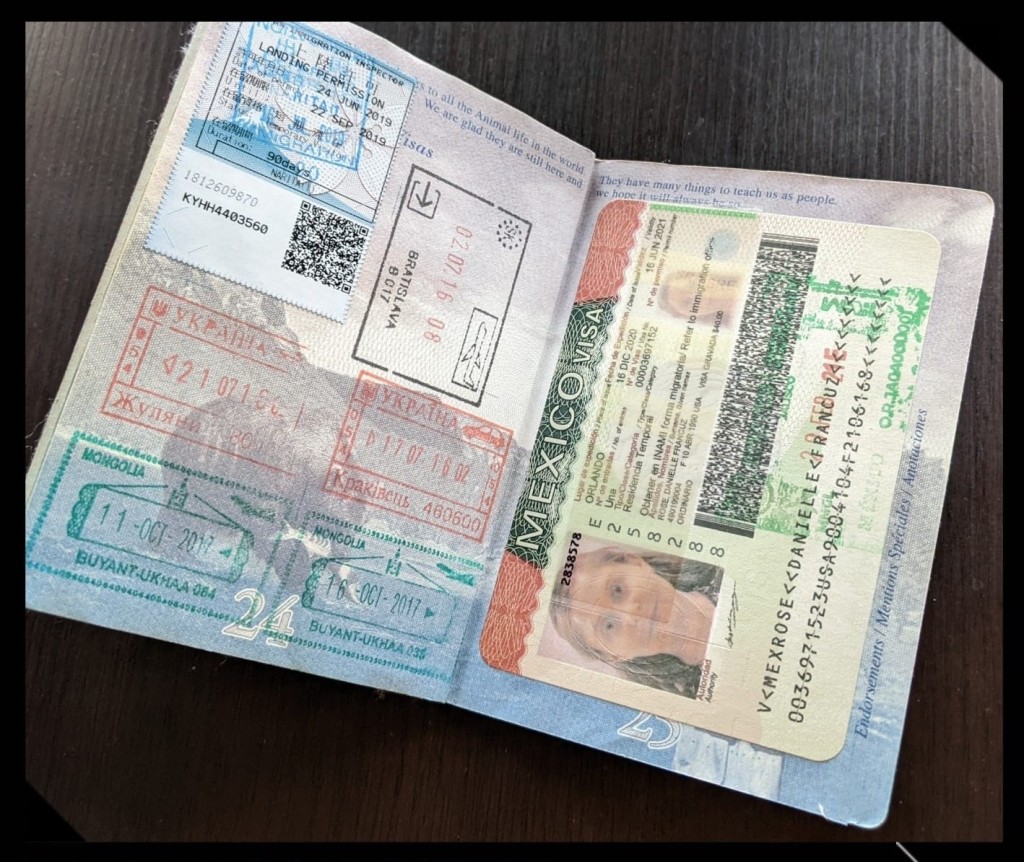
Of course, we also knew that in February our Mexican residency status would also need to be renewed. Everyone who applies for temporary residency in Mexico is given one year at the start, and after those first 365 days, you have the option to renew for 1, 2, or 3 more years. Since getting our initial residency cards was a fairly straight-forward process, I (perhaps) naively thought the renewal process would be even easier. We’re already in the system, no?! However, a series of extremely unfortunate events had us going back and forth to the Immigration Bureau 5 times (often having to wait weeks in between citas due to the new Covid procedures, thanks a lot Omicron). Unfortunately, one of the main reasons for all of these trips was a confusion with my apellidos (“last names”).  

Reimbursement at SAT

In Spanish “apellido” refers to your family name or last name. In Mexico everyone has 2 apellidos – their paternal surname and their maternal surname. My name actually follows this structure pretty well, nombre: Danielle, apellido 1: Francuz, apellido 2: Rose. So, when the bank processed my payment that’s how the documents were filled out. However, in the eyes of the US (i.e. in my passport) and thus to the Immigration Bureau, I actually have 2 nombres: Danielle Francuz and 1 apellido: Rose. This discrepancy was a huge one in that I had to pay twice and later file for a reimbursement at yet a different office. I’ve now been to the SAT office (Mexico’s version of the IRS) twice to receive instructions and then my very own Mexican tax ID. I’m now in a “virtual line” for a third appointment where I will need to get my electronic signature before hopefully (finally) getting the reimbursement. Fingers crossed!

Import Permit Re-do

Of course, that wasn’t the only problem we had with the residency renewal…another issue came about because in order to straighten out the name debacle and successfully renew our residency cards within the new Covid procedures, we actually went past our initial residency cards’ expiration dates. Fortunately, the office assured us this wouldn’t be a problem with immigration because everyone was given leniency with the new digital cita process; however, very unfortunately, the Banjercito office (at the US-MX border), which issues import permits for foreign vehicles, did not have the same leniency in place. This meant that while we could remain in Mexico beyond our cards’ expiration dates, our car could not.

Flo, the trouble-maker

For this reason, we had to drive back to the border (before the expiration date) not exactly knowing what we would be able to do without the new residency cards to tie the permit to. Turns out there wasn’t anything we could do. You have to have either a tourist entry or a residency card to get an import permit (both of which were impossible for us as we were in limbo with cards on the verge of expiring and a scheduled appointment in another month). We also couldn’t just drive in Mexico without the permit and/or an expired permit because if we got caught, or when we came back to get a new permit, they could impound the car. Therefore, we opted for door number 3: drive the car across the border, store it for 6 weeks while we get our new residency cards, and fly up at a later date to re-do our permit and drive back down. OMG.

Police Certificates

If that wasn’t enough, while we were dealing with all the chaos of our Mexican residency renewal, Canada asked for MORE documents. With our updated location (i.e. Mexico) we needed to provide a police certificate verifying our legal/non-criminal status in yet another country (they already have these forms from us for the US, Poland, and China). However, completing the background check process in Mexico was yet another new experience for us, and it led us to another new office: the Fiscalía General Del Estado de Jalisco. Here, it took us a scouting mission, a few phone calls (en español), 3 citas, and a trip to another office (for a permission slip of all things) to finally get our fingerprints taken. Although, “fingerprints” is not really the right word. In Mexico, they take prints of your fingers, your palms, and the sides of your hands, it was actually really interesting. I’m also happy to say that I am officially NOT a criminal in Mexico. Tucker’s still waiting on his results…

Passport Renewal (for real this time)

Okay, so now it’s April. We’ve got our renewed residency cards (good until 2025), got our car with its rightful import permit back in GDL. Our appointment to try again for the reimbursement is pending, police certificates are in process, medical exams have been sent to Canada…time to renew my passport (still several months early, but what Canada wants, apparently, Canada gets). Much like all the other processes, this one took me 2 attempts. Forms, photos, payment methods, etc. everything the website says differs from the actual requirements in person, on the day. However, I have now successfully crossed this off my to-do list as well, and the new passport should be shipped sometime in the next 2-5 weeks. Praise be!  

And with that, I think we’re done, or at least very nearly. I do feel a little better getting all of this off my chest. I also feel extremely proud that we were able to juggle various forms of bureaucracy from three different countries all at once. Sometimes I think people see my travel photos and have the idea that Tucker and I are on a perpetual vacation, but I’m here to tell you it isn’t easy to live abroad. Of course, for me, it’s worth absolutely any amount of paperwork! This is my life now. :)  

A Bit Different, Eh?

72198834_10220829312750933_5214555038575230976_n
Look how Canadian I am!

So we just spent our first month in Canada, and I can tell you I’ve never been more observant in all my life! Tucker and I are in the process of deciding where we want to live for the next few years, so we’ve been looking into everything from neighborhoods and public transportation options to social interactions and local habits, most recently in Ottawa and Montréal, Canada, but with a few cities in Mexico soon to follow (more about that in a subsequent post, I’m sure). Our reason behind these investigations is that neither of us have actually spent any real time in Canada (or Mexico), and we really just didn’t know what to expect. Would I find it too similar to the US (i.e. boring)? Would Tucker be able to get a job without speaking French or Spanish? What would our lives be like on the whole in any one of these places? To get a clearer picture, we first headed up to Ottawa and Montréal to see what we could discover about life in the Great White North. So far, these are a few things that have stood out to us as uniquely Canadian:

Language Uncertainty Dance

71894432_10220781349271876_8900321738064134144_n
Aka “stop”

Many people know that Canada has two official languages, but what exactly does that look like? Well, to us it seems pretty clear cut on paper: in Québec, French is the default language, and everywhere else, English is the go-to. Therefore, signs, menus, and the like carefully follow provincial lines. However, people are bit more mobile than that, and the lines aren’t always so clear when speaking is involved. For example, Montréal is a very international city with immigrants who speak many different languages, and Ottawa is located half in Ontario and half in Québec. This all led to a bit of a which-language-should-we-use dance between us and everyone we encountered. Hotel staff, grocery store clerks, restaurant servers, and literally everyone we talked to had to make a choice of which language to use with us, and we, in turn, also had to choose.

We determined that provincial lines do play a role in the choice, but there were other factors of consideration as well, like the supposed heritage of the speaker (Francophone or Anglophone), how we appeared (clearly lost or in-the-know), and what situation were we in (ordering Vietnamese food or buying food from an outdoor market). Even our names seemed to be used as an indication; at all the ticket checkpoints I received “merci”s and Tucker got “thank you”s, and the only reason we could come up with is that my name is Danielle. For me, this process was fascinating, and I found myself eavesdropping on anyone and everyone just to note which language they were using and why. When so many people are bilingual the possibilities are truly much more interesting!

How Cold It Really Is

72737195_10220909004063166_1287696045052002304_n
Sometimes I wore my hat AND earmuffs…

Canada is quite far north, of course, but when looking at the lines of latitude, Ottawa and Montréal really aren’t that much above what I consider “normal” cities. Łódź, for example, is significantly closer to the Arctic Circle, which began a line of thought that led us severely astray. Because while the latitudes of these two cities are actually well below some well-known (and might I add, temperate) western counterparts like Vancouver or Seattle, their climates are simply different. There’s no large body of water to curb the freezing temperatures, and evidently the “Polar Vortex” is a real thing that starts much earlier than I had anticipated. In short, Ottawa is one of the top ten coldest national capitals in the world, and I didn’t bring my big jacket. Oopsies.

Honestly, even with my big jacket I doubt my small collection of outerwear is actually going to be enough for winter in Canada. Taking a look at some of the clothing stores here, we’ve seen winter gear we didn’t even know existed. Linings for boots, glove extensions, and every possible manner of covering your ears and face. The terminology is also a bit different, as I had to google the word “toque” shortly after our arrival. It’s actually pretty impressive to see the flexibility of clothing in action. Even in October, the temperatures can get below freezing, especially at night, but during the day it can get up to the 60’s. It’s amazing to watch the various pieces come off and go back on throughout the day, sometimes sparked solely because the sun came out from behind the clouds. I vaguely remember the vast temperatures swings of Chicago, but clearly I have yet to master dressing for them.

An Abundance of Animals

72753578_10220909004223170_1004007047059996672_n
Polite squirrels as well!

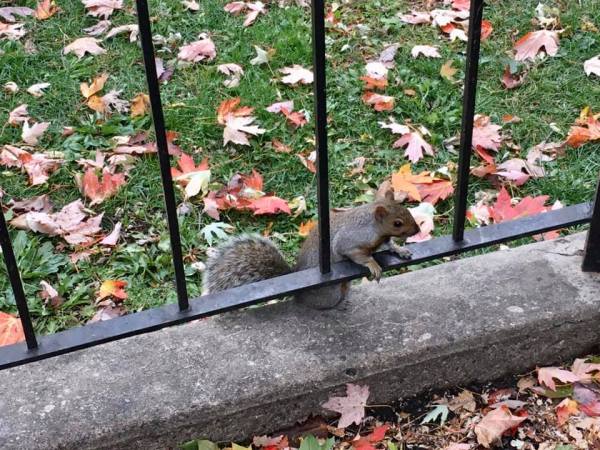
With our new-found knowledge of how cold and long “winter” in Canada can be, we definitely found the amount of fauna out and about to be rather odd. Immediately upon arrival to Ottawa (which I will remind you is 200kms from the closest Great Lake and almost 500kms away from the ocean) we were met with the loud, annoying cries of seagulls. Seagulls? There are no beaches here! Sure there are rivers, but it’s cold! What’s with the seagulls? In our first week we also came across squirrels of all colors, bunnies, chipmunks, and so so many birds. And that was in the city proper, skyscrapers well in view! It seems nature really is on your doorstep up here in the North. However, if I see a moose or a bear lumbering down Sparks Street, I might just lose my mind.

French/British Combo

IMG_6633
Her majesty

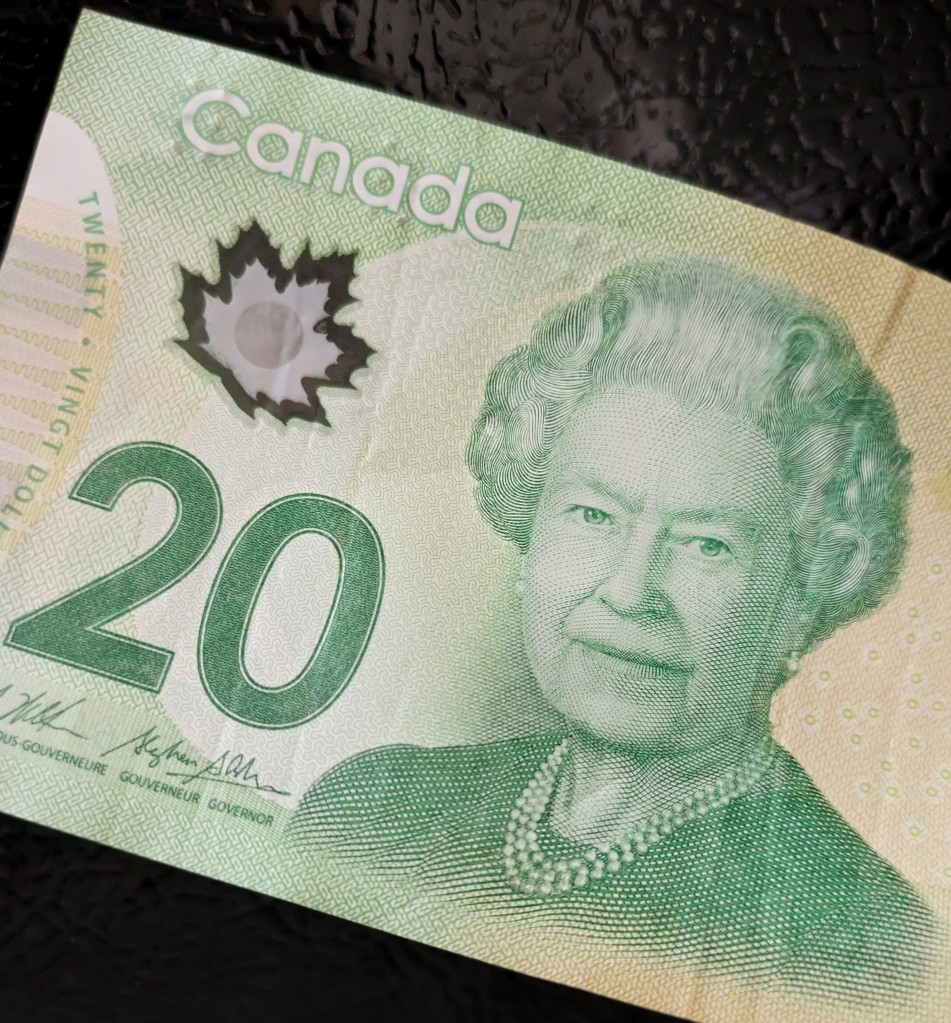
Another surprising insight into life in Canada is that it seems to be less of an American/French fusion and more of a British/French fusion. As a native inhabitant of a former British colony myself, I just assumed all former colonies were quite distinct from Old Blighty, but evidently there’s more of a scale of “Britishness” than I thought. Here in Canada, we have the Queen on the currency, a Prime Minister and Parliament, Celsius and the metric system, traditional tea and pub cultures, and the distinctive, yet eccentric spelling system with all those extra vowels and not enough “z”s. Additionally, as Americans, especially Americans coming from China, we’ve also found an extraordinary penchant for forming lines in Canada. At the train station we wrapped around the entire hall forming two lines to match the two platforms below the station. It seemed very odd to us, inefficient even, but soon we realized lines are a way of life here; basically if it’s a norm at Timmy’s, it’s a norm everywhere.

72112720_10220743900855689_5770965290108059648_n
Ah, Timmy’s

Interesting Fusions

72463415_10220908992302872_8469820978254315520_n
Beyond delicious!

Speaking of combos, we’ve also seen an incredible amount of interesting food fusions in Canada. Early on in our stay I ordered “pierogi eggrolls”, and even after eating them, I couldn’t quite wrap my head around the concept. Canada has seen its fair share of immigration throughout its history, and we can definitely see how that has affected the restaurants and their signature dishes throughout the country. We’ve had tandoori nachos, a turducken club, bruschetta mac and cheese, and many other colorful combinations. It seems even their own, native poutine (which is traditionally French fries covered in cheese curds and thick gravy) is also open to interpretation. We’ve tried jalapeño poutine, butter chicken poutine, and Peking duck poutine just to name a few! Stores and other vendors also seem to cater to this preference for food creativity and variety. We’ve seen ph broths and żurek mixes in grocery stores, Italian sausages served in French bread by street vendors, and vending machines with American, British, and European candy choices.

The Use of “Washroom”

This might be a small thing, but I couldn’t get over the Canadian use of the word “washroom”. I’ve lived in several different cities, on different continents even, thus I have heard many things used to describe the place we go to “relieve ourselves”. I’ve heard bathroom, restroom, toilet, WC, lavatory, powder room, even “the john”, but “washroom” is not one I would have listed as a common occurrence. Until Canada, that is. Here it’s virtually the only word they use! It’s on all the signs, it’s what people say, I was even corrected once when I asked about the location of the “restroom”. They looked a bit confused and clarified with, “the washroom?” Which I then went off in search of, quietly contemplating my accent, word choice, and place in the world.


73052411_10220861734961468_4555528384729317376_n
I bet they have the nicest washrooms in there.

Also of interest on the topic of washrooms in Canada is that they all seem to be located in the basement. At the majority of restaurants and pubs we visited, the washrooms were located under the establishment, often down a very long, steep staircase. I tried to look into why that is so common here, and the best I could find is that it had something to do with the building codes at the time of construction. Whatever the reason, I just hope they keep them well-heated in winter. Thankfully, even if the rooms themselves end up being a bit drafty, at least the hot water in Canada is on point. The tap water, we’ve noticed, goes from ice cold to absolutely steaming hot in about 5 seconds – in a pinch, I actually brewed my tea with the sink water in Montréal. Canada really does seem to love their extremes!

And, For Sure, the Politeness

71598087_10220781345631785_888126007620403200_n
We even got compliments on our photos!

Finally, the last Canadianism that stuck out to us was, indeed, the politeness that perhaps they are so well known for outside of Canada. At first, we noticed all the “no worries” and “of course”s and other pleasant responses to our many “thank you”s. There wasn’t even that tone of you’re-a-bit-of-an-idiot-and-I’m-only-helping-you-because-it’s-my-job sort of thing that’s so common Stateside. We also heard a lot of back channeling or the words you use when showing someone you’re paying attention. Things like “for sure, for sure”, “oh yeah, definitely”, and “wow, great”. There also seemed to be a great deal more small talk. People more frequently asked questions or shared information than what we have grown used to in the US. For example, when our bus cards didn’t work on the STO line, the bus driver took a few minutes to explain to us how the complicated inter-provincial system worked. He then let us ride for free – so nice! We’ve also been given quite a few tips for places to go and things to do, after various locals asked and discovered that we’re not Canadian. These politeness features have definitely made the big cities of Canada feel not quite as big.

71856286_10220743902535731_7367851035752136704_n
O Canada!

So these are some of the most obvious things that immediately reminded us that we’re not in the US; however, I have a feeling there will be many more discoveries like this in the future, should we come back for a longer stint. Every country, even long-time neighboring countries with similar back stories have their little quirks. I can’t wait to find out more about what makes Canada, Canada!


So What’s Next?

69408436_10220433442734430_2978051759504621568_n
Busy livin’ it up!

Summer is coming to a close, and much like Tucker and I ourselves, you might be wondering what’s next for us? What are we doing? Where even are we? I know I don’t do a great job of keeping up-to-date on Facebook and other social media (mostly because I tend to post photos weeks or even months after the events actually happened), but I thought maybe I could share our plan and thought process here for anyone trying to keep up.

Back in the US (for family fun/easy transitioning):

My Fellowship ended and our China visas expired this July, so Tucker and I (and my parents) celebrated the upcoming changes by taking an incredible trip to Japan. We said our goodbyes to Asia (for now), really enjoyed the freedom of having zero work responsibilities, and began to plan what we wanted to do next. Of course, before any plans could really get underway, we had to make a stop back in Atlanta to visit friends and family (thanks to everyone who was able to hang out with us this summer – we had an amazing time!). After our family fun in GA, we had a bit more in FL before setting to work unpacking, consolidating, and repacking – our 10 boxes, 5 suitcases and a few odds and ends are currently all in a closet and ready to ship out.

Working online:

Logos
Love ’em both so far!

While working on getting our physical items into place, I also started teaching online. I’m currently working with VIP Kid and Lingoda, and typically teach 5-7 classes a day. VIP Kid uses their own platform to create a one-on-one virtual classroom for Chinese students aged 5-14. It has been so much fun for me to keep this connection to China (for example, I got to wish all the kiddos a happy Mid-Autumn Festival this weekend and show off my vast mooncake knowledge). I’ve also really enjoyed being able to branch out in my field by teaching kids instead of adults (for the first time ever!). So far I think my favorite moment was when I was trying to get a student to guess the word “alligator” by giving clues like “it is dangerous”, “it can live both in the water and on land”, “it goes chomp, chomp ” (with the accompanying hand movements), and he very confidently yelled “it’s a DUCK”! They really are hilarious and so impressive with their English skills!

IMG_5668
Tea is a must before my morning classes

Lingoda, on the other hand, is more of a video-conference style classroom geared toward adults. I can teach up to five students at a time, and we cover a variety of topics from specific grammar features to business communication skills. The company is based in Europe, but markets to English learners everywhere, which is awesome because not only am I being paid in Euros (how cool is that?!), but also in my less than one month of working for them, I’ve had students from over 30 different countries. I love being back “in” classrooms with mixed international groups; we have the BEST conversations! In addition to VIP Kid and Lingoda, Tucker and I have kept up with our English test recordings that we started doing in China as well. We’re both getting really good at our respective “Boy 3” and “Girl 2” voices. Needless to say, I’ve definitely been keeping myself busy work-wise, and I’m excited to say that I might never have to get out of my sweatpants ever again!

Off to the Great White North:

Screenshot (2)
Way up there

Okay, so now that I can work anywhere in the world, where are we going? Good question. In less than two weeks, Tucker and I are headed up to Canada for at least a month to check out the living/working situations in Ottawa, Montreal, and Quebec City. Neither one of us have ever visited this part of Canada, so before we make the decision to move there semi-permanently, we want to check it out in-person. Tucker is also waist-deep in job applications at the moment, and while we wait for news (and potential offers/visa paperwork) we’d like to get to know the lay of the land. By the way, if anyone knows someone looking for a highly qualified laboratory scientist in ON or QC, let us know!

Why Canada?

26239559_10215603766715548_3734380967423426505_n
In our element!

If you’ve ever spoken to me about my travel/living abroad obsession, you might be surprised that Canada is so high on our list of potential new homes. So why Canada? We have quite a few reasons: first, it’s Tucker’s turn to choose, and he’s dying for 1) someplace cold and 2) an easier language situation (after Polish and Chinese I think he wants to have even just a slight chance at fluency). We also want to bring our pups along with us this time, and since I refuse to cargo them, that means we’re really limited to the US’s two neighboring countries. Although I still have big plans to move to South America and the Middle East and some far flung Pacific island, for now, we need to be able to drive to our destination, all paws accounted for. Plus, I’ve always wanted to improve my French. :)

If not Canada, then what?

NAFTA
Thanks NAFTA!

Of course, visas can be tricky, new jobs can be finicky, and Canada seems to be a place that wants long-term immigrants, not the flaky 2-3 year types like us. So, if we’re unable to get things to work out in the Great White North (or we find that it doesn’t fit our needs/wants), then we’ll be looking to Mexico next. Perhaps spending a month or two down there to assess the situation and eventually move all our stuff to our new country of residence, wherever it may be. Right now, we have two vastly different options ahead of us, countless exciting possibilities, and we’re definitely ready for whatever comes next!

Long-term plans:

So that’s what we have planned for our immediate future. We shouldn’t be too far away this time, but we are still making sure to find some new places and opportunities to explore. I promise when we settle into our new home, I’ll be sure to share the news all over my social media! As for the not-so-immediate future, Tucker and I are still both planning to take the foreign service exam next year (although I’m really having a hard time imaging myself no longer teaching!), but we’ll just have to see how that goes. We’re actually both interested in trying out some field-adjacent jobs in the future; I’ve been thinking about maybe something with international programming, and he’s been looking into hospital labs and even field service engineering. Of course, we do plan to continue living abroad in a variety of locations for the foreseeable future as well (hopefully with furry children in tow). The possibilities are truly endless!

67594092_10220113141847108_5973907176358412288_n
Soon-to-be world travelers!