
April is here and with it, as always, comes birthdays week. Generally, around this time, Tucker and I are gearing up for a celebratory trip; however, just like last year, no such adventure is on our horizon. No worries though because over the past year I’ve done more than enough armchair travelling for another round-up of interesting country facts, this time coming to you alphabetically. Enjoy!

Antigua – This relatively small island in the Eastern Caribbean has a sweet secret known as the Antigua Black, the world’s sweetest and rarest variety of pineapple.
Belize – Many countries are known for their wines, but Belize puts a bit of a spin on the traditional recipe. In this Central American country, they specialize in making cashew wine, or wine made from the fermented fruits of cashew trees.
Chile – While the world’s first potatoes are generally thought to have been grown in Peru, approximately 99% of modern-day potato varieties are genetically linked to a small island off the cost of Southern Chile.
Dominican Republic – Located on Hispaniola, one of the largest and most diverse islands of the Caribbean, the Dominican Republic was highly sought after during the Colonial Era. Due to the relatively early Spanish presence/conquest of the area, the Cathedral of Santa Maria la Menor in Santo Domingo is actually the oldest cathedral in the Americas (completed in 1541).

Equatorial Guinea – People from this Central African nation are called Equatoguineans and their official language is, somewhat surprisingly, Spanish.
Fiji – The name “Fiji” is actually the Tongan word/pronunciation of the island; the Fijian word is “Viti”. The misnomer occurred because the first encounters between western explorers and Fijians took place on the island of Tonga.

Ghana – Ghana, which means “Warrior King”, is located on the Gold Coast of West Africa. It is home to the world’s largest artificial lake, Lake Volta, which has a surface area of over 2 million acres.
Haiti – On the other half of Hispaniola (the second largest island in the Caribbean) lies Haiti, which is often associated with Voodoo. However, “voodoo” is actually more of a product of US pop culture than an accurate portrayal of the Haitian religion known as Vodou.
India – As a country well-known for its delicious curries, I found it interesting that the word “curry” likely comes from the Tamil word “kari” meaning “sauce”. Tamil is spoken throughout most of Southern India.
Jamaica – Like many English-speaking islands in the Caribbean, Jamaica celebrates Boxing Day and/or New Year’s Day with a colorful parade known as Junkanoo. Interestingly, “Junkanoo!” is also the name of a Baha Men album.

Kyrgyzstan – Kyrgyzstan has a long history, thus it’s not so surprising that it has its fair share of epics, such as one of the world’s longest poems, the Epic of Manas. This poem of more than 500,000 lines revolves around the hero Manas and his many adventures.
Lesotho – An enclaved country entirely within South Africa, Lesotho has the distinction of having the world’s highest low point. In fact, the elevation of the entire country is above 1,000m (3,300ft), which is why it has the nickname “Kingdom in the Sky”.

Madagascar – Madagascar is home to many diverse ethnic groups, each of which has their own traditional customs and rituals. One that I found particularly interesting was the Famadihana ceremony, or the turning of the bones, where families rebury their ancestors with fresh cloth, on which they write the names of the deceased so they will always be remembered.
Nepal – Most people know that Mount Everest sits on the border of Nepal and Tibet/China, but I recently learned that the Nepalese name of the infamous mountain is Sagarmatha. In Tibetan it’s known as Chomolungma.
Oman – The humble Sultanate of Oman is actually the oldest independent state in the Arab world, but perhaps even more interestingly, the most popular soft drink there is Mountain Dew.
Panama – The recent Ever Given debacle has shed some light on the importance of shipping canals, and where there’s a need, there’s a price. The Panama Canal makes over $2 billion per year in shipping fees. The average toll for a ship to travel through the canal is about $150,000.

Qatar – A peninsula on a peninsula, Qatar is the flattest non-island country in the world. It would also be a fantastic Scrabble word if proper nouns were allowed!
Russia – Russia is big. The Trans-Siberian railway, which crosses the entire country, is over 9,300km (5,700 miles) long. It’s easily one of the longest and busiest railway lines in the world.

Sri Lanka – The teardrop of India is known for its tea (Ceylon being a former name of Sri Lanka), but it’s also where cinnamon was first cultivated.
Tanzania – While there are many notable features of Tanzania, my favorite country fact is that Zanzibar, an island just off the coast, was the location for the world’s shortest war. The Anglo-Zanzibar War of 1896 lasted about 40 minutes.
Uganda – This Central African country was given the nickname “the Pearl of Africa” by none other than Winston Churchill. He wrote fondly of the country and its diversity in his book “My African Journey” published in 1908.

Vatican City – Technically a city-state, the Vatican City has lots of strange laws, one of which has to do with the guards they employ. Evidently the guards that protect the Vatican must be Swiss males between 19-30 years of age and they must be over 174cm (5’8’’) tall. The uniforms are also required.
Wales – Part of the United Kingdom, Wales is sometimes overlooked by its somewhat more famous neighbors, but a surprising number of celebrities are Welsh: Roald Dahl, Catherine Zeta Jones, and Anthony Hopkins just to name a few.
Yemen – Yet another country on the Arabian Peninsula, Yemen is the suspected home of the infamous Queen of Sheba.
Zimbabwe – Zimbabwe has had a rough history of leaders. From the late 1980’s to 2017, a disastrous authoritarian regime threw the country’s economy into a tizzy leading to many crashes and insane hyperinflation. For this reason, Zimbabwe’s government was printing 100 trillion-dollar notes as recently as 2009.

 I don’t intend on writing about my 30 Day Challenges (see January’s blog) each month, or even ever again; however, I just couldn’t pass up the opportunity to share some of what I have learned this month with my “read about a different country every day” challenge. For each day in February (more or less), I selected a country to explore digitally (i.e. with the help of various web resources), and in the process, I have gleaned a plethora of fun facts!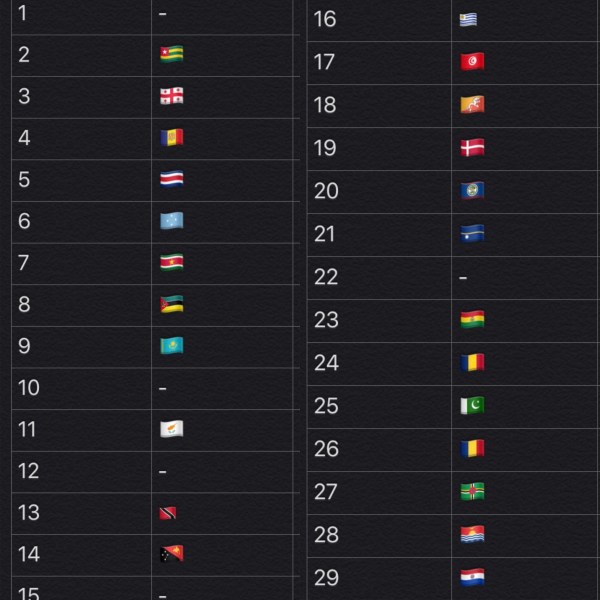


 Uruguay: A country consistently providing the world with incredible soccer players, Uruguay was the first country to win the FIFA World Cup (in 1930).

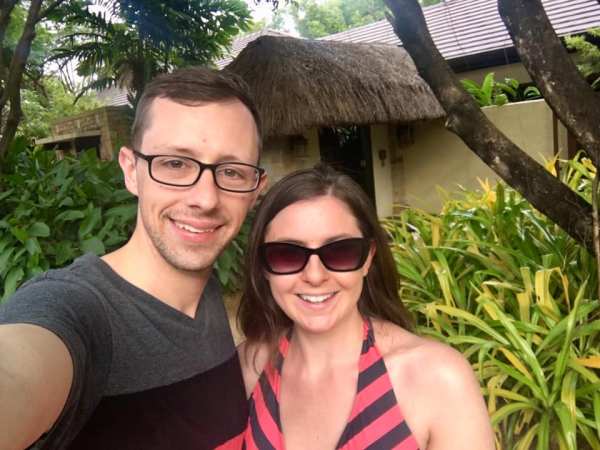 The second New Year (also known as the Chinese New Year or the Lunar New Year) has come and gone, and with it, possibly our last long winter break off together. Just like last year, the Chinese university semester break coincides with the holiday giving us several weeks off, which, of course, we put to good use! My program had its mid-year meeting and conference in the Philippines this year, and somehow, Tucker and I managed to squeeze in three (and a half) other destinations on our island hopping itinerary. You might have seen the hundreds of photos on Facebook, but I’d also like to share a few words about our time traveling in South Asia. To be honest, it’s a little surreal to be writing this as I watch the snow fall outside, but here we go!
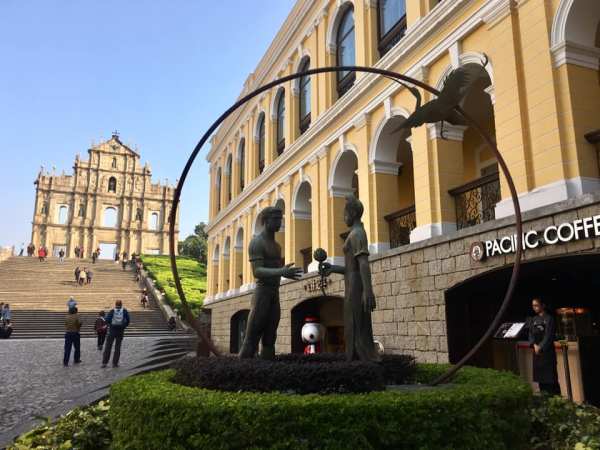 Our first stop was Macau, a “special administrative region” of China. It gets this rather long name due to it being somewhere in between a province and another country entirely. It’s a part of China, but it’s also not China, which is actually one of the reasons we wanted to visit. We wanted to see if there were any noticeable differences. We also wanted to visit because we were eager for another taste of Portugal. Macau used to be a Portuguese colony and has retained quite a bit of the Portuguese flair in architecture, food, and language.


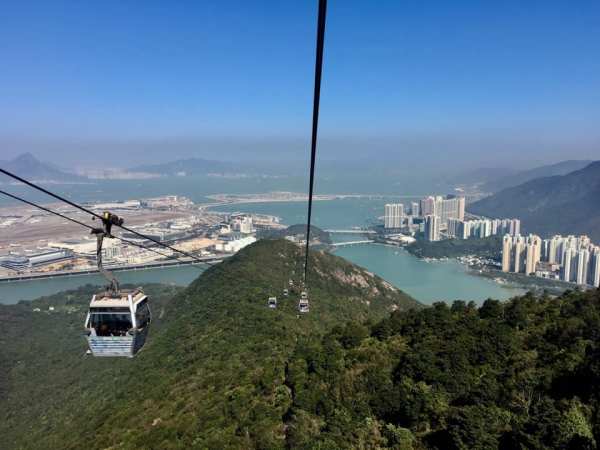 After a few days of strolling around Macau’s narrow alleyways, we took a massive speed boat (TurboJet) to our next destination just across the water: Hong Kong. This was actually our second trip to Hong Kong, but last time we didn’t quite get to everything on our list – this short stopover on the way to Midyear was our second chance. We had less than 24 hours in the city, but we managed to make it out to Lantou Island to see the incredible Buddha and cableway there, we took the bus to the top of Victoria Peak to watch the sunset over the city, and we went to Tim Ho Wan for the world’s cheapest Michelin Star eats. While I definitely preferred Macau’s laid back, European vibes, it’s hard to not like Hong Kong as well. Macau and Hong Kong are a couple of tiny islands (and respective peninsulas) that I highly recommend everyone to visit! No visas needed for US citizens! :)
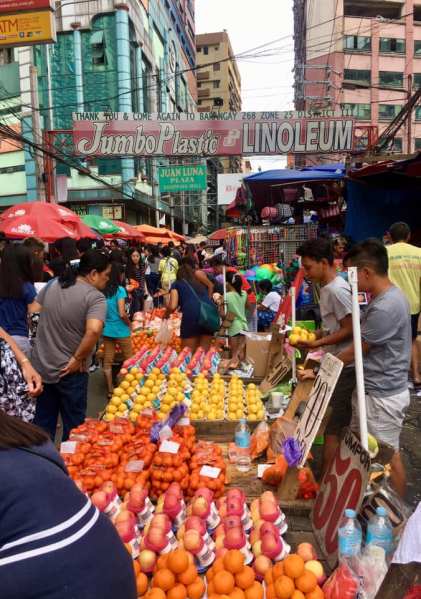 All too soon it was time to fly to the Philippines and get to work. When we first landed in the Philippines it was chaos! Passengers getting up and grabbing their bags before the plane had stopped moving; people sitting on seemingly every inch of the floor in the airport; signs for flight changes being moved by hand from gate to gate; loud cover songs of 2000’s hits playing in every corner of the terminal, etc. All I could think was “Well, we’re definitely not in China anymore.” As we sat waiting for our flight though, the newness wore off, and it was easy to see that the Philippines are just plain fun! In fact, their national slogan is “It’s more fun in the Philippines”, and I totally got it. Smiles were everywhere! The flight attendants wore bright yellow polos and hummed songs as we boarded. Fellow passengers sang along with the music they heard on the plane. The joy was contagious!
 The first week we were in the Philippines I had to “work”. I attended meetings with the other Fellows, we planned and executed various group activities, and generally bonded and reconnected after our last five months apart in our various host cities/countries. For this part of Midyear, we were put up in a resort on Mactan Island, which was incredibly fancy and not the sort of place Tucker and I usually go for (I’ve never heard so many “yes ma’ams” and “hello sirs” in my life). It was beyond beautiful though, and luckily Tucker was able to take full advantage of the beach, the snorkeling, the infinity pool, etc. However, after a few days completely devoid of local culture, I was definitely ready to get to our next location: Cebu City. It was here that we attended and presented at a local teacher training conference held at the University San Jose Recoletos. Easily my favorite part of Midyear, I was able to meet and interact with many local Filipina/o teachers and get a much better feel for what life in the Philippines is really like.

 Once the conference and Midyear were officially over, Tucker and I hadn’t quite had our fill of the Philippines, so we headed to Manila for some good old-fashioned touristing. Manila is an incredible city with some of the best food I’ve had in a long while. Their specialty seemed to be fusion restaurants. We had super interesting and delicious food at Loco Manuk (Filipino, Peruvian, and Chinese) and El Chupacabra (Filipino and Mexican), and saw a Japanese-French Cafe that looked amazing as well! In addition to the incredible food, we also had a great time walking around Manila Bay, grabbing a drink in Intramuros (the Old Town), and watching the Super Bowl at a local expat bar. The Philippines boasts an amazing mix of languages and cultures, and it was so fun for us to be able to use English (commonly spoken there) to ask about a million questions of our taxi drivers, servers, and any other local we could find. We learned about the strong influence of Catholicism in the Philippines, the new-ish movement towards environmental clean up, and most of all, we learned how welcoming and friendly the people are.


 At this point we were over the halfway mark of our trip, and my body had had enough. I left Manila with a fever and several other ailments (not so fun to describe), but I was still super excited to see Singapore! We watched Crazy Rich Asians on another leg of this trip in preparation, but the movie doesn’t do the city justice. It is by far the cleanest city I’ve ever seen, and has represented its multicultural population incredibly well! Singapore is made up of large groups of ethnic Chinese, Malays, and Indians, and each has a dedicated area of the city where you can find their respective religious buildings, restaurants, and specialized grocery stores. Even with the diverse neighborhoods in place, the city as a whole really seems to cater to each group in so many ways. Colorful, artistic, and clearly very well-off, there are so many lovely parks and public spaces in this city, where we saw families wearing everything from tank tops and sundresses to saris and hijabs. I often talk about places where there is a mix of cultures, but its usually a watered down mix, where clearly one culture has dominated, but in Singapore they were all there loud and proud. It was amazing!


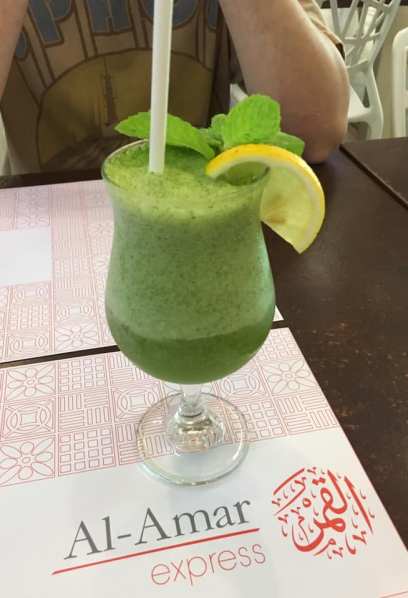 It turns out KL was full of surprises for us. The majority of people living in Malaysia are Muslim, so it was much more conservative than I was expecting. Most everyone wore long sleeves and pants despite the high temperatures, and the presence of beautiful and delicious “mocktails” was at an all time high for me. KL is actually not on an island, and to us, it seemed like we lost that friendly, carefree island-vibe as soon as we arrived. Interactions were a bit more abrupt and businesslike – like they usually are, I suppose. Another surprise was the color we saw all around us – both the Philippines and Singapore were incredibly colorful cities, but I think any city would be hard pressed to match the vibrancy of KL. Brightly colored murals everywhere, some of the lushest, greenest trees I’ve ever seen against the bluest of skies, and the insanely colorful Batu Caves just outside the city made for some incredible scenes (and photos).


 Dani Francuz Rose