

So, let me start off by saying I have absolutely no personal or professional stake in Duolingo. In fact, I actually applied for a writing job for them once and never heard back…but that slight misstep (on their part) aside, I really love Duolingo, and for this month’s post, I’m going to tell you why.
Generally, I’m all about setting goals and challenges for the New Year, but alas, my goal this year is actually to have zero expectations whatsoever (we’ll see how that goes…). However, for those of you who haven’t been quite so jaded by 2020, January is still a great time to develop new habits, such as learning or practicing a foreign language. And for me, Duolingo has been an amazing way to keep that particular habit up for the last 446 days (yes, that’s my current streak number – woohoo!).

Of course, before I can get into the specifics of the app/website itself, I have to recount why learning a foreign language is such a great thing to do. In short: it does amazing things for your brain, it gives you new insights/perspectives, it can connect you to other people and cultures, it can be incredibly useful for travelling abroad, and it can be a fun way to diversify your skills and spend some time away from Netflix/social media, just to name a few of the major benefits. Even if you try Duolingo and hate it, I still recommend finding a language-learning system that works for you (in-person classes, one-on-one video chats, traditional workbooks, etc.) because there is really nothing like learning a foreign language!

Now back to Duolingo. One of the reasons I love this particular app and website so much is that they are completely free. It’s not the usual you get all the basics for free, but as you advance you need to pay or spend a certain amount of time on the app or whatever other hoops they’ve come up with. No, with Duolingo, you can access all the materials and completely finish as many courses as you’d like without ever having to pay. Of course, they do have a “Duolingo Plus” option, which allows you to work offline and skip any ads, but in my years and years of using Duolingo, I’ve not often been tempted because, honestly, the ads are super minimal and who’s ever “offline” these days anyway?

Another absolutely amazing thing about Duolingo is that there is a plethora of language options/courses to choose from (from Irish and Hebrew to Klingon and High Valyrian, no joke), and it’s super easy to switch back and forth between them. This is great if you’re like me and feel like French Fridays should be a thing. It’s also great because not only does it track and keep record of your progress, you can also test into a course and not have to start at the very beginning (for example, if you took Spanish in high school or gained some previous experience elsewhere). I’ve also mentioned a few times now that there is both an app and a website – they’re linked by your account, but they each have slightly different options, views, exercises, etc.

I also love that Duolingo allows you to set personal goals, for example, how much time you want to spend practicing each day. It also can send you reminder notifications or emails if, like me, you have trouble remembering if something happened early this morning or yesterday… Of course, these goals and reminders are completely optional and customizable, so you can turn them all off and live a more low-pressured life if you’d prefer. The lessons themselves are also extremely quick (or “bite-sized” as Duolingo touts), so it’s actually really easy to fit them into your schedule. I typically do mine while I’m waiting for something: the water to boil, the dog to pee, etc.
With Duolingo I also love the variety it offers. The courses/lessons are fun, and they aim to create useful yet entertaining sentences, scenarios, etc. but there are other features that are equally helpful and perhaps even more dynamic. I especially love going through the “stories”, which use the vocabulary and grammar you learn in the courses to create dialogues with a bit more context and substance. The stories and characters are quite entertaining – one of my favorites was when a character’s son thought his parents were lion tamers because he found a whip in their closet! Tell me that’s not an intriguing story to read in any language! Haha! Tucker and I have also been competing to complete all the different achievements (like earn 100 crowns, finish #1 in the leaderboard, etc.), which is another way to increase motivation and add another level to our learning. The Duolingo podcasts are also really fun (and free). They use both English and your target language to narrate longer, true stories related to life, culture, and the human experience.

I also really love how intuitive the interface and activities are. I recently got my parents (who aren’t necessarily “app-people”) into it and no matter how tech savvy (or not) you are, it’s super easy to set up and use. It’s also not very grammar-y (which I realize is a plus for most people). The courses aim for immersion-like teaching (similar to Rosetta Stone), so you cover the major skills without having to sit through grammar instruction. There are “tips” that you can check at the beginning of each section, but they’re not necessary. Duolingo also takes a thematic approach and groups its sections according to topics like “greetings, restaurant, travel”, etc. which build on themselves as you progress.


Ultimately, it feels like playing a game. You complete the activities, you win gems, which you can then use to “buy” outfits for Duo (the owl mascot), or for fun courses like “idioms, dating”, etc. There are also “leagues” where you can see how you stack up against other learners, “wagers” where you can bet some of your hard-earned gems and go for double-or-nothing if you maintain a 7-day streak, etc. And oh, the streak! Probably my favorite of the stats they keep up with – it feels amazing to see that number climb and know that while I didn’t do much in 2020, at least I can say that I practiced a foreign language every. single. day. :)

Finally, I think it’s important to remember that everything in Duolingo is take it or leave it; some people focus on the streak, others on the checkpoints, others pick it up and put down every few years or so; it’s really whatever flotter votre bateau. And even though Duolingo isn’t sponsoring this post (not yet anyway), I still really think you should give it a try, because for me it has been a simple, fun way to develop a skill that can bring tremendous benefits and entertainment, for free! So, try it out, and when you do, be sure to say “hola” to Duo for me!


















 Next up, my dad wanted to try a famous seafood place (Dixie Crossroads) out on the Atlantic coast, which I quickly paired up with a drive to Cocoa Beach and Port Canaveral. Although it was a quick visit, we walked along the beach and the pier, looked for the cruise ships and the Space Center, and learned that Florida has a nickname for every single section of coastline.







 As an English teacher I’m often asked to describe the United States and Americans, and for as long as I can remember, the first word that has come to mind is: independent. We love to feel independent! Independent financially, politically, emotionally; in our families, in our workplace, and in the world. Many of us longed to “be out on our own” at a very young age, and most Americans follow that course throughout their lives. We love expressions like “pull yourself up by your bootstraps” and “stand on your own two feet”. In our culture, there is an immense pride in (and often an expectation to) figure things out on our own. Whether this comes from the pioneer spirit of our history or from Hollywood’s “steal the spotlight” mentality, we can see the strong value placed on independence in all aspects of American lives. From our first declaration as a prospective country to our preference for ordering individual, non-shared meals, we focus every day on our individuality and personal independence, and if ever we feel it’s being threatened, look out.
 You might have noticed that I didn’t get very far into this post without mentioning Hollywood. As much as many Americans like to think of that place as somehow “other”, the truth is, we are massive consumers (and producers) of entertainment, all thanks to Tinseltown. In fact, many of my students from all over the world have surprised me with facts and details about life in the US that were gleaned entirely from our movies and TV; some have even confessed that’s how they started learning English or even why they continue today. Of course, what they see in the movies is not always true to American life, but there are definitely many of our values and perspectives shared through our obsession with entertainment. It’s hard to imagine America without movie trailers, award shows, film conventions, and dedicated fandoms. As someone who hasn’t seen such American classics as the Godfather, Stars Wars, or Top Gun, I’ve been described a few times as “simply unamerican”, but I promise I’ll get to them eventually!
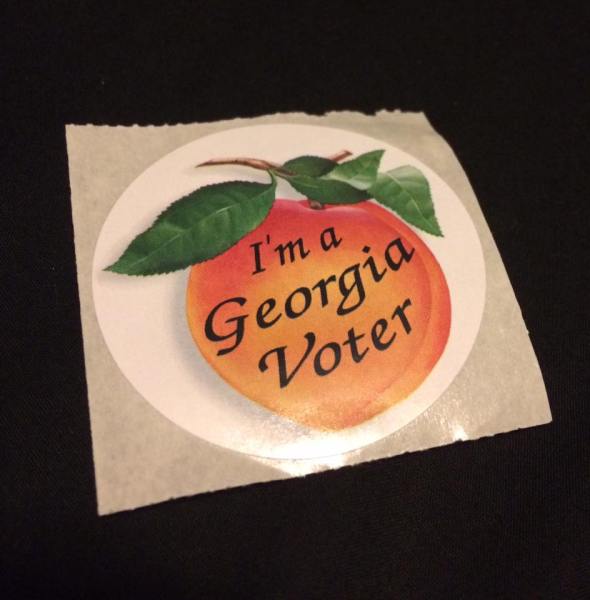 Another trait that I associate with America is our deep patriotism. We love our flag, our national anthem, and the values that we have long attached to our country, such as freedom, perseverance, and justice. Although patriotism means something a little different to each of us, as Americans this is our home, and we feel a certain pride and responsibility in that. Whether we show these feelings by hanging a flag outside our house, voting in every election, or representing our values abroad, we all like to feel that we have a role to play for America, and we’re happy to do it. Perhaps because we grew up with stories of how hard our forefathers, suffragettes, and civil rights activists fought for us to have what we have today, the sense that we need to take up the baton and continue to work for a better homeland has been deeply instilled. Or who knows, maybe it was just hearing that Lee Greenwood song year after year.
 Although this word has taken on new meaning and significance in the last few years, the American Dream and the people who embody it are not new, nor I think are they bound by political lines. America was founded on dreams: dreams of a new nation, dreams of equal representation, dreams of prosperity. We can still hear the US referred to as a “Land of Opportunity” from both inside and out. We love the fact that “if you can dream it, you can do it”, and thanks to our lack of a formal class system, many Americans have been able to make it happen all throughout our history. Most of us have immigrants in our ancestry, which is maybe one of the most classic versions of the American Dream. Others have seen their dreams come true in regards to socioeconomic status or overall success. Just like independence, Americans value people who dream big and work hard to make it happen. In short, we believe dreams can come true.
 Dreams are wonderful, but all dreams are based in some sort of reality. And for Americans, right now that reality is a strong division. Party lines are more evident than ever, generation gaps and racial divides exist, and there’s no doubt that whatever the topic of conversation, people tend to divide up into various groups or “sides”. We have the Left and the Right, Boomers and Millennials, white collar and blue collar, Black and white, gay and straight, religious and non-religious, and so many other labels that, like it or not, separate us in some way from our fellow Americans. Although we are the “United” States and a supposed “Melting Pot”, many events have recently been shining a spotlight on our divisions and differences instead. Diversity can often beget division, or at least the perception of division, but I think we’re all also aware of the classic “United we stand; divided we fall”. Trends change everyday, and we can change as well.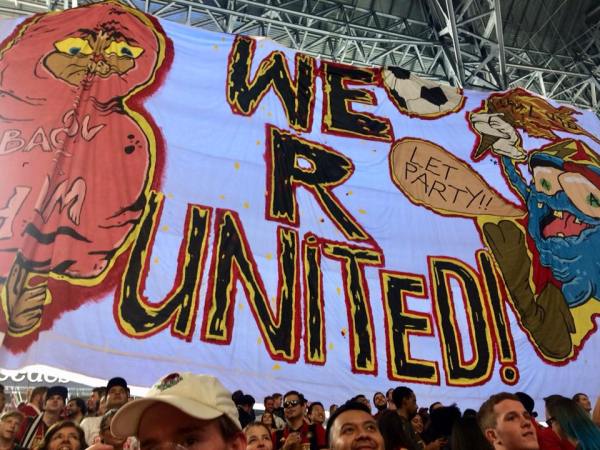

 Perhaps because we’ve always been in our own little world, the US has also been a hotbed for inventiveness and creativity right from its start. From Thomas Edison and Clara Barton to Bill Gates and Katie Bouman, Americans have contributed a great deal to global innovation. Even the average American likes to think and talk about the future, and we always, as Walt Disney famously said, “keep moving forward”. It’s no wonder our people were among the first to take to the skies, race to space, and create all types of digital media. We simply love to take risks and try something new. We have the phrase “necessity is the mother of invention”, but in America, it might not even require necessity.
 Dani Francuz Rose