
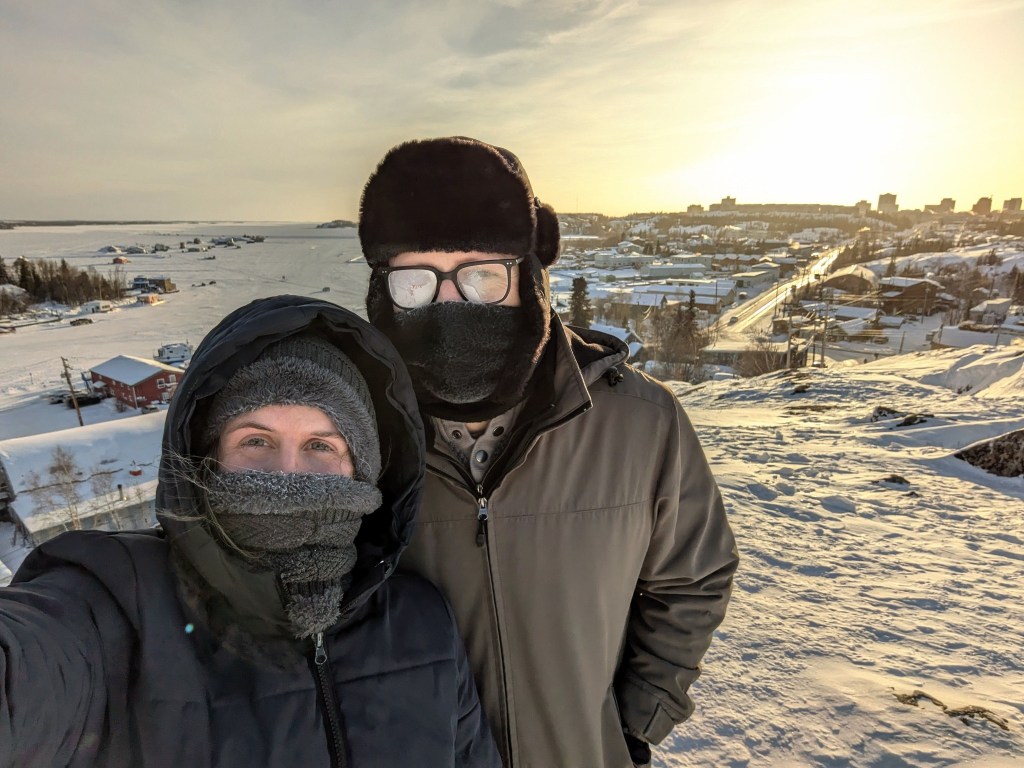
We did it! We took a 4-day trip to Yellowknife, Northwest Territories in February with only a backpack each and the clothes on our backs. Did people question our decision? Yes. Did our friends and family worry about us when checking the weather? Yes. Would we do it all again? Gladly! Yellowknife exceeded every expectation we had for it, and in this month’s post, I’m going to share some of what surprised us so much about this city in the far north of Canada.
The Remoteness

The first surprise actually came when we took a closer look at our flight times. Of course, we know Canada is huge, but we weren’t flying from end to end, more like from east middle to north middle. Regardless, we were in the air for over 7 hours to get from Ottawa to Yellowknife. It would have been faster to fly to Europe! We also flew in on a prop plane, which was another indication that we weren’t headed to a super populous place. And when we looked out the windows of that prop plane and saw literally nothing from Edmonton to Yellowknife (roughly 1,500 km), the message really sank in: we were in the middle of a vastness I’m not sure we’ve ever experienced before.
While we did end up feeling very isolated at first, the longer we were in Yellowknife, the more it felt like, well, Canada. We stopped by a Shopper’s Drug Mart, we got President’s Choice brand snacks, and we still had français to read on all the signage. We were also surprised that the prices of things weren’t as high as we had thought. We had been sure we’d see a crazy increase on all the groceries and food stuffs that had to be shipped in from beyond far away, but it really wasn’t too bad. There were definitely limited options, but overall, not too different from a similar sized city in Ontario or Quebec. The only thing that really stuck out as being outrageously priced was any beer outside of NWT Brewing Co. At one restaurant, we saw $14 Heinekens! Talk about not worth it…
The Cold
We specifically chose to go to Yellowknife in winter because we like the cold, and we wanted to experience the extreme cold of the Canadian hinterland. For weeks ahead of our trip, we tracked Yellowknife’s weather, so we could be as prepared as possible. We had already been to places like Bergen, Norway and Ushuaia, Argentina in their respective cold seasons, and we took those trips without boots or proper winter coats, so all things considered, we were absolutely better equipped for this trip than any that came before it. But did that really matter when we were standing outside in “feels like” -50°F? Not so much lol. We had actually heard several times, from several different people that after you get below -30 or so, it all just feels cold. However, I very much beg to differ; -40 definitely felt much colder than -30.


Fortunately, some things did come back to us when dealing with the extreme cold. We remembered the feeling of our eyelashes and nose hairs freezing. We quickly remembered the importance of breathing through your nose only. And once again, we fell back on the age-old lesson: you get what you pay for. Our $30 thermal socks have probably saved a few toes at this point. If I could give any advice to future Canadians or fellow cold weather travelers, you’re absolutely better off buying the expensive gear from the start – it’s expensive because it’s truly the only thing that works.
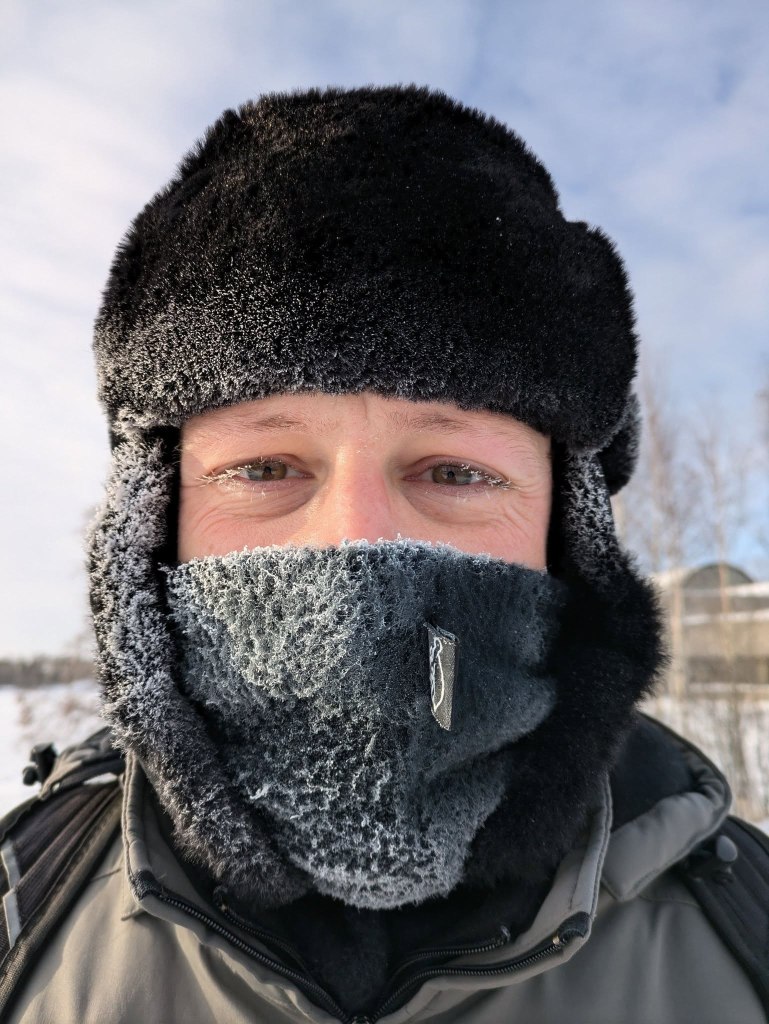
We learned some new things during our time in Yellowknife as well though. It seems we do, in fact, fear the cold a lot more than the average NWT visitor (let alone resident/native). We opted to take the car pretty much any time we left after dark, mostly because that scene in “To Build a Fire” constantly replayed in our heads every time we took off our gloves! Also, you absolutely cannot function with glasses outdoors in Yellowknife, and even if you don’t need glasses, the cold weather can still really mess with your eyes. Our eyes struggled big time with the cold, the dryness, the ice crystals, the snow blindness, etc. It really felt like everything was out to hurt our eyes in Yellowknife!
The Lights
We have been super lucky with our northern lights sightings in Canada so far. Last May there was a big solar storm, and we actually saw them just about an hour north of Ottawa, so for this trip, we had our fingers crossed, but there wasn’t much pressure on the situation. And maybe that was key, because three of our four nights were full of gorgeous light shows. The colors were so much more vibrant and watching the lights spread out across such an expansive sky was absolutely incredible. Something we didn’t even know to account for in Ottawa were all the mountains and trees that would occasionally block our view of the lights, but we didn’t have that problem when standing on a massive frozen lake!

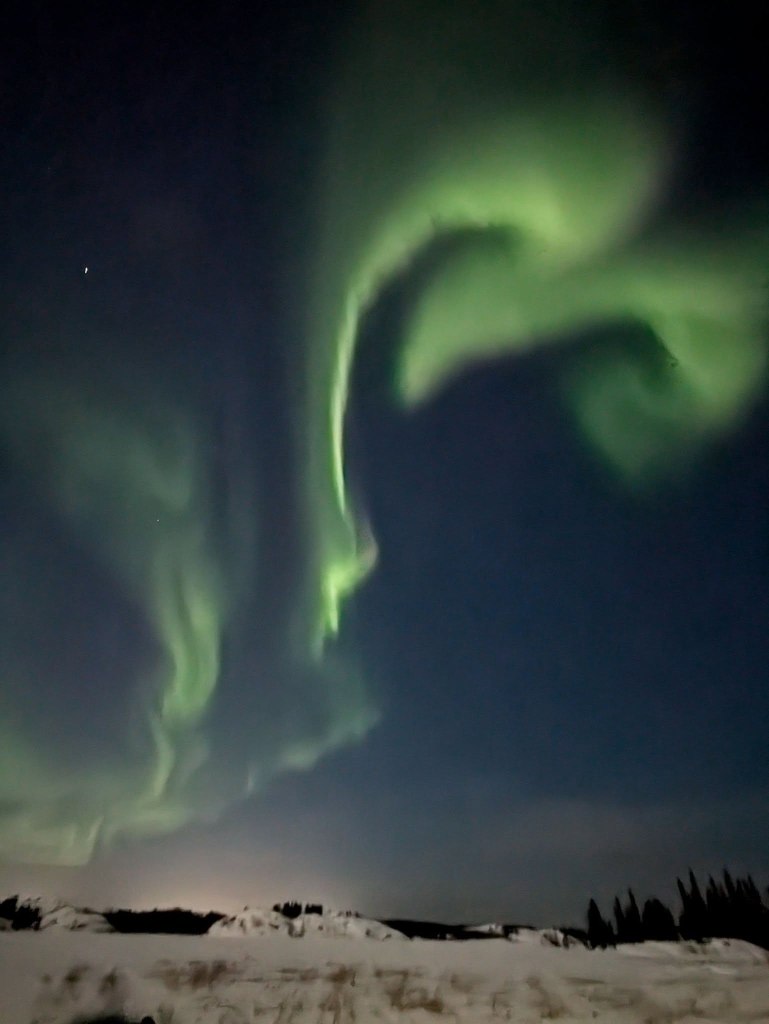
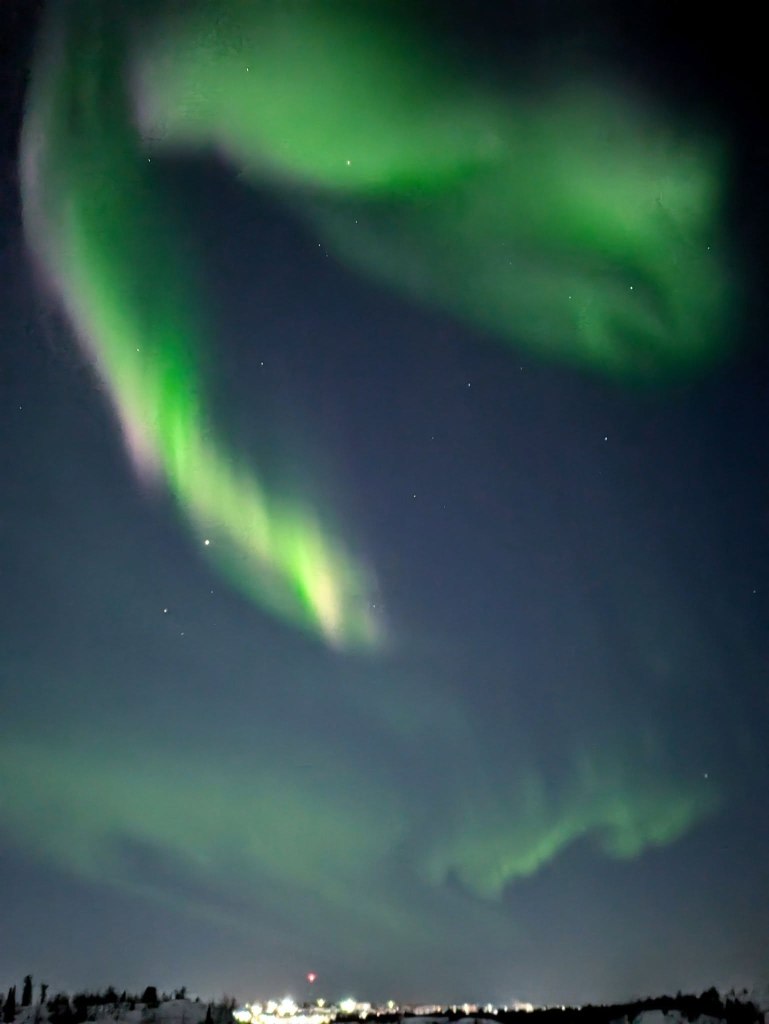
And just in case I never get around to writing anything about northern lights viewings in general, there are a few things I would have liked to know beforehand. 1) You must let your eyes adjust to the lights. They seem faint at first, but the more you watch, the clearer they become. 2) They move really quickly across the sky and make all sorts of crazy shapes. 3) There is no “peak time” so to say. They’re somewhat like storm clouds; they appear and disappear based on solar activity, so any forecasts are bound to be unreliable at best. 4) The darker it is, the brighter the lights appear, but neither the darkness nor the intensity matter if it’s cloudy, so if you’re hunting northern lights, pick a place known for having an abundance of clear nights. 5) Pictures simply can’t do the lights justice, not even those that have clearly been altered.
The Dettah Ice Road

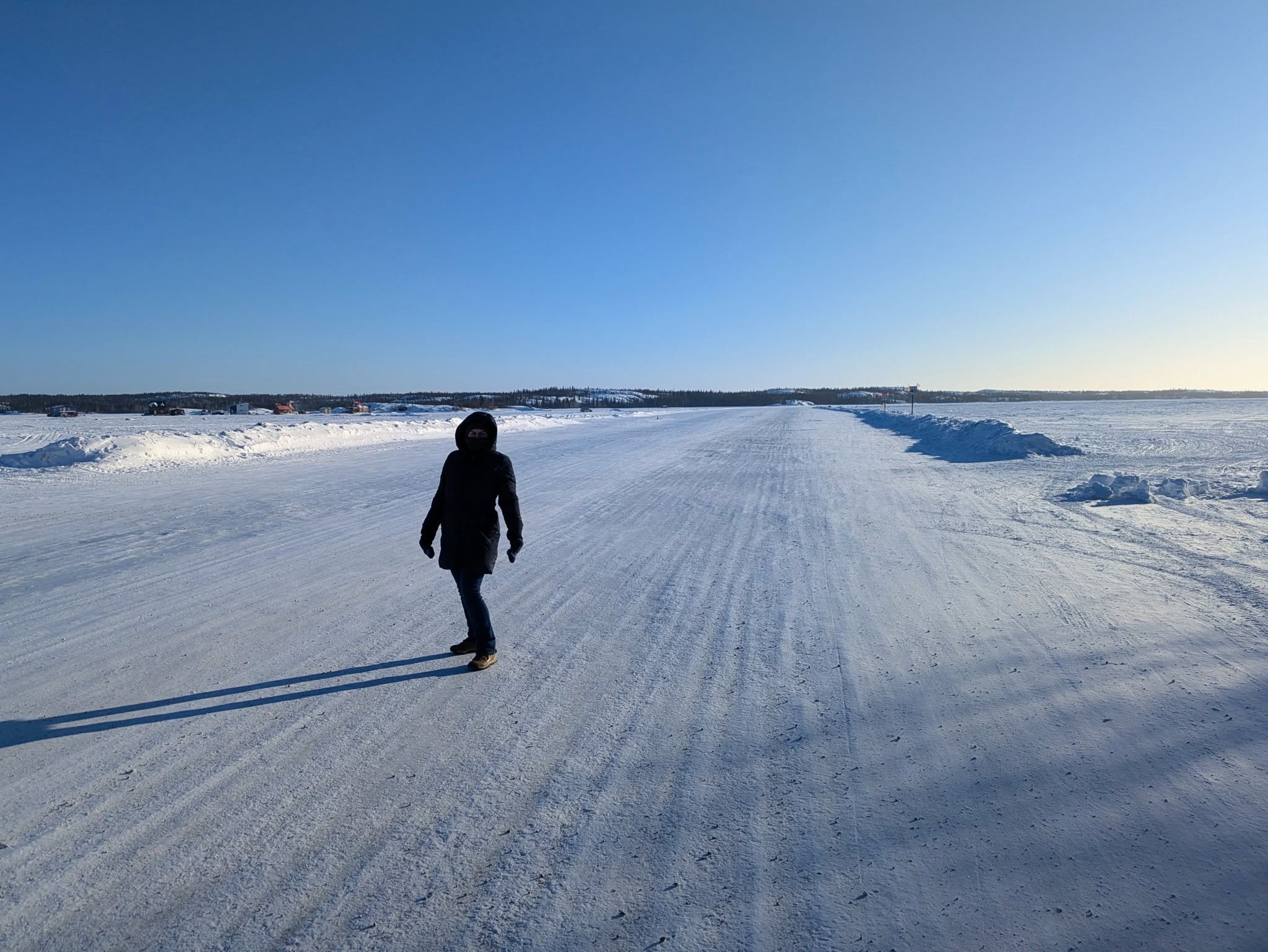
One of the most surprising experiences of this trip was our time on the Dettah Ice Road. When doing some research on Yellowknife, I came across the Dettah Ice Road listed as a tourist attraction and thought it sounded cool, but actually experiencing it and realizing that it’s not really a tourist attraction at all put it at the top of my list of reasons to visit Yellowknife in winter. The Dettah ice road is exactly what it sounds like: a road made of ice that leads to Dettah, a village southeast of Yellowknife. Usually, you have to drive about 27 km (17 miles) around Yellowknife Bay to get to Dettah, but in winter, since the Great Slave Lake completely freezes over, you can cut right across the bay and drive straight there (only 6.5 km/4 miles). The road itself is amazing! It looks like it’d be slippery or somehow feel different from a normal road, but no, it was business as usual driving across. Well, except for the blinding sun reflecting off the ice and all the cool photo ops along the way. Another incredible thing to experience!
The Yellowknives Dene
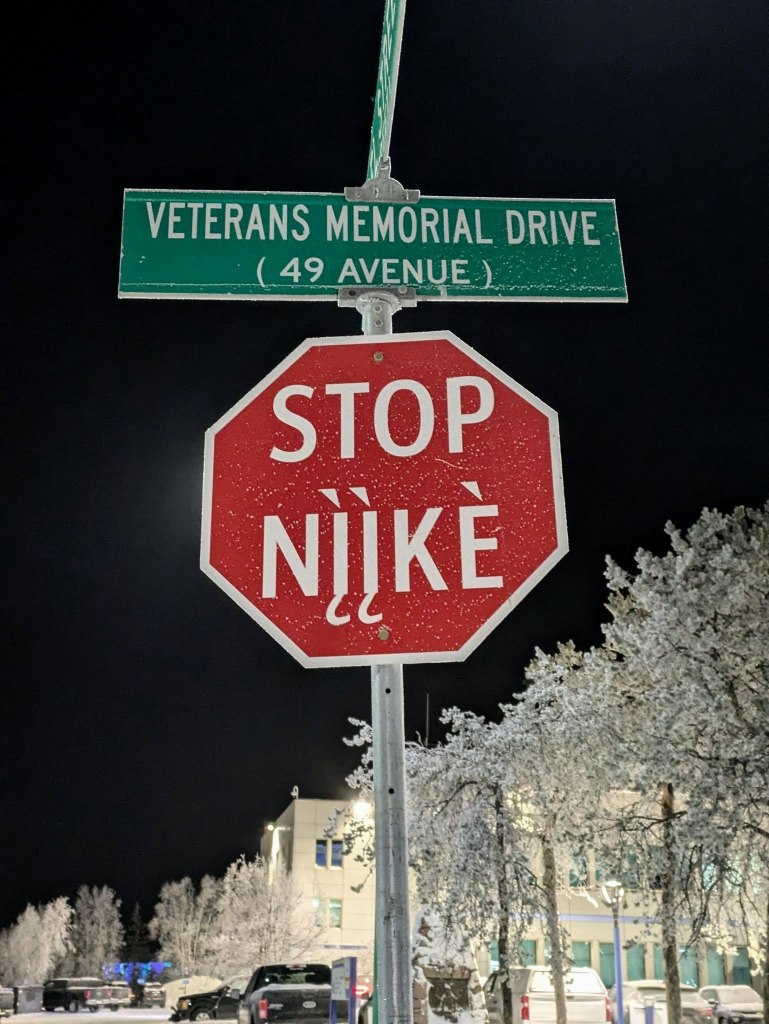
As part of our on-going comparison between Canada’s provinces and territories, we were excited to see the influence of the various indigenous groups of Yellowknife as well. Like a lot of Canadian cities, the name Yellowknife comes from a name given to a specific First Nations group, but unlike other Canadian cities, that First Nations group still makes up a considerable portion of the city’s population. Interestingly, the “city” of Yellowknife didn’t really exist until the gold rush of 1934, but the Yellowknives Dene had been settled there for hundreds of years; therefore, the majority of the region’s history revolves around these indigenous groups and how they helped outsiders acclimate to the extremes of the Northwest Territories. Today, their influence can easily be seen in the government, language, and culture of the region.
The Variety
When I shared our Yellowknife photos on social media, there were so many people who said things like “better you than me” or “too cold for me”, but I think the extremes are part of what makes Yellowknife such an intriguing destination. It was perfect for us, cold-loving freaks, but if you visit in August, you could be swimming in the lake rather than driving across it. The variety of activities Yellowknife has to offer is absolutely amazing, and that’s in each and every season. It’s not too often that Tucker and I make it back to a destination (at least not without many years in between), but Yellowknife might just be one we HAVE to see in another season. It also compelled me to move Whitehorse and Iqaluit (the capitals of the other two Canadian territories) up on our to-visit list, so stay tuned!


This was definitely a trip to remember, and for that, all I can say is a huge thank you to Yellowknife for treating us so well and an additional shoutout to all the winter gear we’ve been collecting over the last two years – it really came in clutch here!

 Dani Francuz Rose