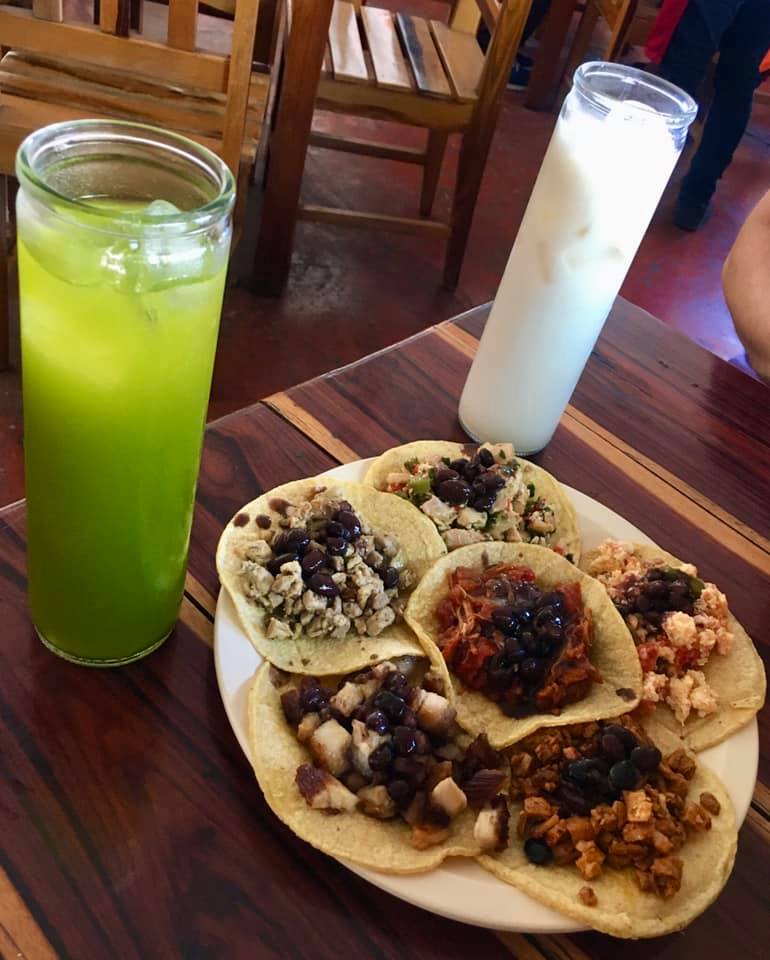
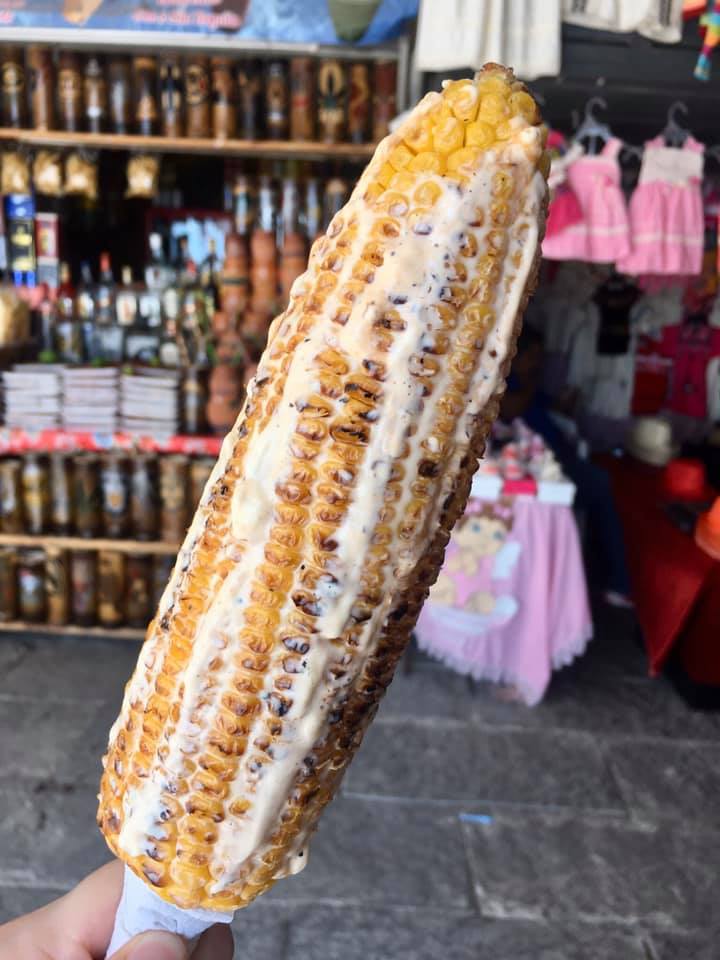
Marvelous Morocco

Time seems to be flying as we scramble to catch up after our last whirlwind trip! Last month, we had the absolute privilege of spending almost two weeks in beautiful Morocco. This was our first time to Morocco, and actually our first time in Africa, so we were beyond excited and hyper-focused on doing and seeing as much as we could. To that end, we set out on completing a somewhat ambitious loop from Casablanca to Fes to Merzouga (and the desert) to Marrakesh and finally back to Casablanca. Whew, even typing it all out is a bit much! Anyway, here’s a little recap of what we did and what I would recommend to anyone traveling to Morocco for the first time. 

Casablanca

We didn’t choose to start and end in Casablanca for any reason other than that’s where the cheapest flights from Québec happened to be. But, of course, once we knew we were heading to Casablanca, we promptly watched the 1942 classic! Spoiler alert: modern-day Casablanca is absolutely nothing like the movie. Since we only had a couple of days planned here, we focused on hitting the highlights: Hassan II Mosque, Central Market, the port, Arab League Park etc.
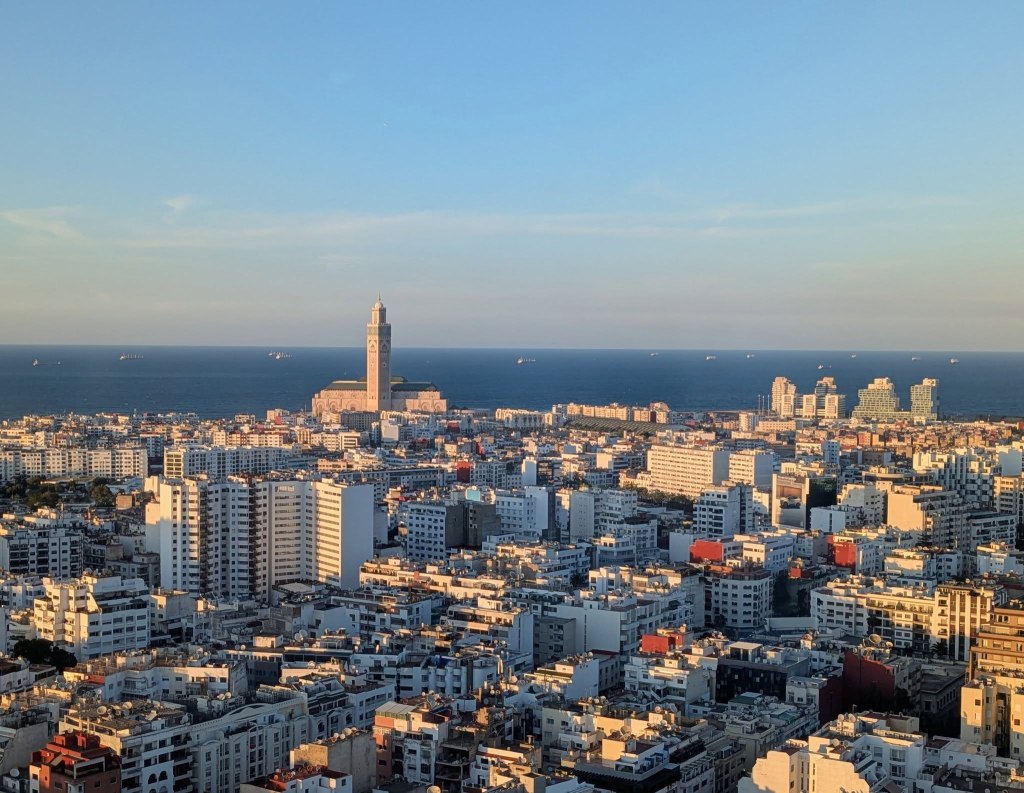
I feel like Casablanca is the sort of city that would be great to live in, but not so great for tourists. It’s the biggest city in Morocco, and we totally felt that as we trekked from site to site. If you are touristing in Casablanca, however, I would definitely recommend Sky 28 bar. It’s at the top of the Kenzi Tower Hotel and gives you amazing views of the city and the coastline. We went at sunset, and it was such a great way to see all that city sprawl!

Another Casablanca recommendation I would readily give is the restaurant Le Cuistot Traditionnel. It might have been our favorite of the trip, mostly because of the amazing Moroccan food and beautiful décor, but also in part because of the amazing owner and chef. He actually used to work for the king of Morocco and had such an amazing collection of photos, mementos, and stories from that time – really such a cool guy and place!

Fes

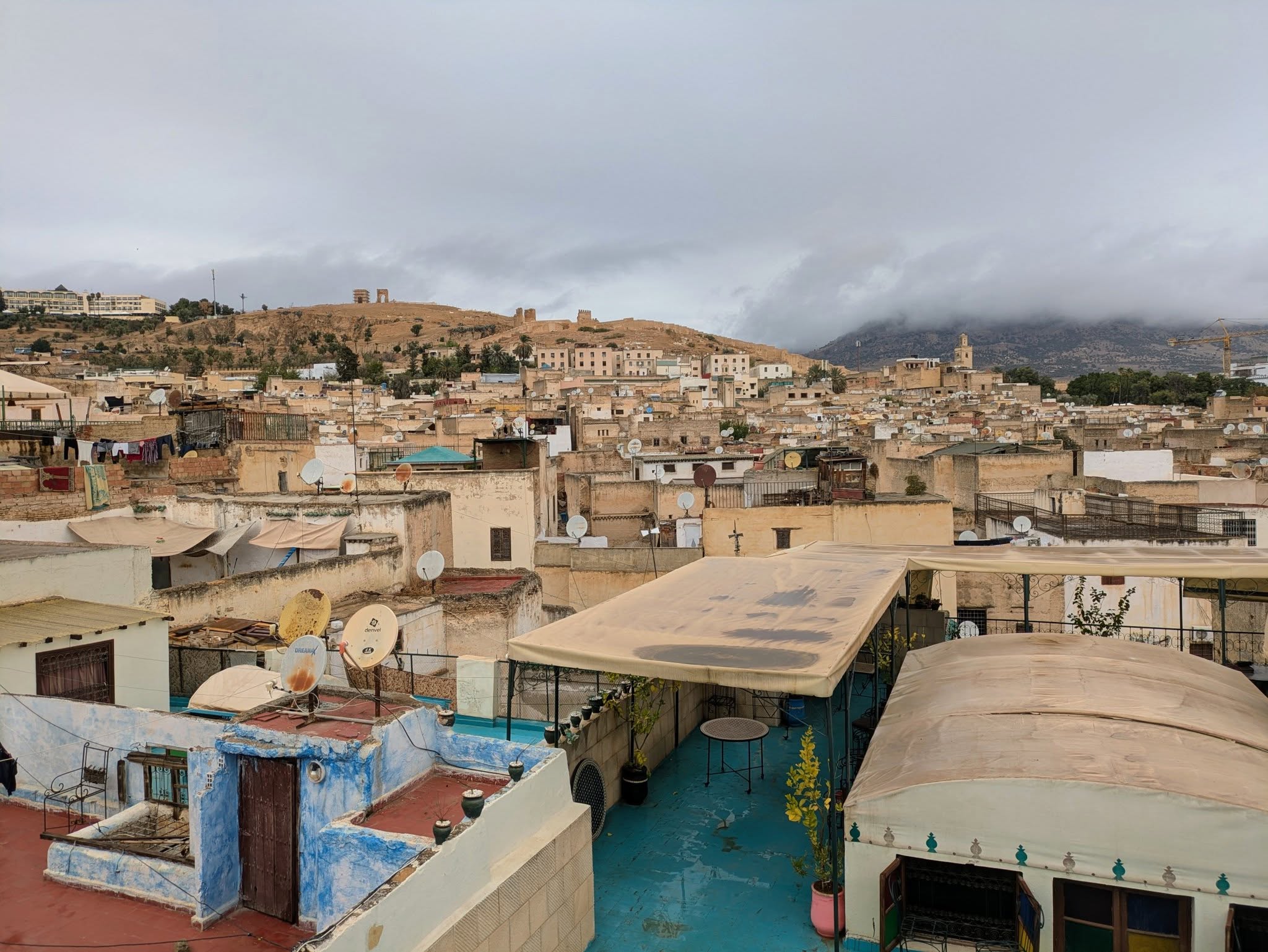
The next stop on our itinerary was Fes (or Fez), which is one of the oldest cities in Morocco. I think this was the city I was most looking forward to before our trip because I was so excited to experience the medina. The medina refers to some 9,000 streets and alleyways that make up what I can only compare to a massive hedge maze, except these walls are stone, several stories high, and about 800 years old. “Bustling” just isn’t a strong enough word to describe the medina, which is home to approximately 100,000 people, most of whom must be merchants of some sort given the insane number of markets, shops, and stalls!

Walking around the medina was chaotic in the absolute best way. There are souvenirs, snacks, businesses, and historic sites all crammed into the narrowest of spaces, not to mention all the people shopping, taking photos, transporting goods, etc. Unfortunately, Google Maps is almost no help in navigating since the vast majority of the streets in the medina are too small to be on the map. For that reason and so many others, walking around Fes felt a lot like traveling back in time. Of course, eventually you’d spot some stainless-steel water bottles or personalized power banks and instantly be back in the 2020s.

In my opinion, the absolute best thing to do in Fes is to wander. Just walk around, get lost, find your way back again by recognizing some sign or stall, and ultimately soak up the chaos. I also think staying in a dar (a room in a local house) or a riad (an inn) is essential in Fes. Hearing families eating dinner, buying your water at a little window shop, and feeling the warmth of Moroccan hospitality was such a great part of our stay in one of the most unique places we’ve ever been. Oh, and remember to prepare yourself mentally for bargaining at the markets, you absolutely have to have your head in the game for that!  

To/From the Desert

The next part of our trip was a bit out of the ordinary for us. When we were planning everything, we knew we wanted to get out to the dunes, but we weren’t sure the best way to do that. Renting a car our first time on the continent seemed challenging, but doing a multi-day tour had us wary as well. In the end, we decided on a tour that doubled as transportation between two of the cities we wanted to see, and included most meals, tickets to the various sites, and lodging for the two nights. Given how cheap it was and the huge number of different companies and individuals offering something oddly similar, we were a little worried it was all a big scam…
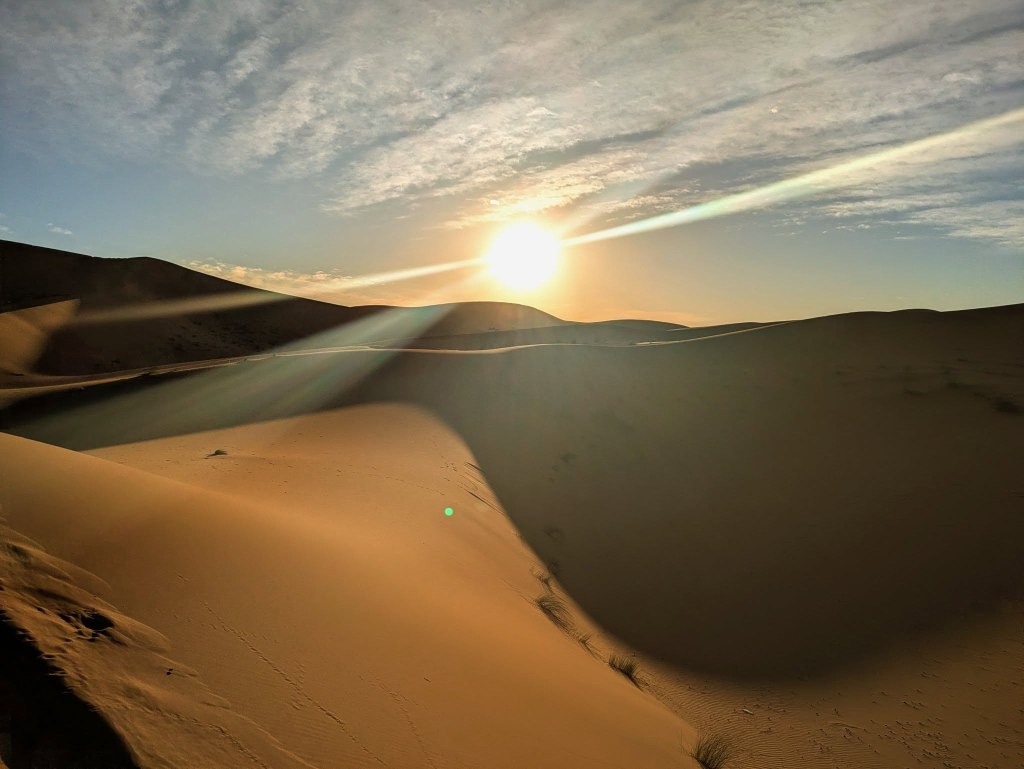
But nope, it was just as amazing as all the reviews said it would be! Of course, I was still very nervous when we hadn’t heard from them by the night before out 7am departure, but once we were put into contact with our driver/guide, Mahmoud, I was completely at ease. He was so skilled at giving us the right amount of time in each place, sharing enough information to keep us interested and entertained, and juggling all the logistical tasks it required to transport 10 foreigners across the country and into the desert for three days and two nights.

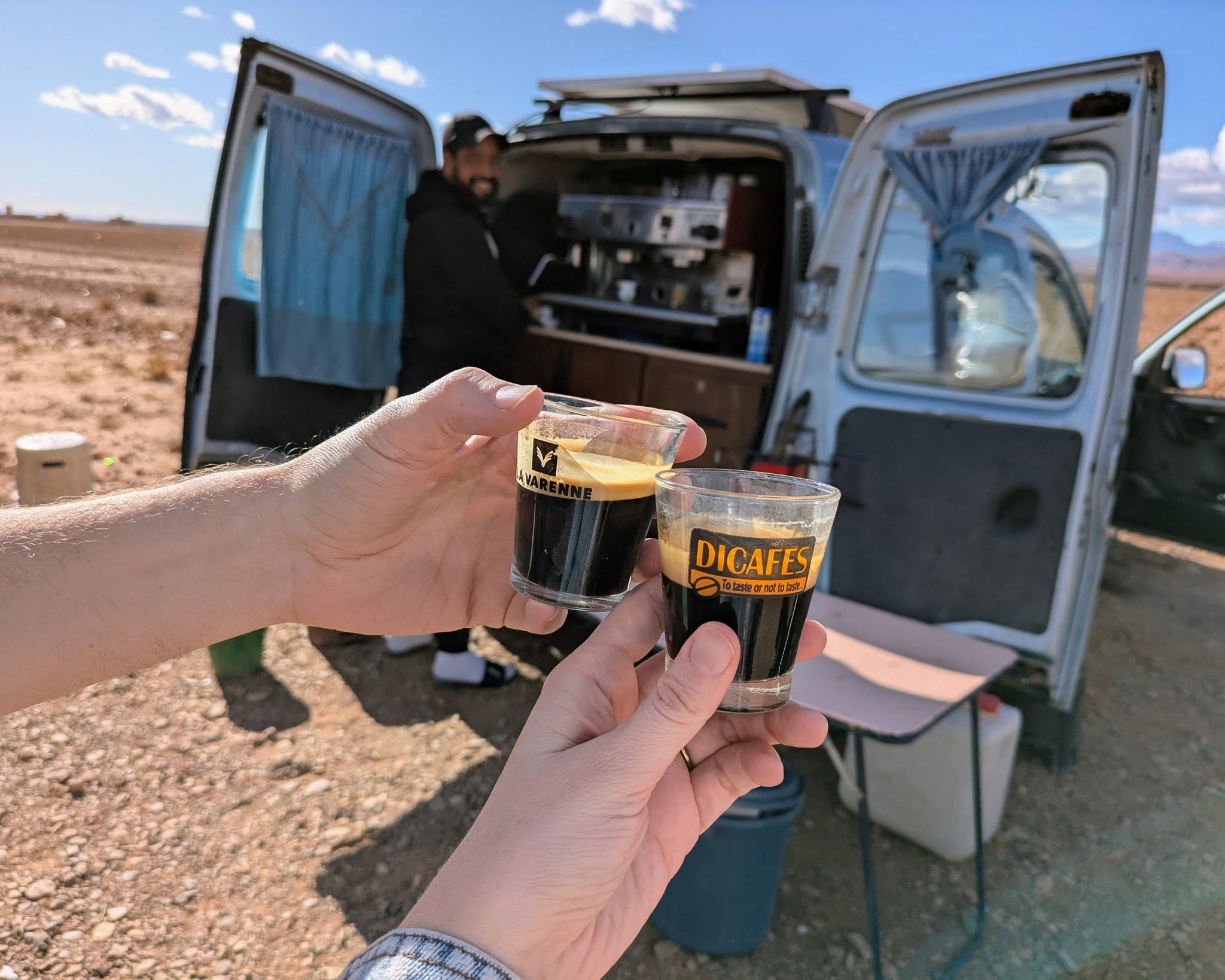
It takes 7 hours to get to Merzouga (and the Chebbi dunes) from Fes and another 9 hours to get to Marrakesh, so we covered a lot of ground and a lot of points of interest, including some of my favorite: the monkeys in Ifrane, the Todgha gorge, the random espresso bar van in the middle of nowhere, and the ancient city of Aït Benhaddou. But of course, the highlight of this adventure was our time in the dunes. Riding the camels, watching the sunset and sunrise, sandboarding, a bonfire, drinks shared with new friends, star gazing – it was one of those travel experiences that seems totally unreal, and I can’t recommend it enough.

Marrakesh

Honestly, you’re probably thinking, how could we possibly top what we’d already enjoyed thus far in Morocco, and we were a bit worried about that too, especially since we were told by almost everyone we talked to that Marrakesh was their least favorite city in Morocco. We had heard Marrakesh was noisy and dirty and that the people there were pushy and impatient, etc. Well, I don’t know if we’re just weird, but Marrakesh was our favorite of the cities we visited, pretty much precisely because it was all those things and more! To me, it felt so utterly authentic in its own ancient-trading-center-turned-major-tourist-destination sort of way.
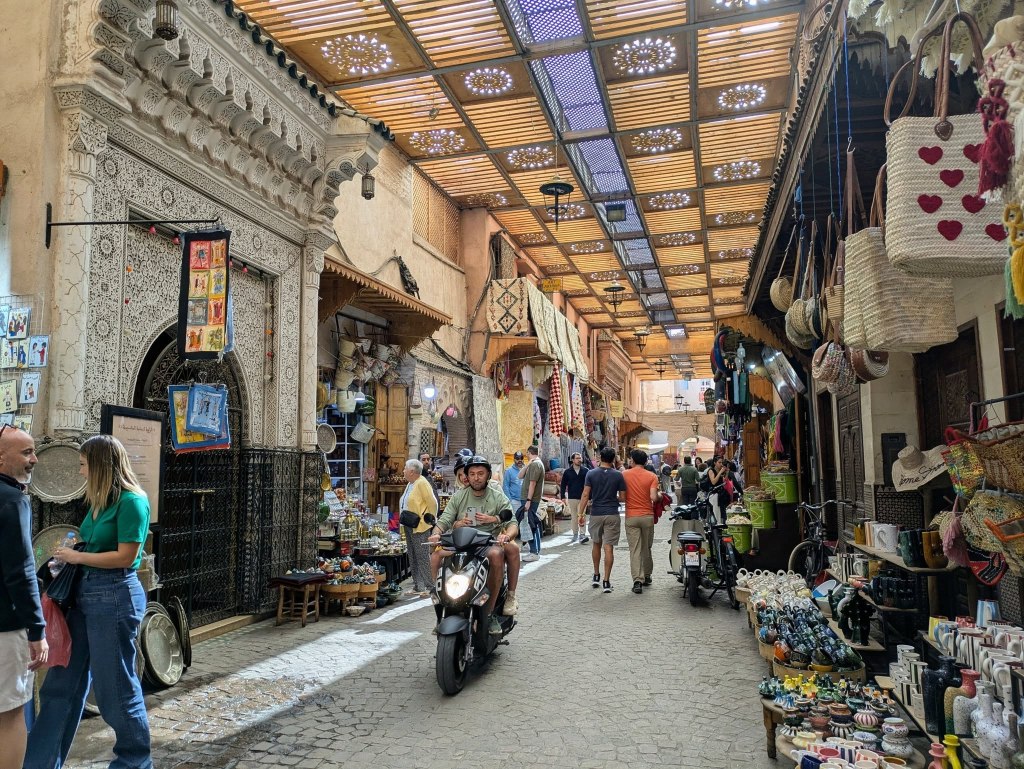
Much like Fes, Marrakesh also has a medina, but it’s actually much larger and thankfully fully mapped on Google Maps (plus one for navigation)! However, the medina in Marrakesh hasn’t banned motorcycles like Fes has, so it was a bit louder and dirtier. Of course, I found that more fun and probably more convenient for locals. We also found the people of Marrakesh to be super likeable! Maybe they seem pushy or impatient to some, but as city-people ourselves, we totally got it. We knew almost instantly that if we ever choose to move to Morocco, Marrakesh is the place for us.

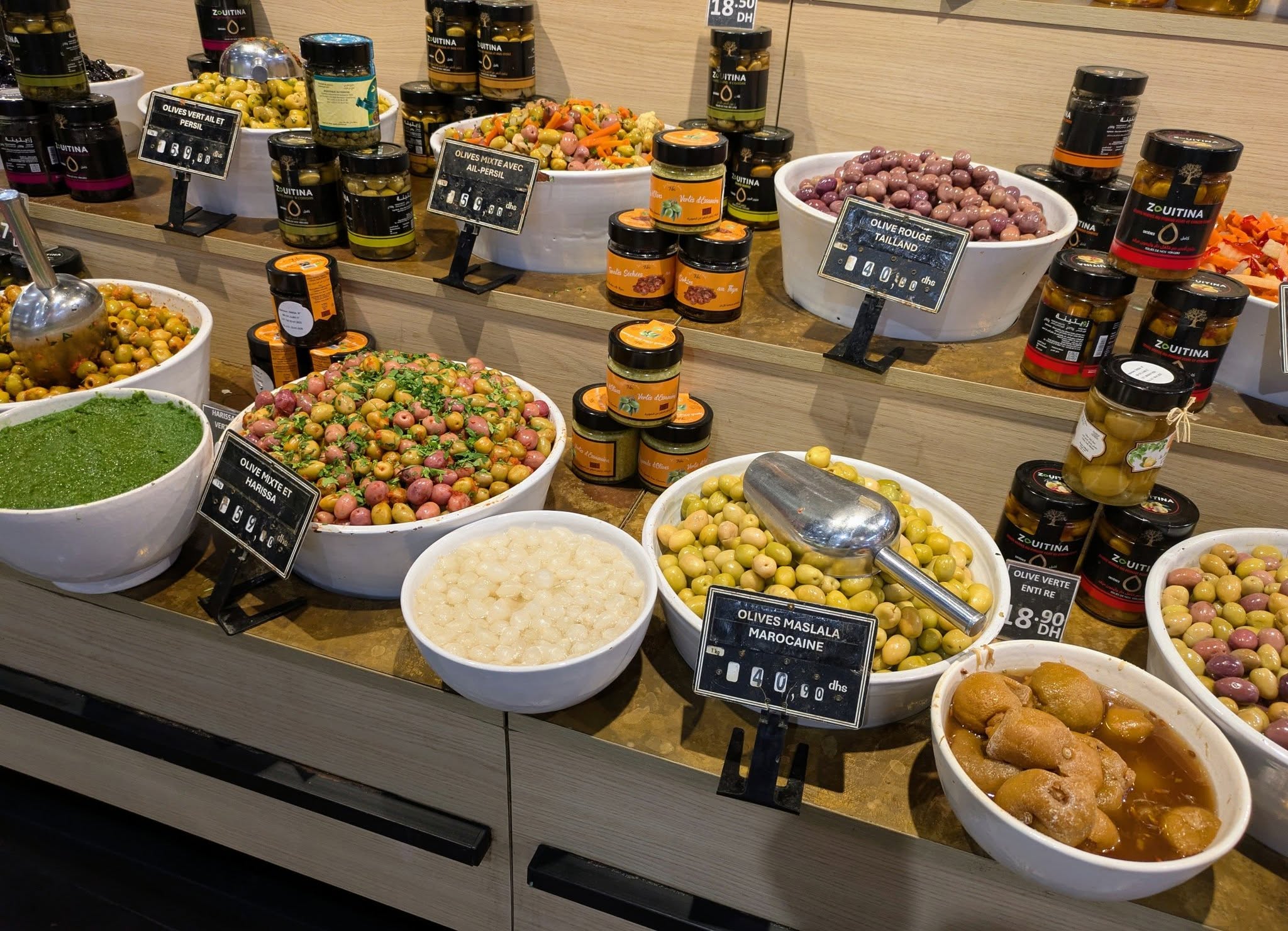
Hopefully, we’ve already done our part in hyping up Marrakesh, but for some more specific recommendations, I’d say first, make sure you walk through Jemaa el-Fnaa (the main square) often and at all times of day. You’ll see so many things you’ve never seen before and might never see anywhere else! But if you don’t like people hawking their goods/services, then I advise you walk with purpose lol. You should also go to a hammam and get scrubbed down. You might feel awkward or unsure, but it won’t last long. Just take it all in and think of the stories you’ll have to tell afterwards. Other highlights for us in Marrakesh were the Marrakesh Museum, MK Rooftop, and basically any supermarket (their Carrefour is *chef’s kiss*).

As is always the case with our trip recap posts, there’s just so much I want to share, but then, I’d really rather you go out there and experience it for yourself! Morocco might seem daunting at first; I know there’s a lot of information online about it (particularly a lot of cautionary tales), but we found it to be a very welcoming place that really puts a lot of effort into making sure tourists are well taken care of! It’s simply marvelous really! Shukran, Maroc – until next time!

Rio Reflections

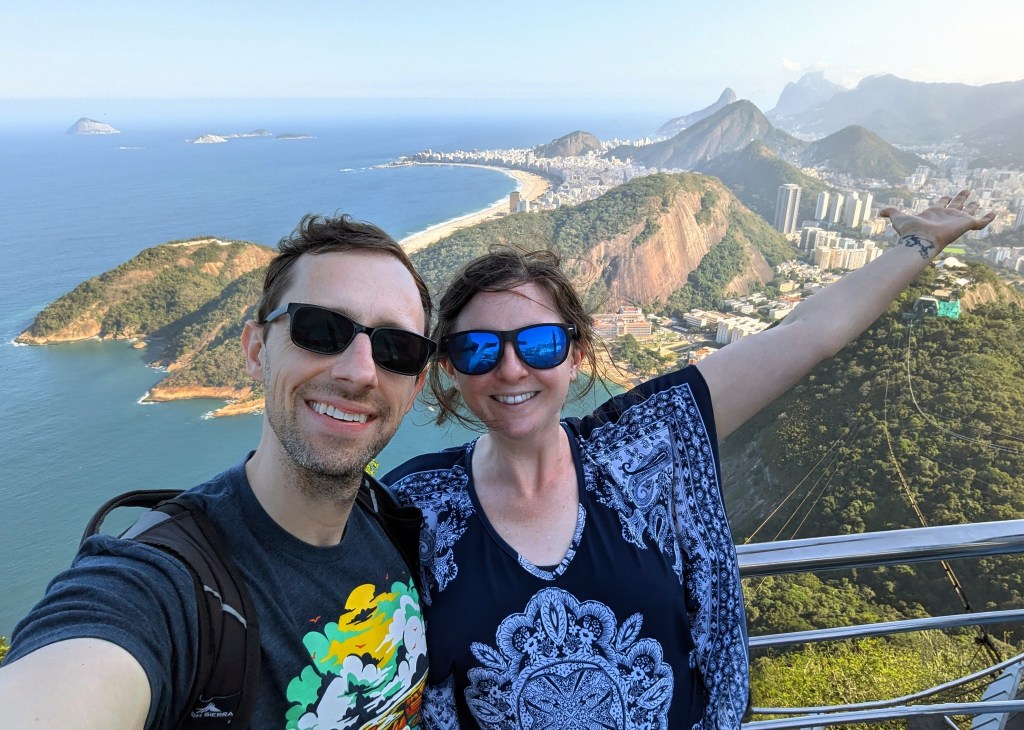
It’s summertime, which can mean only one thing: it’s time for Tucker and Dani to hop on down to the southern hemisphere because one can never have too many winters! Of course, our destination didn’t feel very wintery at all this time because for this trip, we chose to go to beautiful Rio de Janeiro, Brazil! Here’s a recap of what we did, how we did it, and most importantly, a list of the best foods we had while we were there.

Sugarloaf Mountain

The first thing we did after dropping our bags off at the Airbnb was head to Sugarloaf Mountain for a couple of cable car rides and gorgeous views of the city. We opted to take an Uber as we had just arrived and didn’t have much time before sunset, and I think that ended up being a good choice. Ubers are fairly inexpensive and easy to use in Rio, just know that you might have a few cancelations before getting one that sticks. Also, like most major cities, traffic can be…difficult, so be ready for that as well.

Sugarloaf Mountain is a major tourist attraction, so everything was in English, Spanish, and Portuguese, making the ticket-buying process super simple. The cable car rides were quick and efficient, and the views at the top were absolutely breathtaking. But what surprised us most was definitely how much there was to do at the halfway point (Morro da Urca). There are shops, restaurants, a mini-brewery, helicopter rides (for a price, of course), and tons of marmosets to watch! This was our first reminder that we were in a very lush land, full of all sorts of flora and fauna, even in the most populous parts of the city.

Copacabana & Ipanema

Next, we went to the beach, and actually, we found ourselves in and around both Copacabana Beach and Ipanema Beach a lot during the week. The beaches are absolutely massive, and there were so many people swimming, sunbathing, running, eating, drinking, playing games, taking pictures, doing anything and everything it seemed, which makes sense because once you’re on the beach, you’ll want for nothing because there is a constant stream of vendors selling everything from popsicles and steamed corn to bathing suits and hard drugs. Seriously, there was something for everyone!

Copacabana Beach

You can take your time in the sand, or you can walk along the wide, tiled sidewalks literally for miles along all the beaches. There are plenty of beachside cabanas to choose from as well if you want a little treat with a nice view and some shade. And if you don’t feel like walking, there are lots of shared bikes (which can be rented through Uber) or scooters (which have their own app) that you can rent instead, and with as many times as we ended up going to the far ends of the beaches, I was very thankful for those options! The neighborhoods in this part of the city have tons of cafes and restaurants to choose from as well, which were very lively even in the off season. It was actually really hard to narrow down all the choices here!

Centro

Prior to our visit, I was a definitely a little wary of spending a lot of time walking around Rio’s Centro. This part of the city doesn’t exactly have a squeaky-clean reputation, so I was wondering just how rough it would feel. Fortunately, we didn’t have any issues at all, but there were definitely some areas that felt a little less safe than Copacabana or Ipanema. As you always should when traveling, make sure you’re completely aware of your surroundings, and if possible, try to stick to the more populated streets. Safety in numbers (at least in this instance).  

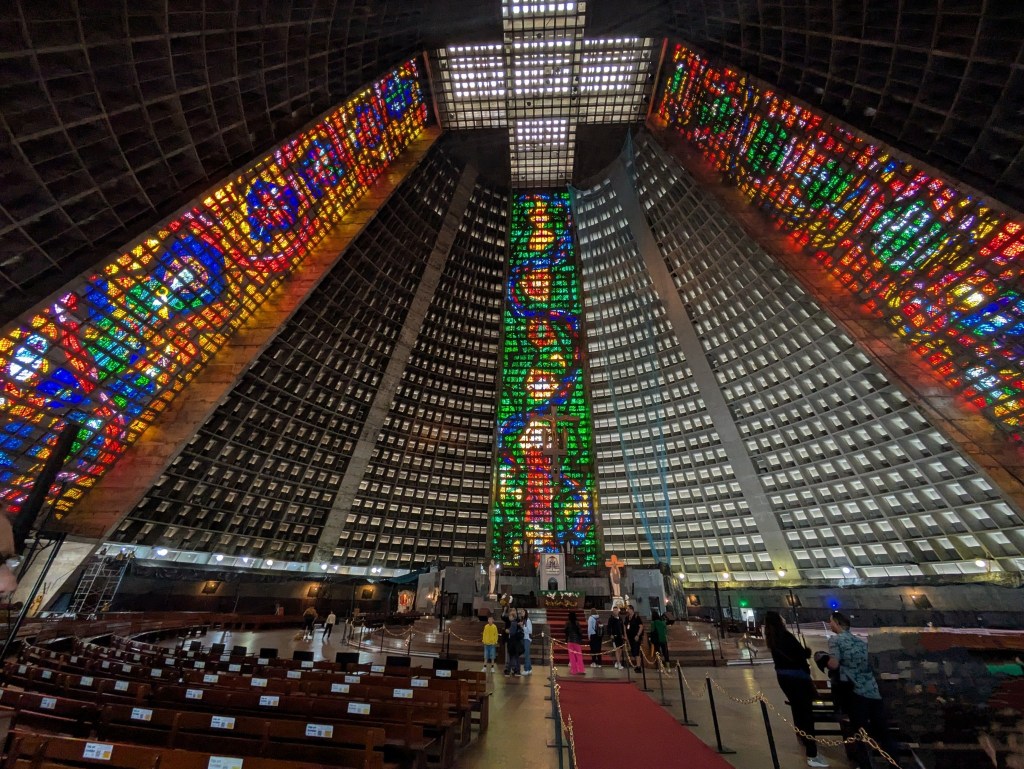
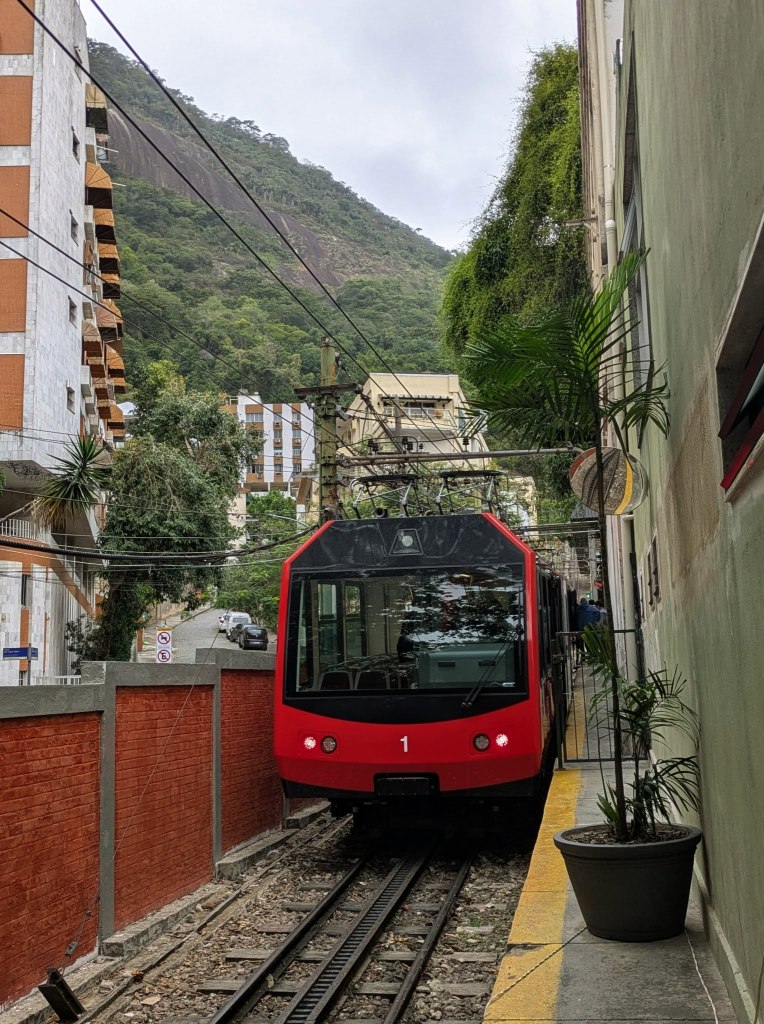
Some of my highlights from our day in Centro would be the Santa Teresa tram ride, the Metropolitan Cathedral, and the Royal Portuguese Cabinet of Reading. I knew I wanted to at least see the old tram, but once we were there, we decided we might as well take the ride even though we had no idea where it was going, and I am SO glad we did because it was an incredible (round)trip through the heart of the city. The Metropolitan Cathedral is essentially the center of Centro, so you can’t miss it. Definitely check out the inside too though because it’s one of the most unique churches I’ve ever seen. And the Royal Portuguese Cabinet of Reading was also just spectacular! I mean, free entry and tons of books? How could you go wrong?

Christ the Redeemer

And finally, the symbol of Rio: Cristo Redentor (or Christ the Redeemer). For this particular sight, we had actually bought tickets for the scenic train ride up and down, but we had to choose a day at random, and when that day came, it was stormy. Needless to say, there would be no view of the city nor of Cristo himself as he was well and fully in the clouds that day. Luckily, they let us change our date and time, which still felt like a bit of a gamble, but the second time, it worked out for us. I would still recommend buying the tickets in advance though, because when we did show up on that sunny day, the line for buying tickets was hours long.

The train ride was nowhere near as nice as the Santa Teresa tram, so now you know which to skip if it comes down to it. You can also get up to the statue by van or by walking (although some people advise not to walk due to some sketchy areas). I also wouldn’t allot a ton of time for this particular activity because there’s not a whole lot of space up at the top, and once you get your selfie with Jesus, there’s not much to do besides wait in line to go back down. All that to say, I’m still super glad we got to see this New World Wonder up close and in person because it truly is a wonder.

Cristo Redentor

The Food

And now, everyone’s favorite part! Here’s a list of the foods we made sure to try while in Rio:

Açaí na tigela (a frozen açaí smoothie snack)

Baião de dois (a rice and beans dish from the northeast region of Brazil)

Cassava croquettes

Bob’s (Brazil’s most popular fast-food joint)

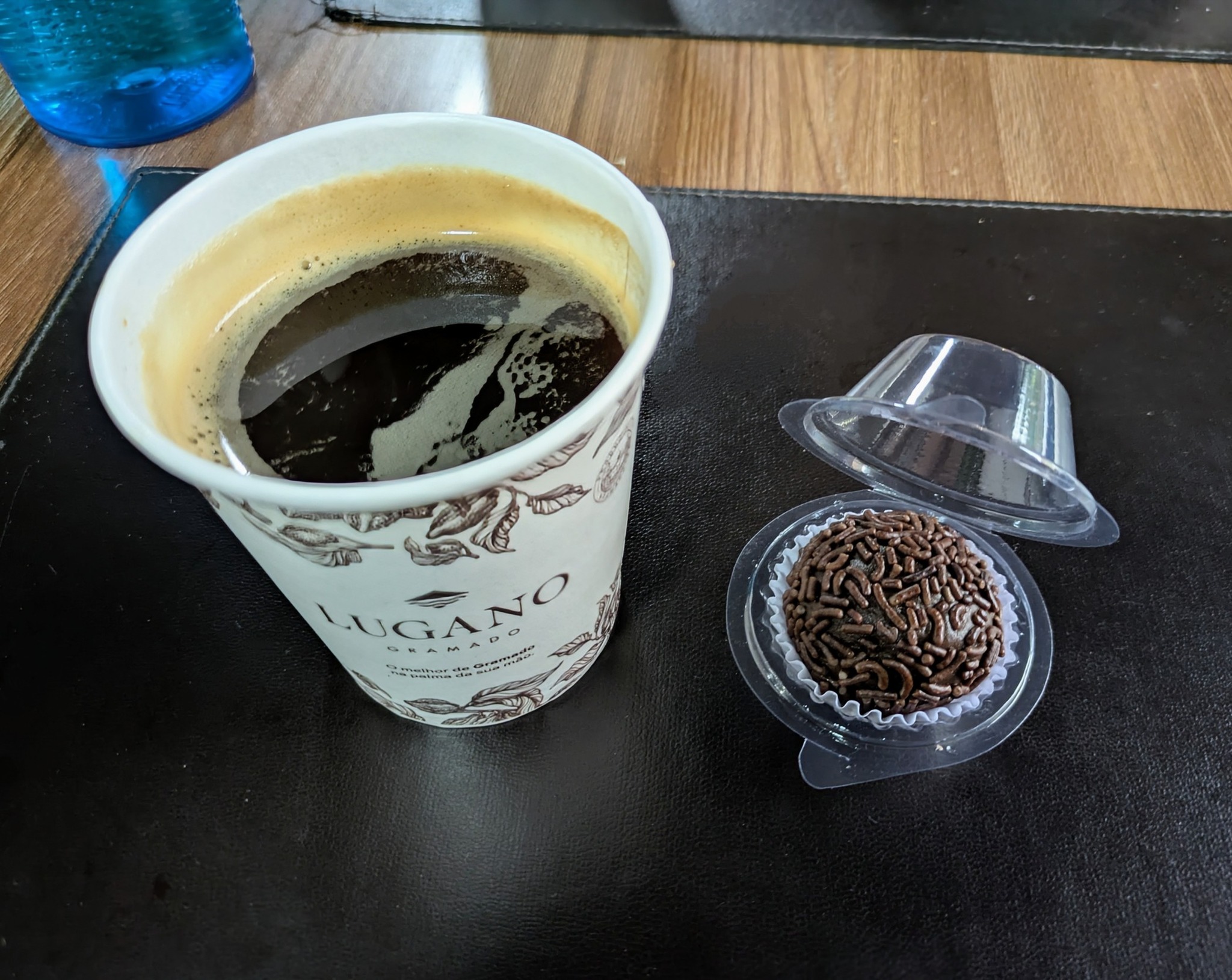
Brigadeiro (chocolate sprinkle-covered truffle)

Cassava croquettes (croquettes made from cassava)

Churrasco (an assortment of grilled meats)

Coxinha (a fried dumpling of sorts, similar to a croquette)

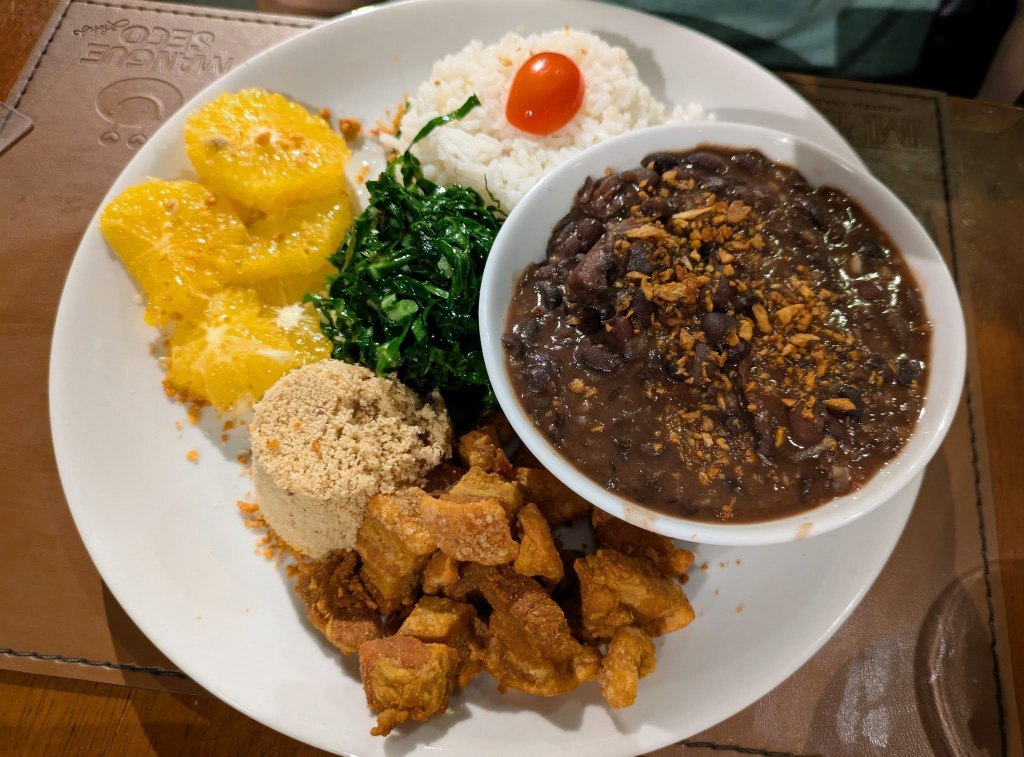
Feijoada

Empanadas (no explanation needed)

Farofa (toasted cassava powder)

Feijoada (bean stew)

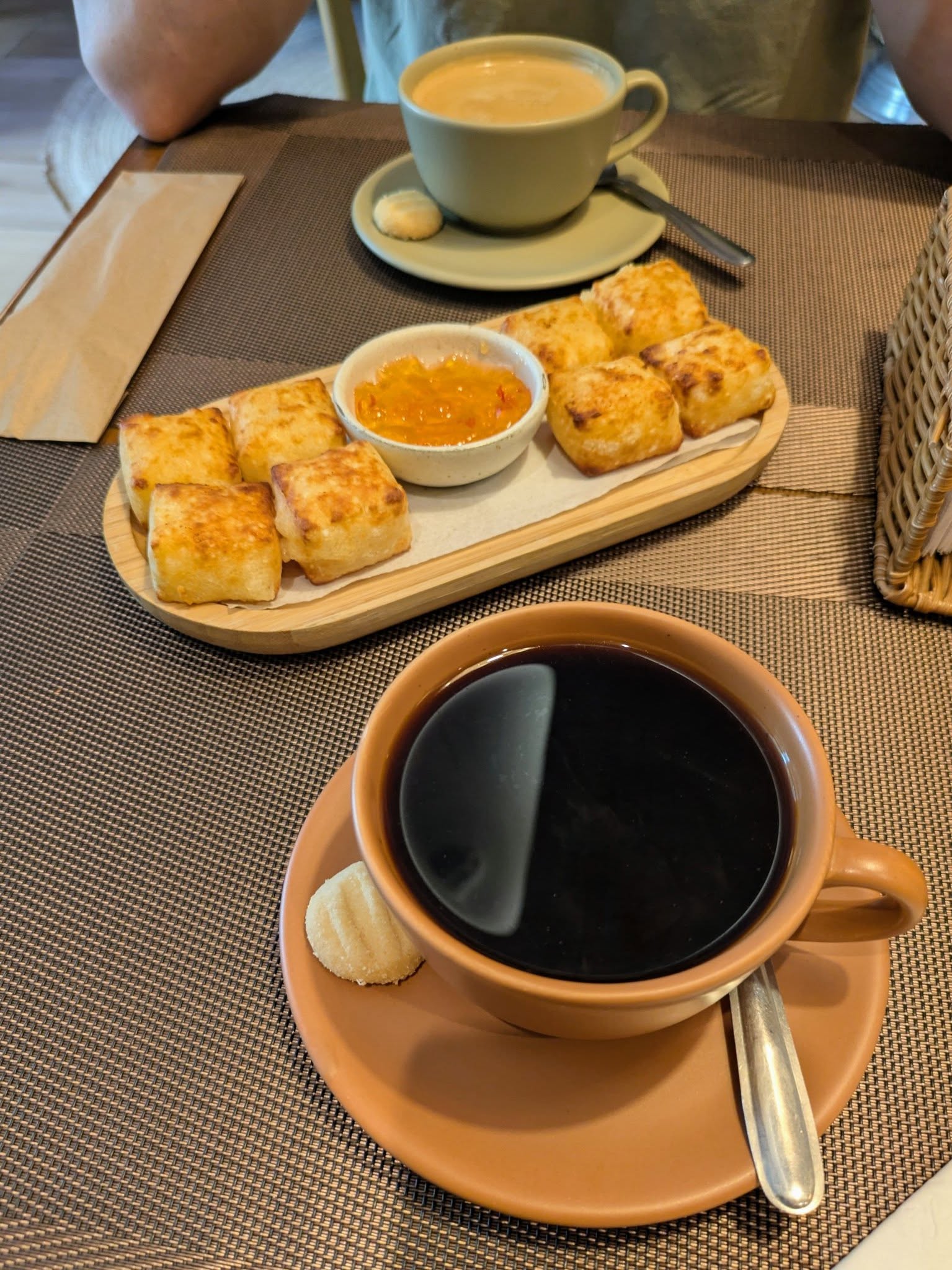
Pão de queijo (baked cheese balls)

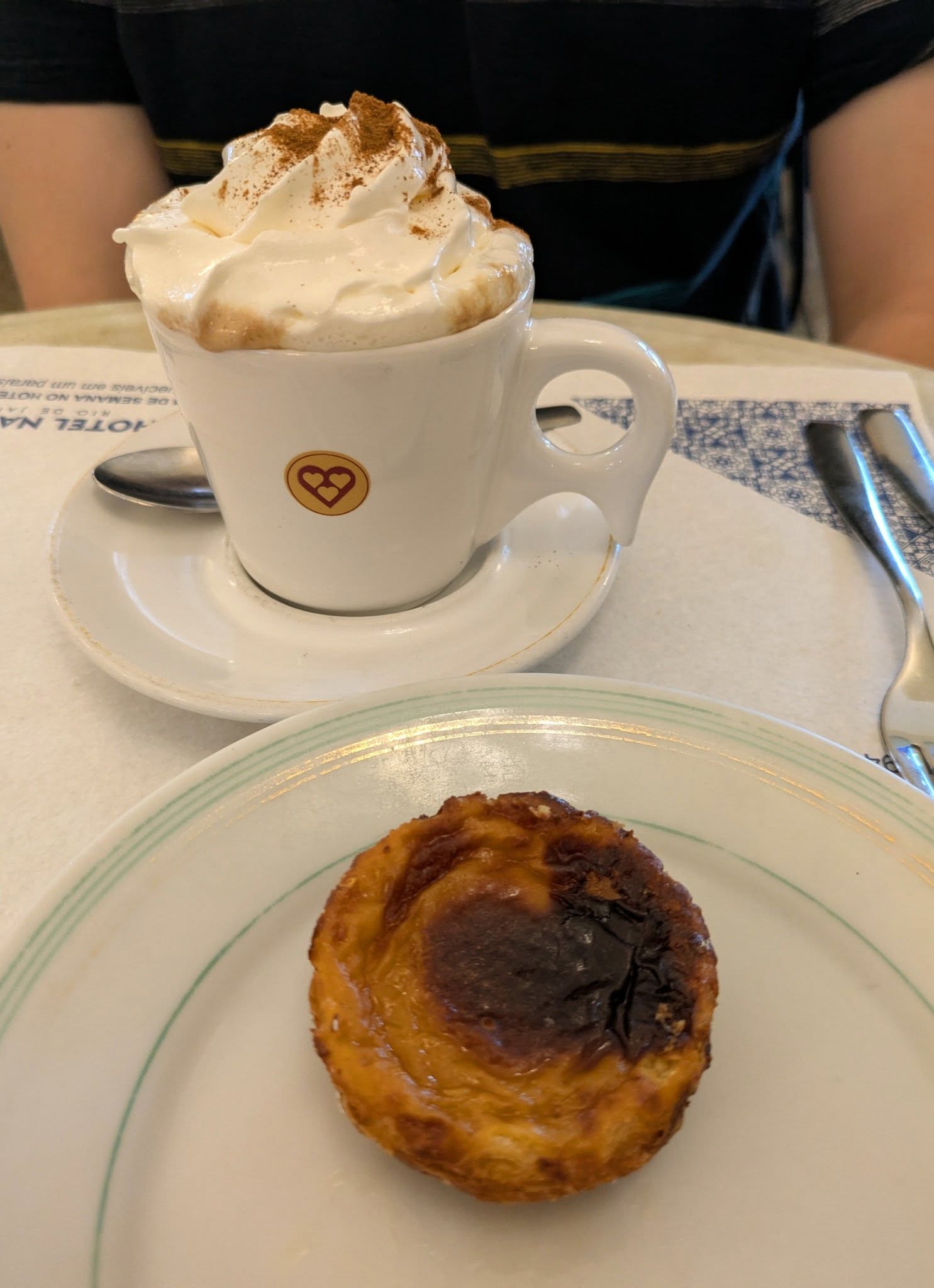
Pastel de Belem (egg/custard tart)

Picanha (steak)

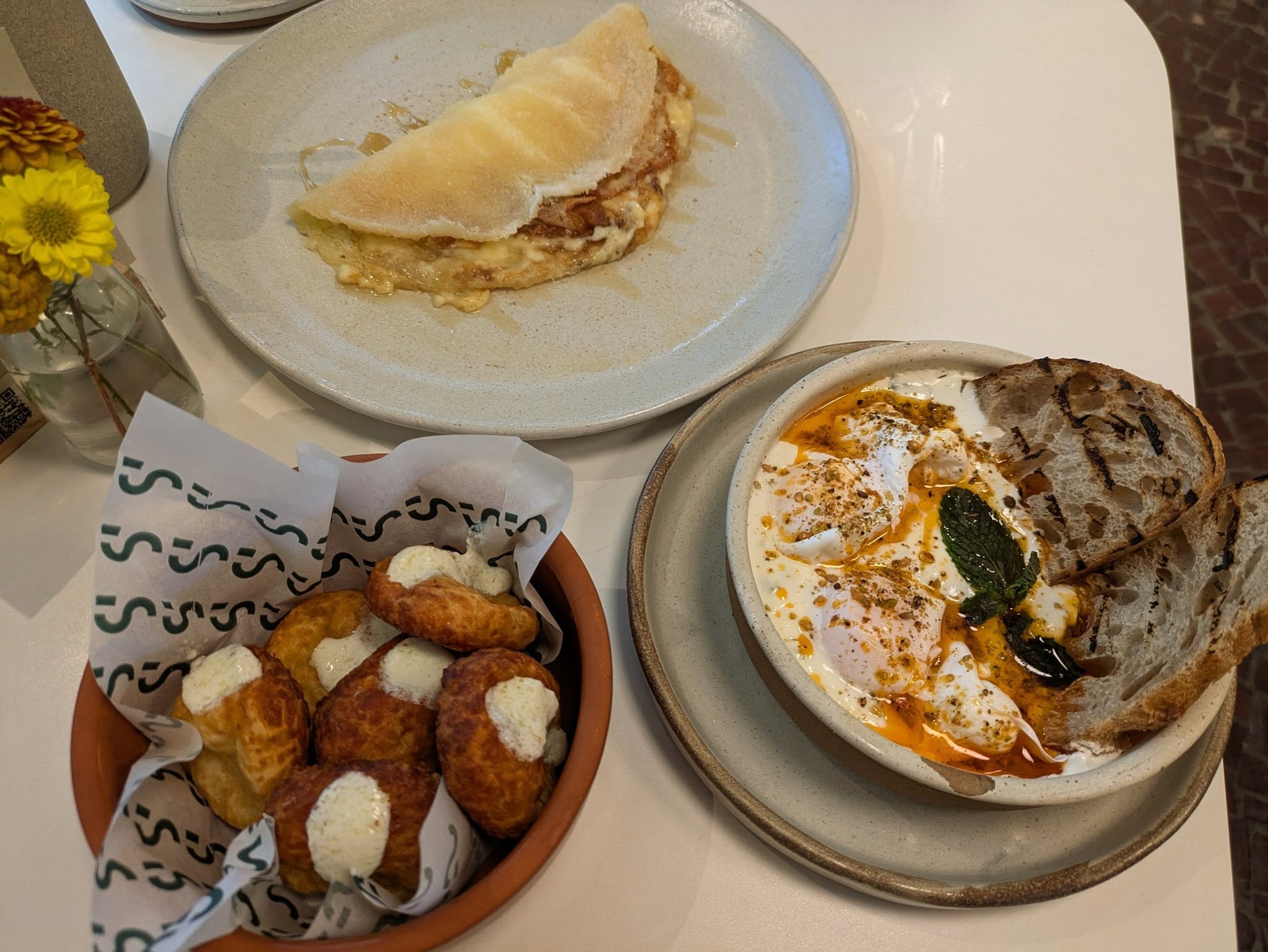
Tapioca crêpe (crêpe made of tapioca flour)

Tapioca dadinhos (delicious little cubes of fried tapioca and parmesan cheese)

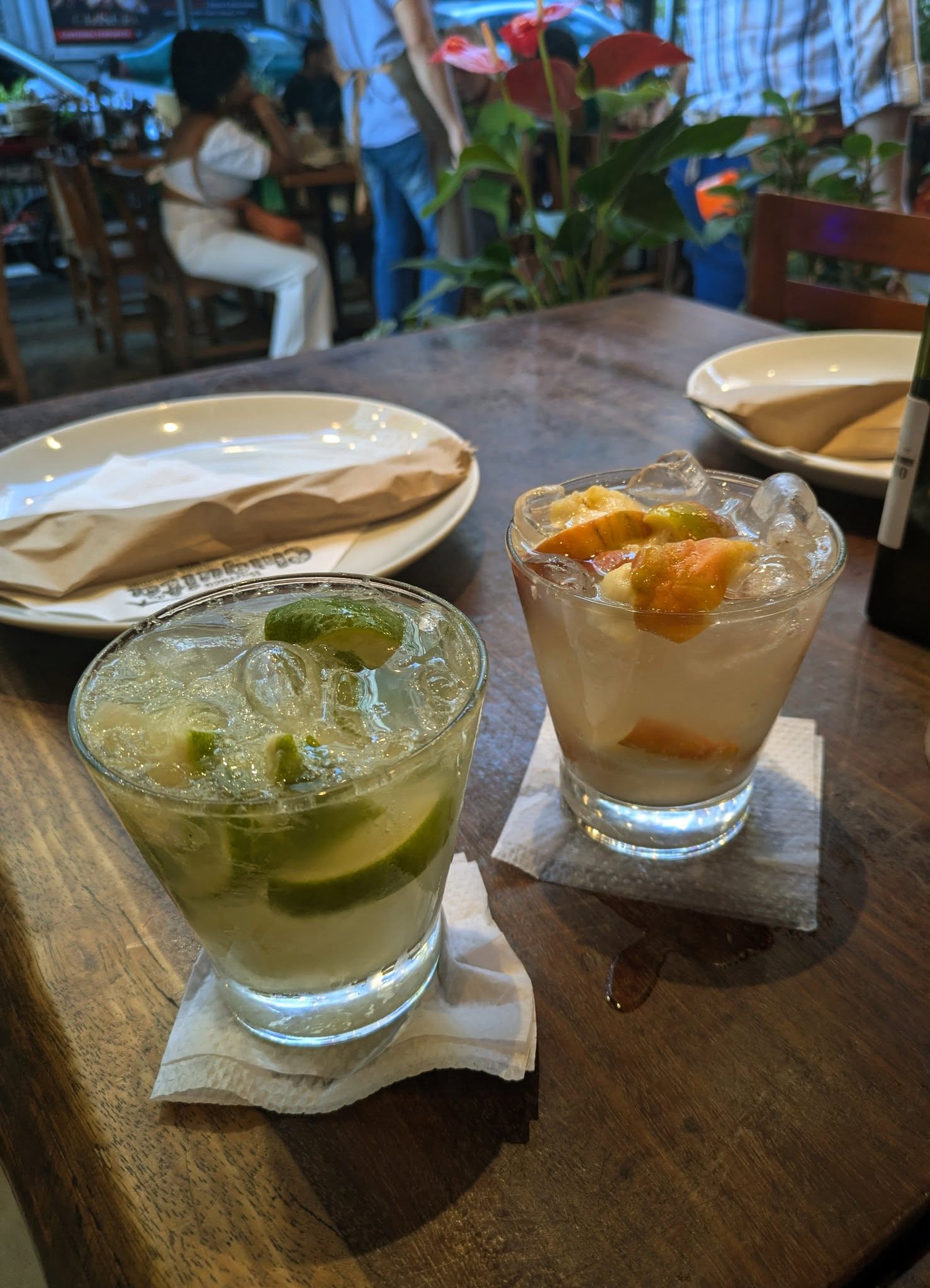
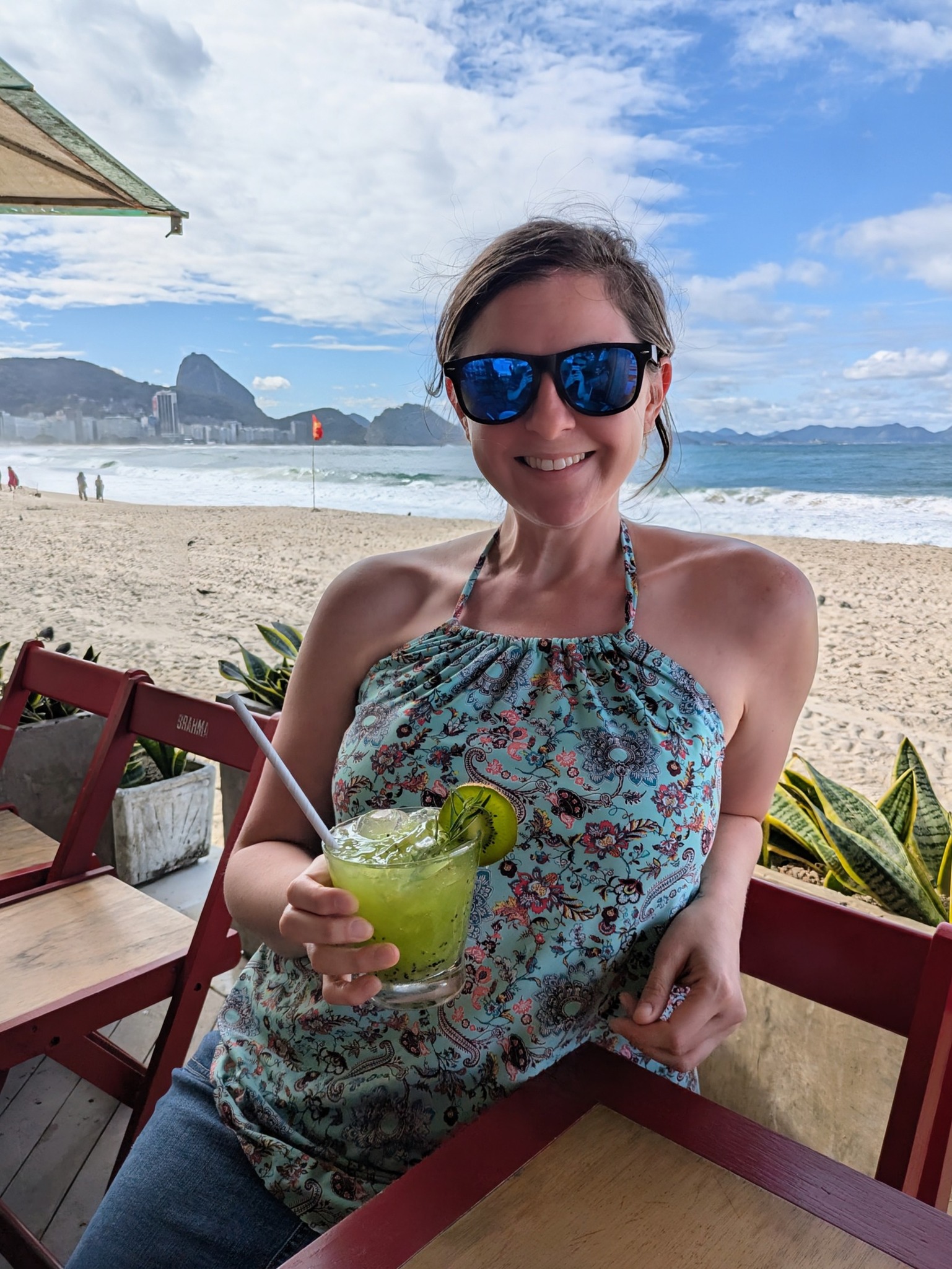
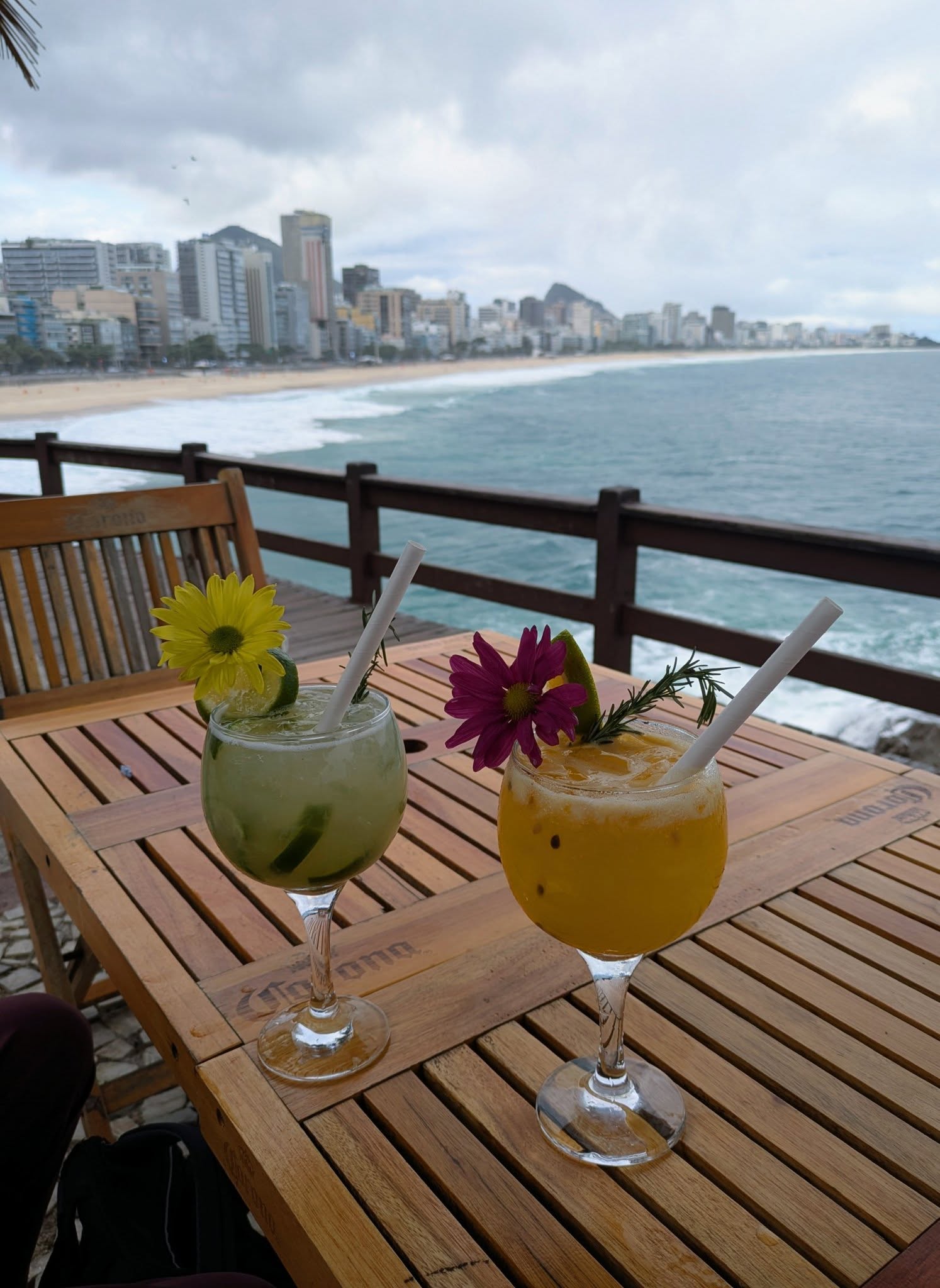
And because I can’t leave it off this post entirely, you should also try a caipirinha (or four) when in Brazil. The caipirinha is the country’s signature cocktail and is made with a sugarcane liquor called cachaça and the fruit of your choice. For what it’s worth, I think the traditional lime is BY FAR the best option.

So, who’s ready to go to Brazil now? I know we’re eager to go back already! Rio was so much fun, but Brazil is a huge country with so much to offer! I hope we’ll be saying “bom dia” again before too long! Until then, I’ll just keep dreaming of all that delicious food!  

The Best Things We’ve Ever Eaten

It’s officially November, which means we’re situated about halfway between the two Thanksgivings, and I think that calls for another food-related post! About this time last year, I wrote about some of our most memorable meals, which was fun and nostalgic, but this year, I wanted a challenge. For this month’s post, Tucker and I debated long and hard to come up with a list of the top ten best things we’ve ever eaten (in no particular order).

Sounds easy, doesn’t it? It was NOT. We struggled with remembering, with choosing, and ultimately with agreeing on a mere ten dishes out of the thousands of meals we’ve enjoyed over the years. But the hardest part, by far, was realizing it’ll be years and years before we can taste all these things again! Ugh! Oh well, let’s all make ourselves hungry, starting with…

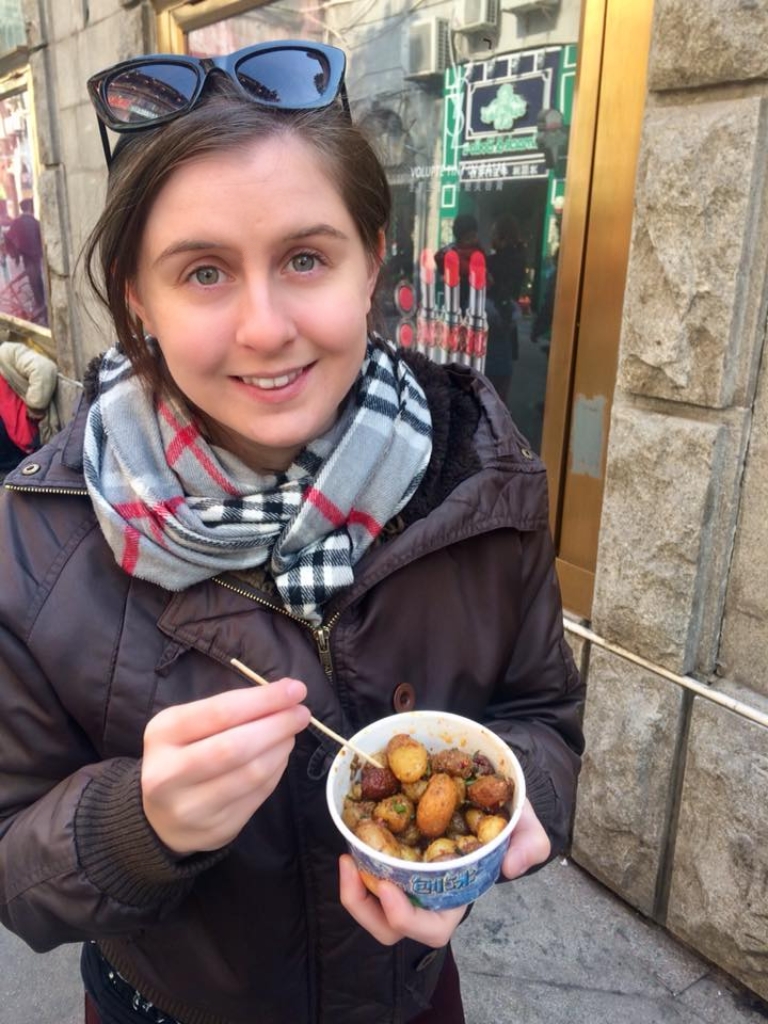
Chongqing noodles from pretty much any noodle shop in Chongqing, China

I am borderline obsessed with noodles. I eat them several times a week in one form or another, so of course, a noodle dish had to be on this list. Surprisingly, I didn’t have too much trouble in choosing my absolute favorite noodles I’ve ever had. Probably because I had them every day for about a week while visiting Western China. What makes them so special? If I had to guess, I’d say it’s a few thousand years of practice. But it might also just be the perfect combination of thick noodles, spicy sauce, and crunchy toppings.

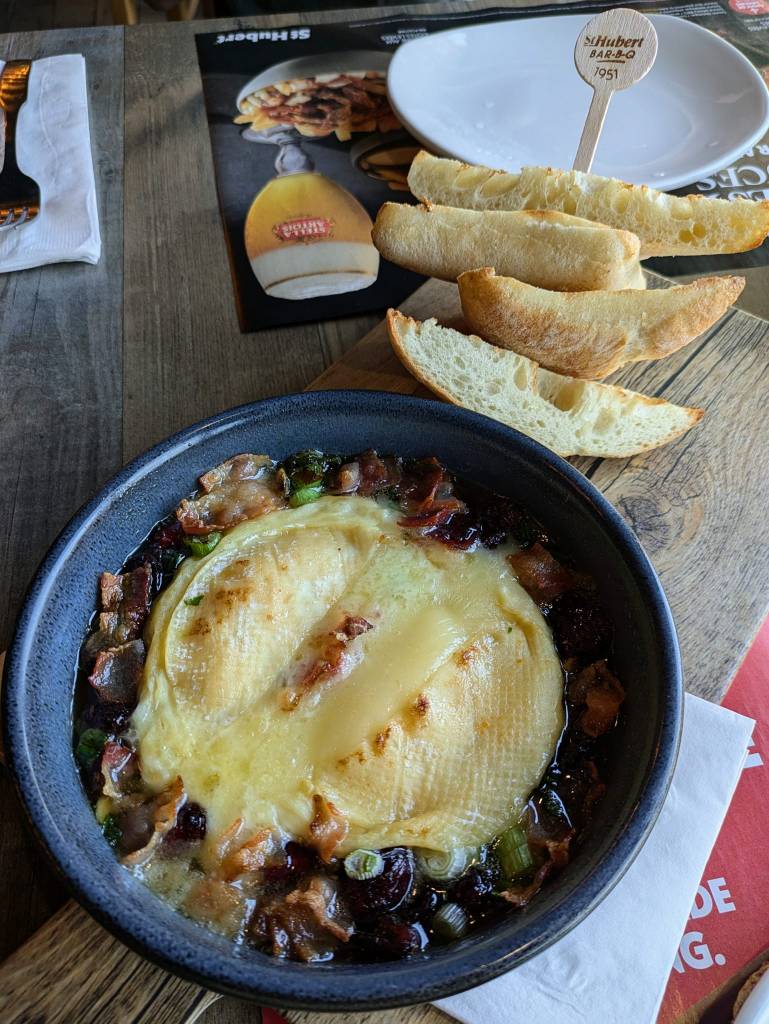
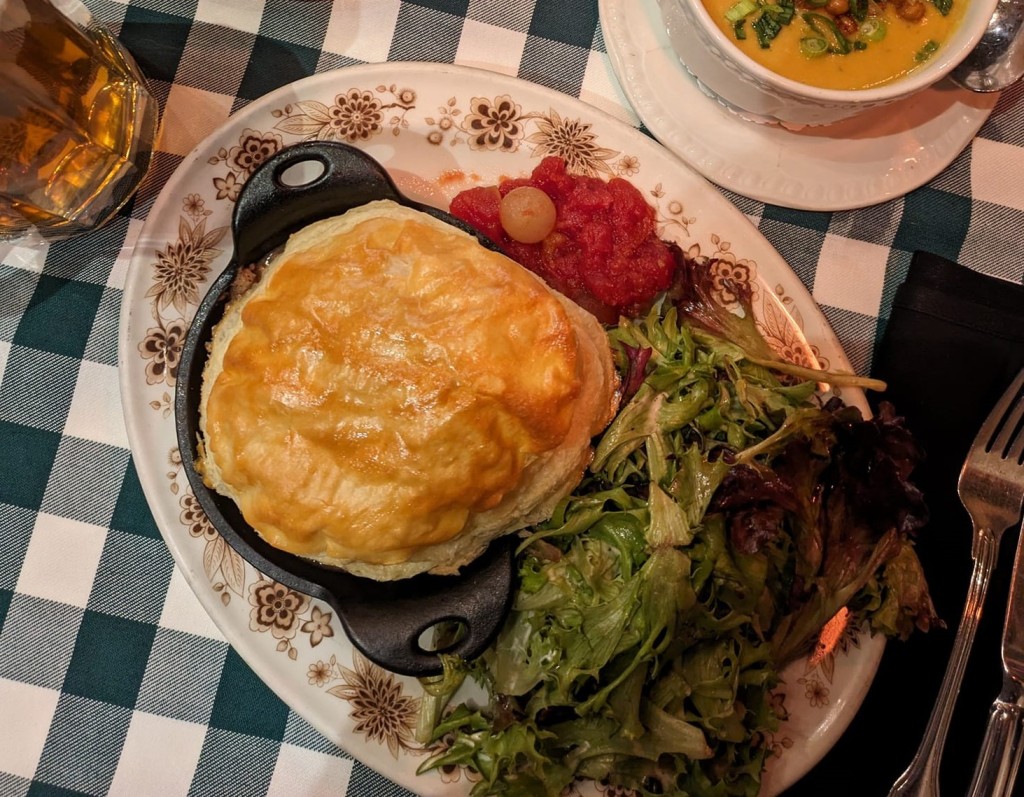
La Sauvagine Fondant from St Hubert in Gatineau, Québec

A somewhat surprising and recent addition to our list is an appetizer we ordered on a whim just last month. We were at one of our favorite restaurants here in Canada and happened to see a melted cheese dish that looked intriguing. Well, not only was it intriguing, it was absolutely addictive! We actually went back and had it again the very next week, which if you know Tucker, you know how big a deal that is. La Sauvagine, the main component, is a soft cheese from Québec to which they add dried cranberries, bacon, pumpkin seeds, green onions, and maple syrup all melted together in a skillet and served with grilled ciabatta. Oh mon dieu!

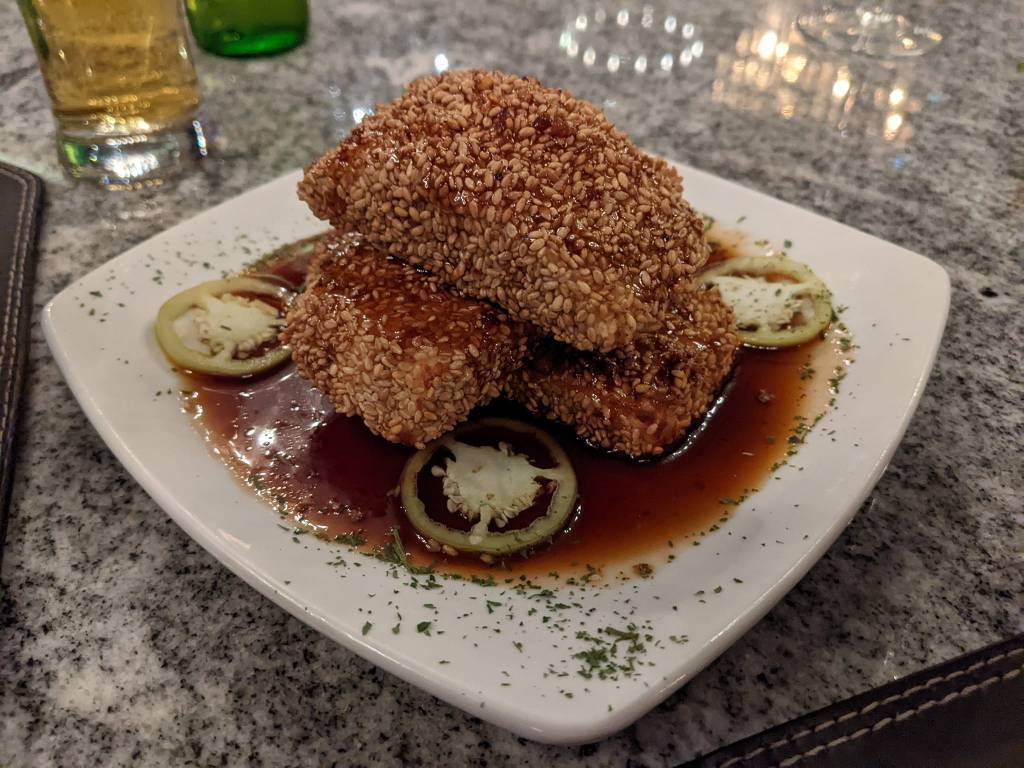
Sonoran specialties from Mochomos in Aguascalientes, México

Next up is really more of the entire menu than one specific dish, but if we had to choose just one, we could and it would still be on this list. Mochomos is a Sonoran-style restaurant with several branches in North and Central Mexico. Their concept is “Requeza Sonorense” or Sonoran Wealth, which means they highlight the best ingredients from the region in a simple but elegant way. The cortes, or cuts of meat, are the biggest draw, and they are done to perfection, but the sweet and spicy sesame panela is the dish we found ourselves going back for.

Zupy i kotlety from Gospoda Koko in Kraków, Poland

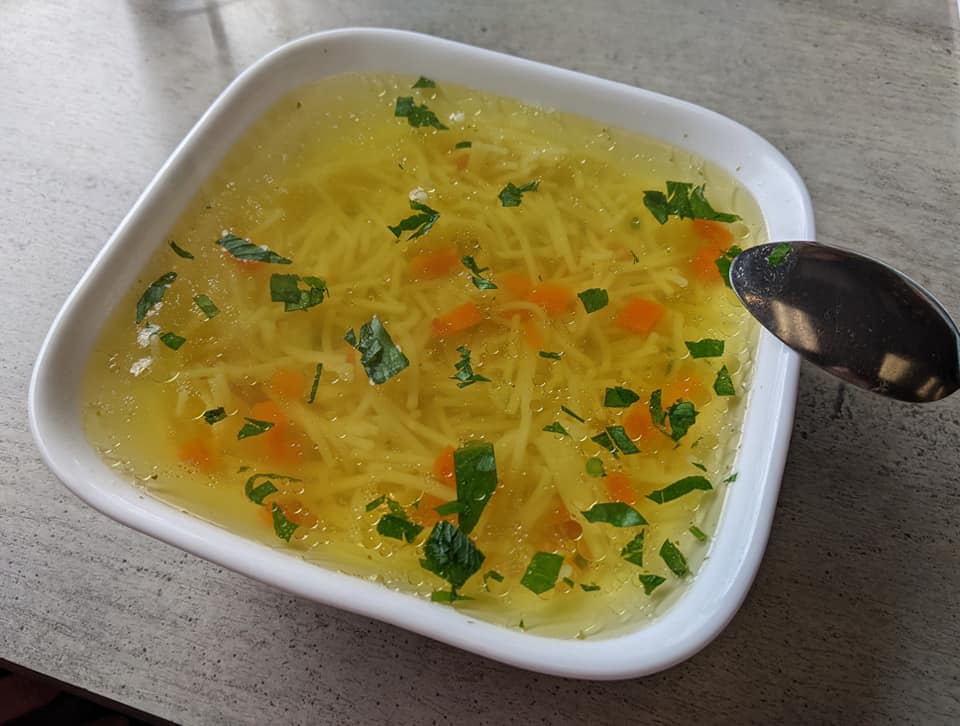
This was one dish we had a little trouble naming, but it stood out so clearly in our minds that we had to put it on the list. Tucked away on one of the many side streets of Kraków’s Old Town, there’s a rustic-looking restaurant (think hay and chickens) that’s still using handwritten menus, and they make the most delicious, homey Polish dishes that we’ve ever had outside of a Polish home. Both times we were there we shared a bowl of rosół (chicken noodle soup) and a plate of meat, sauce, and potatoes, which we’re still trying to recreate at home…to no avail, of course.

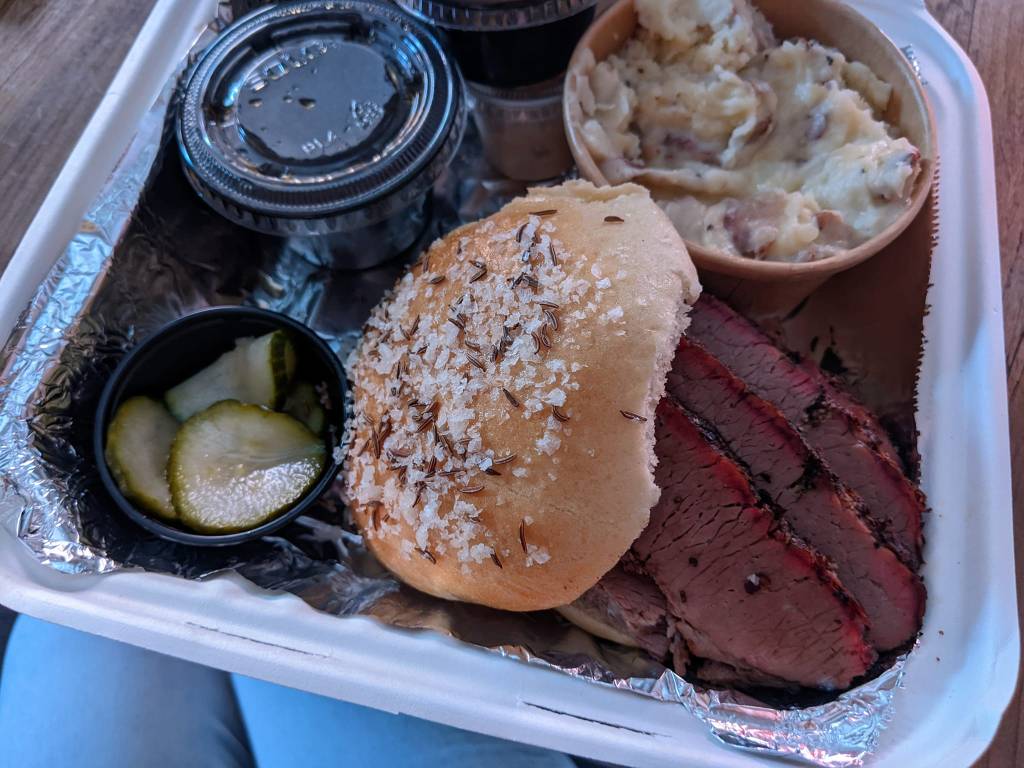
Brisket on weck sandwich from Fat Bob’s Smokehouse in Buffalo, New York

Beef on weck is a Buffalo staple made up of thinly sliced roast beef served on a kummelweck bread roll topped with salt and caraway seeds, and it’s really good! But when a place takes an already delicious traditional dish like that and adds slow-cooked brisket to the mix, well clearly, they make our list of best things we’ve ever eaten! In fact, we’re planning on driving quite a bit out of our way just to get this sandwich the next time we have to go south. And if you’re ever there, don’t forget the extra jus and horseradish! So good!  

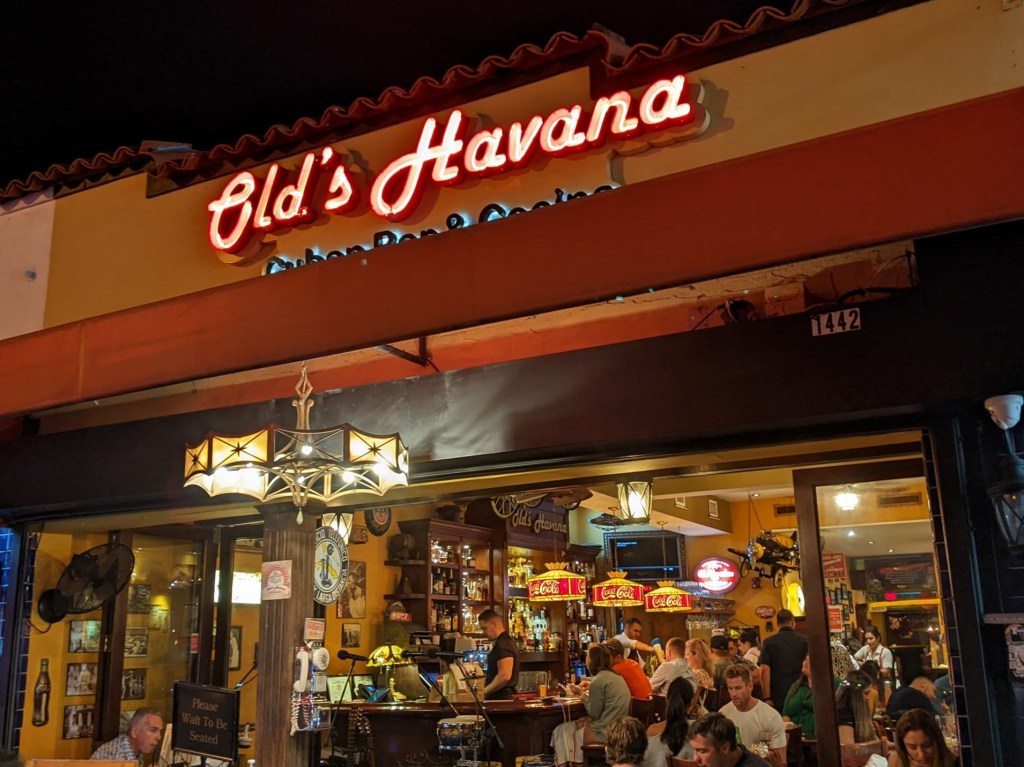
Cuban plates from Old’s Havana in Miami, Florida

Cuban food, in general, is one of our favorites, so we have it fairly often (definitely every time we’re in Florida), and when thinking of the best plate of Cuban cuisine we’ve ever had, Old’s Havana is what comes to mind! It’s there that we had our favorite vaca frita, which is the most incredible mezcla of shredded and fried flank steak topped with sauteed onions and lime, and, of course, everything there is served with the equally delicious Cuban trifecta: rice, beans, and plantains. Also, I’d be remiss if I didn’t admit that the atmosphere of a place can totally affect how much we enjoy it, and Old’s is truly such a fun place that even if you didn’t like the food, you’d still love the experience!  

Katsu from Katsukura in Kyoto, Japan

Japan takes their food seriously, and it definitely shows in their restaurant scene. Just like in Japanese architecture, there seems to be a focus on subtlety and presentation, which we absolutely fell in love with at Katsukura. The first thing we did upon sitting down at this gorgeous restaurant was grind a variety of sesame seeds by hand to make our own individualized dipping sauces. That freshness and attention to detail was also evident in each and every bite of our katsu (a panko-encrusted fried pork cutlet served with shredded cabbage). My mouth is literally watering as I write this…

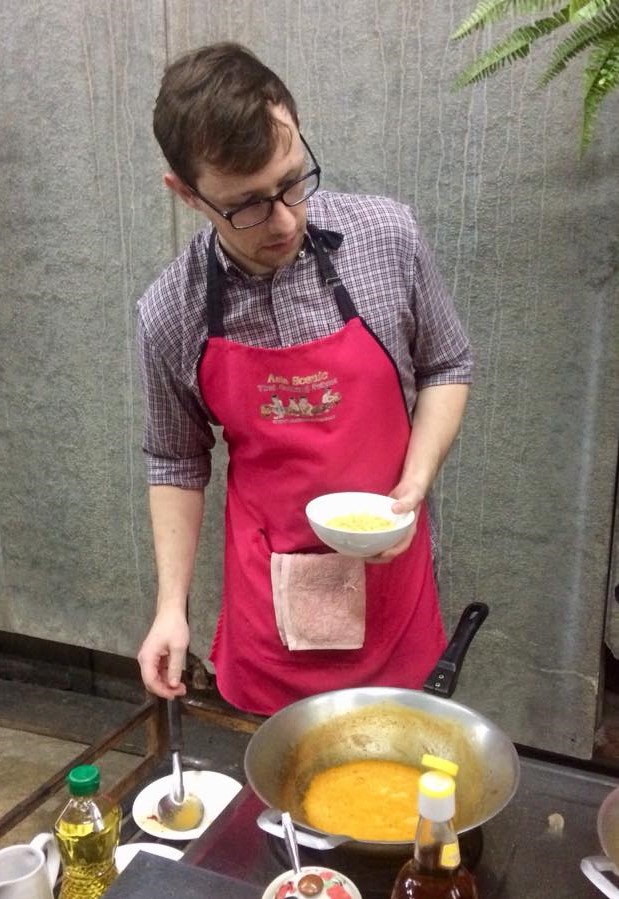
Khao soi (made by Tucker) at Asia Scenic Thai Cooking School in Chiang Mai, Thailand

Next up is a dish made by Tucker with the help of Asia Scenic Thai Cooking School. For this one, we procured our own ingredients at a local market and followed along as a master Thai chef showed us how it’s done, and by the end of the class, we had one of our favorite dishes in the world made exactly how we like it. Khao soi is a coconut curry-based soup usually made with egg noodles (both boiled and fried), chicken, chilis, and lime. It is an incredibly unique and delicious dish that Tucker, to this day, has never been able to turn down.

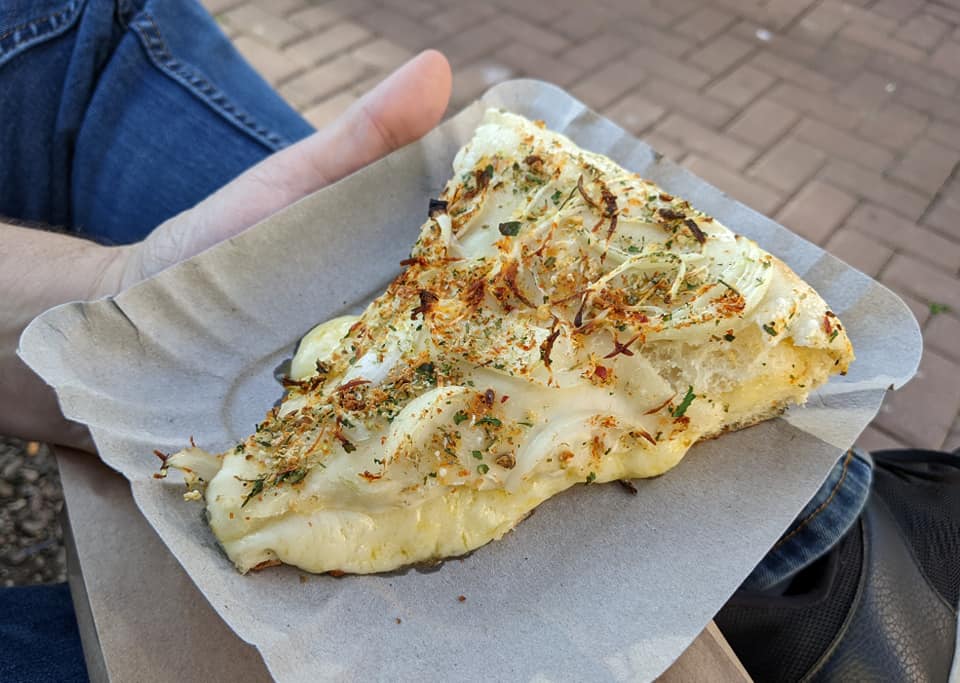
Fugazetta from Lunático in Buenos Aires, Argentina

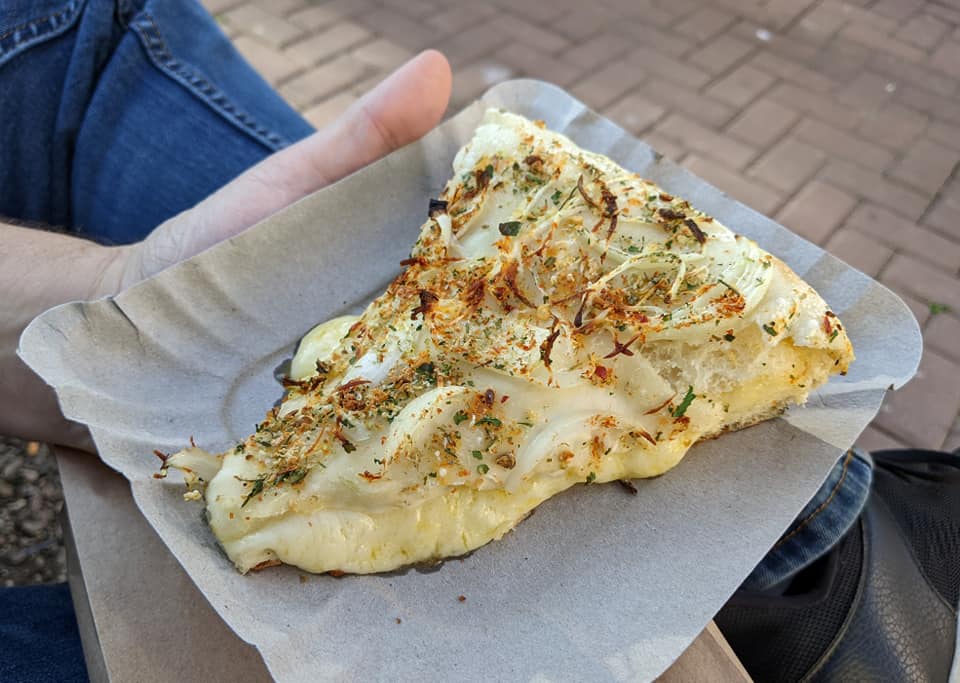
Another somewhat surprising addition to our list is fugazetta. This seemingly simple dish is an Argentine specialty made up of two pizza crusts stuffed with cheese and topped with caramelized onions. I know what you’re thinking, “How can that be special enough to make it onto our top-ten-of-all-time list?” Well, I don’t know what to tell you other than it’s absolutely delicious. The ratio of bread, cheese, and onion is sheer perfection, and the fact that it’s usually made in a woodfire oven, gives it an amazing charred quality as well. ¡Absolutamente delicioso!

Shopska salad from Restaurant Skopski Merak in Skopje, North Macedonia

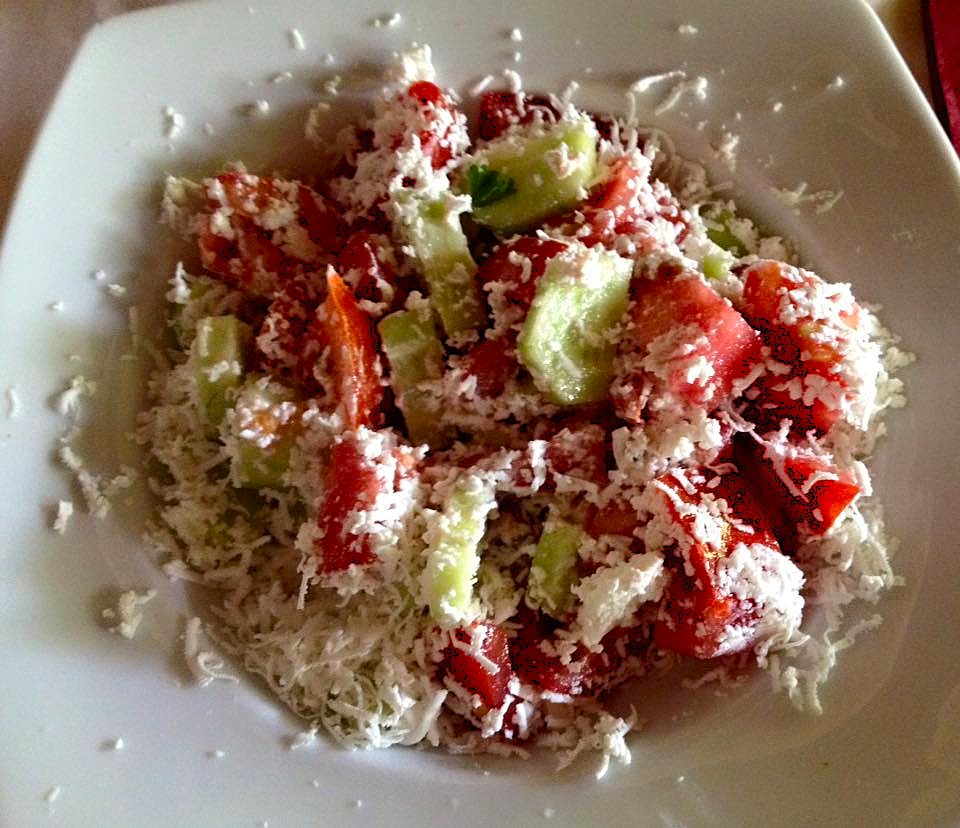
And last but not least, my beloved shopska salad. I feel like I talk about this salad quite a bit, and I make a North American version of it just about every month, but the original just can’t be beat. The shopska salad originates from Southeastern Europe. We first had it in North Macedonia, and as soon as we did, we were hooked. It’s a mix of fresh cucumbers, tomatoes, onions, and sirene cheese (which is kind of like feta) dressed with sunflower oil, vinegar, and salt. It’s incredibly refreshing and is often served with a shot of fruit brandy, so really how could you go wrong?

And that’s it! Our official list of the top ten best things we’ve ever eaten as of November 2024! I really should start keeping a list of all future contenders, so this won’t be quite so hard next time. But honestly, who knows when that’ll be, so until then, bon appétit!

Catalogue of Canadian Cuisine

The time has come, once again, for me to share what I know about the unique food scene of our new home. To be honest, this was a little easier to do in Poland, China, and Mexico, where the respective cuisines are a tad more well-defined, but Canada, too, has its fair share of fun foodie finds, not to mention a plethora of food fusions thanks to its mosaic of multiculturalism. So, without further ado, here is my catalogue of Canadian cuisine.

Savory Things:

Poutine – The first entry obviously has to be poutine. This Quebecois dish is probably the most well-known outside of Canada, which makes sense because it’s absolutely delicious (albeit rather unhealthy). French fries and cheese curds covered in a brown gravy – what’s not to love?

Tourtière – Pronounced “tor-tee-air”, this dish, somewhat unsurprisingly, also comes from Quebec. It’s a massive baked meat pie popular around the holidays in Quebec and New Brunswick, and it might just be one of the most comforting dishes you can have in winter!

Montreal Smoked Meat – Montreal has quite a few regional specialties, but one of the most famous has to be the Montreal smoked meat. It’s a kosher-style deli meat, similar to pastrami, that is most often eaten piled high on a rye-bread sandwich slathered with mustard.

Halifax Donair – One of only two things on this list that I, personally, haven’t tried yet, the Halifax Donair is a great example of the many food fusions that exist in Canada. A version of the more traditional Doner kebab, Nova Scotia’s variant is usually a spiced ground beef on Lebanese flatbread covered in a sweet “Donair” sauce, which is made of condensed milk, vinegar, sugar, and garlic.

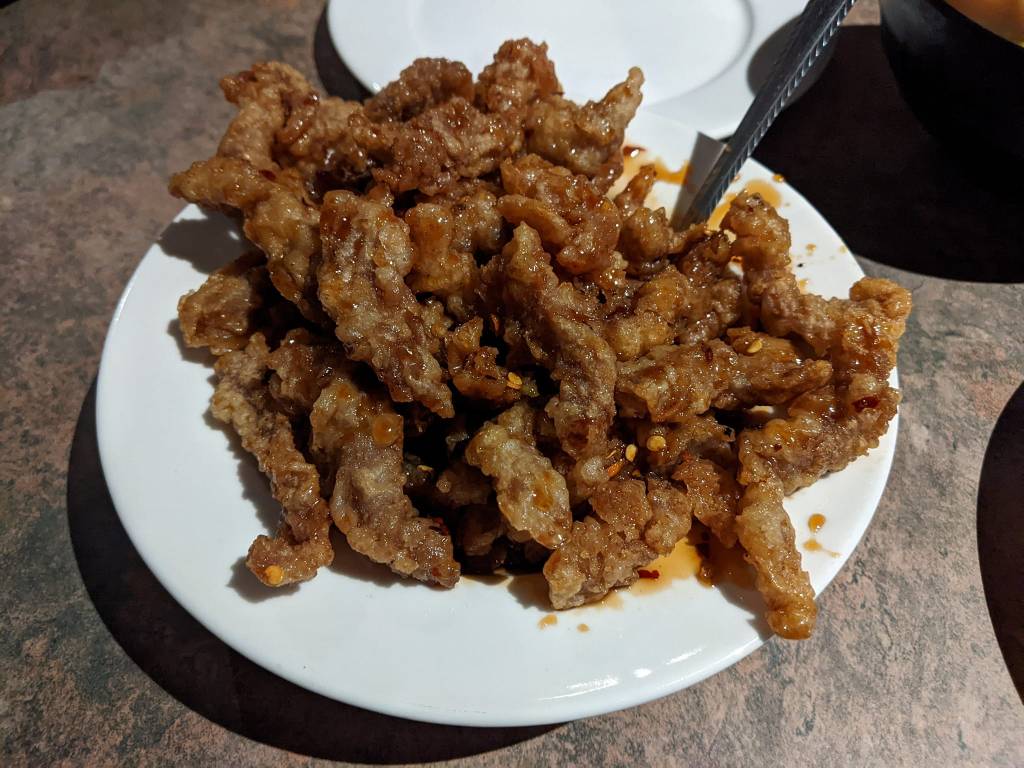
Ginger Beef – An Alberta specialty this time, introduced to the country (and the world) by Chinese-Canadians, ginger beef is a hearty dish of deep-fried strips of beef coated in a sweet, sticky ginger sauce. Another fantastic fusion for the win!

Hawaiian Pizza – Yes, you read that right. Hawaiian pizza does in fact come from Canada. The name wasn’t really even a reference to the US state, it was just the brand of pineapple they used at the time. Fun facts!

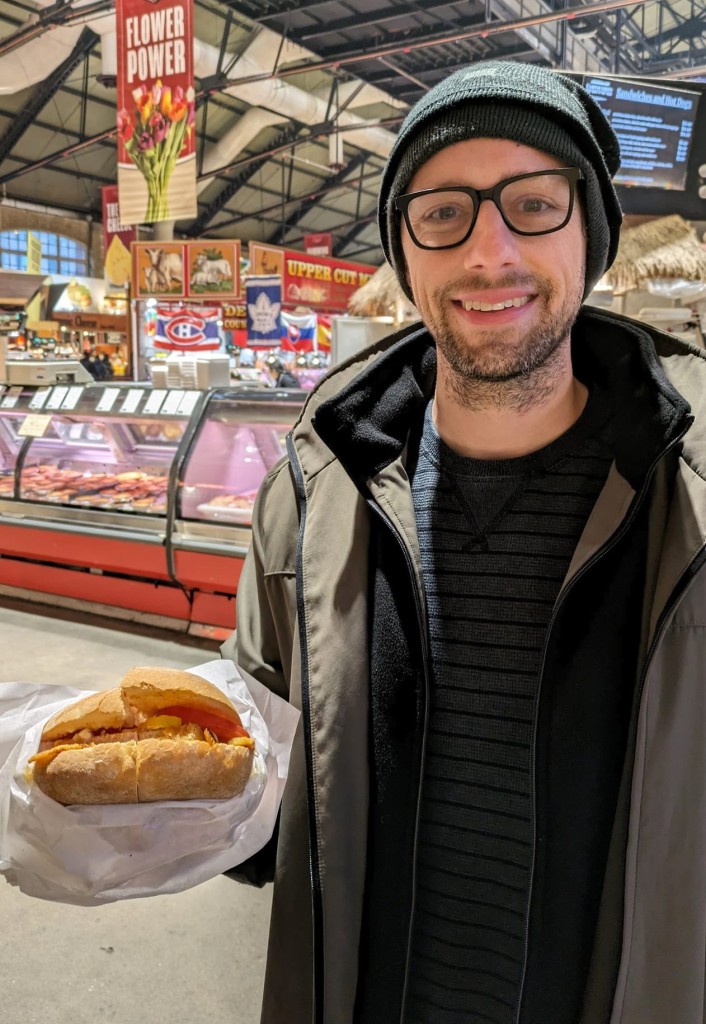
Peameal Bacon – Sometimes erroneously thought to be the same as “Canadian” bacon, peameal bacon is actually so much better! It’s a very lean piece of cured pork that is then rolled in cornmeal (previously crushed yellow peas, thus the name) and is eaten much like bacon, either as a breakfast staple or on various sandwiches.

KD – If you know me, you know I love macaroni and cheese, so I couldn’t leave Kraft Dinner off the table. I mean list. KD looks a lot like Kraft Mac & Cheese, and it is from the same company, but the Canadian version definitely tastes and hits different, trust me.

Ketchup Chips – Canadians love their ketchup, so it’s no surprise that one of the most popular and abundant chip flavors here is ketchup. It makes sense, right? We eat French fries with ketchup. Why not potato chips? Do they really taste like ketchup though? Umm…kind of?

All-Dressed Chips – Usually one of the first signs we’re back in Canada is an all-dressed chips sighting. A bold favor combination of ketchup, BBQ, sour cream & onion, and salt & vinegar; you either love ‘em or hate ‘em, and I love ‘em!

Sweet Things:

Butter Tarts – Butter tarts are super Canadian, eh! I eat them, and I think Anne of Green Gables, a warm fireplace on a cold winter night, kids playing hockey on the lake out back, etc. They’re small, sweet, gooey pastries that are simply delicious.

Maple Taffy – If butter tarts represent classic Canadiana, maple taffy (or tire d’érable) is pure Quebecois bliss. In truth, there are several maple syrup items I could have put on this list, but I went with maple taffy because it’s both a food and an experience.

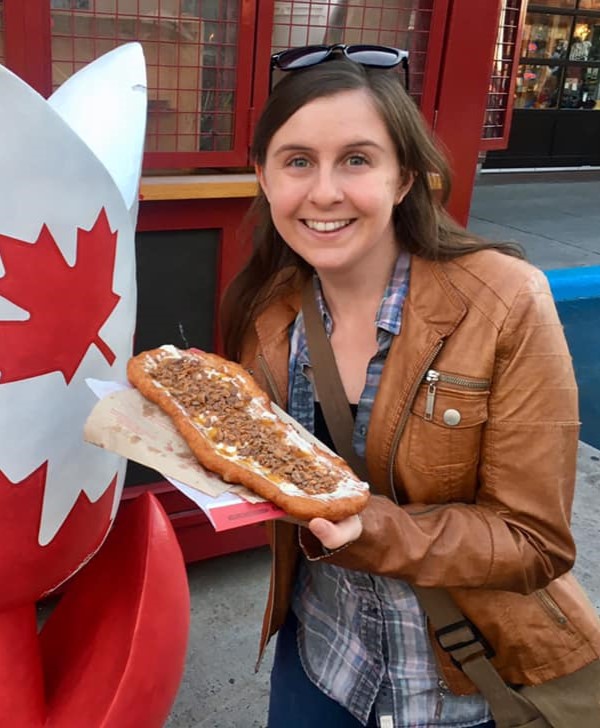
Beavertails – Easily my favorite sweet treat in Canada, a beavertail is a piece of fried dough (in the shape of a beavertail, obviously) that is covered in a variety of toppings. A classic option is cinnamon, sugar, and lemon juice, which is just perfection.

Timbits – Another sign you’re in Canada (or at least near some Canadians) is the presence of a Tim Horton’s. Colloquially know as Tim’s or Timmy’s, this is where you must go to get Timbits, which are famous Canadian donut holes that come in surprising flavors such as sour cream, honey dip, and apple fritter.

Nanaimo Bars – Coming all the way from British Columbia, the Nanaimo bar is another classic Canadian dessert. Traditionally three layers: a coconutty wafer on the bottom, a thick custard in the middle, and a chocolate ganache on top; it’s basically the perfect no-bake combination.

Pouding Chômeur – Or “Poor Man’s Pudding” is a dessert that came about during the Great Depression. It’s as simple as it is delicious: yellow cake or bread smothered in hot syrup or caramel.

Saskatoon Berries – The other item on this list that I have yet to try, Saskatoon berries are a locally grown and historically important ingredient in Canadian cuisine. In fact, I recently learned that the city Saskatoon actually got its name from the berry, not the other way around.

Coffee Crisp – Coming from the US, I’m spoiled for choice when it comes to candy bars, but we have nothing like the Coffee Crisp. I’m not even a coffee-drinker, and I love this candy bar!

Sippable Things:

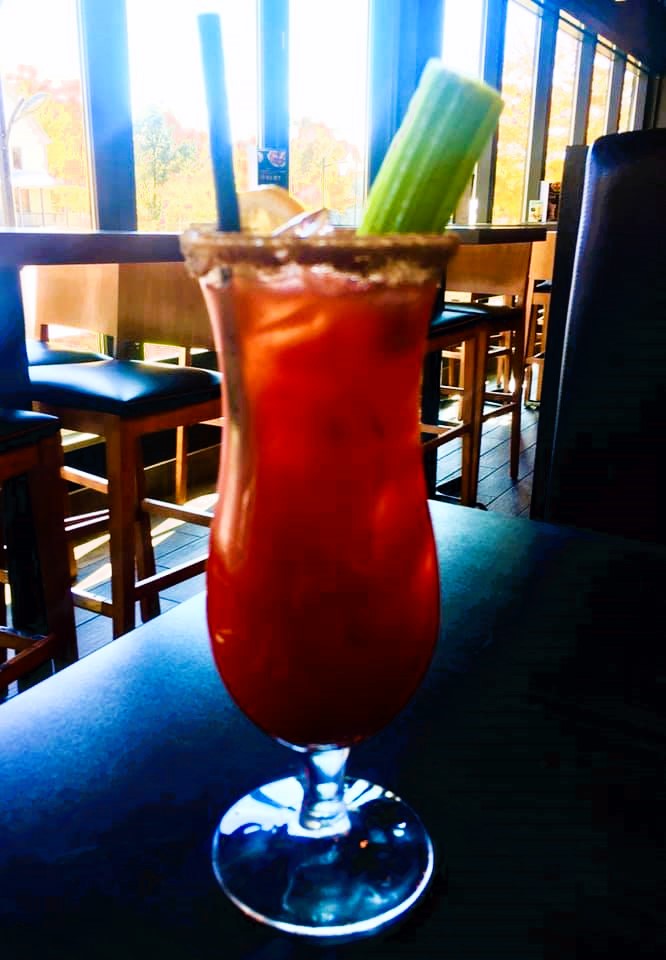
Caesar – Canada’s version of the Bloody Mary, this cocktail contains vodka, Clamato juice, hot sauce, Worcestershire sauce, celery salt, and various garnishes. When I first tried one, I had no idea what Clamato juice was…cue my complete surprise at tasting seafood in my drink!

Sortilège – Another surprise (of a much more pleasant variety), Sortilège is a maple liqueur made with Canadian whisky. So smooth, so tasty, and quite strong, this is peak Canadian alcohol, which is really saying something.

And that’s my list! At least for now, because I’m sure we’ll run into many more Canadian treats as we continue on in the Great White North. I do hope you enjoyed reading about some of Canada’s finest creations, and be sure to tell me which ones you want to try whenever you visit! Bon appétit !

Most Memorable Meals

With Thanksgiving just around the corner, I’ve been thinking a lot about memorable meals of years past. Tucker and I have been extremely fortunate with all the incredible food we’ve been able to enjoy around the world, but what exactly is it that makes a meal memorable? The quality of the food? The location, the company, something else? I was curious, so I decided to delve a bit deeper by asking Tucker to reminisce with me about the meals we’ve shared over the years. In particular, the ones that, even years later, still stand out among the rest and why that might be the case. Here’s what we came up with:

Thanksgiving Feast: Crater Edition (Ecuador)

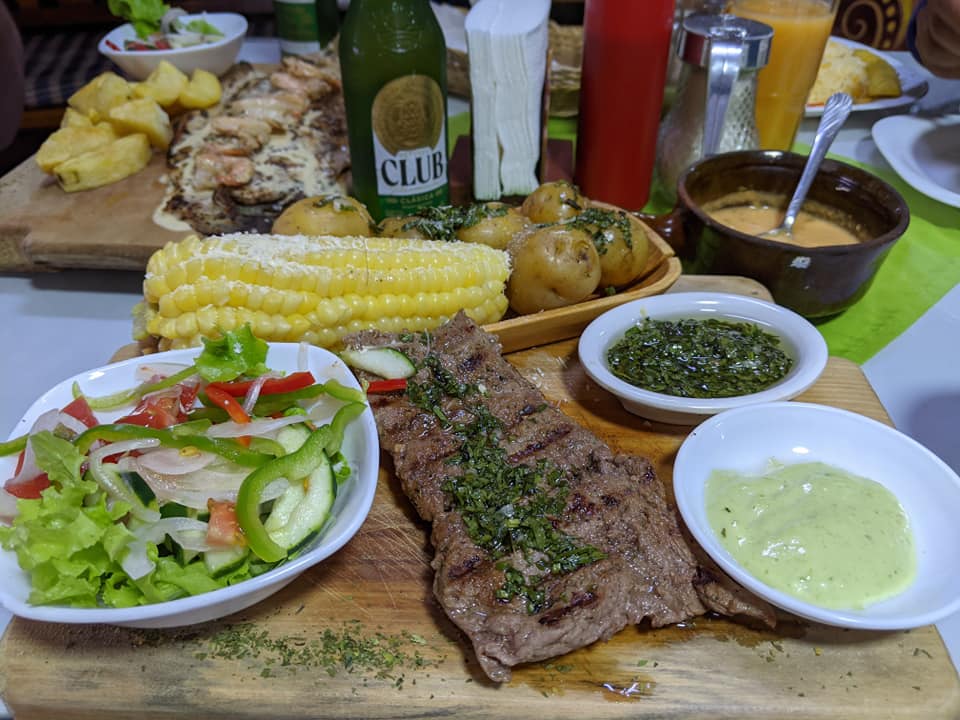
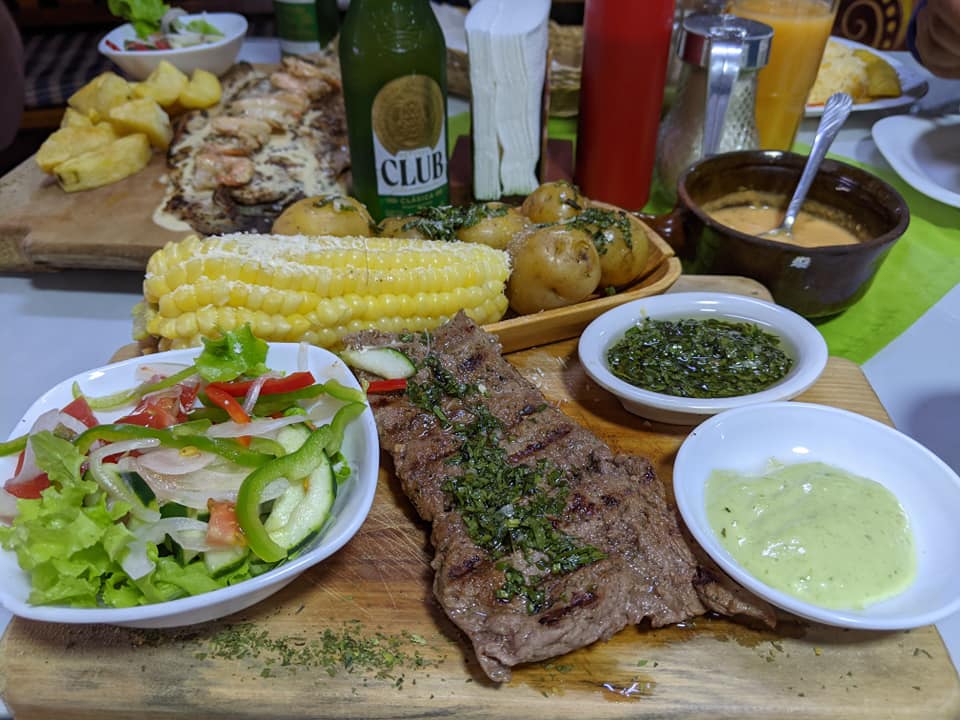
Likely because this was a recent experience, and it has a connection to the upcoming holiday, the first meal to pop into our heads was the Thanksgiving dinner we had after hiking the Quilotoa Crater in Ecuador. There are so many reasons this meal stands out in our minds. First, we had just hiked several miles into and out of an incredible caldera at elevation in the rain, so to say we were hungry would be a massive understatement. Then there’s the fact that all the hikers ate together in pretty much the only little restaurant open there, which made for a very festive meal. And finally, the food itself was incredible. I had a perfectly grilled steak with chimichurri and ají, boiled potatoes, corn on the cob – just an impeccable holiday meal; Tucker had a whole seasoned and grilled fish with homestyle fries and a plethora of interesting sauces, and, of course, we shared several ice-cold, local brews. It was absolutely perfect and extremely well-earned.

Weird Valentine’s Day Tradition (HK)

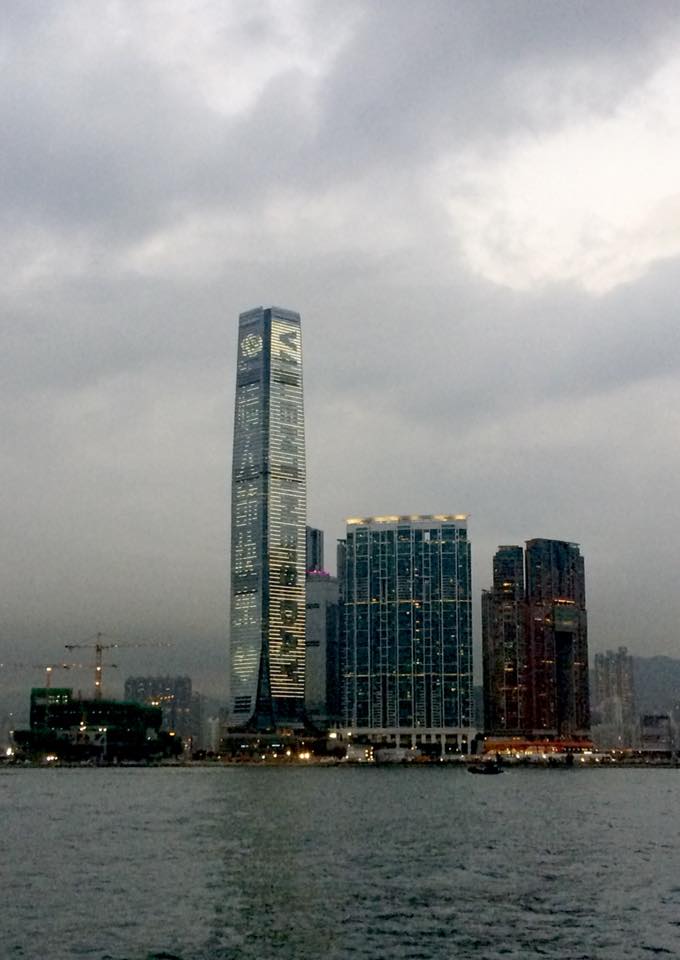
The next thing we thought of has actually become a sort of strange tradition over the years. Since we first moved abroad in 2015, we’ve spent the vast majority of holidays away from family, friends, and all that was once so familiar. Usually this means we get to learn new ways of celebrating the holidays, but sometimes we just miss all that familiarity and ease. Cue the international (yet super American) restaurant chain: Outback Steakhouse. One year, we were in Hong Kong over Valentine’s Day, and we happened to see an Outback in a mall there. We joked at how lame it would be to go to an Outback while in one of the best food cities in the world…alas, the molten chocolate lava cake called to us. We’ve now celebrated Valentine’s Day at an Outback in four different countries.  

Odd Finds at Anatewka (Poland)

Sometimes what makes a meal memorable are the surprises that take place there. For this, Anatewka, an amazing Jewish restaurant in Łódź, immediately comes to mind. Anatewka packed in the surprises for us starting with our bowl of czernina, which we later found out was duck blood soup. The surprises kept coming when we got complimentary shots at the end of the meal (for digestion, of course). And as if that wasn’t enough to keep us guessing (and definitely ensuring our return), we were each gifted a tiny clay figure holding a grosz or the equivalent of a Polish penny. We were absolutely not expecting any of the little treats we got that night, and even though I won’t be ordering czernina again anytime soon, our dining experience at Anatewka was without a doubt both surprising and, indeed, memorable.

Simple yet Spectacular: St. Hubert’s (Quebec)

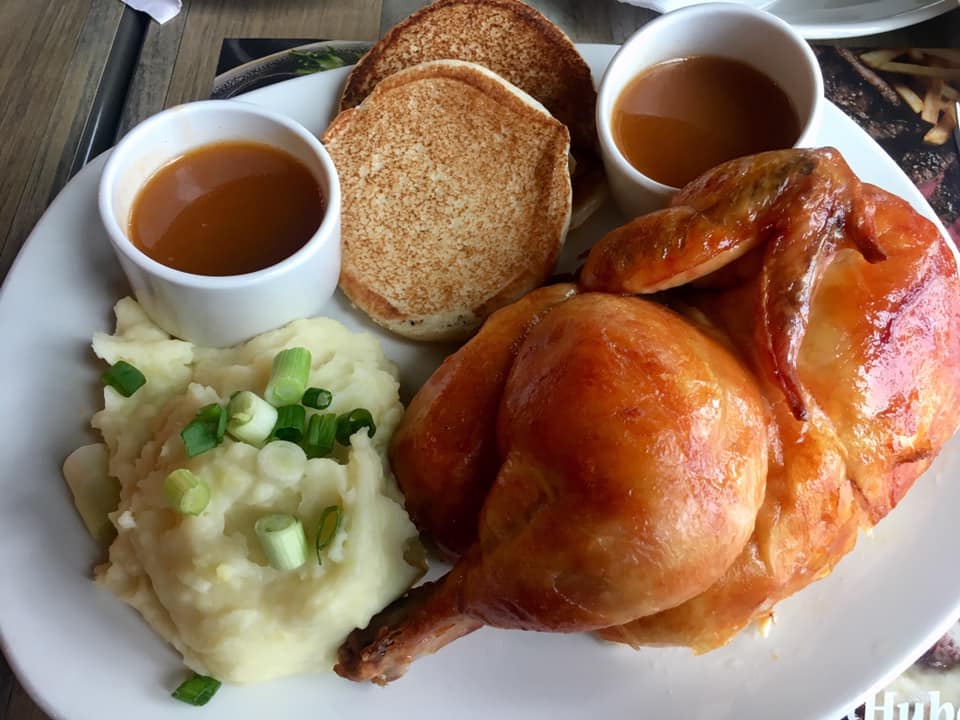
Surprises can definitely make us remember a meal, but the next meal that we kept thinking (and talking) about really had no discernible reason other than the fact that the food we had was incredibly simple and delicious. On our month-long initial expedition to Ottawa (and the surrounding area) in 2019, we happened to eat at a place called Rôtisserie St-Hubert’s. It’s a fairly nondescript restaurant, clearly a chain, with nothing particularly showy or remarkable on the menu, but what it lacks in flair, it seriously makes up for in homey goodness. Roasted chicken is what St-Hubert’s does, and they do it better than anywhere. It really brought to mind the qualities often associated with French cooking: fresh, buttery, light, and uncomplicated. Simply put, it was the kind of meal that just hit the spot. Of course, this was also the meal where, much to my chagrin, I first learned what clamato juice is, but even the surprise of finding seafood in my drink couldn’t detract from the rustic deliciousness that was this particular meal.

Once in a Lifetime Experience: Dining in the Dark (Malaysia)

Another meal that will obviously live in infamy (according to us anyway) is our experience at Dining in the Dark. If you’ve done one of these events, then it will likely be on your list as well because not only is the food extremely delicious and exciting, but the challenge and subsequent glimpse into a different way of living is eye-opening (see what I did there). For those who don’t know, Dining in the Dark allows you to experience a meal in complete and startling darkness. The servers are all visually-impaired and help you navigate what is a surprisingly scary and difficult set of tasks: everything from finding your chair and sitting down to re-finding your glass or fork somewhere on the table. For me, having my attention drawn to all these little things I took for granted was the most memorable part, but there are other aspects that made this meal stand out. Namely, our complete failure at guessing what we were eating. At one point we had a dish of steamed egg, mushroom, and tofu, and we guessed it to be “savory bread pudding”. What?!

Our First Foray into Fancy Food (Disney’s Remy)

Fun fact: Tucker absolutely loves tasting menus and fine dining because it allows him to try a greater number of usually quite unique dishes, which is all he ever wants in life. And for that reason, another meal on our list has to be Remy, a fine-dining restaurant on the Disney Fantasy cruise ship. Remy offers an eight-course menu of super fancy dishes, which at the time we had never had before. This experience was like stepping into another life. The dress code, the cheese cart, the flowers given to me at the end of the meal – it was all very different to anything we’d ever done. And then there was the experimental quality to the food. We had “tomato essence,” which was a completely clear liquid served in a champagne flute that tasted exactly like you just bit into a vine-ripened, heirloom tomato. There was also the “tomato soup cube”, which is pretty much as described, and countless other curiosities that have definitely kept us talking over the years. Honestly memorable in so many ways!

Making It Our Own: Cooking Class (Thailand)

Another meal that stands out is one we happened to make ourselves. Because we went to Thailand as part of a large group, there were lots of things that stand out about our time there, and one thing in particular was our first (and quite possibly only) cooking class. I personally loathe cooking, so I’m not sure I was really looking forward to this one or that I was very comfortable throughout the experience…but in the end, like everyone else, I was extremely proud of the dish that I made (and the certificate we all received lol). My pad thai was honestly delicious and Tucker’s khao soi was even better! Plus, the process of doing everything ourselves (from shopping in the market to grinding down the various chilis we needed) really gave me even more appreciation for all the chefs of the world. Thankfully this one turned out to be memorable for all the right reasons and not because I ended up burning myself or someone else!

Being Set on Fire (China)

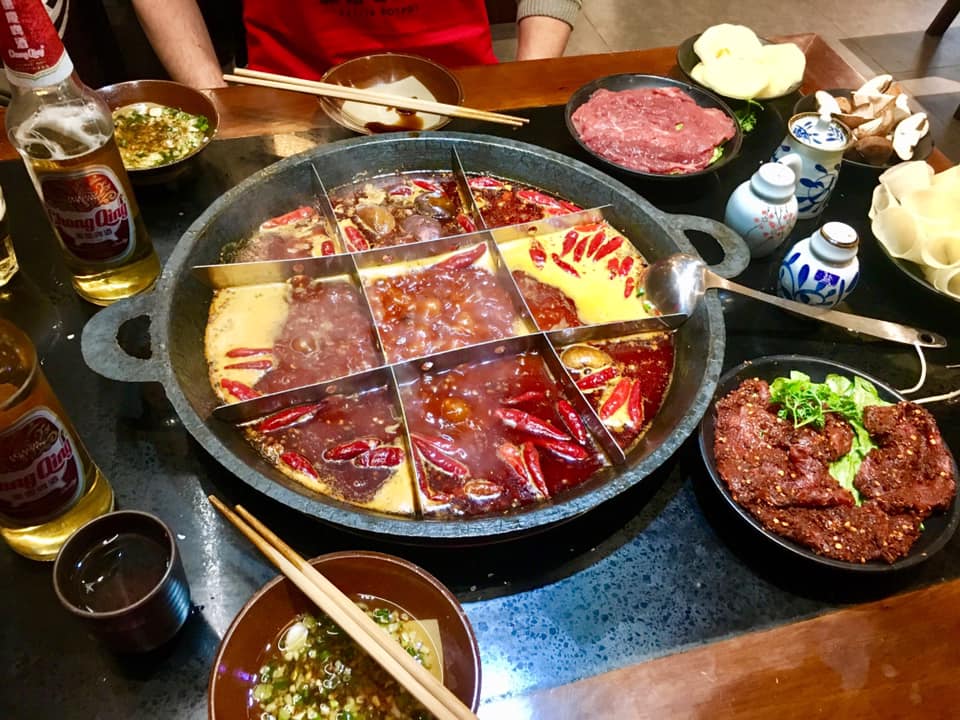
Speaking of burning…the next meal that without doubt must be on our list was the time we almost died. Of spiciness. Tucker and I actually love spicy food, and usually we handle any level of spiciness pretty well. However, Chongqing and Chengdu take spiciness almost beyond human capacity. One of the most renowned dishes of Chongqing is the infamous nine square hot pot, which, of course, we had to try. Unlike the hot pots we were used to, with the nine square, there is only one flavor: spicy. We weren’t really concerned though because when we ordered and chose our spice level, we played it safe with the 1 chili pepper rating (they went up to 5). Turns out, there was no “safe”. Everything was extremely spicy, the meat, the noodles, the hot pot, the sauces…and it was all compounding! I’m not sure we’ve ever sweated that much in a restaurant or drank that many beers that quickly. The craziest thing was, despite our watering eyes, it tasted so good! I would definitely do it all again.

Just What We Needed at the Time (Sweden)

As it turns out, even the timing of a meal can be what ends up making it memorable. On one of our worst travel mistakes to date, we failed to set an important alarm, waking up after only a couple of hours of sleep with only 16 minutes to make it to the bus that would take us to the airport in time for our very early flight. Needless to say, we had a very panicky, rushed morning with no shower or breakfast, and when we arrived in Stockholm, all our thoughts were on a nice shower, a snack, and a bed. Unfortunately, our hostel said we’d have to wait until after 3 to check in. So we, dirty, tired, hungover, and by this point, very hangry travelers, set off to wander aimlessly around the city for the next 7 hours. Obviously, our first stop would have to be food, but finding a place to eat at this time of day was actually a little tricky. Luckily, we finally stumbled upon a restaurant that served their whole menu of Swedish favorites all day, and we happily chowed down. Now Swedish meatballs and plankstek will forever be remembered as our most rejuvenating meal.

A Whole Lot of Whimsy (Mexico)

And last but not least, a happy dose of serendipity mixed with whimsy in the form of dinosaur quesadillas. As you can imagine, a lot of the ads I get have to do with Mexico, travel, and food (hmm, I wonder why). Well, one night last year I saw a little video ad about a restaurant in Mexico that served dinoquesadillas, and I thought to myself, “aww, that’s cute, but I bet it’s nowhere near us.” And I was right. The restaurant was in Saltillo about 440 miles (705km) from Guadalajara. Oh well, no dinoquesadillas are worth that long of a drive! However, it turned out that a few months later we randomly had to make a return trip to the border through none other than Saltillo. Through a crazy coincidence, we ended up in the really cool city of Saltillo, and, of course, we went to the kitschy little restaurant for some dinoquesadillas. A great example of what I call travel fate.

So, it seems there are actually a great many reasons a meal might stand the test of time in our minds. Could be great food, surprising circumstances, or even when exactly you get said meal. I think for me, the common thread is really when something is just a little bit outside the norm, when there’s something that stands out as “different”. Maybe we should all run with that idea and get a little weird this Thursday – I’m definitely willing to give it a try! Happy (almost) Thanksgiving! ¡Buen provecho! 😉

Chicago Eats

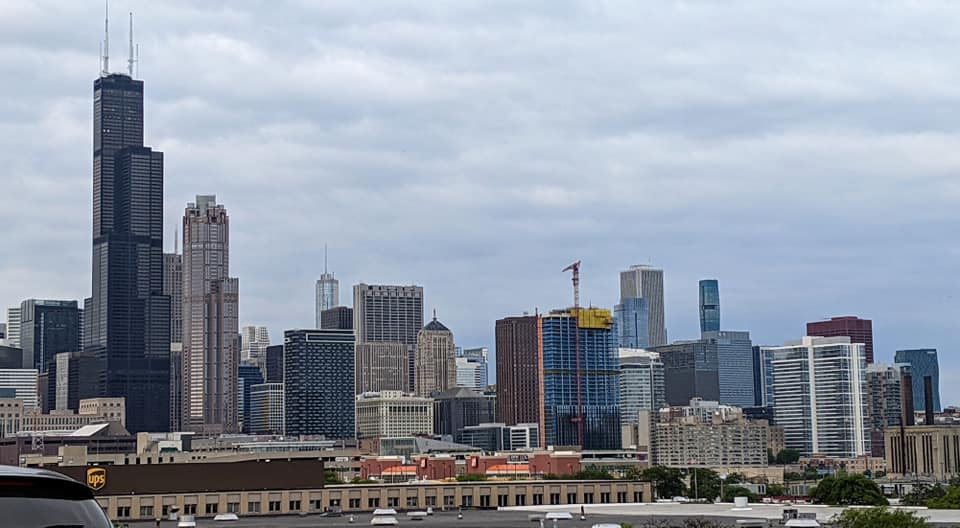
So, I just got back from another trip to Chicago, which, of course, means another round of non-stop eating! Really anytime I travel back to the US, I have a list of foods I want to have while there, but with Chicago, the list is always much longer than usual. Maybe it’s the city’s infamous specialties, the wide variety of cultural influences you can find, or the nostalgia-factor, but whatever the reason, to me, Chicago is a foodie’s dream destination! In fact, anytime someone asks me for recommendations when visiting Chicago, I always include a list of specific foods to try, and for this month’s post, I’m going to share my list for anyone else who plans to visit my favorite US city. Warning: this might make you hungry.

Chicago Deep-Dish Pizza

One of the first things that comes to mind when you think of Chicago has to be the pizza. Specifically, the deep-dish pizza. It is undoubtedly something everyone has to try at least once in their life – it’s like pizza on steroids! It’s baked in a pan to give it that two to three inches of thick buttery crust layered with everything you love about pizza: mounds of cheese, chunky tomato sauce, and all the traditional topping options. There is definitely a reason this style of pizza is world famous. And fortunately, thanks globalization (and shipping companies around the world), you don’t necessarily have to be in Chicago to sample the majesty that is Chicago deep-dish. Many of the larger chains will ship these one-of-a-kind, ridiculously heavy pies directly to your door. But which chain should you go with? Oof, that conversation is bound to start an argument with any Chicagoan.

Chicago Thin-Crust Pizza

Another common Chicago argument is deep-dish versus thin-crust pizza. Although Chicago deep-dish pizza clearly enjoys more notoriety, most locals usually prefer thin-crust (me included). There’s just something about a super thin, crispy crust, loaded down with toppings, and always cut into squares (something I once thought universal) that just hits the spot. And if you’re thinking “hey, I’ve had ‘thin-crust’ pizza before at *insert national chain here*”, think again because Chicago thin-crust is fundamentally different and 100% worth trying if you’re ever in the city. Trust me.

Chicago Hotdogs

Another Chicago staple is the Chicago dog. Traditionally an all-beef hotdog “dragged through the garden” with mustard, sweet pickle relish, onions, tomatoes, pickles, and sport peppers all atop a steamed, poppyseed bun. I’m honestly not a huge hotdog fan in general, but the quality and uniqueness of Chicago dogs makes them so much better than what you typically get at a baseball game or backyard BBQ. Just like with Chicago pizza, there are very strong opinions on who makes the best dogs and what can/can’t or should/shouldn’t go on them. Unfortunately, I always add ketchup to mine, which is decidedly very un-Chicagoan. Please, don’t judge me!

Italian Beefs

Alongside pizza and hotdogs, an Italian beef sandwich is another must-have whenever you find yourself in the Windy City. Thinly sliced, seasoned and simmered beef served on squishy bread dipped (or double dipped) in the au jus and topped with giardiniera (a sort of pickled relish), sweet peppers, and/or cheese – it’s an amazing sandwich to be sure. I pretty much always order both a hotdog and a beef because I just cannot decide which I prefer! This is absolutely why I cannot afford to live in the Midwest ever again – my pants would never fit! 

Polish Food

Another thing everyone should try (especially if/when in Chicago) is Polish food. I’m a bit biased here, but I think Polish food is one of the best cuisines in the world, and if you can’t make it to Poland, Chicago is your next best bet for some truly delicious and authentic Polish eats. Kielbasa, kabanosy, pierogi, bigos, gołąbki, placki ziemniaczane, żurek, rosół, and so much more can be found all over Chicago. If you pick the right place, you’ll absolutely feel like you’ve been transported to another country, and you won’t soon forget the homey, delicious dishes that have had a huge cultural influence on Chicago’s food scene.

Bakeries

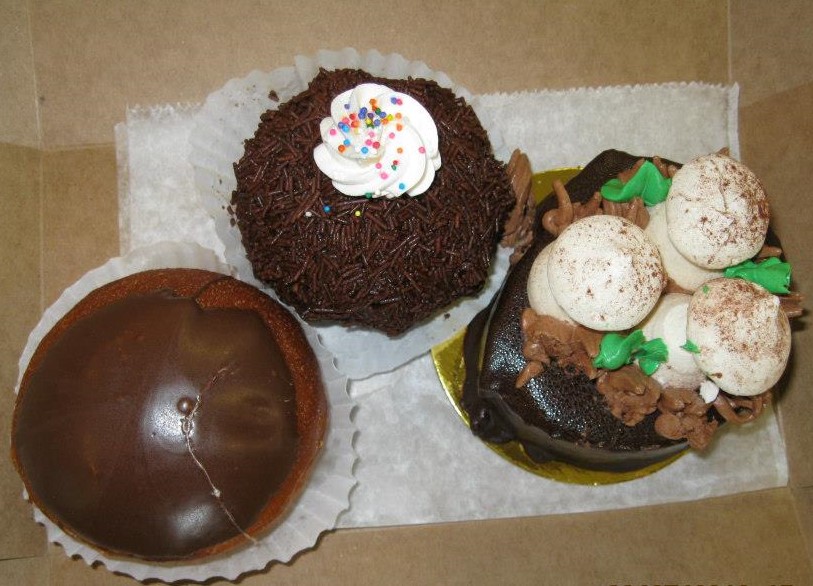
In addition to all the amazing Chicago-specific restaurants and dishes you can try, I always recommend going to a local bakery as well. With all the immigrant groups that have continued to flow into Chicago throughout its history, the city has been blessed with some of the most amazing breads, pastries, and desserts in the US. Salt sticks are a favorite of mine; my mom loves Italian butter cookies; and my dad always goes straight for the decadent, dark chocolate desserts found at all the Polish bakeries. Unlike your basic grocery store bakery, a lot of these specialties have to be ordered in advance and sometimes only on certain days, so do some homework, get up early, and get the good stuff!

Delis

Similar to its incredible bakeries, Chicago’s delis are another thing you have to check out while in the city. Whether you want to get some cured sausages, delicatessen lunchmeat, or a sandwich the size of your head, a deli should be on your list. They have such an old-school, bustling community vibe (yes, even in the suburbs), and the prices are almost as amazing as the quality. Jewish delis in particular are so worth the trip because it’s really an experience as well as an incredible meal – just be sure you know what you want before you step up to order, like a lot of major cities, locals can be a bit impatient with the out-of-towners! 

Chicago Mix Popcorn

Another famous Chicago treat that is making itself known even outside the city, is Chicago mix popcorn. A mix of sweet, buttery caramel popcorn and salty, tangy cheese popcorn seems like a strange combination, but somehow it works amazingly well and is super addicting. One of the most famous brands of Chicago mix is Garrett’s, which has been around since the 1940s and is marketed as “gourmet popcorn” (so you know it has to be good). But you probably don’t have to find a Garrett’s to get the good stuff anymore – most grocery stores nationwide sell a version of the “mix” in the chip aisle. 

Fannie May Chocolates

And finally, a little dessert…another thing I absolutely always make time for when in Chicago is a trip to Fannie May. A confectionary founded in 1902, Fannie May has a plethora of chocolates and candies that are so unique, I travel thousands of miles to buy and transport them so my friends living abroad can also experience their exquisiteness. If I had to recommend just one thing to try from Fannie May, it would have to be the Mint Meltaways (even the most anti-mint people usually enjoy these perfectly balanced, creamy bites of chocolate). I literally have to ration them after a trip to Chicago! But even if mint isn’t your thing, they have a wide-variety of other truffles, caramels, and any other chocolate-dipped creation you can possibly imagine.

There you have it: my must-have list when it comes to Chicago eats. In my somewhat biased opinion, Chicago is a such great city to visit for a huge number of reasons, but if you’re a food-driven traveler (like I am), it absolutely has to be on your bucket list. So, I suggest you start planning your trip to the Windy city now, and just be sure to bring your stretchy pants with you!

Our Trip to South South America

Summer is officially here, so where better to celebrate than South America, where it happens to be winter! Of course, escaping the heat wasn’t our main reason to take off to Argentina this month, but I won’t lie, we were very happy to be donning our coats in July. Such a surreal experience!

In reality, we had many reasons to head to the opposite side of the Americas. For one, when we booked this trip, Canada was still an unknown, and Buenos Aires was at the top of our list for places to go after Guadalajara. Therefore, a large part of this trip was a scouting mission. Would we like southern South America? Would we prefer Buenos Aires or the nearby Montevideo, Uruguay? Could we picture ourselves moving there? Lots of questions to be answered even if the potential move has been pushed a bit further down the line. So, once again, we took to the road (or sky in this case) for some more “research”, and here’s what we discovered:

Seasonal Switch

First off, packing coats, scarves, and gloves for a July vacation was really strange. Of course, we knew the southern hemisphere is always in the opposite season as the northern hemisphere, but experiencing that drastic switch overnight in the dead of summer/winter was still disorienting. As was the fact that the weather got colder as we went further south. I didn’t realize how ingrained “north = colder” was in my brain! We also found it really entertaining to be all bundled up on the 4th of July – I can only imagine how strange Christmas in Argentina would be for me!

Happy 4th of July!

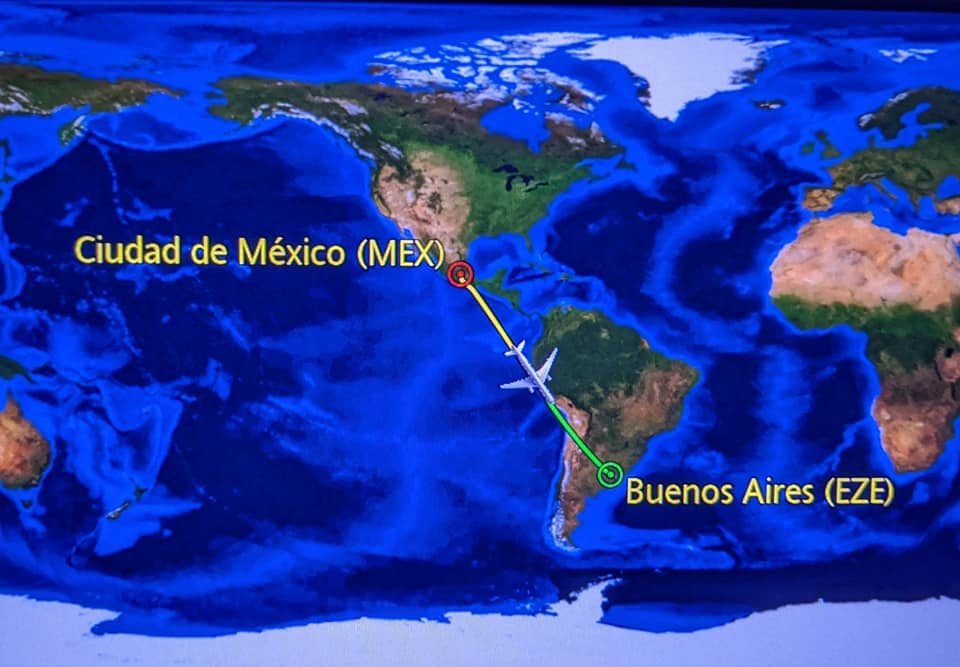
Another surprising, geography-related experience was just how far south Buenos Aires is! Our flight from Mexico City was 9 hours. We could have crossed an ocean in that amount of time! However, I think the long flight is worth it to have four distinct seasons. It was lovely to have brown leaves crunching beneath our feet again. Slightly less lovely was the fact that Buenos Aires is an hour ahead of Eastern Time. In Mexico, we’re an hour behind, and apparently, we’ve gotten really used to our work days ending at 4pm.

Map courtesy of Aeromexico :)

Amazing Food

Fugazzetta

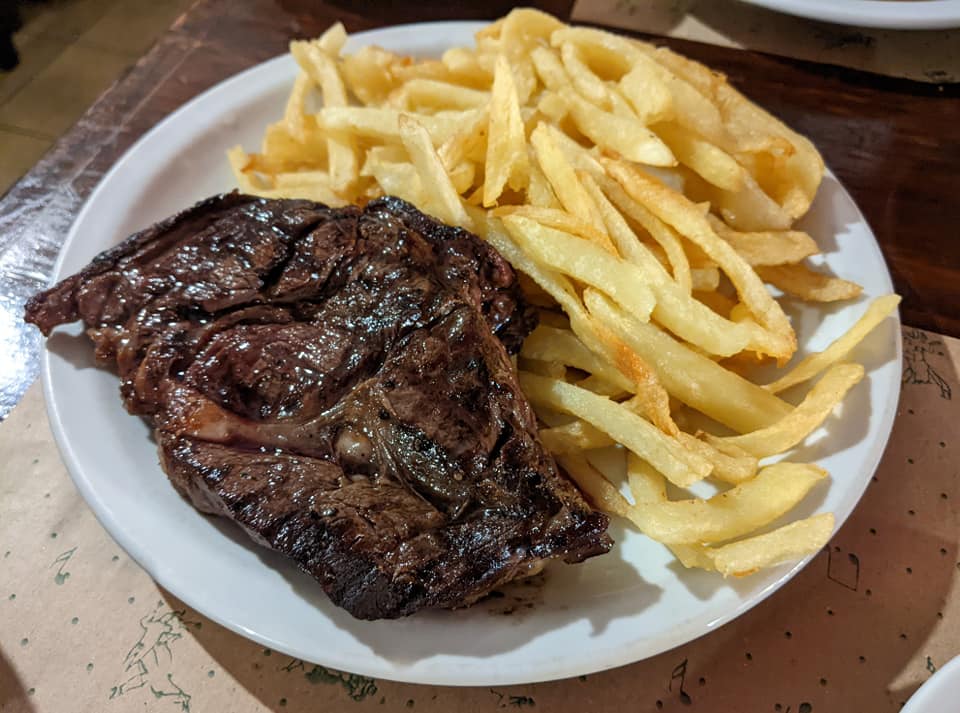
Next up on our list of discoveries was actually more of a confirmation. Near our apartment in Guadalajara, we have several Argentine restaurants, and they’re easily some of our favorites in the city. We were beyond excited to try some of our favorite dishes in their country of origin. Thankfully, Argentina did not disappoint! Of course, the steak and wine were incredible (and SO inexpensive!), but the provoleta, the empanadas, the huge number of sandwiches, the dulce de leche – omg. I was extremely impressed with all the international options we had as well. Italian, German, Korean, Asian-style pay-by-weight places, we were definitely able to branch out even in just 2 weeks.

I was also blown away by the café culture of Argentina. I knew that people in South America have an affinity for drinking mate (a tea-like drink) and, of course, as part of Latin America, coffee is popular as well, but what I didn’t expect was just how abundant and accommodating the cafés would be. Literally every block of downtown BA had at least one café, most of which had several floors offering comfortable places to sit, eat, drink, and chat to your heart’s content. And whether at a café or a restaurant, you absolutely must ask for the check because they’ll never hurry you out.    

So Much Nature

While the local food is always a priority for us when we travel, the memories that stick with us longer are often our forays into the surrounding nature, which is something that South America has in spades. We knew we wanted to take a few trips outside Buenos Aires while we were there, but deciding on where to go was so tricky! An overnight train to the Andes out west? A trek through the jungle to see the infamous Iguazu Falls? Or fully embrace winter with a flight down to Cape Horn? Of course, we went with the coldest option!

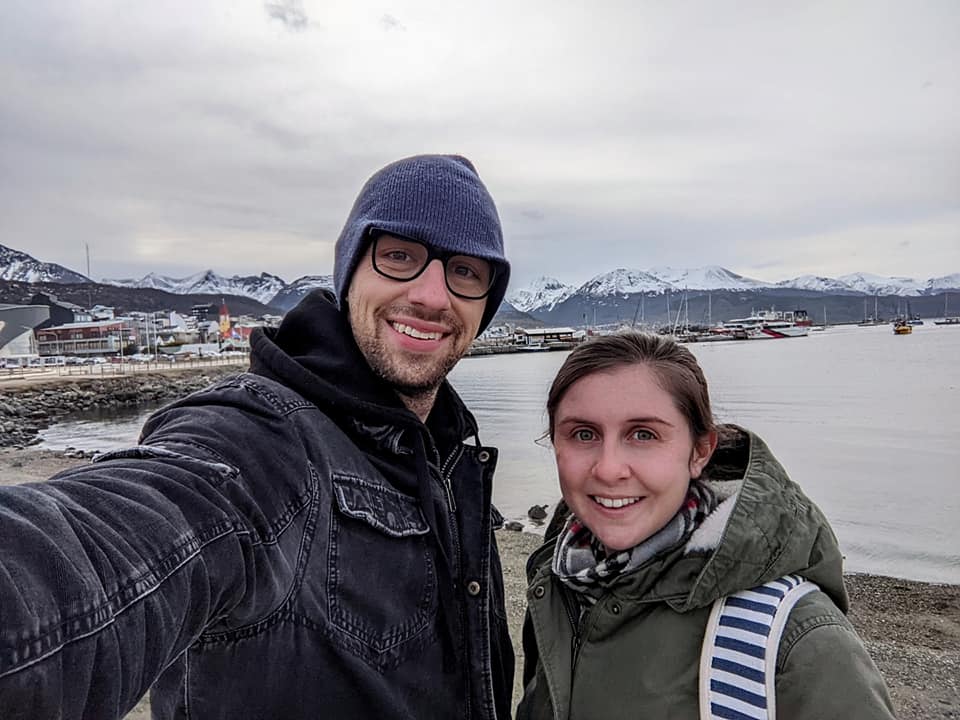
Thanks to Argentina’s budget airline, Flybondi (which is thankfully still operating post 2020), we were able to find cheap tickets down to Ushuaia. Ushuaia sits in the far south of Patagonia and is known as “the southernmost city in the world”. Here we were able to play in the snow, chill our craft beers on the window sill, and tour the icy Beagle Channel. As a geography nerd, the sheer fact that I was at the southern tip of the Americas, only about 1000km from Antarctica was enough for my bucket list, but the incredible mountains and pink morning skies just made it that much more beautiful.

Fantastic Cities

As amazing as it was to be surrounded by such diverse nature, we definitely spent the majority of our time in the two major capital cities: Buenos Aires and Montevideo. Turns out we could have used even more time because Buenos Aires is huge! That’s really the immediate impression I got from the city. It was a 45-minute ride from the airport to Retiro (a downtown neighborhood), and aside from the distance, the number of massive buildings, many of which were apartments, definitely stood out. Walking downtown, I was also amazed by how tall so many of the building are. Very old, very European-style architecture, but much taller than I seem to remember in Poland (or than what we find in Guadalajara). Luckily everything seemed to be bigger in Buenos Aires because there were also gigantic plazas and parks, wide sidewalks, and many-laned throughfares. It seemed like the kind of place you could live for years and still be discovering new points of interest.

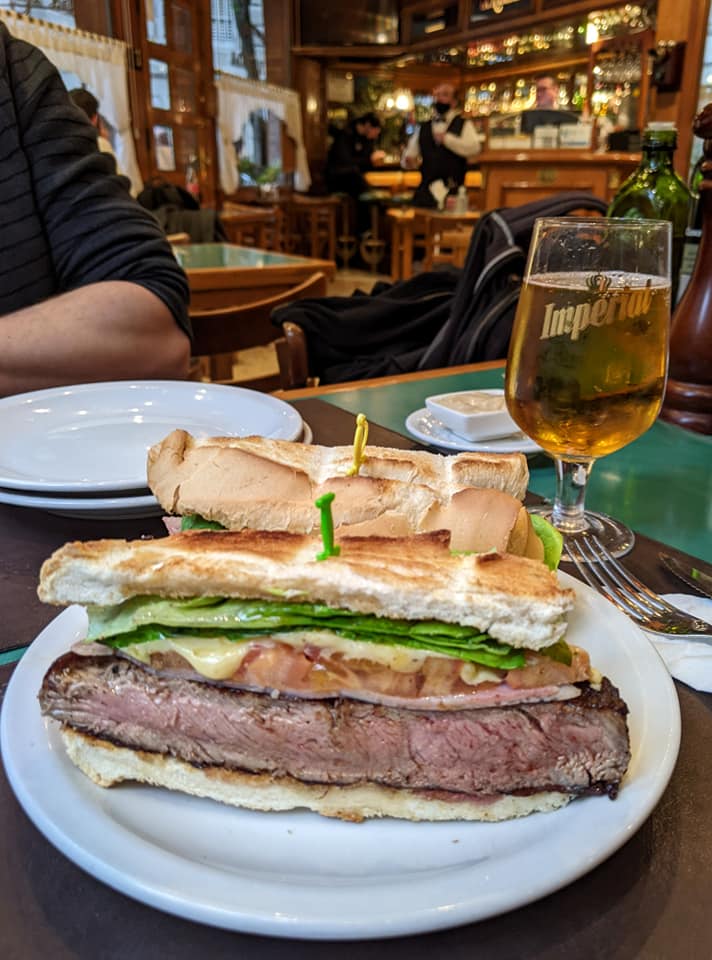
Montevideo, on the other hand, was much smaller. Both in terms of the city’s size and the architecture. Although just a few hours away, across the Rio de la Plata, Montevideo is the capital of Uruguay and has an entirely different vibe. Of course, we were super interested in noting any and all differences (in the name of research) and couldn’t help comparing as we went along. To me, Montevideo felt a little like the quirky younger sibling of Buenos Aires. It was much more colorful with lots of street art and eclectic architecture throughout the old and new sections of the city. It also felt much more coastal with its huge rambla (promenade) and beaches. While a lot of the culinary traditions are similar between the two countries, Uruguay has a few of its own stand-outs as well, like the Chivito sandwich, which is now in Tucker’s top 5 sandwiches of all time.

I give you the Chivito

Spanish Differences

Another interesting experience on this trip (as well as on our trip last year to Ecuador) was the Spanish we were hearing and eventually using. The Spanish I’m learning is Mexican, and this is never more obvious than when we’re traveling in another Spanish-speaking country. Words like “alquilar” (to rent), “maní” (peanut), and “palta” (avocado) gave me pause because we regularly (read: only) use “rentar”, “cacahuate”, and “aguacate”. Just like learning to use “chulla vida” in Ecuador, it was really interesting to see which indigenous words Argentina and Uruguay have adopted and how these (and other) influences still serve to differentiate Spanish varieties around the globe.

However, it wasn’t just the vocabulary that caught our attention on this trip to South America. The first real conversation we had in Argentina was with the security guard in the building where we were staying. He gave us our keys and made sure we knew what to expect with entering, exiting, etc. Luckily, having a few Argentine teachers in the past helped prepare me for hearing things like “sha” and “shaves” instead of “ya” and “llaves”, but it was still much harder than I expected. The accent is SO different from what I’ve grown accustomed to, but it was surprisingly easy to pick up and start using ourselves. After just a few days we were saying “sho” (yo) and “para shevar” (para llevar) like everyone around us!  

So, What’s the Verdict?

Well, we loved it all! We could definitely see ourselves moving to either Buenos Aires or Montevideo in the future, and I would absolutely love to have a few years down there (at least!) to more thoroughly explore South America. Even though we might be going north before we make it back down south, I’m beyond thankful for the opportunity we had to get even a glimpse of such an amazing part of the world! Until next time! ¡Chau!

Exploring Ecuador

Over Thanksgiving break this year, Tucker and I decided it was finally time to hit the international travel trail again! Aside from our move to Mexico last winter, we hadn’t been abroad for business or pleasure since 2019, so it was definitely an exciting prospect for us. For this particular trip, we decided on Ecuador, which meant that we’d not only be traversing a new country, but also a new continent since this was our first time to South America as well. Woohoo! Here’s my take on our latest journey:  

The Preparation

Of course, before venturing out, the first question we had to ask ourselves was where to go, which is not so easy in post-Covid times. Different countries have different restrictions and requirements for testing, vaccination, tourism, etc. We finally settled on Ecuador for several reasons. For one, I was happy that they require either a negative PCR test or a vaccination card for entry (a little regulation goes a long way). Two, we were also hoping to stick to the Spanish-speaking world (to continue our practice/immersion, of course). And three, I’ve always wanted to visit the equator – how cool is it to be able to stand in two different hemispheres at the same time!
…or sit on the line…

Once we decided on the location and made sure we had the necessary documents ready, we were able to start planning. The planning also turned out to be a little different than our pre-2020 travels. A lot of services and attractions have been permanently closed (including the national postal system of Ecuador as we found out), and even those that remain open, often require additional amounts of flexibility because everything is very much subject to change these days. This was really my first glimpse into just how hard the tourism industry has been hit over the last two years. Prices, schedules, options, procedures – a lot has changed, but with any luck, it’ll continue to bounce back and hopefully be stronger than ever. I know I’m beyond ready for that.

The Capital: Quito

Our first stop and home base for this trip was Ecuador’s capital city, Quito. If you weren’t already aware, Quito is one of (if not the) highest capital city in the world at 2,850 m (9,350 ft). I love the fact that the elevation meant chilly temperatures (even so close to the equator), but, unfortunately, my head doesn’t particularly like the pressure changes that generally occur at elevation. The good news is I already knew about my sensitivity to high altitudes, and I was able to take Western medicine (Acetazolamide), drink the local coca tea, and share some traditional Chinese medicine with a fellow traveler, all to avoid any unwelcome bouts of altitude sickness. I’m not exactly sure which one did the trick, but other than a mild headache, I was totally fine to climb stairs, hike volcanos, and do anything and everything else I wanted to do Ecuador. Another success!  

Aside from its elevation, Quito is also unique in that it is wedged between several Andean mountains and volcanoes. For this reason, although the city is about 40 km (25 mi) long, it’s only 5 km (3.1 miles) wide. It’s also extremely hilly, which made for many beautiful views all across the city as well as some of the most difficult driving conditions I’ve ever experienced. Imagine a 45-degree incline on slippery cobblestones in bumper-to-bumper traffic with a manual vehicle. I made sure to compliment the driving of every one of our taxi/Uber drivers – so impressive! Another amazing part of staying in Quito was the history. Quito has one of the least-altered and best-persevered historic centers in the Americas, and the plazas, churches, and neighborhoods were so much fun to explore. 
The Food/Restaurants

Pristiños y chocolate caliente con queso

Another really fun part of this trip was the fact that we were trying out a completely new type of cuisine. Neither Tucker or I could remember ever having Ecuadorian food, so everything was completely unknown. From the tostados (or toasted corn kernels) and ají (a spicy sauce served with every meal) to the most famous dishes from the highlands, we loved learning and sampling everything. Some of our favorites included empanadas de verde (empanadas made of plantains stuffed with cheese), locro de papa (creamy potato soup), and pristiños (fried dough with honey). Another infamous dish in this region (one that we actually opted to forgo) is cuy, or in English, guinea pig. Definitely new to us!  

While certain things (like rodents on the menu) made Ecuador seem very far from the US, other things made us feel like we’d gone north rather than south. For example, Ecuadorians use the US dollar as their currency, and I, for one, thoroughly enjoyed the break from constantly converting in my head. Another similarity is that servers in Ecuador often take your credit card to a register in the back of the restaurant for payment. Not so strange for the average American, but after years in countries where that would never fly, we found ourselves feeling a little concerned about identity theft. I mean, where’s the portable terminal? And why aren’t those commonplace everywhere?! It seems so bizarre to us now!  

The Nature

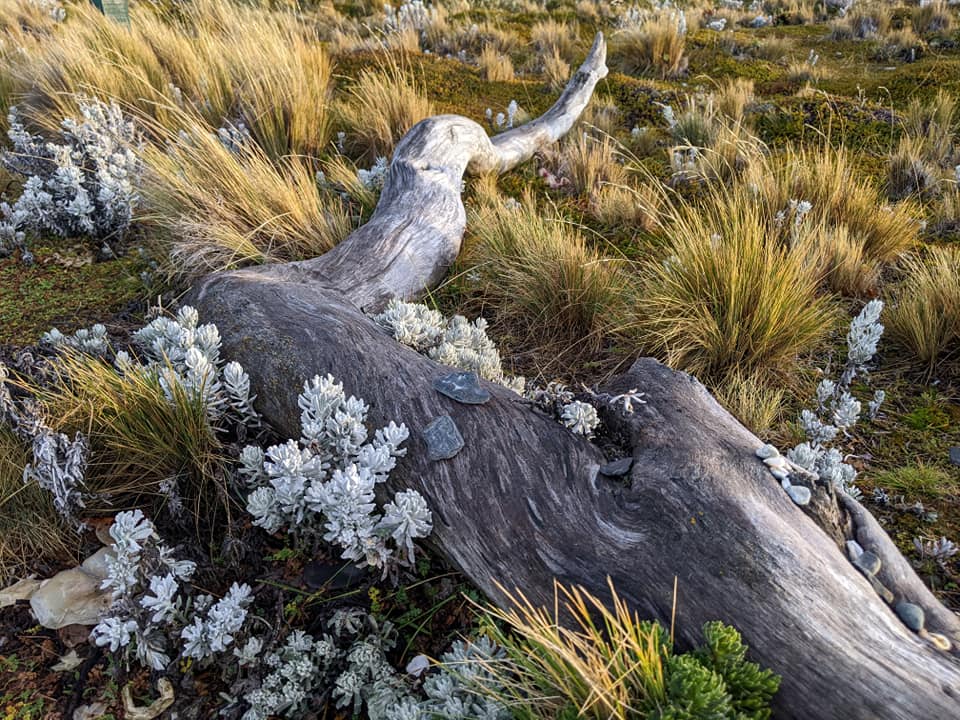
As amazing as Quito (and its restaurant scene) is, the nature is the real draw. Ecuador is home to the Amazon, the Andes, and the Galapagos Islands. It has an incredible amount of biodiversity, and while we mostly stuck to the highlands (this time), we were absolutely blown away by what we saw. Our focus on this particular trip was definitely the volcanoes. Ecuador has the most volcanoes per square kilometer of any country, including some of the only volcanic glaciers on/near the equator. One of our favorite experiences in Ecuador was climbing Cotopaxi, the highest volcano in the country. Not being very experienced or even prepared climbers, we only hiked to the refuge (at 4,860 m / 15,744 ft), which was difficult enough with the lack of oxygen, unstable terrain, and hail we experienced along the way. Still, I’d definitely do it again in a heartbeat – so cool!

The other big hike we did was at the Quilotoa crater, about three hours from Cotopaxi. Quilotoa used to be a volcano, but after its last massive eruption in 1280, it is now classified as a caldera. Here we found ourselves climbing down rather than up as we made our way into the crater to get to the shores of the mineral lake that now fills the void. The hike down was absolutely breathtaking, but the hike back up was brutal: 1.7 km of steep, sandy paths (still at an elevation of over 3,914 m / 12,841 ft), and if that wasn’t enough of a challenge, it rained on us the whole way out. This was one of only a few trips where Tucker and I actually lost weight on vacation…despite all the good food. And speaking of food, my favorite part of this day might have actually been the meal we had after the hike – a Thanksgiving feast that will live in infamy.

The Random Facts We Gleaned

Since our buses out to Cotopaxi and Quilotoa were cancelled (because there weren’t enough people to warrant them), we actually got to tag along with a tour bus group instead. This meant that we got loads of information about Ecuador, the Andes, volcanoes, etc. – much more than I ever would have found on my own. For that reason, I have a plethora of other interesting facts to share about Ecuador. Here are some of my favorites:

-Ecuador was the first country to give constitutional rights to nature. In 2008, Ecuadorians voted to give its mountains, rivers, forests, air, and islands “legally enforceable rights to exist, flourish, and evolve”.

-One of the most widely spoken indigenous languages in this part of the world is Quechua, which is derived from the language used by the ancient Incan empire. Interestingly, Ecuadorians refer to the Peruvian dialect as Quechua while calling their own Quichua.

-Many place names and colloquial expressions in Ecuador combine Spanish and Quichua, such as the catchy “chulla vida”, which is the Ecuadorian version of “YOLO”.  

-Llamas and alpacas are both endemic to this part of South America and can be commonly seen alongside other livestock throughout the highlands. But how can you tell them apart? Well, alpacas are much shorter, have softer fur, and are typically less aggressive. Llamas are the ones to look out for!

-Another interesting fact about Ecuador is that it is home to the highest mountain in the world…sort of. The peak of Mount Chimborazo is actually the furthest from the center of the Earth (or the closest to the sun). Mount Everest is the highest if compared to sea level.

-Gravity is lower at the equator, which is why many rocket launch sites are located close to the equator. It’s also the reason it’s supposedly easier to balance an egg on a nail. #huevochallenge

-Ecuador is also the world’s largest exporter of bananas. Unsurprisingly, the bananas we had while there were extremely cheap and perfectly ripe.

Overall, it was truly an incredible trip. I feel so grateful that we were able to have this experience, and I sincerely hope it won’t be so long before our next big adventure!
¡Gracias por un buen viaje, Ecuador!

¡Guadalajara, Guadalajara!

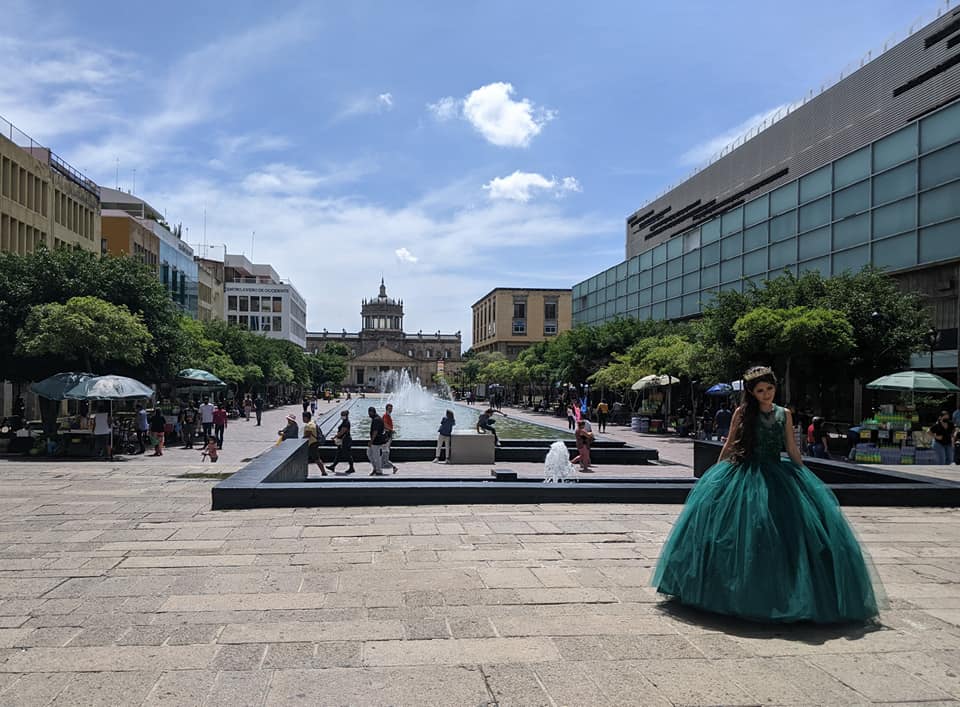
Somehow, we’ve officially been residents of Mexico for 6 months already, and it’s absolutely crazy how fast the time went by! Of course, as we’re still in “pandemic times”, our usual explorations and goings-on in a new city have been pretty tame, but that doesn’t mean we’re not learning everything we can about the incredible city we call home: Guadalajara. Through virtual chats with local friends, outdoor excursions, online Spanish classes, and, of course, the internet, we’ve definitely gleaned a lot of information about GDL, and I would say we are already as fiercely proud of this city as any good Tapatío (or Guadalajara native) would be. We’re so enamored (okay maybe even a little obsessed) that this month I want to share some keys facts about Guadalajara in the hopes that someday soon anyone and everyone will want to visit this amazing city.  

History

First thing’s first: where did it all begin? This is always a tricky subject with colonized countries because there are typically two histories: one European and one indigenous. Guadalajara’s story is no different. In the region/state now known as Jalisco (of which Guadalajara is the capital), there were many indigenous groups such as the Tonallan, Tetlán, and Zapopan peoples. These names can actually still be seen and heard representing various parts of the modern-day, sprawling city, but it was in the early 1500s, when the Spanish settlers, continuing their journey west, officially founded the city known as “Guadalajara”. However, due to some unrest with the local indigenous groups of the time, the city was actually moved three times before finally settling in its current location in the Atemajac Valley, in 1542. In fact, the true founder of the city was Beatriz Hernández, one of the initial settlers, who got tired of all the moving around and finally put her foot down, ultimately choosing the city’s final placement.

From 1542 onward, Guadalajara has always played an important role in Mexico’s history. Miguel Hidalgo had his headquarters set up here during the Mexican War of Independence in the early 1800s. President Benito Juárez made Guadalajara the seat of his government during the Reform War of the 1850s. Throughout the turmoil of the Mexican Revolution, the Great Depression, and multiple domestic and international wars, Guadalajara continued to flourish and grow. By 1910, it solidified its place as the second largest city in Mexico, and since then has also become known as the “Silicon Valley” of Mexico, hosting a large number of innovative companies and international events throughout the years. As the city of Guadalajara expanded, neighboring cities have also been absorbed into the greater GDL area, including Tonalá, Tlaquepaque, and Zapopan, each of which still retains its unique vibe and perspective.

Geography/Climate

The geography of Guadalajara is a really interesting mix because while we’re squarely in Central Mexico in a “humid subtropical climate” zone, we’re also at 5,200 ft (1,560 m), roughly the same elevation as Denver, Colorado. For this reason, the weather is extremely mild (read: gorgeous). The hottest and driest months of the year here are April and May, but even then, the average high is only around 88°F (31°C). With no humidity and with temperatures dropping into the 50s (10-12°C) every night, it felt somewhat like a brief, very manageable (albeit early) summer. From June-September, GDL is in rainy season, which typically means rainy afternoons and some seriously stormy nights. Luckily, it also means the temperatures stay down as well. It’s currently August, and I usually have to wear a jacket when taking the dog out in the mornings – how awesome it that?! After the rainy season comes a cool, crisp autumn followed by a dry, mild winter. In GDL, winters are usually quite sunny and “spring-like”, but it has on occasion snowed. In fact, we’ve already heard several great stories about the infamous snow event of 1997!

Although it sits at a high elevation, Guadalajara is still technically in a valley, which means there are low-lying mountains surrounding the city. To the northeast there is a canyon system and several surrounding forests including Bosque Primavera. In general, Guadalajara is much lusher than I would have expected: green grasses, leafy trees, and many waterfalls can be found throughout Jalisco. There are also several volcanos in the area, a few small ones to the west (near Tequila) and a few more, southwest on the border of Colima, another one of Mexico’s 31 states. The city of Guadalajara itself is quite large: 58 sq mi (151 sq km) and is home to approximately 1.5 million people. If it helps, it’s about the same size and has a similar population density as Philadelphia, Pennsylvania. Guadalajara, like most large cities, is broken up into many distinctive barrios (or neighborhoods). We live in the slightly hipster Colonia Americana, which lies a little to the west of the oldest neighborhood in the city, the aptly named “Centro”.

Food

Of course, I cannot write about Guadalajara without highlighting some of its most characteristic foods. I wrote a bit about the common dishes found in the Bajío (lowland)/Western region of Mexico in a previous post, but for Guadalajara in particular there are a few specialties that must be mentioned. The first being the infamous torta ahogada (“drowned sandwich”). Perhaps the Philly-GDL comparison can continue here because the fame and ubiquity of this particular sandwich is very similar to that of the renowned cheesesteak in PA. A torta ahogada is essentially a pork sandwich made on baguette-like bread smothered in a spicy tomato sauce. It’s absolutely delicious and very unique. Other famous dishes here include birria (slow-cooked meat stew), carne en su jugo (beef broth with beans, eaten with tortillas), and jericalla (a flan/crème brûlée like dessert). The French flair that can be seen (and tasted) in a lot of Guadalajara’s signature dishes actually comes from the large swath of French immigrants who came into the area throughout the 1800s.

Not exactly a food, but I would be remiss if I didn’t share the fact that tequila is also an important claim of Guadalajara/Jalisco. The city of Tequila (which is how the drink got its name) is about 40 miles (65km) outside GDL. Grown only in this particular region of Mexico, the blue agave plant (as opposed to other varieties) is what separates tequila from other types of mezcal. Its status is highly protected, and the drink is as beloved here as it is the States. Although the margarita is really more of a US thing, cocktails containing tequila mixed with various fruits, juices, and either salt or tajín (a powder made of chilis and dried fruit) are super common here. In Guadalajara, I’d say the paloma is the most popular tequila-based cocktail, which is made with tequila, lime juice, grapefruit soda (usually Squirt), and salt mixed right into the drink.  

Other Notables

Guadalajara is known as a cultural hub of Mexico because not only does tequila (a national icon) originate here, but so does mariachi. The traditional music often associated with Mexico in general has gone through a lot of phases during its development and various influences. From handmade stringed instruments played by indigenous groups to the brightly colored outfits and trumpets of performers today, you can listen to a variety of mariachi styles in the Plaza de los Mariachis or in various restaurants across Guadalajara (and across Mexico as a whole), especially for important events. Mariachi, and its history, is widely celebrated in GDL, for example with a yearly Mariachi festival, during which (in 2009) a group of over 540 musicians gathered to break the world record for largest mariachi group playing together. One of the songs they played was, of course, “Guadalajara”, famously covered by Elvis Presley.

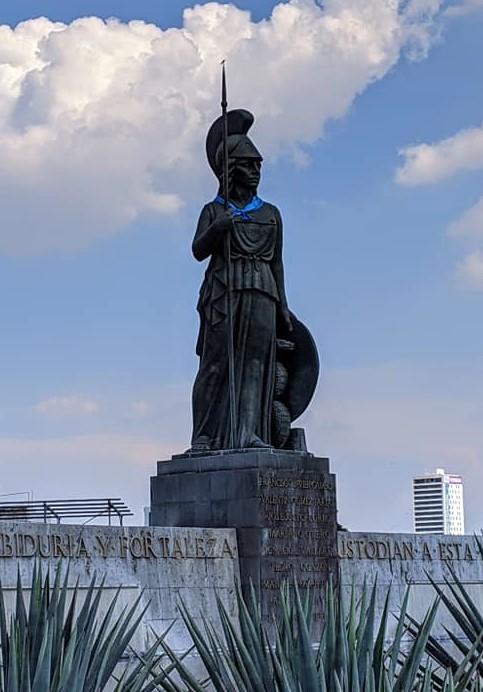
Other interesting facts about Guadalajara include: the Roman/Greek goddess Minerva/Athena has become a symbol of the city. She has a large statue near the Arch of Guadalajara and is also featured on the city’s license plates. GDL has two professional soccer teams: the Atlas and the Chivas, and from what I understand, the latter is arguably the most famous and successful team in Mexico. Guadalajara also has the largest indoor market in Latin America (Mercado San Juan de Dios also known as Mercado Libertad), which spans over 430,000 sq ft (40,000 sq m). GDL was also the birthplace of celebrities Guillermo del Toro (the director) and Canelo Álvarez (the boxer). And…it’s only a 4-5hour flight from Atlanta or Chicago! Ultimately, it’s a really remarkable city, and unlike some of the other places we’ve lived, the locals here know it and love it just as much as we do. I think you will too!

¡Todos bienvenidos!

La Comida: The Regional Cuisines of México

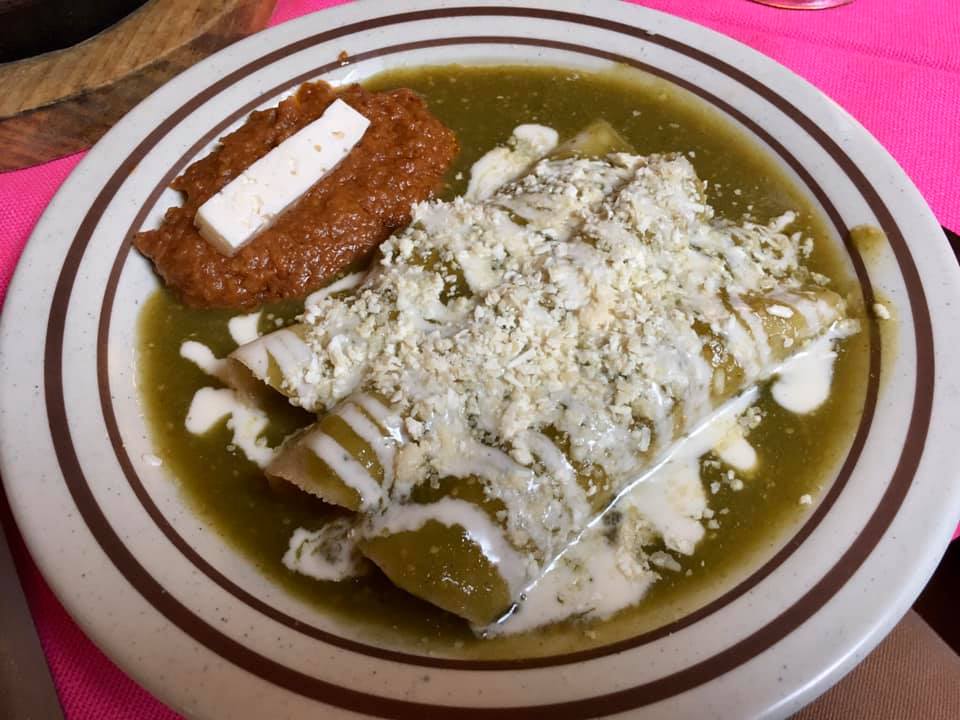
Mmm…enchiladas…

I absolutely love Mexican food! Tacos, enchiladas, guacamole…yes, yes, yes! But what I didn’t know and what I’m still learning is that the old stand-bys that we all know and love are only the teeny tiny tip of the authentic, Mexican food iceberg (quite the image, I know!). After delving a bit deeper into some of the regions of Mexico in 2019, and definitely more so recently, I’ve been discovering (and tasting) a lot of this incredible variety. Here’s what I’ve learned so far:

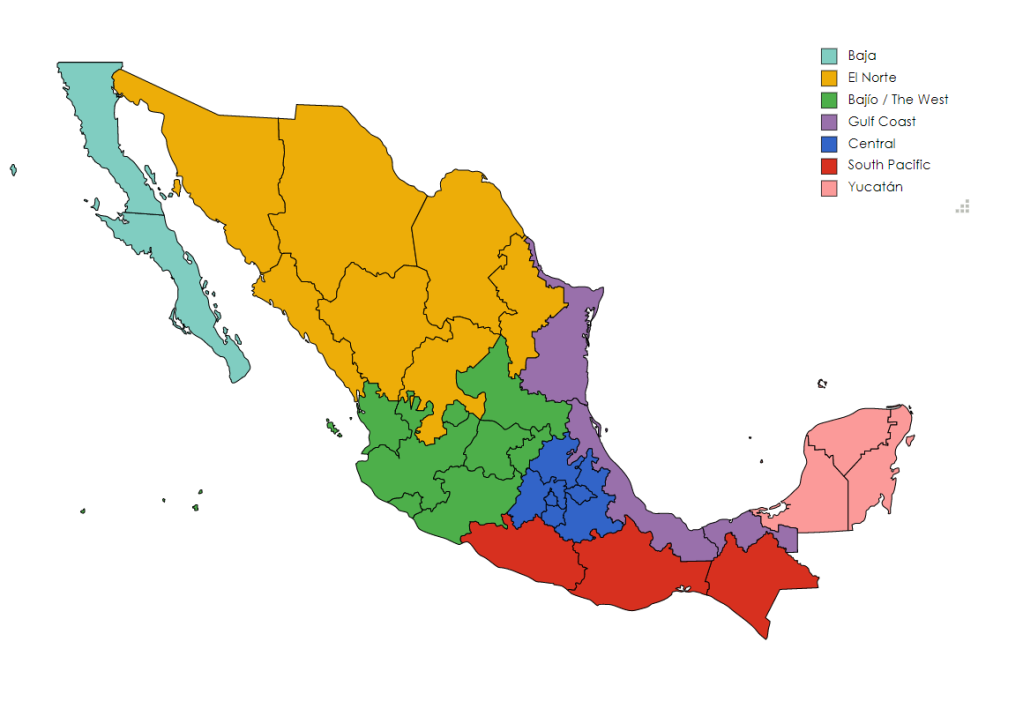
Like in many large, diverse countries, the dishes of Mexico are often grouped by geographical region. The boundaries of these regions might differ slightly from person to person and occasionally a few are lumped together for simplicity, but in general, there are seven main regional cuisines: Baja, El Norte, Bajío/The West, Gulf Coast, Central, South Pacific, and Yucatán. 

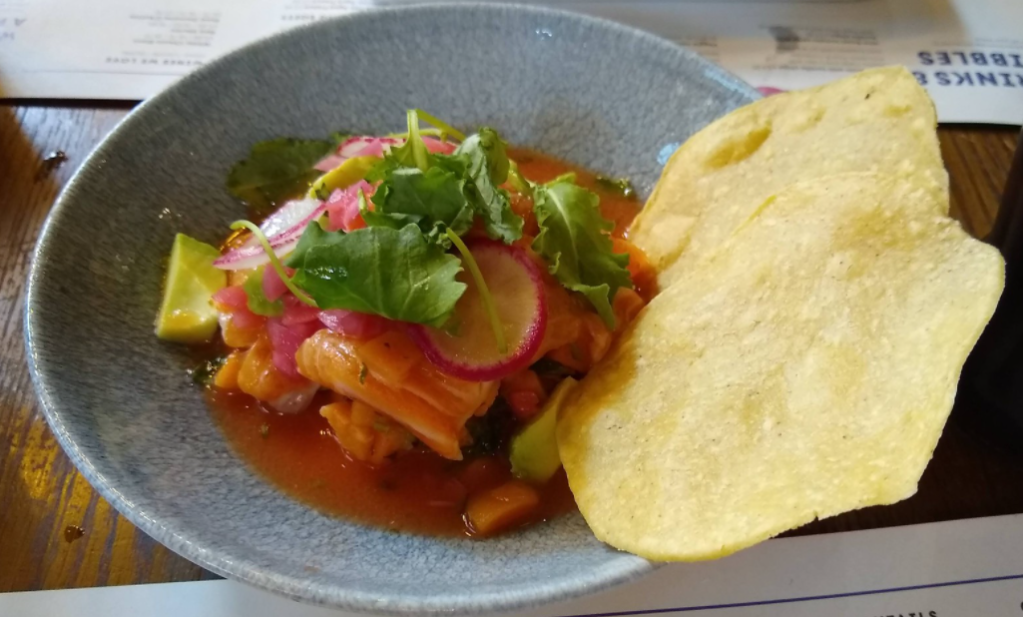
Starting at the top left is the region of Baja, and you guessed it; this region contains the two states that make up the Baja California peninsula. The food of this region is sometimes called Cali-Mex, and it is often seen as somewhat of a fusion of Mexican and Californian fare. Being surrounded in water, seafood is, of course, a big part of the local cuisine there. Baja is well-known for its amazing ceviches (fresh, raw fish cured in citrus juices) as well as the infamous Baja fish tacos. Interestingly, Baja is also the point of origin for the now quite internationally famous Caesar salad.

(ceviche)
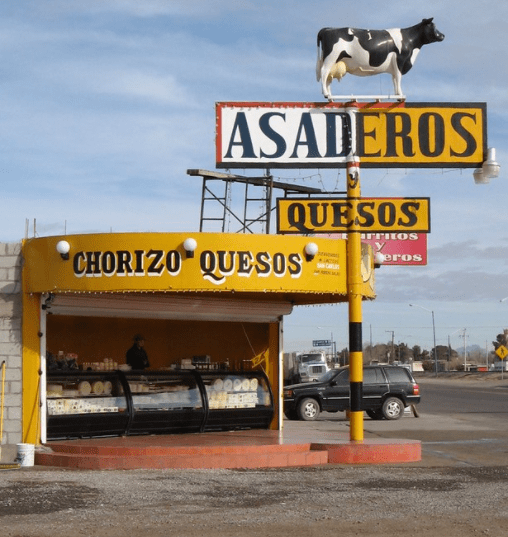
(one-stop, cheese shop)

Next, and easily the largest region in Mexico is El Norte (The North). This is the region that has arguably had the greatest effect on US-Mexican food (including the super Americanized hybrid that is Tex-Mex). This cuisine and culture evolved around ranch life; thus, beef is a main component. Flour (as opposed to corn) also reigns supreme here, and the need for a meal on the go (say via horseback) is how some say the burrito was born. Fajitas and other grilled dishes are also popular, and many of Mexico’s numerous cheeses are made in El Norte.

(carne en su jugo)

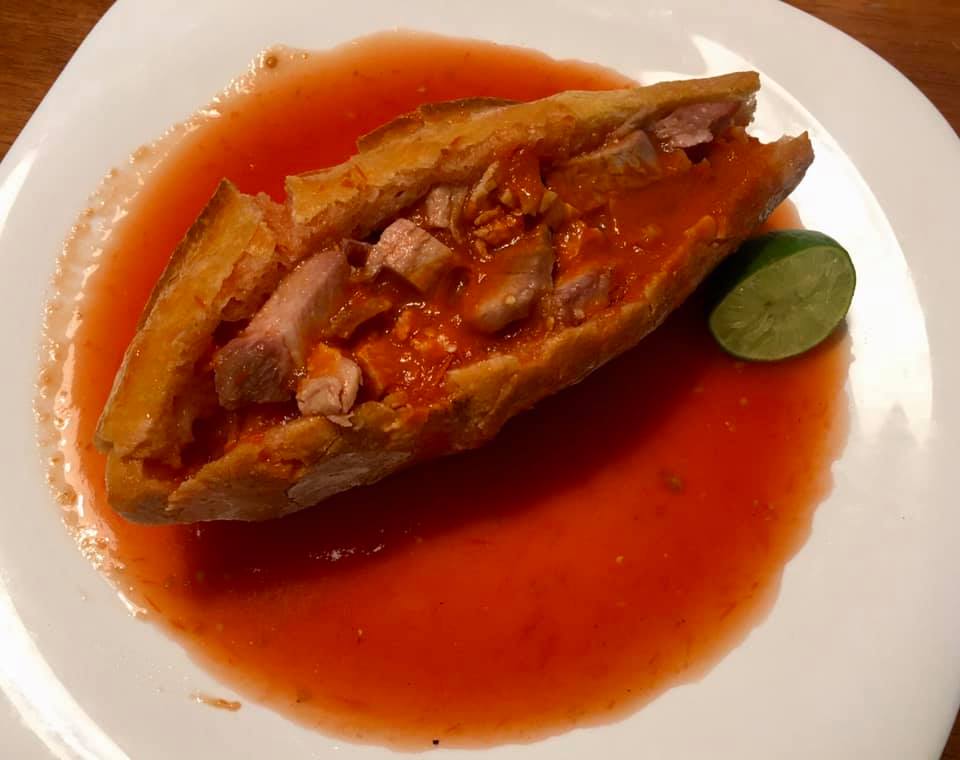
The next region on the list is very close to my heart (I live here), and funnily enough it’s often referred to as the “heart of Mexico”. Bajío means lowlands in Spanish, but the region generally includes states not necessary lying solely in the lowlands. This region, of which Jalisco is front and center, is known for its signature dishes, such as birria (a sort of meat stew), tortas ahogadas (literally “drowned sandwiches”, which are sandwiches swimming in tomato or chili-based sauces), and carne en su jugo (“beef in its juice”), as well as its desserts, like arroz con leche (rice pudding) and the absolutely delicious cajeta (caramel made from goat’s milk). Jalisco is also the birthplace of tequila, so the influence clearly doesn’t stop at food!

(torta ahogada)
(coconut fried shrimp)

Heading east, we come to the Gulf Coast of Mexico. This is the region where the Spanish first landed, and their influence can be seen even in the modern-day cuisine of the area. One of the most popular dishes is Huachinango, or baked snapper flavored with traditional Spanish ingredients like olives, garlic, and capers. The incredibly diverse Caribbean and African influence can also be seen in this region. Unsurprisingly, seafood is generally the protein of choice here, particularly shrimp, although plantains also feature prominently, as well as vanilla, which is indigenous to the area.  

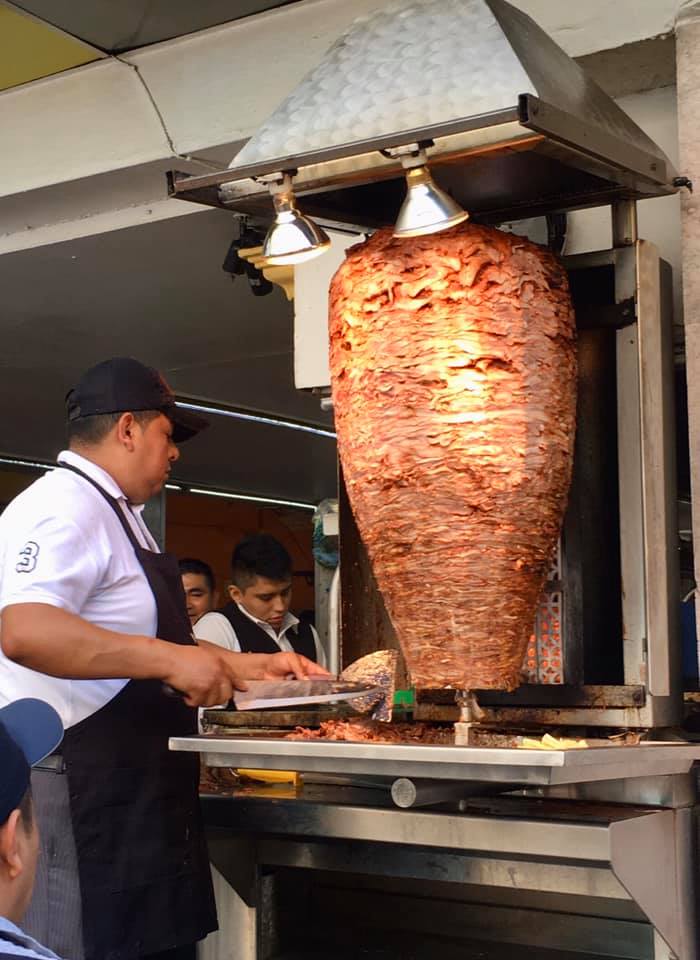
Another big-hitter in the Mexican cuisine line-up is the Central region, which includes Mexico City and Puebla, two very influential areas. Here the Aztec influence can still be felt (and tasted), especially in the abundant use of chili peppers. In fact, Mexico’s most patriotic dish, Chiles en Nogada (which are stuffed chili peppers in a walnut sauce sprinkled with parsley and pomegranate seeds), hails from this region. Street foods such as tacos and tortas are also generally associated with Central Mexico and like El Pastor (spit-grilled pork), probably come from the mixing of cultures that has always been prevalent in this part of Mexico. Interestingly, while the Central region is famous for its street foods and cheap eats, this is also the location for Mexico’s haute cuisine scene as well. 

Down in the South Pacific region, lies another internationally renowned cuisine, particularly the dishes and food culture of Oaxaca. Known for its moles (traditional Mexican sauces/marinades) and the use of chocolate in savory dishes, the South Pacific has been influenced by the Zapotecs and other indigenous peoples. This is the region where chapulines (grasshoppers) can be found as well as other unique ingredients like huitlacoche (corn fungus). Oaxacan cuisine is often touted as one of the greatest untapped resources of the culinary world.

(panuchos)

Finally, we have the oft-visited, Yucatán peninsula. The resort cities of Cancún or Cozumel have their own culinary flair (catered to the needs of their many guests), but this region also has an array of incredible Mayan-influenced dishes. Papadzules (hard-boiled egg-stuffed tortillas covered in a pumpkin seed sauce), Cochinita Pibil (roasted pork), and anything with achiotes (flavorful seeds turned spices), are all unique, colorful, and absolutely delicious. As are the numerous tropical fruits incorporated into this region’s cuisine. Another personal favorite of mine, Yucatán cuisine surprises me at every bite. Even the seemingly simple panuchos (fried tortillas topped with beans, chicken, avocado, and pickled veggies) are just perfect.

(papadzules) (poc chuc) (relleno negro)

Of course, this is only a sample of the thousands and thousands of dishes that originated in Mexico. In fact, some of the most ubiquitous weren’t even included on this list because they don’t really belong to any particular region; dishes like chilaquiles (sort of like breakfast nachos), tacos, sopes (sometimes called Mexican pizza), tostadas, quesadillas, molletes (toasted bean and cheese flatbreads), pozole (hominy or puffed-corn soup), elotes, and tamales. They instead represent the country and its people as a whole; a country every bit as diverse as its cuisine. So, the next time you find yourself in Mexico (or even in a Mexican restaurant) try to stray away from the classic enchiladas or quesadillas and see what other offerings are available – you might find a few new favorites (much like I certainly have). Either way, ¡buen provecho!

(elotes) (chilaquiles) (flautas, fried tacos, y molletes) (sopes) (pozole)