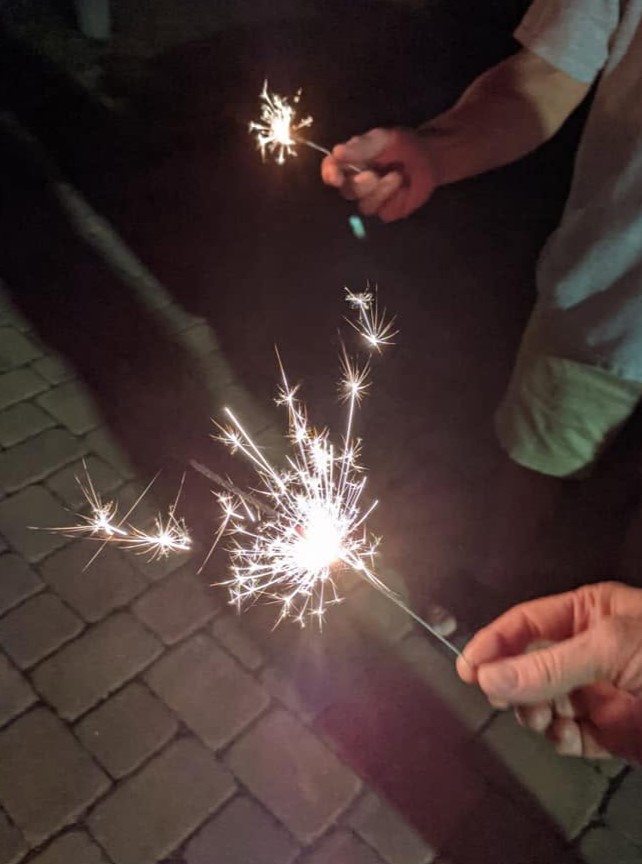
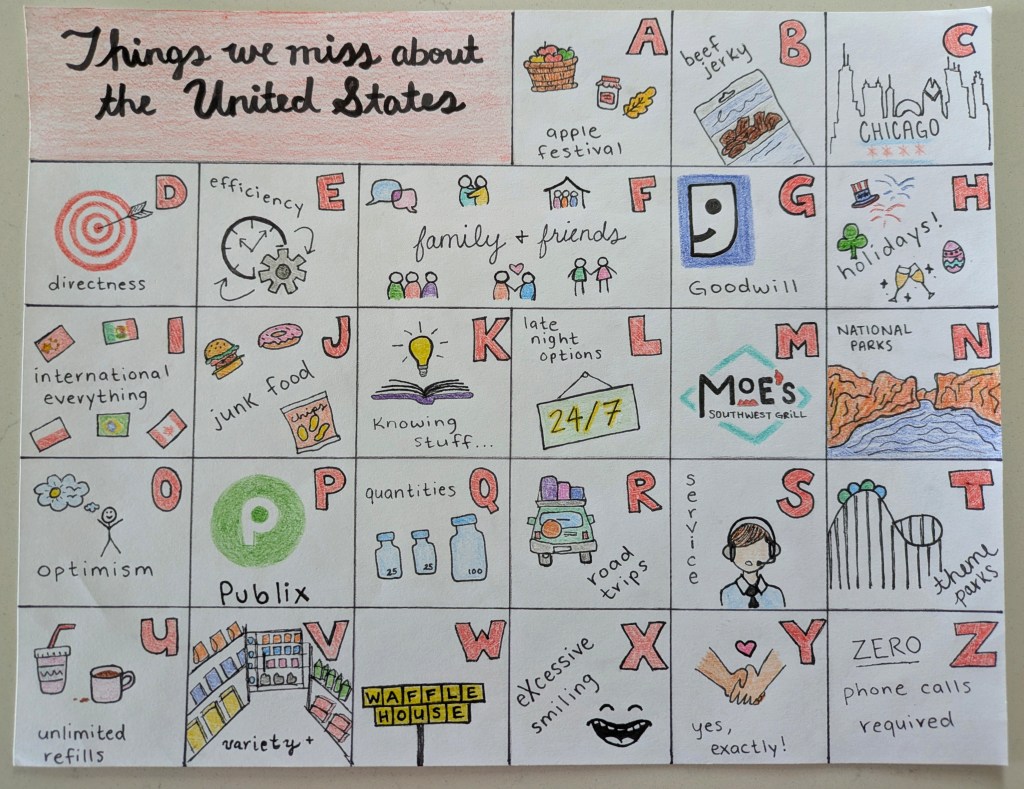
A few months ago, I wrote a post taking a look back at the things we miss most about our previous homes. I did this by re-analyzing the A-Z lists I made for Poland, China, and Mexico; however, during this process, I realized I had never made one of these lists for the very first country we called home! So, in honor of its 250th year, I give you my A-Z list of the things we miss most about our country of origin: the United States of America.
Apple Festival – The Elijay Apple Festival will always be a favorite of mine, but really this is just a stand in for all the annual events we grew up with and now miss out on every year: Greek Fest, Taste of Marietta, Owl-o-ween, etc.
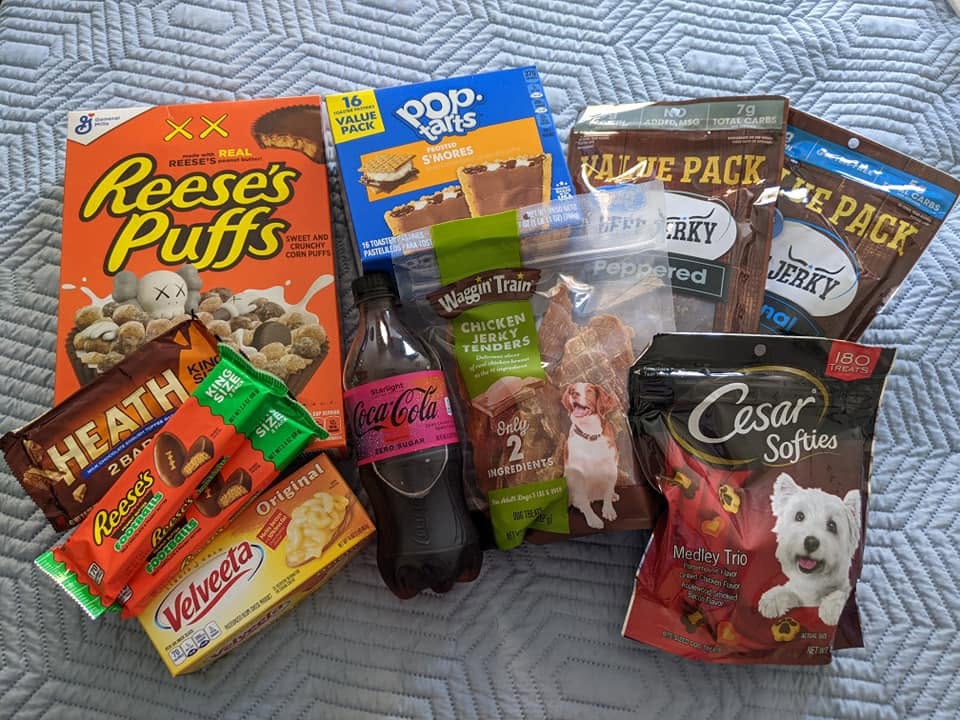
Beef Jerky – An obvious choice for this list because it’s one of the first things we stock up on when we get back to the States. I never thought I’d miss having access to a literal wall of beef jerky options, but here we are.
Chicago – My hometown although I honestly have very little claim to it these days. Regardless, it’s the US city I most look forward to visiting, and the one I talk about more than any other.
Directness – In general, Americans are friendly yet direct, and the longer I’m away, the more I miss this odd combination that tends to be useful in so many ways.
Efficiency – Maybe similar to our tendency for directness, I love that efficiency is always the goal in the US. “Time is money” must be ingrained because I feel it in the US more than most places.
Family & Friends – Of course, as on every one of these lists, the single thing I miss more than anything else would be all our family and friends. I’m eternally grateful that we have social media and video chats and all sorts of ways to keep in contact, but the distance is by and far the hardest thing about being a perpetual expat.
Goodwill – Another random favorite of mine, we have done our best to hunt international equivalents over the years (in Canada, it’s Value Village by the way), but there’s something about Goodwill specifically that just hits home. Maybe it’s the weird smell…?
Holidays – We celebrate ALL the holidays and then some, but we do miss some of the nostalgia often associated with the holidays. We rarely go home for Christmas anymore, but even when we do, everything has changed, and so have we.
International Everything – Living in a country full of immigrants is the best thing ever! We really didn’t realize just how many cultures we had access to in any major US city until we moved to places with less diversity.
Junk Food – Say what you will about American food, but you can’t knock the sheer number of options we have. Pretty much every trip back to the States requires a specific to-eat list, and I’m not going to lie, a big portion of that list is always junk food.
Knowing Stuff – This one was a little hard to pin down, but we miss just inherently knowing how things are done and what people mean. Luckily, we’ve become almost immune to ambiguity, but sometimes it is nice to fit in without even trying.
Late Night Options – So maybe the pandemic killed this for everyone, but when we lived in the US, there were always places you could go late at night: CVS, Walmart, fast food restaurants, gas stations, etc. I can’t be the only one who needs an occasional 3am treat!
Moe’s – Ah, “Welcome to Moe’s!” This might be mostly nostalgia as well, but I love reliving my high school days with a build-your-own burrito and a heaping basket of free chips and salsa!
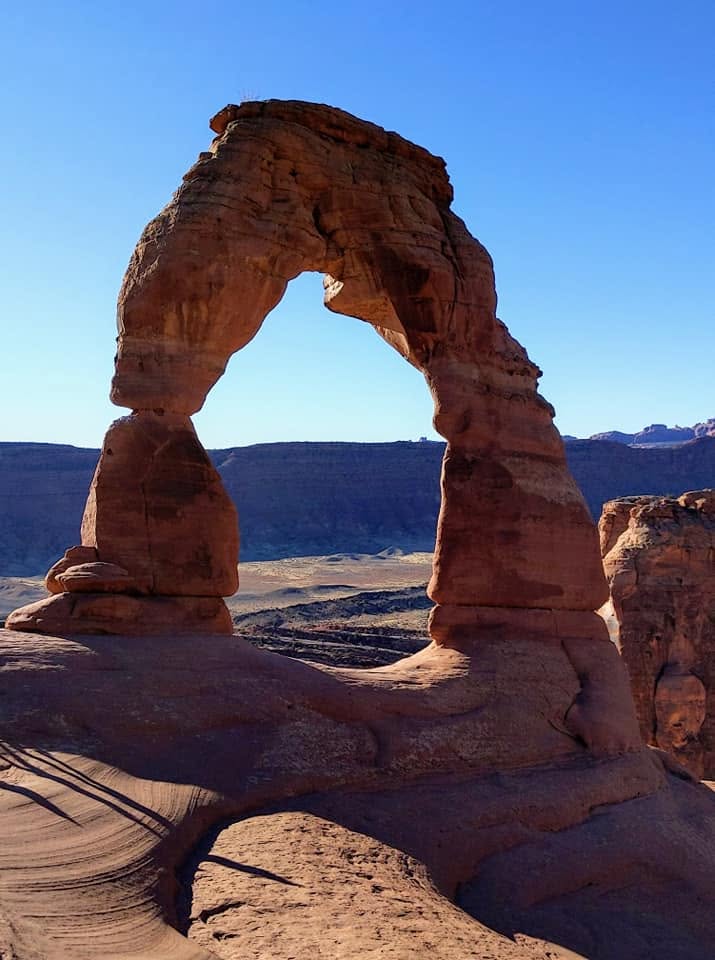
National Parks – Another one I’ve written a whole post about; our national parks are INCREDIBLE. I miss the number, size, and ease of visiting both our national and state parks.
Optimism – Americans don’t always have the best reputation abroad, but generally, one of the first things people notice about us is how optimistic we are. And these days, that’s actually pretty refreshing.
Publix – I must definitely be getting older because Publix might just be my favorite grocery store. Their chicken tendies? Sweet tea? Everything so nice and orderly? Even the color scheme – we miss it all!
Quantities – Something else we always end up doing when we go back to the US is stocking up on our essentials, particularly in large quantity packaging. I find it so annoying that in most countries, I can only find blister packs of things like Benadryl or Ibuprofen. I need more!
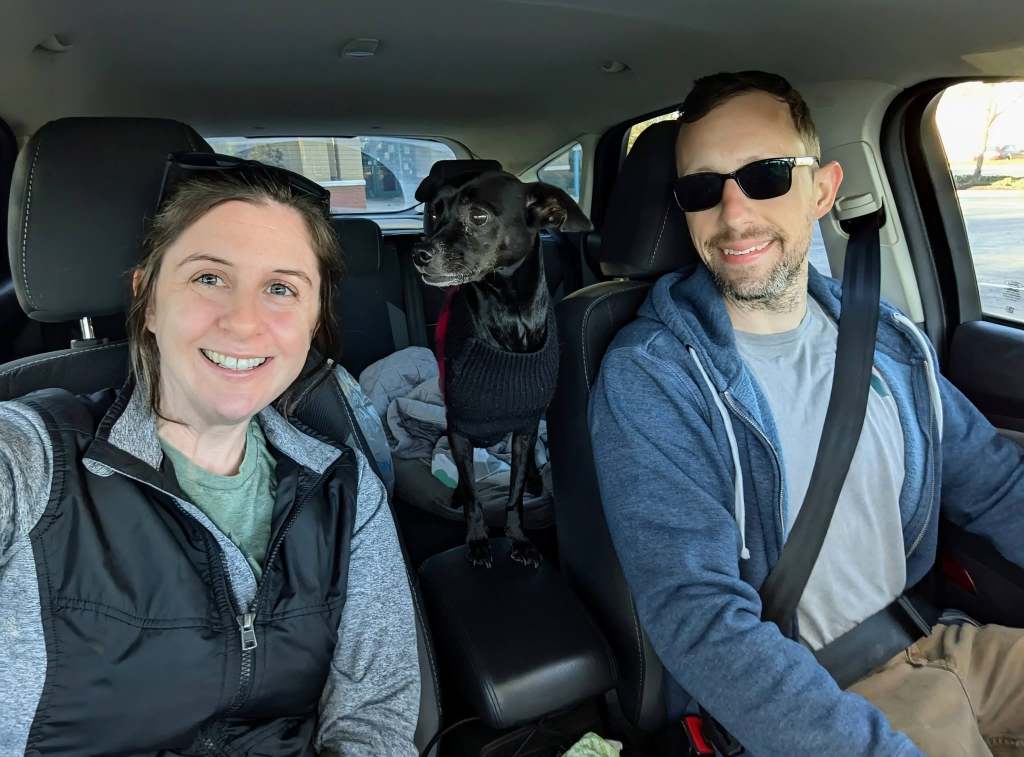
Road Trips – Thankfully, we’ve lived in a lot of good road trip countries, but none quite compare to the US. I don’t know how or why, but the US really does a fantastic job with our highways, rest stops, radio stations, all the road trip staples.
Service – Maybe this is related to Americans being friendly and direct, but whenever I’m back in the States, I immediately notice how nice and efficient our customer service is (in general). Smiles and small talk rarely feel forced in the US.
Theme Parks – Of course, talking to my parents always makes me miss Disney World, but I also miss the abundance of large theme parks in general. Regular trips to a theme park seemed like such a normal part of life, but not so much outside of the US.
Unlimited Refills – I just can’t believe anyone would shell out $5 for a non-refillable soft drink! Coffee, tea, soda, etc. should not cost that much. The only way it makes sense is if you get to drink as much as you want!
Variety – During the World Cup this year, we saw a lot of memes with people’s reactions to the massive amount of variety available in the US. From the cereal aisle to the menu at Cracker Barrel, Americans are always spoiled for choice.
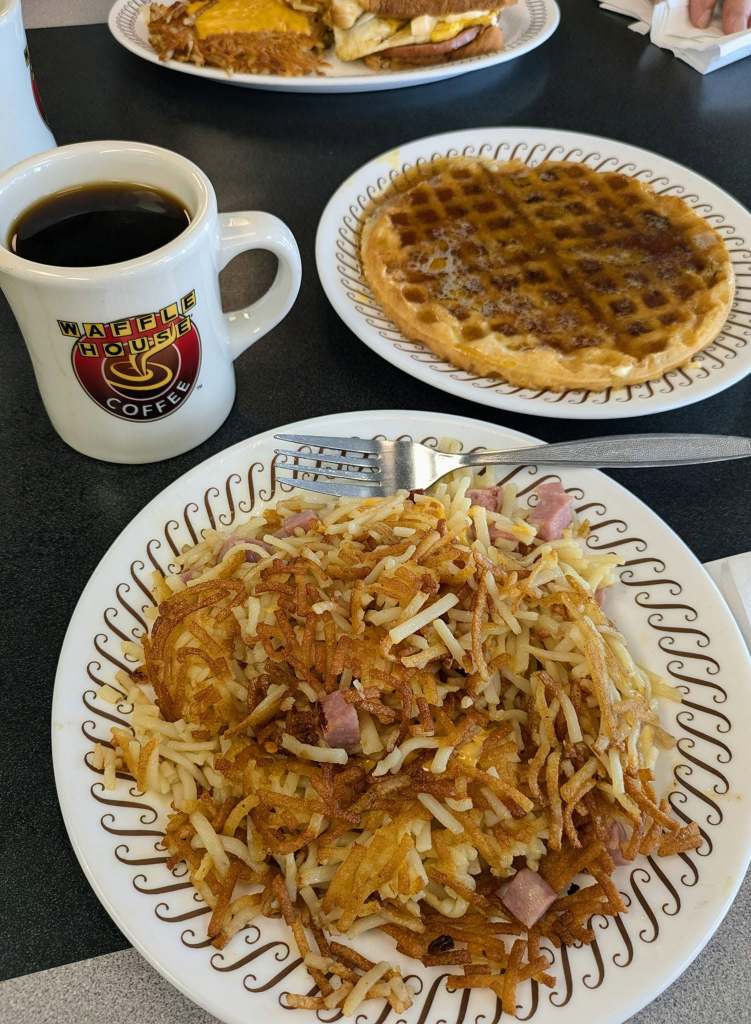
Waffle House – Another specific favorite that is hard to explain. Is it a little dirty? Freezing cold and extremely uncomfortable inside? Greasy and probably one of the unhealthiest meals you can get? Yes, yes, and yes, but we love it so much!
eXcessive Smiling – Okay, maybe I don’t even really miss the smiling itself, but I do miss not being thought of as weird for smiling for no reason.
Yes, Exactly! – Another one that was a little tricky to put into words, but we miss being able to truly commiserate. A lot has been happening in the US, and while our friends/family abroad sympathize with us, they can’t exactly empathize.
Zero Phone Calls – And finally, we miss being able to do anything and everything online. I honestly thought that was going to be a global norm, but it turns out a lot of places still opt for phone calls and paper trails. Ugh!
So, that’s my official A-Z list for the United States! Given all the things we miss about each of our previous homes (and how much we talk about them), we are constantly asked if we’re ever going back or if we’ll ever finally stay put somewhere. To which I say, but what about all the awesome things we have yet to discover?! 😉
Unfortunately for me, it’s almost summer, which is my absolute least favorite time of the year…but instead of counting down the days until Christmas (and the start of my favorite time of year, aka winter), I thought I’d share a bit about all the other holidays we tend to celebrate in our diversified household. Having lived in so many places, we seem to have collected quite a few holidays over the years, and honestly, once you start celebrating them, it’s really hard to stop! So here are a few of our favorite international holidays/traditions that we’ve picked up along the way:
Saint-Jean-Baptiste Day / Fête Nationale
Since it’s coming up on June 23rd /24th, and it’s a major holiday in our current home, I think it’s only right to start with Saint-Jean-Baptiste Day also known as La Fête Nationale! This holiday is celebrated in the province of Quebec and in other Francophone communities around Canada. Originally, it was a religious feast day honoring John the Baptist, but over the years it has morphed into a celebration of all things Québécois and Francophone. Here in Québec City, there is a huge concert every year in the park and lots of free workshops and activities around the city showcasing the region’s traditional music, the French language, and other cultural cornerstones. It’s also the unofficial start of summer, so pretty much everyone will be outside in one way or another, enjoying the festivities, a freshly grilled meal, and/or a cold boisson or two out on a patio. Any way you look at it, c’est une bonne fête!
Día de la Independencia
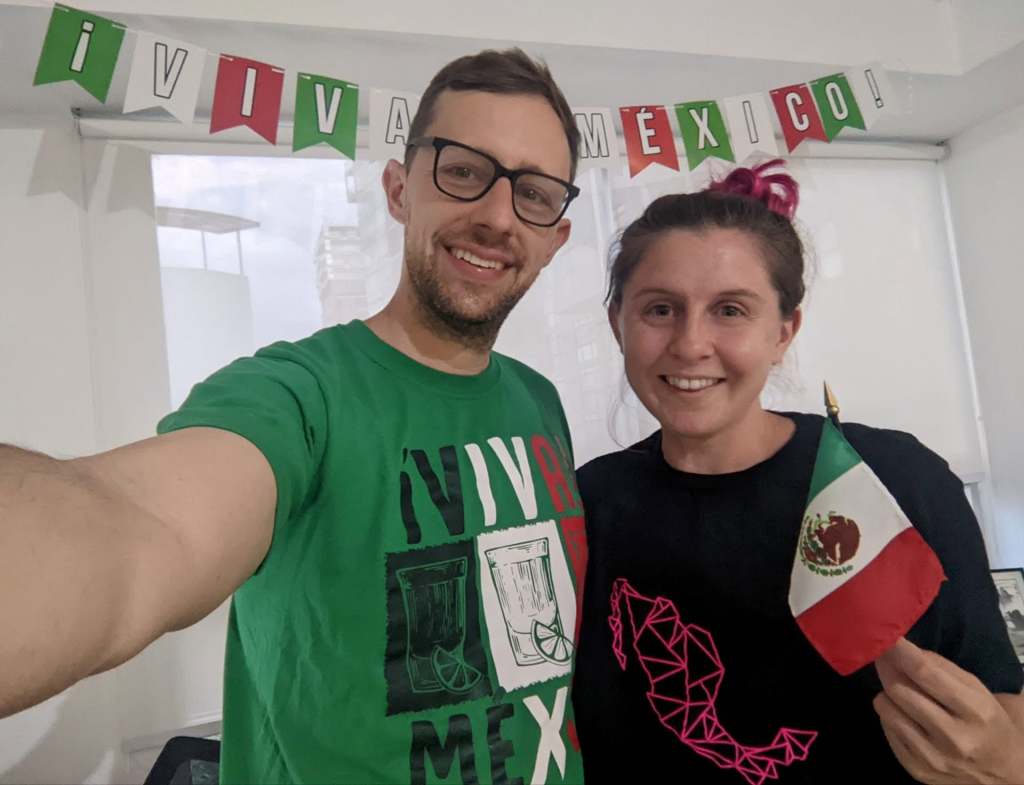
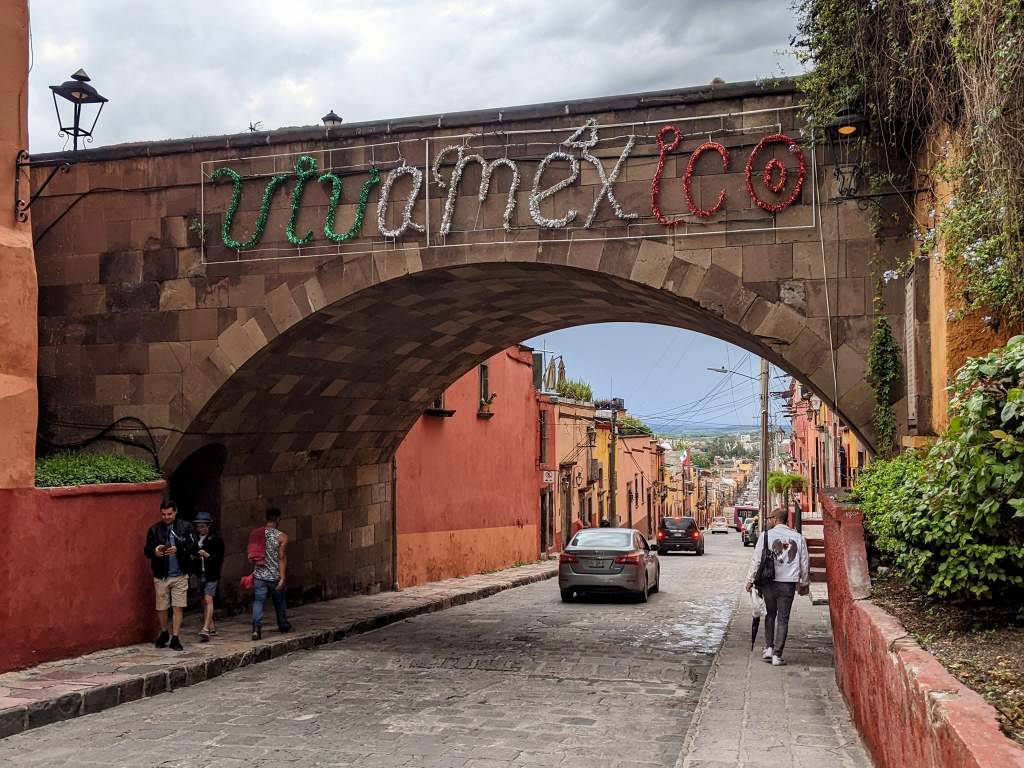
As Americans, we often celebrate Cinco de Mayo, which irritates a lot of Mexicans because the 5th of May is NOT Mexican Independence Day! It’s actually not much of a holiday there at all, so stopping tagging your Mexican friends when you’re eating tacos on what is basically just another US holiday. Instead, you should tag them on September 15th/16th, which is Mexico’s actual Día de la Independencia. Okay, so I know this is the second holiday in a row where I’ve included two dates of celebration, and that’s actually more common than you might think. In Mexico’s case, it’s because the celebrations actually start at night with the Grito de Dolores, which commemorates the historic call to arms that began the Mexican War of Independence. Of course, after the historic speech, patriotic chants, and some bell ringing, modern celebrations generally conclude with a fireworks show and a big fiesta! ¡Viva México!
(Canadian) Thanksgiving
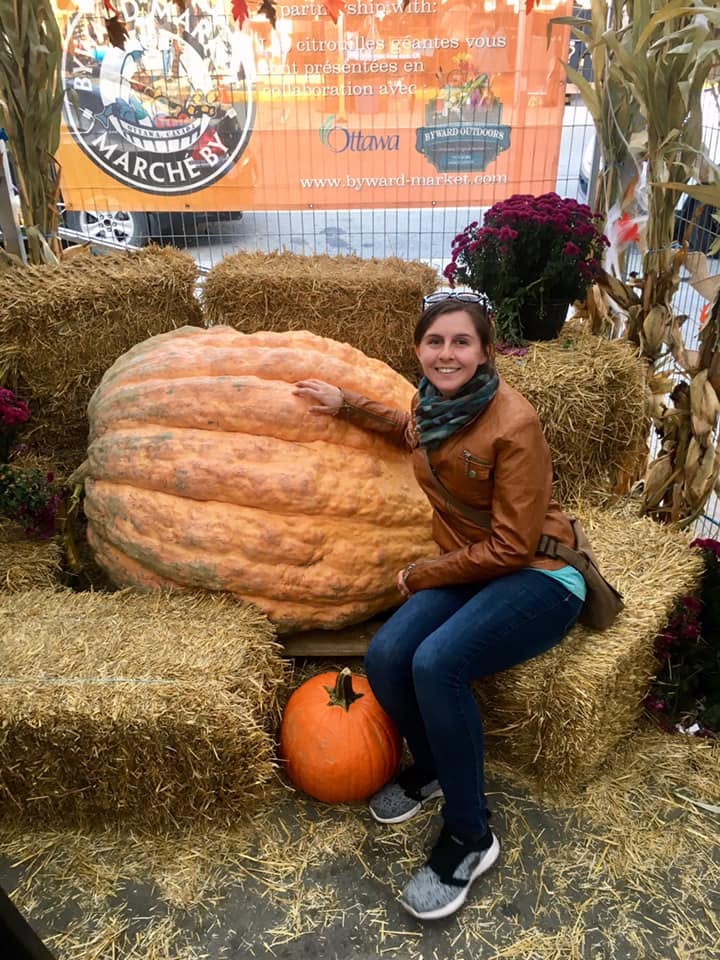
Okay, back to Canada for the next one because the second Monday of October is Thanksgiving here. Did you know Canada celebrated Thanksgiving? And that it takes place over a month earlier than in the US? Well, this was news to us when we first moved here, but since this is one of my favorite holidays, we happily celebrate both every year! Feasts associated with giving thanks were quite common in both Europe and the New World, and because different groups were thankful for different things that happened on different days, the continent actually ended up with a few such holidays. In Canada, Thanksgiving was officially declared a national holiday in 1879, but the fixed date we have now wasn’t actually standardized until 1957. These days, Canadian Thanksgiving tends to lean heavily into the harvest festival vibes. For example, this is when we start seeing a lot more pumpkins, both for decoration and for the big meal that usually takes place the weekend before the day off. But to me, the best thing about celebrating Thanksgiving in October is the fact that there’s absolutely no interference with Christmas decorations!
Día de Muertos
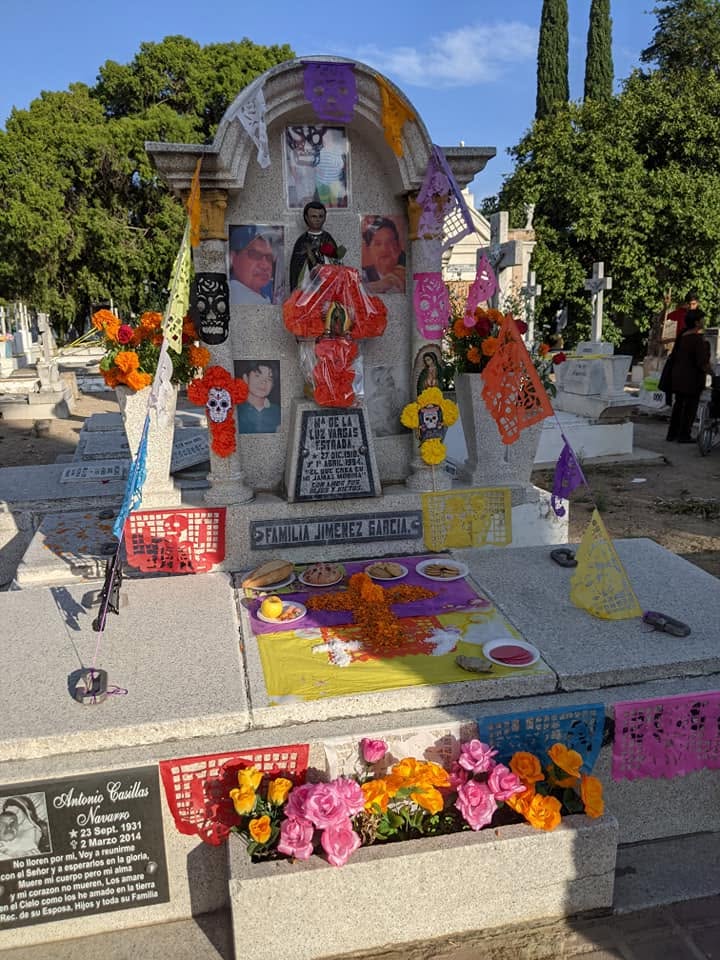
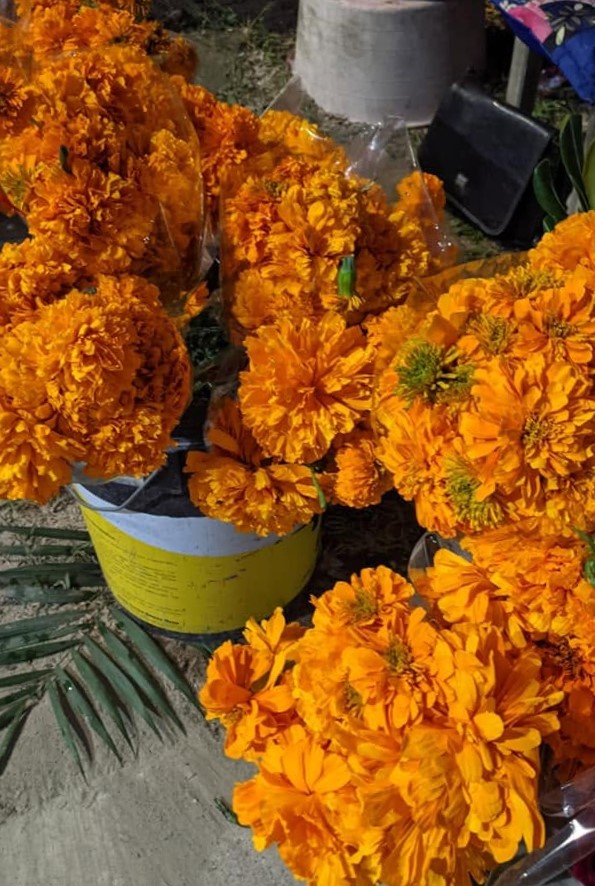
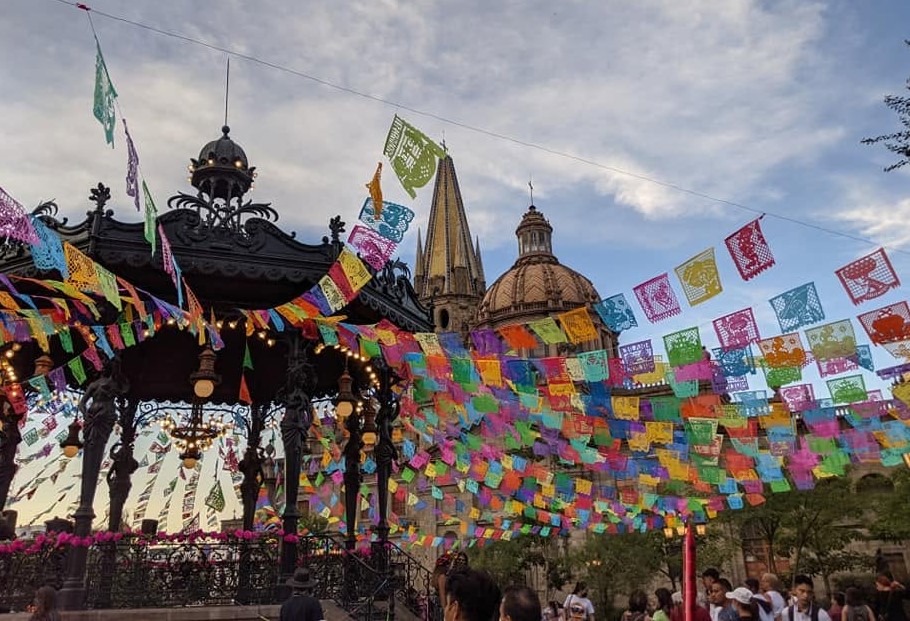
Easily one of the most unique holidays we get to celebrate every year, Día de Muertos is so much more than the brief glimpse you get in the movie Coco. It’s celebrated on November 1st and 2nd, but much like Christmas, there’s a long period of preparation and decoration beforehand. In short, these festive days are a celebration of the spirits of people who have passed away (the first is specifically for children, and the second for adults). As part of the celebration, you’ll see millions of cempasúchil (marigolds), papel picado (colorful banners), and ofrendas (altars) all meant to guide, welcome, and celebrate those not with us anymore. Unlike most remembrance holidays though, Día de Muertos isn’t a somber event at all – it’s another fiesta! It’s a time for family and friends to come together and celebrate life with all the classics: music, games, and plenty of food and drink!
Double 11
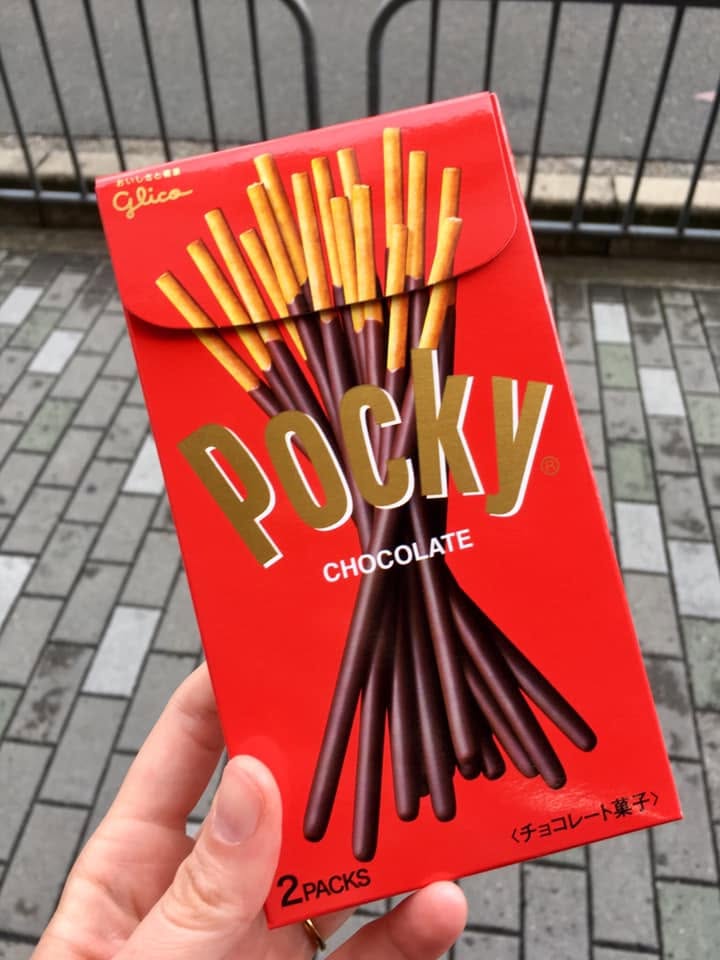
Going in a wildly different direction, on November 11th each year, we also get to take part in Double 11. Sometimes referred to as Singles Day, Double 11 is a holiday (of sorts) that’s celebrated in China and now, beyond. It originated as a sort of anti-Valentine’s Day, a day in which you treated yourself to something special regardless of your relationship status. A common, funny treat would often be Pocky as they resemble the date: 11/11, but eventually, other companies caught on to the trend, and now Double 11 is the largest online shopping “holiday” in the world. You can find deals on just about every major online retailer, and much like on Black Friday, Cyber Monday, and Boxing Day, every year, companies try to outdo themselves, essentially creating an entire month of shopping frenzy!
Andrzejki Day
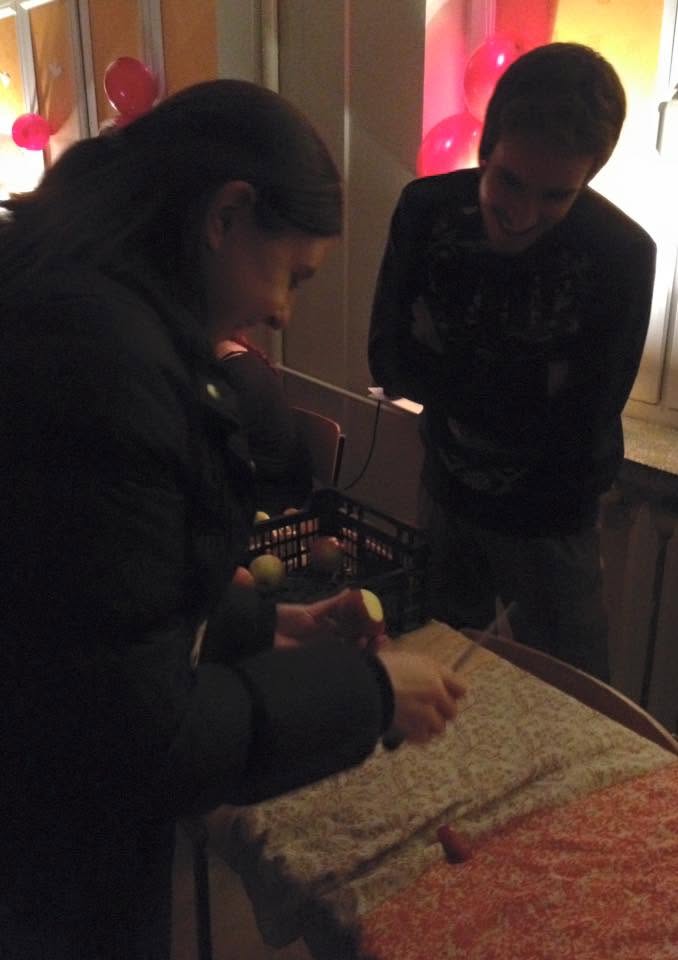
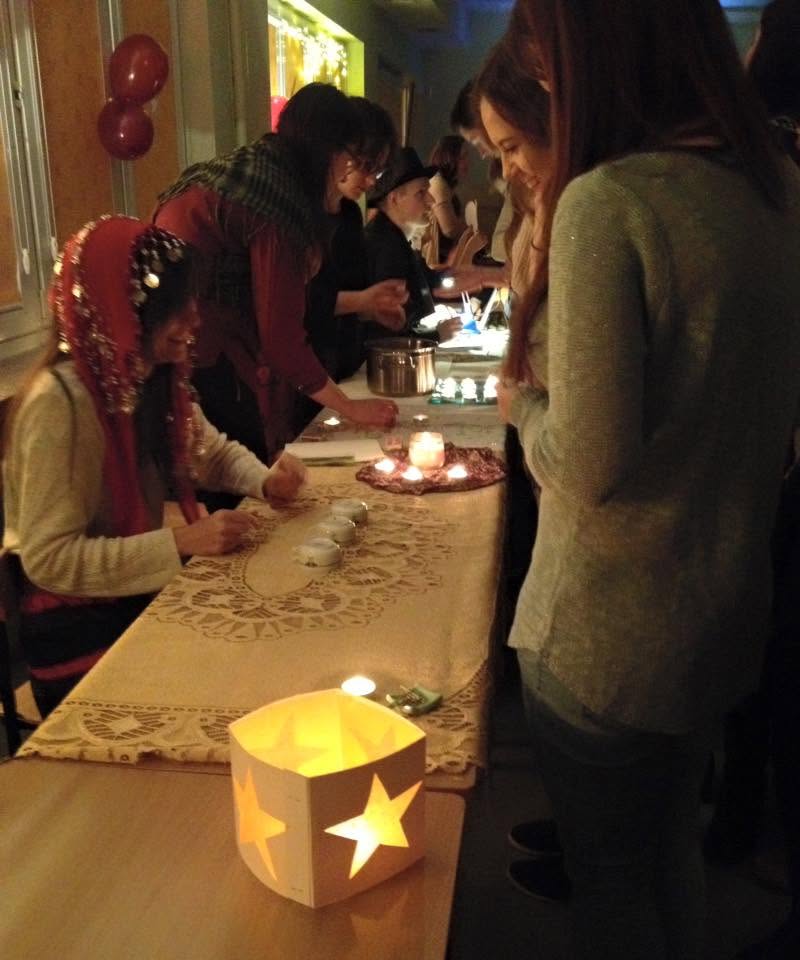
Andrzejki Day (or Saint Andrew’s Day) is a curious little holiday that we first celebrated in Poland. It takes place on the evening of November 29th, and is one of the witchiest holidays I’ve ever celebrated, which makes sense because its origins date back to medieval Europe when fortune telling was all the rage. Essentially, Andrzejki Day is a time for young people to conduct a series of activities meant to give them a glimpse into their future. One of the most common methods is pouring hot wax through an old key into cold water and interpreting the shapes that form, but my favorite is peeling an apple, throwing the peel over your shoulder, and deciphering the letter it most resembles (which is naturally going to be the first letter of your future spouse’s name). These days, it’s not taken very seriously, but what a great excuse to gather and do something fun and unique! Even though it’s been more than a decade since my first Andrzejki Day, I still like to peel an apple every once and a while because somehow, I have yet to get a W or a T!
Chinese New Year
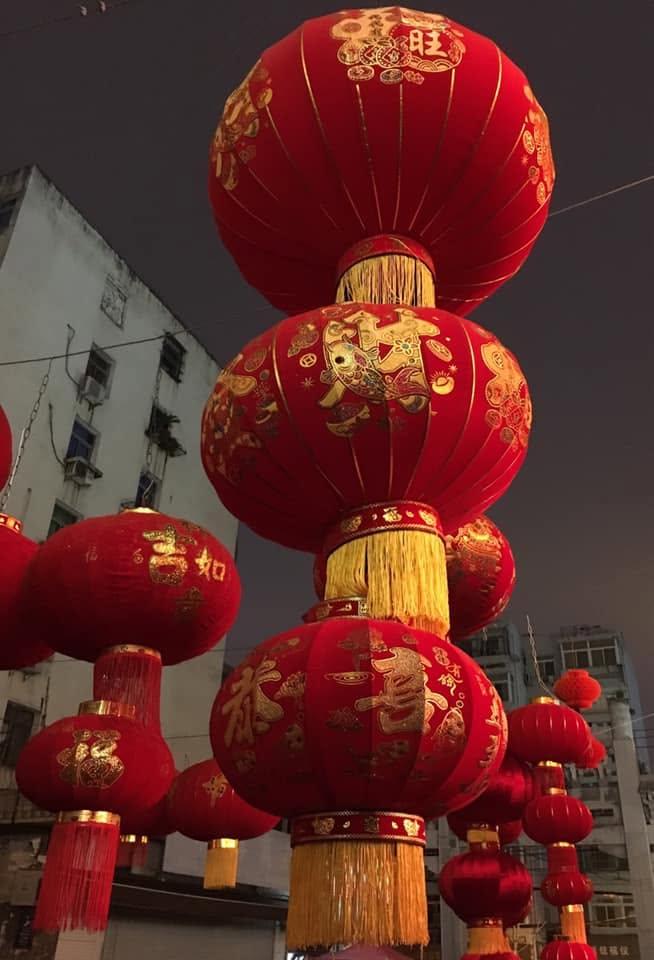
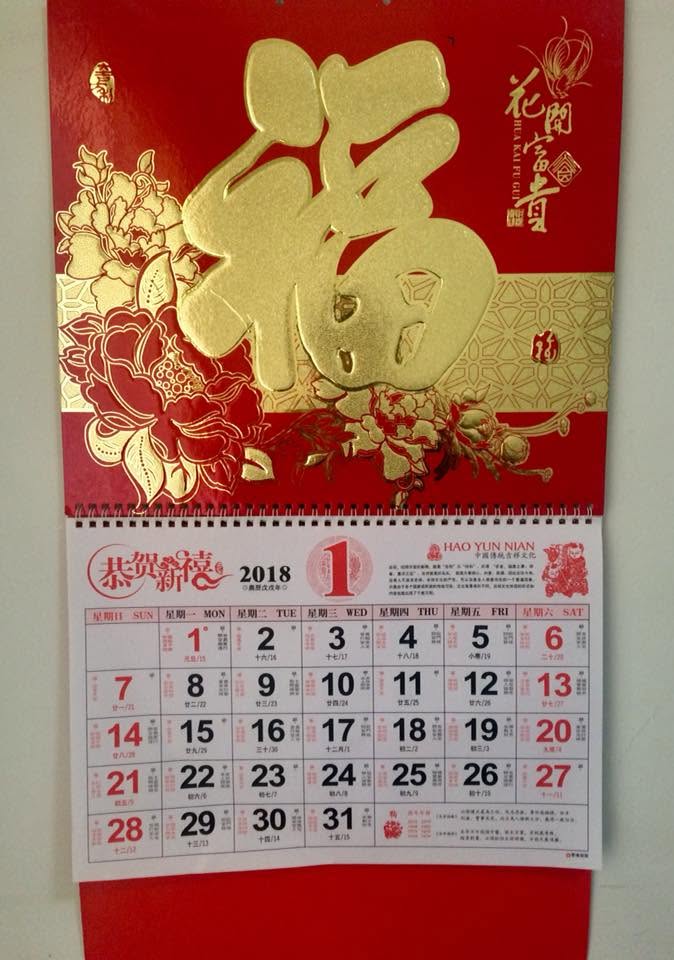
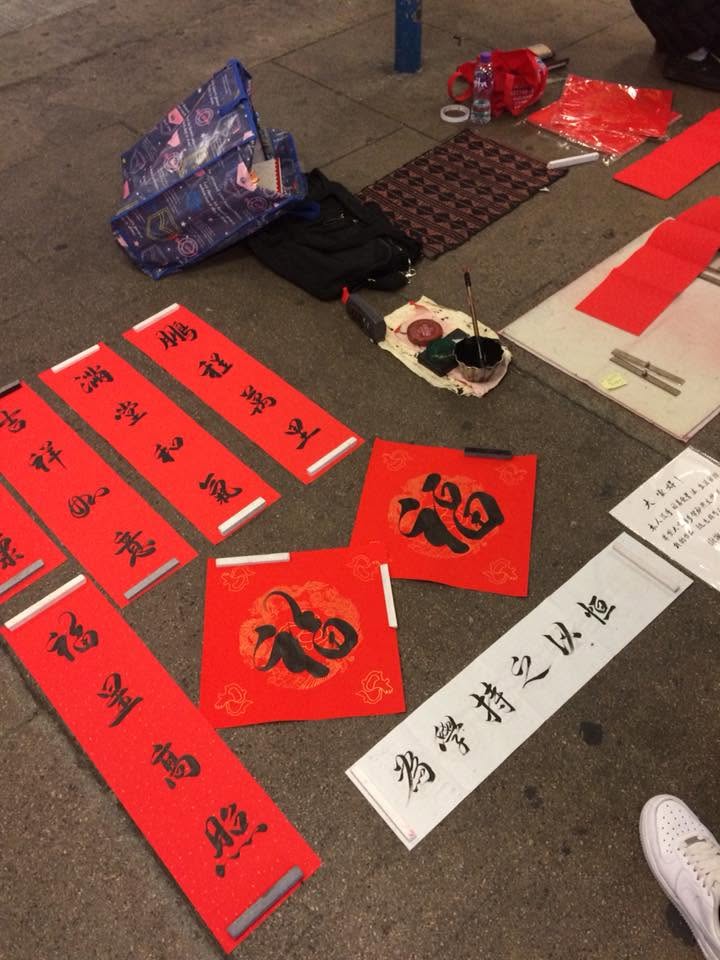
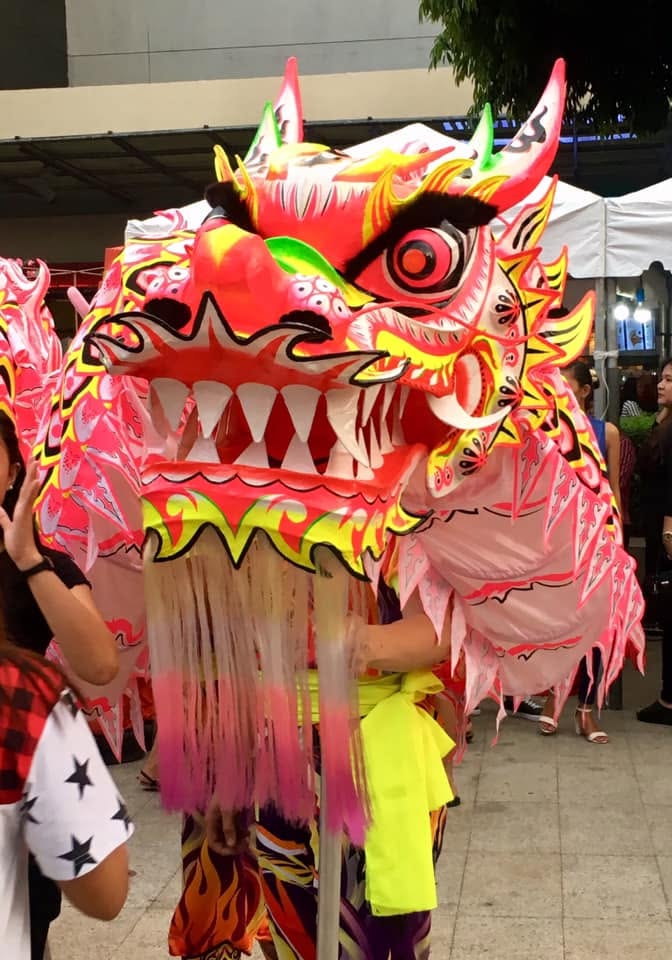
Skipping over all the holidays that take place in December (since I’ve already written about Christmastime in Poland, China, and Mexico), we’ll jump right into Chinese New Year. Chinese New Year, which is China’s celebration of the Lunar New Year, starts on the first day of the first month of the lunar calendar (generally in late January/early February). When people say this is the biggest and most important holiday in China, they absolutely mean it because the celebrations are multi-faceted, and they last for weeks! There’s the annual cleaning to start the year off right; the colorful decorations (like the fu symbols, couplets, lanterns, etc.) which bring good luck and fortune; the televised gala that everyone watches; the red packets full of money that you get and give all week long; the acrobatic lion dances that seem impossible but also so fun, and, of course, tons of incredible holiday food. The more I write here, the more I want to write an entire post about Chinese New Year! Maybe next year, which is the Year of the Sheep by the way.
Pączki Day
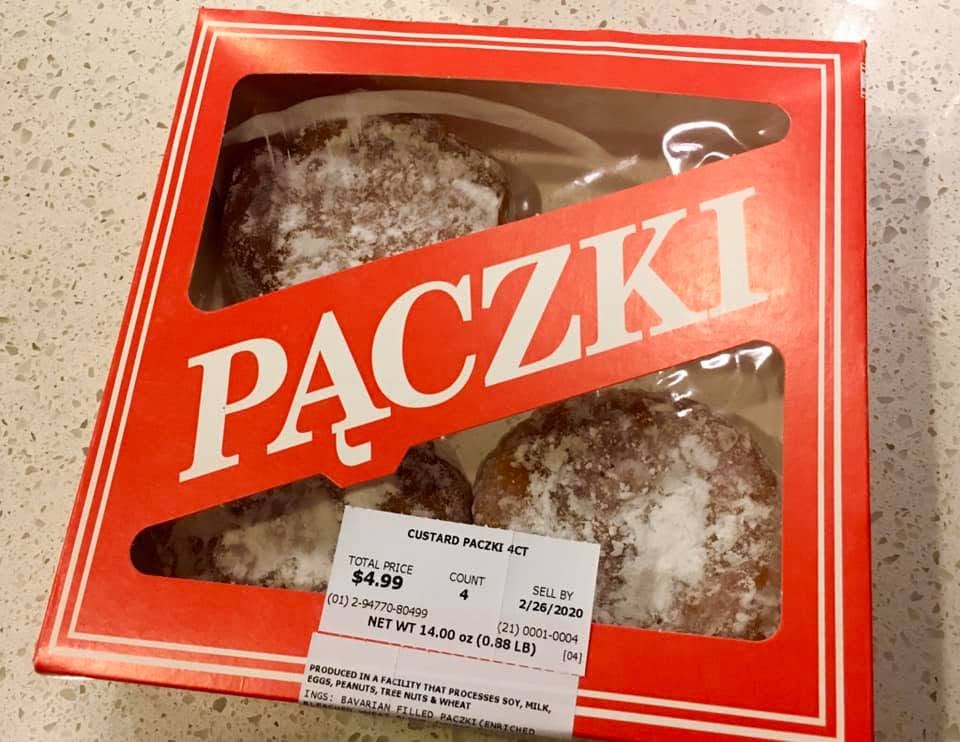
I promise Poland has a lot of serious holidays too, but those are not the ones I chose for this particular list lol! The last holiday I want to shed some light on here is one that I think we can all get behind, and that is Pączki Day. Pączki are Polish donuts, and they enjoy a special day on what a lot of people call Fat Tuesday (of course, in Poland they actually celebrate it on the Thursday, but if you want to eat donuts all week, I won’t judge). Like Fat Tuesday (or Mardi Gras or Shrove Tuesday or whatever you want to call it), Pączki Day falls before the traditional fasting season of Lent; therefore, historically, this was the day to eat all sorts of fatty, sugary treats before being good for the next forty days. Of course, there’s no rule that says you have to fast in order to enjoy a pączek on this day, and thanks to Poland’s wide diaspora, you might even be able to find pączki in your city. We’ve found them in Chicago, Orlando, and Ottawa, but in the spirit of international holiday celebration, I think any donut will do!
We just got back from another incredible trip, which means it’s time to reflect and reminisce. This trip was unlike many others because it required a lot more prep than we’re used to, so if you’re planning a trip to Peru, hopefully I can help you out a little with my breakdown of some of our plans and experiences. And if you’re not planning a trip to Peru, here’s your sign to start!
The Preparations
As I mentioned, we actually had to do quite a few things well in advance for this trip. Generally, we just book our flights and lodging and let the rest of the trip unfold in real time; however, there are two things about Peru that forced us to think ahead a bit more: 1, we knew we’d be at elevation again, and 2, Machu Picchu is one of the most popular tourist destinations in the world.
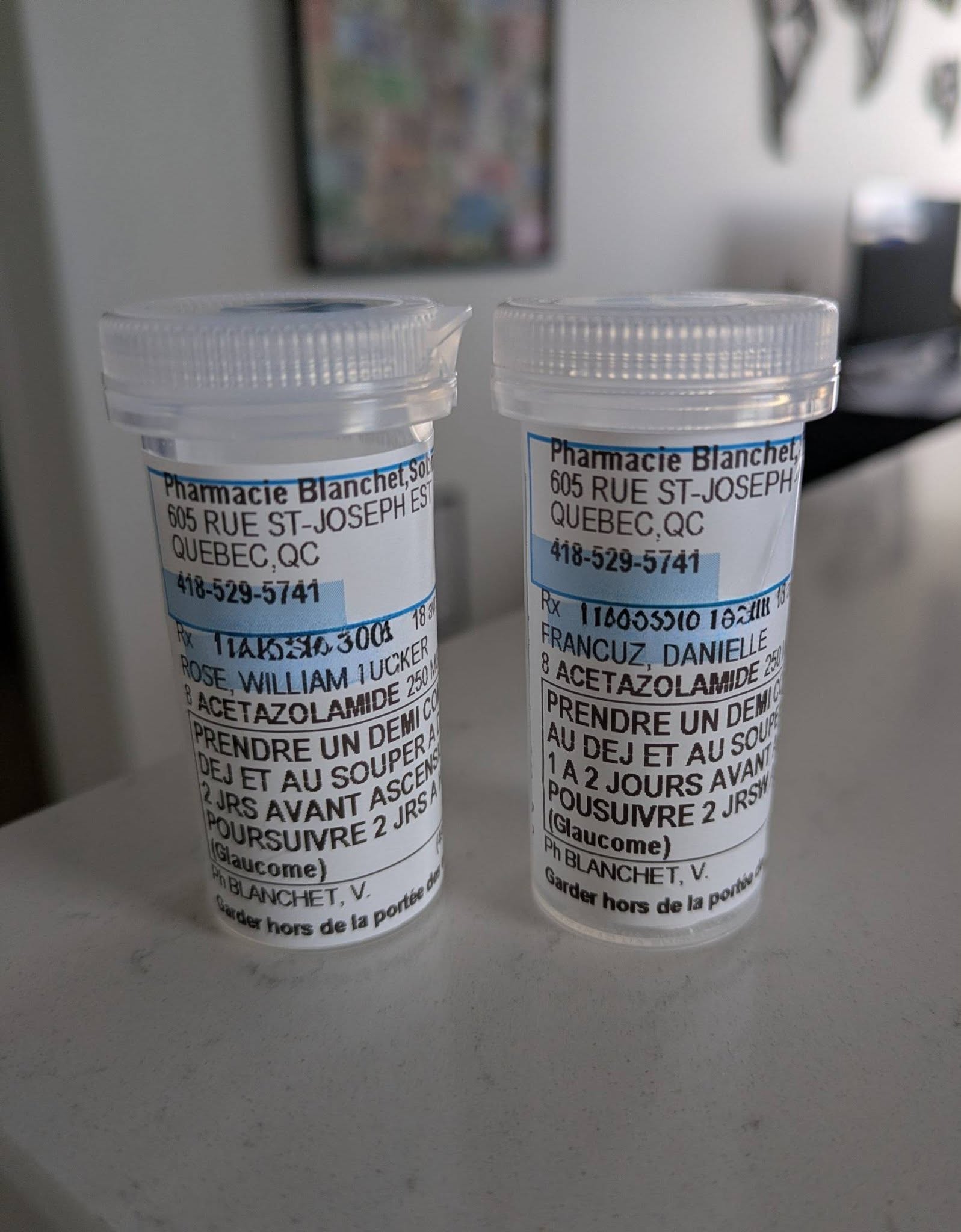
For the elevation issue, we decided to play it safe and get a prescription for Acetazolamide from our local pharmacy. Here in Québec, we didn’t need to see a doctor, we just had to talk to the pharmacist about our trip (how long it was, what the elevation would be, etc.), and he gave us a week’s worth of a medication that we started to take a couple of days before we left. This medication works by helping your blood carry more oxygen, which can prevent the symptoms of altitude sickness (known in Peru as “soroche”).
The other challenge we faced months before our trip was booking everything for Machu Picchu. To say there are a lot of options would be a gross understatement. You can take weeks and hike in from far away places in almost every direction; you can camp; you can glamp; you can take a scenic train ride; you can stay in Cusco and do a day trip; you can stay at the base of the mountain in Aguas Calientes – really there are so many options, and you basically have to decide all that before you can buy your park tickets for the specific day/time you want. The trickiest part is the fact that those park tickets are released in batches about 5 months in advance, and they get snapped up pretty darn quick!
Cusco
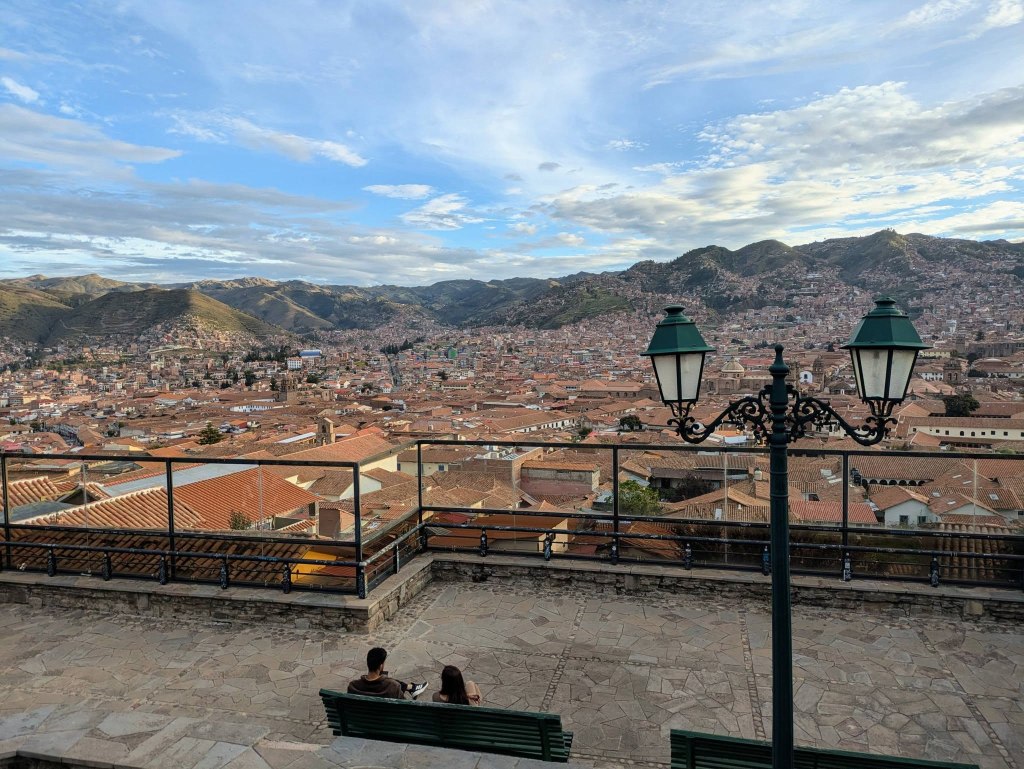
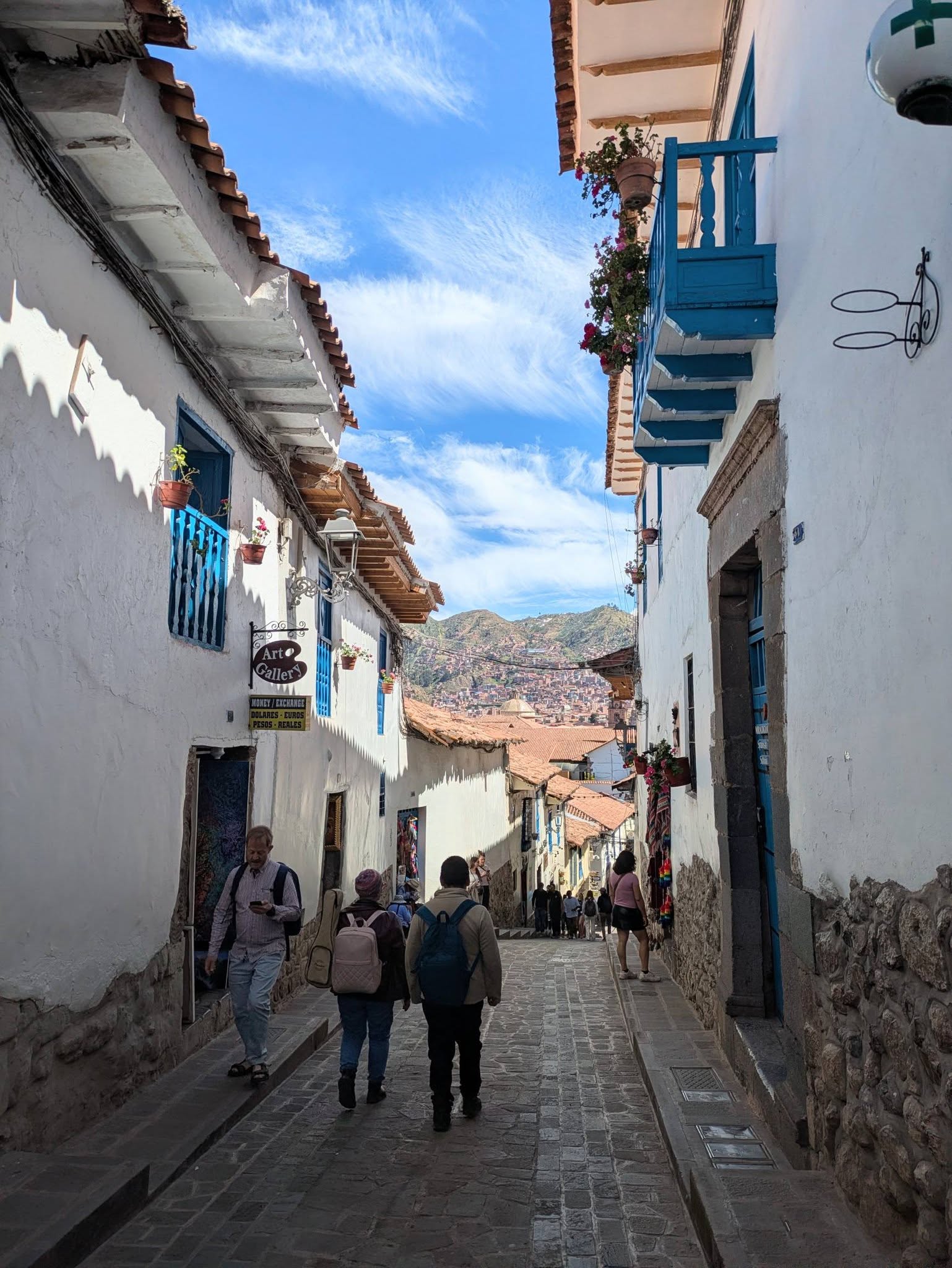
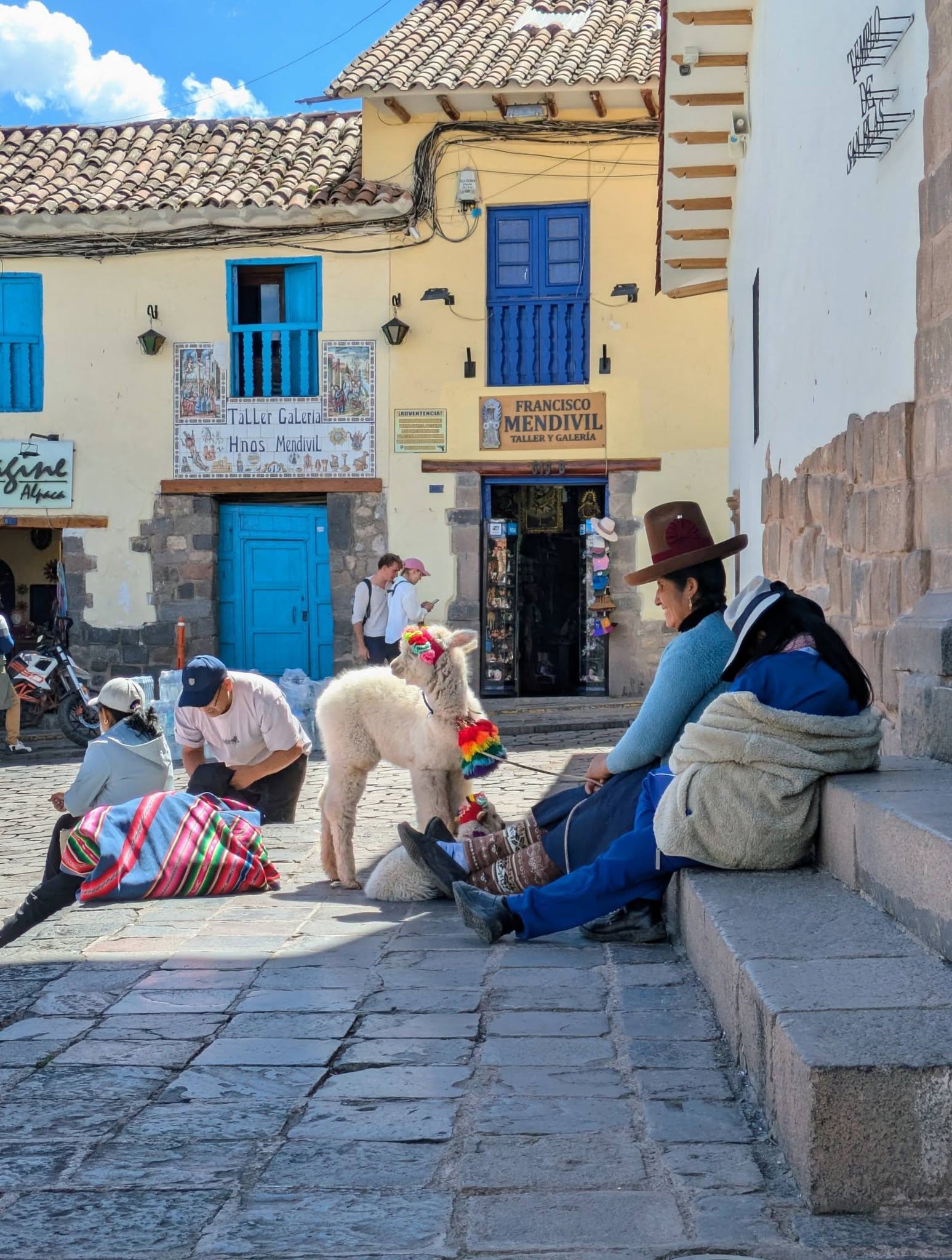
So, we chose Cusco as our main base for this trip because we knew we needed to acclimate to the elevation (Cusco sits at 3,400m or 11,200ft), and it’s such a great jumping off point for things like Machu Picchu, Sacred Valley, and Vinicunca. We totally thought it’d just be a place for us to rest and generally just pass through, but we absolutely LOVED Cusco! It has so much to do and is so beautiful that even when our lungs were screaming after climbing all the stairs, we continued to push through just to see a little more. Everyone we met was extremely friendly, and the food was some of the best we’ve had, so really, I cannot recommend Cusco enough!
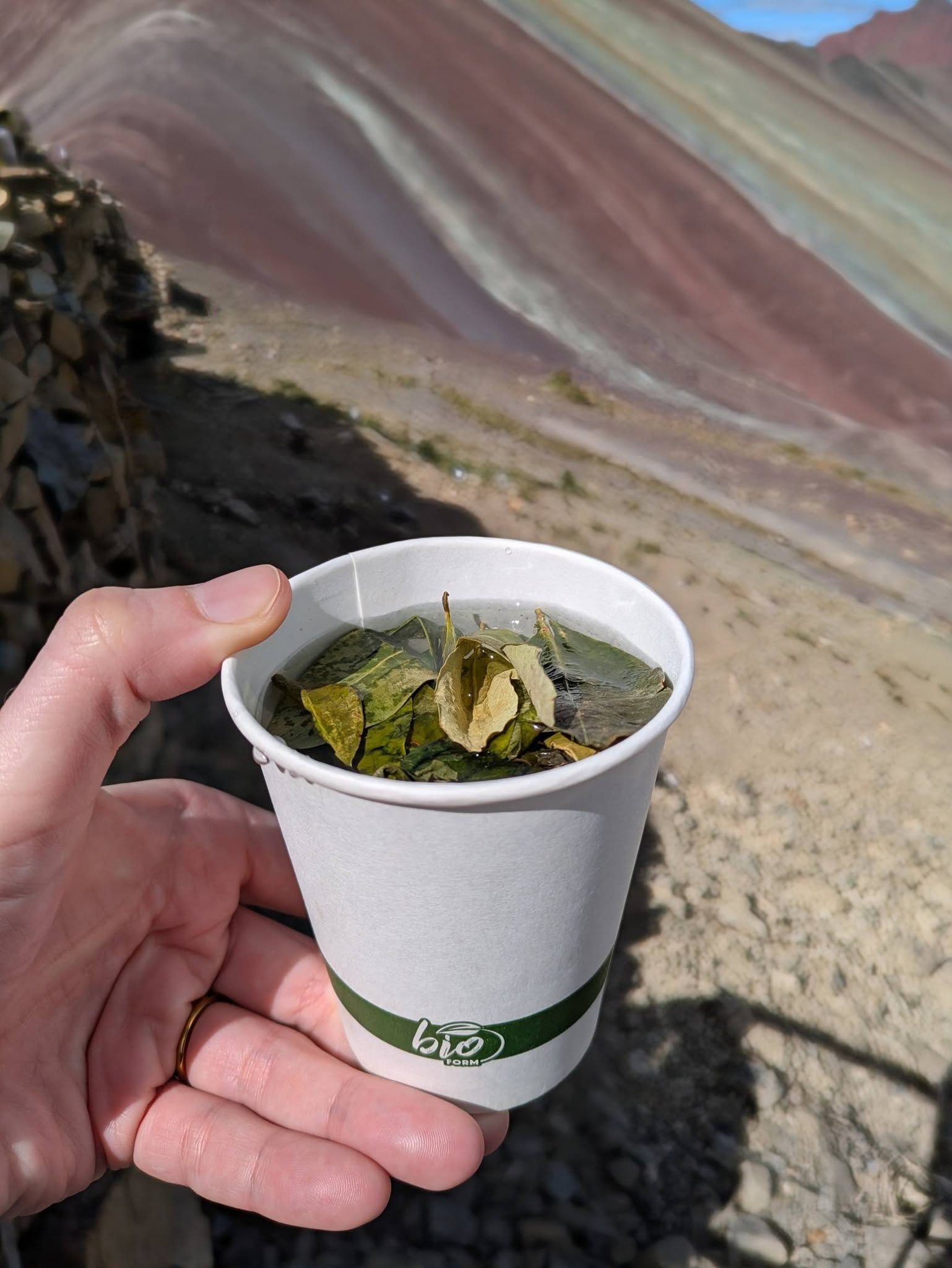
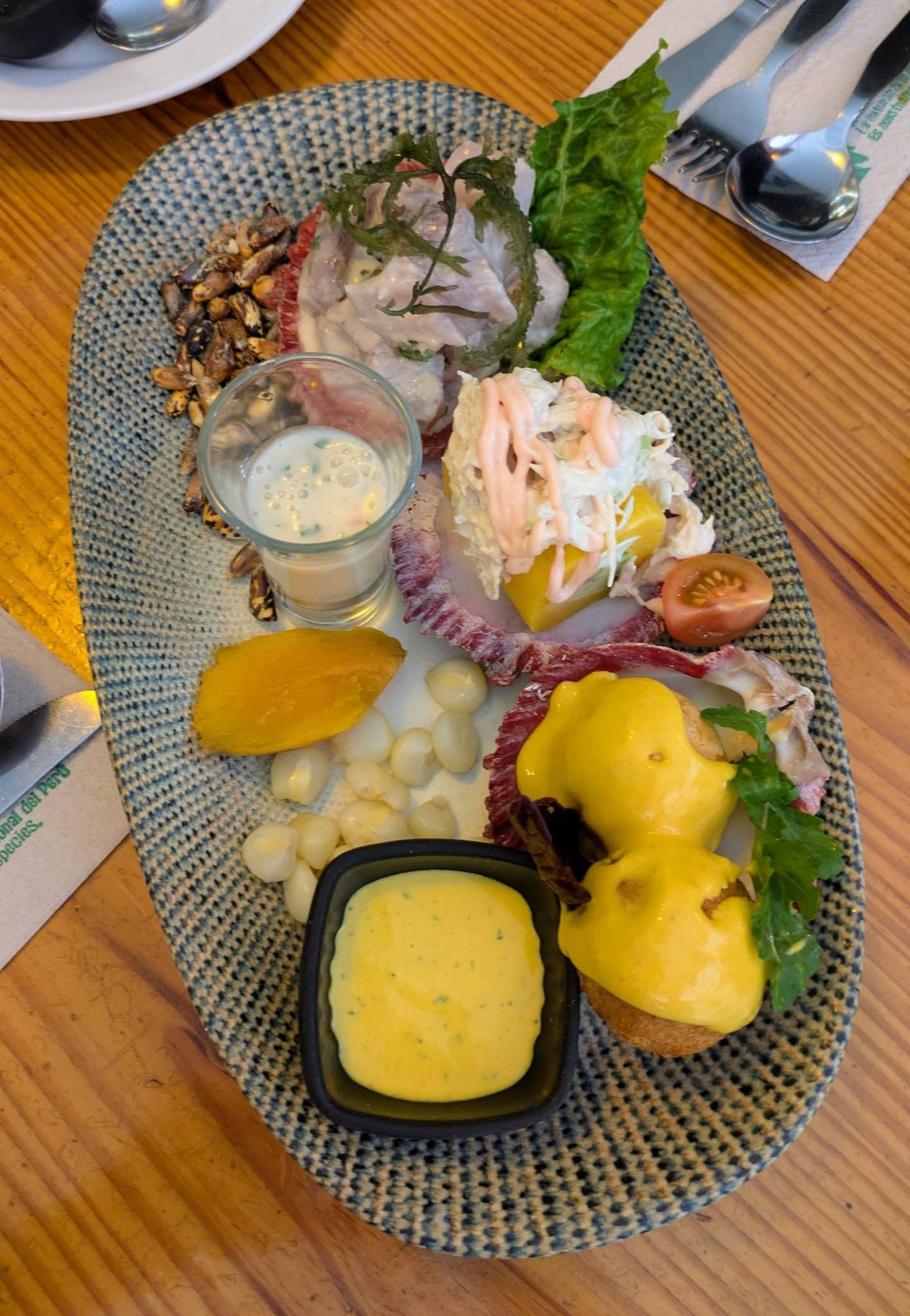
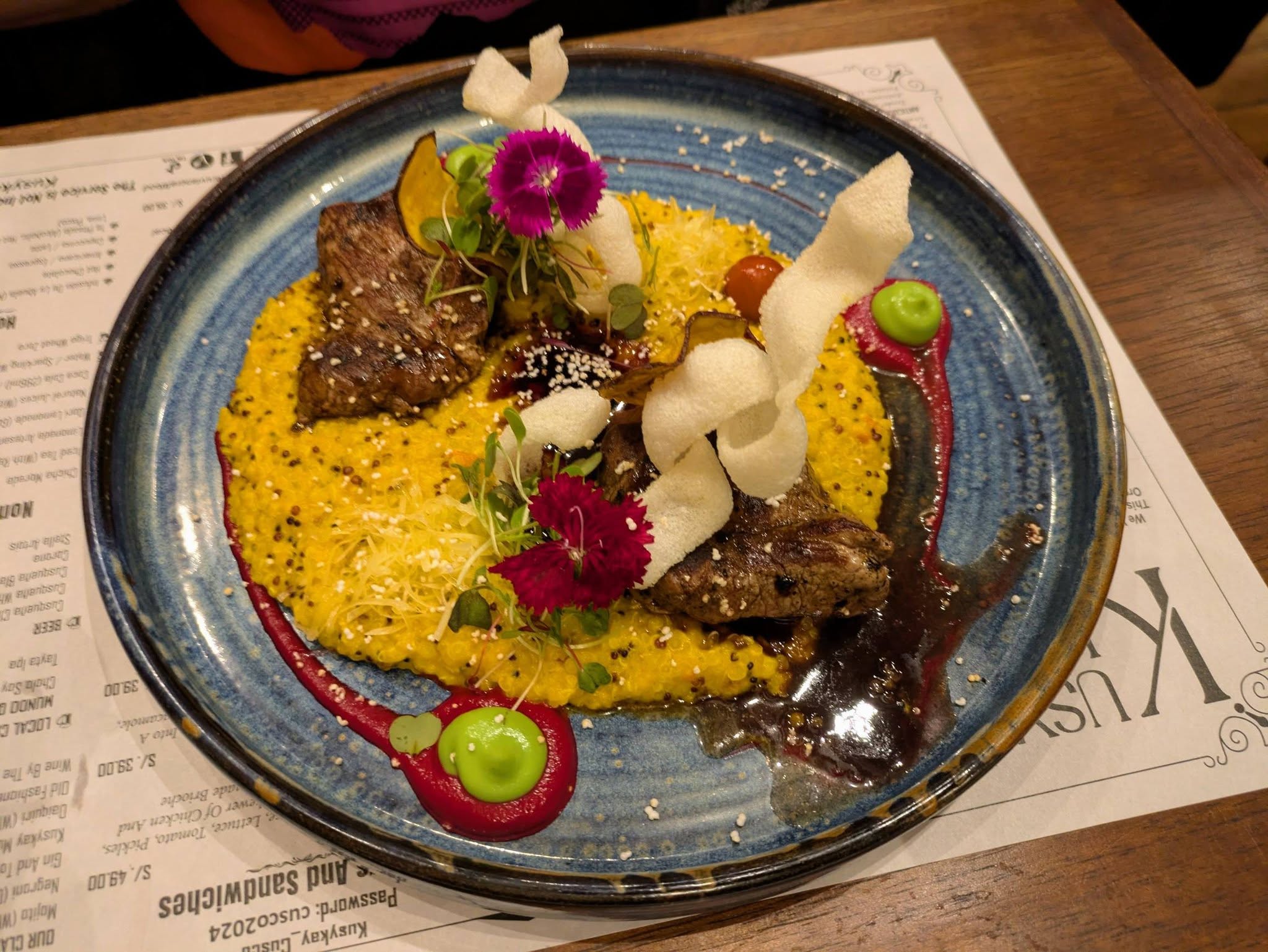
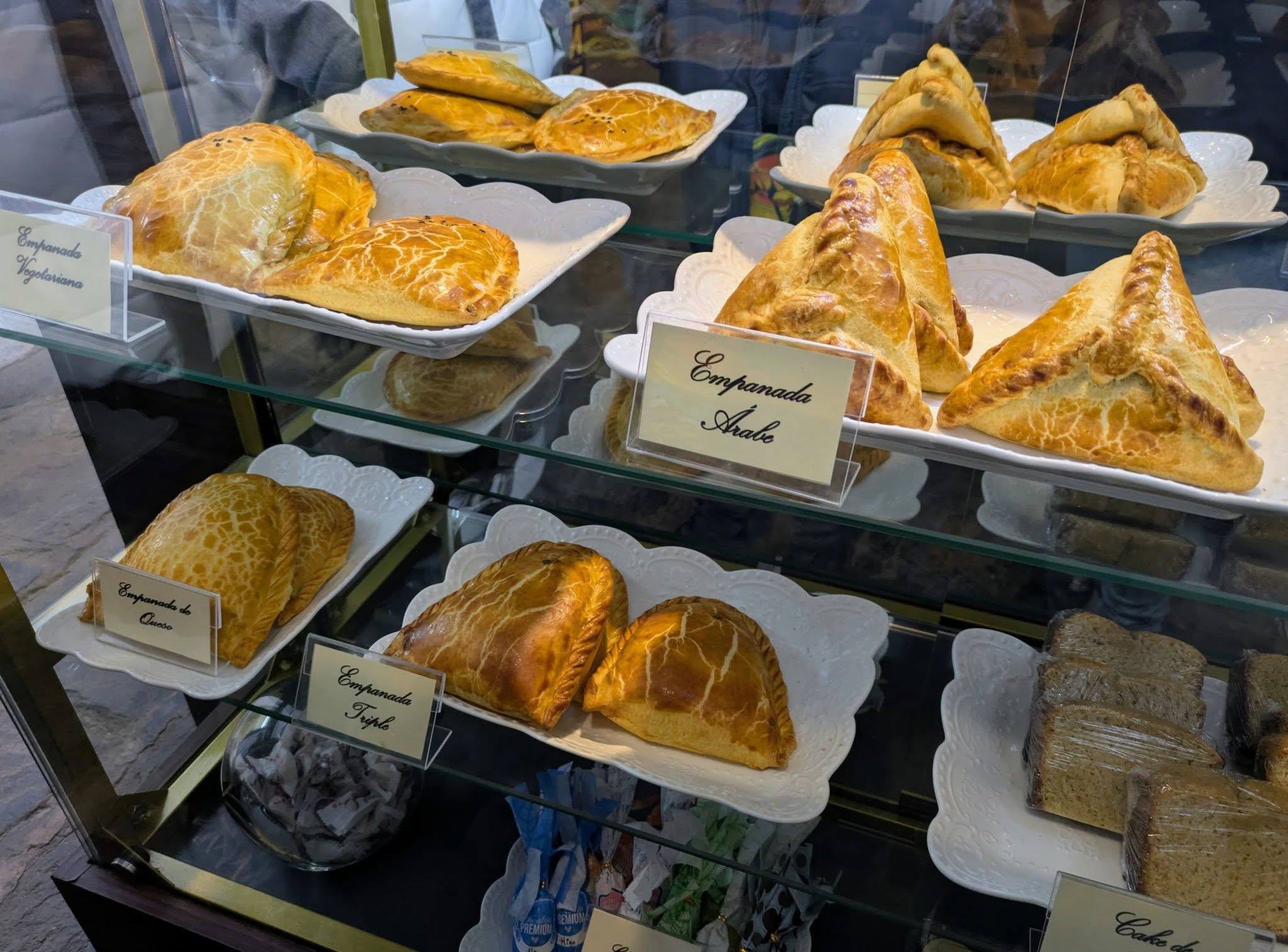
One of our favorite things to do in Cusic was to just wander the different neighborhoods. We stayed in San Blas, and it was absolutely beautiful, but there are many points of interest and fun things to see everywhere you turn. We also enjoyed grabbing a coca tea infusion or a coffee at one of the many cafés in the city. The Chocolate Museum was free and definitely worth a pop-in, plus right next door is Cervecería del Valle Sagrado, which had our favorite beers of the trip. Also, I mentioned the food in general was excellent, but our favorite restaurant of the trip was LOCAL where we had their empanadas, grilled fish, ceviche, and lomo saltado (all delicious)!
Machu Picchu
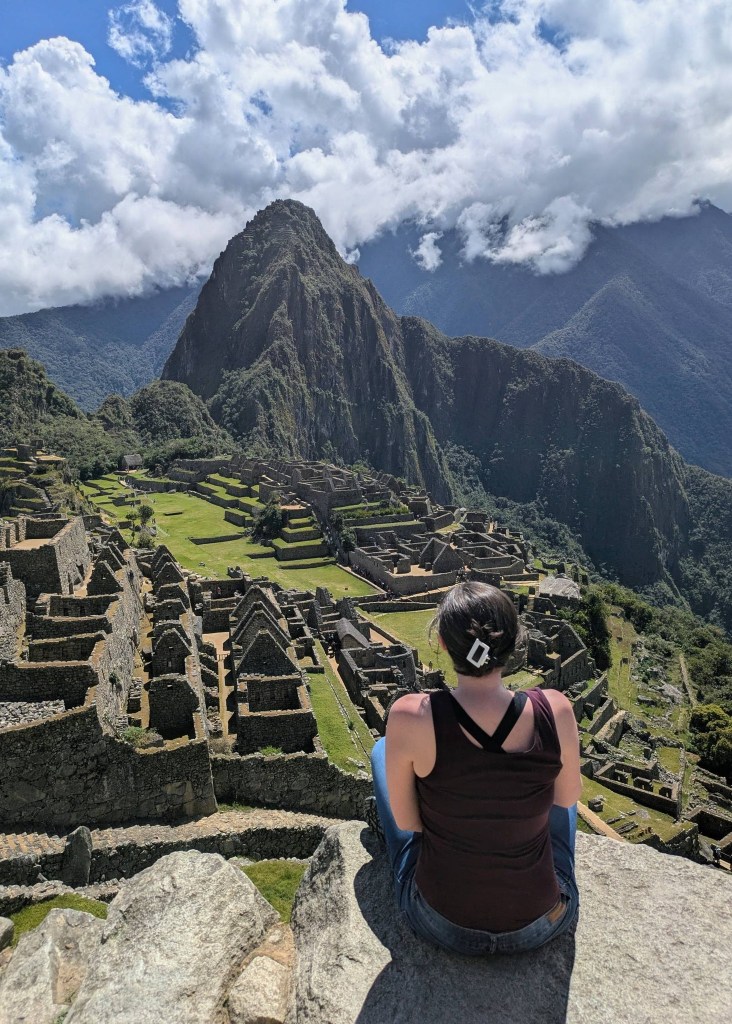
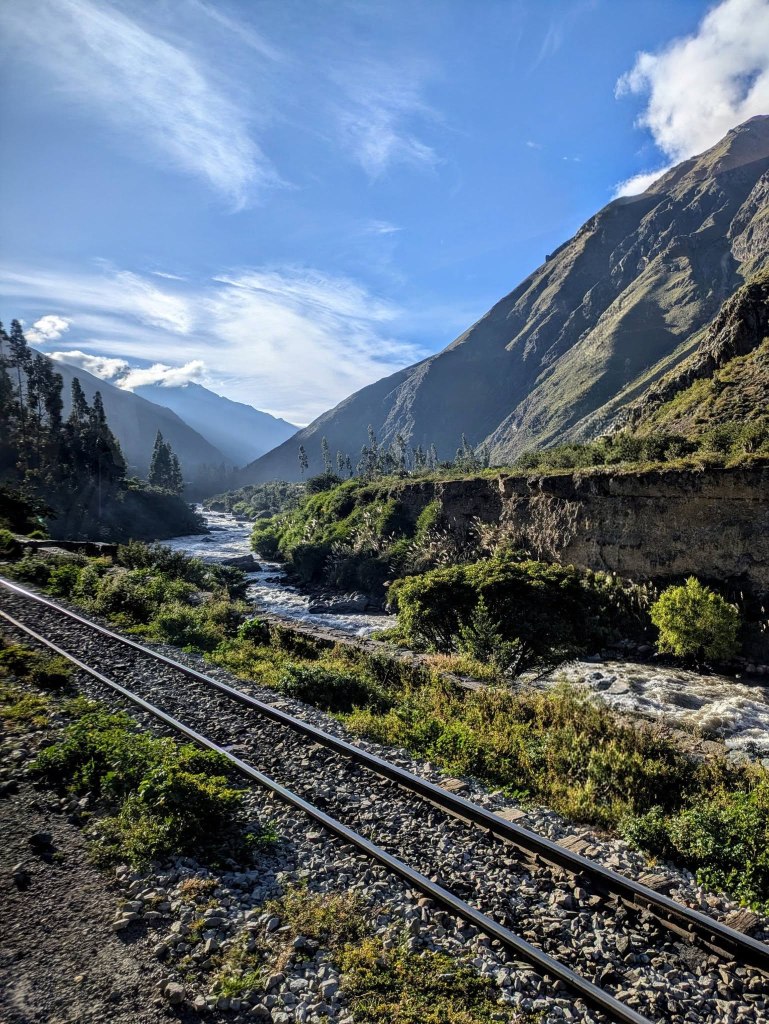
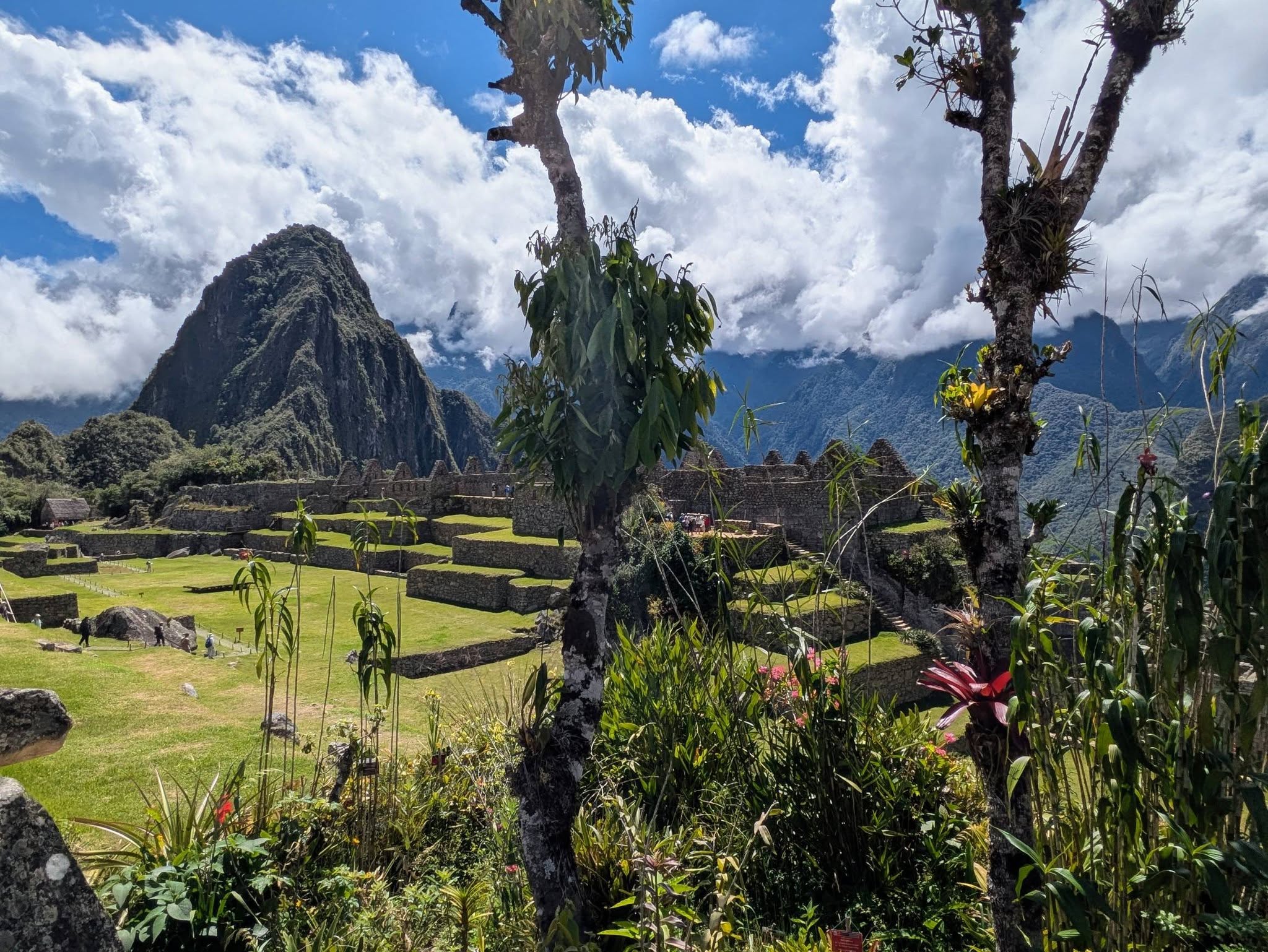
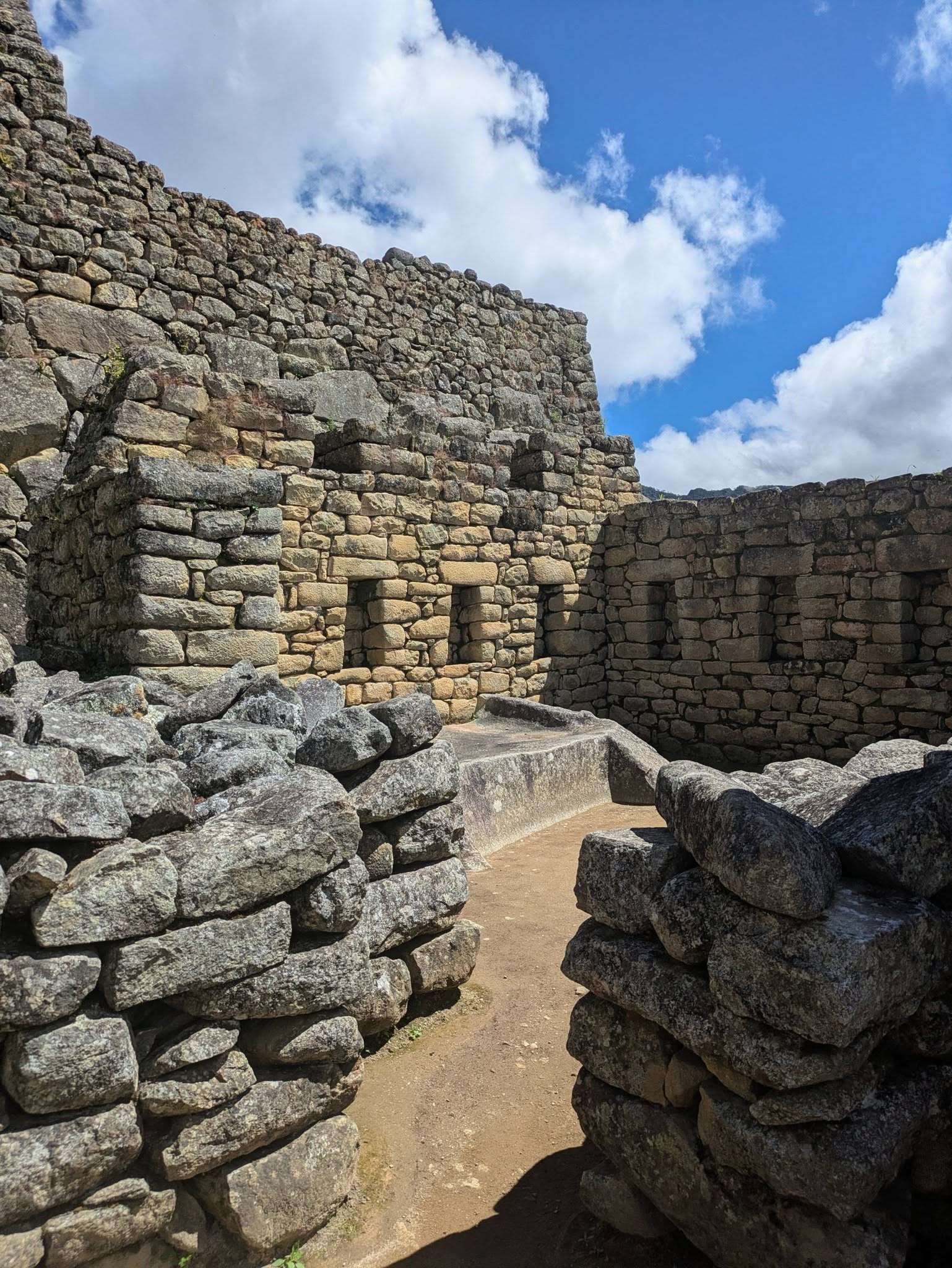
And now for the main event! Of course, one of the main reasons we chose Peru was to visit Machu Picchu, but I’ll be honest, you have to really want it! Since we decided on a day trip from Cusco, we started our morning at 3am by walking to the IncaRail office where we got on shuttle bus (i.e. van) that drove us the 2 hours out to Ollantaytambo. From there, we got on the train that took us another 2 hours through the Sacred Valley to Aguas Calientes, the town at the base of Machu Picchu. Aguas Calientes was another surprise for us – it’s such a cute town with quite a few restaurants/shops and a local flavor of its own. If I were planning this trip again, I think I would have made it an overnight trip to Machu Picchu, staying at least 1 night in Aguas Calientes.
Once at the base of the mountain, we opted for the bus ride to the top. You can hike up, and it apparently only takes an hour or two, but I’m so glad we chose the bus! The buses kick up a lot of dust that the people walking had to battle along the way, not mention the bugs, the sun, and lots and lots of stairs. Once in the park, the “circuits” or paths that you choose from when buying tickets, ended up looking quite similar and even crisscrossed at points, so don’t let that decision haunt you for too long. There are also some additional hikes you can do that take you out of the park, but I felt we got plenty of incredible views and hiking opportunities regardless.
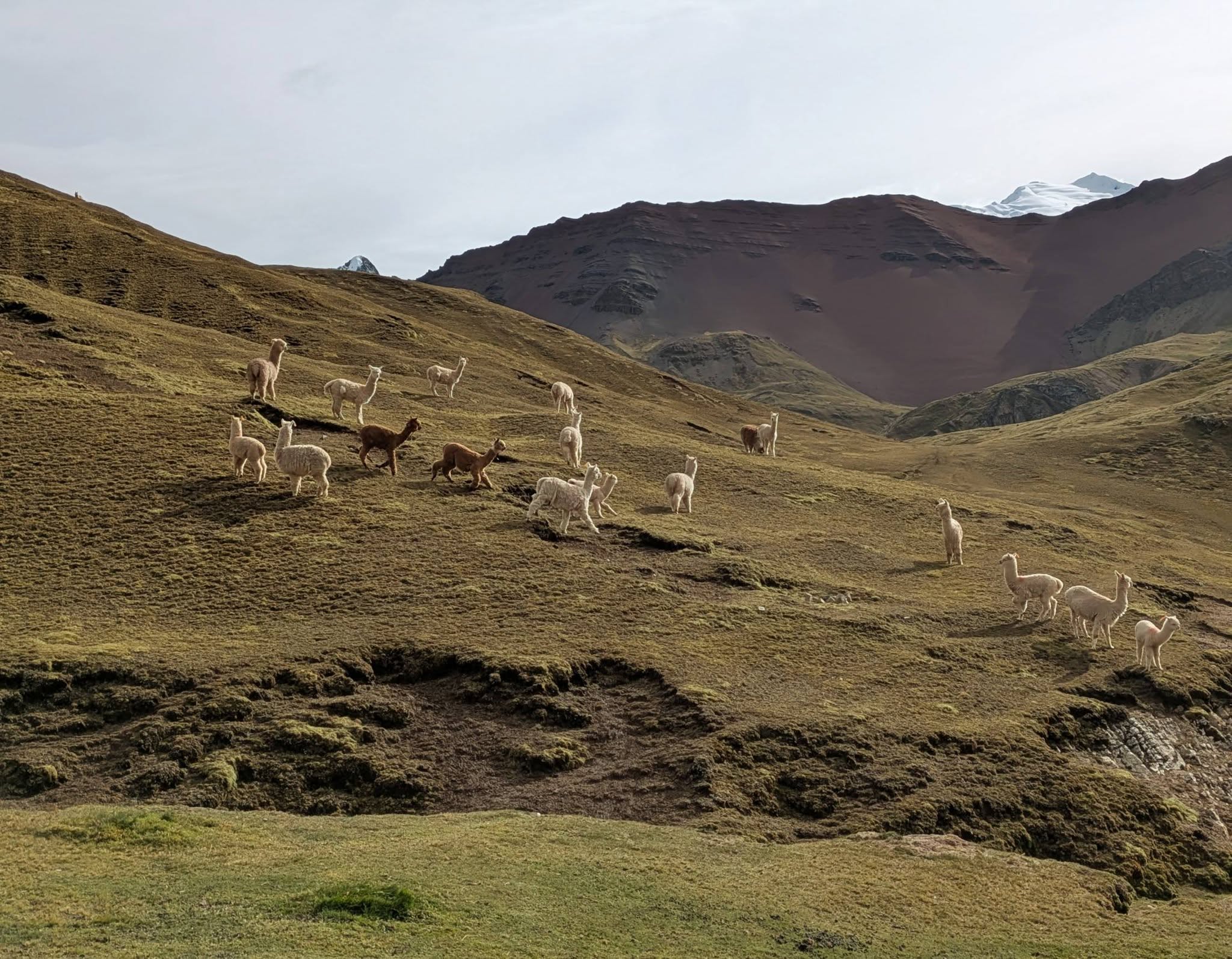
However, I do wish we had taken them up on hiring a guide to accompany us up from Aguas Calientes because unlike any other tourist attraction I’ve ever been to, there were no information signs anywhere on the mountain. We followed our roped path and wondered aloud about everything. Whose llamas are these? When did they begin restoration? How many people lived here? Basically, we had a lot of Googling to do, so if you want real-time commentary, definitely get a guide. The other thing I would make sure to do next time is to book any and all train transport during daylight hours – the train ride in was incredibly beautiful, and it was a shame that we rode back in the dark. I absolutely wanted to see it all again in reverse!
Vinicunca
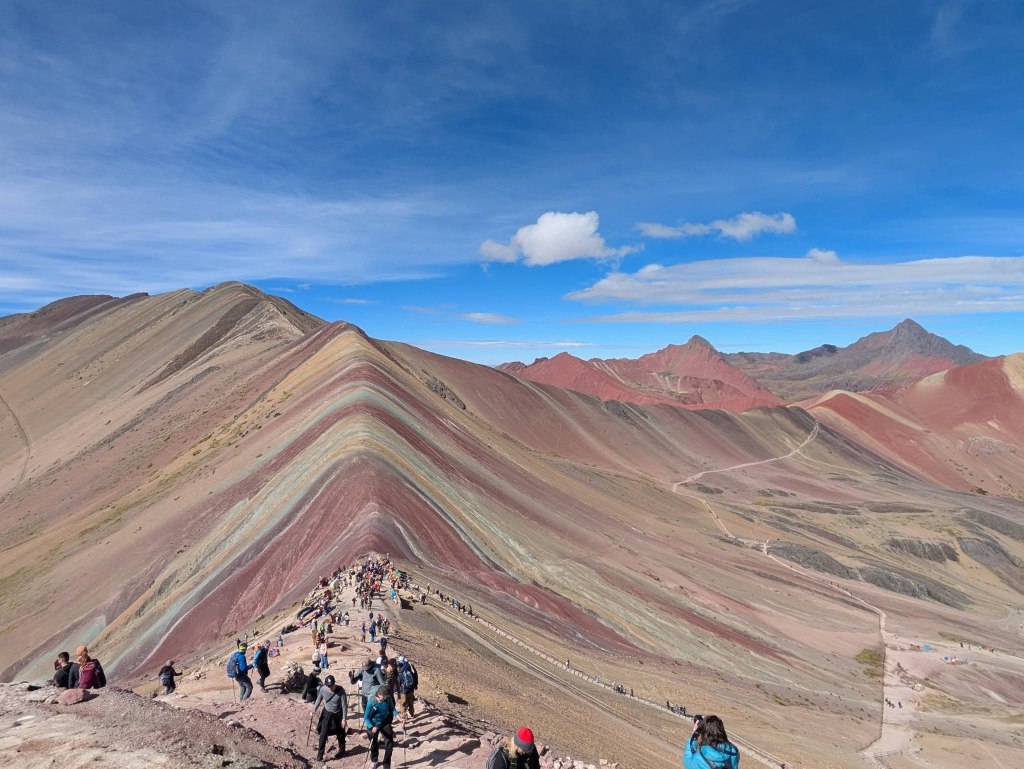
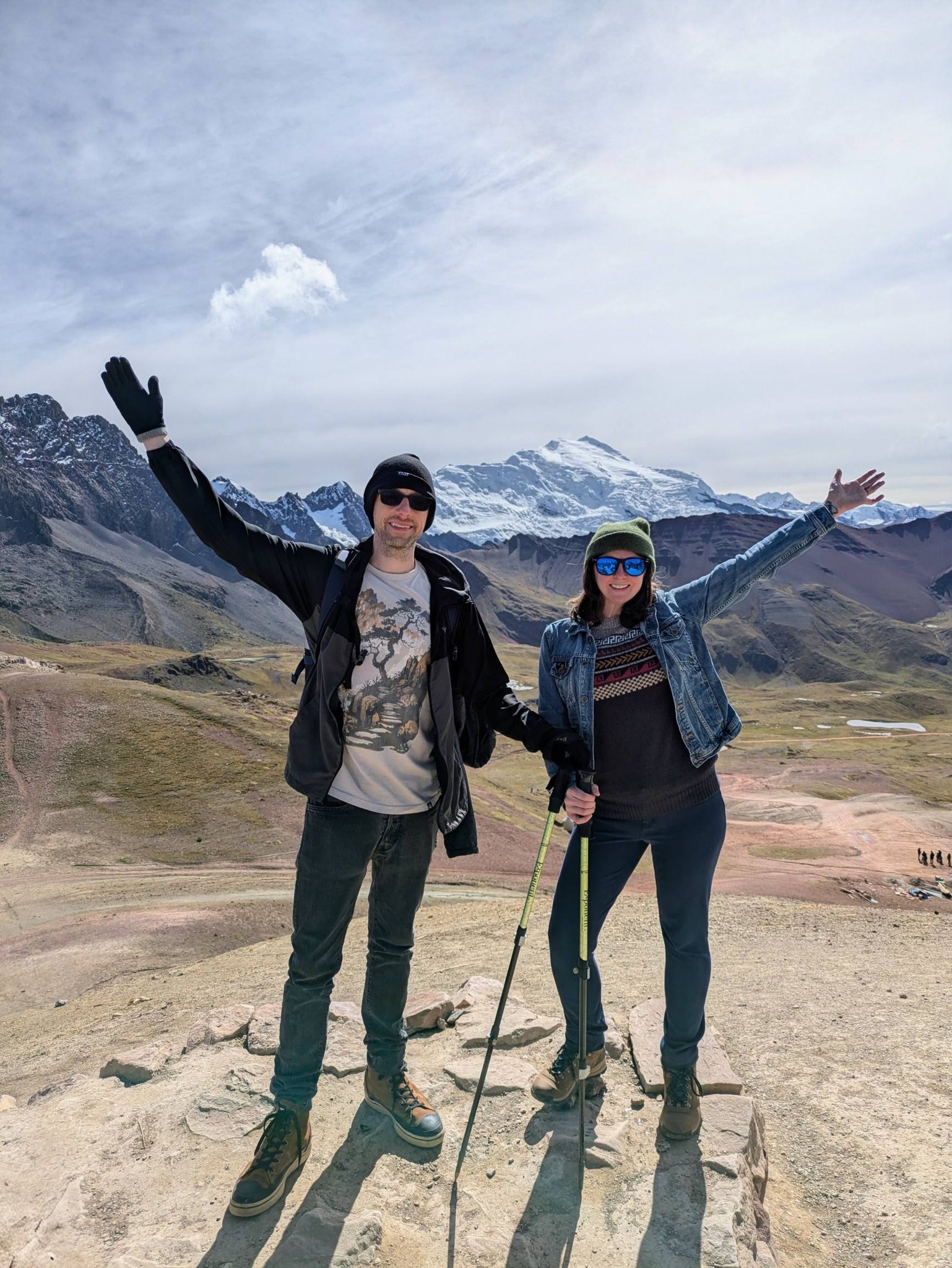
Our second day trip was down to Vinicunca, also known as Rainbow Mountain. This particular Airbnb Experience also required a very early start as we made our way to a pick-up location in the city, this time to be shuttled 2 hours in the opposite direction of Machu Picchu to Cusipata. There we had a buffet breakfast and guzzled down some more coca tea in preparation for our hike. After another very windy 2 hours in the van, we were at the base of Vinicuna. Here we could opt to either hike on foot, ride a horse, or wild out with some dirt bikes. We went the traditional route even though it was the slowest option, but again, I’m so glad we did. We took our time looking in every direction at the stunning scenery around us, and eventually we summited the 5,0036m (16,500ft) mountain.
We’ve done a few hikes at elevation now, and we’ve always been fine. We take any recommended medication, local remedies, and general acclimation advice, and although we often experience minor symptoms like a headache and breathlessness, we’ve never gotten sick. I will say though that in both Ecuador and Peru, we saw several people being helped down with stretchers, and at Vinicunca, someone left in an ambulance, so I would recommend anyone traveling or hiking in these conditions to do your research and take it easy! That said, Vinicuna has 1,600m (5,000ft) on Machu Picchu, and we absolutely noticed that difference – I’m not sure we felt anything elevation related at Machu Picchu, whereas Vinicunca was tough.
After our gorgeous hike up and down, we went back to Cusipata for another buffet and then napped the rest of the way back to Cusco. This excursion started at 4am and ended at 5pm. Our Machu Picchu day started at 3am and ended at midnight (honestly a day trip and a half). And all of this was after our 24+ hour-long journey just to get to Cusco from Québec City, which is why I’ll say it again, you really have to want it! Of course, I hope it also goes without saying that it was absolutely worth every second of uncomfortable travel, and I’d do it all again in a heartbeat! #YOLO
Lima
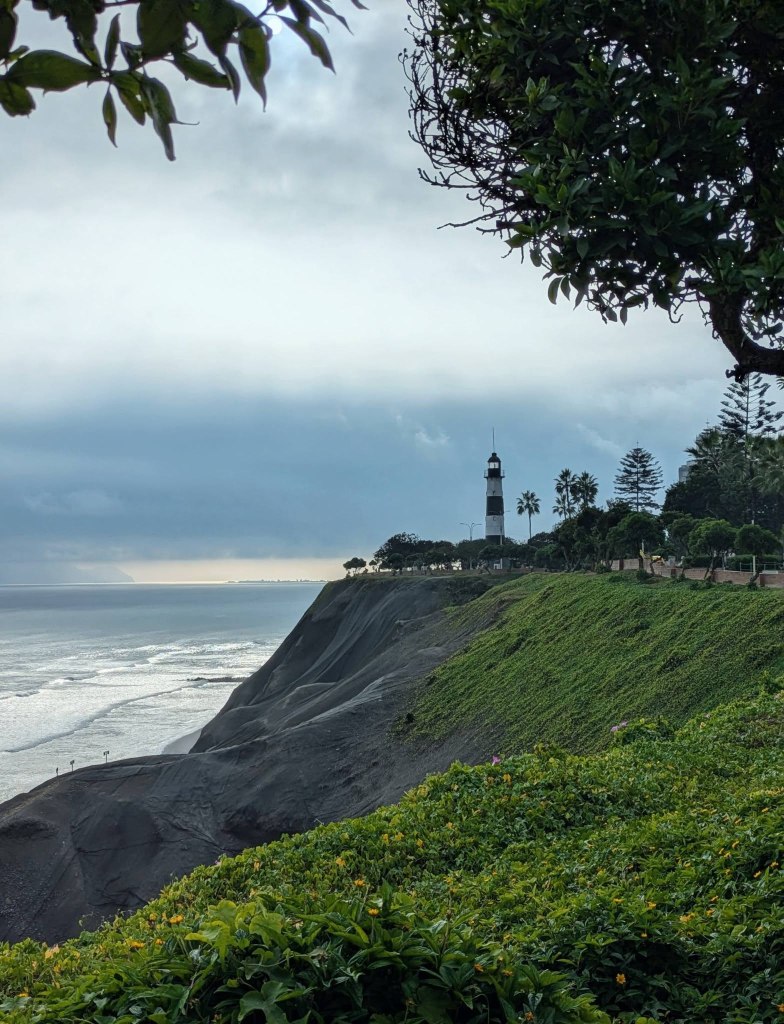
After Cusco, we went onto to Lima for a couple of days to recover and reset before the long journey home. Lima is the capital of Peru, and it’s located in a desert on the coast – very different from Cusco or anywhere in the highlands. Lima is huge, and the first decision you have to make is which neighborhood do you want to stay in: Cercado (the historic center), Miraflores (the modern tourist hub), or Barranco (the artsy, bohemian district). We chose Miraflores and were happy to be in the middle, well-positioned to explore all three neighborhoods. We did a walking tour of Cercado, and it was fantastic – my only regret was that we did it on the last day of our stay rather than the first!
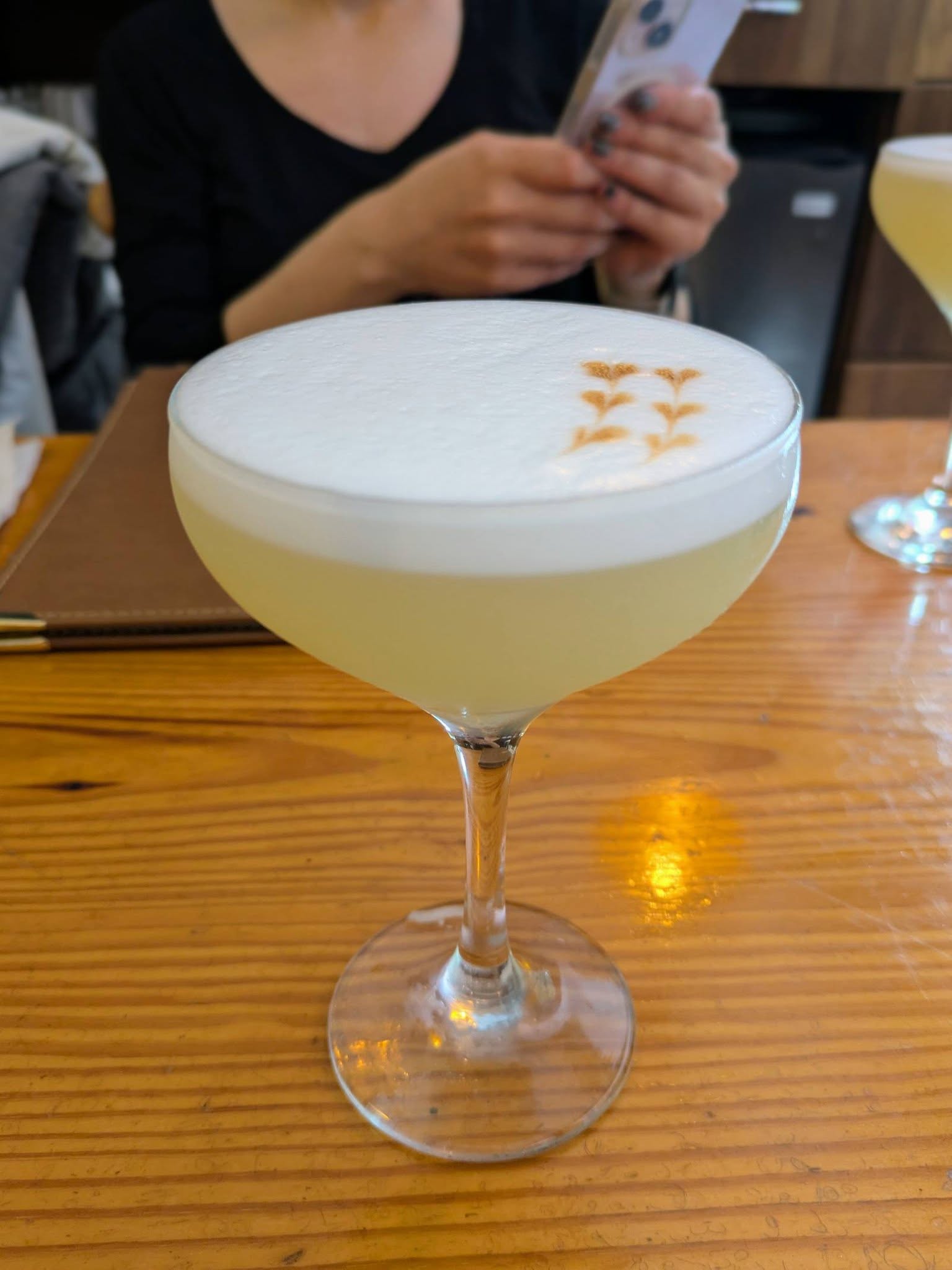
Other than the walking tour, we really enjoyed strolling along the malecón (boardwalk) and watching all the paragliders. If we’re ever back in Lima, that’s the first activity I’ll be planning! We also loved sipping our Pisco sours at the Gran Bolivar Hotel, where the drink was allegedly created, and walking through Parque Kennedy and seeing all the cats (and their embassy-sponsored shelters) was also really fun. Despite being the sixth South American country we’ve visited, Peru surprised us at just about every corner, which is, of course, just how I like it!
The Food
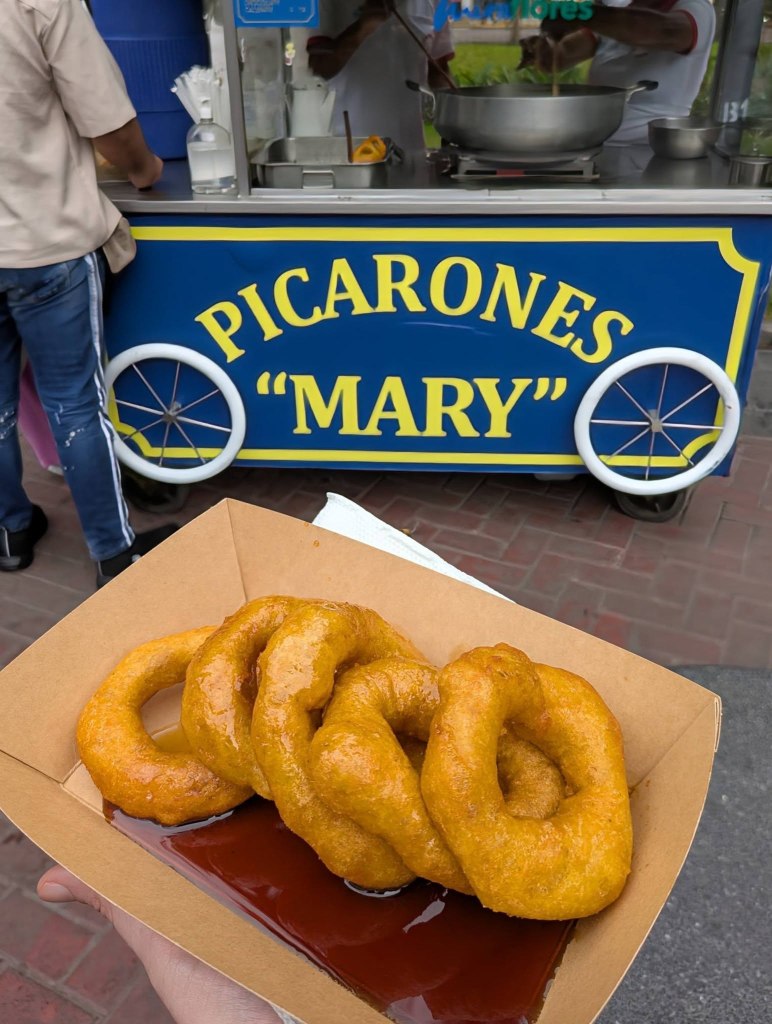
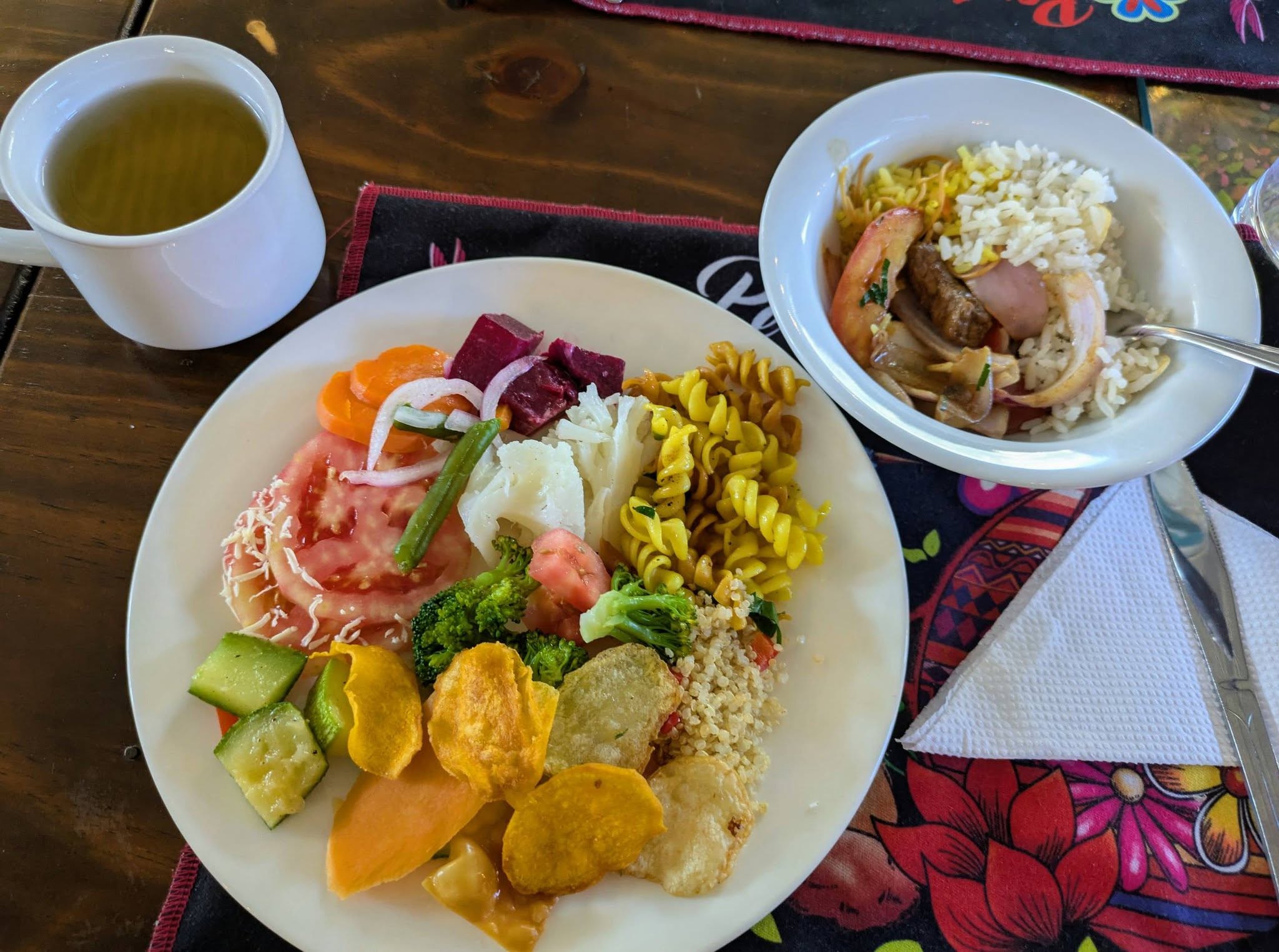
And last but not least, as has become a sort of custom on these posts, I want to end with a list of all the Peruvian dishes we were able to try while there. We always make ourselves a little checklist, and here’s what we had for Peru:
Ají de gallina (chicken stew)
Alpaca meat
Butifarra sandwich (ham, pickled veggies, and chilies)
Learning another language is truly a challenge like no other! It’s all-encompassing and never-ending, and if you choose to learn a non-standard variety, like, say, Quebec French for example, it can sometimes feel like you’re learning two languages at once. For example, in class, I was taught words like “chaussure” (shoe) and “portable” (cellphone), but in the streets of Québec City, I hear “soulier” (shoe) and “cellulaire” (cellphone). Of course, I’m all for linguistic choice, but as a proud Quebec resident, I feel the need to learn, use, and share the dialect of my new home, so with that in mind, I give you a few of my favorite Quebecisms:
Notre char:)
Char
Standard French: voiture
English translation: car
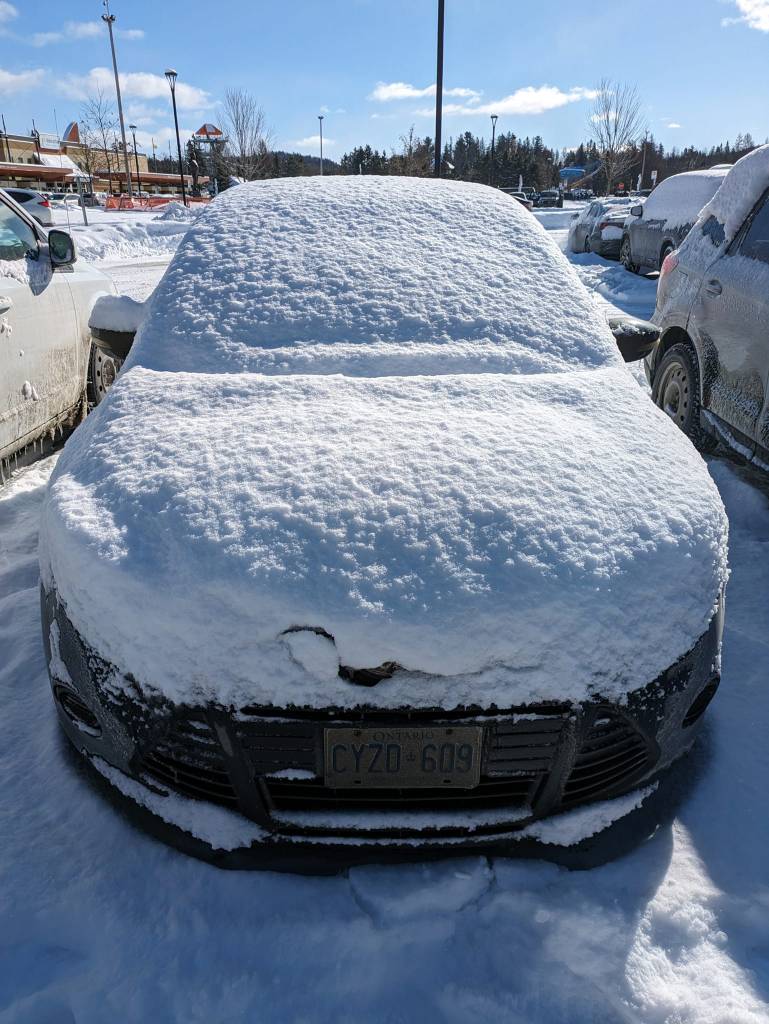
First up is the use of “char” for “car”, and I know what you’re thinking, this has to be English influence at work, but no! “Char” was actually used in Old French to refer to chariots, horse-drawn carriages, two-wheeled carts, and the like. In Quebec, “char” happened to stick around, whereas in France people started using “voiture” for wheeled vehicles and “char” specifically for heavy-duty vehicles like tanks. I’ll be honest though, even our little Ford Focus feels a bit like a tank when busting through the snow banks of Québec City! Maybe it’s not such a big difference after all.
Blonde/chum
Standard French: copine/copain
English translation: girlfriend/boyfriend
Another Quebec classic is the use of “blonde” (regardless of actual hair color) and/or “chum” to refer to your significant other. I say “significant other” because most of the time they’re used for girlfriend/boyfriend, but there’s actually some flexibility there; your fiancé or even your husband could be “ton chum”. Of course, “chum” can also refer to just a friend (of any gender), which isn’t confusing at all, n’est-ce pas?
Très frette…
Il fait frette
Standard French: Il fait très froid
English translation: It’s really cold
Sometimes, necessity is the mother of invention, and in French Canada, the harsh climate has led to many inventions, including some of the linguistic sort. Here, we often experience stretches of -20° temperatures, where “cold” doesn’t quite cut it. So, when it’s Quebec cold aka really cold, we can say “il fait frette”, which means you had better be wearing multiple layers!
Sloche
Standard French: neige fondante
English translation: slush
In addition to the temperature differences between Canada and other Francophone countries, we tend to get a lot more snow over here, and like other snow-dwelling peoples, we need to be able to differentiate between the many different types of snow. Enter the word “sloche”, which refers to the nasty grey sludge that appears after the snow and ice start to melt. Known as “slush” in English, this one probably did come to Quebec via English influence, but the English actually got it from the Scandinavians, so it seems sloche is just a fact of life for all northerners!
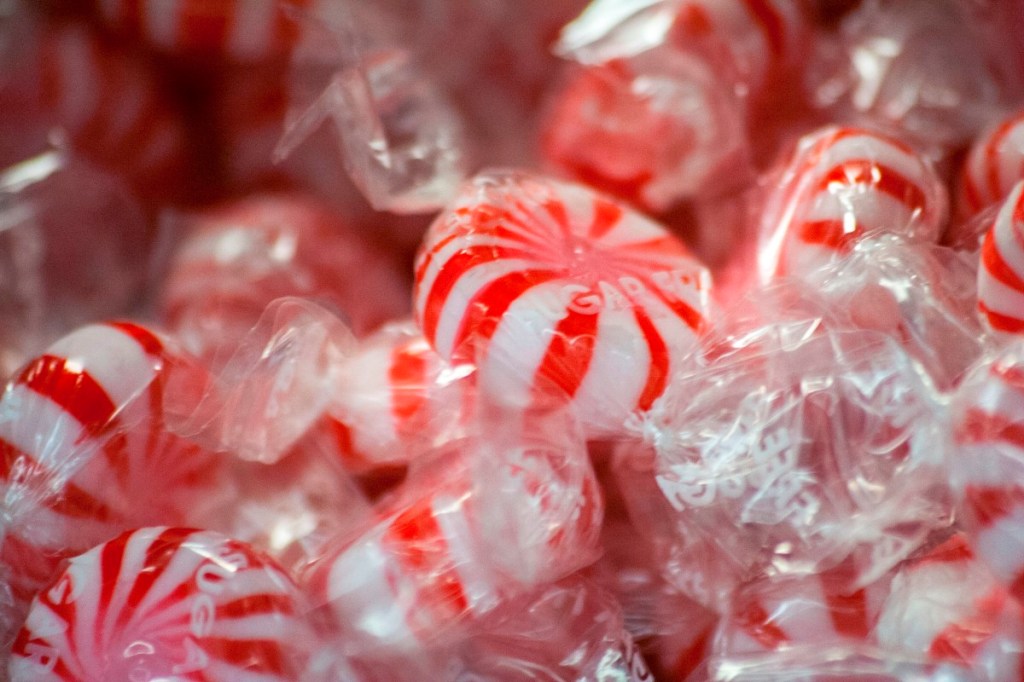
Paparmane
Standard French: pastille de menthe
English translation: peppermint
Speaking of English influence, I think one of my favorite examples of phonetic borrowing might just be “paparmane”, which is how Quebecers nativized the English word “peppermint”. I love this for two reasons. For one, I’m always ecstatic when there’s a one-word alternative available in French (somewhat of a rarity!), but I also love it because it highlights just how different the respective orthographies are. If you could only see the way I’ve spelled some Quebec place names prior to seeing them written down… Oof! “Paparmane” is way closer than I ever get!
Jaser
Standard French: bavarder
English translation: to chat
“Jaser” is another Old French word that simply went out of favor in Europe, but is still hanging on in Canada. Here it just means “to chat”, but in France, “jaser” is associated with gossiping and has more of a negative connotation. Interestingly, the word used more commonly in France now is “bavarder”, which comes from a word that meant “saliva” or “drool”, which seems a bit negative in its own right, but what can I say? Language is compliquée.
Aweille
Standard French: allez
English translation: let’s go
“Aweille”, which I’ve also seen written as “enweille”, “awèye”, and even “enwoye” is a very useful Quebec creation for whenever I find myself trying to get my dog to hurry up and go pee already! It has such the perfect combination of sounds for whining, which is my preferred usage, but it can also be used in a more encouraging way like “Come on! Let’s go!” Aweille! There are more Quebec expressions to learn!
Tiguidou
Standard French: parfait
English translation: okey dokey
Another super positive Québécois word is Tiguidou – positive and extremely fun to say, I might add! The origins of “tiguidou” are somewhat contested, but many believe it’s a borrowing from the British/Scottish expression “tickety-boo”, which honestly doesn’t help much for the Anglophones on this side of the Atlantic because what the heck is “tickety-boo”? Anyway, in Quebec, “tiguidou” is just a fun way to say “A-OK”. Et c’est tiguidou!
Tabarnak
Standard French: putain
English translation: holy shit
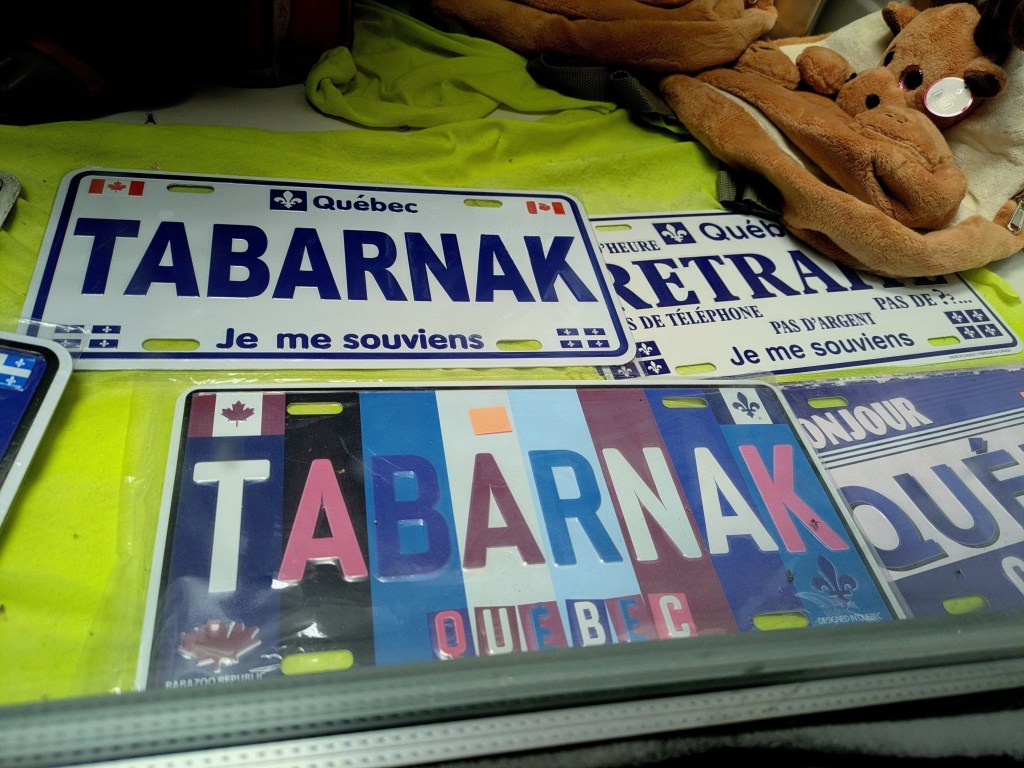
Of course, I can’t have a list of Quebecisms and not include the most famous of them all! A little warning though, if you’re not a fan of profanity, better skip to the next word because it’s impossible to talk about “Tabarnak” without swearing in multiple languages… To those still here, Quebec has a whole set of unique swear words that all have to do with the church, such as “Tabarnak” (which literally means “tabernacle”). Why is that a swear here? Good question! Unfortunately, this is the kind of thing that needs its own post entirely, so for now, you can just think of “Tabarnak” as a multifaceted, catch-all exclamation, not all that unlike the English “holy shit”!
Attache ta tuque
Attache-la! Attache-la!
Standard French: accroche-toi
English translation: buckle up
Thankfully, I had already bolstered my Canadian vocabulary in Ottawa before relocating to Québec City, otherwise I might have been a little more confused upon first hearing “attache ta tuque”. Tuques are winter hats, so the phrase is literally saying “attach your winter hat”, but it’s used a lot like “buckle up”, as in, we’re in for something crazy here! Hang on your hats!
Tire-toi une bûche
Standard French: installe-toi
English translation: pull up a chair
I love this expression because it just feels so…colonial. It literally means “pull up a log” as in find an unoccupied stump and have a seat. It’s so easy to imagine early settlers, sitting around a fire in a circle made up of nature’s chairs coining words like “tiguidou” and “paparmane”. There’s definitely an ease to modern-day Quebec culture as well, and I think that’s why a phrase like this still exists. Tire-toi une bûche and let’s just jaser the night away!
L’affaire est ketchup
Standard French: c’est nickel
English translation: It’s all good
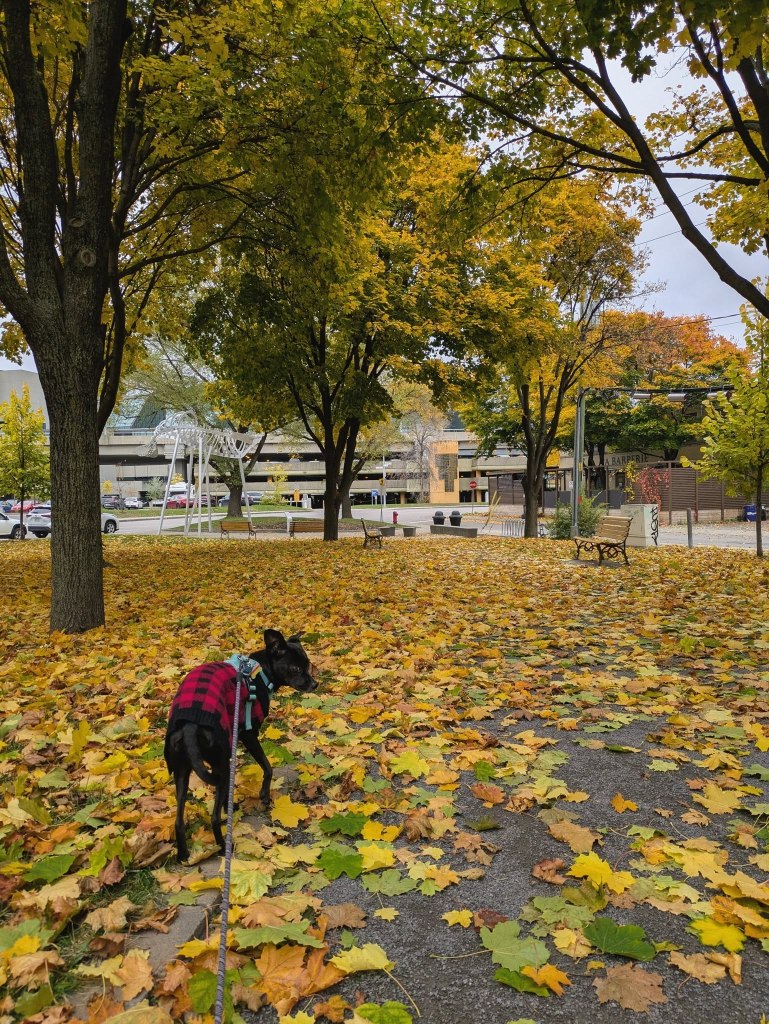
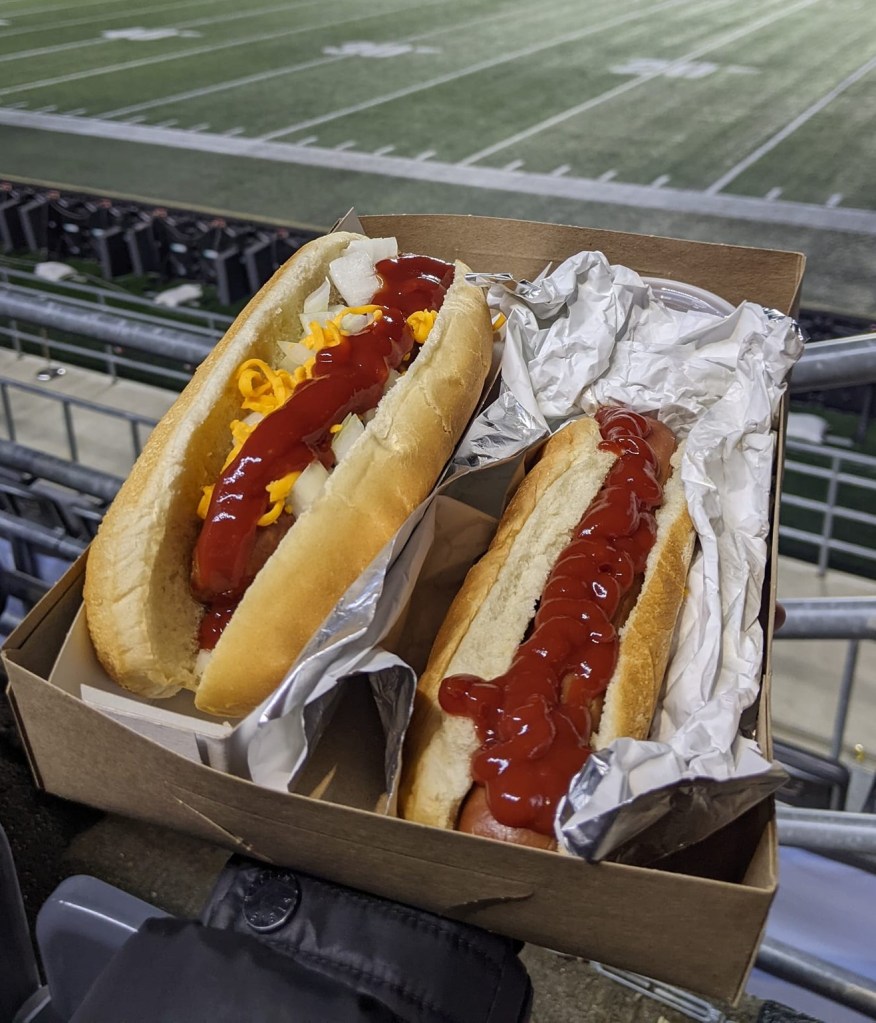
Last but not least, a phrase that I, as a ketchup-lover, just can’t get enough of! “L’affaire est ketchup” literally means something like “the thing is ketchup”, but it’s used as an idiom for “done deal” or “it’s all good”. The idea is that once the final touch of a little ketchup has been added, we’re all set; we’re good to go, which if you’ve ever seen me eat a hotdog, is a sentiment you know I take to heart!
So, there you have it! Just a few of the many colorful words and expressions that I’ve been learning as I strive to become one with La Belle Province! I hope you enjoyed them too! À la prochaine!
Time seems to be flying as we scramble to catch up after our last whirlwind trip! Last month, we had the absolute privilege of spending almost two weeks in beautiful Morocco. This was our first time to Morocco, and actually our first time in Africa, so we were beyond excited and hyper-focused on doing and seeing as much as we could. To that end, we set out on completing a somewhat ambitious loop from Casablanca to Fes to Merzouga (and the desert) to Marrakesh and finally back to Casablanca. Whew, even typing it all out is a bit much! Anyway, here’s a little recap of what we did and what I would recommend to anyone traveling to Morocco for the first time.
Casablanca
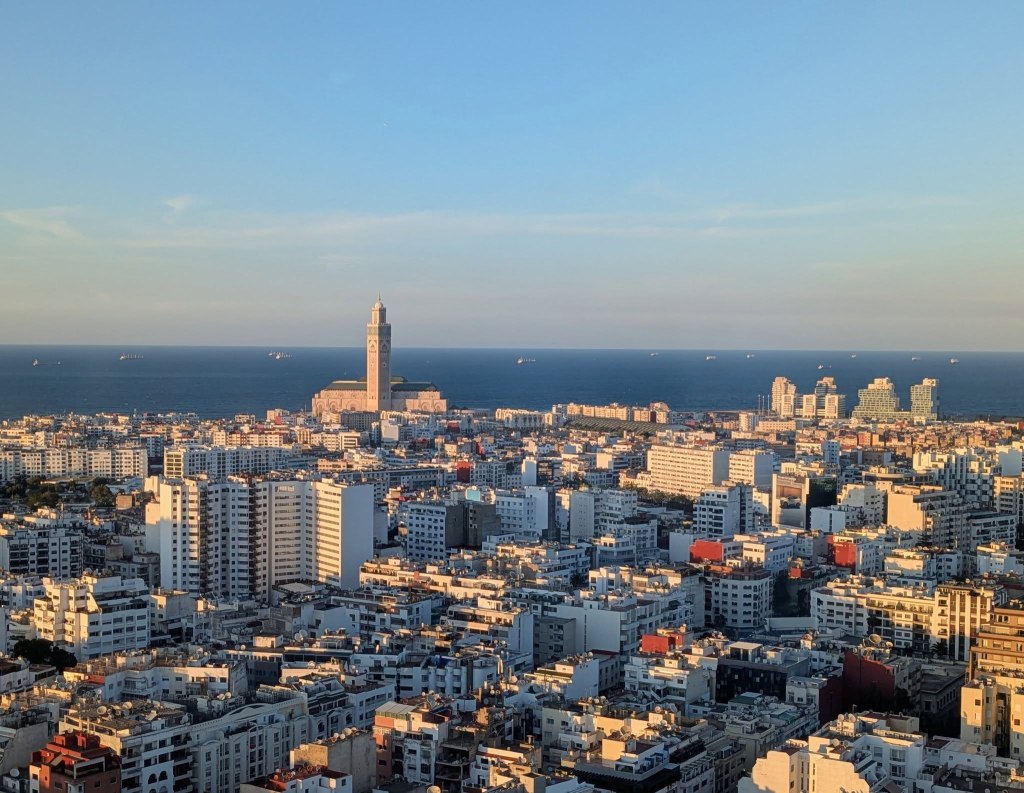
We didn’t choose to start and end in Casablanca for any reason other than that’s where the cheapest flights from Québec happened to be. But, of course, once we knew we were heading to Casablanca, we promptly watched the 1942 classic! Spoiler alert: modern-day Casablanca is absolutely nothing like the movie. Since we only had a couple of days planned here, we focused on hitting the highlights: Hassan II Mosque, Central Market, the port, Arab League Park etc.
I feel like Casablanca is the sort of city that would be great to live in, but not so great for tourists. It’s the biggest city in Morocco, and we totally felt that as we trekked from site to site. If you are touristing in Casablanca, however, I would definitely recommend Sky 28 bar. It’s at the top of the Kenzi Tower Hotel and gives you amazing views of the city and the coastline. We went at sunset, and it was such a great way to see all that city sprawl!
Another Casablanca recommendation I would readily give is the restaurant Le Cuistot Traditionnel. It might have been our favorite of the trip, mostly because of the amazing Moroccan food and beautiful décor, but also in part because of the amazing owner and chef. He actually used to work for the king of Morocco and had such an amazing collection of photos, mementos, and stories from that time – really such a cool guy and place!
Fes
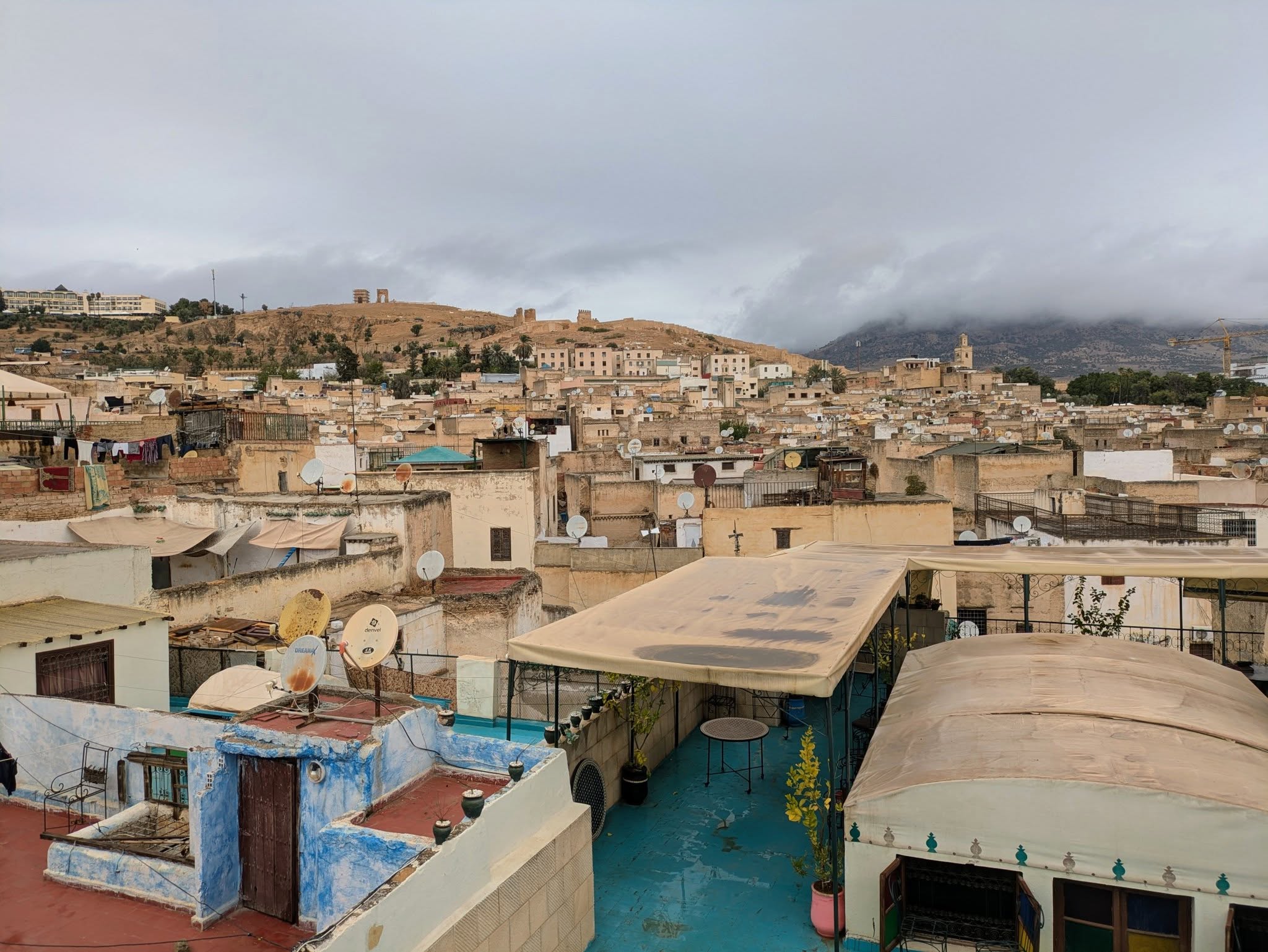
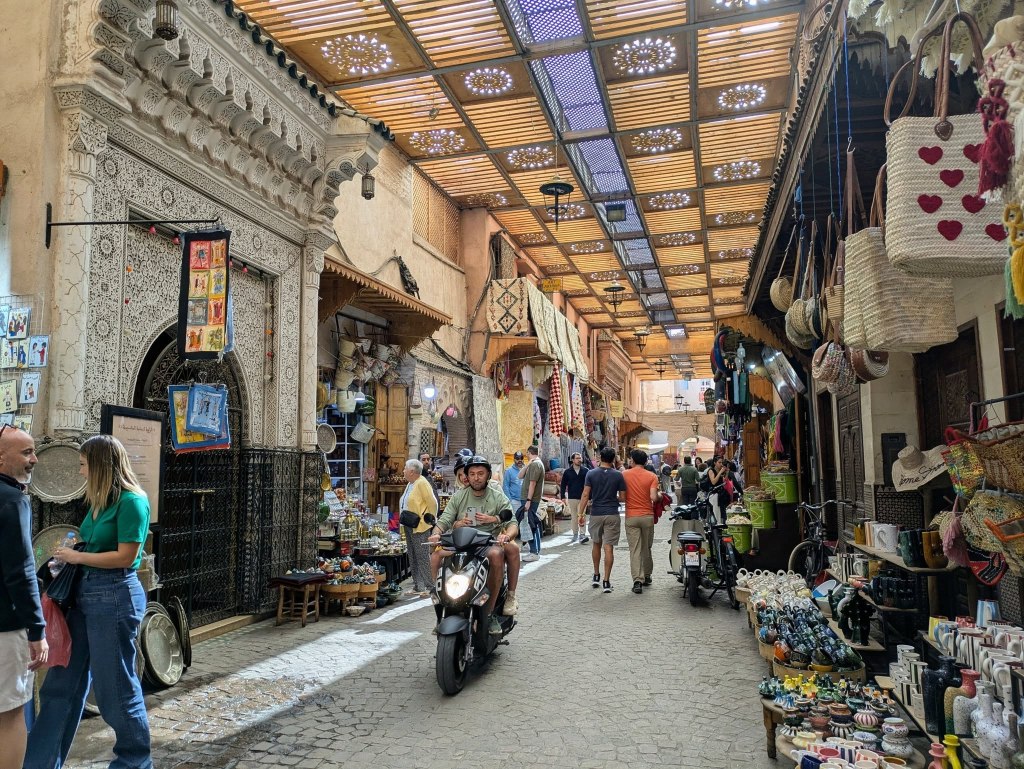
The next stop on our itinerary was Fes (or Fez), which is one of the oldest cities in Morocco. I think this was the city I was most looking forward to before our trip because I was so excited to experience the medina. The medina refers to some 9,000 streets and alleyways that make up what I can only compare to a massive hedge maze, except these walls are stone, several stories high, and about 800 years old. “Bustling” just isn’t a strong enough word to describe the medina, which is home to approximately 100,000 people, most of whom must be merchants of some sort given the insane number of markets, shops, and stalls!
Walking around the medina was chaotic in the absolute best way. There are souvenirs, snacks, businesses, and historic sites all crammed into the narrowest of spaces, not to mention all the people shopping, taking photos, transporting goods, etc. Unfortunately, Google Maps is almost no help in navigating since the vast majority of the streets in the medina are too small to be on the map. For that reason and so many others, walking around Fes felt a lot like traveling back in time. Of course, eventually you’d spot some stainless-steel water bottles or personalized power banks and instantly be back in the 2020s.
In my opinion, the absolute best thing to do in Fes is to wander. Just walk around, get lost, find your way back again by recognizing some sign or stall, and ultimately soak up the chaos. I also think staying in a dar (a room in a local house) or a riad (an inn) is essential in Fes. Hearing families eating dinner, buying your water at a little window shop, and feeling the warmth of Moroccan hospitality was such a great part of our stay in one of the most unique places we’ve ever been. Oh, and remember to prepare yourself mentally for bargaining at the markets, you absolutely have to have your head in the game for that!
To/From the Desert
The next part of our trip was a bit out of the ordinary for us. When we were planning everything, we knew we wanted to get out to the dunes, but we weren’t sure the best way to do that. Renting a car our first time on the continent seemed challenging, but doing a multi-day tour had us wary as well. In the end, we decided on a tour that doubled as transportation between two of the cities we wanted to see, and included most meals, tickets to the various sites, and lodging for the two nights. Given how cheap it was and the huge number of different companies and individuals offering something oddly similar, we were a little worried it was all a big scam…
But nope, it was just as amazing as all the reviews said it would be! Of course, I was still very nervous when we hadn’t heard from them by the night before our 7am departure, but once we were put into contact with our driver/guide, Mahmoud, I was completely at ease. He was so skilled at giving us the right amount of time in each place, sharing enough information to keep us interested and entertained, and juggling all the logistical tasks it required to transport 10 foreigners across the country and into the desert for three days and two nights.
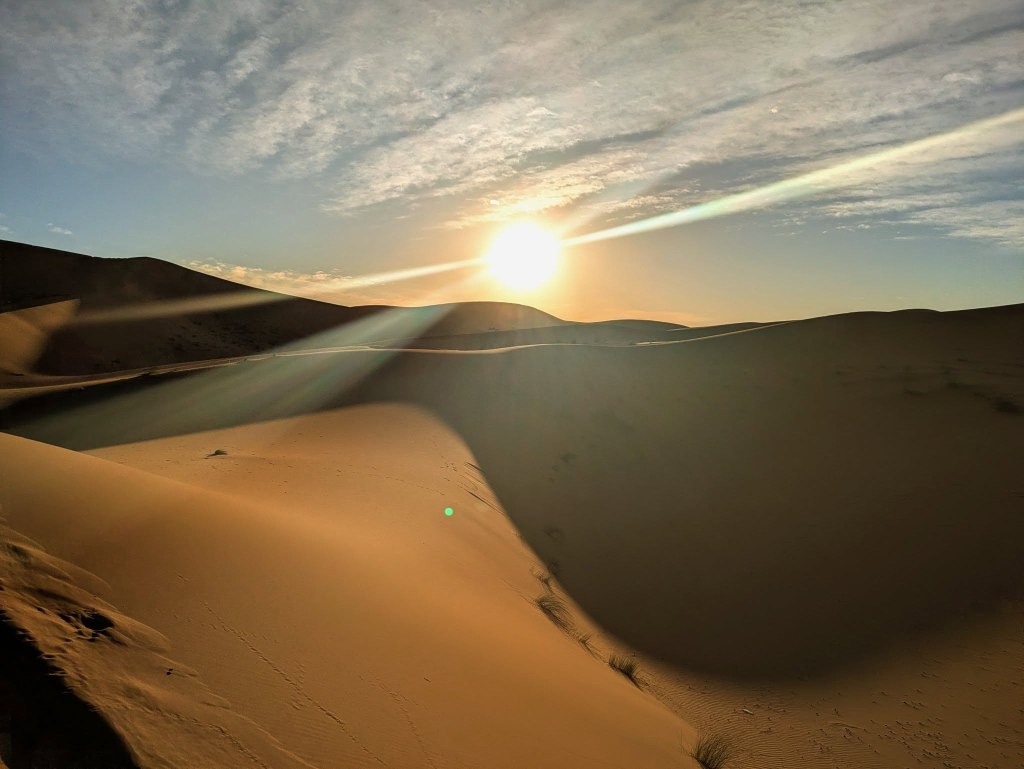
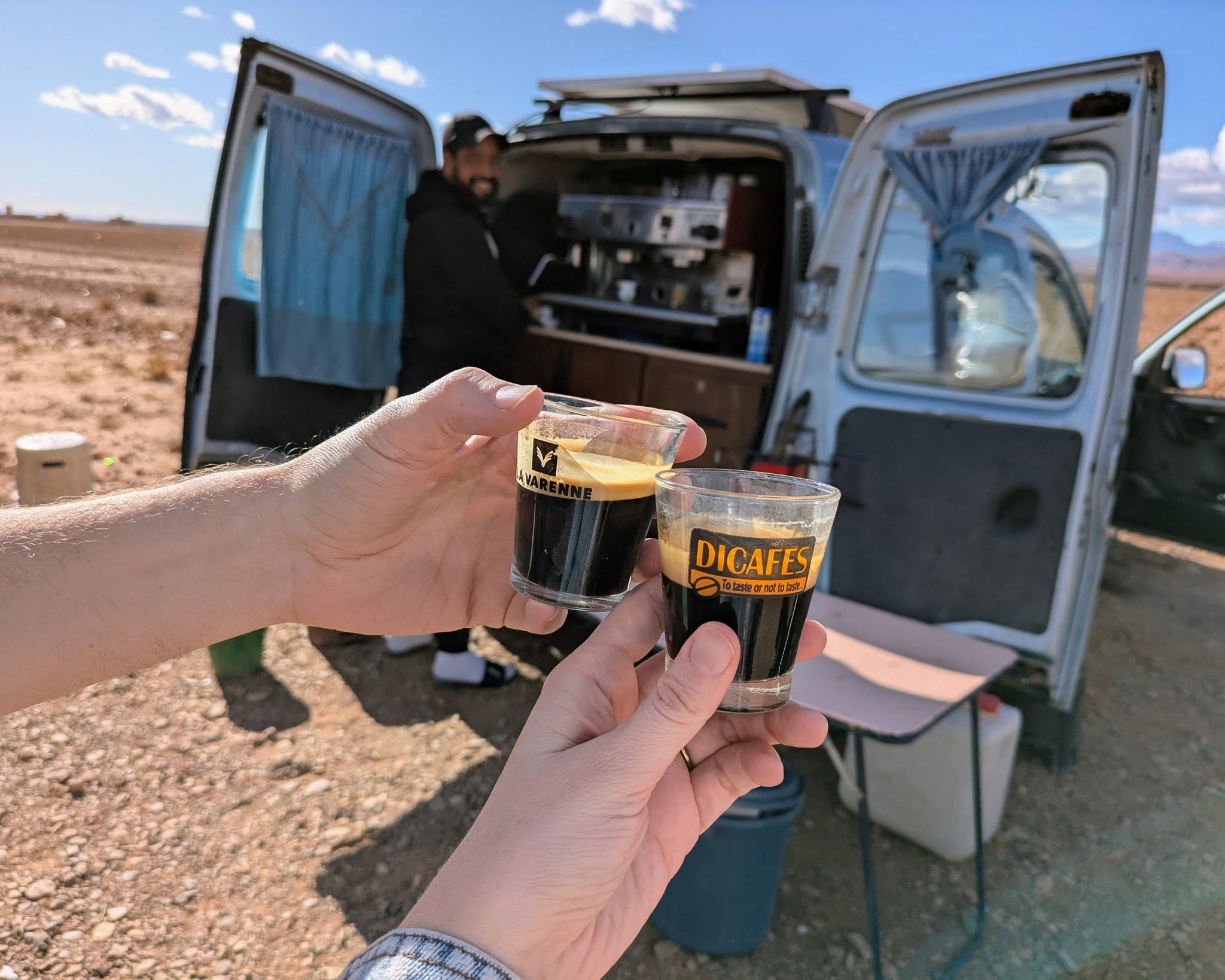
It takes 7 hours to get to Merzouga (and the Chebbi dunes) from Fes and another 9 hours to get to Marrakesh, so we covered a lot of ground and a lot of points of interest, including some of my favorite: the monkeys in Ifrane, the Todgha gorge, the random espresso bar van in the middle of nowhere, and the ancient city of Aït Benhaddou. But of course, the highlight of this adventure was our time in the dunes. Riding the camels, watching the sunset and sunrise, sandboarding, a bonfire, drinks shared with new friends, star gazing – it was one of those travel experiences that seems totally unreal, and I can’t recommend it enough.
Marrakesh
Honestly, you’re probably thinking, how could we possibly top what we’d already enjoyed thus far in Morocco, and we were a bit worried about that too, especially since we were told by almost everyone we talked to that Marrakesh was their least favorite city in Morocco. We had heard Marrakesh was noisy and dirty and that the people there were pushy and impatient, etc. Well, I don’t know if we’re just weird, but Marrakesh was our favorite of the cities we visited, pretty much precisely because it was all those things and more! To me, it felt so utterly authentic in its own ancient-trading-center-turned-major-tourist-destination sort of way.
Much like Fes, Marrakesh also has a medina, but it’s actually much larger and thankfully fully mapped on Google Maps (plus one for navigation)! However, the medina in Marrakesh hasn’t banned motorcycles like Fes has, so it was a bit louder and dirtier. Of course, I found that more fun and probably more convenient for locals. We also found the people of Marrakesh to be super likeable! Maybe they seem pushy or impatient to some, but as city-people ourselves, we totally got it. We knew almost instantly that if we ever choose to move to Morocco, Marrakesh is the place for us.
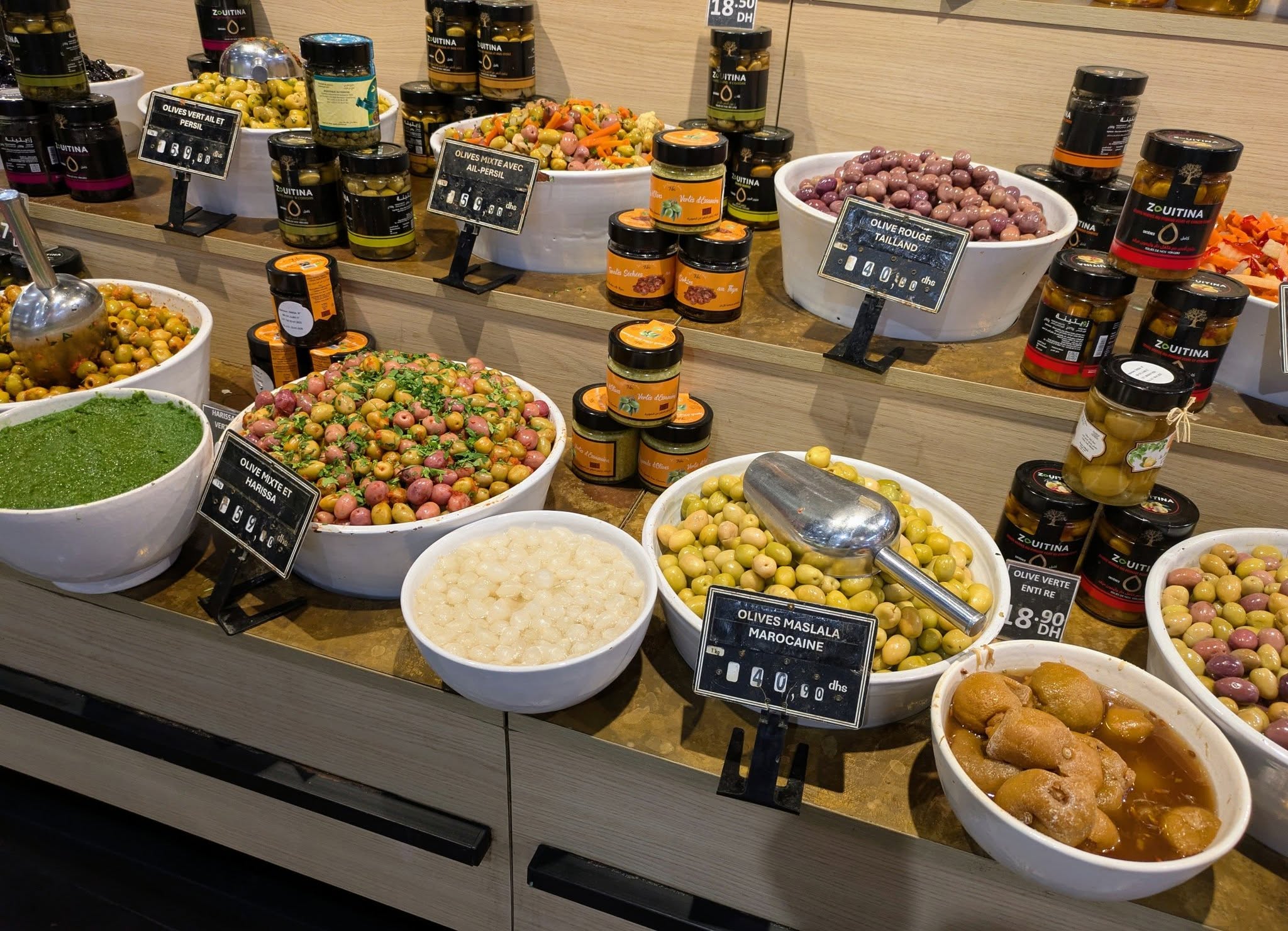
Hopefully, we’ve already done our part in hyping up Marrakesh, but for some more specific recommendations, I’d say first, make sure you walk through Jemaa el-Fnaa (the main square) often and at all times of day. You’ll see so many things you’ve never seen before and might never see anywhere else! But if you don’t like people hawking their goods/services, then I advise you walk with purpose lol. You should also go to a hammam and get scrubbed down. You might feel awkward or unsure, but it won’t last long. Just take it all in and think of the stories you’ll have to tell afterwards. Other highlights for us in Marrakesh were the Marrakesh Museum, MK Rooftop, and basically any supermarket (their Carrefour is *chef’s kiss*).
As is always the case with our trip recap posts, there’s just so much I want to share, but then, I’d really rather you go out there and experience it for yourself! Morocco might seem daunting at first; I know there’s a lot of information online about it (particularly a lot of cautionary tales), but we found it to be a very welcoming place that really puts a lot of effort into making sure tourists are well taken care of! It’s simply marvelous really! Shukran, Maroc – until next time!
Language is a funny thing. You never really think about just how many words and phrases there are in any given language (to say nothing of all the grammar features, pronunciation rules, and cultural nuances), but every time I find myself switching to a different daily-use language, I am always inundated with new (or sometimes, forgotten) vocabulary. Even with something like French, which I’ve definitely studied before and which has quite a lot in common with both English and Spanish, there is still SO MUCH to learn (and remember).
So, for this month’s post, I thought I’d share a few of the many entertaining direct translations that are living rent free in my mind now that I’ve gotten back into using français au quotidien. Amusez-vous bien!
Poules en liberté – literal meaning: “hens at liberty” – real meaning: “free run chickens”
This makes me laugh every time I buy eggs because I can’t help but picture chickens reenacting the French Revolution or something. Liberty, Fraternity, Egg-quality!
Nid-de-poule – literal meaning: “hen’s nest” – real meaning: “pothole”
Speaking of cultural nuances, chickens are super engrained in Francophone culture, which is clearly evidenced by the cute French name for this annoying modern-day obstacle.
Jaunes – literal meaning: “yellows” – real meaning: “yolks”
In English, we say “egg whites”, but “egg yellows” sounds ridiculous, non? Well, “yolks” actually comes from an Old English word meaning “yellow”, so maybe we’re the ridiculous ones.
Papillon de nuit – literal meaning: “butterfly of the night” – real meaning: “moth”
Another hauntingly beautiful (and delightfully descriptive) French noun! Of course moths should be called butterflies of the night! That’s exactly what they are, and it sounds très cool.
Porc-épic – meaning: “porcupine” (originally from Greek, meaning “spiny pig”)
Okay, this one is similar in English, but the way it’s written in French makes my franglais brain think “epic pork”, which I think really paints porcupines in a whole new light, don’t you?
Chauve-souris – literal meaning: “bald mouse” – real meaning: “bat”
What I want to know is who hated bats enough to stick them with this completely unfair name for the rest of éternité. I mean, even if you felt really strongly about their baldness and/or mousiness, what about the wings?!
Cerf-volant – literal meaning: “flying deer” – real meaning: “kite”
Another bizarre animal description here because I can’t really see a lot of similarities between kites and deer. What exactly was going on with the kites and deer of early France?
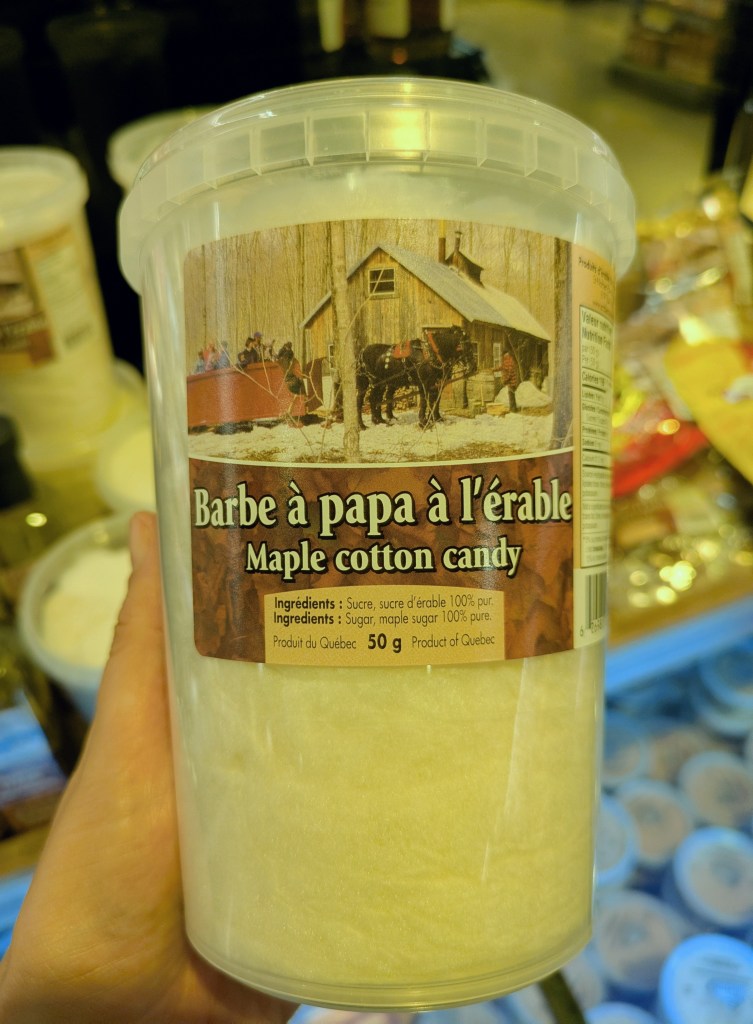
Barbe à papa – literal meaning: “dad’s beard” – real meaning: “cotton candy”
Explaining this to non-French speakers is always a little awkward. I’m aware that “cotton candy” doesn’t sound that appetizing either, but thinking about your father’s beard hair as a snack is just a bit étrange.
Pissenlit – literal meaning: “piss-in-bed” – real meaning: “dandelion”
I absolutely love that this name survived into modern times because what a cool way to learn that dandelions are diuretics!
Cul-de-sac – meaning, well, “cul-de-sac” or “dead end”, but the literal translation is “ass of the bag”
We all know the word “cul-de-sac”, but I bet now you have a whole new visual to associate with it! I love when languages use profanity to make a point.
Nez qui coule – literal meaning: “nose that flows” – real meaning: “runny nose”
This phrase is immediately clear upon first encounter, which I love, but what I now find disappointing is that English missed out on this glorious rhyming opportunity!
Oui, oui, “pouce” can mean either “thumb” or “inch”, but I first learned it as “thumb”; therefore, I now measure TVs in thumbs rather than inches. Honestly, I wish we’d just use centimeters anyway!
Pomme de terre – literal meaning: “apple of the Earth” – real meaning: “potato”
An oldie, but a goodie. This poetic way of naming the most basic of things is what I always associate with French. However, Canada is a bit more efficiency-based, which is why I see “patates” a lot now too.
Pommettes – literal meaning: “little apples” – real meaning: “cheekbones”
Another example of French flair contrasted with English frankness; one of which I love as a linguist, the other, I prefer as a student. Thank God for Google Translate though.
Et c’est tout! I hope you enjoyed these fun little tidbits about some common French and English words! Until next time, à bientôt!
It’s summertime, which can mean only one thing: it’s time for Tucker and Dani to hop on down to the southern hemisphere because one can never have too many winters! Of course, our destination didn’t feel very wintery at all this time because for this trip, we chose to go to beautiful Rio de Janeiro, Brazil! Here’s a recap of what we did, how we did it, and most importantly, a list of the best foods we had while we were there.
Sugarloaf Mountain
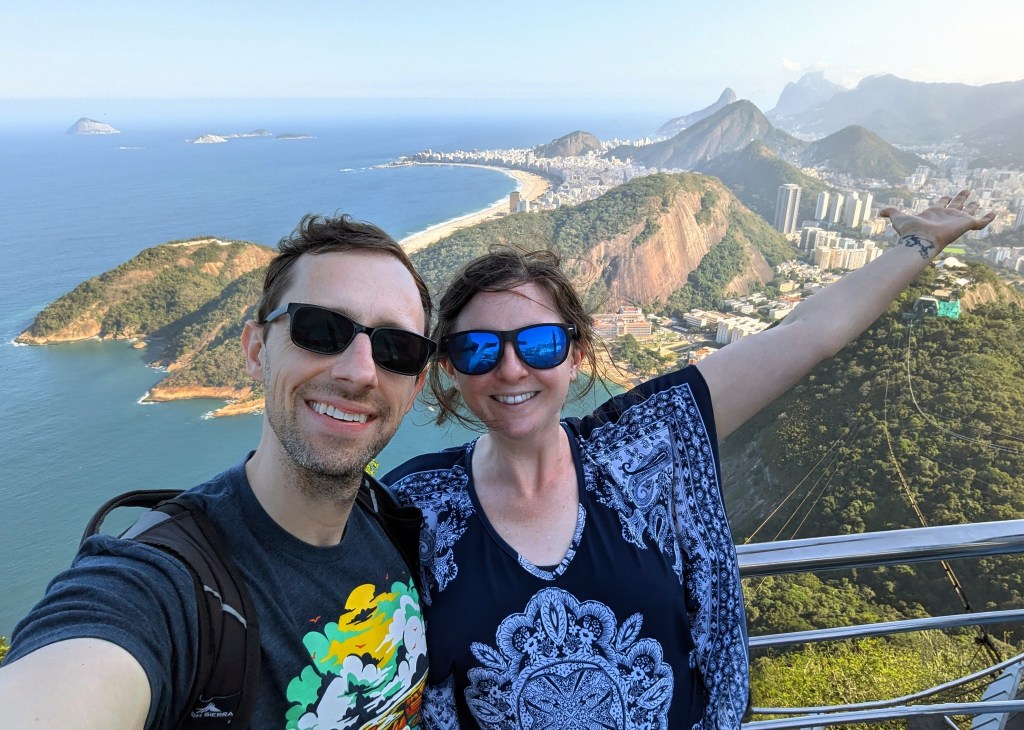
The first thing we did after dropping our bags off at the Airbnb was head to Sugarloaf Mountain for a couple of cable car rides and gorgeous views of the city. We opted to take an Uber as we had just arrived and didn’t have much time before sunset, and I think that ended up being a good choice. Ubers are fairly inexpensive and easy to use in Rio, just know that you might have a few cancelations before getting one that sticks. Also, like most major cities, traffic can be…difficult, so be ready for that as well.
Sugarloaf Mountain is a major tourist attraction, so everything was in English, Spanish, and Portuguese, making the ticket-buying process super simple. The cable car rides were quick and efficient, and the views at the top were absolutely breathtaking. But what surprised us most was definitely how much there was to do at the halfway point (Morro da Urca). There are shops, restaurants, a mini-brewery, helicopter rides (for a price, of course), and tons of marmosets to watch! This was our first reminder that we were in a very lush land, full of all sorts of flora and fauna, even in the most populous parts of the city.
Copacabana & Ipanema
Next, we went to the beach, and actually, we found ourselves in and around both Copacabana Beach and Ipanema Beach a lot during the week. The beaches are absolutely massive, and there were so many people swimming, sunbathing, running, eating, drinking, playing games, taking pictures, doing anything and everything it seemed, which makes sense because once you’re on the beach, you’ll want for nothing because there is a constant stream of vendors selling everything from popsicles and steamed corn to bathing suits and hard drugs. Seriously, there was something for everyone!
Copacabana Beach
You can take your time in the sand, or you can walk along the wide, tiled sidewalks literally for miles along all the beaches. There are plenty of beachside cabanas to choose from as well if you want a little treat with a nice view and some shade. And if you don’t feel like walking, there are lots of shared bikes (which can be rented through Uber) or scooters (which have their own app) that you can rent instead, and with as many times as we ended up going to the far ends of the beaches, I was very thankful for those options! The neighborhoods in this part of the city have tons of cafes and restaurants to choose from as well, which were very lively even in the off season. It was actually really hard to narrow down all the choices here!
Centro
Prior to our visit, I was a definitely a little wary of spending a lot of time walking around Rio’s Centro. This part of the city doesn’t exactly have a squeaky-clean reputation, so I was wondering just how rough it would feel. Fortunately, we didn’t have any issues at all, but there were definitely some areas that felt a little less safe than Copacabana or Ipanema. As you always should when traveling, make sure you’re completely aware of your surroundings, and if possible, try to stick to the more populated streets. Safety in numbers (at least in this instance).
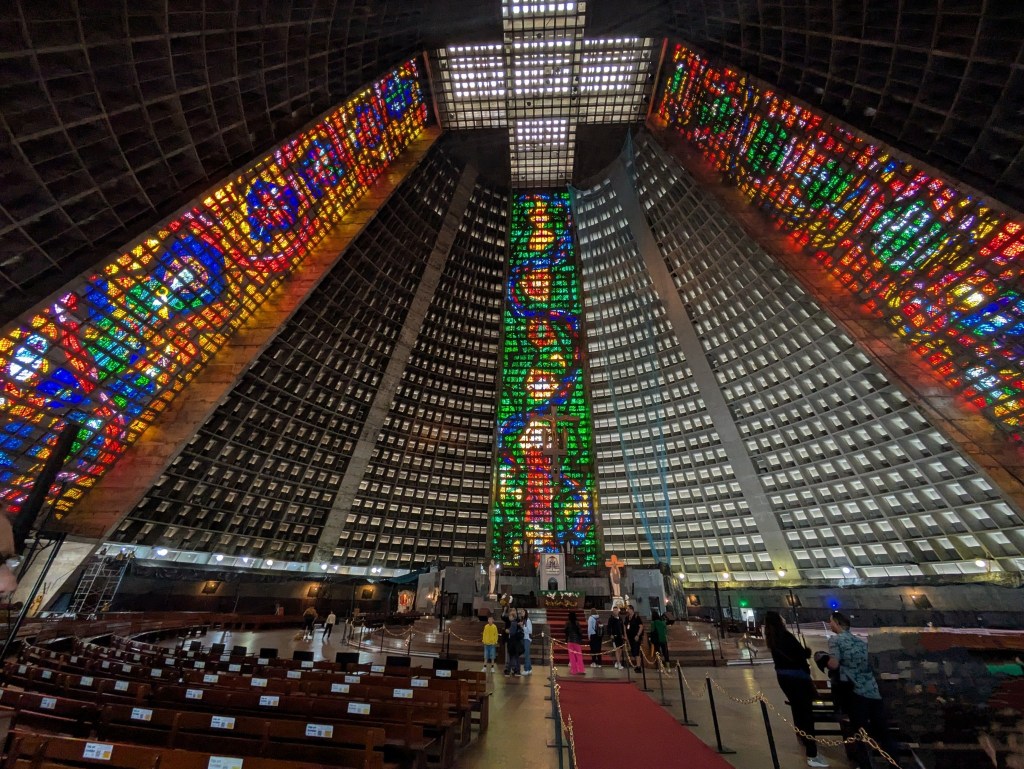
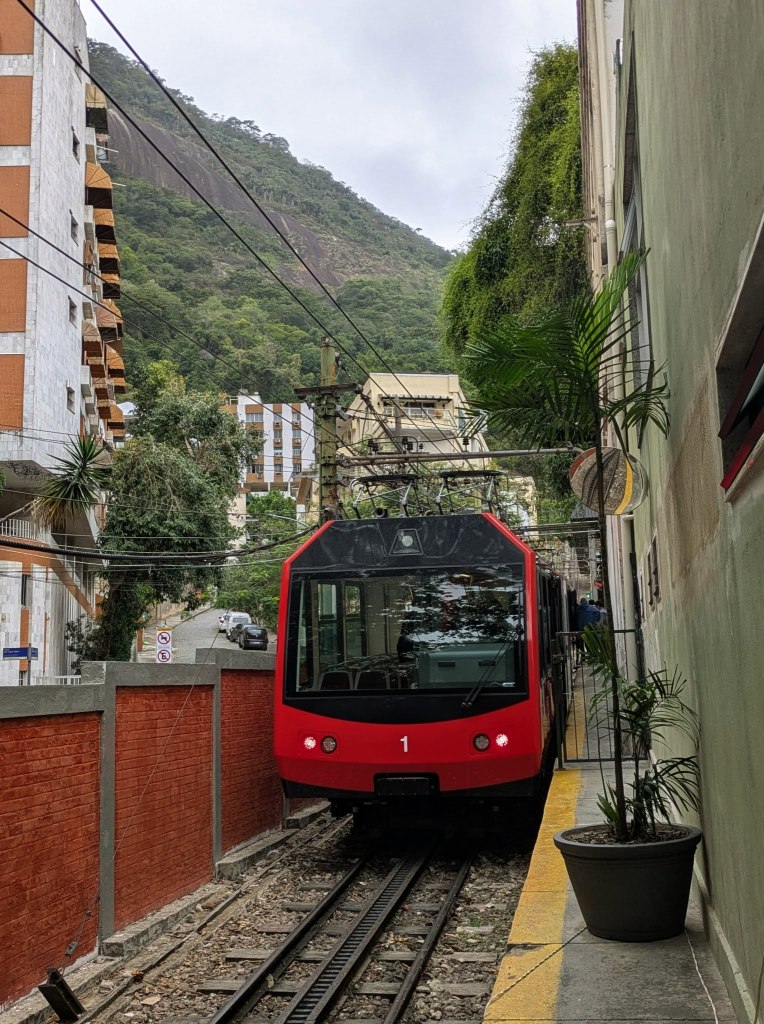
Some of my highlights from our day in Centro would be the Santa Teresa tram ride, the Metropolitan Cathedral, and the Royal Portuguese Cabinet of Reading. I knew I wanted to at least see the old tram, but once we were there, we decided we might as well take the ride even though we had no idea where it was going, and I am SO glad we did because it was an incredible (round)trip through the heart of the city. The Metropolitan Cathedral is essentially the center of Centro, so you can’t miss it. Definitely check out the inside too though because it’s one of the most unique churches I’ve ever seen. And the Royal Portuguese Cabinet of Reading was also just spectacular! I mean, free entry and tons of books? How could you go wrong?
Metropolitan CathedralRoyal Portuguese Cabinet of Reading
Christ the Redeemer
And finally, the symbol of Rio: Cristo Redentor (or Christ the Redeemer). For this particular sight, we had actually bought tickets for the scenic train ride up and down, but we had to choose a day at random, and when that day came, it was stormy. Needless to say, there would be no view of the city nor of Cristo himself as he was well and fully in the clouds that day. Luckily, they let us change our date and time, which still felt like a bit of a gamble, but the second time, it worked out for us. I would still recommend buying the tickets in advance though, because when we did show up on that sunny day, the line for buying tickets was hours long.
The train ride was nowhere near as nice as the Santa Teresa tram, so now you know which to skip if it comes down to it. You can also get up to the statue by van or by walking (although some people advise not to walk due to some sketchy areas). I also wouldn’t allot a ton of time for this particular activity because there’s not a whole lot of space up at the top, and once you get your selfie with Jesus, there’s not much to do besides wait in line to go back down. All that to say, I’m still super glad we got to see this New World Wonder up close and in person because it truly is a wonder.
Cristo Redentor
The Food
And now, everyone’s favorite part! Here’s a list of the foods we made sure to try while in Rio:
Açaí na tigela (a frozen açaí smoothie snack)
Baião de dois (a rice and beans dish from the northeast region of Brazil)
Cassava croquettes
Bob’s (Brazil’s most popular fast-food joint)
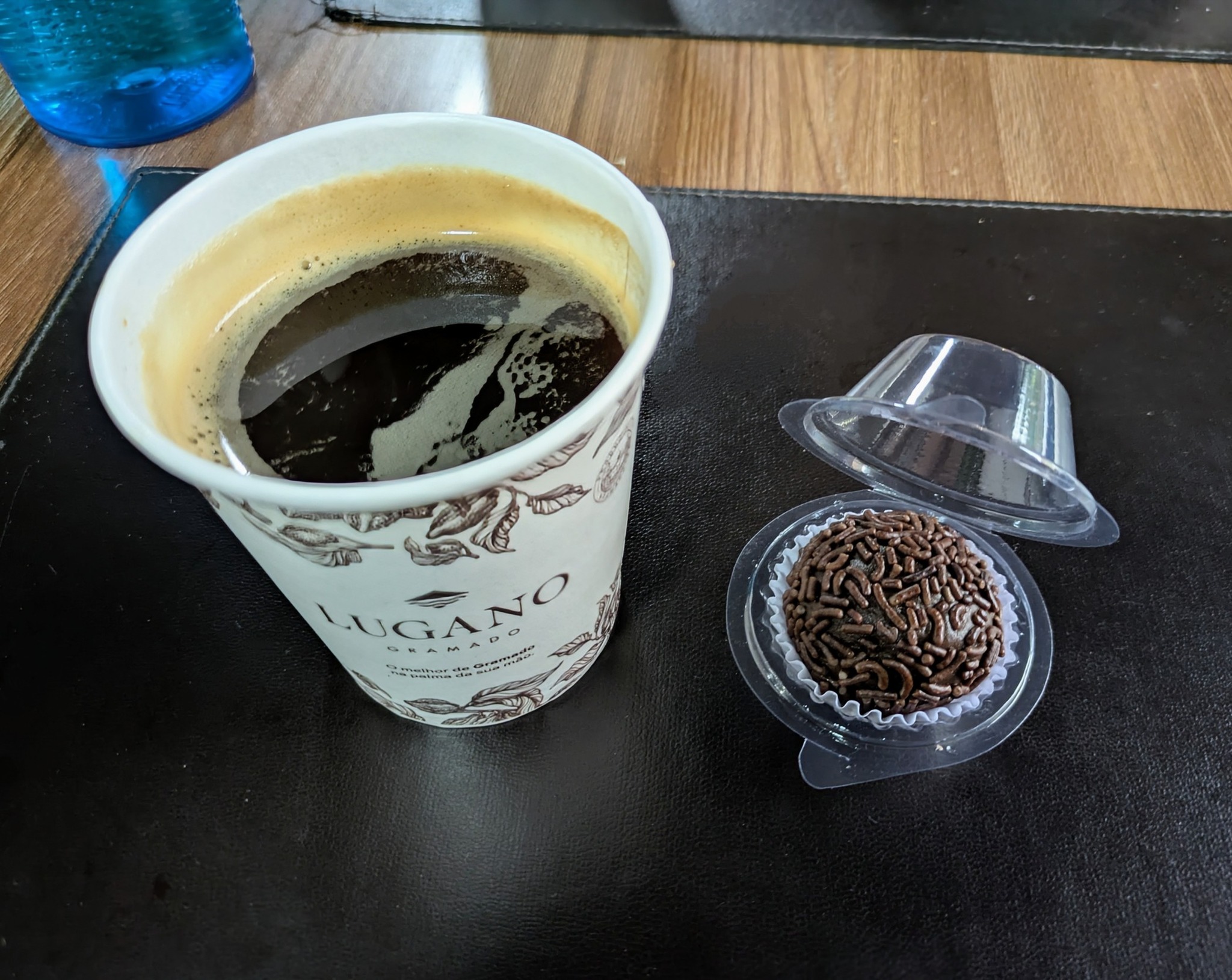
Brigadeiro (chocolate sprinkle-covered truffle)
Cassava croquettes (croquettes made from cassava)
Churrasco (an assortment of grilled meats)
Coxinha (a fried dumpling of sorts, similar to a croquette)
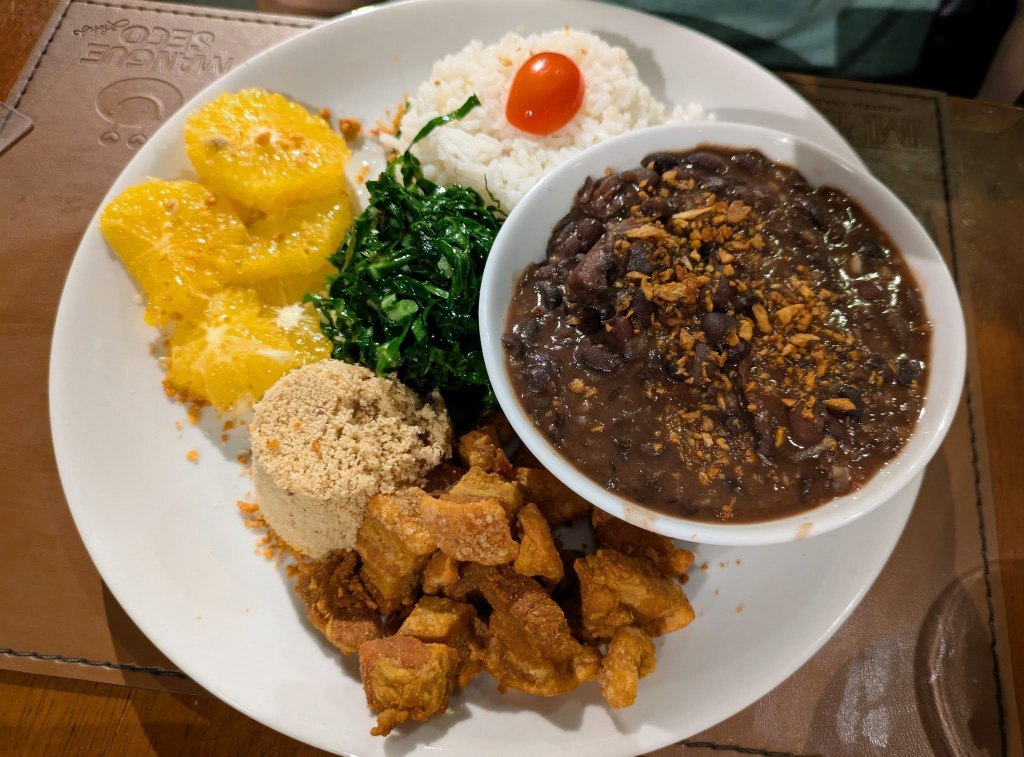
Feijoada
Empanadas (no explanation needed)
Farofa (toasted cassava powder)
Feijoada (bean stew)
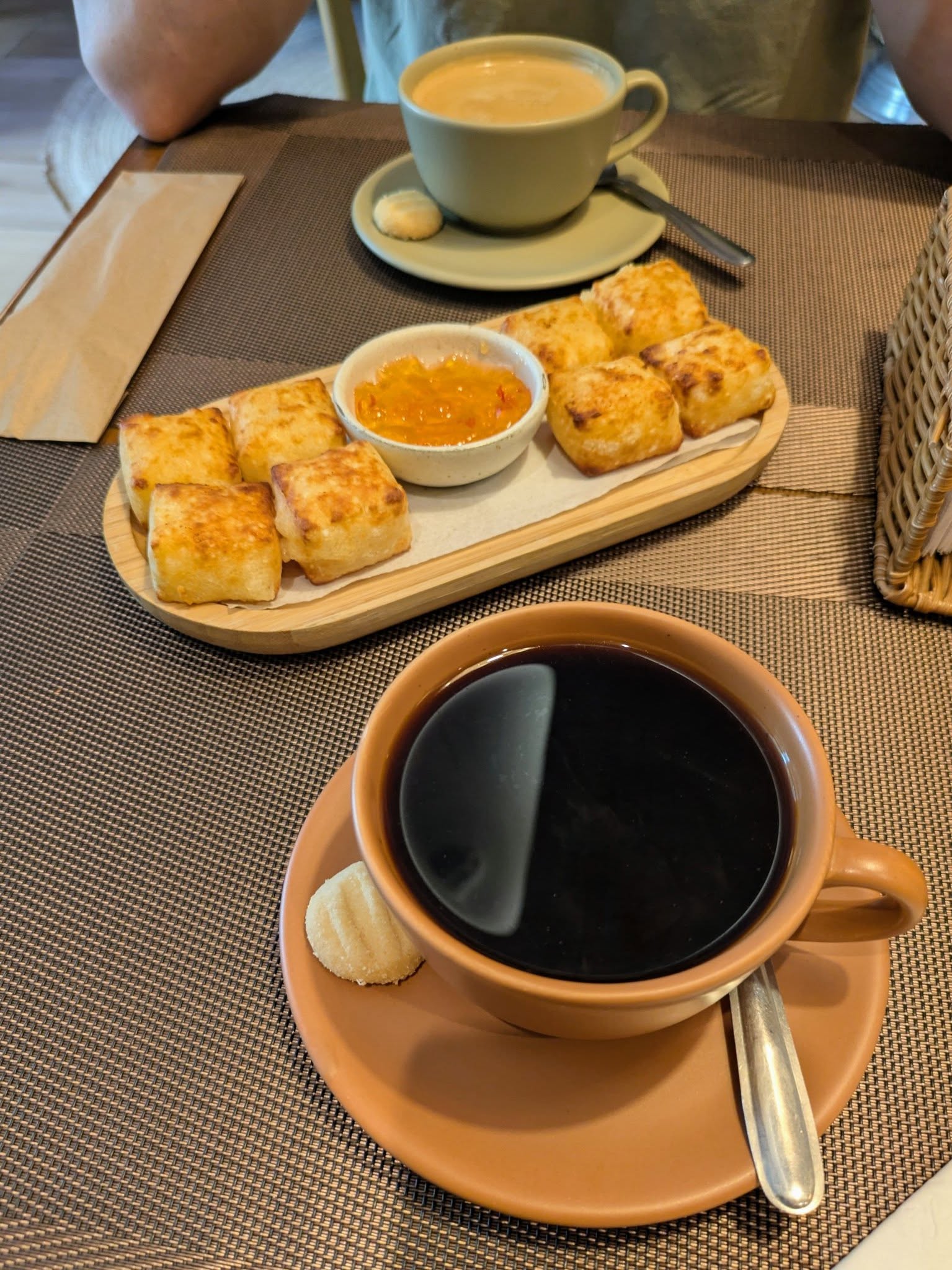
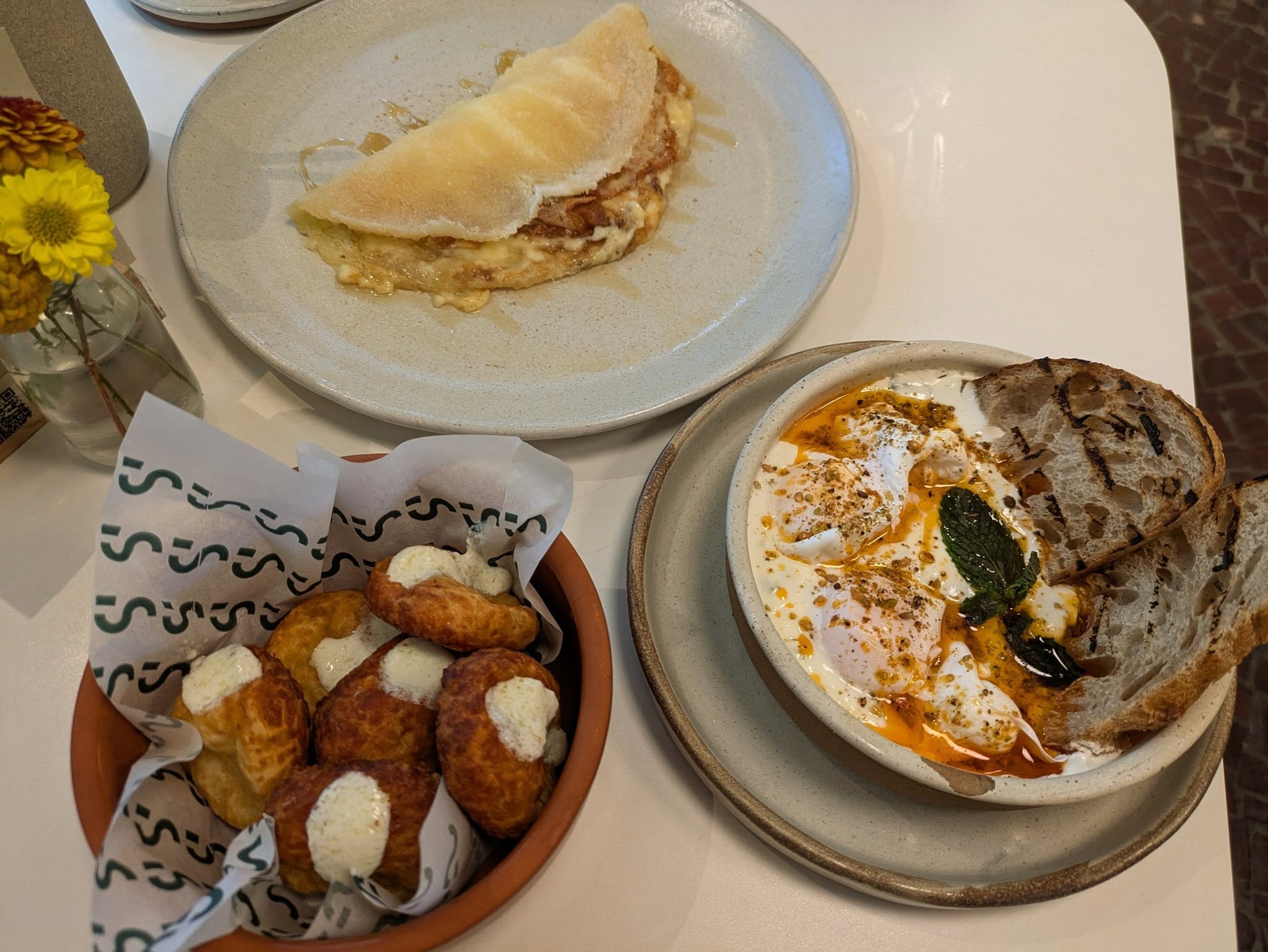
Pão de queijo (baked cheese balls)
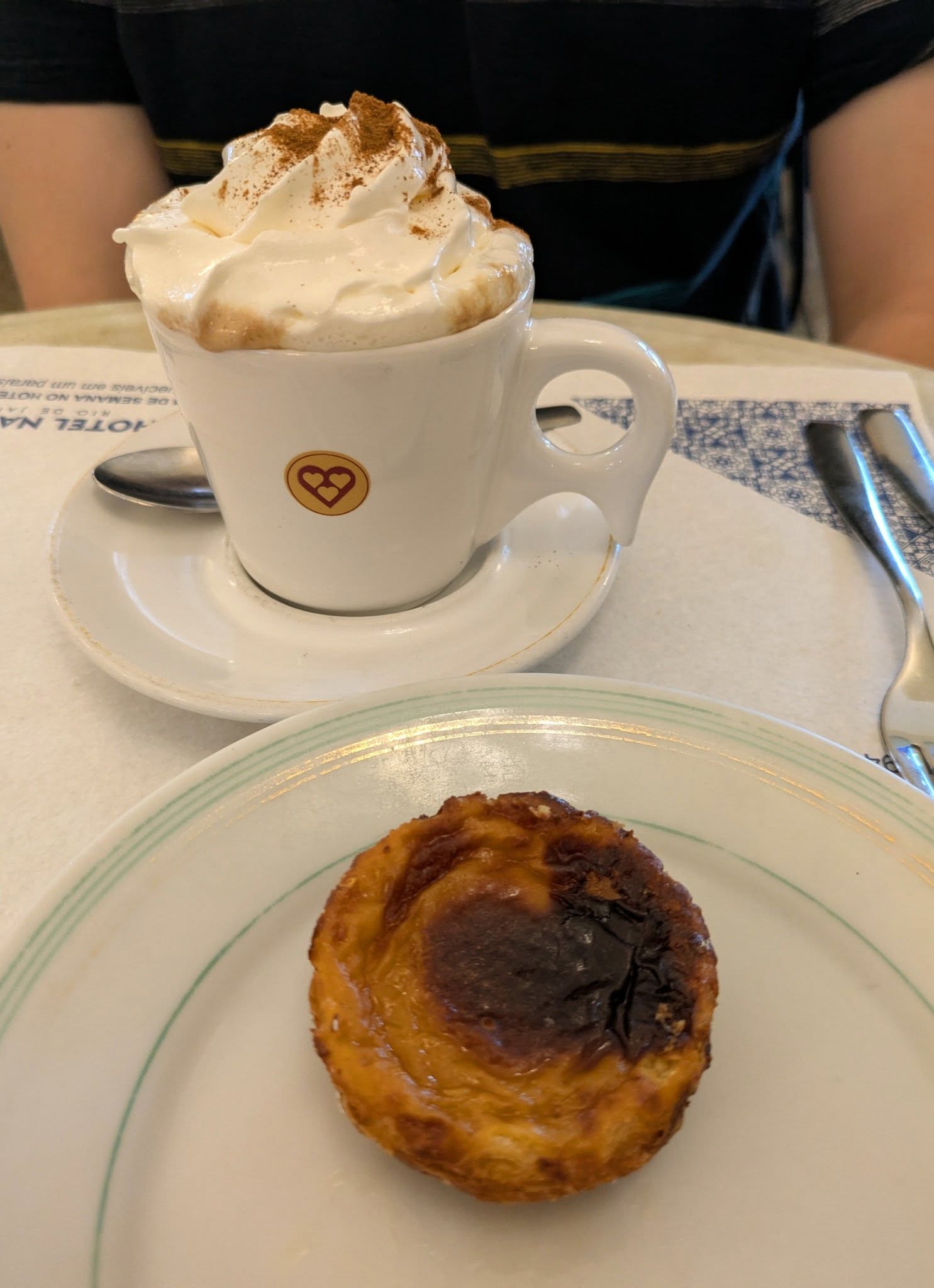
Pastel de Belem (egg/custard tart)
Picanha (steak)
Tapioca crêpe (crêpe made of tapioca flour)
Tapioca dadinhos (delicious little cubes of fried tapioca and parmesan cheese)
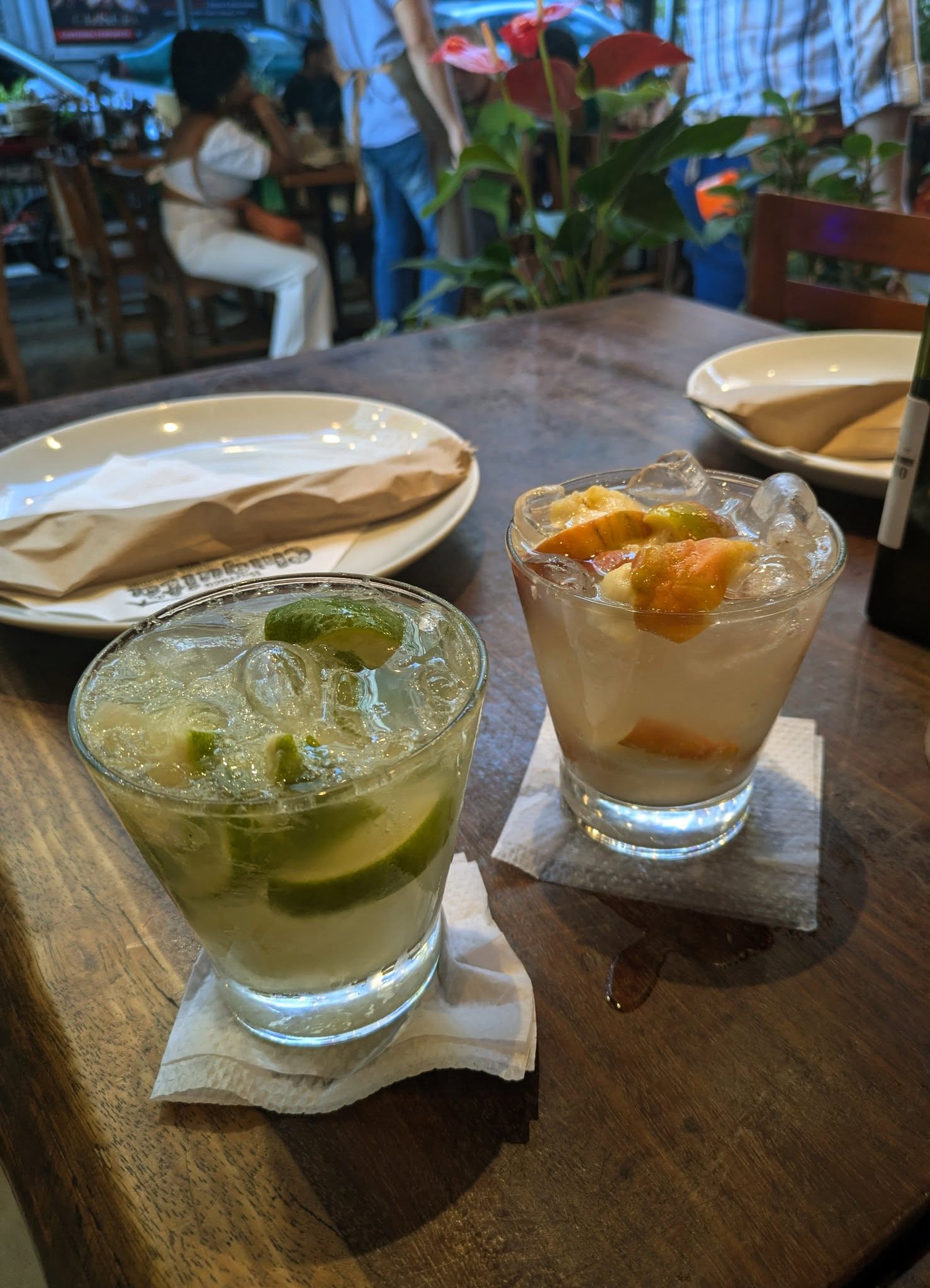
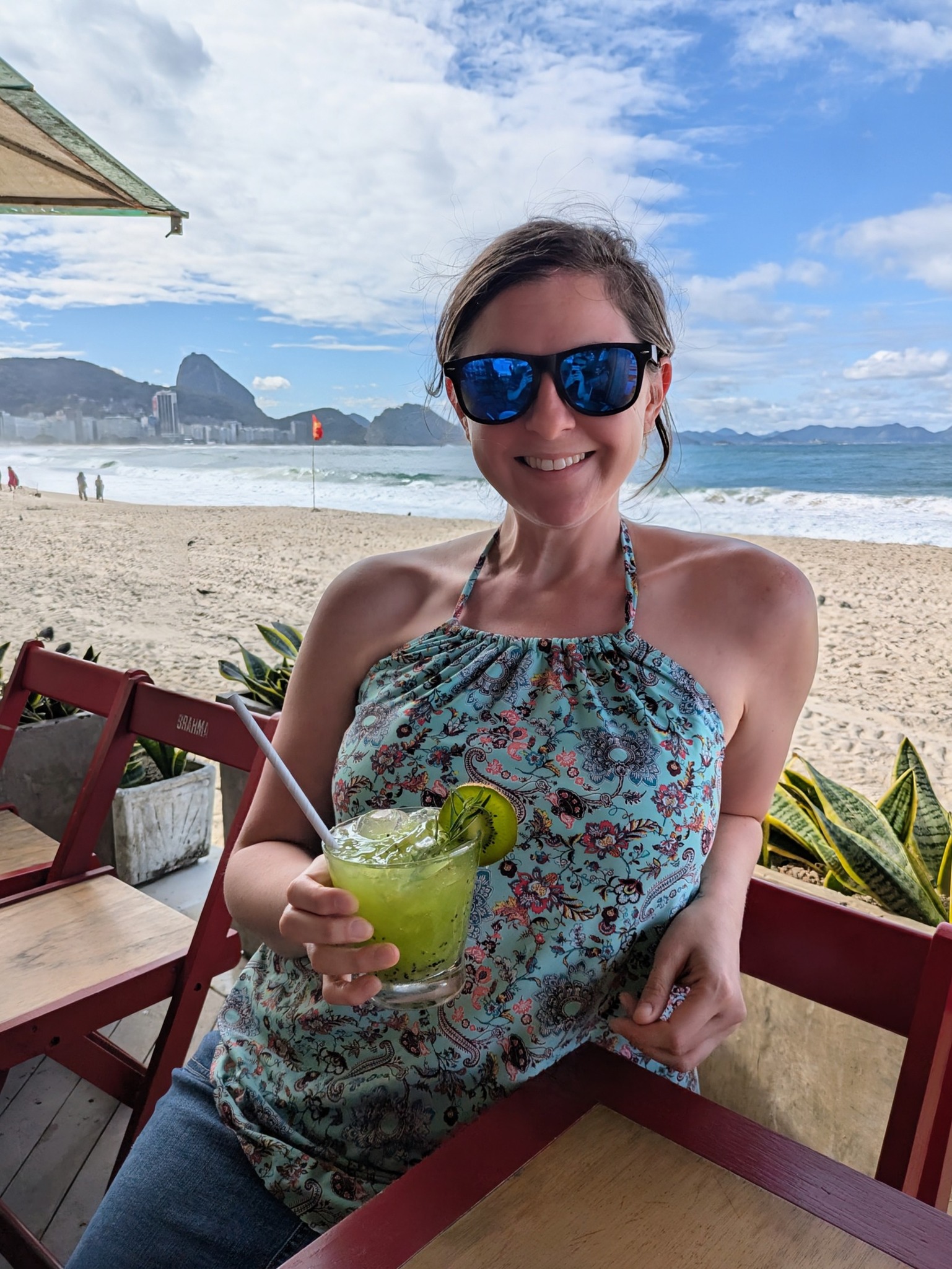
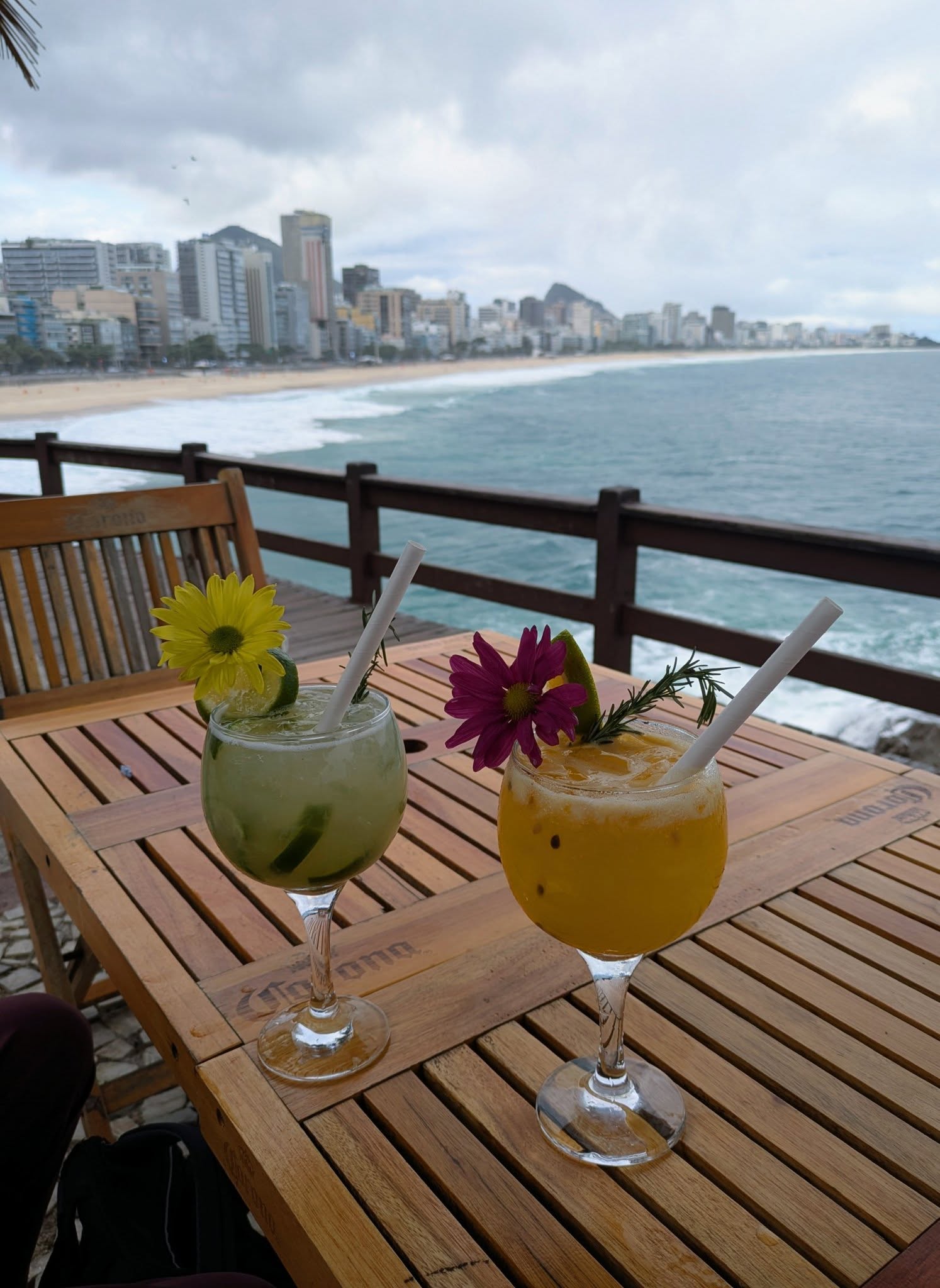
And because I can’t leave it off this post entirely, you should also try a caipirinha (or four) when in Brazil. The caipirinha is the country’s signature cocktail and is made with a sugarcane liquor called cachaça and the fruit of your choice. For what it’s worth, I think the traditional lime is BY FAR the best option.
So, who’s ready to go to Brazil now? I know we’re eager to go back already! Rio was so much fun, but Brazil is a huge country with so much to offer! I hope we’ll be saying “bom dia” again before too long! Until then, I’ll just keep dreaming of all that delicious food!
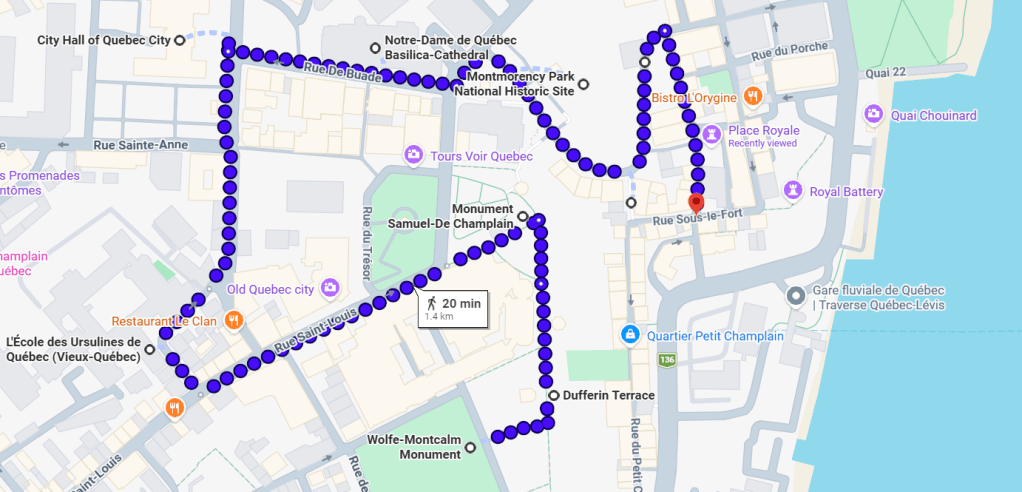
Now that I’m an official Québec City tour guide, I’ve realized that in-person walking tours can be a little overwhelming — in the best possible way, of course! There are so many names, dates, stories, and details coming at you all at once. So, I created this virtual tour as a way for people to revisit the incredible history that makes Québec City such a unique place to explore. But even if you haven’t taken the tour yourself, I hope you’ll still enjoy discovering these stories and learning more about the history behind my adoptive home.
Stop 1: Parc des Gouverneurs
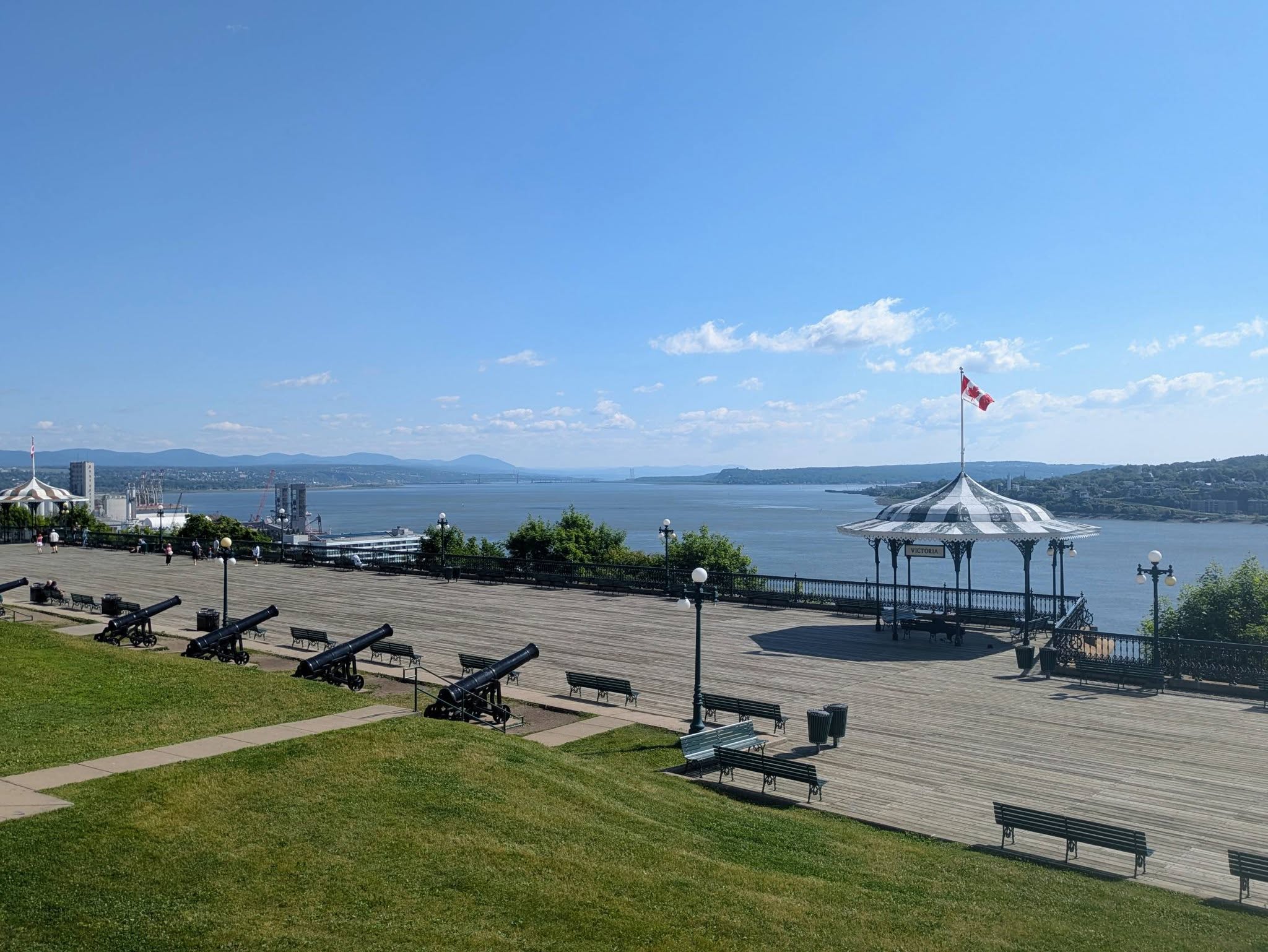
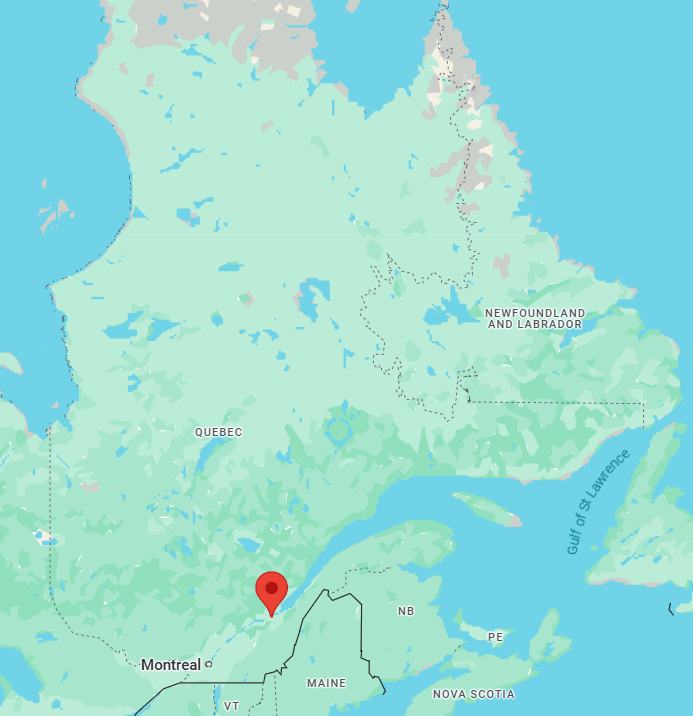
I like to start our tour at the Parc des Gouverneurs, which sits right next to the famous Château Frontenac and has a beautiful view of the Saint Lawrence River. I think this is a great place to begin because from here, you can see both sides of the river and Île d’Olréans, which is the official start of one of the largest estuaries in the world. An estuary is where a river turns into an ocean, and this particular narrowing is precisely why Québec City is where it is, and it’s also how the city (and the province) got its name. Quebec means “where the river narrows” in Algonquin, highlighting the first group of people who called this region home.
Of course, it didn’t take long for other groups to see the potential of Quebec, starting with the French in the 1500s. Due to its strategic location and striking natural features, early explorers found Quebec to be the perfect place to stake a claim. Here, they had access to the already-established trade routes, and they were in the most easily-defensible position in the region. Jacques Cartier was the first to come and go a few times, staying just long enough to NOT find any diamonds, yet name the rocky cliff Cap Diamant anyway, but it was Samuel de Champlain, who really stuck it out and is credited with the official founding of Québec City in 1608.
Along with a small group of initial settlers, Champlain built the first habitations in Québec and quickly became known as the Father of New France, which is why we see his face everywhere around the city. Well, not his face exactly. Unfortunately, Champlain never had a portrait done, so we don’t actually know what he looked like. When the city started putting up statues of Champlain, they had to model them after another noble-looking French guy instead, so in all the artwork, statues, and history books, the man you’re looking at is not actually Champlain, but at least they’ve mostly stayed consistent with the image!
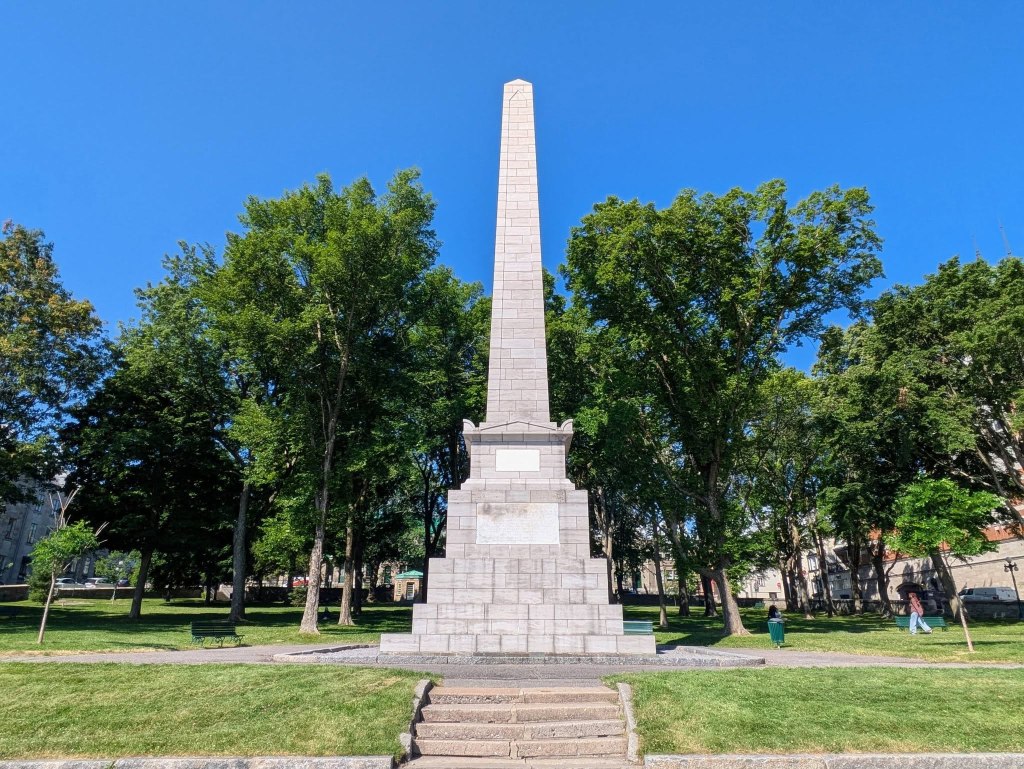
Of course, one of the most striking elements in Governor’s Park has to be the Wolfe-Montcalm monument. The second-oldest war monument in all of Canada, this impressive obelisk commemorates, arguably, the most important battle in Canadian history: the Battle of the Plains of Abraham (1759). This was such an important battle because it was the catalyst that led to British, as opposed to French, rule in Canada. Interestingly, for such an important battle, it didn’t actually last very long, only about 20 minutes from the point at which the two sides met on the battlefield. However, regardless of the outcome, both Wolfe (the English general) and Montcalm (the French general) were highly regarded by their men, and both are well-represented throughout the city today.
Stop 2: Château Frontenac & Dufferin Terrace
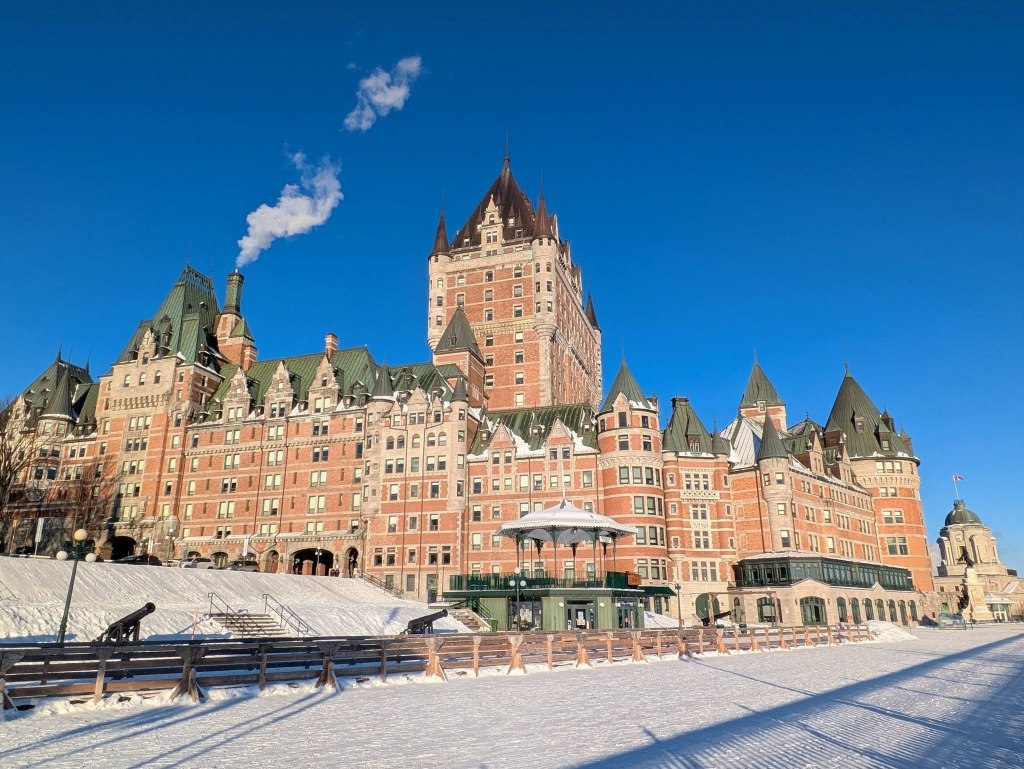
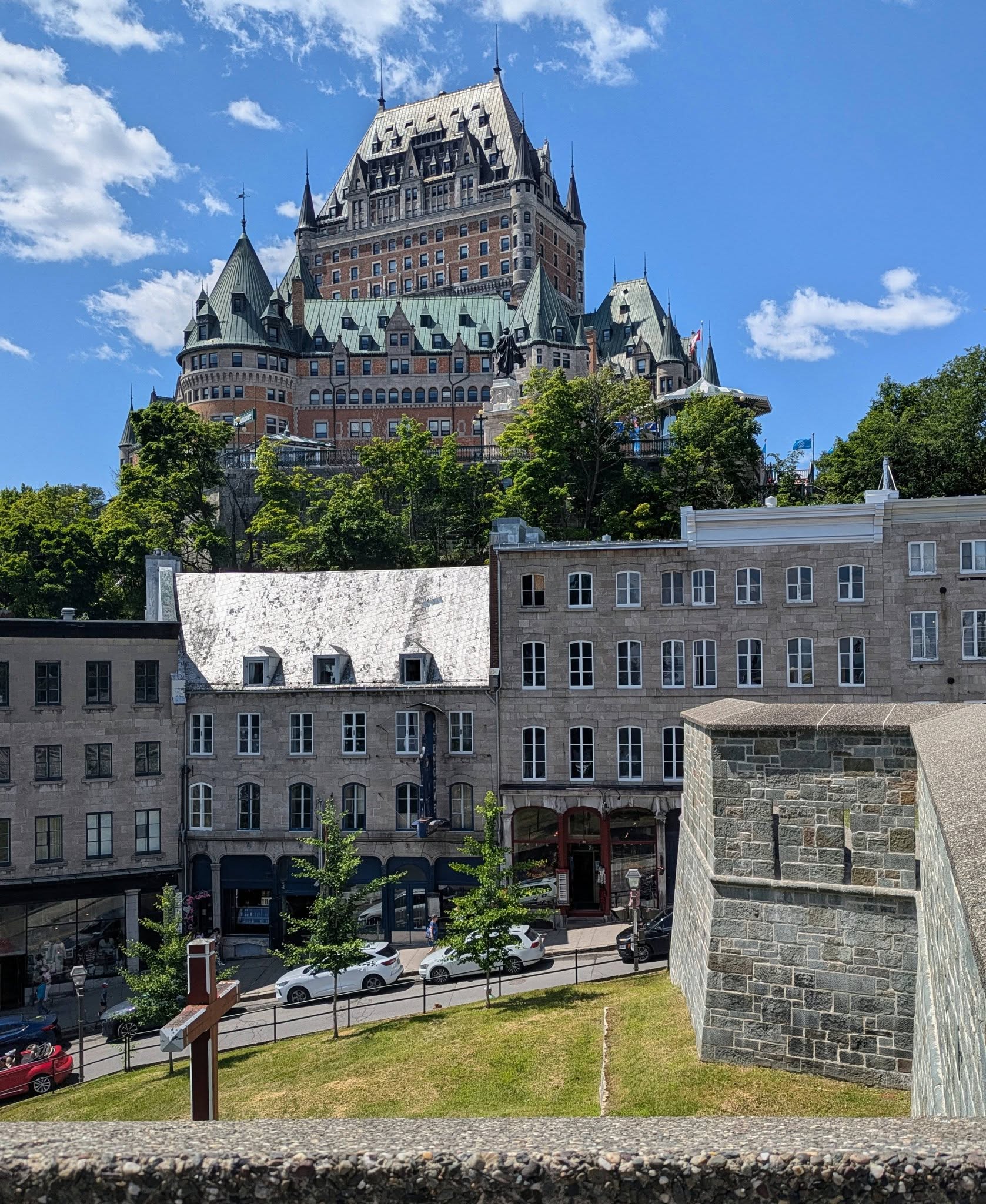
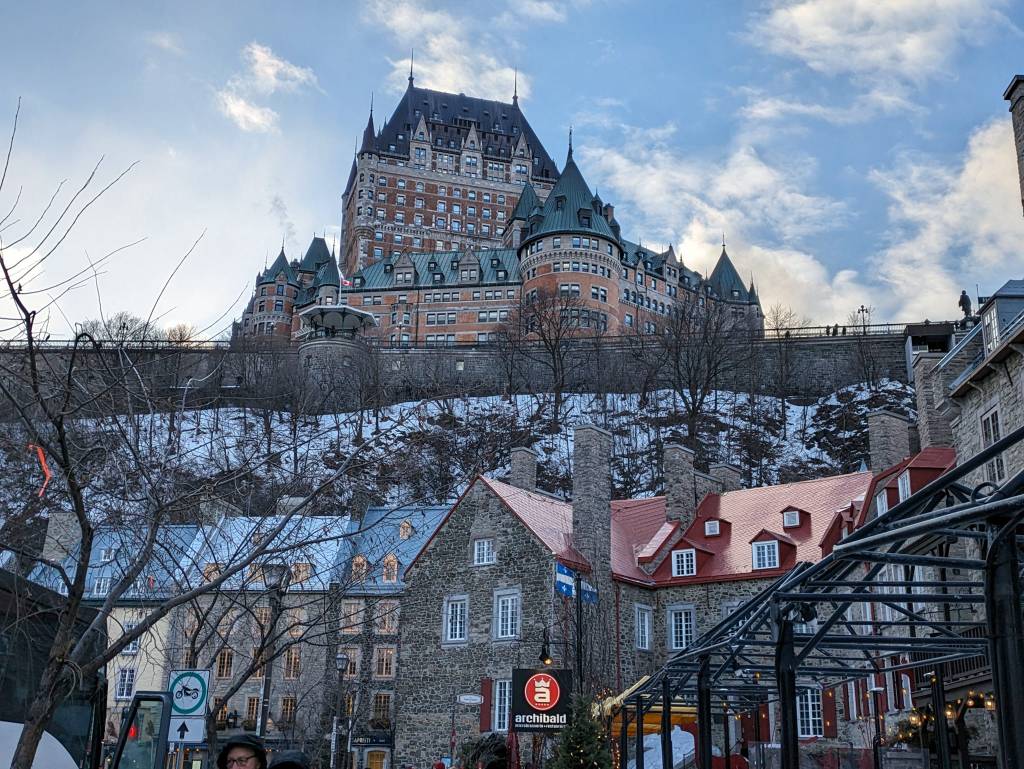
Okay, our next stop, of course, has to include the infamous Château Frontenac, allegedly the most-photographed hotel in the world! The oldest sections of the Château Frontenac were built in 1893, and despite the name, it has always been a hotel, never a true castle. Like the Château Lake Louise in Banff and many others across the country, the Château Frontenac is a Canadian Pacific Railway Hotel, all of which are incredible pieces of architecture initially built to generate passenger traffic for the transcontinental railway network that was completed in 1885.
Like many of these grand hotels, the Château Frontenac was built in several stages, and interestingly, the main tower (arguably its most distinguishing feature) was not included in the original section. It was added to the structure in 1924. The most recent addition to the hotel took place in the 1990s with the addition of the pool, spa, and fitness center because modern amenities are a must for that coveted 5-star status! As you can imagine, many famous people have graced the halls of this amazing building over the years: Queen Elizabeth II, Winston Churchill, Franklin Delano Roosevelt, Princess Grace of Monaco, Charlie Chaplin, Céline Dion, and Paul McCartney, just to name a few.
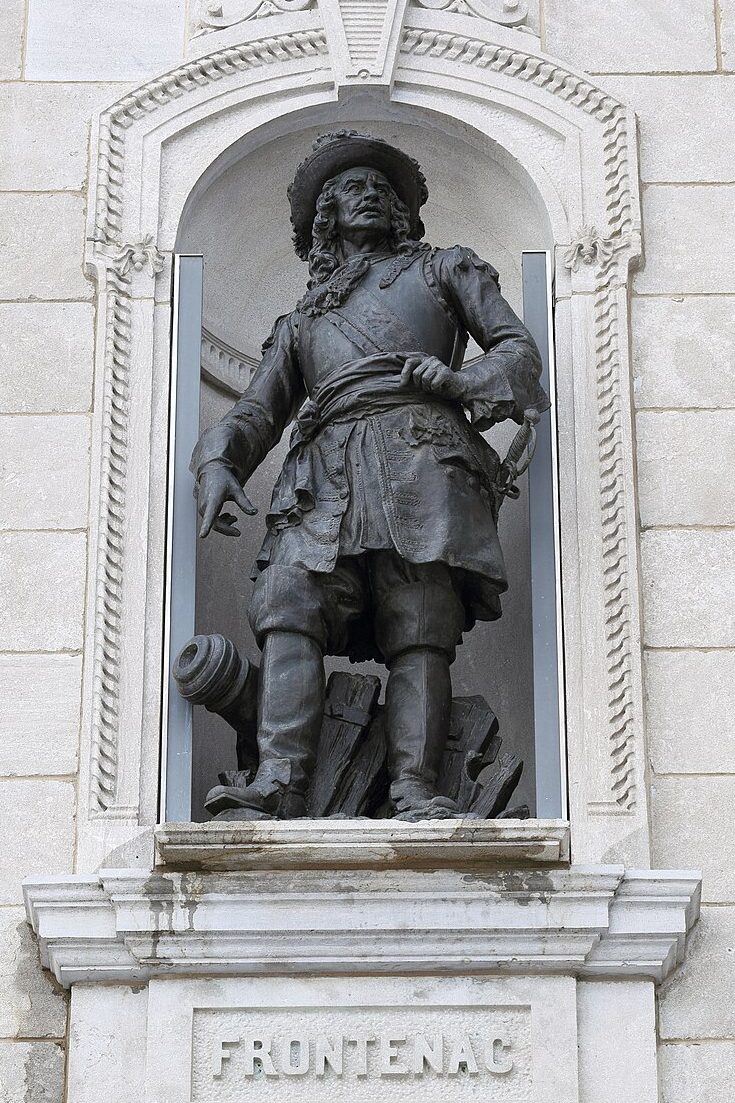
But what about the “Frontenac” part of the hotel’s name? Where does that come from? Well, Louis de Buade de Frontenac was a former Governor General of New France, and he was the one in charge when the city faced one of its first major attacks in 1690. Frontenac knew the young colony wasn’t fully prepared to take on the English at this point, so when one of their ships pulled up, he used a bit of psychological warfare to win the day. He gave his iconic “I’ll answer with the mouths of my cannons” line after blind-folding and tricking their envoy into thinking Québec was much more battle-ready than it actually was. Frontenac’s bold actions and pivotal role in early New France made him a fitting namesake of such an impressive hotel.
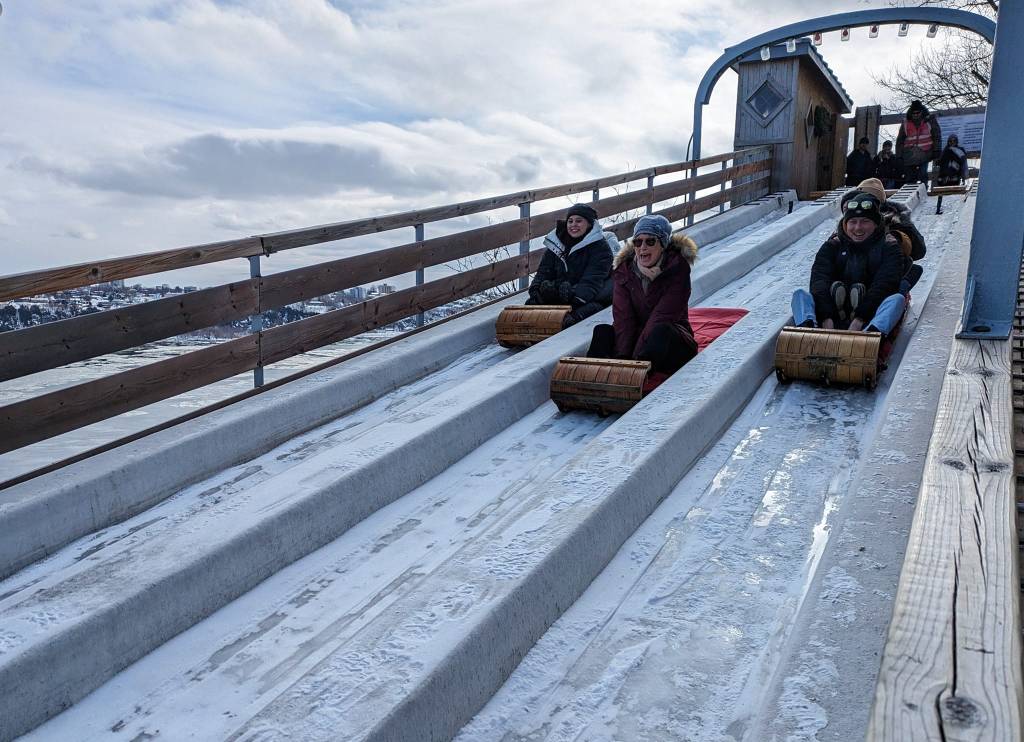
Right in front of the Château Frontenac is where you’ll find Dufferin Terrace, a 430m (1400ft) long boardwalk that runs along the edge of Cap Diamant. From here, you can see the Citadel perched even higher on the cape as well as the only still-functioning cannon in the city, which is fired every day at noon, so be sure to listen out for it! From here, you can also see the city’s beloved toboggan slide. Built in 1884, the slide is open all winter long, and thanks to its steep angle and long icy track, riders can reach speeds of up to 70 km/h (45mph)! The slide is super popular during Winter Carnival, which happens every year in February, and if you like ice castles, ice sculptures, ice canoe races, and/or signature cocktails, you absolutely have to come back and experience it all for yourself!
Also, along the boardwalk are a series of glass skylights, where you can catch glimpses of what is left of the original Fort/Château St-Louis, some of the first constructions built on the cliff. And at the other end of Dufferin Terrace, near the top of the funicular, there’s a large statue of Samuel de Champlain (well, at least one representation of him). This statue was added to the boardwalk in 1898 and was designed by an architect who survived the Titanic disaster. Lucky guy! The stone that makes up the base of the statue actually comes from the same quarry as the stone used to build the Arc de Triomphe in Paris, and the woman kneeling there is actually a personification of Québec City itself. If you look closely, you can see her crown is made up of the city’s famous walls.
Stop 3: École des Ursulines
Our next stop is the École des Ursulines, which began as a monastery that was founded in 1639, making it the oldest educational institution for girls in North America. One of the founders was Marie Guyart (aka Marie de I’Incarnation), a French widow turned nun, who came to Québec to educate young girls in the new colony. Because she had been married before and still had a son in France, she wrote thousands of letters about anything and everything that pertained to her daily life in New France: her work at the school, the indigenous girls she met, the battles that took place, and many other events that historians are still pouring over. For her contributions, she has also been memorialized across the city and beyond.
The school that the Ursulines started way back in 1639 is still a functioning school today, and in 2010, it started accepting boys as well as girls into its ranks. Throughout its history, the Ursulines’ school has always been known to be quite progressive. The early nuns learned several indigenous languages themselves, and they were among some of the first to teach girls subjects like arithmetic, astronomy, and chemistry. While the school is still going strong, the monastery is actually undergoing some major changes. The last of the remaining nuns, who are all quite long in the tooth now, officially moved into an assisted-living facility in 2018, and the complex is now in the process of becoming an archive of all the documents, artwork, and artifacts that have been collected by the nuns throughout the years. During this shift, there was one other important change to be made: the relocation of General Montcalm’s body.
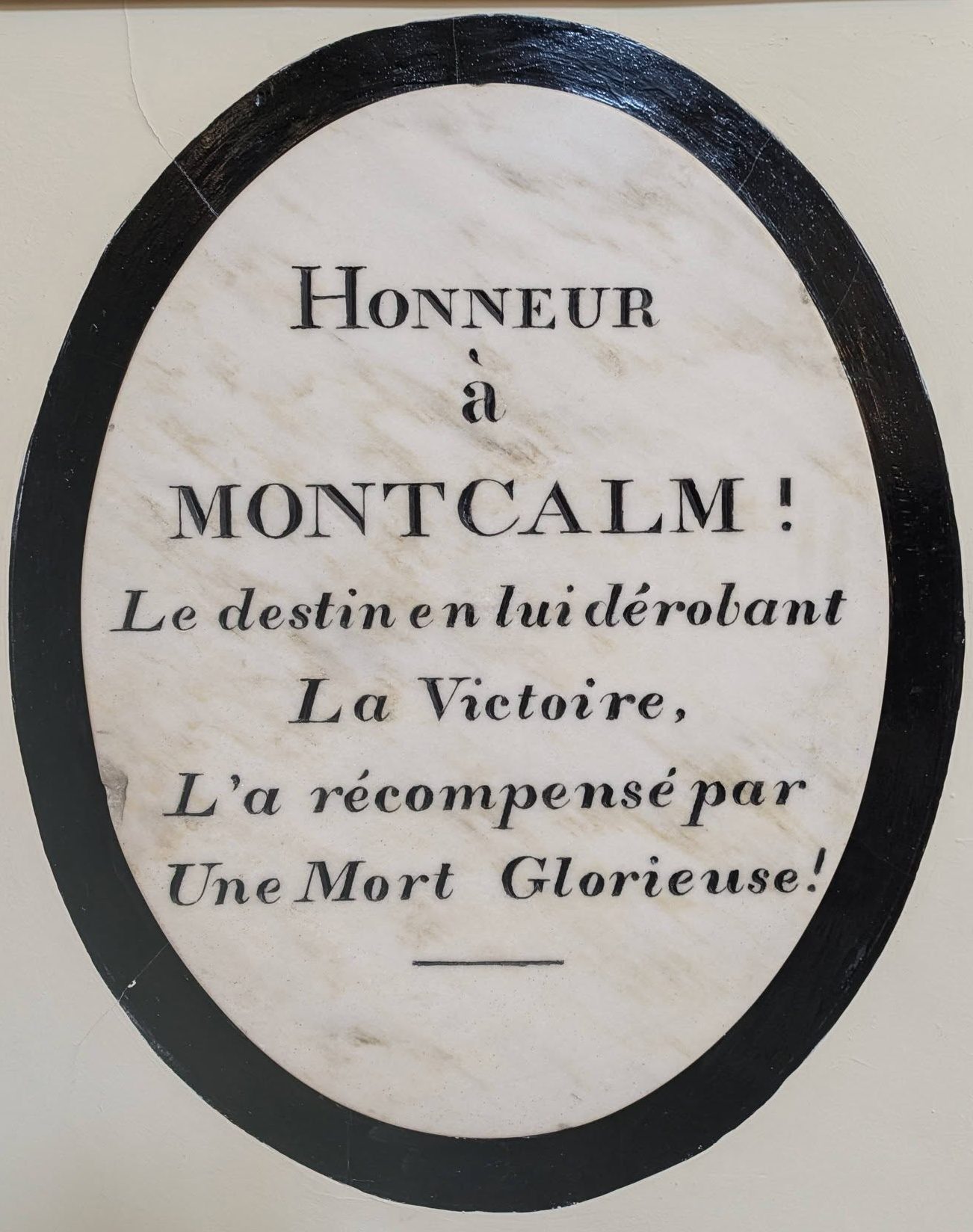
Although the Battle of the Plains of Abraham was brief, it had a tremendous effect on Québec. During the battle, General Wolfe died on the Plains right after finding out the English had succeeded. General Montcalm was also shot during the battle, but his men were able to retreat with him back into the city. Unfortunately, he wouldn’t survive either, and the French had to quickly find a way to protect his corpse and his memory amid the British takeover. This is how he came to be buried beneath the floors of the Ursuline Monastery. That is, until 2001 when the city decided to relocate his remains to the cemetery where all his soldiers were buried, rightfully reuniting the general and his men almost 250 years later.
Stop 4: City Hall
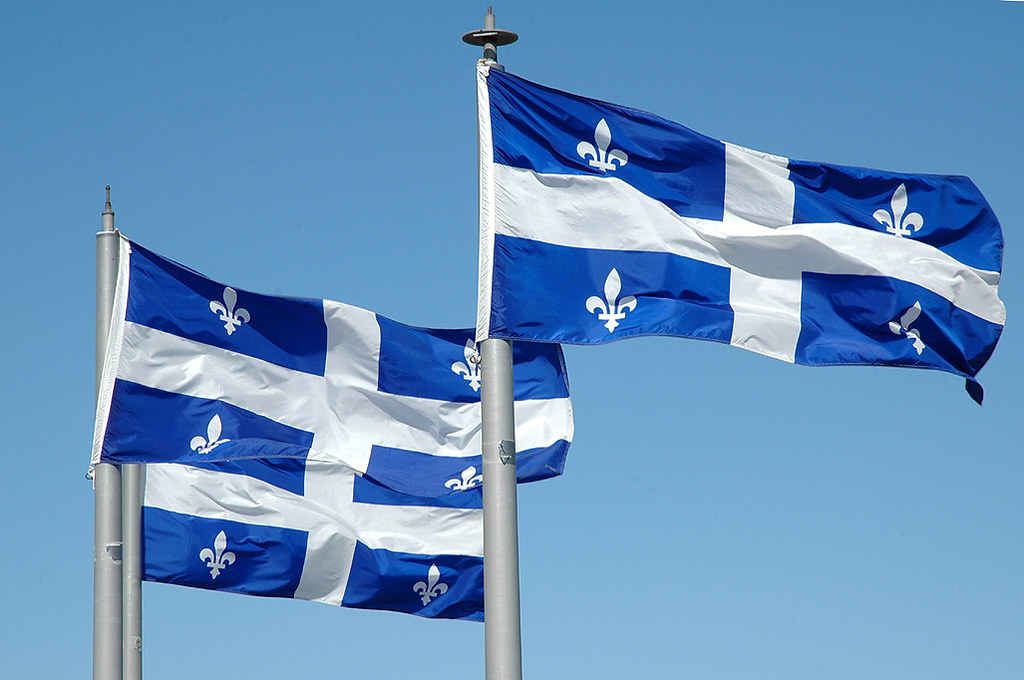
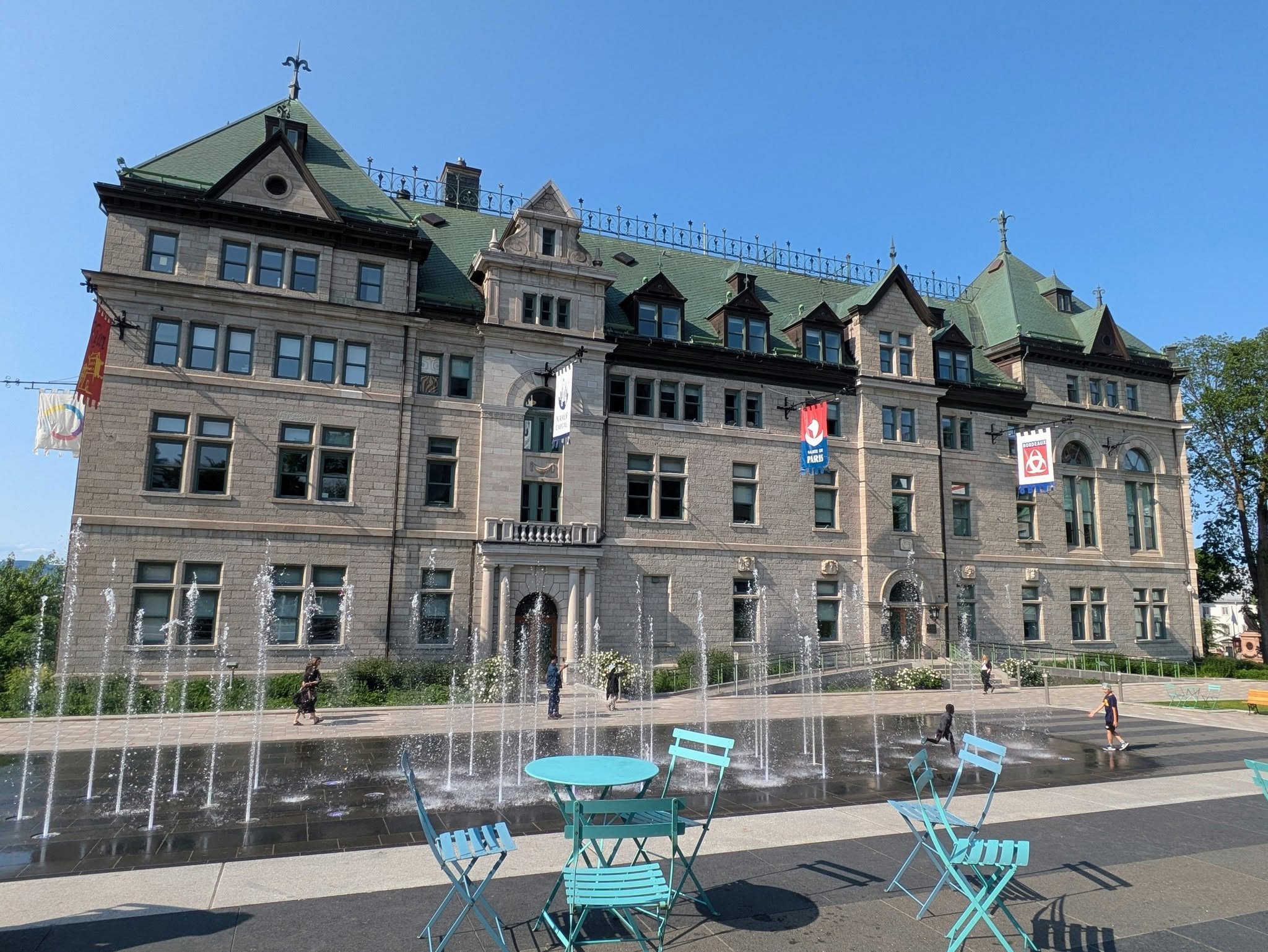
Now we’re at Hôtel de Ville de Québec aka City Hall. Originally, there was a Jesuit College here, but after the British took over, it was converted into a military barracks. In the late 1800s, the building had been left abandoned, and the city chose to demolish it and build anew. From here, you can also see many different flags, such as the Canadian Maple Leaf, the Quebec provincial flag, known as the fleurdelisé, and the flag of Québec City, which is dark blue with a golden ship (Champlain’s “Don de Dieu”) surrounded in the city’s fortifications. Across the square, you can see another series of flags representing the different Francophone groups of Canada: Acadians, Quebecers, Franco-Ontarians, etc.
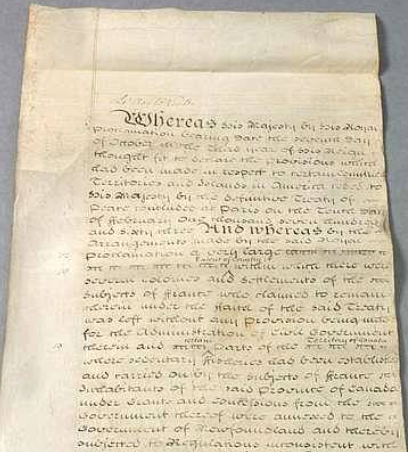
It’s here that I often get questions like “If the British took over 250+ years ago, why is Quebec still so French today?” Well, I’m glad you asked! Surprisingly, it’s because of the US. In the 1760s, the British had just taken control of Quebec, and they were so afraid the French-Canadians would join the Americans in their quest to kick the Crown out of North America that they signed something called the Quebec Act, which was essentially a pact allowing Quebec to keep their language, religion, and local laws so long as they didn’t fight against the British. Well, they never did and have kept their French-ness ever since! Vive la difference!
From City Hall, you also get a great view of the tallest building in Old Québec: the Price Building. Built in 1929 as a paper manufacturing company’s headquarters, it has a bit of a checkered past. Of course, the timing of the build wasn’t great (Stock Market Crash, anyone?), but the building itself was also hated by locals almost immediately. They felt it was too tall, too modern, and just out of place in Old Québec, which actually led the city to pass a law banning any buildings over seven stories within the fortifications. Luckily, the city has grown to love the Price Building over time. It now serves mostly as office space, except for the top 2 floors, which is where you can now find the permanent residence of the Premier of Quebec.
Stop 5: Notre-Dame de Québec
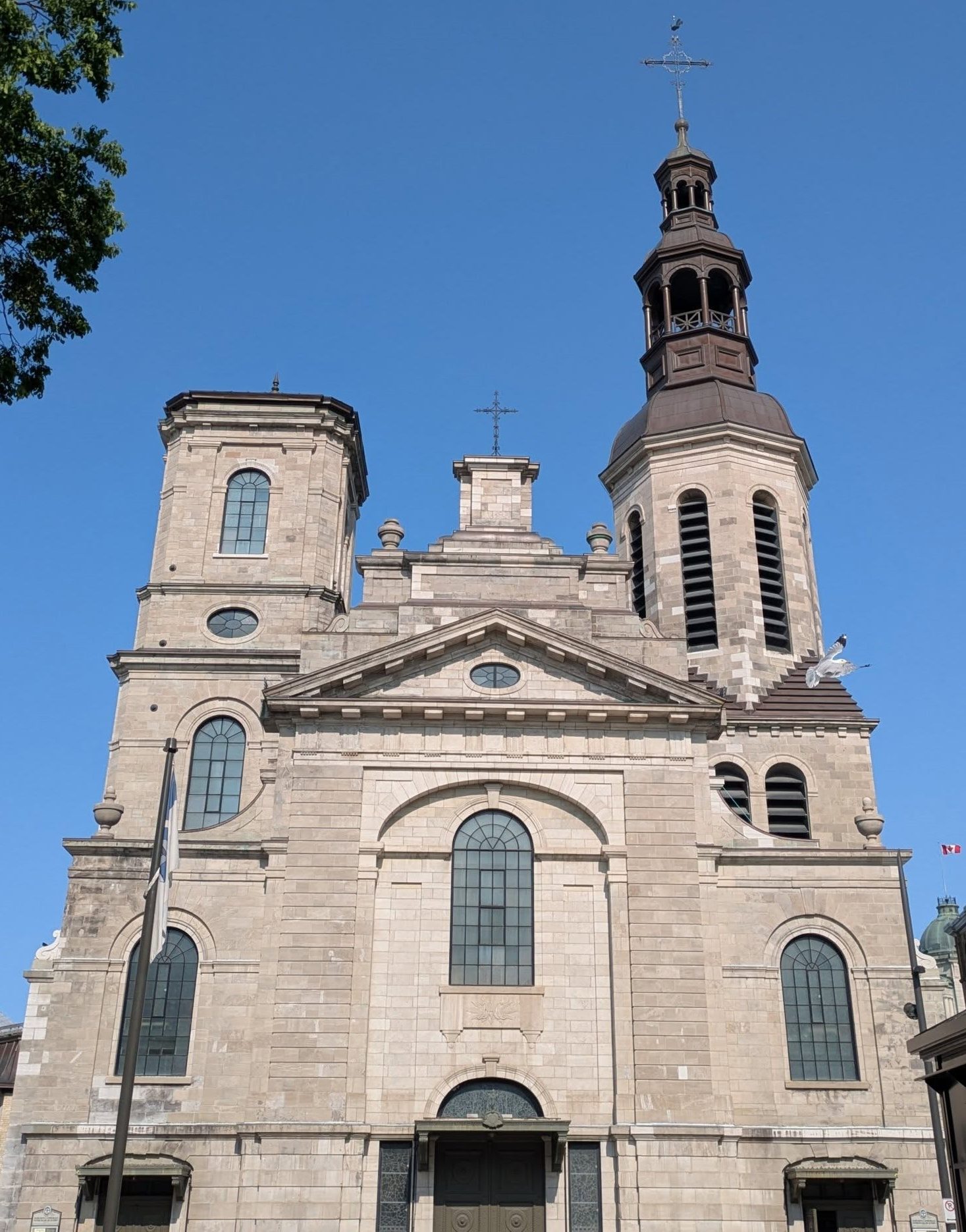
Next stop: church. La Notre-Dame de Québec to be exact. Although it’s not the exact church that was built by Champlain, it does sit in the same location, making it the oldest parish in the city (and thus in all of Canada). And with such a long history, Notre-Dame de Québec has a ton of interesting stories and facts surrounding it! First, it has burned down and been rebuilt at least four separate times since its original construction, which is pretty impressive in and of itself. You might also notice that there’s only one completed bell tower giving the church a unique, asymmetrical look. Well, that was actually due to a miscalculation on the architect’s part, which resulted in it being deemed unsafe to finish. Oopsies!
And while it might not have all its intended bell towers, it does have something super rare: a Holy Door. There are only a handful of Holy Doors in the world, the vast majority of which being in Italy, so this one (the only one in the Americas) is quite special. What is a Holy Door you ask? Well, it’s a bit like a spiritual carwash, but it’s only opened on jubilees, so we’ll all have to wait a number of years for the chance to walk through it and experience its power firsthand. What I can say is that, currently, it’s sealed very much like the Pope’s door during the conclave, which is still pretty cool to see!
Another prominent feature of Notre-Dame de Québec is the funerary chapel of François de Laval, Quebec’s first bishop. Laval was another highly influential figure in the early days of the colony, and for that reason, his name is another you’ll see all over Quebec. Notre-Dame de Québec is both a cathedral and a basilica, meaning it has a highly important functional role as well as a special, Pope-granted status. It is still the official seat of the Archbishop of the Québec diocese and has been since the 1600s. At its height, the region that was overseen by Notre-Dame de Québec stretched all the way from modern-day Quebec down to Louisiana, which might give a brief glimpse into just how busy (and influential) Laval and his contemporaries were back in the day.
Stop 6: Séminaire de Québec
While we’re on the topic of the city’s religious history, we should also take a look at the Séminaire de Québec, which is right next door to Notre-Dame. The Seminary of Québec is often touted as the oldest institution of higher education in Canada, and its buildings still house several schools today, including many departments of L’Université de Laval, the first French-language university in North America and one of the oldest universities in Canada. Within the original Seminary complex there is also a private high school as well as a significantly smaller, modern seminary, which continues to educate future Roman Catholic priests to this day.
Speaking of priests, I should probably mention that despite all this talk of churches and seminaries, today, Quebec is actually quite a secular place. The region has an extremely Catholic-centered history; however, it also experienced a massive shift in religious identity starting in the 1960s when Quebec went through what is called its “Quiet Revolution”. It was during this time that the people of Quebec starting feeling like the Church had a bit too much control over things like education, healthcare, and women’s rights, and instead of violently overthrowing anyone or anything, they opted to quietly step away, creating a variety of different public services and social policies in the process. Today, less than 10% of Quebecers are practicing Catholics, which is why a lot of the religious buildings in the city have been repurposed into schools, libraries, and cultural centers.
Another thing of note here in the Old Seminary’s courtyard is the amazing collection of architectural features on display. Throughout the city, you’ll notice a wide array of different building materials, styles, and structures, and this is partially due to the very distinctive French and British periods. Here, you can see a great example of what the early French period architecture looked like: steeply pitched roofs, unadorned windows and doors with small panes of glass, and natural stone walls covered in a thick white wash that helped to waterproof the structures. You can also see building that date back to the British period with their larger, more uniform stone blocks, double-door entryways, larger window panes and architectural details like arches and balconies.
Stop 7: Montmorency Park
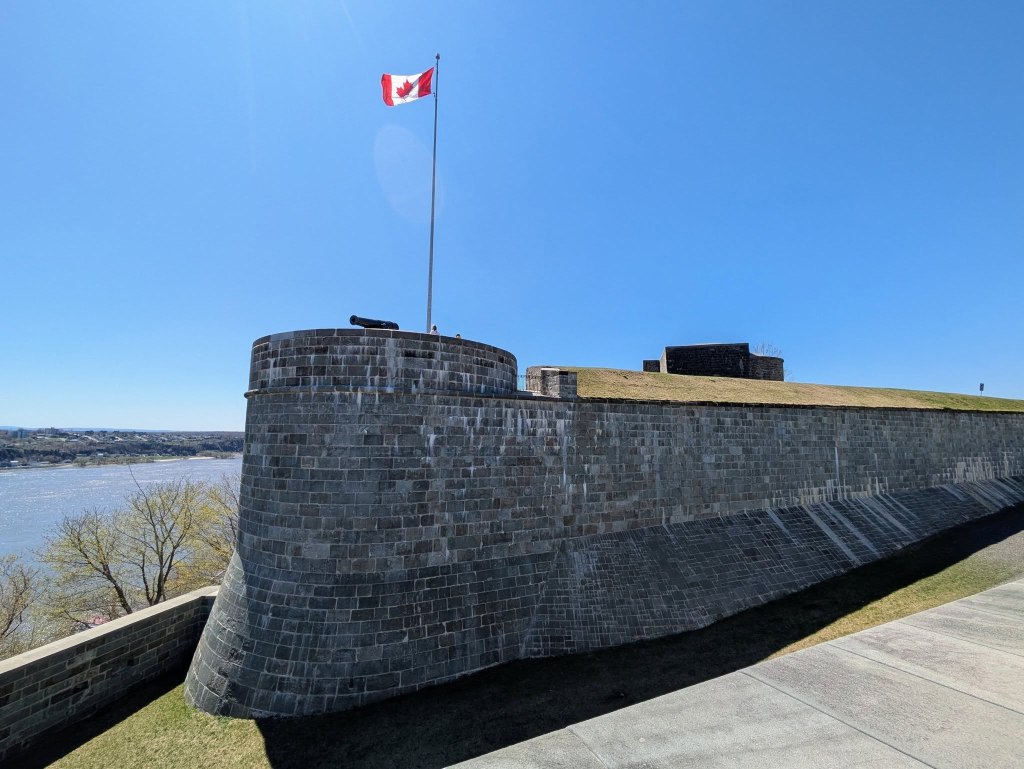
Now we’ve officially started our decent into Lower Town. From here in Montmorency Park, we have a great view of the Château Frontenac and some of the oldest of the city’s fortifications. The first fortifications of Québec were built in the 1600s, but others weren’t completed until much later. In fact, the city wasn’t 100% walled-in until after 1820 when British troops finished the job. It was quite a job, too, because the walls stretch over 4.5 kilometers (3 miles). At one point, there were over 300 cannons lining the walls, which really highlights the fact that Québec was chosen with defense in mind.
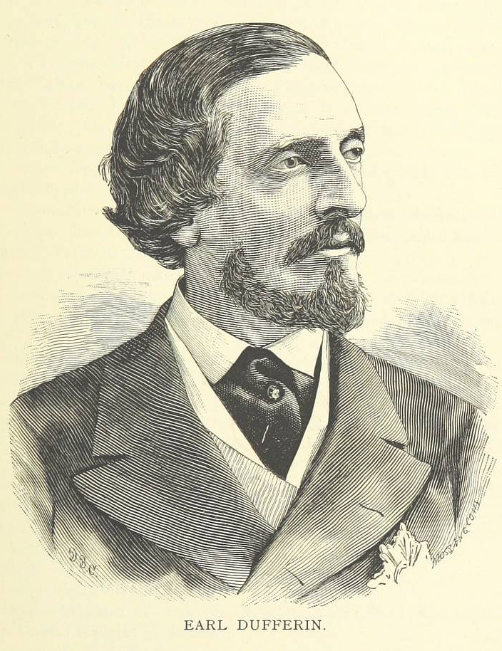
Of course, eventually, the battles came to an end and things started settling down in North America, and Quebecers had to decide what they wanted to do with their fort of a city. Many wanted to tear down the walls and start over with more of an open-concept. However, one of Canada’s early Governor Generals, Lord Dufferin, had a different idea. He had traveled extensively and knew that Québec’s walls were an architectural jewel that needed to be preserved, and thankfully, he was able to persuade everyone else. By preserving the fortifications, enlarging the city gates, and building a massive public boardwalk (one that is now named in his honor), Lord Dufferin ensured Québec City would be welcoming tourists long after he was gone.
Looking around Montmorency Park, it’s not too hard to imagine it as it was in the past, a blank canvas of farmland. This is actually where the first farm in New France was located, which was created by two of the early settlers: Louis Hébert and Marie Rollet (other famous names of Québec). As the farm gave way to more modern building projects, Montmorency later became the site of the first parliament buildings of Quebec and later Lower Canada. In 1864, the British North America Act, a founding document of modern-day Canada, was actually drafted here. Unfortunately, a fire destroyed the last of the buildings in 1883, which is when the city decided to move Parliament outside the Old Town, a little further from the cannon fire (better safe than sorry, non?).
Stop 8: Casse-Cou Stairs
As we continue to make our way down, you really get to feel the immensity of Cap Diamant! Upper Town sits about 60 meters (200 feet) above Lower Town, which is why there are approximately 30 staircases throughout the city connecting the two. The oldest and most famous staircase is actually the one we just passed: Escalier Casse-Cou (or “Breakneck Stairs”). This staircase is located in the oldest part of the city and actually has a bit of a rough history. The stairs, much like the neighborhood itself, were often left in disrepair, which led to many accidents, thus the name. It’s hard to imagine now, but this neighborhood, Quartier Petit-Champlain, used to be the bad side of town. After the ship yards died out, all that was left was a bunch of brothels and bars, which is exactly why most Québec moms told their kids to stay away from this area!
That is, until the 1970s when a group of local entrepreneurs saw the potential and decided to take on the challenge. They bought up several buildings in the area, refurbished them, and started a co-op that invited local artists and artisans to live and work here in an effort to highlight Québec culture and revitalize an important and historical part of the city. They were extremely successful, and eventually the city joined in by refurbishing other parts of Petit-Champlain, making it a must-see part of the city today. I always recommend this area for its shops, restaurants, cafés, etc. Rue Petit Champlain is often said to be the first commercial district of North America, and looking at all the businesses here today, that’s easy to believe!
Speaking of businesses, another quite lucrative one can be found right at the base of Casse-Cou Stairs, and that’s the funicular (or inclined elevator). If you don’t want to take the stairs all the way back up, you can always let your wallet do the work for you! It’s up to $7 a person now, but at least you can rest easy in knowing you’re also experiencing a bit of history because the funicular dates back to 1879. It’s also located in another famous person’s house: Louis Joliet. If that name sounds familiar to you, that’s probably because he has cities named for him all over the US and Canada because he was one of the first to map the Mississippi River, and he grew up right down the street! How cool is that?!
Stop 9: Place Royale
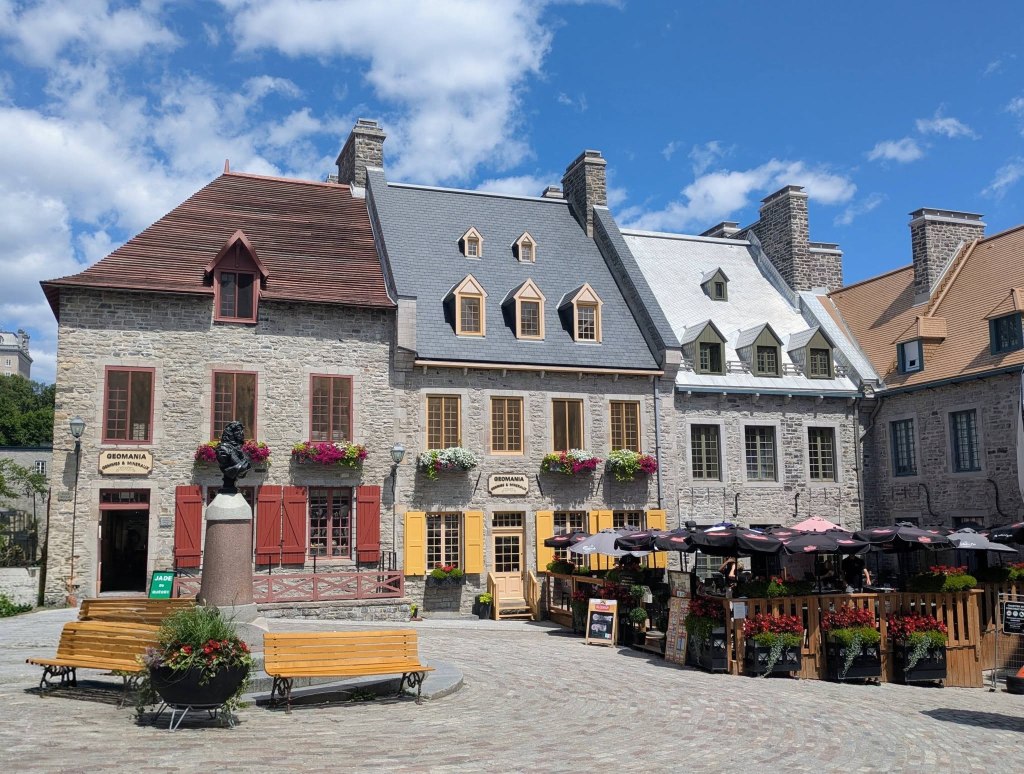
But the heart of Lower Town has to be Place Royale (or Royal Plaza). This was where the first settlers stepped off the boat and began their lives as a new colony. The first permanent buildings (or habitations) were built on this square along with the first church of Lower Town (another one of the oldest churches in the country). Also in the square, stands a bust of King Louis XIV, and although it isn’t the same bust from the 1600s, there has almost always been a bust in that exact spot, forever linking the histories of Quebec and France.
Interestingly, the king never actually stepped foot in Quebec even though he was the lawful ruler during much of its early history, but he did manage to help the colony from afar. In those early days, the colony struggled with population issues. In particular, not enough women were there to ensure the desired population growth, so King Louis put his money where is mouth was and offered to give a sizeable dowry, free transport, and pieces of land to any women willing to journey to New France and start a family. About 800 women took him up on his offer, the majority of which being orphans, widows, or women of the lower classes who felt that this was their best option for a stable future. Over time, they became known as Les filles du roi (or the Daughters of the King).
These Daughters of the King made up such a large percentage of the early population in Quebec that approximately 2/3 of modern-day Quebecers can trace their linage back to one of these brave women. Several North American celebrities can do the same: Hillary Clinton, Angelina Jolie, and Madonna being among them. Honestly, Québec City has a lot of ties to various celebrities. Since the city looks so much like a movie set and also has the practical, money-saving advantage of being on the same continent as Hollywood, many movies have been filmed here over the years. Alfred Hitchcock’s “I Confess!” and Steven Spielberg’s “Catch Me If You Can”, for example.
Another standout feature of this square is the series of buildings all with different roofs. These were actually added during a reconstruction phase to show the evolution of changes the colonists experienced as they learned what worked and didn’t work in Quebec. You see, we get an average of 3 meters (10 feet) of snow every winter and temperatures regularly drop below -20°C (-5°F), which means in the early days, fireplaces were essential. Unfortunately, that also meant that fires were commonplace. Due to the compounding challenges of lots of snow, very cold temperatures, and the regularity of fires, there was a lot of trial and error needed, particularly with the roofs: cedar was too flammable, slate was too brittle, but it turns out, tin was just right, which is why it’s still one of the most common roofing materials in Quebec today.
Stop 10: Rue Sous-le-Fort
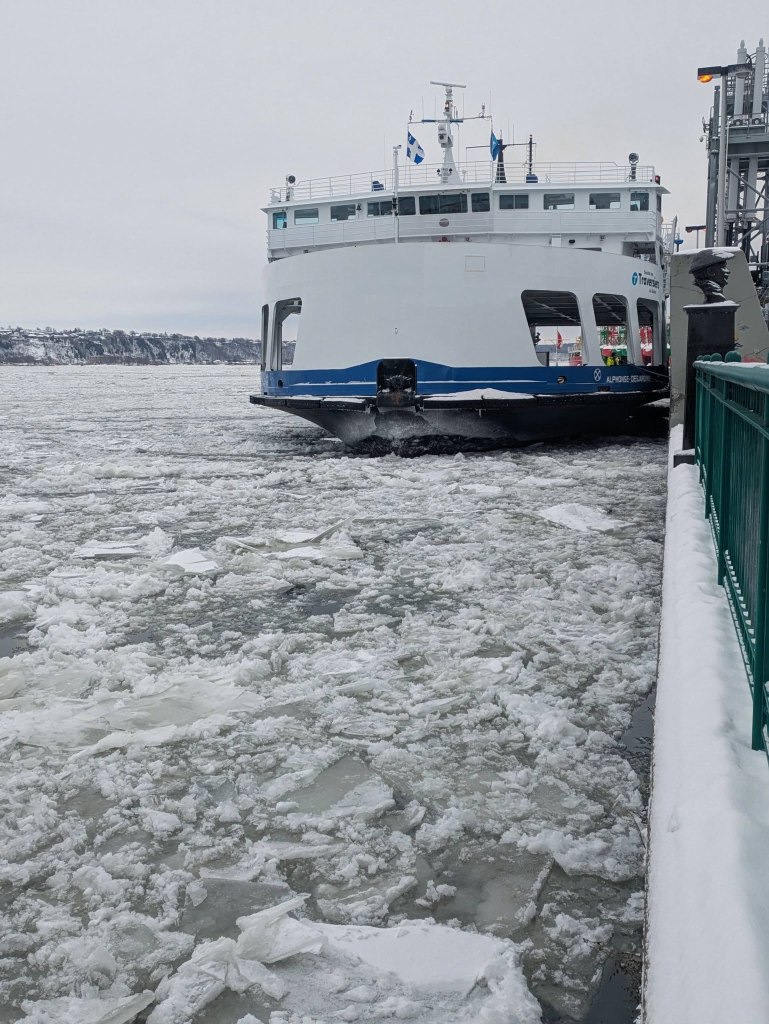
And now we’ve officially come to the last stop on this whirlwind tour: Rue Sous-le-Fort or Under-the-Fort Street. From here, we can see where the city meets the river. The ferry that travels across the St-Lawrence to Lévis (the oft-forgotten little brother of Québec City) is just down the road. Nearby, you can also find sunset cruises or whale watching tours departing from the quays; this is where the river starts opening up to the ocean after all. When there’s no ice in the water, you might also see cruise ships and yachts docking at the Old Port, which I like to imagine is just as exciting as when Champlain and other early explorers turned up in their ships.
From Lower Town, it’s easy to imagine how tough it would have been to take Québec City by sea. The British only managed a win because they fought on the Plains of Abraham (flat ground beyond the walls of the city). During the American Revolutionary War, Generals Benedict Arnold and Richard Montgomery thought they’d give it a shot, but it went very badly for them, and no one has tried since. It’s so amazing that everywhere you look in Québec City there’s another piece of the gigantic puzzle that is our history just waiting to fit into place. One of Québec City’s nicknames is The Old Capital, but I see it as more of an entryway. Here you can enter North America, but you can also enter the annals of history. Hope you enjoyed the journey!
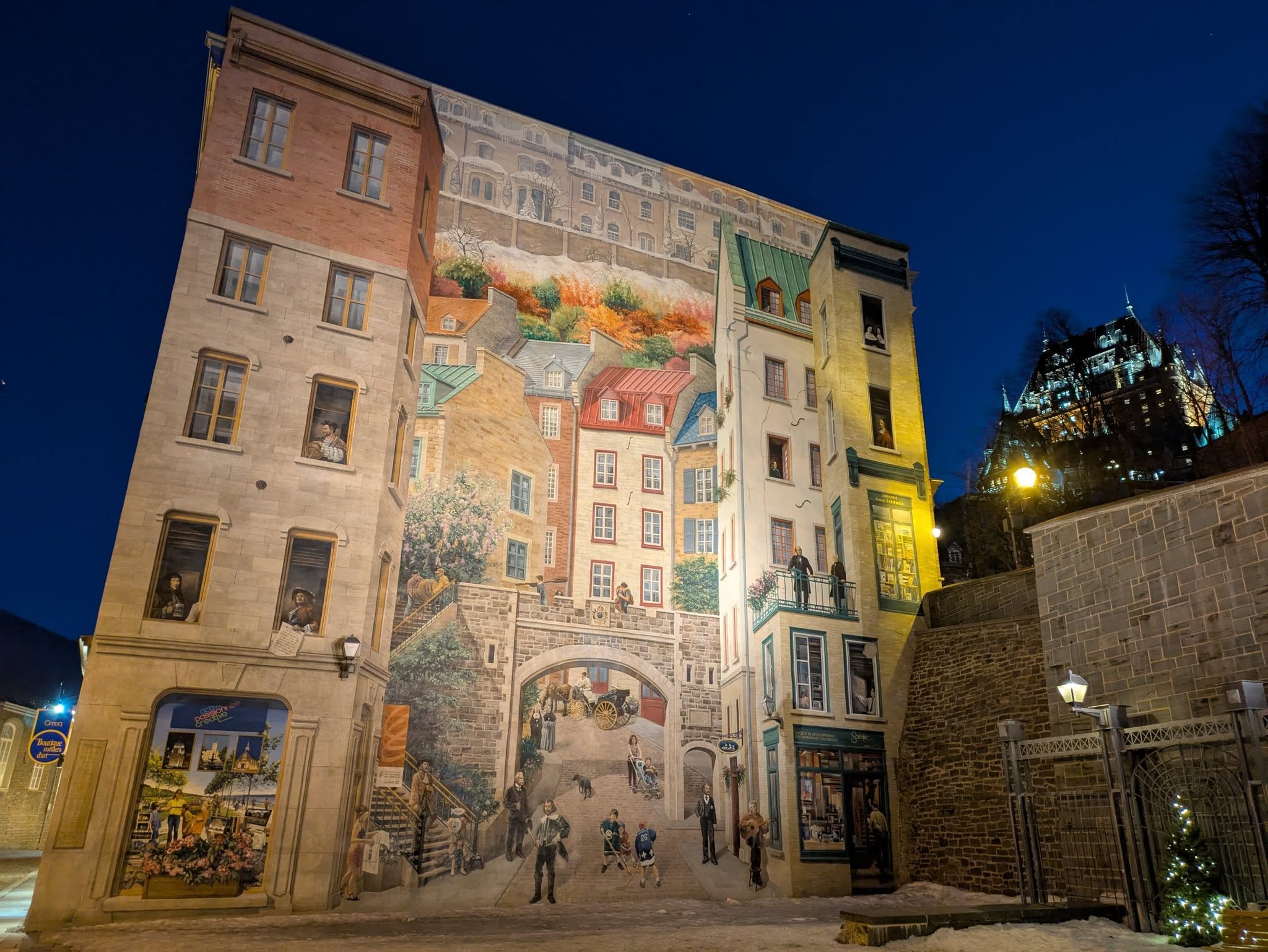
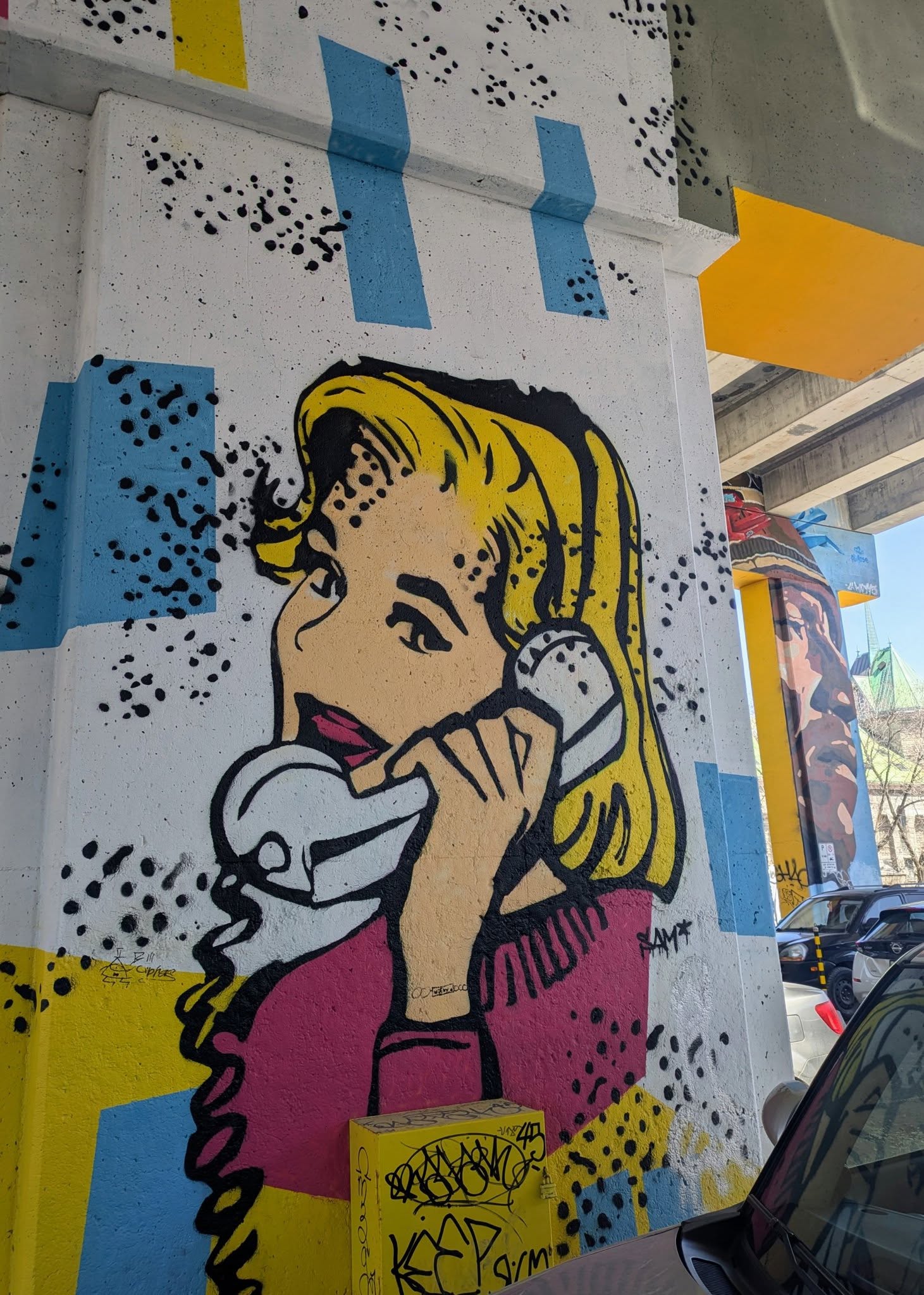
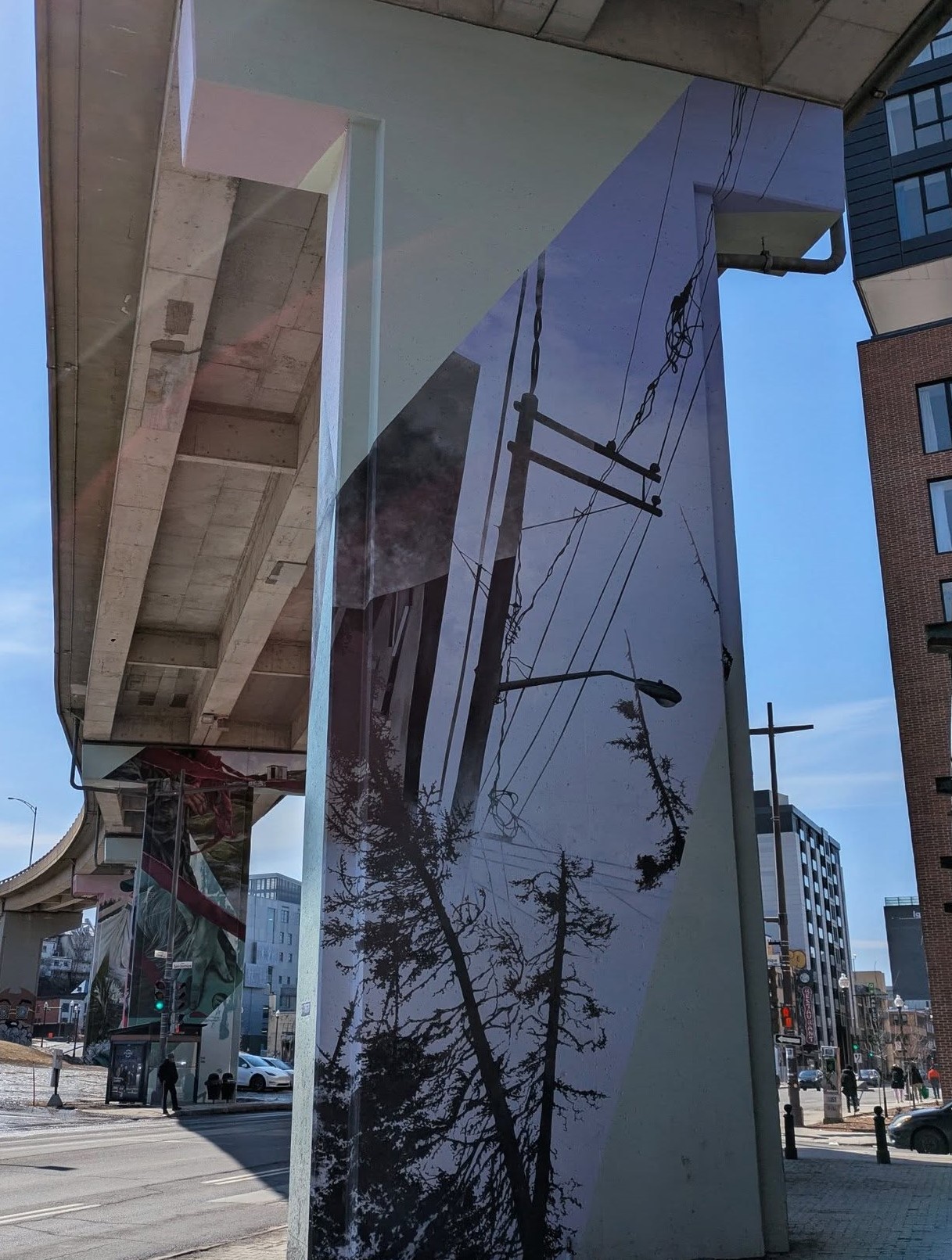
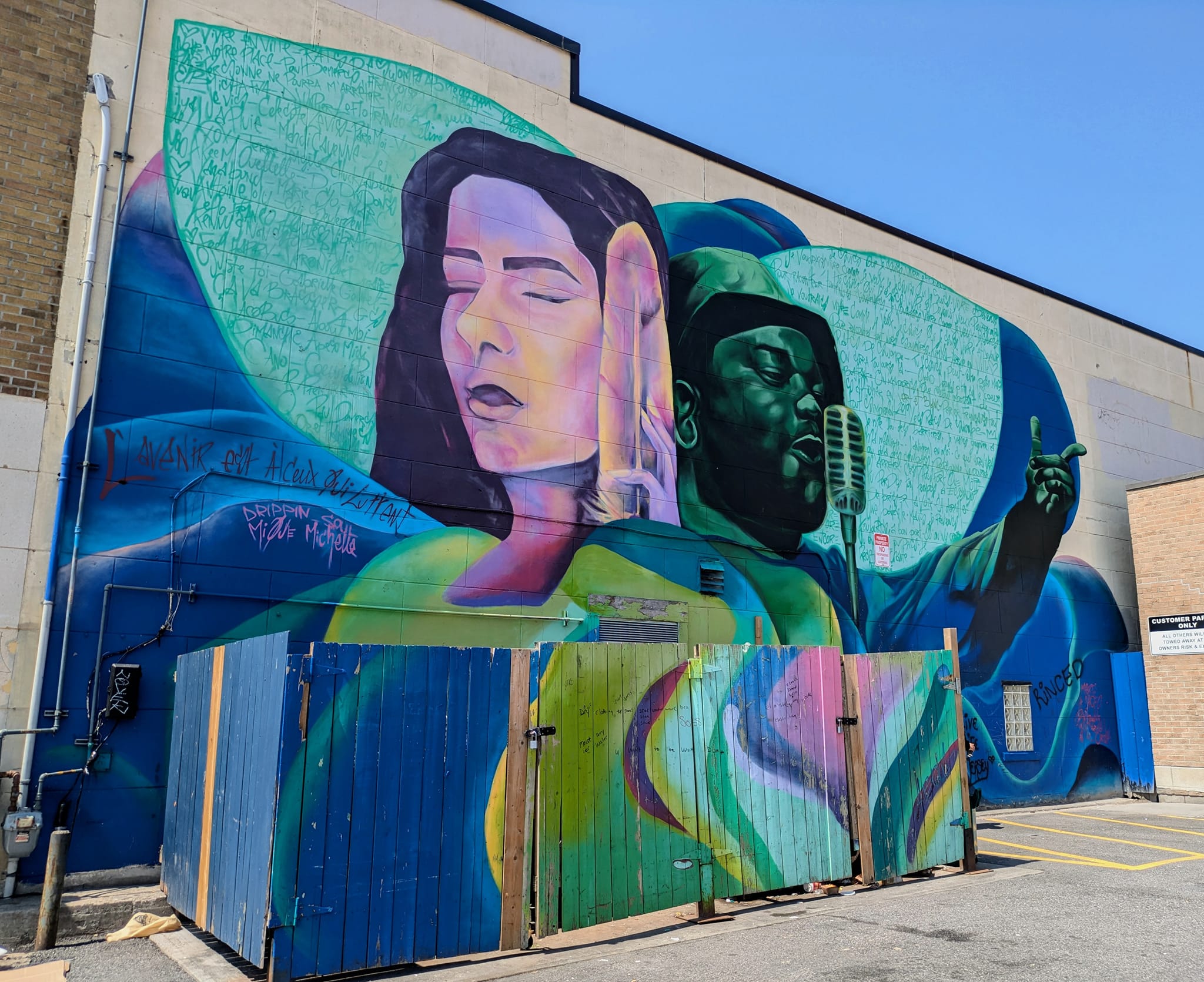
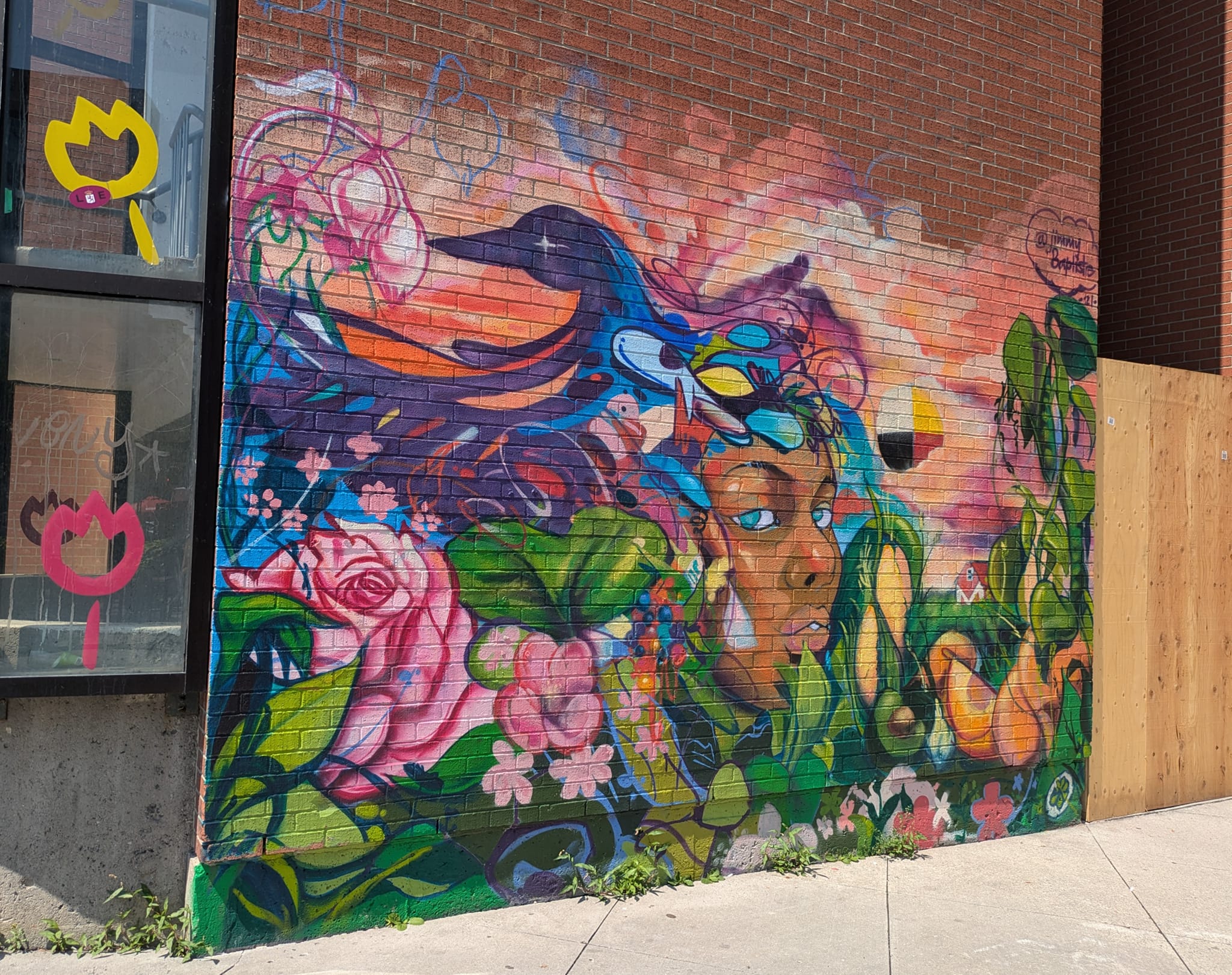
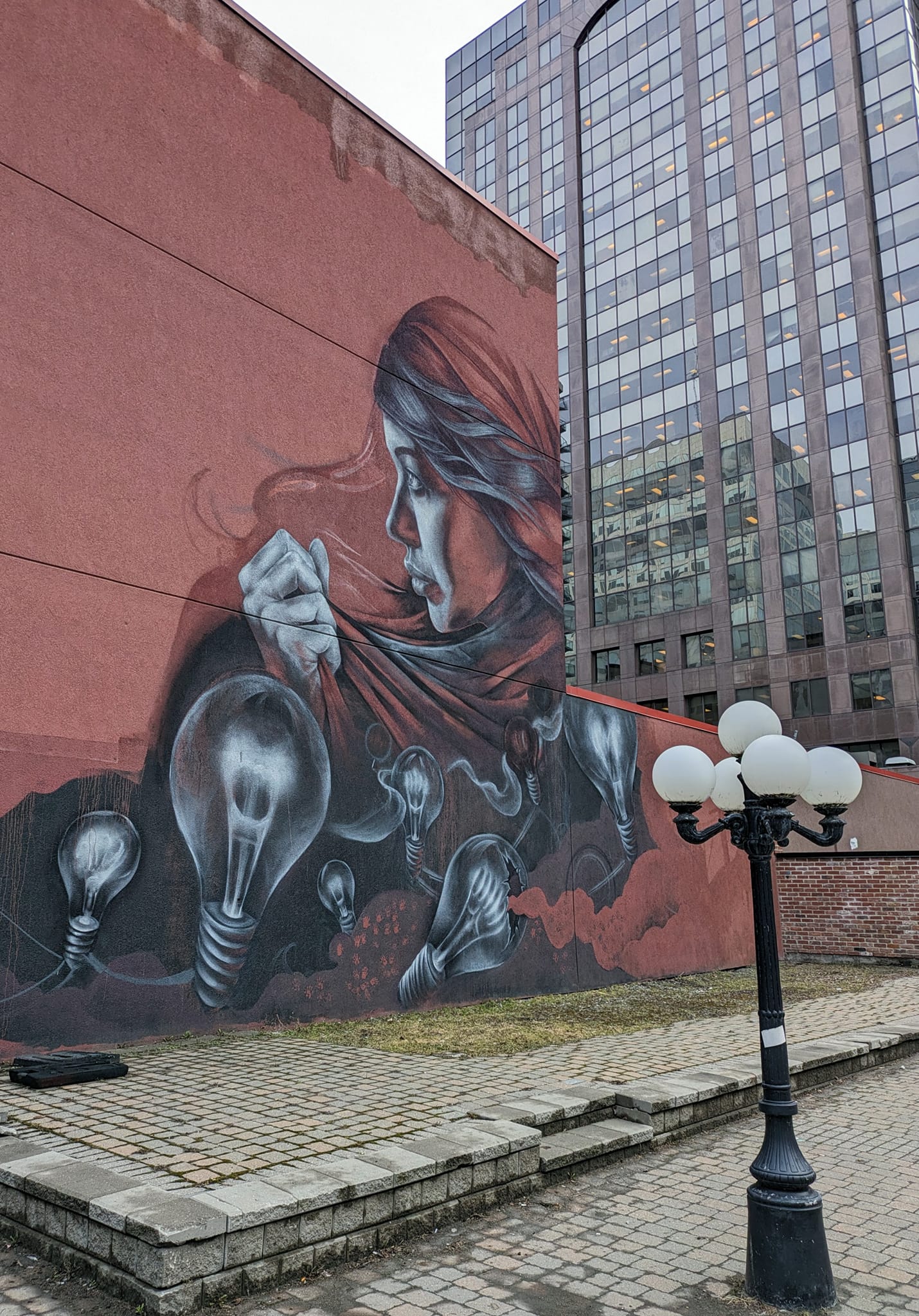
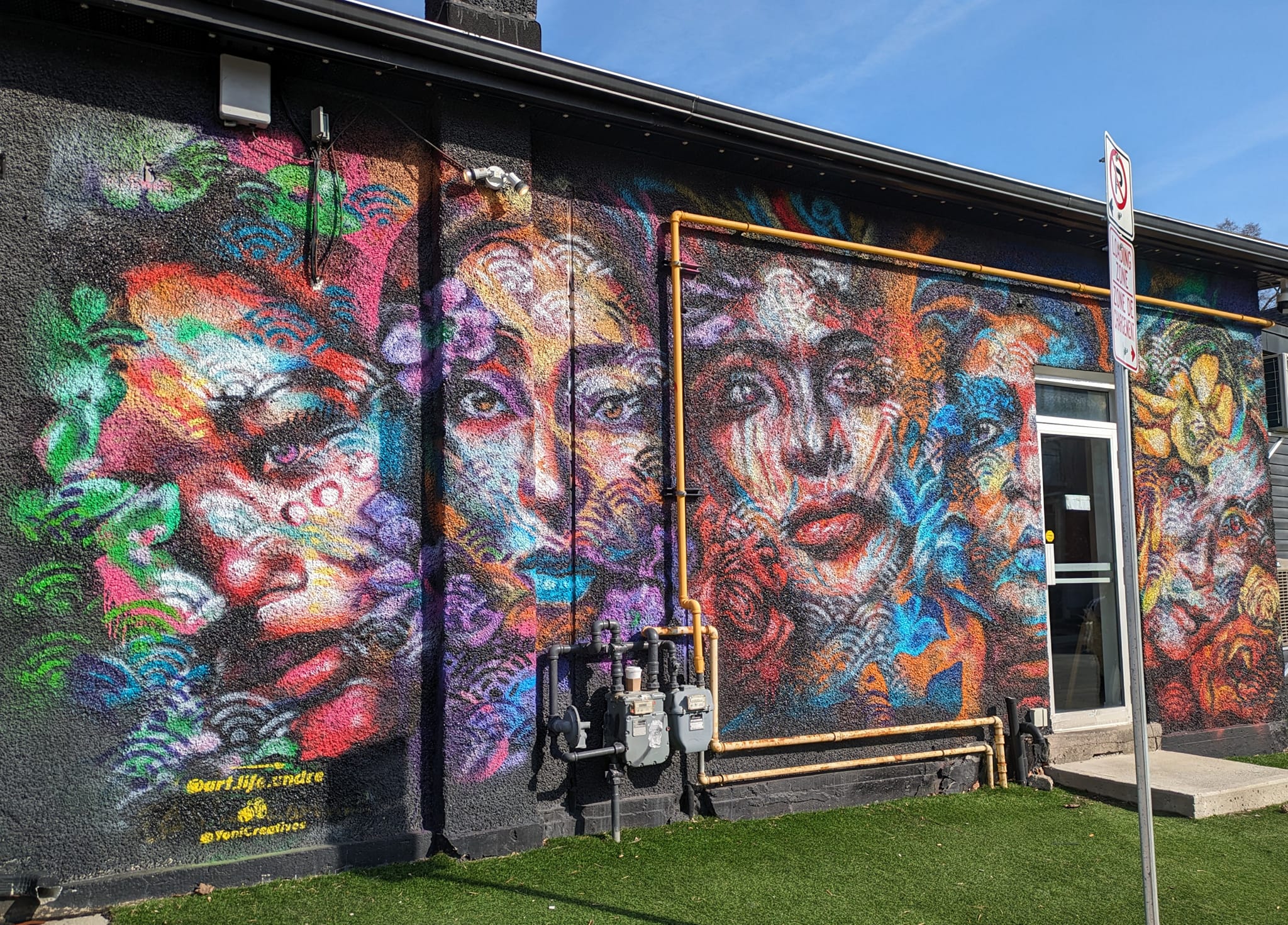
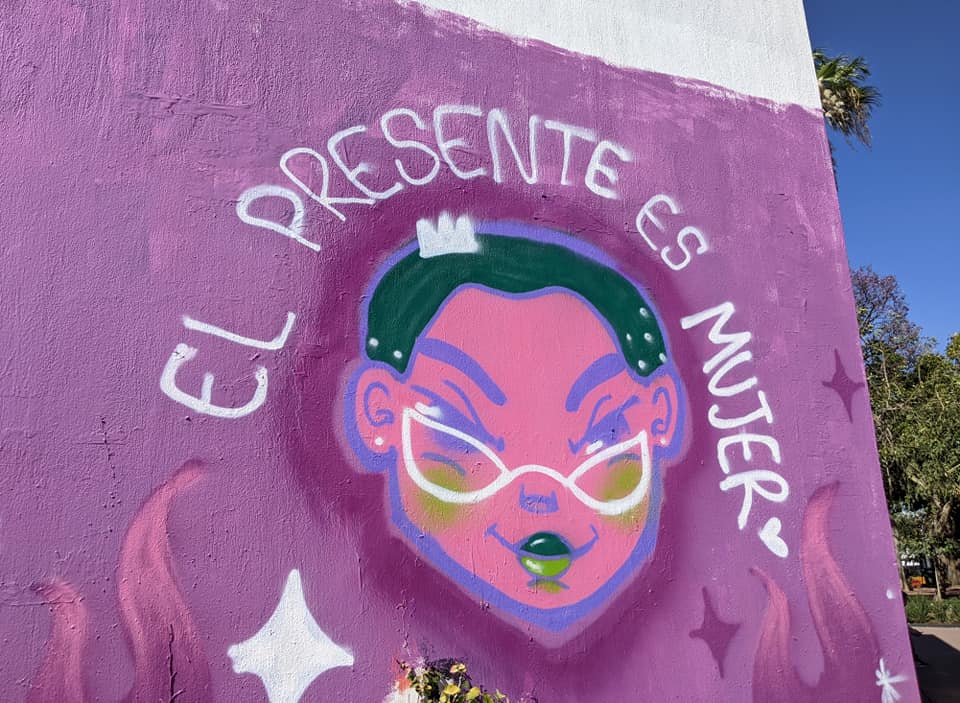
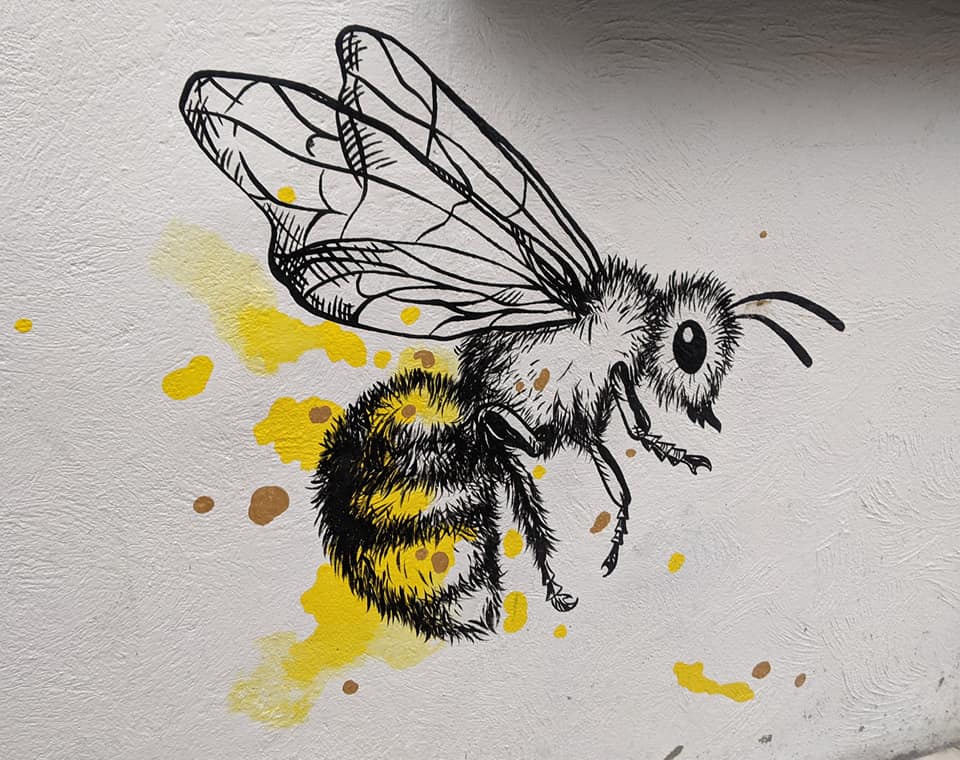
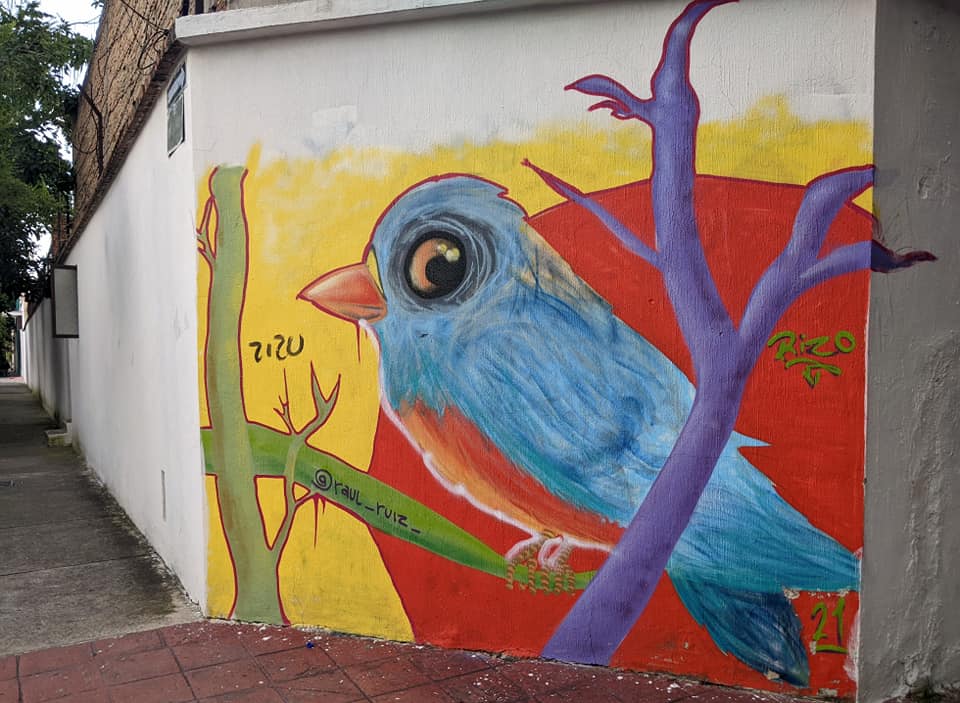
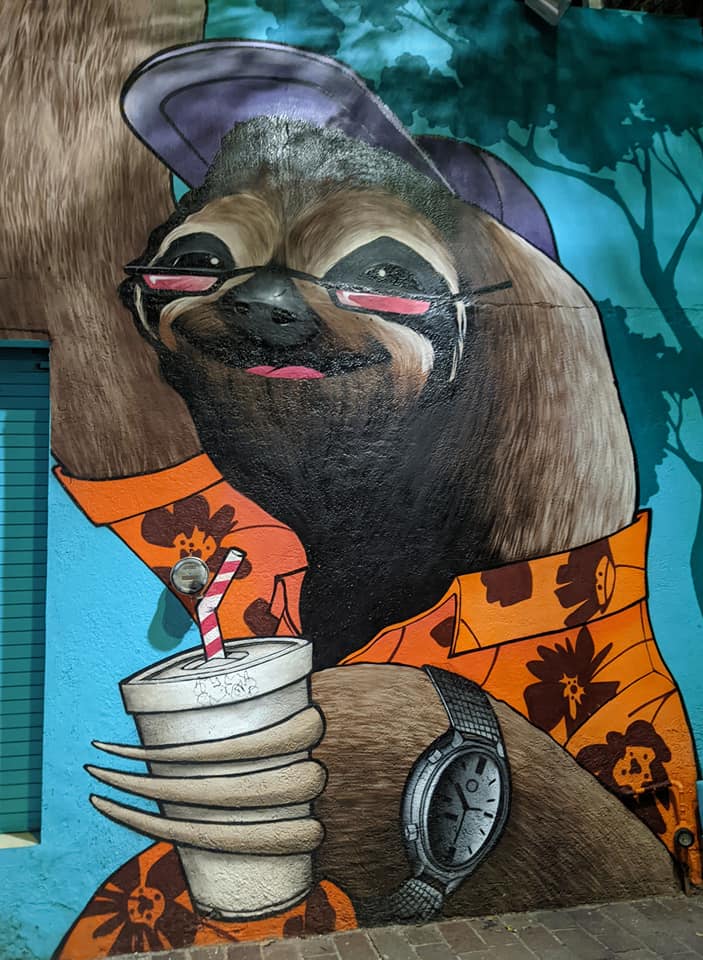
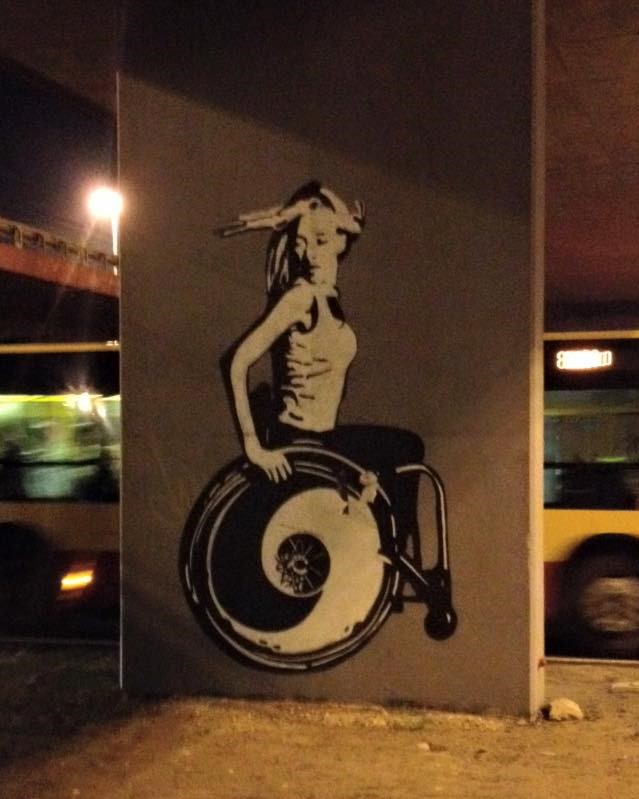
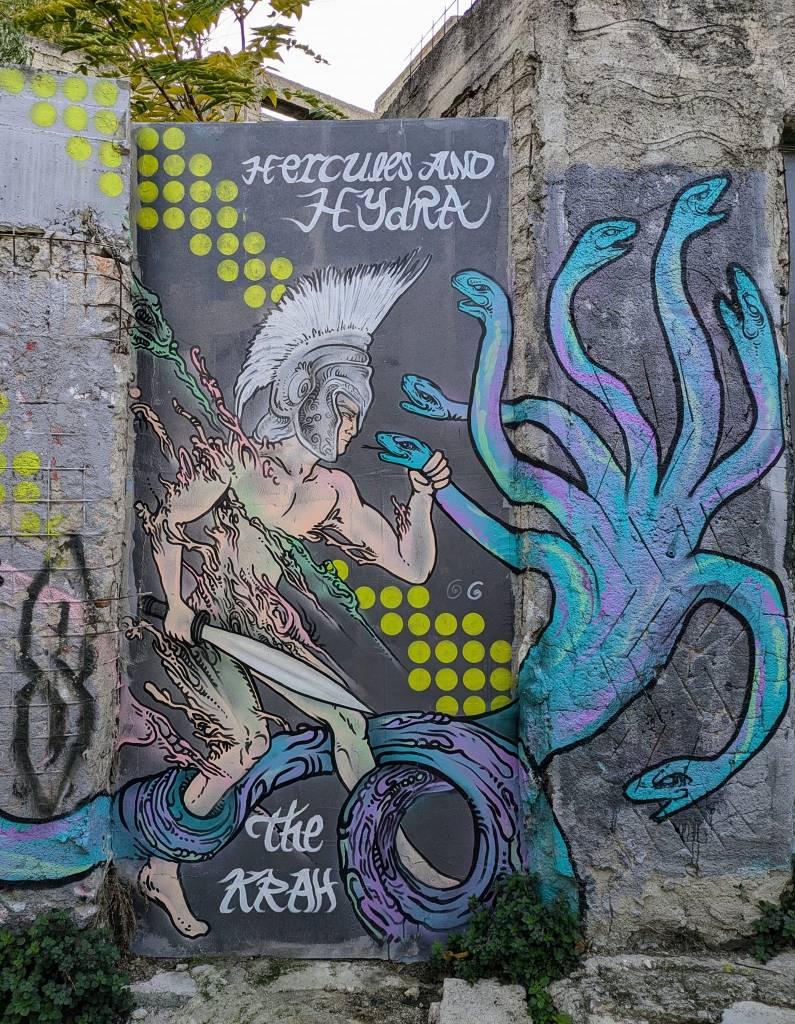
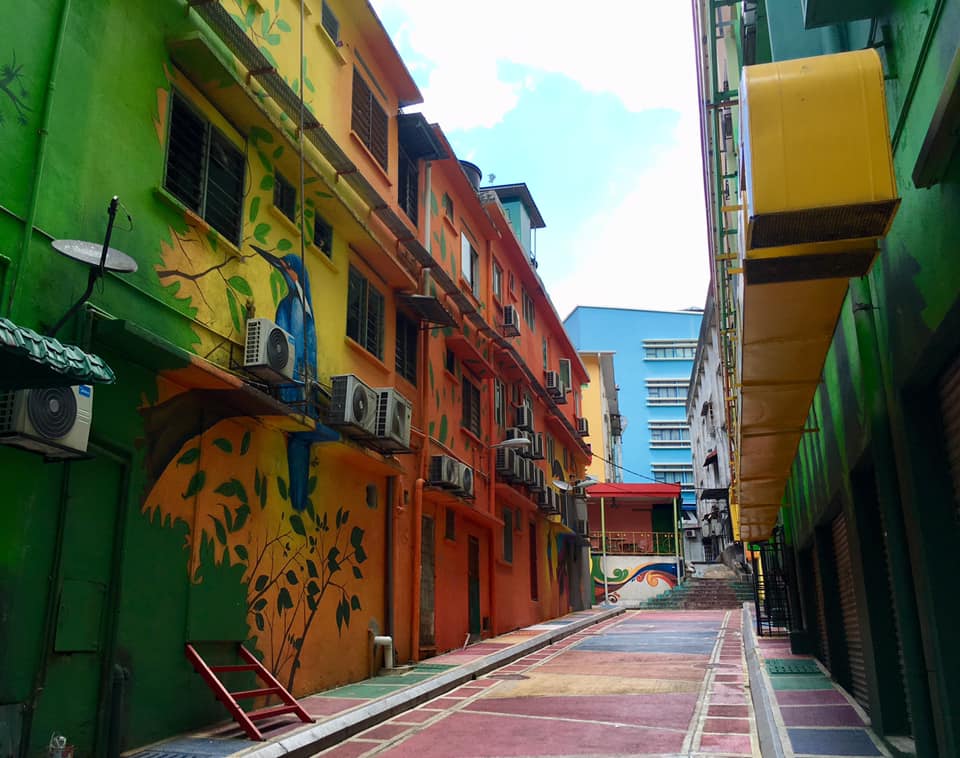
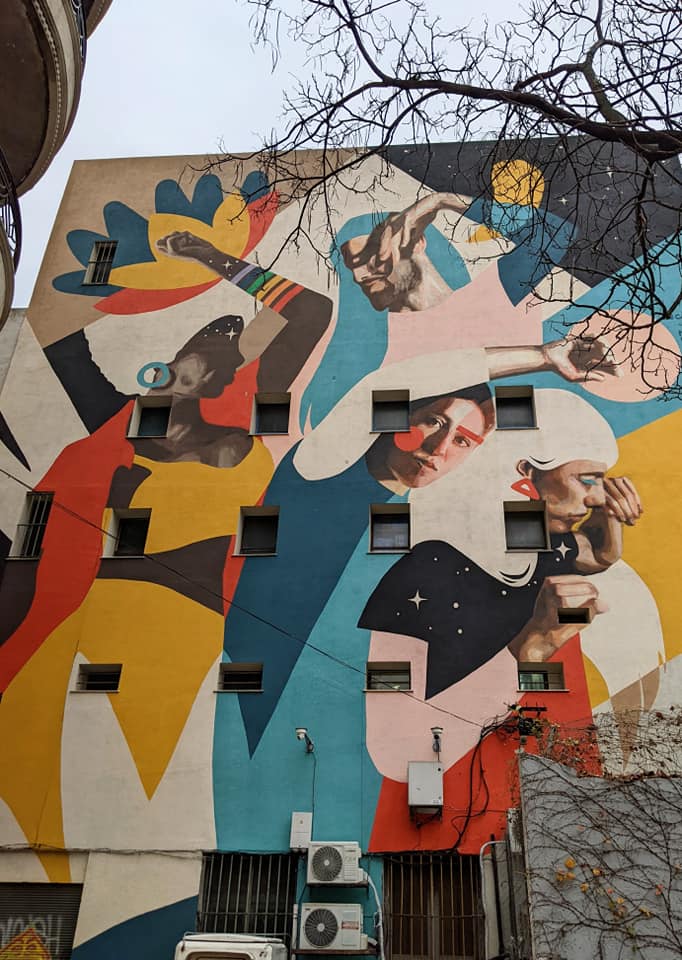
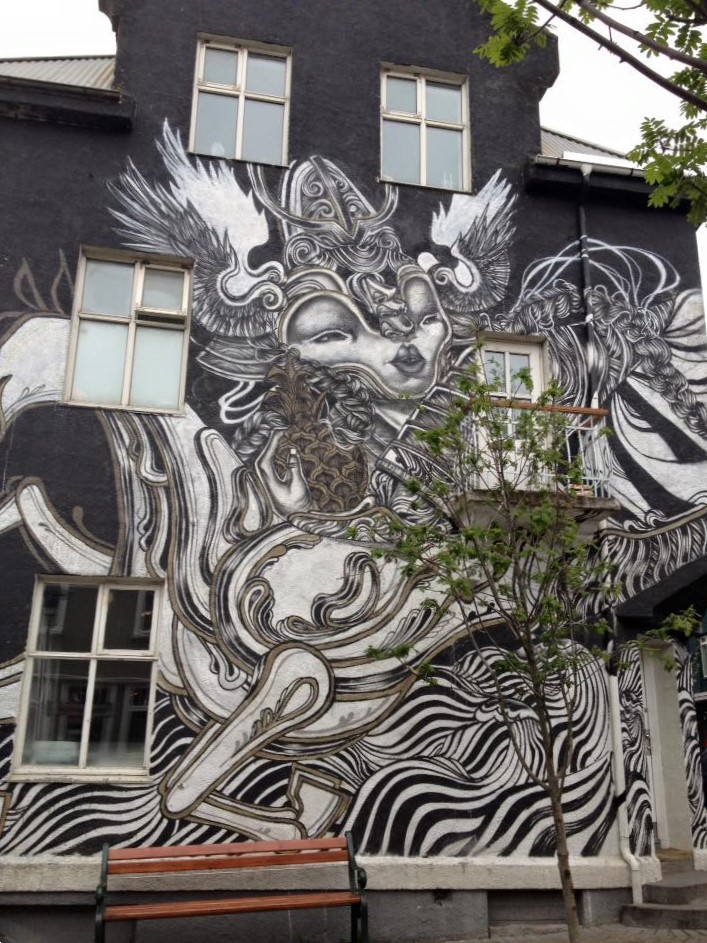
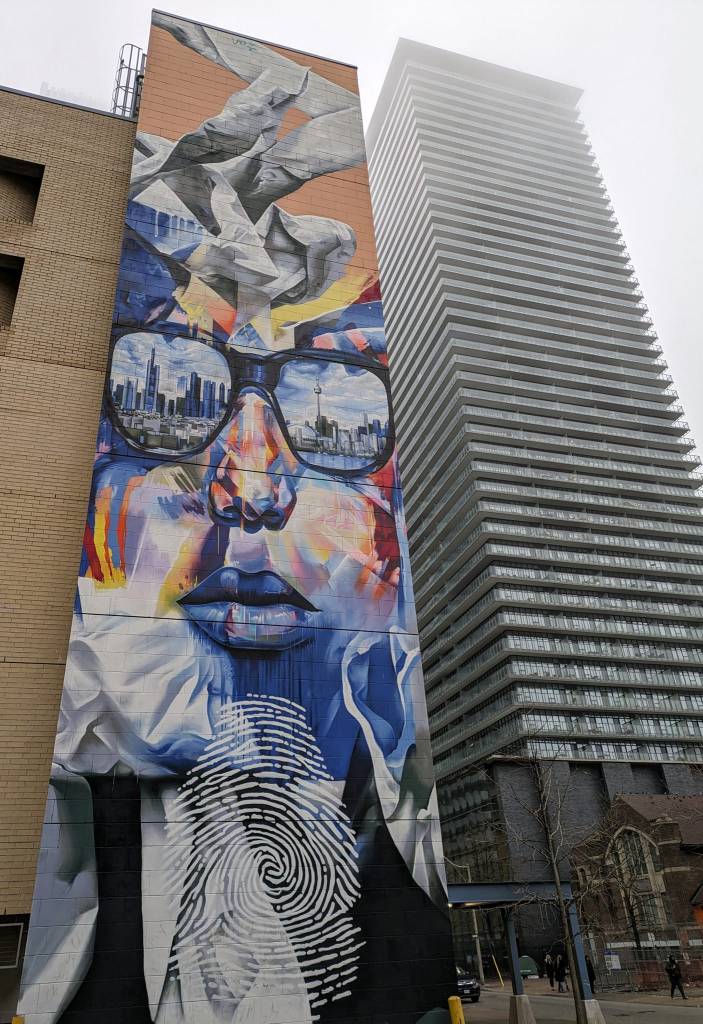
Over the years, I have developed a huge admiration for murals. At first, I saw them as purely decorative, something colorful to brighten up a dull corner of any given city, but the more time I spent in different cities, the more I amassed a photographic collection of their murals, and that’s when I started to notice different themes emerging. Whether the artists were telling a story, alluding to history or social issues, or just having fun, as a collective, murals seem to embody the culture around them. Here are a few of my favorite examples from some of my favorite cities:
Québec City
Québec is still new to me, but upon my first observations, I’d say Québec is proud. This city is proud of its unique history, its industrious people, and even its imperfections.
Ottawa, Canada
Ottawa is inclusive. This capital city is basically a microcosm of Canada’s Mosaic – there’s a little something from everyone on display here.
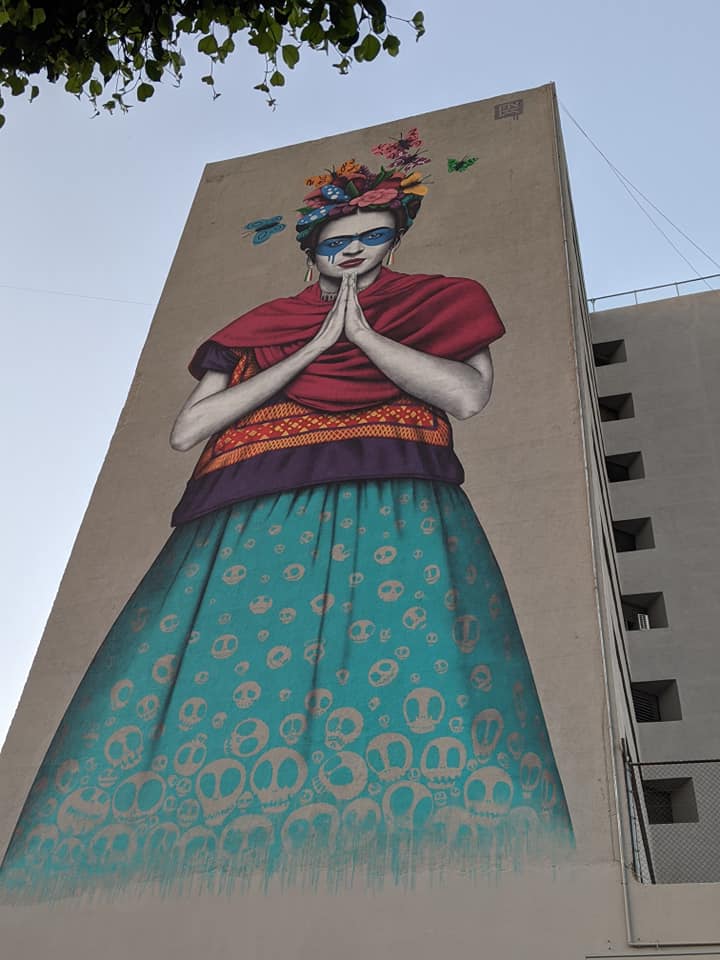
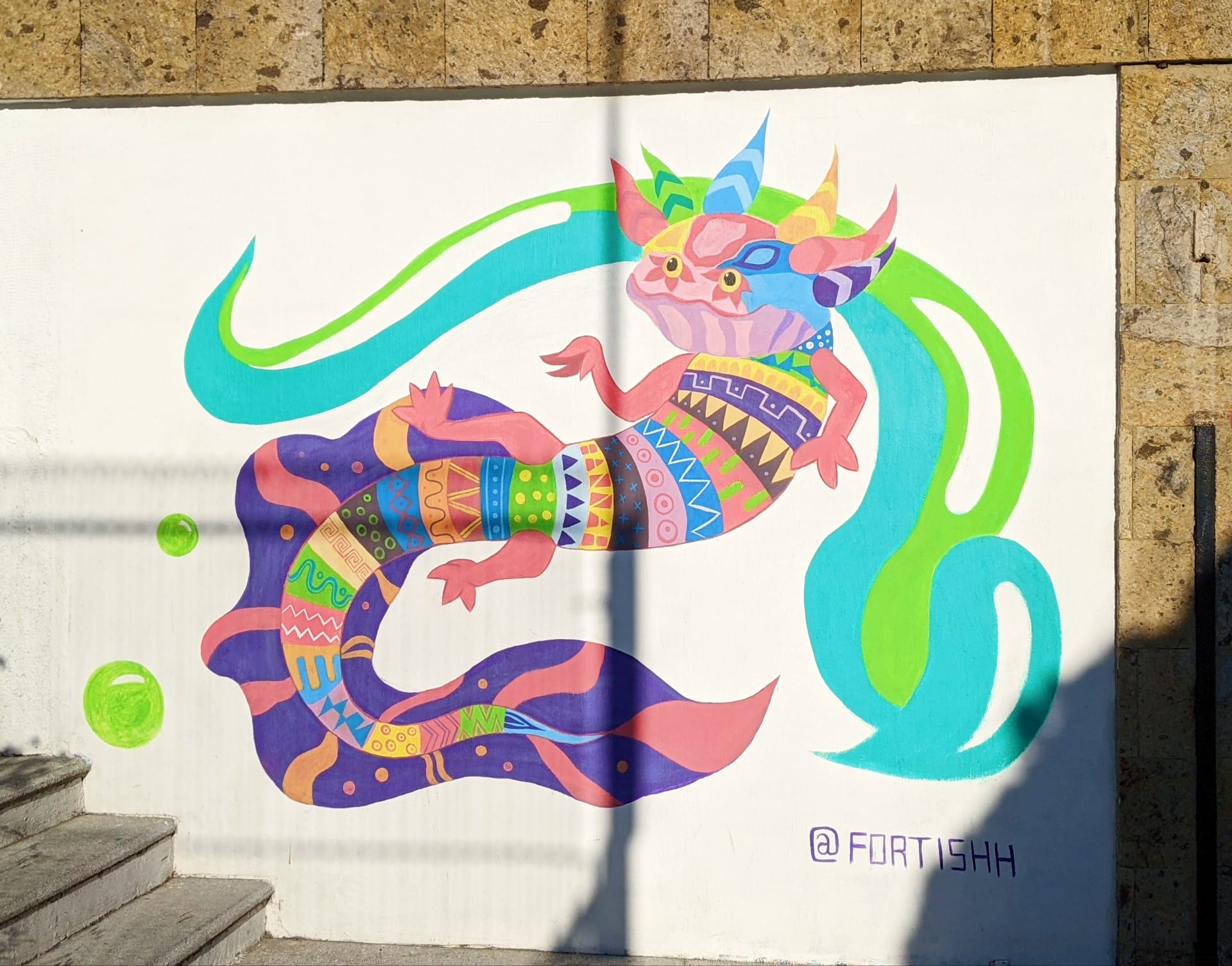
Guadalajara, México
Guadalajara is vibrant. This city, and much of the country really, is so alive and so fun, and that is immediately evident in its street art.
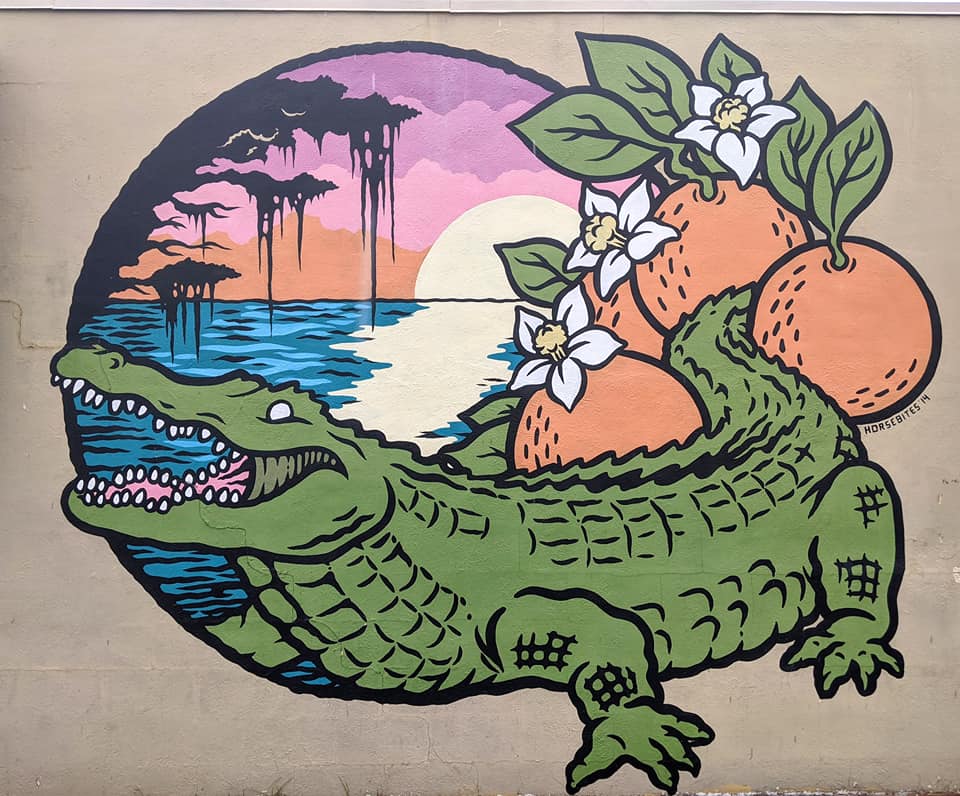
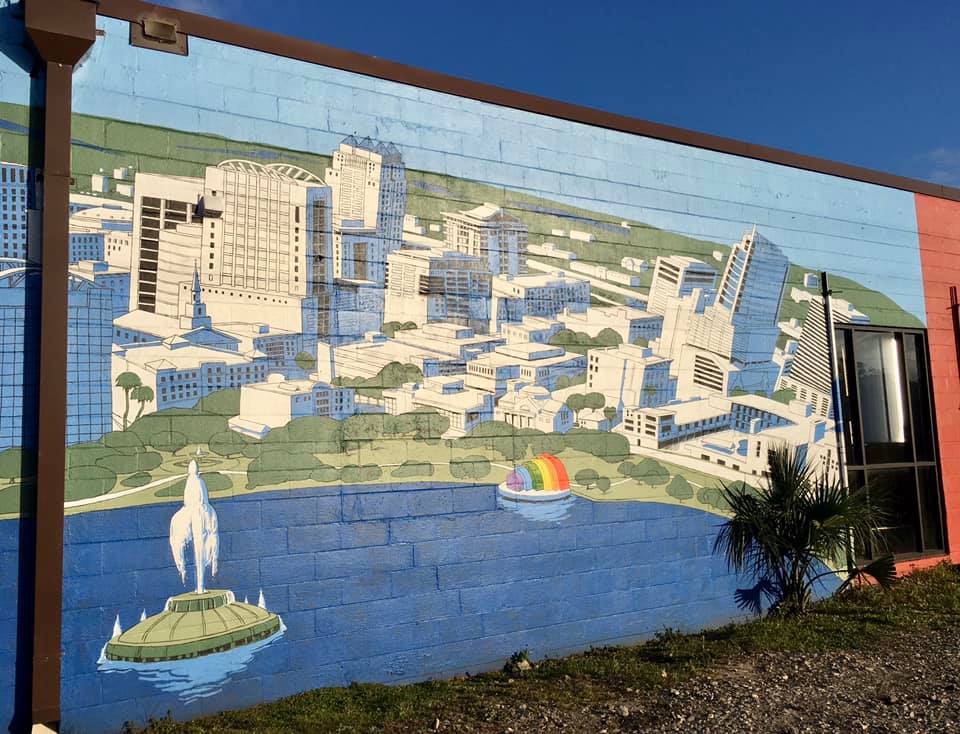
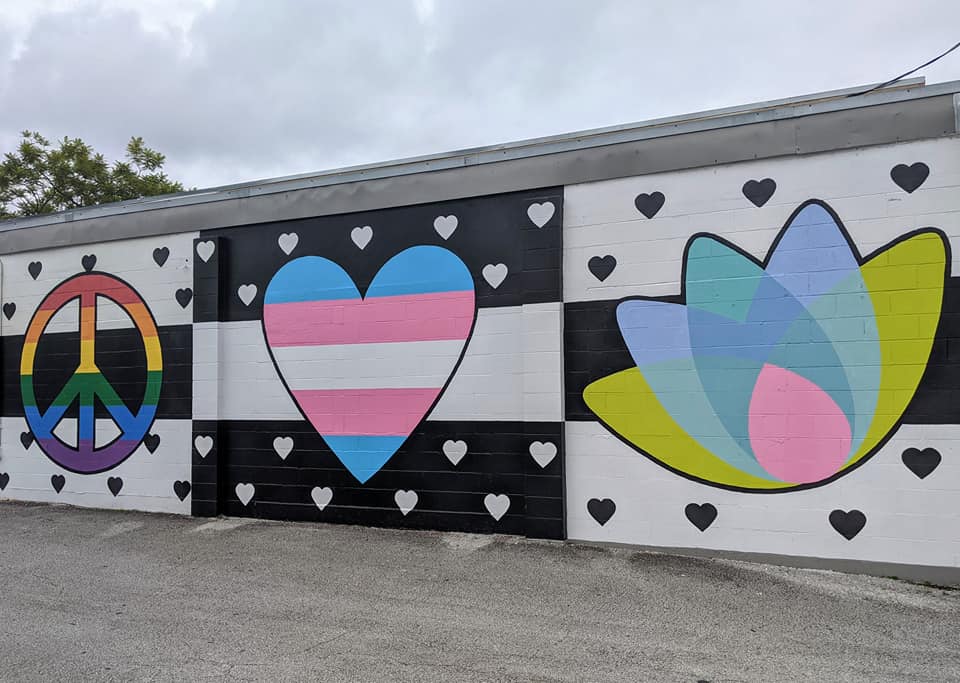
Orlando, Florida
Orlando is colorful. The people here are about as colorful as they come, and all those different cultures and backgrounds come together to make the beautiful rainbow that is Orlando.
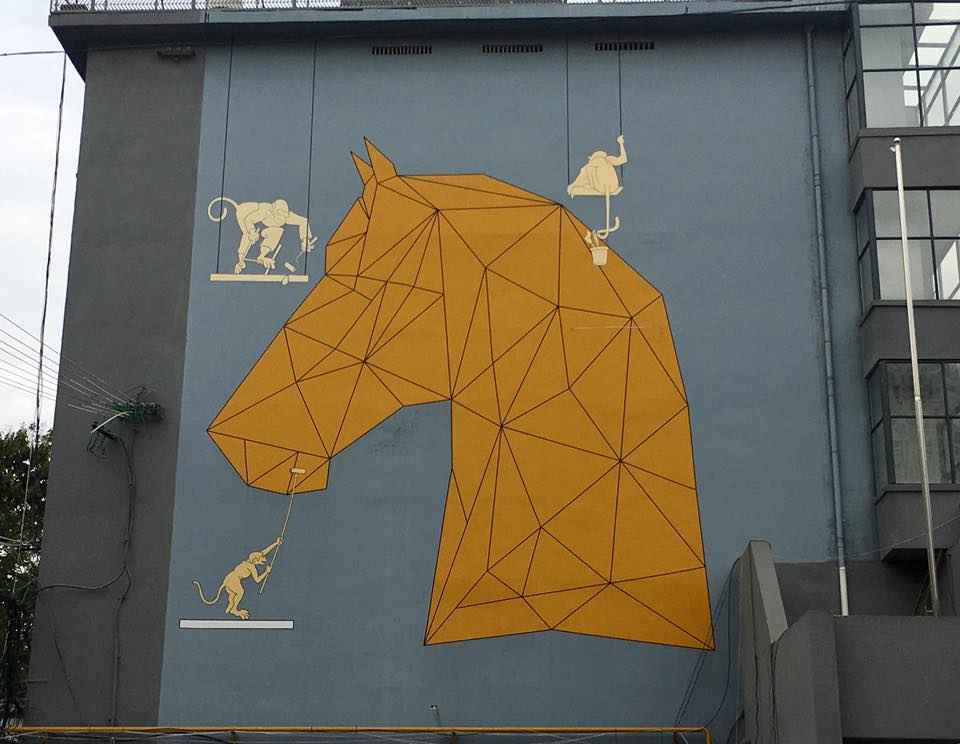
Hefei, China
Hefei is prudent. This is a place where art and function collide. Like the city and its inhabitants, the art here is generally purposeful as well as captivating.
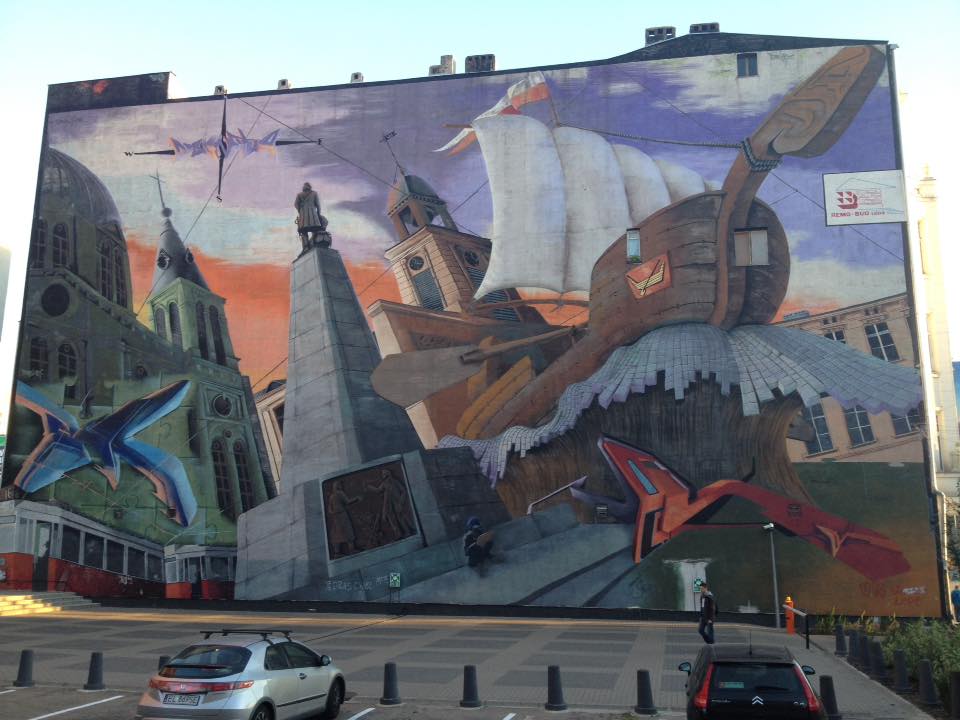
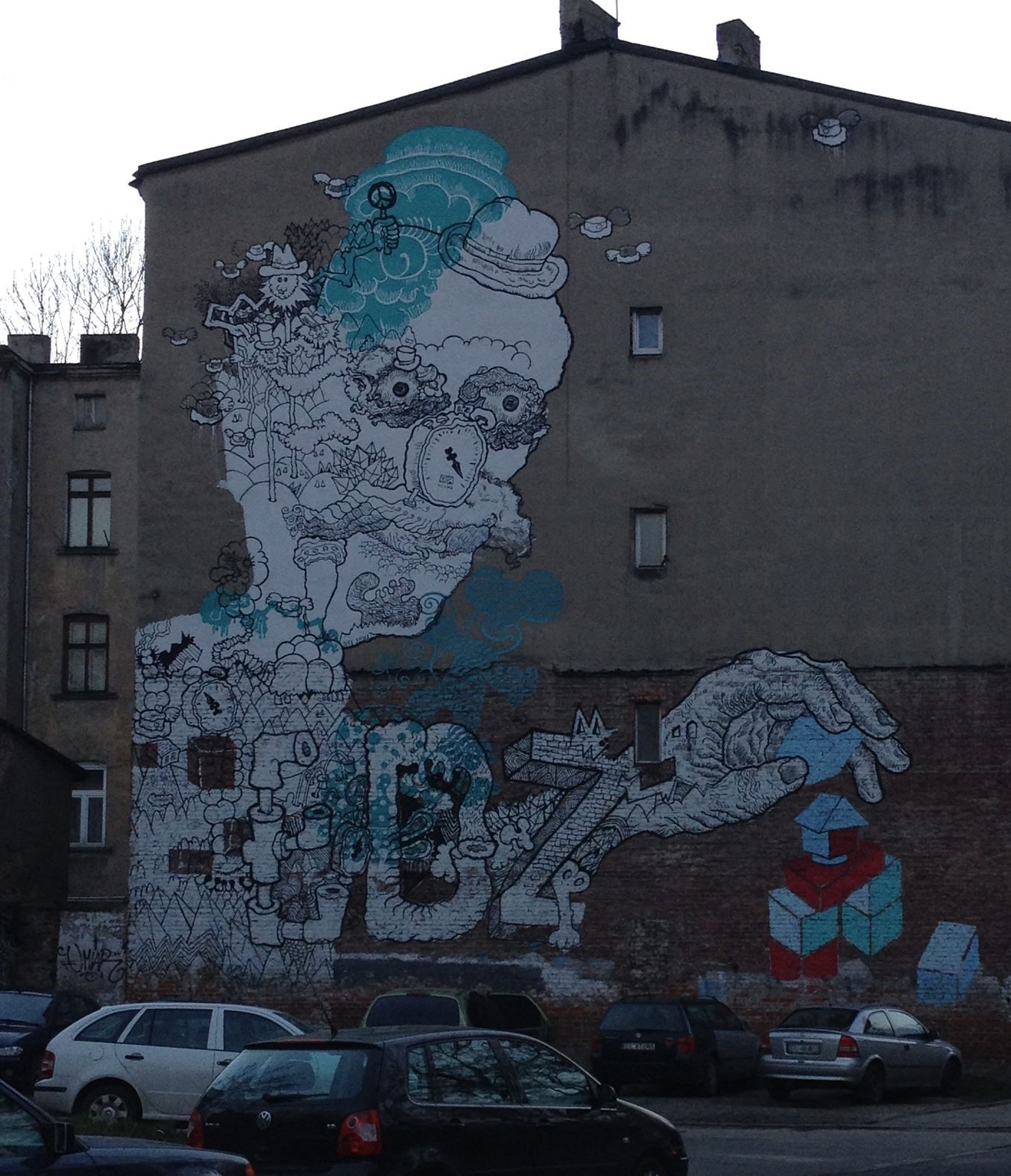
Łódź, Poland
Łódź is quirky. The dark events of its past are evident, but the people here are experts at remembering the past while still enjoying the present.
Of course, it’s easier to see these patterns and make these connections when living in the heart of a city, experiencing the culture day after day. But I think if you look carefully, you can pick up the vibes of any city from even just a glance at its art. Here are some more examples of murals that I think capture the spirit of their homes.
Athens, Greece
Atlanta, Georgia, USA
Bogotá, Colombia
Cancún, México
Denver, Colorado
Hong Kong
Kuala Lumpur, Malaysia
Montevideo, Uruguay
Paris, France
Pisa, Italy
Quito, Ecuador
Reykjavík, Iceland
Singapore
Tampa, Florida
Tokyo, Japan
Toronto, Canada
Townsville, Queensland, Australia
So, what do you think? Do the murals match the vibes?
We did it! We took a 4-day trip to Yellowknife, Northwest Territories in February with only a backpack each and the clothes on our backs. Did people question our decision? Yes. Did our friends and family worry about us when checking the weather? Yes. Would we do it all again? Gladly! Yellowknife exceeded every expectation we had for it, and in this month’s post, I’m going to share some of what surprised us so much about this city in the far north of Canada.
The Remoteness
The first surprise actually came when we took a closer look at our flight times. Of course, we know Canada is huge, but we weren’t flying from end to end, more like from east middle to north middle. Regardless, we were in the air for over 7 hours to get from Ottawa to Yellowknife. It would have been faster to fly to Europe! We also flew in on a prop plane, which was another indication that we weren’t headed to a super populous place. And when we looked out the windows of that prop plane and saw literally nothing from Edmonton to Yellowknife (roughly 1,500 km), the message really sank in: we were in the middle of a vastness I’m not sure we’ve ever experienced before.
While we did end up feeling very isolated at first, the longer we were in Yellowknife, the more it felt like, well, Canada. We stopped by a Shopper’s Drug Mart, we got President’s Choice brand snacks, and we still had français to read on all the signage. We were also surprised that the prices of things weren’t as high as we had thought. We had been sure we’d see a crazy increase on all the groceries and food stuffs that had to be shipped in from beyond far away, but it really wasn’t too bad. There were definitely limited options, but overall, not too different from a similar sized city in Ontario or Quebec. The only thing that really stuck out as being outrageously priced was any beer outside of NWT Brewing Co. At one restaurant, we saw $14 Heinekens! Talk about not worth it…
The Cold
We specifically chose to go to Yellowknife in winter because we like the cold, and we wanted to experience the extreme cold of the Canadian hinterland. For weeks ahead of our trip, we tracked Yellowknife’s weather, so we could be as prepared as possible. We had already been to places like Bergen, Norway and Ushuaia, Argentina in their respective cold seasons, and we took those trips without boots or proper winter coats, so all things considered, we were absolutely better equipped for this trip than any that came before it. But did that really matter when we were standing outside in “feels like” -50°F? Not so much lol. We had actually heard several times, from several different people that after you get below -30 or so, it all just feels cold. However, I very much beg to differ; -40 definitely felt much colder than -30.
FahrenheitCelcius
Fortunately, some things did come back to us when dealing with the extreme cold. We remembered the feeling of our eyelashes and nose hairs freezing. We quickly remembered the importance of breathing through your nose only. And once again, we fell back on the age-old lesson: you get what you pay for. Our $30 thermal socks have probably saved a few toes at this point. If I could give any advice to future Canadians or fellow cold weather travelers, you’re absolutely better off buying the expensive gear from the start – it’s expensive because it’s truly the only thing that works.
We learned some new things during our time in Yellowknife as well though. It seems we do, in fact, fear the cold a lot more than the average NWT visitor (let alone resident/native). We opted to take the car pretty much any time we left after dark, mostly because that scene in “To Build a Fire” constantly replayed in our heads every time we took off our gloves! Also, you absolutely cannot function with glasses outdoors in Yellowknife, and even if you don’t need glasses, the cold weather can still really mess with your eyes. Our eyes struggled big time with the cold, the dryness, the ice crystals, the snow blindness, etc. It really felt like everything was out to hurt our eyes in Yellowknife!
The Lights
We have been super lucky with our northern lights sightings in Canada so far. Last May there was a big solar storm, and we actually saw them just about an hour north of Ottawa, so for this trip, we had our fingers crossed, but there wasn’t much pressure on the situation. And maybe that was key, because three of our four nights were full of gorgeous light shows. The colors were so much more vibrant and watching the lights spread out across such an expansive sky was absolutely incredible. Something we didn’t even know to account for in Ottawa were all the mountains and trees that would occasionally block our view of the lights, but we didn’t have that problem when standing on a massive frozen lake!
And just in case I never get around to writing anything about northern lights viewings in general, there are a few things I would have liked to know beforehand. 1) You must let your eyes adjust to the lights. They seem faint at first, but the more you watch, the clearer they become. 2) They move really quickly across the sky and make all sorts of crazy shapes. 3) There is no “peak time” so to say. They’re somewhat like storm clouds; they appear and disappear based on solar activity, so any forecasts are bound to be unreliable at best. 4) The darker it is, the brighter the lights appear, but neither the darkness nor the intensity matter if it’s cloudy, so if you’re hunting northern lights, pick a place known for having an abundance of clear nights. 5) Pictures simply can’t do the lights justice, not even those that have clearly been altered.
The Dettah Ice Road
One of the most surprising experiences of this trip was our time on the Dettah Ice Road. When doing some research on Yellowknife, I came across the Dettah Ice Road listed as a tourist attraction and thought it sounded cool, but actually experiencing it and realizing that it’s not really a tourist attraction at all put it at the top of my list of reasons to visit Yellowknife in winter. The Dettah ice road is exactly what it sounds like: a road made of ice that leads to Dettah, a village southeast of Yellowknife. Usually, you have to drive about 27 km (17 miles) around Yellowknife Bay to get to Dettah, but in winter, since the Great Slave Lake completely freezes over, you can cut right across the bay and drive straight there (only 6.5 km/4 miles). The road itself is amazing! It looks like it’d be slippery or somehow feel different from a normal road, but no, it was business as usual driving across. Well, except for the blinding sun reflecting off the ice and all the cool photo ops along the way. Another incredible thing to experience!
The Yellowknives Dene
As part of our on-going comparison between Canada’s provinces and territories, we were excited to see the influence of the various indigenous groups of Yellowknife as well. Like a lot of Canadian cities, the name Yellowknife comes from a name given to a specific First Nations group, but unlike other Canadian cities, that First Nations group still makes up a considerable portion of the city’s population. Interestingly, the “city” of Yellowknife didn’t really exist until the gold rush of 1934, but the Yellowknives Dene had been settled there for hundreds of years; therefore, the majority of the region’s history revolves around these indigenous groups and how they helped outsiders acclimate to the extremes of the Northwest Territories. Today, their influence can easily be seen in the government, language, and culture of the region.
The Variety
When I shared our Yellowknife photos on social media, there were so many people who said things like “better you than me” or “too cold for me”, but I think the extremes are part of what makes Yellowknife such an intriguing destination. It was perfect for us, cold-loving freaks, but if you visit in August, you could be swimming in the lake rather than driving across it. The variety of activities Yellowknife has to offer is absolutely amazing, and that’s in each and every season. It’s not too often that Tucker and I make it back to a destination (at least not without many years in between), but Yellowknife might just be one we HAVE to see in another season. It also compelled me to move Whitehorse and Iqaluit (the capitals of the other two Canadian territories) up on our to-visit list, so stay tuned!
This was definitely a trip to remember, and for that, all I can say is a huge thank you to Yellowknife for treating us so well and an additional shoutout to all the winter gear we’ve been collecting over the last two years – it really came in clutch here!