Things We’ll Miss Most About China

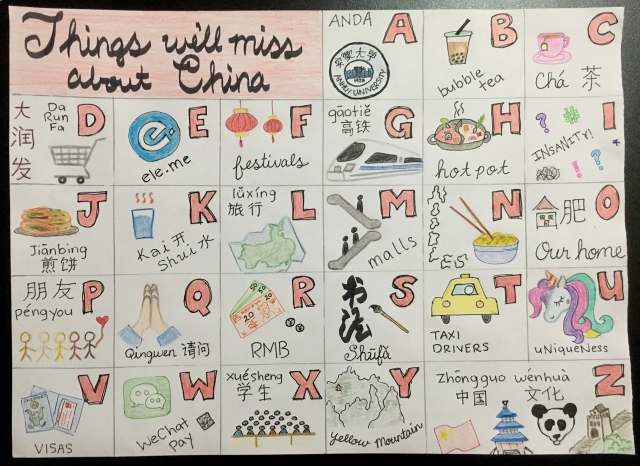
I keep furtively glancing at my calendar, realizing that we’re leaving China in a mere 90 days, and I can’t help but feel a little sad. Just like our last few months in Poland, I keep finding myself saying things like “I wonder if this is the last time we’ll eat here” or “this will probably be our last Taobao order”, etc. It’s always hard to say goodbye, but to help make sure I never forget the details of living in China, I created this handy list of things we’ll miss most (one for each letter of the alphabet, of course):
a
Anda

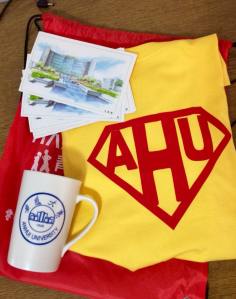
Anda: Anda is the nickname of Anhui University. It’s probably the first Chinese word I learned to say correctly (tones and all) because if not, we’d have ended up in a taxi to who-knows-where rather than on our way home. But much more than the word itself, I will miss what it represents: the students and teachers I’ve gotten to know over the last year and a half. My time in China would have been entirely different without their continued encouragement, support, and friendship, and I’m so thankful for the memories we’ve shared.

Bubble Tea: Although I’m not a bubble tea fanatic (like some people I know), I will definitely still miss this sweet concoction. Tea with milk, sugar, and tapioca pearls; served piping hot in winter or with a mound of ice in summer, what’s not to love?
c
Cha

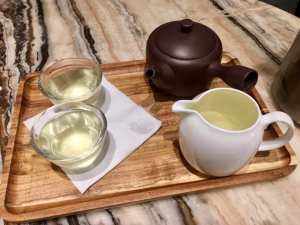
Cha: I never really considered myself a tea (“cha”) snob, but after having some of the best teas in the world readily available and often free at every restaurant and hotel, I might have to accept that moniker in the future. The variety and quality of tea in China really is above the rest, and it’s something I most certainly will miss!

Darunfa: Darunfa is our grocery store of choice, and although it stresses me out at times (especially on the weekends), there are so many things I’ll miss about it. The people keenly observing what Tucker and I are buying, the over-the-top decorations and displays, and especially the freshly made Tiantian balls that rarely made it all the way home, just to name a few.

Eleme: Having a pizza delivered is one thing, but Eleme delivered it all. What a great way to try out all the various Chinese dishes within a 5km radius, and all without having to get dressed!
f
Festivals

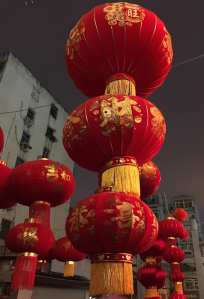
Festivals: After almost two years in China I can safely say the US just doesn’t have enough festivals. I’m going to miss all the talk about Chinese traditions and questions about whether or not I ate the respective holiday snacks: mooncakes, dumplings, zongzi, etc. I’ll also miss all the red and yellow.

Gaotie: Gaotie, or high-speed trains, are my absolute favorite way to travel, and I’ll miss them sorely. From the odd overhead announcements to the constant smell of instant noodles “cooking”, I will be thinking (and talking) about Chinese train travel for years to come.

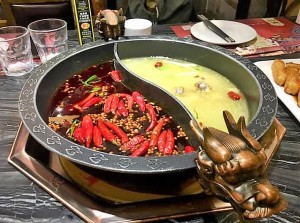
Hotpot: How could we not miss the experience that is going out to hotpot with friends? From deciding which ingredients are okay for Dani to try to testing just how spicy we can go, it doesn’t seem to get old. Although the food itself is delicious and something that will certainly be missed, the time with our friends is even harder to let go of.

i
Insanity

Insanity: China’s crazy! Well, it can be crazy – travel during Golden Week and you’ll see (really even Saturdays at the grocery store or a weekday in rush hour counts as insanity for me), but I’m going to miss it for sure. The atmosphere created when you’re surrounded by so many other people just doing their thing is really something I’ve learned to appreciate. “People mountain, people sea” will be missed, but I’m happy to have been a part of these tides at least for awhile.

Jianbing: Specific street foods are always something we crave, and for me the Chinese street food I’ll miss the most is Jianbing (a crepe-like folded sandwich thing that usually has a crispy cracker in the center). Somehow I always seem to eat them early in the morning when we’re on our way somewhere quick, so I associate them with big events and on-the-go eating, which are just two more things I’ll miss about our time spent in China.

Kaishui: Someone recently asked why I still don’t drink hot water (“kaishui”), and I responded with a loud “I do!” When I’m sick, it’s my new favorite thing to drink, and if that’s not enough, just let me say how much I’ll miss having it readily available for my tea. From classrooms and offices to trains and airports, I’m not sure I’ll be able to handle life without the possibility of a cup of tea wherever I am.

l
Luxing (Traveling)

Luxing: Speaking of trains and planes, I will miss traveling (“luxing”) around China immensely. What an incredibly beautiful (and vast) country this is. I’ll forever talk about the high speed trains, English signs and maps, and ultimately how easy China made it for me and Tucker to simply take it all in.

Malls: I never really understood the importance of malls until I moved abroad. In the US I never went to a mall – foreign brands? Foreign foods? Who needs them? Now I know: expats do! I also love that I now associate Starbucks, Pizzahut, and Walmart with malls! Thanks China!

n
Noodles

Noodles: How will I live without my daily bowl of Chinese noodles? Cheap, delicious, and widely available, I eat a lot of noodles here, and I will definitely miss my favorites when we go. Chongqing mian, dandan mian, niurou banmian; I’m going to have to work through my withdrawals carefully.

Our Home: Hefei is without a doubt my favorite city in China even though I know no local believes me when I say that. It will forever be one of our homes, and the Chinese city we know the best; therefore, it’s my favorite. Whenever we get back to Hefei after traveling we always say “home sweet Hefei”, and that’s what it is: a pretty sweet place to live.

Pengyou: This time leaving our pengyou (“friends”) behind is much harder than before because unlike most of the other places we’ve lived, where we can easily stay connected with the people we’ve met with Facebook or Instagram, China will be different. I will miss reading my friends daily WeChat moments, I will miss being able to share in the seasonal rituals like the uploading of weather events, and I will definitely miss the last minute plans to get together just for fun.
q
Qingwen (Excuse me, may I ask?)

Qingwen: Qingwen means “excuse me, may I ask…”, and it’s a phrase we have used A LOT during our time in China. Although I probably won’t miss the phrase itself, I will miss the ability to ask strangers for help no matter how small or obvious the solution is. We have been helped far and wide in China (we’ve even had a server cut up our food for us), and I will miss this particular brand of hospitality immensely.

RMB: Renmenbin, the people’s currency, has been good to us. It doesn’t take a lot of money to have a really nice life in China – going out with friends, traveling to nearby tourist locations, and so many of the fun parts of our China experience were so easy to do (and do often) because they were extremely affordable. I’ll definitely miss all the quick, cheap fun we’ve had.
s
Shufa (calligraphy)

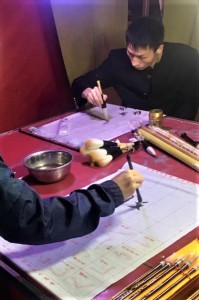
Shufa: Shufa is “calligraphy”, which I’ll miss seeing on every hotel and restaurant wall, but more than that, I’ll miss the characters themselves. There is nothing that warms a Linguist’s heart quite like an ancient and unique writing system. Literally everything around me is an interesting language puzzle to solve, and although Tucker might not miss the headaches that caused, I’ll certainly miss the challenge!

Taxi Drivers: Our “paid friends”, as someone once put it, will definitely be missed. I really enjoyed my chats with drivers all around the country. My Chinese isn’t great, but it’s easy to ask about someone’s kids and let them do all the talking. I also appreciate all those drivers who took their time to teach us new vocabulary or pronunciation details – we have used it all!

u
Uniqueness

Uniqueness: China’s weird! And I love it! I’ve never seen a place that mixes extremes in such a way, and I love how much I have learned from that. I’ll miss the uniqueness of China, and I’ll do my best to continue sharing how awesome being a little different can be.

Visas: I will certainly miss the small piece of paper that allows us to travel freely in and out of this country, and I truly hope to get another one soon. It’s always hard to leave, but it’s especially hard when you can’t necessarily come back whenever you want. Here’s to an upcoming paperwork session!

WeChat Pay: The ease, the security, the practicality, I will miss WeChat Pay more than I can even write right now. I have often said WeChat is the lifeblood of China, and I stand by that. It allowed us to be independent, yet even more connected to the people and culture. I love all the surprised looks we get when we ask, “Weixin keyi ma?”.

x
Xuesheng (students)

Xuesheng: My students (“xuesheng”)! The first group I turn to for cultural/logistical questions! The real reason I do what I do! I will miss spending every week laughing at the cultural faux pas I make, bonding over the non-temperature controlled classrooms, and working together to learn and build their language skills. My students are very fast to tell me they love me, and as culturally awkward as it is for me to return the favor, I do love them, and will miss our class (and non-class) times immensely.

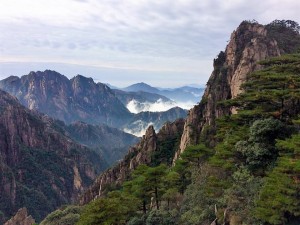
Yellow Mountain: The image I will carry in my head of Anhui province is one of Huangshan (Yellow Mountain). It is arguably one of the most beautiful places in China, and is central to a lot of Eastern China’s history. I’ll miss the fact that it’s only a two hour train ride away, but at least I’ll have a beautiful visual to share when I talk about my people and home in Anhui.

z
Zhongguo Wenhua (Chinese culture)

Zhongguo Wenhua: “Chinese culture” is the only way I could sum up the rest of the things we’re going to miss. We’ve learned so much and have had an incredible time getting to know this country, some of its people, and their culture. From the small things like abundantly available hotel slippers to the large things like the value of community, I’m so thankful for the perspectives we’ve gained and the time we’ve spent in China.

中国,我们已经想念你了。

China, we miss you already.
IMG_6850

Asian Island Adventures

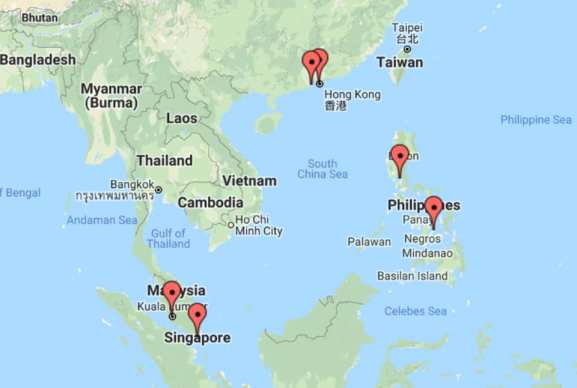
51236081_10218703184719061_8876367206510755840_nThe second New Year (also known as the Chinese New Year or the Lunar New Year) has come and gone, and with it, possibly our last long winter break off together. Just like last year, the Chinese university semester break coincides with the holiday giving us several weeks off, which, of course, we put to good use! My program had its mid-year meeting and conference in the Philippines this year, and somehow, Tucker and I managed to squeeze in three (and a half) other destinations on our island hopping itinerary. You might have seen the hundreds of photos on Facebook, but I’d also like to share a few words about our time traveling in South Asia. To be honest, it’s a little surreal to be writing this as I watch the snow fall outside, but here we go!
51039841_10218631706852159_8560645814144204800_n

Macau/HK

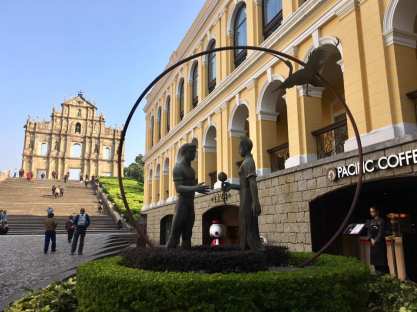
50416214_10218648248945701_250725072455598080_nOur first stop was Macau, a “special administrative region” of China. It gets this rather long name due to it being somewhere in between a province and another country entirely. It’s a part of China, but it’s also not China, which is actually one of the reasons we wanted to visit. We wanted to see if there were any noticeable differences. We also wanted to visit because we were eager for another taste of Portugal. Macau used to be a Portuguese colony and has retained quite a bit of the Portuguese flair in architecture, food, and language.

It was an incredible mix of the two cultures: tons of Chinese New Year decorations along the beautiful mosaic walkways, pork dumplings could be ordered with a side of garlic bread and red wine, and all the signs were in both Chinese and Portuguese, which was very exciting for this language nerd. The weather was beautiful while we were there, so we were able to walk almost the entire city by foot. Macau is made up of a small peninsula and island on the southern coast of China. The peninsula is where the Old Town is with its ruins, churches, and forts, and the casino-filled island gives Macau the nickname “The Vegas of the East”. We had an amazing time exploring both: taking selfies, eating all the street food, and even trying our hand at gambling again (much to my chagrin).

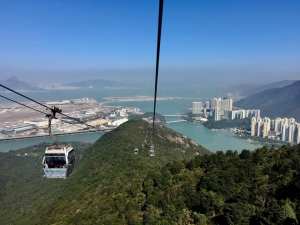
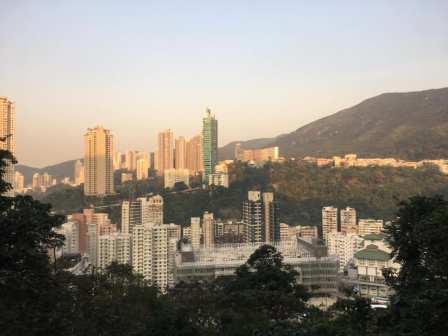
50679451_10218668969583704_4242597479859617792_nAfter a few days of strolling around Macau’s narrow alleyways, we took a massive speed boat (TurboJet) to our next destination just across the water: Hong Kong. This was actually our second trip to Hong Kong, but last time we didn’t quite get to everything on our list – this short stopover on the way to Midyear was our second chance. We had less than 24 hours in the city, but we managed to make it out to Lantou Island to see the incredible Buddha and cableway there, we took the bus to the top of Victoria Peak to watch the sunset over the city, and we went to Tim Ho Wan for the world’s cheapest Michelin Star eats. While I definitely preferred Macau’s laid back, European vibes, it’s hard to not like Hong Kong as well. Macau and Hong Kong are a couple of tiny islands (and respective peninsulas) that I highly recommend everyone to visit! No visas needed for US citizens! :)
50624146_10218668971823760_940073924828332032_n

The Philippines

51544827_10218758613504746_7490417853212917760_nAll too soon it was time to fly to the Philippines and get to work. When we first landed in the Philippines it was chaos! Passengers getting up and grabbing their bags before the plane had stopped moving; people sitting on seemingly every inch of the floor in the airport; signs for flight changes being moved by hand from gate to gate; loud cover songs of 2000’s hits playing in every corner of the terminal, etc. All I could think was “Well, we’re definitely not in China anymore.” As we sat waiting for our flight though, the newness wore off, and it was easy to see that the Philippines are just plain fun! In fact, their national slogan is “It’s more fun in the Philippines”, and I totally got it. Smiles were everywhere! The flight attendants wore bright yellow polos and hummed songs as we boarded. Fellow passengers sang along with the music they heard on the plane. The joy was contagious!
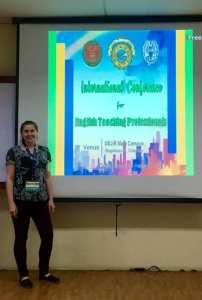
51090853_10218728310947201_775519455542247424_nThe first week we were in the Philippines I had to “work”. I attended meetings with the other Fellows, we planned and executed various group activities, and generally bonded and reconnected after our last five months apart in our various host cities/countries. For this part of Midyear, we were put up in a resort on Mactan Island, which was incredibly fancy and not the sort of place Tucker and I usually go for (I’ve never heard so many “yes ma’ams” and “hello sirs” in my life). It was beyond beautiful though, and luckily Tucker was able to take full advantage of the beach, the snorkeling, the infinity pool, etc. However, after a few days completely devoid of local culture, I was definitely ready to get to our next location: Cebu City. It was here that we attended and presented at a local teacher training conference held at the University San Jose Recoletos. Easily my favorite part of Midyear, I was able to meet and interact with many local Filipina/o teachers and get a much better feel for what life in the Philippines is really like.

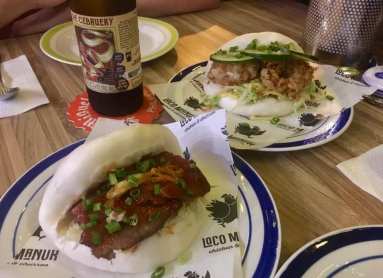
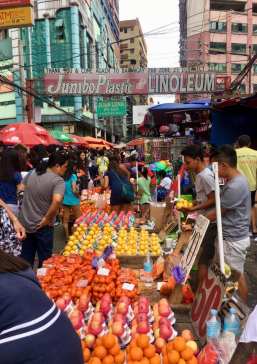
51300721_10218758619504896_748782893282623488_nOnce the conference and Midyear were officially over, Tucker and I hadn’t quite had our fill of the Philippines, so we headed to Manila for some good old-fashioned touristing. Manila is an incredible city with some of the best food I’ve had in a long while. Their specialty seemed to be fusion restaurants. We had super interesting and delicious food at Loco Manuk (Filipino, Peruvian, and Chinese) and El Chupacabra (Filipino and Mexican), and saw a Japanese-French Cafe that looked amazing as well! In addition to the incredible food, we also had a great time walking around Manila Bay, grabbing a drink in Intramuros (the Old Town), and watching the Super Bowl at a local expat bar. The Philippines boasts an amazing mix of languages and cultures, and it was so fun for us to be able to use English (commonly spoken there) to ask about a million questions of our taxi drivers, servers, and any other local we could find. We learned about the strong influence of Catholicism in the Philippines, the new-ish movement towards environmental clean up, and most of all, we learned how welcoming and friendly the people are.

Singapore

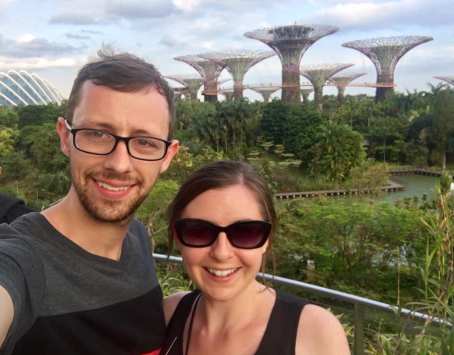
52466008_10218786674966265_1366061700507238400_nAt this point we were over the halfway mark of our trip, and my body had had enough. I left Manila with a fever and several other ailments (not so fun to describe), but I was still super excited to see Singapore! We watched Crazy Rich Asians on another leg of this trip in preparation, but the movie doesn’t do the city justice. It is by far the cleanest city I’ve ever seen, and has represented its multicultural population incredibly well! Singapore is made up of large groups of ethnic Chinese, Malays, and Indians, and each has a dedicated area of the city where you can find their respective religious buildings, restaurants, and specialized grocery stores. Even with the diverse neighborhoods in place, the city as a whole really seems to cater to each group in so many ways. Colorful, artistic, and clearly very well-off, there are so many lovely parks and public spaces in this city, where we saw families wearing everything from tank tops and sundresses to saris and hijabs. I often talk about places where there is a mix of cultures, but its usually a watered down mix, where clearly one culture has dominated, but in Singapore they were all there loud and proud. It was amazing!

However, after a few days in Singapore, I definitely had another “this is clearly not China moment”. Everything was so quiet, there weren’t many people around, and the “no spitting” signs actually seemed to work, as we saw absolutely no spitting while we were there! Signs like these were everywhere, covering the basics like “no littering $1000” and the bizarre like “no chewing gum $500”, ultimately giving the city a punny nickname: Singapore, a “fine” city. Tucker really loved Singapore – so many interesting foods to try, lots of activities to partake in (the Trick Eye Museum, Universal Studios, and beer tastings to name a few), but I was a little hesitant. It was almost a little too clean and a little too “nice” for me. I guess I like my cities a little more rough around the edges, but as far as a place to vacation and experience as many authentic Asian cultures and foods as possible, it has got to be number one on my list!

Malaysia

The last stop on this epic journey was Kuala Lumpur (usually called KL), Malaysia. We ended up taking a Transtar bus from Singapore to Malaysia because it was only about a 6-hour drive, and the price was right. Little did I know that $30 was going to buy me the best bus ride of my life! We had recliners, tea service, lunch, personal TVs, and gorgeous views of the Malaysian jungles. If you’re ever in this area, take this bus ride! Upon our arrival in KL, I couldn’t help feeling a little like Goldilocks. The Philippines was maybe a little too outgoing for me, and Singapore was a little too uppity, was Malaysia going to be just right?

51982163_10218802004949505_5676008657024712704_n

51885758_10218802010149635_1122751154648776704_nIt turns out KL was full of surprises for us. The majority of people living in Malaysia are Muslim, so it was much more conservative than I was expecting. Most everyone wore long sleeves and pants despite the high temperatures, and the presence of beautiful and delicious “mocktails” was at an all time high for me. KL is actually not on an island, and to us, it seemed like we lost that friendly, carefree island-vibe as soon as we arrived. Interactions were a bit more abrupt and businesslike – like they usually are, I suppose. Another surprise was the color we saw all around us – both the Philippines and Singapore were incredibly colorful cities, but I think any city would be hard pressed to match the vibrancy of KL. Brightly colored murals everywhere, some of the lushest, greenest trees I’ve ever seen against the bluest of skies, and the insanely colorful Batu Caves just outside the city made for some incredible scenes (and photos).

There’s no possible way for me to share everything we saw and learned on this trip, but I hope you enjoyed reading a few of the details! After reflecting on any of our travels, it never ceases to amaze me how little I actually know about the world I live in, and taking trips like this only intensifies the curiosity I have for all the places I haven’t yet been to! I hope no matter where Tucker and I end up next, we can continue these adventures because this experience, like so many before it, was truly remarkable.

51861153_10218786668326099_8265585031242579968_n

China Bucket List – Nearing the End

The New Year is here! And like many people, it has me both reminiscing about 2018 and planning for the upcoming year. In particular, Tucker and I have been looking at what we’ve accomplished China-wise since our move to Hefei. It’s beginning to hit us that we only have a few months left of living in this incredible country, so our China bucket list has become a bit of a priority. With this in mind, here are some of the things we accomplished in 2018 and a few more that we’re still hoping to cross off before our impending departure. If you’re ever in China, I highly recommend each item on this list!

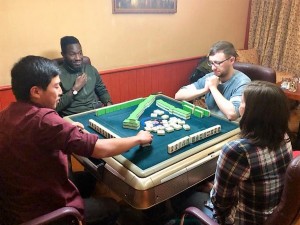
25550266_10215398260578023_5563219324360546085_n✔ Learn to play Mahjong

As game lovers, we knew we would have to learn to play Mahjong while in China, but what we didn’t expect was how much we’d love it! Since our learning the game, we have bought our own set of tiles and have played in many a Mahjong room. It’s a bit like Gin Rummy, but with added Chinese practice – perfect for me!

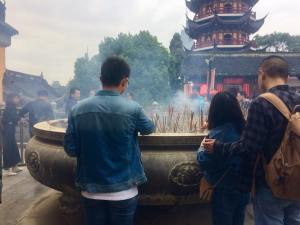
22195457_10214729980991451_5640761874681964647_n✔ Visit a Buddhist Temple

Although China as a whole isn’t very religious, there are many temples still in use around the country. When we visited Nanjing during Golden Week last year, we climbed to the top of Jiming Temple and burned incense in order to strip away our negative qualities and purify our inner-selves (or so they say).

33165983_10216691252622016_2671023896341250048_n✔ Perfect our Chopsticks Skills

Just like many other Chinese takeout lovers around the world, we weren’t exactly new to chopsticks; however, there were many foods we had never attempted to eat with them before (like soup or salad for instance). But it didn’t take long for our hand cramps to disappear, leaving behind beautiful chopstick form and a sense of mastery.

23843625_10215123442787750_5496286057710795872_n✔ Hike Huangshan

We live in Anhui province, which is famous for having the most beautiful mountain in China: Huangshan (Yellow Mountain). It was made very clear to us that we had to visit the mountain, preferably once in each season. Well, a year and a half in, and we’ve made it to the top of Huangshan twice – once in November and once in April.

48427268_10218385939028117_6167021417226305536_n✔ Share Hotpot and Selfies with Friends
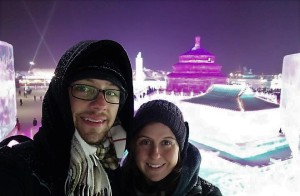
This is a bucket list item that we have happily done dozens of times. If grabbing a burger and a beer is the American way of hanging out with friends, hotpot and selfies are the Chinese way, and we’ve had so much fun every time!

25152123_10215303631092345_2024975626557488489_n

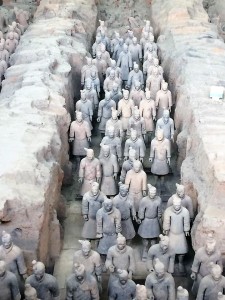
✔ Stare in Awe at the Terra-Cotta Warriors

History was never my favorite subject, but when it’s right in front of you, it’s hard to feel that way. The massive tomb and insane number of true-to-size warriors, horses, and chariots is something I’ll never forget. There is so much history here, and I’m happy to be taking it all in.

26904316_10215604252127683_6970841860148352359_n

✔ Visit the Harbin Ice and Snow Festival

Another absolute must-do for us in China was the Ice Festival in the far north of Dongbei. We’d heard about and seen many pictures of this event, but being surrounded in buildings made of ice was way cooler (see what I did there) than anything we could have imagined. Honestly, I’m still not sure if it was the cold or the beautiful sculptures that took our breath away.

47573080_10218296931362981_8222027968302546944_n✔ Devour the Dim Sum in South China

When people ask me what my favorite Chinese food is, I often say Guangdong style. Sweet BBQ pork buns, light and fresh spring rolls, fluffy pineapple pastries, never ending tea for the table; dim sum is my favorite, and the best version we’ve ever had was in the region itself, in the city of Guangzhou.

29186978_10216122142394616_4670802097008799648_n✔ Wander around West Lake

There’s a Chinese saying “in Heaven there is paradise, on Earth, Suzhou and Hangzhou”. These are two cities know for their beauty and ancient Chinese charm. Tucker and I have been fortunate enough to visit them both (multiple times), and can now say with certainty that West Lake is one of the prettiest places in all of China.

31347884_10216502220376328_7998563502147002746_n✔ Feel like a Kid at Disneyland Shanghai
Everyone knows my family loves Disney, so of course it was on our list to visit the newest of the parks. How can I describe it as anything other than magical? A large pink castle, new roller coasters to ride, completely different foods and snacks to try, plus, we went with my parents which meant that we also got a much-needed dose of family time.

34395359_10216784503553231_2112007591797194752_n✔ Learn about the Minority Groups in China
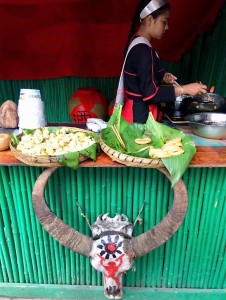
China is a big place with a lot of people, and in many regions that means there are different ethnicities mixed in. When we visited Yunnan (in China’s southwest corner), we were able to learn more about these groups of people, where they live, what languages they speak, and how they have coped with the rapidly changing, modern China.

35475218_10216887149439314_3449926763910529024_n✔ Celebrate Dragon Boat Festival

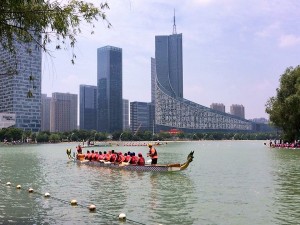
Every summer, China celebrates an ancient legend by racing their famous dragon boats and eating lots of zongzi (think Chinese tamales). We were able to take part in these festivities by joining the crowds at Hefei’s Swan Lake for the races and following them up with a home-cooked meal (including many varieties of zongzi) at a colleague’s house.

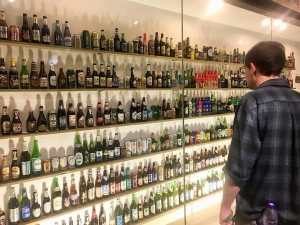
42409352_10217684087802275_4573337294823489536_n✔ Drink Tsingtao from the Source

One of the most popular beers in China (thus one of the most popular beers in the world) is Tsingtao, which comes from the previously German-occupied city of Qingdao. As beer lovers, Tucker and I were very excited to traipse around this coastal city tasting all the local brews. We also visited the brewery itself, which had surprises around every corner – including a drunkenness simulator and a pop-up rave with pandas!

✔ Show our Families around our Home

This is one of the things I’m most thankful to have crossed off our list. We have both been lucky enough to host family members in China. It’s so much fun for us to show the places we love to the people we love. My parents visited in the spring, and Tucker’s mom and aunt in the fall. So many memories made and priceless experiences shared in-person this time!

45003871_10217968676796822_2604810172245213184_n

✔ Explore some Rice Paddies

When you picture China maybe you picture vast terraced mountains like these. I can’t remember what I first pictured when thinking of China, but I hope it was this. Although now I know that views like this aren’t around every corner, it doesn’t change the fact that when you do happen across them, you can’t help but be amazed. Definitely makes me think about my daily bowl of rice a little differently.

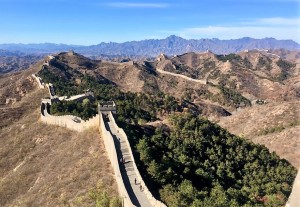
45111553_10217993293292219_5974621691412742144_n✔ Walk along the Great Wall

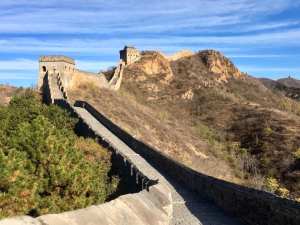
The most famous landmark in all of China has to be the Great Wall. Of course, it’s on every China bucket list, but we took it one step further. We have actually walked on the 3 most famous sections of the Great Wall: Mutianyu, Badaling, and Jinshanling. Three sections, in three different seasons. Maybe we’ll have to come back one winter to see a fourth, snowy section.

43104942_10217769755343910_2411993070099759104_n✔ Make Dumplings from Scratch

Although I’m not really into cooking, I did want to experience the magic of Chinese cuisine firsthand. We made a friend just after we arrived in China who said she loves to cook, and offered to show us how to make our own dumplings. Filling, wrappers, everything! We had a great time shopping, preparing, cooking, and eating, and now I can say I’ve done it at least once!

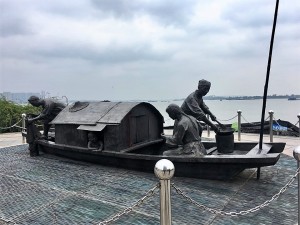
46485909_10218117963368893_9080195655615381504_n✔ Crisscross the Yangtze

Along with the Great Wall, the Yangtze river is synonymous with China in my mind. I wanted to walk along it, cruise down it, maybe even swim in it (hard “no” on that now though). The river is central to China in so many ways, and nothing seems to remind me of what I thought about China prior to coming here quite like the Great River.

✔ View the Real Pandora at Zhangjiajie

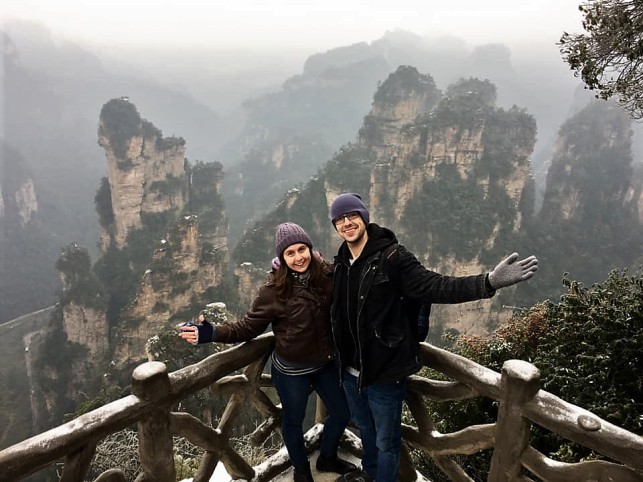
So many places ended up on our list because of the recommendations of others, and Zhangjiajie was one of these. It’s the inspiration behind Pandora’s floating mountains in the movie Avatar, but I think hands down the real mountains were more beautiful. We visited on a snowy day in December and were definitely drawn into another world.

47680887_10218296824760316_643138062284488704_n

49656294_10218498248755790_3776809131306909696_n

✔ Soak in some Natural Hot Springs

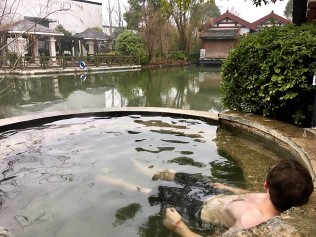
The most recently completed item on our list was to relax and enjoy some of nature’s jacuzzis (otherwise known as hot springs). Near Hefei is a city called Chaohu, which is home to one of the largest freshwater lakes in China as well as a number of natural hot springs. It was a great way to end the semester, and begin thinking about what’s coming up on our collective agenda.

Still to come…

See some Pandas in Chengdu

In just a few days, we’ll be on our way to Sichuan – a province in the west of China, famous for housing the country’s national treasure and some of the spiciest food on the continent. Can’t wait!

□ Gamble in Macau

We meant to go to Macau last year, but due to poor planning and holiday crowds, we didn’t make it. Luckily, it’s back on the schedule for later this month! It’s known as the Vegas of the East, so maybe we’ll finally have a little luck at a casino.

□ Try Acupuncture

While not as popular as I thought it would be in China, as a TCM (Traditional Chinese Medicine) practice, both Tucker and I are eager to try it out. He’s not a huge fan of needles though – wish us luck!

□ Practice Chinese Calligraphy

Shufa (or calligraphy) is a well-respected art form here, and it’s easy to see why. Chinese characters are rich in meaning and symbolism, which is why calligraphy here is more than just nice handwriting. It’s often compared to poetry or painting, and I’m super excited to try out my abilities.

□ Sample the Top 10 Noodles and Top 10 Teas of China

One last ongoing item on our list is to try the most famous noodles and most famous teas from around China. We’re always on the lookout for items on our list as we travel around, but we’ve also been able to scout out some imported noodles/teas here in Hefei as well. Gotta try ’em all!

36246560_10216957696122937_2685334937824919552_n

In reality, there are so many more things that made it onto our China bucket list, and we seemingly add something new just about every week, ensuring there’s no end to our exploration. However, these definitely stand out as some of the highlights so far – experiences that we’re not likely to ever forget. What a truly amazing way to spend our 2018! Here’s to even more adventures in 2019!

China: A Place Full of Misconceptions

31091991_10216468592255646_3327159418909757449_nPerhaps due to its location on the opposite side of the globe or maybe because of its notorious closed-door periods in history, China is a place with a lot of misconceptions. I remember when I first visited China; it was absolutely nothing like I thought it would be. Since then, I’ve continually been surprised by China and have had the pleasure of watching several others break some of their preconceived notions on their first trips to this land in the Far East. While pretty much everything I post (let’s be honest, it’s mostly photos) is in some way shaping people’s views of this country I now call home, sometimes there’s a need for more explicit explanations. Some things just can’t be seen in photos, but can definitely be felt and discussed (and often are if given enough time). However, since not everyone can come to China and experience it all in person, I’d like to share some of my thoughts and discoveries (in written form) on some of the impressions that seem to have a strong effect on outsiders’ views of China, impressions that are often among the first to be thrown into question upon closer observation.
China’s One-Child Policy

44089944_10217851093617316_7350933855357894656_n
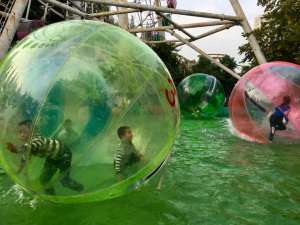
Brothers in a bubble

The One-Child Policy always seems to be at the forefront of everyone’s thoughts on China, its policy, family structure, etc., and while, there’s no doubt it has played a role in many aspects of family life in China, it’s not as black and white as the name makes it seem. It actually began as the Two-Child Policy in the 1970s and was put forth as a way to curb the exponential growth of an already heavily populated country. The policy’s aim was to limit the overall population over time and more importantly bring attention to the fact that the previously held views (something along the lines of “more people = more power”) were not accurate and would in fact hurt the population as a whole. The policy also went through a lot of changes throughout its 36 years, which included many exemptions for people in rural areas, minority groups, etc. Even if you weren’t among the exemptees at a given time, the punishment for having more than one child was a fine, which families often found a way to get around (or just knowingly paid). During this time (and still today) the government also provided easily accessible contraception and family planning education, something that still astounds me as I walk into a convenience store that sells affordable, shame-free birth control. What a concept?!

42980409_10217753913267868_5782138364060762112_n
Siblings entranced by Tucker’s fist bump

Today, China is back to a Two-Child Policy, but of course, there are still many exceptions. I also want to mention that of my roughly 100 students, the majority of them have siblings, despite the fact that they were all born under the One-Child Policy. For me, I think the trickiest thing about the One-Child Policy is that it is inextricably linked with so many other events and policies in China as they ended one really rough era of their history and very eagerly worked to jump into a position of leadership in the 21st century. Because of these coinciding events (and in part due to our national predisposition towards individual autonomy) we tend to think very harshly of this policy (and sometimes of China as a whole) because we’re remembering things like unwanted babies, hasty adoptions, unprecedented governmental control or worse. However, as I’ve been reminded, these were effects of a much greater set of events, not one policy. China was in the middle of a famine and recovering from a revolution that rivals those of 19th century Europe. Ultimately, nothing is simple or black and white, least of all the effects of any government policy.

China’s Communist Government

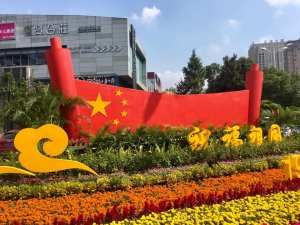
44054613_10217851084177080_5744207600904306688_nAfter delving into just one policy that definitely captured the world’s attention, I think another misconception of China lies in the government as a whole. When I told friends and family I’d be coming to China, this was a main point of contention. How could you live in a country that’s not free? Aren’t you worried about the communists? In hindsight, it must have got into my head a little because I now realize that when I first arrived I was a little careful about what I said, how I interacted with Party Members, etc. Now I’ve been here for over a year, and I see that that was totally necessary. While the government has many features of communism, it’s actually a hybrid of several political systems. It’s much more complicated than I care to go into, especially because unlike the US, changes within the government here seem to be made more quickly. China is still figuring out exactly how they want their government and economy to fit and work together, and due to their long history of preferring guidelines to written laws, it’s difficult to nail down the specifics regardless.
44737960_10217936993324755_994764054100705280_n
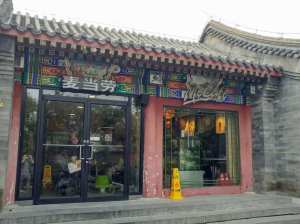
Golden Arches are everywhere

It seems like many people are imagining China to look and feel like Cold War era Soviet Union, but it actually looks and feels much more like the US. Capitalism is here in full force, and the Chinese Dream is on everyone’s mind. One noticeable difference, however, is the safety. Cameras are everywhere, people are everywhere, and although I have no idea who (or if) anyone is watching, I know that there are less crimes because there’s a possibility that they are. We see children walking home from school alone in a city of 8 million, and I’ve never felt or experienced any sort of unwelcomed attention when walking alone at night (something that would be impossible in the US today). When my students talk about China one of the things they are most proud of is how safe it is, which I think is an incredible thing to be proud of. Political systems are often a factor in things like this, but culture is another.

China’s Censorship

Another point often brought up about China is the censorship and the Great Firewall. Many Americans have latched onto the censorship in China as a lack of freedom, but every time I hear this I can’t help but laugh. Seen any nudity on American TV as of late? We all live in various forms of censorship. It just so happens that China, coming late to the internet party, was able to pick and choose very carefully from the beginning what they wanted in or out. And of course, as anywhere, there is always a way around that (I don’t think I have a single student who hasn’t see Game of Thrones). I think what’s more interesting though, is that most Chinese people I know wouldn’t have it any other way. They often ask me, why do you want to be able to access media with excessive violence? Do you want young kids to be exposed to more negative influences than they already are? They’re usually tough questions to respond to. We love physical safety features, why don’t we look at mental safety the same way?

45182250_10217993309252618_6715482667841748992_n
Multiple lucrative walls in China

In addition to the safety and influence arguments made in support of the Firewall is an economic one. Of course China would prefer its citizens not use Facebook, YouTube, etc. That advertising money is going into other countries’ GDPs. China has cornered their own market by creating essentially the same apps, sites, and services here, but through Chinese companies. That’s how I have come to have double the social media options now. For Facebook I have WeChat, for Twitter – Weibo, Amazon – Taobao. Censorship seems to be part business strategy in China, and to me, it seems a lot like the US move towards more American-made products – it makes sense economically. However, most people aren’t especially concerned with who is benefiting from their use of a free app. Usually it just comes down to how good is the product, and I can tell you without a doubt that WeChat is way better than Facebook.

Wechat
Seriously it’s amazing

China’s Cheap Quality Products

44906481_10217958149293641_6372651978773757952_n
Their handicraft game is strong too

Speaking of Chinese products, another misconception is that everything here is cheap. I assume this one comes from the fact that we get all of our cheap stuff with “made in China” stamped on the back; however, I’d wager some of your most expensive items also come from China. In my experience, just like in the US, there are places you go for cheap stuff and places you go for expensive stuff. We do most of our grocery shopping at a large chain grocery (like Walmart) where if I were to buy a whisk or something like that I would expect it to break in a few months. However, we could go to a nice home goods store and buy a quality whisk as well. Unfortunately, I think the preference for cheap and fast has been an influence the US has had over a lot of countries – it’s something we hear people complain about on every continent we’ve been to.


China’s Size

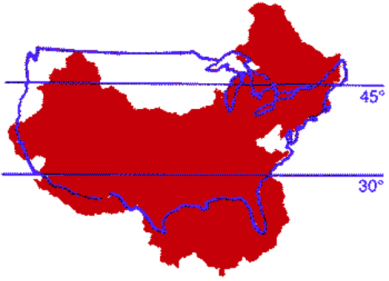
US and China
Aren’t maps the best?!

I’m not sure if this fits into my “misconceptions” post, but I think it just needs to be reiterated how big China truly is. Like the US, it would take days to drive across it, and many years to visit all it’s provinces and regions (there are 34 by the way). However, even with it’s massive size (and extreme geological features: tallest mountains in the world, one of the largest deserts, a few of the longest, widest rivers, etc.), it’s actually incredibly easy and affordable to get around. It took my family 8 years of concentrated effort to visit all 50 states. Between the incredible amounts of planning, purchasing of flights, renting of cars, and the hours upon hours of driving, it was a challenge. We’ve been here in China for about a year and a half and have already visited over half of the provinces. The ease and affordability of the public transportation situation here definitely makes China feel a bit smaller – it means that without a car and without speaking the national language, we can still explore the whole of the country.

Something else that makes China seem very big is the fact that it’s not crowded. 1.3 billion people live here, but it almost never feels that way. Another misconception I think people have is that there are lines everywhere you go in China, and that nothing can be enjoyed because there are too many people. But I hope this is something I’ve been able to show with my pictures – we find ourselves alone even at the most popular of tourist destinations quite often. Chalk it up to the vast spaces or the well-designed properties, but honestly, only on the major festivals have I ever really felt the population of China.

47688599_10218296822560261_2664432663435149312_n
Wulingyuan, China

China’s Society

43209912_10217780161084047_6924231083588321280_n
Fast friends!

Another common insight people often have when visiting China is that it’s not as rigid as they thought. Perhaps this comes from the movies, where we see actors portraying the demur, obedient Chinese brides or stoic martial arts instructors of China’s past, but whatever it is that has given us this mental picture, it’s one of the first to be debunked. In my experience people here love to laugh. I think my favorite are the taxi drivers. They love guessing where we’re from, asking what we’re doing in China, if we like it here, etc. In China we’ve also experienced random strangers smiling at us, which after a year in Europe, I had begun to think was just an American thing. Sometimes the older generation here is a bit slower to smile or laugh, but I think it’s because they’ve been through a lot of changes in the last 30 years or so, and maybe they’re waiting for the proverbial other shoe to drop.

China’s Students/Teachers

A final misconception I want to touch on, since it’s so near and dear to my teacher’s heart, is how the students of China are always seen as studious and highly motivated and how the teachers are often seen as aloof and uncaring. It’s very difficult to describe what education is like here. As a whole, I think China is a land of contradictions (some of the newest technology coupled with the oldest historical sites, some of the most stringent internet restrictions with the largest number of internet users on the planet, etc.), but especially in Chinese schools, can these dichotomies be seen. Students sort of have to be studious; a lot rides on their performances, but really they’re like students all over the world, a bit lazy and more interested in other things. Teachers have similar struggles; they are extremely motivated and often become teachers because they love learning themselves, but the pressure for them is high as well, and like most places around the world, they don’t get paid near enough.


Ultimately a key difference for me in teaching in China is the amount of respect the society at large has for students and teachers. Students enjoy discounted tickets at most tourist attractions and are not expected to work or support themselves until after they’ve graduated. Teachers also enjoy a high level of respect in the form of our very own holiday (September 10th) and the general admiration of students and children everywhere we go. In the US, education is treated much more like a business, which I think has turned many people off to the importance of education, but in China even with some of the negative effects of test-based systems and low salaries, the push for education is as strong as ever, and the importance of self-improvement can be seen in and out of universities.

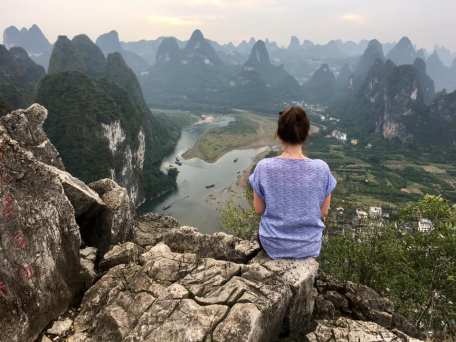
45311418_10217990304857510_1333662588940058624_nYikes! That was a lot of information about China! I should probably start writing a book or something because I have learned so much from my time here. More than I could have possibly imagined, and the longer I’m here, the more I know I’ll learn. I’m extremely thankful that I have been given this opportunity to better understand the people and the culture of the China, and I love sharing what I learn on both sides of the world. Recognizing some of my own misconceptions has been fascinating, but equally interesting is discovering others’ misconceptions of me (and America as a whole). Maybe that’ll be a future post! For now, I’m going to continue soaking it all up, remembering that things aren’t often as they first appear.
44865300_10217958157213839_5664067561315106816_n
Taking it all in

Our Packing Process

37500336_10217149019145893_5591727216695181312_nYou might have noticed that Tucker and I like to go on trips. A lot of trips. :) And since we typically try to travel as cheaply as possible, we usually end up with long bus/train rides, fairly small accommodations (usually hostels), and ultimately a lot of walking. All of these factors (in addition to my scrawny arms and general aversion towards planning) have turned me into somewhat of an expert packer. For anything from 4 days to 40 days, I pack everything Tucker and I need in 2 regular-sized backpacks and 1 duffle bag, and it usually takes me about 20 minutes. I have whittled down my packing process and have come close to perfecting it (at least for our needs), and I’m happy to share what I’ve learned with other trip-takers!

About Bags: I prefer to use regular backpacks, not backpacking backpacks, for several reasons. First, those huge ones that make you look like you’re about to hike the Himalayas are super expensive. I’m also a bit rough on my luggage (not to mention how the airlines treat them), so I just go with cheap back-to-school type bags. I like ones with only two pockets (one large and one small), and Tucker likes ALL THE POCKETS! Regular backpacks afford us a lot of variety, and they don’t break the bank when we need to replace them. In addition to cost is the versatility of a smaller bag. Often when we’re traveling we like to take day trips. It’s nice to have a smaller bag available for day-use as well. However, I will say that on occasion we have packed both backpacks a little too full and had to empty a bag onto the hotel bed before taking one of said day trips! You live and learn, I guess.

IMG_0672We also always bring a duffle bag as opposed to a rolling bag. The nice thing about a duffle is that it allows us to keep our hands free. One of us will sling it over our shoulder and happily traverse any sort of terrain (hundreds of stairs, cobble stones, dirt paths, etc.) all while holding a map, a phone, a water bottle, or anything else we might need. It’s also much easier to travel on a bus/train with a duffle than it is with a rolling bag. Our bag can be thrown in the overhead compartments, squashed under our feet, or stacked with other luggage in a separate area. We’ve also had zero issues with a duffle bag breaking (knock on wood!), and even if we did, they’re fairly easy to fix or replace. We have, however, broken wheels off of rolling bags, and that was not easily fixed. Instead it was dragged along behind us…rather loudly.

IMG_0669
Huge bummer

Toiletries: For our toiletries I typically pack two small pouches. I pretty much always have them prepped and ready to go with things like travel shampoo, body wash, q-tips, etc. Sometimes I separate our items into a sort of his-and-her situation, especially if we aren’t sharing a bathroom. Sometimes I’ll have them separated by stuff used in the shower/bathroom and other, non-wet things (like medicine, tissues, etc.). I also like to use Ziploc bags to keep things separate and leak-free. When you’re flying, you generally need them anyway, but even with ground travel, the Ziplocs have been lifesavers! We usually use them until they’re falling apart, so hopefully the environment will forgive me this use of plastic.

Clothes: This is probably where Tucker and I differ from most packers. We are rewear-ers. I’ll rewear most pants and shirts at least twice on a trip, which allows me to really cut down on the weight and bulk of our bags. For longer trips, we also rely on laundry facilities. We’ve done laundry in countless hotels/hostels, local laundromats, and yes, even in the sink (à la Rick Steves). The only thing we don’t skimp on is underwear and socks. There is nothing as bad as running out of clean underwear or socks! Another essential packing item for us is a trash bag. We use a trash bag to differentiate between the clothes we can still wear and the ones that must be washed before they touch our bodies again. This is really helpful because when rewearing clothes (especially in tropical locations) they can get a little ripe after awhile. Using a trash bag keeps that dirty laundry smell to a minimum.

InkedIMG_0671_LI

Other: Other things we pack include our collection of electronics: cellphone chargers, laptop, laptop charger, power bank, and adapters. I wish I had a nice tip for packing these things, but honestly we just shove them into an outer pocket. I will say that when traveling internationally, the smaller your adapter is, the better. We have some that fall out of the outlets because the adapter plus the weight of the plug/cord is just too much for the outlet to handle. We also always make sure to pack what we call “bag food”. It’s our supply of emergency snacks like granola bars, nuts, etc. Sometimes our transportation takes place in the wee hours, and as Tucker will attest, I can get pretty hangry. We try not to dip into the bag food too often, I mean, part of the reason we travel is to try all the local foods, but I will say that we have been extremely thankful for that Belvita on more than one occasion.

IMG_0670Souvenirs: Finally I’ve heard several people mention that they have had to buy additional suitcases for the souvenirs they bought while traveling (this may or may not have happened to us on occasion as well!). Typically I try to focus on collecting photos (and the occasional, functional item) for myself, but we often want to bring back souvenirs for friends and family as well. When looking for things to bring back, we typically aim for flat, sturdy items (wall art, bookmarks, games, etc.). They pack the best, whether for short or long-term storage/travel. I also really like to send postcards in lieu of gifts. If you travel a lot or live abroad giving gifts becomes expensive and exceedingly difficult to do in a timely manner, so instead I like to show I’m thinking of someone by sending a postcard from wherever I happen to be. I absolutely love getting mail, and I think most people would agree!

So that’s how we do it! It’s nothing special or groundbreaking; just taking the experiences/lessons as they come and adjusting as we go. There’s really no wrong way to pack though, and as we always remind ourselves when we’re walking out the door: all you really need is your ID, a form of payment, and a sense of adventure! :)

39083523_10217335769214528_1663143334241107968_n
Totally worth any packing hassle or mishap!

Language Woes

IMG_0262One of my goals this year, as I mentioned in my last post, is to really focus on my Mandarin skills. I’m planning to take the HSK before we leave next summer, and I’d really like to do well. The HSK is a Chinese proficiency test for foreigners learning the language. The highest score is a 6, which would demonstrate “a learner who can easily understand any information in Chinese and is capable of smoothly expressing themselves in written or oral form”. I’m aiming for a 3 (haha!), and since I’m likely going on this journey alone (Tucker really has no interest), I’d like to at least share a little bit about what makes Chinese such a difficult language to learn.


First off, there is no alphabet. For example, (meaning “not”) is pronounced méi, while (meaning “establish”) is pronounced shè. They look similar, but sound nothing alike. Similarly, 香蕉 “banana” and 相交“to intersect” are pronounced the exact same way (xiāngjiāo). There is clearly no “sounding it out”, which is what frustrates Tucker to no end! Okay, you think, that’s not such a big deal. You just have to remember the characters as if they were words. Unfortunately that means there are over 50,000 to memorize. Also, each word is not one character; they are some combination of characters, which means not only do you have to know the characters in a particular word, but you have to know the order: 蜜蜂 (mìfēng) means “bee”, but 蜂蜜 (fēngmì) means “honey”. No, I don’t want any bees on my toast, thanks.

25157938_10215303634012418_8448933450713862624_n
43 strokes for 1 “biang”!

However, recognizing the characters and knowing their order isn’t enough either because if you want to learn how to say them or find more information about them, in, say, a dictionary, you must be able to write them. Chinese has a very particular stroke order, which refers to the order and direction in which you write the characters. This is how Chinese dictionaries are often organized (even online), and if you don’t obey the proper stroke order, most online translators can’t seem to figure out what you’re going for. If you’re someone who starts your English letters from the bottom up, good luck! Even if ignoring the correct stroke order wasn’t an issue, most Chinese characters an average of between 7 and 12 strokes. The most in any single English letter? 4. My characteristically neat handwriting has never been tested in such a way!

Luckily, a group of linguists realized just how difficult the Chinese characters were for people coming from languages with alphabets, so they created one of my favorite things in the world: pinyin. Pinyin is a system of phonetic representation of Mandarin. It utilizes the Latin script (like English), and allows us, alphabet freaks, to quickly (and more naturally) read the pronunciation of a word. Sometimes a word will be presented with both the characters and the pinyin, such as: “卫生间 wèishēngjiān” (which means “bathroom” by the way – very useful!). This double representation is why I often say learning Mandarin is like learning two languages, you really have to know the characters and the pinyin! It is super helpful for us when we see both pieces of information together though. Then we know both how to say the new word and how to write it. Unfortunately, we rarely get that; usually it’s one or the other, not both. Sometimes there is a translation instead of the pinyin, but I’m not sure that is always so helpful…

42778492_10217730348358760_8056240847697477632_n
This one is actually pretty great!

IMG_0266Another problem we often encounter with pinyin is that it is more often than not missing the diacritic marks. Those marks represent the four tones of Mandarin, and are essential in its pronunciation. Unlike in English, changing the pitch of your voice while speaking Chinese can actually change the words you are saying. The pronunciation of mā (“mom”), má (“hemp”), mǎ (“horse”), and mà (“to scold”) only differs in tone. Unfortunately for lazy, toneless English speakers (like me), this makes it really hard for native Mandarin speakers to understand exactly what we’re saying. We try for “mom” and end up with “horse”, something which I hope has been more entertaining than irritating for them!

Ultimately, we struggle in reading, writing, speaking, and, with the various Chinese dialects, listening is a challenge as well. However, if you ask me whether I find Chinese or Polish more difficult to learn, I’ll say Polish every time. Chinese and English grammar actually have a lot in common. Our word order for example, is pretty similar. Chinese also has no articles or gender to worry about (two language features that I learned to despise very early on in French, and again with Polish). Perhaps most interestingly, unlike Polish and English, Mandarin is an isolating language, which means that the verbs are not inflected or changed for things like tense or aspect. So while in Polish I had to work really hard to conjugate and decline every word in a sentence before I could put them into a coherent thought, in Chinese I can just string them all together, adding new words when a change in tense or number is needed. For my brain, that is so much easier to do!

There is also something so intuitive about Chinese. Although my Chinese teachers tell me I should NEVER separate the characters of various words, it’s hard not to, and honestly that’s what helps me remember the vocabulary half the time in the first place! Here are some gems we’ve discovered (so far) in the Chinese lexicon:

IMG_0267Train = Fire + Car

Balloon = Air + Ball

Cellphone = Hand + Machine

Turkey = Fire + Chicken

Menu = Food + Sheet

Patriotism = Love + Country

Delicious = Good + Eat/Drink

ZhongWenAlright now! Who’s ready to learn this with me?! Chinese is definitely a language on the rise as far as power and prestige go. Much like what happened to English in the 1700s, increases in immigration, tourism, and business are spreading Chinese to all parts of the globe. In Australia, I was surprised and delighted to find Mandarin on most signage, and, even in Georgia/Florida (quite far away from China), maps and other tourist information can often be found in Mandarin. Some linguists refer to Chinese as the language of the future, and while right now it’s more painfully in my present, I hope to keep it around for my future as well! Wish me luck! 祝我好运!

Missing Polska

It’s Christmastime once again, and I find myself pining (see what I did there?) for Poland. This time last year, Tucker and I were decorating our apartment in Łódź and brushing up on Polish Christmas traditions (of which there are plenty). This year, while I’m very excited to be celebrating Christmas with my family, American-style, there are definitely many things I’m missing about life in Poland. For example:

Drinking Tea with Friends

I miss Polish tea culture! In the United States, coffee is generally the warm drink of choice, and, unfortunately, I really hate coffee. In Poland, I was gradually forced into drinking some form of hot liquid (especially on cold mornings), and eventually, I learned to love hot tea. Although at first I fought it, now I find myself missing the constant drink (and snack) offers at every Polish gathering (from dinner at a friend’s house to a meeting at work) as well as always getting the choice of coffee or tea. In the past few months I have done my best to bring this tradition to my life in the US, but sadly all I’ve done is become known as the weird, coffee-hating, hot tea-drinker.

The Language

I’m very sad that I will not get to use my well-practiced “Wesołych Swiąt” this year (or the even more challenging “Szczęśliwego Nowego Roku”). Instead, I have to waver with the very difficult “Merry Christmas” vs. “Happy Holidays” debacle. Not only am I missing Polish greetings, but I’m also missing the intensive grammar practice. I know that sounds crazy to most people, but I loved it – and it’s just not the same outside of Poland. I’m really doing my best to continue studying the complex Polish language, but it’s not nearly as gratifying without the unsuspecting strangers to practice with.

Public Transportation

I miss not having to worry about driving. Weather, distance, gas prices: there are so many things we consider when deciding if it’s worth it to leave the house in the United States. However, in Poland, I never worried about that. I had trains, trams, buses, sidewalks…plenty of methods at my disposal; thus, we found ourselves out and about much more often. I used to think having a car meant having freedom (and to an extent in the US it sort of does), but it’s definitely a limited freedom. Access to a good public transportation system is real freedom.

Proximity of Destinations

Somewhat related to public transportation, I also miss the nearness of points of interest. Poland (and Europe in general) has so much to see (mountains, castles, seas, etc.), and it’s not nearly as spread out as the United States. It was easy for us to go to a different region of Poland or even a different country just for the weekend. I miss being surrounded by the diverse histories and cultures of Central Europe. It’s only a 2.5-hour flight from Warsaw to Rome, Athens, Paris, or London. Location, location, location!

The Food

Where do I even begin when talking about the food? I miss everything about Polish food. I miss the buffets at the university cafeteria; I miss the cheap ham sandwiches sold at train stations; I miss the home-cooked feel of everything we ate in Poland. The żurek, rosół, pierogi, kotlet schabowy, kopytka, even the surówka, I miss it all! This is another aspect I tried to bring back to the States, but alas, it’s just not the same. Atlanta doesn’t even have a Polish restaurant where I can get my fix! At least when I was in Chicago I was able to get some fresh kabanosy and wash it down with a cold Żywiec.

The Hospitality

Perhaps most of all, I miss the people. I miss my Polish friends, and I miss the friendliness of Polish strangers. Poles are very genuine, and in my experience they make great friends and mentors. I miss the conversations we had – always very intelligent and rarely superficial, and I miss the interest they took in learning anything they could about US culture and the English language. After spending some time back in the US, I’ve witnessed so many differences that I didn’t realize existed, and I love sharing them with the people I left across the Atlantic. I have a feeling I will be making realizations about Polish and American culture forever!

Of course, there are many other aspects of Polish life that I find myself missing – seriously, I could go on. Fortunately, I have been able to incorporate a few Polish customs into my American life. Things like drinking beer with a straw (and on occasion fruit juice), not taking off my jacket as I shop for groceries, wearing slippers around the house, and you better believe we’ll be watching “Home Alone” on Christmas Eve! :) In short, my time in Poland changed my life. I’m still so grateful for that opportunity and am ready for my next overseas adventure (soon to come)!

Our Travels (from 2015-2016)

There is no question that Tucker and I have been extremely fortunate this year. It honestly feels like a dream. I’ve talked a lot about Fulbright, the University of Łódź, and all the amazing experiences I’ve had with such wonderful people and organizations supporting me, but I’ve not really discussed the places we’ve been able to go. I have always loved exploring new places, comparing them to what I’ve read or heard from others, and my time in Europe has allowed me to do that and then some. Traveling is an incredible luxury, and unfortunately, it’s not something everyone can do. I hope in the future international travel becomes more accessible because I have learned and developed a great deal through it and want more people to be able to do the same (if they want to). Anyway, since several friends and family members have expressed interest in our travels, I’ve decided to share some of our experiences this past year: the destinations, of course, but also some lessons and laughs we had along the way.

Łódź, Poland:

One of our first mishaps in Poland (of which there have been many) occurred on our second day in Łódź. We were on our way to meet my supervisor at the university for the first time, but had a slight issue on one of the trams. We really thought we were ready, armed with złoty (the Polish currency) and a brand new chip card; however, Poland is both too outdated and too modern for either of those means of payment! On the tram we could only use coins or a tap-and-pay card to buy tickets, neither of which we had. Oops! Normally this wouldn’t be a much of a problem. We would just get off, buy some tickets at a kiosk, and get back on, but, of course with our luck, the secret transportation police (who seem to follow me) were on the tram watching us as we failed. Once they were sure we had run out of ideas, they yanked us off and gave us a 140 złoty fine ($35). Needless to say, we were late to the meeting…

Warszawa, Poland

Łęczyca, Poland

Kraków, Poland

Gdańsk and Sopot, Poland

Poznań, Poland:

In December, we had some time off thanks to the holidays, so one weekend, we impulsively decided to visit Poznań, a city about 3 hours from Łódź. We didn’t know much about Poznań, so on the way there we googled the main attractions and read several suggestions to see the goats. Waking up the next morning in Poznań, it was snowing (yay!), but I was sick (boo!). Runny nose, streaming eyes, chills – it was awful, but I was not going to let that stop me. We bundled up, braved the cold, and walked and ate our way around Poznań. Eventually, it was time to see the goats. We were super excited as we crowded around the Town Hall in the main square with about 50 other goat-seekers. As the clock struck noon, the tiny, mechanical goats slowly came out of their little doors at the top of the tower. They turned towards each other, butted heads a few times (among oohs and ahhs, of course), and then retreated to their home. What did we just witness? Why goats? Is that all they do? So many questions left unanswered.

Łask, Poland

Bergen, Voss, Gudvangen, Flåm, and Myrdal, Norway

Wrocław, Poland

Lisbon and Porto, Portugal – Madrid, Spain – Rome, Italy – Vatican City:

Traveling to new countries can be a tad confusing at times. There can be different ways of doing things or different laws that must be upheld – many of which are unknown to tourists. We experienced a bit of this when we got to Rome. We arrived fairly late, so there was no one to let us into our room. Luckily they left a post-it note on the door with a number to call (odd). We called, and eventually a guy showed up and took us down the street to a different apartment building (also odd). He showed us the room, gave us the key, and then asked for money because Italy imposes a “special tax” on renting rooms. What?! We had already paid for the room, and I wasn’t even sure we were in the right place with the right person anymore – should we really be giving him more money? Well, we did (with no receipt or proof of any kind). But luckily he wasn’t a scammer; Italy really does impose a tourist tax for each night you stay in the country, and it’s generally paid after you arrive. Weird.

Szczecin, Gryfino, Płoty, and Resko, Poland

Wieliczka and Zakopane, Poland:

You know what Atlanta doesn’t have much of? Snow. Obviously, Tucker and I had a few things to learn about Polish winters, but on our trip to Zakopane, a mountain town in the Polish Tatras, we proved to be slow learners. Our goal while in Zakopane was to hike to Lake Morskie Oko. We had a few difficulties getting to the starting point of the hike due to the time of year, and once we were there, I realized I had made a huge mistake. I thought someone had told me it was a two kilometer hike, but it seems they might have said it was a two hour hike. Oops. We also failed to take into account the fact that elevation changes the weather a great deal, so we left to hike 18 kilometers (11 miles) uphill, in the snow…in gym shoes. I’m pretty sure we almost lost toes. After about 20 minutes our shoes were soaked and soon we couldn’t feel our feet at all. That made walking up the steep mountain extremely difficult, not to mention all the slippery snow and ice. But at least now we will forever understand the importance of boots!

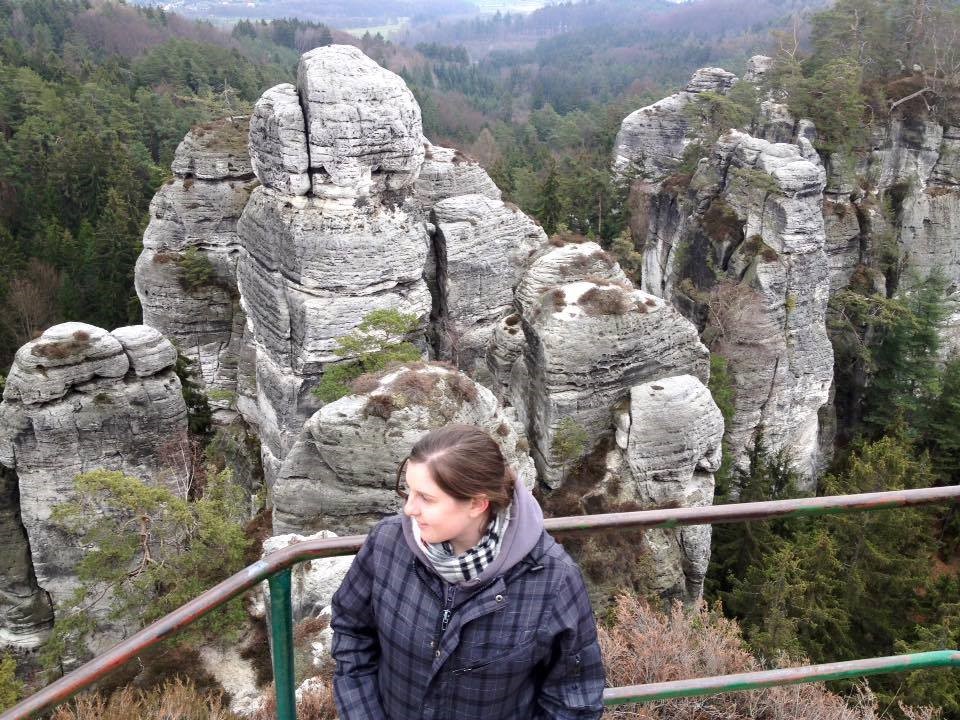
Český ráj – (near) Turnov, Czech Republic

Brussels and Ghent, Belgium

Prague and Turnov, Czech Republic

Sieradz and Burzenin, Poland

Kalisz, Poland

Częstochowa, Miedźno, Katowice, and Oświęcim, Poland

Minsk and Mir, Belarus:

One of the coolest experiences we had during our travels was riding an overnight train from Warsaw to Minsk. It was such a great trip for so many reasons, including, but not limited to: our amazing travel companions and the breakfasts we shared, the traditional Belarusian dinner with many, many toasts, and the experience of being lifted into the air as they changed the train wheels at the border. However, by far, my favorite part occurred on the way home. We took another overnight train (this one was a bit older), and upon entering our compartment, it seemed we were missing a bed. We searched around the tiny room looking for the elusive bed until we spotted what looked like a door. Thinking this must be the last fold-out bed, we yanked it open and unexpectedly found ourselves looking at the gentleman in the next compartment, who rather promptly and enthusiastically said “Hello!”. No one could stop laughing!

Mir Castle, Mir, Belarus

Prusinowice, Poland

Reykjavik, Selfoss, Hella, and Vik, Iceland – Belfast, Northern Ireland (UK) – Galway, Cork, Blarney, and Dublin, Ireland

Gdynia, Hel, Lębork, Łeba, and Malbork, Poland

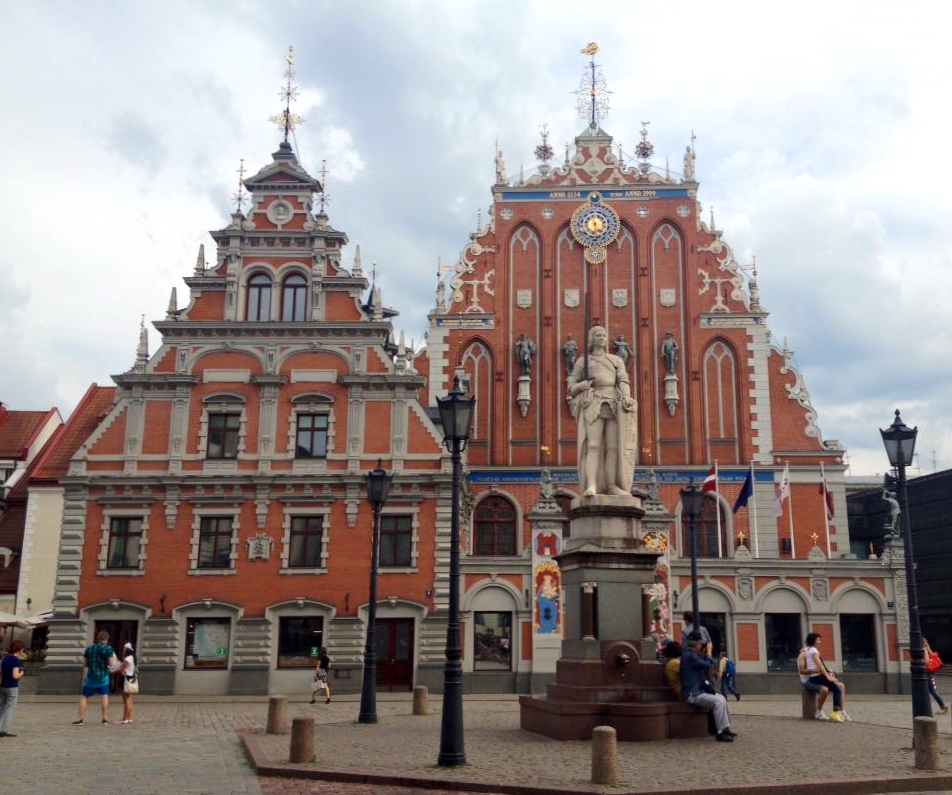
Tallin, Estonia – Riga, Latvia – Vilnius, Lithuania:

I like to be early: early for class, early for appointments, early for buses/trains/planes, etc. However, sometimes it’s just not possible. Particularly when you accidentally add an 8-hour “snooze” to your alarm for the morning (why is that even an option?!). Before our trip to the Baltic States, we were graciously invited to an Independence Day party at the US ambassador to Poland’s house. We didn’t get home from the party until fairly late, and had to catch a bus the next morning at 4:50am. Before going to sleep, I responsibly set my alarm to make sure we woke up with enough time to shower, pack our things, and get to the bus station. Unfortunately, that didn’t happen. At 4:34am Tucker woke up to get a drink of water, and realized (much more calmly than I would have) that we were late. Beyond late. He woke me up, and we legitimately threw our stuff in our bags and ran out of the hotel and all the way to the station. Only 16 minutes from waking up to the bus pulling away! We were sweaty, unshowered, and shaking (okay that was just me), but somehow we made it. Now we set alarms on both phones.

Stockholm, Sweden – Skopje, Macedonia – Bratislava, Slovakia – Budapest, Hungary – Vienna, Austria

Berlin and Potsdam, Germany

Rzeszów, Poland – Lviv and Kiev, Ukraine

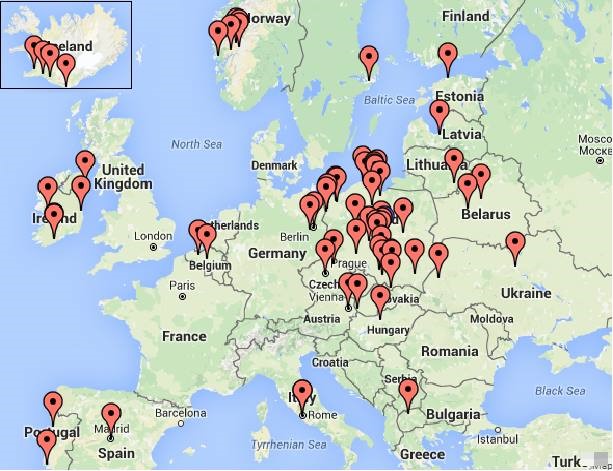
So, this is where we’ve been this year: 21 countries, 66 cities, collecting endless memories!

I have truly tried to take advantage of every opportunity I’ve been given this year, and traveling in and around Poland was a big part of that. Throughout this process, I know my posts and pictures have been endless, but I hope they have never seemed discouraging or boastful. I wanted to document everything we did this year, so one day Tucker and I can look back and remember all the details of these stories and places, which will surely escape us as time passes. The places we’ve been and the people we’ve met during our travels this year have definitely changed how we view the world, and that is exactly why I love to travel. Here’s hoping this is only the beginning! :)

Reminisce With Me

This week my Fulbright grant came to an end, and all the “lasts” are starting to hit me. I taught my last class at the University of Łódź, we had our last conversation club meeting at the American Corner, and this past Friday was the last Fulbright event. With these milestones behind me, I’m find myself treating every experience as the last – the last time we eat at this restaurant, the last time we buy znaczki, the last time we see so-and-so, etc. It’s always difficult to say goodbye, but for so many reasons this experience has been much harder to let go of. Tucker and I have had an incredible time this year. We’ve seen and done more than I could ever have imagined, and the experiences we’ve had and the people we’ve met have truly changed our lives forever. Let’s reminisce!

We arrived in Poland last September jet-lagged and sleep-deprived, but it didn’t keep our jaws from hitting the floor when we were taken to Sarnia 2, m.23, which has truly become our home. The city and the apartment we live in are absolutely beautiful. This has been our view for the past year, and I will sorely miss it!

Next we met the other Fulbrighters in Warsaw, and perhaps finally realized that this was real. We got acquainted rather quickly, getting lost in the underground passages of Centrum and having shots of hazelnut vodka while learning people’s names. Now I feel confident that there’s no amount of vodka that would allow me to forget their names! Hopefully. :)

Fulbright Polska 2015-2016

Eventually, we returned to Łódź and got down to business: meeting my new colleagues, beginning classes at the university, studying Polish fervently, etc. Throughout the year we attended many conversation clubs and other events at the American Corner, we visited primary and secondary schools across the country, and even gave conference presentations in Minsk.

School visit in Burzenin

Through each of these experiences I’ve been able to develop as a teacher, a presenter, a researcher, and as a person. There is always so much to discuss and even more to learn! Tucker and I participated in everything possible, and we have never been disappointed. We looked into our futures on Andrzejki Day, we marched in support of women’s rights on Piotrkówska, we shouted “POLSKA! BIAŁO-CZERWONI” at a hockey match, and we even attended a party at the US ambassador to Poland’s house.

In addition to all of these amazing events, we were also lucky enough to spend our free time traveling around Poland. We hiked the Tatras near Zakopane, visited castles in Kraków, Malbork, and Łęczyca, walked along the Baltic sea in Łeba, saw the legendary goats of Pozńan, took a ferry to Hel and back, and so much more! Poland has incredibly beautiful and diverse geography – there is so much to see, and we’ve only just scratched the surface.

Słowiński National Park

And while we were busy completely immersing ourselves in all things Polish, we also had the privilege of making some of the most incredible friends! We really cannot thank everyone enough for welcoming us into your homes, your lives, and your cultures. We have learned so much from you all! I have no doubt we’ll be friends for life, and Tucker and I can’t wait to host you in whatever country we end up in next!

So, what is next? Fulbright is over, but we still have a month left in Poland. And that can mean only one thing – travel! We have three more trips planned, plus as many events as we could squeeze into our last few weeks in Łódź. After that, who knows? Many people have been asking about our plans for the future, but for now, we’re happy to be mulling over our options. We do know that we’ll be back in Atlanta for at least August and September, but after that, it could be anywhere!

A Taste of Poland

It’s time for the topic you’ve all been waiting for: Polish food! One of the best things about travelling, living abroad, and life, in general, is the food, and I’m happy to say that even after seven months, we are still loving everything Poland is dishing out. I wish I could send everyone reading this a heaping plate of pierogi or some spicy kabanosy to sample, but as that’s just not possible, we’ll have to make do with the power of description.

Fruit/veggie market

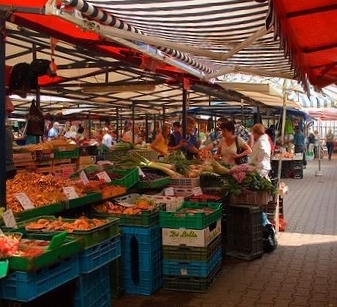
The first thing that must be mentioned when talking about Poland’s food is their produce. It is honestly head and shoulders above what we usually get in the US. Not only is it much cheaper and overall tastier, but it’s everywhere! Good quality produce in Poland can be found at any of the large chains (like Auchan or Real), at pop-up stands in the cities or on rural roadsides, and sometimes even in a local parking lot, out of the trunk of someone’s car. This availability, of course, comes with the season, which is part of why the produce is so good. It’s extremely fresh (mostly grown locally) and only ever includes what’s currently in season. When we arrived in Poland, apples were everywhere (in fact, on one of our first days here, we offered a lady our seat on a bus, and as a thank you, she gave us each an apple). After the apples, came an influx of pumpkins and squash, then the potato section expanded, and now we’re rolling in berries and green veggies.

The quality of produce is very important to Poles because most everything they eat is made from scratch using these ingredients. I’ve mentioned before how grocery shopping in Poland has made me feel more like a lazy American than anything else, and this is exactly why. In the US, I buy soup in a can, croutons in a box, cookie dough in a tube, sauce in a jar, and the list goes on. In Poland people prefer to make all of the components themselves. This is why you’ll hear people raving about the mushroom soup their mom makes when they’re sick, or the ketchup their grandpa made when they were a kid. Every family, every person has a slightly different way of making even the most traditional of Polish dishes.

A traditional żurek

The idea of “traditional dishes” is actually a bit difficult to nail down for Americans. Many of our most “patriotic” dishes are not truly from the US. It’s extremely hard to justify the saying “as American as apple pie” when every culture has a version of apple pie! (For example, in Poland it’s called szarlotka, and it’s delicious). However, Poland is quite a few years older than the US and definitely has some dishes that are both nationally and internationally known, such as: żurek (a sour rye soup), bigos (a stew of sauerkraut and meat), pierogi (dumplings usually stuffed with potatoes), naleśniki (thin, stuffed, savory pancakes), rosół (chicken noodle soup with carrots, generally served on Sundays), kiełbasa (which the generic word for sausage of which there are many, many types – trust me, I can’t list them all without losing a few of you), kopytka (my favorite little potato nugget-dumplings), and surówka (a variety of coleslaw blends) just to name a few.

Chicken caprese with kopytka

While it’s true that cooking at home is the norm in Poland, rest assured they also like to eat out on occasion. Restaurants are quite popular in Polish cities; however, in the smaller towns the options are very limited. Luckily for us, lazy Americans, we live in Łódź (one of the largest cities in the country), and have a huge variety of restaurants to choose from. Just like in the US there are “fast food” restaurants such as McDonald’s, KFC, Burger King, North Fish, Döner Kebab, and Solo Pizza. There are also a few of what I would consider “casual dining” restaurants like Greenway (vegetarian cuisine), Mañana (the Polish version of Chipotle – minus the bacteria), and a unique variety of pay-by-weight restaurants. These pay-by-weight places are all around Poland and at first glance look like buffets, but instead of all-you-can-eat, it’s something like 3 żółty (less than a dollar) per 100 grams of food. I particularly like these places 1) because I’m a picky eater and 2) because it allows me to try a tiny bit of everything without fear. Also worth mentioning are the milk bars (bary mleczne) of Poland. These are restaurants leftover from Communist times that look and function like cafeterias. The most authentic milk bars serve mainly dairy-based dishes (hence “milk”) and do not serve dishes with meat, as meat was rationed on and off during the height of milk bar popularity.

Naleśniki with surówka

However, if you come to Poland for the food (and really, why wouldn’t you?) you’ll want to eat at a true restaurant, a sit-down, atmospheric event. In Łódź alone, you can find restaurants that specialize in Bulgarian, Ukrainian, French, American, Mexican and many other national cuisines, but by far, the best restaurants are the Polish ones. Generally, you start your meal with a plate of pickles, bread and lard, and finish with a shot of liquor. Ah, Poland! Another specialty in Polish restaurants is the soup. In most restaurants, many types of soup are offered and are often the reason people return to a given restaurant again and again – you’ve gotta try them all! However, if you’re not into “rustic food”, Poland also boasts some of the most incredible, modern eateries I’ve ever experienced. There is certainly no lack of good food in Poland, no matter what your style or taste.

There’s even a solid option for those days when you don’t want to get out of bed. In Poland, delivery, like all things food-related, is quite cheap. There are the obvious Chinese and pizza options, but in Łódź there are also companies like Pyszne and Pizza Portal, which after you order online, will go to any participating restaurant, pick up the food, and deliver it to your doorstep. This is how I’ve eaten hot wings and bacon cheeseburgers in bed – don’t judge.

Okay, are we all sufficiently hungry now? I really hope that I’ve made each of you consider Poland as your next vacation destination because if you aren’t traveling for food, then you aren’t fully living. Come see me in Poland and smacznego (bon appétit)!