Fun French Finds

Language is a funny thing. You never really think about just how many words and phrases there are in any given language (to say nothing of all the grammar features, pronunciation rules, and cultural nuances), but every time I find myself switching to a different daily-use language, I am always inundated with new (or sometimes, forgotten) vocabulary. Even with something like French, which I’ve definitely studied before and which has quite a lot in common with both English and Spanish, there is still SO MUCH to learn (and remember).

So, for this month’s post, I thought I’d share a few of the many entertaining direct translations that are living rent free in my mind now that I’ve gotten back into using français au quotidien. Amusez-vous bien!

Poules en liberté – literal meaning: “hens at liberty” – real meaning: “free run chickens”

This makes me laugh every time I buy eggs because I can’t help but picture chickens reenacting the French Revolution or something. Liberty, Fraternity, Egg-quality!  

Nid-de-poule – literal meaning: “hen’s nest” – real meaning: “pothole”

Speaking of cultural nuances, chickens are super engrained in Francophone culture, which is clearly evidenced by the cute French name for this annoying modern-day obstacle.

Jaunes – literal meaning: “yellows” – real meaning: “yolks”

In English, we say “egg whites”, but “egg yellows” sounds ridiculous, non? Well, “yolks” actually comes from an Old English word meaning “yellow”, so maybe we’re the ridiculous ones.

Papillon de nuit – literal meaning: “butterfly of the night” – real meaning: “moth”

Another hauntingly beautiful (and delightfully descriptive) French noun! Of course moths should be called butterflies of the night! That’s exactly what they are, and it sounds très cool.

Porc-épic – meaning: “porcupine” (originally from Greek, meaning “spiny pig”)

Okay, this one is similar in English, but the way it’s written in French makes my franglais brain think “epic pork”, which I think really paints porcupines in a whole new light, don’t you?

Chauve-souris – literal meaning: “bald mouse” – real meaning: “bat”

What I want to know is who hated bats enough to stick them with this completely unfair name for the rest of éternité. I mean, even if you felt really strongly about their baldness and/or mousiness, what about the wings?!

Cerf-volant – literal meaning: “flying deer” – real meaning: “kite”

Another bizarre animal description here because I can’t really see a lot of similarities between kites and deer. What exactly was going on with the kites and deer of early France?
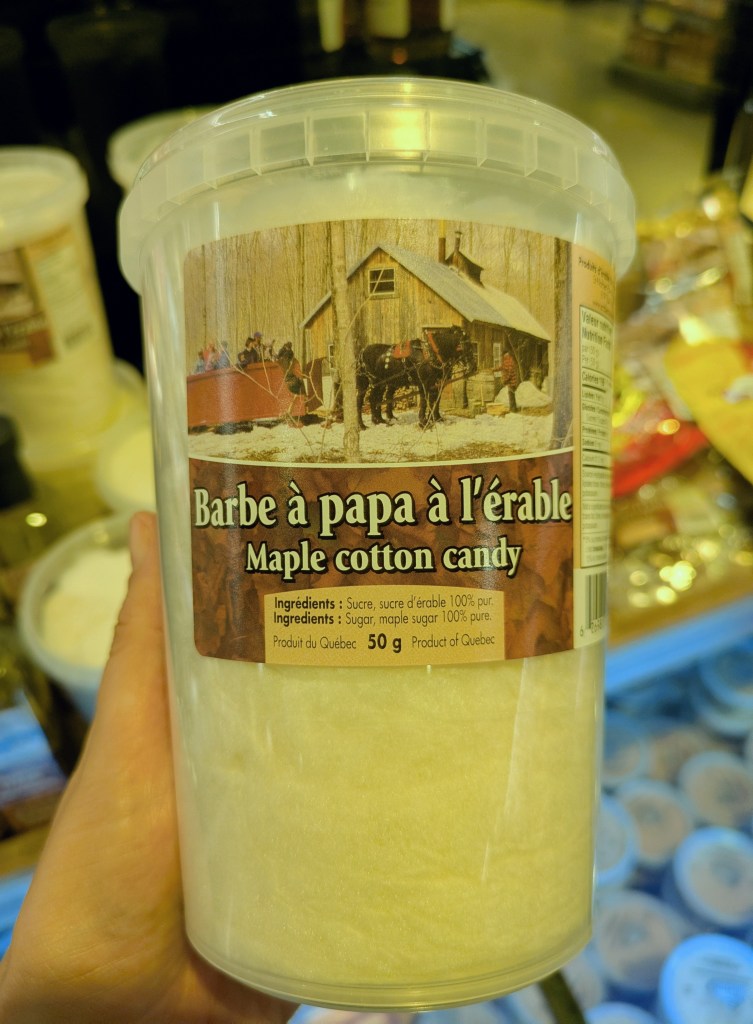
Barbe à papa – literal meaning: “dad’s beard” – real meaning: “cotton candy”

Explaining this to non-French speakers is always a little awkward. I’m aware that “cotton candy” doesn’t sound that appetizing either, but thinking about your father’s beard hair as a snack is just a bit étrange.

Pissenlit – literal meaning: “piss-in-bed” – real meaning: “dandelion”

I absolutely love that this name survived into modern times because what a cool way to learn that dandelions are diuretics!

Cul-de-sac – meaning, well, “cul-de-sac” or “dead end”, but the literal translation is “ass of the bag”

We all know the word “cul-de-sac”, but I bet now you have a whole new visual to associate with it! I love when languages use profanity to make a point.

Nez qui coule – literal meaning: “nose that flows” – real meaning: “runny nose”

This phrase is immediately clear upon first encounter, which I love, but what I now find disappointing is that English missed out on this glorious rhyming opportunity!

42 pouces – literal meaning: “42 thumbs” – real meaning: “42 inch”

Oui, oui, “pouce” can mean either “thumb” or “inch”, but I first learned it as “thumb”; therefore, I now measure TVs in thumbs rather than inches. Honestly, I wish we’d just use centimeters anyway!

Pomme de terre – literal meaning: “apple of the Earth” – real meaning: “potato”

An oldie, but a goodie. This poetic way of naming the most basic of things is what I always associate with French. However, Canada is a bit more efficiency-based, which is why I see “patates” a lot now too. 

Pommettes – literal meaning: “little apples” – real meaning: “cheekbones”

Another example of French flair contrasted with English frankness; one of which I love as a linguist, the other, I prefer as a student. Thank God for Google Translate though.

Et c’est tout! I hope you enjoyed these fun little tidbits about some common French and English words! Until next time, à bientôt!

Cosas que amo del español

For over two and a half years now, I’ve been learning (and using) Spanish on a daily basis, and I think it’s safe to say that it’s officially one of my favorite languages in the world. Beautiful and expressive, but also pretty straightforward and más o menos consistent, there’s really a lot to love (especially from a student’s perspective)! So, this month, I’d like to honor español and share some of my favorite things about este idioma super chido. ¡Disfruta! Enjoy!

#1 The ability to make things cuter with “-ito”

¡Adorable!

English occasionally has this ability with things like “duck” and “ducking”, but en español you can add “-ito” or “-ita” to any noun if you want to make it smaller and, therefore, cuter. For example, “engrapadora” means “stapler”, and “engrapadorita” means “tiny, adorable, little stapler”. See how fun?! Of course, it can also be used to differentiate meaning, which is just as cool! For example, “golf” and “golfito”, which would be “golf” and “putt-putt” respectively. Animals also get the “-ito” treatment when they’re babies, as with “gato” and “gatito” (“cat” and “kitten”). However, my all-time favorite will always be “caballito de mar” (“little horse of the sea”) – so cute!

# 2 The super fun pronunciations

I could talk about Spanish pronunciation and why I love it for much longer than most people would care to listen; however, I added this to my list not to discuss how amazingly consistent the pronunciation is, but, instead, just how fun it can be! The high tendency of consonant, vowel, consonant patterns means you get a lot of syllables that (usually) roll pretty effortlessly off the tongue. Sometimes these are just Spanish-ified English cognates, like “panqueuques”, which is just so much more fun than “pancakes”. Sometimes they have a Nahuatl flare like Tucker’s favorite: “cacahuate” (or “peanut”). And sometimes they just end up sounding a little bit dangerous, like “murciélago” (or “bat”). All of which make them great candidates for pet names, passwords, and/or expletive alternatives! And since you pretty much have to say these out loud, here are some English-y phonetics: “panqueques” = pan-kay-kays… “cacahuate” = ka-ka-wah-tay… and “murciélago” = moo-er-see-el-ah-go

#3 The usefulness of the accent marks

Lots of languages use diacritic marks. Even English will still throw in a few just for good measure (think café, façade, and piñata), but Spanish uses its accent marks way more often and way more efficiently. Rather than indicating something like foreignness, history, or even a sound change, Spanish accents will either tell you where the stress of a given word falls (super helpful) or if it’s actually a different word entirely. It’s like a little code within the code that language already is! So cool! Here are a few of my favorite examples: with the accent, “inglés” means “English”, but without it, “ingles” means “groins”. While that one can be quite jarring, others are super common like “sí” (“yes”) and “si” (“if”). Somewhat like seeing someone in English write “no” when they mean “know”, you can learn a lot from whether or not someone “nose” when to use accent marks. ;)

I still think about this particular error years later…apostrophes are important too!
I love Spanish Cs

#4 Seeing K-words written with Cs

Another thing I love about Spanish is its commitment to consistency. Many languages have both the letters C and K, and very often they sound the same. But somewhere along the line, Spanish was like, “no thanks, you can keep your redundant K”; therefore, there are a lot of quasi-universal K-words that always give me pause in Spanish, no matter how well I know the rules. Those jumpy animals in Australia: “canguros”. The Asian peninsula known for Gangnam Style and Samsung: “Corea”. And the super boring, beige material that a lot of 90s office workers wore, you guessed it: “caqui” (which is really minus K x2). I absolutely love it, but I have to be completely honest and admit that learning Spanish has severely decreased my confidence in English spelling…and that’s probably already saying something.

#5 Things that just make sense

While I’m sometimes confused when I see a random C where a K should totally be, I’ve definitely encountered more things in Spanish that just plain make sense. It happens quite frequently that I come across a new word or phrase, and although I’d never seen it before, I have no difficultly in deciphering its meaning. For example, I once read the phrase “caja torácica” or “thoracic box”- what else could that be besides “rib cage”? Or “telaraña” which is literally “fabric” + “spider”, obviously “spider web”. And finally, there’s the fact that Spanish loves to simply call a spade a spade: “goths” = “darks”, people who love to snack = “gordos”, and elderly people = “ancianos” – simultaneously extremely helpful in building my vocabulary and lessening my fears of offending someone en español, y por eso, ¡gracias!

#6 Things that make me laugh

But perhaps my favorite thing about learning any language is just how much it shows you the depth of which your own language shapes the way you think. I absolutely cannot get over the fact that there is no word for “toes” in Spanish. They are referred to as “dedos de los pies” (or “fingers of the feet”), and no matter how hard I try, I can’t accept that fingers = toes. They just don’t! Another one that never fails to make me laugh is the fact that peacocks are “pavos reales” or “regal turkeys”. This one is easier to understand, but I can’t help but feel like it paints peacocks in a slightly different light…then again, they do have “cock” in their English name, so who am I to judge? Finally, the last word that I can never use with a straight face is “molestar”. Coming from the same root, the English version isn’t that far off, but in Spanish it only means “to bother”, and it is used ALL THE TIME. Hotels even give you “no molestar” signs for the doors, which Tucker and I always make a point to snicker at. Ah, the joys of learning a new language!

So, there are just a handful of the things that I absolutely love about español. I hope you enjoyed them as much as I do! And personally, I can’t wait to revisit this list in a few years just to see if a) I’ve remembered all these details and b) if there’s anything I’d add to the list in hindsight. So stay tuned! Y por último, I just want to say that Spanish really is un idoma divertidísimo, so buena suerte to all those who are learning it and remember that tener otro idioma es posear otra alma. To have another language is to possess another soul. <3