Québec City Virtual Tour

As we settle into our new home, I’ve been busy reading and learning all I can about Québec City and its history. Honestly, I’ve become a little obsessed because there are just so many interesting stories and details, which I’m very excited to share. And since I learned a lot of this information through various walking tours, I decided to organize this into a sort of virtual walking tour for anyone to enjoy! On y va!

Stop 1: Parc des Gouverneurs

I want to start our little tour at the Parc des Gouverneurs, which sits right next to the famous Château Frontenac and has a beautiful view of the Saint Lawrence River. I think this is a great place to begin because from here you can see both sides of the river and Île d’Olréans, which is the official start of one of the largest estuaries in the world. An estuary is where a river turns into an ocean, and this particular narrowing is precisely why Québec City is where it is, and it’s also how the city (and the province) got its name. Québec means “where the river narrows” in Algonquin.

Partly due to its location, Québec City has played an important role in the history of North America. Founded in 1608, it was the first permanent settlement of what was then New France, and like many of Canada’s first cities, it started as a trading center. However, its strategic position and striking natural features are what prompted early explorers and settlers (first Cartier and then Champlain) to develop the area. Cartier couldn’t quite handle the harsh winters here, so he came and went a few times, but it was Samuel de Champlain who decided to buckle down and make Québec City a home.
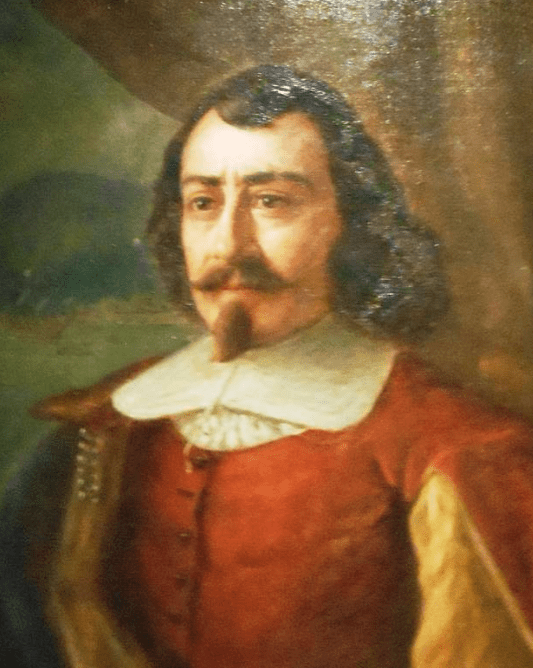
Along with a small group of initial settlers, Champlain built the first habitation in Québec and quickly became known as the Father of New France, which is why his face is everywhere around the city. Well, not his face exactly. Apparently, Champlain never actually had a portrait done, so we don’t know what he looked like, and when the city started putting up statues of him, they had to just go with another noble-looking French guy instead. So, in all the artwork, statues, and history books, the man you’re looking at is not Champlain, but at least they stayed consistent with the image.

Stop 2: École des Ursulines

Our next stop is the École des Ursulines, which began as a monastery that was founded in 1639, making it the oldest educational institution for women in North America. One of the founders was Marie Guyart (aka Marie de I’Incarnation), a French widow turned nun, who came to Québec to educate young girls in the new colony. Because she had been married before and still had a son in France, she wrote thousands of letters about daily life in New France, the indigenous people of the region, and many other events that historians are still pouring over. For her contributions, she has been memorialized across the city and beyond.

Québec City (and all of its early inhabitants) really saw a lot of important events unfold in what was a fairly turbulent time for North America. Québec City sits on a 300ft cape situated at the narrowest point of a difficult-to-navigate river, meaning it was pretty intimidating even before all the fortifications, which is likely why there have only been a handful of battles fought here. The first battle is one of the most famous (and interesting) because it was won with a bit of psychological warfare. Louis de Baude de Frontenac, the Governor General at the time (1690), gave the iconic “I’ll answer the with the mouths of my cannons” line after blind-folding and tricking a scout into thinking Québec was much more battle-ready than it actually was.

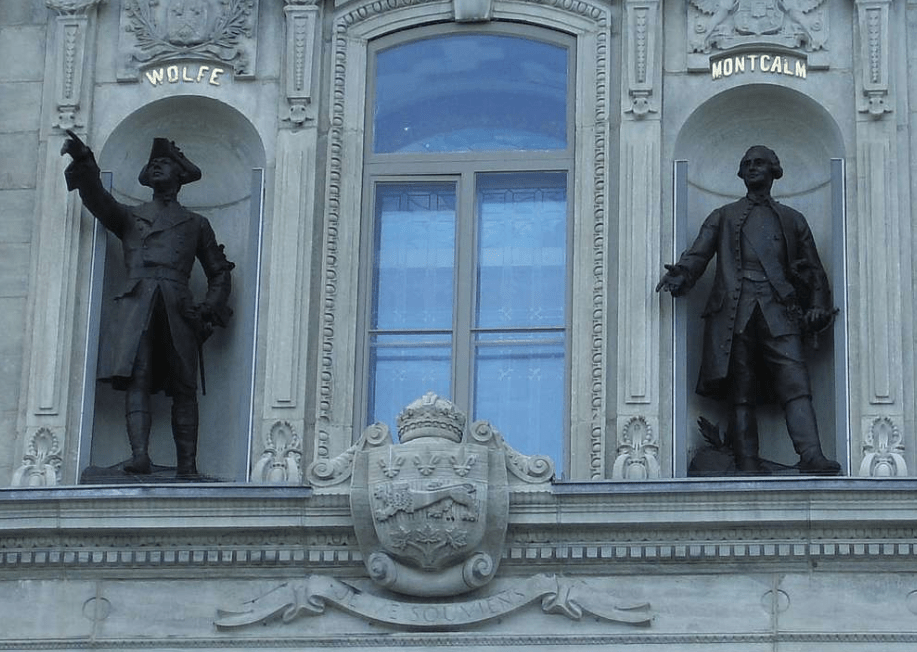
Another famous battle took place here in 1759: the Battle of the Plains of Abraham, which is essentially how the British ended up with all of Canada. Interestingly, although the British won the battle, the generals on both sides, Wolfe (EN) and Montcalm (FR) are still well-represented throughout the city. Also, of interest is the fact that Montcalm’s remains were actually found beneath the floors of the École des Ursulines somewhat recently (2001) because one of the nuns ended up sharing that little piece of history on her deathbed. What a way to go out!
Stop 3: St-Louis Gate

Next, we’ll take a stroll over to the St-Louis Gate, one of the oldest gates in the city. The St-Louis Gate stretches over rue St-Louis, which was one of the first roads in Québec City as it led directly to Fort St-Louis, Champlain’s (and later several other Québec leaders’) official residence. The fortifications around all the city gates weren’t actually completed until a bit later, and the city wasn’t 100% walled-in until after 1820 when British troops finished the job. It was quite a job, too, because the walls stretch over 4.6kms (2.9mi). At one point, there were over 300 cannons lining the walls, which definitely added to Québec’s image as a hard-to-conquer city. 
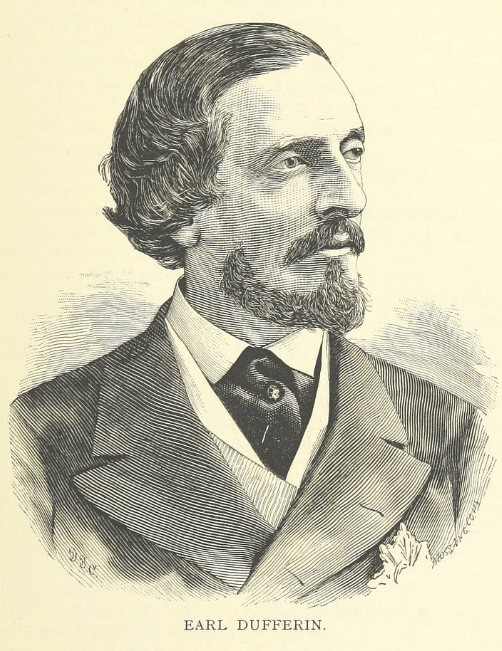
Of course, eventually, the wars ended and things settled down in North America, and Quebecers had to decide what they wanted to do with their fort of a city. Many wanted to tear down the walls and start over with more of an open-concept. However, another Governor General, Lord Dufferin, had a different idea. He had traveled extensively and knew that Québec’s walls were an architectural jewel that needed to be preserved, and thankfully, he was able to persuade everyone else. By preserving the fortifications, enlarging the city gates, and building a massive public boardwalk, Lord Dufferin ensured Québec City would be welcoming tourists long after he was gone.

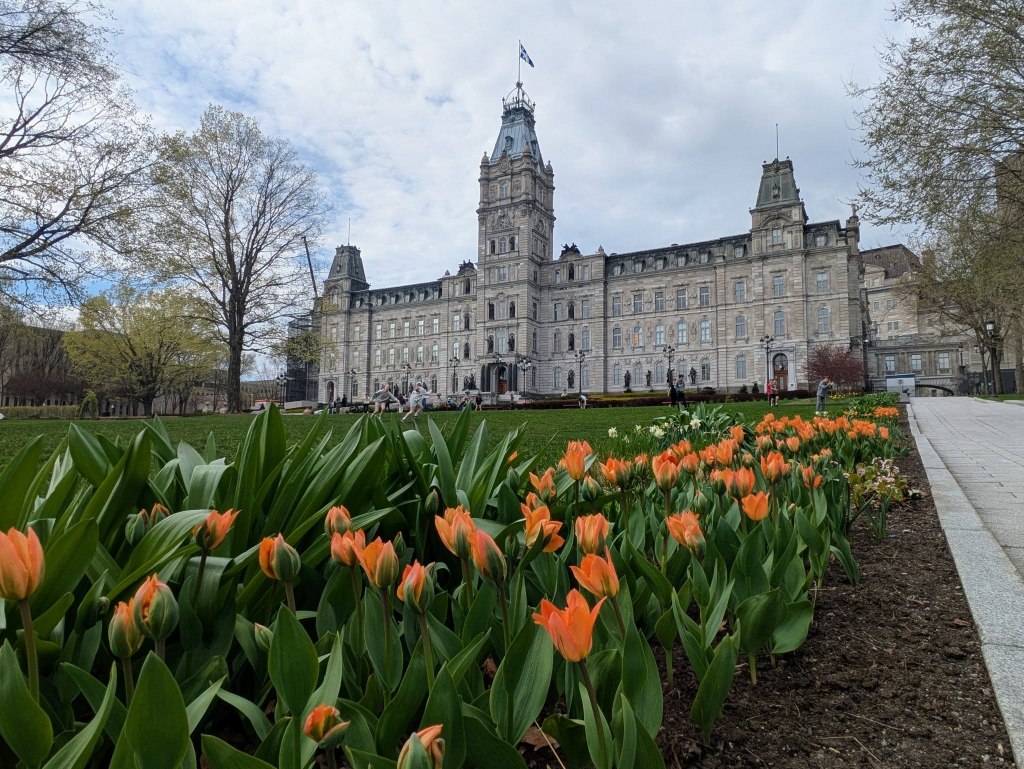
The city’s infamous walls encircle what is now known as Vieux Québec (Old Québec), and in 1985, this section of the city became a UNESCO World Heritage site, meaning it’s now protected by international law. Lord Dufferin would be happy. However, life goes on and cities grow; therefore, there are a lot of important places outside the walls now too, including the Parliament Building of Québec, which was built in the late 1800s and was inspired by the Louvre – a somewhat obvious nod to France as opposed to Britain. Old habits die hard it seems.
Stop 4: Overlook at St-Jean

Another important part of the city that technically lies outside the fortifications is Basse-Ville (or Lowertown). This part of the city is important for many reasons, one of which is the fact that I live here. 😊 But I’m not the only one! La Basse-Ville was, historically, where the average Quebecers lived, the working-class people, and Haute-Ville (or Uppertown), which includes Vieux Québec, was where the upper classes lived: governors, doctors, lawyers, etc. Funny how it still sort of works like that, non? I can attest Basse-Ville is definitely cheaper than Haute-Ville.

And nothing makes me feel the socio-economical difference more than when I have to make the trek up to Vieux Québec. Cape Diamant was great for battles and enemy intimidation, but it’s definitely tough on the knees! There are approximately 30 staircases throughout the city connecting Basse-Ville to Haute-Ville. Our closest staircase is Lépine, which has 118 stairs going straight up the cliff. Perhaps the most famous staircase though would be Casse-Cou (or “Breakneck”). It’s located in the oldest part of Basse-Ville, and has a bit of a rough history. The stairs, much like the neighborhood itself, were often in disrepair and led to many accidents, thus the name.

Interestingly, you’ll see a lot of buildings high-up on the cape, but you won’t see so many skyscrapers in general in Québec City. That’s because the two tall buildings that were built in the Old Town really ticked off the locals at the time, forcing them to enact a law banning any buildings over 7 stories tall. The two buildings in question were allowed to stay, however. One is the Price Building (1929) which was originally a lumber firm’s headquarters, but now houses the Premier of Québec, and the other is an addition to Hôtel-Dieu de Québec (a teaching hospital), which obviously had good intentions, but was really quite ugly.

Stop 5: Morrin Centre

Now onto a few buildings that are anything but ugly, starting with the Morrin Centre. This building has quite a varied history and is so well-hidden in the heart of the city that I might never have known about it if not for the walking tours. It was originally the city’s prison, and despite its stately appearance, you can still pretty easily see where the bars were attached to the windows. Unfortunately, it wasn’t long before the city needed a larger prison (which was built on the Plains of Abraham and is now an art gallery), so the Morrin Centre became an English college. Today, it still functions as an English library and cultural center that has fun events like Victorian-style teatimes and summer reading clubs.

Right next to the Morrin Centre/English library is an old church turned French library, Maison de la Littérature. I absolutely love the relationship between English and French here in Canada, but particularly in Québec, it never ceases to amaze me! Early on in my studies of Canadian history I wondered how Québec remained so French given the fact that the English took over in the 1700s. Surprisingly, it’s because of the US. The British during that time were so afraid the French would swap sides and join the Americans that they signed the Québec Act ensuring Québec could keep their language and local laws as long as they wouldn’t fight against them. Well, they never did and have kept their French-ness ever since.
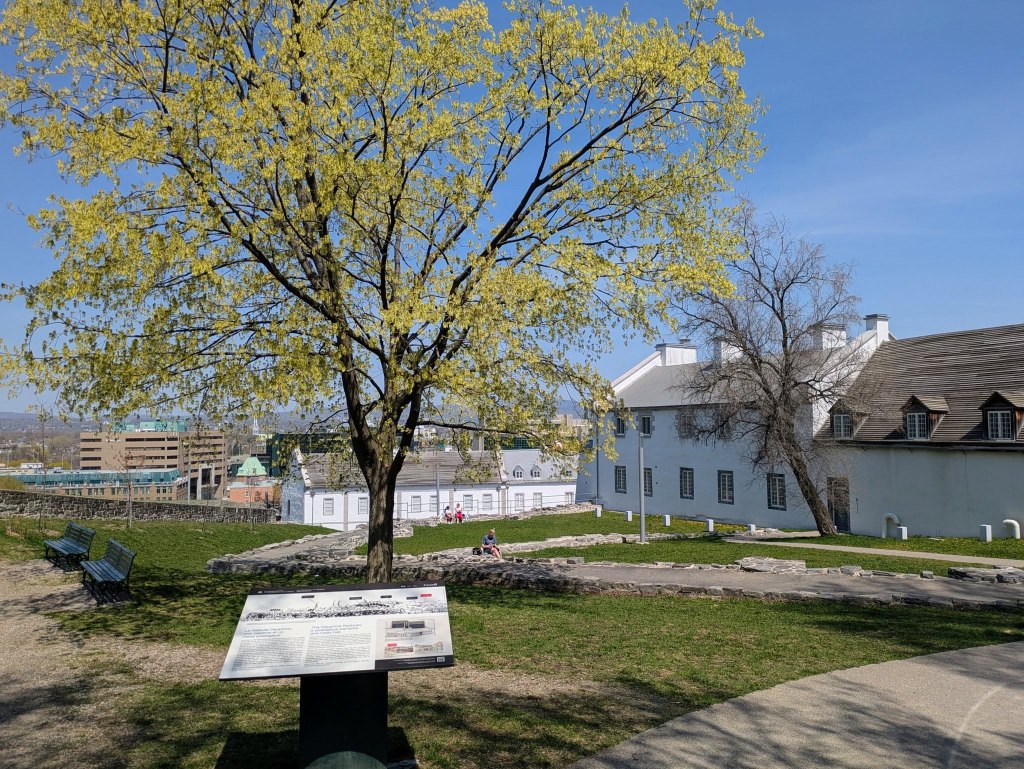
The Morrin Centre and Maison de la Littérature are great examples of something Québec City has done amazingly well time and time again: historical site conversion. It seems there’s not a building around that doesn’t have an extensive and diverse history, which is why I keep reading every sign and every plaque I come across. There’s a museum that used to be the old city vault, a private club that was once a military barracks, and pretty much every restaurant downtown was someone’s house at some point. 400+ years is a long time for social institutions, but not so long for buildings.

Stop 6: Notre-Dame

Next stop: church. La Notre-Dame de Québec to be exact. While not technically the oldest church in the city (we’ll get there soon), Notre-Dame de Québec has its fair share of interesting stories and facts as well. First, it has burned down and been rebuilt three times since its original 1647 construction date, which is pretty impressive in and of itself. You might also notice that there’s only one completed bell tower giving the church a unique, asymmetrical look. Well, that was actually due to a miscalculation on the architect’s part, which resulted in it being deemed unsafe to finish. Oopsies!

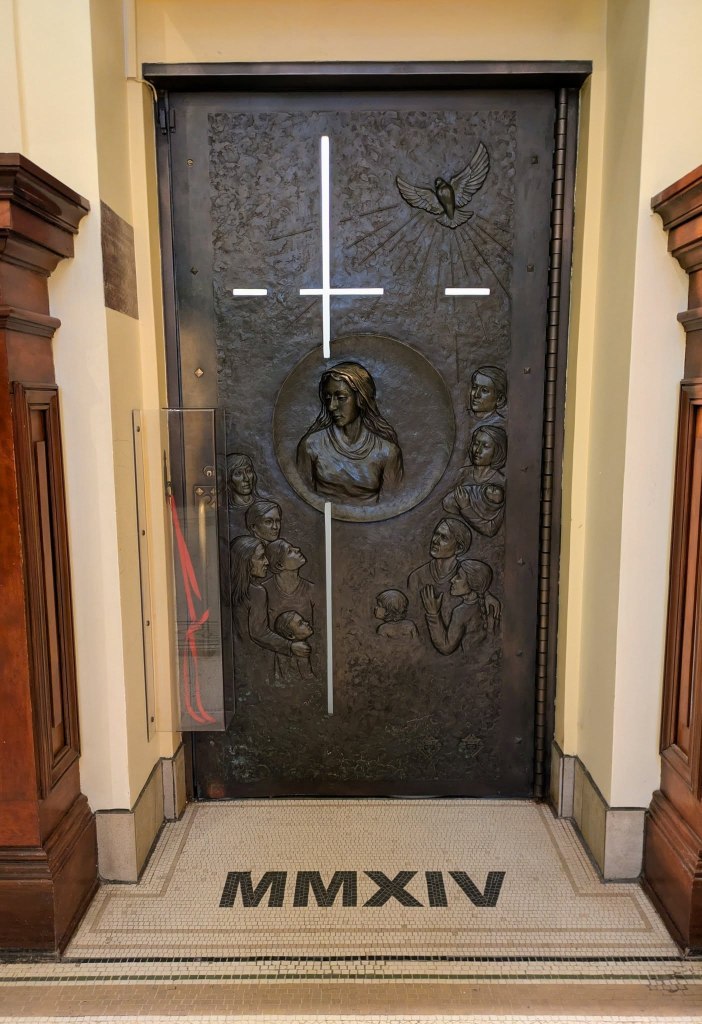
And while it might not have all its intended bell towers, it does have something super rare: a Holy Door. There are only a handful of Holy Doors in the world, the vast majority of which being in Italy, so this one (the only one in the Americas) is quite special. What is a Holy Door you ask? Well, I’m not quite sure. It’s only opened on jubilees, so I’ll have to wait a number of years for the chance to walk through it and experience its power myself. What I can say is that, currently, it’s sealed very much like the Pope’s door during the Conclave, which is still pretty cool to see.

While we’re on the topic of the city’s religious history, we should also take a look at the Séminaire de Québec, which is right next door to Notre-Dame. The Seminary of Québec is often touted as the oldest educational institution in Canada, and its buildings still house several schools today, including many departments of L’Université de Laval, the first French-language university in North America and the oldest university in Canada. You’ll see and hear the name Laval quite often in Québec because he was New France’s first bishop.

Stop 7: Château Frontenac

It’s finally time for the structure that dominates pretty much any photo of Québec City, Le Château Frontenac! Earlier, I mentioned Fort St-Louis as one of the first buildings in the city (aka Champlain’s home). Well, the Château Frontenac and Lord Dufferin’s boardwalk are actually sitting on top of the ruins of Fort St-Louis. In fact, you can see quite a bit of them on display beneath the boardwalk. Also, on the boardwalk is a massive statue of Champlain (but not his face, remember). Two other interesting facts about this statue: one, it was actually designed by an architect who survived the Titanic, and two, the base is made of the same stone as that of the Arc de Triomphe – connections to France abound!
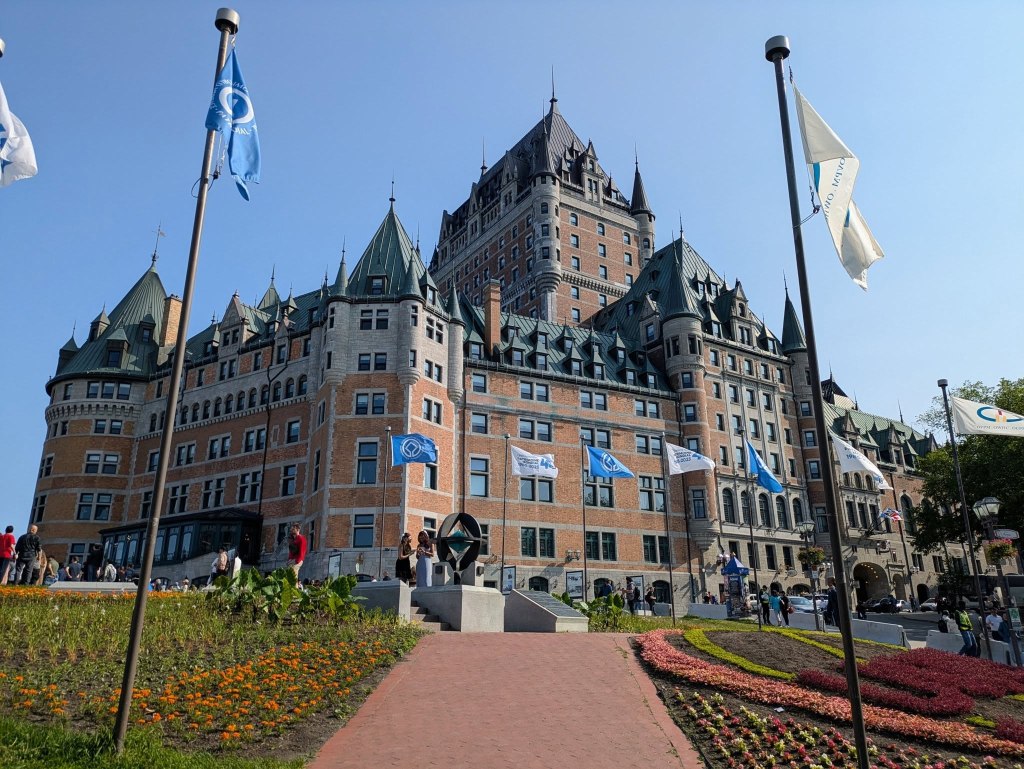
The Château Frontenac itself wasn’t built until 1893, and despite the name, it isn’t actually a castle. It was built as a hotel, and that’s what it’s always been. Like the Château Laurier in Ottawa, it’s one of the Pacific Railway Hotels, which are all incredible pieces of architecture spread across the whole of Canada. Another interesting fact about the Château Frontenac is that the main tower, arguably its most distinguishing feature, was an afterthought, added in 1924. The hotel has actually had a lot of work done over the years, including the addition of a pool and fitness center, which was done solely to maintain its coveted 5-Star status.
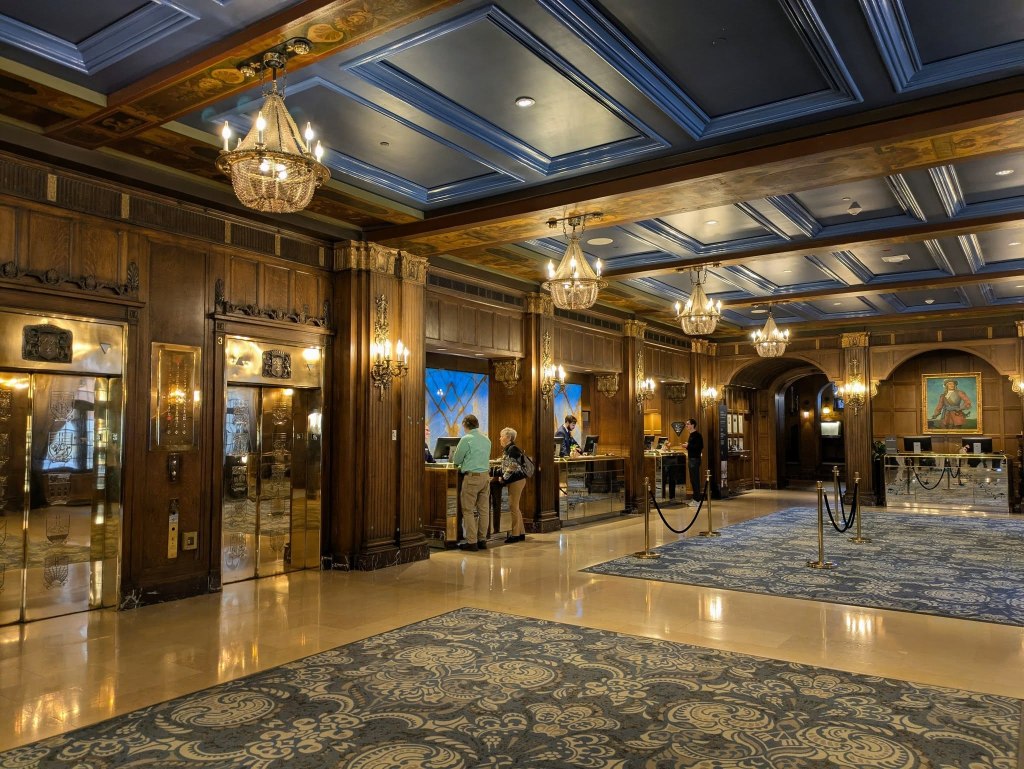
As you can imagine, many famous people have graced the halls of this amazing building: Queen Elizabeth, Winston Churchill, FDR, Princess Grace of Monaco, Charlie Chaplin, Céline Dion, Paul McCartney, and Leonardo DiCaprio, just to name a few. There are 610 rooms/suites in the hotel, and thanks to some progressively-minded designers, there is no hierarchy to the placement of the various rooms and suites. You could book their cheapest room and end up on the top floor with a view of the St-Lawrence. Of course, even the cheapest room is still around $300, but still.

Stop 8: Montmorency Park

Walking down one of the many staircases in the city, we cross Prescott Gate and come to a stop in Montmorency Park. Now a beautiful park somewhat between Basse-Ville and Haute-Ville, Montmorency was first a farm. Actually, the first farm in New France, created by two of the early settlers: Louis Hébert and Marie Rollet. They were one of the first pioneer families in Canada and have come to represent a lot of the early values of the region: perseverance, adaptability, amity, etc. Across from the park, you can see (and smell) Mary’s popcorn, which I think is a lovely connection between the region’s entrepreneurs, both past and present.

As the farm gave way to modern building projects, Montmorency later became the site of the first parliament buildings of Québec and later Lower Canada. In 1864, the British North America Act, a founding document of modern-day Canada, was actually drafted there. Unfortunately, a fire destroyed the last of the buildings in 1883, which is when the city decided to move Parliament outside the Old Town (for safety reasons, of course).

From Montmorency Park, you can also see the Casse-Cou stairs, which take you down into Quartier Petit-Champlain. This is the neighborhood I mentioned earlier that has a bit of a rough history. Basse-Ville was where the working class lived, and so there was never a lot of money there. But there has always been an entrepreneurial spirit! Petit-Champlain is often sited as the continent’s first commercial district, and when you look down its bustling streets lined with business after business, that’s really easy to believe.

Stop 9: Place Royale

But the heart of Basse-Ville has to be Place Royale (or Royal Plaza). This was where the first settlers stepped off the boat and began their lives as a new colony. The first permanent buildings were built on this square along with the first church of Basse-Ville (technically the oldest church in the city since it still has its original walls). You can still see the foundation stones for the second habitation among the cobblestones of the square. Also in the square, stands a bust of King Louis XIV, and although it isn’t the same bust from the 1600s, there has almost always been a bust in that exact spot, forever linking the histories of Québec and France.
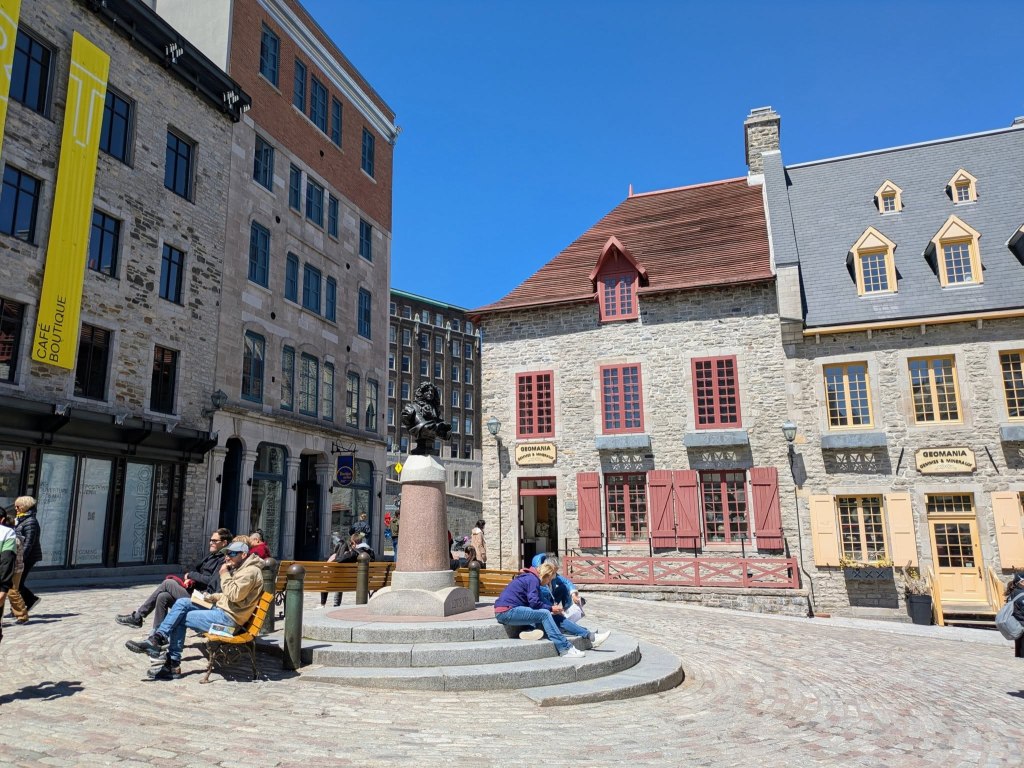
Interestingly, the king never actually stepped foot in Québec even though he was the lawful ruler, but he did manage to help the colony from afar. In the early days, the colony struggled with population issues. In particular, not enough women were there to ensure the desired population growth, so King Louis started a program where he would give a dowry and land to any females willing to journey to New France and start a family. Usually, these were orphans or widows who felt that this was their best option for a stable future, and so they became known as the King’s Daughters.

The King’s Daughters made up such a large percentage of the early population in Québec that many North American celebrities have been able to trace their lineage back to one of the daughters: Hilary Clinton, Madonna, Angelina Jolie, and Tom Bergeron being among them. Honestly, Québec City has a lot of ties to various celebrities. Since the city basically looks like a movie set and also has the practical, money-saving advantage of being on the same continent as Hollywood, many movies that take place in Europe are actually filmed here. Alfred Hitchcock’s “I Confess!” and Steven Spielberg’s “Catch Me If You Can”, for example.

Stop 10: Royal Battery

And now we’ve come to the last stop on this (maybe not-so-little) tour. The Royal Battery is the end of the line so to say. It’s where the city meets the river. Here you can see the ferry that travels across the St-Lawrence to Lévis, the often-forgotten little brother of Québec City. You can also find fishing expeditions or whale watching tours departing from these quays; this is where the river turns to ocean after all. When there’s no ice in the water, you might also see cruise ships and yachts docking at the Old Port, which I like to imagine is just as exciting as when Champlain and other early explorers rolled up in their ships.
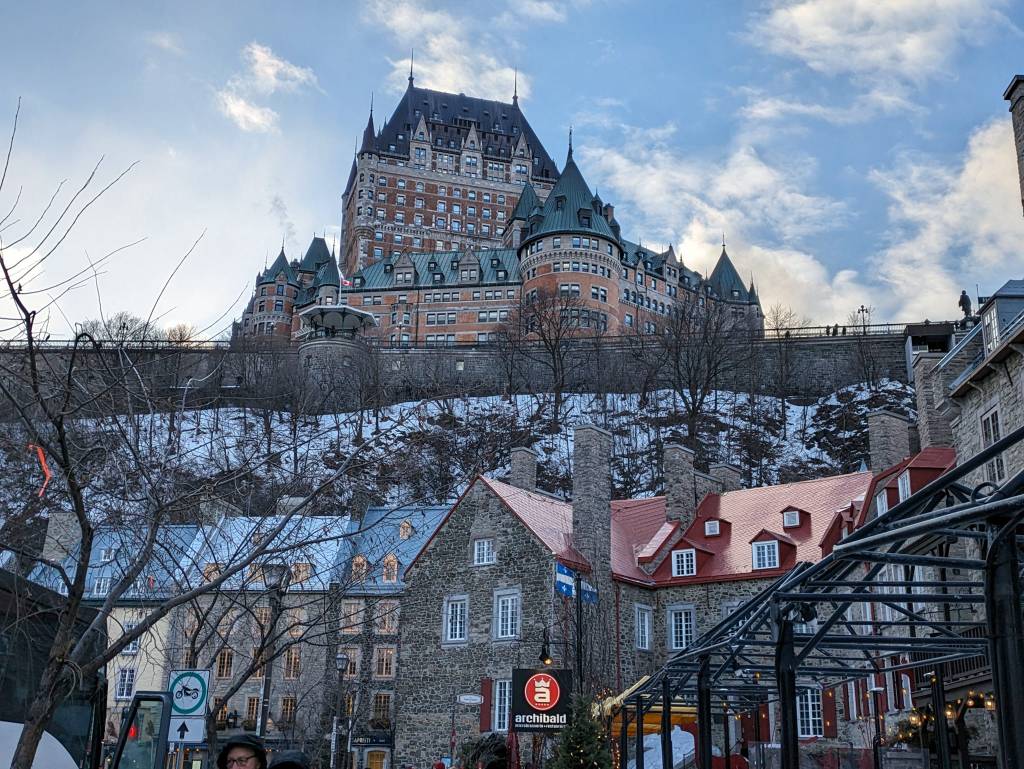
From the Royal Battery, it’s easy to imagine how tough it would have been to take Québec City by sea. The British only managed a win because they fought on the Plains of Abraham (flat ground beyond the walls of the city). During the American Revolutionary War, Generals Benedict Arnold and Richard Montgomery thought they’d give it a shot, but it went very badly for them, and no one has tried since. Thus, Québec City gets to keep its impressive win/loss record.

Near the battery, you’ll also find the funicular, which leads back up to Haute-Ville, where we started this adventure. The funicular entrance is located in a house that dates back to 1682 and used to belong to Louis Jolliet, another famous North American explorer you might have heard of. Really everywhere you look in Québec City there’s another piece of the gigantic puzzle that is our history just waiting to fit into place. One of Québec City’s nicknames is The Old Capital, but I see it more as an entryway. Here you can enter North America, but you can also enter the annals of history. Hope you enjoyed the journey!  

¡Guadalajara, Guadalajara!

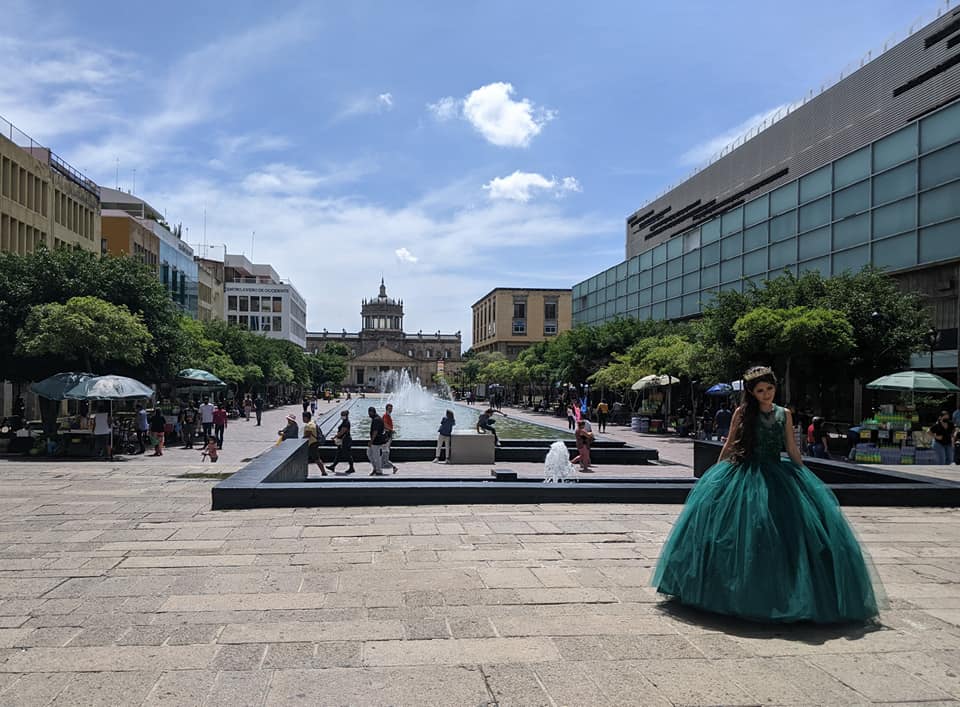
Somehow, we’ve officially been residents of Mexico for 6 months already, and it’s absolutely crazy how fast the time went by! Of course, as we’re still in “pandemic times”, our usual explorations and goings-on in a new city have been pretty tame, but that doesn’t mean we’re not learning everything we can about the incredible city we call home: Guadalajara. Through virtual chats with local friends, outdoor excursions, online Spanish classes, and, of course, the internet, we’ve definitely gleaned a lot of information about GDL, and I would say we are already as fiercely proud of this city as any good Tapatío (or Guadalajara native) would be. We’re so enamored (okay maybe even a little obsessed) that this month I want to share some keys facts about Guadalajara in the hopes that someday soon anyone and everyone will want to visit this amazing city.  

History

First thing’s first: where did it all begin? This is always a tricky subject with colonized countries because there are typically two histories: one European and one indigenous. Guadalajara’s story is no different. In the region/state now known as Jalisco (of which Guadalajara is the capital), there were many indigenous groups such as the Tonallan, Tetlán, and Zapopan peoples. These names can actually still be seen and heard representing various parts of the modern-day, sprawling city, but it was in the early 1500s, when the Spanish settlers, continuing their journey west, officially founded the city known as “Guadalajara”. However, due to some unrest with the local indigenous groups of the time, the city was actually moved three times before finally settling in its current location in the Atemajac Valley, in 1542. In fact, the true founder of the city was Beatriz Hernández, one of the initial settlers, who got tired of all the moving around and finally put her foot down, ultimately choosing the city’s final placement.

From 1542 onward, Guadalajara has always played an important role in Mexico’s history. Miguel Hidalgo had his headquarters set up here during the Mexican War of Independence in the early 1800s. President Benito Juárez made Guadalajara the seat of his government during the Reform War of the 1850s. Throughout the turmoil of the Mexican Revolution, the Great Depression, and multiple domestic and international wars, Guadalajara continued to flourish and grow. By 1910, it solidified its place as the second largest city in Mexico, and since then has also become known as the “Silicon Valley” of Mexico, hosting a large number of innovative companies and international events throughout the years. As the city of Guadalajara expanded, neighboring cities have also been absorbed into the greater GDL area, including Tonalá, Tlaquepaque, and Zapopan, each of which still retains its unique vibe and perspective.

Geography/Climate

The geography of Guadalajara is a really interesting mix because while we’re squarely in Central Mexico in a “humid subtropical climate” zone, we’re also at 5,200 ft (1,560 m), roughly the same elevation as Denver, Colorado. For this reason, the weather is extremely mild (read: gorgeous). The hottest and driest months of the year here are April and May, but even then, the average high is only around 88°F (31°C). With no humidity and with temperatures dropping into the 50s (10-12°C) every night, it felt somewhat like a brief, very manageable (albeit early) summer. From June-September, GDL is in rainy season, which typically means rainy afternoons and some seriously stormy nights. Luckily, it also means the temperatures stay down as well. It’s currently August, and I usually have to wear a jacket when taking the dog out in the mornings – how awesome it that?! After the rainy season comes a cool, crisp autumn followed by a dry, mild winter. In GDL, winters are usually quite sunny and “spring-like”, but it has on occasion snowed. In fact, we’ve already heard several great stories about the infamous snow event of 1997!
Although it sits at a high elevation, Guadalajara is still technically in a valley, which means there are low-lying mountains surrounding the city. To the northeast there is a canyon system and several surrounding forests including Bosque Primavera. In general, Guadalajara is much lusher than I would have expected: green grasses, leafy trees, and many waterfalls can be found throughout Jalisco. There are also several volcanos in the area, a few small ones to the west (near Tequila) and a few more, southwest on the border of Colima, another one of Mexico’s 31 states. The city of Guadalajara itself is quite large: 58 sq mi (151 sq km) and is home to approximately 1.5 million people. If it helps, it’s about the same size and has a similar population density as Philadelphia, Pennsylvania. Guadalajara, like most large cities, is broken up into many distinctive barrios (or neighborhoods). We live in the slightly hipster Colonia Americana, which lies a little to the west of the oldest neighborhood in the city, the aptly named “Centro”.

Food

Of course, I cannot write about Guadalajara without highlighting some of its most characteristic foods. I wrote a bit about the common dishes found in the Bajío (lowland)/Western region of Mexico in a previous post, but for Guadalajara in particular there are a few specialties that must be mentioned. The first being the infamous torta ahogada (“drowned sandwich”). Perhaps the Philly-GDL comparison can continue here because the fame and ubiquity of this particular sandwich is very similar to that of the renowned cheesesteak in PA. A torta ahogada is essentially a pork sandwich made on baguette-like bread smothered in a spicy tomato sauce. It’s absolutely delicious and very unique. Other famous dishes here include birria (slow-cooked meat stew), carne en su jugo (beef broth with beans, eaten with tortillas), and jericalla (a flan/crème brûlée like dessert). The French flair that can be seen (and tasted) in a lot of Guadalajara’s signature dishes actually comes from the large swath of French immigrants who came into the area throughout the 1800s.

Not exactly a food, but I would be remiss if I didn’t share the fact that tequila is also an important claim of Guadalajara/Jalisco. The city of Tequila (which is how the drink got its name) is about 40 miles (65km) outside GDL. Grown only in this particular region of Mexico, the blue agave plant (as opposed to other varieties) is what separates tequila from other types of mezcal. Its status is highly protected, and the drink is as beloved here as it is the States. Although the margarita is really more of a US thing, cocktails containing tequila mixed with various fruits, juices, and either salt or tajín (a powder made of chilis and dried fruit) are super common here. In Guadalajara, I’d say the paloma is the most popular tequila-based cocktail, which is made with tequila, lime juice, grapefruit soda (usually Squirt), and salt mixed right into the drink.  

Other Notables

Guadalajara is known as a cultural hub of Mexico because not only does tequila (a national icon) originate here, but so does mariachi. The traditional music often associated with Mexico in general has gone through a lot of phases during its development and various influences. From handmade stringed instruments played by indigenous groups to the brightly colored outfits and trumpets of performers today, you can listen to a variety of mariachi styles in the Plaza de los Mariachis or in various restaurants across Guadalajara (and across Mexico as a whole), especially for important events. Mariachi, and its history, is widely celebrated in GDL, for example with a yearly Mariachi festival, during which (in 2009) a group of over 540 musicians gathered to break the world record for largest mariachi group playing together. One of the songs they played was, of course, “Guadalajara”, famously covered by Elvis Presley.

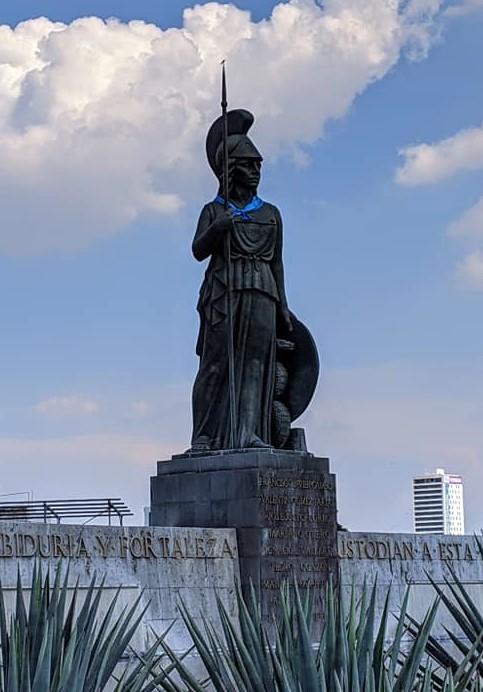
Other interesting facts about Guadalajara include: the Roman/Greek goddess Minerva/Athena has become a symbol of the city. She has a large statue near the Arch of Guadalajara and is also featured on the city’s license plates. GDL has two professional soccer teams: the Atlas and the Chivas, and from what I understand, the latter is arguably the most famous and successful team in Mexico. Guadalajara also has the largest indoor market in Latin America (Mercado San Juan de Dios also known as Mercado Libertad), which spans over 430,000 sq ft (40,000 sq m). GDL was also the birthplace of celebrities Guillermo del Toro (the director) and Canelo Álvarez (the boxer). And…it’s only a 4-5hour flight from Atlanta or Chicago! Ultimately, it’s a really remarkable city, and unlike some of the other places we’ve lived, the locals here know it and love it just as much as we do. I think you will too!

¡Todos bienvenidos!

Fun Facts: US Presidents Edition

Lots of holidays this week, no? Pączki Day, Lunar New Year, Valentine’s Day, and on Monday, Presidents’ Day! Yay! I know you probably feel like you’ve heard enough about US politics to last you a lifetime, but since I love a good theme AND I actually read a really interesting book about the US presidents last year, I thought I’d post some fun facts about our chief executives throughout the years. I promise these are solely amusing trivia tidbits – nothing that will make you want to smash your head against the wall or angrily take to Facebook.

Washington strikes me as a cat’s eye man.

1 – George Washington was an avid marble player.

2 – John Adams and Thomas Jefferson died on the same oddly fitting day: July 4th, 1826. James Monroe also died on July 4th (five years later in 1831).

3 – Thomas Jefferson loved pasta and designed and built his own “macaroni machine”.

Macaroni machine or torture device?

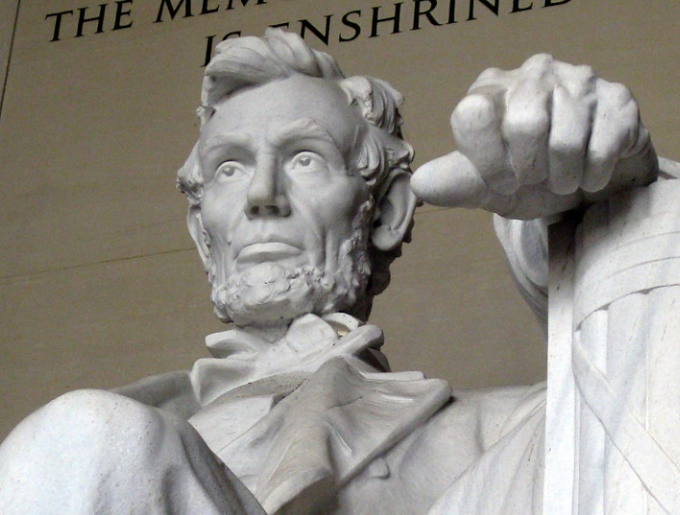
4 – James Madison was the shortest president (Lincoln was the tallest).

5 – James Monroe ran uncontested in 1820 ushering in the “The Era of Good Feelings”.

6 – John Q Adams liked to swim naked across the Potomac.

7 – Andrew Jackson was known for dueling and occasionally taking a bullet for his wife’s honor.

8 – Martin Van Buren had the nickname “Old Kinderhook”, which many believe is where we get the expression “O.K.”

9 – William Harrison got sick after his long, outdoor inaugural address and died after only 1 month in office.

Polk’s No Fun Zone

10 – John Tyler was called “His Accidency” as he was the first “Act of God” president.

11 – James Polk banned alcohol and dancing (among other things) from the White House.

12 – Zachary Taylor laid the cornerstone of the Washington Monument while snacking on cherries and milk, which might have given him the bacterial infection that eventually killed him.

13 – Millard Fillmore married his teacher, Abigail Powers.

14 – Franklin Pierce was friends with Nathanial Hawthorne.

15 – James Buchanan never married, the only president thus far to remain a bachelor.

16 – Abraham Lincoln had the legislation for creating the Secret Service agency on his desk the night he was assassinated (although at the time it was an agency meant to stop counterfeiting, not bullets).

You know what they say about hindsight…

17 – Andrew Johnson’s wife, Eliza McCardle, taught him how to write.

18 – Ulysses Grant hated wearing uniforms and received many demerits during his time at West Point.

19 – Rutherford Hayes and his wife Lucy were given a Siamese cat from Bangkok, it was the first Siamese cat in the US.

The Carters also had a Siamese cat, Misty Malarky Ying Yang.

20 – James Garfield was shot by an assassin in July 1881, but died 79 days later due to the misuse of the newly-invented metal detector as well as unsanitary conditions.

21 – Chester Arthur had Louis Tiffany of Tiffany & Co. redecorate the White House.

22 – Grover Cleveland was distantly related to the guy whom the city of Cleveland was named after.

23 – Benjamin Harrison was the first president to have his voice recorded.

24 – Grover Cleveland (again): after being diagnosed with mouth cancer, he had part of his upper jaw removed in a clandestine operation on a yacht.  

25 – William McKinley used to be on the $500 bill, which was last printed in 1934.

Puts those Benjamins to shame!

26 – Theodore Roosevelt was the youngest person to assume the role of president at age 42.

27 – William Taft might have never gotten stuck in a bathtub, but he did install custom-made tubs throughout the White House and various US ships.  

There is just something so bizarre with this…

28 – Woodrow Wilson kept a flock of sheep on the White House lawn.

29 – William Harding’s death might have been caused by an intentional poisoning.

30 – Calvin Coolidge was sworn into office by his father, an official notary public. Also, Coolidge was the only president (thus far) to be born on the 4th of July.

31 – Herbert Hoover was the first president born west of the Mississippi.

32 – Franklin Roosevelt was extremely passionate about his hobby of stamp-collecting. (Bonus fact: FDR’s wife Eleanor once had the KKK put out a $25,000 reward for her assassination.) 

33 – Harry Truman’s solo initial “S” was given to represent both of his grandfathers: Anderson Shipp Truman and Solomon Young.

34 – Dwight Eisenhower changed the name of the famous presidential getaway from Shangri-La to Camp David. He didn’t want to sound too fancy.

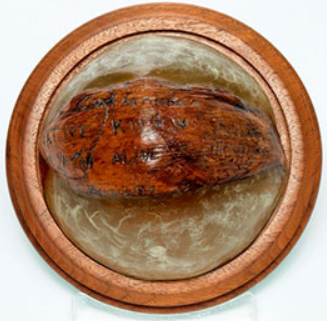
35 – John Kennedy was once marooned on an island and sent a successful SOS message via coconut in order to be rescued.

SOS! -JFK

36 – Lyndon Johnson had to deal with the assassinations of JFK, MLK Jr. and Robert Kennedy although he, himself, was never targeted.

37 – Richard Nixon’s daughter, Julie, married the grandson of former president Dwight D. Eisenhower.

38 – Gerald Ford is the only person to have been both vice president and president without ever being elected by the public/Electoral College.

Joan Quigley, Reagan’s astrologer. The 80s must have been wild.

39 – Jimmy Carter was the first president born in a hospital.

40 – Ronald Reagan frequently consulted with an astrologist during his presidency, even keeping a calendar of “good” and “bad” days. Somehow the assassination attempt just wasn’t in the signs…

41 – George H W Bush considered asking Clint Eastwood to be his running mate in 1988.

42 – Bill Clinton has won two Grammy Awards (other presidential Grammy recipients include Jimmy Carter and Barak Obama).

43 – George W Bush’s daughters, Jenna and Barbara, were the first First Family twins.

44 – Barack Obama’s first job was as an ice-cream scooper at Baskin Robbins.

45 – Donald Trump’s wife, Melania, is from Novo Mesto, Slovenia (formerly a part of Yugoslavia) in Central Europe.

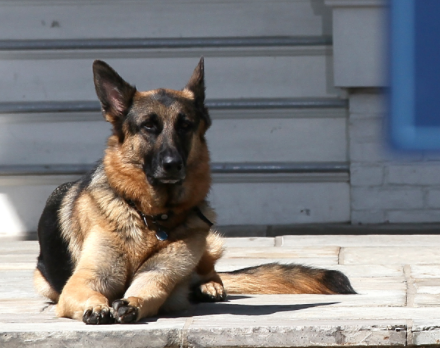
Such a good boy!

46 – Joe Biden’s German shepherd, Major, is the first rescue dog to reside in the White House.

Fun Florida Facts (and Opinions)

83474643_10223450004906599_8576584385193504372_n
Oh, 2020…

This year has thrown a lot of surprises at the world (and some not-so-surprising events as well really), but for me and Tucker one of the most unexpected occurrences has been our prolonged stay in Florida. We were only meant to be here for a few months as we gathered our lives from various corners of the world in order to head north for the next few years. Of course, with a brief snag in our immigration paperwork followed by a global pandemic, we’ve found ourselves in a holding pattern since March. And while, like everyone else, I’m still struggling to figure out what this all means for our jobs, our future, our society, etc. I’ve also been doing what I do best in a new place: exploring. Even though this exploring has taken place mostly online (and occasionally from a socially acceptable distance), life in Florida has still been quite interesting, and in some ways enlightening. Thus, for this month’s post, I have put together a list of my newly gleaned facts (and opinions) to share about our temporary home.

Cartoon Florida
Hi, guys! Wanna be my friend?

The first thing I have to mention is the fact that everyone seems to have an opinion about Florida. People who have never even been here feel one way or another about it, and plenty of people like to vocalize their opinions (many of which are quite negative) without much regard to facts or feelings. I say this as a non-Floridan, someone who doesn’t have a strong feeling one way or another about this particular state, but sheesh, even I feel bad listening to the many tirades and verbal attacks on the Sunshine State, especially those that can be found online. In our brief time here, I’ve come to view Florida as the state that’s often picked on, but that everyone secretly likes and takes advantage of (like an annoying kid in school that has a really nice pool).

When reflecting on why there are so many negative associations with Florida and Floridians floating around out there, I feel it boils down to two things: 1) the Florida Man and 2) vacationers. Most everyone knows about the Florida Man trope nowadays. A long-lasting meme that has permeated the internet and beyond, it originally referred to the crazy headlines often found in Florida that always begin with “Florida man…” and usually end with his doing something absolutely absurd. But interestingly, one of the first things I learned about the Florida Man origins is that they were sparked by a change in state law. In the 1990’s Florida passed the Sunshine Law, which ensures public access to all government records, including police arrest records. As you can imagine, in 30 years, the spring break capital of the US has racked up quite a few crazy stories, which brings me to my next point.


Vacationers. Probably the first thing we noticed after a few months in Florida was the ebb and flow of the people. Renters in, renters out; snow birds in, snow birds out; spring-breakers in, and (thankfully) spring-breakers out. The state of Florida has approximately 22 million permanent residents, but sees 110 million tourists annually. That’s a lot of YOLOing for any place to deal with. I think I actually first noticed this phenomenon in grocery stores. People in bathing suits, vacation gear (lots of Disney paraphernalia where we are), and a general lack of care for their immediate environment. Many people are here for a short time and their mindset is to live it up; therefore, chaos ensues, sometimes in the form of drunken parties and possible police involvement (which is then publicly documented for all the word to see and share).

86276369_10222086976791748_5512975688493170688_n
Three Sisters Springs

Of course, I completely understand why so many people choose to vacation to Florida. It’s an amazing place for affordable and varied entertainment. We’ve got theme parks all over the place: Disney World, Legoland, Universal Studios, SeaWorld, Busch Gardens, (and for a select clientele) Gatorland. There is also an abundance of parks, lakes, and other natural features like the Everglades, hot springs, swamps, and of course, the many, many beaches. Florida actually has the longest coastline of any of the contiguous states, and the climate (especially in south FL) means beach-going is possible year-round.

Speaking of South Florida, another thing that became immediately clear upon moving here was the presence of three distinct regions. You have North Florida, Central Florida, and Southern Florida, and the people who live (and vacation) in these three places often differ as much as the geography. We’ve heard this said a few times now: the further north you go in Florida, the further South you are. This refers to the fact that northern Florida is very much like Georgia, Alabama, the Carolinas, etc. Demographically, linguistically, socially, north of Ocala is really part of the South. On the other side, you have South Florida which held onto its Spanish roots and still welcomes a large influx of immigrants from Central and South America. The influence can be seen, heard, felt, and tasted as soon as you drive south of Lake Okeechobee. And that leaves Central Florida, which is somewhat a mix of the two and also somewhat the result of many retirees from out of state. Orlando and many other cities in Central Florida are very much like any other major city in the US: professional, progressive, and a tad hipster.

Another part of life in Florida that caught my attention early on was the naming of the coasts. Most likely, at least in part due to tourism, each section of the coastline in Florida has a name and, for lack of a better word, a vibe. You have the Space Coast, which is the location of the Kennedy Space center and where all the rocket launches take place (which we can see from our driveway, btw). You also have the Gold Coast where the big cities (Fort Lauderdale and Miami) and the famous South Beach are located. There’s the Sun Coast with its beautiful sunsets, the Nature Coast with its natural springs and manatees, and even the First Coast, which is where you can find the first and longest continuously inhabited settlement in modern day USA.

FloridaCoastalRegions
I sense another checklist forming…

89857039_10222367888734371_2287005639135723520_n
Castillo de San Marcos

Since our trip to Saint Augustine and the First Cost, I’ve been really interested in Florida’s history and particularly how it differs from that of the colonies. Perhaps most people remember that Florida was first claimed by Spain, which is why we still see so many names like: Boca Raton, Punta Gorda, Buena Vista, etc., but what I (having taken Georgia History, not Florida History, in school) found super interesting was the native American history here. Of course, it now seems quite obvious with place names like: Tallahassee, Kissimmee, and Osceola, but I never gave much thought to the tribes that called Florida home and were actually some of the first to be attacked and displaced. Indeed, the Creek/Seminole tribes, in particular, not only found themselves stuck in the middle of a fight between Britain and Spain during the Seven Years’ War, but went on to challenge the US settlers with what is now known as the Seminole Wars, some of the longest and most expensive in early US history. Historically, Florida has seen a lot, and I don’t think it gets much credit for its important place in US history, let alone world history.

117245765_10223984984120745_7852073839228047751_n
Daily torrential rain

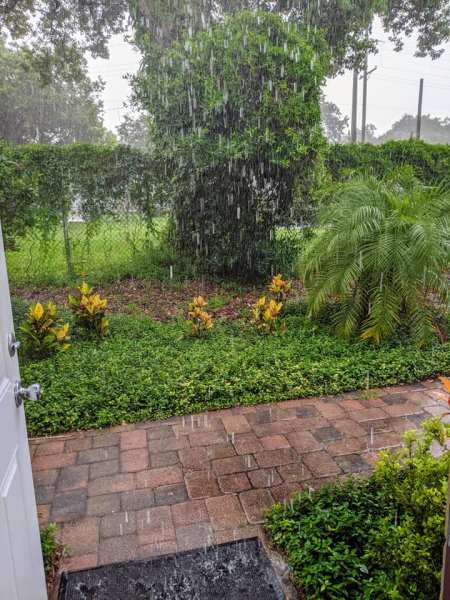
Finally, the last surprising fact I am very pleased to share is about the weather. As cold weather people, Tucker and I were very much dreading our time spent in the humid and, yes, extremely sunny Florida, especially as that time started to stretch into summer. However, I’m happy to report that it’s really not so bad! Florida is really breezy, which certainly helps with the heat, and now that we’re officially in summer, I can say that there’s a bit of a rainy season here meaning the afternoon thunderstorms that happen almost every day also help to cool it down. We’ve both commented that while the warmer temps might last longer, they don’t feel near as oppressive as summer in Atlanta. Plus, the produce here is absolutely amazing! In addition to citrus, Florida produces significant percentages of the country’s tomatoes, watermelons, cucumbers, and sugar cane.

All in all, Florida has been a surprise in many ways for us (including the very exciting news that there is no state income tax in Florida!). Ultimately, our time here has really just been another lesson in finding out how much there is to discover/learn, even in a place you think you already know pretty well. So, what have you learned so far in 2020?