International Trip Planning 101

So, you may have noticed that we go on a lot of trips. I can tell you, very honestly, that I think about future trips pretty much every day. My mind is always putting together itineraries and thinking up plans for future adventures (both near and far) because I love every aspect of the process! However, I’ve noticed that some people get a little anxious when planning things either far in advance or far away, which is totally understandable. And if you’re one of such people, perhaps a little unsure of how to plan an international trip (or even if you’ve just wondered how exactly we do this so often and seemingly so quickly), this post is for you! Strap in, it’s time to plan!

Who?

We often start with the question of who. Is it just me and Tucker? Or do we have family or friends joining us? What about Jenn (our dog)? The number of people/animals and their particular interests and abilities often affect all the other questions, so first you have to know who will be with you.

When?

Next up is when. This is an important question both in regards to where you’re coming from and where you’re going. We always try to find a nice balance of traveling over a holiday (which means less PTO time needed) and avoiding the crowds at our chosen destination. Often this means choosing to travel over US-centric holidays like MLK Jr. Day, Memorial Day, the Fourth of July, etc. Our preferred duration is typically eight days (ideally Saturday to the following Sunday if we can swing it). If you’re leaving the continent, it’s also good to remember that the travel days to and from your destination won’t really feel like vacation, and sometimes it’s really nice to have an extra day after you get home but before you have to go back to work: aka a buffer day.


In addition to carefully picking our days based on the holidays being celebrated around us, we also have to be aware of holidays in the places we might be visiting. Those are usually pretty easy to check online, but we also try to be aware of the seasons more broadly, which can be a little trickier. Depending on where you want to go and what you want to do, you might want to avoid peak travel seasons (like Europe in summer), rainy seasons (like Central America in fall), or even seasonal extremes (like the UAE in summer or Iceland in winter). Ultimately, it’s a bit of dance between what you want to spend (because some seasons are pricier than others), what vacation time is possible for you, and what you want to do/see at your destination.

Rainy season. NBD, right?

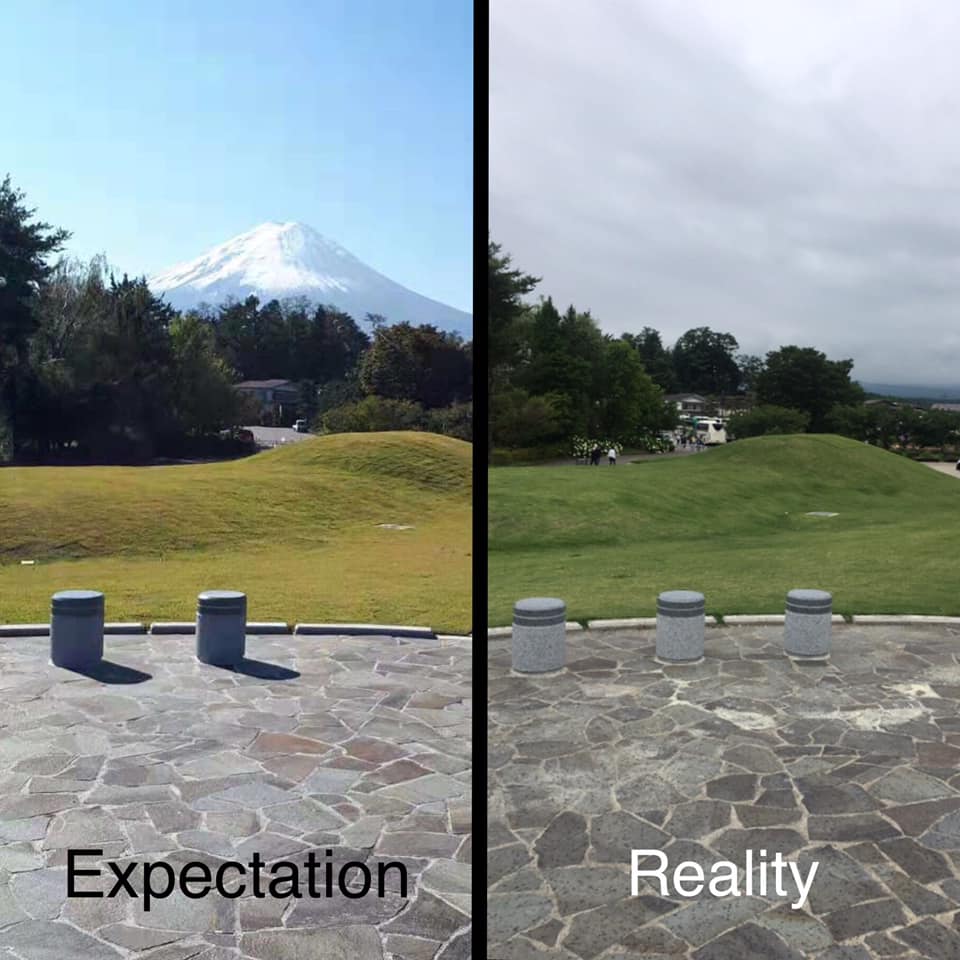
I will just add that there’s really never a wrong time to travel. There are busier times, more expensive times, good weather days, bad weather days, etc. And unfortunately, no amount of pre-planning is going to stop the occasional storm from blowing in or that surprise festival/event from happening, so don’t sweat it too much! We once went to Fuji, Japan and didn’t see Mount Fuji. How iconic is that?
Where?

Now the big question. Where to? Usually, this is an easy one when it’s just me and Tucker because we want to go everywhere, but even we still find ourselves asking questions like where is the cheapest flight? Where can we do a lot in a short amount of time? And other similar questions. More recently, we’ve also been asking ourselves about priorities. Where are the places we want to go most? Over the years, we’ve realized that you never know when a global pandemic or political unrest might arise to make a lifelong dream of yours come to a crashing halt, so when choosing where to go, just know that you won’t remember the price of the plane tickets, but you’ll be telling stories about what you did and where you went for the rest of your life. 

The surprisingly polarizing Bratislava

If you’re not as much of a geography nerd as I am, you might also just not really know what kind of places you’d even like. Or what it’ll be like when you’re there. Luckily, the internet has this well and truly covered – there are countless YouTube videos, blogs, websites, documentaries, basically anything and everything you might want to know about a given destination online, so you can always start there. Of course, recommendations are also great, but definitely take them with a grain of salt because everything about travel is highly subjective, and in my experience, no two people feel the same way about a place (just ask Tucker and I how we both feel about Bratislava).

If you’re still struggling with narrowing down all the options, I also think it’s a good idea to combine your other interests with travel, so if you like hiking/nature, maybe a trip to South America would be perfect for you. Or if you’re history buff, it’s hard to beat Europe. Foodies typically love Asia, and those really up for an adventure don’t mind the long flights needed to go trekking in Africa or scuba diving in Oceania. There’s really so much to see in every corner of the world, so again, don’t sweat it too much! It’s all about the journey not the destination, right?

How?

Speaking of the journey, once you’ve decided (roughly) where you want to go, how do you put it into action? The order in which we typically book things is pretty much always FLIGHTS -> LODGINGS -> EXCURSIONS. Essentially, I have an idea of where I want to go, very often the main country or region I want to see and a possible “home base” or “anchor city”, which is where we’ll fly in and out of, but until we officially look at flights, even that might change.

When we check the flights, we might see that it’s much cheaper to go to a different, nearby city and take a train to where I initially wanted to go. Or I might see there are a lot more flights to a different city in the area and start researching why that is, possibly choosing that as our base instead. We like to let the flights guide us somewhat, but if you already know where you want to go, just book it! Unfortunately, post-pandemic travel is super variable, and there’s no longer a reliable system of finding cheap flights. Gone are the days when leaving on a Tuesday or booking 4 months out might save you some money, so save yourself the headache and just book when it makes sense for you. We usually start our flight search on an aggregator site like Momondo, which allows us to play around with the days, times, and paths to find the best option, but when we do our actual booking, we prefer use the airlines’ websites because they’re much easier to contact if there’s an issue.
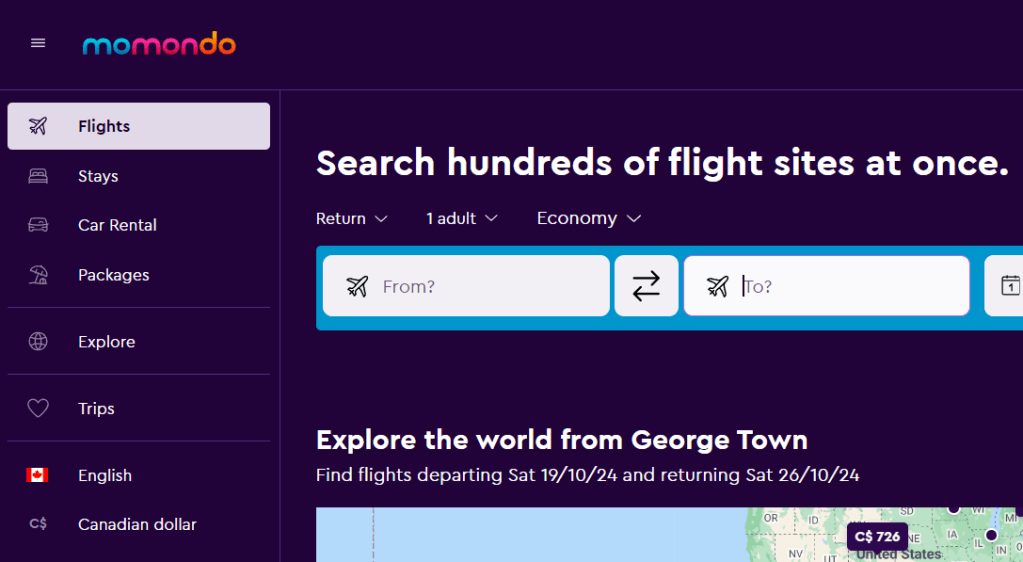
Just one of many similar sites

Once we’ve figured out how we’ll get in and out, we then work on where we’ll spend our days. If we’re somewhere like Europe and we can easily get from city to city or even country to country, I might split the trip into two or three stops, usually in somewhat of a circle to ensure we get back to the airport city. Other times, I rely on day trips to see more for my money. This is often the easiest way because then I only need to find one hotel/hostel/Airbnb for the duration. In any case, when booking a place to stay, we tend to use Booking.com because the filters really help us narrow down all the options based on what we need for a given trip (i.e. “parking”, “dog-friendly”, etc.). We also have the added bonus of being able to look back at places we’ve stayed in the past, which we’ve used on several return trips.
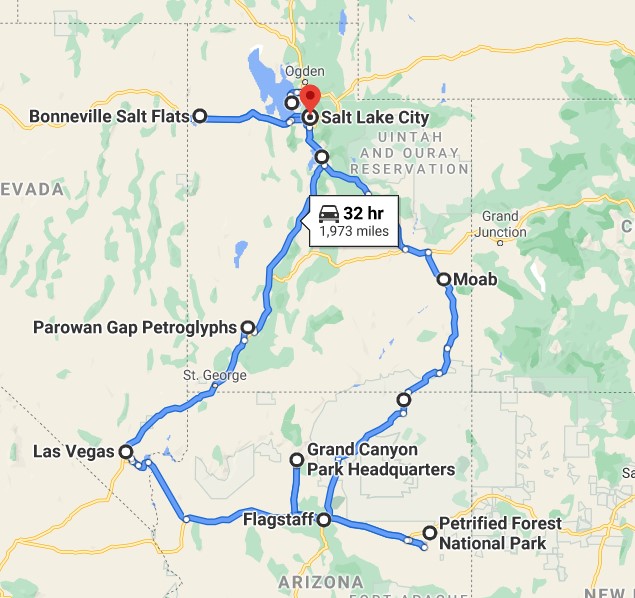
Throughout our years of traveling together, we’ve basically run the gamut, staying in dormitories, pods, hotels, inns, apartments, houses, etc. It really all depends on what you want to spend, what you’re comfortable with, and what’s available in the destination. My advice when choosing a place is to really focus on the most recent reviews. If there aren’t any reviews from the last few months, there’s probably a reason for that. You should also pay particular attention to the things that are most relevant to you. If you can’t sleep when there’s too much noise, search for that in the reviews. If you have to have AC, make sure you check that on the amenities list, etc. Also, remember that if you are bringing any electronics, you’ll likely need adapters to be able to use them abroad. We’ve forgotten so many times that I now have an army of adapters at home.

Okay, now that flights and hotels are taken care of, we can start looking into the things we might want to do while there. Usually, there are very few things I book in advance aside from transportation and lodging, but if we’re going somewhere very touristy (like Paris, Angor Wat, etc.) then we might need to pre-purchase tickets to the main attractions. Similarly, if we’re making a trip down to Peru with the main goal of seeing Machu Picchu, then I’d like to make sure we have any tickets, tours, or whatever else we might need for a large-scale excursion like that. Thankfully, so much of this can be done online these days although the final process might not be super clear until you actually arrive. There have been many times when we weren’t sure if we did what we were supposed to do ahead of time, but it has absolutely always worked out once we were there. Embrace the ambiguity as part of the adventure and remember that you’re a tourist, not a pioneer – there’s always someone to ask for help if you need it!

What?
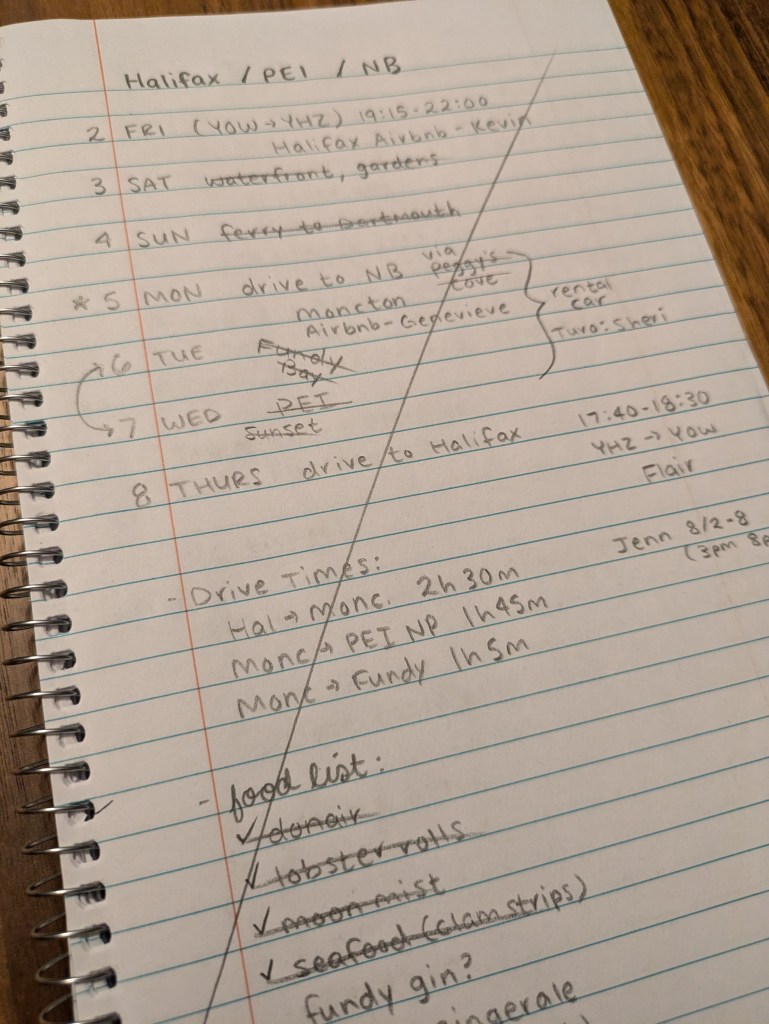
And finally, the best part! How will you spend your days? Usually right after we book our flights, I like to start with a general Google search of “things to see in _____”, and go from there. I also love to read blogs written either by other tourists/travelers or even better, by people who live there. This is not only practical, but it also serves to get me super excited for the upcoming trip! Once I have enough ideas/information, I usually end up making a general list of things we might want to do, see, and eat while on the trip, which we can then check off as we go. Of course, I don’t think I’ve ever checked everything off of one of these lists, and things are typically added to it throughout our trip as well, but ultimately, it really helps us in coming up with plans while on the go and making sure we don’t forget anything in all the excitement of exploring a new place.

Even before we had smartphones lol

Once we’ve made it to our destination, we typically spend the first day or two just walking around to get our bearings and get acquainted with the area. We’ll usually wander around the major points of interest on a map or group some of the items from my list and do our own sort of walking tour. Most major cities have their own free walking tours that you can join if you prefer something with more structure. We’ve done many of these throughout the years and have always enjoyed them. Tucker tends to focus on the food during our travels, so whenever we’re hungry, we’ll usually find a park bench or a café, and he’ll go on the hunt (through heaps of Google reviews) for a place that possibly ticks even more things off our list.

Of course, our own research only goes so far, so another thing we love to do is ask locals what they would recommend. Usually starting with taxi/Uber drivers, we try to ask several people throughout our stay what they would recommend to tourists as far as things to see, foods to try, places to go, etc. This is why the list usually ends up with so many amendments! But some of our absolute favorite places were only discovered once we landed and started talking to locals about their home, so don’t be shy! Things are always changing, and those who live there always know best!

So that’s how we do it! As I was writing this, I started worrying whether or not this would be helpful to anyone since there really is so much variance between people, destinations, trips, etc. But hopefully something in here stuck out to you and might be of use during your next trip-planning session! Happy planning and bon voyage!

These are a Few of our Favorite Words…

As you might have guessed (or observed), Tucker and I usually do our best to learn the languages of the countries we live in. Whether by way of formal university classes or informal lessons from native friends, Polish, Mandarin Chinese, Spanish, and French have all found their way into our homes, but recently, we found ourselves wondering which bits and pieces of these languages have stayed in our lives throughout the years and why. So, I did what I do best and made a list of our most-used non-English words (for possible future research, of course), and came up with:

Na zdrowie /nah zdrov.ee.yeh/

The first word, or in this case phrase, that fits the bill is definitely na zdrowie. It means “for health” in Polish and is used both when someone sneezes and as a “cheers” when clinking glasses. We typically use it in the sneezing scenario, and it never fails to elicit the fitting follow-up of “dzięki” (or even more frequently “dzięks”, the Poglish alternative). Why is this the call and response that stuck for something that obviously exists in English? No idea really, except that I think it’s way more fun to say!

Uwaga /oo.vah.gah/

The next word on the list has a clear reason for its common and continual usage. Uwaga means something like “attention” or “caution” in Polish, but it doesn’t sound so formal or pressing. It’s the one-word, light warning that we sometimes need, like for example, if there’s someone trying to get past the person you’re talking to or if there’s a puddle you’d rather your partner avoid. It’s too much to say “look out” or “caution”, but a little “uwaga” is perfect.

Laowai /lao.why/

Next up is laowai or “foreigner” in Chinese. This one we usually use out of politeness. When we need to specify someone not local to the area, “foreigner”, “outsider”, “gringo”, etc. all sound a little harsh to our ears, so instead we’ll throw out a “laowai”. It’s clear and to-the-point with a bit less emotional baggage/pejorative connotations. Sometimes I really miss the bluntness of Chinese, but then I remember having to shout “fuwuyuan” or “waiter” at restaurants, and on second thought, I’m all good.  

Cha bu duo /cha boo do.wuh/

Another phrase that we still find ourselves using post-China is cha bu duo, which literally translates as “not much difference”, but is used more or less like “good enough”. It’s something we use when events don’t exactly go to plan, but the end result is perhaps the best we (or anyone) could manage in the given situation. It’s a verbal shrug if you will, and somehow we find ourselves using it a lot.

Sip /seep/

Now onto probably the most used word on this list, one that I would conservatively guess we use daily: sip. It’s something we picked up in Mexico and haven’t dropped despite confused looks on various Quebecois faces. “Sip” is the Spanish equivalent of “yep”, and it’s just so quick and easy that it slips out all the time, even when we’re clearly not speaking Spanish with anyone.

Ojalá /oh.ha.la/

Another commonly used Mexican Spanish word in our house is ojalá. Ojalá might just be my favorite Spanish word punto because it has such a great etymology and is incredibly useful. It means “hopefully” but can also be used at the end of a thought to mean something like “fingers crossed” or “inshallah” (”if God wills it”), which is where it originally came from. For example, will we continue to grow our collection of amazing international words and phrases? ¡Ojalá!

Oh mon Dieu /oh mon dee.oo/

Speaking of Allah or Dieu, another non-English phrase we tend to favor over any English alternatives is oh mon Dieu. Maybe it’s because “oh my God” sounds a bit strong in English, while “omg” makes me sound like I’m twelve. Or maybe it’s just the perfect amount of French drama, but nothing feels more theatrical than an eyeroll and an “oh mon Dieu”.

Dangereux /dan.zher.oo/

And last but not least is another one we tend to sub out just because it’s way more fun to say: dangereux. It’s French for “dangerous”, but again I think it just gives the situation a certain je ne sais quoi, non ? The next time you want to playfully point out some implicit danger, I recommend using “dangereux” with just the right amount of emphasis – quel drame !

Okay, they might not be on par with “schadenfreude” or “fetch”, but these are definitely some fun and useful words as far and Tucker and I are concerned, and I sincerely hope you’ll start using them in your regular speech! Ojalá the next time we chat, you can be inducted into our weird little linguistic mélange. Until next time! Na zdrowie!

English is Weird

In the past, I’ve written about my struggles with learning Polish…and then Mandarin…and now Spanish, but this month, I thought I’d honor my students’ struggle instead. Just in case you’re not a linguistics freak (or language teacher) like me, I’d like to share just a few of the many reasons English can seem extremely weird (read: difficult) from a non-native speaker’s perspective. So, without further ado, here are a few of my favorite things (and definitely my students’ least favorite things) about my native tongue.  

Crazy Spelling System

First up, unsurprisingly, is English spelling. Even if English is your first language you probably still have a bone or two to pick with whatever drunk group of academics decided “ph” looked way cooler than “f” or even with those thoughtful teachers who recited “I before E except after C, and when sounding like A as in ‘neighbor’ and ‘weigh’” …nice little rhyme, but what about “weird”, “glacier”, “albeit”, and “seize”? Of course, there are about a thousand reasons both historical and linguistic to account for this mess, but students (and most speakers) just don’t care. They’re too busy trying to work out why we still have a “b” in words like “thumb” and “debt” or why “knight” isn’t spelled “nite”. One of my favorite linguistic observations demonstrating the absurdity of English spelling is the made-up word “ghoti”. If you take the “gh” from “rough” add the “o” from “women” and finally the “ti” from “nation”, “ghoti” should be pronounced as “fish”. WTF, English.

Gender and Case in Pronouns

One of my biggest complaints with Polish was the abundance of grammatical gender and case. It blew my mind that there might be a possible 21 versions of the same word, something you don’t have to worry about so much with English. That is until you get to the pronouns. “I, me, my, mine, myself”, “you, your, yours, yourself”, “he, him, his, himself”, “she, her, hers, herself” and that’s not even mentioning retired classics like “ye” and “thou” or more modern-day usages like the singular “they/their”. It’s really a mess of various elements of gender and number with a glimpse into a defunct case system and, of course, a plethora of exceptions to any sort of pattern. And when we throw in the contractions we use (such as “he’s” and “you’re”, which can sound an awful lot like “his” and “your”), I can understand why students get a little frustrated with the inconsistency.

Easy-peasy…

All the Vowels

However, even if we put spelling and word forms aside, English is still extremely bizarre when it comes to pronunciation. Bizarre and incredibly difficult. One of the hardest things about English pronunciation is the mastering of all the vowel sounds. We all know that English has 5-6 vowels: A E I O U (and sometimes Y), but interestingly, we have between 15-20 different vowel sounds, depending on dialect. That’s why we have all the strange combinations like “ee”, “ou”, “ea”, “oi”, etc. and a bit of a crazy pronunciation game with minimal pair lists like “beet, bit, bet, but, bat, bot, boot, and boat” (go ahead and read those out loud if you didn’t already – it’s so fun!). It’s no wonder my students are worried that with a slight change in the position of their mouths they might be asking to take an extra shit rather than an extra sheet or maybe heading to the bitch instead of the beach.  >_<  

I <3 IPA

Phrasal Verbs

Another odd feature of English is our love of function words, particularly prepositions. I remember happily memorizing a song of about 50 of them in elementary school, but as a teacher, I cringe when students ask me how they can memorize not only the prepositions of English, but the phrasal verbs. Phrasal verbs are the multi-word verbs that native English speakers love to (over)use: “go on”, “give up”, “find out”, “calm down”, etc. Of course, we could use “continue”, “quit”, “discover”, and “relax” instead (much to the delight of other Indo-European language speakers), but that would be way too easy! Imagine if you broke up with your significant other after breaking into their house because your car broke down all while your skin was breaking out. Phrasal verbs like “break up”, “break into”, “break down”, and “break out” are so arbitrary and annoyingly similar that many learners of English often know every word in a sentence yet still struggle to piece together the meaning – it’s almost like we’re talking in code.

All the Englishes

Finally, a bit like Spanish, there are so many varieties of English to choose from, and if you’re going for proper World English mastery, you’ll have to be aware of the many dialectal differences in grammatical features, vocabulary, and pronunciation. For example, if chatting with a Brit, you might want to avoid referring to your “pants”. When speaking to those from the US, you’d better call it “soccer” and not “football” or you’ll definitely have them confused. Canadians use the “washroom”, Australians eat “brekkie”, and even the vast majority of native speakers need subtitles to understand Scots, so good luck with that! There’s an incredible amount of regional and socioeconomic dialects in English, and it’s only getting more diverse with the vast number of international varieties and accents being added to our ever-globalizing society.

Ultimately, English (like every language on the planet) is chock-full of oddities which make learning and speaking it quite the challenge. Of course, as this has kept me employed for the last decade, I wouldn’t want it any other way! Haha! Just remember, while English can be tough, it can definitely be mastered through thorough thought, though. Cheers!  

Very Superstitious…

Non-scary black cat for me!

It’s October, a strange time of the year where spooky and supernatural things are dressed up in costumes and set out on suburban lawns. Truth be told, Halloween really isn’t my thing. I don’t like scary movies or unexpected visitors, and as I have chocolate in the house year-round, even the candy aspect is a bit of a miss. What I do like, however, is a nice dose of cultural quirks. Therefore, in lieu of ghosts and goblins, this month, I’m sharing my favorite international superstitions, all of which I’ve either heard from my students and/or have experienced myself abroad. Nothing creepy or crawly here, I promise!

The first superstition I thought of is a simple one that I experienced often when I was in China. Much like how we view the number seven as lucky and the number 13 as unlucky, the Chinese, too, have their superstitions regarding certain numbers. One of the strongest of these is about the number four. The number four is generally avoided in China. Elevators will often skip that floor number altogether, and any room numbers or phone numbers that happen to have too many inauspicious fours in them are often shunned as well. So, what makes the number four so unlucky in China? It’s actually the pronunciation of the word. In Mandarin the number four is pronounced [sì], which is unfortunately similar to the word [sǐ] or “death”.

EEK!

Speaking of death (it is Halloween after all…) in South Korea, a common superstition is that sleeping in a closed room with a running fan might actually kill you. This is such a common superstition that “fan death” has its own Wikipedia page. Although the alleged cause of death for these unexplained casualties has never been proven (or even agreed upon), warnings are still commonplace throughout the country. Bet you’ll never look at that unassuming appliance in the corner of your room the same way again!

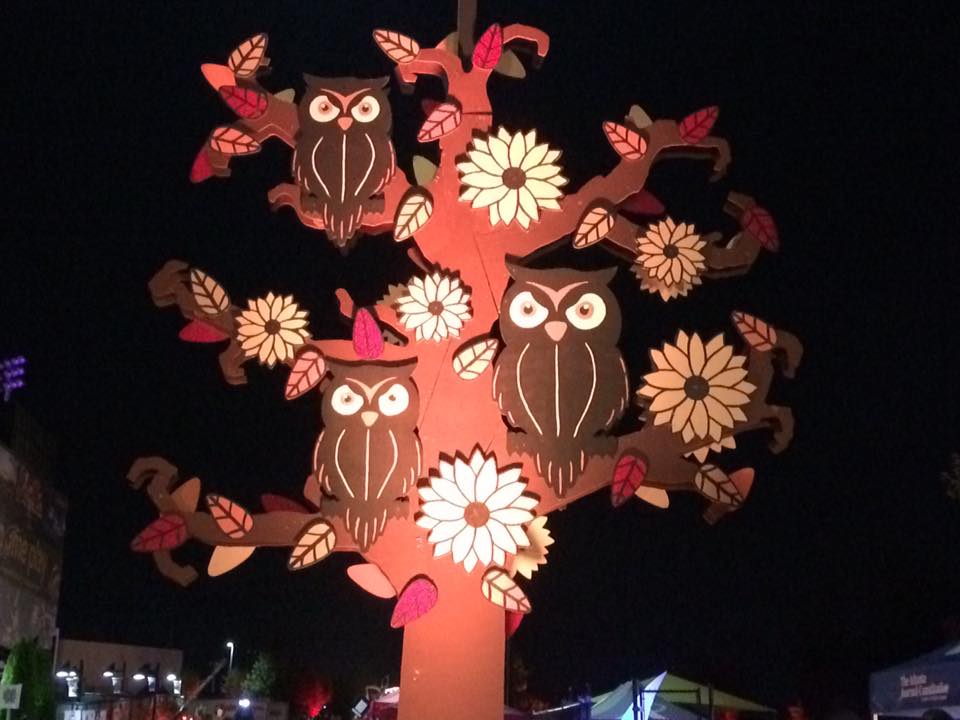
Another death-related superstition I recently heard comes from Kenya, where owls are actually seen not as wise, candy-crunching mentors, but instead as harbingers of death. Seeing an owl in Kenya is believed to be a bad omen because it means that death will strike soon. Could be you, could be a family member, but you can be sure it’ll be close and quick. Even the local words used for “owl” are often avoided as they might bring about the birds themselves (and subsequently an untimely death). Perhaps Hedwig was the true cause of Harry’s continued misfortunes…

To be fair, they do look pretty menacing…

Bad luck is understandably a pretty common thing to be superstitious about, but my favorite superstitions involving bad luck are the ones that can be traced back to an event or custom in a culture’s history. One example of this would be the fact that it is considered unlucky in France to eat a baguette or loaf of bread that has been kept upside down. This belief is said to come from an old practice of leaving upside-down bread loaves out for the town executioner to pick up. No one would want to anger an executioner by accidently eating his bread, right?  

Safe to count now

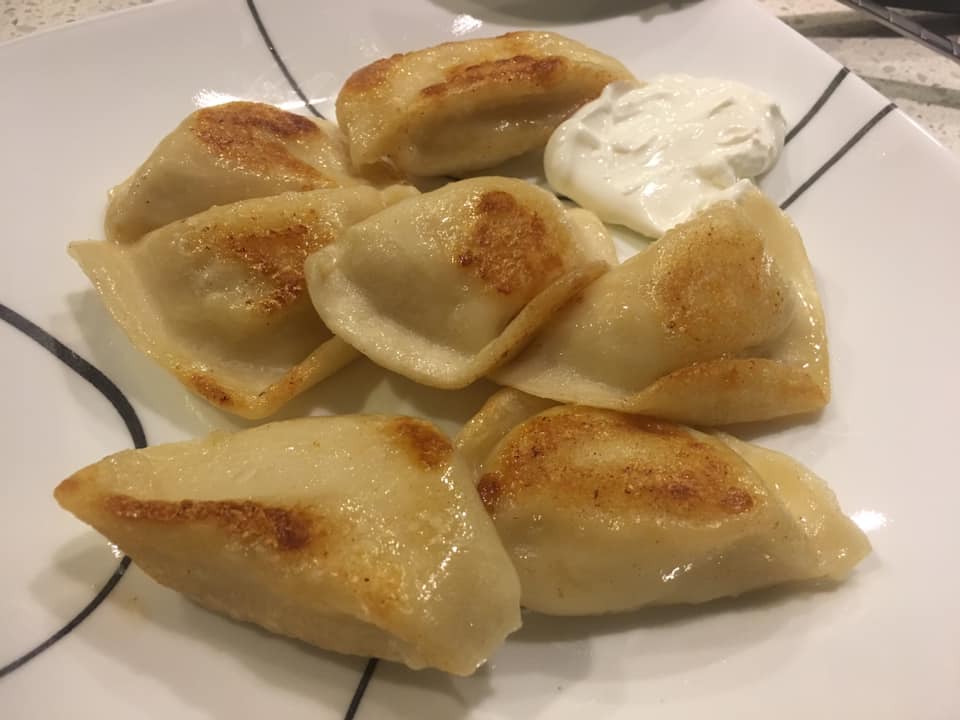
Two other superstitions that come to mind when I think about bad luck come from Poland and Mexico. In Poland, we were told not to count any perogies that are being cooked. It’s simply bad luck to do so, and it may result in a ruined dinner. In Mexico, to escape a bit of bad luck, you should avoid sweeping at night because that, too, can bring a curse down on your house. Additionally, even when daytime sweeping in Mexico, you shouldn’t sweep the dirt straight out your front door, otherwise all your good luck will leave with it too. I knew I should have swept it under the rug instead!

If bad luck to you means losing money, then you shouldn’t put your purse or wallet on the floor. In Brazil (and many other countries) this action or even the accidental dropping of your purse/wallet could mean that you’re about to lose a lot of money or else have some other, serious financial difficulties.

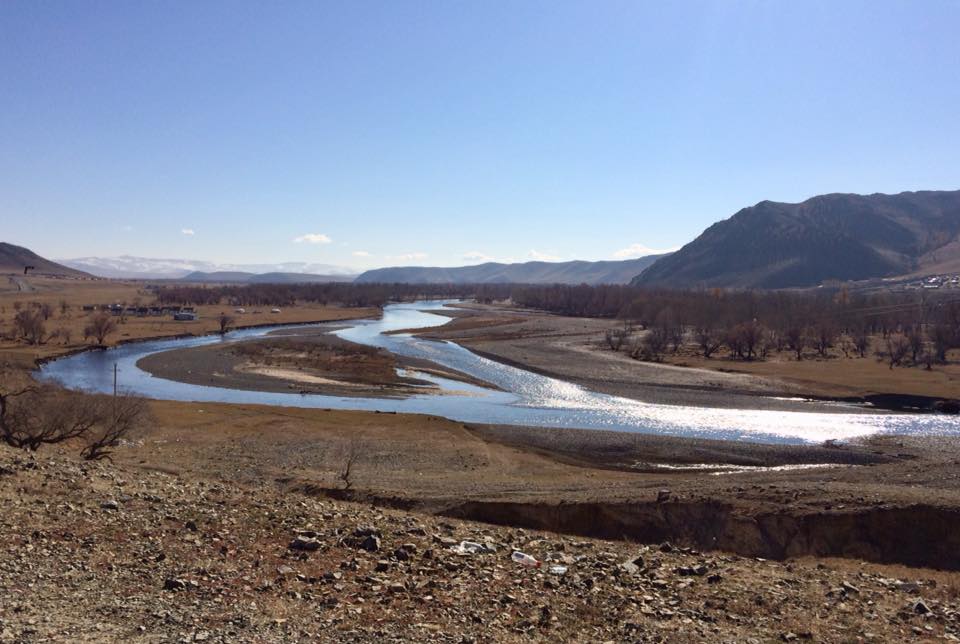
In addition to good and bad luck, many other superstitions seem to be concerned with friends and enemies. For example, in Mongolia if you happen to touch someone’s foot or step on their shoe, you should immediately shake hands as a sign of good faith and friendship. If you do not, it means that conflict is on the horizon and that your relationship might be strained in the future. This superstition is so prevalent that even strangers who accidently bump feet will turn and shake hands to combat the negative consequences.

Hard to image much foot contact in these vast spaces!

In another shoe-related superstition, in Egypt, it is considered disrespectful to leave your shoes with their soles facing up. Stemming from ancient Egyptian beliefs, this can be seen as a slight against God, thus a possible omen of bad events (or in a mixing of religious terms, bad karma) heading your way. This superstition also seeps into etiquette because it is also seen as rude to sit with your soles pointing towards another person.

X

In Turkey, it’s sharp objects (or at least passing them to others) that can cause you to lose friends. For example, handing over a pair of scissors might been seen as the cause of a severed relationship in the future. It’s more prudent to set the sharp things on a nearby table than to hand them over directly.

On the other hand, if you find that you want to get rid of an unwelcomed friend, or a visitor that has over-stayed their welcome, in the Philippines, there is a superstition that says sprinkling salt around your house will cause a visitor to leave. I wonder if you throw salt over your shoulder at the same time will the results be magnified or canceled out?

So close to danger, and I didn’t even know!

Other common superstations revolve around mystical creatures and the magic they bring. In Peru, dragonflies are believed to be connected with sorcery and can bring evil to those whom they touch. Luckily, also in Peru, ladybugs are counters to the devious dragonflies, and they can indicate that good luck is on the way.

Some creatures, however, can be related to both good and bad superstitions, as with the Icelandic elves. These “hidden people” are woven into many beliefs and even holiday celebrations in Iceland. For example, there are stories about construction projects being halted because the plans didn’t take into account the feelings and habits of the local elves. They really must be consulted if you want things to run smoothly. I’ve also heard they throw some pretty awesome Christmas parties.

And there you have it! A well-rounded 13 international superstitions to keep you up at night wondering how many times you brought the bad luck on yourself with your unsuspecting actions. Perhaps this explains all the bad juju in 2020? Something to think about! Happy Halloween! 😉