Canadian English, Eh?

On one of our very first trips to Canada I remember finding Canadian English extremely intriguing: the vowel differences! The mixed spelling system! The use of the quintessential “eh”! I love it all, but I think what has surprised me most as a freshly-carded, permanent resident of Ontario has been all the new English vocabulary I’ve been learning! And as the good little linguist I am, of course, I’ve kept a list of these Canadian English gems to share. 😊

Washroom (aka bathroom/restroom)

This was one of the first linguistic differences that stood out to me oh-so long ago. “Washroom” is virtually the ONLY way Canadians will ever refer to this place. In restaurants, airports, shopping malls, someone’s house, anywhere you go, if you throw out a “restroom” or a “bathroom”, it’ll likely be met with either blank stares or comments about what exactly Americans do when going to the toilet.

Hydro (aka electricity)

This one really threw us off when we were searching for our apartment. Sometimes utilities are included in the rental agreements here, and we’d see places mention both “hydro” and “water” in some form or another, which had us thoroughly confused. “Hydro” seems like a synonym for “water” to us, silly Americans, but with enough listings, we eventually realized we never saw “electricity” or “power” listed and were able to deduce. Evidently hydropower is so common here in Canada that the shortened form will do.

Tuque/toque (aka hat/beanie)

Another one we learned early on and have all but adopted ourselves is “tuque”. Such an important part of the Canadian wardrobe, a tuque is a winter hat that might be called a variety of things south of the border, but up here, it’s most definitely a tuque (which rhymes with “Luke”). Where this word comes from, much like its spelling, is hotly debated, but whatever you want to call it, just be sure you’ve got a good dozen before winter sets in.

Parkade (aka parking garage)

Like many large countries, you’ll get a bit of a variety in how people refer to certain things from one region to another, which is exactly the case with “parkade”. We first saw signs for a parkade in downtown Calgary and had all sorts of wild imaginings of what went on there, but as it turns out, it’s just a Western Canadian way of saying “parking garage”, not nearly as exciting as we thought.

Dart (aka cigarette)  

I’m surprised these things even come up anymore, haven’t we all but killed smoking in North America? But somehow, we actually have heard “dart” used in casual conversation a few times. I feel like it’s mostly used jokingly among those under a certain age, but if you want to understand some really niche Canadian jokes, you do have to know that they call cigarettes “darts”, which is actually much less offensive than some other countries’ alternatives…

Keener (aka over-achiever)

A bit more abstract of a word, “keener” was a little harder to suss out from context alone; however, since it’s used pretty regularly, we were still able to catch on pretty quickly. To call someone a keener means you think they are an over-achiever. They’re the ones who do all the extra credit assignments or get overly excited about something they’re very passionate about, like me with English dialects, for example.
Pogos (aka corndogs)

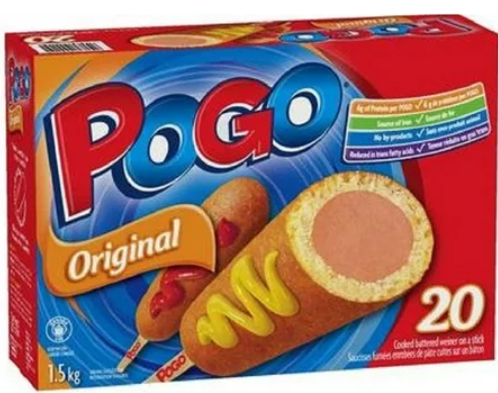
Here we have our first Kleenex situation. Pogo is a popular brand of corndogs in Canada, and because of their superb timing (and marketing), their name will forever be entwined with that of the famous sticked festival food. How do the makers of Pogo Sticks feel about this? I have no idea, but it is now definitely on my Canadian bucket list to have a Pogo pogo.

Soccer baseball (aka kickball)

I’m pretty sure I burst out laughing when I first heard this one. You know that sport we all played in school? The one that’s basically baseball, but you kick the ball instead of hitting it with a bat? Yeah, Canadians very creatively call that sport “soccer baseball”, which is just so deliciously on-the-nose!

Bristol board (aka poster board)

When we officially moved in, one of the first things we wanted to get set up was a small sound proof area for work, and for that, we needed a large tri-fold poster board, which proved to be extremely difficult to source. That is until we realized we weren’t using the most common word for the item we wanted. I mean, “Bristol board”? Really? How do you even learn things like this unless you participate in a local science fair?

Duotang (aka folder with brads)

And while we’re on the topic of office supplies, another one that really threw me off was “duotang”. I wasn’t even sure that this was English at first, but evidently, it’s what Canadians call a very specific style of folder: the two-pocket ones with the brads in the center. Yeah, as far as I know, we don’t have a specific word for this in the US, so maybe it’s worth picking up?

Molsen muscle (aka beer belly)

Possibly my absolute favorite Canadian expression has to be the beloved “Molsen muscle”. Molsen is the most popular national beer brand in Canada, and if you are particularly fond of them, you might have your very own Molsen muscle, which is, in my opinion, a much cooler way of saying “beer belly”.

Cobra chicken/Canada goose (aka Canadian goose)

Another joke-turned-expression is the good ol’ “cobra chicken” – half cobra, half chicken, that’s right, it’s the Canada goose. And while “cobra chicken” is really just for fun, Canadians actually do say “Canada goose” and never “Canadian goose” as we do. I guess they haven’t applied for citizenship yet.

So that’s my list as it stands now! Stay tuned for more Canadianisms as we continue to learn and adapt to life Up North.

These are a Few of our Favorite Words…

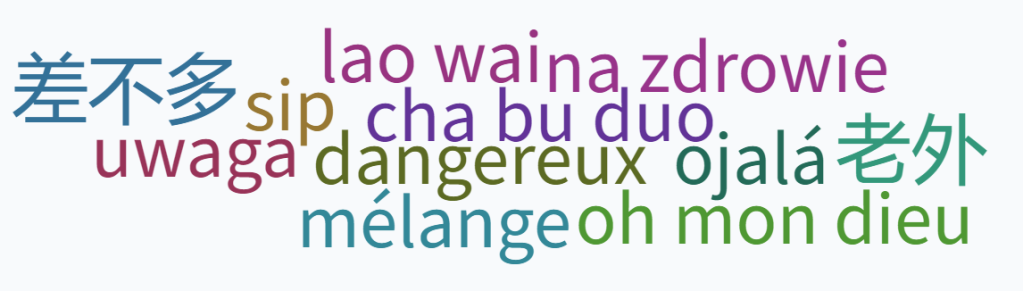
As you might have guessed (or observed), Tucker and I usually do our best to learn the languages of the countries we live in. Whether by way of formal university classes or informal lessons from native friends, Polish, Mandarin Chinese, Spanish, and French have all found their way into our homes, but recently, we found ourselves wondering which bits and pieces of these languages have stayed in our lives throughout the years and why. So, I did what I do best and made a list of our most-used non-English words (for possible future research, of course), and came up with:

Na zdrowie /nah zdrov.ee.yeh/

The first word, or in this case phrase, that fits the bill is definitely na zdrowie. It means “for health” in Polish and is used both when someone sneezes and as a “cheers” when clinking glasses. We typically use it in the sneezing scenario, and it never fails to elicit the fitting follow-up of “dzięki” (or even more frequently “dzięks”, the Poglish alternative). Why is this the call and response that stuck for something that obviously exists in English? No idea really, except that I think it’s way more fun to say!

Uwaga /oo.vah.gah/

The next word on the list has a clear reason for its common and continual usage. Uwaga means something like “attention” or “caution” in Polish, but it doesn’t sound so formal or pressing. It’s the one-word, light warning that we sometimes need, like for example, if there’s someone trying to get past the person you’re talking to or if there’s a puddle you’d rather your partner avoid. It’s too much to say “look out” or “caution”, but a little “uwaga” is perfect.

Laowai /lao.why/

Next up is laowai or “foreigner” in Chinese. This one we usually use out of politeness. When we need to specify someone not local to the area, “foreigner”, “outsider”, “gringo”, etc. all sound a little harsh to our ears, so instead we’ll throw out a “laowai”. It’s clear and to-the-point with a bit less emotional baggage/pejorative connotations. Sometimes I really miss the bluntness of Chinese, but then I remember having to shout “fuwuyuan” or “waiter” at restaurants, and on second thought, I’m all good.  

Cha bu duo /cha boo do.wuh/

Another phrase that we still find ourselves using post-China is cha bu duo, which literally translates as “not much difference”, but is used more or less like “good enough”. It’s something we use when events don’t exactly go to plan, but the end result is perhaps the best we (or anyone) could manage in the given situation. It’s a verbal shrug if you will, and somehow we find ourselves using it a lot.

Sip /seep/

Now onto probably the most used word on this list, one that I would conservatively guess we use daily: sip. It’s something we picked up in Mexico and haven’t dropped despite confused looks on various Quebecois faces. “Sip” is the Spanish equivalent of “yep”, and it’s just so quick and easy that it slips out all the time, even when we’re clearly not speaking Spanish with anyone.

Ojalá /oh.ha.la/

Another commonly used Mexican Spanish word in our house is ojalá. Ojalá might just be my favorite Spanish word punto because it has such a great etymology and is incredibly useful. It means “hopefully” but can also be used at the end of a thought to mean something like “fingers crossed” or “inshallah” (”if God wills it”), which is where it originally came from. For example, will we continue to grow our collection of amazing international words and phrases? ¡Ojalá!

Oh mon Dieu /oh mon dee.oo/

Speaking of Allah or Dieu, another non-English phrase we tend to favor over any English alternatives is oh mon Dieu. Maybe it’s because “oh my God” sounds a bit strong in English, while “omg” makes me sound like I’m twelve. Or maybe it’s just the perfect amount of French drama, but nothing feels more theatrical than an eyeroll and an “oh mon Dieu”.

Dangereux /dan.zher.oo/

And last but not least is another one we tend to sub out just because it’s way more fun to say: dangereux. It’s French for “dangerous”, but again I think it just gives the situation a certain je ne sais quoi, non ? The next time you want to playfully point out some implicit danger, I recommend using “dangereux” with just the right amount of emphasis – quel drame !

Okay, they might not be on par with “schadenfreude” or “fetch”, but these are definitely some fun and useful words as far and Tucker and I are concerned, and I sincerely hope you’ll start using them in your regular speech! Ojalá the next time we chat, you can be inducted into our weird little linguistic mélange. Until next time! Na zdrowie!

English is Weird

In the past, I’ve written about my struggles with learning Polish…and then Mandarin…and now Spanish, but this month, I thought I’d honor my students’ struggle instead. Just in case you’re not a linguistics freak (or language teacher) like me, I’d like to share just a few of the many reasons English can seem extremely weird (read: difficult) from a non-native speaker’s perspective. So, without further ado, here are a few of my favorite things (and definitely my students’ least favorite things) about my native tongue.  

Crazy Spelling System

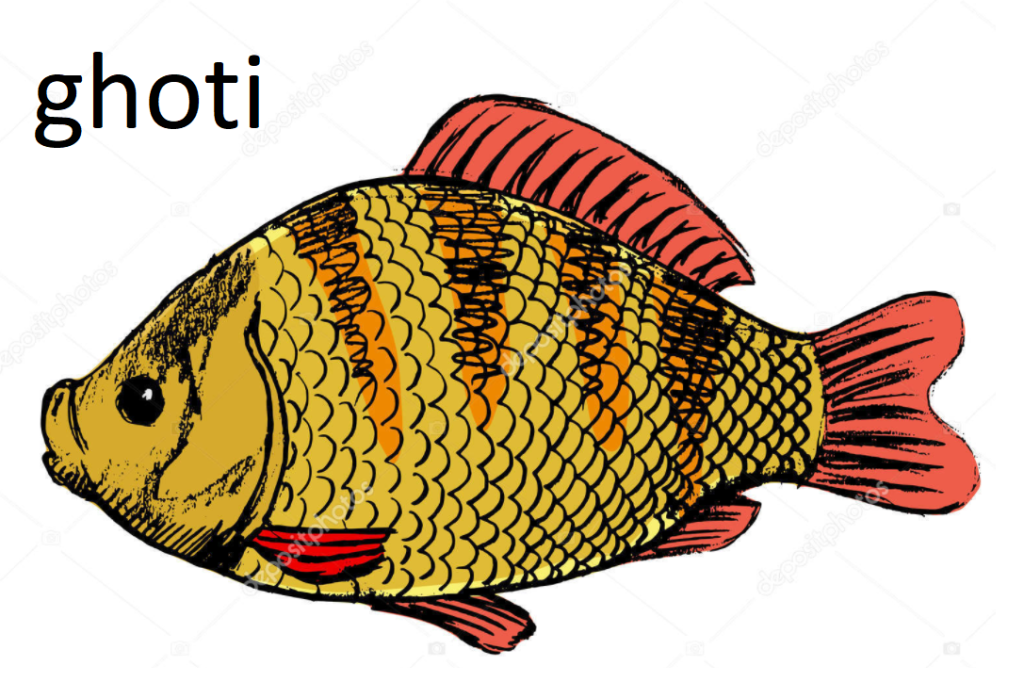
First up, unsurprisingly, is English spelling. Even if English is your first language you probably still have a bone or two to pick with whatever drunk group of academics decided “ph” looked way cooler than “f” or even with those thoughtful teachers who recited “I before E except after C, and when sounding like A as in ‘neighbor’ and ‘weigh’” …nice little rhyme, but what about “weird”, “glacier”, “albeit”, and “seize”? Of course, there are about a thousand reasons both historical and linguistic to account for this mess, but students (and most speakers) just don’t care. They’re too busy trying to work out why we still have a “b” in words like “thumb” and “debt” or why “knight” isn’t spelled “nite”. One of my favorite linguistic observations demonstrating the absurdity of English spelling is the made-up word “ghoti”. If you take the “gh” from “rough” add the “o” from “women” and finally the “ti” from “nation”, “ghoti” should be pronounced as “fish”. WTF, English.

Gender and Case in Pronouns

One of my biggest complaints with Polish was the abundance of grammatical gender and case. It blew my mind that there might be a possible 21 versions of the same word, something you don’t have to worry about so much with English. That is until you get to the pronouns. “I, me, my, mine, myself”, “you, your, yours, yourself”, “he, him, his, himself”, “she, her, hers, herself” and that’s not even mentioning retired classics like “ye” and “thou” or more modern-day usages like the singular “they/their”. It’s really a mess of various elements of gender and number with a glimpse into a defunct case system and, of course, a plethora of exceptions to any sort of pattern. And when we throw in the contractions we use (such as “he’s” and “you’re”, which can sound an awful lot like “his” and “your”), I can understand why students get a little frustrated with the inconsistency.

Easy-peasy…

All the Vowels

However, even if we put spelling and word forms aside, English is still extremely bizarre when it comes to pronunciation. Bizarre and incredibly difficult. One of the hardest things about English pronunciation is the mastering of all the vowel sounds. We all know that English has 5-6 vowels: A E I O U (and sometimes Y), but interestingly, we have between 15-20 different vowel sounds, depending on dialect. That’s why we have all the strange combinations like “ee”, “ou”, “ea”, “oi”, etc. and a bit of a crazy pronunciation game with minimal pair lists like “beet, bit, bet, but, bat, bot, boot, and boat” (go ahead and read those out loud if you didn’t already – it’s so fun!). It’s no wonder my students are worried that with a slight change in the position of their mouths they might be asking to take an extra shit rather than an extra sheet or maybe heading to the bitch instead of the beach.  >_<  

I <3 IPA

Phrasal Verbs

Another odd feature of English is our love of function words, particularly prepositions. I remember happily memorizing a song of about 50 of them in elementary school, but as a teacher, I cringe when students ask me how they can memorize not only the prepositions of English, but the phrasal verbs. Phrasal verbs are the multi-word verbs that native English speakers love to (over)use: “go on”, “give up”, “find out”, “calm down”, etc. Of course, we could use “continue”, “quit”, “discover”, and “relax” instead (much to the delight of other Indo-European language speakers), but that would be way too easy! Imagine if you broke up with your significant other after breaking into their house because your car broke down all while your skin was breaking out. Phrasal verbs like “break up”, “break into”, “break down”, and “break out” are so arbitrary and annoyingly similar that many learners of English often know every word in a sentence yet still struggle to piece together the meaning – it’s almost like we’re talking in code.

All the Englishes

Finally, a bit like Spanish, there are so many varieties of English to choose from, and if you’re going for proper World English mastery, you’ll have to be aware of the many dialectal differences in grammatical features, vocabulary, and pronunciation. For example, if chatting with a Brit, you might want to avoid referring to your “pants”. When speaking to those from the US, you’d better call it “soccer” and not “football” or you’ll definitely have them confused. Canadians use the “washroom”, Australians eat “brekkie”, and even the vast majority of native speakers need subtitles to understand Scots, so good luck with that! There’s an incredible amount of regional and socioeconomic dialects in English, and it’s only getting more diverse with the vast number of international varieties and accents being added to our ever-globalizing society.

Ultimately, English (like every language on the planet) is chock-full of oddities which make learning and speaking it quite the challenge. Of course, as this has kept me employed for the last decade, I wouldn’t want it any other way! Haha! Just remember, while English can be tough, it can definitely be mastered through thorough thought, though. Cheers!  

Fun Facts and Features of Mexican Spanish

Mi escuela

It’s pretty safe to say I’ve been learning and using quite a bit of Spanish as of late. Living abroad, immersed in a new language and culture tends to push certain language lessons to the forefront (like how to order food, how to pay your bills, etc.), but recently, I decided I wanted more lessons, formal lessons. So, I started taking intensive Spanish courses at the University of Guadalajara. It has been so much fun to be a student again and to learn so much about the Spanish language, a language that has been strikingly absent in my life prior to this move. I took Latin classes in high school and (mostly) French in university before focusing on Polish and Chinese, so for me Spanish is super exciting and feels brand new. In fact, it’s so exciting and new that I want to share some of the things I have loved most about getting to know good ol’ español.

1 The Arabic Influence

The first thing I noticed right off the bat was the huge Arabic influence. Of course, I know Spain and the Arab empires had a history (to put it mildly), but I was still really surprised at the number of daily-use Spanish words that have a strong Arabic flair. My favorite of which is definitely “ojalá”. Ojalá means “hopefully” in Spanish, and as soon as I heard it, I knew there was an “allah” connection in there. The sound and use are super similar to the expression “inshallah”, which I’ve been hearing my Saudi students say for years. Now I think I use “ojalá” almost as frequently as they use “inshallah”, and I absolutely love it. The name Guadalajara is actually another example of Arabic influence. It means “valley of the stone” in Arabic. Other common words with Arabic roots are: alberca (pool), arroz (rice), jarabe (syrup), naranja (orange), sandía (watermelon), taza (cup), and zanahoria (carrot).

This is what comes to mind when I think “alberca”

2 The Drama

Go team perros!

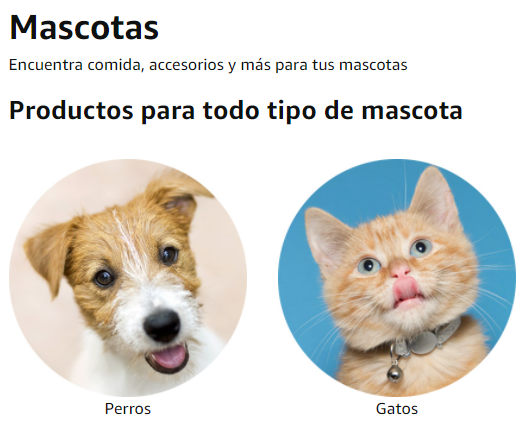
Another feature of Spanish that I immediately loved was the drama or passion that is imbedded directly into the language. For example, to say “I’m sorry” in Spanish, you might use “lo siento”. However, if you translate the phrase literally, it means something more like “I feel it”, which I feel has a bit more strength to it. Another super common expression in Spanish is “me gusta _____”, which is generally translated as “I like _____”; however, grammatically, it’s more like saying “I am pleased by ______”. I feel a little Victorian and definitely a tad dramatic when I translate phrases like these in my head (“Yes, the tacos please me immensely, thank you kind sir”). I can also feel the emotion in some of the vocabulary/etymology divergences as well. “Pets” in Spanish are “mascotas”, which feels so much stronger to my English brain. I also love the vivid images given to “word searches” and “ironing boards” in Mexican Spanish, which are “sopa de letras” (letter soup) and “burros de planchar” (ironing donkeys), respectively.

3 The Specificity

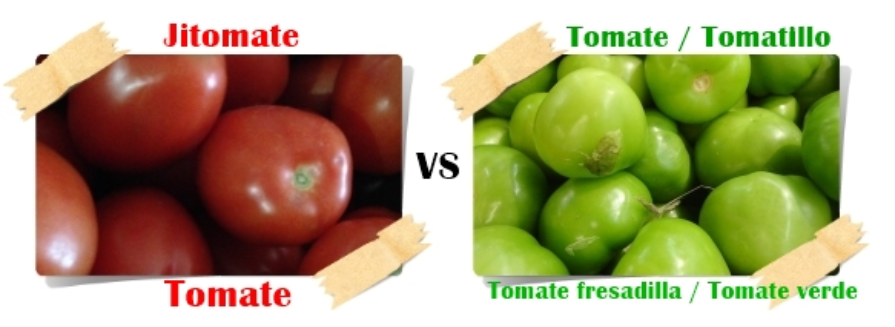
Something else that jumped out at me pretty early on in my Spanish crash course was the specificity of the language. The first example I was met with was the fact that in Spanish I can be American (“americana”) or I can be United Statesian (“estadounidense”). This is a specification I really wish was just as easy and natural to make in English. Another good example is the term “treintañeros” or thirty-somethings, which is a word that this particular treintañera has found quite useful. Of course, there is also a seemingly endless supply of words for taco-like things: tacos, vampiros, dorados, gringas, guisados, etc. We’re honestly still figuring out all the particulars there, but it’s not just Mexican dishes that require this level of specificity, the ingredients often call for it too: for example, the difference between tomate and jitomate. From my understanding, tomates are green and rather small, whereas jitomates are your general Romas, beefsteaks, etc. Neither of which should be confused with my personal favorite: jitomates cherry.

4 The Slang

Another fun feature (of every language really) is the slang. And no, I don’t necessarily mean bad words, just words that are used in a more playful way. Some of my recent Spanish favorites include:

-Chafa (crappy)

-Chavorucco (someone older that acts young)

-Chido (cool)

-Chin (darn)

-Codo (literally “elbow”, figuratively “stingy”)

-Crudo (literally “raw”, figuratively “hungover”)

-Fresa (stuck up/snobby)

-Garrón (freeloader)

-Güey (dude)

-Moja pendejos (literally “wet idiots”, figuratively “annoying drizzly rain”)

-Naco (trashy/tacky)

5 The Trip-ups

¿Jabón o jamón?

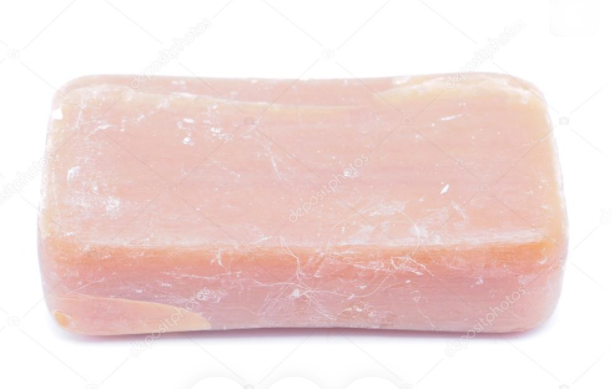
But perhaps the most fun (and memorable) part of learning a new language are the missteps. Language is tricky and one slip of the tongue or change of a vowel and you could be saying something completely different. For example, when I was asked if I have a boyfriend or spouse. Instead of saying, “sí, soy casada” (yes, I’m married), I said “sí, soy cansada” (yes, I’m tired). I’m pretty sure it sounded like I was tired of being married. Haha! Sorry Tucker! Another slip-up I made recently reminded me of my students. In English there is always an issue with the pronunciation of “soup” and “soap”. They’re super similar words, but definitely not interchangeable. Well, I made the same kind of strange substitution when attempting to ask for soap (jabón), but instead asking for ham (jamón). Oops! Sometimes the missteps can be a bit more extreme as well. When trying to recall the general word for seafood (mariscos), I actually said something not so nice in Spanish, and promptly got a lesson in pronunciation as well as political correctness.

I’ve been having an amazing time learning and using such an incredibly rich and fun language. Making new friends and discussing the intricacies of linguistics (or else trying to ignore them completely and just speak) has continually reinforced all the reasons I love living abroad and being (currently) surrounded by all things español. ¡Qué buenas ondas! Ojalá this is only the beginning!

Language Woes

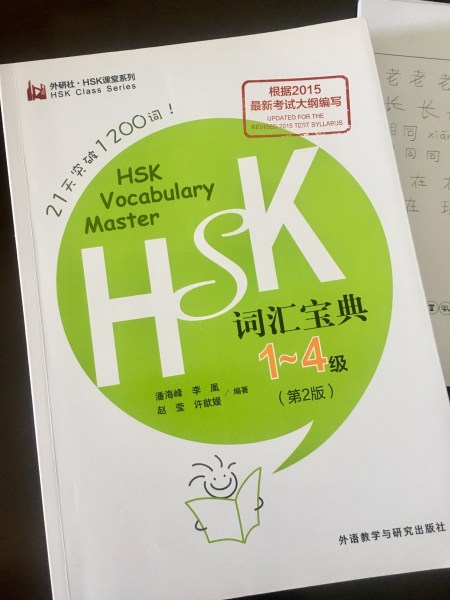
IMG_0262One of my goals this year, as I mentioned in my last post, is to really focus on my Mandarin skills. I’m planning to take the HSK before we leave next summer, and I’d really like to do well. The HSK is a Chinese proficiency test for foreigners learning the language. The highest score is a 6, which would demonstrate “a learner who can easily understand any information in Chinese and is capable of smoothly expressing themselves in written or oral form”. I’m aiming for a 3 (haha!), and since I’m likely going on this journey alone (Tucker really has no interest), I’d like to at least share a little bit about what makes Chinese such a difficult language to learn.

First off, there is no alphabet. For example, (meaning “not”) is pronounced méi, while (meaning “establish”) is pronounced shè. They look similar, but sound nothing alike. Similarly, 香蕉 “banana” and 相交“to intersect” are pronounced the exact same way (xiāngjiāo). There is clearly no “sounding it out”, which is what frustrates Tucker to no end! Okay, you think, that’s not such a big deal. You just have to remember the characters as if they were words. Unfortunately that means there are over 50,000 to memorize. Also, each word is not one character; they are some combination of characters, which means not only do you have to know the characters in a particular word, but you have to know the order: 蜜蜂 (mìfēng) means “bee”, but 蜂蜜 (fēngmì) means “honey”. No, I don’t want any bees on my toast, thanks.

25157938_10215303634012418_8448933450713862624_n
43 strokes for 1 “biang”!

However, recognizing the characters and knowing their order isn’t enough either because if you want to learn how to say them or find more information about them, in, say, a dictionary, you must be able to write them. Chinese has a very particular stroke order, which refers to the order and direction in which you write the characters. This is how Chinese dictionaries are often organized (even online), and if you don’t obey the proper stroke order, most online translators can’t seem to figure out what you’re going for. If you’re someone who starts your English letters from the bottom up, good luck! Even if ignoring the correct stroke order wasn’t an issue, most Chinese characters an average of between 7 and 12 strokes. The most in any single English letter? 4. My characteristically neat handwriting has never been tested in such a way!

Luckily, a group of linguists realized just how difficult the Chinese characters were for people coming from languages with alphabets, so they created one of my favorite things in the world: pinyin. Pinyin is a system of phonetic representation of Mandarin. It utilizes the Latin script (like English), and allows us, alphabet freaks, to quickly (and more naturally) read the pronunciation of a word. Sometimes a word will be presented with both the characters and the pinyin, such as: “卫生间 wèishēngjiān” (which means “bathroom” by the way – very useful!). This double representation is why I often say learning Mandarin is like learning two languages, you really have to know the characters and the pinyin! It is super helpful for us when we see both pieces of information together though. Then we know both how to say the new word and how to write it. Unfortunately, we rarely get that; usually it’s one or the other, not both. Sometimes there is a translation instead of the pinyin, but I’m not sure that is always so helpful…

42778492_10217730348358760_8056240847697477632_n
This one is actually pretty great!

IMG_0266Another problem we often encounter with pinyin is that it is more often than not missing the diacritic marks. Those marks represent the four tones of Mandarin, and are essential in its pronunciation. Unlike in English, changing the pitch of your voice while speaking Chinese can actually change the words you are saying. The pronunciation of mā (“mom”), má (“hemp”), mǎ (“horse”), and mà (“to scold”) only differs in tone. Unfortunately for lazy, toneless English speakers (like me), this makes it really hard for native Mandarin speakers to understand exactly what we’re saying. We try for “mom” and end up with “horse”, something which I hope has been more entertaining than irritating for them!

Ultimately, we struggle in reading, writing, speaking, and, with the various Chinese dialects, listening is a challenge as well. However, if you ask me whether I find Chinese or Polish more difficult to learn, I’ll say Polish every time. Chinese and English grammar actually have a lot in common. Our word order for example, is pretty similar. Chinese also has no articles or gender to worry about (two language features that I learned to despise very early on in French, and again with Polish). Perhaps most interestingly, unlike Polish and English, Mandarin is an isolating language, which means that the verbs are not inflected or changed for things like tense or aspect. So while in Polish I had to work really hard to conjugate and decline every word in a sentence before I could put them into a coherent thought, in Chinese I can just string them all together, adding new words when a change in tense or number is needed. For my brain, that is so much easier to do!

There is also something so intuitive about Chinese. Although my Chinese teachers tell me I should NEVER separate the characters of various words, it’s hard not to, and honestly that’s what helps me remember the vocabulary half the time in the first place! Here are some gems we’ve discovered (so far) in the Chinese lexicon:

IMG_0267Train = Fire + Car

Balloon = Air + Ball

Cellphone = Hand + Machine

Turkey = Fire + Chicken

Menu = Food + Sheet

Patriotism = Love + Country

Delicious = Good + Eat/Drink

ZhongWenAlright now! Who’s ready to learn this with me?! Chinese is definitely a language on the rise as far as power and prestige go. Much like what happened to English in the 1700s, increases in immigration, tourism, and business are spreading Chinese to all parts of the globe. In Australia, I was surprised and delighted to find Mandarin on most signage, and, even in Georgia/Florida (quite far away from China), maps and other tourist information can often be found in Mandarin. Some linguists refer to Chinese as the language of the future, and while right now it’s more painfully in my present, I hope to keep it around for my future as well! Wish me luck! 祝我好运!