Initial Québec Observations

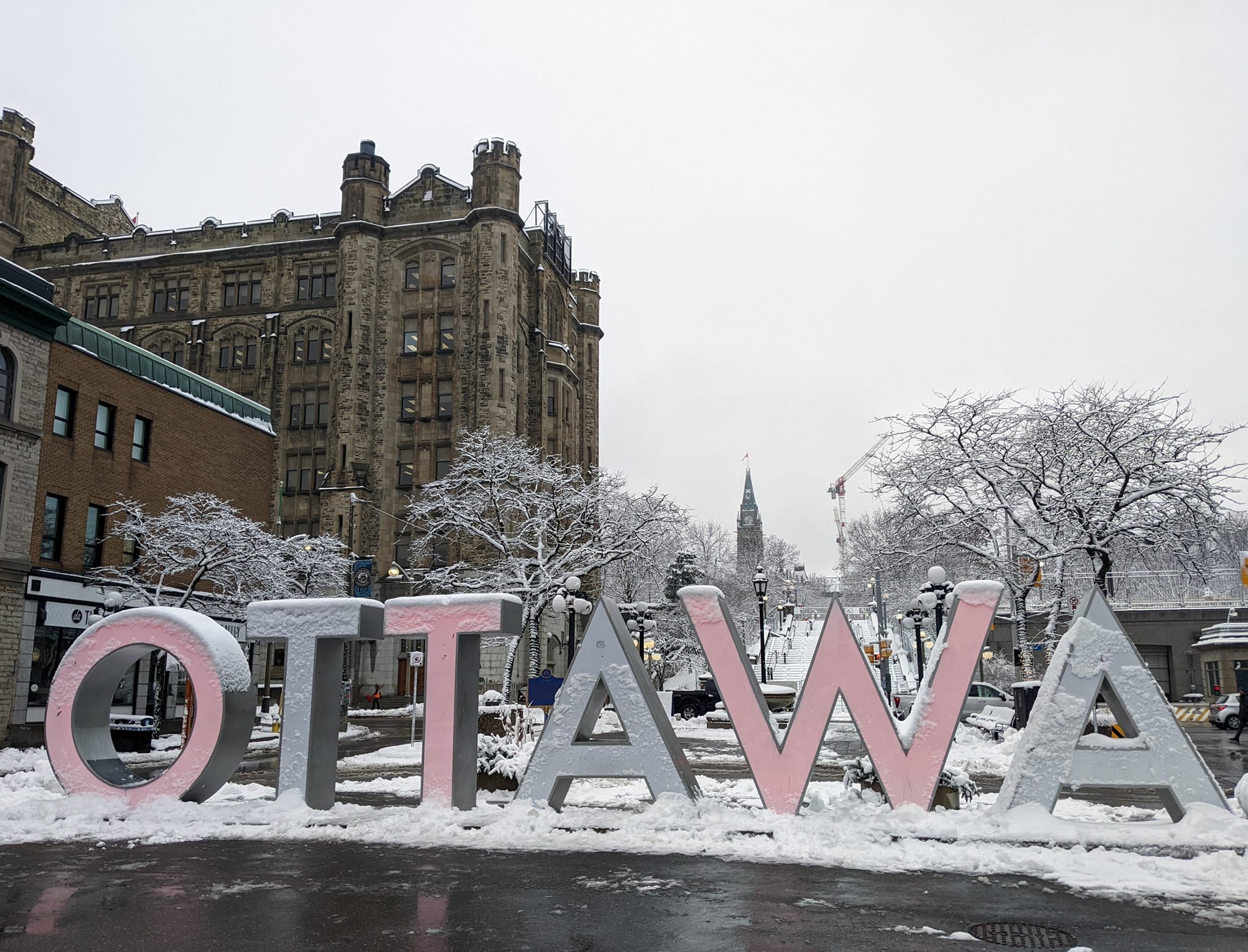
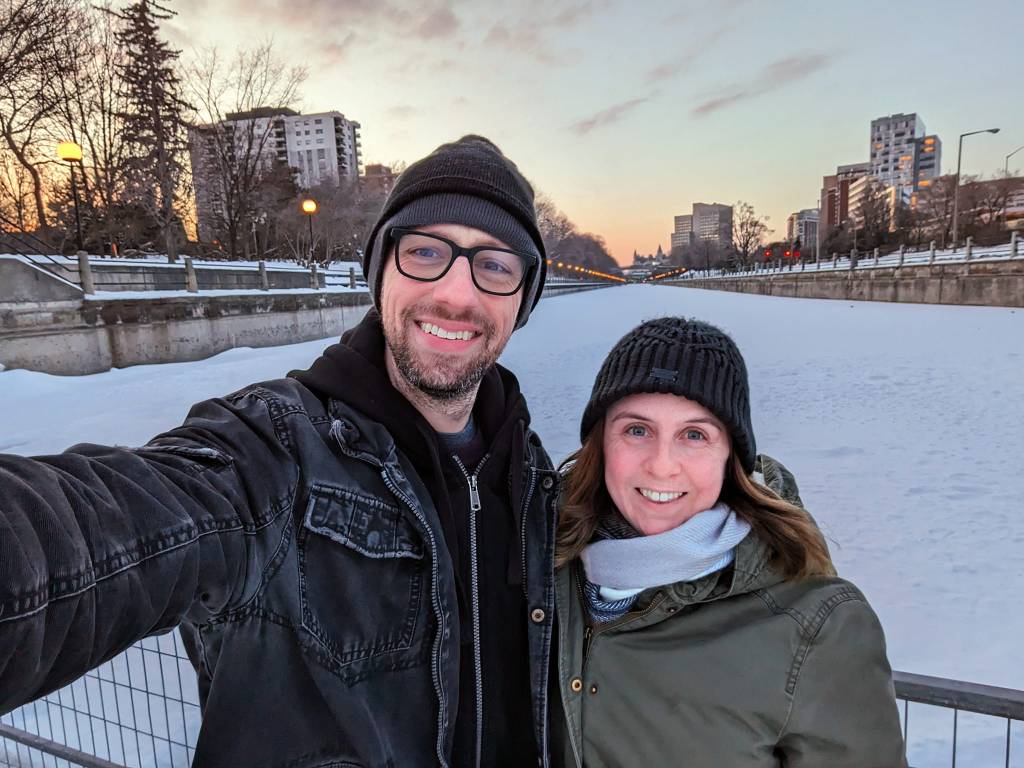
We’re almost halfway through April, and we’ve now officially been living in Québec for six weeks, which is crazy since it feels like the move was just last weekend, but that’s how the first few months always go. We get caught up in a daze of setting things up, collecting documents, making appointments, etc. But luckily, this isn’t our first rodeo! Not only are we completely on top of all our paperwork and logistical tasks, but we’ve also made good progress on our observations list. So how different is Québec from Ottawa? Well, here are the first few things that have caught our attention:

The French

Of course, the absolute first thing on the list has to be the use of French. While Ottawa is fairly bilingual, and we definitely got quite a bit of French exposure there, English was still absolutely the reigning language, sometimes even in Gatineau (which is technically in the province of Quebec). In Québec City, however, we’re not only expected to use French 100% of the time, we’re actually legally required to after six months of living here, which is honestly really great motivation!  
The Salutations

Living in multi-story apartment buildings means we tend to have a lot of neighbors, so we’re usually pretty quick to notice how (and how often) acquaintances interact, like in an elevator, the lobby, the parking garage, etc. In Ottawa, most people kept to themselves or smiled politely in passing, but here in Québec, it’s a steady stream of “bonne journées” and “bonne soirées” no matter how brief your interaction is. It reminds me so much of all the “buenos días” and “buenas tardes” we got in Mexico, and it immediately feels so welcoming!

We’re in a Port City
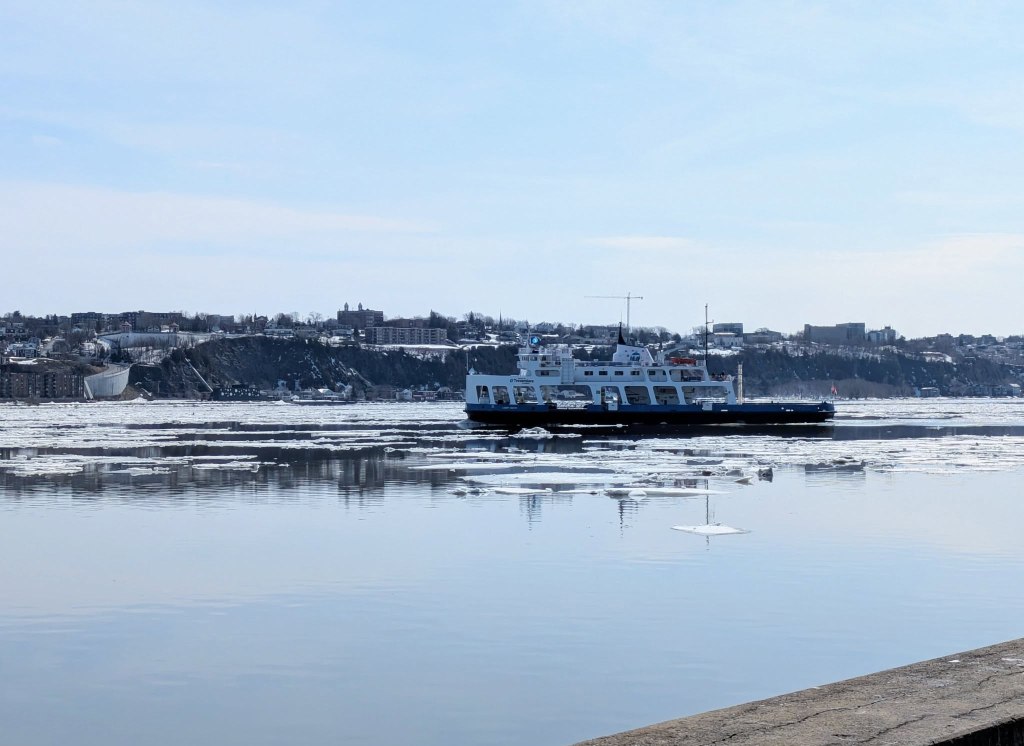
Ottawa is definitely a water city of sorts with two major rivers and a canal running through it, but Québec is even more water-forward. The Québec City icon is fittingly a ship, and with ferries being a common means of transport, international cruise ships docking nearby, and whale watching tours every weekend, we’re not just between rivers anymore, we’re practically seafaring. At least the seagulls make more sense here.

Bizarre Hours

I have no idea if this is a French thing or a Quebec thing or a Québec City thing, but we have noticed that stores, restaurants, and pretty much every kind of business here has bizarre hours. Monday 8:30-4, Tuesday 9-6, Wednesday, Thursday, Friday 10-2…I mean, what? Do they just like to keep us guessing or is there some hidden meaning behind these choices? We definitely need more time to investigate.

Definitely not easy to remember…

Laidback Vibes

This might have more to do with Ottawa being the nation’s capital and less to do with Québec, but we’ve definitely noticed things are a little less official here. Our car registration (ou immatriculation) is printed on regular printer paper rather than fancy cardstock, our lease paperwork was submitted while we were still missing a few things, and we’ve gotten several messages along the lines of “X will be sent to you at a later date”. Definitely feels like a slower pace here in general.

Flashing Green Lights

Another thing we immediately noticed (and subsequently had to google) are the flashing green lights or “advanced greens”. Very often in Québec, you’ll come to a stop light and the green light will be flashing, which we learned means it’s basically both a green light and a green arrow. Apparently, this is common in a lot of Canadian provinces (including Ontario), but we had never seen it or at least not regularly enough to really register a difference.

Pedestrian-friendly

Ottawa is pretty pedestrian-friendly as well, but in Québec (at least downtown) the crosswalks are set up to allow for regular double crossing. Instead of waiting for the lights to change and basically taking your turn to cross when the flow of traffic changes direction, cars will be stopped in all directions allowing people to cross diagonally if they want/need. This and the no-touch crossing sensors make this particular pedestrian so happy!

Vestiges from France

I didn’t know how else to label this one, but smoking is much more common here. And by smoking, I mean cigarettes. We went from smelling a lot of marijuana in Ottawa to smelling a lot of cigarettes in Québec, and I can’t help but feel the cultural influences in that.   

Drinking Culture

In a similar vein, Ontario seemed pretty strict when it came to alcohol sales/consumption. It was rare to see alcohol (even beer and wine) sold in stores, but in Quebec, that’s the norm. BYOB is also more frequent here, and it’s custom to bring wine to a park for a picnic.

Food Culture

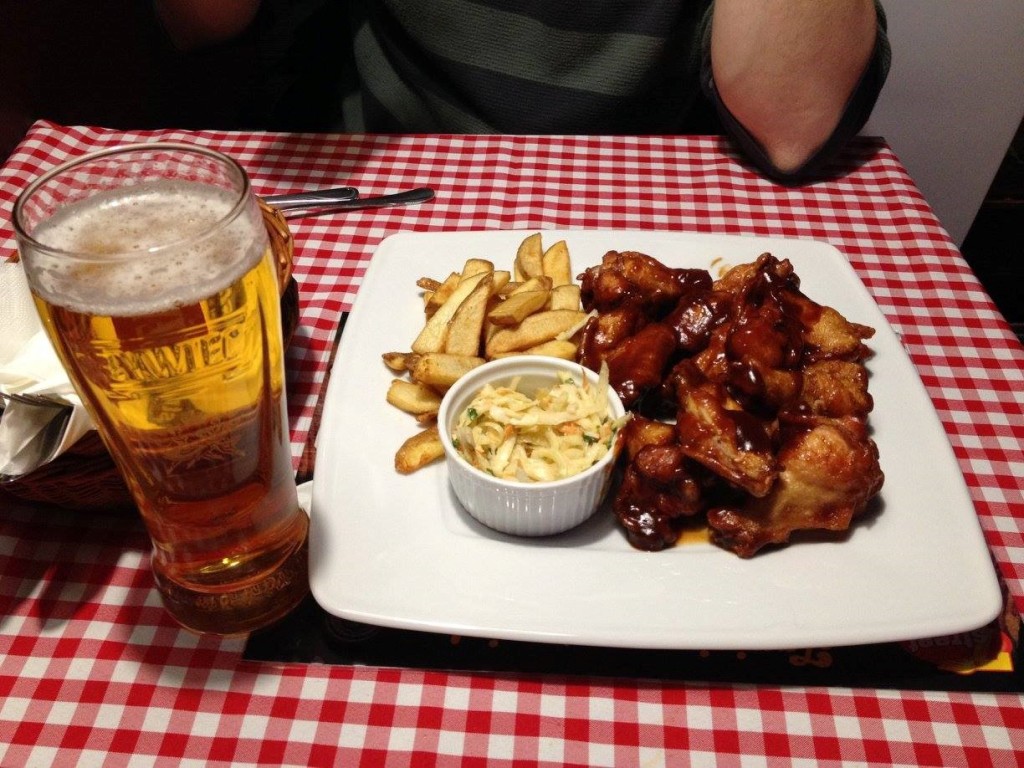
We’ve also noticed a lot differences when it comes to food. The groceries here are overall cheaper, yet the selection of “fancy” food is definitely wider. There are like three types of caviar sold at the grocery store right next to our building, and if you wanted to try each type of cheese sold there, you’d need a few years. Restaurants here also seem to be a bit fancier – for example, there are fewer fast-casual options than in Ottawa, but way more multi-course menus.  
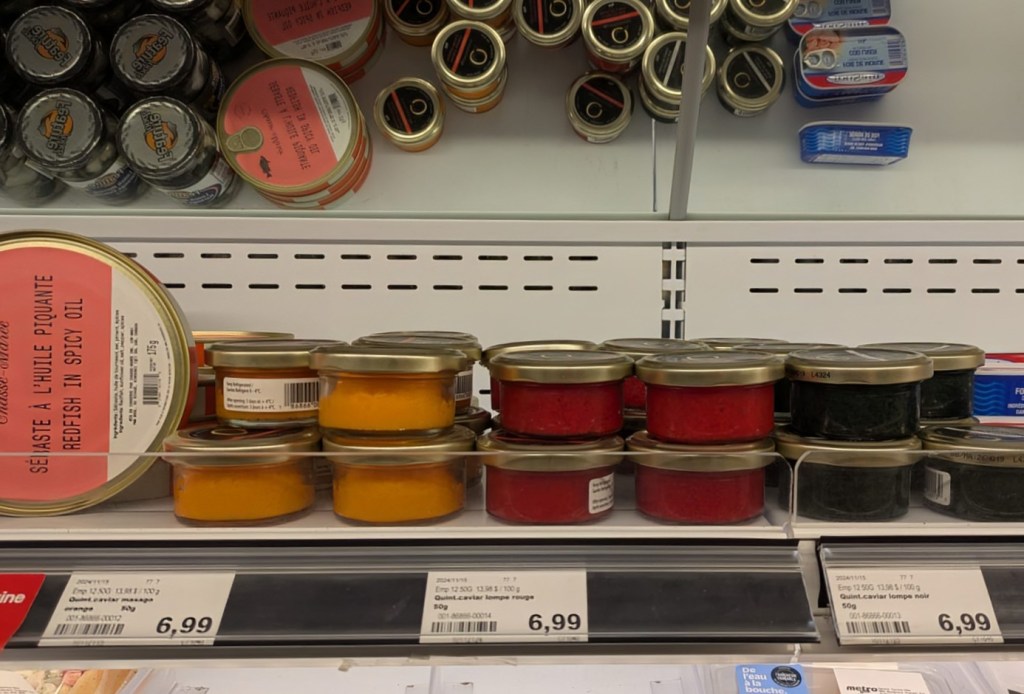
Still a hard “no” from me though.

Louder

We lived downtown in both cities, and we’re used to hearing a fair amount of shouting, singing, and laughing (especially on the weekends), but I think Québécois voices are literally just louder. Now we can hear the actual words being said, and even the volume of regular conversations here seems to be louder than what we grew accustomed to in Ottawa. Probably still not as loud as our country of origin, but a noticeable difference from the last two years nonetheless.

Colder, Windier, & More Humid

We had our suspicions about the weather being more extreme in Québec. I mean, we are further north and east, both of which usually get hit pretty hard, but we kind of thought we’d need a few months before we noticed if it was really much different. Turns out, we didn’t need long at all. The added humidity and constant wind means that the same temperature feels quite a bit colder. We keep seeing temperatures slightly above freezing, and then step outside only to realize that the real feel is significantly lower. Damp, windy cold is definitely tougher.

Snow-ready

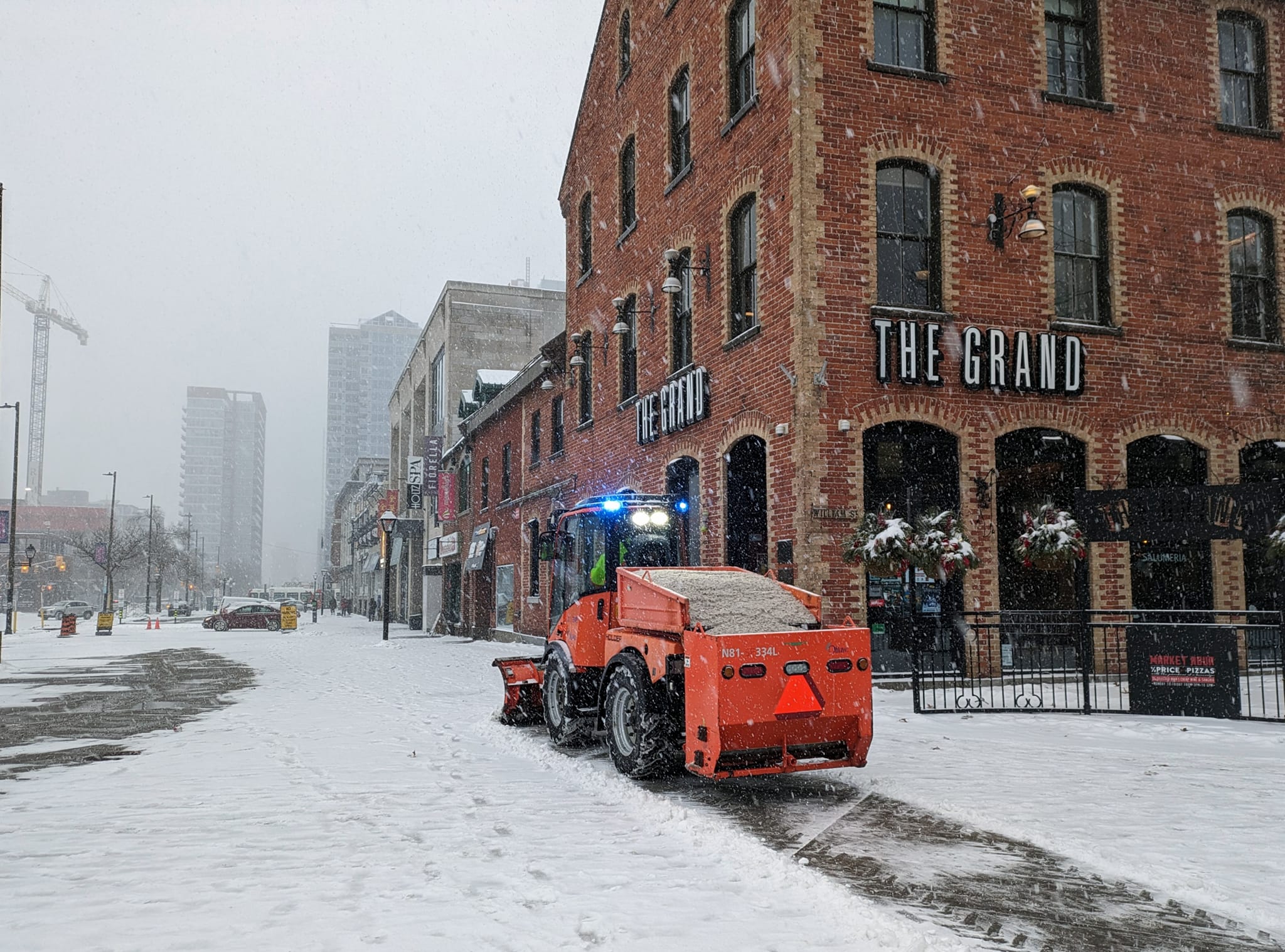
Of course, both Ottawa and Québec are great at handling large amounts of snow, but it seems that they tackle the problem in different ways. Ottawa LOVES salt. The city and its inhabitants go hard on salting everything. Québec uses a mix of salt and sand, meaning that things are a bit slushier here. And maybe for that reason, it’s really common for buildings and houses here to put up tents in their driveways/entryways to keep the slush (and additional shoveling) at bay.

So that’s what we have on our list so far, but as usual, we plan to keep learning and sharing as we go. I’m sure by now it’s pretty apparent that these little differences are one of our favorite things about moving to a new place. Even one province over, there are just so many things to observe! How cool is that?
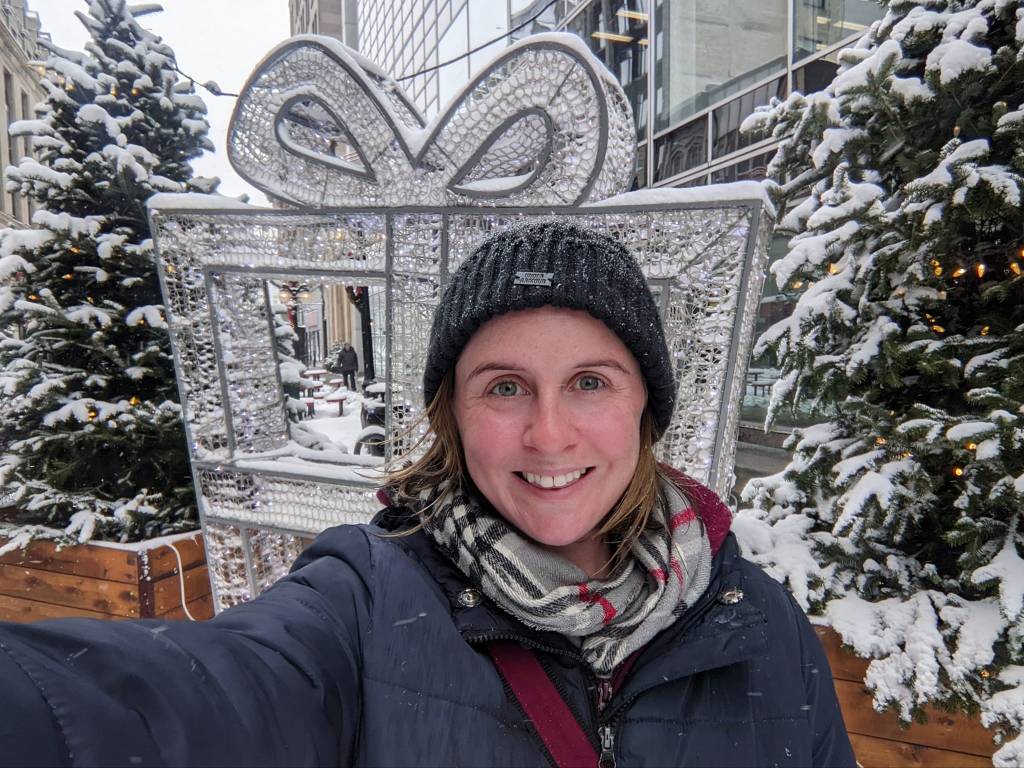
Winter is Coming (Again)

Ah, December. The pinnacle of the holiday season, the last month of the year, and the official start of winter – yay! Last winter was our first in Canada, and we gleaned so much information. For example, we know that the first snow Ottawa had last year was on October 30th, and the last snow of the season was on April 24th. The coldest day was January 19th at -20°C (approximately -5°F), but overall, it was really a very mild winter. I, personally, hope this year we get a lot more snow and a much longer stretch of extremely low temperatures. How else will I put all our new northern climate knowledge to the test? Knowledge like:

Preparation is Key

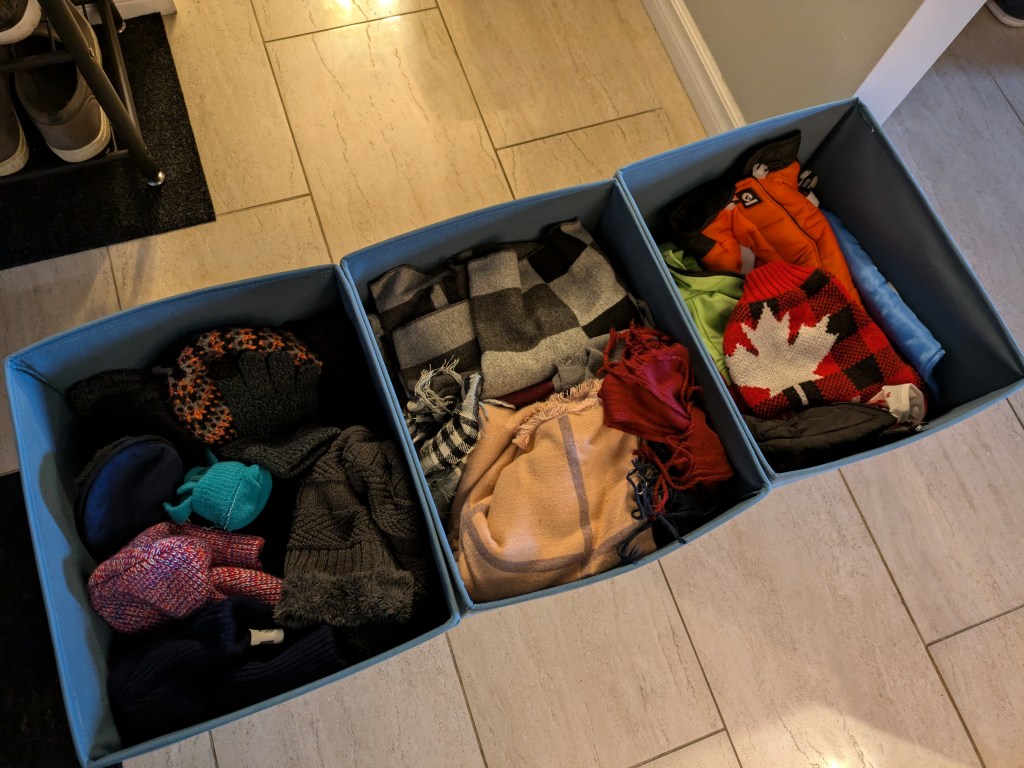
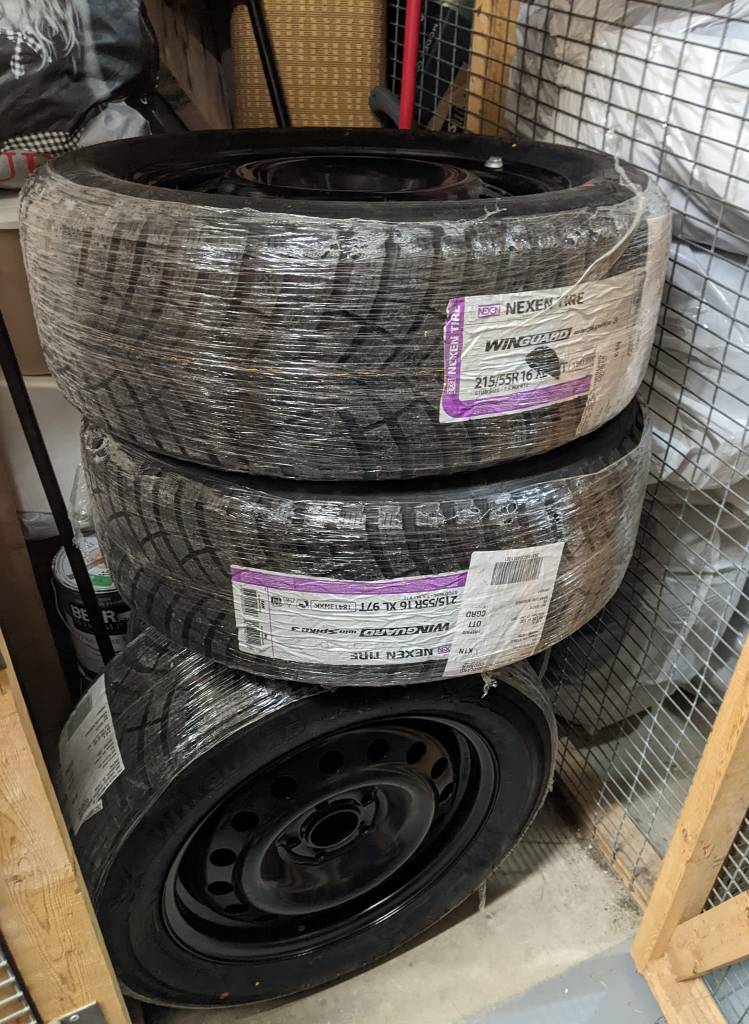
One of the first surprises we encountered last winter was just how much preparation both the city and its inhabitants have to do before winter. Everyone started putting out salt chests and snow markers well before the first snowstorm. Businesses added tents and flaps to entranceways; boot trays and coat racks were everywhere, and we even saw insulated porta-potties at nearby construction sites. For our part, we were focused on acquiring all the right winter clothing, which I’m happy to say was well worth whatever we paid for it all! We also had to buy quite a few car accessories, such as shovels, scrapers, sand, winter tires, and non-freezing windshield wiper fluid. This time around, it has been less buying and more restocking, but still, the preparation really makes for a smoother transition.

Everything Takes a Little Longer

So many layers!

Even after all the preparation was taken care of, we were still surprised by how much longer literally everything takes in winter! Getting dressed, lacing up boots multiple times a day, warming up the car, walking carefully on the ice – it all adds up like we couldn’t believe! Maybe this year I’ll time how long it takes to get the three of us dressed and ready to go outside because I’d guess it’s an extra 10-15 minutes every time. The other time-suck that I didn’t even think about prior to having such long winters was how much more laundry we have. When you’re wearing so many more layers every day, it really turns into a mountain of laundry after just a couple of days.

Winter is Kinda Messy

This is why Canada is shoes off.

Having only lived in northern climates as a child (and/or for short periods of time), I was completely unaware of just how messy snowy winters can be. Everyone walks inside constantly dripping on the floor – the floors of restaurants, our building’s lobby, and worst of all, the entryway of our apartment. It didn’t take long for me to put an extra mat and towels by the door (yay, more laundry), but it doesn’t matter because there’s no containing it all. And you might be thinking, “hey, no big deal, water dries”, which is true, except this isn’t just water. It’s salted, which means everything gets a nice crusty white layer of salt even after it’s dry. The salt and sludge obviously got to the car as well, and we ended up having to get a carwash halfway through last winter because we literally couldn’t see out of the windows. I’m pretty sure I could count on one hand the number of times we’ve ever washed our car, and I would have never thought we’d have to wash it in the dead of winter!

There’s Quite a Bit of Extra Work

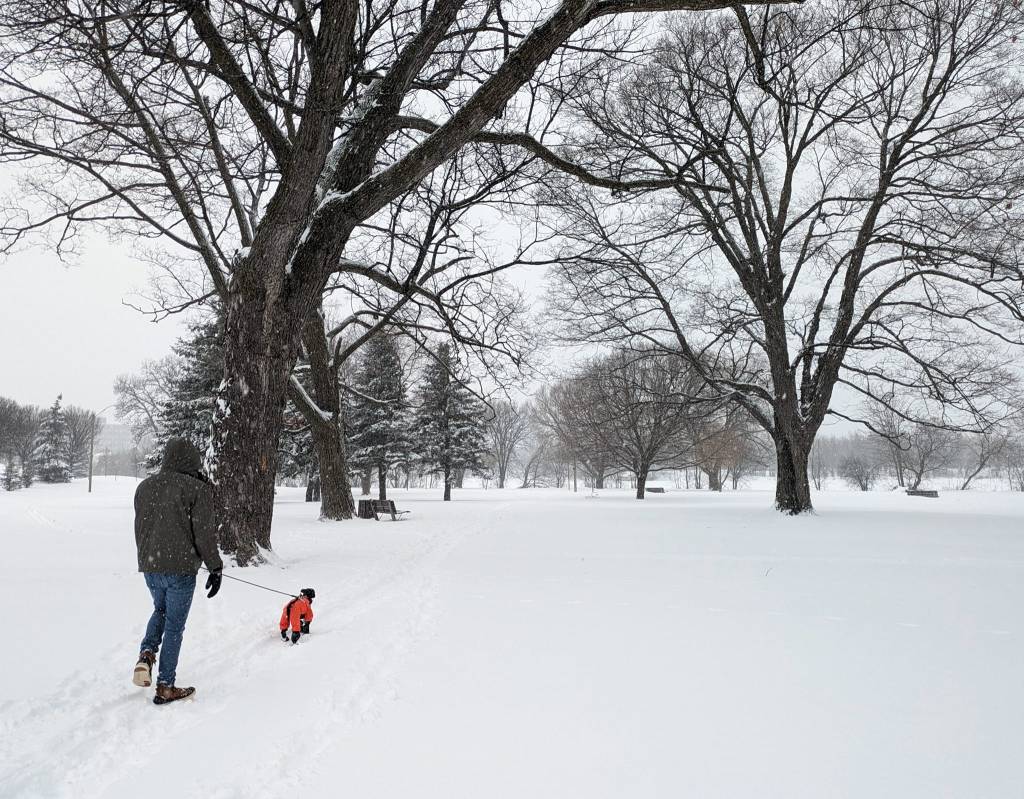
Okay, so we learned you have to prepare in advance, spend more time than usual, and always expect a mess, which, of course, requires some extra work, but the amount of extra work really kept surprising us! Scrape this, shovel that, clear a path for the dog to get to the “grass” because the snow walls are taller than she is! On and on it goes! Jenn, too, has to put a bit more effort into her daily tasks. She has to endure the multiple layers of clothing, scale snowdrifts when looking for a place to pee, and get wiped down whenever she comes back inside – all to her chagrin. On the bright side, I do feel like we still meet our exercise quotas because walking in the snow and scraping ice are definitely high calorie-burning activities!

So Many New Tricks to Learn

Another huge positive is that we developed a whole new set of skills. The best way to stomp excess snow off your boots? We know it. The best way to layer for easy transitioning between indoors and out? We’ve got it down. We’re also now very attuned to the sounds of the snow plows, which comes in handy, and I’m very happy to report that I didn’t fall on the ice even once last year (which I cannot say about our first Polish winter). I’d also add that we’re now very good at switching between Fahrenheit and Celsius, and we’re pretty much experts in interpreting the various weather alerts and winter vocabulary, regardless of the source. If you want to know more about the difference between hail, freezing rain, and sleet, I got you fam.

Lots of Surprises

All in all, I think we took everything pretty well in stride last year, but there were still a few things that we just didn’t believe until we experienced them ourselves. For example, our neighbors told us to watch out for the sunny days because they’re often the coldest, and wow, they were absolutely right! Apparently, clouds signal warmer temperatures – who knew?! We were also extremely surprised by how quick and easy it was to do some of the winter challenges, like freezing ramen noodles in mid-air. It took less than ten minutes! Another thing we didn’t think much about was how gas mileage would be affected, nor did we think we’d even notice if it was. Spoiler, we absolutely did. And perhaps most surprisingly, it didn’t take long at all for 0°C (32°F) to not really feel all that cold. After a week at -10°C (15°F), hovering right around freezing felt downright balmy.

Luckily, It’s Incredibly Fun and Beautiful!

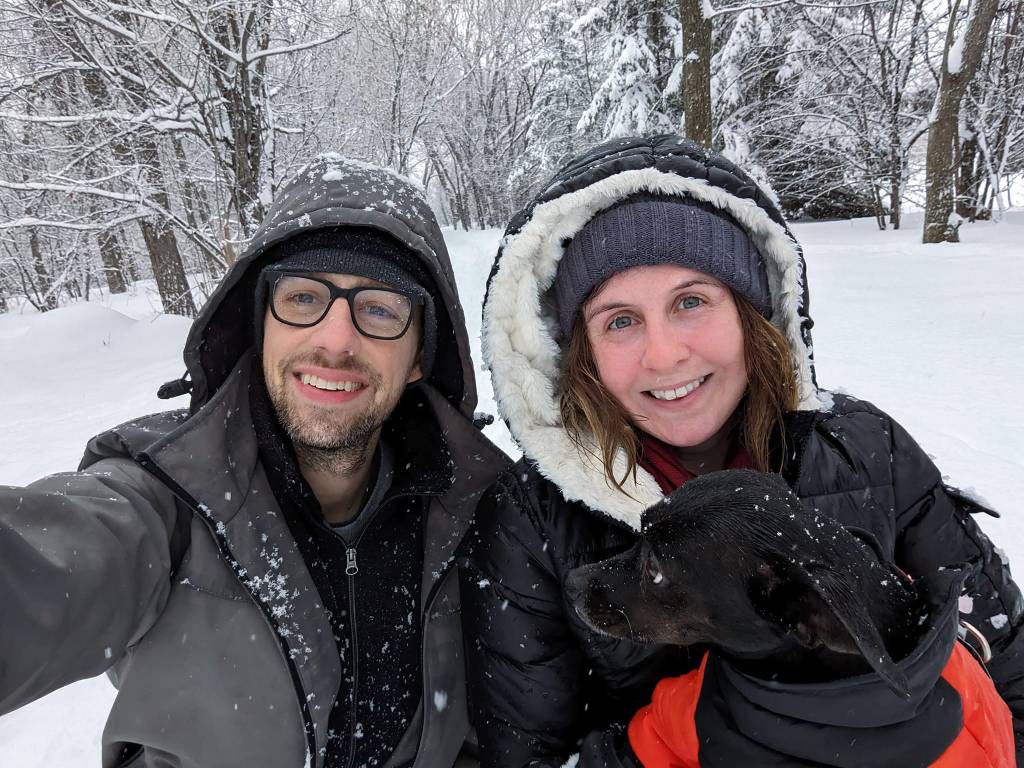
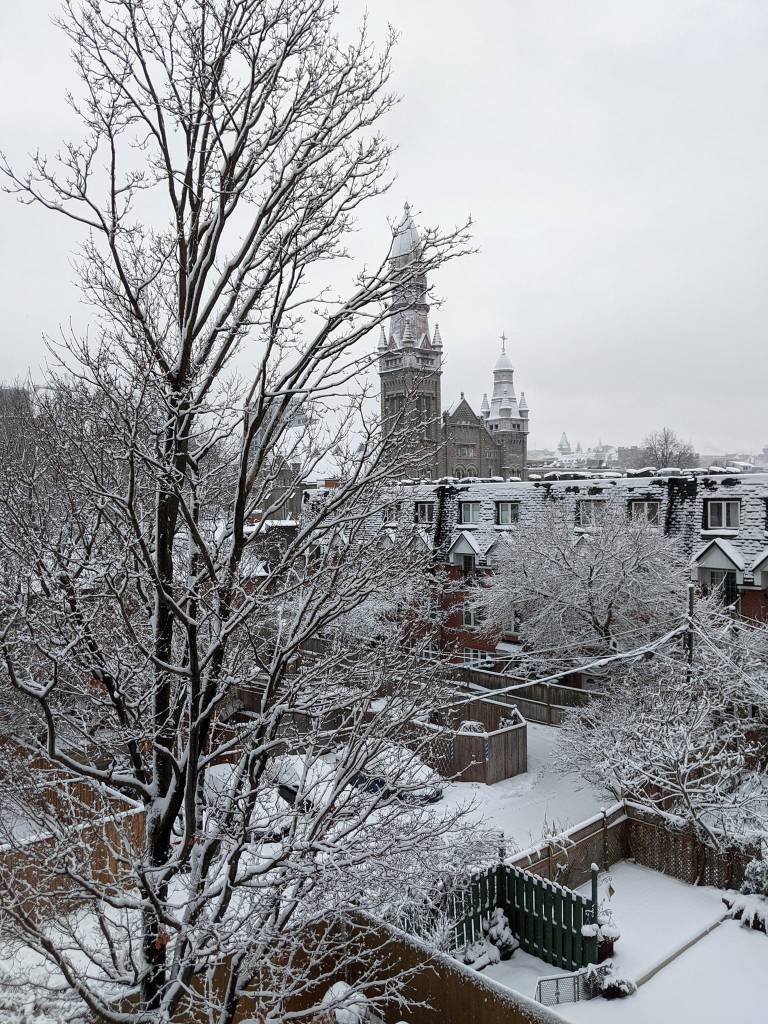
I know most people reading this will say things like “that’s why I hate winter” or “I never want to live somewhere like that”, but even with these added challenges, we had an absolute blast last winter and are so eager to do it all again (hopefully just a little more efficiently this time). Winter is definitely still my favorite season even if it does require a bit more effort up here. In fact, I’d say we actually enjoyed it more because of those extra efforts. Ultimately, it was fun to slow down, get a little messy, and learn a plethora of new things. For me, winters like these are so fun and so beautiful that I quickly forget about any negatives. So, who wants to come visit us in January and see for yourselves? Our winter wonderland will be waiting!

US-Canada Differences Revisited

Years ago, we came to Canada to see if it might be a place we’d want to move to in the future. During that month-long trip, we noticed many differences between Canada and the US, which ultimately piqued our interest enough to start the immigration paperwork. Of course, we had no idea that we’d be derailed by a pandemic and end up in Mexico for a few years first; alas, we eventually moved to Ottawa and recently celebrated one year of living in this beautiful city!

Quickly becoming honorary Ottawans

As always, the first year in a new place brings about so many fun new challenges and observations, which, of course, we did our best to keep track of! And in honor of our CAnniversary, I thought I’d share some of the most salient differences we’ve experienced as Americans living in Ottawa.

Differences in Administration:

  • One of the very first differences we encountered was when we went to make a copy of the key to our new apartment. They told us it was a “secure key”, which meant they’d have to contact the building’s board to make sure we were on the list of tenants, and thus legally able to copy the key. So thorough!
  • No matter how long we live outside the US, we still struggle with anything other than the month-day-year formula. When I see 10/4, I automatically think October, not my birthday.
  • We were also really confused the first time we looked at an expiration date that said “MA 2024”. Is that March or May?? In Canada, the months are abbreviated JA FE MR AL MA JN JL AU SE OC NO DE to make it work in both English and French.
  • Although we had experienced something like this in other countries, we were still surprised to learn that Canada doesn’t have joint tax filing. Tucker and I had to file separately even though my payment came from the same account his refund will be going to.

Differences in Cars & Driving:

  • After years in Mexico, driving in Canada felt like going back to beginner mode. In fact, there are some things that make us feel like drivers here are not really trusted to make good decisions, like the fact that there are more “no right on red” signs here than we’ve ever seen in our lives.
  • Another immediately obvious difference was the lack of locking clips on the gas pumps. Most gas stations force you to hold the nozzle the whole time you’re pumping (yes, even in -10° weather).
  • Something we’ve long gotten used to, but is still a pretty big US-CAN difference is the use of the metric system here. Our car, which was bought in FL, prominently displays miles per hour, thus we’ve gotten really good at converting on the go.
  • We also were surprised to learn that in some provinces of Canada winter tires are not just recommended, they’re mandatory. We had to provide proof of purchase to our insurance company as well.

Differences in Communication:

  • In our first week in Canada, strangers asked us questions at least 10 times in 10 different places (on the metro, in Canadian Tire, etc.), and it definitely surprised us. It’s common to talk to strangers in the US and Mexico, but to ask for anything other than directions or small talk felt different.
  • Canada (or at least the parts we’ve been to thus far) absolutely loves reservations! A place could be entirely empty at eleven a.m. on a weekday, but when you walk in, they’ll still ask you if you have a reservation. Only recently have I been able to suppress my eyeroll.
  • I’ve already shared some of my favorite Canadian English phrases, but I also have to mention how noticeable the pronunciation of some words is as well. The Canadian “soorry” will forever be engrained in my head!
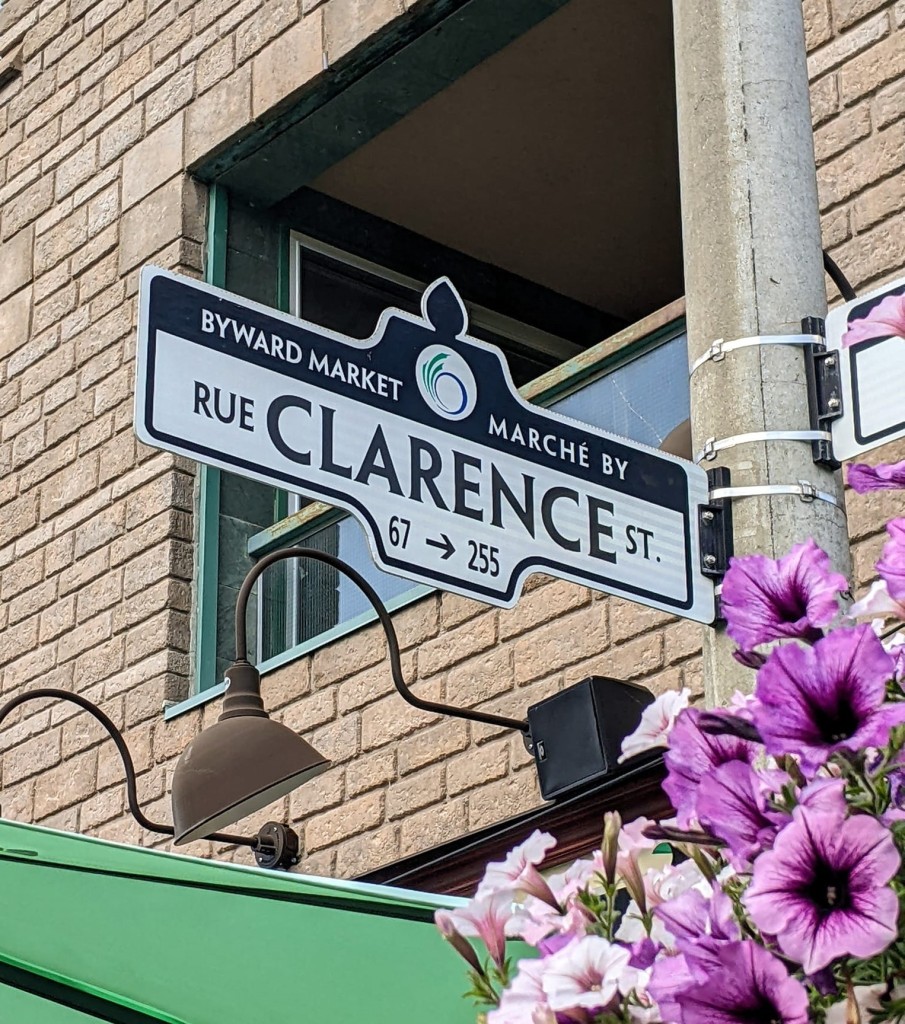
  • And then there’s the bilingual bit. Always seeing street signs like “rue Clarence st” and Coke cans that say “goût original” definitely reminds us we’re not in Kansas anymore.

Differences in Allegiance:  

  • There are probably many Americans who pay attention to celebrities, but I’d bet that even the most Hollywood-centric Americans likely don’t keep close track of where those celebrities are from. Canadians do though. If you so much as mention someone who happens to be from Canada, you can be pretty certain that fact will soon be pointed out.
  • In a difference that feels somewhat related to the previous one, Canadians seem a little touchy when it comes to comparisons with the US. I imagine it must be like growing up with a famous, somewhat annoying older sibling always stealing the spotlight, which anyone would resent.
  • Another clear difference comes from the past. Despite having separated from the UK over 150 years ago, the royal presence is still absolutely felt here. Canada has both a national anthem and a royal anthem (which, you guessed it, is “God Save the King”). Queen Elizabeth II is on several pieces of Canadian currency, and there are plans to get King Charles III on at least one bill by 2027. And some of the most popular streets around us include George, King Edward, and Queen Street. 
  • Of course, the governments are also quite different, but that’s a long, boring topic for another time. For now, I’ll just say that one interesting difference is that the liberal party here is red and the conservative is blue. Not confusing at all…

Differences in Environment:

  • Another surprise early on in our move was when we received a pamphlet explaining all the city recycling rules, dates, exceptions, etc. There are even hazardous waste or electronic waste pick-up days and Christmas tree collection/composting!
  • Something else we noticed last summer and are eager to see if it holds true again was that any time we went to a restaurant with outdoor seating, they automatically assumed that would be our first choice.
  • In general, Canadians are very nonchalant about the weather, whatever it is. Freezing rain isn’t a reason to miss work or a night out with friends, okay? Just give’er!
  • Another difference (that we absolutely love!) is the abundance of seasonal menus. The food, the drinks, the specials all change with the seasons, which has actually given Tucker a reason to go back to places we’ve already been. Hooray!
Just your average day in January

Misc. Differences:

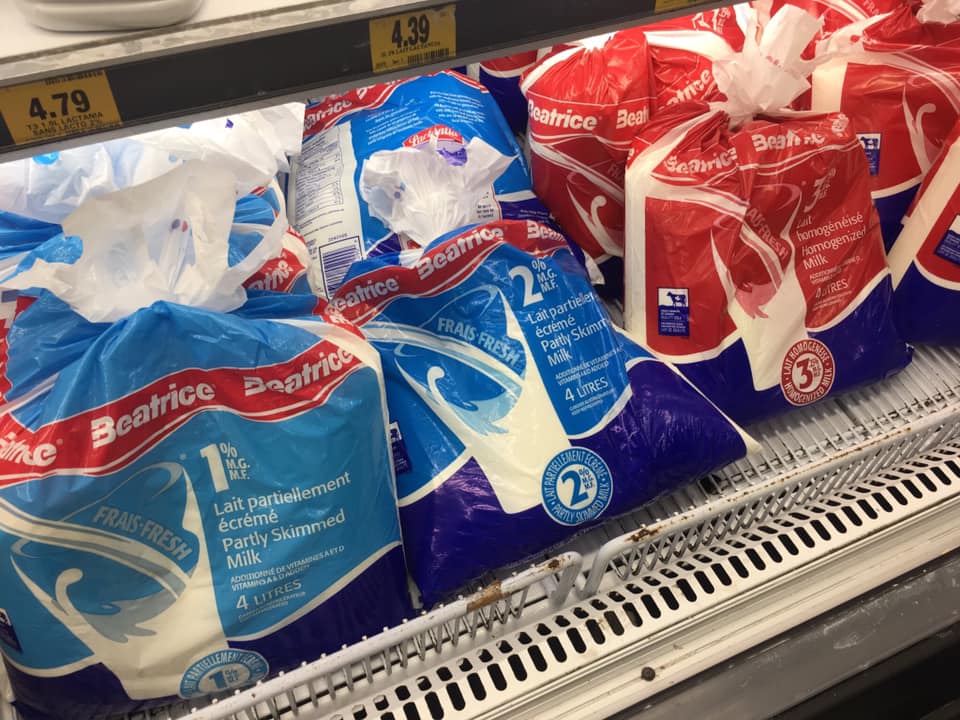
  • Here in Ontario, milk comes in bags. It’s incredibly unwieldy and honestly way too much milk (three 1.33 liter bags), but it’s definitely different.
  • Canada no longer has a penny. And can I just say, I don’t think anyone misses it. It’s time for the US to do the same.
  • Another interesting difference is the fact that the legal drinking age differs by province, and all of them are lower than the US’s standard of 21.
  • And one more difference that must be mentioned, but not in full because that would take much too long is the healthcare. Pretty much every aspect of it is different, but I think our biggest shock so far was when the dentist gave us both free Sonicare toothbrushes.

Bet you didn’t think I’d have that much to say about the differences between Canada and the US! Honestly, just like every other country we’ve lived in, the longer we’re here, the more differences become apparent. But also like our other homes, we’re quickly adapting to our surroundings and carefully choosing our favorite cultural gems to adopt and take with us to our next home. O Canada – thanks for a great first year!

Fun Florida Facts (and Opinions)

83474643_10223450004906599_8576584385193504372_n
Oh, 2020…

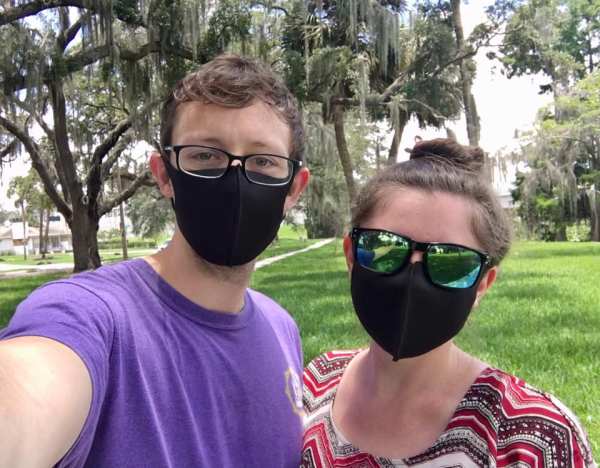
This year has thrown a lot of surprises at the world (and some not-so-surprising events as well really), but for me and Tucker one of the most unexpected occurrences has been our prolonged stay in Florida. We were only meant to be here for a few months as we gathered our lives from various corners of the world in order to head north for the next few years. Of course, with a brief snag in our immigration paperwork followed by a global pandemic, we’ve found ourselves in a holding pattern since March. And while, like everyone else, I’m still struggling to figure out what this all means for our jobs, our future, our society, etc. I’ve also been doing what I do best in a new place: exploring. Even though this exploring has taken place mostly online (and occasionally from a socially acceptable distance), life in Florida has still been quite interesting, and in some ways enlightening. Thus, for this month’s post, I have put together a list of my newly gleaned facts (and opinions) to share about our temporary home.

Cartoon Florida
Hi, guys! Wanna be my friend?

The first thing I have to mention is the fact that everyone seems to have an opinion about Florida. People who have never even been here feel one way or another about it, and plenty of people like to vocalize their opinions (many of which are quite negative) without much regard to facts or feelings. I say this as a non-Floridan, someone who doesn’t have a strong feeling one way or another about this particular state, but sheesh, even I feel bad listening to the many tirades and verbal attacks on the Sunshine State, especially those that can be found online. In our brief time here, I’ve come to view Florida as the state that’s often picked on, but that everyone secretly likes and takes advantage of (like an annoying kid in school that has a really nice pool).

When reflecting on why there are so many negative associations with Florida and Floridians floating around out there, I feel it boils down to two things: 1) the Florida Man and 2) vacationers. Most everyone knows about the Florida Man trope nowadays. A long-lasting meme that has permeated the internet and beyond, it originally referred to the crazy headlines often found in Florida that always begin with “Florida man…” and usually end with his doing something absolutely absurd. But interestingly, one of the first things I learned about the Florida Man origins is that they were sparked by a change in state law. In the 1990’s Florida passed the Sunshine Law, which ensures public access to all government records, including police arrest records. As you can imagine, in 30 years, the spring break capital of the US has racked up quite a few crazy stories, which brings me to my next point.


Vacationers. Probably the first thing we noticed after a few months in Florida was the ebb and flow of the people. Renters in, renters out; snow birds in, snow birds out; spring-breakers in, and (thankfully) spring-breakers out. The state of Florida has approximately 22 million permanent residents, but sees 110 million tourists annually. That’s a lot of YOLOing for any place to deal with. I think I actually first noticed this phenomenon in grocery stores. People in bathing suits, vacation gear (lots of Disney paraphernalia where we are), and a general lack of care for their immediate environment. Many people are here for a short time and their mindset is to live it up; therefore, chaos ensues, sometimes in the form of drunken parties and possible police involvement (which is then publicly documented for all the word to see and share).

86276369_10222086976791748_5512975688493170688_n
Three Sisters Springs

Of course, I completely understand why so many people choose to vacation to Florida. It’s an amazing place for affordable and varied entertainment. We’ve got theme parks all over the place: Disney World, Legoland, Universal Studios, SeaWorld, Busch Gardens, (and for a select clientele) Gatorland. There is also an abundance of parks, lakes, and other natural features like the Everglades, hot springs, swamps, and of course, the many, many beaches. Florida actually has the longest coastline of any of the contiguous states, and the climate (especially in south FL) means beach-going is possible year-round.

Speaking of South Florida, another thing that became immediately clear upon moving here was the presence of three distinct regions. You have North Florida, Central Florida, and Southern Florida, and the people who live (and vacation) in these three places often differ as much as the geography. We’ve heard this said a few times now: the further north you go in Florida, the further South you are. This refers to the fact that northern Florida is very much like Georgia, Alabama, the Carolinas, etc. Demographically, linguistically, socially, north of Ocala is really part of the South. On the other side, you have South Florida which held onto its Spanish roots and still welcomes a large influx of immigrants from Central and South America. The influence can be seen, heard, felt, and tasted as soon as you drive south of Lake Okeechobee. And that leaves Central Florida, which is somewhat a mix of the two and also somewhat the result of many retirees from out of state. Orlando and many other cities in Central Florida are very much like any other major city in the US: professional, progressive, and a tad hipster.

Another part of life in Florida that caught my attention early on was the naming of the coasts. Most likely, at least in part due to tourism, each section of the coastline in Florida has a name and, for lack of a better word, a vibe. You have the Space Coast, which is the location of the Kennedy Space center and where all the rocket launches take place (which we can see from our driveway, btw). You also have the Gold Coast where the big cities (Fort Lauderdale and Miami) and the famous South Beach are located. There’s the Sun Coast with its beautiful sunsets, the Nature Coast with its natural springs and manatees, and even the First Coast, which is where you can find the first and longest continuously inhabited settlement in modern day USA.

FloridaCoastalRegions
I sense another checklist forming…

89857039_10222367888734371_2287005639135723520_n
Castillo de San Marcos

Since our trip to Saint Augustine and the First Cost, I’ve been really interested in Florida’s history and particularly how it differs from that of the colonies. Perhaps most people remember that Florida was first claimed by Spain, which is why we still see so many names like: Boca Raton, Punta Gorda, Buena Vista, etc., but what I (having taken Georgia History, not Florida History, in school) found super interesting was the native American history here. Of course, it now seems quite obvious with place names like: Tallahassee, Kissimmee, and Osceola, but I never gave much thought to the tribes that called Florida home and were actually some of the first to be attacked and displaced. Indeed, the Creek/Seminole tribes, in particular, not only found themselves stuck in the middle of a fight between Britain and Spain during the Seven Years’ War, but went on to challenge the US settlers with what is now known as the Seminole Wars, some of the longest and most expensive in early US history. Historically, Florida has seen a lot, and I don’t think it gets much credit for its important place in US history, let alone world history.

117245765_10223984984120745_7852073839228047751_n
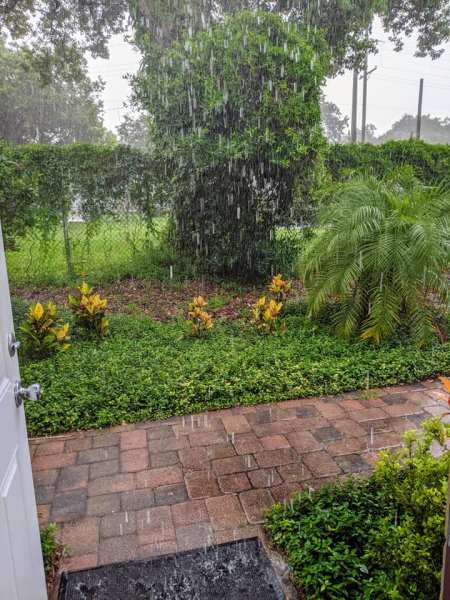
Daily torrential rain

Finally, the last surprising fact I am very pleased to share is about the weather. As cold weather people, Tucker and I were very much dreading our time spent in the humid and, yes, extremely sunny Florida, especially as that time started to stretch into summer. However, I’m happy to report that it’s really not so bad! Florida is really breezy, which certainly helps with the heat, and now that we’re officially in summer, I can say that there’s a bit of a rainy season here meaning the afternoon thunderstorms that happen almost every day also help to cool it down. We’ve both commented that while the warmer temps might last longer, they don’t feel near as oppressive as summer in Atlanta. Plus, the produce here is absolutely amazing! In addition to citrus, Florida produces significant percentages of the country’s tomatoes, watermelons, cucumbers, and sugar cane.

All in all, Florida has been a surprise in many ways for us (including the very exciting news that there is no state income tax in Florida!). Ultimately, our time here has really just been another lesson in finding out how much there is to discover/learn, even in a place you think you already know pretty well. So, what have you learned so far in 2020?

A Bit Different, Eh?

72198834_10220829312750933_5214555038575230976_n
Look how Canadian I am!

So we just spent our first month in Canada, and I can tell you I’ve never been more observant in all my life! Tucker and I are in the process of deciding where we want to live for the next few years, so we’ve been looking into everything from neighborhoods and public transportation options to social interactions and local habits, most recently in Ottawa and Montréal, Canada, but with a few cities in Mexico soon to follow (more about that in a subsequent post, I’m sure). Our reason behind these investigations is that neither of us have actually spent any real time in Canada (or Mexico), and we really just didn’t know what to expect. Would I find it too similar to the US (i.e. boring)? Would Tucker be able to get a job without speaking French or Spanish? What would our lives be like on the whole in any one of these places? To get a clearer picture, we first headed up to Ottawa and Montréal to see what we could discover about life in the Great White North. So far, these are a few things that have stood out to us as uniquely Canadian:

Language Uncertainty Dance

71894432_10220781349271876_8900321738064134144_n
Aka “stop”

Many people know that Canada has two official languages, but what exactly does that look like? Well, to us it seems pretty clear cut on paper: in Québec, French is the default language, and everywhere else, English is the go-to. Therefore, signs, menus, and the like carefully follow provincial lines. However, people are bit more mobile than that, and the lines aren’t always so clear when speaking is involved. For example, Montréal is a very international city with immigrants who speak many different languages, and Ottawa is located half in Ontario and half in Québec. This all led to a bit of a which-language-should-we-use dance between us and everyone we encountered. Hotel staff, grocery store clerks, restaurant servers, and literally everyone we talked to had to make a choice of which language to use with us, and we, in turn, also had to choose.

We determined that provincial lines do play a role in the choice, but there were other factors of consideration as well, like the supposed heritage of the speaker (Francophone or Anglophone), how we appeared (clearly lost or in-the-know), and what situation were we in (ordering Vietnamese food or buying food from an outdoor market). Even our names seemed to be used as an indication; at all the ticket checkpoints I received “merci”s and Tucker got “thank you”s, and the only reason we could come up with is that my name is Danielle. For me, this process was fascinating, and I found myself eavesdropping on anyone and everyone just to note which language they were using and why. When so many people are bilingual the possibilities are truly much more interesting!

How Cold It Really Is

72737195_10220909004063166_1287696045052002304_n
Sometimes I wore my hat AND earmuffs…

Canada is quite far north, of course, but when looking at the lines of latitude, Ottawa and Montréal really aren’t that much above what I consider “normal” cities. Łódź, for example, is significantly closer to the Arctic Circle, which began a line of thought that led us severely astray. Because while the latitudes of these two cities are actually well below some well-known (and might I add, temperate) western counterparts like Vancouver or Seattle, their climates are simply different. There’s no large body of water to curb the freezing temperatures, and evidently the “Polar Vortex” is a real thing that starts much earlier than I had anticipated. In short, Ottawa is one of the top ten coldest national capitals in the world, and I didn’t bring my big jacket. Oopsies.

Honestly, even with my big jacket I doubt my small collection of outerwear is actually going to be enough for winter in Canada. Taking a look at some of the clothing stores here, we’ve seen winter gear we didn’t even know existed. Linings for boots, glove extensions, and every possible manner of covering your ears and face. The terminology is also a bit different, as I had to google the word “toque” shortly after our arrival. It’s actually pretty impressive to see the flexibility of clothing in action. Even in October, the temperatures can get below freezing, especially at night, but during the day it can get up to the 60’s. It’s amazing to watch the various pieces come off and go back on throughout the day, sometimes sparked solely because the sun came out from behind the clouds. I vaguely remember the vast temperatures swings of Chicago, but clearly I have yet to master dressing for them.

An Abundance of Animals

72753578_10220909004223170_1004007047059996672_n
Polite squirrels as well!

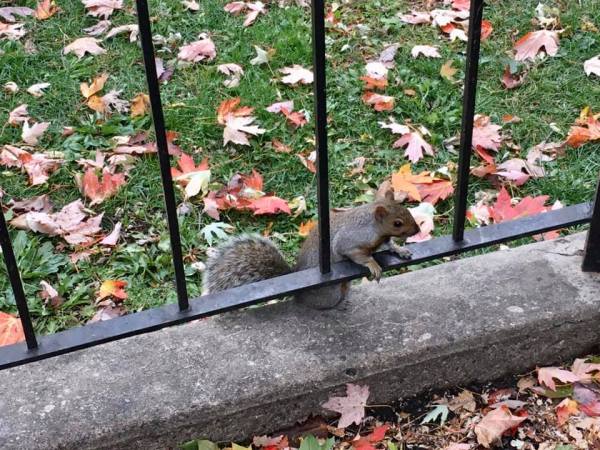
With our new-found knowledge of how cold and long “winter” in Canada can be, we definitely found the amount of fauna out and about to be rather odd. Immediately upon arrival to Ottawa (which I will remind you is 200kms from the closest Great Lake and almost 500kms away from the ocean) we were met with the loud, annoying cries of seagulls. Seagulls? There are no beaches here! Sure there are rivers, but it’s cold! What’s with the seagulls? In our first week we also came across squirrels of all colors, bunnies, chipmunks, and so so many birds. And that was in the city proper, skyscrapers well in view! It seems nature really is on your doorstep up here in the North. However, if I see a moose or a bear lumbering down Sparks Street, I might just lose my mind.

French/British Combo

IMG_6633
Her majesty

Another surprising insight into life in Canada is that it seems to be less of an American/French fusion and more of a British/French fusion. As a native inhabitant of a former British colony myself, I just assumed all former colonies were quite distinct from Old Blighty, but evidently there’s more of a scale of “Britishness” than I thought. Here in Canada, we have the Queen on the currency, a Prime Minister and Parliament, Celsius and the metric system, traditional tea and pub cultures, and the distinctive, yet eccentric spelling system with all those extra vowels and not enough “z”s. Additionally, as Americans, especially Americans coming from China, we’ve also found an extraordinary penchant for forming lines in Canada. At the train station we wrapped around the entire hall forming two lines to match the two platforms below the station. It seemed very odd to us, inefficient even, but soon we realized lines are a way of life here; basically if it’s a norm at Timmy’s, it’s a norm everywhere.

72112720_10220743900855689_5770965290108059648_n
Ah, Timmy’s

Interesting Fusions

72463415_10220908992302872_8469820978254315520_n
Beyond delicious!

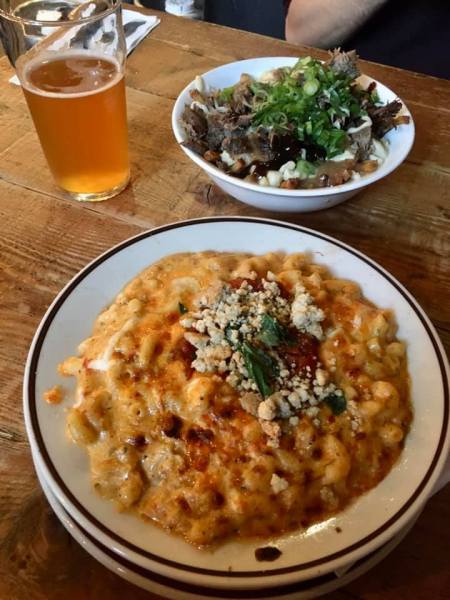
Speaking of combos, we’ve also seen an incredible amount of interesting food fusions in Canada. Early on in our stay I ordered “pierogi eggrolls”, and even after eating them, I couldn’t quite wrap my head around the concept. Canada has seen its fair share of immigration throughout its history, and we can definitely see how that has affected the restaurants and their signature dishes throughout the country. We’ve had tandoori nachos, a turducken club, bruschetta mac and cheese, and many other colorful combinations. It seems even their own, native poutine (which is traditionally French fries covered in cheese curds and thick gravy) is also open to interpretation. We’ve tried jalapeño poutine, butter chicken poutine, and Peking duck poutine just to name a few! Stores and other vendors also seem to cater to this preference for food creativity and variety. We’ve seen ph broths and żurek mixes in grocery stores, Italian sausages served in French bread by street vendors, and vending machines with American, British, and European candy choices.

The Use of “Washroom”

This might be a small thing, but I couldn’t get over the Canadian use of the word “washroom”. I’ve lived in several different cities, on different continents even, thus I have heard many things used to describe the place we go to “relieve ourselves”. I’ve heard bathroom, restroom, toilet, WC, lavatory, powder room, even “the john”, but “washroom” is not one I would have listed as a common occurrence. Until Canada, that is. Here it’s virtually the only word they use! It’s on all the signs, it’s what people say, I was even corrected once when I asked about the location of the “restroom”. They looked a bit confused and clarified with, “the washroom?” Which I then went off in search of, quietly contemplating my accent, word choice, and place in the world.


73052411_10220861734961468_4555528384729317376_n
I bet they have the nicest washrooms in there.

Also of interest on the topic of washrooms in Canada is that they all seem to be located in the basement. At the majority of restaurants and pubs we visited, the washrooms were located under the establishment, often down a very long, steep staircase. I tried to look into why that is so common here, and the best I could find is that it had something to do with the building codes at the time of construction. Whatever the reason, I just hope they keep them well-heated in winter. Thankfully, even if the rooms themselves end up being a bit drafty, at least the hot water in Canada is on point. The tap water, we’ve noticed, goes from ice cold to absolutely steaming hot in about 5 seconds – in a pinch, I actually brewed my tea with the sink water in Montréal. Canada really does seem to love their extremes!

And, For Sure, the Politeness

71598087_10220781345631785_888126007620403200_n
We even got compliments on our photos!

Finally, the last Canadianism that stuck out to us was, indeed, the politeness that perhaps they are so well known for outside of Canada. At first, we noticed all the “no worries” and “of course”s and other pleasant responses to our many “thank you”s. There wasn’t even that tone of you’re-a-bit-of-an-idiot-and-I’m-only-helping-you-because-it’s-my-job sort of thing that’s so common Stateside. We also heard a lot of back channeling or the words you use when showing someone you’re paying attention. Things like “for sure, for sure”, “oh yeah, definitely”, and “wow, great”. There also seemed to be a great deal more small talk. People more frequently asked questions or shared information than what we have grown used to in the US. For example, when our bus cards didn’t work on the STO line, the bus driver took a few minutes to explain to us how the complicated inter-provincial system worked. He then let us ride for free – so nice! We’ve also been given quite a few tips for places to go and things to do, after various locals asked and discovered that we’re not Canadian. These politeness features have definitely made the big cities of Canada feel not quite as big.

71856286_10220743902535731_7367851035752136704_n
O Canada!

So these are some of the most obvious things that immediately reminded us that we’re not in the US; however, I have a feeling there will be many more discoveries like this in the future, should we come back for a longer stint. Every country, even long-time neighboring countries with similar back stories have their little quirks. I can’t wait to find out more about what makes Canada, Canada!


Cultures in Comparison

Not surprisingly, I am constantly asked about the differences and similarities between Poland and the United States. Luckily, Tucker and I are observing these every day and absolutely love to talk about them! One of my favorite things about traveling is finding out how different people live; there are so many different ways of thinking, solving problems, and simply surviving everyday life. It’s been amazing to get a more in-depth view of some of the differences between Poland and the United States. In my first post, back in October, I gave my first impressions of Poland and its people, which undoubtedly contained some of the differences that were immediately noticeable. However, we’ve now been here a few more months, and have logged many more observation hours. Here is my list of some notable (and fun) comparisons:

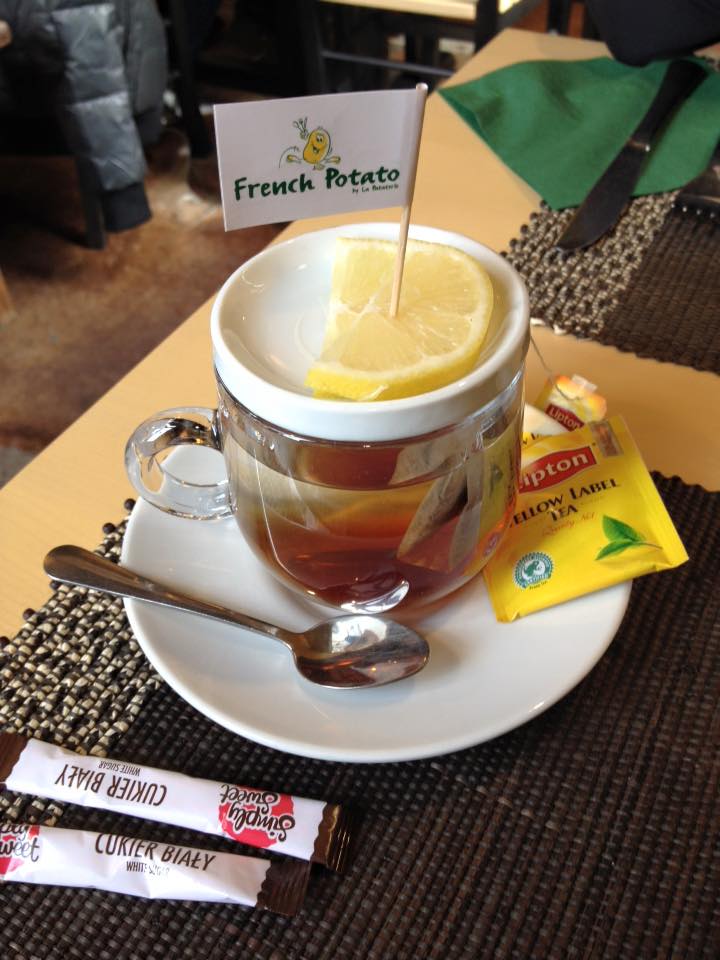
There’s always time for a cup of tea!

Timing, scheduling, and decision-making: There is a Polish proverb that says something like “A ‘must’ is in Russia. In Poland, we do what we want.” I rather like this proverb and feel like it is a good representation of the pace set in Poland. In Lodz the public transportation sort of runs on time, meetings start close to their proposed times, and all necessary decisions are made eventually. The pace is a bit slower (quite literally in fact, we’ve seen several tractors riding on city roads), and procrastination is seen as a natural state of human existence. In my experience here, it has been common to have numerous meetings or email exchanges before a solution or a decision is even close to being presented. Poles like to take their time considering all the options and make absolutely sure everyone gets to have a say in whatever the choice may be. That, and it’s always nice to push the responsibility off on someone else! Another difference would be the mealtimes of Poland. Breakfast is about the same – 7-8am (maybe a little earlier because the Polish working hours are a bit ahead of the US standard 9-5). However, lunch or “obiad” is not until around 3-5pm. To me, that’s a little too much like dinner, which in Poland is much later – around 8-9pm. This difference has often resulted in Tucker and I dining in empty restaurants simply because we go to lunch at noon and dinner around 6pm. But if you are wondering how Poles possibly make it from 7am to 4pm without any food, it should be mentioned that they regularly partake in second breakfast “drugie śniadanie”, which I think the US needs to adopt right away.

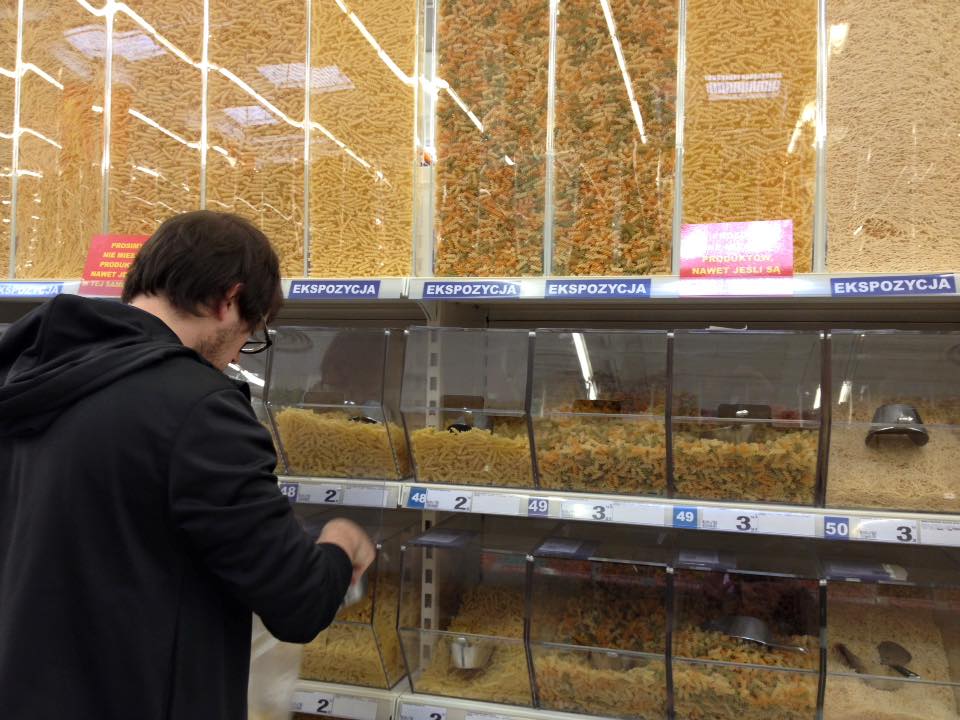
Look at that variety though!

Food, cooking, and ingredients: The food in Poland is delicious. Restaurants are plentiful, groceries are fresh, and everything is cheap (compared to the US). However, if you aren’t going out, then you have some work to do. Poles typically prefer to make their own everything: salad dressing, soups, desserts, wine, you name it. And while this is extremely cost effective and probably tastier, it is also time-consuming and very different from my ready-made/instant meal life. I intensely miss macaroni and cheese from a box, pre-made Caesar dressing, and cans of soup (particularly Campbell’s). In Poland, some popular foods to eat at home are sausage, ham, bread, dumplings, pickles, coleslaw, sauerkraut, and apples. Especially, apples. Poland is one of the world’s largest apple producers. In fact, quite a bit of the produce you can buy in groceries stores here is grown locally – that’s why it is so fresh and cheap! It’s also generally healthier than what we buy in the US. Poles pride themselves on the simpleness of their products. They like the fact that their bread only has three ingredients total, as opposed to the many preservatives American companies add. Although I will say that without those preservatives (and because of our tiny refrigerator), we are having to shop for groceries much more frequently than we ever did back home – about every 4 days.

Oh yeah, beer is also typically cheaper than water at restaurants!
Blending right in!

Weather and dressing for winter: Right now, it is pretty darn cold in Poland, and we have (quite regularly) been getting significant amounts of snow. I thought I was prepared for this. Obviously places in the US deal with these winter-y things as well, but coming from Atlanta, we are experiencing some differences. For one, winter tires exist, and if you don’t have them, you are a nuisance. We (thankfully) use public transportation, but I have heard Poles on numerous occasions complaining about people who are driving on summer tires! Idiots! (Their words, not mine). Another difference is the amount of time it takes me to enter or exit a building. I generally wear a jacket, a sweatshirt, a scarf, a hat, and gloves, which I feel is quite normal for the current weather conditions outside, but absolutely unbearable inside, right? Not really. In Poland, I find that I am one of the only ones who walks indoors and must immediately shed my many layers. Here, I see people shopping in their coats, sitting in class in their coats, etc. and somehow, they don’t sweat to death! Side note – if you can’t constantly wear your coat or don’t want to struggle as I do, juggling all my outerwear in my hands, every building comes equipped with a coat check. It feels a little like going to a gala or something because you walk in, they take your coat, and give you a ticket – every day. Pretty fancy. The last difference I’ll mention here is the scarf style of Poland. In the US and Norway my scarves totally fit in. They are not too bulky, nor very long, but they cover my neck and keep me warm. In Poland, people wear scarves that could function as blankets.

People – names, attitudes, and diversity: In Poland, names, in general, are quite long. For example, we live off a street called Piłsudskiego and most of my students have last names like Wojciechowski or Gruszczyńska (not to mention the infamous Brzęczyszczykiewicz). Eventually, you hear the names enough times and can imitate them pretty well, but I’ll admit to practicing in my head prior to having to use them. Another interesting name difference in Poland is that there are rarely repeated surnames. Out of my 85+ students I only have one duplicate. However, the first names here are much less diverse – I swear, there are like 9 Martas in my classes. In an earlier post I described Poles as being hardworking and hospitable, and to me these still hold true. However, now I would probably add pessimistic to the list. Poles complain a lot and generally have a bleak outlook on life. This is sort of good news for me because I feel right at home and can now use the excuse “it’s in my blood” whenever anyone calls me on it. Although I must say, sometimes, I feel really American when I catch myself smiling at a stranger. Awkward. Lastly, a word on diversity in Poland: there isn’t much. Luke (another Fulbrighter), Tucker, and I had an amusing conversation once when someone asked about “black eyes”, which was heard as “black guys”. After which, it was decided that black eyes were indeed more common than black guys in Poland. There are definitely some international students at the university, but overall Poland is very white.

The bill usually comes in a cute little box!

Language and speaking: As a linguist, I know all languages are roughly equal in difficulty – some have super complex tense systems, others have difficult/irregular pronunciation, etc. However, as a learner, Polish seems impossible to master! Even Poles feel sorry for me trying to learn the complex case system, three genders, and ridiculous pronunciation. I could really go on for days about the differences in English and Polish grammar, but I know many people would be a little bored with those comparisons. However, some of the most adorable language-related differences are actually vocabulary-based. For example, “capital letters” are called “duże litery”, which literally means “big letters”, and I can’t help but feel like a 5-year-old when asking if I should use a big letter or a little letter. Another cute difference is when you are asked to enter your PIN at a restaurant to pay by card (yes, they always come to the table with the card-reader, and yes, you absolutely have to ask for the check or it will never come), the server will ask you to put in the number and press “the green”. This refers to the green enter button and is adorable! Another larger language difference has to do with the aforementioned case system. Because of the cases, the ends of words in Polish are particularly important, and thus are never shortened or trailed off. This is something I’ve noticed Tucker and I do when we speak (a very prominent feature of American English), which sometimes results in misunderstandings with Poles.

Okay, so I could probably go on to write a book on this subject, but since this is just a monthly blog post, here is a quick list of some smaller differences that we have come across:

A rare sight indeed!

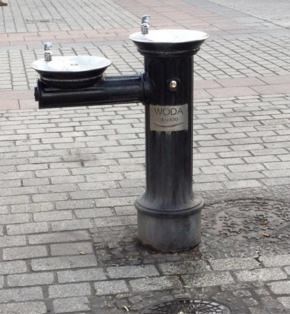
Poles prefer square pillows on their beds. In general, the population has very neat handwriting. Movie theaters have assigned seats. Juice is an acceptable and common drink for dinner, although drinks (in general) with meals are very small. Poles typically avoid using cooking spray and clothes dryers. Many Poles say “goodbye” to the strangers they leave in a train compartment or an elevator. Folders here do not have traditional pockets, but instead have three flaps on one side and an elastic band to keep it closed. Notebooks all use graph paper and are about half the size of an 8 x 11.5 sheet. Almost every female name in Poland ends with the letter “a”. Kebabs are one of the most popular types of fast food here. Discussing political views is a great way to start a conversation. Minimum wage is the equivalent of $3.20/hour. Poles do not like/trust their tap water; therefore, water fountains are almost non-existent. Ibuprofen comes in packs of 12 or smaller. Whole rabbits can be bought from the deli at many grocery stores. And dogs are not forbidden from entering every shop/store.

Of course, I realize (and I hope it is apparent to everyone) that I still have a quite limited realm of experience. Everything I mentioned here is based off of what Tucker and I have seen around us in public places such as restaurants, movie theaters, public transportation, the university where I work, etc. – all in all, a very small scope of Polish culture. This is also absolutely seen and written from my personal perspective, which is not always (or even often) the same as others. While I like to highlight the differences and poke fun here and there, I really think the differences are the best part of cultural exchanges. They allow us to see things from a new perspective, and often also shed light on the enormous amount of similarities we, as humans, all share. I hope you enjoyed my post! Thanks for reading!