Peruvian Adventure

We just got back from another incredible trip, which means it’s time to reflect and reminisce. This trip was unlike many others because it required a lot more prep than we’re used to, so if you’re planning a trip to Peru, hopefully I can help you out a little with my breakdown of some of our plans and experiences. And if you’re not planning a trip to Peru, here’s your sign to start!

The Preparations

As I mentioned, we actually had to do quite a few things well in advance for this trip. Generally, we just book our flights and lodging and let the rest of the trip unfold in real time; however, there are two things about Peru that forced us to think ahead a bit more: 1, we knew we’d be at elevation again, and 2, Machu Picchu is one of the most popular tourist destinations in the world.

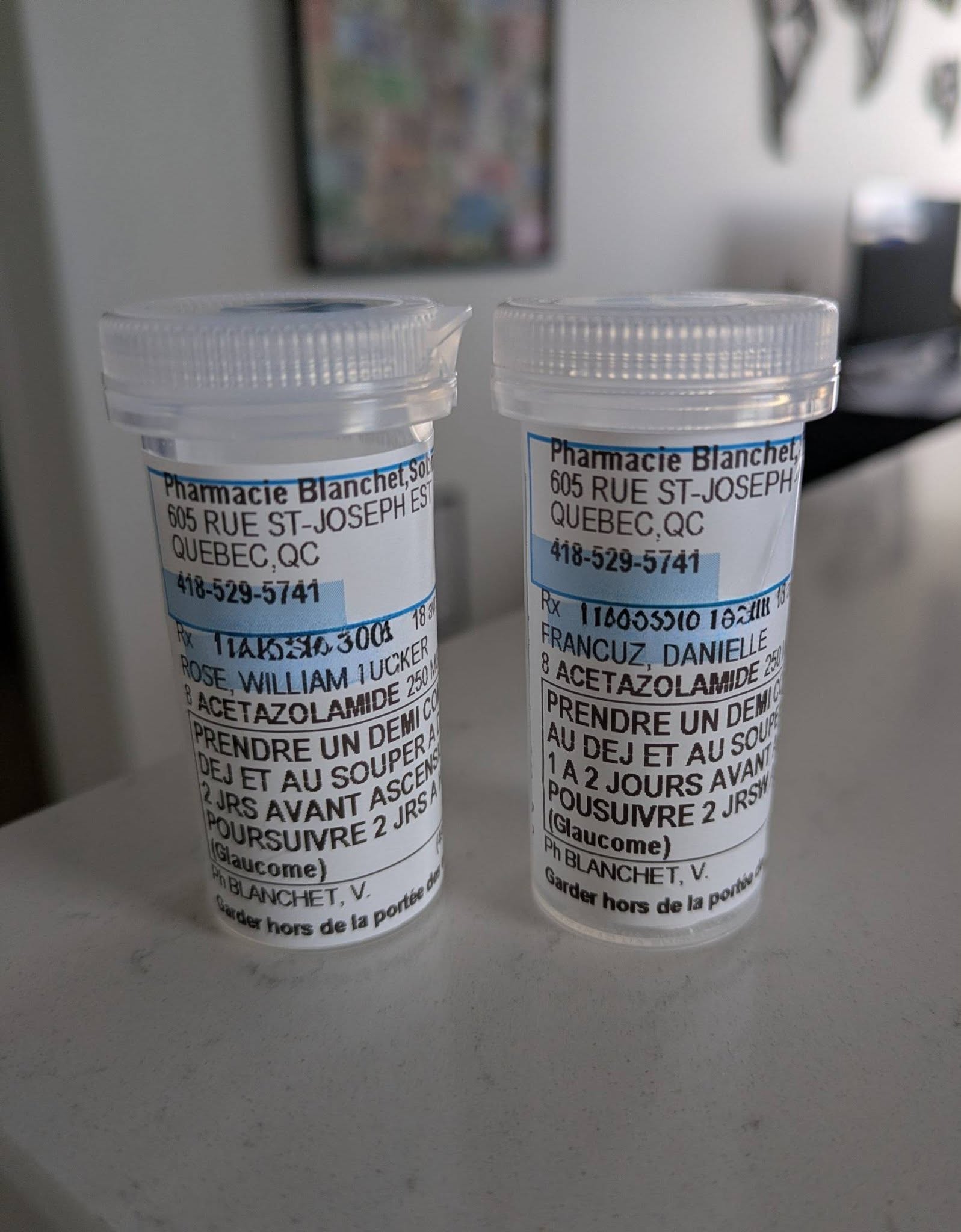
For the elevation issue, we decided to play it safe and get a prescription for Acetazolamide from our local pharmacy. Here in Québec, we didn’t need to see a doctor, we just had to talk to the pharmacist about our trip (how long it was, what the elevation would be, etc.), and he gave us a week’s worth of a medication that we started to take a couple of days before we left. This medication works by helping your blood carry more oxygen, which can prevent the symptoms of altitude sickness (known in Peru as “soroche”). 

The other challenge we faced months before our trip was booking everything for Machu Picchu. To say there are a lot of options would be a gross understatement. You can take weeks and hike in from far away places in almost every direction; you can camp; you can glamp; you can take a scenic train ride; you can stay in Cusco and do a day trip; you can stay at the base of the mountain in Aguas Calientes – really there are so many options, and you basically have to decide all that before you can buy your park tickets for the specific day/time you want. The trickiest part is the fact that those park tickets are released in batches about 5 months in advance, and they get snapped up pretty darn quick!
Cusco

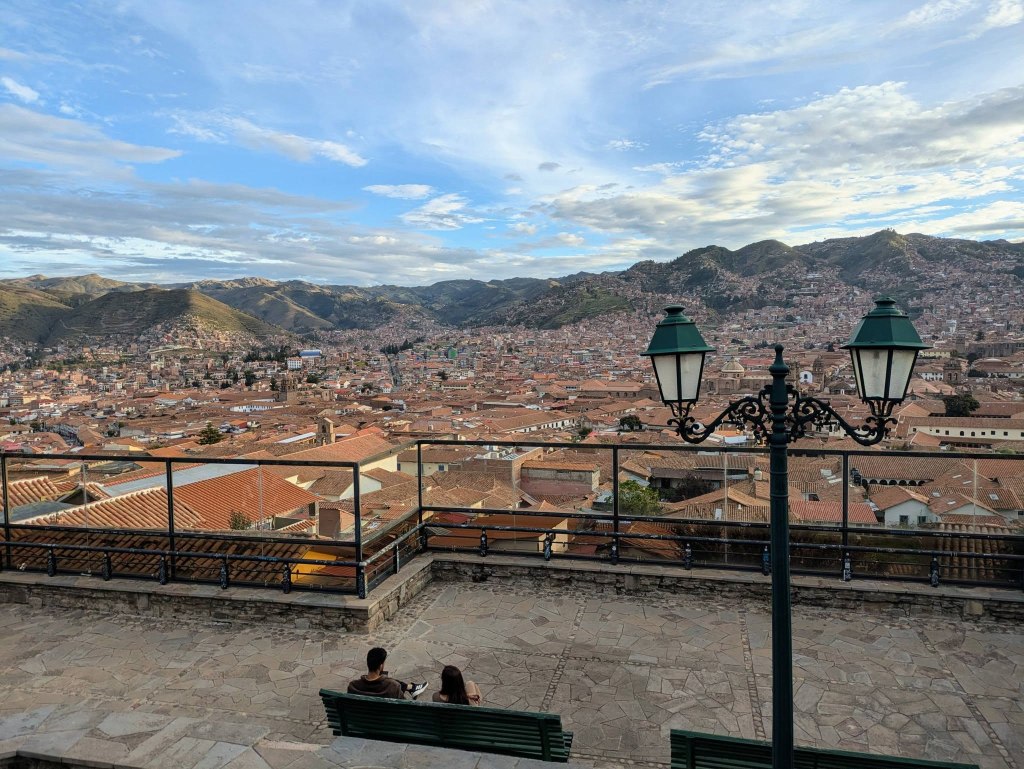
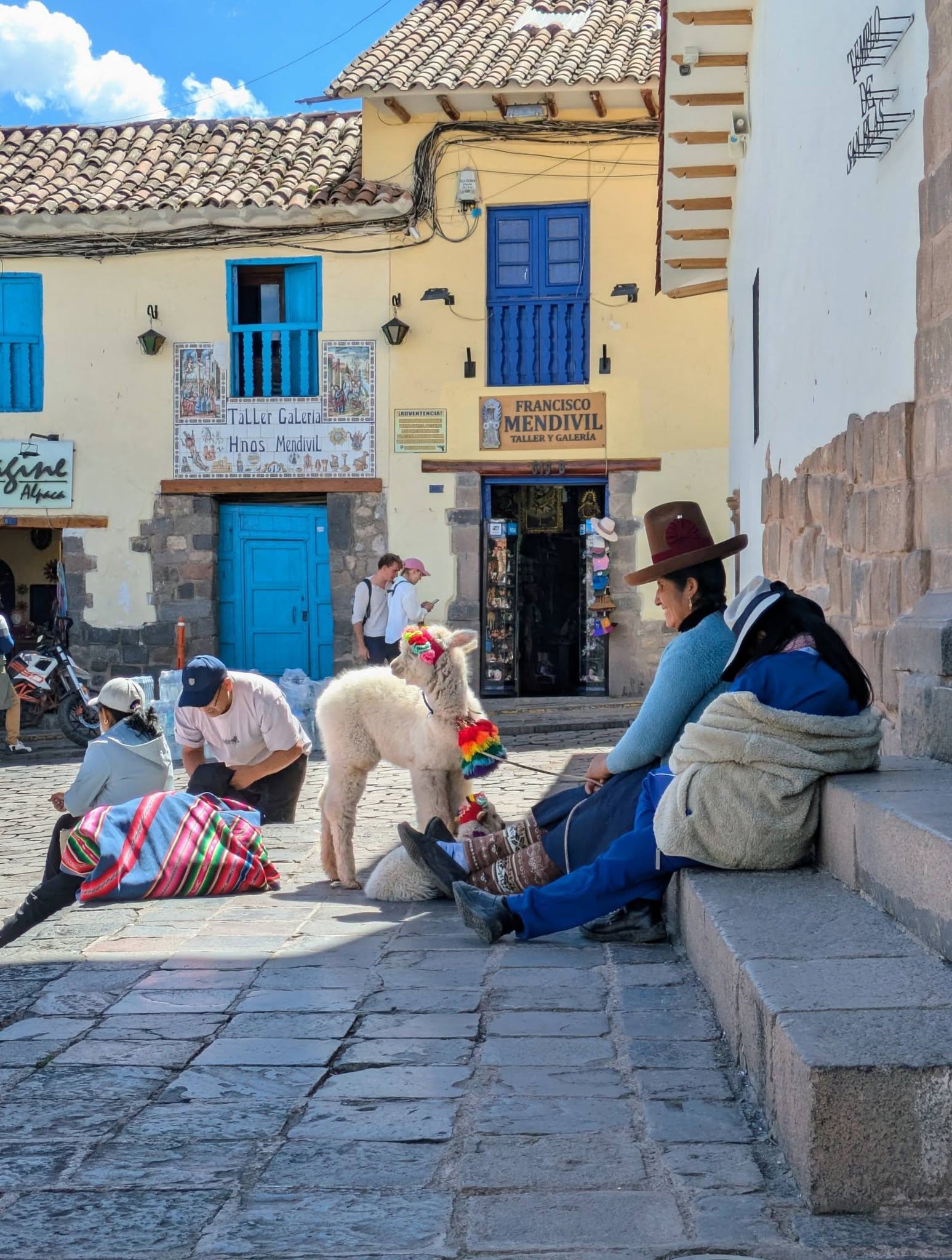
So, we chose Cusco as our main base for this trip because we knew we needed to acclimate to the elevation (Cusco sits at 3,400m or 11,200ft), and it’s such a great jumping off point for things like Machu Picchu, Sacred Valley, and Vinicunca. We totally thought it’d just be a place for us to rest and generally just pass through, but we absolutely LOVED Cusco! It has so much to do and is so beautiful that even when our lungs were screaming after climbing all the stairs, we continued to push through just to see a little more. Everyone we met was extremely friendly, and the food was some of the best we’ve had, so really, I cannot recommend Cusco enough!

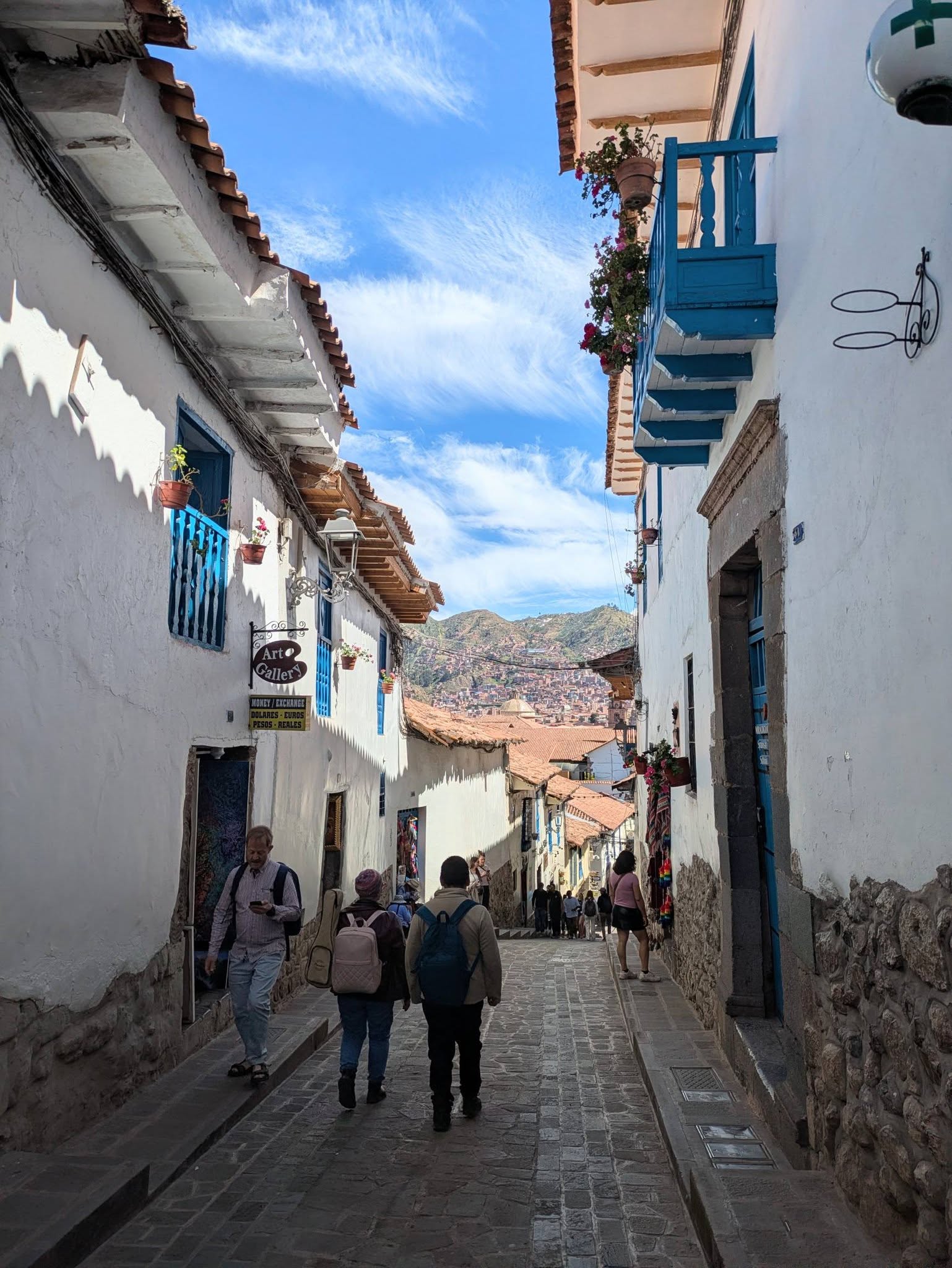
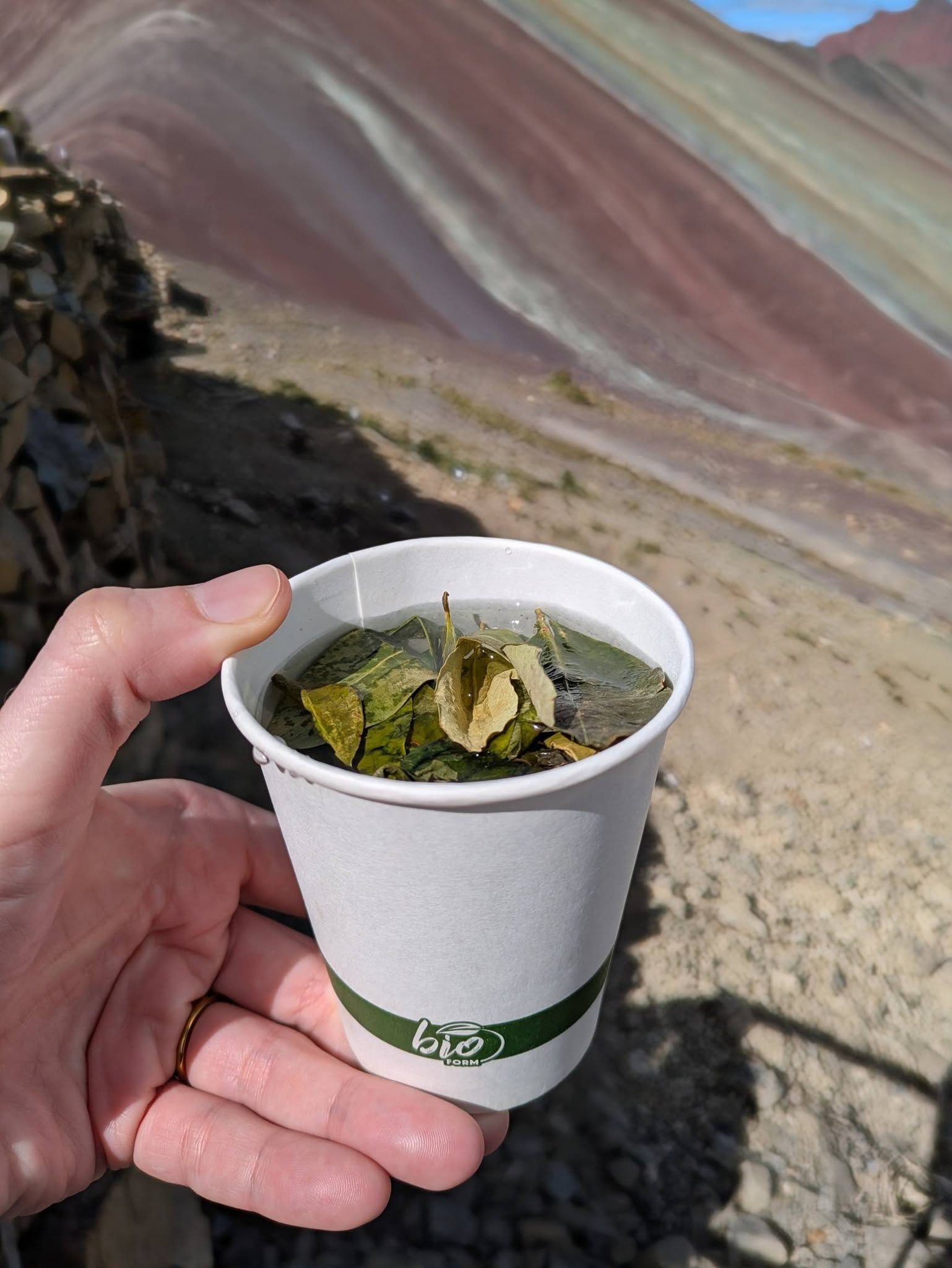
One of our favorite things to do in Cusic was to just wander the different neighborhoods. We stayed in San Blas, and it was absolutely beautiful, but there are many points of interest and fun things to see everywhere you turn. We also enjoyed grabbing a coca tea infusion or a coffee at one of the many cafés in the city. The Chocolate Museum was free and definitely worth a pop-in, plus right next door is Cervecería del Valle Sagrado, which had our favorite beers of the trip. Also, I mentioned the food in general was excellent, but our favorite restaurant of the trip was LOCAL where we had their empanadas, grilled fish, ceviche, and lomo saltado (all delicious)!

Machu Picchu

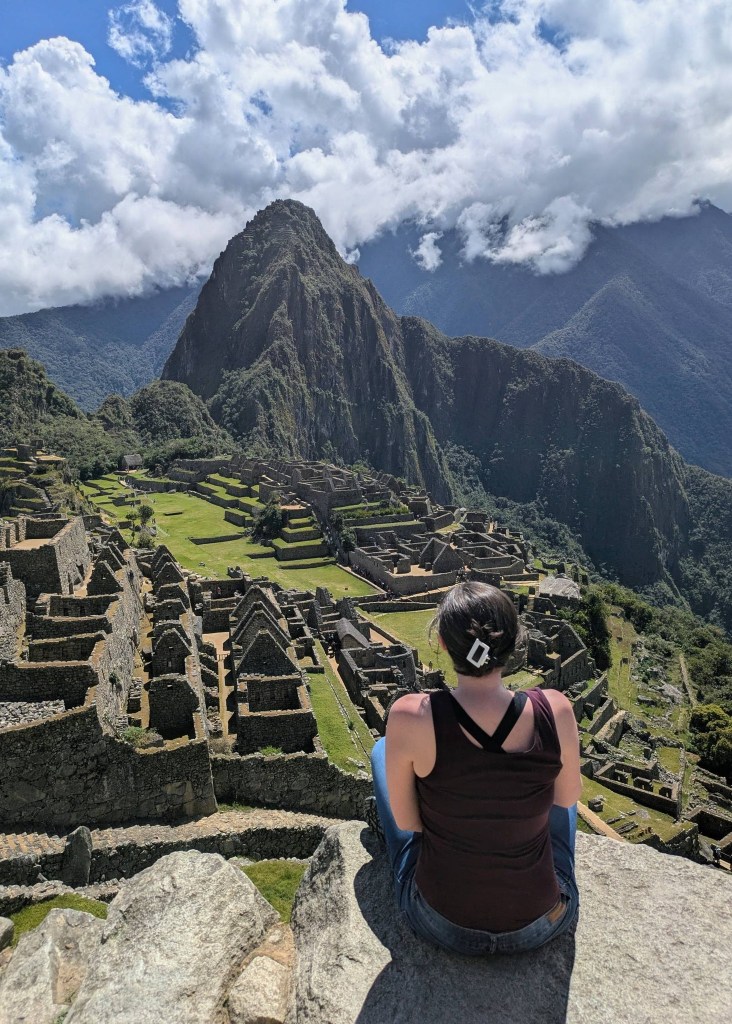
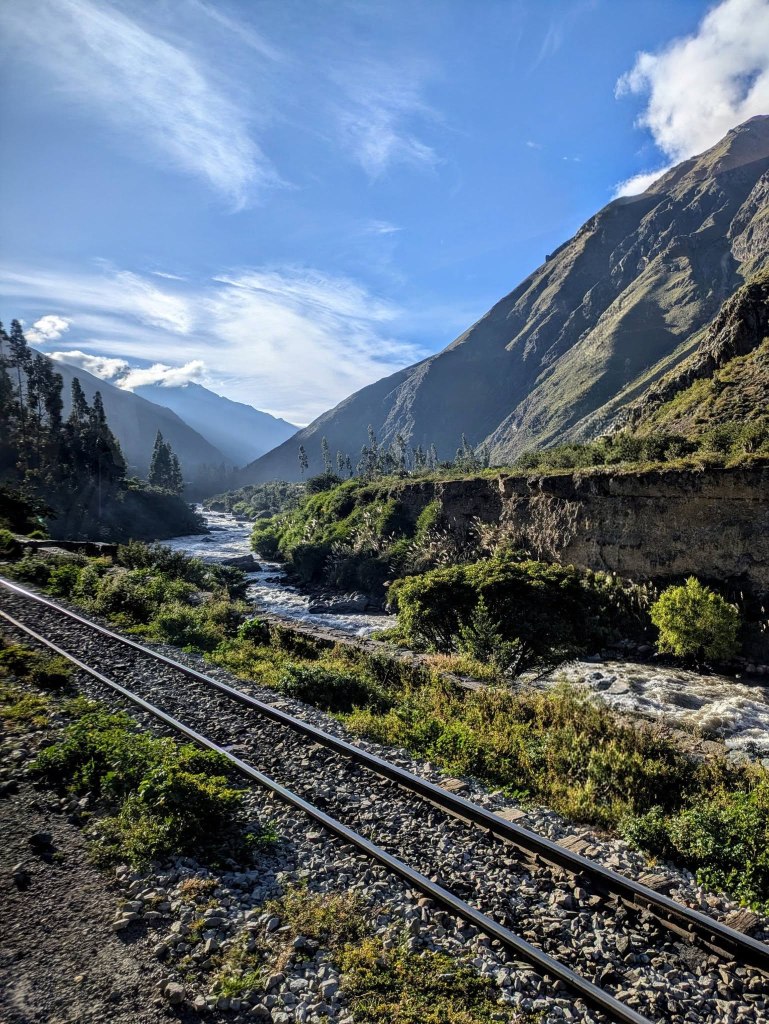
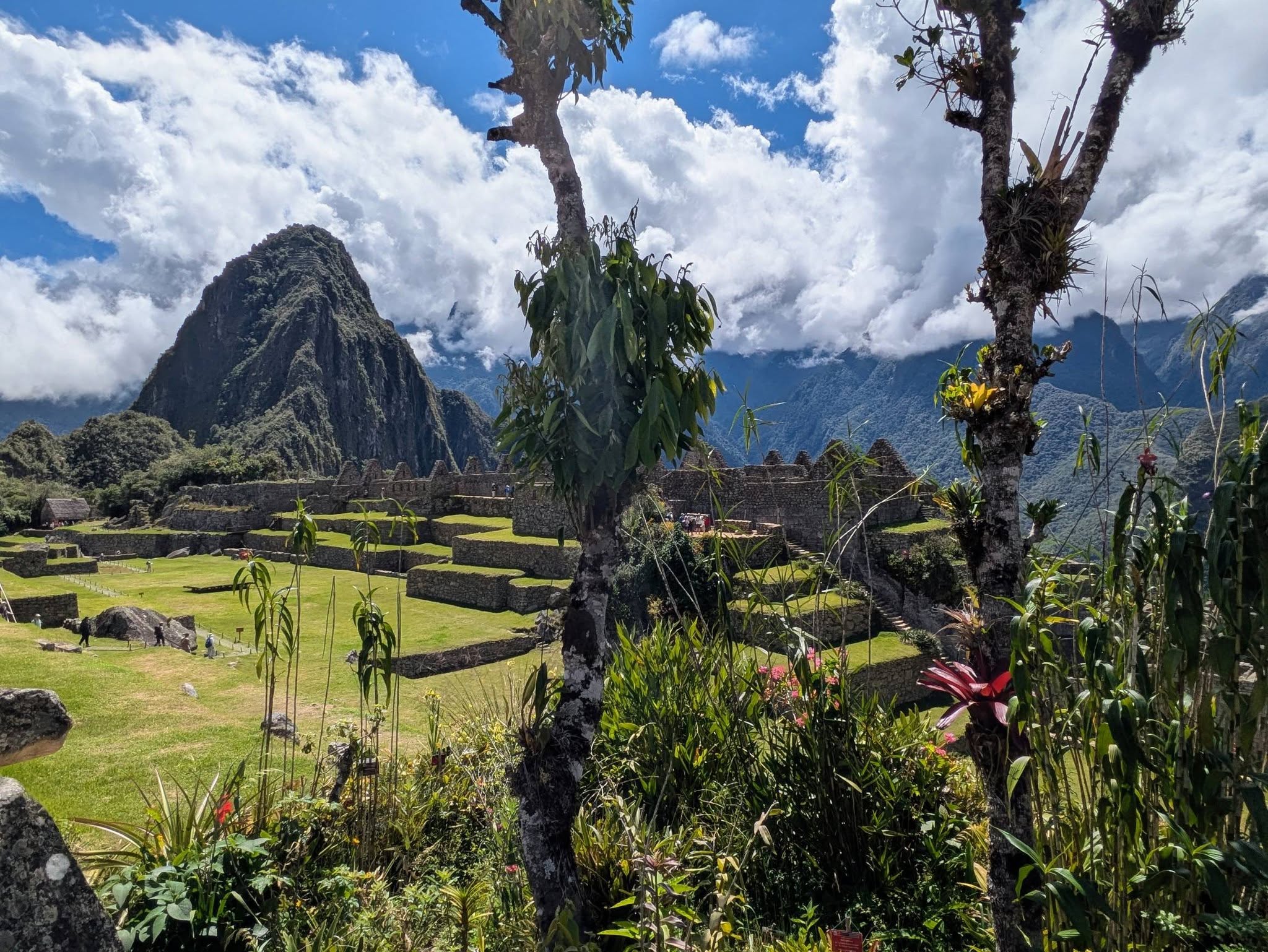
And now for the main event! Of course, one of the main reasons we chose Peru was to visit Machu Picchu, but I’ll be honest, you have to really want it! Since we decided on a day trip from Cusco, we started our morning at 3am by walking to the IncaRail office where we got on shuttle bus (i.e. van) that drove us the 2 hours out to Ollantaytambo. From there, we got on the train that took us another 2 hours through the Sacred Valley to Aguas Calientes, the town at the base of Machu Picchu. Aguas Calientes was another surprise for us – it’s such a cute town with quite a few restaurants/shops and a local flavor of its own. If I were planning this trip again, I think I would have made it an overnight trip to Machu Picchu, staying at least 1 night in Aguas Calientes.

Once at the base of the mountain, we opted for the bus ride to the top. You can hike up, and it apparently only takes an hour or two, but I’m so glad we chose the bus! The buses kick up a lot of dust that the people walking had to battle along the way, not mention the bugs, the sun, and lots and lots of stairs. Once in the park, the “circuits” or paths that you choose from when buying tickets, ended up looking quite similar and even crisscrossed at points, so don’t let that decision haunt you for too long. There are also some additional hikes you can do that take you out of the park, but I felt we got plenty of incredible views and hiking opportunities regardless.

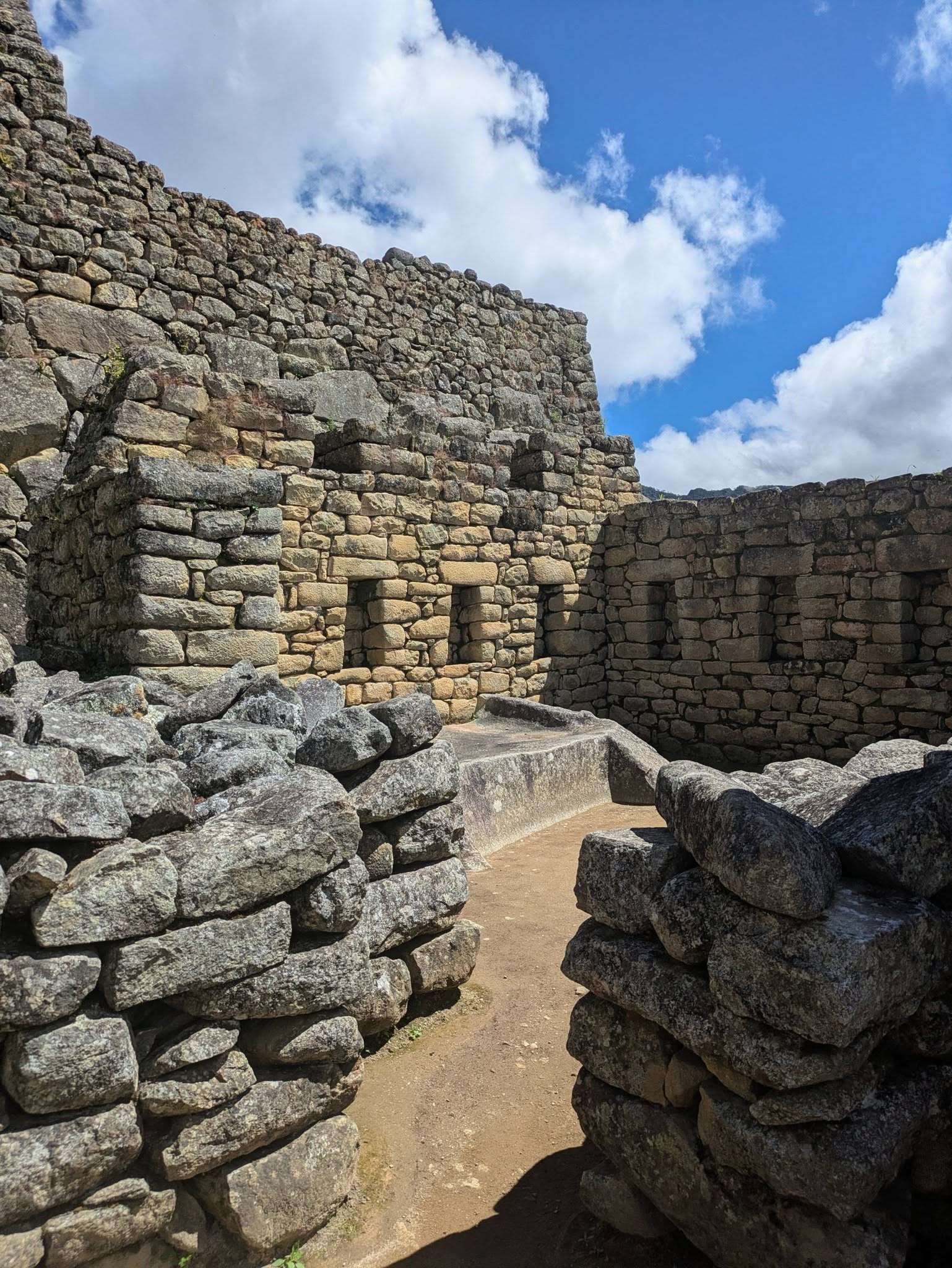
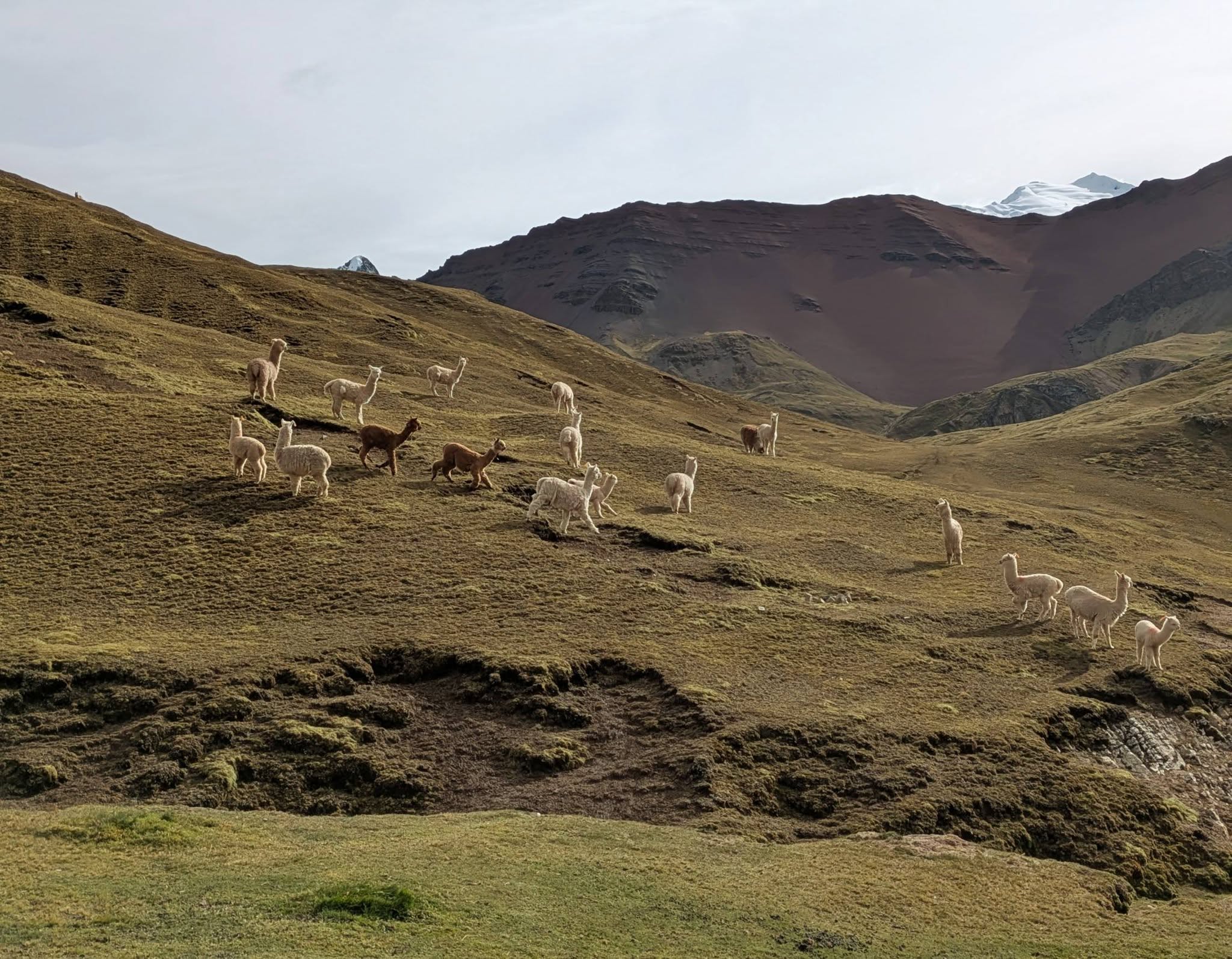
However, I do wish we had taken them up on hiring a guide to accompany us up from Aguas Calientes because unlike any other tourist attraction I’ve ever been to, there were no information signs anywhere on the mountain. We followed our roped path and wondered aloud about everything. Whose llamas are these? When did they begin restoration? How many people lived here? Basically, we had a lot of Googling to do, so if you want real-time commentary, definitely get a guide. The other thing I would make sure to do next time is to book any and all train transport during daylight hours – the train ride in was incredibly beautiful, and it was a shame that we rode back in the dark. I absolutely wanted to see it all again in reverse!

Vinicunca

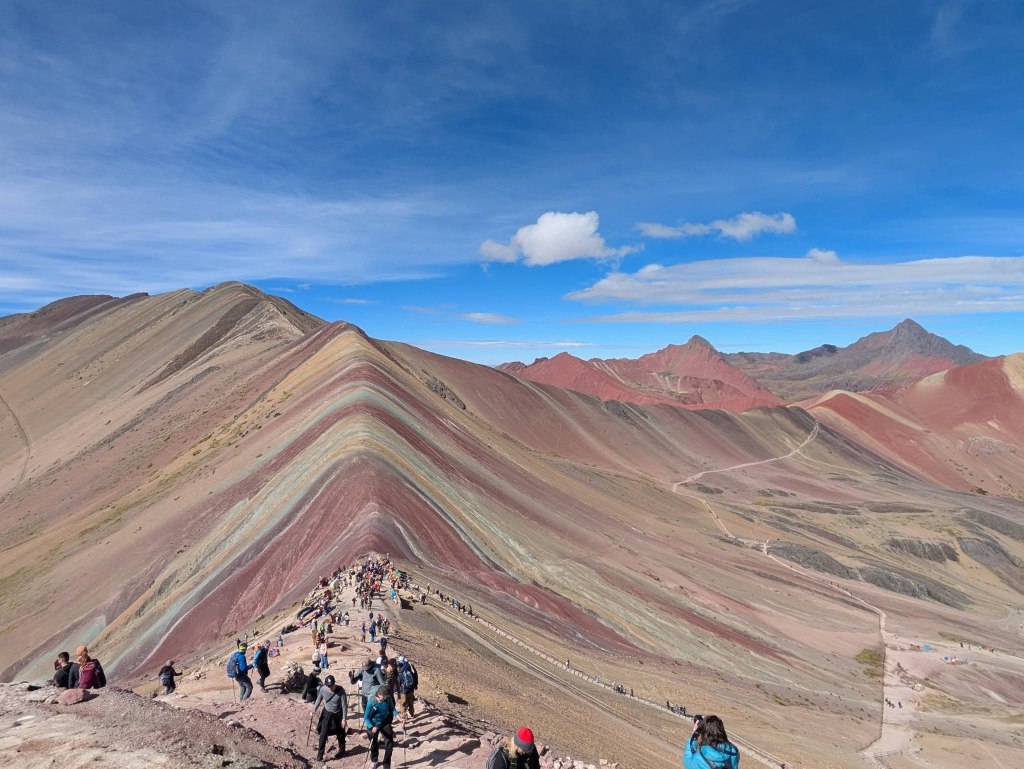
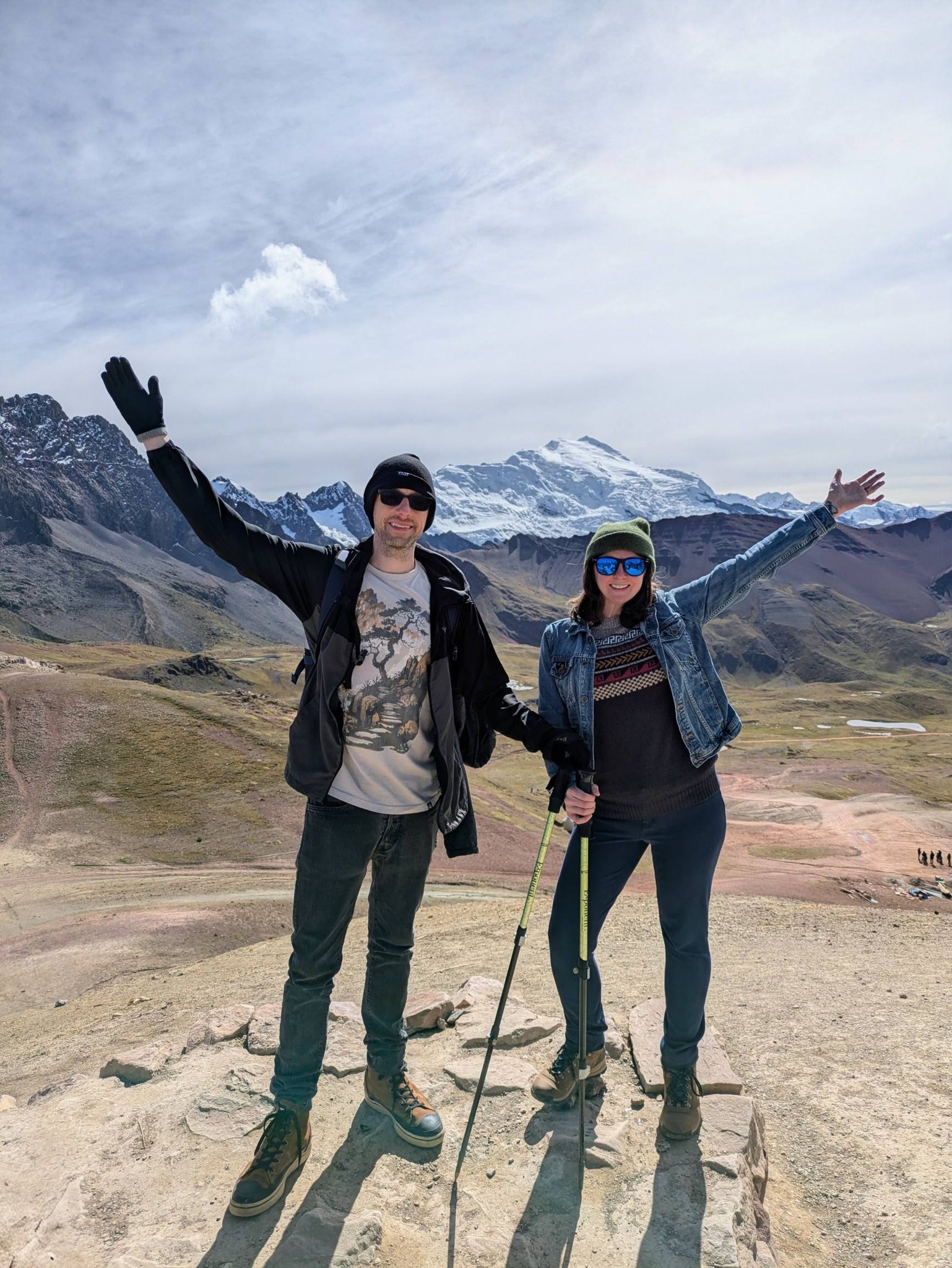
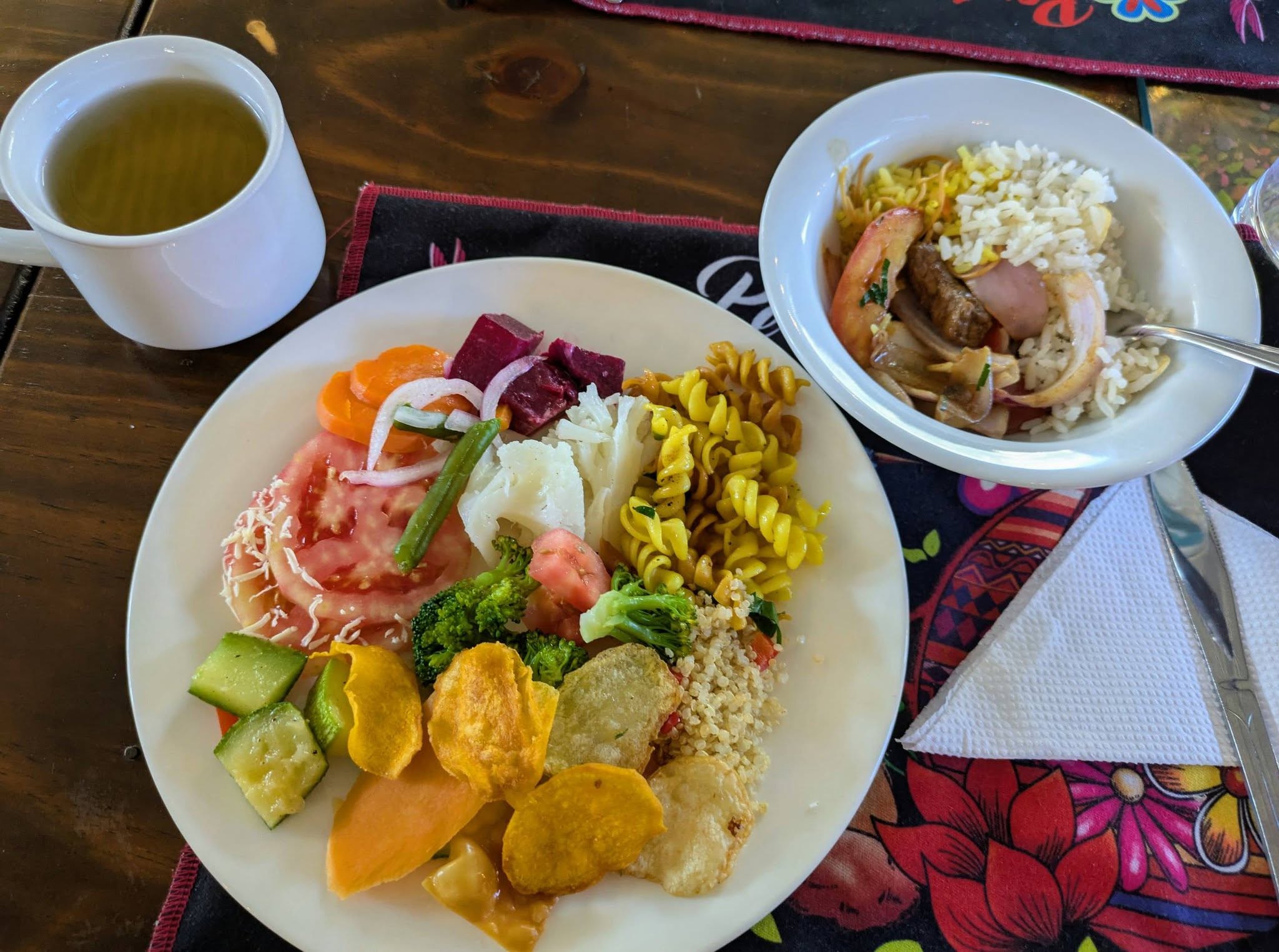
Our second day trip was down to Vinicunca, also known as Rainbow Mountain. This particular Airbnb Experience also required a very early start as we made our way to a pick-up location in the city, this time to be shuttled 2 hours in the opposite direction of Machu Picchu to Cusipata. There we had a buffet breakfast and guzzled down some more coca tea in preparation for our hike. After another very windy 2 hours in the van, we were at the base of Vinicuna. Here we could opt to either hike on foot, ride a horse, or wild out with some dirt bikes. We went the traditional route even though it was the slowest option, but again, I’m so glad we did. We took our time looking in every direction at the stunning scenery around us, and eventually we summited the 5,0036m (16,500ft) mountain.

We’ve done a few hikes at elevation now, and we’ve always been fine. We take any recommended medication, local remedies, and general acclimation advice, and although we often experience minor symptoms like a headache and breathlessness, we’ve never gotten sick. I will say though that in both Ecuador and Peru, we saw several people being helped down with stretchers, and at Vinicunca, someone left in an ambulance, so I would recommend anyone traveling or hiking in these conditions to do your research and take it easy! That said, Vinicuna has 1,600m (5,000ft) on Machu Picchu, and we absolutely noticed that difference – I’m not sure we felt anything elevation related at Machu Picchu, whereas Vinicunca was tough.

After our gorgeous hike up and down, we went back to Cusipata for another buffet and then napped the rest of the way back to Cusco. This excursion started at 4am and ended at 5pm. Our Machu Picchu day started at 3am and ended at midnight (honestly a day trip and a half). And all of this was after our 24+ hour-long journey just to get to Cusco from Québec City, which is why I’ll say it again, you really have to want it! Of course, I hope it also goes without saying that it was absolutely worth every second of uncomfortable travel, and I’d do it all again in a heartbeat! #YOLO

Lima

After Cusco, we went onto to Lima for a couple of days to recover and reset before the long journey home. Lima is the capital of Peru, and it’s located in a desert on the coast – very different from Cusco or anywhere in the highlands. Lima is huge, and the first decision you have to make is which neighborhood do you want to stay in: Cercado (the historic center), Miraflores (the modern tourist hub), or Barranco (the artsy, bohemian district). We chose Miraflores and were happy to be in the middle, well-positioned to explore all three neighborhoods. We did a walking tour of Cercado, and it was fantastic – my only regret was that we did it on the last day of our stay rather than the first!

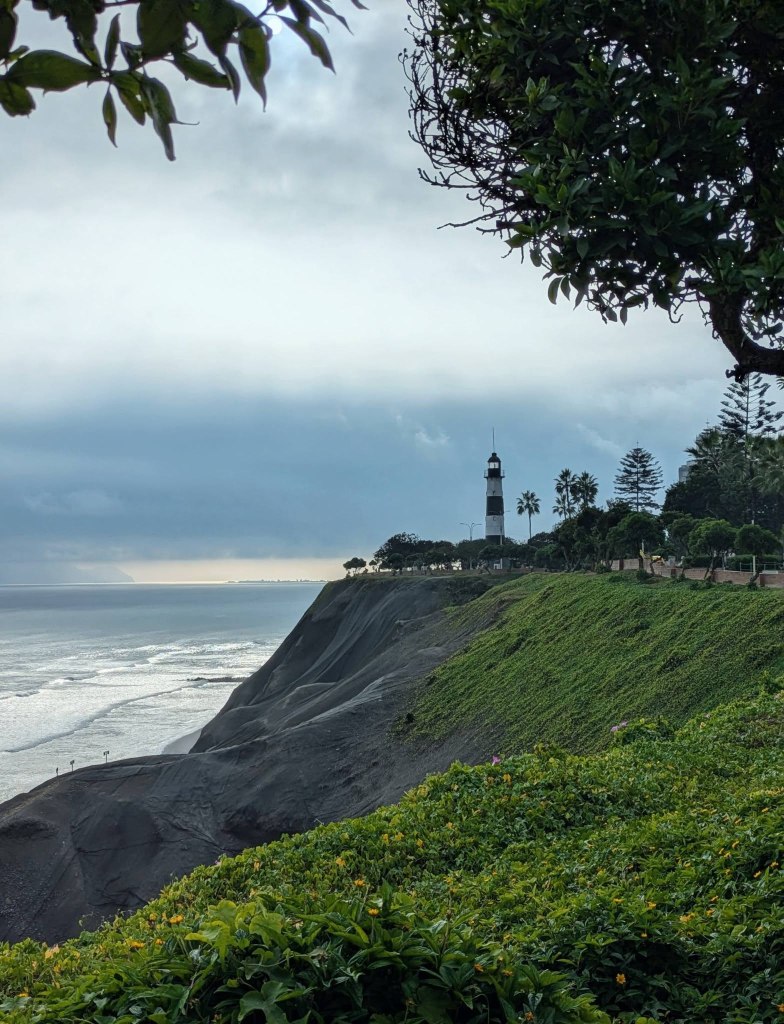
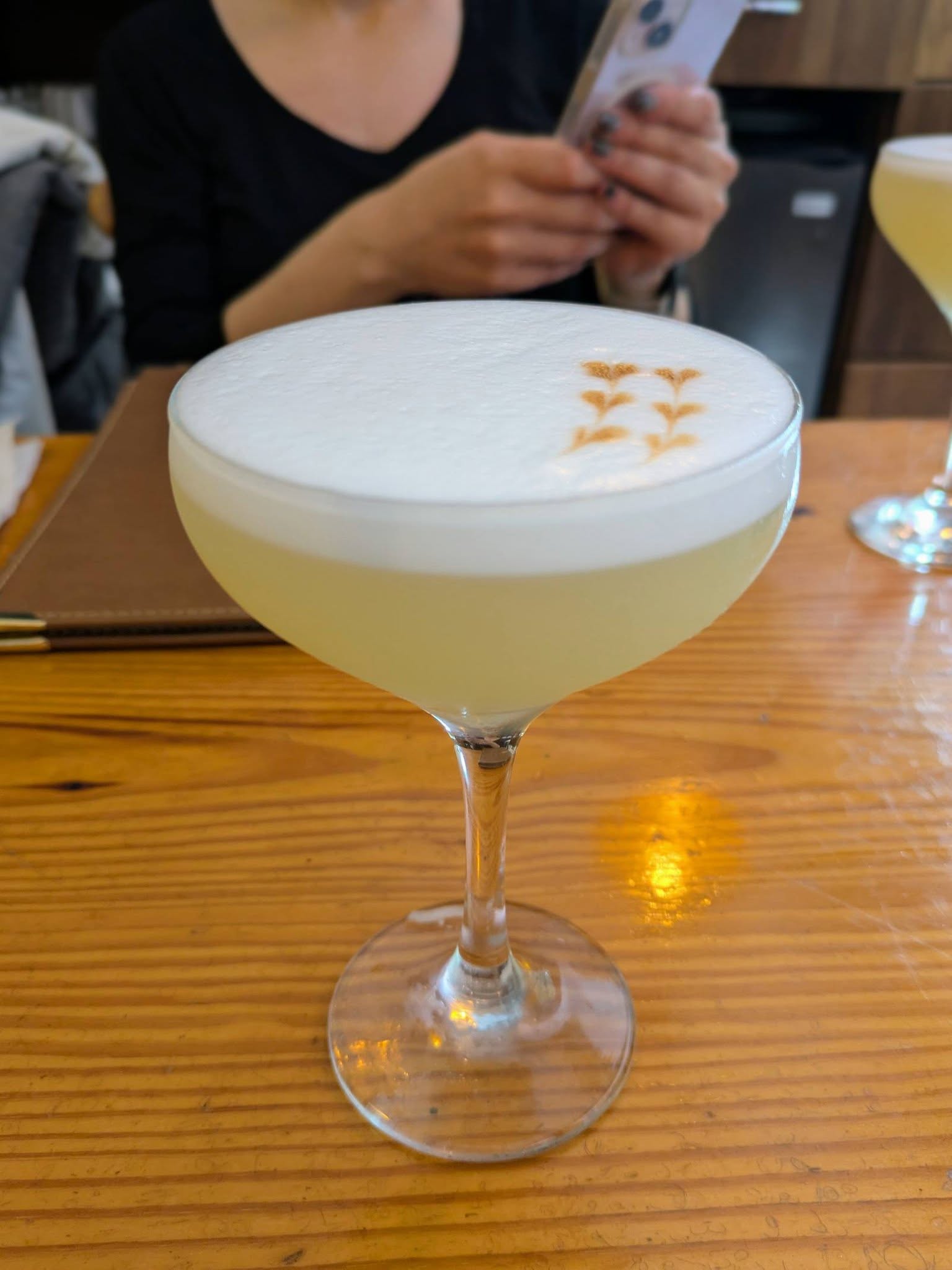
Other than the walking tour, we really enjoyed strolling along the malecón (boardwalk) and watching all the paragliders. If we’re ever back in Lima, that’s the first activity I’ll be planning! We also loved sipping our Pisco sours at the Gran Bolivar Hotel, where the drink was allegedly created, and walking through Parque Kennedy and seeing all the cats (and their embassy-sponsored shelters) was also really fun. Despite being the sixth South American country we’ve visited, Peru surprised us at just about every corner, which is, of course, just how I like it!  

The Food

And last but not least, as has become a sort of custom on these posts, I want to end with a list of all the Peruvian dishes we were able to try while there. We always make ourselves a little checklist, and here’s what we had for Peru:

Ají de gallina (chicken stew)

Alpaca meat

Butifarra sandwich (ham, pickled veggies, and chilies)

Causa Limeña (stuffed mashed potatoes)

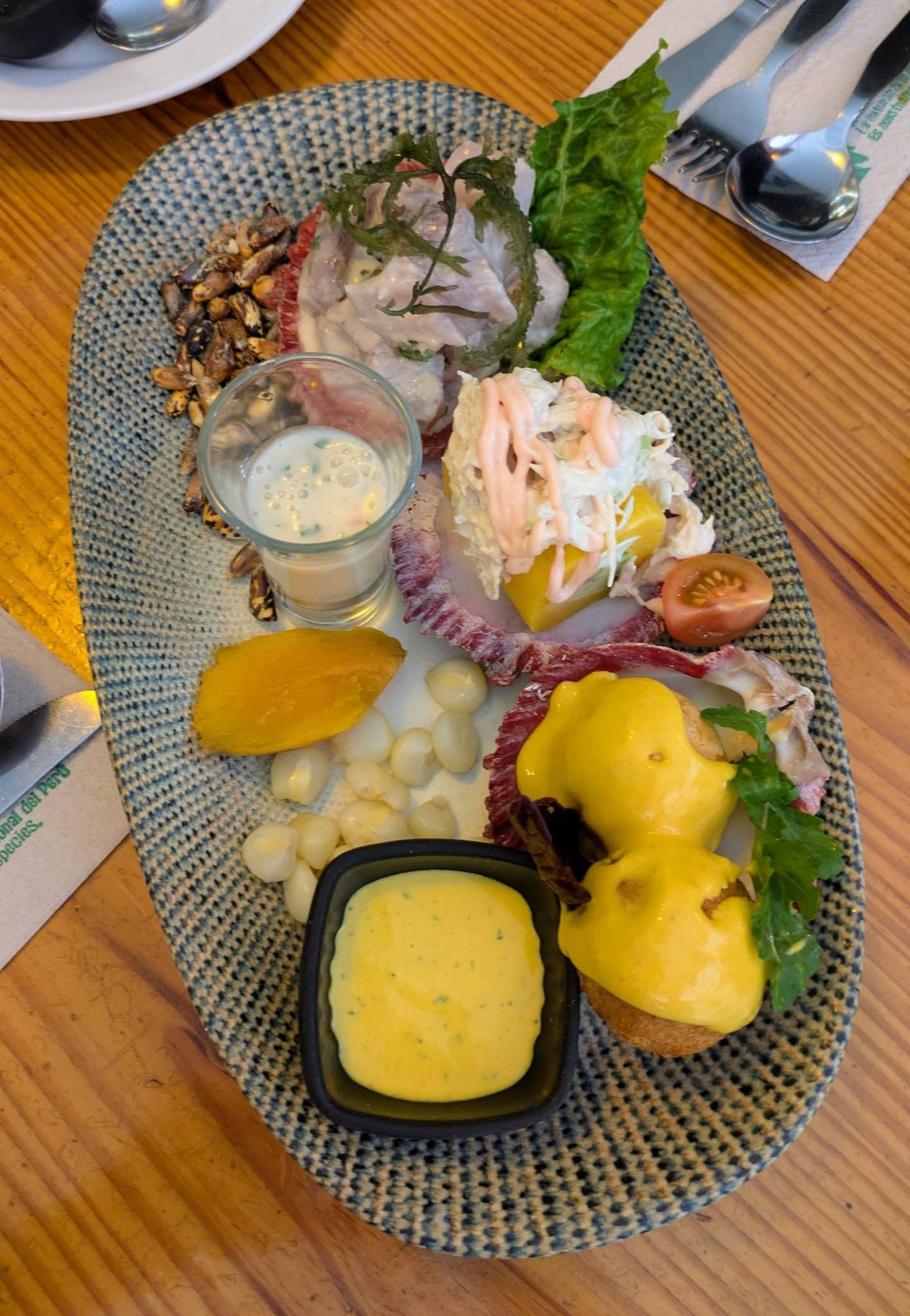
Ceviche

Chifa (Peruvian-Chinese fusion)

Chica morada (purple corn and fruit drink)

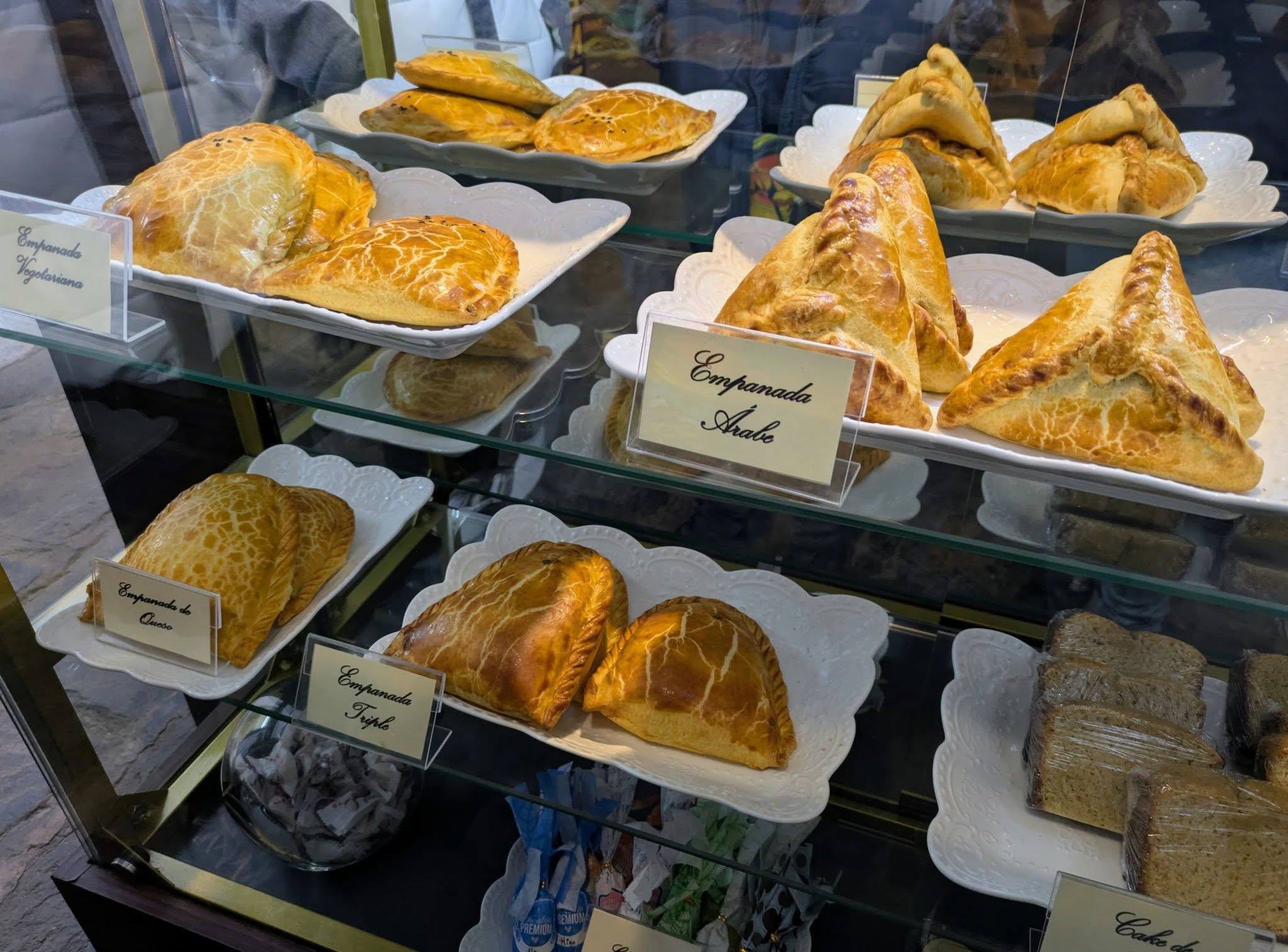
Empandas

Grandma’s soup (chicken noodle soup)

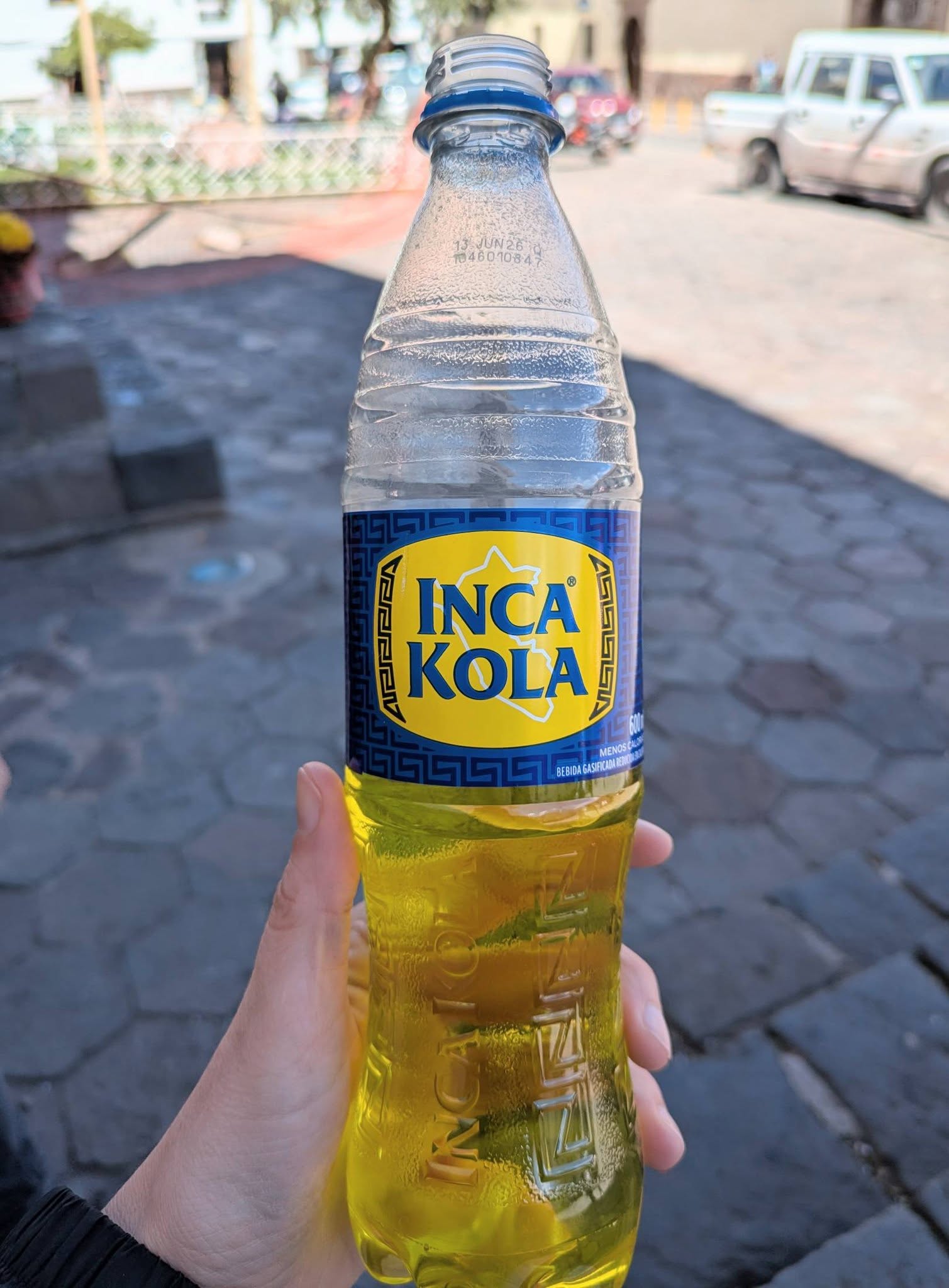
Inca Cola (most popular soft drink)

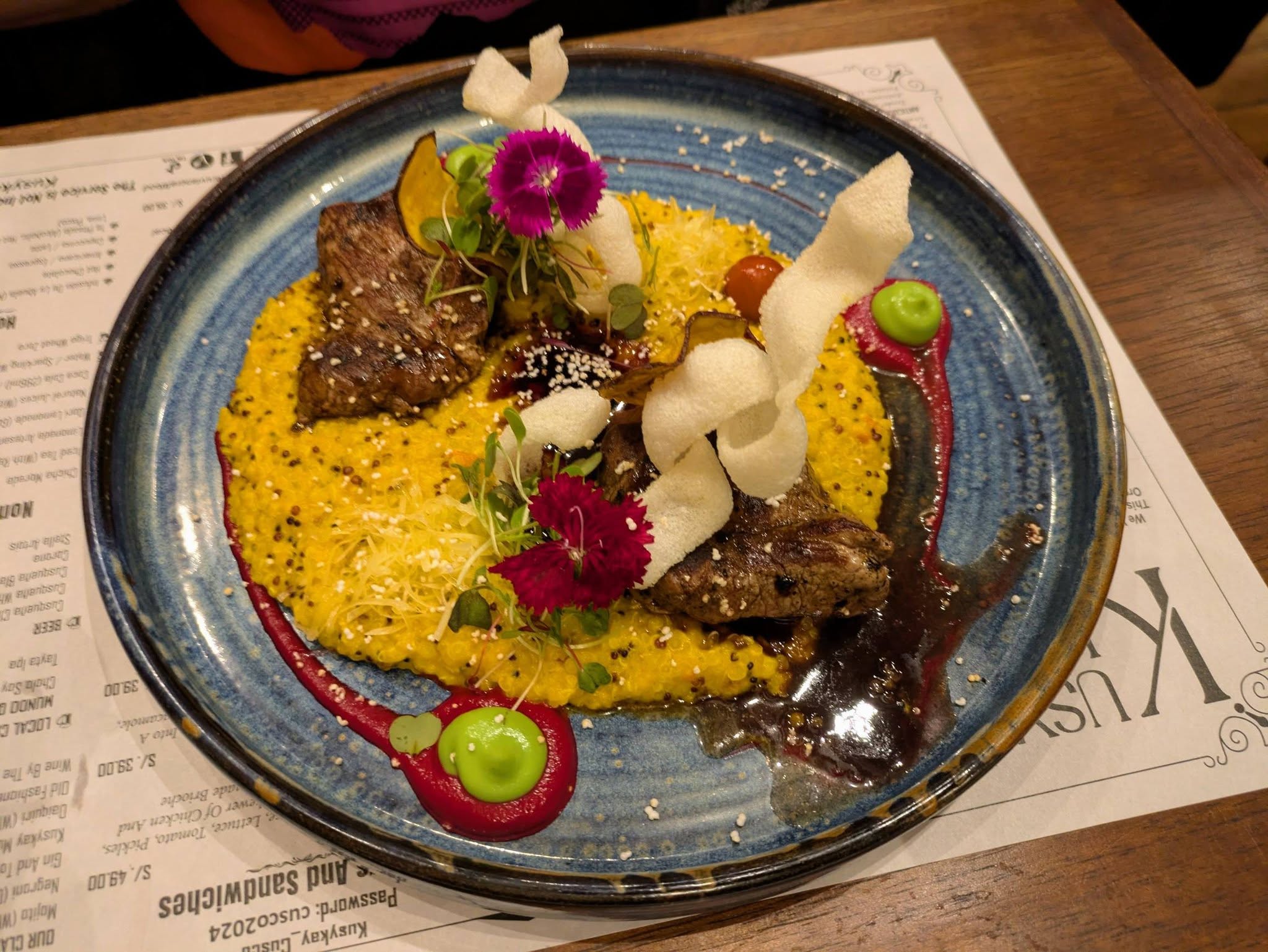
Lomo saltado (stir-fried beef and veggies)

Native potatoes

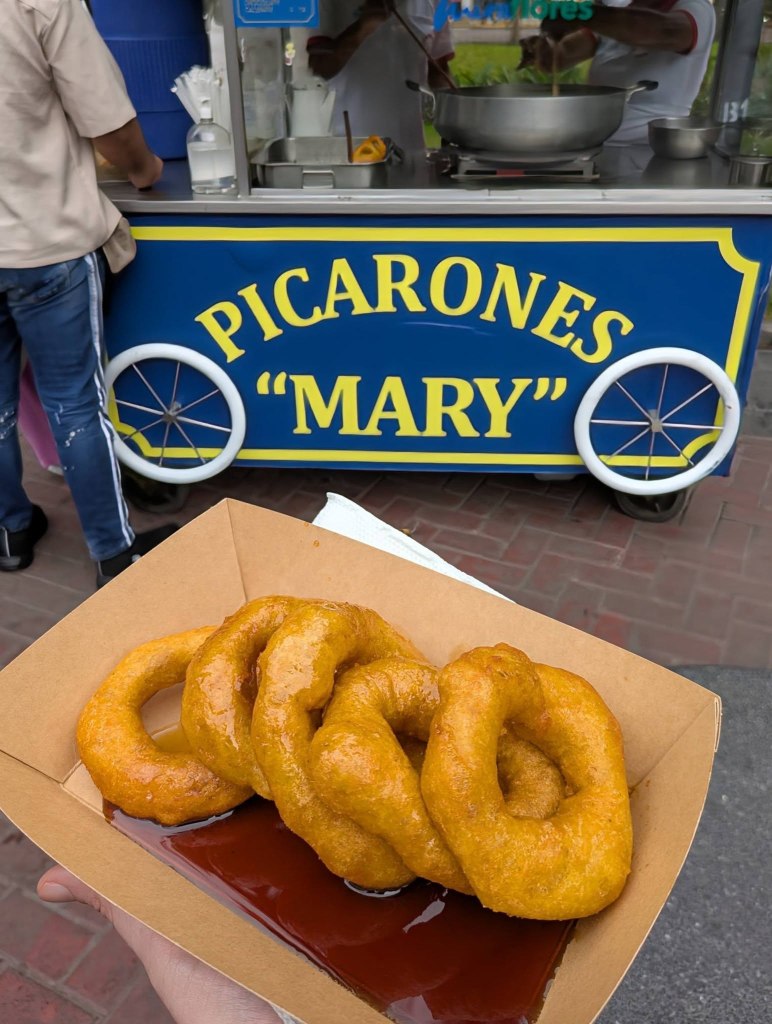
Picarones (sweet potato donuts with spiced syrup)

Pisco sour (Peruvian cocktail)

Pollo a la brassa (rotisserie chicken)

Marveling at Murals

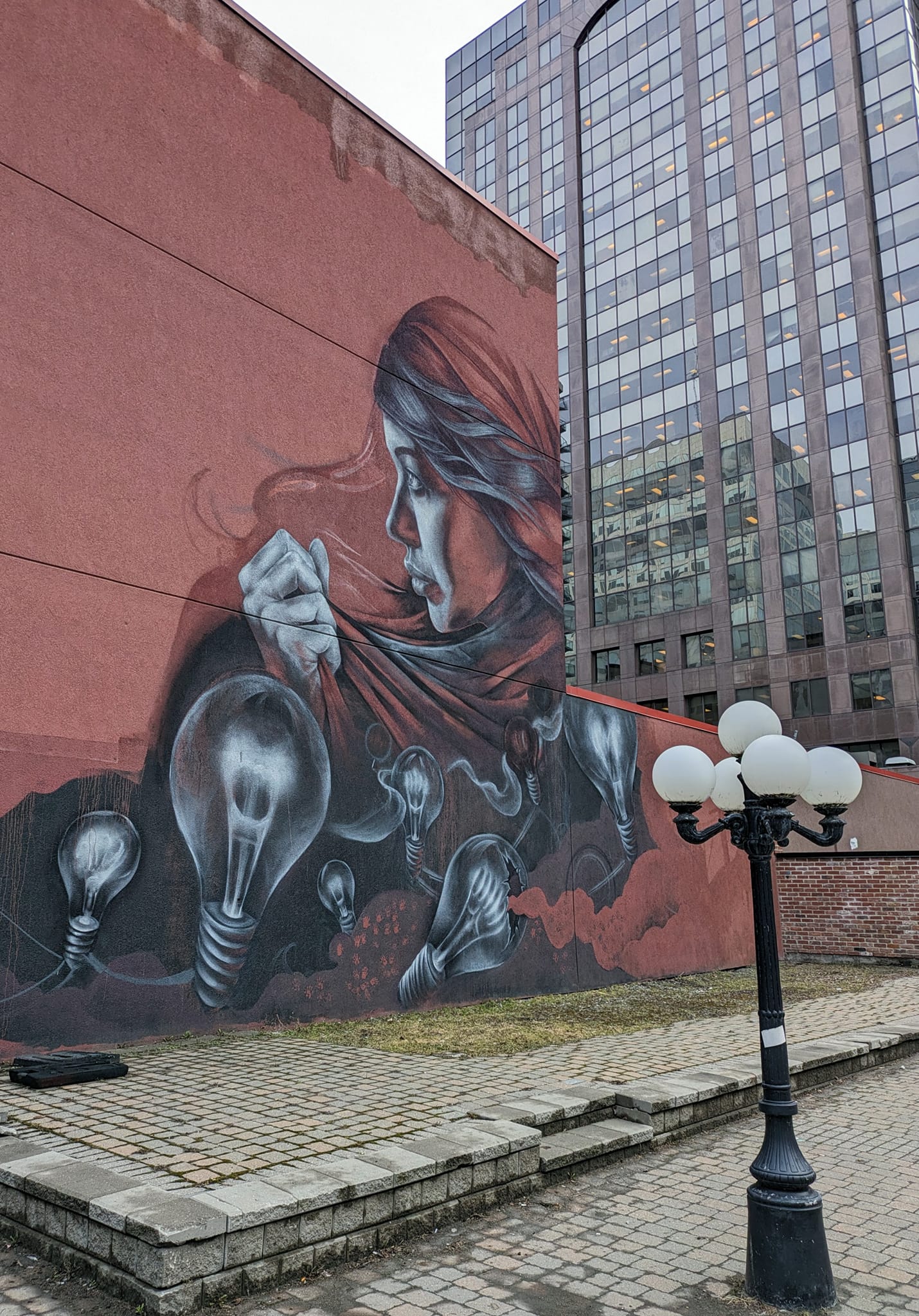
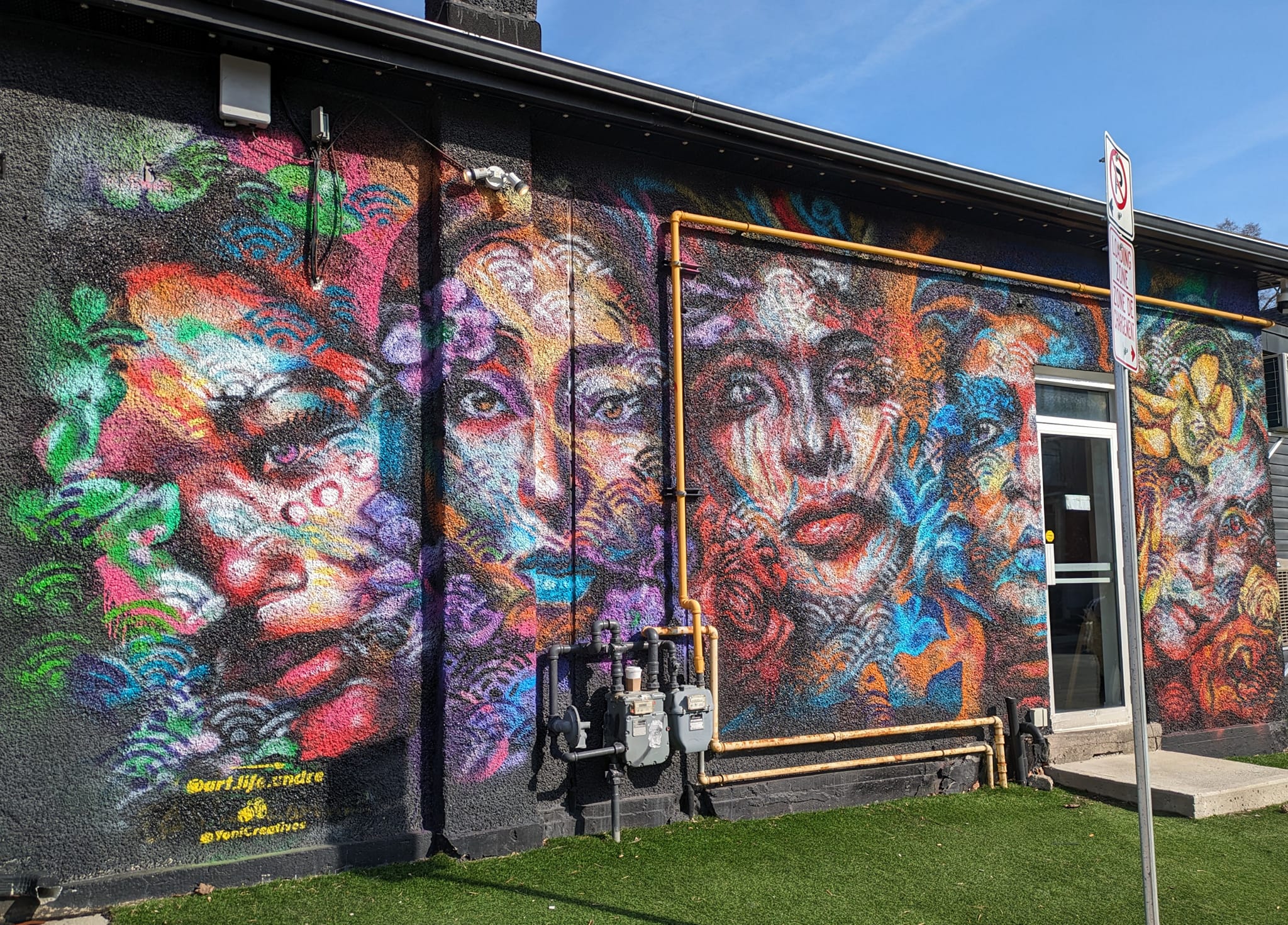
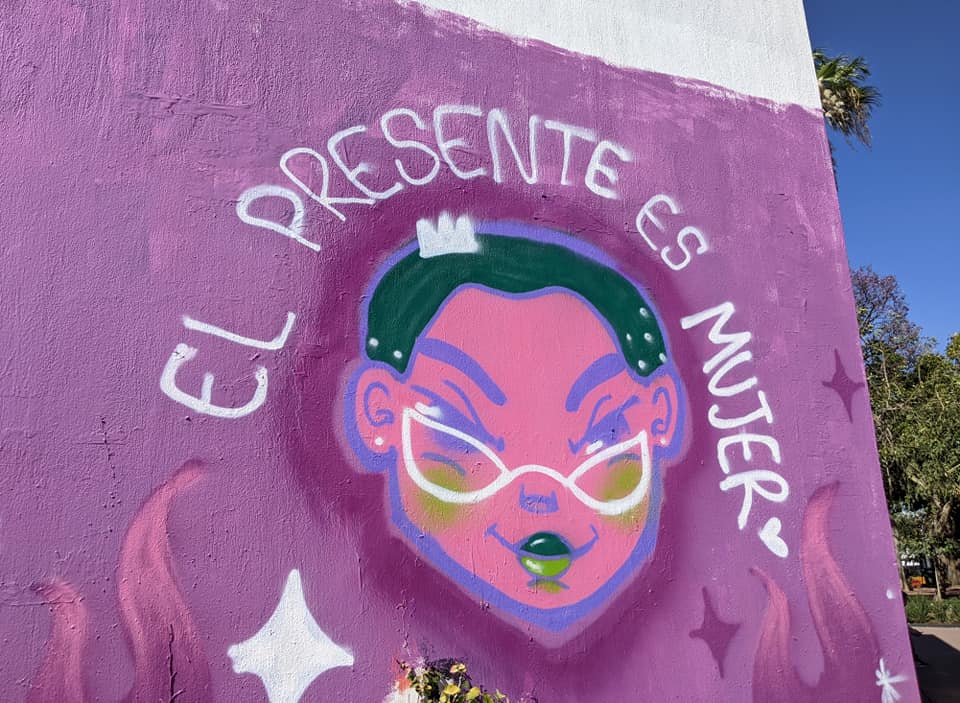
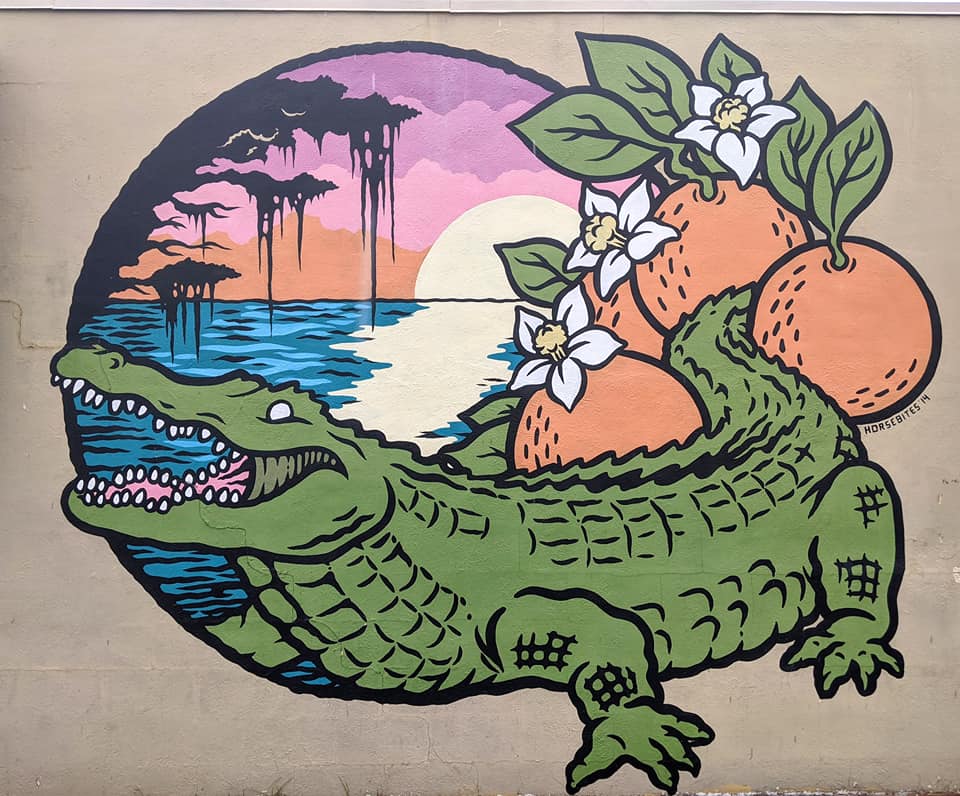
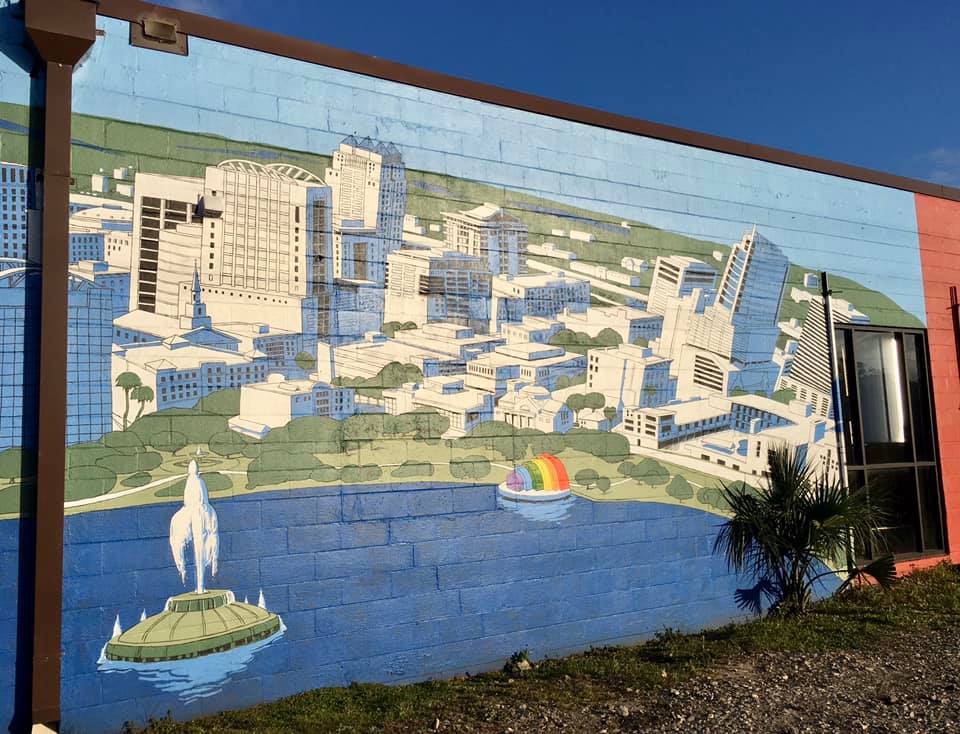
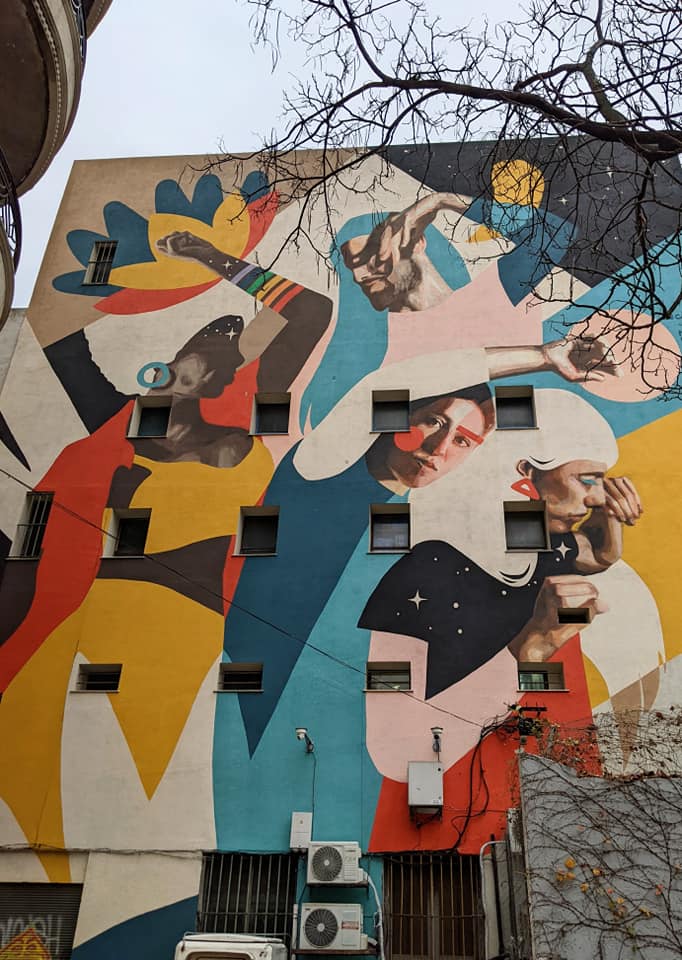
Over the years, I have developed a huge admiration for murals. At first, I saw them as purely decorative, something colorful to brighten up a dull corner of any given city, but the more time I spent in different cities, the more I amassed a photographic collection of their murals, and that’s when I started to notice different themes emerging. Whether the artists were telling a story, alluding to history or social issues, or just having fun, as a collective, murals seem to embody the culture around them. Here are a few of my favorite examples from some of my favorite cities:

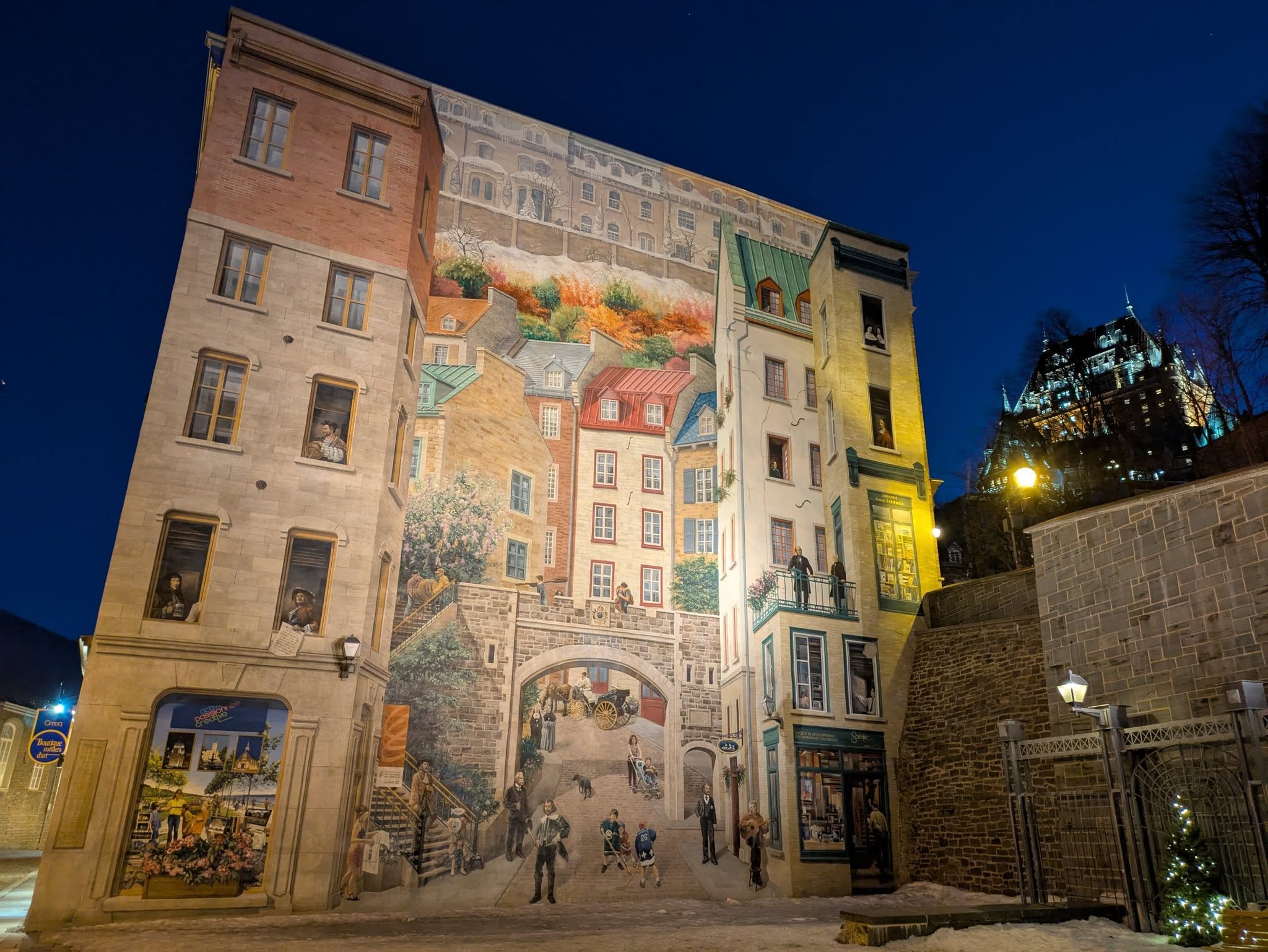
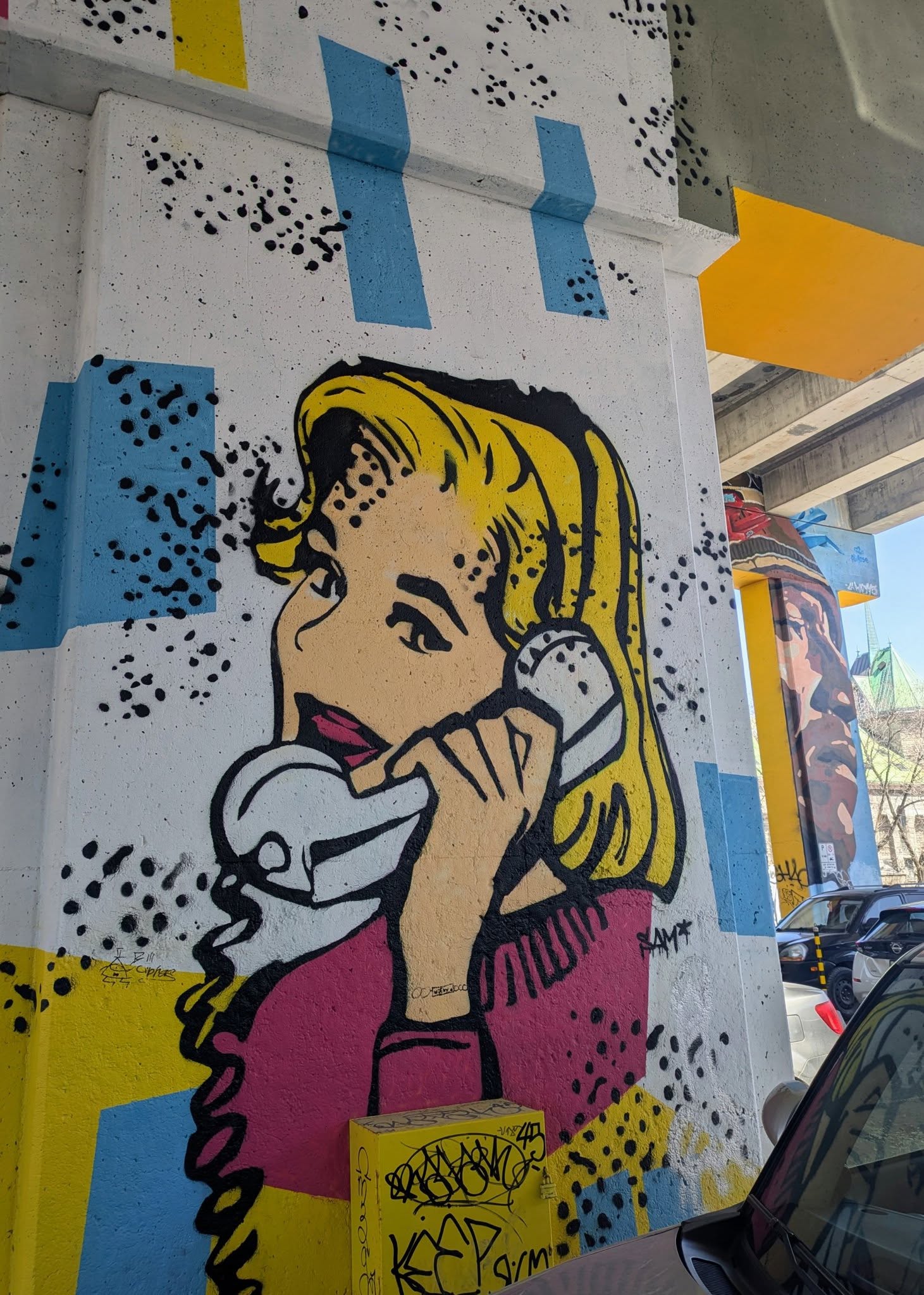
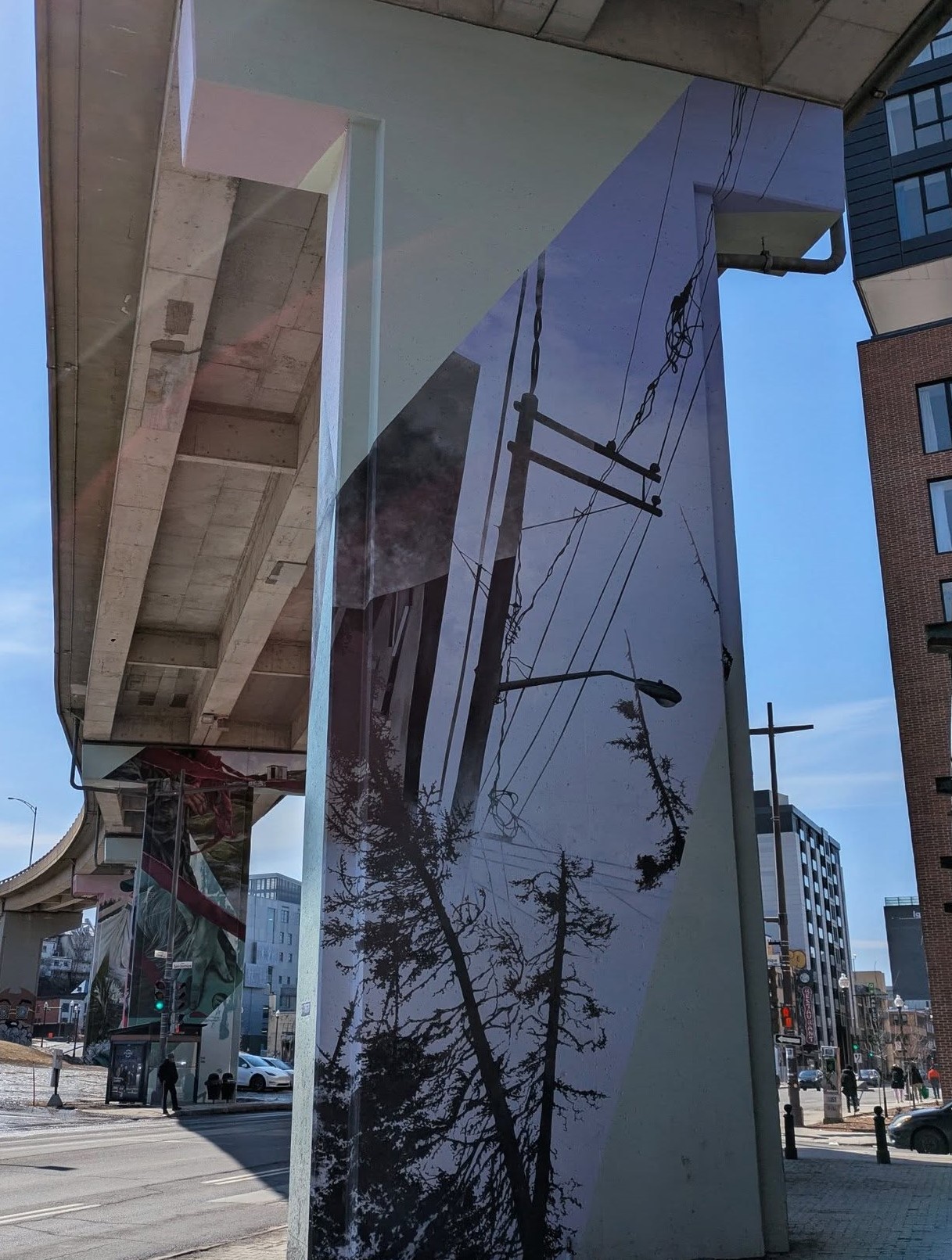
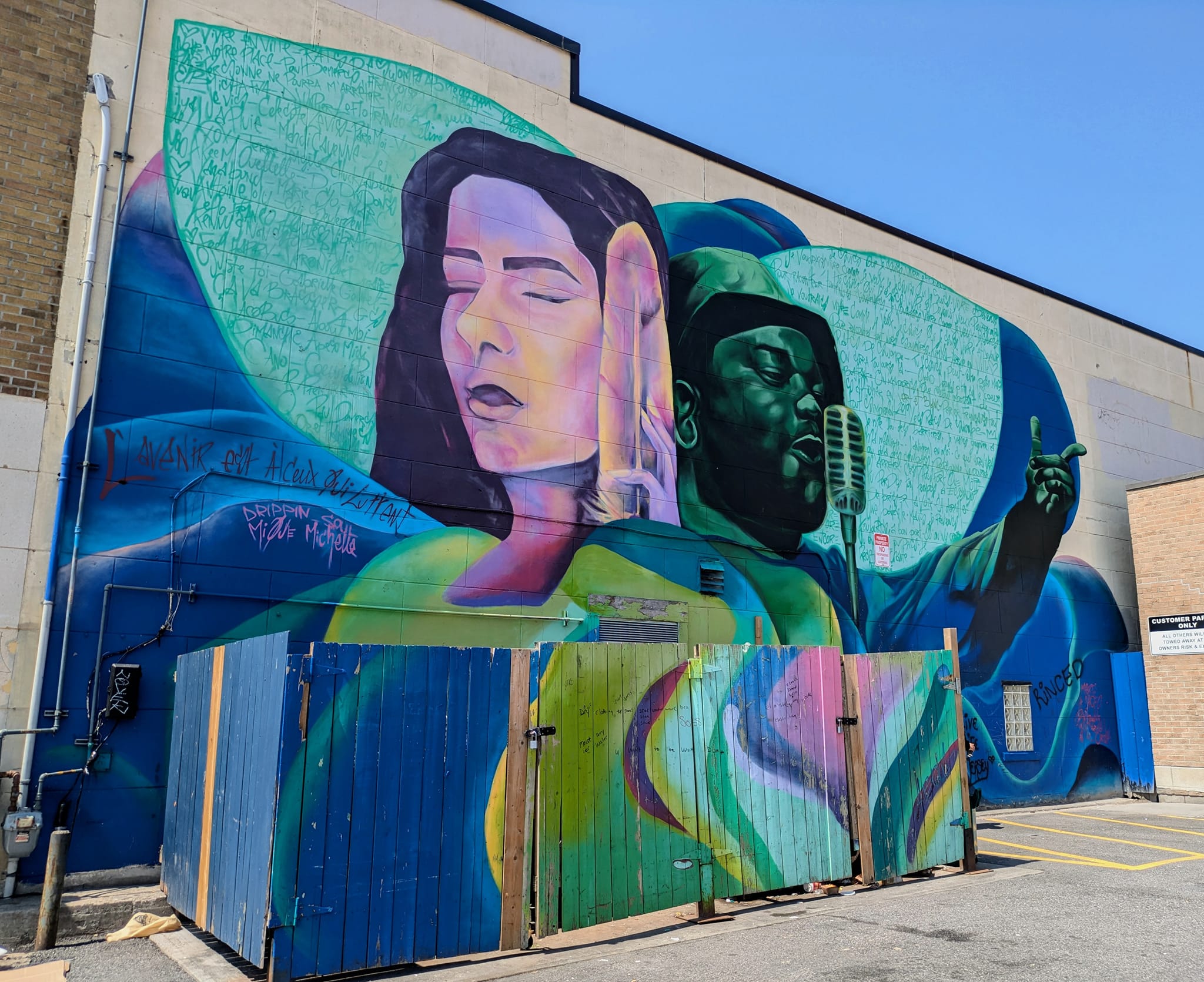
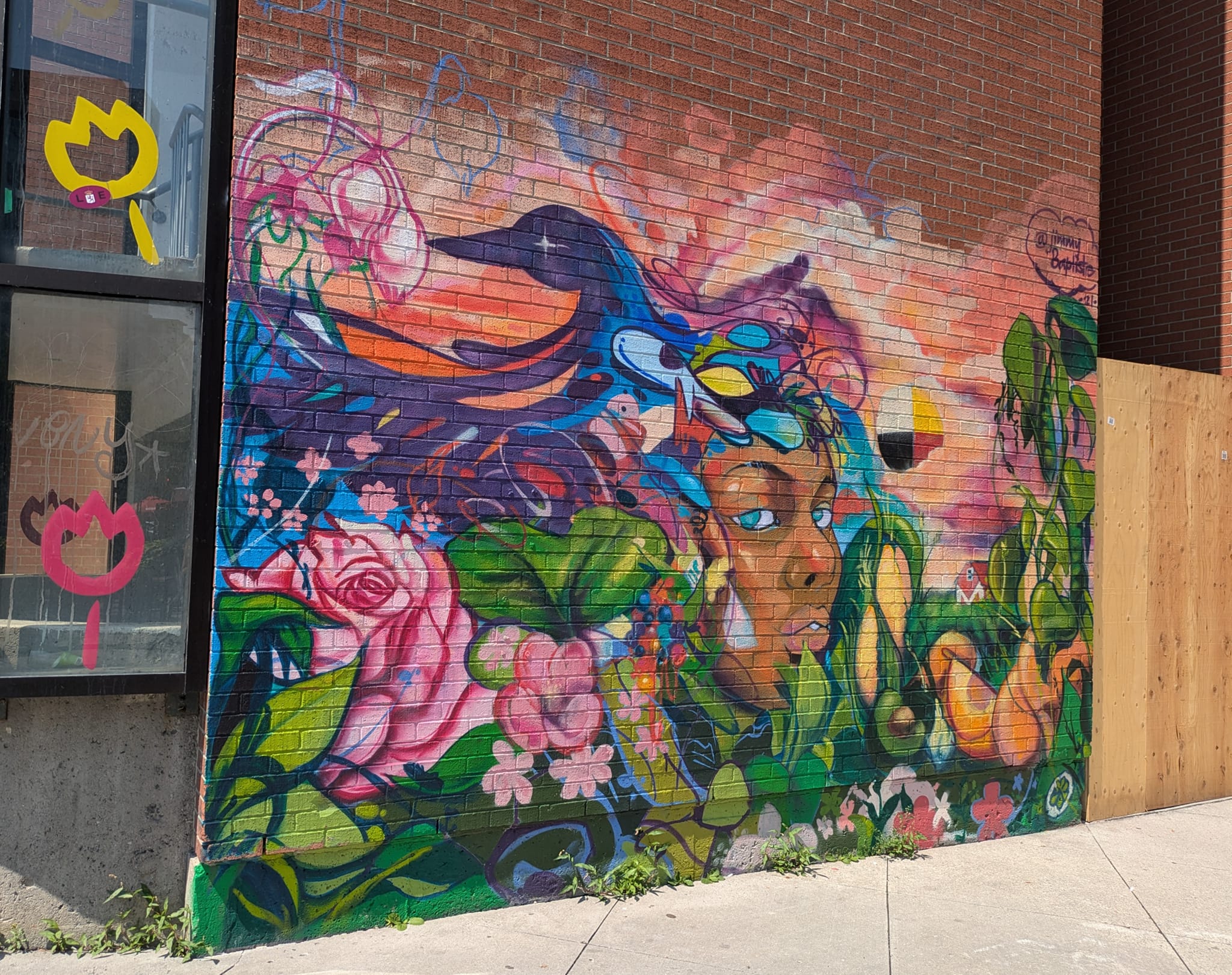
Québec City

Québec is still new to me, but upon my first observations, I’d say Québec is proud. This city is proud of its unique history, its industrious people, and even its imperfections.

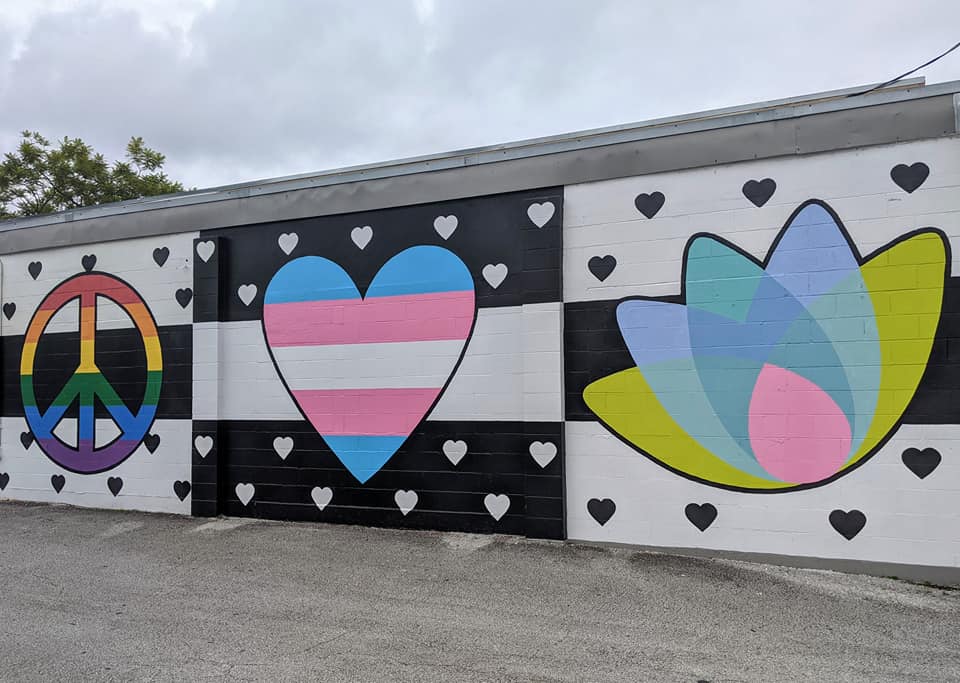
Ottawa, Canada

Ottawa is inclusive. This capital city is basically a microcosm of Canada’s Mosaic – there’s a little something from everyone on display here.

Guadalajara, México

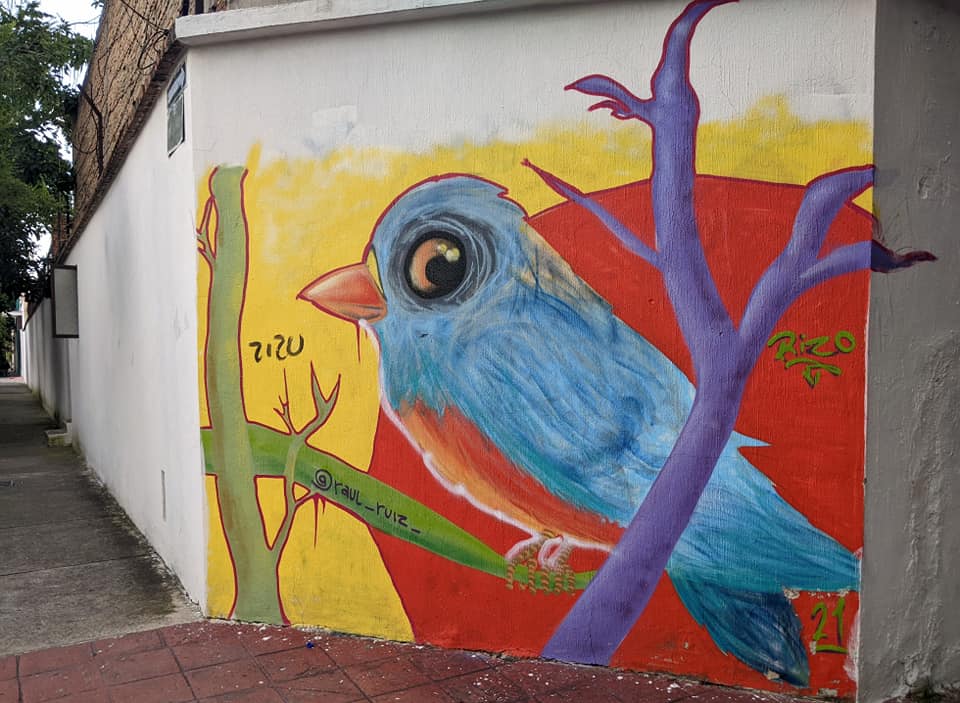
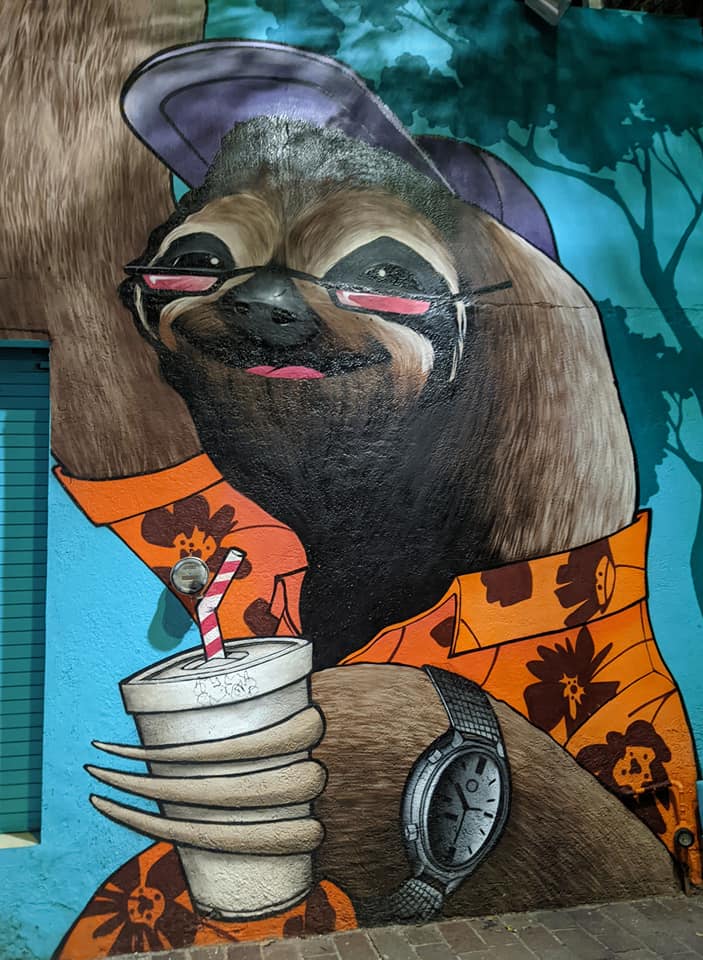
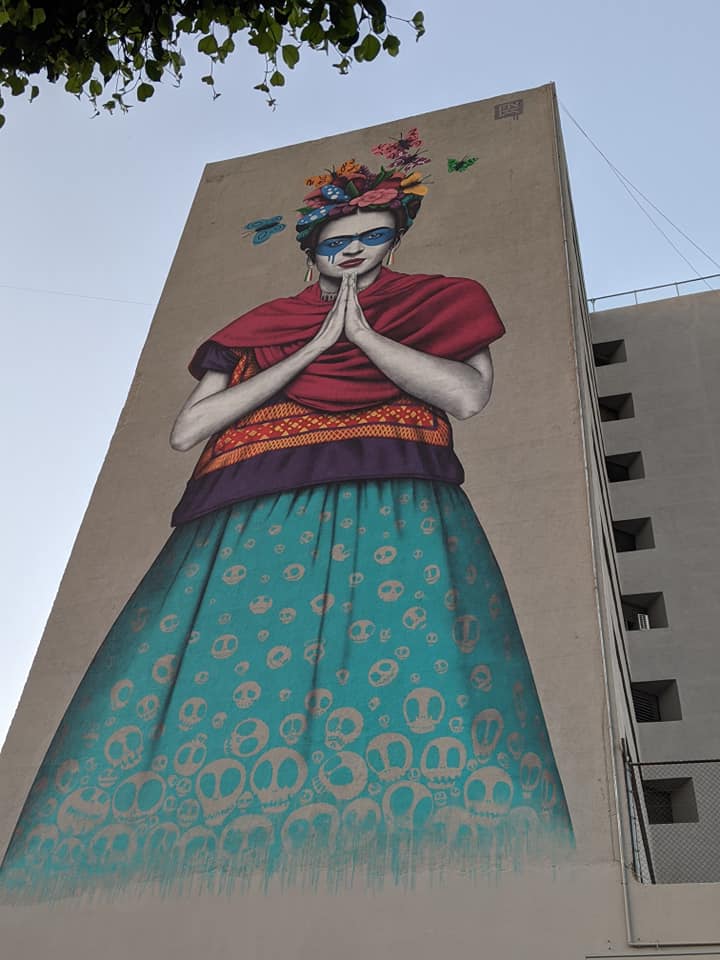
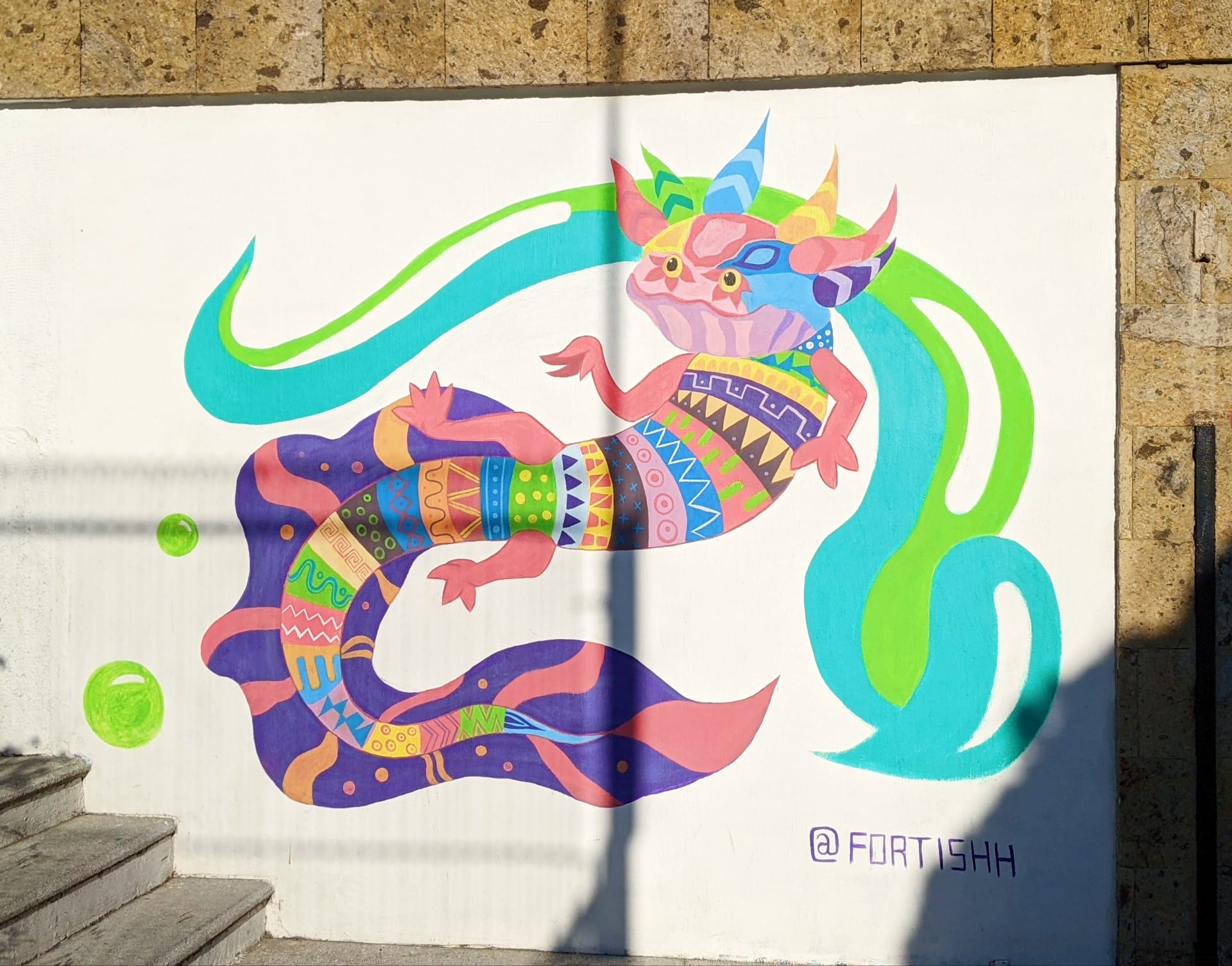
Guadalajara is vibrant. This city, and much of the country really, is so alive and so fun, and that is immediately evident in its street art.

Orlando, Florida

Orlando is colorful. The people here are about as colorful as they come, and all those different cultures and backgrounds come together to make the beautiful rainbow that is Orlando.

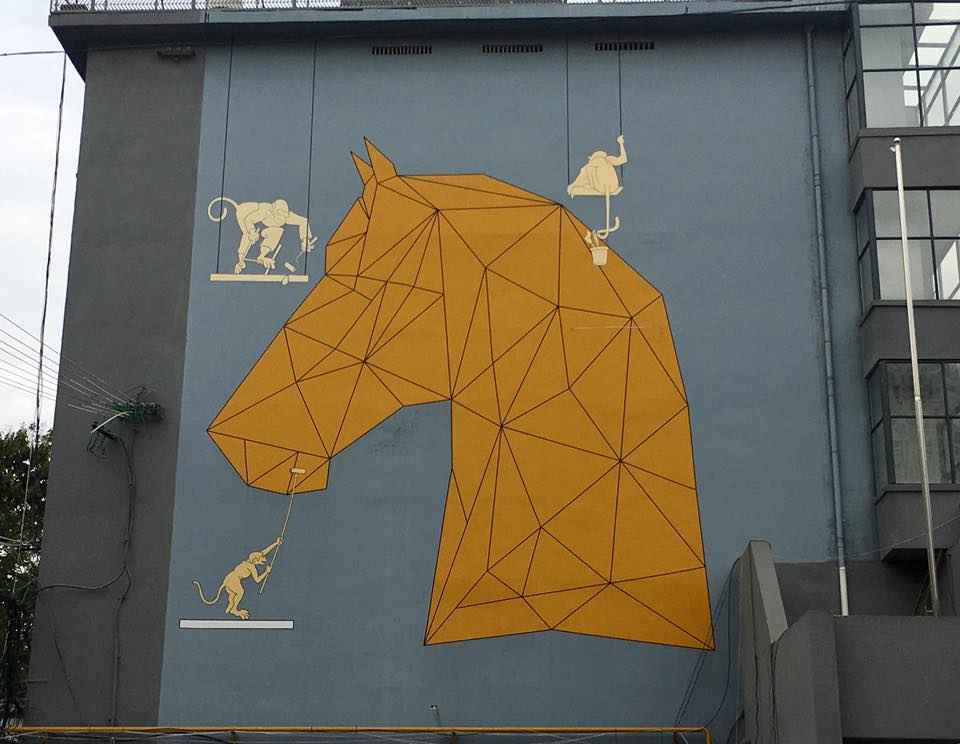
Hefei, China

Hefei is prudent. This is a place where art and function collide. Like the city and its inhabitants, the art here is generally purposeful as well as captivating.

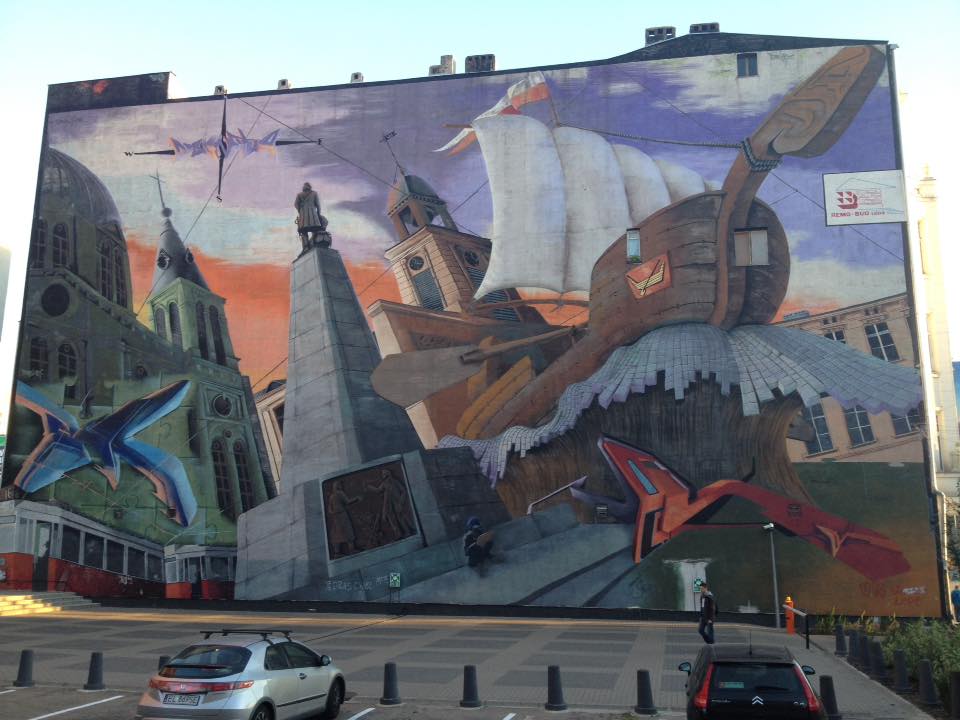
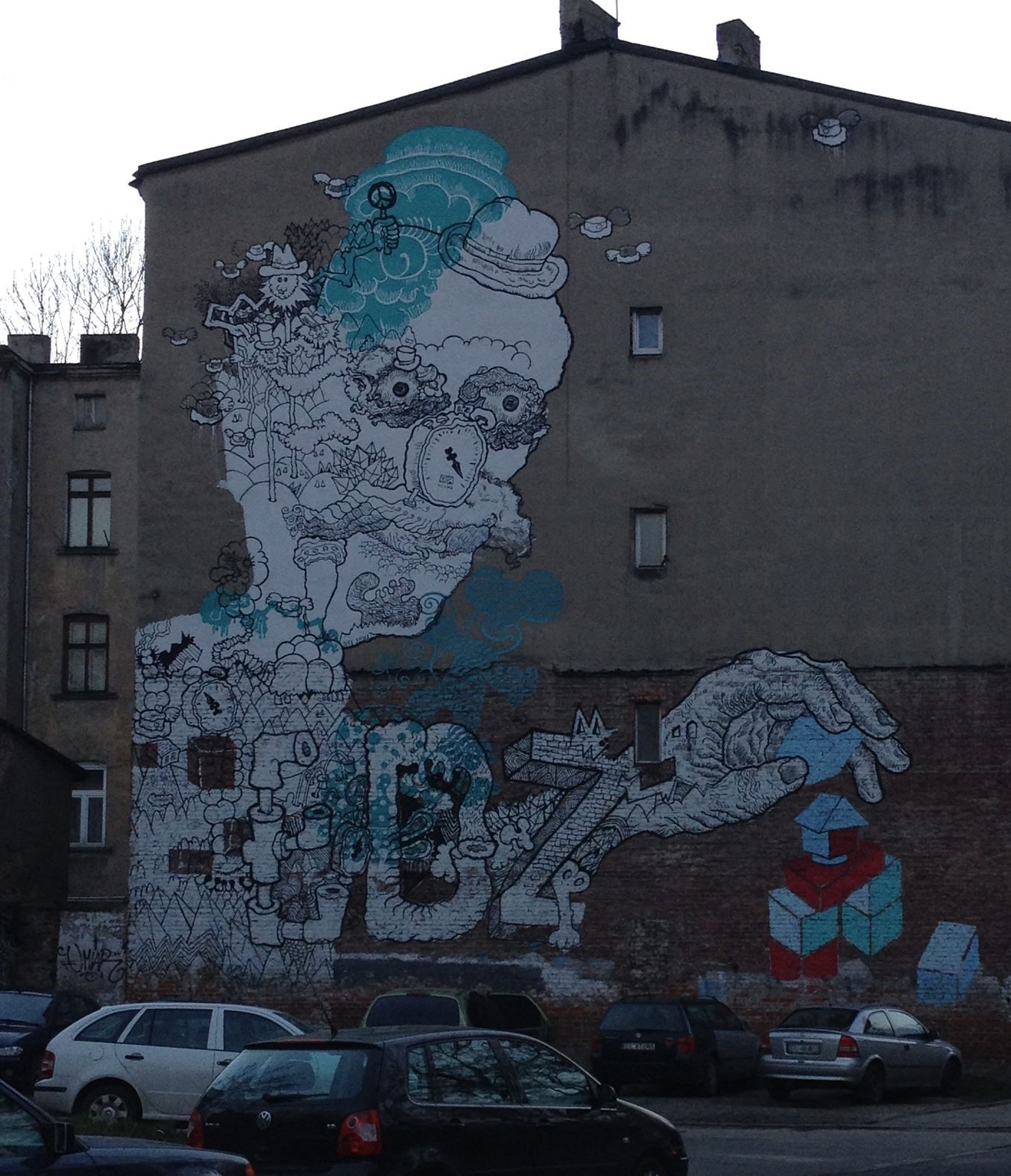
Łódź, Poland

Łódź is quirky. The dark events of its past are evident, but the people here are experts at remembering the past while still enjoying the present.

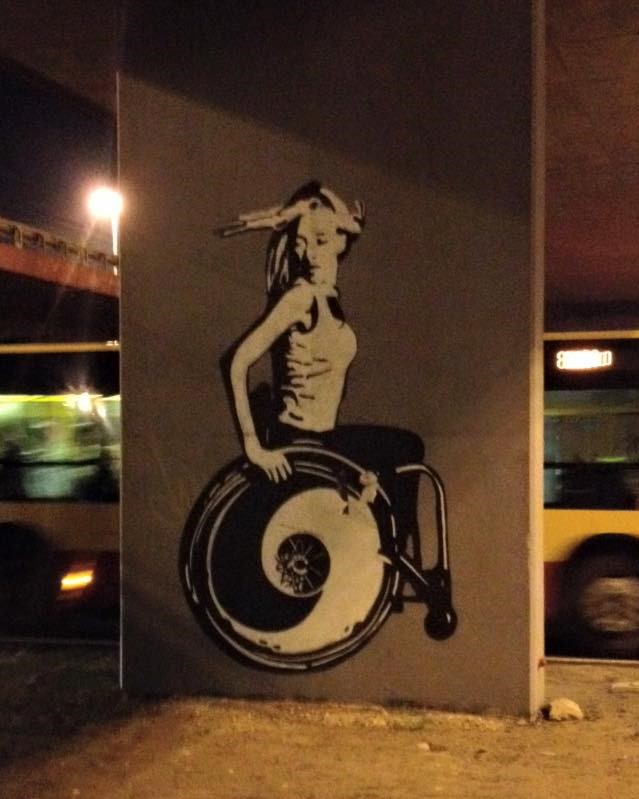
Of course, it’s easier to see these patterns and make these connections when living in the heart of a city, experiencing the culture day after day. But I think if you look carefully, you can pick up the vibes of any city from even just a glance at its art. Here are some more examples of murals that I think capture the spirit of their homes.

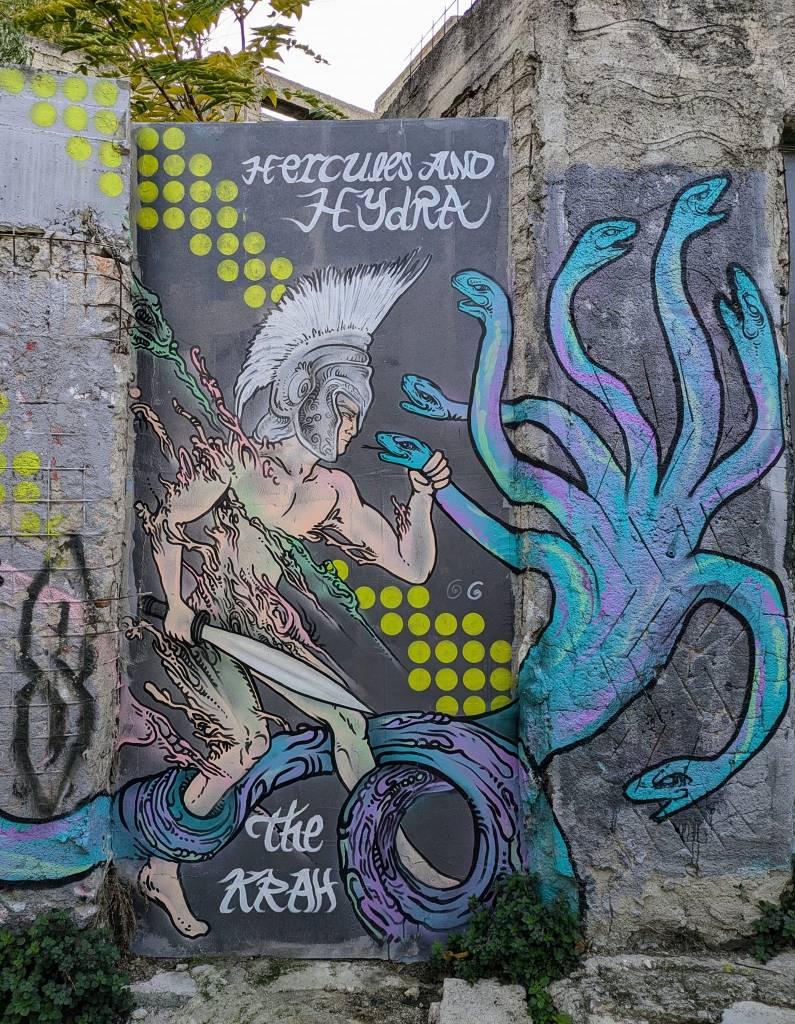
Athens, Greece

Atlanta, Georgia, USA

Bogotá, Colombia

Cancún, México

Denver, Colorado

Hong Kong

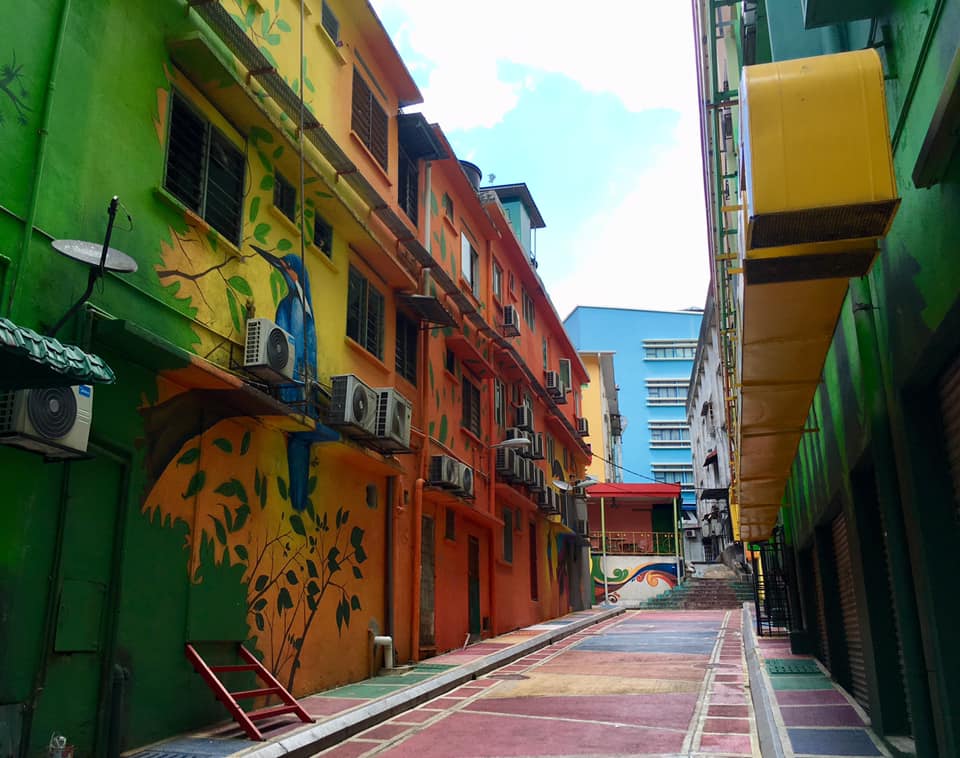
Kuala Lumpur, Malaysia

Montevideo, Uruguay

Paris, France

Pisa, Italy

Quito, Ecuador

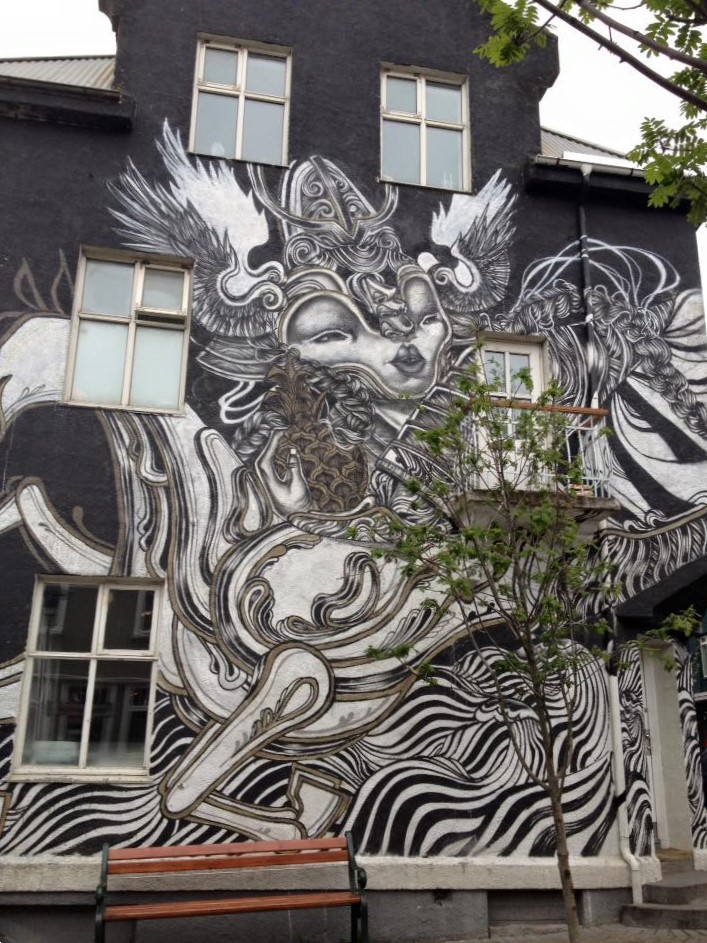
Reykjavík, Iceland

Singapore

Tampa, Florida

Tokyo, Japan

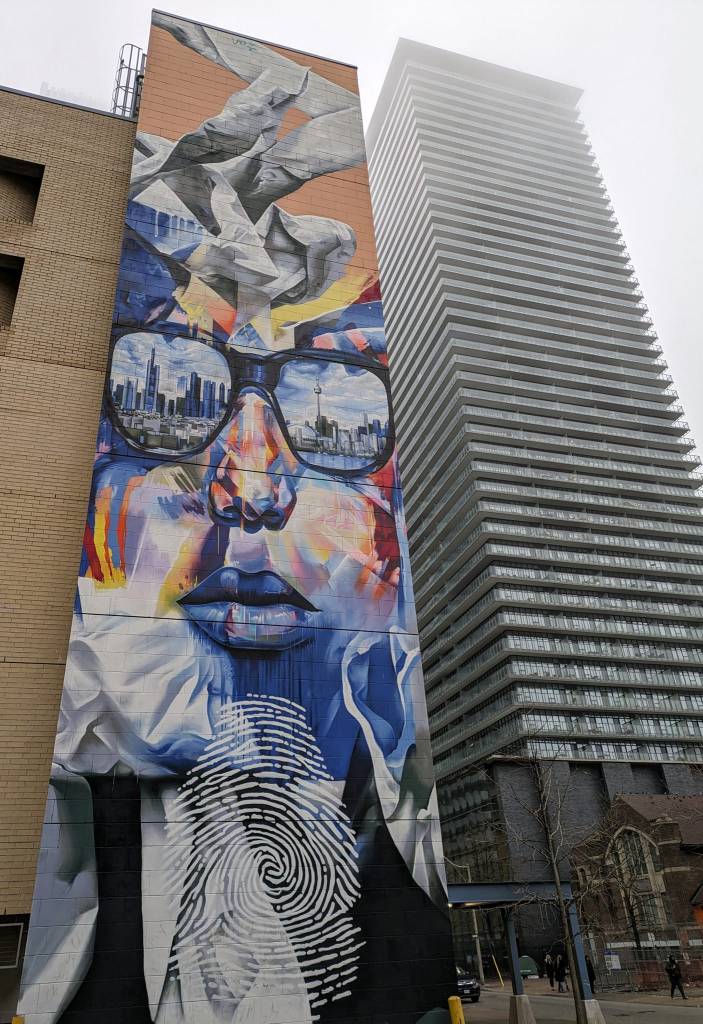
Toronto, Canada

Townsville, Queensland, Australia

So, what do you think? Do the murals match the vibes?

Some of the Prettiest Views in Ottawa

As I was writing about all the fun things to do in Ottawa, I realized some of my favorite places in the city wouldn’t make it on the list. They don’t have activities per se, but they’re really beautiful and perfect for just walking, sitting, thinking, and/or taking pictures. So, in no particular order, I give you:

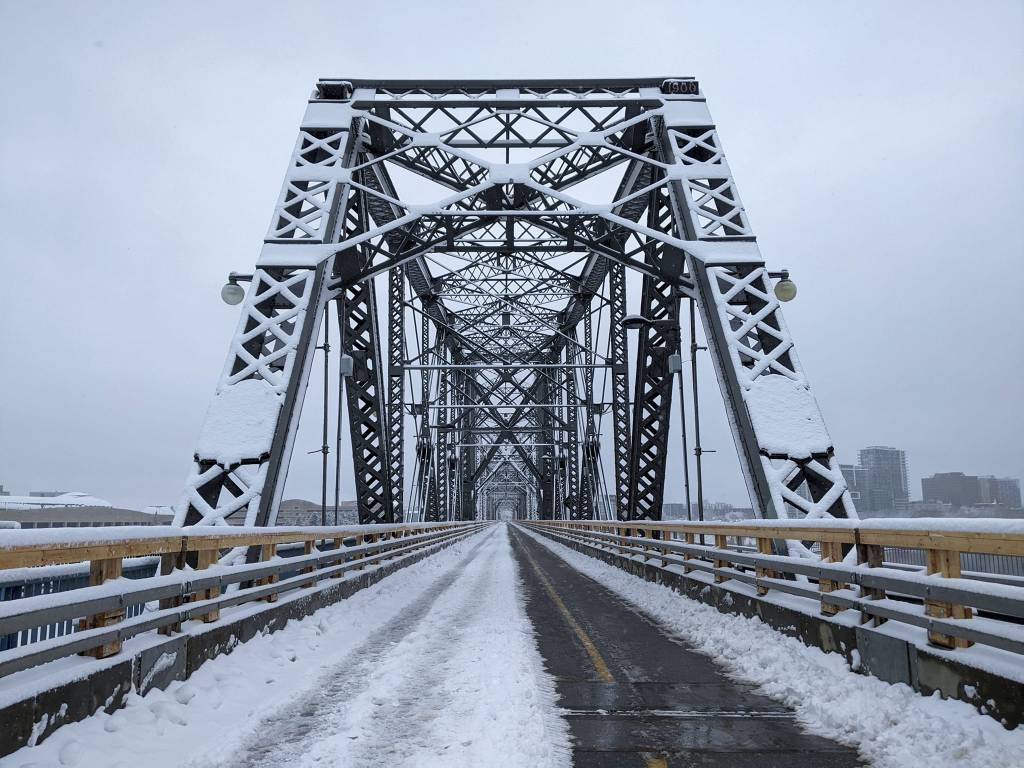
Alexandra Bridge

Rideau Falls

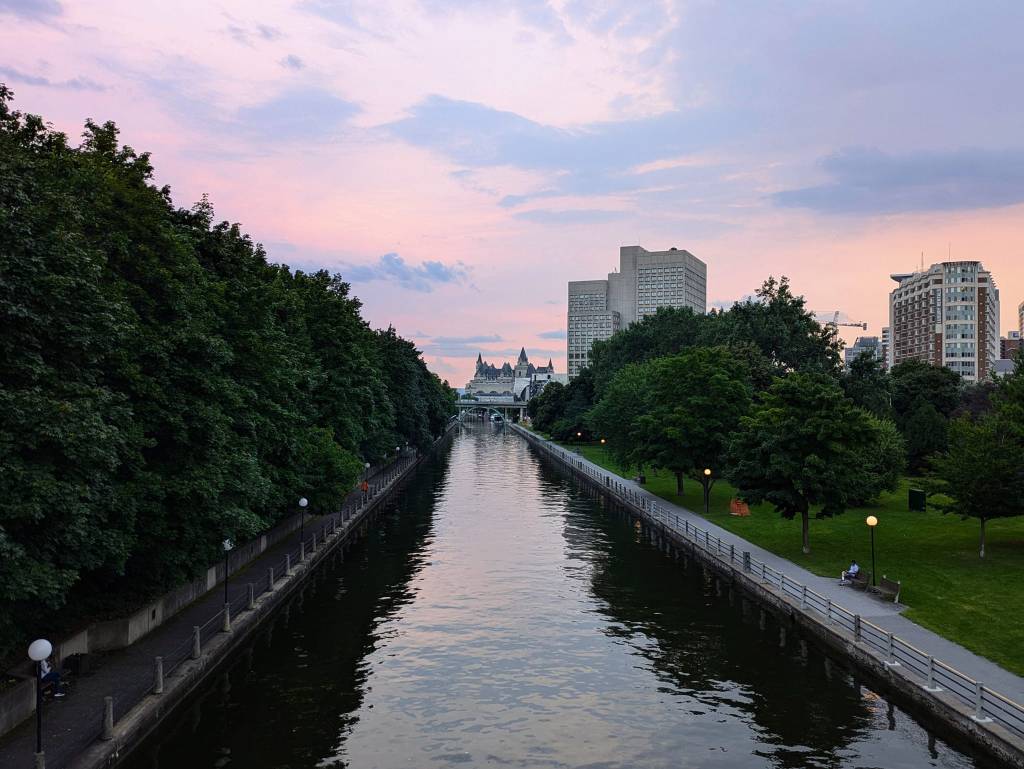
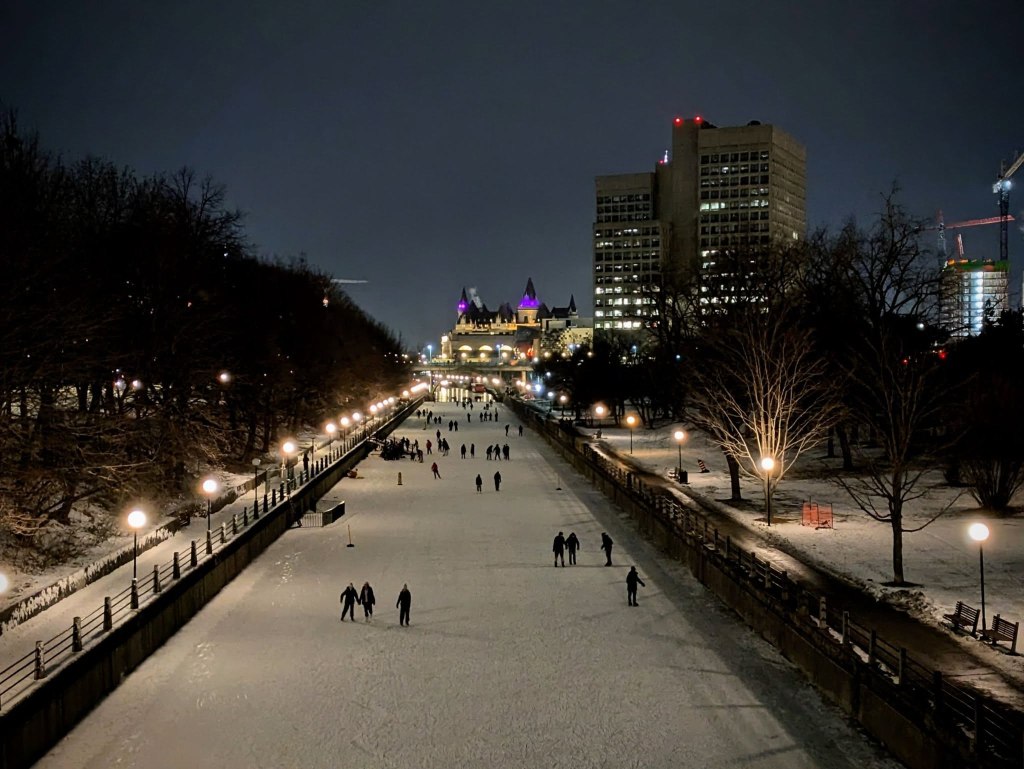
Major’s Hill Park & the Chateau Laurier

Rockcliffe Lookout

The Corktown Footbridge

Stanley Park

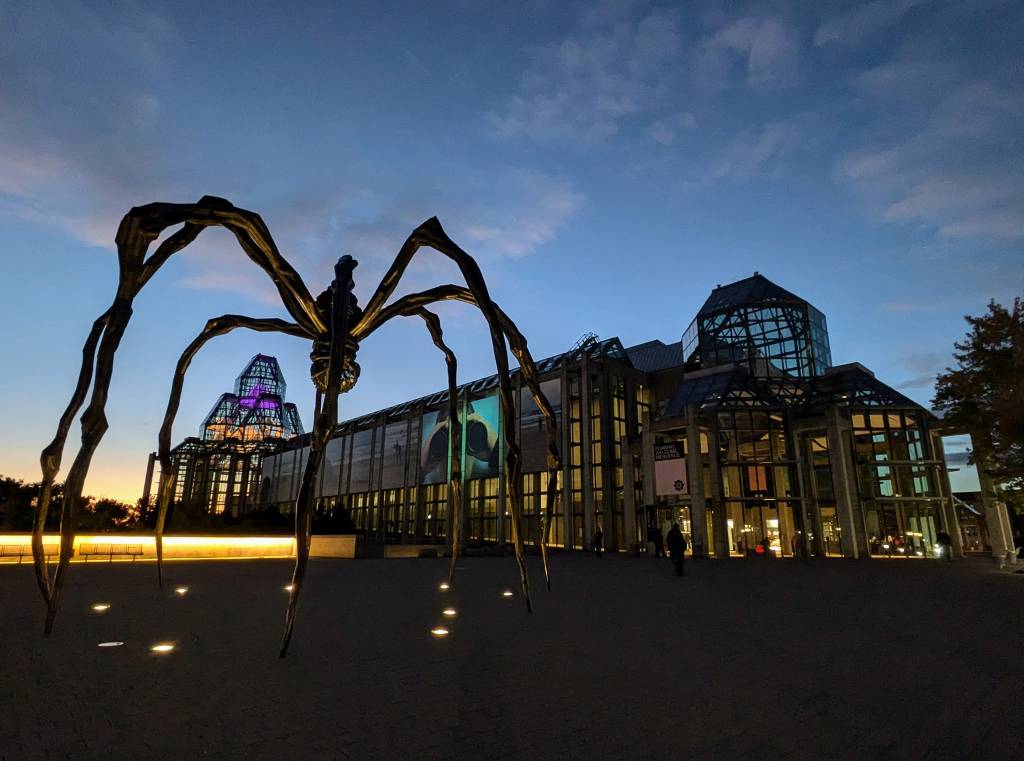
Maman & the National Gallery of Canada

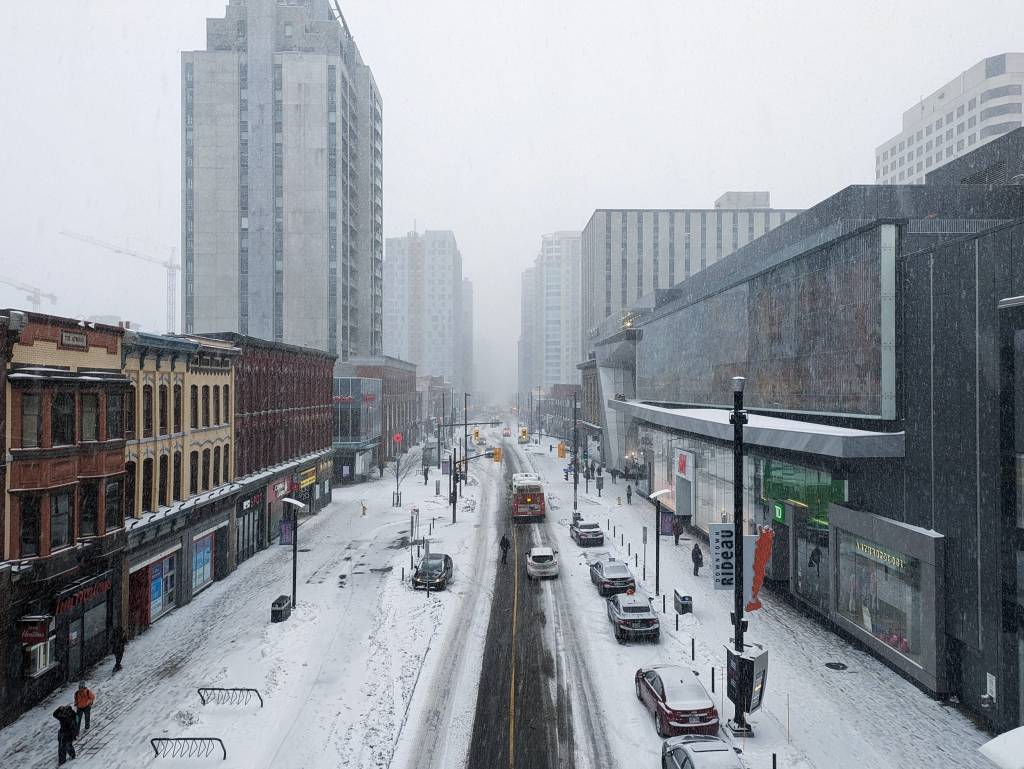
Hudson’s Bay Overpass

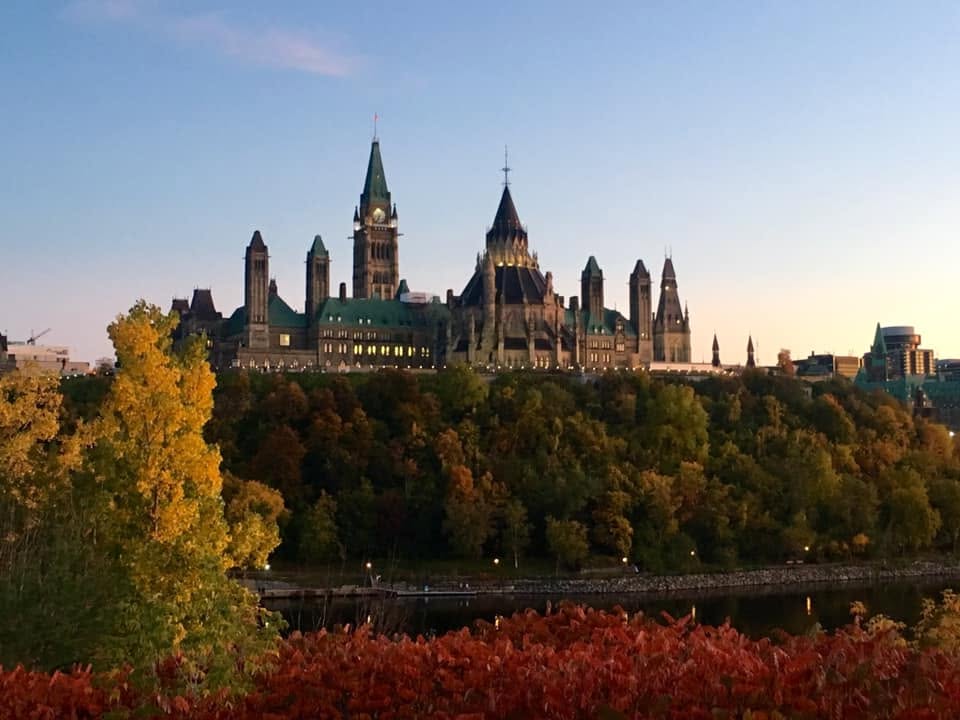
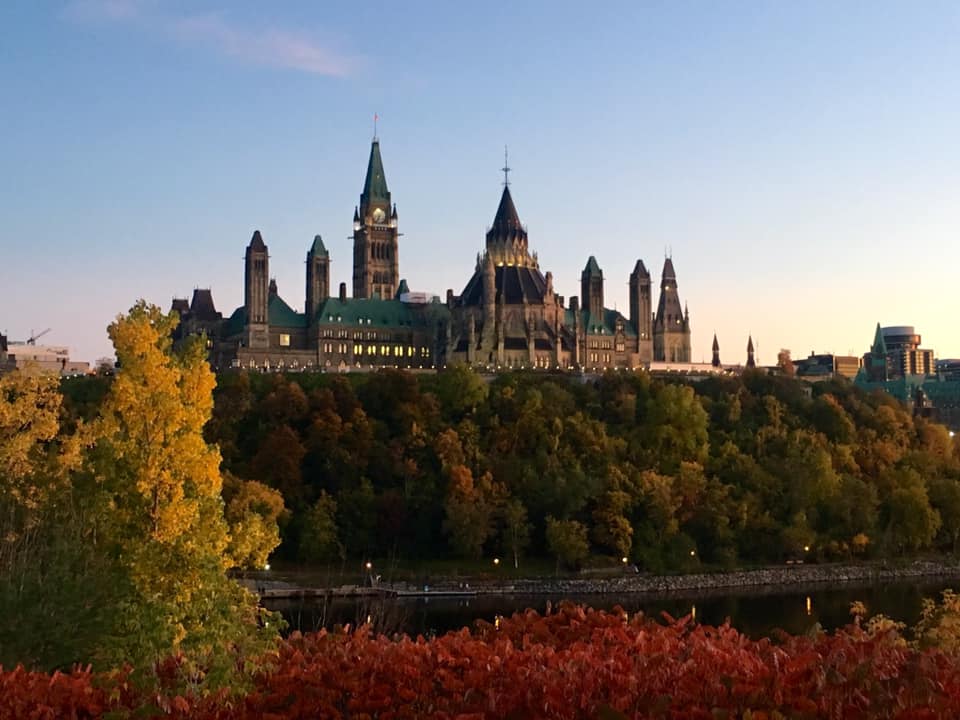
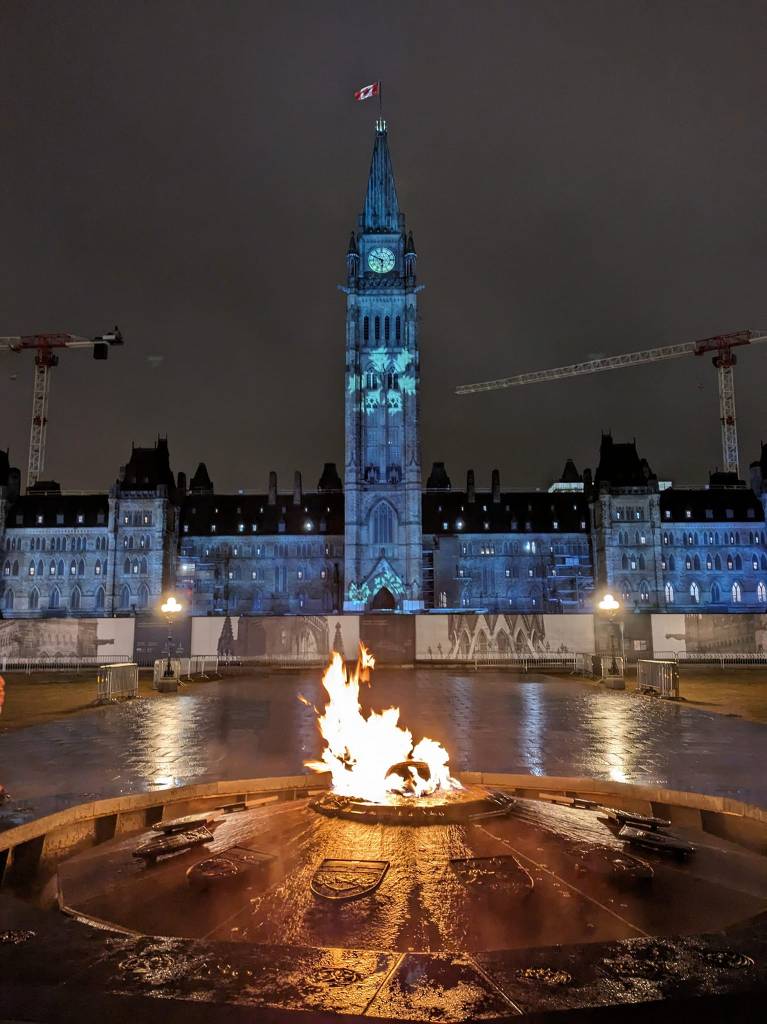
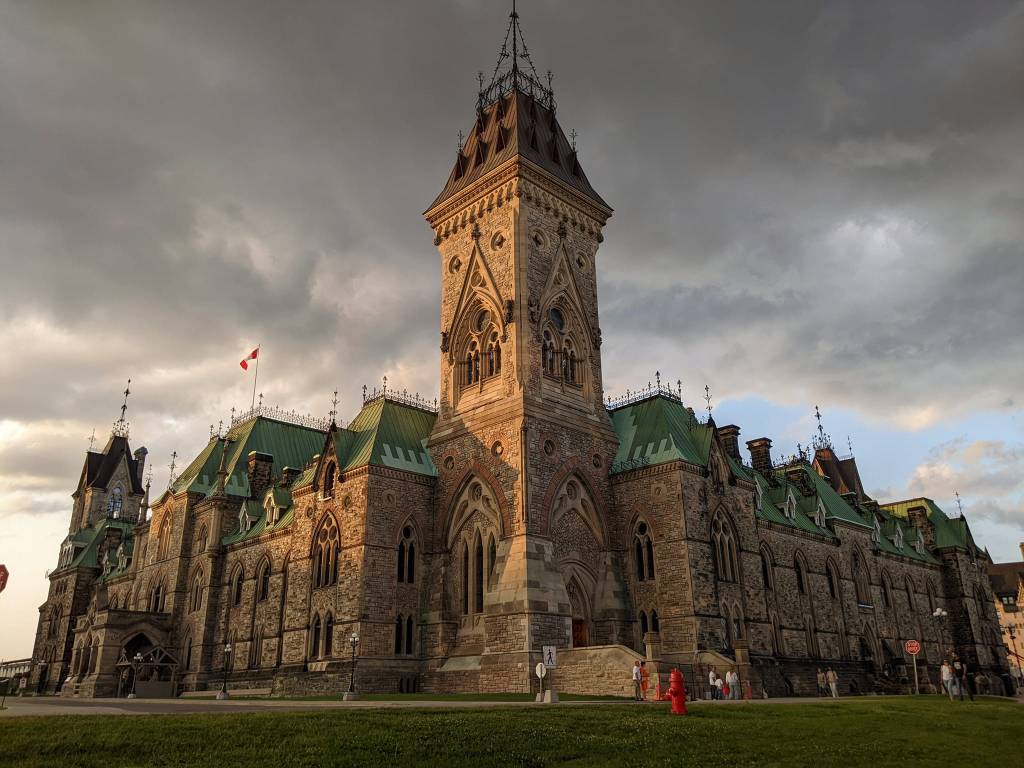
Parliament Hill

The Ottawa Sign

Our Top Picks for the Prettiest Places We’ve Visited (so far!)

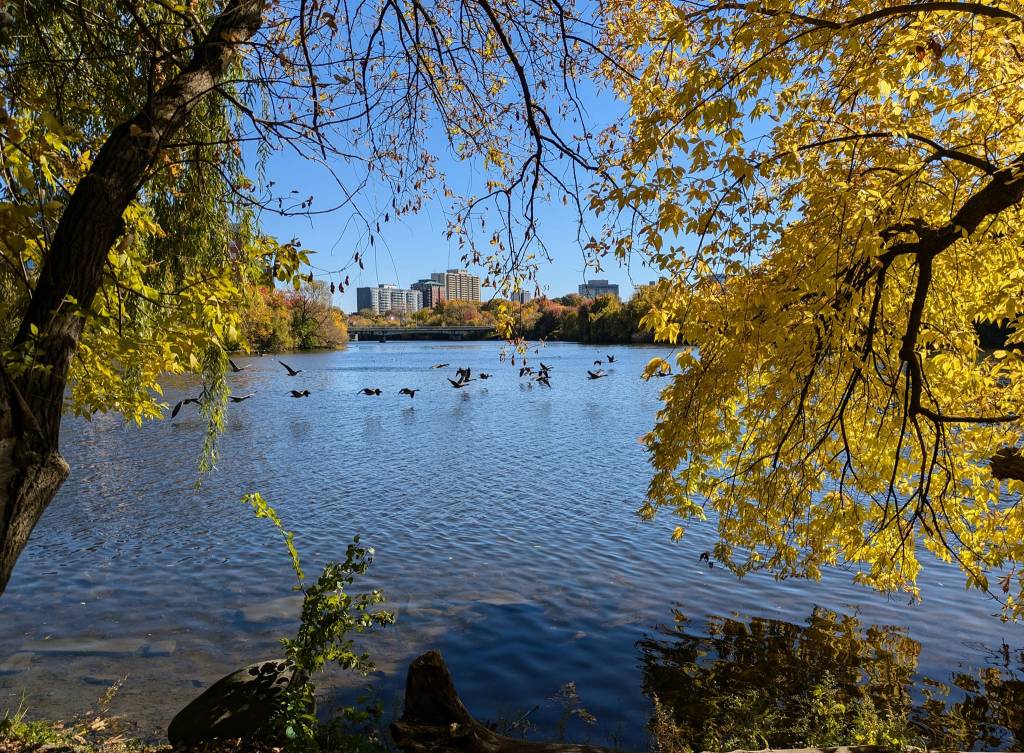
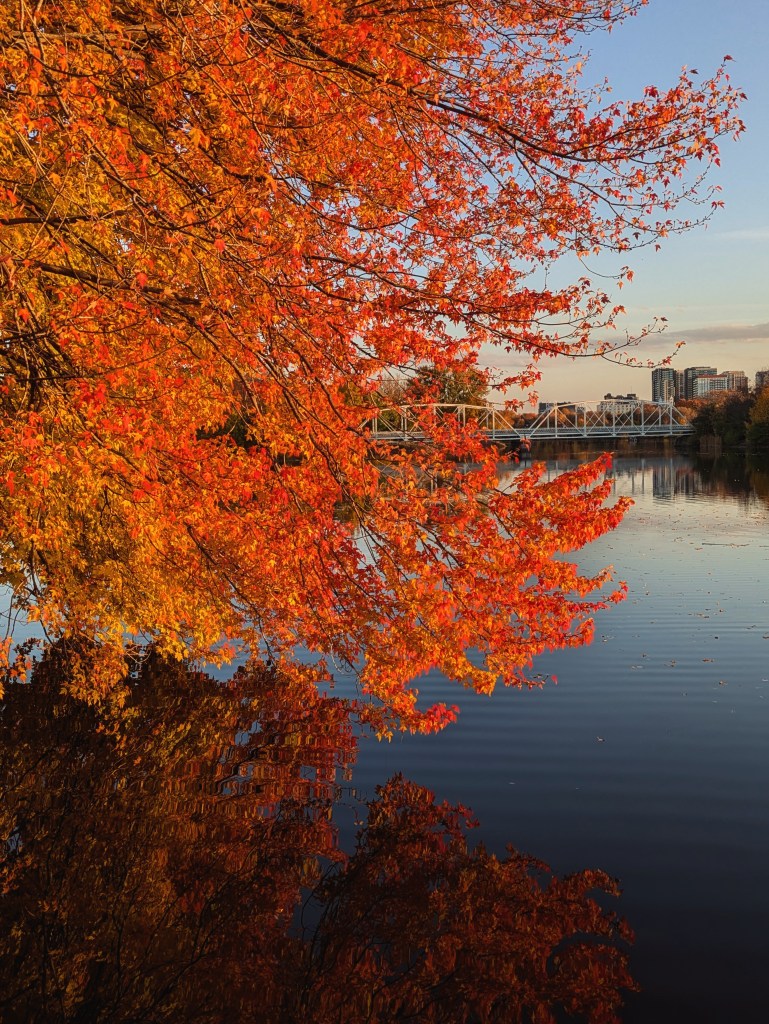
October in Ottawa is absolutely stunning, but I think regardless of the season, Ottawa might just be the prettiest place we’ve ever lived! But what about all the places we’ve visited over the years? To answer this extremely important question, Tucker and I scrolled through my Facebook albums to come up with our gut-reaction, top 10 prettiest places we’ve been list (in rough geographical order). It wasn’t an easy task, but somebody’s got to do it, right? Okay, maybe not, but it was still fun to do!

#1 Banff, Canada

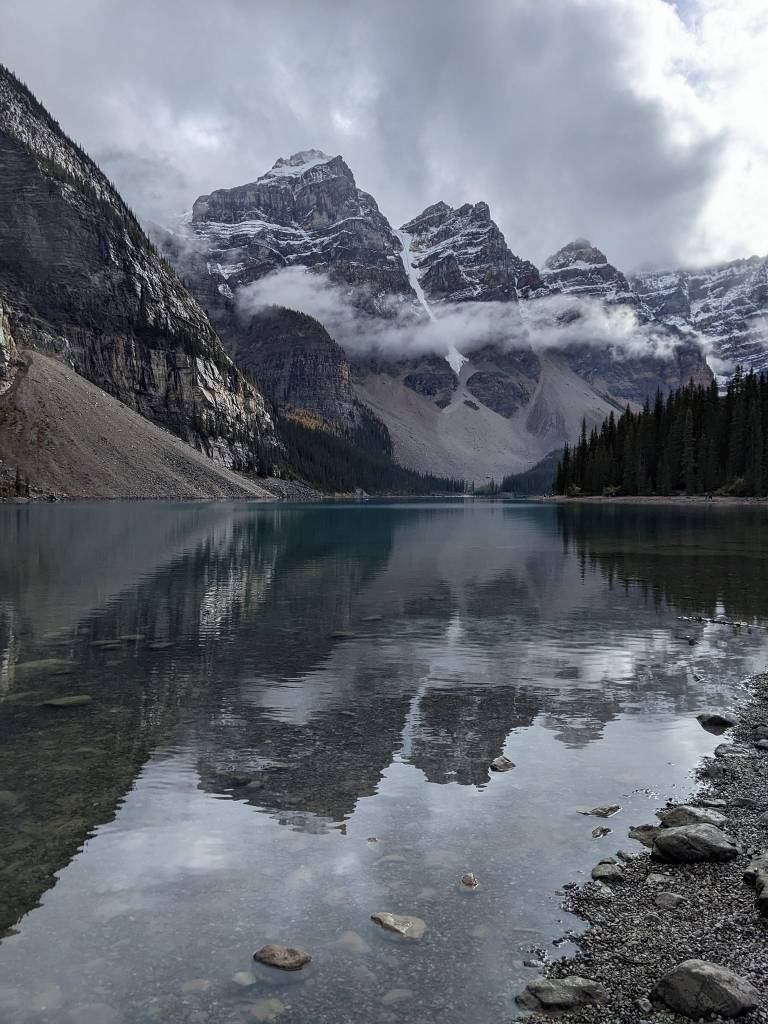
As I think will become quite clear as this lists progresses, we love a good mountain scene, especially in fall/winter, which is why Banff had to be mentioned. Even before stepping foot into Alberta, we knew Banff was going to be pretty based on all the media constantly swirling around this vacation destination, but we were still absolutely blown away by the dynamic beauty of the Canadian Rockies.

#2 Moab, USA

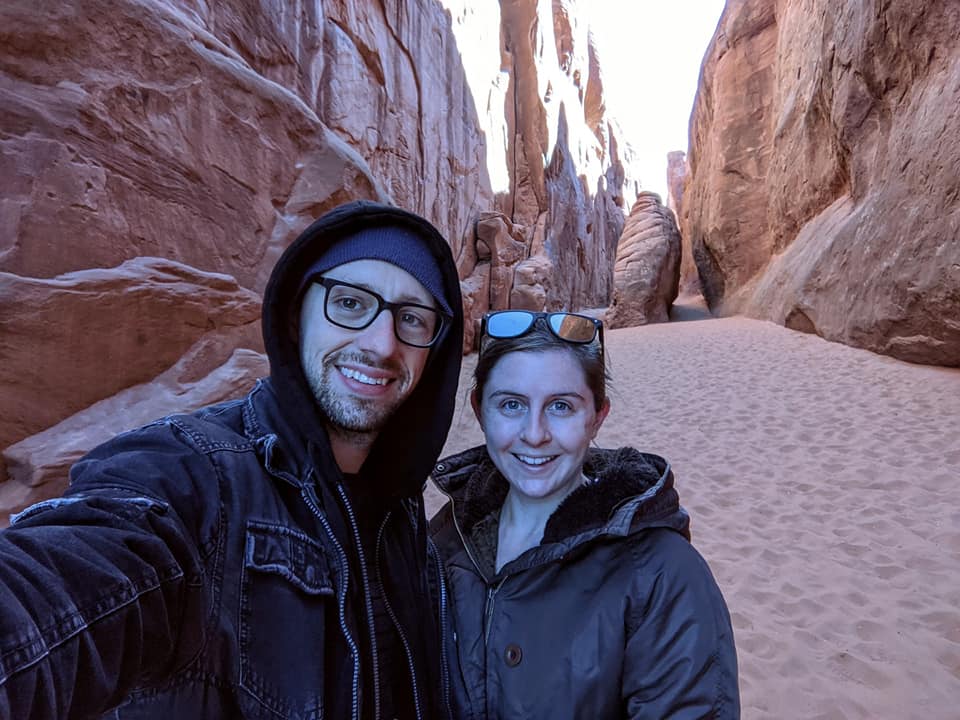
If you’ve known me for any length of time, you know my favorite place in the United States is Arches National Park, located in Moab, Utah. I don’t know exactly what it is that I love so much, but ever since I first laid eyes on it (around 20 years ago, mind you), it has been one of my favorite landscapes in the world.

#3 Quintana Roo, Mexico

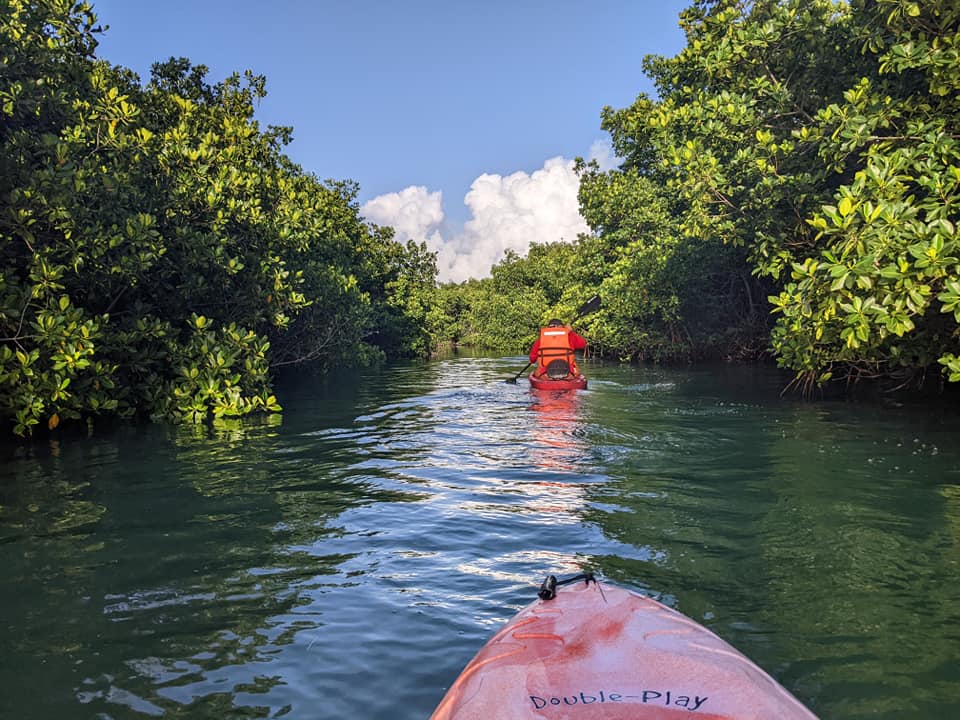
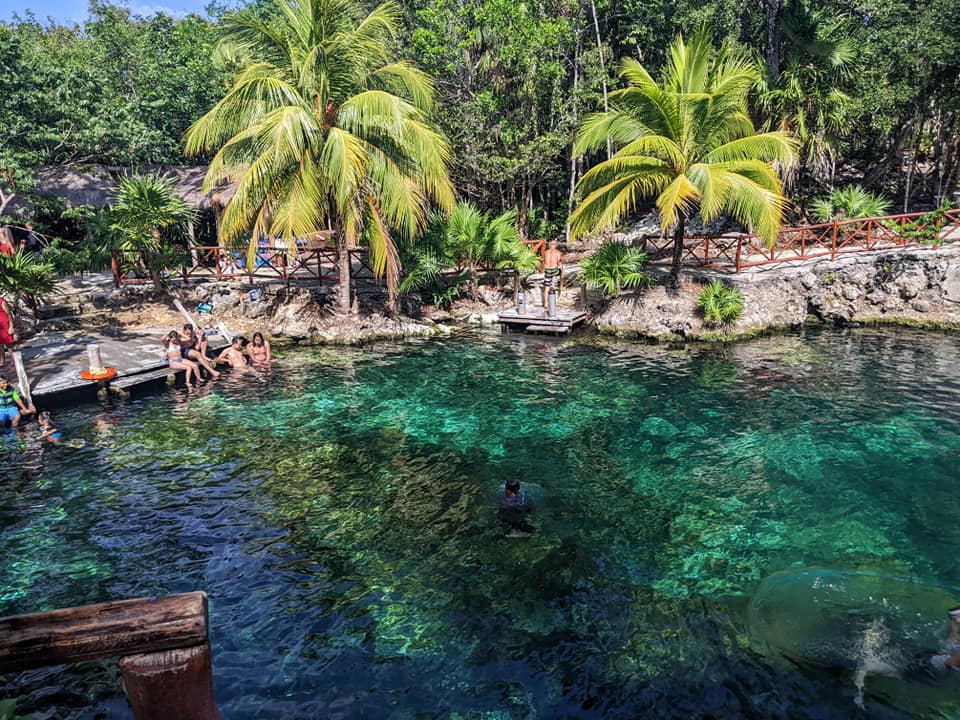
Although not usually beach people, Tucker and I have to concede that the beaches along Mexico’s Caribbean coast are simply on another level. Of course, it’s not just the beaches that we found so alluring – the cliffs, the cenotes, the lagoons, all of the nature and even some human-made structures in Quintana Roo really stand out to us on the prettiness scale.

#4 Cotopaxi, Ecuador

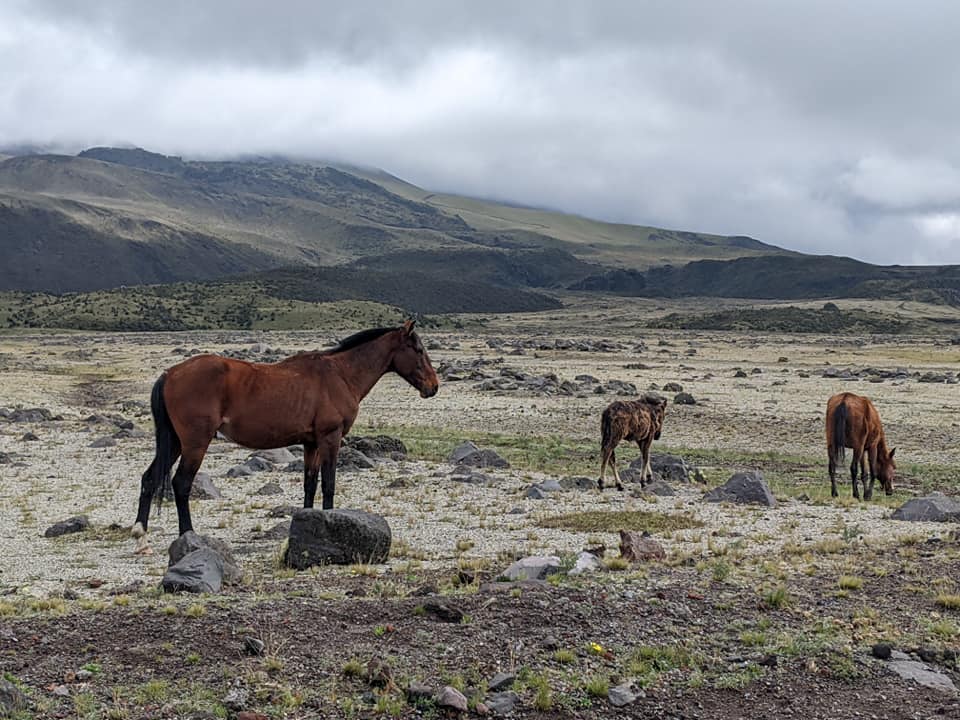
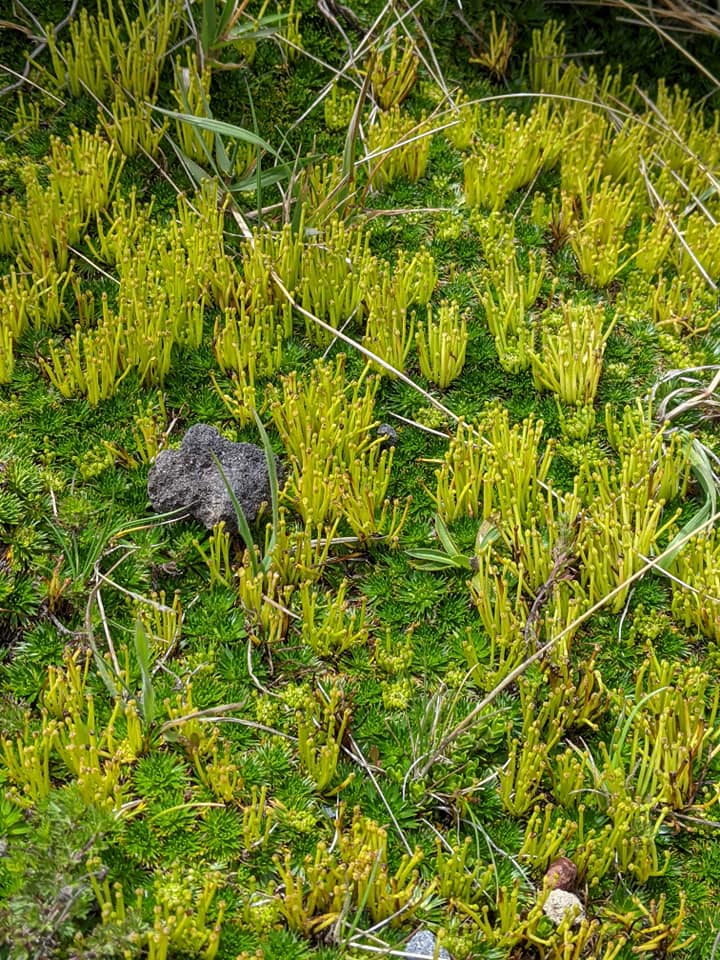
For pure, rugged beauty, there might not be a better example than Ecuador’s Cotopaxi National Park. Volcanos, calderas, pampas – even if you’re not a geologist, you can easily see the beauty these amazing natural features bring to the table.

#5 Ushuaia, Argentina

With beautiful snowy mountains, clear waters, and pink skies, Ushuaia is the closet you can get to Antarctica without a boat, and not only is it pretty, it’s pretty freaking awesome. Known as the “End of the World”, the remoteness only added to the beauty of this far-flung location.

#6 Bergen, Norway            

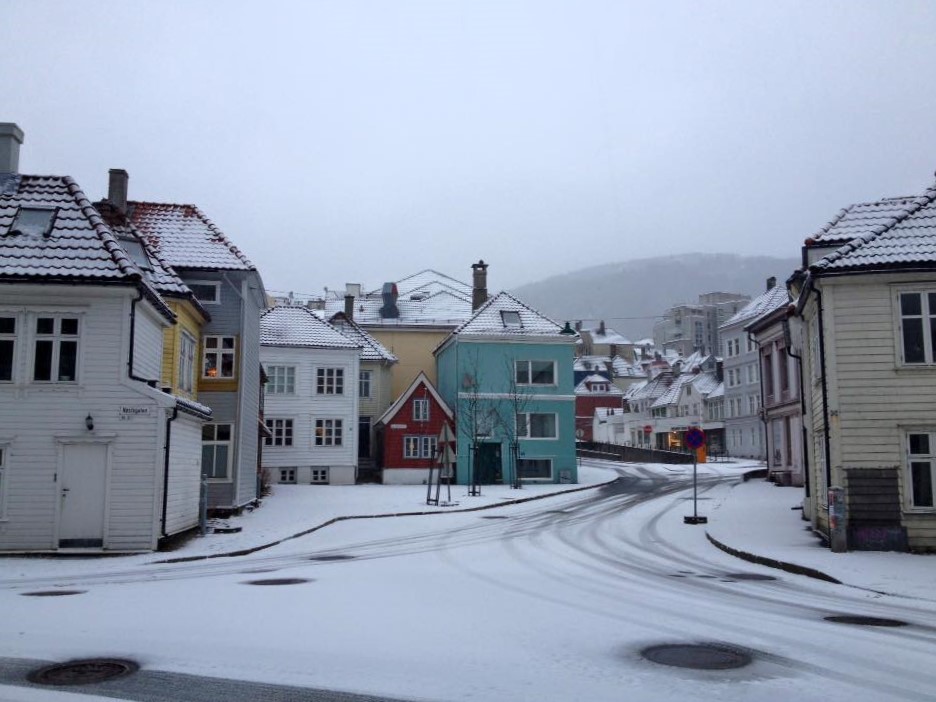
Tired of snowy mountains yet? Well, what if we add fjords to the mix? Bergen is another place we’ll always mention when talking about gorgeous surroundings. Of course, we loved it in winter, but I have friends who visited in summer, and their photos also took my breath away!

#7 Skopje, North Macedonia

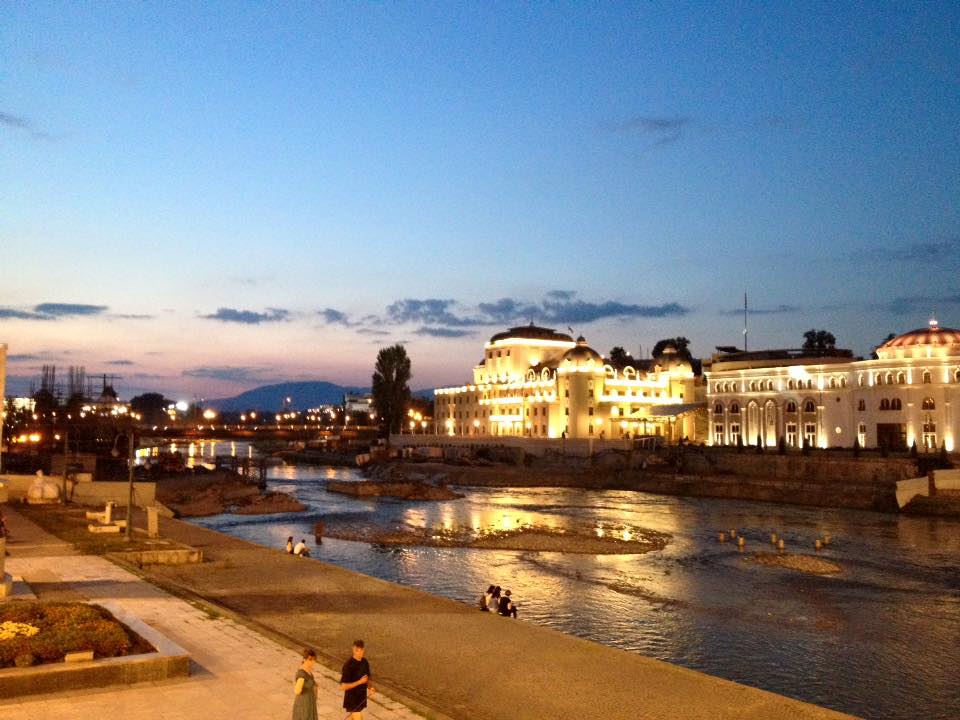
North Macedonia surprised us from the moment we landed. We ended up in Skopje because it was one of the cheapest places we could fly to at the time, and I’m so glad it was! The city is full of beautiful architecture, and with Matka Canyon only a short bus ride away, I’m continually surprised that it isn’t yet packed with tourists!  

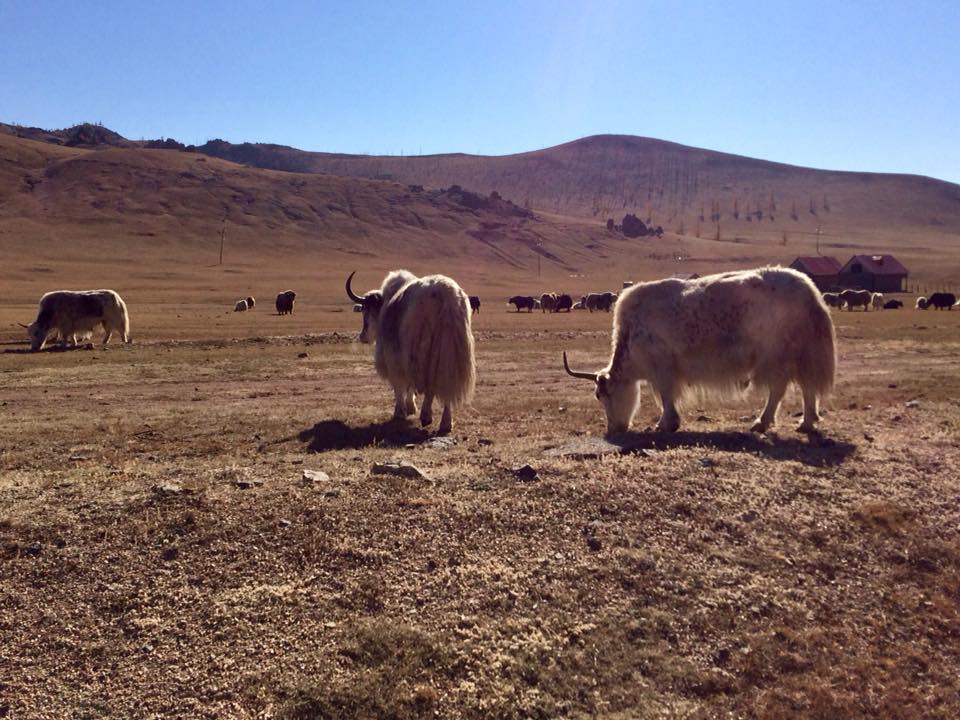
#8 Gorkhi-Terelj, Mongolia

Another one for the “rugged beauty” column, Mongolia is truly in a world of its own. More wide-open spaces than I’ve ever seen in my life and the bluest of blue skies gave us such a pretty picture of a place we never imagined we’d be able to see in person.

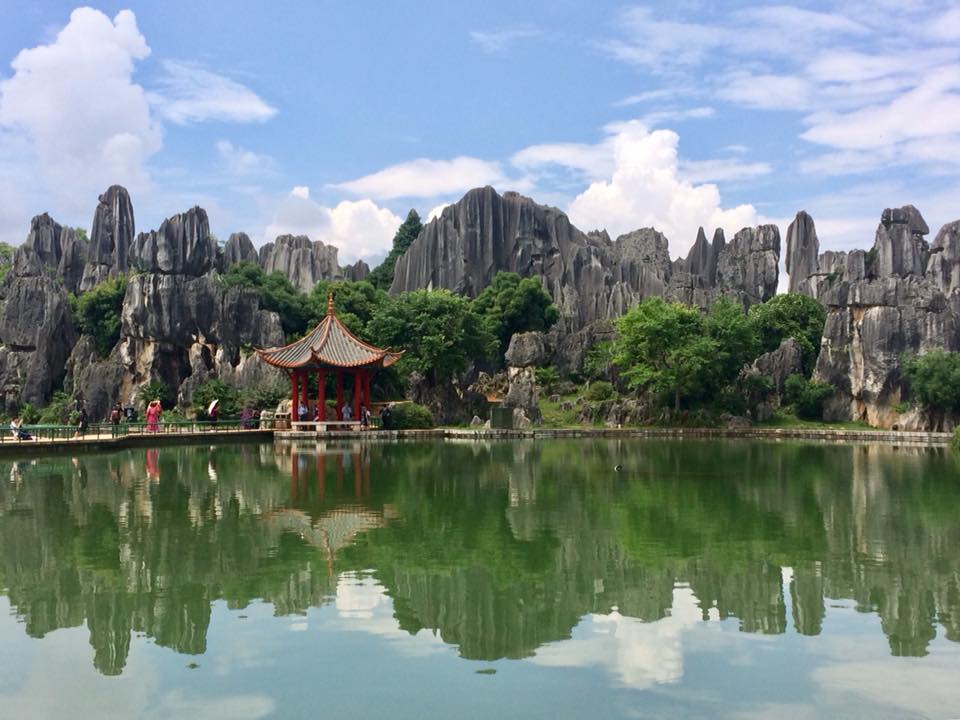
#9 Yunnan, China

As with several countries already on this list, sometimes we found it difficult to narrow down to just one region. China has a lot of extremely beautiful places, but the one that tops the list for us (excluding any biases, of course) is Yunnan. A province in the southwest corner of the country, it is blessed with an abundance of flora and fauna, and its capital is known as the “City of Eternal Spring” – it doesn’t get much prettier than that!

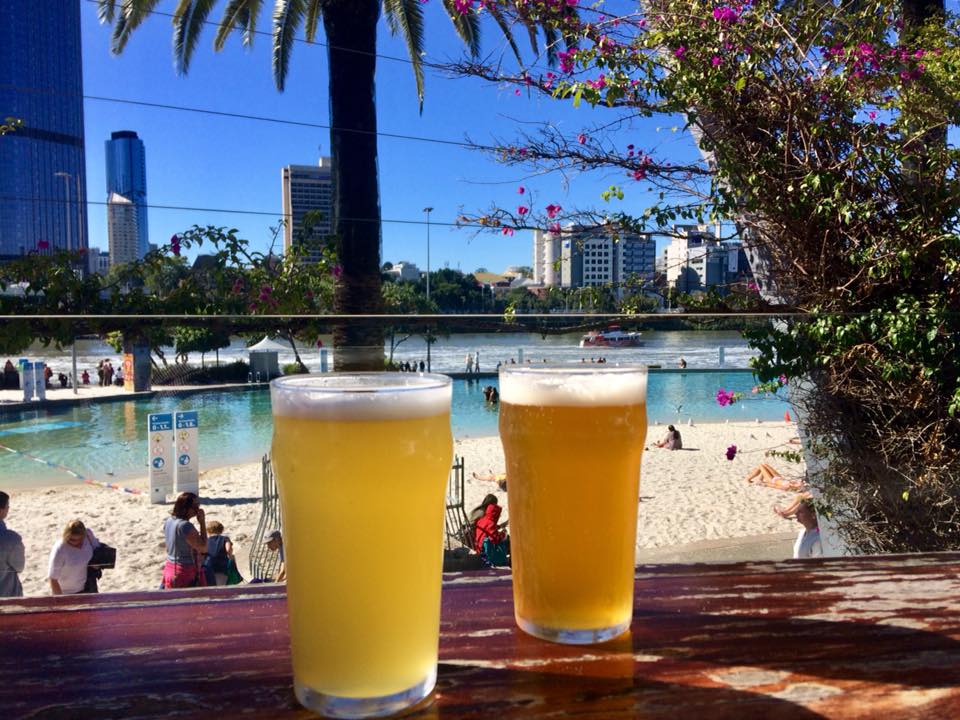
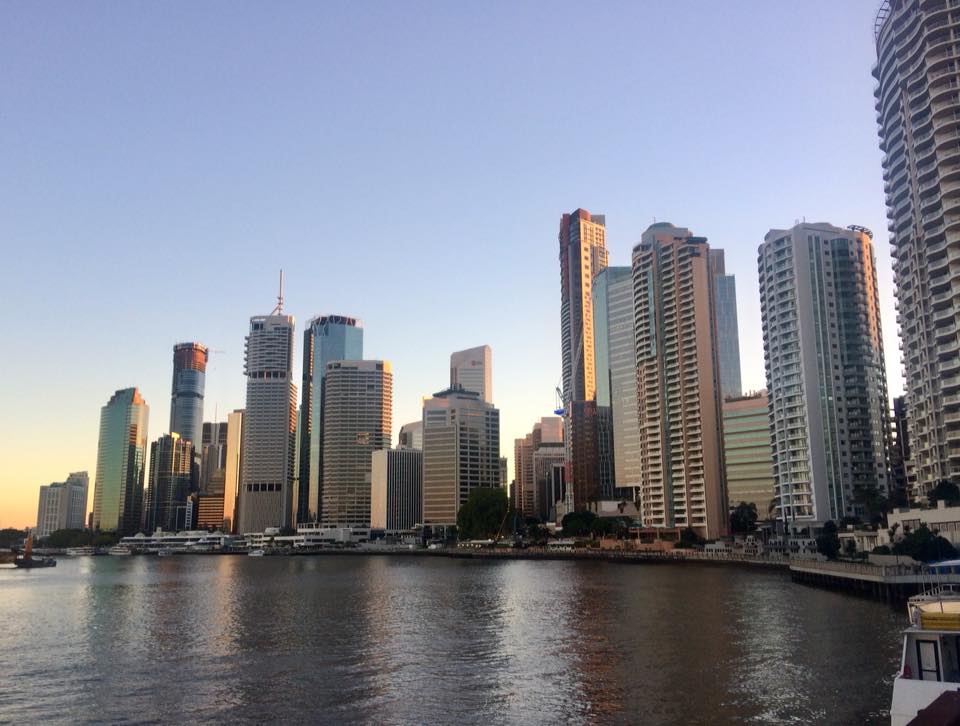
#10 Brisbane, Australia

And last but not least, Brisbane, Australia rounds out our list! It’s located between Sunshine Coast and Gold Coast, which even sounds pretty, but what struck us even more than the beautiful beaches nearby was the city itself. Gorgeous skylines, quirky architecture, and the only (and therefore most beautiful) “city beach” we’ve ever seen. Definitely worth the long trip Down Under!

Honestly, getting this list down to just 10 was really tricky, but in the end, I feel good about our choices. Of course, the pictures never really do the places justice, so if you can, I highly recommend seeing these beauties in person some day! If a picture is worth a thousand words, then a trip must be worth a million.

Beautiful Banff

Last month, Tucker and I continued our Canadian explorations with a trip to Banff, Alberta. Of course, Banff had been on our list long before we knew we’d be living in Canada, and we can now say with absolute certainty that it should be on everyone’s bucket list! We were truly blown away with the seemingly infinite number of stunning views, trails, waterfalls, glaciers, and all sorts of other incredible landscapes. In fact, I had trouble narrowing down our plans to fit neatly into a one-week trip (many people spend weeks or months trekking around Banff and Jasper National Parks, and I now know why). But since most of us can’t do that, I thought I’d share our experience, which could be useful to others in planning their own epic trip to Banff!

Calgary, Alberta

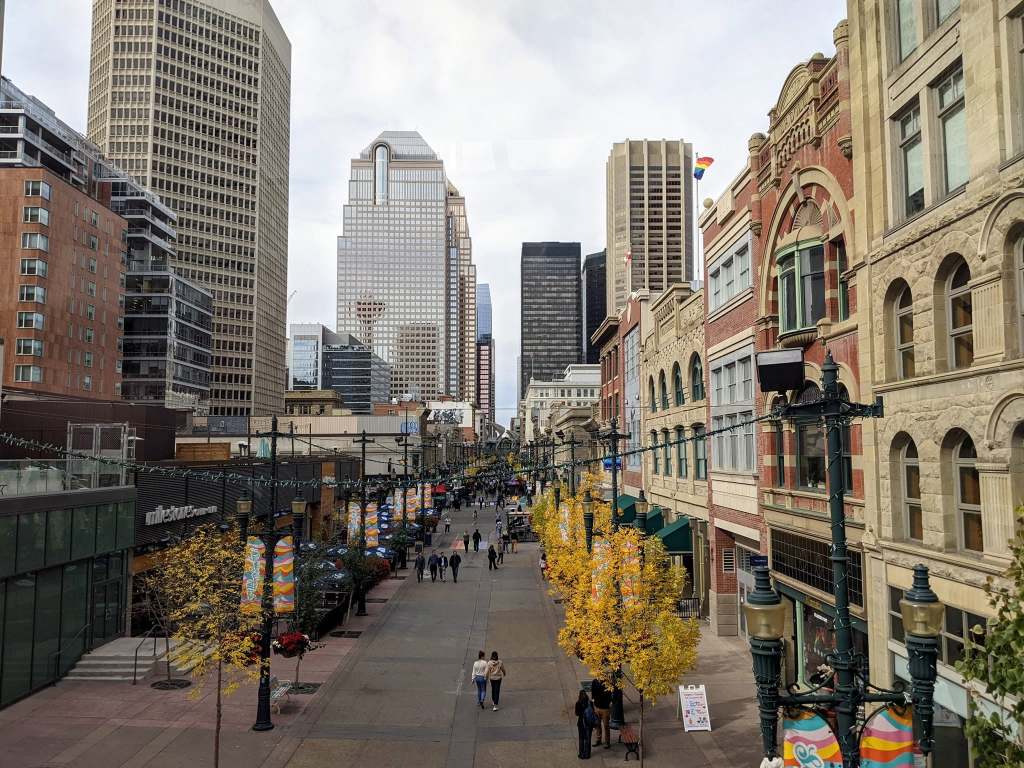
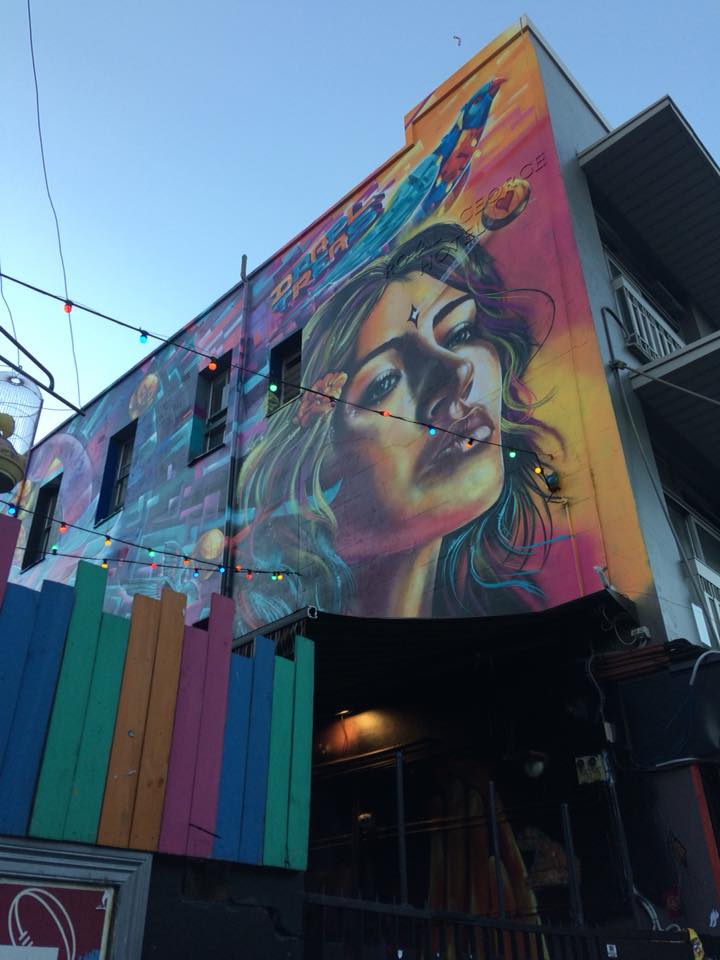
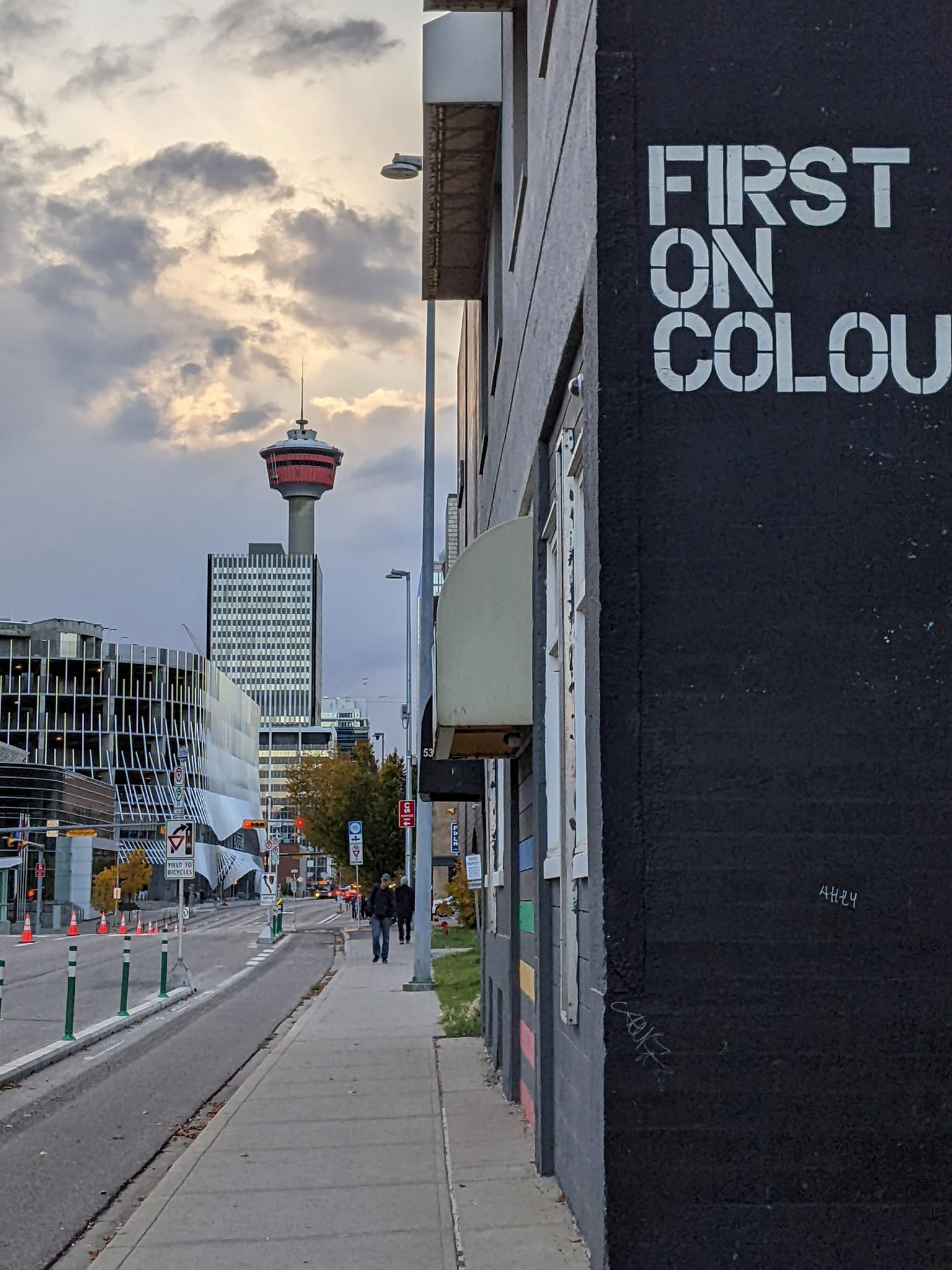
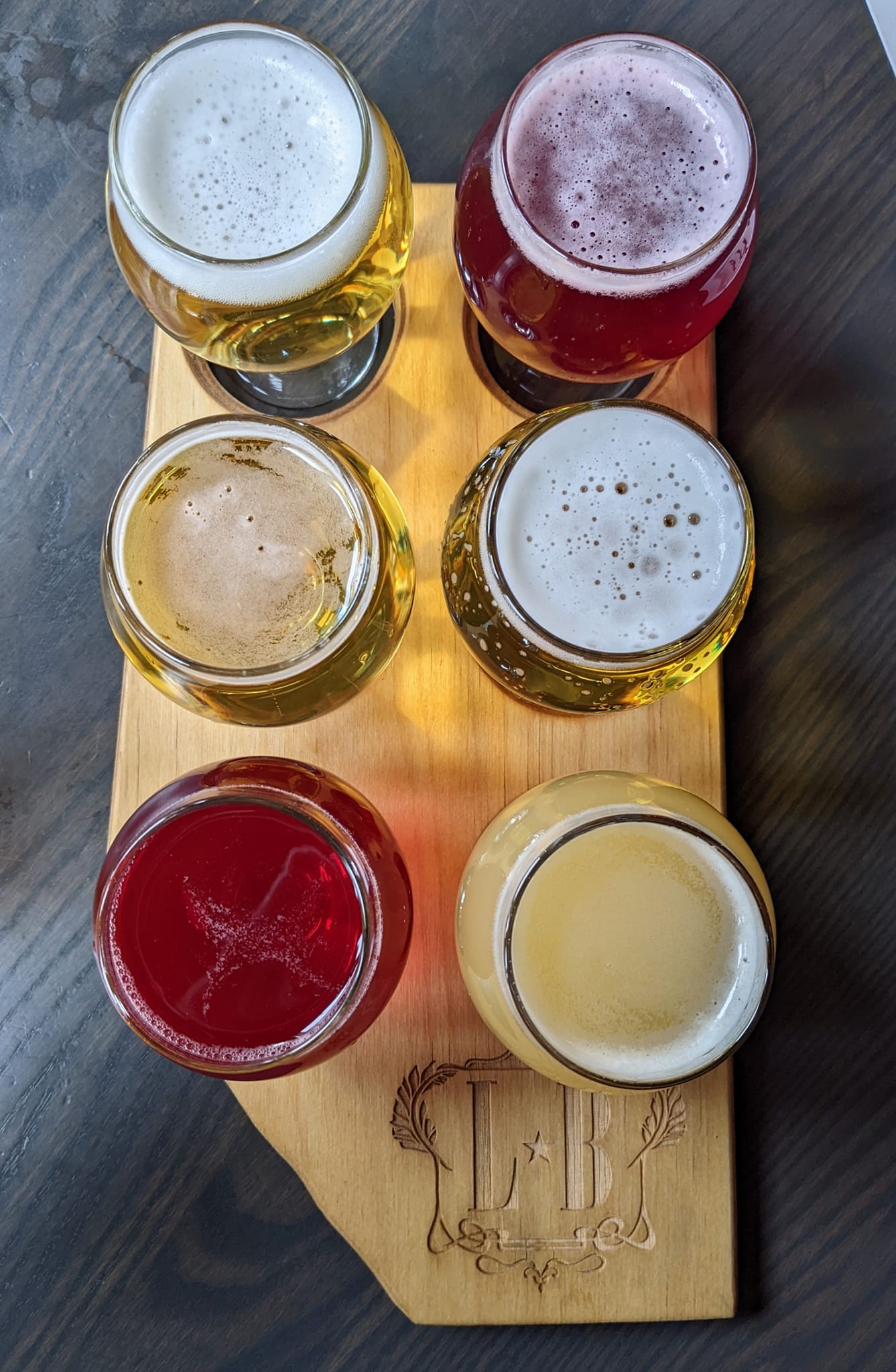
But before we get to the city of Banff, we have to get to the province of Alberta. The vast majority of visitors fly into Calgary, which is the nearest major city. This is what we did although we also considered flying into Edmonton and driving down through Jasper as an alternative. Ultimately, Calgary won out because it was closer and the flights were cheaper. I’m happy this was our choice though because it meant we got to spend several days in Calgary, which turned out to be a really fun city: two beautiful rivers running through it with gorgeous parks throughout, a very lively and impressive brewery scene, and several bar and restaurant streets where we were able to try the famous Albertan ginger beef. Seriously, don’t let the airport be the only thing you see in Calgary!

Of course, our main reason for being in Alberta wasn’t the cities, it was the beautiful Rocky Mountains, so how to get out there? Well, they’re really only about an hour drive from downtown Calgary, and you have several options. There are buses and shared cars aplenty, but we, like most people, ended up renting a car. The price was as expected: reasonable if you return it to the same place, outrageous if you don’t. In hindsight, having your own car is absolutely paramount if you want to see anything outside the teeming tourist bubble. One of the best parts about driving ourselves around Alberta was that we could (and did) stop at every possible turnoff for views, trails, signs, etc. not to mention the total freedom we had when driving the Icefields Pkwy. But if you’re sticking close to Banff (as in Banff City and the lakes) you really wouldn’t need a car at all if you didn’t want one.

Canmore & Banff

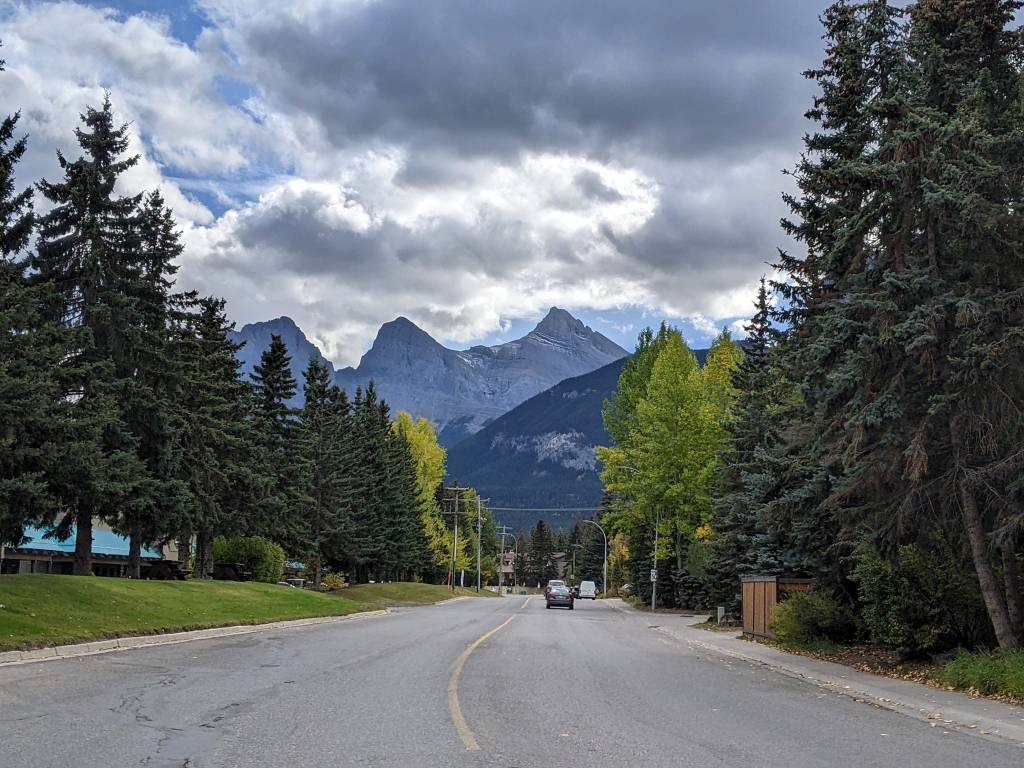
Once you’re successfully into the mountains, you have another choice to make: where to stay. If you’re camping, the options are limitless, but if you’re afraid of bears and/or you’re not a millionaire, you basically have two choices: Banff City or Canmore. Canmore is a little further from the main attractions and isn’t quite as touristy; therefore, it’s slightly cheaper, but there’s much less to do, which means you’ll likely be driving (and having to find parking) more often, or so we heard from fellow hikers. We stopped in Canmore both on the way out of and back into Calgary, and we really enjoyed it. It’s basically a baby Banff, and I think it’s a solid option, especially if you prefer a more low-key home-base.

We ended up staying in Banff though since this was our first time, and we had no idea what to expect. Since we went at the end of September (right before a lot of attractions and roads are to be closed for the season), there was a plethora of visitors. Options for accommodations were somewhat limited either by availability or by price. Fair warning – Banff is beautiful, but it is not cheap. We chose to stay in a private room at a hostel about 1.5 miles (2kms) from the city center. It was an easy walk, but there is also an amazingly quick and efficient public bus that runs through town and out to many of the resorts as well. Several hotels/hostels give free passes for the duration of your stay, but you can also buy a day pass for $5CAD.  

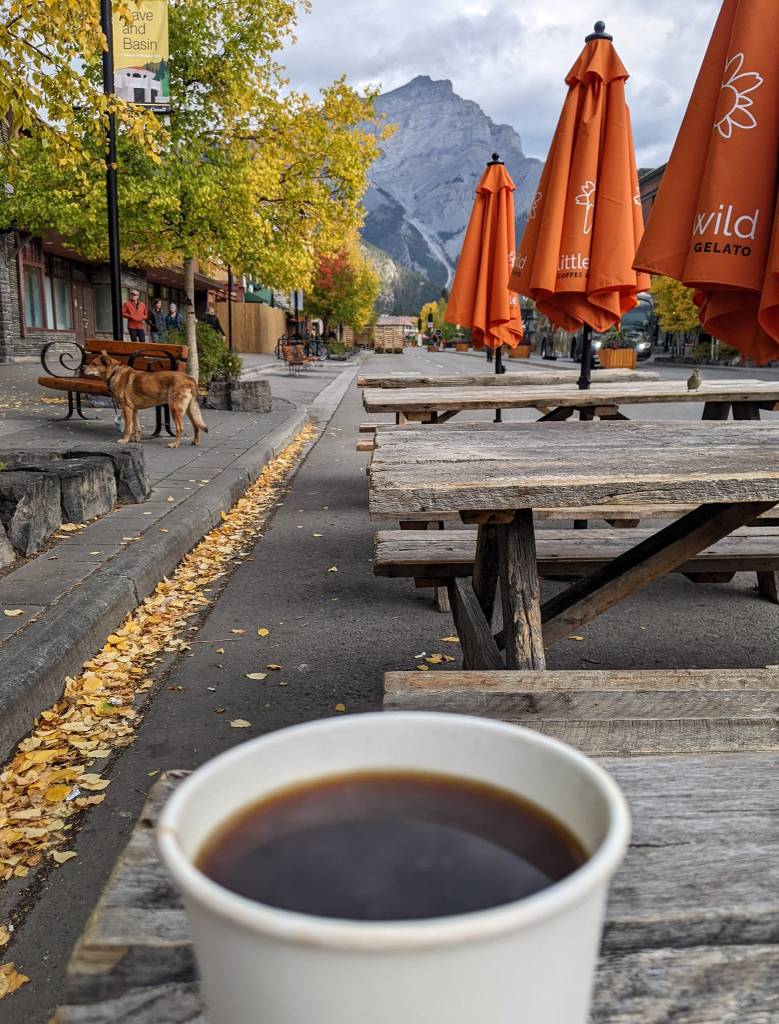
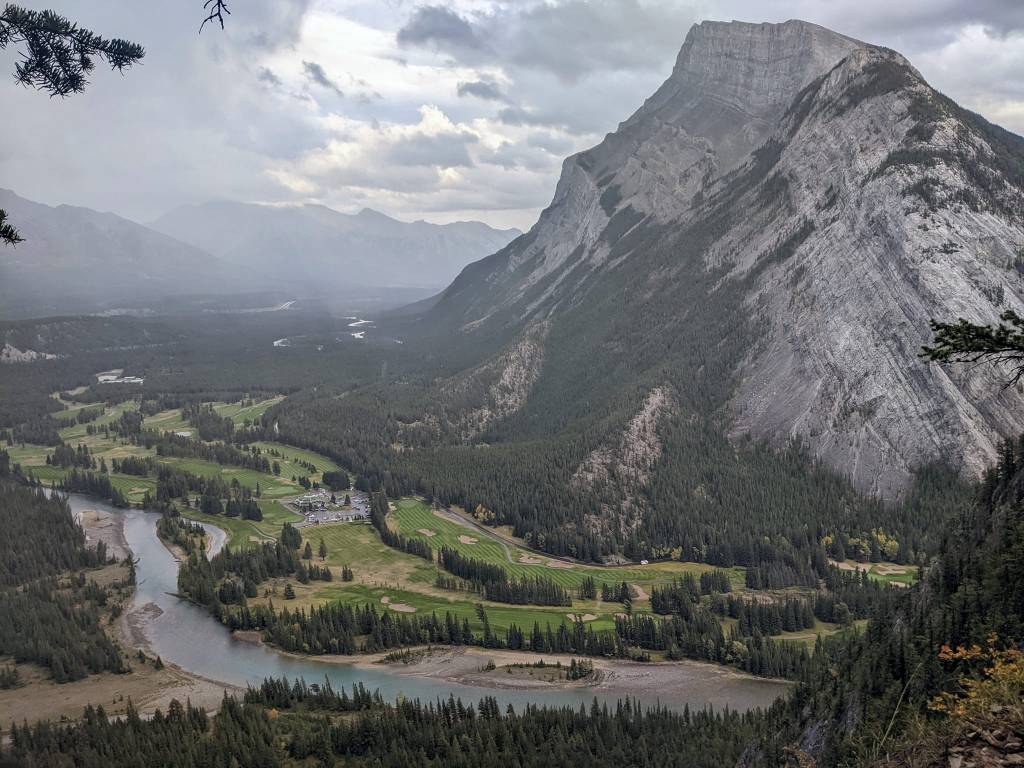
The city of Banff has much more to do than we originally thought. On our first evening, we climbed the nearby Tunnel Mountain, and there were countless other trails into the surrounding mountains and valleys. Evidently, there’s also a famous golf course there – who knew? And the town itself is well-worth a wander. Little shops selling everything from mountain gear to homemade fudge, lots of cozy cafés, and restaurants that run the gamut: we saw a McDonald’s right down the street from an extremely lavish steakhouse. We ended most of our days in Banff eating and drinking after spending the day outside hiking, and the choices were surprisingly diverse for such a small town.

Lake Louise & Moraine Lake

Likely two of the most famous views in all of Canada (maybe even North America) are those of Lake Louise and Moraine Lake. No matter how you feel about large-scale tourism or throngs of tourists, you can’t come all the way to Banff and NOT see these two icons. Somewhat recently, Parks Canada decided to close off the roads to the lakes for all private vehicles. The only way to visit them now is to take a shuttle (or a tour) from a parking lot/ski lodge just outside the park. This was very confusing to us when reading about it online, probably because it’s new, but it was actually really easy to do. You reserve a time slot and a direction (either LL->ML or ML->LL) and then present your digital “ticket” to the bus driver. The buses leave every 20 minutes, and as long as you get on within your window, you’re fine.

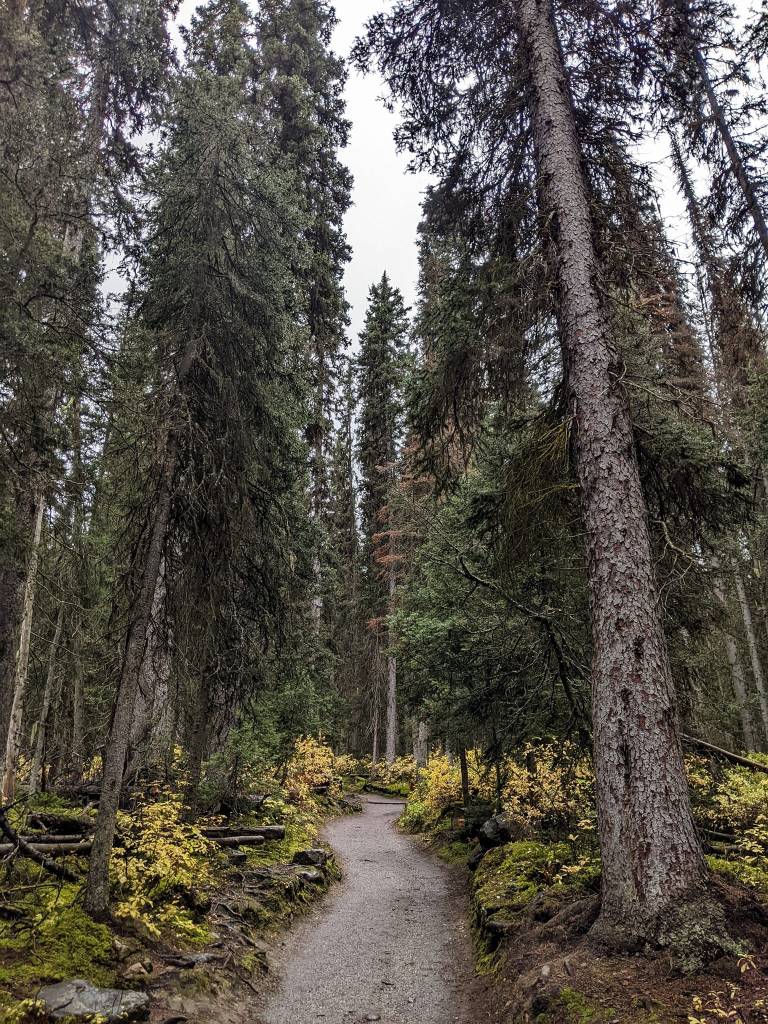
Lake Louise is huge. There are trails on either side of the lake and up the mountains on both sides with bird’s-eye views. You can also rent canoes and take to the water if you want ($145 for 30 minutes – yikes!) My advice for Lake Louise is to play it by ear depending on the time you’re there, what the weather is like, how many people you see going in either direction, etc. We were there in the afternoon, and it was quite crowded, so we took the path less traveled up to the Fairview Lookout on the lefthand side and found it absolutely perfect. There are signs everywhere showing the lengths and difficulty levels of all the trails, so you can pretty easily decide once you’re there. Just remember to bring water and snacks because there’s not a lot of options once you’re on the tourist circuit.  

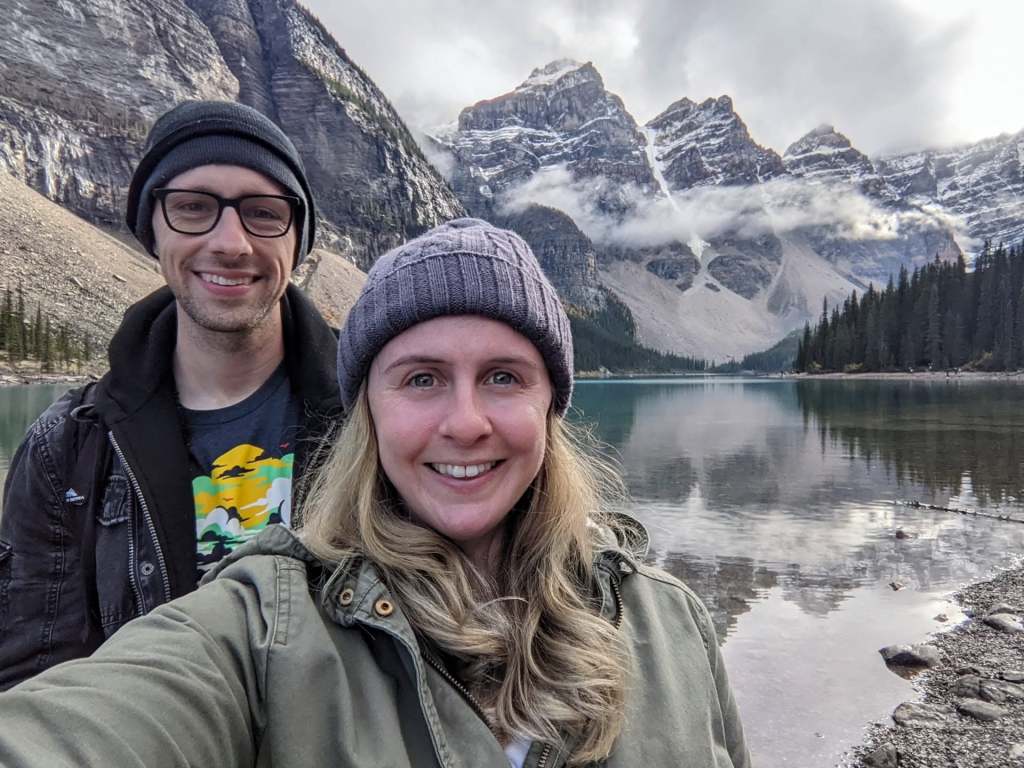
Moraine Lake is not as big, and because of how it sits, you’re sort of on top of everyone else trying to see/take pictures of the lake. There are several trails here too, but most of them take you away from the lake. We did the 4-mile (6-km) trail to the Consolation Lakes and felt that they lived up to their name lol. In hindsight, I’d have rather brought a picnic and found a nice place to sit and eat while looking over one of the lakes. All the hikes were lovely, of course, but the views of the lakes were better. Also, we did see signs about hiking/traveling in larger groups because of bears, which we didn’t take very seriously then. After recent events, we plan to be more aware and prepared next time, and I would urge anyone else to do the same.

Icefields Pkwy & Jasper National Park

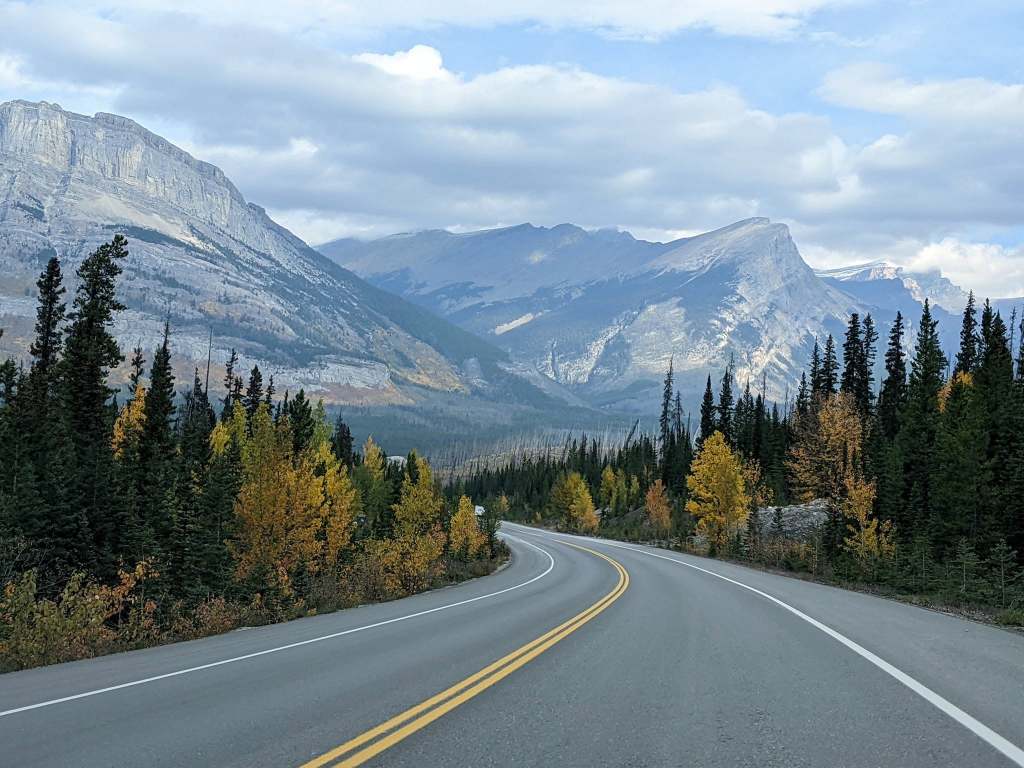
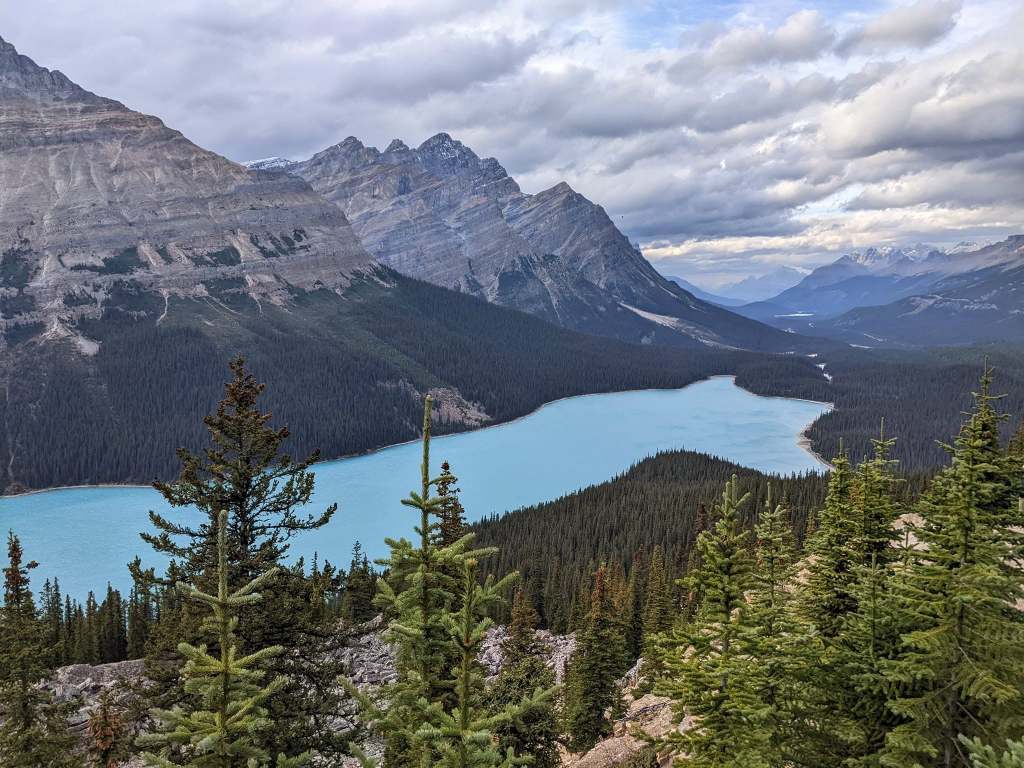
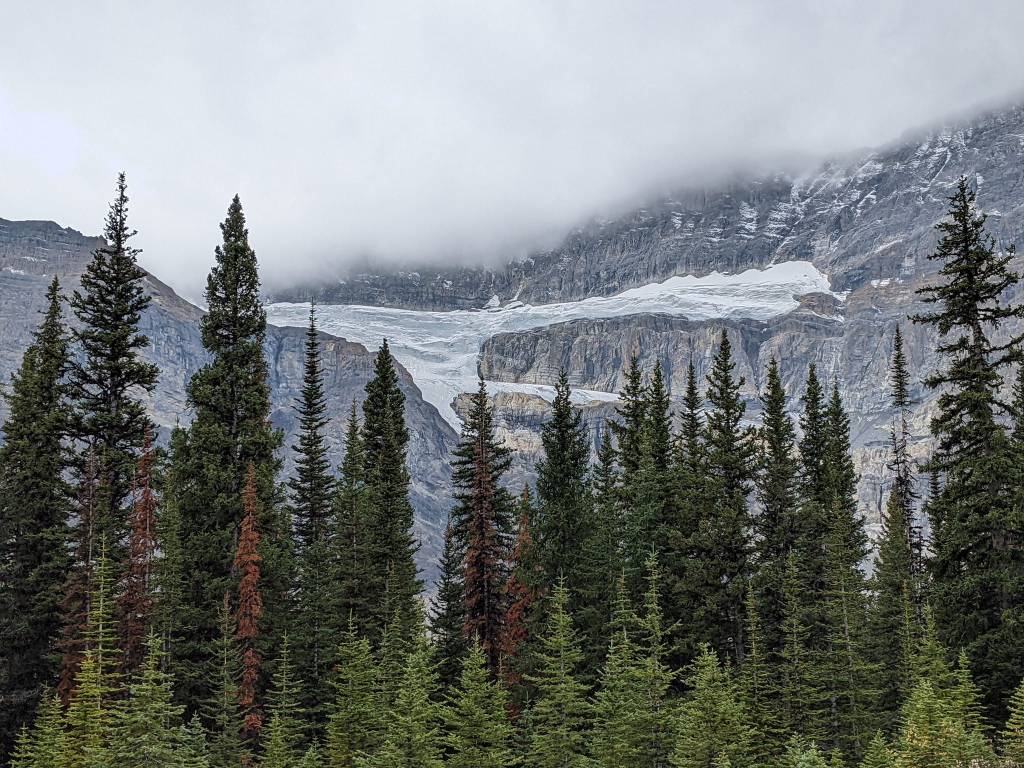
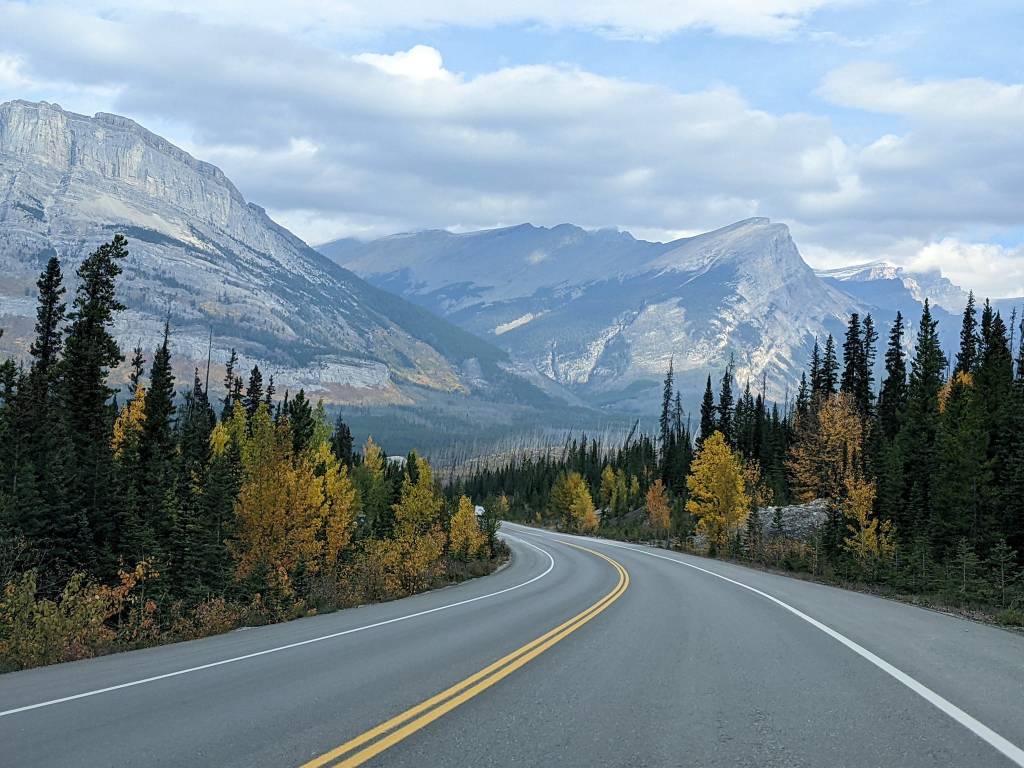
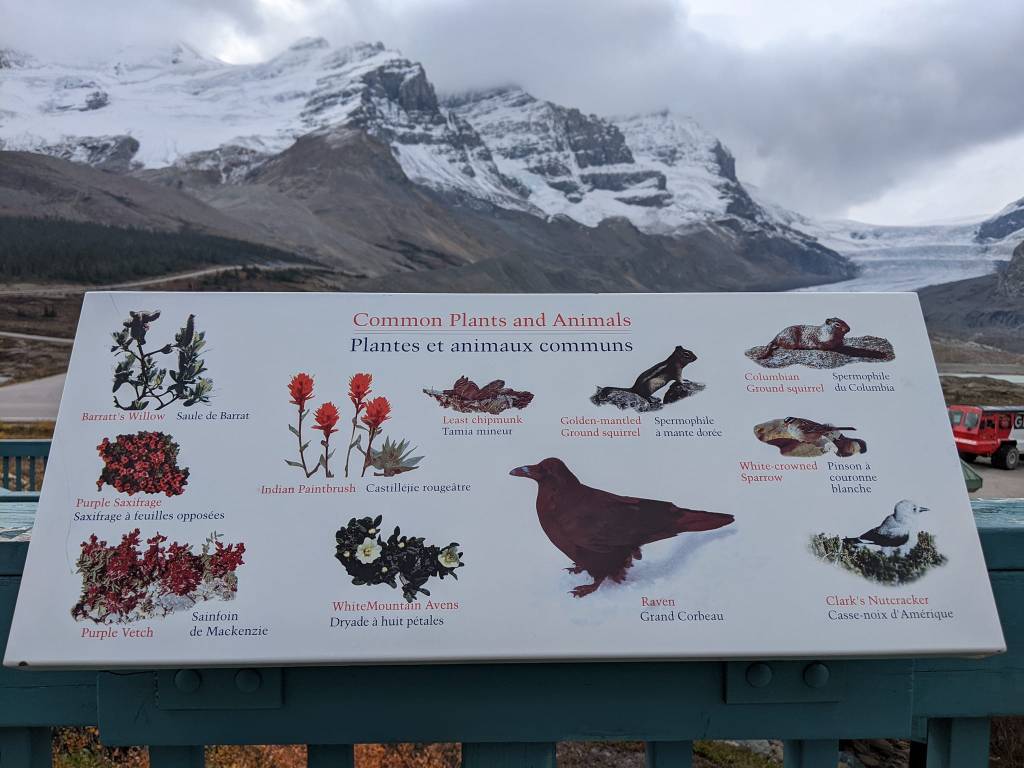
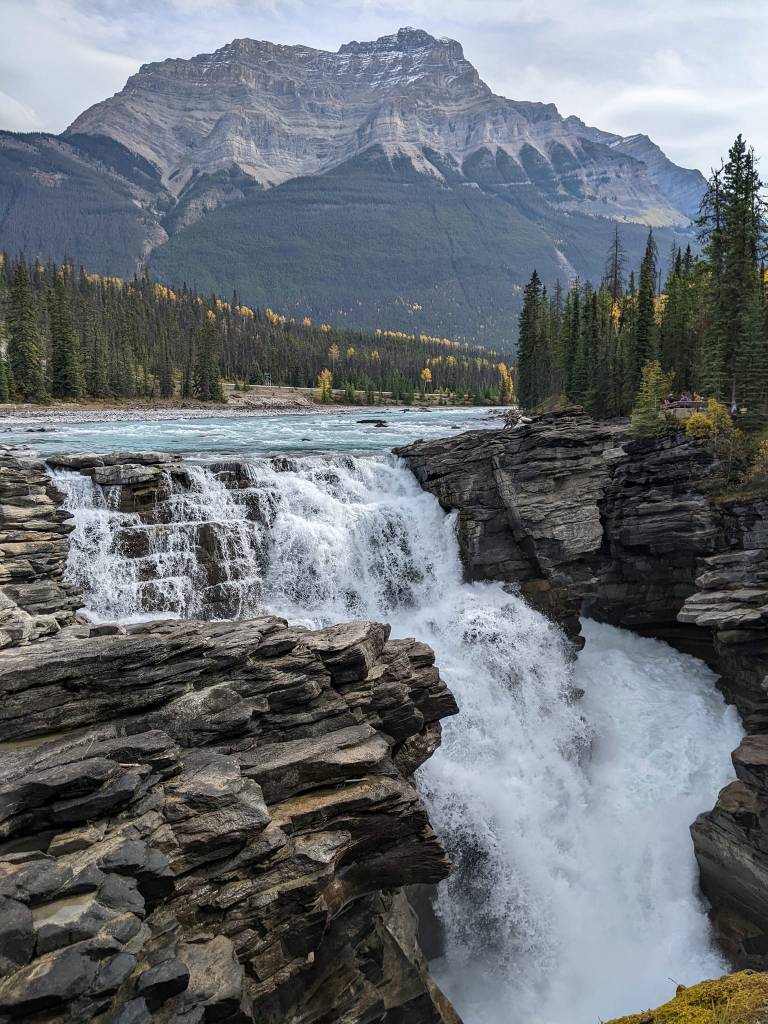
Our last great adventure in the Canadian Rockies was a drive from Banff City up to Athabasca Falls in Jasper National Park and back. This stretch of road is known as the Icefields Parkway because there are over 100 glaciers along this path, which gave us some of the most incredible views we’ve ever seen from a car. It’s only about 3 hours up to Athabasca Falls, but it took us over 4 because of all the stops we made along the way: the Columbia Icefield, Sunwapta Falls, Mistaya Canyon, Peyto Lake, and dozens of other incredible stop-offs. This drive was easily my favorite part of the trip, especially in the fall. We didn’t see very many people along the way, but there were endless signs teaching us all about the region, the various landforms, flora, fauna, you name it. It was very much like a DIY field trip, which, of course, I loved!

Ugh! After writing this and reliving all these incredible moments, I’m ready to plan a trip back to Alberta. Somehow, I feel like this might be a Huangshan (Yellow Mountain) situation, in which you haven’t really seen it until you’ve seen it in all four seasons. I do hope I’ve inspired you to put your plans to visit Banff into action not only because it’s one of the most beautiful places in the world, but also because some of these places won’t always be there for us to see in the future. Time really is of the essence, so bon voyage!

Winter Wonderlands (of years past)

It’s December! Only a few days from the official start of winter! You might already know this about me, but I absolutely love this time of year. Of course, I know not everyone feels the same way, and I also know that this year is different (in about every way possible). Typically, during the holidays, Tucker and I do some traveling: we disconnect, explore someplace new (often somewhere we can play in the snow), but alas, 2020 has kept us pretty tethered…in Florida of all places. So, for this month’s post, I ask you to humor me as I look back at some of my favorite winter destinations of years past. I’m aiming to turn this pining into planning, and I invite you to do the same. There’s always another winter coming!

Tatra Mountains, Poland

This is the trip I always find myself looking back on around this time of year. Magical is the best word I have to describe our snowy hike in the Tatra Mountains. It felt and looked exactly like a fairy tale (well at least until our inadequate clothing choices had us pondering the effects of frostbite). Zakopane was the little mountain town we based our trip around, and the mulled wine, grilled oscypek (a mountain specialty), and the handmade wooden crafts in the local markets made it all the more beautiful.

Harbin, China

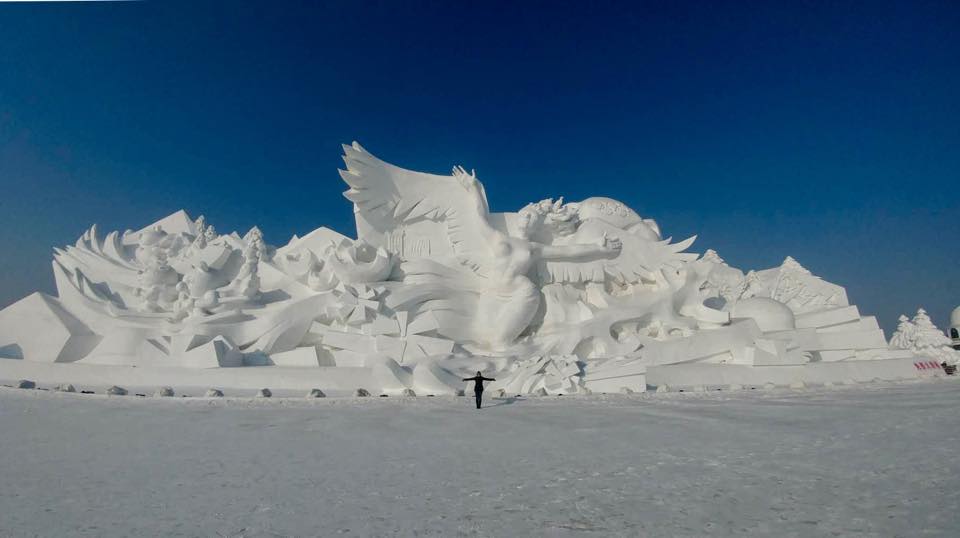
Even if you don’t like the cold, you should still be able to appreciate the incredible Snow and Ice Festival in Harbin, China. I’ve never been to the North Pole (or any city that associates with it), but I definitely got Santa’s Village vibes while we were there. Snow sculptures as far as the eye could see, entire buildings and playgrounds made of ice, and, if I recall correctly, there was even a VR experience with penguins. Definitely worth the icy eyelashes!

New York, USA

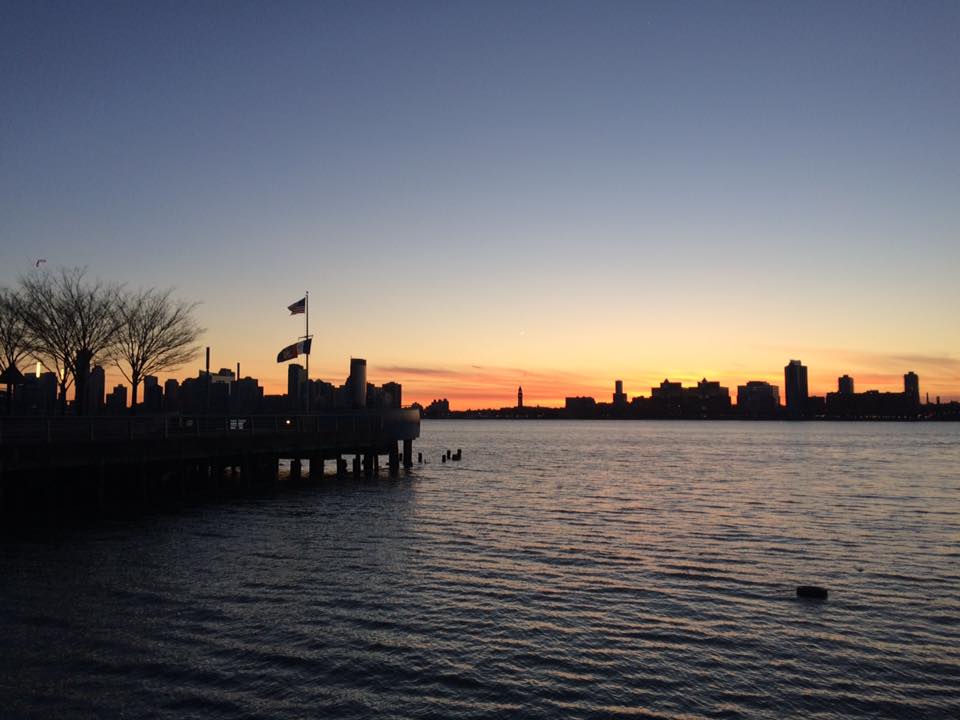
A post about winter trips must include New York City. It’s truly lovely any time of year, but bundling up on a ferry crossing the Hudson, drinking hot chocolate while watching the ice skaters at Rockefeller Center, and feeling the fierce winds tunneling through the skyscrapers are some of my favorite memories of this iconic destination. I also feel pretty strongly about the fact that it smells much better in winter – no baking garbage or sweaty subway seatmates. Bonus!

Bergen, Norway

We actually booked our trip to Bergen on a bit of a whim because we found cheap tickets from Warsaw, and we had the time off. In hindsight, I can’t believe we hadn’t already had such an amazing place on our travel list. We loved strolling down the snowy cobblestone streets, and the fjords and scenic train rides were absolutely breathtaking. If you ever find yourself in Norway debating whether or not to do one of the “Norway in a Nutshell” tours – do it!  

Chengdu, China

Perhaps a somewhat surprising winter location, but since Chengdu is known as one of the “Furnaces of China”, I vowed to stay away in summer or anything summer adjacent. Thus, we visited in January and had the most amazing time! Pandas are adorable year-round, and I found the outdoor tea houses and consumption of extremely spicy food much more enjoyable in cooler temperatures. The mountains (and yaks) just outside the city were also extremely beautiful covered in a pristine blanket of fresh snow.

Sydney, Australia

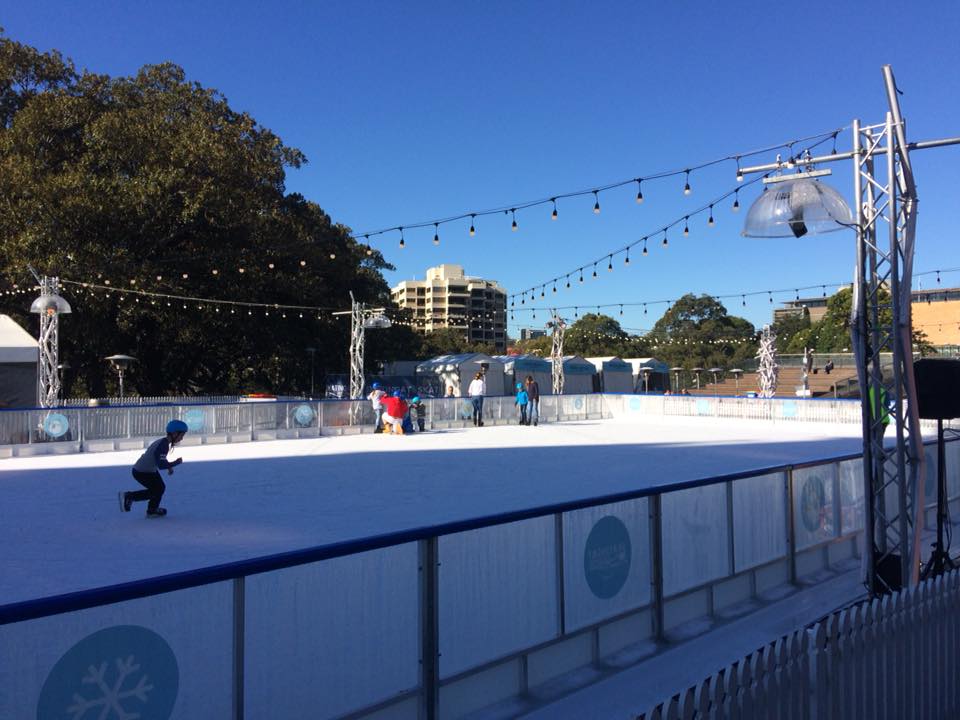
Just for fun, let’s say you’re like me and would love to have TWO winters in a given year. A trip to Australia can grant this wish! The Southern Hemisphere, of course, has their winter from June-August, so one year, we spent July in “wintery” Sydney. It was a mild winter to say the least, but the general vibe was there as we walked by ice rinks and snowflake décor all around the city. Like NY, Sydney is an amazing place to visit any time of year, but the less touristy off-season was perhaps even more enjoyable.

Lisbon, Portugal

Another, slightly warmer location we really enjoyed one winter was Lisbon, Portugal. The city is incredibly gorgeous, but really hilly, so we were very happy for cool weather/less sweaty hikes. The local wine and food we had was also very fitting of the season: thick stews, warm egg tarts, and strong vinho verde, just to name a few of our favorites. I’m also a big fan of quiet oceanside walks in winter, and Lisbon’s coastline did not disappoint.

Chiang Mai, Thailand

And finally, because I realize many people take vacations to hotter climates in order to escape winter, I’ll include Chiang-Mai on this list. We were there in January one year, and let me tell you, it can definitely be considered a “hotter climate”. While Bangkok and Phuket might be the more famous of Thailand’s must-see destinations, Tucker and I fell in love with CM. The temples, the mountains, the food (omg), and the small-town feel with some of the friendliest, calmest locals we’ve ever encountered, Chiang-Mai is a great place to relax during one of the most stressful times of the year.  

So many memories, so many possibilities! My mind is spinning thinking about future winter trips! But for now, I’ll make do with reminiscing and enjoying a quieter, calmer winter. Happy holidays everyone!