Surviving (and Loving) Yellowknife in Winter

We did it! We took a 4-day trip to Yellowknife, Northwest Territories in February with only a backpack each and the clothes on our backs. Did people question our decision? Yes. Did our friends and family worry about us when checking the weather? Yes. Would we do it all again? Gladly! Yellowknife exceeded every expectation we had for it, and in this month’s post, I’m going to share some of what surprised us so much about this city in the far north of Canada.
The Remoteness

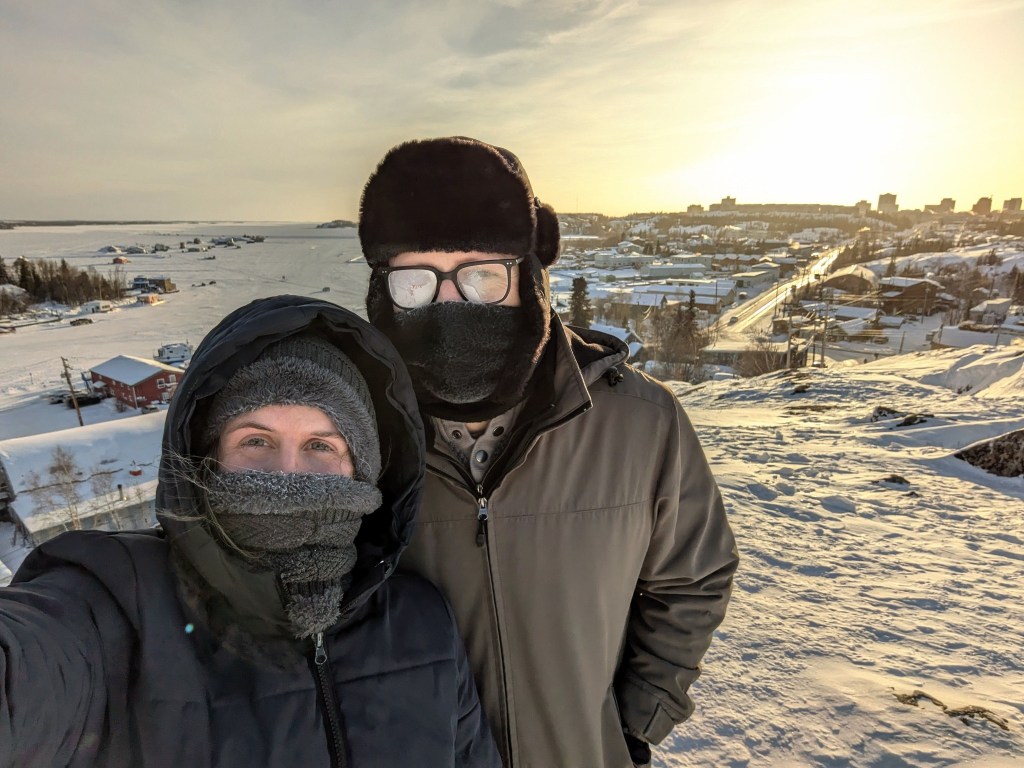
The first surprise actually came when we took a closer look at our flight times. Of course, we know Canada is huge, but we weren’t flying from end to end, more like from east middle to north middle. Regardless, we were in the air for over 7 hours to get from Ottawa to Yellowknife. It would have been faster to fly to Europe! We also flew in on a prop plane, which was another indication that we weren’t headed to a super populous place. And when we looked out the windows of that prop plane and saw literally nothing from Edmonton to Yellowknife (roughly 1,500 km), the message really sank in: we were in the middle of a vastness I’m not sure we’ve ever experienced before.

While we did end up feeling very isolated at first, the longer we were in Yellowknife, the more it felt like, well, Canada. We stopped by a Shopper’s Drug Mart, we got President’s Choice brand snacks, and we still had français to read on all the signage. We were also surprised that the prices of things weren’t as high as we had thought. We had been sure we’d see a crazy increase on all the groceries and food stuffs that had to be shipped in from beyond far away, but it really wasn’t too bad. There were definitely limited options, but overall, not too different from a similar sized city in Ontario or Quebec. The only thing that really stuck out as being outrageously priced was any beer outside of NWT Brewing Co. At one restaurant, we saw $14 Heinekens! Talk about not worth it…

The Cold

We specifically chose to go to Yellowknife in winter because we like the cold, and we wanted to experience the extreme cold of the Canadian hinterland. For weeks ahead of our trip, we tracked Yellowknife’s weather, so we could be as prepared as possible. We had already been to places like Bergen, Norway and Ushuaia, Argentina in their respective cold seasons, and we took those trips without boots or proper winter coats, so all things considered, we were absolutely better equipped for this trip than any that came before it. But did that really matter when we were standing outside in “feels like” -50°F? Not so much lol. We had actually heard several times, from several different people that after you get below -30 or so, it all just feels cold. However, I very much beg to differ; -40 definitely felt much colder than -30.

Fortunately, some things did come back to us when dealing with the extreme cold. We remembered the feeling of our eyelashes and nose hairs freezing. We quickly remembered the importance of breathing through your nose only. And once again, we fell back on the age-old lesson: you get what you pay for. Our $30 thermal socks have probably saved a few toes at this point. If I could give any advice to future Canadians or fellow cold weather travelers, you’re absolutely better off buying the expensive gear from the start – it’s expensive because it’s truly the only thing that works.   
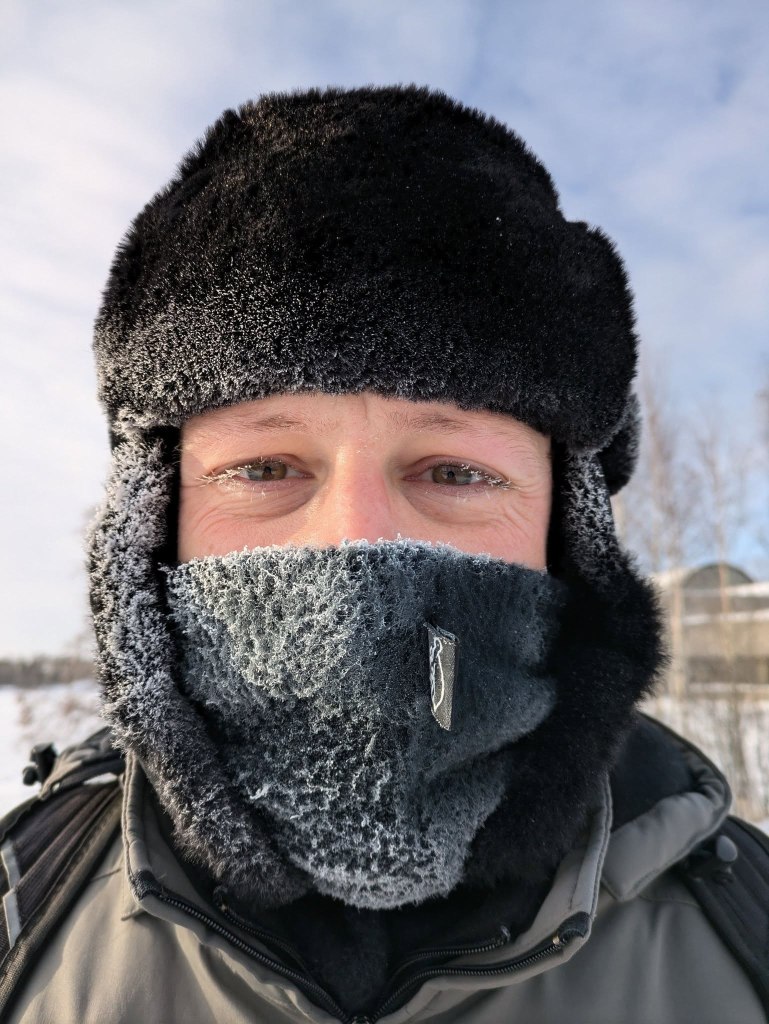
We learned some new things during our time in Yellowknife as well though. It seems we do, in fact, fear the cold a lot more than the average NWT visitor (let alone resident/native). We opted to take the car pretty much any time we left after dark, mostly because that scene in “To Build a Fire” constantly replayed in our heads every time we took off our gloves! Also, you absolutely cannot function with glasses outdoors in Yellowknife, and even if you don’t need glasses, the cold weather can still really mess with your eyes. Our eyes struggled big time with the cold, the dryness, the ice crystals, the snow blindness, etc. It really felt like everything was out to hurt our eyes in Yellowknife!

The Lights

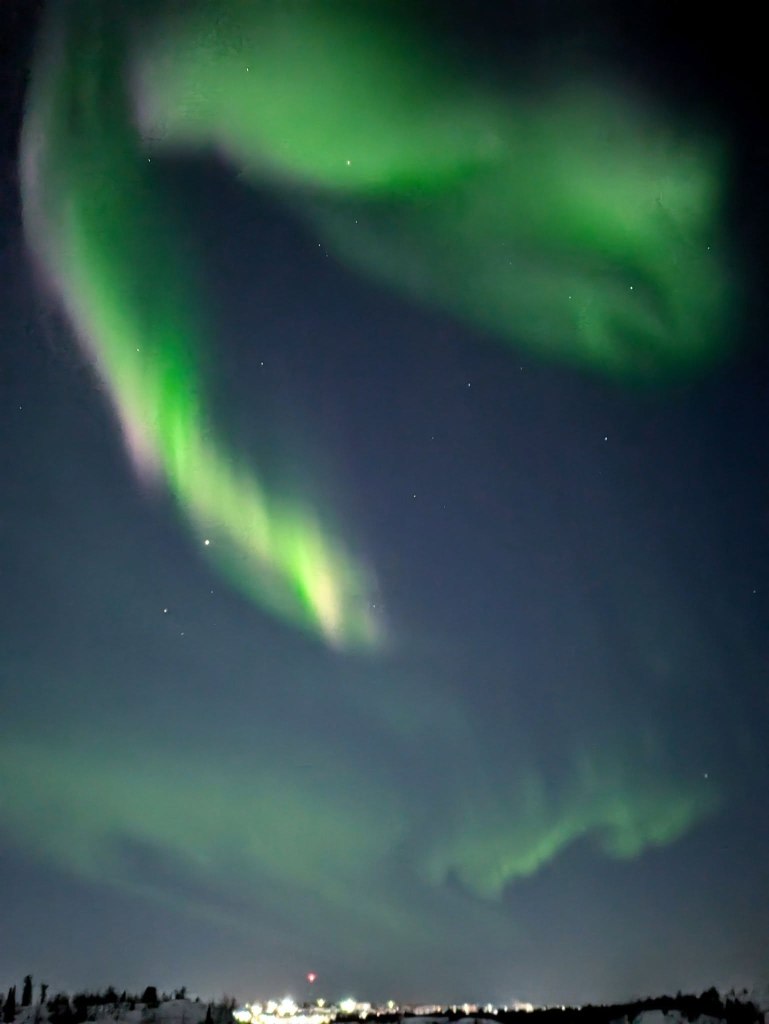
We have been super lucky with our northern lights sightings in Canada so far. Last May there was a big solar storm, and we actually saw them just about an hour north of Ottawa, so for this trip, we had our fingers crossed, but there wasn’t much pressure on the situation. And maybe that was key, because three of our four nights were full of gorgeous light shows. The colors were so much more vibrant and watching the lights spread out across such an expansive sky was absolutely incredible. Something we didn’t even know to account for in Ottawa were all the mountains and trees that would occasionally block our view of the lights, but we didn’t have that problem when standing on a massive frozen lake!

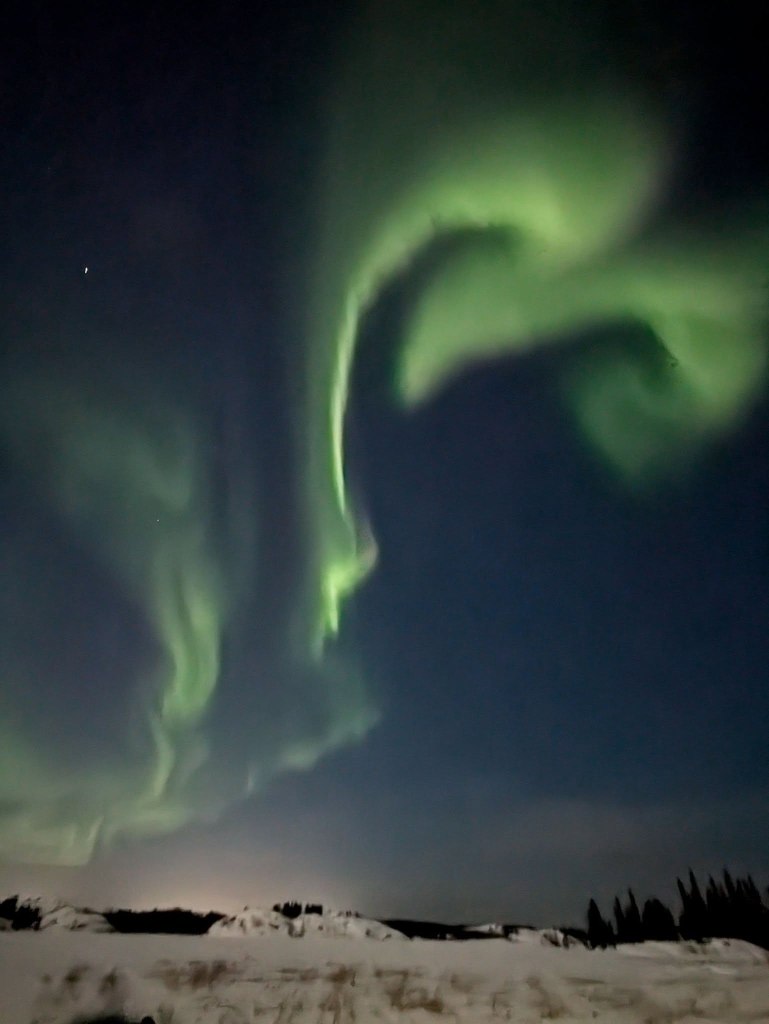
And just in case I never get around to writing anything about northern lights viewings in general, there are a few things I would have liked to know beforehand. 1) You must let your eyes adjust to the lights. They seem faint at first, but the more you watch, the clearer they become. 2) They move really quickly across the sky and make all sorts of crazy shapes. 3) There is no “peak time” so to say. They’re somewhat like storm clouds; they appear and disappear based on solar activity, so any forecasts are bound to be unreliable at best. 4) The darker it is, the brighter the lights appear, but neither the darkness nor the intensity matter if it’s cloudy, so if you’re hunting northern lights, pick a place known for having an abundance of clear nights. 5) Pictures simply can’t do the lights justice, not even those that have clearly been altered.

The Dettah Ice Road

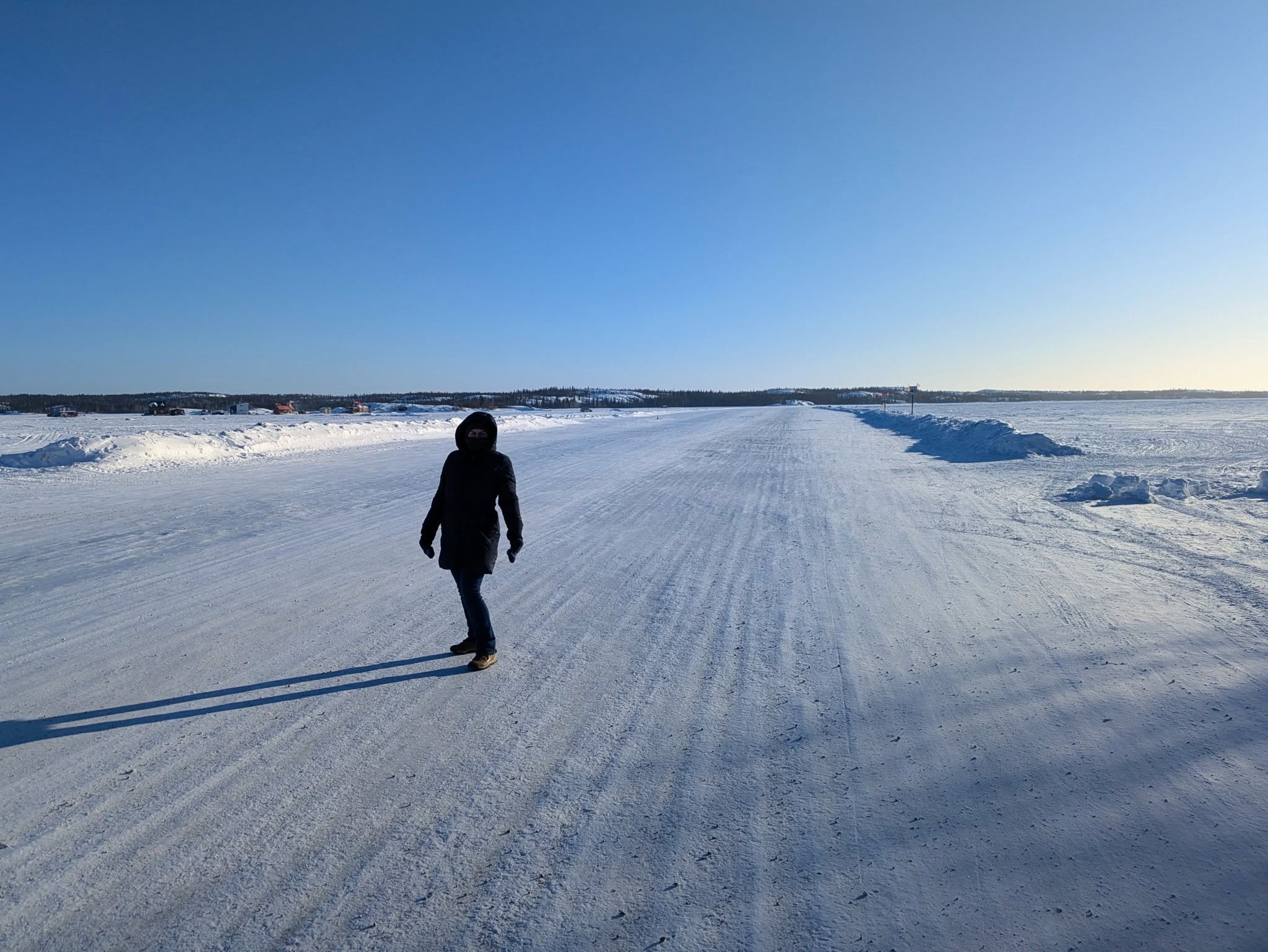
One of the most surprising experiences of this trip was our time on the Dettah Ice Road. When doing some research on Yellowknife, I came across the Dettah Ice Road listed as a tourist attraction and thought it sounded cool, but actually experiencing it and realizing that it’s not really a tourist attraction at all put it at the top of my list of reasons to visit Yellowknife in winter. The Dettah ice road is exactly what it sounds like: a road made of ice that leads to Dettah, a village southeast of Yellowknife. Usually, you have to drive about 27 km (17 miles) around Yellowknife Bay to get to Dettah, but in winter, since the Great Slave Lake completely freezes over, you can cut right across the bay and drive straight there (only 6.5 km/4 miles). The road itself is amazing! It looks like it’d be slippery or somehow feel different from a normal road, but no, it was business as usual driving across. Well, except for the blinding sun reflecting off the ice and all the cool photo ops along the way. Another incredible thing to experience!

The Yellowknives Dene
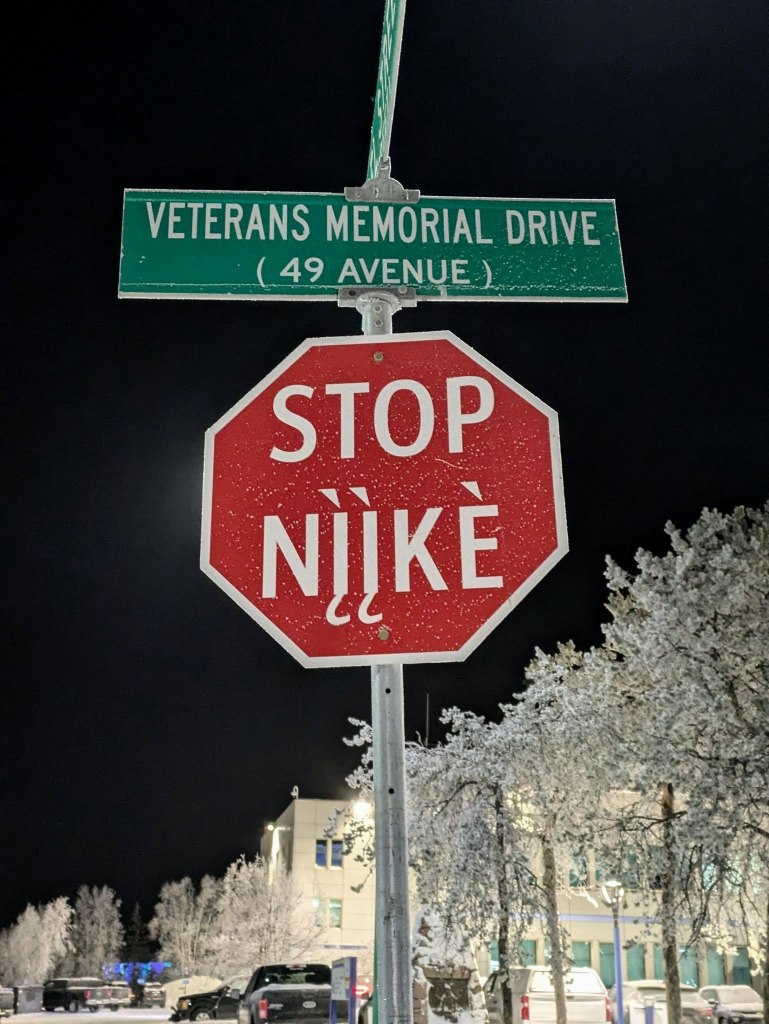
As part of our on-going comparison between Canada’s provinces and territories, we were excited to see the influence of the various indigenous groups of Yellowknife as well. Like a lot of Canadian cities, the name Yellowknife comes from a name given to a specific First Nations group, but unlike other Canadian cities, that First Nations group still makes up a considerable portion of the city’s population. Interestingly, the “city” of Yellowknife didn’t really exist until the gold rush of 1934, but the Yellowknives Dene had been settled there for hundreds of years; therefore, the majority of the region’s history revolves around these indigenous groups and how they helped outsiders acclimate to the extremes of the Northwest Territories. Today, their influence can easily be seen in the government, language, and culture of the region.

The Variety

When I shared our Yellowknife photos on social media, there were so many people who said things like “better you than me” or “too cold for me”, but I think the extremes are part of what makes Yellowknife such an intriguing destination. It was perfect for us, cold-loving freaks, but if you visit in August, you could be swimming in the lake rather than driving across it. The variety of activities Yellowknife has to offer is absolutely amazing, and that’s in each and every season. It’s not too often that Tucker and I make it back to a destination (at least not without many years in between), but Yellowknife might just be one we HAVE to see in another season. It also compelled me to move Whitehorse and Iqaluit (the capitals of the other two Canadian territories) up on our to-visit list, so stay tuned!

This was definitely a trip to remember, and for that, all I can say is a huge thank you to Yellowknife for treating us so well and an additional shoutout to all the winter gear we’ve been collecting over the last two years – it really came in clutch here!

Ice Ice Baby

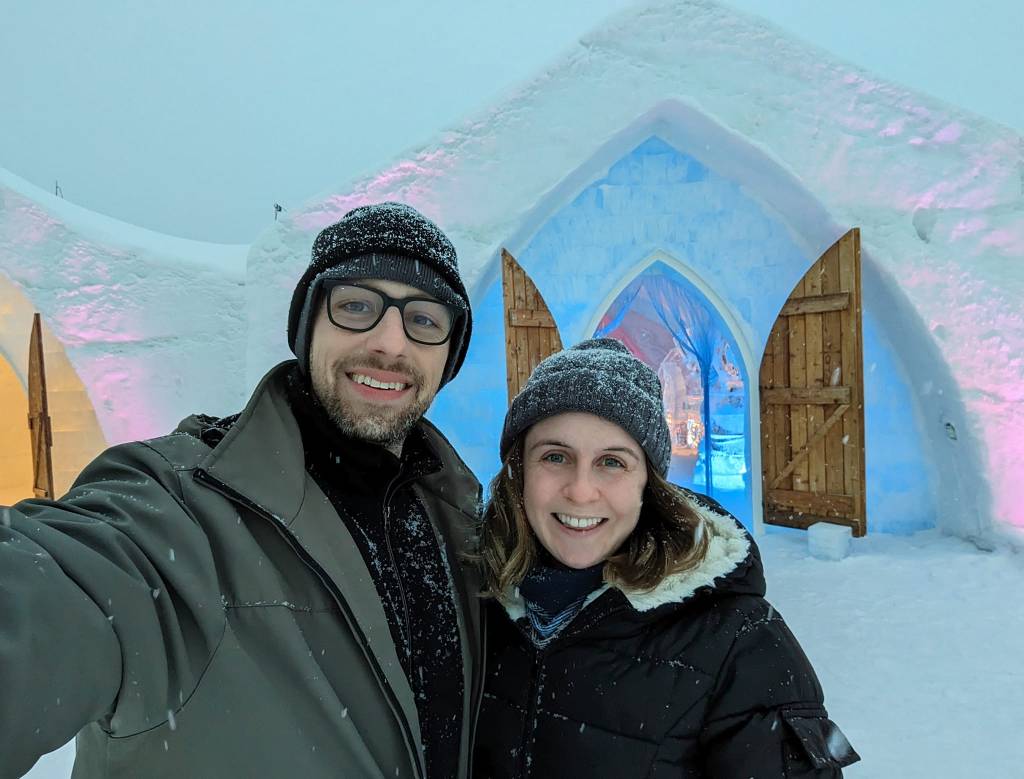
Well, we’re officially waist-deep into winter, and even though we’ve been ice skating, snowboarding, and snowduck making for months now, I still feel like I haven’t got my fill! So, in order to up our winter games even further, we spent last weekend in Québec City, a winter wonderland if ever there was one, and even more spectacularly wintery, we also spent a night at the Hôtel de Glace (aka the Ice Hotel).

This was definitely a once in a lifetime kind of experience, and I don’t want to forget any of the specifics, so this month, I’m sharing a detailed timeline of events as recorded by the many pictures I took throughout our stay. Bundle up and enjoy!

17:00 – Check in

Technically check-in started at 4pm, but we were a little late getting to the resort area for a few reasons. One, it was snowing, so everyone was driving slower than usual, and two, we totally forgot to bring our bathing suits and had to make a pitstop at Value Village. It happens. Luckily, the Hôtel de Glace and all of Village Vacances Valcartier is only 20-30 minutes outside of Québec City.

Once we arrived and found our way to the correct front desk (this place is massive, so it wasn’t as easy as you’d think), we got the usual check-in spiel plus a few irregularities. When you stay at the Ice Hotel you actually get two rooms: one outside made of ice and snow and one inside the Valcartier Hotel where you can put your bags, shower, brush your teeth, and at some point, finally take off your hat and gloves!

But before you can don your all-access pass of sorts, you have to watch a safety video and sign a waiver. The safety video talked a lot about what to wear and what not to wear overnight and expressed many times over that you must completely dry off after showering or hot tubbing before you go into your rooms at night. They also gave us maps of the premises and showed us where we could go if we needed help during the night.   

17:45 – First look around

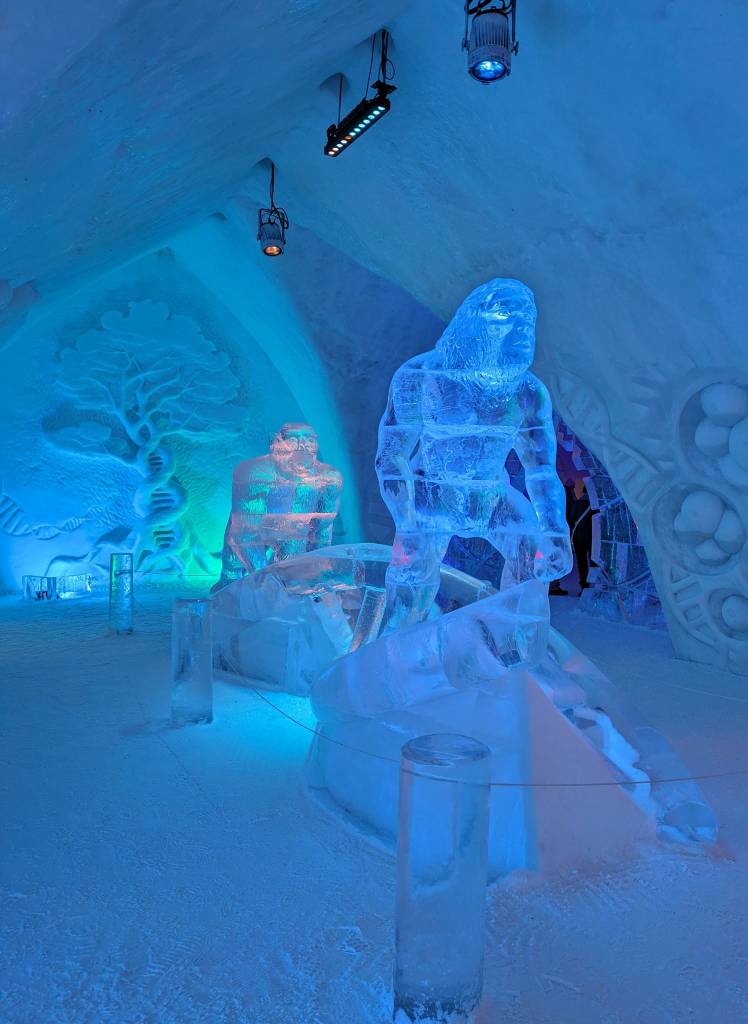
Needless to say, the excitement levels always increase when there’s a waiver to sign, so we quickly dropped off our stuff in our “dry room” and went to see what the Ice Hotel was all about. It’s divided into roughly three sections: the chapel, the communal rooms, and the individual rooms. The chapel was beautiful, but there wasn’t a wedding that day/night, so it was pretty empty. The communal rooms included several galleries, seating areas, the ice bar, and an ice slide. To say there was a lot to look at would be a gross understatement.

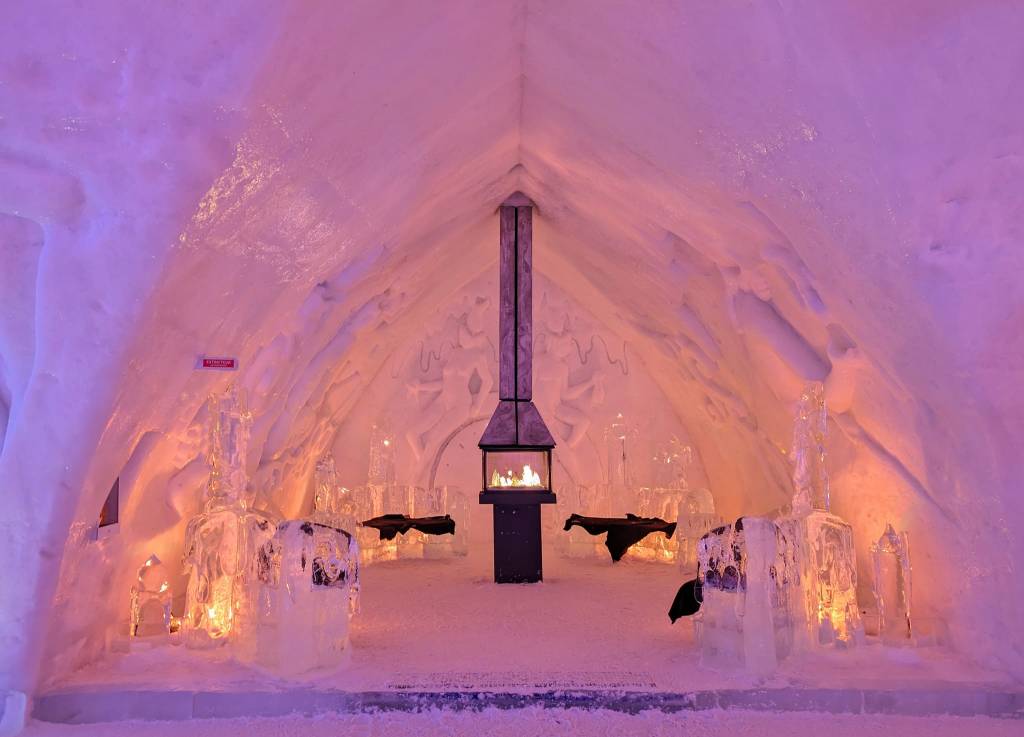
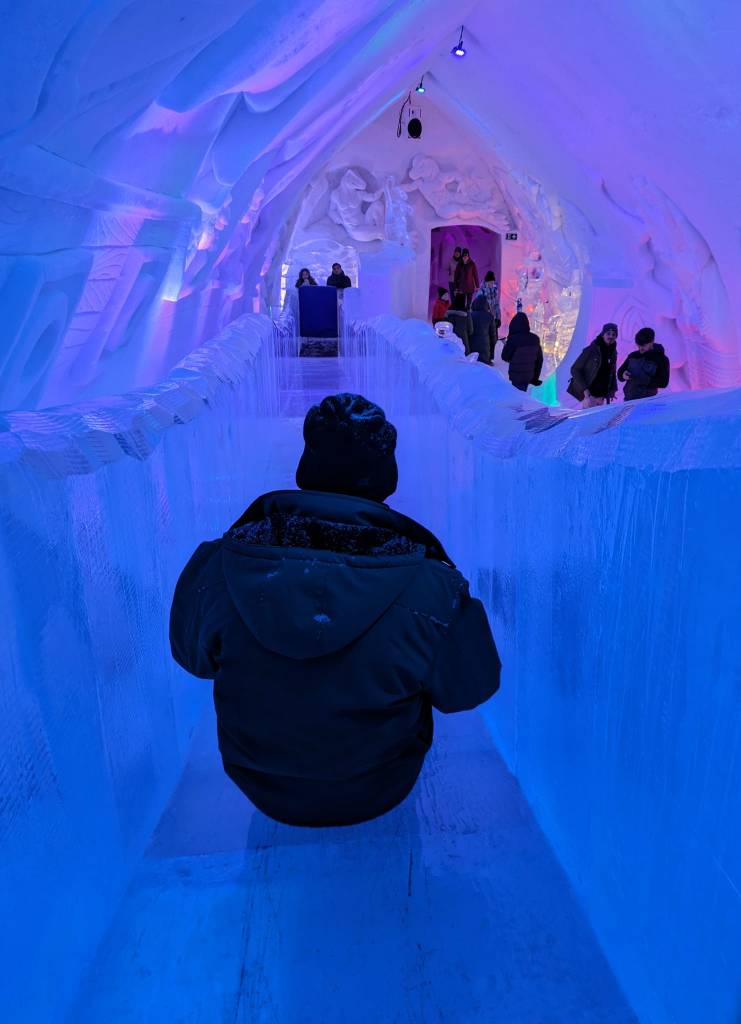
Between the ice sculptures, snow carvings, lights, and music, my senses were on overdrive. I think my favorite room was the “club room” with light-up instruments and DJ-ing composers on every wall. Tucker liked the “fire room”, which, although no warmer than anywhere else in the Ice Hotel, definitely felt cozier with the heatless fireplace, warm colors, and fur-lined benches. Of course, the ice slide was also super fun – it was in the “dinosaur room” and had us laughing hysterically as we scooted our way down the slide. You know what’s not very slippery? Jeans.

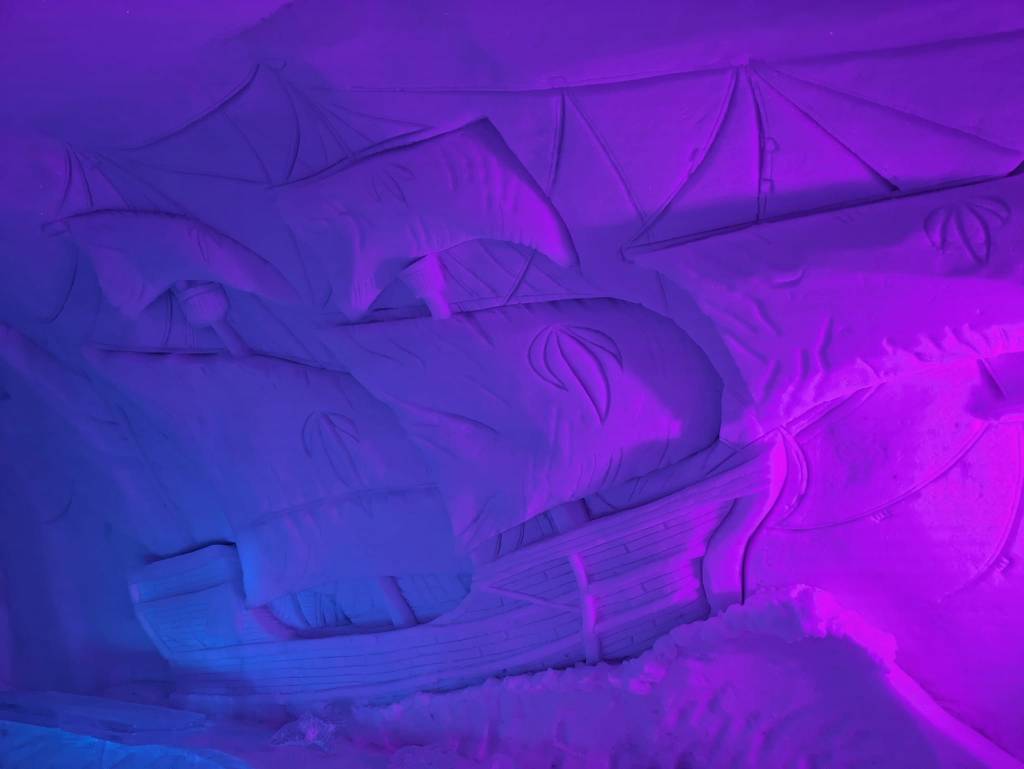
The individual rooms are also open for viewing during the day (of course, they did have ropes near the doors, so you couldn’t get on the beds or mess with any of the lights or anything). This year there were 30 guest rooms. The vast majority were single bed rooms, but there were a few doubles and even a triple as well. Every room had a theme and was designed by a different artist. My favorite was probably the exploration room with huge ships, maps, and a compass on the walls. Tucker liked the science-y ones, of which there were many.

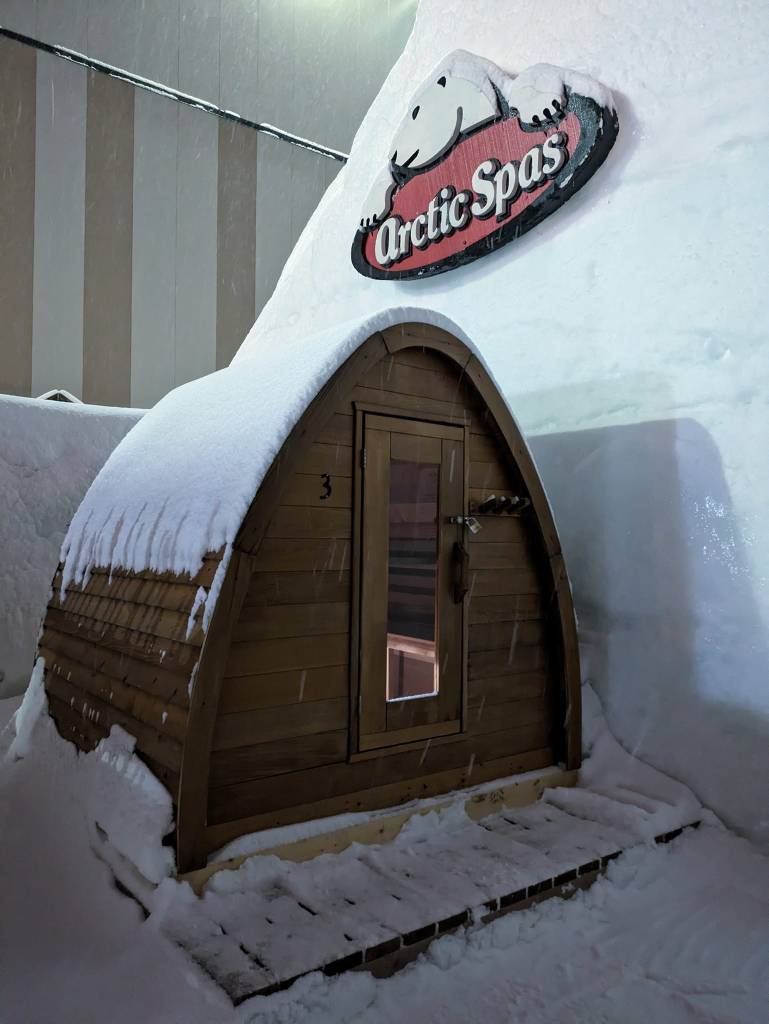
It honestly took us quite a while to see all the rooms because this part of the hotel is very maze-like, and we weren’t always sure if we had been in any given hallway before or not. The walls of the hallways were also covered with art, and there was a workshop room off to one side, which housed photos taken and machines used during the building process. During this part of our initial walk around, we also noted the hot tubs and sauna (free for guests to use) and started thinking about how we were going to manage that in the heavy snow with only our thrifted bathing suits and big winter boots.

19:30 – Drinks at the Ice Bar

But before we dealt with being cold and wet, we decided to cash in our complimentary drink tickets. The ice bar was SO COOL! Yes, pun-intended. The bartender was all bundled up as she mixed our drinks, the “Lave-Glace” and the “Accident de Ski-doo” (clever because it had a splash of red Grenadine and a little sprig of juniper in it) and poured them into ice glasses. The drinks were beautiful and tasty, and the glasses, well, the glasses were challenging. They were obviously really cold, but also very heavy and had very thick edges – not the easiest thing to sip on. Despite the odd mouth positioning required, we still felt pretty amazing drinking our fancy cocktails in the très chic Hôtel de Glace.

In hindsight, I should have held on to my ice glass since we opted to bring our own beers into our room later, alas we were too excited to shatter them (prematurely) into the collection bins. We also debated getting another drink at the bar because they had a lot of interesting cocktails and were surprisingly not that overpriced. But after another short walk through, we opted to hit the hot tubs instead, hopefully while they were still empty and we had enough time to enjoy them and fully dry off before heading to our frozen beds.  

20:45 – Hot tub and sauna in the snow

I really want to do a polar plunge before we leave Canada, and perhaps now I understand just how uncomfortable that will be when it happens. Running from our “dry room” to the hot tubs wasn’t so bad (I did wear my socks and boots with my bathing suit lol), but running to the sauna after the hot tub was painful, especially for my feet. From the crazy hot water to the crazy cold snow made my feet feel like they were burning! Stepping into the sauna was very welcome…that is until we had to get out and do it again.

Ultimately, lots of lessons were learned, like: the more towels you can take with you, the better; be sure to remember to take your shoes with you when you go back and forth, and also, just like we’re not really beach people, we’re not really hot tub or sauna people either, which is apparently a lesson we’re still in the process of learning.

22:50 – Final preparations

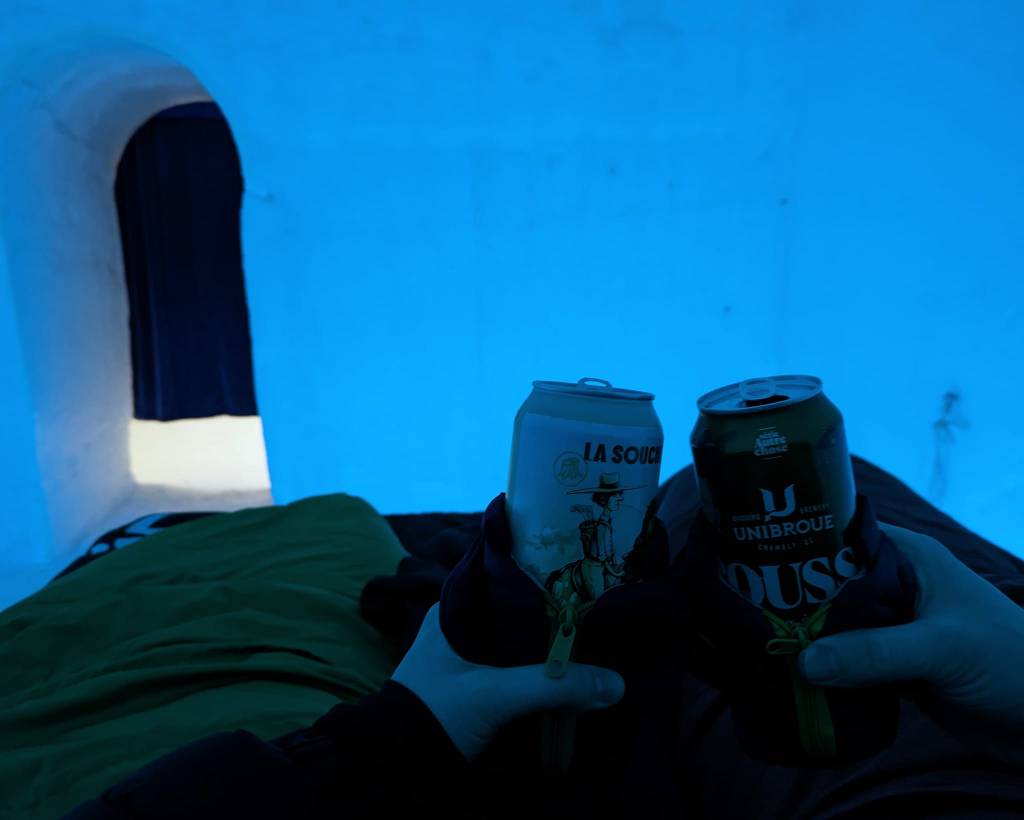
After we had our fair share of extreme temperature fun, it was time to prepare ourselves for sleeping overnight in a room that was approximately -5°C (23°F). First, as per the instructions, we had to be completely dry. Then, we had to decide what to wear and what to bring with us into the room. I don’t think I’ve ever planned my pajamas quite so carefully. In the end, we went for having as many options as we could – layers that we could take off or leave on depending on how warm we were in the sleeping bags they gave us. As for the snacks (much more important, obviously), we brought some local Québec beers, the rest of our Québec mix popcorn, and some chocolates from La Fudgerie. It was perfect!

23:30 – Bedtime snacks and hunkering down

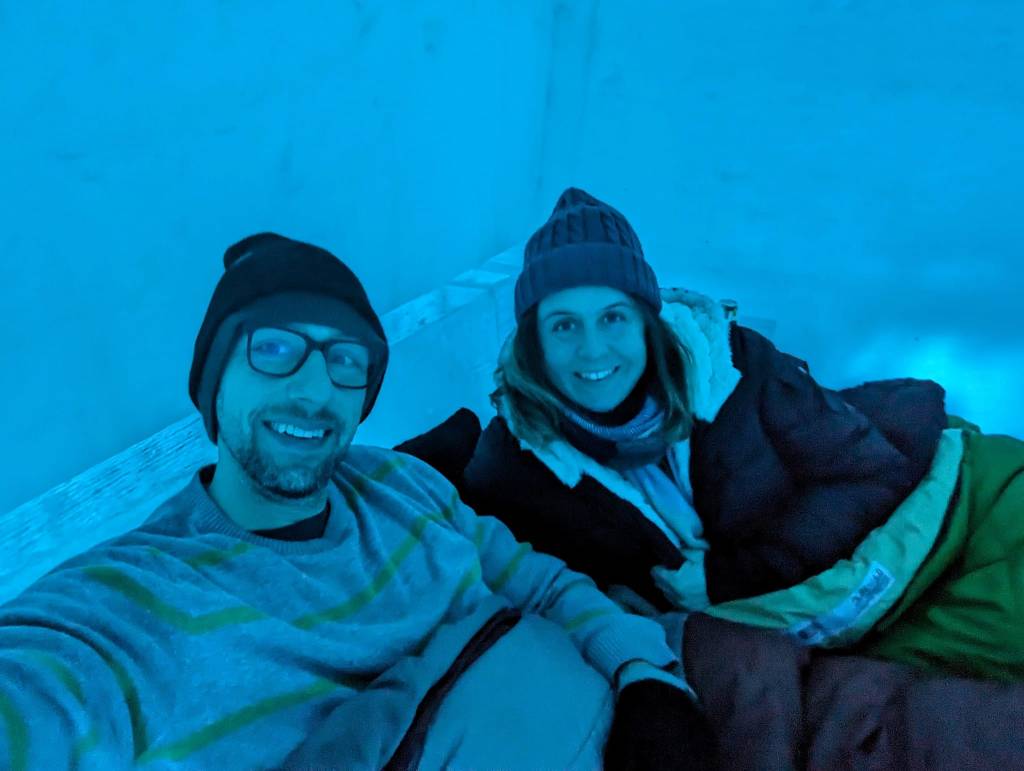
Between 8-9pm the individual rooms portion of the hotel was closed off for the staff to clean and prepare the rooms for the overnight guests. When we pulled back the velvet curtain of our room, we were surprised to see they had raked the floors in addition to changing the sheets and leaving the sleeping bags. It felt very Zen and very cold. But we were ready! We rolled out our sleeping bags (rated for up to -30°C/-22°F), got into the liners as instructed, and put our outerwear away for the night. After enjoying our little picnic and watching a few videos, we zipped ourselves fully into the sleeping bags (well, mostly), and drifted to sleep.

4:17 – Slight panic

I say “mostly” because I actually struggled with zipping mine up over my head. I felt super claustrophobic and ended up choosing to be slightly colder than necessary just to keep my face from being covered. Unfortunately, in the middle of the night I woke up and the sleeping bag had fallen away from the top/back of my head a little, and I was very cold. That got my thoughts and heart racing as I wondered if I was doing irreparable damage to my system. You know, the normal things that keep a person up at night. Thankfully, I was able to calm myself down, readjust, and fall back asleep.

8:00 – Wake up call

As part of the check-in process, they informed us that someone would come to wake us up the next morning at 8am. This was in part to make sure that everyone would be up and out before they had to clean up and open for business again and also to make sure everyone was alive and well. Fortunately, we were! The sleeping bags, if anything, kept us too warm, and the main struggle we had was just getting comfortable enough to sleep through the night. Even without the claustrophobia issue, the sleeping bag was a bit like a strait jacket – not much movement possible, and if you’re not a back sleeper, good luck falling asleep as you lie there feeling like a mummy in a fluffy sarcophagus.

8:15 – Back to sleep

So, after not the best night’s sleep we’d ever gotten, we were very happy to return to our “dry room” once again and sleep in our nice, warm king size bed for a few more hours. Usually, we say there’s no place like your own bed, but honestly, this one was definitely a close second, especially in that moment!

11:00 – Check out

And just like that, our stay was at its end. We packed up our bags, scraped the snow and ice off the car, and headed back home to enjoy the rest of winter from our very own “dry room”.