US-Canada Differences Revisited

Years ago, we came to Canada to see if it might be a place we’d want to move to in the future. During that month-long trip, we noticed many differences between Canada and the US, which ultimately piqued our interest enough to start the immigration paperwork. Of course, we had no idea that we’d be derailed by a pandemic and end up in Mexico for a few years first; alas, we eventually moved to Ottawa and recently celebrated one year of living in this beautiful city!
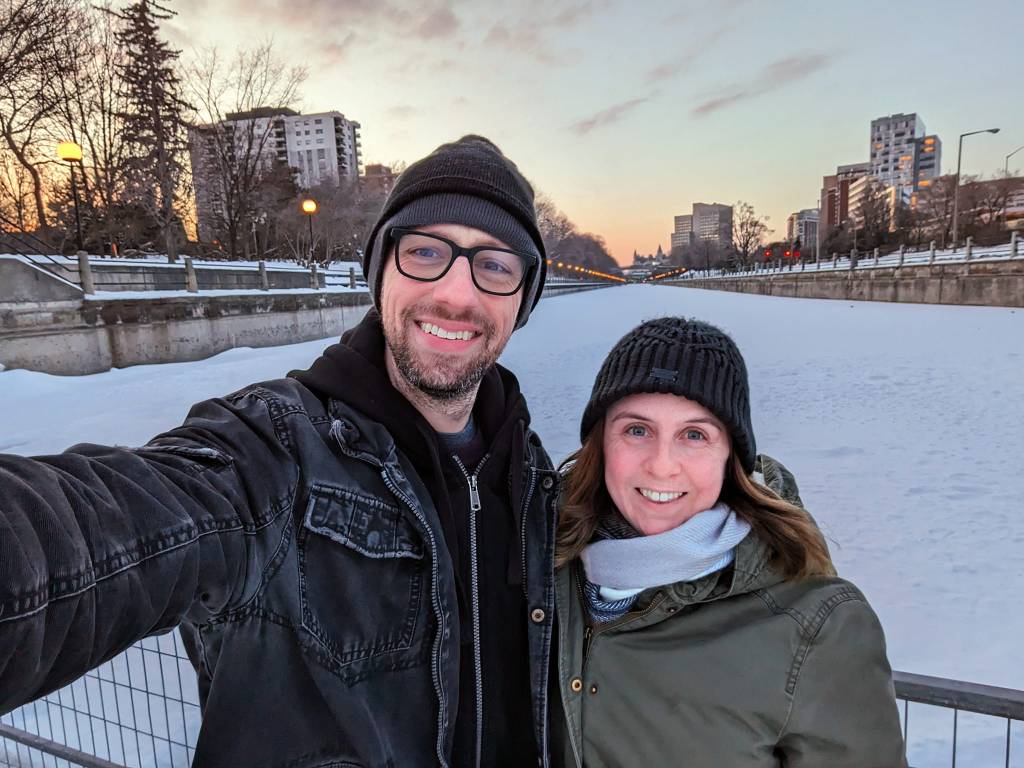
Quickly becoming honorary Ottawans

As always, the first year in a new place brings about so many fun new challenges and observations, which, of course, we did our best to keep track of! And in honor of our CAnniversary, I thought I’d share some of the most salient differences we’ve experienced as Americans living in Ottawa.

Differences in Administration:

  • One of the very first differences we encountered was when we went to make a copy of the key to our new apartment. They told us it was a “secure key”, which meant they’d have to contact the building’s board to make sure we were on the list of tenants, and thus legally able to copy the key. So thorough!
  • No matter how long we live outside the US, we still struggle with anything other than the month-day-year formula. When I see 10/4, I automatically think October, not my birthday.
  • We were also really confused the first time we looked at an expiration date that said “MA 2024”. Is that March or May?? In Canada, the months are abbreviated JA FE MR AL MA JN JL AU SE OC NO DE to make it work in both English and French.
  • Although we had experienced something like this in other countries, we were still surprised to learn that Canada doesn’t have joint tax filing. Tucker and I had to file separately even though my payment came from the same account his refund will be going to.

Differences in Cars & Driving:
  • After years in Mexico, driving in Canada felt like going back to beginner mode. In fact, there are some things that make us feel like drivers here are not really trusted to make good decisions, like the fact that there are more “no right on red” signs here than we’ve ever seen in our lives.
  • Another immediately obvious difference was the lack of locking clips on the gas pumps. Most gas stations force you to hold the nozzle the whole time you’re pumping (yes, even in -10° weather).
  • Something we’ve long gotten used to, but is still a pretty big US-CAN difference is the use of the metric system here. Our car, which was bought in FL, prominently displays miles per hour, thus we’ve gotten really good at converting on the go.
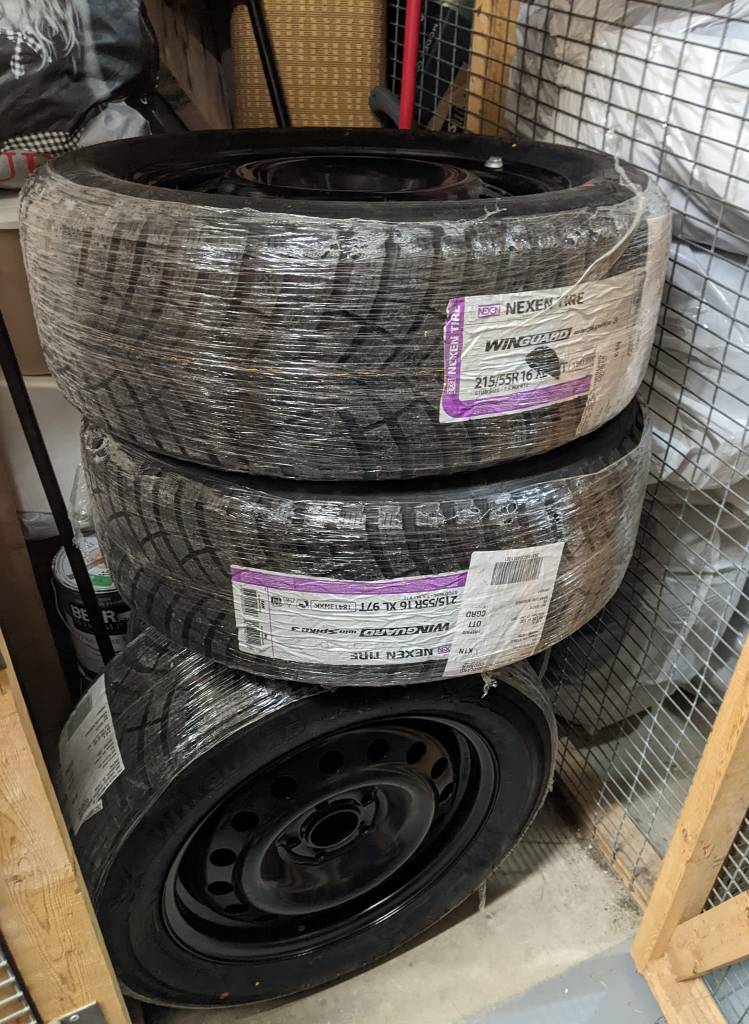
  • We also were surprised to learn that in some provinces of Canada winter tires are not just recommended, they’re mandatory. We had to provide proof of purchase to our insurance company as well.

Differences in Communication:
  • In our first week in Canada, strangers asked us questions at least 10 times in 10 different places (on the metro, in Canadian Tire, etc.), and it definitely surprised us. It’s common to talk to strangers in the US and Mexico, but to ask for anything other than directions or small talk felt different.
  • Canada (or at least the parts we’ve been to thus far) absolutely loves reservations! A place could be entirely empty at eleven a.m. on a weekday, but when you walk in, they’ll still ask you if you have a reservation. Only recently have I been able to suppress my eyeroll.
  • I’ve already shared some of my favorite Canadian English phrases, but I also have to mention how noticeable the pronunciation of some words is as well. The Canadian “soorry” will forever be engrained in my head!
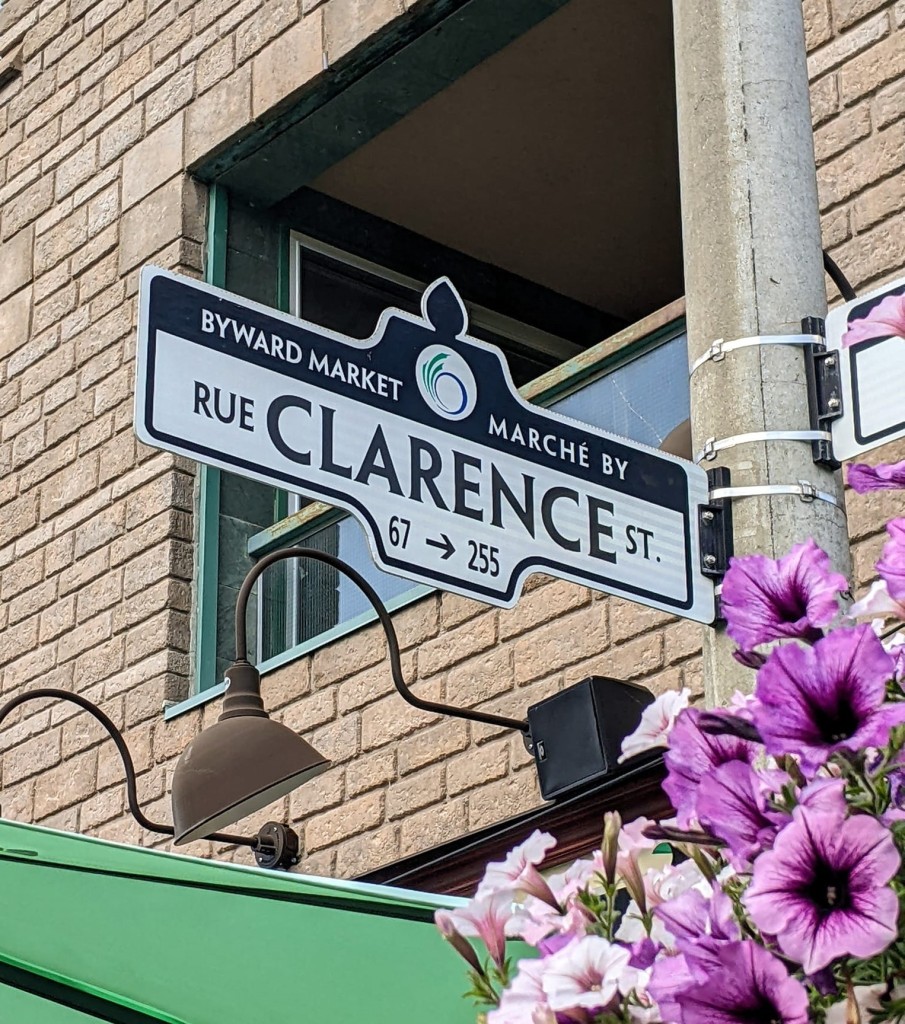
  • And then there’s the bilingual bit. Always seeing street signs like “rue Clarence st” and Coke cans that say “goût original” definitely reminds us we’re not in Kansas anymore.

Differences in Allegiance:  

  • There are probably many Americans who pay attention to celebrities, but I’d bet that even the most Hollywood-centric Americans likely don’t keep close track of where those celebrities are from. Canadians do though. If you so much as mention someone who happens to be from Canada, you can be pretty certain that fact will soon be pointed out.
  • In a difference that feels somewhat related to the previous one, Canadians seem a little touchy when it comes to comparisons with the US. I imagine it must be like growing up with a famous, somewhat annoying older sibling always stealing the spotlight, which anyone would resent.
  • Another clear difference comes from the past. Despite having separated from the UK over 150 years ago, the royal presence is still absolutely felt here. Canada has both a national anthem and a royal anthem (which, you guessed it, is “God Save the King”). Queen Elizabeth II is on several pieces of Canadian currency, and there are plans to get King Charles III on at least one bill by 2027. And some of the most popular streets around us include George, King Edward, and Queen Street. 
  • Of course, the governments are also quite different, but that’s a long, boring topic for another time. For now, I’ll just say that one interesting difference is that the liberal party here is red and the conservative is blue. Not confusing at all…

Differences in Environment:

  • Another surprise early on in our move was when we received a pamphlet explaining all the city recycling rules, dates, exceptions, etc. There are even hazardous waste or electronic waste pick-up days and Christmas tree collection/composting!
  • Something else we noticed last summer and are eager to see if it holds true again was that any time we went to a restaurant with outdoor seating, they automatically assumed that would be our first choice.
  • In general, Canadians are very nonchalant about the weather, whatever it is. Freezing rain isn’t a reason to miss work or a night out with friends, okay? Just give’er!
  • Another difference (that we absolutely love!) is the abundance of seasonal menus. The food, the drinks, the specials all change with the seasons, which has actually given Tucker a reason to go back to places we’ve already been. Hooray!
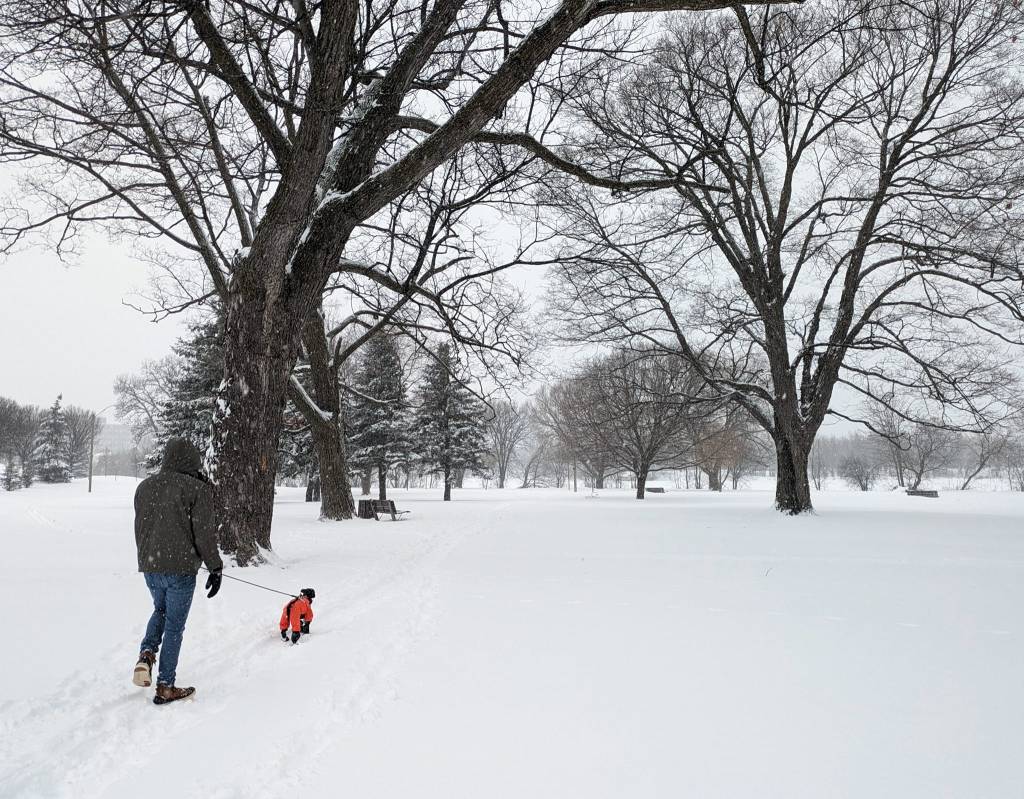
Just your average day in January

Misc. Differences:

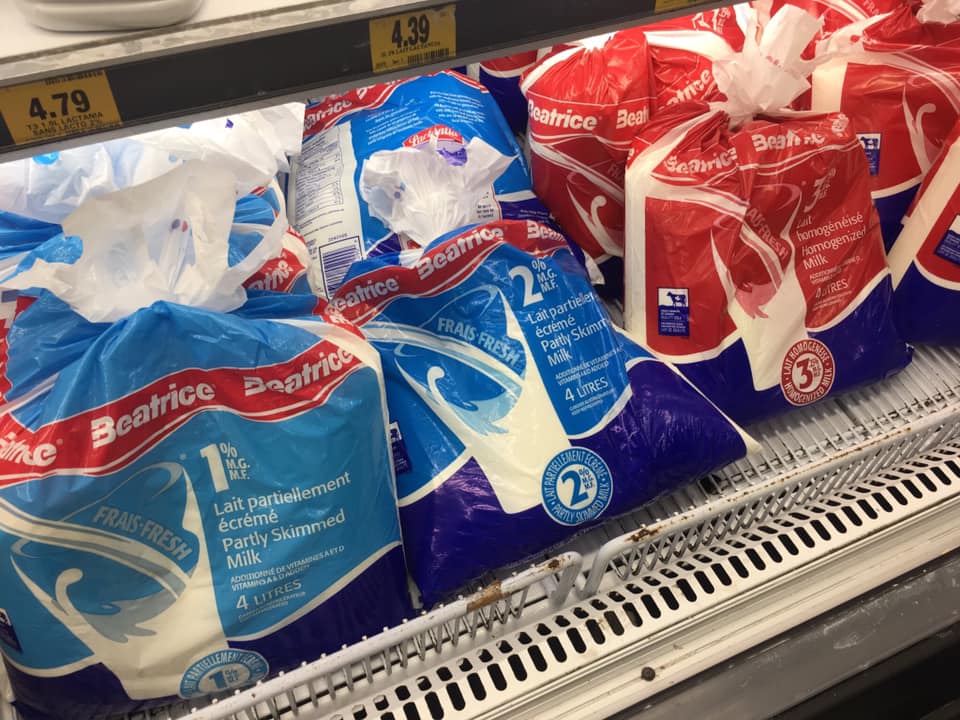
  • Here in Ontario, milk comes in bags. It’s incredibly unwieldy and honestly way too much milk (three 1.33 liter bags), but it’s definitely different.
  • Canada no longer has a penny. And can I just say, I don’t think anyone misses it. It’s time for the US to do the same.
  • Another interesting difference is the fact that the legal drinking age differs by province, and all of them are lower than the US’s standard of 21.
  • And one more difference that must be mentioned, but not in full because that would take much too long is the healthcare. Pretty much every aspect of it is different, but I think our biggest shock so far was when the dentist gave us both free Sonicare toothbrushes.

Bet you didn’t think I’d have that much to say about the differences between Canada and the US! Honestly, just like every other country we’ve lived in, the longer we’re here, the more differences become apparent. But also like our other homes, we’re quickly adapting to our surroundings and carefully choosing our favorite cultural gems to adopt and take with us to our next home. O Canada – thanks for a great first year!


Fun Facts: Canada Edition

Less than 100 days in, and we’ve already had three guests come to see us in Ottawa, which means we’ve been learning (and sharing) A LOT about our new home. In fact, I’ve got so many fun facts swimming around in my head that I feel they deserve their own post! Who doesn’t love a little Canadian trivia, eh? So, without further ado, here are 20 interesting facts about our new home:

#1 Surely, we have to start with the name of the country, right? The word “Canada” actually comes from the Huron-Iroquois word “kanata”, meaning “village” or “settlement”. Its first usage was intended to specify one village in particular; however, early French explorers used it to describe not only the village, but also the surrounding area, which kept expanding, eventually giving name to the entire region.

#2 Interestingly, Ottawa (or Outaouais, as it’s called across the river) gets its name from a different indigenous language. “Ottawa” is derived from the Algonquin word “adawe”, which means “to trade”.  

#3 Of course, everyone associates Canada with English and French, but I was delighted to read that there are over 70 distinct indigenous languages spoken here as well. Who’s up for learning a little Inuktitut with me?

#4 No matter how you get to Canada (by boat, by car, or by plane), you’ll likely notice there’s a lot of water here. Canada actually has the most lakes of any country in the world, about 880,000 in all.

#5 The crazy number of lakes should really be of no surprise given the fact that Canada is the second largest country in the world. Only Russia is larger.

#6 Canada does beat out Russia (and every other country in the world) for longest coastline though. There really is water everywhere here!

#7 Speaking of Canada’s coast, Canada is surrounded by oceans: the Atlantic to the east, the Arctic to the north, and the Pacific to the west, which is why you frequently hear Canadian announcers say “from coast to coast to coast”, which I think is brilliant!

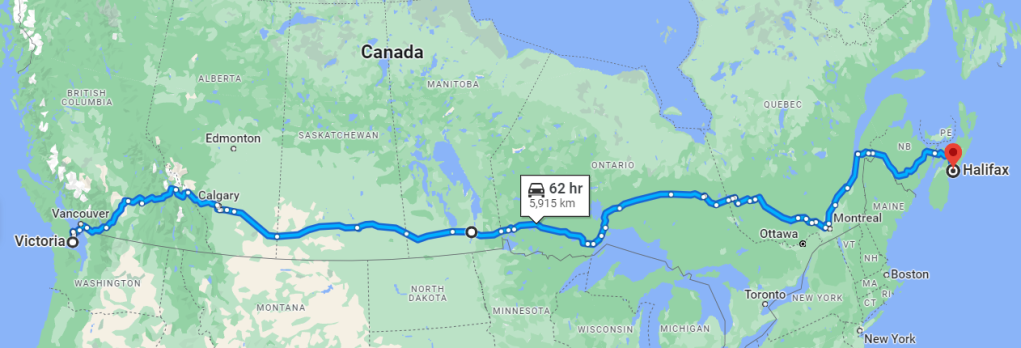
#8 Their roadways are also pretty impressive. There’s one highway, the fittingly named Trans-Canada Highway, that traverses some 7,800km (4,800 miles) from one end of the country to the other.

#9 For such a large country, there really aren’t a lot of people living in Canada. With a little under 40 million people, Canada is one of the least densely populated countries in the world with about 4 people per square kilometer (or 10 per square mile). For reference, the US has about 37 per km² (96 per mi²).

#10 But there are still quite a few famous Canadians among us! Celebrities like Keanu Reeves, Ryan Reynolds, Rachel McAdams, William Shatner, Pamela Anderson, Nelly Furtado, Michael J Fox, Jim Carrey, Ryan Gosling, Celine Dion, Drake, Elliot Page, and so many more all hail from the Great White North.

#11 Other notable Canadians include two of the most famous dog breeds in the world: the Labrador Retriever and the Newfoundland, coming somewhat obviously from Newfoundland and Labrador.

#12 Canada has ties to many animals, such as the moose, the polar bear, the orca, the Canada goose, etc. but none of those are the national animal. The national animal of Canada is the humble beaver, which I recently learned is actually classified as a rodent.

#13 Another symbol of Canada is the maple leaf, which has been associated with the region since the early 1800s. Surprisingly though, it only made it onto the flag in 1965, meaning the Toronto Maple Leafs logo is about 40 years older.

#14 Speaking of maple leaves, Canada produces about 80% of the world’s maple syrup.

#15 In addition to giving the world maple syrup (and poutine, of course), there is a huge number of other internationally famous Canadian inventions: basketball, lacrosse, insulin, peanut butter, IMAX, pagers, egg cartons, Hawaiian pizza, and the snowblower just to name a few.  

#16 Canola oil happens to be another Canadian specialty. Canola was first bred (in Canada) as a healthier alternative to rapeseed and has become one of the most ubiquitous cooking oils in the world. The name “Canola” is actually a portmanteau of “Can”, as in Canada, and “OLA” meaning “oil, low acid”. Half a century later, and Canada is still the world’s largest producer of Canola oil.

#17 The US and Canada have a lot of historical similarities, so it’s not surprising that we both celebrate Thanksgiving. The two holidays have similar origin stories and similar commercial influence, but are ultimately celebrated in different months. Canada celebrates their Thanksgiving on the second Monday of October.

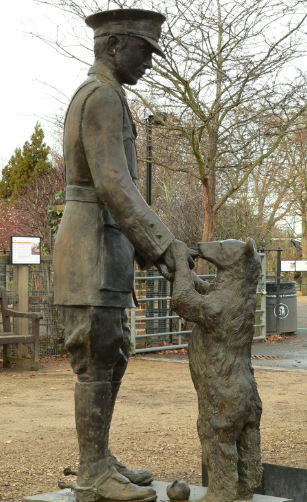
#18 Another somewhat random fact we recently learned about Canada is that the “Winnie” in Winnie the Pooh is actually short for Winnipeg (like the city). The stuffed bear was named after a real Canadian black bear that went by the name Winnipeg.

#19 Many of our fun facts stem from our observing differences between the US and Canada, and one of these interesting differences is the legal drinking age here. In three Canadian provinces (Alberta, Manitoba, and Quebec) it’s 18, and in the other provinces and territories it’s 19.

#20 And finally a few cold facts for you! Canada is without a doubt one of the coldest countries on the planet. In fact, a city in Yukon once recorded -63°C (-81°F), which is about the average temperature on Mars. Ottawa is often listed as one of the top 10 coldest capitals in world, with an average high of -5°C (23°F) for the month of January. Winter is coming for us…

Well, there you have it, my first Canadian facts round-up! I hope you found these tidbits as interesting as we did, and I hope you make it up to Canada soon to learn a few more in-person! Thanks for reading!

Traveling and Learning

54436949_10219110534782558_5021852581991809024_n
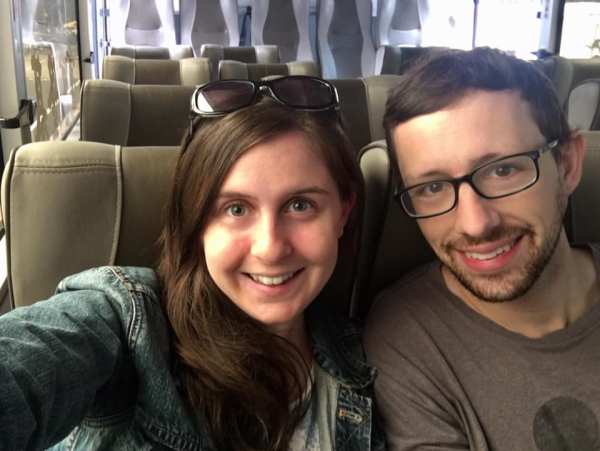
Bus Selfie!

I really love traveling, and recently I’ve been reflecting on why exactly I feel so strongly about it. Is it the break from daily life? A chance to meet new people? Why does anyone choose to travel? I think Tucker enjoys it so much because he loves to try anything new, and going to new places is the perfect way to do that. But I’m not as fond of new things (especially new foods) as he is; I have a different motivation. I like to travel because, ultimately, I like to learn. Originally, I thought I’d be a lifelong student because of my love of learning; however, that turned out to be pretty uneconomical. Fortunately, just after graduation (only a few months after we got married) Tucker and I took our first trip overseas, and I found it: a new way to continue learning – through exploring the world around me.

During our subsequent travels I have been amazed at what we’ve ended up learning: geography, history, culture, psychology, self-awareness, the list goes on and on. So this is the force driving my not-so-easily-sated addiction, but thankfully, I’ve also been given ample opportunities to get my fix. Here are the places we’ve traveled and some of the things we’ve learned during my two years as an English Language Fellow (August 2017-July 2019):

Beijing

43823145_10217851094697343_3261443970961506304_n
Hefei

Hefei, Anhui – where we learned about HOME

Through traveling, I think one of the things we’ve learned the most about is the concept of “home”. We’ve learned that a home can really be made anywhere, and that connections with neighbors and friends are absolutely necessary for a place to truly feel like home. In fact, we have often felt closer to the friends we’ve made during our brief stints abroad because these shared experiences bond people together in an incredible way. We become instant family with other expats, and our Chinese friends are literally our lifelines! It’s such an interesting dynamic that definitely opened up our views of family and home. Another interesting aspect of our new perspective on “home” is how well we actually know it. Going into our last two new homes we haven’t known anything about them. Nothing about the neighborhoods we’d be in or even anything past what Wikipedia says about the cities/regions they’re in. This has given us a new outlook on what it means to truly know where you live. We’ve had an amazing time learning more about the places we’ve called home, and it’s made me curious about the places we used to call home and how well we actually knew them.

Nanjing, Jiangsu

22310480_10214825975111244_8420312030420368634_n
Mongolia

Mongolia (Ulaanbaatar & Gorkhi-Terelj)

Shanghai

Wuhan, Hubei

Huangshan & Hongcun, Anhui

Xi’an & Lintong, Sha’anxi

Harbin, Heilongjiang

Thailand (Chiang Mai & Bangkok)

27459139_10215799887458444_8118480623873599742_n
Cambodia

Cambodia (Siem Reap & Phnom Penh) – where we learned about CONFLICT

In addition to learning about our home (and our views of it), traveling to different places has allowed us to take a closer look at how others view the same places and how they view their own homes. This has led to a better understanding of conflicts and global perspectives, which I am endlessly interested in. When we visited Cambodia, for example, I was immediately struck by their relationship with Thailand. We took a bus from Thailand to Cambodia, and walked across the border through immigration, where the welcome was, well, not so welcome. Cambodia has had a rough history, with its neighbors and with many foreign nations, and that has left an impression on the population. And it’s hard to deny their feelings, especially when one of the other most noticeable features of Cambodia was the number of missing limbs, mostly caused by landmines still implanted within their borders decades after the end of the conflict with Vietnam. The US has its perspective on our many conflicts, but every country, and every person has their own views, which are extremely important to learn in order to really begin understanding each other.

Hong Kong

28056090_10215929639622167_296978710011137587_n
Guangzhou

Shenzhen & Guangzhou, Guangdong

Hangzhou, Zhejiang

Sanhe, Anhui

Badaling, Beijing – where we learned about PERCEPTION

On the topic of perception, I’d be amiss if I didn’t mention the fact that traveling has broken pretty much every stereotype I’ve ever had about a place or a group of people. When we traveled with my family in China, it was amazing to watch those stereotypes break for someone other than myself. My parents realized pretty quickly that China was nothing like they had imagined, and Tucker and I have done the same thing in every place we’ve visited. Our perspectives are shaped through all sorts of things (the news, education, movies, etc.), but they’re always seen through our own individual filters as well as through the filters of the sources of information. This has led to many different perspectives on many different things, but seeing and experiencing something for yourself gives you the best insight you could ask for. One of my favorite travel quotes comes from Aldous Huxley: “to travel is to learn that everyone was wrong about other countries.” Even when comparing your experiences with someone else who has been to the same place, a difference in perspective is almost guaranteed, but that’s what makes it so interesting!

31184987_10216476097443271_453332385989628214_n
Badaling

Suzhou, Jiangsu

Kunming & Mile, Yunnan

Australia (Sydney, Port Macquarie, Brisbane, Airlie Beach, Cairns)

36853569_10217054960034474_3599223915928354816_n
Australia

Haikou, Hainan

Qingdao, Shandong

Guilin, Xingping, & Longjin, Guangxi – where we learned about FAMILY

Traveling with family has taught us a lot as well. First, it taught me to be thankful for our family members who are willing and able to travel with us. There have been many expats we’ve met whose family members have never visited them or even want to see the places their loved ones call home. It truly makes me thankful for the open-minded and adventurous spirits of our families. I have also learned a lot about taking care of other people’s needs. In China, independence really only comes with time because with no alphabet and very little English, trying to do things on your own can take a lot of effort and patience. Luckily for Tucker’s mom and aunt (and my parents), we were there to help them answer any questions and provide whatever they needed. Through these trips, I learned a lot about what is required to be responsible for someone other than myself 24/7, and it has left no question in my mind as to why we haven’t had any kids. Haha!

46436774_10218117969609049_117787609782026240_n
Fanchang

Jinshanling, Hebei

Wuhu & Fanchang, Anhui 

Changsha, Hunan

Zhangjiajie, Hunan

Chaohu, Anhui – where we learned about the PAST

Another set of lessons we have undoubtedly received through our travels has been in regards to history. Coming from the New World, our “history” typically refers to the seventeenth century and onward, but traveling to other parts of the world, we’ve realized just how recent that actually is. Europe showed us their history through maps and architecture; Asia has shown us through traditions and languages. Visiting the outskirts of Chaohu and other cities and villages of Anhui is a bit like stepping back in time. There are farmers whose ancestors have farmed the same land for hundreds of years. Ancient artifacts seem to be dug up every day in this part of China, cooking vessels and jewelry from thousands of years ago. In history classes I was never really good at linking what was happening in ancient Rome with the rest of the world, but after traveling and seeing some of the history for myself, it has gotten much easier, as has the ability to connect what has happened in the past with what is happening in the present.

56770469_10219219416624536_1852154197714141184_n
Chaohu

Chengdu, Sichuan

Siguniangshan, Sichuan

50502210_10218615842735566_3802084494152826880_n
Chongqing

Chongqing

Zhuhai, Guangdong

Macau

Lantau Island, HK

The Philippines (Cebu & Manila) – where we learned about INEQUALITY

Traveling truly brings to light things I never would have given a second thought to in other situations. Throughout our travels, we’ve met many people in many different circumstances. And sadly, we’ve seen that people are almost never treated equally. We, in the US, tend to think of race, gender, and sexual orientation, but there are also issues of class, religion, ethnic background, age, and countless others. Inequality seems to be a shared human trait, but it’s also something we’re all growing increasingly aware of. Sometimes seeing it manifest in a different way, as it often does in different contexts, helps show how ridiculously common, yet unnecessary it really is. Tucker and I were in the Philippines earlier this year, where we saw first hand some of the inequalities experienced by the people who live there versus the people who vacation there. It’s something that allows us to think about the impact we have when we unintentionally aid inequality, not only when traveling but in all aspects of our lives.

51221293_10218735999499410_6899317769305587712_n
The Philippines

Singapore

Malaysia (Kuala Lumpur)

54514796_10219110537662630_6888171968395214848_n
Jiufen

Taiwan (Taipei, Jiufen, & Tamsui)

Anqing, Anhui

Jiuhuashan & Chizhou, Anhui

Xining, Qinghai – where we learned about KINDNESS

Finally, I think the biggest lesson of all has been experiencing the kindness that strangers are capable of showing to each other, which we found empathically on display on our recent trip to Qinghai. It has been a common thread throughout every place we’ve traveled; the help we’ve received from people we had never met before continues to inspire us. Whether it is someone giving directions in multiple languages or simply sharing information about their culture so that we can leave with a more complete understanding, we’ve made friends with people around the world. This is what allows me to not get bogged down in politics or negative stories that are passed around because I have experienced the kindness of humans in every country I’ve been to. I’ve seen our similarities, and they far outweigh any differences. Mark Twain wrote “travel is fatal to prejudice, bigotry, and narrow-mindedness”, and I believe our ability to travel more freely now than ever before has played a big part in the acceptance and compassion people are showing each other around the globe. I want to continue to spread the kindness I’ve received, and I hope that we all continue to do that whether we’re traveling or not.

Chaka & Erlangjian, Qinghai

Japan (upcoming!)

There you have it: 10 different countries, 20ish provinces/regions of China, over 60 cities, and an immeasurable amount of knowledge, experiences, and memories. It’s fun to keep track and even more fun to share, but don’t just take it from me. As the Asian proverb goes, “better to see something once than to hear about it a thousand times.” Hope to see you on our next trip!

Map