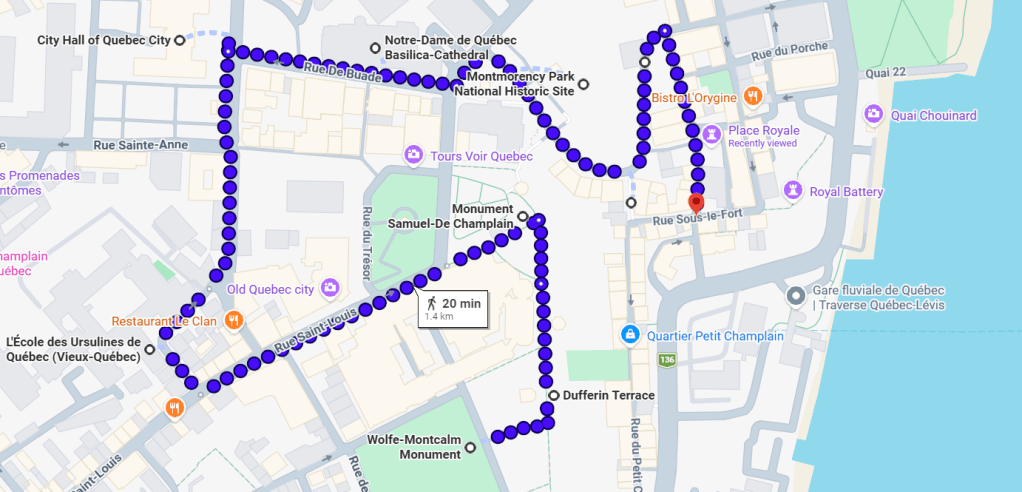
Now that I’m an official Québec City tour guide, I’ve realized that in-person walking tours can be a little overwhelming — in the best possible way, of course! There are so many names, dates, stories, and details coming at you all at once. So, I created this virtual tour as a way for people to revisit the incredible history that makes Québec City such a unique place to explore. But even if you haven’t taken the tour yourself, I hope you’ll still enjoy discovering these stories and learning more about the history behind my adoptive home.
Stop 1: Parc des Gouverneurs
I like to start our tour at the Parc des Gouverneurs, which sits right next to the famous Château Frontenac and has a beautiful view of the Saint Lawrence River. I think this is a great place to begin because from here, you can see both sides of the river and Île d’Olréans, which is the official start of one of the largest estuaries in the world. An estuary is where a river turns into an ocean, and this particular narrowing is precisely why Québec City is where it is, and it’s also how the city (and the province) got its name. Quebec means “where the river narrows” in Algonquin, highlighting the first group of people who called this region home.
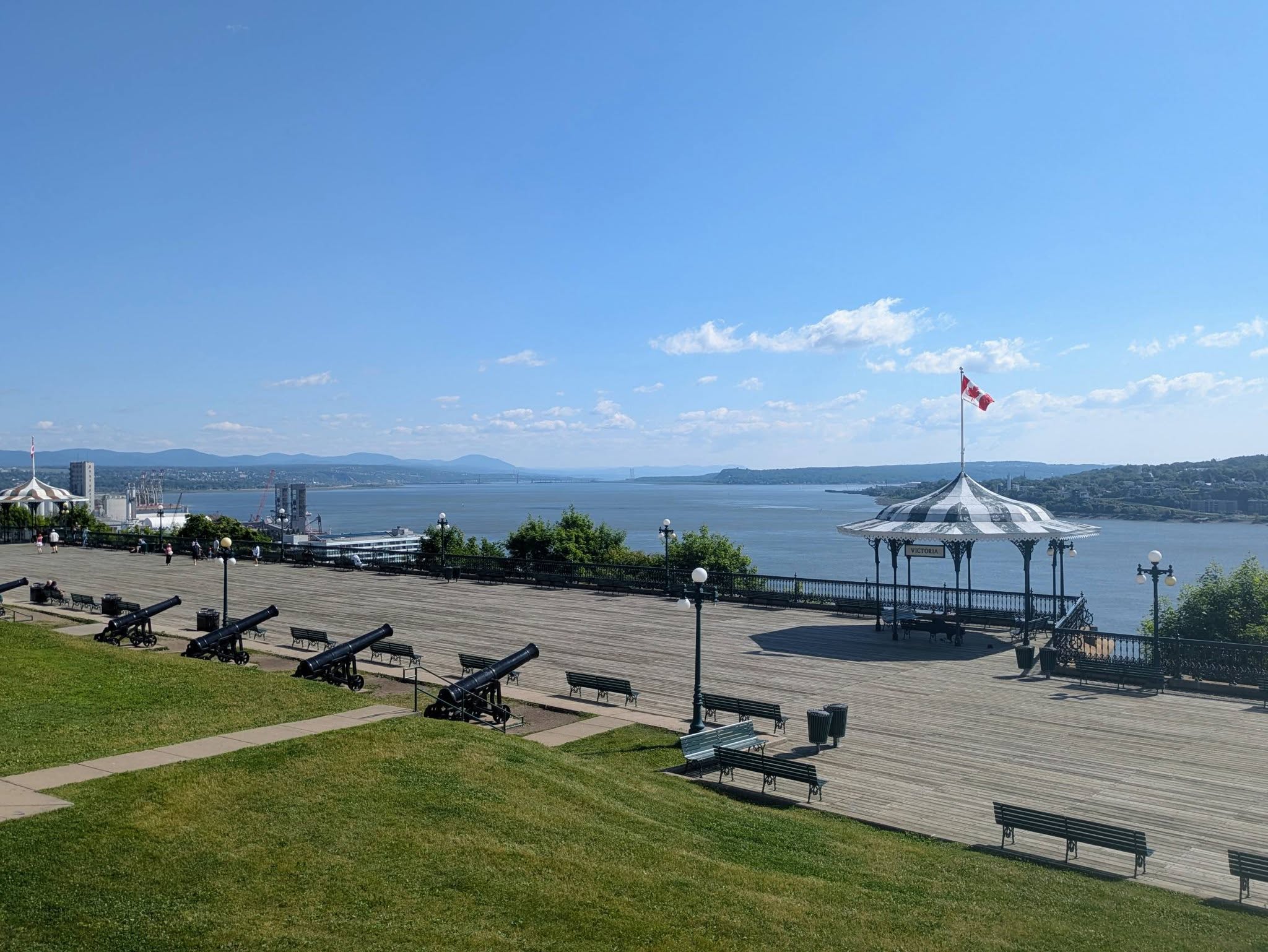
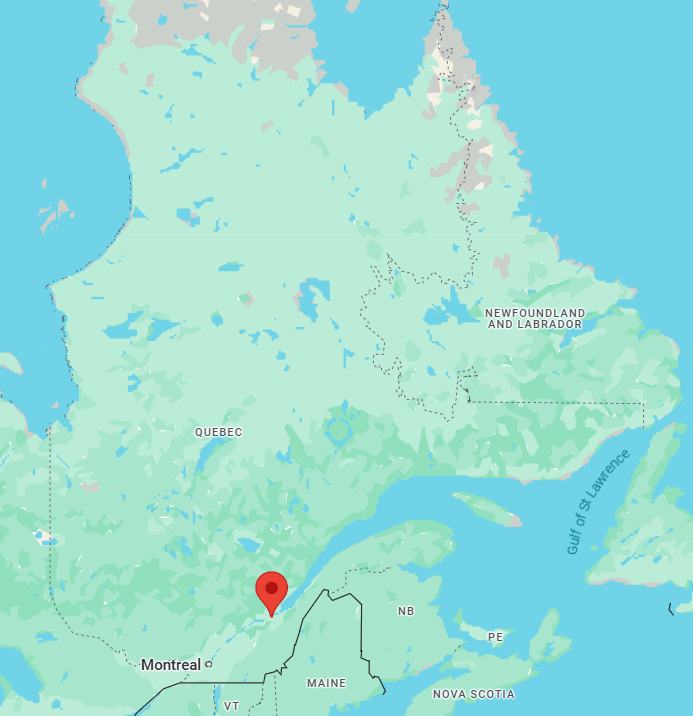
Of course, it didn’t take long for other groups to see the potential of Quebec, starting with the French in the 1500s. Due to its strategic location and striking natural features, early explorers found Quebec to be the perfect place to stake a claim. Here, they had access to the already-established trade routes, and they were in the most easily-defensible position in the region. Jacques Cartier was the first to come and go a few times, staying just long enough to NOT find any diamonds, yet name the rocky cliff Cap Diamant anyway, but it was Samuel de Champlain, who really stuck it out and is credited with the official founding of Québec City in 1608.

Along with a small group of initial settlers, Champlain built the first habitations in Québec and quickly became known as the Father of New France, which is why we see his face everywhere around the city. Well, not his face exactly. Unfortunately, Champlain never had a portrait done, so we don’t actually know what he looked like. When the city started putting up statues of Champlain, they had to model them after another noble-looking French guy instead, so in all the artwork, statues, and history books, the man you’re looking at is not actually Champlain, but at least they’ve mostly stayed consistent with the image!
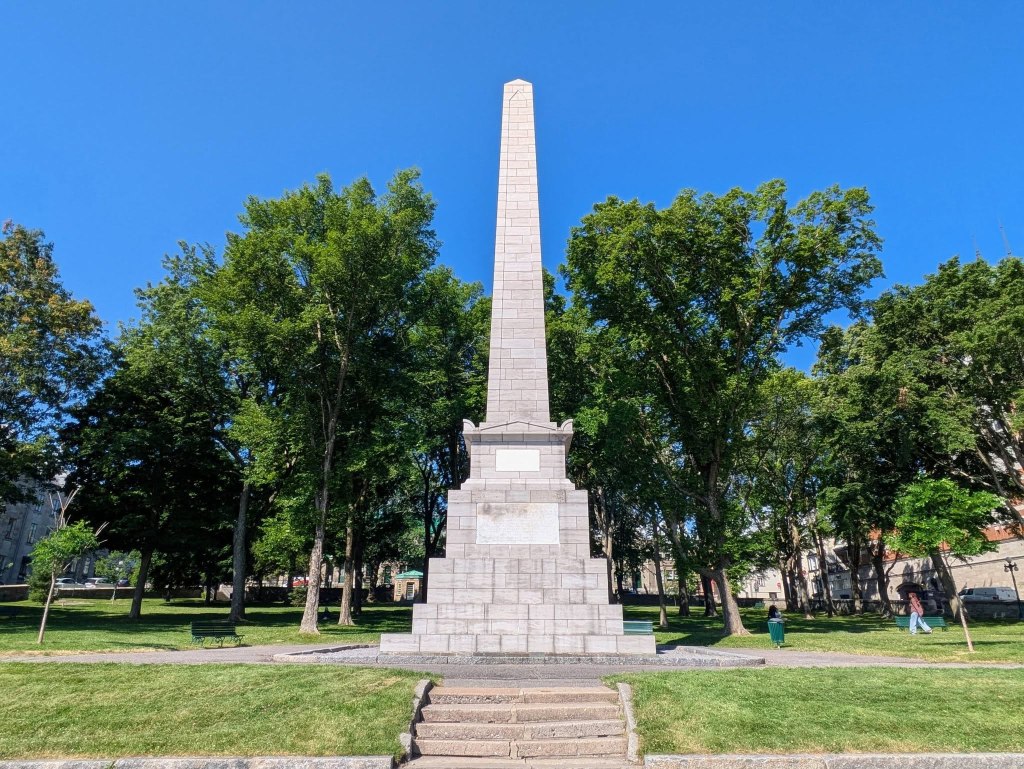
Of course, one of the most striking elements in Governor’s Park has to be the Wolfe-Montcalm monument. The second-oldest war monument in all of Canada, this impressive obelisk commemorates, arguably, the most important battle in Canadian history: the Battle of the Plains of Abraham (1759). This was such an important battle because it was the catalyst that led to British, as opposed to French, rule in Canada. Interestingly, for such an important battle, it didn’t actually last very long, only about 20 minutes from the point at which the two sides met on the battlefield. However, regardless of the outcome, both Wolfe (the English general) and Montcalm (the French general) were highly regarded by their men, and both are well-represented throughout the city today.
Stop 2: Château Frontenac & Dufferin Terrace
Okay, our next stop, of course, has to include the infamous Château Frontenac, allegedly the most-photographed hotel in the world! The oldest sections of the Château Frontenac were built in 1893, and despite the name, it has always been a hotel, never a true castle. Like the Château Lake Louise in Banff and many others across the country, the Château Frontenac is a Canadian Pacific Railway Hotel, all of which are incredible pieces of architecture initially built to generate passenger traffic for the transcontinental railway network that was completed in 1885.
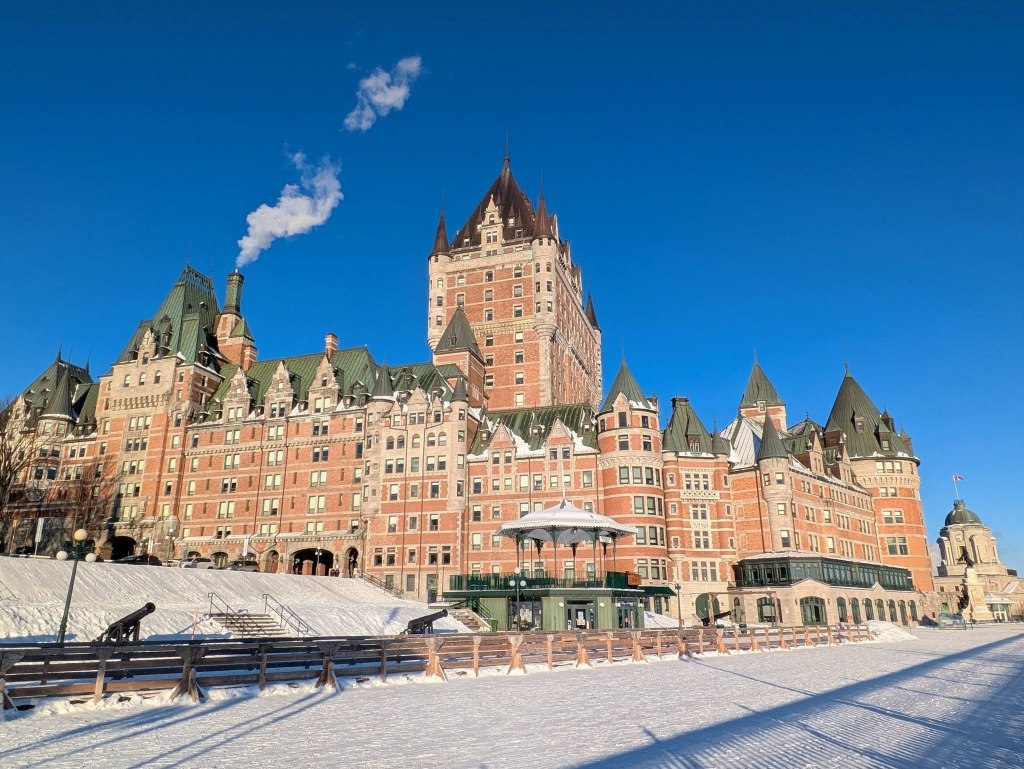
Like many of these grand hotels, the Château Frontenac was built in several stages, and interestingly, the main tower (arguably its most distinguishing feature) was not included in the original section. It was added to the structure in 1924. The most recent addition to the hotel took place in the 1990s with the addition of the pool, spa, and fitness center because modern amenities are a must for that coveted 5-star status! As you can imagine, many famous people have graced the halls of this amazing building over the years: Queen Elizabeth II, Winston Churchill, Franklin Delano Roosevelt, Princess Grace of Monaco, Charlie Chaplin, Céline Dion, and Paul McCartney, just to name a few.
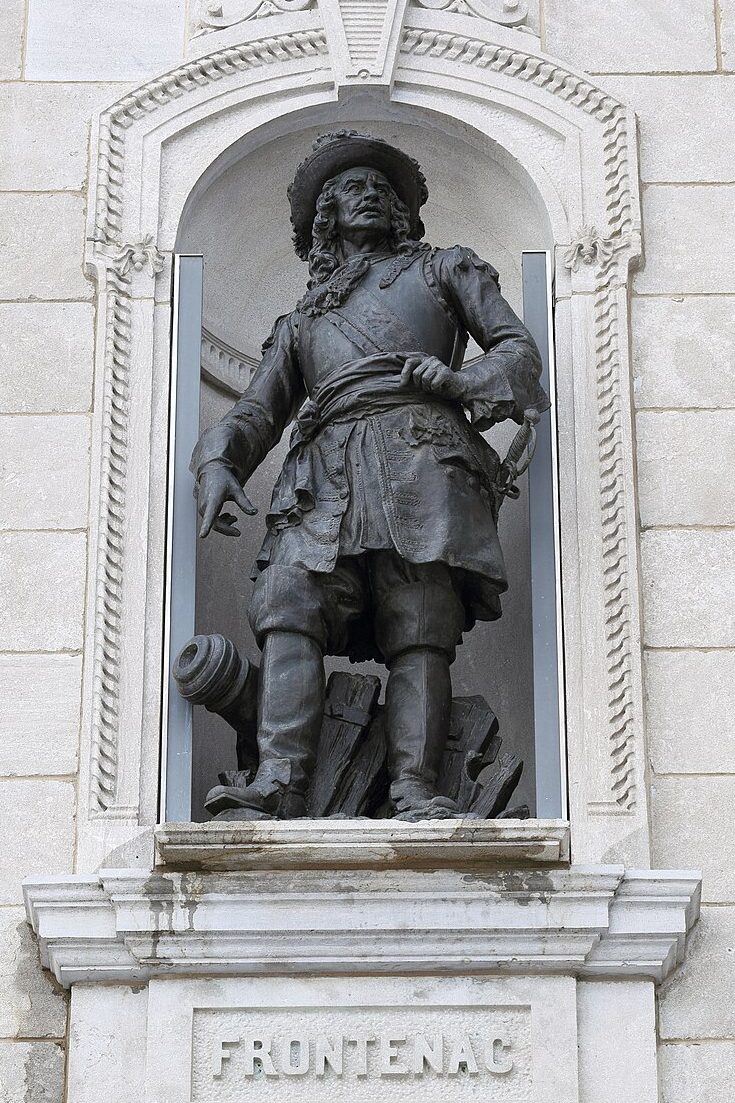
But what about the “Frontenac” part of the hotel’s name? Where does that come from? Well, Louis de Buade de Frontenac was a former Governor General of New France, and he was the one in charge when the city faced one of its first major attacks in 1690. Frontenac knew the young colony wasn’t fully prepared to take on the English at this point, so when one of their ships pulled up, he used a bit of psychological warfare to win the day. He gave his iconic “I’ll answer with the mouths of my cannons” line after blind-folding and tricking their envoy into thinking Québec was much more battle-ready than it actually was. Frontenac’s bold actions and pivotal role in early New France made him a fitting namesake of such an impressive hotel.
Right in front of the Château Frontenac is where you’ll find Dufferin Terrace, a 430m (1400ft) long boardwalk that runs along the edge of Cap Diamant. From here, you can see the Citadel perched even higher on the cape as well as the only still-functioning cannon in the city, which is fired every day at noon, so be sure to listen out for it! From here, you can also see the city’s beloved toboggan slide. Built in 1884, the slide is open all winter long, and thanks to its steep angle and long icy track, riders can reach speeds of up to 70 km/h (45mph)! The slide is super popular during Winter Carnival, which happens every year in February, and if you like ice castles, ice sculptures, ice canoe races, and/or signature cocktails, you absolutely have to come back and experience it all for yourself!
Also, along the boardwalk are a series of glass skylights, where you can catch glimpses of what is left of the original Fort/Château St-Louis, some of the first constructions built on the cliff. And at the other end of Dufferin Terrace, near the top of the funicular, there’s a large statue of Samuel de Champlain (well, at least one representation of him). This statue was added to the boardwalk in 1898 and was designed by an architect who survived the Titanic disaster. Lucky guy! The stone that makes up the base of the statue actually comes from the same quarry as the stone used to build the Arc de Triomphe in Paris, and the woman kneeling there is actually a personification of Québec City itself. If you look closely, you can see her crown is made up of the city’s famous walls.


Stop 3: École des Ursulines
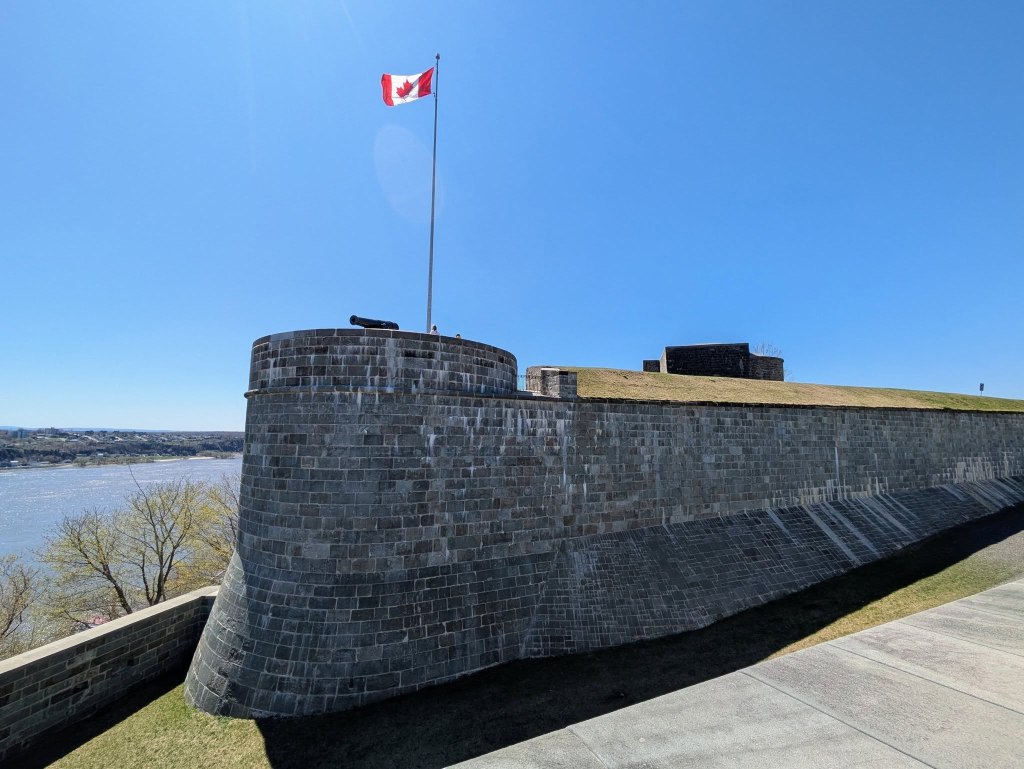
Our next stop is the École des Ursulines, which began as a monastery that was founded in 1639, making it the oldest educational institution for girls in North America. One of the founders was Marie Guyart (aka Marie de I’Incarnation), a French widow turned nun, who came to Québec to educate young girls in the new colony. Because she had been married before and still had a son in France, she wrote thousands of letters about anything and everything that pertained to her daily life in New France: her work at the school, the indigenous girls she met, the battles that took place, and many other events that historians are still pouring over. For her contributions, she has also been memorialized across the city and beyond.


The school that the Ursulines started way back in 1639 is still a functioning school today, and in 2010, it started accepting boys as well as girls into its ranks. Throughout its history, the Ursulines’ school has always been known to be quite progressive. The early nuns learned several indigenous languages themselves, and they were among some of the first to teach girls subjects like arithmetic, astronomy, and chemistry. While the school is still going strong, the monastery is actually undergoing some major changes. The last of the remaining nuns, who are all quite long in the tooth now, officially moved into an assisted-living facility in 2018, and the complex is now in the process of becoming an archive of all the documents, artwork, and artifacts that have been collected by the nuns throughout the years. During this shift, there was one other important change to be made: the relocation of General Montcalm’s body.
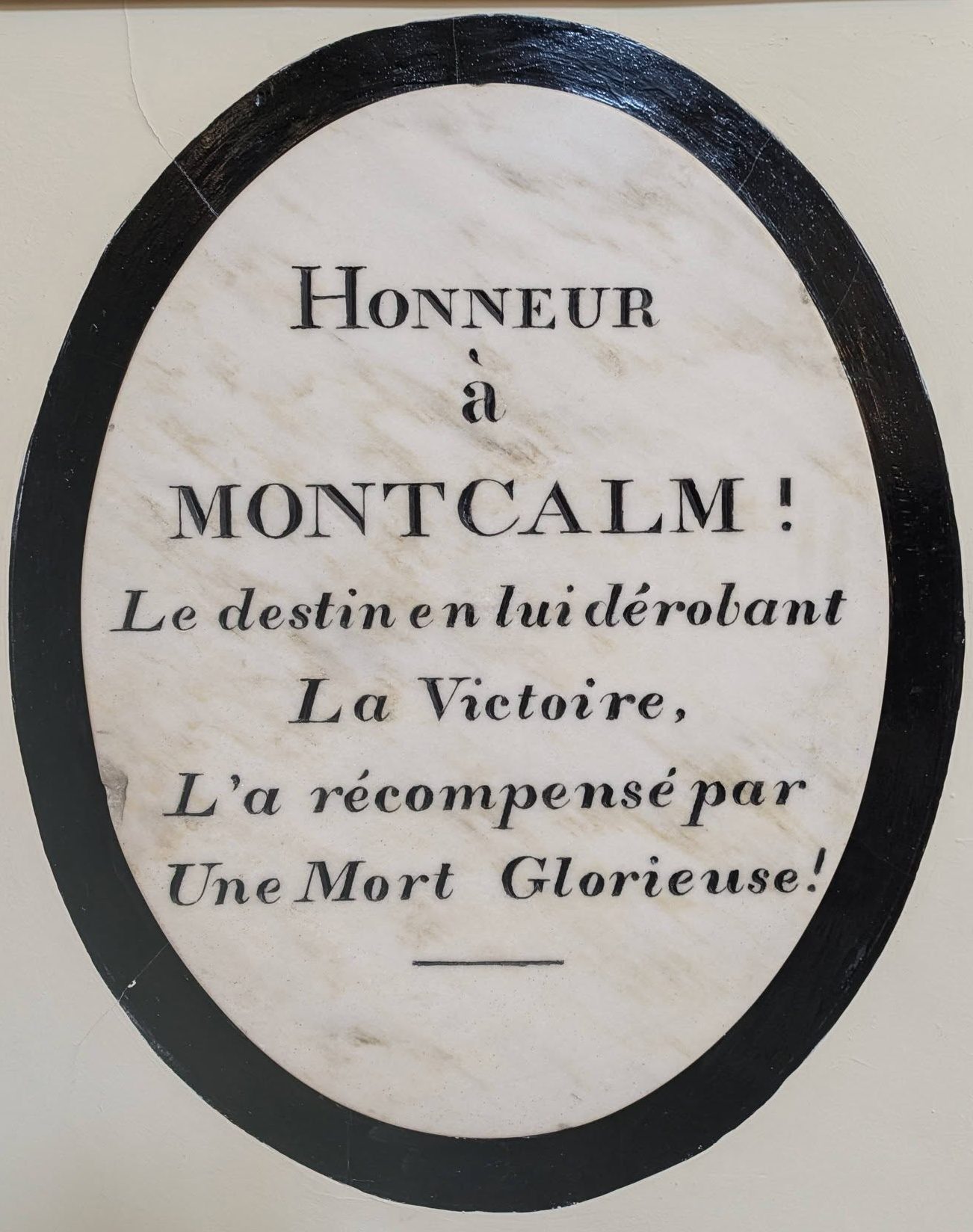
Although the Battle of the Plains of Abraham was brief, it had a tremendous effect on Québec. During the battle, General Wolfe died on the Plains right after finding out the English had succeeded. General Montcalm was also shot during the battle, but his men were able to retreat with him back into the city. Unfortunately, he wouldn’t survive either, and the French had to quickly find a way to protect his corpse and his memory amid the British takeover. This is how he came to be buried beneath the floors of the Ursuline Monastery. That is, until 2001 when the city decided to relocate his remains to the cemetery where all his soldiers were buried, rightfully reuniting the general and his men almost 250 years later.
Stop 4: City Hall
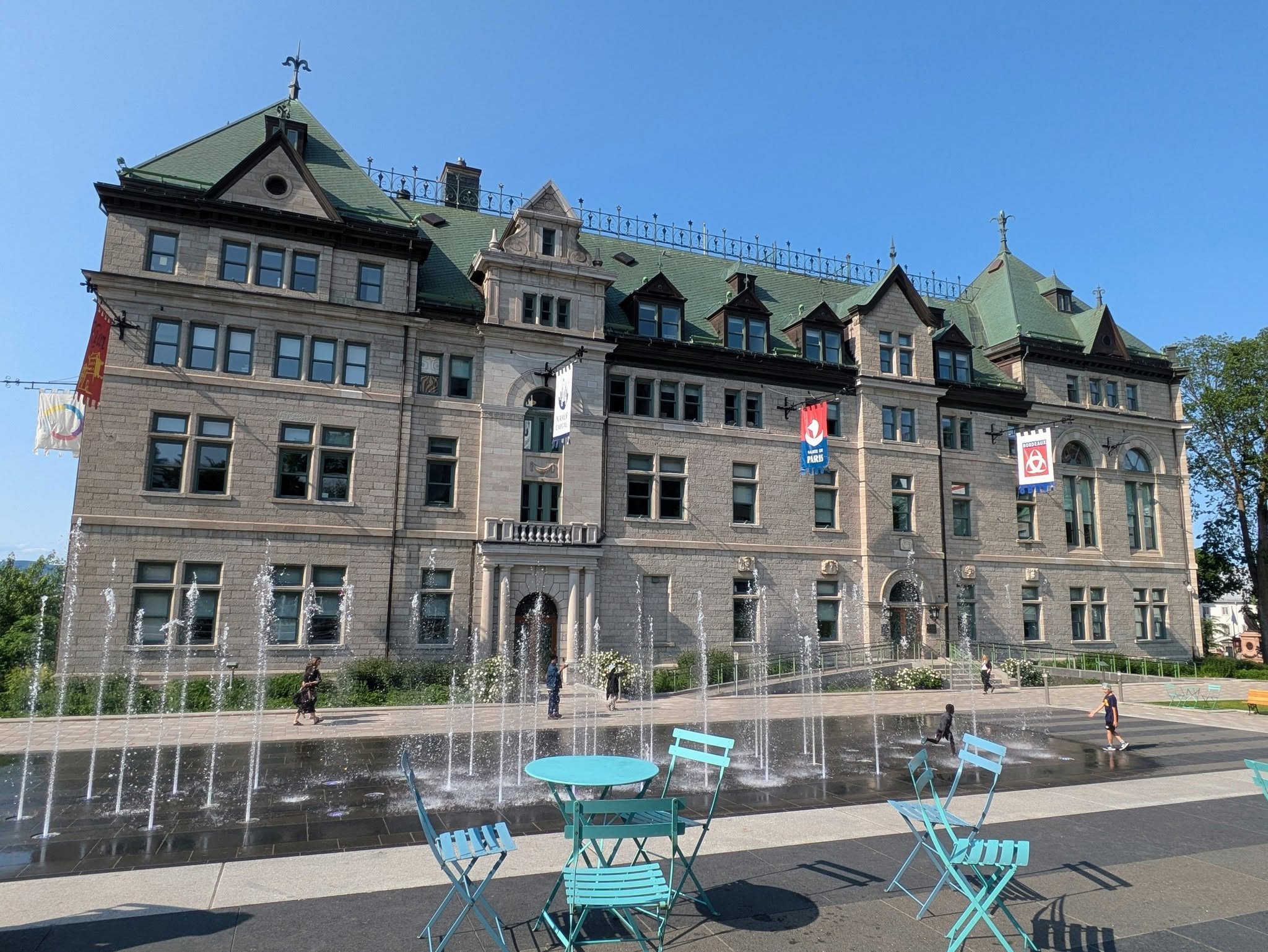
Now we’re at Hôtel de Ville de Québec aka City Hall. Originally, there was a Jesuit College here, but after the British took over, it was converted into a military barracks. In the late 1800s, the building had been left abandoned, and the city chose to demolish it and build anew. From here, you can also see many different flags, such as the Canadian Maple Leaf, the Quebec provincial flag, known as the fleurdelisé, and the flag of Québec City, which is dark blue with a golden ship (Champlain’s “Don de Dieu”) surrounded in the city’s fortifications. Across the square, you can see another series of flags representing the different Francophone groups of Canada: Acadians, Quebecers, Franco-Ontarians, etc.
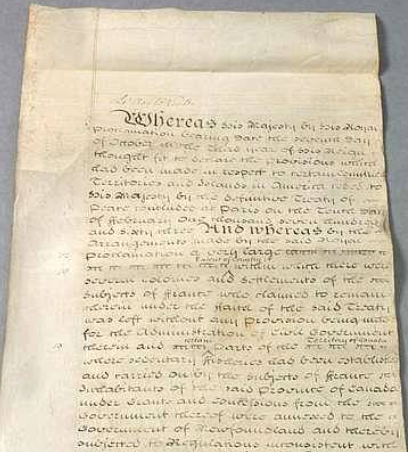
It’s here that I often get questions like “If the British took over 250+ years ago, why is Quebec still so French today?” Well, I’m glad you asked! Surprisingly, it’s because of the US. In the 1760s, the British had just taken control of Quebec, and they were so afraid the French-Canadians would join the Americans in their quest to kick the Crown out of North America that they signed something called the Quebec Act, which was essentially a pact allowing Quebec to keep their language, religion, and local laws so long as they didn’t fight against the British. Well, they never did and have kept their French-ness ever since! Vive la difference!
From City Hall, you also get a great view of the tallest building in Old Québec: the Price Building. Built in 1929 as a paper manufacturing company’s headquarters, it has a bit of a checkered past. Of course, the timing of the build wasn’t great (Stock Market Crash, anyone?), but the building itself was also hated by locals almost immediately. They felt it was too tall, too modern, and just out of place in Old Québec, which actually led the city to pass a law banning any buildings over seven stories within the fortifications. Luckily, the city has grown to love the Price Building over time. It now serves mostly as office space, except for the top 2 floors, which is where you can now find the permanent residence of the Premier of Quebec.
Stop 5: Notre-Dame de Québec
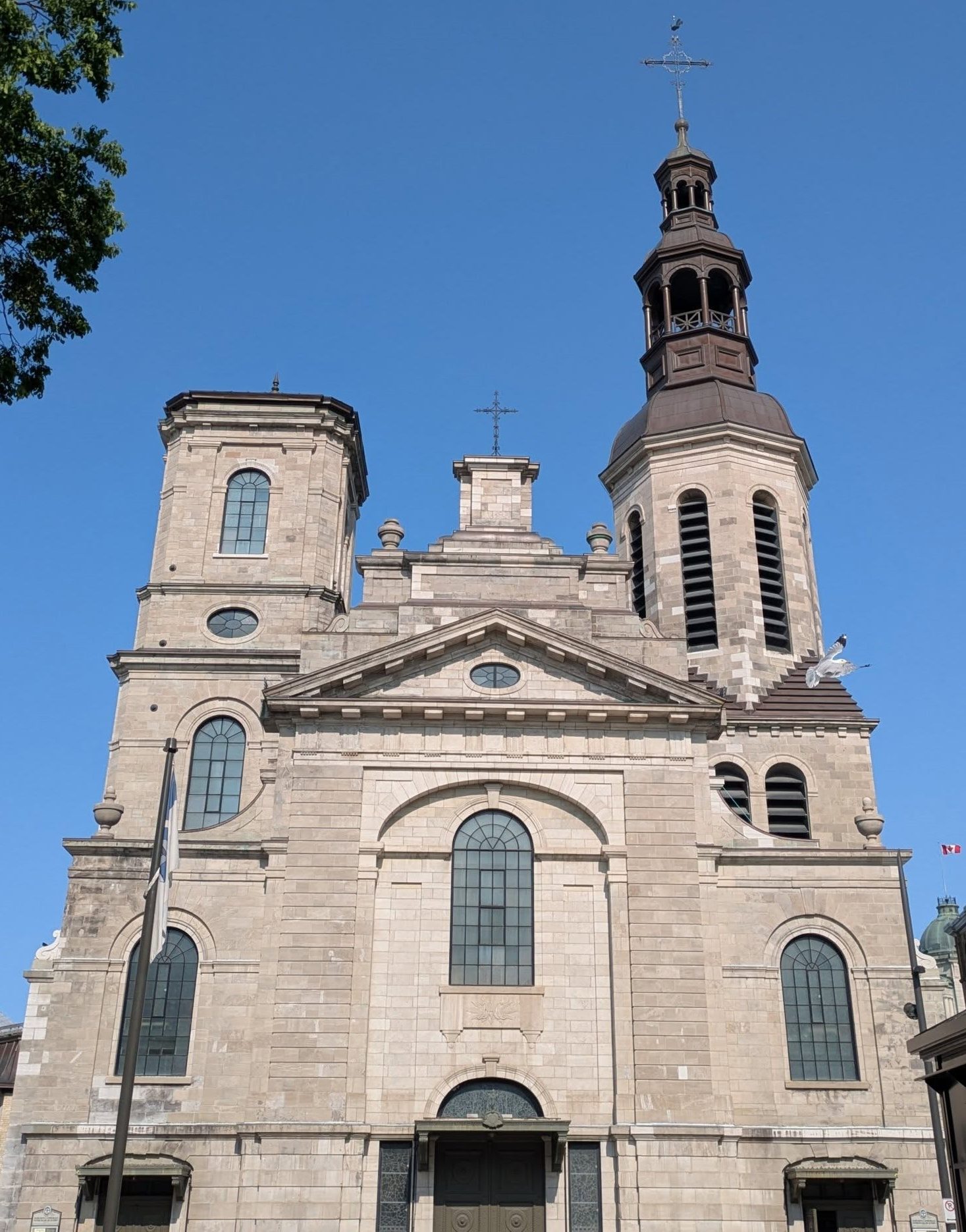
Next stop: church. La Notre-Dame de Québec to be exact. Although it’s not the exact church that was built by Champlain, it does sit in the same location, making it the oldest parish in the city (and thus in all of Canada). And with such a long history, Notre-Dame de Québec has a ton of interesting stories and facts surrounding it! First, it has burned down and been rebuilt at least four separate times since its original construction, which is pretty impressive in and of itself. You might also notice that there’s only one completed bell tower giving the church a unique, asymmetrical look. Well, that was actually due to a miscalculation on the architect’s part, which resulted in it being deemed unsafe to finish. Oopsies!
And while it might not have all its intended bell towers, it does have something super rare: a Holy Door. There are only a handful of Holy Doors in the world, the vast majority of which being in Italy, so this one (the only one in the Americas) is quite special. What is a Holy Door you ask? Well, it’s a bit like a spiritual carwash, but it’s only opened on jubilees, so we’ll all have to wait a number of years for the chance to walk through it and experience its power firsthand. What I can say is that, currently, it’s sealed very much like the Pope’s door during the conclave, which is still pretty cool to see!
Another prominent feature of Notre-Dame de Québec is the funerary chapel of François de Laval, Quebec’s first bishop. Laval was another highly influential figure in the early days of the colony, and for that reason, his name is another you’ll see all over Quebec. Notre-Dame de Québec is both a cathedral and a basilica, meaning it has a highly important functional role as well as a special, Pope-granted status. It is still the official seat of the Archbishop of the Québec diocese and has been since the 1600s. At its height, the region that was overseen by Notre-Dame de Québec stretched all the way from modern-day Quebec down to Louisiana, which might give a brief glimpse into just how busy (and influential) Laval and his contemporaries were back in the day.

Stop 6: Séminaire de Québec
While we’re on the topic of the city’s religious history, we should also take a look at the Séminaire de Québec, which is right next door to Notre-Dame. The Seminary of Québec is often touted as the oldest institution of higher education in Canada, and its buildings still house several schools today, including many departments of L’Université de Laval, the first French-language university in North America and one of the oldest universities in Canada. Within the original Seminary complex there is also a private high school as well as a significantly smaller, modern seminary, which continues to educate future Roman Catholic priests to this day.

Speaking of priests, I should probably mention that despite all this talk of churches and seminaries, today, Quebec is actually quite a secular place. The region has an extremely Catholic-centered history; however, it also experienced a massive shift in religious identity starting in the 1960s when Quebec went through what is called its “Quiet Revolution”. It was during this time that the people of Quebec starting feeling like the Church had a bit too much control over things like education, healthcare, and women’s rights, and instead of violently overthrowing anyone or anything, they opted to quietly step away, creating a variety of different public services and social policies in the process. Today, less than 10% of Quebecers are practicing Catholics, which is why a lot of the religious buildings in the city have been repurposed into schools, libraries, and cultural centers.
Another thing of note here in the Old Seminary’s courtyard is the amazing collection of architectural features on display. Throughout the city, you’ll notice a wide array of different building materials, styles, and structures, and this is partially due to the very distinctive French and British periods. Here, you can see a great example of what the early French period architecture looked like: steeply pitched roofs, unadorned windows and doors with small panes of glass, and natural stone walls covered in a thick white wash that helped to waterproof the structures. You can also see building that date back to the British period with their larger, more uniform stone blocks, double-door entryways, larger window panes and architectural details like arches and balconies.

Stop 7: Montmorency Park
Now we’ve officially started our decent into Lower Town. From here in Montmorency Park, we have a great view of the Château Frontenac and some of the oldest of the city’s fortifications. The first fortifications of Québec were built in the 1600s, but others weren’t completed until much later. In fact, the city wasn’t 100% walled-in until after 1820 when British troops finished the job. It was quite a job, too, because the walls stretch over 4.5 kilometers (3 miles). At one point, there were over 300 cannons lining the walls, which really highlights the fact that Québec was chosen with defense in mind.
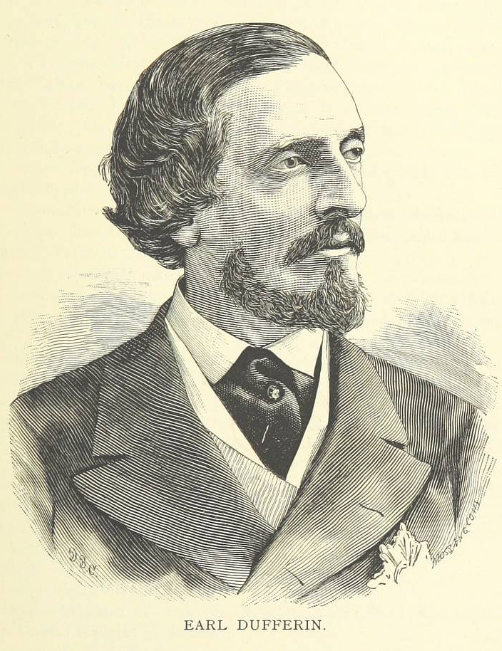
Of course, eventually, the battles came to an end and things started settling down in North America, and Quebecers had to decide what they wanted to do with their fort of a city. Many wanted to tear down the walls and start over with more of an open-concept. However, one of Canada’s early Governor Generals, Lord Dufferin, had a different idea. He had traveled extensively and knew that Québec’s walls were an architectural jewel that needed to be preserved, and thankfully, he was able to persuade everyone else. By preserving the fortifications, enlarging the city gates, and building a massive public boardwalk (one that is now named in his honor), Lord Dufferin ensured Québec City would be welcoming tourists long after he was gone.
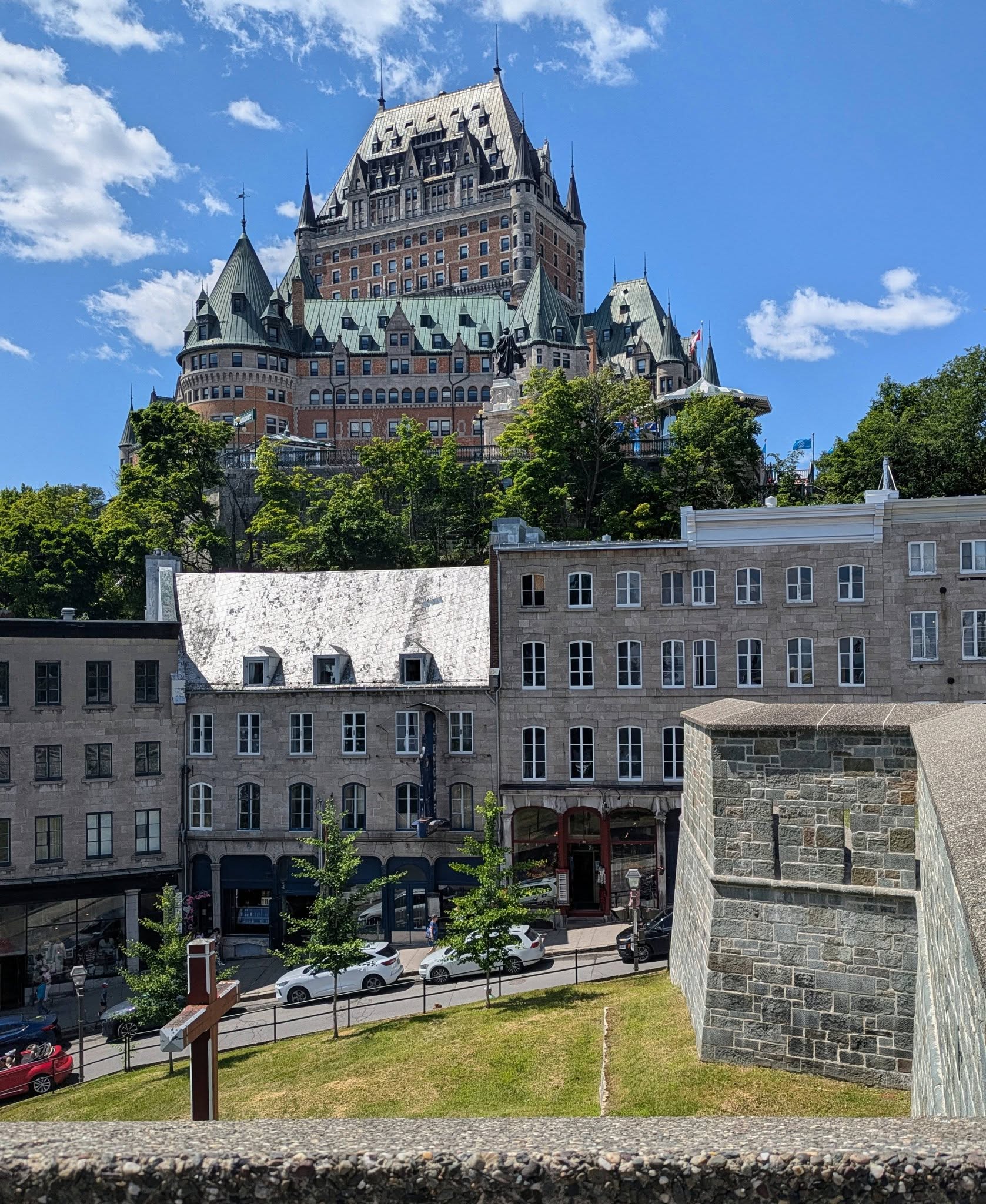
Looking around Montmorency Park, it’s not too hard to imagine it as it was in the past, a blank canvas of farmland. This is actually where the first farm in New France was located, which was created by two of the early settlers: Louis Hébert and Marie Rollet (other famous names of Québec). As the farm gave way to more modern building projects, Montmorency later became the site of the first parliament buildings of Quebec and later Lower Canada. In 1864, the British North America Act, a founding document of modern-day Canada, was actually drafted here. Unfortunately, a fire destroyed the last of the buildings in 1883, which is when the city decided to move Parliament outside the Old Town, a little further from the cannon fire (better safe than sorry, non?).
Stop 8: Casse-Cou Stairs

As we continue to make our way down, you really get to feel the immensity of Cap Diamant! Upper Town sits about 60 meters (200 feet) above Lower Town, which is why there are approximately 30 staircases throughout the city connecting the two. The oldest and most famous staircase is actually the one we just passed: Escalier Casse-Cou (or “Breakneck Stairs”). This staircase is located in the oldest part of the city and actually has a bit of a rough history. The stairs, much like the neighborhood itself, were often left in disrepair, which led to many accidents, thus the name. It’s hard to imagine now, but this neighborhood, Quartier Petit-Champlain, used to be the bad side of town. After the ship yards died out, all that was left was a bunch of brothels and bars, which is exactly why most Québec moms told their kids to stay away from this area!
That is, until the 1970s when a group of local entrepreneurs saw the potential and decided to take on the challenge. They bought up several buildings in the area, refurbished them, and started a co-op that invited local artists and artisans to live and work here in an effort to highlight Québec culture and revitalize an important and historical part of the city. They were extremely successful, and eventually the city joined in by refurbishing other parts of Petit-Champlain, making it a must-see part of the city today. I always recommend this area for its shops, restaurants, cafés, etc. Rue Petit Champlain is often said to be the first commercial district of North America, and looking at all the businesses here today, that’s easy to believe!
Speaking of businesses, another quite lucrative one can be found right at the base of Casse-Cou Stairs, and that’s the funicular (or inclined elevator). If you don’t want to take the stairs all the way back up, you can always let your wallet do the work for you! It’s up to $7 a person now, but at least you can rest easy in knowing you’re also experiencing a bit of history because the funicular dates back to 1879. It’s also located in another famous person’s house: Louis Joliet. If that name sounds familiar to you, that’s probably because he has cities named for him all over the US and Canada because he was one of the first to map the Mississippi River, and he grew up right down the street! How cool is that?!
Stop 9: Place Royale
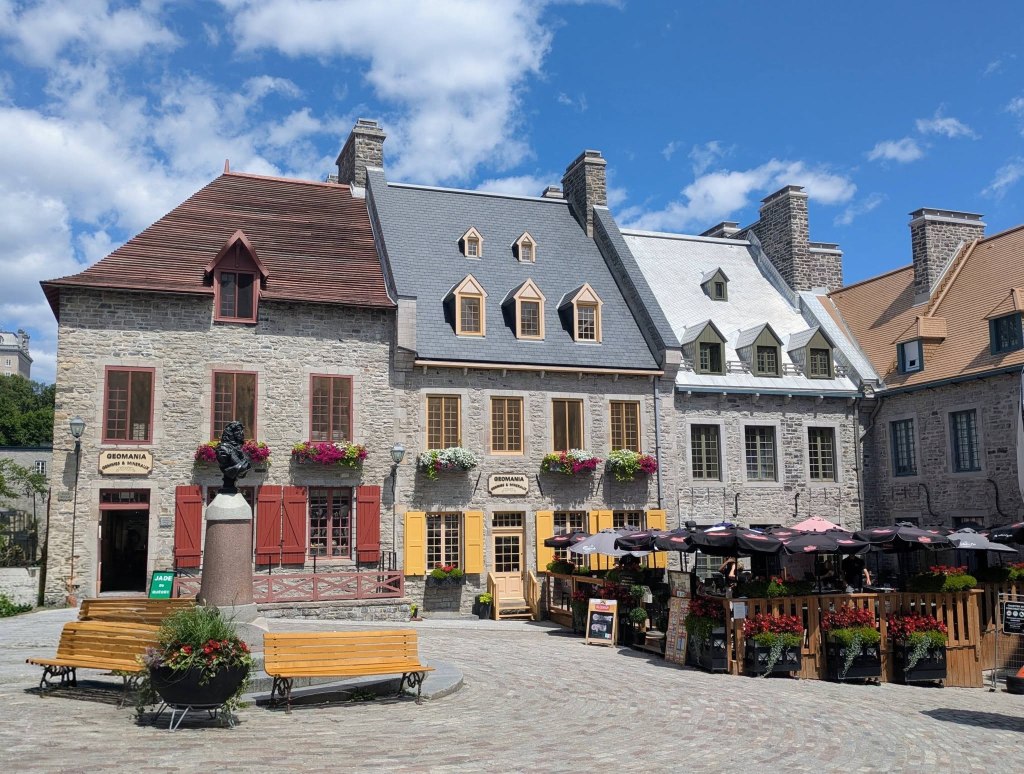
But the heart of Lower Town has to be Place Royale (or Royal Plaza). This was where the first settlers stepped off the boat and began their lives as a new colony. The first permanent buildings (or habitations) were built on this square along with the first church of Lower Town (another one of the oldest churches in the country). Also in the square, stands a bust of King Louis XIV, and although it isn’t the same bust from the 1600s, there has almost always been a bust in that exact spot, forever linking the histories of Quebec and France.

Interestingly, the king never actually stepped foot in Quebec even though he was the lawful ruler during much of its early history, but he did manage to help the colony from afar. In those early days, the colony struggled with population issues. In particular, not enough women were there to ensure the desired population growth, so King Louis put his money where is mouth was and offered to give a sizeable dowry, free transport, and pieces of land to any women willing to journey to New France and start a family. About 800 women took him up on his offer, the majority of which being orphans, widows, or women of the lower classes who felt that this was their best option for a stable future. Over time, they became known as Les filles du roi (or the Daughters of the King).

These Daughters of the King made up such a large percentage of the early population in Quebec that approximately 2/3 of modern-day Quebecers can trace their linage back to one of these brave women. Several North American celebrities can do the same: Hillary Clinton, Angelina Jolie, and Madonna being among them. Honestly, Québec City has a lot of ties to various celebrities. Since the city looks so much like a movie set and also has the practical, money-saving advantage of being on the same continent as Hollywood, many movies have been filmed here over the years. Alfred Hitchcock’s “I Confess!” and Steven Spielberg’s “Catch Me If You Can”, for example.
Another standout feature of this square is the series of buildings all with different roofs. These were actually added during a reconstruction phase to show the evolution of changes the colonists experienced as they learned what worked and didn’t work in Quebec. You see, we get an average of 3 meters (10 feet) of snow every winter and temperatures regularly drop below -20°C (-5°F), which means in the early days, fireplaces were essential. Unfortunately, that also meant that fires were commonplace. Due to the compounding challenges of lots of snow, very cold temperatures, and the regularity of fires, there was a lot of trial and error needed, particularly with the roofs: cedar was too flammable, slate was too brittle, but it turns out, tin was just right, which is why it’s still one of the most common roofing materials in Quebec today.
Stop 10: Rue Sous-le-Fort
And now we’ve officially come to the last stop on this whirlwind tour: Rue Sous-le-Fort or Under-the-Fort Street. From here, we can see where the city meets the river. The ferry that travels across the St-Lawrence to Lévis (the oft-forgotten little brother of Québec City) is just down the road. Nearby, you can also find sunset cruises or whale watching tours departing from the quays; this is where the river starts opening up to the ocean after all. When there’s no ice in the water, you might also see cruise ships and yachts docking at the Old Port, which I like to imagine is just as exciting as when Champlain and other early explorers turned up in their ships.
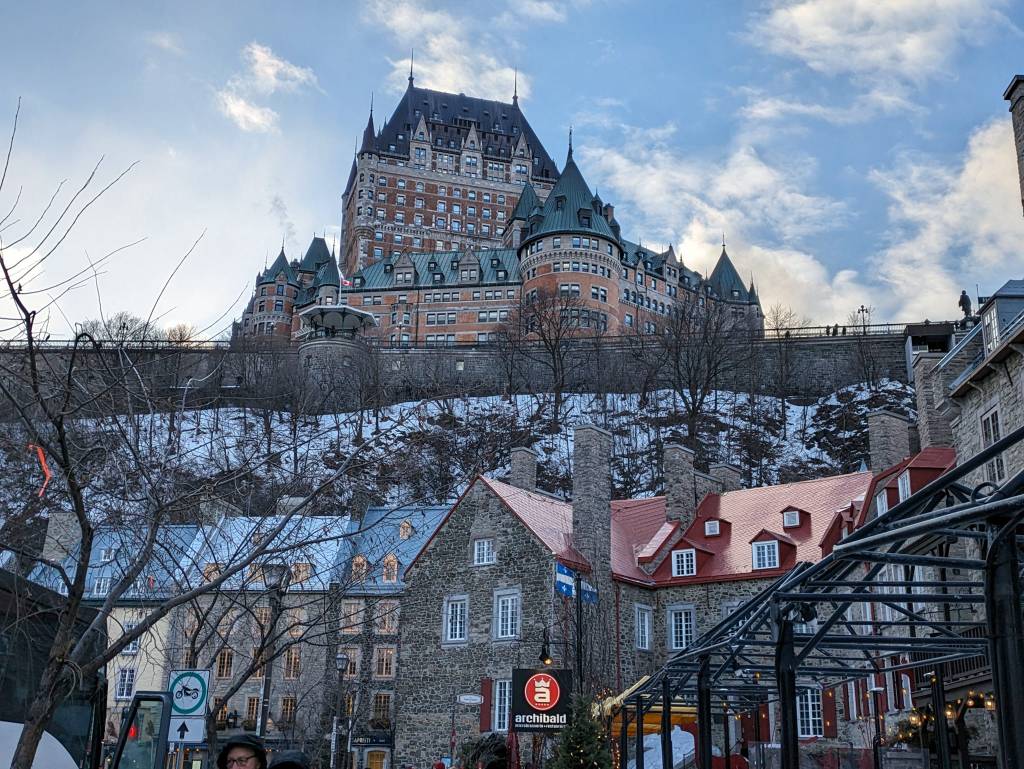
From Lower Town, it’s easy to imagine how tough it would have been to take Québec City by sea. The British only managed a win because they fought on the Plains of Abraham (flat ground beyond the walls of the city). During the American Revolutionary War, Generals Benedict Arnold and Richard Montgomery thought they’d give it a shot, but it went very badly for them, and no one has tried since. It’s so amazing that everywhere you look in Québec City there’s another piece of the gigantic puzzle that is our history just waiting to fit into place. One of Québec City’s nicknames is The Old Capital, but I see it as more of an entryway. Here you can enter North America, but you can also enter the annals of history. Hope you enjoyed the journey!