
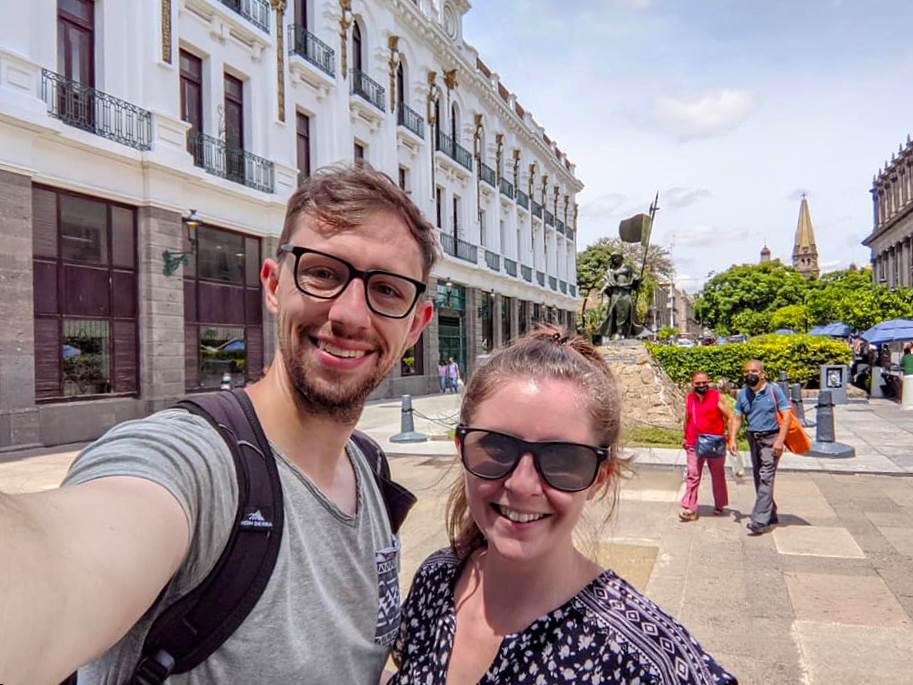
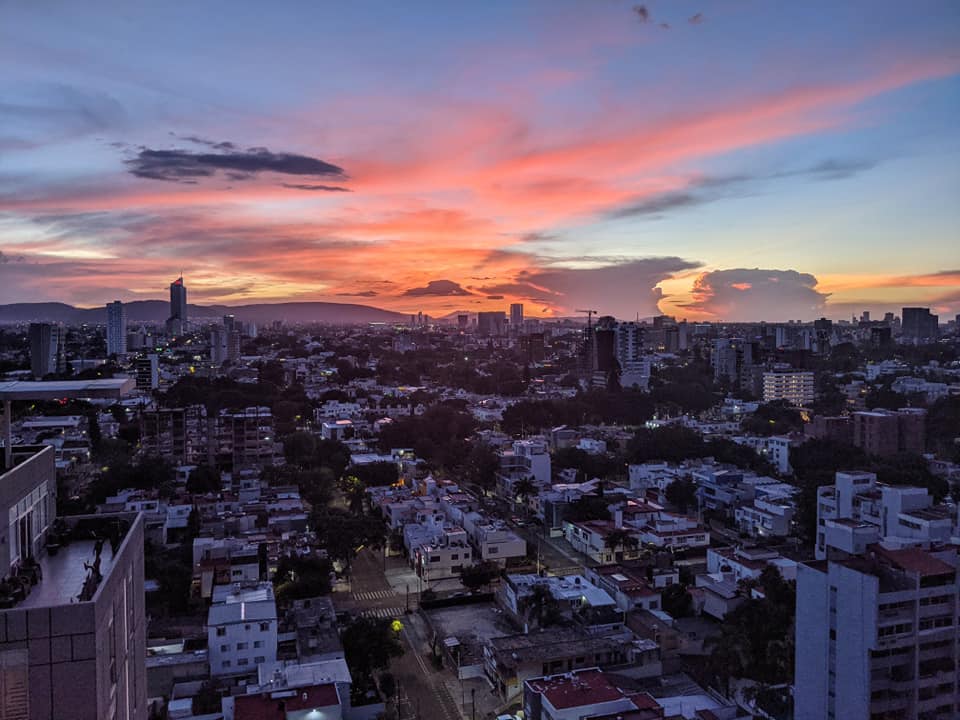
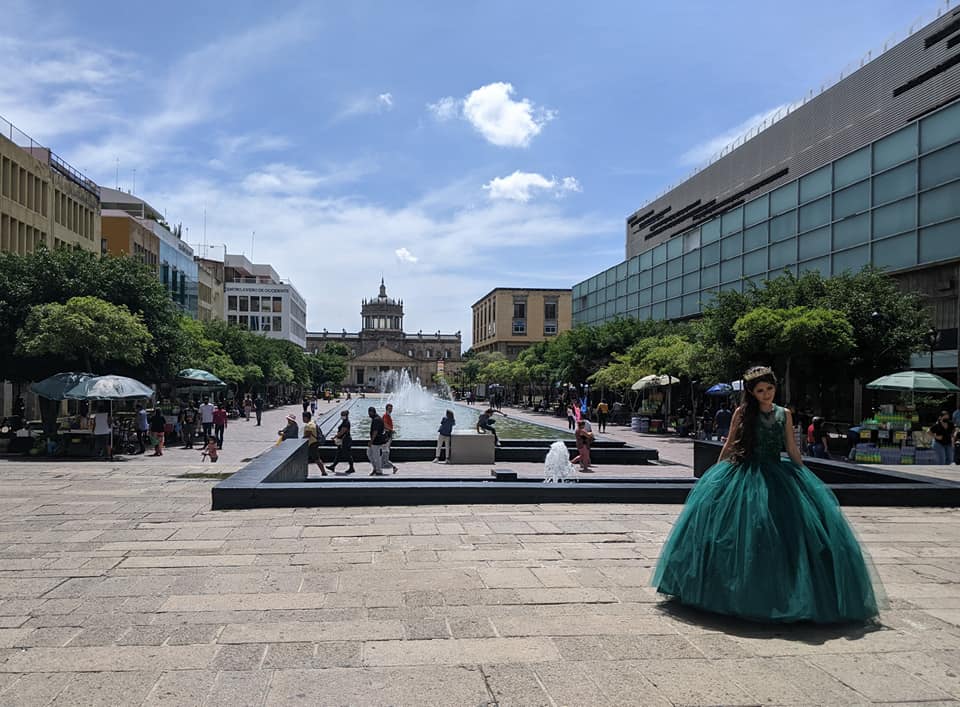
What a year! And what a question! As usual, the time is flying by, and the number of stories, facts, and lessons we’ve accumulated are innumerable. However, I thought it might be fun to share a few of the things that have stuck out this past year as we’ve continued adapting to our new home in Guadalajara, Mexico.
The Lifestyle
One of the first things that is easily recognizable as soon as someone enters Mexico is its vibe. Totally unique and bursting with energy, Mexico (and Guadalajara in particular) had an immediate effect on our mentality. Moving from China back to the US with Canada on the horizon during a global pandemic definitely had us in a more serious mindset. Luckily, only a few days in Mexico had us feeling considerably more relaxed.
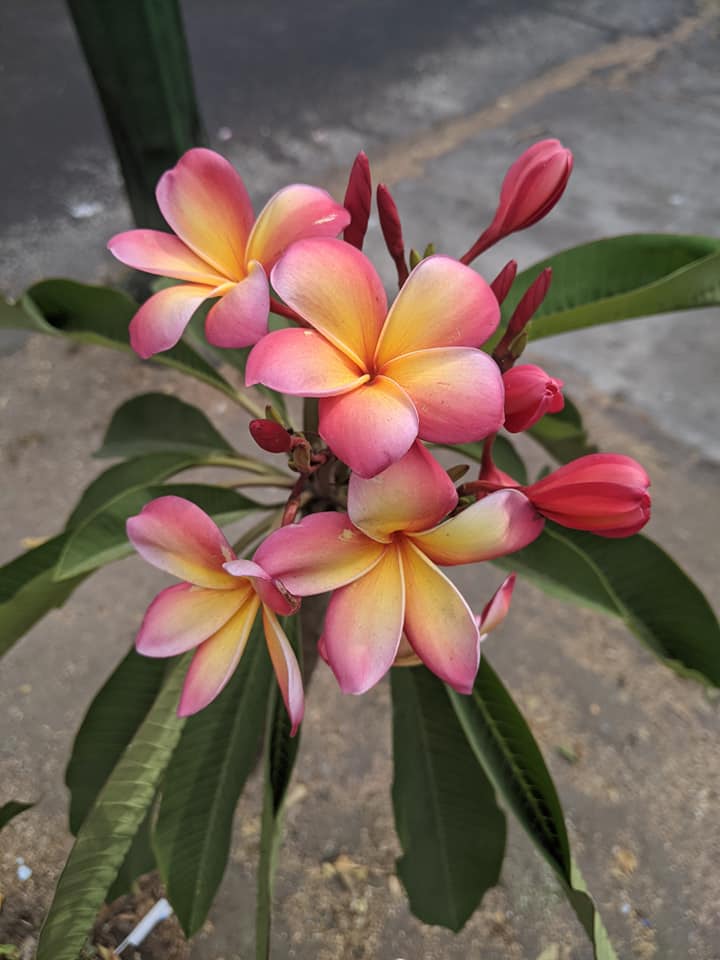
More than relaxed actually – tranquilo is the word. The week we arrived in Mexico, I remember walking through a park and watching a man literally stop to smells the flowers. My American go-go-go brain couldn’t compute at first. But that was really all it was. He stopped, smelled the flowers, and went back to his walk. It was the first of many muy tranquilo instances we’ve encountered this year. You can’t help but slow down and ease up, even in a major city like Guadalajara. I have to imagine this year has been significantly better for my blood pressure!
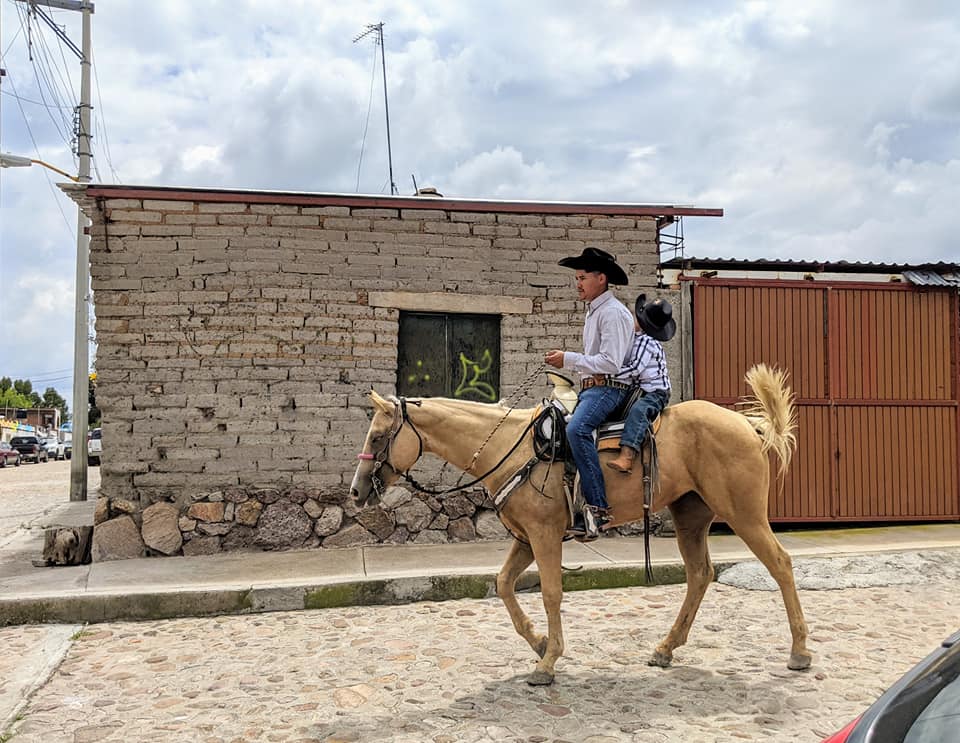
In addition to feeling more relaxed, we’ve also been re-learning the concept of divertido (fun). One image that will forever be ingrained in my head is that of a man we saw in Ajijic riding a horse down the middle of a road while simultaneously browsing his phone and downing a cerveza. He was definitely having fun. But it’s not just the so-called magic towns that have fun. We live a block away from the party street of GDL, and we hear ALL the fun. I know for some that sounds like a nightmare (light sleepers beware), but for us, it feels like we’re having a party every weekend. Even if we’re just in our PJs watching TV at a comfortable distance.

Another aspect of our new lives in Mexico has to be living in the moment (o espontáneamente). Sometimes it seems like either something is done right then or else it’ll be “ahorita” (which basically means never). A good example of this would be the “afiladores” or “knife sharpeners”. Every week from our apartment we can hear a whistle and a shout from the afiladores who walk the neighborhood announcing their presence so residents in need can grab their knives and run down for an impromptu sharpening. So far, I’ve yet to attempt this, but maybe ahortia…
The Lessons
Of course, adapting to the lifestyle doesn’t happen overnight. We’re basically still fumbling our way through life’s daily routines, making error after error as we go, but for me that’s where all the fun is. The laughs we get from the mistakes we make along with the little annoyances or oddities that give us a window into our own cultural confines definitely make all the ambiguity and confusion worth it.
Most likely our biggest area of failure revolves around language (as it has in every one of our previous homes abroad). One that is still making us laugh actually occurred in the privacy of our own vehicle on the long drive down. The GPS kept saying we were headed toward Oeste, but neither of us had heard of that city or ever saw it on the map. Turns out “oeste” just means west in Spanish. How had we never learned the cardinal directions? Other language faux pas include my use of the word “cansada” rather than “casada” (“tired” instead of “married”) when asked my civil status, and Tucker’s continual struggle with the pronunciation of “galleta” versus “cajeta” (“cookie” or “caramel”) – for the record, I prefer cajeta.
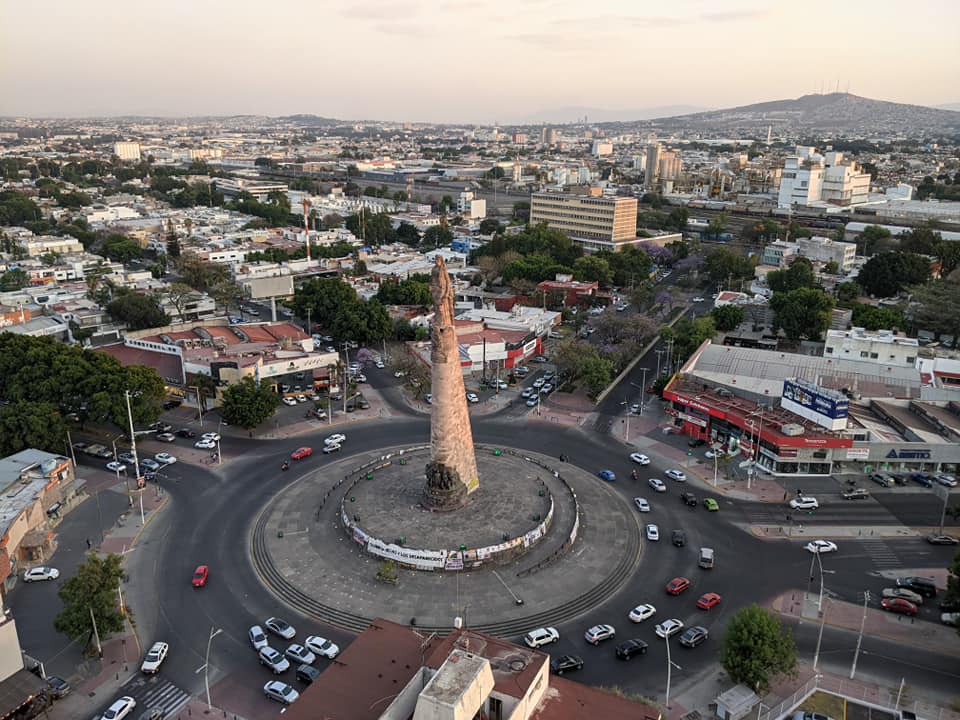
Another big lesson (mostly for Tucker) this year has been within the realm of driving. Driving in a foreign country is always challenging, but when you add increased frequency, the lessons just keep on coming. For example, we’ve just about reached our lifetime quota of driving through three-lane roundabouts. Still not always sure the best practices there, though. We’ve also realized that “yielding to flow” is not as easy as it sounds. But my personal favorite has been listening to forgotten 80s hits everywhere we go. The radio stations here absolutely love to play Rasputin, Take On Me, and the like.
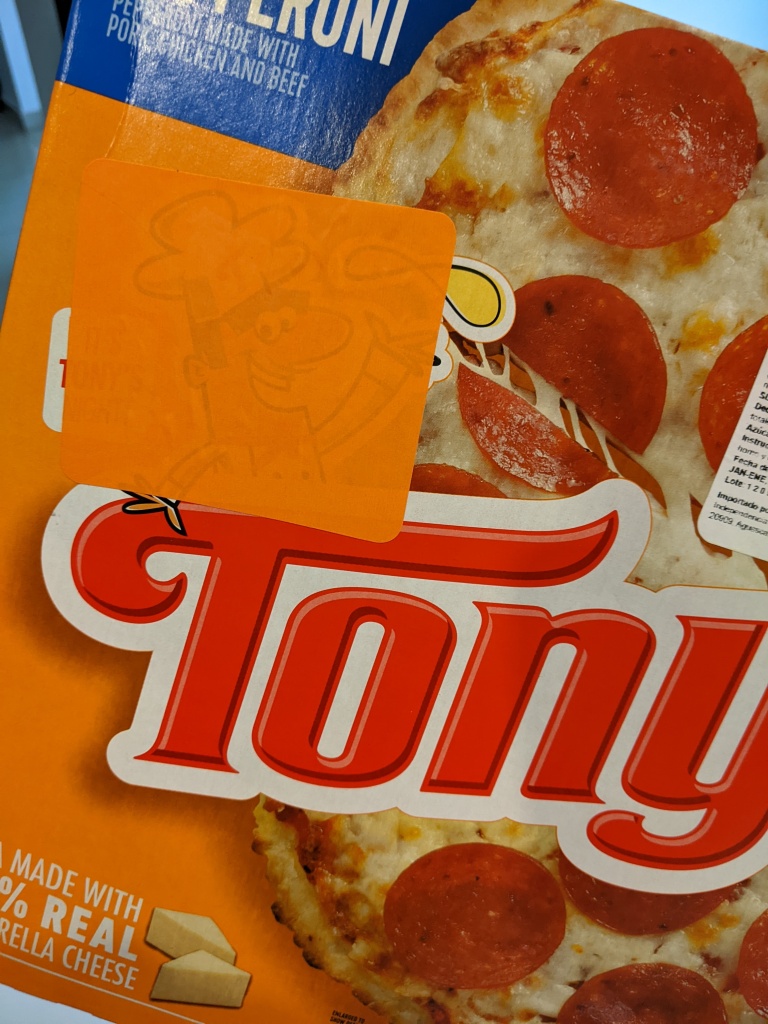
Shopping in Mexico has also taught us a few lessons over the past year. We had previously learned that we might be expected to sticker our own produce before checking out (thanks Poland and China), but in Mexico, they thankfully do that at the registers. However, here it’s the bakery and cosmetics sections that are separate in most grocery stores, requiring separate check-outs/payments. We definitely lost a carrot cake in this learning process. Another fun grocery store occurrence is the covering up of any cartoon mascots on food products. There’s a law in Mexico that banned characters like Chester Cheeto and Tony the Tiger in an effort to combat childhood obesity and skewed marketing tactics. When we buy products imported from the US, there’s very often a huge sticker covering up some well-known faces.
Other Surprising Tidbits
In all honesty, every time I write a post like this, it’s hard to choose what to put in and what to save for in-person stories. I usually try to group our experiences in some way, but there are so many things we come across that are really in a world of their own. Things like…
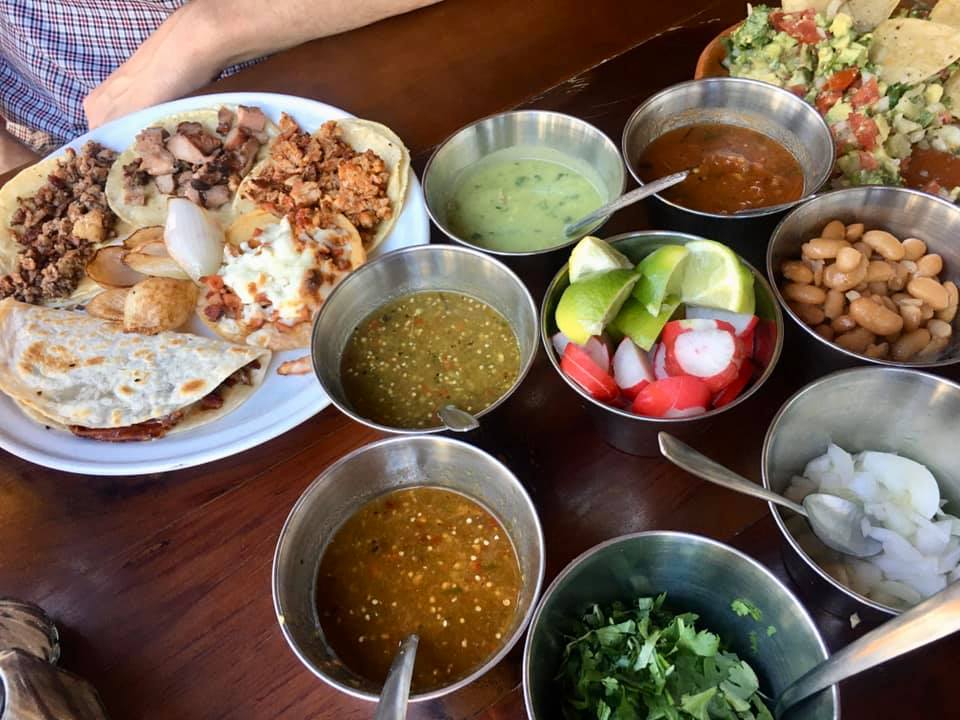
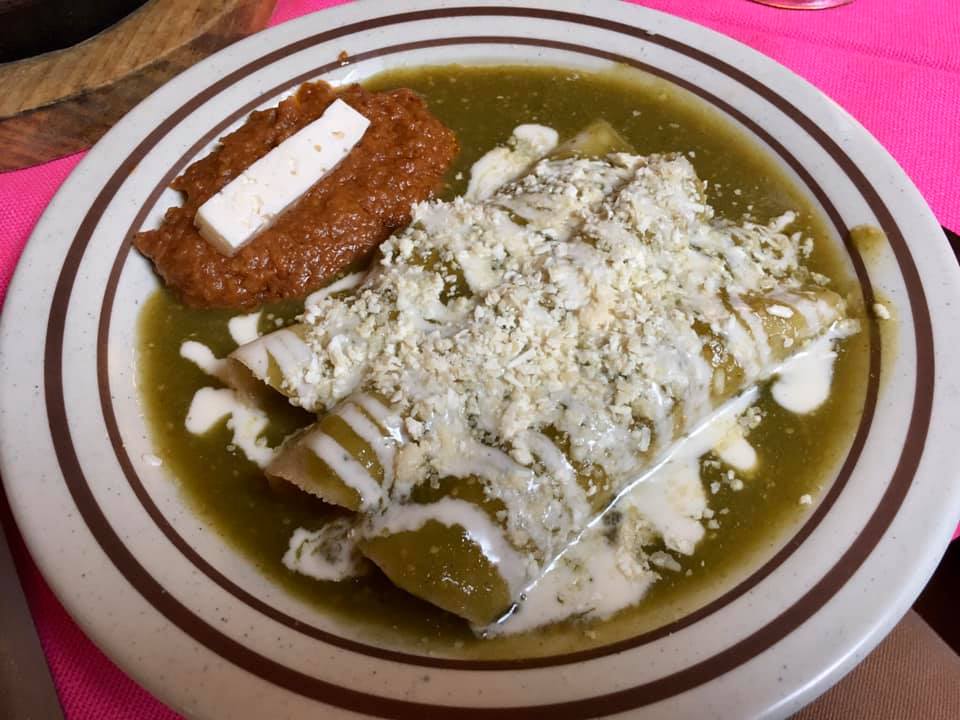
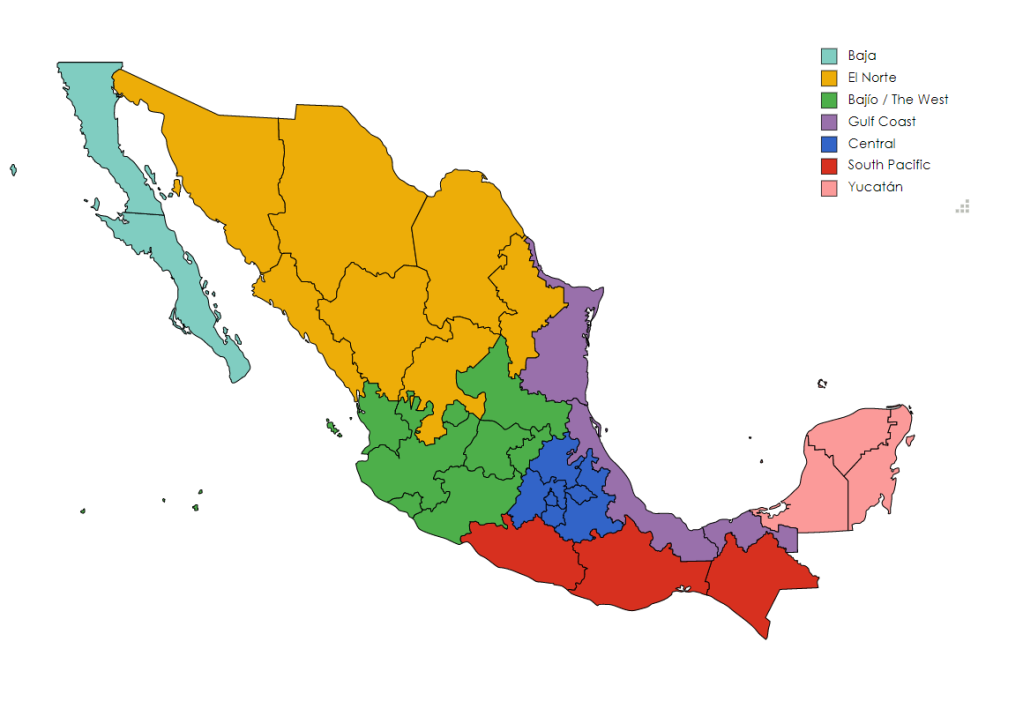
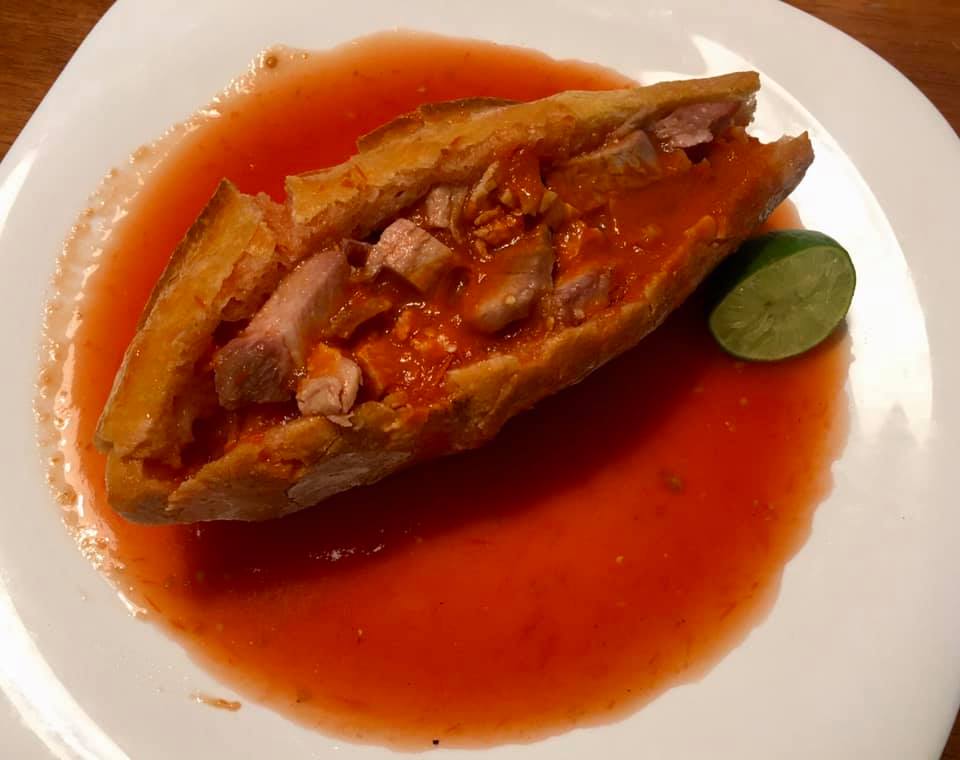
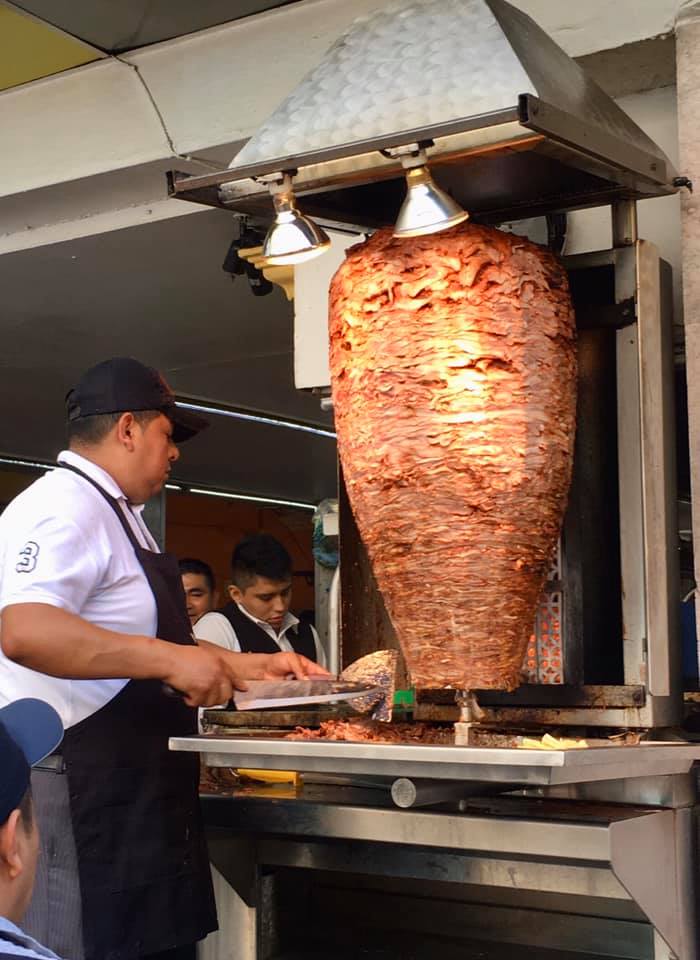
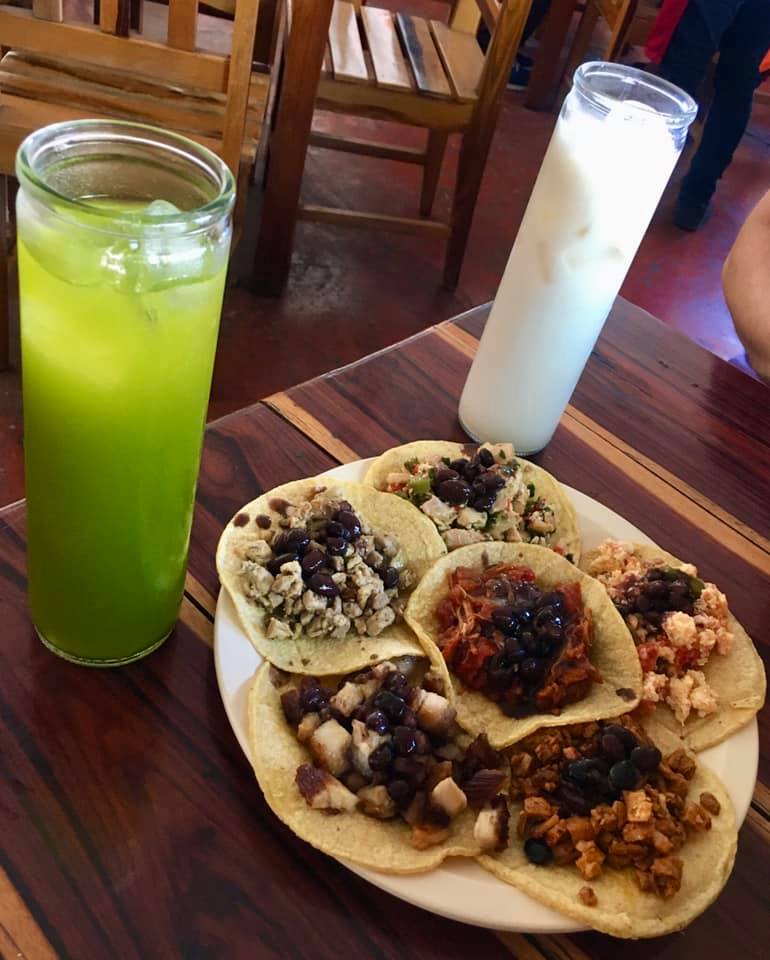
Taco facts. Tacos are a way of life in Mexico, and we’ve learned a lot about how to rate, make, and eat a taco. First of all, two corn tortillas are a must for any self-respecting taco. We’ve heard rumors that in El Norte you can get flour tortillas, but I don’t know, it seems sort of sacrilegious now. Sadly, I also found out that putting crema on your tacos is totally fresa (uppity or snobbish). In fact, the purist tacos should have only 5 things: tortillas, meat, onion, cilantro, and lime. Of course, the final addition to any taco is a good salsa, but I could (and might seriously) write an entire post about salsa in Mexico.
Another discovery in our early Mexico days was the constant morning cowbells. It reminded us of the “bring out your dead” scene of Monty Python, but in reality, it’s the call of the garbage collectors. There aren’t traditional bins in downtown GDL (and good thing too because the sidewalks are well-trafficked and the sun is warm), so instead of a weekly collection day, each morning the bells are rung, and if you have a full bin, you set your bag outside for collecting as they pass by.
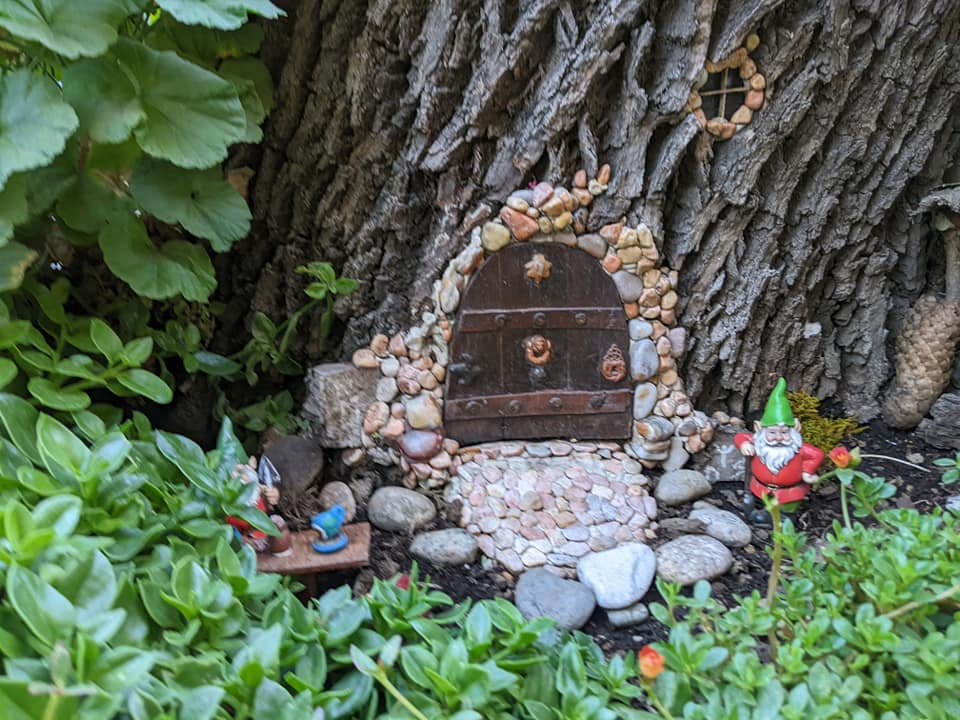
Last but not least, I thought I’d end on a cultural tidbit that I’m not sure if I find cute or creepy. When children lose their teeth in the US, the Tooth Fairy visits their room while they sleep, taking the tooth and leaving some money (also somewhat of a mix between cute and creepy to be honest…). And kids here in Mexico experience a similar swap; however, it’s not a fairy that makes the trade. It’s the Ratón de los Dientes (or the Tooth Mouse). Makes me wonder if Mickey’s got a collection of teeth somewhere in the Kingdom.
Anyway, that’s what we’ve been up to during our first year in Mexico. Picking it all up as we go along and having a ton of fun in the process. We’re currently busy renewing our residencies for an additional 3 years, so I think the learning has only begun! ¡Deseanos suerte!





























 The second New Year (also known as the Chinese New Year or the Lunar New Year) has come and gone, and with it, possibly our last long winter break off together. Just like last year, the Chinese university semester break coincides with the holiday giving us several weeks off, which, of course, we put to good use! My program had its mid-year meeting and conference in the Philippines this year, and somehow, Tucker and I managed to squeeze in three (and a half) other destinations on our island hopping itinerary. You might have seen the hundreds of photos on Facebook, but I’d also like to share a few words about our time traveling in South Asia. To be honest, it’s a little surreal to be writing this as I watch the snow fall outside, but here we go!
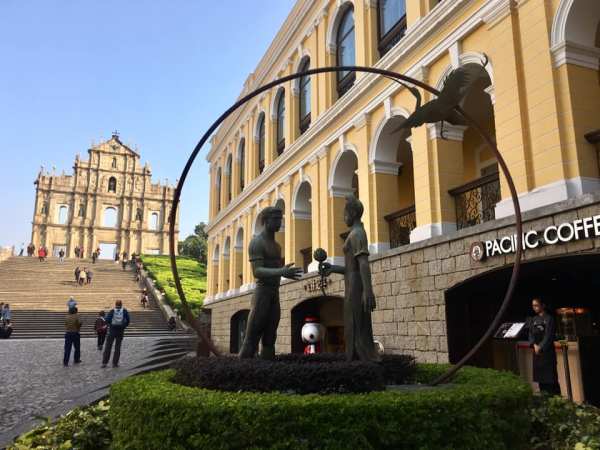 Our first stop was Macau, a “special administrative region” of China. It gets this rather long name due to it being somewhere in between a province and another country entirely. It’s a part of China, but it’s also not China, which is actually one of the reasons we wanted to visit. We wanted to see if there were any noticeable differences. We also wanted to visit because we were eager for another taste of Portugal. Macau used to be a Portuguese colony and has retained quite a bit of the Portuguese flair in architecture, food, and language.


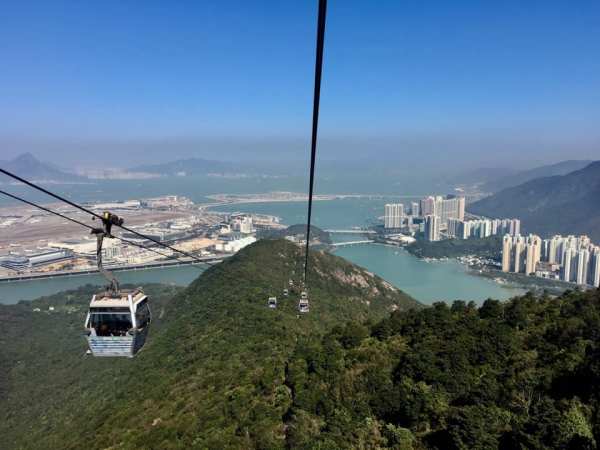 After a few days of strolling around Macau’s narrow alleyways, we took a massive speed boat (TurboJet) to our next destination just across the water: Hong Kong. This was actually our second trip to Hong Kong, but last time we didn’t quite get to everything on our list – this short stopover on the way to Midyear was our second chance. We had less than 24 hours in the city, but we managed to make it out to Lantou Island to see the incredible Buddha and cableway there, we took the bus to the top of Victoria Peak to watch the sunset over the city, and we went to Tim Ho Wan for the world’s cheapest Michelin Star eats. While I definitely preferred Macau’s laid back, European vibes, it’s hard to not like Hong Kong as well. Macau and Hong Kong are a couple of tiny islands (and respective peninsulas) that I highly recommend everyone to visit! No visas needed for US citizens! :)
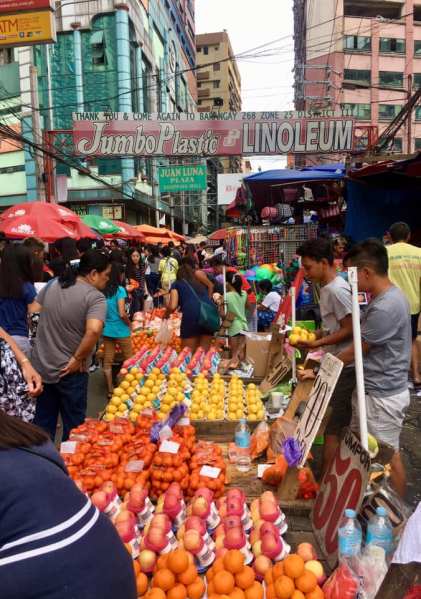 All too soon it was time to fly to the Philippines and get to work. When we first landed in the Philippines it was chaos! Passengers getting up and grabbing their bags before the plane had stopped moving; people sitting on seemingly every inch of the floor in the airport; signs for flight changes being moved by hand from gate to gate; loud cover songs of 2000’s hits playing in every corner of the terminal, etc. All I could think was “Well, we’re definitely not in China anymore.” As we sat waiting for our flight though, the newness wore off, and it was easy to see that the Philippines are just plain fun! In fact, their national slogan is “It’s more fun in the Philippines”, and I totally got it. Smiles were everywhere! The flight attendants wore bright yellow polos and hummed songs as we boarded. Fellow passengers sang along with the music they heard on the plane. The joy was contagious!
 The first week we were in the Philippines I had to “work”. I attended meetings with the other Fellows, we planned and executed various group activities, and generally bonded and reconnected after our last five months apart in our various host cities/countries. For this part of Midyear, we were put up in a resort on Mactan Island, which was incredibly fancy and not the sort of place Tucker and I usually go for (I’ve never heard so many “yes ma’ams” and “hello sirs” in my life). It was beyond beautiful though, and luckily Tucker was able to take full advantage of the beach, the snorkeling, the infinity pool, etc. However, after a few days completely devoid of local culture, I was definitely ready to get to our next location: Cebu City. It was here that we attended and presented at a local teacher training conference held at the University San Jose Recoletos. Easily my favorite part of Midyear, I was able to meet and interact with many local Filipina/o teachers and get a much better feel for what life in the Philippines is really like.

 Once the conference and Midyear were officially over, Tucker and I hadn’t quite had our fill of the Philippines, so we headed to Manila for some good old-fashioned touristing. Manila is an incredible city with some of the best food I’ve had in a long while. Their specialty seemed to be fusion restaurants. We had super interesting and delicious food at Loco Manuk (Filipino, Peruvian, and Chinese) and El Chupacabra (Filipino and Mexican), and saw a Japanese-French Cafe that looked amazing as well! In addition to the incredible food, we also had a great time walking around Manila Bay, grabbing a drink in Intramuros (the Old Town), and watching the Super Bowl at a local expat bar. The Philippines boasts an amazing mix of languages and cultures, and it was so fun for us to be able to use English (commonly spoken there) to ask about a million questions of our taxi drivers, servers, and any other local we could find. We learned about the strong influence of Catholicism in the Philippines, the new-ish movement towards environmental clean up, and most of all, we learned how welcoming and friendly the people are.


 At this point we were over the halfway mark of our trip, and my body had had enough. I left Manila with a fever and several other ailments (not so fun to describe), but I was still super excited to see Singapore! We watched Crazy Rich Asians on another leg of this trip in preparation, but the movie doesn’t do the city justice. It is by far the cleanest city I’ve ever seen, and has represented its multicultural population incredibly well! Singapore is made up of large groups of ethnic Chinese, Malays, and Indians, and each has a dedicated area of the city where you can find their respective religious buildings, restaurants, and specialized grocery stores. Even with the diverse neighborhoods in place, the city as a whole really seems to cater to each group in so many ways. Colorful, artistic, and clearly very well-off, there are so many lovely parks and public spaces in this city, where we saw families wearing everything from tank tops and sundresses to saris and hijabs. I often talk about places where there is a mix of cultures, but its usually a watered down mix, where clearly one culture has dominated, but in Singapore they were all there loud and proud. It was amazing!


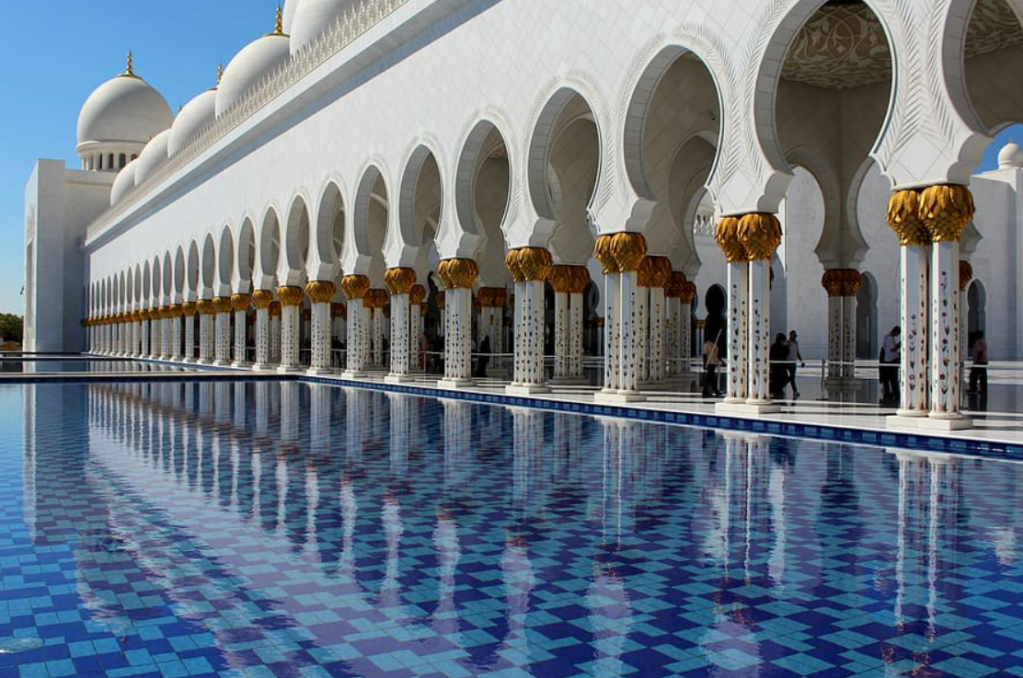
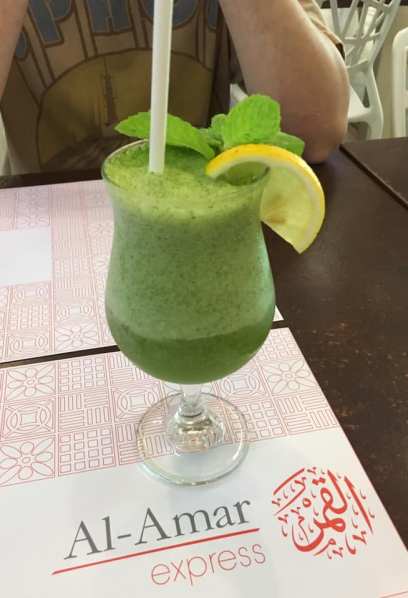 It turns out KL was full of surprises for us. The majority of people living in Malaysia are Muslim, so it was much more conservative than I was expecting. Most everyone wore long sleeves and pants despite the high temperatures, and the presence of beautiful and delicious “mocktails” was at an all time high for me. KL is actually not on an island, and to us, it seemed like we lost that friendly, carefree island-vibe as soon as we arrived. Interactions were a bit more abrupt and businesslike – like they usually are, I suppose. Another surprise was the color we saw all around us – both the Philippines and Singapore were incredibly colorful cities, but I think any city would be hard pressed to match the vibrancy of KL. Brightly colored murals everywhere, some of the lushest, greenest trees I’ve ever seen against the bluest of skies, and the insanely colorful Batu Caves just outside the city made for some incredible scenes (and photos).


 Perhaps due to its location on the opposite side of the globe or maybe because of its notorious closed-door periods in history, China is a place with a lot of misconceptions. I remember when I first visited China; it was absolutely nothing like I thought it would be. Since then, I’ve continually been surprised by China and have had the pleasure of watching several others break some of their preconceived notions on their first trips to this land in the Far East. While pretty much everything I post (let’s be honest, it’s mostly photos) is in some way shaping people’s views of this country I now call home, sometimes there’s a need for more explicit explanations. Some things just can’t be seen in photos, but can definitely be felt and discussed (and often are if given enough time). However, since not everyone can come to China and experience it all in person, I’d like to share some of my thoughts and discoveries (in written form) on some of the impressions that seem to have a strong effect on outsiders’ views of China, impressions that are often among the first to be thrown into question upon closer observation.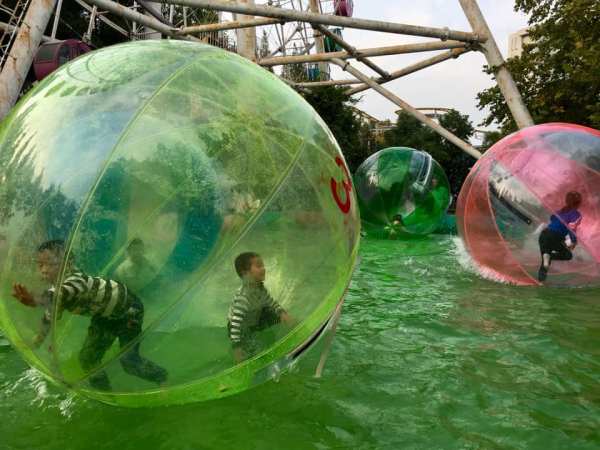

 After delving into just one policy that definitely captured the world’s attention, I think another misconception of China lies in the government as a whole. When I told friends and family I’d be coming to China, this was a main point of contention. How could you live in a country that’s not free? Aren’t you worried about the communists? In hindsight, it must have got into my head a little because I now realize that when I first arrived I was a little careful about what I said, how I interacted with Party Members, etc. Now I’ve been here for over a year, and I see that that was totally necessary. While the government has many features of communism, it’s actually a hybrid of several political systems. It’s much more complicated than I care to go into, especially because unlike the US, changes within the government here seem to be made more quickly. China is still figuring out exactly how they want their government and economy to fit and work together, and due to their long history of preferring guidelines to written laws, it’s difficult to nail down the specifics regardless.
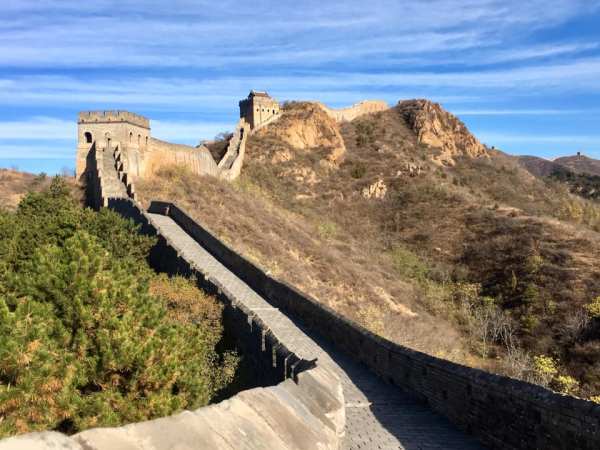


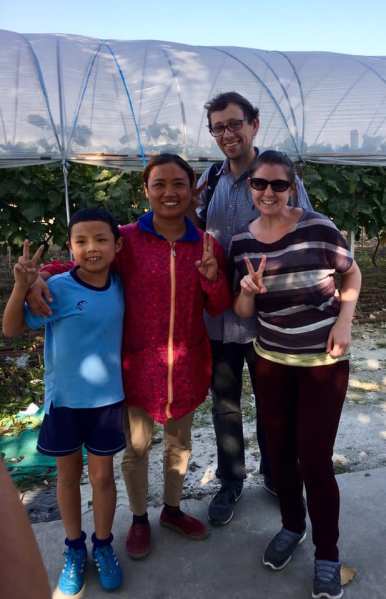


 Yikes! That was a lot of information about China! I should probably start writing a book or something because I have learned so much from my time here. More than I could have possibly imagined, and the longer I’m here, the more I know I’ll learn. I’m extremely thankful that I have been given this opportunity to better understand the people and the culture of the China, and I love sharing what I learn on both sides of the world. Recognizing some of my own misconceptions has been fascinating, but equally interesting is discovering others’ misconceptions of me (and America as a whole). Maybe that’ll be a future post! For now, I’m going to continue soaking it all up, remembering that things aren’t often as they first appear.


 Dani Francuz Rose