Stereotypes – What do Poles Think about Americans?

Stereotypes (or generalizations applied to any group) can be hurtful, dangerous, and (more often than not) completely inaccurate. However, being aware of stereotypes and discussing the reasons they’re held and perpetuated can lead to less prejudice and judgement, and more insight and compassion. In this post, I’m hoping to shed some light on certain national stereotypes, particularly ones held by Poles about Americans. My hope is that by reading the stereotypes others have for us (which we know are not completely accurate), we might start to rethink some stereotypes we hold for other groups (which are also inaccurate). To compile this list, Tucker and I spoke to many of our friends, colleagues, and students here in Poland about some of the most common perceptions and stereotypes Poles (and other Eastern Europeans) have for the United States and Americans:
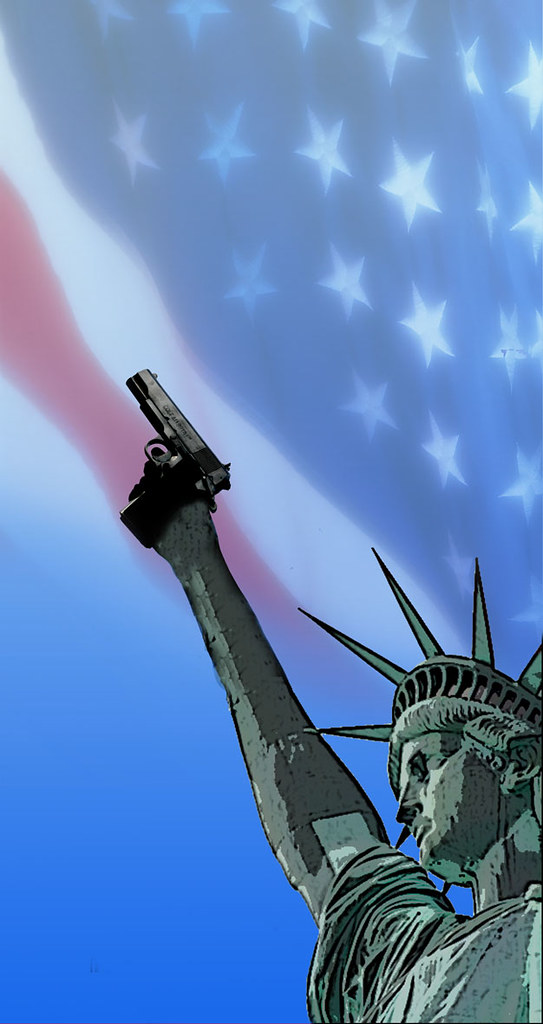
Aggressive and gun-loving: Many people in Poland feel that Americans are, in general, aggressive and somewhat forceful in the way they behave. Be it in a conversation or in a meeting at work, we seemingly assert ourselves at times and in ways that Poles might not. Many people also threw “gun-loving” in with the aggression. It seems most Poles believe everyone in the US owns a gun, and that we’re very proud of that fact.

Avid movie-goers/TV watchers: For Poles, the great American pastime is obviously watching movies. Many Poles are surprised when I tell them I don’t go to the movies every week or even every month back home. They also believe Americans spend the majority of their downtime at home watching TV. Their attitudes towards this tendency aren’t necessarily negative though, as it seems they feel like we have TV programs that are worth watching. Hmm.

Carefree and informal: According to Poles, Americans are quite carefree. We don’t choose to spend our time brooding or reflecting on the world’s problems. Instead we are very focused on our immediate environments and are likely to make sure we have time for fun. Americans are also seen as very informal; we tend to talk to our friends, our bosses, and strangers we’ve just met in the same way.

Diverse and accepting: In Poland, the United States is seen as a very diverse place, with people from different backgrounds all living together; however, there doesn’t seem to be such a favorable opinion of this. Many Poles link our diversity to some larger national issues like security and political correctness. Yet, at the same time this same diversity is seen to have bred a willingness to accept anyone as a fellow American.

Fast food-aholics: Poles usually believe we all eat McDonald’s or something like it everyday. They’re not very interested in the variety of restaurants or the seemingly healthy options either. To Poles, pizza and hamburgers are junk food, no matter who makes them or what goes into them. Even the food we eat at home seems like “fast food” to many Poles. Soup in a can? Pre-packaged croutons? Don’t we make anything ourselves?

Lazy: On the topic of not doing anything for ourselves, many Poles think Americans are a bit lazy. We buy already prepared food, we hire people to do the simplest repairs, and we drive everywhere (even to the mailbox). Our laziness is evident even in the clothes we choose to wear: sweatpants to the grocery store, t-shirts year round, slip on gym shoes – all adds up to the picture of a lazy American.

Optimistic: Similar to our being seen as carefree, Poles also describe Americans as optimistic. Whatever situation we’re in, we’re likely to spout out things like “everything will work out in the end” or “I prefer to see the glass as half-full”. This tendency is often seen as a laughable trait, or in some cases actually comes off as “fake”.

Patriotic: According to Poles, Americans love America. Every day I surprise Poles with my decision to leave America long-term. We are seen as people who don’t care to leave our beloved country, and in order to show our love and pride, we all wear American flag t-shirts, have American flag bumper stickers, and play the national anthem at every gathering.
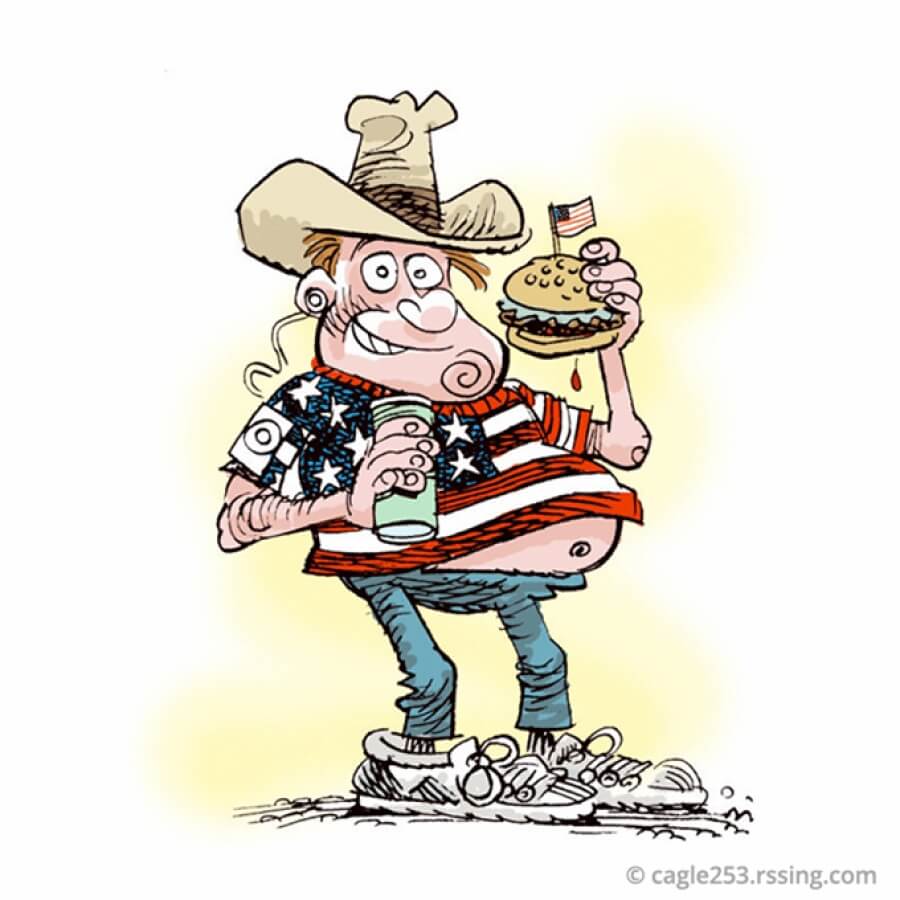
Google Images of “American stereotypes” are not pretty…

Rich: Many people in Poland also believe that Americans are rich. We don’t ever have to worry about money. How could we, when we’re going out to eat every day and to the movies every week? We are often perceived as having the newest technology, the biggest cars, and the nicest houses possible.

Smile a lot: When Poles think of Americans, they think of chronic smilers. We smile no matter what emotion we’re feeling, and many times without a reason at all. This seems to irritate some Poles and amuse others, but either way, it is one of the first things they use to identify Americans abroad.

Straightforward/Direct: Typically Poles describe Americans as direct or even blunt when they speak. Courtesy words and titles are just not needed in America; we make things happen by saying exactly what we mean with no flowery language or hesitation for other people’s feelings.

Uninformed: Perhaps in part because of our patriotism, we are also perceived as uninformed and egocentric. Most people believe that no one in the US would be able to point to Poland on a map, let alone discuss world issues in an objective manner. Americans are seen as narcissists who care only about things that affect them directly.
I’m sure every American who read this list thought (at least once), “This one doesn’t apply to me at all!”, and every Pole who read it (at one point or another) probably thought, “I don’t think that about Americans!” And that’s exactly the point. We can’t rely on stereotypes; what is true for some, is not necessarily true for all. People don’t fit so easily into the labels we create for them. Whether the stereotypes are based on nationality, religion, race, gender, sexual orientation, or any other group, we need to remember that everyone is an individual and should be treated as such. Being aware of the stereotypes that exist and not allowing them to affect our judgement will take us all one step closer to equality and peace worldwide. #Weareallhuman

Cultures in Comparison

Not surprisingly, I am constantly asked about the differences and similarities between Poland and the United States. Luckily, Tucker and I are observing these every day and absolutely love to talk about them! One of my favorite things about traveling is finding out how different people live; there are so many different ways of thinking, solving problems, and simply surviving everyday life. It’s been amazing to get a more in-depth view of some of the differences between Poland and the United States. In my first post, back in October, I gave my first impressions of Poland and its people, which undoubtedly contained some of the differences that were immediately noticeable. However, we’ve now been here a few more months, and have logged many more observation hours. Here is my list of some notable (and fun) comparisons:

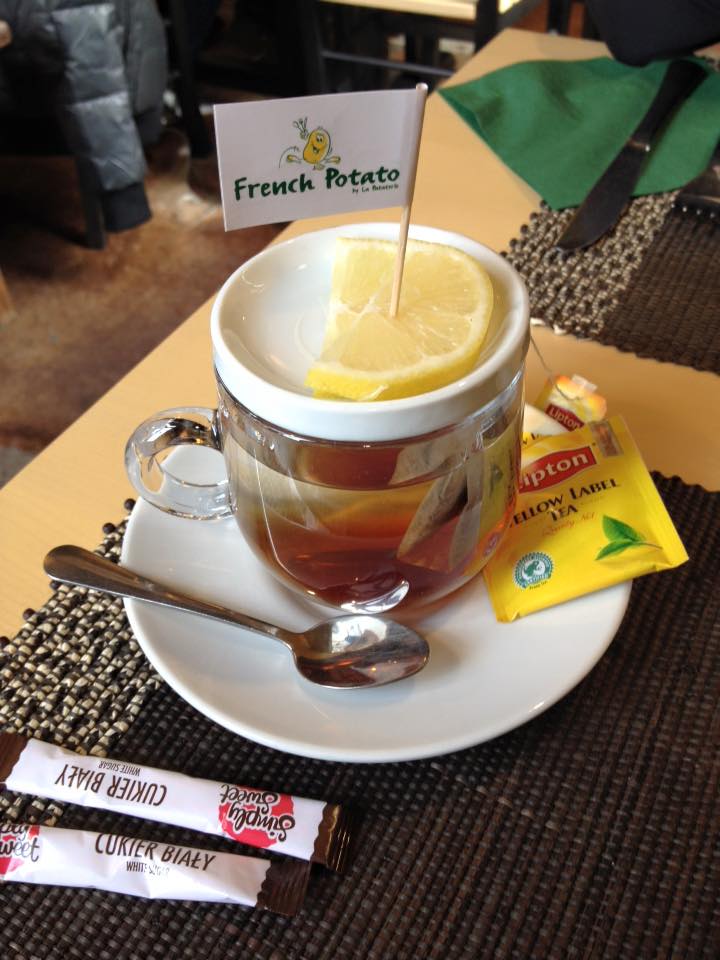
There’s always time for a cup of tea!

Timing, scheduling, and decision-making: There is a Polish proverb that says something like “A ‘must’ is in Russia. In Poland, we do what we want.” I rather like this proverb and feel like it is a good representation of the pace set in Poland. In Lodz the public transportation sort of runs on time, meetings start close to their proposed times, and all necessary decisions are made eventually. The pace is a bit slower (quite literally in fact, we’ve seen several tractors riding on city roads), and procrastination is seen as a natural state of human existence. In my experience here, it has been common to have numerous meetings or email exchanges before a solution or a decision is even close to being presented. Poles like to take their time considering all the options and make absolutely sure everyone gets to have a say in whatever the choice may be. That, and it’s always nice to push the responsibility off on someone else! Another difference would be the mealtimes of Poland. Breakfast is about the same – 7-8am (maybe a little earlier because the Polish working hours are a bit ahead of the US standard 9-5). However, lunch or “obiad” is not until around 3-5pm. To me, that’s a little too much like dinner, which in Poland is much later – around 8-9pm. This difference has often resulted in Tucker and I dining in empty restaurants simply because we go to lunch at noon and dinner around 6pm. But if you are wondering how Poles possibly make it from 7am to 4pm without any food, it should be mentioned that they regularly partake in second breakfast “drugie śniadanie”, which I think the US needs to adopt right away.

Look at that variety though!

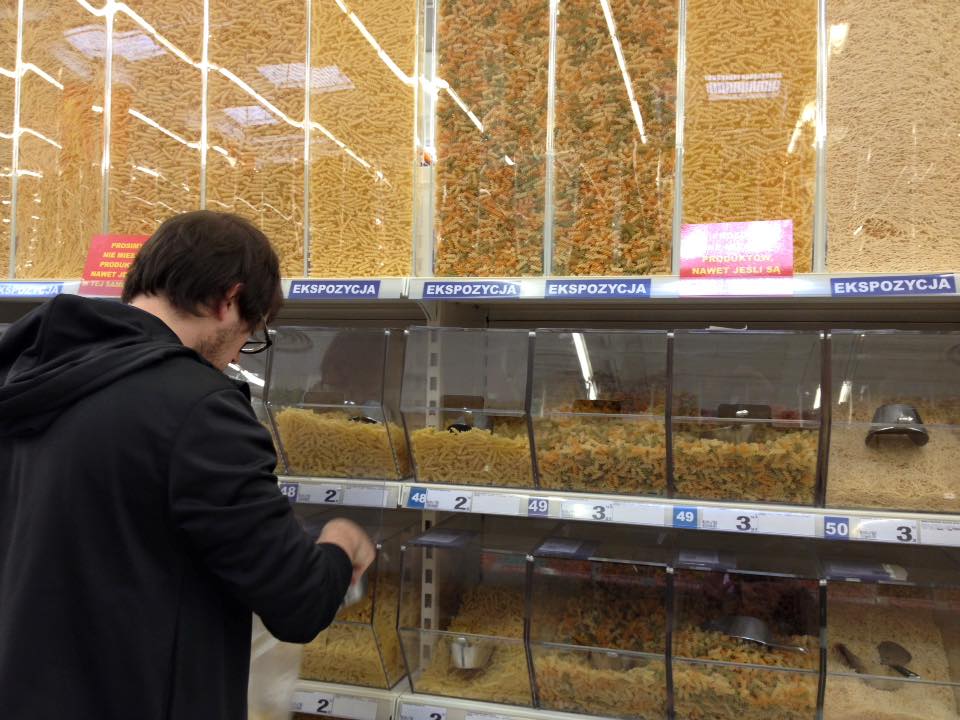
Food, cooking, and ingredients: The food in Poland is delicious. Restaurants are plentiful, groceries are fresh, and everything is cheap (compared to the US). However, if you aren’t going out, then you have some work to do. Poles typically prefer to make their own everything: salad dressing, soups, desserts, wine, you name it. And while this is extremely cost effective and probably tastier, it is also time-consuming and very different from my ready-made/instant meal life. I intensely miss macaroni and cheese from a box, pre-made Caesar dressing, and cans of soup (particularly Campbell’s). In Poland, some popular foods to eat at home are sausage, ham, bread, dumplings, pickles, coleslaw, sauerkraut, and apples. Especially, apples. Poland is one of the world’s largest apple producers. In fact, quite a bit of the produce you can buy in groceries stores here is grown locally – that’s why it is so fresh and cheap! It’s also generally healthier than what we buy in the US. Poles pride themselves on the simpleness of their products. They like the fact that their bread only has three ingredients total, as opposed to the many preservatives American companies add. Although I will say that without those preservatives (and because of our tiny refrigerator), we are having to shop for groceries much more frequently than we ever did back home – about every 4 days.

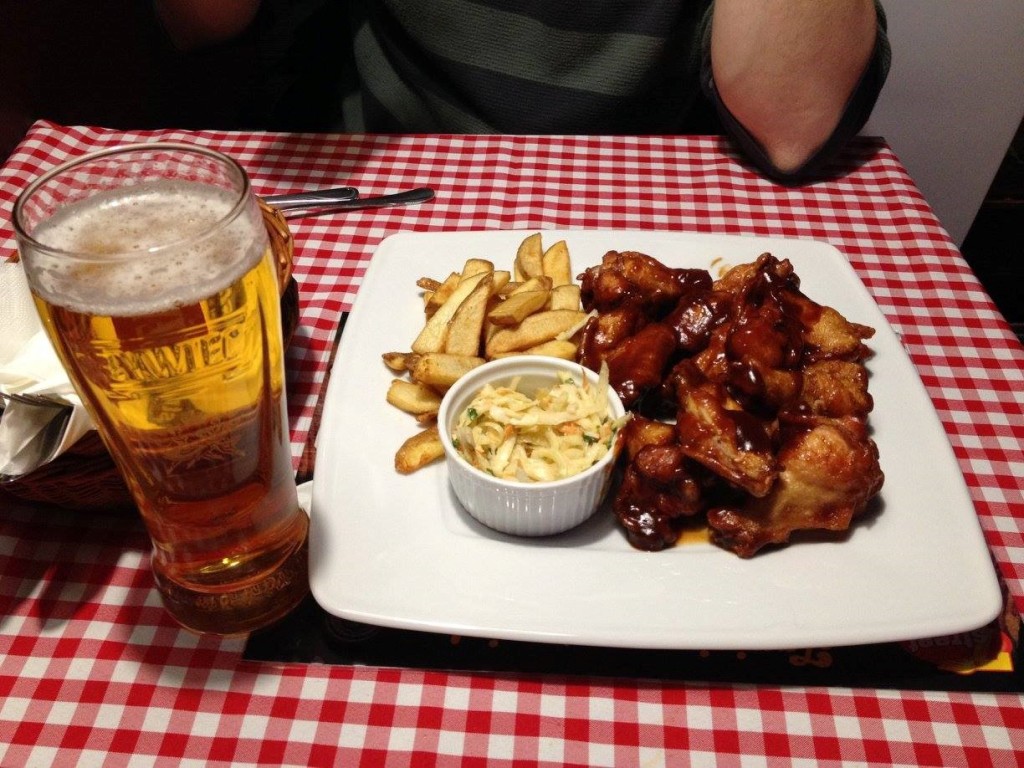
Oh yeah, beer is also typically cheaper than water at restaurants!
Blending right in!

Weather and dressing for winter: Right now, it is pretty darn cold in Poland, and we have (quite regularly) been getting significant amounts of snow. I thought I was prepared for this. Obviously places in the US deal with these winter-y things as well, but coming from Atlanta, we are experiencing some differences. For one, winter tires exist, and if you don’t have them, you are a nuisance. We (thankfully) use public transportation, but I have heard Poles on numerous occasions complaining about people who are driving on summer tires! Idiots! (Their words, not mine). Another difference is the amount of time it takes me to enter or exit a building. I generally wear a jacket, a sweatshirt, a scarf, a hat, and gloves, which I feel is quite normal for the current weather conditions outside, but absolutely unbearable inside, right? Not really. In Poland, I find that I am one of the only ones who walks indoors and must immediately shed my many layers. Here, I see people shopping in their coats, sitting in class in their coats, etc. and somehow, they don’t sweat to death! Side note – if you can’t constantly wear your coat or don’t want to struggle as I do, juggling all my outerwear in my hands, every building comes equipped with a coat check. It feels a little like going to a gala or something because you walk in, they take your coat, and give you a ticket – every day. Pretty fancy. The last difference I’ll mention here is the scarf style of Poland. In the US and Norway my scarves totally fit in. They are not too bulky, nor very long, but they cover my neck and keep me warm. In Poland, people wear scarves that could function as blankets.

People – names, attitudes, and diversity: In Poland, names, in general, are quite long. For example, we live off a street called Piłsudskiego and most of my students have last names like Wojciechowski or Gruszczyńska (not to mention the infamous Brzęczyszczykiewicz). Eventually, you hear the names enough times and can imitate them pretty well, but I’ll admit to practicing in my head prior to having to use them. Another interesting name difference in Poland is that there are rarely repeated surnames. Out of my 85+ students I only have one duplicate. However, the first names here are much less diverse – I swear, there are like 9 Martas in my classes. In an earlier post I described Poles as being hardworking and hospitable, and to me these still hold true. However, now I would probably add pessimistic to the list. Poles complain a lot and generally have a bleak outlook on life. This is sort of good news for me because I feel right at home and can now use the excuse “it’s in my blood” whenever anyone calls me on it. Although I must say, sometimes, I feel really American when I catch myself smiling at a stranger. Awkward. Lastly, a word on diversity in Poland: there isn’t much. Luke (another Fulbrighter), Tucker, and I had an amusing conversation once when someone asked about “black eyes”, which was heard as “black guys”. After which, it was decided that black eyes were indeed more common than black guys in Poland. There are definitely some international students at the university, but overall Poland is very white.

The bill usually comes in a cute little box!

Language and speaking: As a linguist, I know all languages are roughly equal in difficulty – some have super complex tense systems, others have difficult/irregular pronunciation, etc. However, as a learner, Polish seems impossible to master! Even Poles feel sorry for me trying to learn the complex case system, three genders, and ridiculous pronunciation. I could really go on for days about the differences in English and Polish grammar, but I know many people would be a little bored with those comparisons. However, some of the most adorable language-related differences are actually vocabulary-based. For example, “capital letters” are called “duże litery”, which literally means “big letters”, and I can’t help but feel like a 5-year-old when asking if I should use a big letter or a little letter. Another cute difference is when you are asked to enter your PIN at a restaurant to pay by card (yes, they always come to the table with the card-reader, and yes, you absolutely have to ask for the check or it will never come), the server will ask you to put in the number and press “the green”. This refers to the green enter button and is adorable! Another larger language difference has to do with the aforementioned case system. Because of the cases, the ends of words in Polish are particularly important, and thus are never shortened or trailed off. This is something I’ve noticed Tucker and I do when we speak (a very prominent feature of American English), which sometimes results in misunderstandings with Poles.

Okay, so I could probably go on to write a book on this subject, but since this is just a monthly blog post, here is a quick list of some smaller differences that we have come across:

A rare sight indeed!

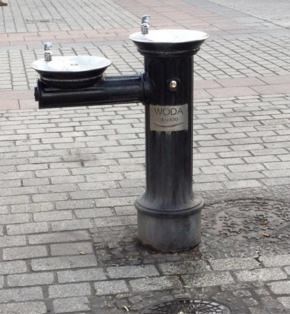
Poles prefer square pillows on their beds. In general, the population has very neat handwriting. Movie theaters have assigned seats. Juice is an acceptable and common drink for dinner, although drinks (in general) with meals are very small. Poles typically avoid using cooking spray and clothes dryers. Many Poles say “goodbye” to the strangers they leave in a train compartment or an elevator. Folders here do not have traditional pockets, but instead have three flaps on one side and an elastic band to keep it closed. Notebooks all use graph paper and are about half the size of an 8 x 11.5 sheet. Almost every female name in Poland ends with the letter “a”. Kebabs are one of the most popular types of fast food here. Discussing political views is a great way to start a conversation. Minimum wage is the equivalent of $3.20/hour. Poles do not like/trust their tap water; therefore, water fountains are almost non-existent. Ibuprofen comes in packs of 12 or smaller. Whole rabbits can be bought from the deli at many grocery stores. And dogs are not forbidden from entering every shop/store.

Of course, I realize (and I hope it is apparent to everyone) that I still have a quite limited realm of experience. Everything I mentioned here is based off of what Tucker and I have seen around us in public places such as restaurants, movie theaters, public transportation, the university where I work, etc. – all in all, a very small scope of Polish culture. This is also absolutely seen and written from my personal perspective, which is not always (or even often) the same as others. While I like to highlight the differences and poke fun here and there, I really think the differences are the best part of cultural exchanges. They allow us to see things from a new perspective, and often also shed light on the enormous amount of similarities we, as humans, all share. I hope you enjoyed my post! Thanks for reading!