
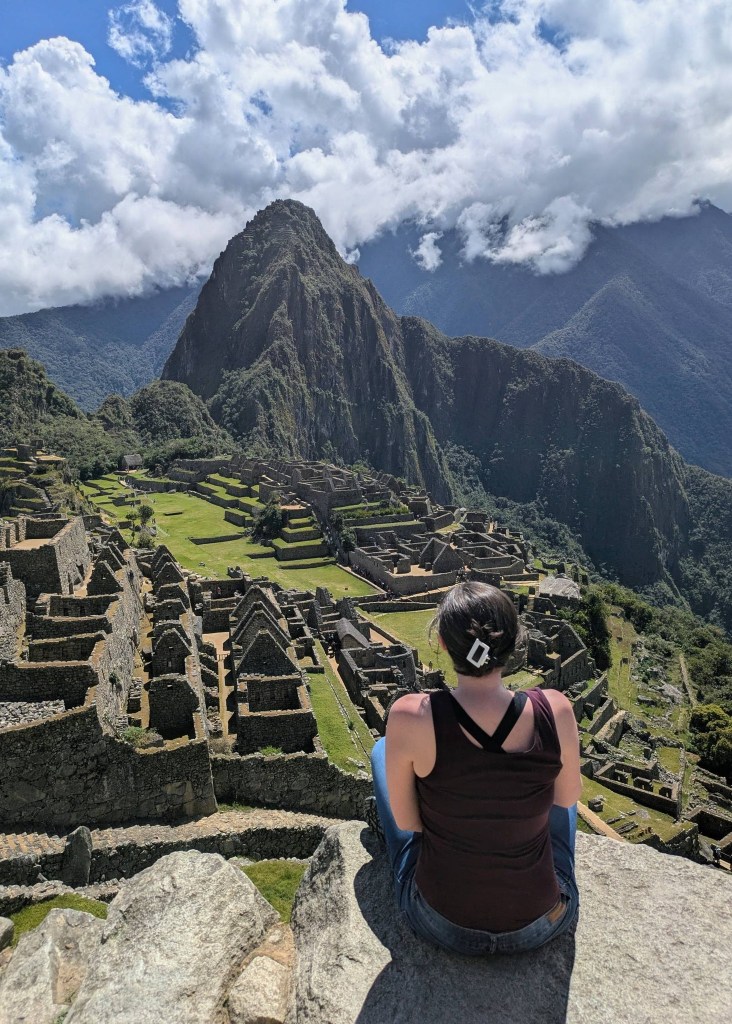
We just got back from another incredible trip, which means it’s time to reflect and reminisce. This trip was unlike many others because it required a lot more prep than we’re used to, so if you’re planning a trip to Peru, hopefully I can help you out a little with my breakdown of some of our plans and experiences. And if you’re not planning a trip to Peru, here’s your sign to start!
The Preparations
As I mentioned, we actually had to do quite a few things well in advance for this trip. Generally, we just book our flights and lodging and let the rest of the trip unfold in real time; however, there are two things about Peru that forced us to think ahead a bit more: 1, we knew we’d be at elevation again, and 2, Machu Picchu is one of the most popular tourist destinations in the world.
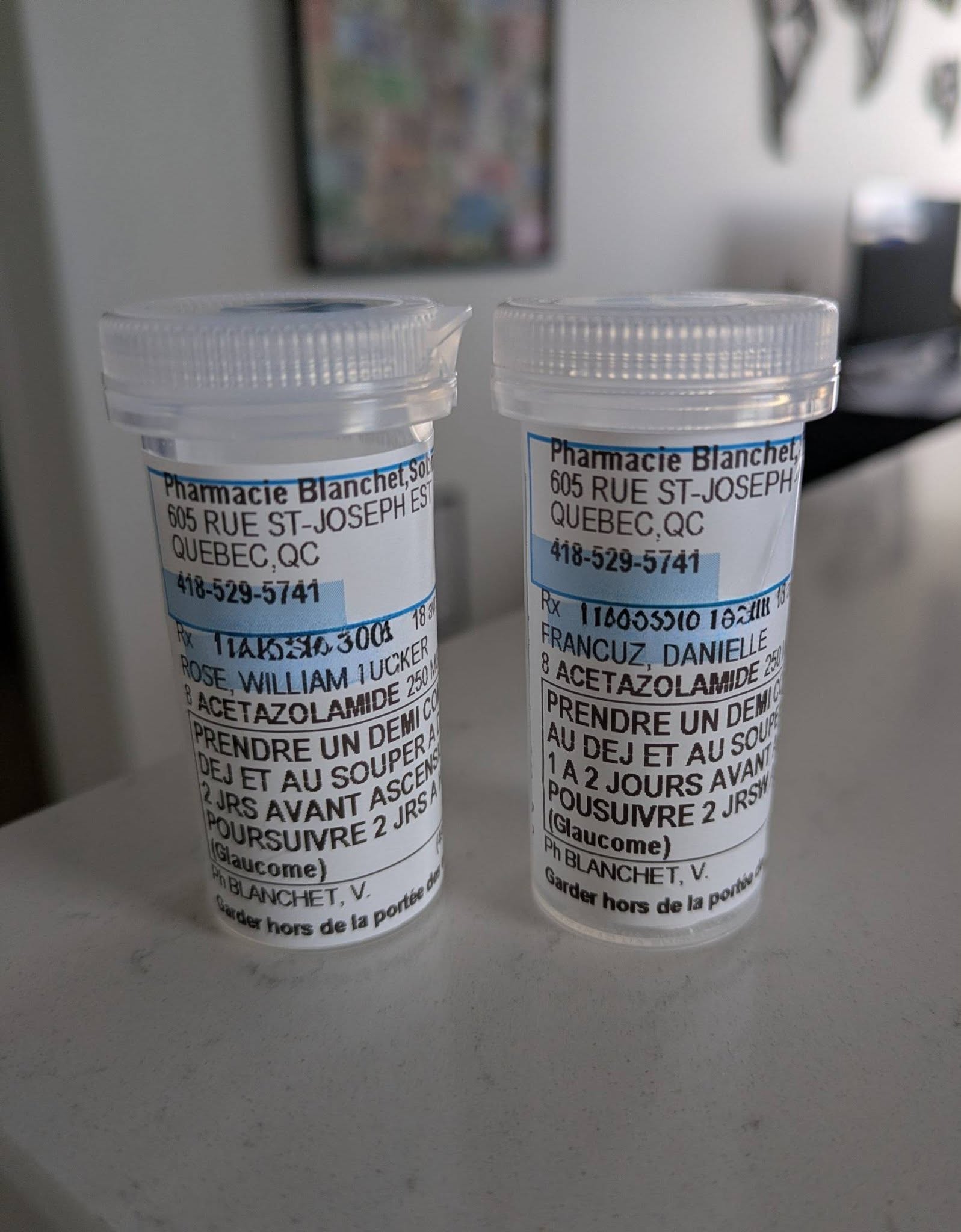
For the elevation issue, we decided to play it safe and get a prescription for Acetazolamide from our local pharmacy. Here in Québec, we didn’t need to see a doctor, we just had to talk to the pharmacist about our trip (how long it was, what the elevation would be, etc.), and he gave us a week’s worth of a medication that we started to take a couple of days before we left. This medication works by helping your blood carry more oxygen, which can prevent the symptoms of altitude sickness (known in Peru as “soroche”).
The other challenge we faced months before our trip was booking everything for Machu Picchu. To say there are a lot of options would be a gross understatement. You can take weeks and hike in from far away places in almost every direction; you can camp; you can glamp; you can take a scenic train ride; you can stay in Cusco and do a day trip; you can stay at the base of the mountain in Aguas Calientes – really there are so many options, and you basically have to decide all that before you can buy your park tickets for the specific day/time you want. The trickiest part is the fact that those park tickets are released in batches about 5 months in advance, and they get snapped up pretty darn quick!

Cusco
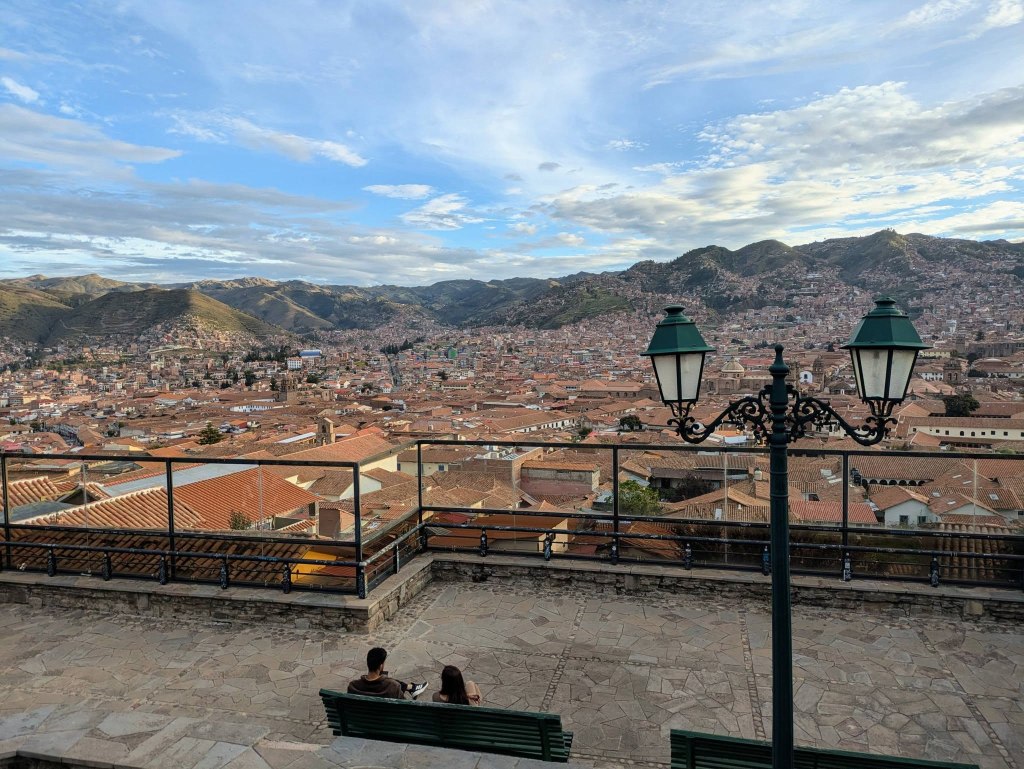
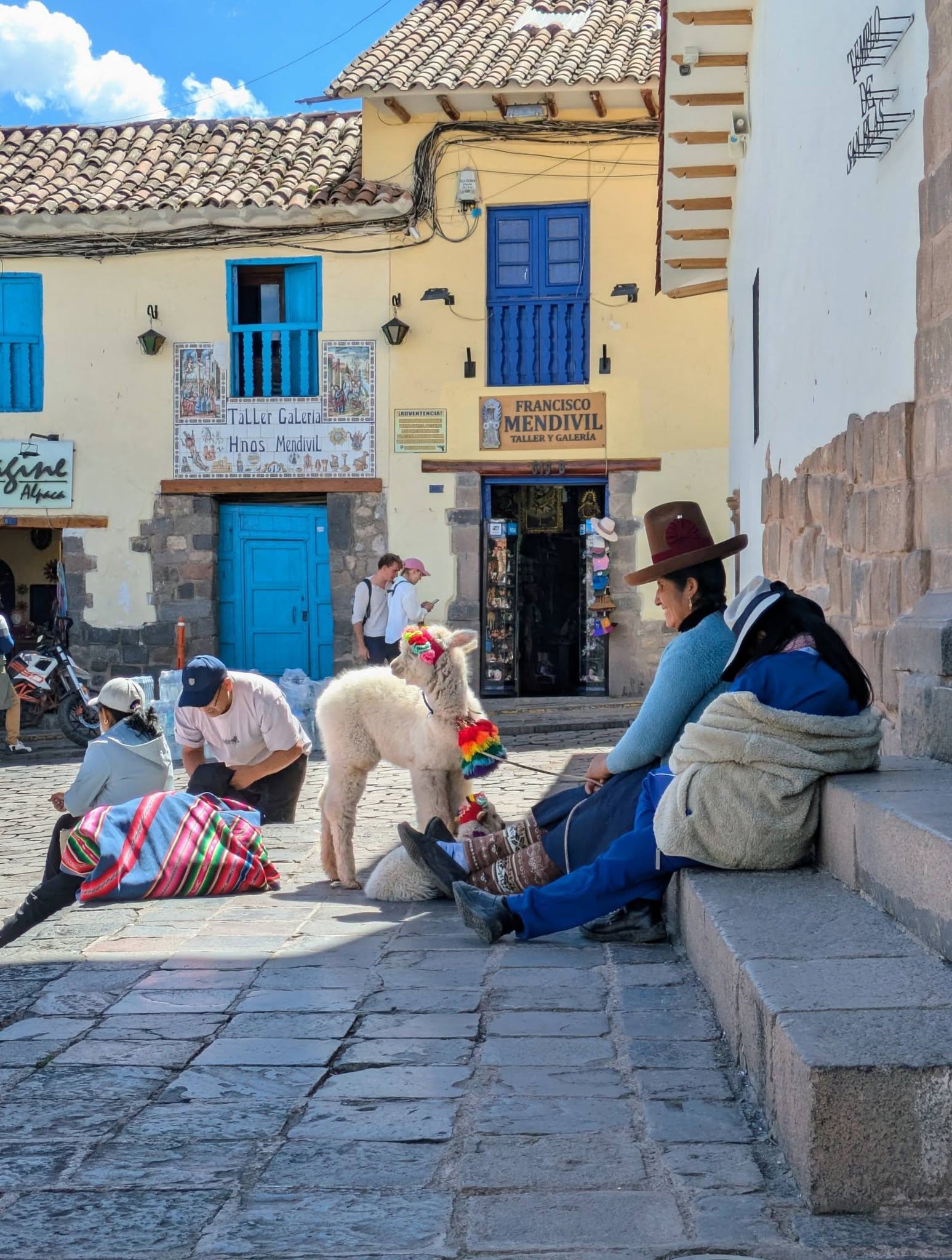
So, we chose Cusco as our main base for this trip because we knew we needed to acclimate to the elevation (Cusco sits at 3,400m or 11,200ft), and it’s such a great jumping off point for things like Machu Picchu, Sacred Valley, and Vinicunca. We totally thought it’d just be a place for us to rest and generally just pass through, but we absolutely LOVED Cusco! It has so much to do and is so beautiful that even when our lungs were screaming after climbing all the stairs, we continued to push through just to see a little more. Everyone we met was extremely friendly, and the food was some of the best we’ve had, so really, I cannot recommend Cusco enough!
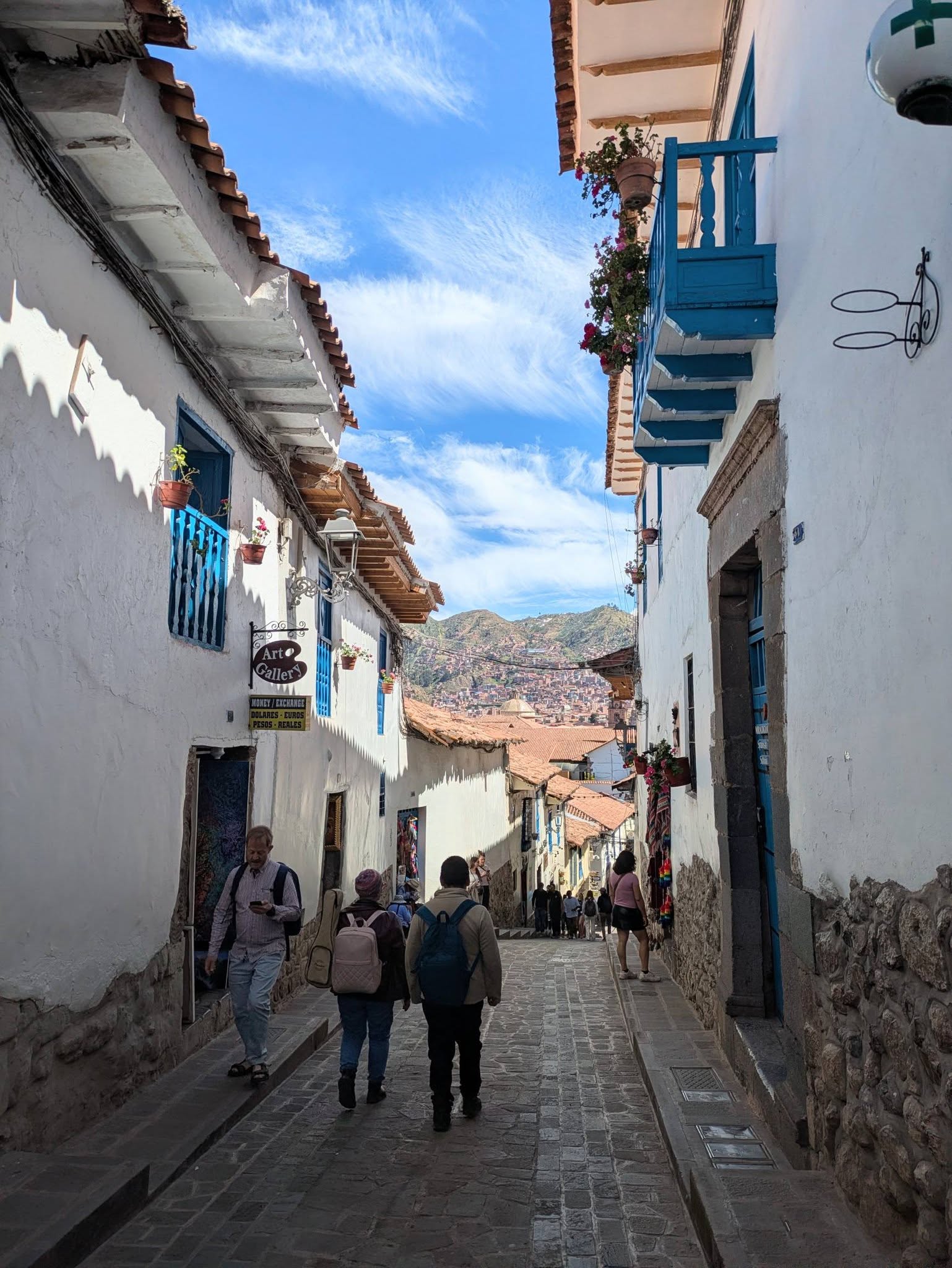
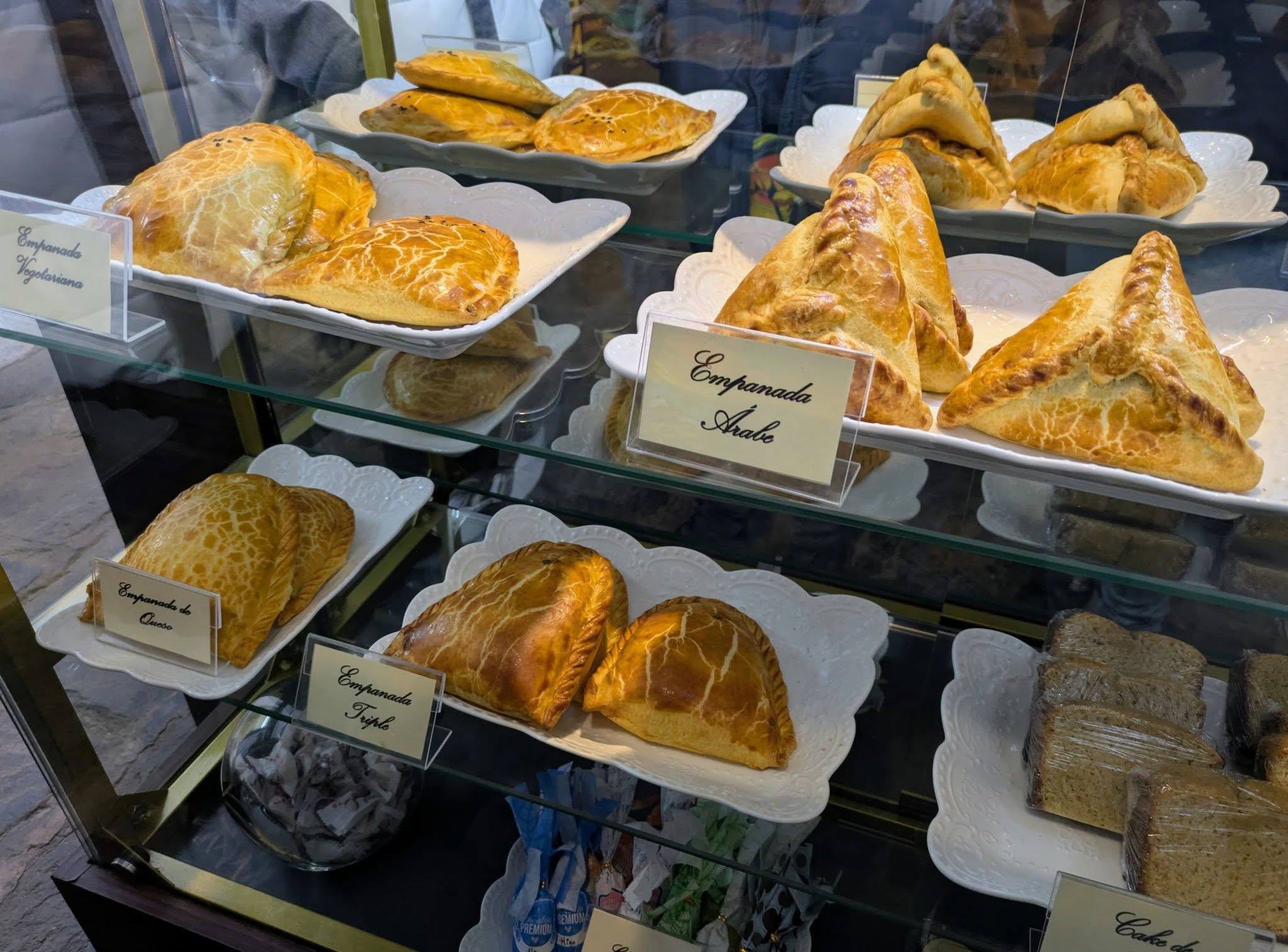
One of our favorite things to do in Cusic was to just wander the different neighborhoods. We stayed in San Blas, and it was absolutely beautiful, but there are many points of interest and fun things to see everywhere you turn. We also enjoyed grabbing a coca tea infusion or a coffee at one of the many cafés in the city. The Chocolate Museum was free and definitely worth a pop-in, plus right next door is Cervecería del Valle Sagrado, which had our favorite beers of the trip. Also, I mentioned the food in general was excellent, but our favorite restaurant of the trip was LOCAL where we had their empanadas, grilled fish, ceviche, and lomo saltado (all delicious)!
Machu Picchu
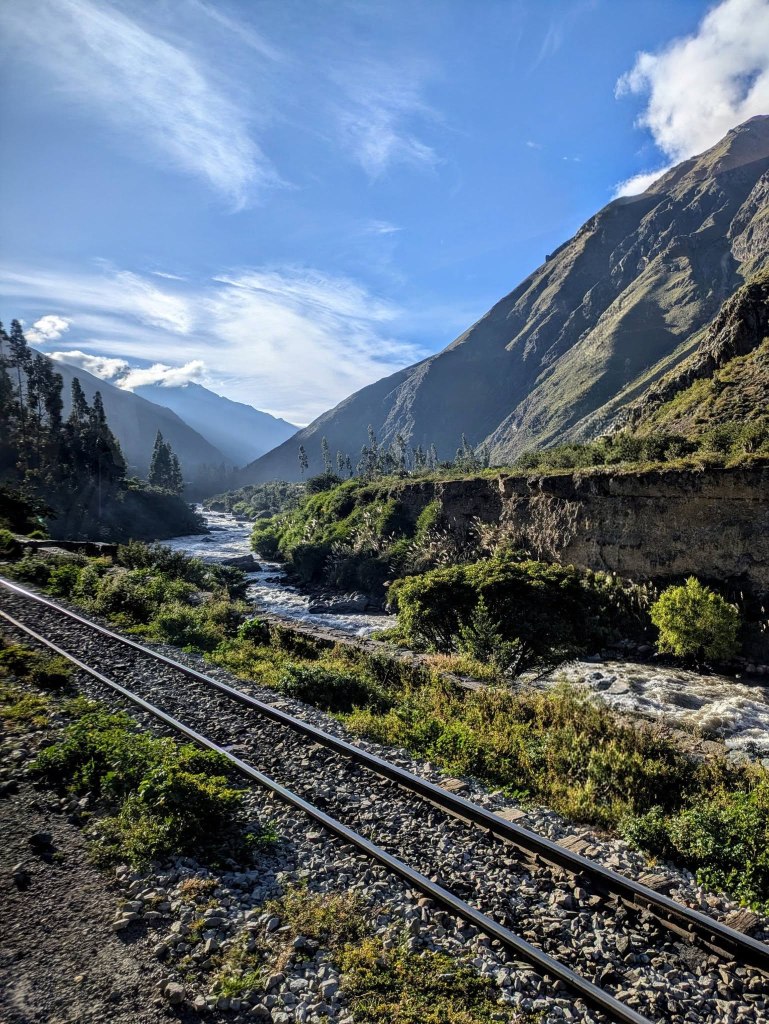
And now for the main event! Of course, one of the main reasons we chose Peru was to visit Machu Picchu, but I’ll be honest, you have to really want it! Since we decided on a day trip from Cusco, we started our morning at 3am by walking to the IncaRail office where we got on shuttle bus (i.e. van) that drove us the 2 hours out to Ollantaytambo. From there, we got on the train that took us another 2 hours through the Sacred Valley to Aguas Calientes, the town at the base of Machu Picchu. Aguas Calientes was another surprise for us – it’s such a cute town with quite a few restaurants/shops and a local flavor of its own. If I were planning this trip again, I think I would have made it an overnight trip to Machu Picchu, staying at least 1 night in Aguas Calientes.
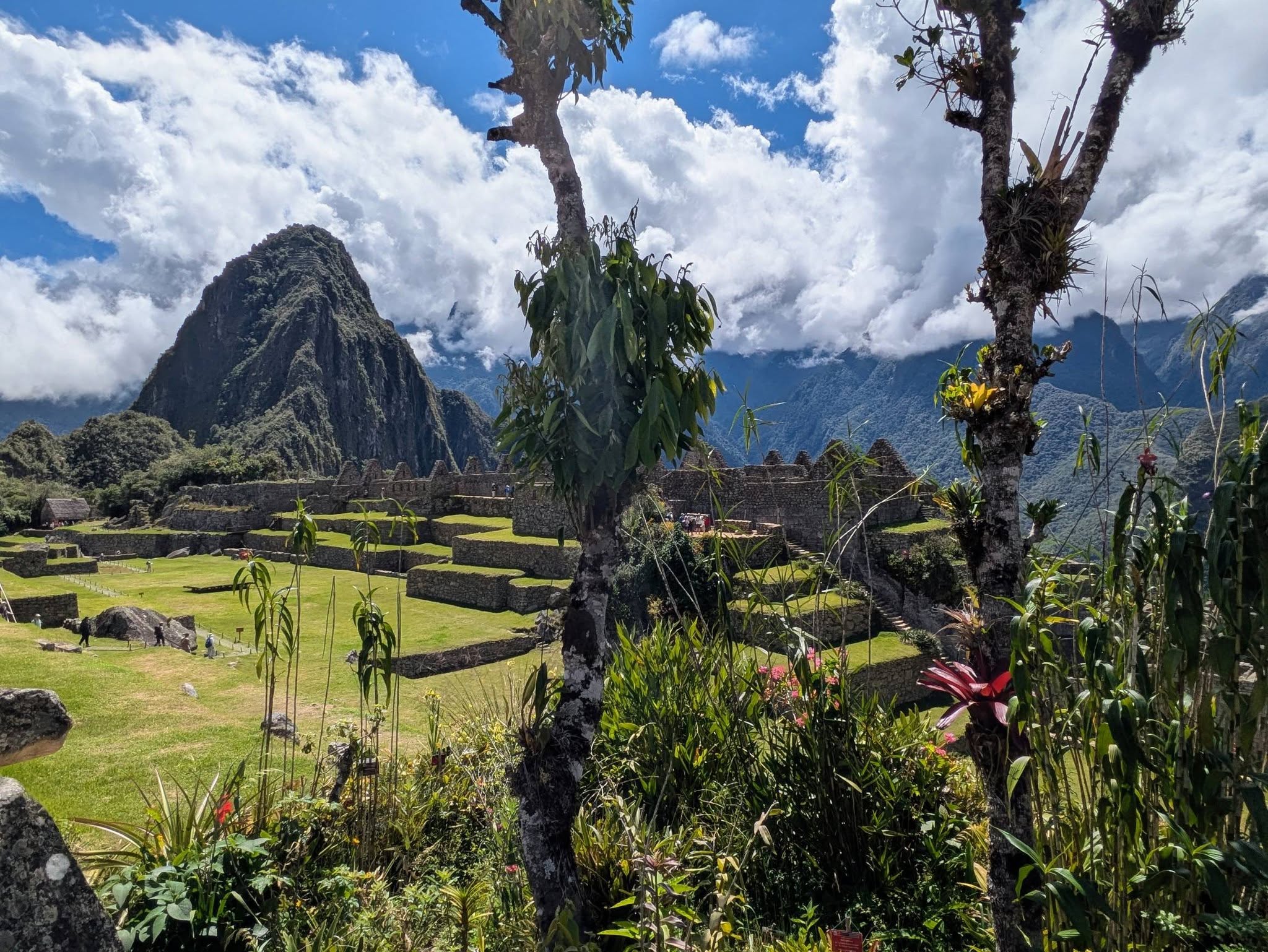
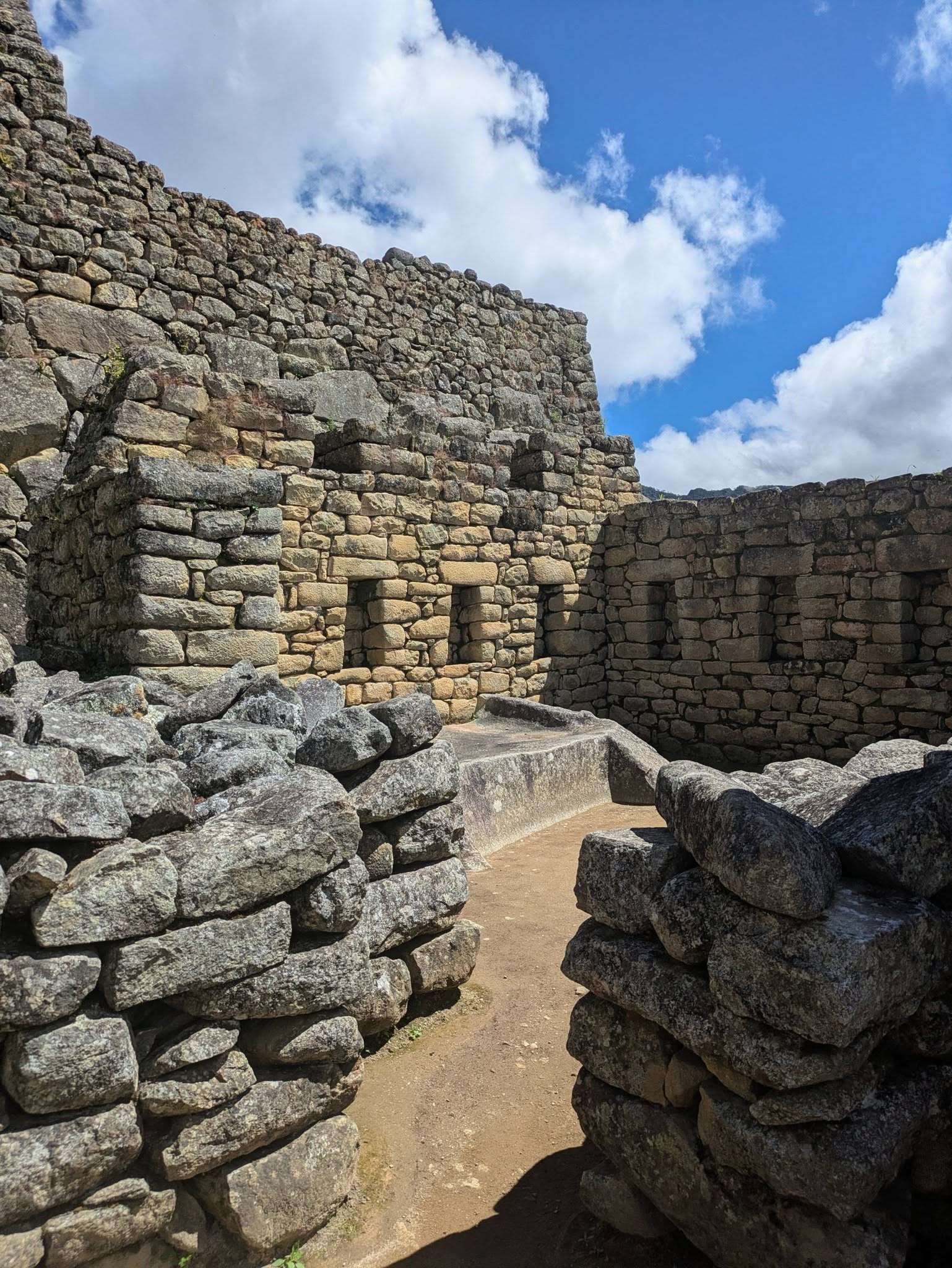
Once at the base of the mountain, we opted for the bus ride to the top. You can hike up, and it apparently only takes an hour or two, but I’m so glad we chose the bus! The buses kick up a lot of dust that the people walking had to battle along the way, not mention the bugs, the sun, and lots and lots of stairs. Once in the park, the “circuits” or paths that you choose from when buying tickets, ended up looking quite similar and even crisscrossed at points, so don’t let that decision haunt you for too long. There are also some additional hikes you can do that take you out of the park, but I felt we got plenty of incredible views and hiking opportunities regardless.
However, I do wish we had taken them up on hiring a guide to accompany us up from Aguas Calientes because unlike any other tourist attraction I’ve ever been to, there were no information signs anywhere on the mountain. We followed our roped path and wondered aloud about everything. Whose llamas are these? When did they begin restoration? How many people lived here? Basically, we had a lot of Googling to do, so if you want real-time commentary, definitely get a guide. The other thing I would make sure to do next time is to book any and all train transport during daylight hours – the train ride in was incredibly beautiful, and it was a shame that we rode back in the dark. I absolutely wanted to see it all again in reverse!
Vinicunca
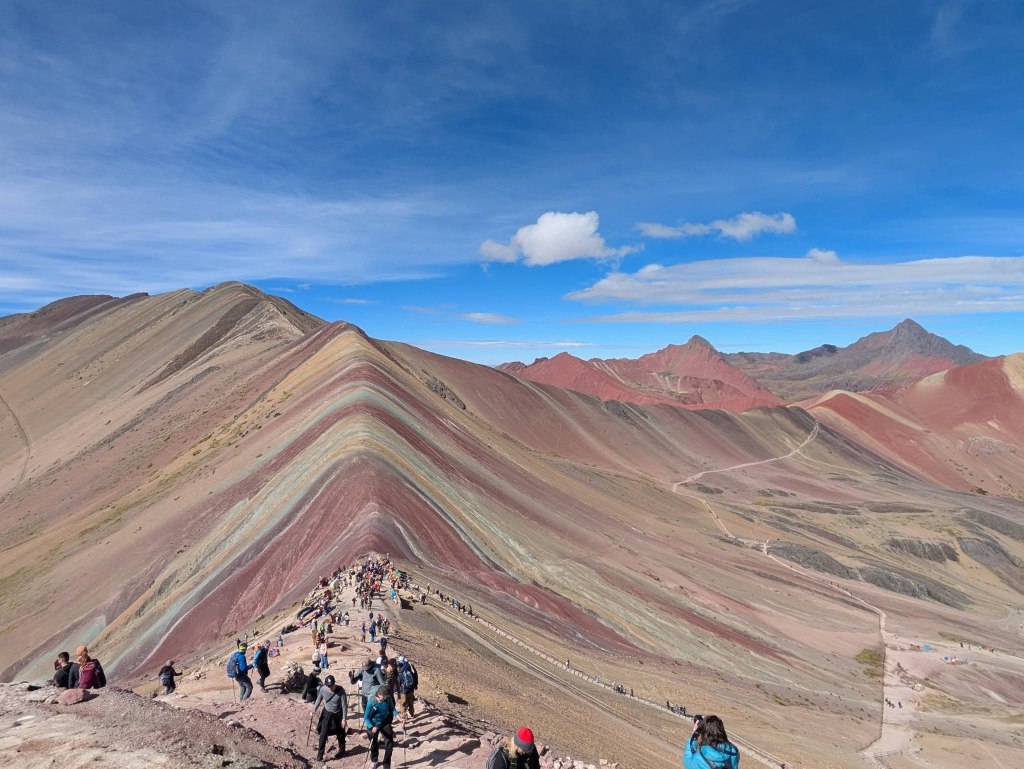
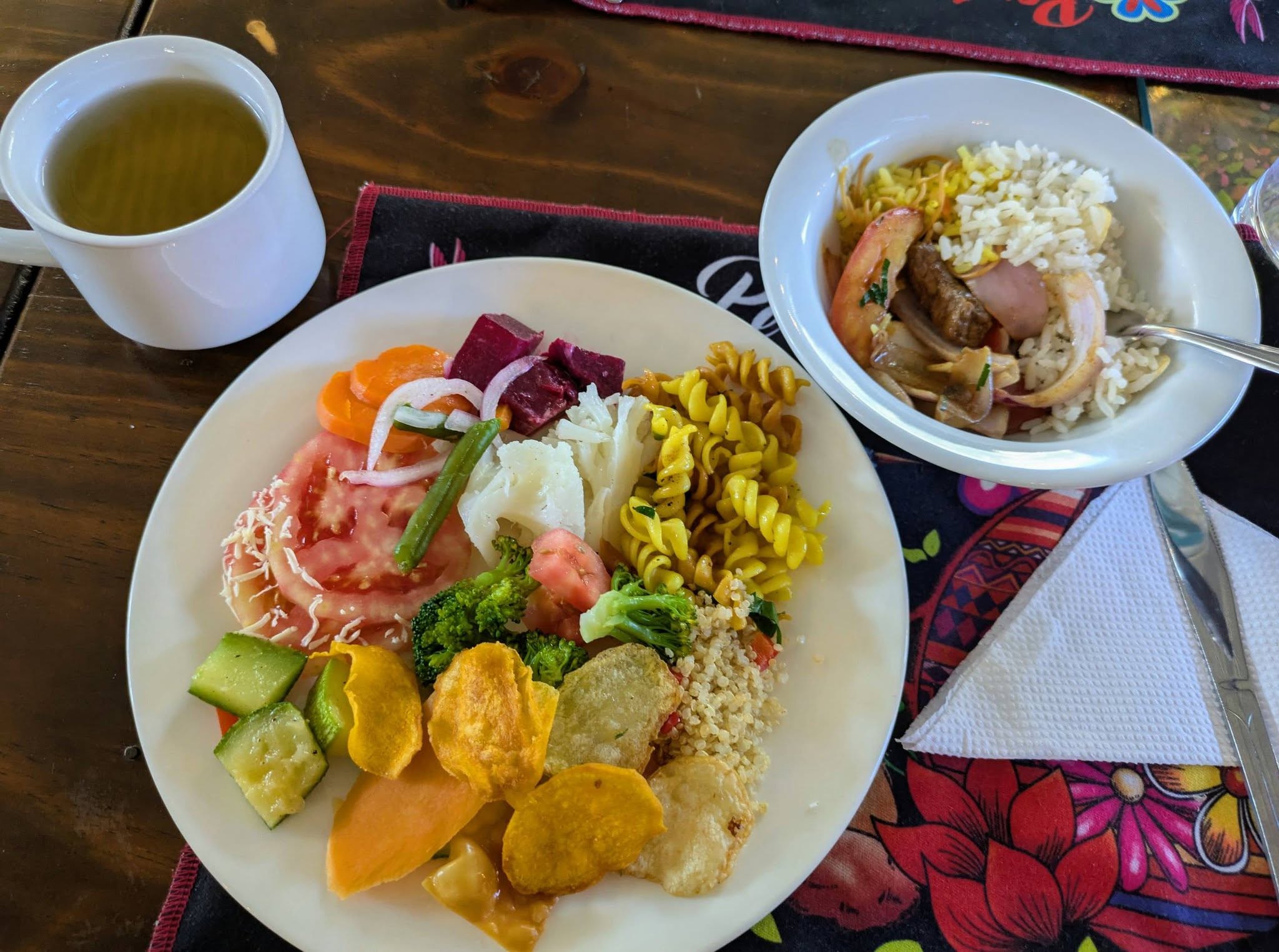
Our second day trip was down to Vinicunca, also known as Rainbow Mountain. This particular Airbnb Experience also required a very early start as we made our way to a pick-up location in the city, this time to be shuttled 2 hours in the opposite direction of Machu Picchu to Cusipata. There we had a buffet breakfast and guzzled down some more coca tea in preparation for our hike. After another very windy 2 hours in the van, we were at the base of Vinicuna. Here we could opt to either hike on foot, ride a horse, or wild out with some dirt bikes. We went the traditional route even though it was the slowest option, but again, I’m so glad we did. We took our time looking in every direction at the stunning scenery around us, and eventually we summited the 5,0036m (16,500ft) mountain.
We’ve done a few hikes at elevation now, and we’ve always been fine. We take any recommended medication, local remedies, and general acclimation advice, and although we often experience minor symptoms like a headache and breathlessness, we’ve never gotten sick. I will say though that in both Ecuador and Peru, we saw several people being helped down with stretchers, and at Vinicunca, someone left in an ambulance, so I would recommend anyone traveling or hiking in these conditions to do your research and take it easy! That said, Vinicuna has 1,600m (5,000ft) on Machu Picchu, and we absolutely noticed that difference – I’m not sure we felt anything elevation related at Machu Picchu, whereas Vinicunca was tough.
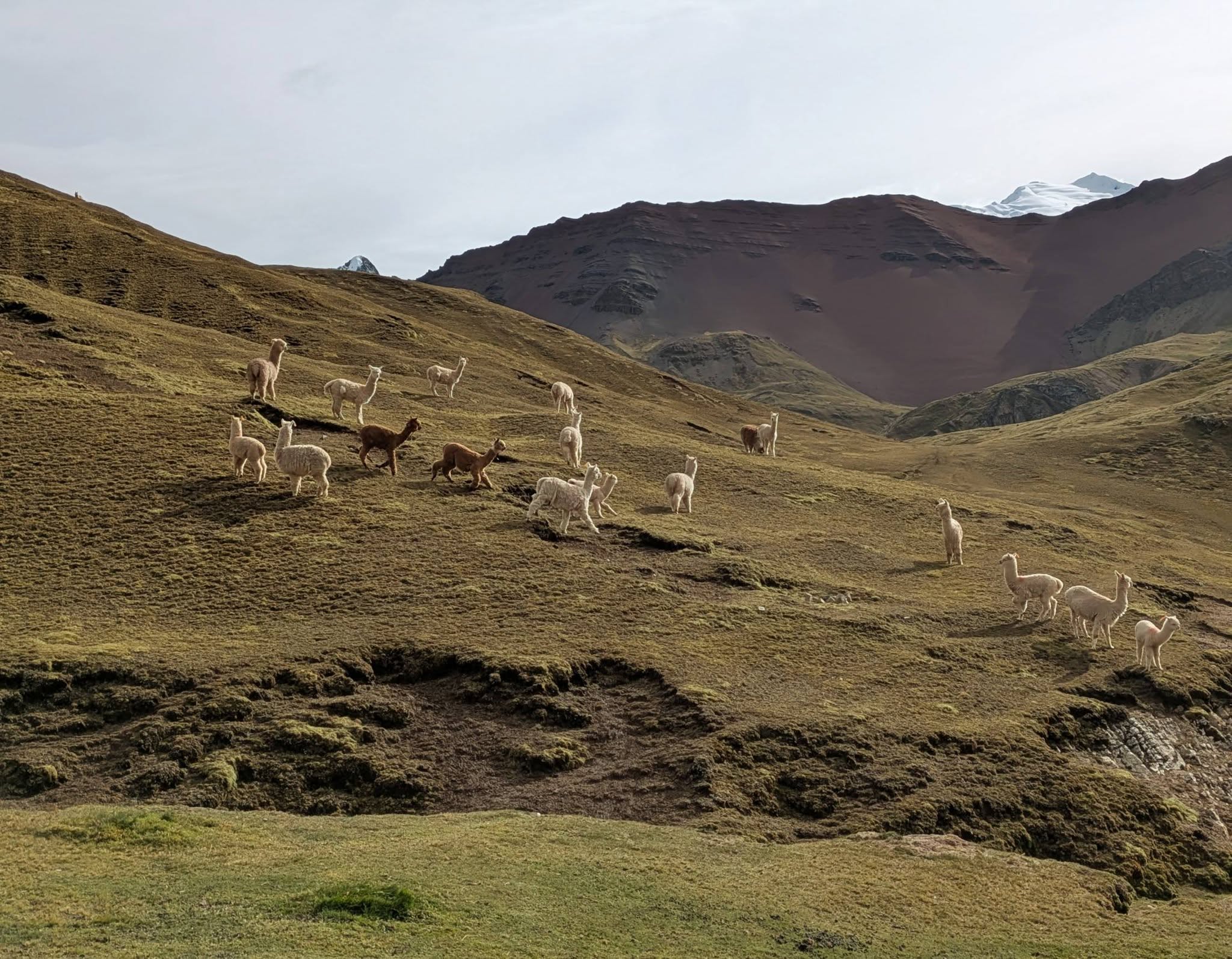
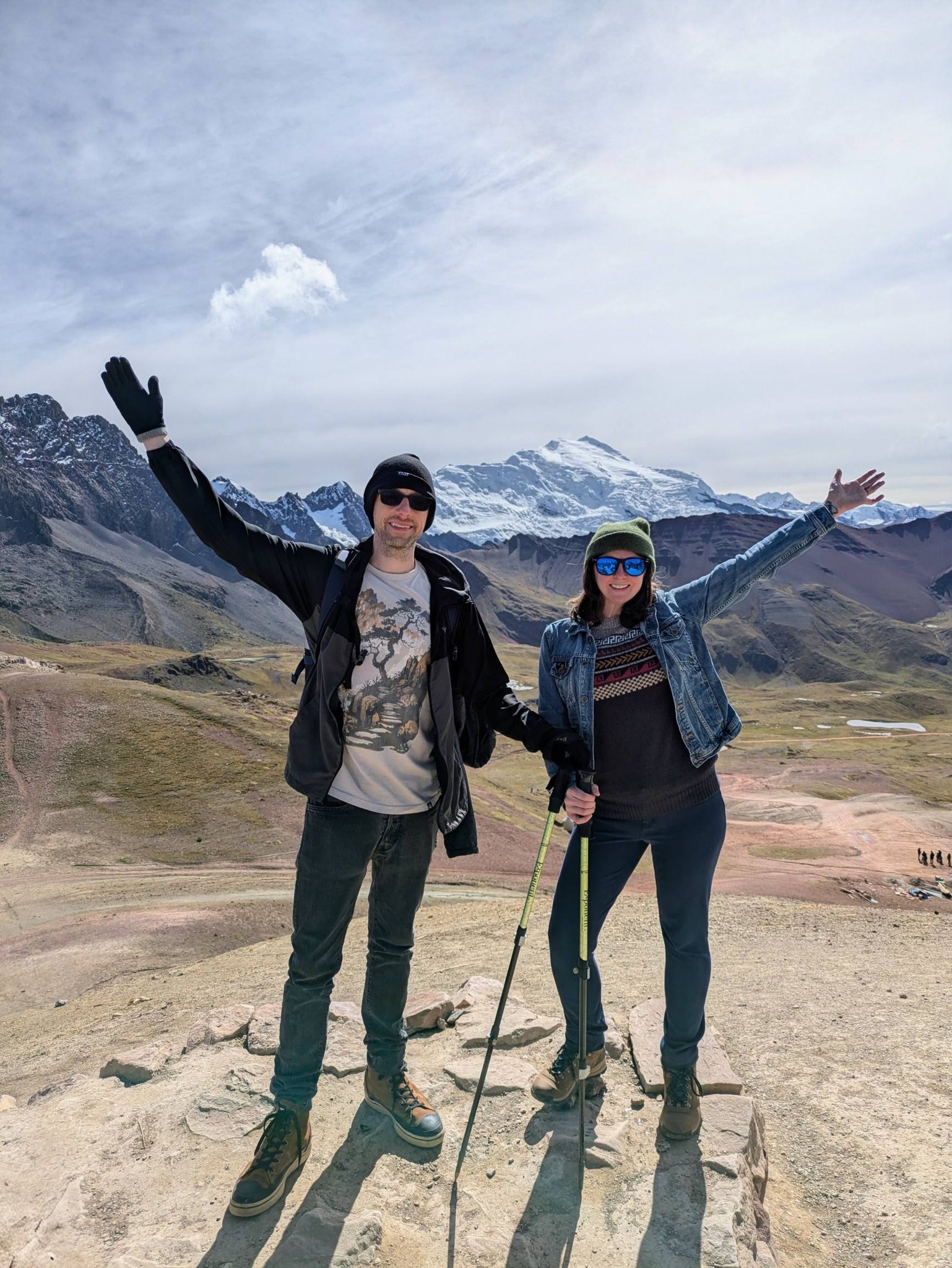
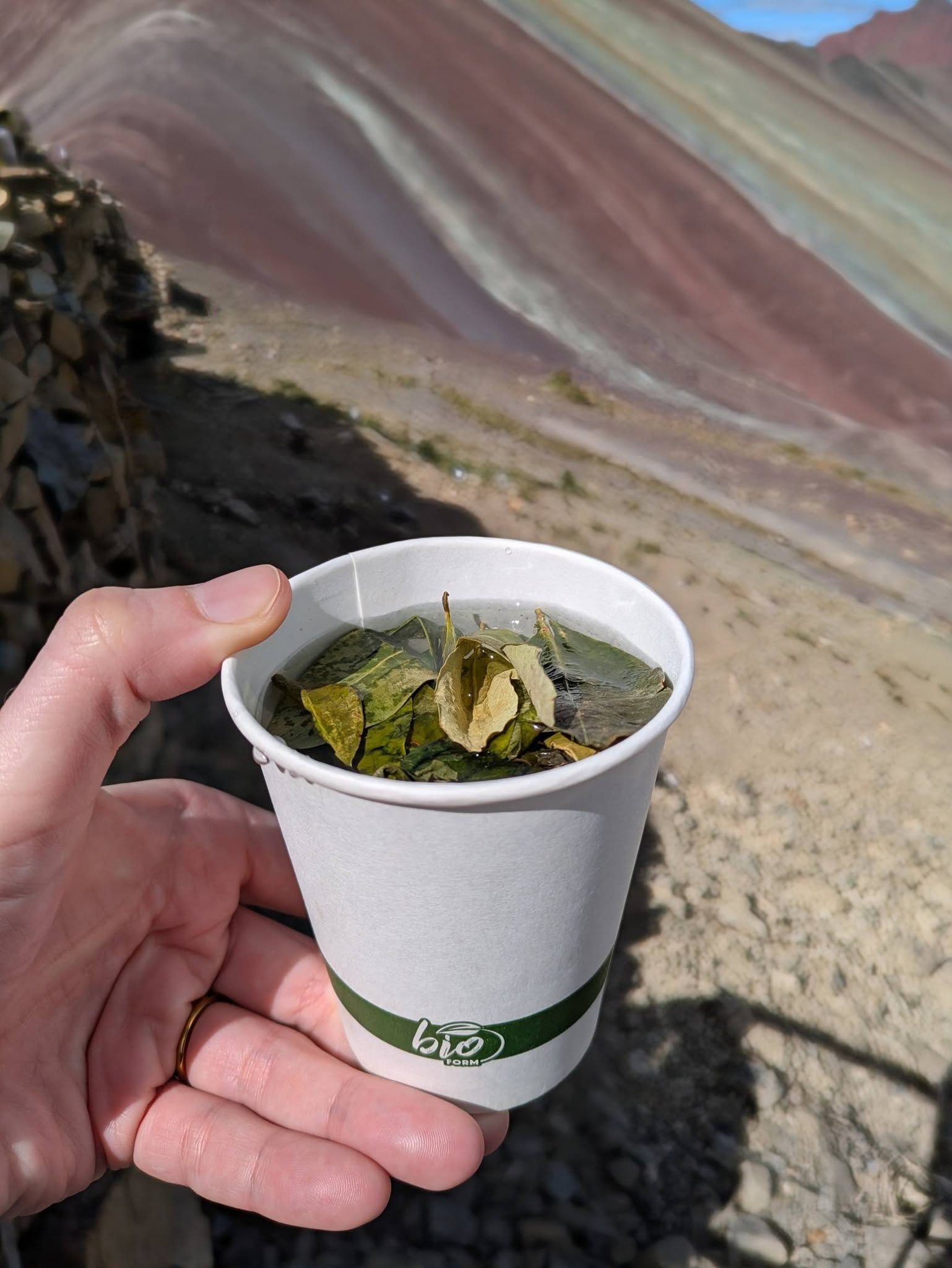
After our gorgeous hike up and down, we went back to Cusipata for another buffet and then napped the rest of the way back to Cusco. This excursion started at 4am and ended at 5pm. Our Machu Picchu day started at 3am and ended at midnight (honestly a day trip and a half). And all of this was after our 24+ hour-long journey just to get to Cusco from Québec City, which is why I’ll say it again, you really have to want it! Of course, I hope it also goes without saying that it was absolutely worth every second of uncomfortable travel, and I’d do it all again in a heartbeat! #YOLO
Lima
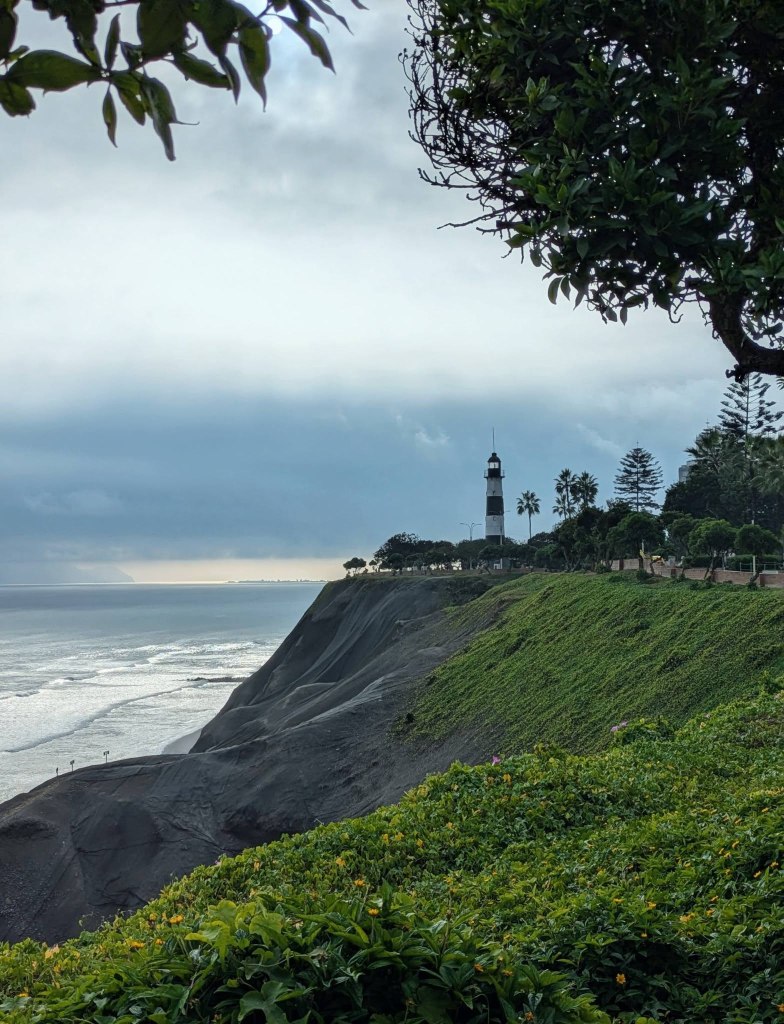
After Cusco, we went onto to Lima for a couple of days to recover and reset before the long journey home. Lima is the capital of Peru, and it’s located in a desert on the coast – very different from Cusco or anywhere in the highlands. Lima is huge, and the first decision you have to make is which neighborhood do you want to stay in: Cercado (the historic center), Miraflores (the modern tourist hub), or Barranco (the artsy, bohemian district). We chose Miraflores and were happy to be in the middle, well-positioned to explore all three neighborhoods. We did a walking tour of Cercado, and it was fantastic – my only regret was that we did it on the last day of our stay rather than the first!
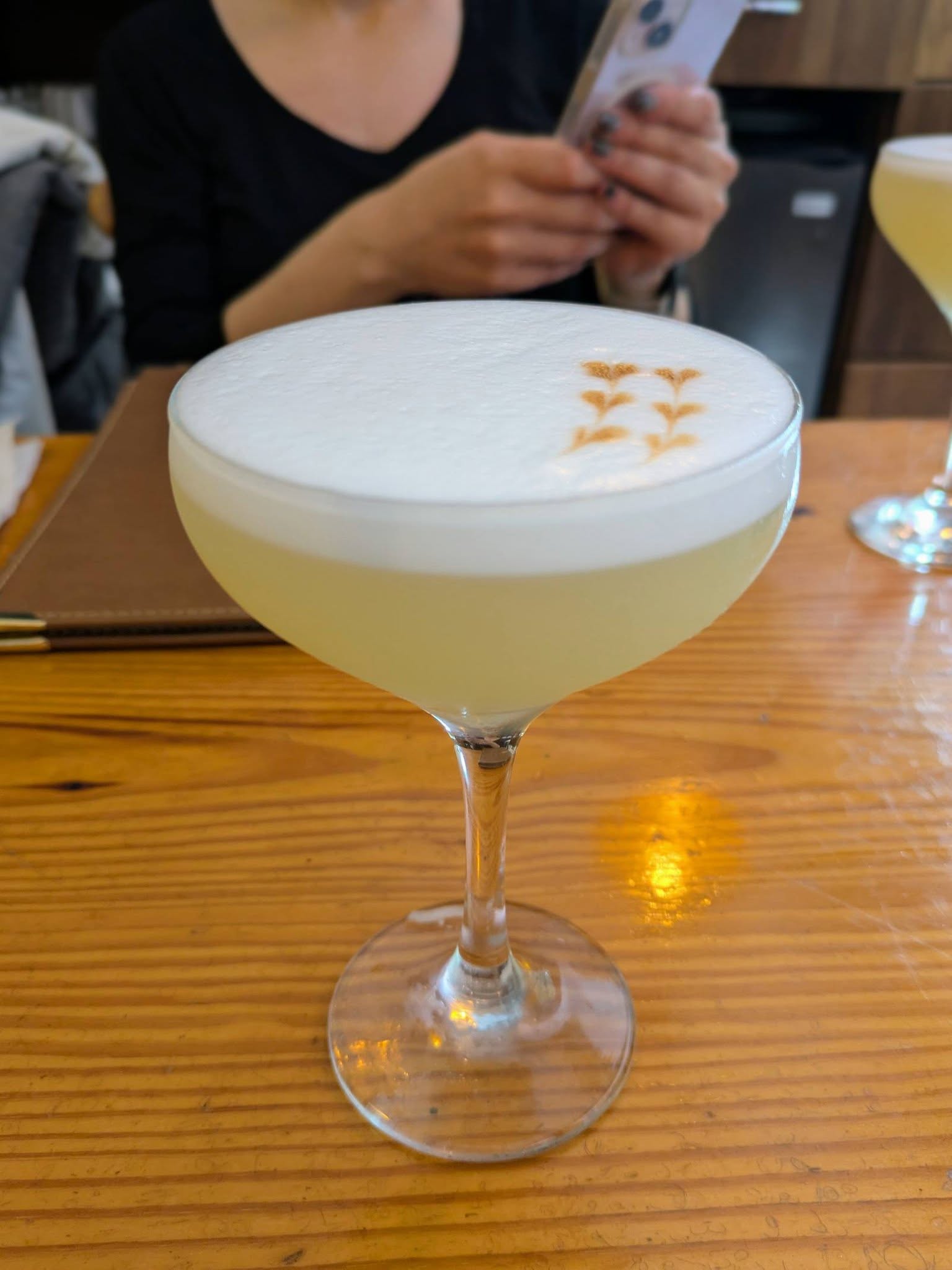
Other than the walking tour, we really enjoyed strolling along the malecón (boardwalk) and watching all the paragliders. If we’re ever back in Lima, that’s the first activity I’ll be planning! We also loved sipping our Pisco sours at the Gran Bolivar Hotel, where the drink was allegedly created, and walking through Parque Kennedy and seeing all the cats (and their embassy-sponsored shelters) was also really fun. Despite being the sixth South American country we’ve visited, Peru surprised us at just about every corner, which is, of course, just how I like it!
The Food
And last but not least, as has become a sort of custom on these posts, I want to end with a list of all the Peruvian dishes we were able to try while there. We always make ourselves a little checklist, and here’s what we had for Peru:
Ají de gallina (chicken stew)
Alpaca meat
Butifarra sandwich (ham, pickled veggies, and chilies)
Causa Limeña (stuffed mashed potatoes)
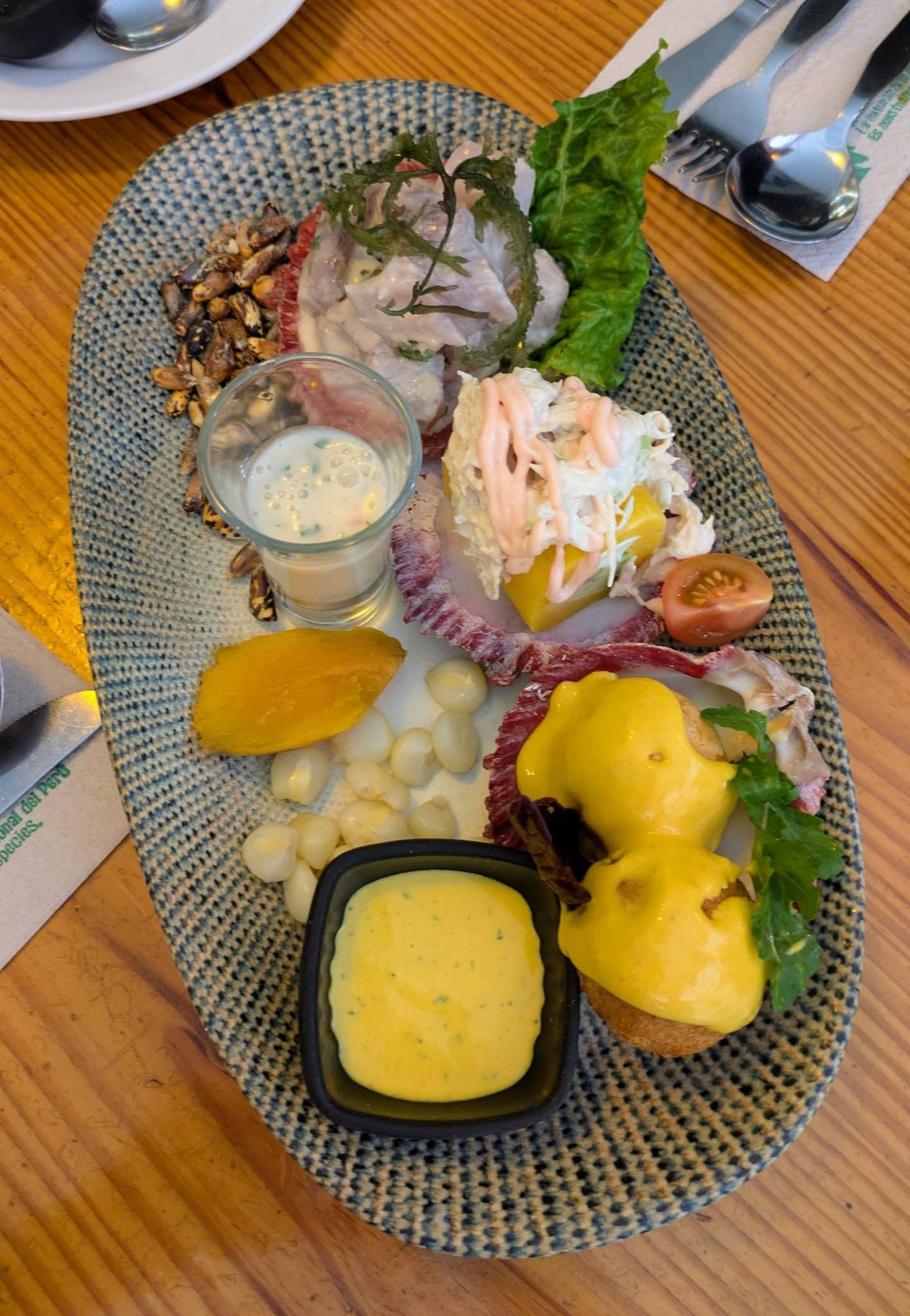
Ceviche
Chifa (Peruvian-Chinese fusion)
Chica morada (purple corn and fruit drink)
Empandas
Grandma’s soup (chicken noodle soup)
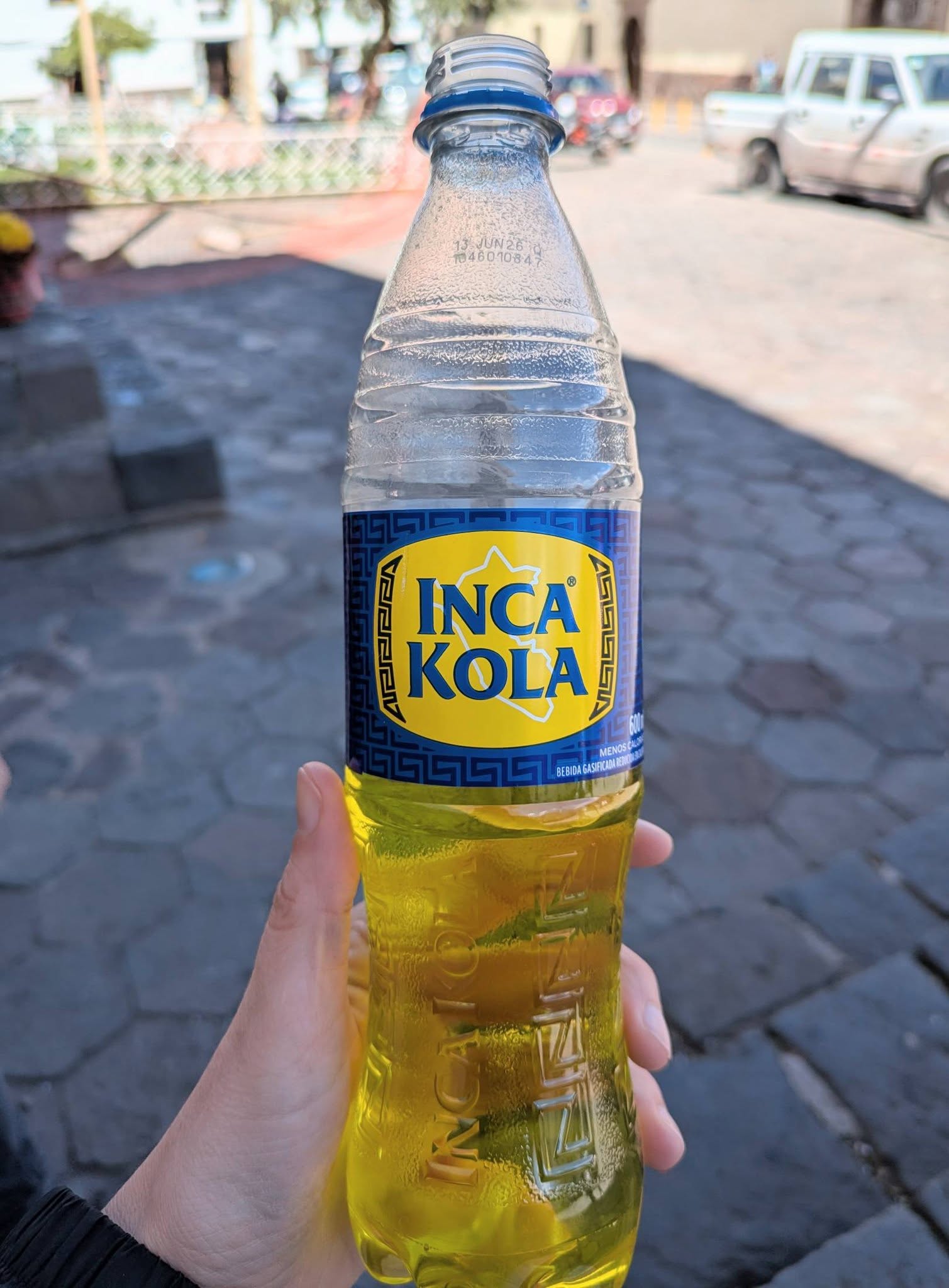
Inca Cola (most popular soft drink)
Lomo saltado (stir-fried beef and veggies)
Native potatoes
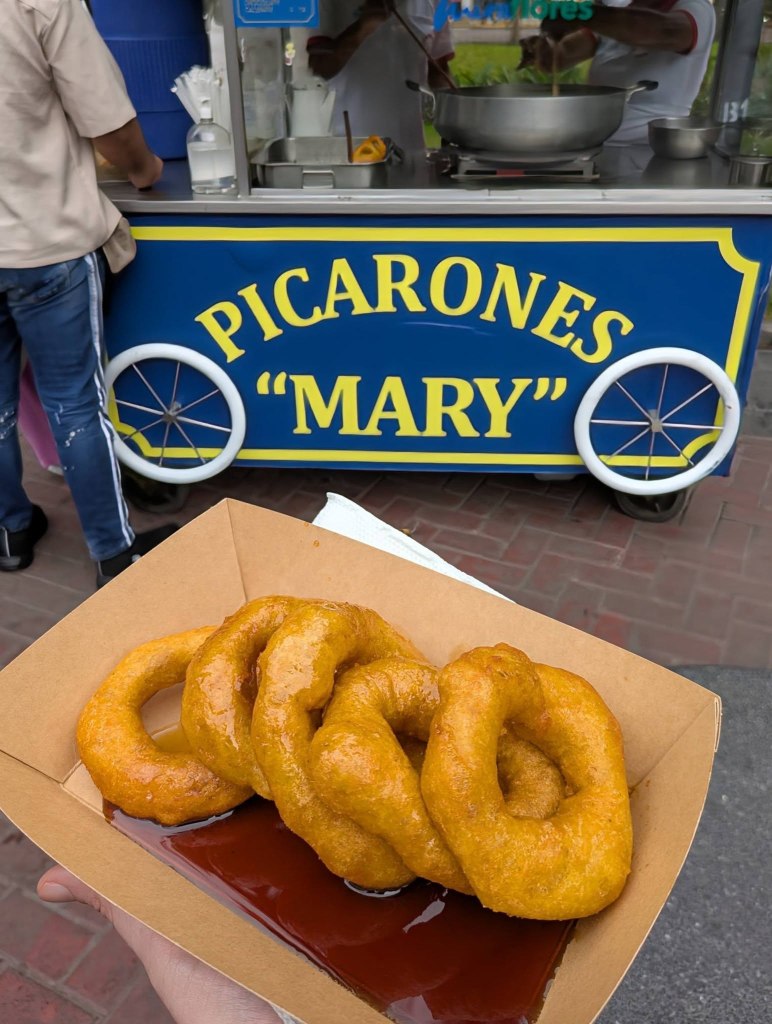
Picarones (sweet potato donuts with spiced syrup)
Pisco sour (Peruvian cocktail)
Pollo a la brassa (rotisserie chicken)









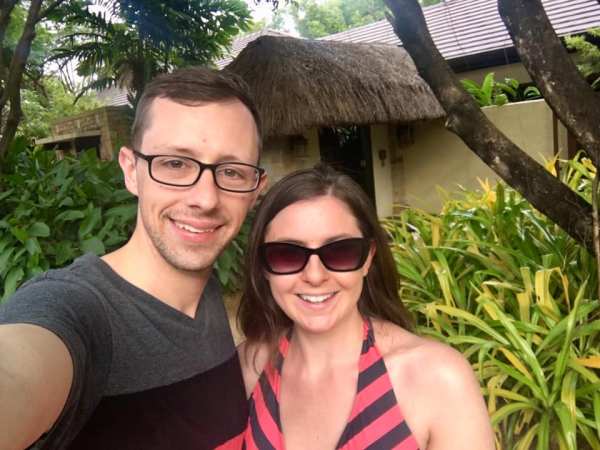 The second New Year (also known as the Chinese New Year or the Lunar New Year) has come and gone, and with it, possibly our last long winter break off together. Just like last year, the Chinese university semester break coincides with the holiday giving us several weeks off, which, of course, we put to good use! My program had its mid-year meeting and conference in the Philippines this year, and somehow, Tucker and I managed to squeeze in three (and a half) other destinations on our island hopping itinerary. You might have seen the hundreds of photos on Facebook, but I’d also like to share a few words about our time traveling in South Asia. To be honest, it’s a little surreal to be writing this as I watch the snow fall outside, but here we go!
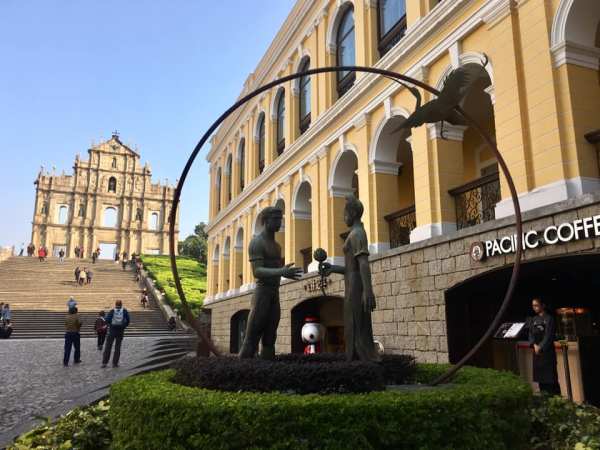 Our first stop was Macau, a “special administrative region” of China. It gets this rather long name due to it being somewhere in between a province and another country entirely. It’s a part of China, but it’s also not China, which is actually one of the reasons we wanted to visit. We wanted to see if there were any noticeable differences. We also wanted to visit because we were eager for another taste of Portugal. Macau used to be a Portuguese colony and has retained quite a bit of the Portuguese flair in architecture, food, and language.


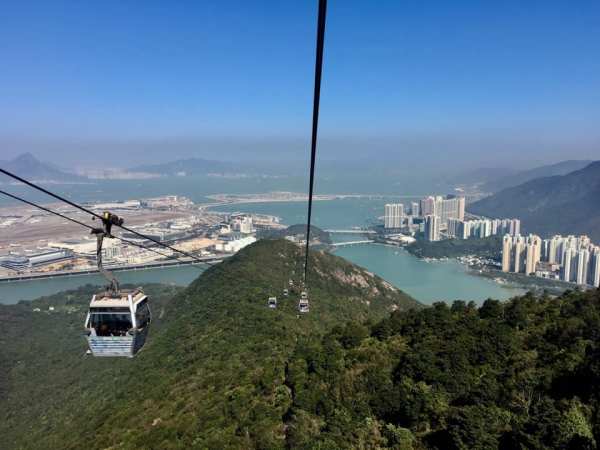 After a few days of strolling around Macau’s narrow alleyways, we took a massive speed boat (TurboJet) to our next destination just across the water: Hong Kong. This was actually our second trip to Hong Kong, but last time we didn’t quite get to everything on our list – this short stopover on the way to Midyear was our second chance. We had less than 24 hours in the city, but we managed to make it out to Lantou Island to see the incredible Buddha and cableway there, we took the bus to the top of Victoria Peak to watch the sunset over the city, and we went to Tim Ho Wan for the world’s cheapest Michelin Star eats. While I definitely preferred Macau’s laid back, European vibes, it’s hard to not like Hong Kong as well. Macau and Hong Kong are a couple of tiny islands (and respective peninsulas) that I highly recommend everyone to visit! No visas needed for US citizens! :)
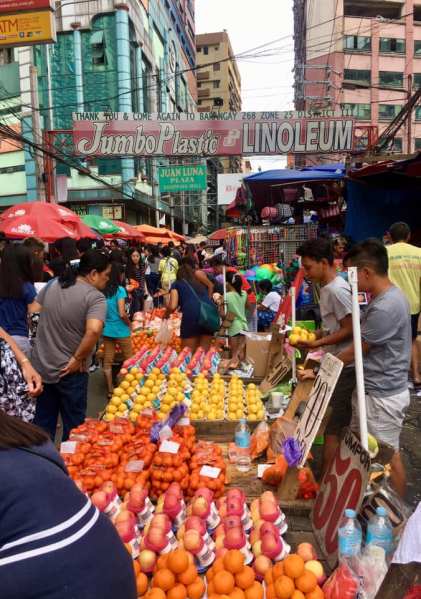 All too soon it was time to fly to the Philippines and get to work. When we first landed in the Philippines it was chaos! Passengers getting up and grabbing their bags before the plane had stopped moving; people sitting on seemingly every inch of the floor in the airport; signs for flight changes being moved by hand from gate to gate; loud cover songs of 2000’s hits playing in every corner of the terminal, etc. All I could think was “Well, we’re definitely not in China anymore.” As we sat waiting for our flight though, the newness wore off, and it was easy to see that the Philippines are just plain fun! In fact, their national slogan is “It’s more fun in the Philippines”, and I totally got it. Smiles were everywhere! The flight attendants wore bright yellow polos and hummed songs as we boarded. Fellow passengers sang along with the music they heard on the plane. The joy was contagious!
 The first week we were in the Philippines I had to “work”. I attended meetings with the other Fellows, we planned and executed various group activities, and generally bonded and reconnected after our last five months apart in our various host cities/countries. For this part of Midyear, we were put up in a resort on Mactan Island, which was incredibly fancy and not the sort of place Tucker and I usually go for (I’ve never heard so many “yes ma’ams” and “hello sirs” in my life). It was beyond beautiful though, and luckily Tucker was able to take full advantage of the beach, the snorkeling, the infinity pool, etc. However, after a few days completely devoid of local culture, I was definitely ready to get to our next location: Cebu City. It was here that we attended and presented at a local teacher training conference held at the University San Jose Recoletos. Easily my favorite part of Midyear, I was able to meet and interact with many local Filipina/o teachers and get a much better feel for what life in the Philippines is really like.

 Once the conference and Midyear were officially over, Tucker and I hadn’t quite had our fill of the Philippines, so we headed to Manila for some good old-fashioned touristing. Manila is an incredible city with some of the best food I’ve had in a long while. Their specialty seemed to be fusion restaurants. We had super interesting and delicious food at Loco Manuk (Filipino, Peruvian, and Chinese) and El Chupacabra (Filipino and Mexican), and saw a Japanese-French Cafe that looked amazing as well! In addition to the incredible food, we also had a great time walking around Manila Bay, grabbing a drink in Intramuros (the Old Town), and watching the Super Bowl at a local expat bar. The Philippines boasts an amazing mix of languages and cultures, and it was so fun for us to be able to use English (commonly spoken there) to ask about a million questions of our taxi drivers, servers, and any other local we could find. We learned about the strong influence of Catholicism in the Philippines, the new-ish movement towards environmental clean up, and most of all, we learned how welcoming and friendly the people are.


 At this point we were over the halfway mark of our trip, and my body had had enough. I left Manila with a fever and several other ailments (not so fun to describe), but I was still super excited to see Singapore! We watched Crazy Rich Asians on another leg of this trip in preparation, but the movie doesn’t do the city justice. It is by far the cleanest city I’ve ever seen, and has represented its multicultural population incredibly well! Singapore is made up of large groups of ethnic Chinese, Malays, and Indians, and each has a dedicated area of the city where you can find their respective religious buildings, restaurants, and specialized grocery stores. Even with the diverse neighborhoods in place, the city as a whole really seems to cater to each group in so many ways. Colorful, artistic, and clearly very well-off, there are so many lovely parks and public spaces in this city, where we saw families wearing everything from tank tops and sundresses to saris and hijabs. I often talk about places where there is a mix of cultures, but its usually a watered down mix, where clearly one culture has dominated, but in Singapore they were all there loud and proud. It was amazing!


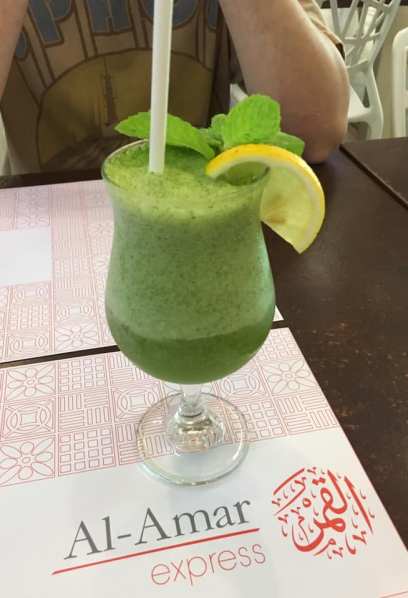 It turns out KL was full of surprises for us. The majority of people living in Malaysia are Muslim, so it was much more conservative than I was expecting. Most everyone wore long sleeves and pants despite the high temperatures, and the presence of beautiful and delicious “mocktails” was at an all time high for me. KL is actually not on an island, and to us, it seemed like we lost that friendly, carefree island-vibe as soon as we arrived. Interactions were a bit more abrupt and businesslike – like they usually are, I suppose. Another surprise was the color we saw all around us – both the Philippines and Singapore were incredibly colorful cities, but I think any city would be hard pressed to match the vibrancy of KL. Brightly colored murals everywhere, some of the lushest, greenest trees I’ve ever seen against the bluest of skies, and the insanely colorful Batu Caves just outside the city made for some incredible scenes (and photos).


