
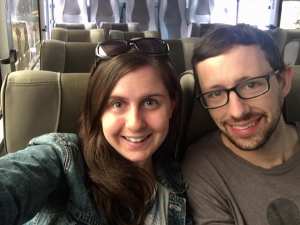
I really love traveling, and recently I’ve been reflecting on why exactly I feel so strongly about it. Is it the break from daily life? A chance to meet new people? Why does anyone choose to travel? I think Tucker enjoys it so much because he loves to try anything new, and going to new places is the perfect way to do that. But I’m not as fond of new things (especially new foods) as he is; I have a different motivation. I like to travel because, ultimately, I like to learn. Originally, I thought I’d be a lifelong student because of my love of learning; however, that turned out to be pretty uneconomical. Fortunately, just after graduation (only a few months after we got married) Tucker and I took our first trip overseas, and I found it: a new way to continue learning – through exploring the world around me.
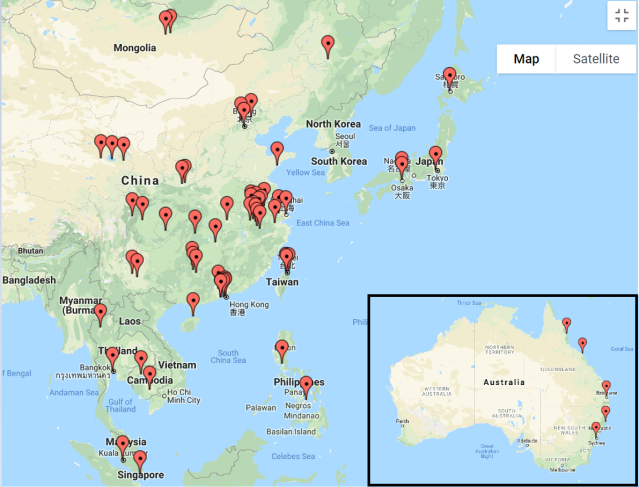
During our subsequent travels I have been amazed at what we’ve ended up learning: geography, history, culture, psychology, self-awareness, the list goes on and on. So this is the force driving my not-so-easily-sated addiction, but thankfully, I’ve also been given ample opportunities to get my fix. Here are the places we’ve traveled and some of the things we’ve learned during my two years as an English Language Fellow (August 2017-July 2019):
Beijing
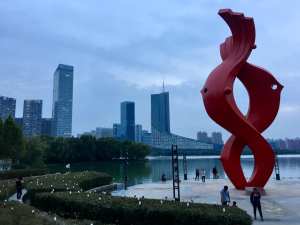
Hefei, Anhui – where we learned about HOME
Through traveling, I think one of the things we’ve learned the most about is the concept of “home”. We’ve learned that a home can really be made anywhere, and that connections with neighbors and friends are absolutely necessary for a place to truly feel like home. In fact, we have often felt closer to the friends we’ve made during our brief stints abroad because these shared experiences bond people together in an incredible way. We become instant family with other expats, and our Chinese friends are literally our lifelines! It’s such an interesting dynamic that definitely opened up our views of family and home. Another interesting aspect of our new perspective on “home” is how well we actually know it. Going into our last two new homes we haven’t known anything about them. Nothing about the neighborhoods we’d be in or even anything past what Wikipedia says about the cities/regions they’re in. This has given us a new outlook on what it means to truly know where you live. We’ve had an amazing time learning more about the places we’ve called home, and it’s made me curious about the places we used to call home and how well we actually knew them.
Nanjing, Jiangsu
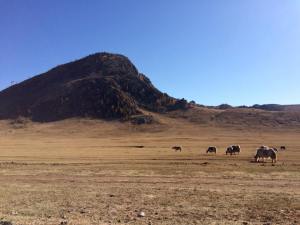
Mongolia (Ulaanbaatar & Gorkhi-Terelj)
Shanghai
Wuhan, Hubei
Huangshan & Hongcun, Anhui
Xi’an & Lintong, Sha’anxi
Harbin, Heilongjiang
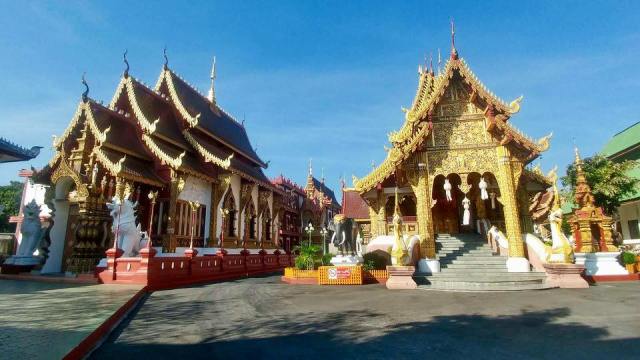
Thailand (Chiang Mai & Bangkok)
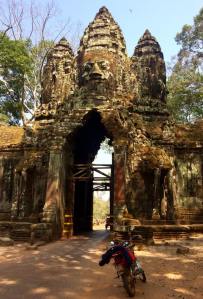
Cambodia (Siem Reap & Phnom Penh) – where we learned about CONFLICT
In addition to learning about our home (and our views of it), traveling to different places has allowed us to take a closer look at how others view the same places and how they view their own homes. This has led to a better understanding of conflicts and global perspectives, which I am endlessly interested in. When we visited Cambodia, for example, I was immediately struck by their relationship with Thailand. We took a bus from Thailand to Cambodia, and walked across the border through immigration, where the welcome was, well, not so welcome. Cambodia has had a rough history, with its neighbors and with many foreign nations, and that has left an impression on the population. And it’s hard to deny their feelings, especially when one of the other most noticeable features of Cambodia was the number of missing limbs, mostly caused by landmines still implanted within their borders decades after the end of the conflict with Vietnam. The US has its perspective on our many conflicts, but every country, and every person has their own views, which are extremely important to learn in order to really begin understanding each other.
Hong Kong

Shenzhen & Guangzhou, Guangdong
Hangzhou, Zhejiang
Sanhe, Anhui
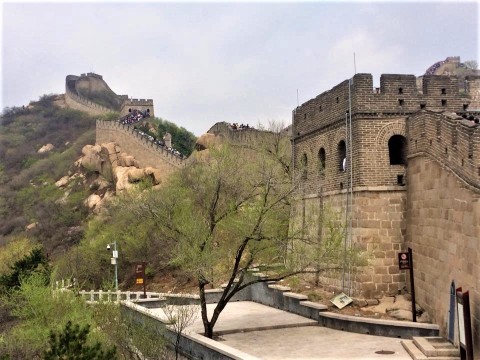
Badaling, Beijing – where we learned about PERCEPTION
On the topic of perception, I’d be amiss if I didn’t mention the fact that traveling has broken pretty much every stereotype I’ve ever had about a place or a group of people. When we traveled with my family in China, it was amazing to watch those stereotypes break for someone other than myself. My parents realized pretty quickly that China was nothing like they had imagined, and Tucker and I have done the same thing in every place we’ve visited. Our perspectives are shaped through all sorts of things (the news, education, movies, etc.), but they’re always seen through our own individual filters as well as through the filters of the sources of information. This has led to many different perspectives on many different things, but seeing and experiencing something for yourself gives you the best insight you could ask for. One of my favorite travel quotes comes from Aldous Huxley: “to travel is to learn that everyone was wrong about other countries.” Even when comparing your experiences with someone else who has been to the same place, a difference in perspective is almost guaranteed, but that’s what makes it so interesting!
Suzhou, Jiangsu
Kunming & Mile, Yunnan
Australia (Sydney, Port Macquarie, Brisbane, Airlie Beach, Cairns)

Haikou, Hainan
Qingdao, Shandong
Guilin, Xingping, & Longjin, Guangxi – where we learned about FAMILY
Traveling with family has taught us a lot as well. First, it taught me to be thankful for our family members who are willing and able to travel with us. There have been many expats we’ve met whose family members have never visited them or even want to see the places their loved ones call home. It truly makes me thankful for the open-minded and adventurous spirits of our families. I have also learned a lot about taking care of other people’s needs. In China, independence really only comes with time because with no alphabet and very little English, trying to do things on your own can take a lot of effort and patience. Luckily for Tucker’s mom and aunt (and my parents), we were there to help them answer any questions and provide whatever they needed. Through these trips, I learned a lot about what is required to be responsible for someone other than myself 24/7, and it has left no question in my mind as to why we haven’t had any kids. Haha!

Jinshanling, Hebei
Wuhu & Fanchang, Anhui
Changsha, Hunan
Zhangjiajie, Hunan
Chaohu, Anhui – where we learned about the PAST
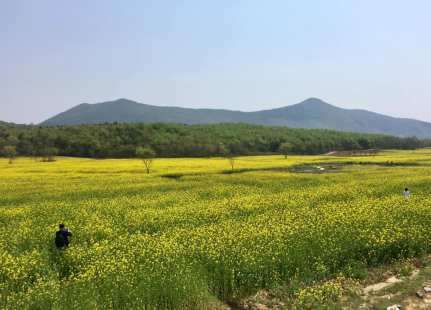
Another set of lessons we have undoubtedly received through our travels has been in regards to history. Coming from the New World, our “history” typically refers to the seventeenth century and onward, but traveling to other parts of the world, we’ve realized just how recent that actually is. Europe showed us their history through maps and architecture; Asia has shown us through traditions and languages. Visiting the outskirts of Chaohu and other cities and villages of Anhui is a bit like stepping back in time. There are farmers whose ancestors have farmed the same land for hundreds of years. Ancient artifacts seem to be dug up every day in this part of China, cooking vessels and jewelry from thousands of years ago. In history classes I was never really good at linking what was happening in ancient Rome with the rest of the world, but after traveling and seeing some of the history for myself, it has gotten much easier, as has the ability to connect what has happened in the past with what is happening in the present.
Chengdu, Sichuan
Siguniangshan, Sichuan
Chongqing
Zhuhai, Guangdong
Macau
Lantau Island, HK
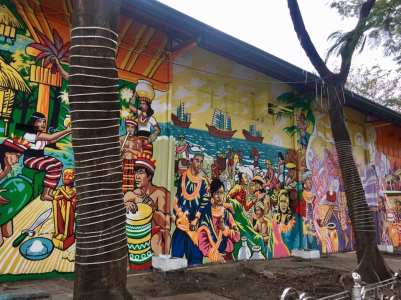
The Philippines (Cebu & Manila) – where we learned about INEQUALITY
Traveling truly brings to light things I never would have given a second thought to in other situations. Throughout our travels, we’ve met many people in many different circumstances. And sadly, we’ve seen that people are almost never treated equally. We, in the US, tend to think of race, gender, and sexual orientation, but there are also issues of class, religion, ethnic background, age, and countless others. Inequality seems to be a shared human trait, but it’s also something we’re all growing increasingly aware of. Sometimes seeing it manifest in a different way, as it often does in different contexts, helps show how ridiculously common, yet unnecessary it really is. Tucker and I were in the Philippines earlier this year, where we saw first hand some of the inequalities experienced by the people who live there versus the people who vacation there. It’s something that allows us to think about the impact we have when we unintentionally aid inequality, not only when traveling but in all aspects of our lives.
Singapore
Malaysia (Kuala Lumpur)
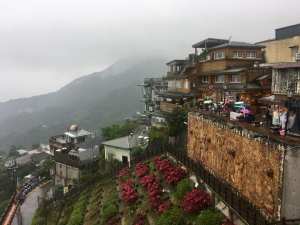
Taiwan (Taipei, Jiufen, & Tamsui)
Anqing, Anhui
Jiuhuashan & Chizhou, Anhui
Xining, Qinghai – where we learned about KINDNESS
Finally, I think the biggest lesson of all has been experiencing the kindness that strangers are capable of showing to each other, which we found empathically on display on our recent trip to Qinghai. It has been a common thread throughout every place we’ve traveled; the help we’ve received from people we had never met before continues to inspire us. Whether it is someone giving directions in multiple languages or simply sharing information about their culture so that we can leave with a more complete understanding, we’ve made friends with people around the world. This is what allows me to not get bogged down in politics or negative stories that are passed around because I have experienced the kindness of humans in every country I’ve been to. I’ve seen our similarities, and they far outweigh any differences. Mark Twain wrote “travel is fatal to prejudice, bigotry, and narrow-mindedness”, and I believe our ability to travel more freely now than ever before has played a big part in the acceptance and compassion people are showing each other around the globe. I want to continue to spread the kindness I’ve received, and I hope that we all continue to do that whether we’re traveling or not.


Chaka & Erlangjian, Qinghai
Japan (upcoming!)
There you have it: 10 different countries, 20ish provinces/regions of China, over 60 cities, and an immeasurable amount of knowledge, experiences, and memories. It’s fun to keep track and even more fun to share, but don’t just take it from me. As the Asian proverb goes, “better to see something once than to hear about it a thousand times.” Hope to see you on our next trip!
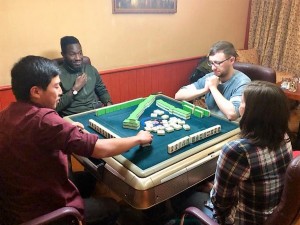 ✔ Learn to play Mahjong
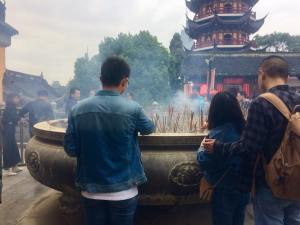 ✔ Visit a Buddhist Temple
 ✔ Perfect our Chopsticks Skills
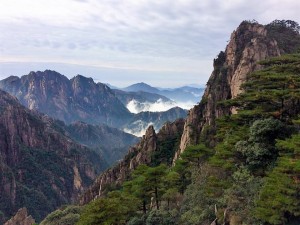 ✔ Hike Huangshan
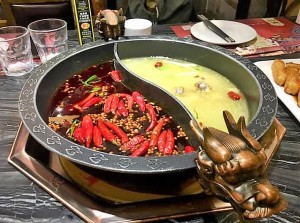 ✔ Share Hotpot and Selfies with Friends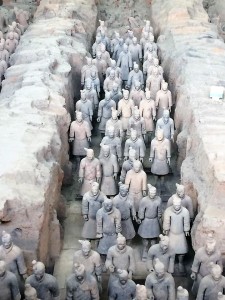
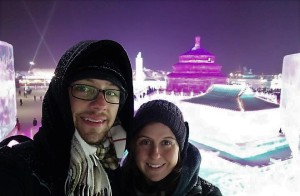
 ✔ Devour the Dim Sum in South China
 ✔ Wander around West Lake
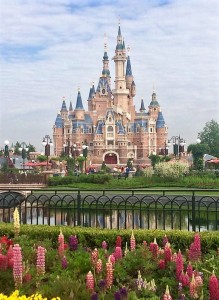 ✔ Feel like a Kid at Disneyland Shanghai
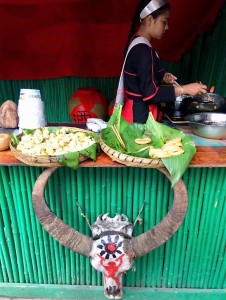 ✔ Learn about the Minority Groups in China
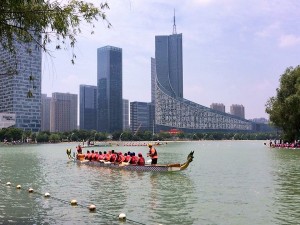 ✔ Celebrate Dragon Boat Festival
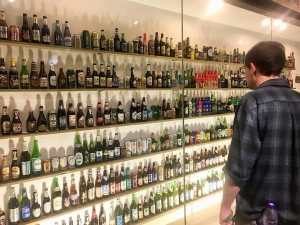 ✔ Drink Tsingtao from the Source

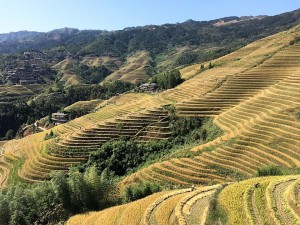
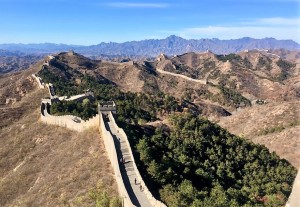 ✔ Walk along the Great Wall
 ✔ Make Dumplings from Scratch
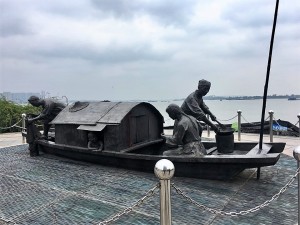 ✔ Crisscross the Yangtze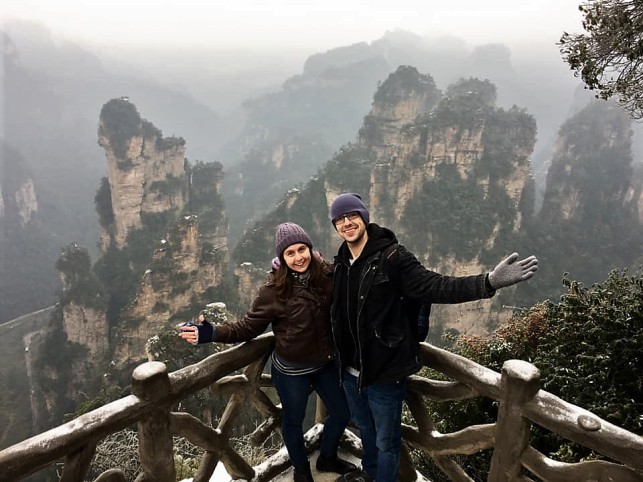
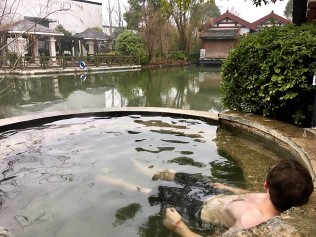
 You might have noticed that Tucker and I like to go on trips. A lot of trips. :) And since we typically try to travel as cheaply as possible, we usually end up with long bus/train rides, fairly small accommodations (usually hostels), and ultimately a lot of walking. All of these factors (in addition to my scrawny arms and general aversion towards planning) have turned me into somewhat of an expert packer. For anything from 4 days to 40 days, I pack everything Tucker and I need in 2 regular-sized backpacks and 1 duffle bag, and it usually takes me about 20 minutes. I have whittled down my packing process and have come close to perfecting it (at least for our needs), and I’m happy to share what I’ve learned with other trip-takers!
 We also always bring a duffle bag as opposed to a rolling bag. The nice thing about a duffle is that it allows us to keep our hands free. One of us will sling it over our shoulder and happily traverse any sort of terrain (hundreds of stairs, cobble stones, dirt paths, etc.) all while holding a map, a phone, a water bottle, or anything else we might need. It’s also much easier to travel on a bus/train with a duffle than it is with a rolling bag. Our bag can be thrown in the overhead compartments, squashed under our feet, or stacked with other luggage in a separate area. We’ve also had zero issues with a duffle bag breaking (knock on wood!), and even if we did, they’re fairly easy to fix or replace. We have, however, broken wheels off of rolling bags, and that was not easily fixed. Instead it was dragged along behind us…rather loudly.


 Souvenirs: Finally I’ve heard several people mention that they have had to buy additional suitcases for the souvenirs they bought while traveling (this may or may not have happened to us on occasion as well!). Typically I try to focus on collecting photos (and the occasional, functional item) for myself, but we often want to bring back souvenirs for friends and family as well. When looking for things to bring back, we typically aim for flat, sturdy items (wall art, bookmarks, games, etc.). They pack the best, whether for short or long-term storage/travel. I also really like to send postcards in lieu of gifts. If you travel a lot or live abroad giving gifts becomes expensive and exceedingly difficult to do in a timely manner, so instead I like to show I’m thinking of someone by sending a postcard from wherever I happen to be. I absolutely love getting mail, and I think most people would agree!


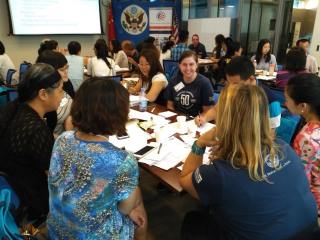
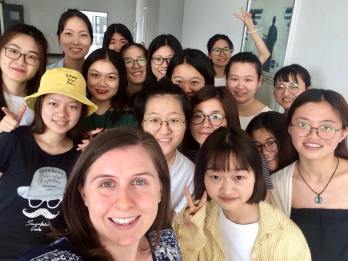











 Okay, I realize Milwaukee is not the most glamorous or exotic city on anyone’s list, but hear me out. This smallish city, famous for its breweries and cheese, is only about an hour north of Chicago. Perhaps because of this, it can sometimes be overshadowed by the fame of its neighbor; however, in addition to the flavorful brews and delicious cheese curds, the city also lies along Lake Michigan with a river running straight through its center (sound familiar?). It also has a very strong European influence, which can be seen in the architecture and abundance of towering cathedrals. It might be less than half the size of Chicago (and about half as expensive!), but this city has been modernizing in a way that would make any European enthusiast proud. Many historical neighborhoods have been beautifully restored, the additions of a city Riverwalk and a new park have livened up the outdoor scene, and if you’re brave enough to endure the temperatures, the city is absolutely breathtaking in the winter.


 The capital city of Ukraine has had a bit of a bumpy ride over the past few decades, but that isn’t so evident when traipsing around the city as an excited tourist. Although Ukraine is not in the EU yet, you’ll find many of the same European conveniences backpackers and travelers alike have come to expect: wonderful public transportation, many downtown hostels and hotels, and a slew of monuments, churches, and parks to wander around. The city is known for its monasteries and domed, Orthodox churches, but I remember it most for it’s extremely cheap and delicious food! Most signs are in Cyrillic (like the Russian alphabet), which I think adds greatly to the city’s charm, but if you’re worried about language skills, the English spoken is quite common and understandable, especially by the younger generation.


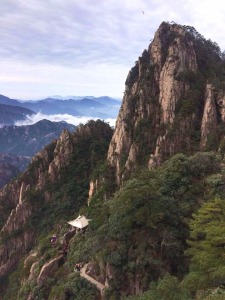 “Huang-what?”, you might be asking yourself. Huangshan or Yellow Mountain is not particularly well-known outside of China, except perhaps by avid hikers or mountaineers. However, this city and the mountain it takes its name from are spectacular places for anyone to visit. Lying about 4 hours west of Shanghai (by train), Huangshan is a destination that really has it all: beautiful nature, historical sites, and modern shopping. It might not be one of the largest cities in China (or even close), but it’s still pretty large from my perspective, with a population of 1.5 million. Just outside the city, accessible by bus are the mountains (to the north) and the preserved ancient towns of Hongcun and Xidi (to the northwest). All are worth a visit, and will remind people why China is often referred to as a traveler’s dream.


 Known officially as the Former Yugoslav Republic of Macedonia (FYROM), Macedonia is a small country in southern Europe that most people wouldn’t be able to pick out on a map. The capital city of Skopje, lies in the north of the country and is completely surrounded by mountains, giving it spectacular views from every angle. The city was heavily influenced by ancient Greece, which you can easily see in the large stone bridges and plethora of white columns, but it uses the Cyrillic alphabet (like Russia) and also claims one of the largest numbers of mosques in Europe: talk about a melting pot! The culture there is a unique mix all seeming to revolve around food, the incredibly refreshing


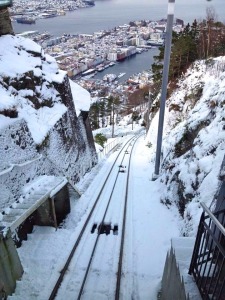 Ah, Norway! Land of trolls, fjords, and the midnight sun. When I hear people planning a trip to Norway, usually Oslo and other cities in the southern part of the country are the first to be mentioned. However, I would much rather choose Bergen, a little further north, nestled into the fjords on the country’s west coast. This city in winter or summer is a great jumping off point for further exploration of the fjords, but it has enough to do in town that you might not even want to leave! From town squares and colorful row houses to funiculars and downhill sledding, Bergen has a lot to offer for those who prefer to spend their time on activities that don’t break the bank. However, when the time comes to spend a little cash, a great way to do it is on the food! There is a wide variety available here from traditional Scandinavian specialties to a TGIFridays; the choice is really up to you!


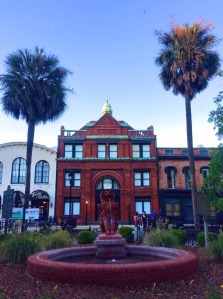 Another destination from my homeland (home state even) is Savannah, GA. This seaside city is always equated with the “old south”: plantation houses, buttery foods, and a slower pace of life come to mind. However, this city is a lot more than that. It can cater to a younger crowd nowadays with its bar streets and beaches, but there are also tree lined avenues, old cemeteries, and little antique shops that are great for the traveler with varied interests. Savannah is not as famous as perhaps New Orleans or Charleston, but maybe for that reason, I found it to be less affected by outside influences. It is a city that it uniquely itself: beautiful and eclectic, much like many Georgians I know.


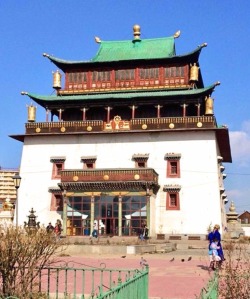 One of my more recent discoveries, Ulaanbaatar is an unexpected gem of the travel world. A unique combination of different cultures set in a landscape like no other I’ve seen. The city itself has plenty of sights and traditional Mongolian activities and foods, but just outside the city is a completely different side of life in one of the largest landlocked countries in the world. A nearby national park gives breathtaking views of the mountains and vast plains of Mongolia, while wild horses and yak stand on the side of the road grazing in the fields or drinking from the winding rivers. It’s a bit more rugged outside the city, but no less friendly. Ulaanbaatar is consistently ranked highly by travelers who are lucky enough to go there. The lamb dumplings alone are worth the journey!


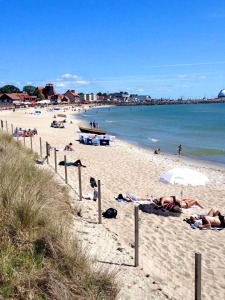 This destination (and the whole country really) is near and dear to my heart. I spent a year living in Poland and made it my job to explore every corner of the country. What I found was a series of destinations that many people gloss over in favor or Warsaw or Krakow, the more international locales. However, when I think of places to visit in Poland, my mind first goes to its Baltic Coast. Just across the Baltic sea from Sweden, Poland’s “Tricity” of Gdansk, Sopot, and Gdynia sits about four hours north of Warsaw (by car). These cities have an incredibly interesting history, which has allowed them to retain their distinct and varied atmospheres. Gdansk, formally German, has an industrious feel, an international airport, and an impressive city center. Sopot is a resort town with Europe’s longest wooden boardwalk and many fancy shops and hotels. And finally Gdynia, the most Polish of the three, boasts beautiful beaches, several hilly parks, and a ferry to Hel and back. Who wouldn’t want to to see all of that?!



 Dani Francuz Rose