Rio Reflections

It’s summertime, which can mean only one thing: it’s time for Tucker and Dani to hop on down to the southern hemisphere because one can never have too many winters! Of course, our destination didn’t feel very wintery at all this time because for this trip, we chose to go to beautiful Rio de Janeiro, Brazil! Here’s a recap of what we did, how we did it, and most importantly, a list of the best foods we had while we were there.

Sugarloaf Mountain

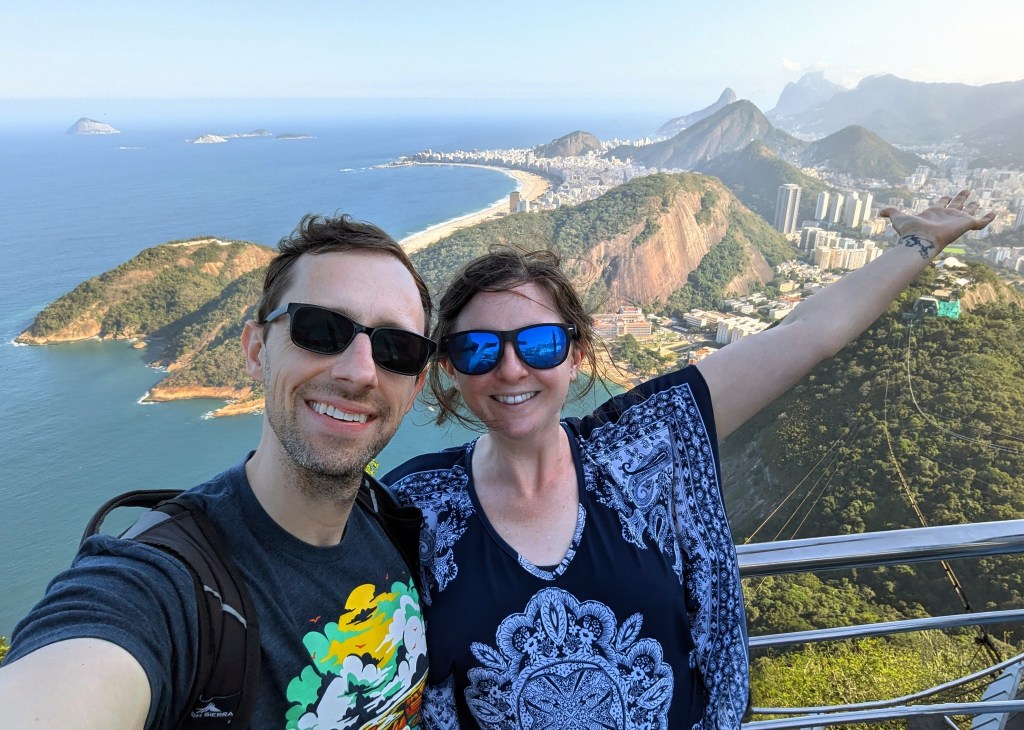
The first thing we did after dropping our bags off at the Airbnb was head to Sugarloaf Mountain for a couple of cable car rides and gorgeous views of the city. We opted to take an Uber as we had just arrived and didn’t have much time before sunset, and I think that ended up being a good choice. Ubers are fairly inexpensive and easy to use in Rio, just know that you might have a few cancelations before getting one that sticks. Also, like most major cities, traffic can be…difficult, so be ready for that as well.

Sugarloaf Mountain is a major tourist attraction, so everything was in English, Spanish, and Portuguese, making the ticket-buying process super simple. The cable car rides were quick and efficient, and the views at the top were absolutely breathtaking. But what surprised us most was definitely how much there was to do at the halfway point (Morro da Urca). There are shops, restaurants, a mini-brewery, helicopter rides (for a price, of course), and tons of marmosets to watch! This was our first reminder that we were in a very lush land, full of all sorts of flora and fauna, even in the most populous parts of the city.

Copacabana & Ipanema

Next, we went to the beach, and actually, we found ourselves in and around both Copacabana Beach and Ipanema Beach a lot during the week. The beaches are absolutely massive, and there were so many people swimming, sunbathing, running, eating, drinking, playing games, taking pictures, doing anything and everything it seemed, which makes sense because once you’re on the beach, you’ll want for nothing because there is a constant stream of vendors selling everything from popsicles and steamed corn to bathing suits and hard drugs. Seriously, there was something for everyone!

Copacabana Beach

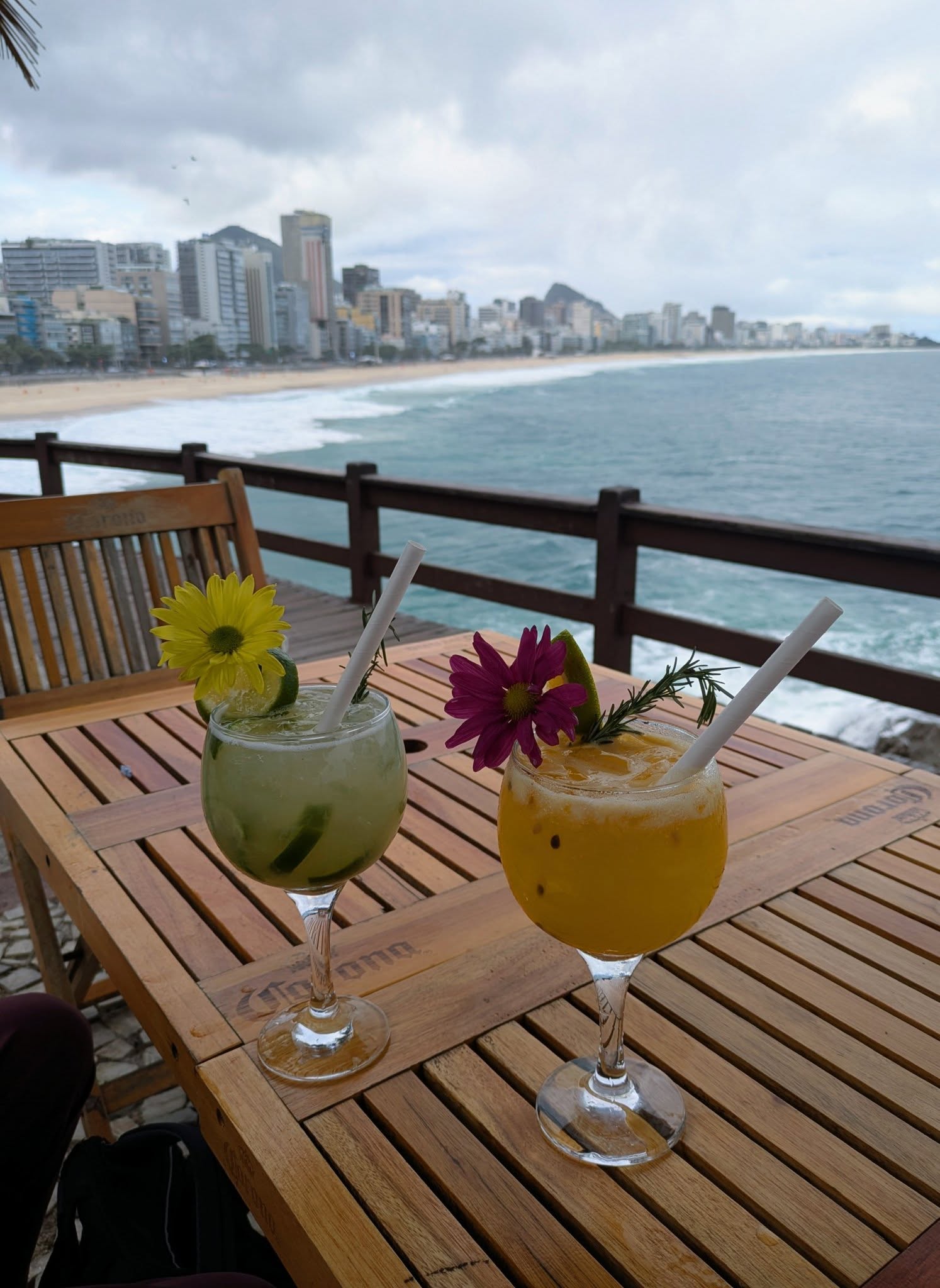
You can take your time in the sand, or you can walk along the wide, tiled sidewalks literally for miles along all the beaches. There are plenty of beachside cabanas to choose from as well if you want a little treat with a nice view and some shade. And if you don’t feel like walking, there are lots of shared bikes (which can be rented through Uber) or scooters (which have their own app) that you can rent instead, and with as many times as we ended up going to the far ends of the beaches, I was very thankful for those options! The neighborhoods in this part of the city have tons of cafes and restaurants to choose from as well, which were very lively even in the off season. It was actually really hard to narrow down all the choices here!

Centro

Prior to our visit, I was a definitely a little wary of spending a lot of time walking around Rio’s Centro. This part of the city doesn’t exactly have a squeaky-clean reputation, so I was wondering just how rough it would feel. Fortunately, we didn’t have any issues at all, but there were definitely some areas that felt a little less safe than Copacabana or Ipanema. As you always should when traveling, make sure you’re completely aware of your surroundings, and if possible, try to stick to the more populated streets. Safety in numbers (at least in this instance).  

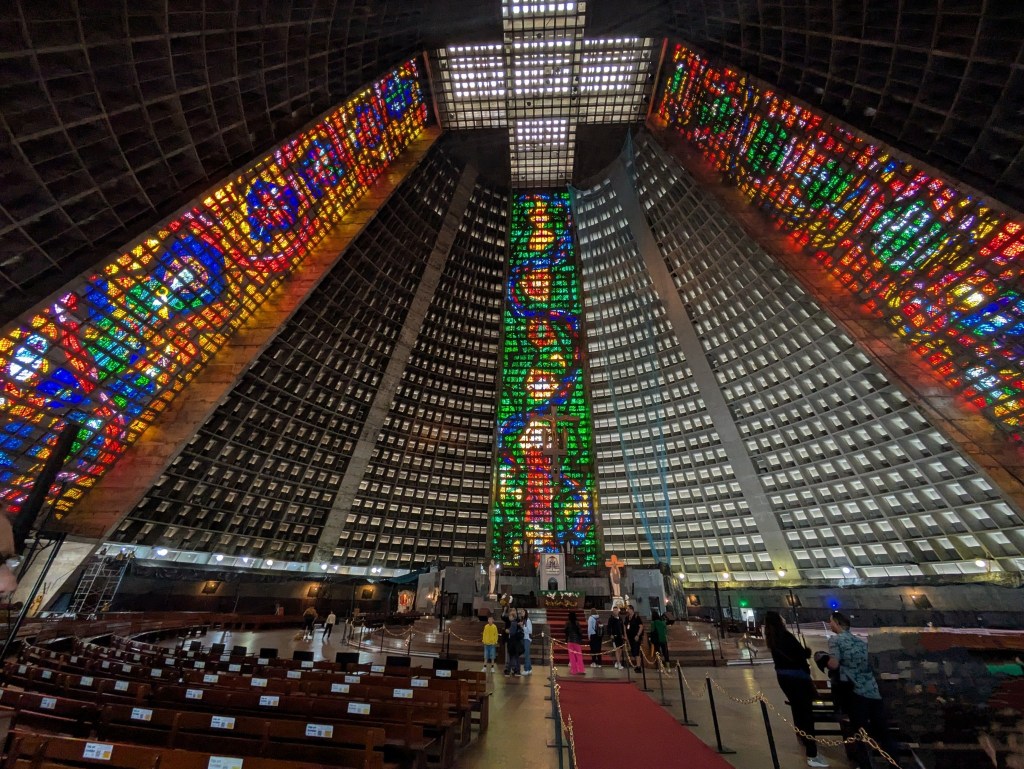
Some of my highlights from our day in Centro would be the Santa Teresa tram ride, the Metropolitan Cathedral, and the Royal Portuguese Cabinet of Reading. I knew I wanted to at least see the old tram, but once we were there, we decided we might as well take the ride even though we had no idea where it was going, and I am SO glad we did because it was an incredible (round)trip through the heart of the city. The Metropolitan Cathedral is essentially the center of Centro, so you can’t miss it. Definitely check out the inside too though because it’s one of the most unique churches I’ve ever seen. And the Royal Portuguese Cabinet of Reading was also just spectacular! I mean, free entry and tons of books? How could you go wrong?
Christ the Redeemer
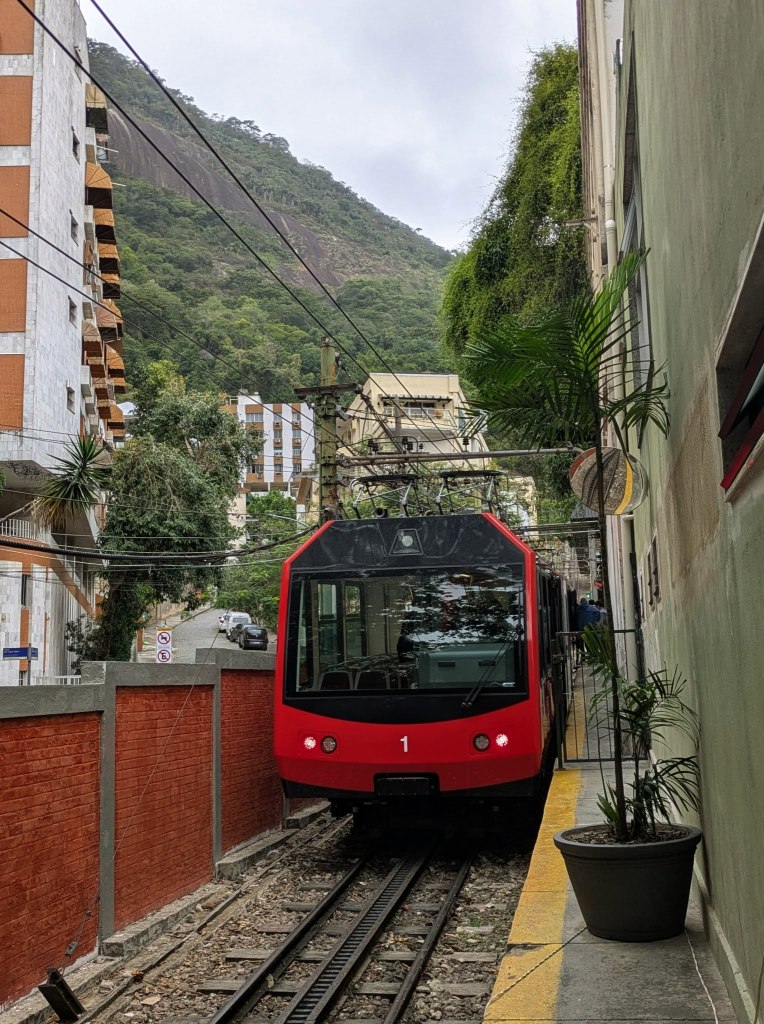
And finally, the symbol of Rio: Cristo Redentor (or Christ the Redeemer). For this particular sight, we had actually bought tickets for the scenic train ride up and down, but we had to choose a day at random, and when that day came, it was stormy. Needless to say, there would be no view of the city nor of Cristo himself as he was well and fully in the clouds that day. Luckily, they let us change our date and time, which still felt like a bit of a gamble, but the second time, it worked out for us. I would still recommend buying the tickets in advance though, because when we did show up on that sunny day, the line for buying tickets was hours long.

The train ride was nowhere near as nice as the Santa Teresa tram, so now you know which to skip if it comes down to it. You can also get up to the statue by van or by walking (although some people advise not to walk due to some sketchy areas). I also wouldn’t allot a ton of time for this particular activity because there’s not a whole lot of space up at the top, and once you get your selfie with Jesus, there’s not much to do besides wait in line to go back down. All that to say, I’m still super glad we got to see this New World Wonder up close and in person because it truly is a wonder.

Cristo Redentor

The Food

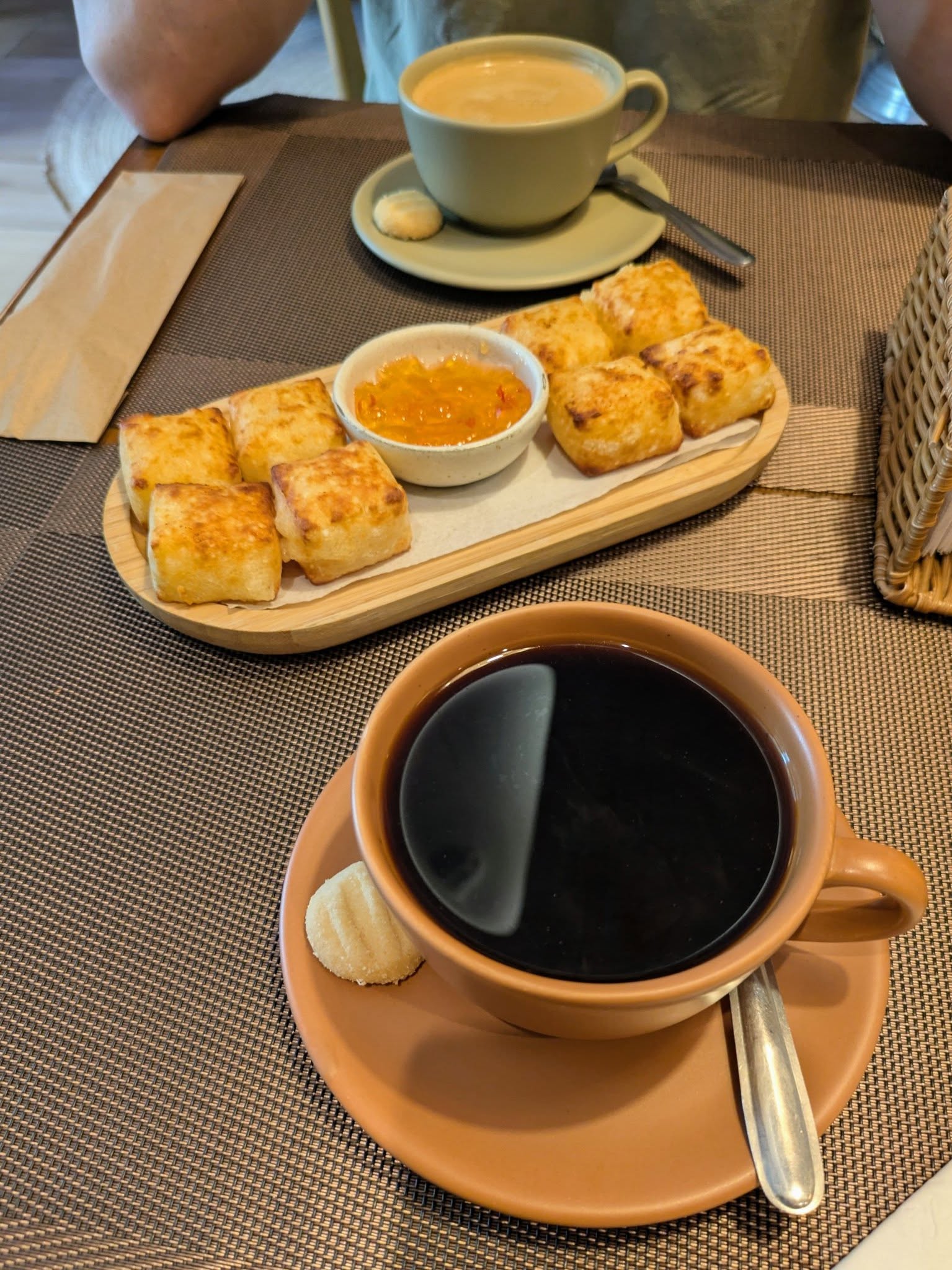
And now, everyone’s favorite part! Here’s a list of the foods we made sure to try while in Rio:

Açaí na tigela (a frozen açaí smoothie snack)

Baião de dois (a rice and beans dish from the northeast region of Brazil)

Cassava croquettes

Bob’s (Brazil’s most popular fast-food joint)

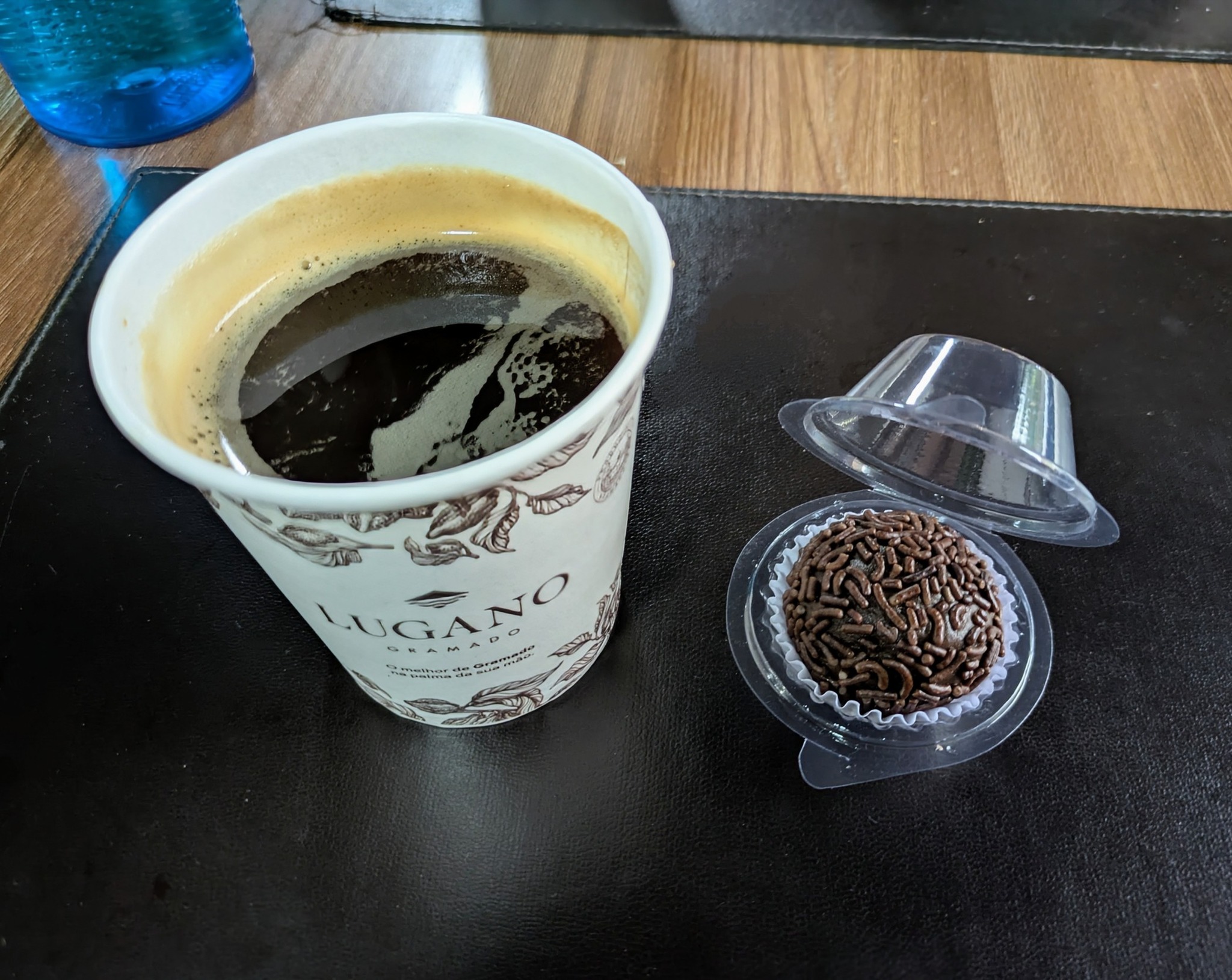
Brigadeiro (chocolate sprinkle-covered truffle)

Cassava croquettes (croquettes made from cassava)

Churrasco (an assortment of grilled meats)

Coxinha (a fried dumpling of sorts, similar to a croquette)
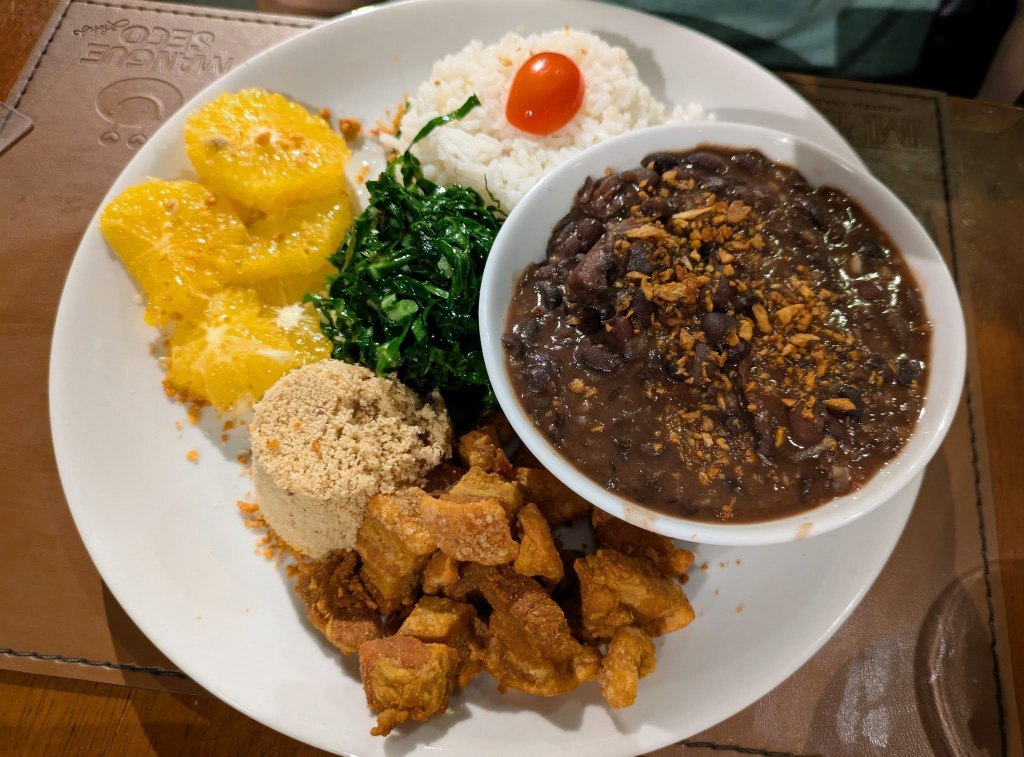
Feijoada

Empanadas (no explanation needed)

Farofa (toasted cassava powder)

Feijoada (bean stew)

Pão de queijo (baked cheese balls)

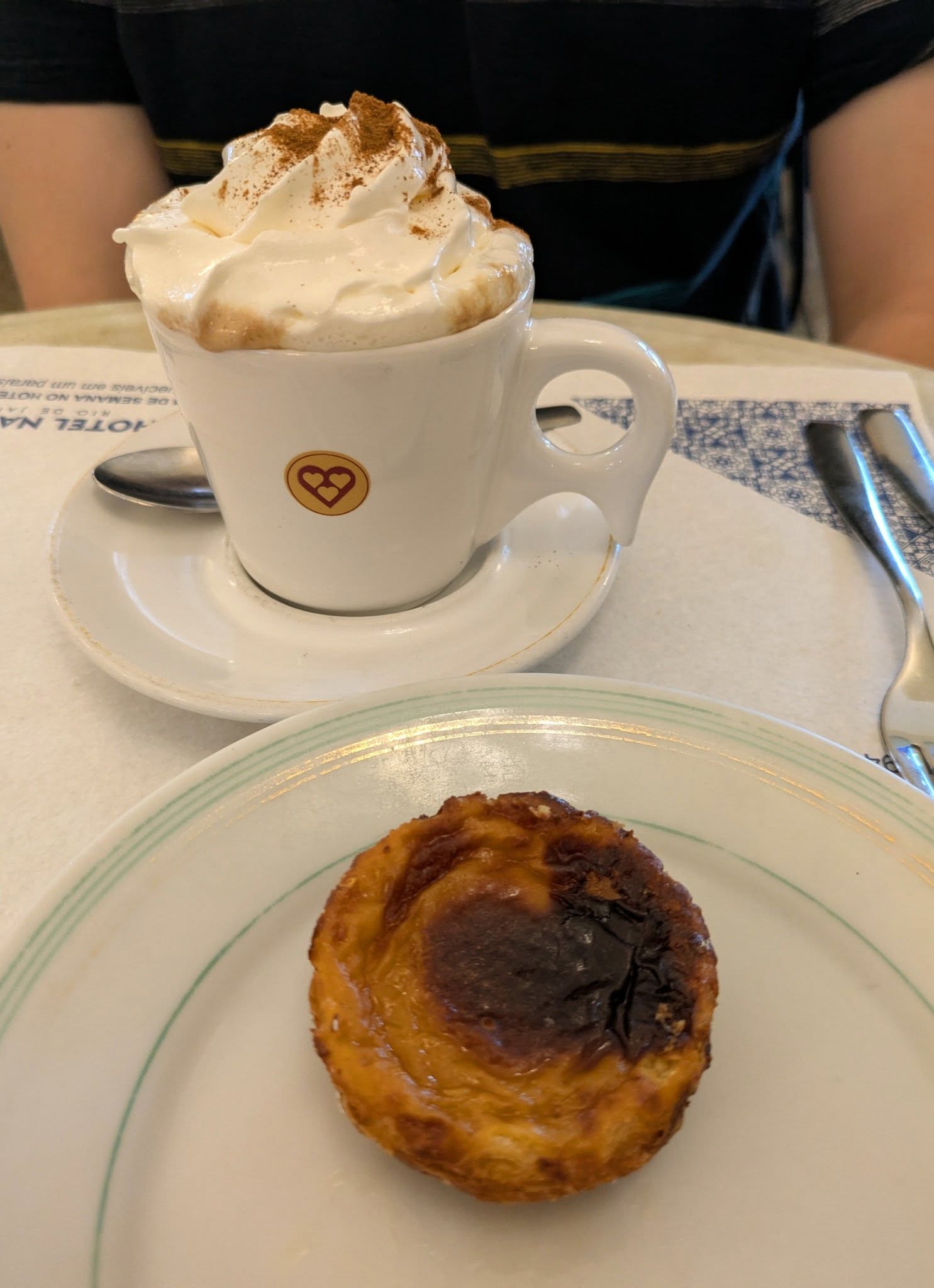
Pastel de Belem (egg/custard tart)

Picanha (steak)

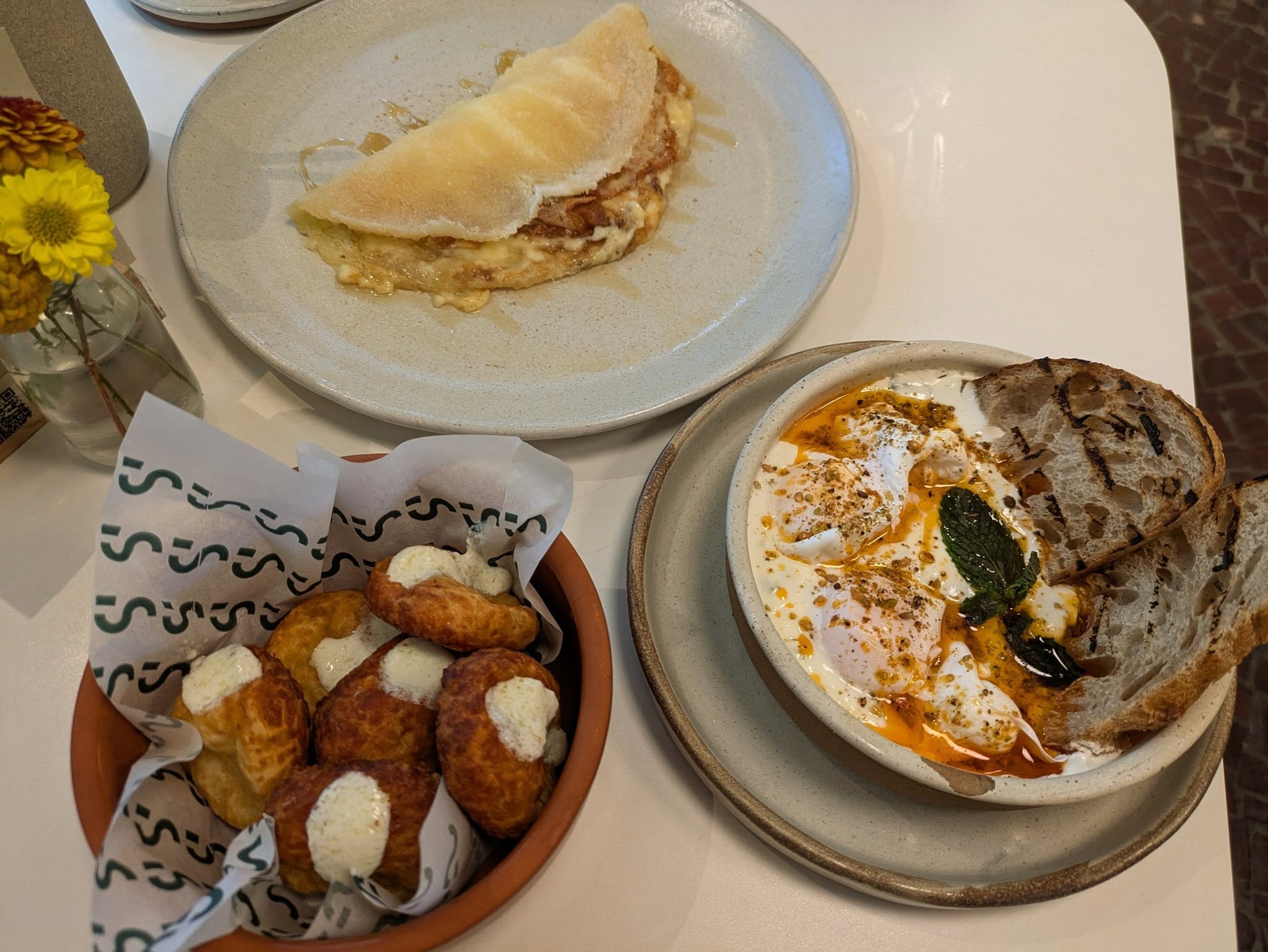
Tapioca crêpe (crêpe made of tapioca flour)

Tapioca dadinhos (delicious little cubes of fried tapioca and parmesan cheese)

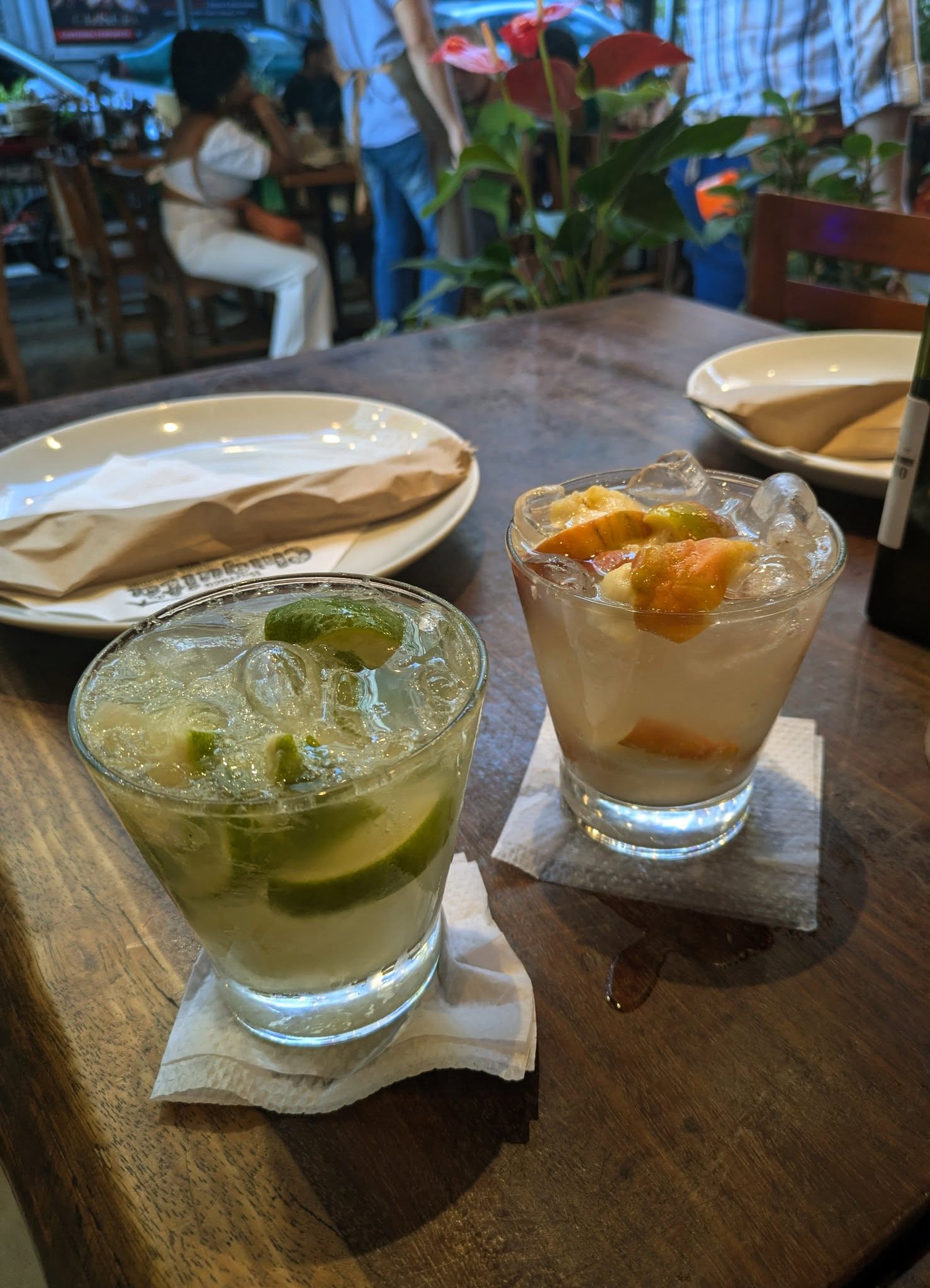
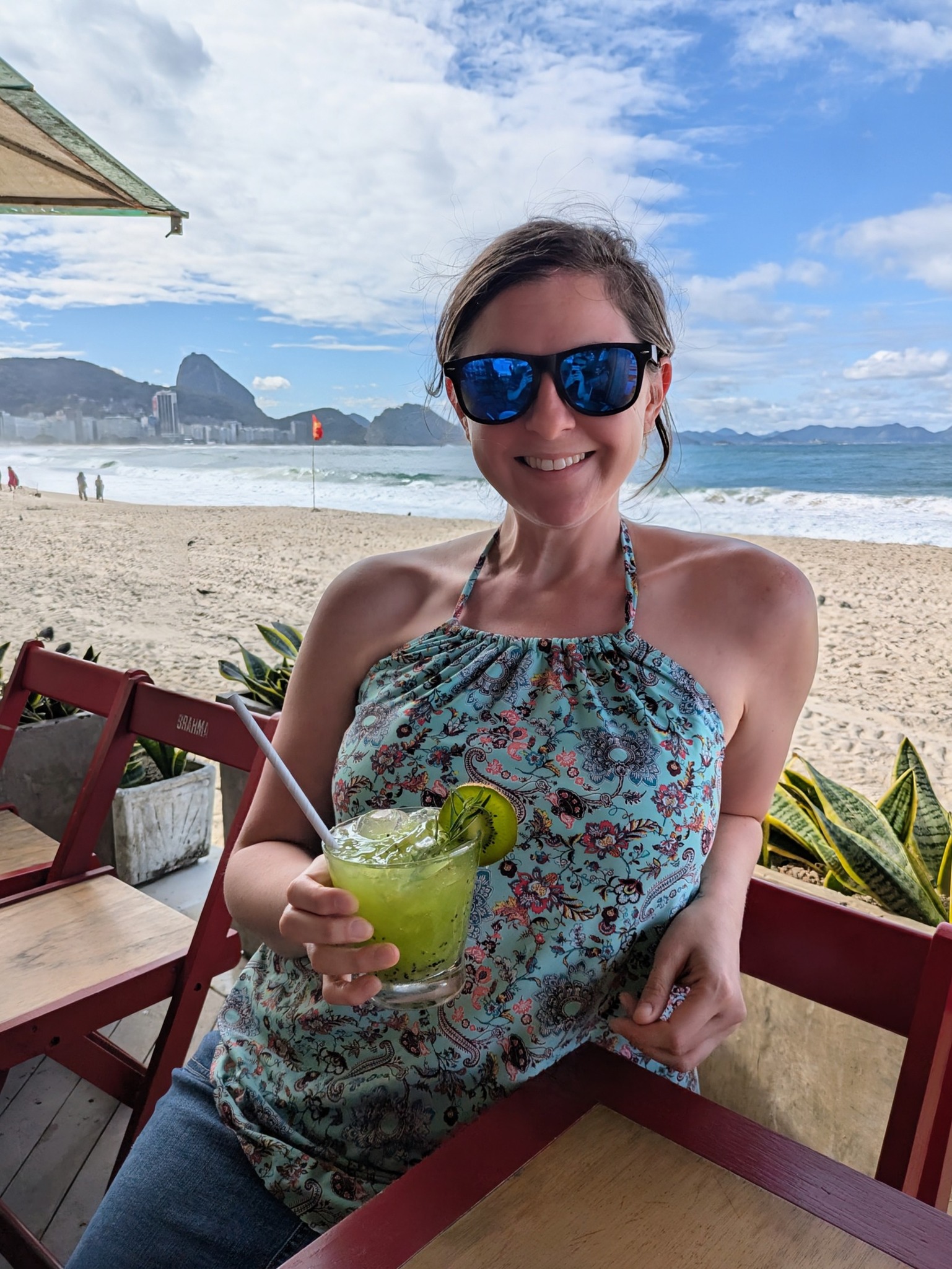
And because I can’t leave it off this post entirely, you should also try a caipirinha (or four) when in Brazil. The caipirinha is the country’s signature cocktail and is made with a sugarcane liquor called cachaça and the fruit of your choice. For what it’s worth, I think the traditional lime is BY FAR the best option.
So, who’s ready to go to Brazil now? I know we’re eager to go back already! Rio was so much fun, but Brazil is a huge country with so much to offer! I hope we’ll be saying “bom dia” again before too long! Until then, I’ll just keep dreaming of all that delicious food!  

Beautiful Banff

Last month, Tucker and I continued our Canadian explorations with a trip to Banff, Alberta. Of course, Banff had been on our list long before we knew we’d be living in Canada, and we can now say with absolute certainty that it should be on everyone’s bucket list! We were truly blown away with the seemingly infinite number of stunning views, trails, waterfalls, glaciers, and all sorts of other incredible landscapes. In fact, I had trouble narrowing down our plans to fit neatly into a one-week trip (many people spend weeks or months trekking around Banff and Jasper National Parks, and I now know why). But since most of us can’t do that, I thought I’d share our experience, which could be useful to others in planning their own epic trip to Banff!

Calgary, Alberta

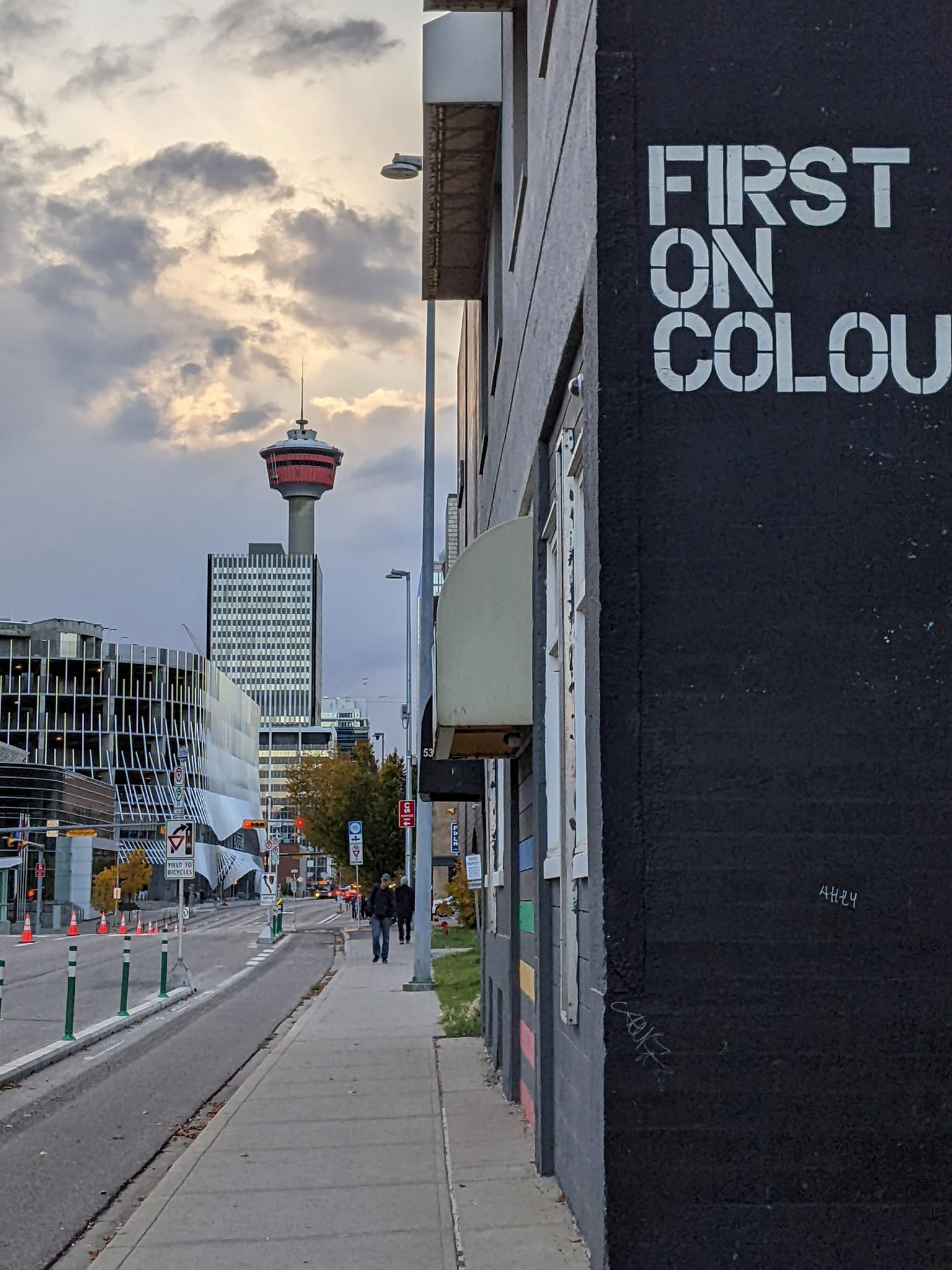
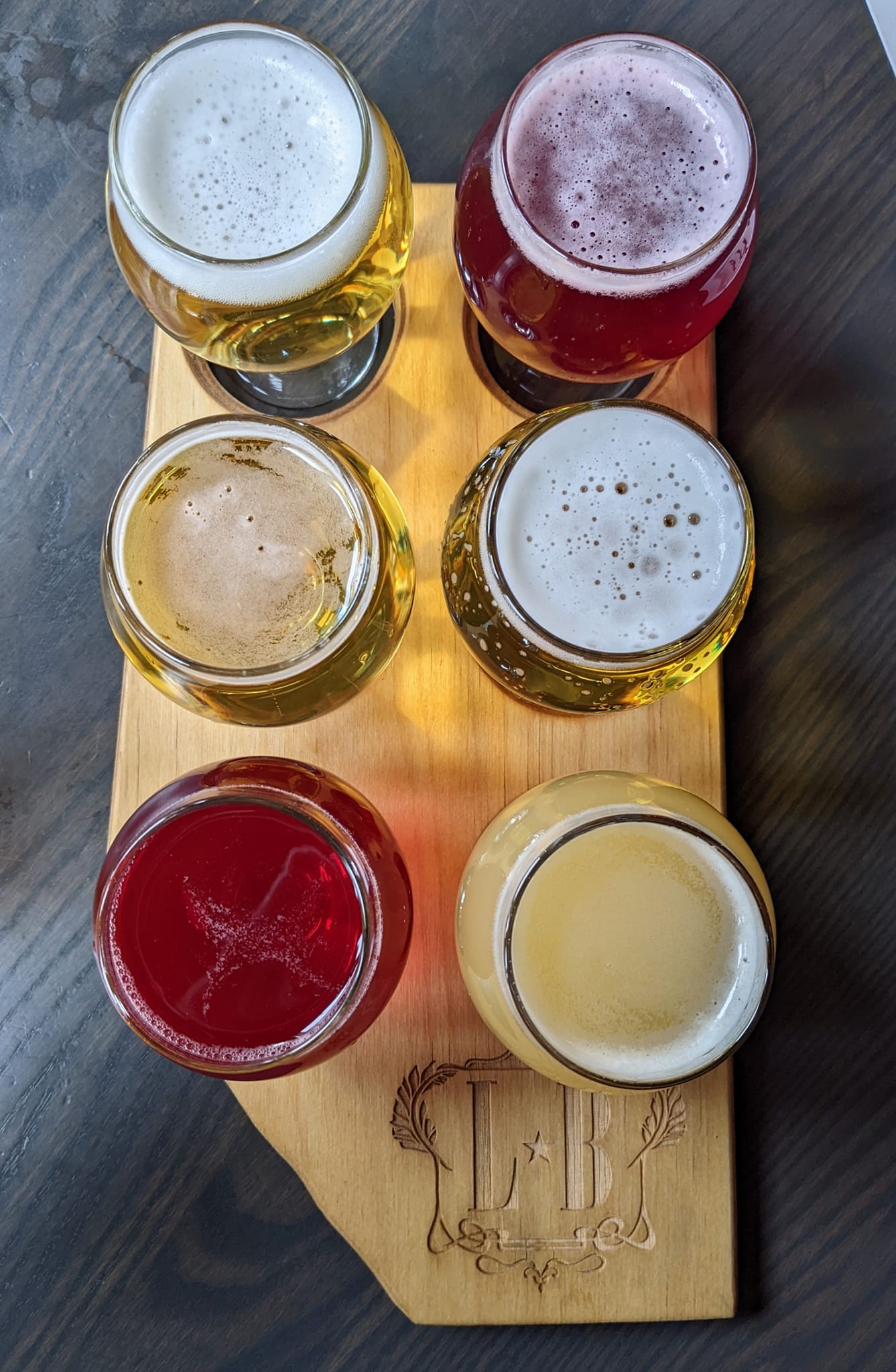
But before we get to the city of Banff, we have to get to the province of Alberta. The vast majority of visitors fly into Calgary, which is the nearest major city. This is what we did although we also considered flying into Edmonton and driving down through Jasper as an alternative. Ultimately, Calgary won out because it was closer and the flights were cheaper. I’m happy this was our choice though because it meant we got to spend several days in Calgary, which turned out to be a really fun city: two beautiful rivers running through it with gorgeous parks throughout, a very lively and impressive brewery scene, and several bar and restaurant streets where we were able to try the famous Albertan ginger beef. Seriously, don’t let the airport be the only thing you see in Calgary!

Of course, our main reason for being in Alberta wasn’t the cities, it was the beautiful Rocky Mountains, so how to get out there? Well, they’re really only about an hour drive from downtown Calgary, and you have several options. There are buses and shared cars aplenty, but we, like most people, ended up renting a car. The price was as expected: reasonable if you return it to the same place, outrageous if you don’t. In hindsight, having your own car is absolutely paramount if you want to see anything outside the teeming tourist bubble. One of the best parts about driving ourselves around Alberta was that we could (and did) stop at every possible turnoff for views, trails, signs, etc. not to mention the total freedom we had when driving the Icefields Pkwy. But if you’re sticking close to Banff (as in Banff City and the lakes) you really wouldn’t need a car at all if you didn’t want one.

Canmore & Banff

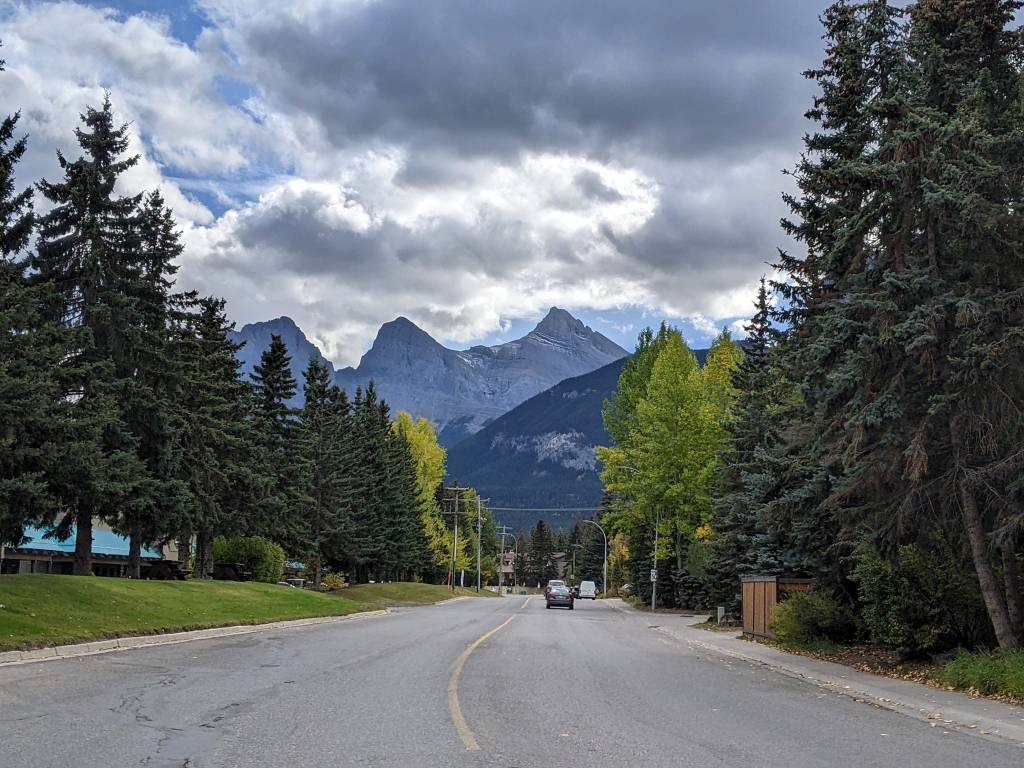
Once you’re successfully into the mountains, you have another choice to make: where to stay. If you’re camping, the options are limitless, but if you’re afraid of bears and/or you’re not a millionaire, you basically have two choices: Banff City or Canmore. Canmore is a little further from the main attractions and isn’t quite as touristy; therefore, it’s slightly cheaper, but there’s much less to do, which means you’ll likely be driving (and having to find parking) more often, or so we heard from fellow hikers. We stopped in Canmore both on the way out of and back into Calgary, and we really enjoyed it. It’s basically a baby Banff, and I think it’s a solid option, especially if you prefer a more low-key home-base.

We ended up staying in Banff though since this was our first time, and we had no idea what to expect. Since we went at the end of September (right before a lot of attractions and roads are to be closed for the season), there was a plethora of visitors. Options for accommodations were somewhat limited either by availability or by price. Fair warning – Banff is beautiful, but it is not cheap. We chose to stay in a private room at a hostel about 1.5 miles (2kms) from the city center. It was an easy walk, but there is also an amazingly quick and efficient public bus that runs through town and out to many of the resorts as well. Several hotels/hostels give free passes for the duration of your stay, but you can also buy a day pass for $5CAD.  

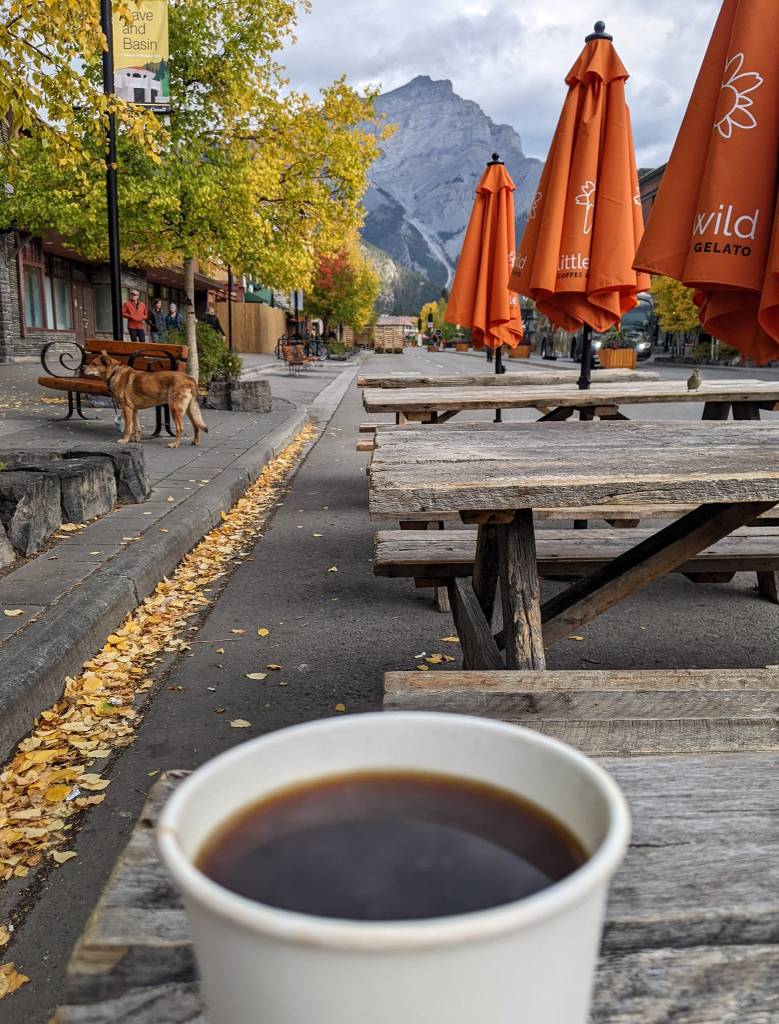
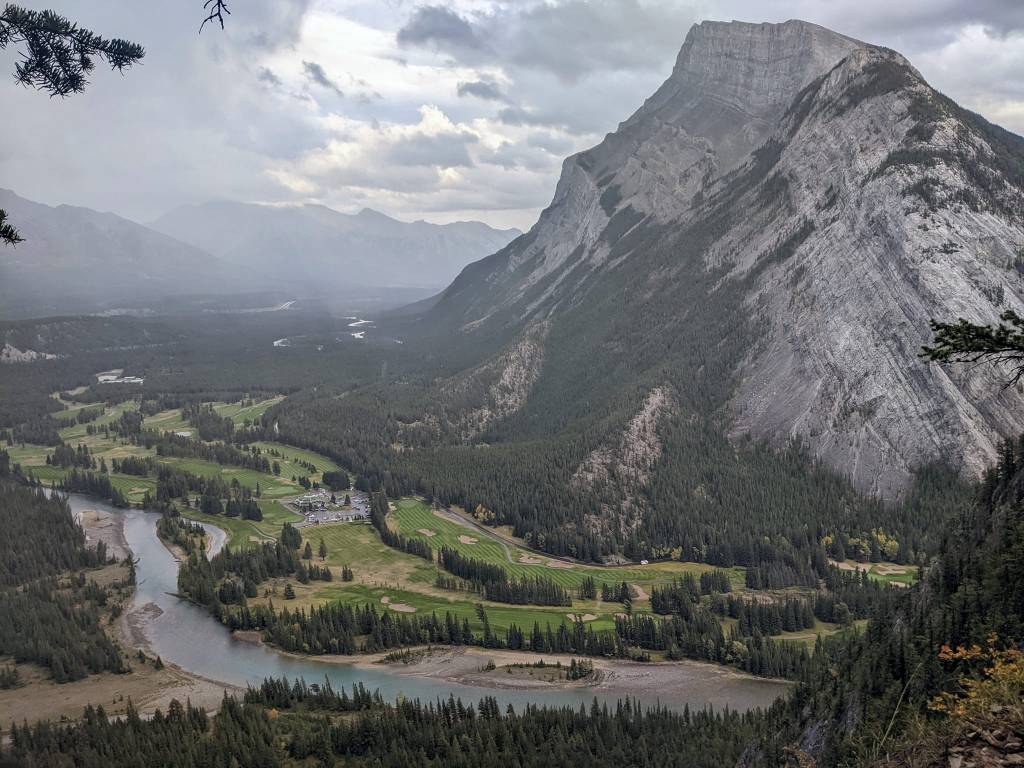
The city of Banff has much more to do than we originally thought. On our first evening, we climbed the nearby Tunnel Mountain, and there were countless other trails into the surrounding mountains and valleys. Evidently, there’s also a famous golf course there – who knew? And the town itself is well-worth a wander. Little shops selling everything from mountain gear to homemade fudge, lots of cozy cafés, and restaurants that run the gamut: we saw a McDonald’s right down the street from an extremely lavish steakhouse. We ended most of our days in Banff eating and drinking after spending the day outside hiking, and the choices were surprisingly diverse for such a small town.

Lake Louise & Moraine Lake

Likely two of the most famous views in all of Canada (maybe even North America) are those of Lake Louise and Moraine Lake. No matter how you feel about large-scale tourism or throngs of tourists, you can’t come all the way to Banff and NOT see these two icons. Somewhat recently, Parks Canada decided to close off the roads to the lakes for all private vehicles. The only way to visit them now is to take a shuttle (or a tour) from a parking lot/ski lodge just outside the park. This was very confusing to us when reading about it online, probably because it’s new, but it was actually really easy to do. You reserve a time slot and a direction (either LL->ML or ML->LL) and then present your digital “ticket” to the bus driver. The buses leave every 20 minutes, and as long as you get on within your window, you’re fine.

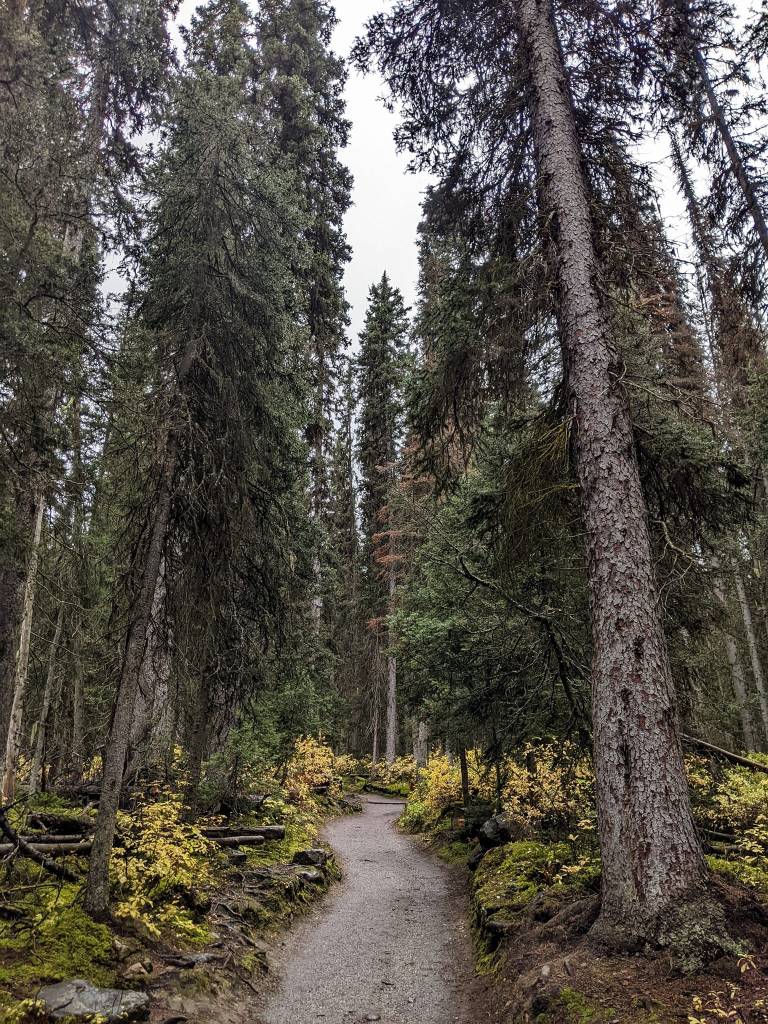
Lake Louise is huge. There are trails on either side of the lake and up the mountains on both sides with bird’s-eye views. You can also rent canoes and take to the water if you want ($145 for 30 minutes – yikes!) My advice for Lake Louise is to play it by ear depending on the time you’re there, what the weather is like, how many people you see going in either direction, etc. We were there in the afternoon, and it was quite crowded, so we took the path less traveled up to the Fairview Lookout on the lefthand side and found it absolutely perfect. There are signs everywhere showing the lengths and difficulty levels of all the trails, so you can pretty easily decide once you’re there. Just remember to bring water and snacks because there’s not a lot of options once you’re on the tourist circuit.  

Moraine Lake is not as big, and because of how it sits, you’re sort of on top of everyone else trying to see/take pictures of the lake. There are several trails here too, but most of them take you away from the lake. We did the 4-mile (6-km) trail to the Consolation Lakes and felt that they lived up to their name lol. In hindsight, I’d have rather brought a picnic and found a nice place to sit and eat while looking over one of the lakes. All the hikes were lovely, of course, but the views of the lakes were better. Also, we did see signs about hiking/traveling in larger groups because of bears, which we didn’t take very seriously then. After recent events, we plan to be more aware and prepared next time, and I would urge anyone else to do the same.

Icefields Pkwy & Jasper National Park

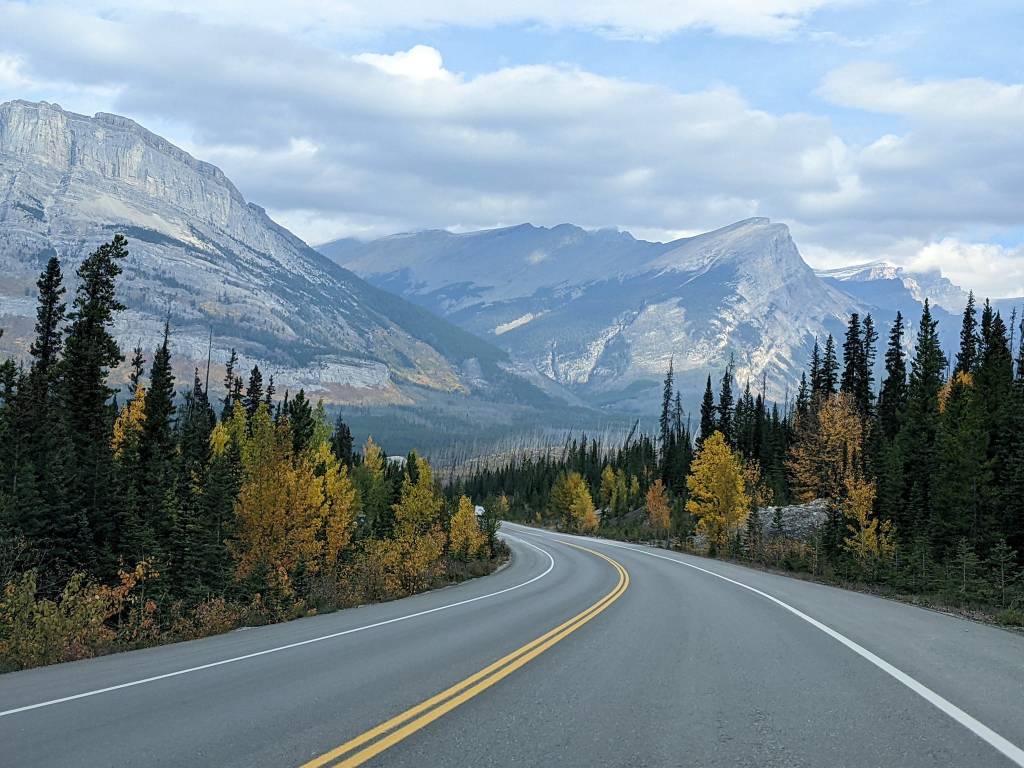
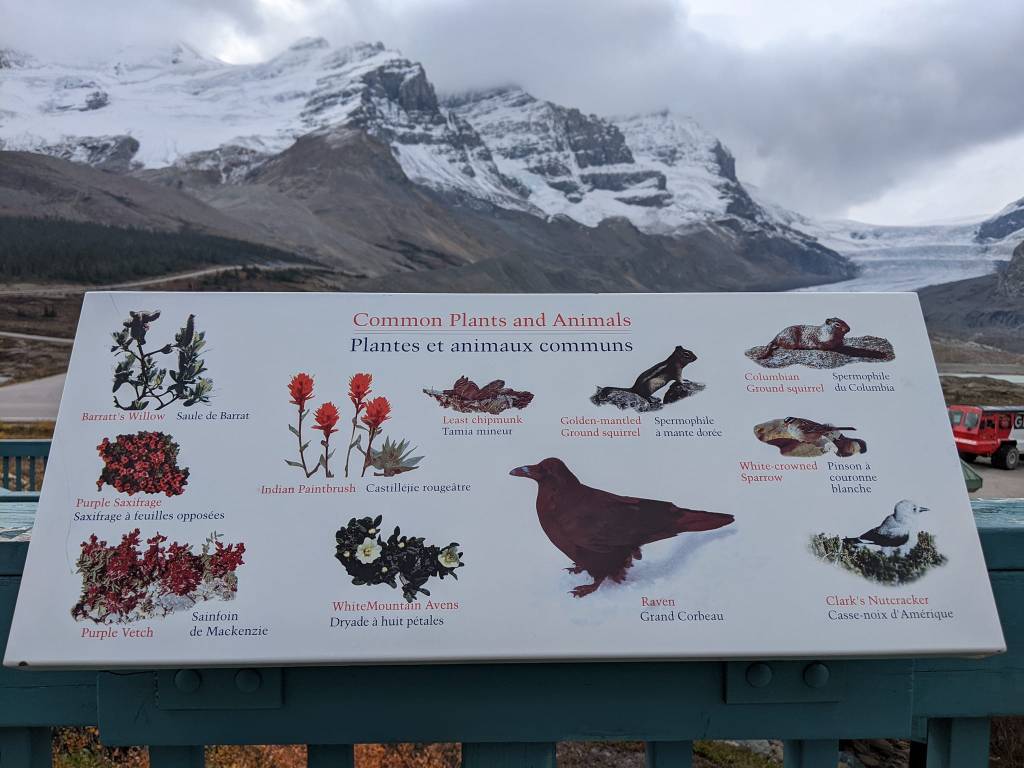
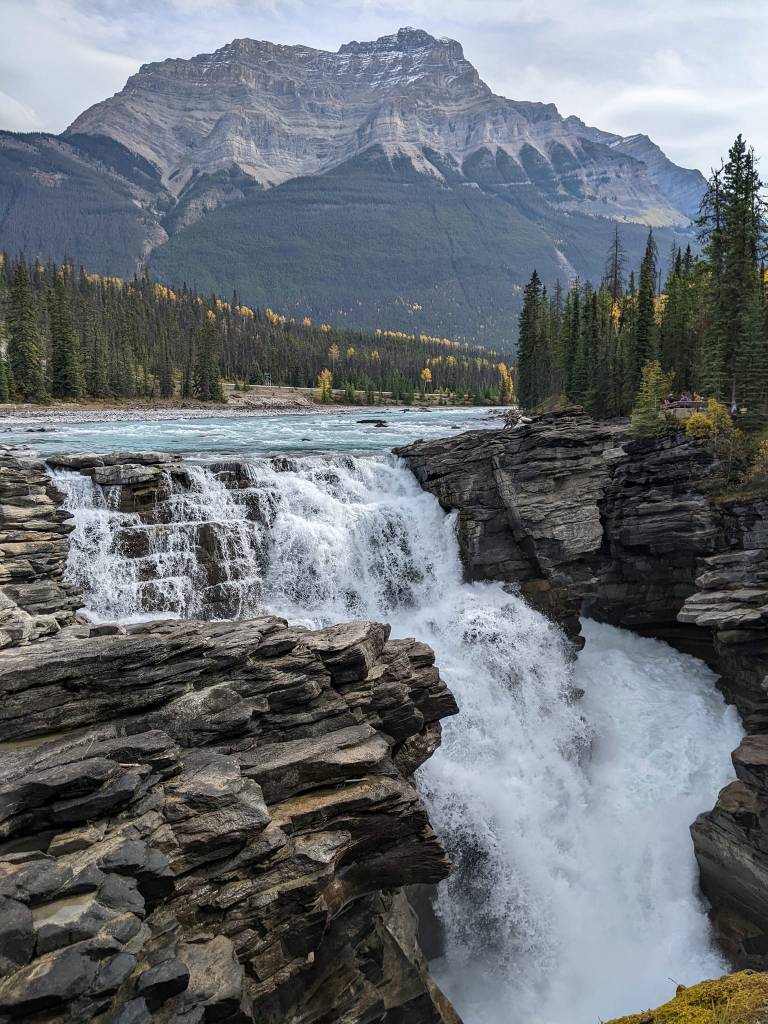
Our last great adventure in the Canadian Rockies was a drive from Banff City up to Athabasca Falls in Jasper National Park and back. This stretch of road is known as the Icefields Parkway because there are over 100 glaciers along this path, which gave us some of the most incredible views we’ve ever seen from a car. It’s only about 3 hours up to Athabasca Falls, but it took us over 4 because of all the stops we made along the way: the Columbia Icefield, Sunwapta Falls, Mistaya Canyon, Peyto Lake, and dozens of other incredible stop-offs. This drive was easily my favorite part of the trip, especially in the fall. We didn’t see very many people along the way, but there were endless signs teaching us all about the region, the various landforms, flora, fauna, you name it. It was very much like a DIY field trip, which, of course, I loved!

Ugh! After writing this and reliving all these incredible moments, I’m ready to plan a trip back to Alberta. Somehow, I feel like this might be a Huangshan (Yellow Mountain) situation, in which you haven’t really seen it until you’ve seen it in all four seasons. I do hope I’ve inspired you to put your plans to visit Banff into action not only because it’s one of the most beautiful places in the world, but also because some of these places won’t always be there for us to see in the future. Time really is of the essence, so bon voyage!