Interesting Eats

You may have noticed over the years that I love writing about food. So far, I’ve covered the best things we’ve ever eaten and lots of things we’ve discovered about the cuisines of the countries we’ve called home (most recently, Canada), but this month, I thought I’d round up a list of the most interesting things we’ve eaten. You know, just in case you were looking to make your next holiday meal a little more adventurous. Bon appétit! 

Aiyu jelly

One of the first things that came to mind when compiling this list was a strange little snack we first sampled in a Taiwanese night market. Of course, I had to search my Facebook archives to find its true name because in our house, we usually refer to it as “that weird jelly stuff we had in Taiwan”, which isn’t the most flattering description, but to be honest, aiyu jelly is tough to describe! I actually also had to re-google what exactly it is because somehow “a clear, plant-based jelly made from the seeds of the creeping fig plant” just didn’t stick. Overall, super interesting texture (sort of like melty Jell-O), efficient form (slurped through a straw out of a plastic bag), and surprisingly familiar taste (somewhat like an Arnold Palmer).

Alligator nuggets
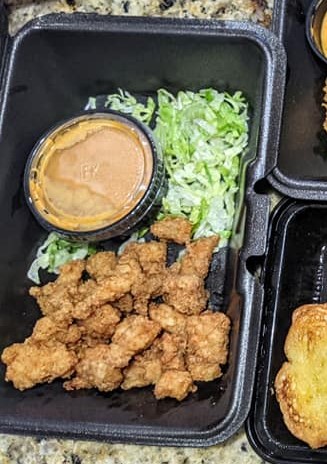
The next item on this objectively, alphabetized list is something we tried out of pandemic boredom. For almost a year, we found ourselves trapped in central Florida in various states of lockdown with one of our only forms of entertainment being our weekly take-out order. We made it a point to try as many different cuisines as possible within an hour drive of our apartment/bunker, and one of the most interesting meals we had came from a Cajun restaurant. There were all sorts of things I’d never seen or tasted on the menu there, but the most interesting dish had to be the fried alligator nuggets. A bit chewy and absolutely nothing like chicken, I can’t say these were my favorite, but at least I can say I tried them.

Chapulines

Chapulines are toasted grasshoppers and are a popular snack in Mexico and Central America. They’re very crispy and well-seasoned, making them a great street food snack or sometimes even offered as a topping for tacos or tlayudas. I think there’s now a stadium in the US that even serves chapulines at its concession stands, which makes sense because they’re super high in protein, extremely sustainable, and actually pretty tasty so long as you can get past the whole “I’m eating bugs” thing. Regardless, they’re a pretty interesting treat that isn’t as hard to find as you might imagine!

Cream egg stuffed cookies

Interesting has so many connotations. There’s interesting as in “huh, I didn’t know that existed”, interesting as in “hmm, no thanks”, and interesting as in “wow, that’s so cool”. I think the Cadbury cream egg stuffed cookies we came across in Newfoundland definitely falls into that last category. The conception was very interesting, the cross section was incredible, and the taste, exactly as you’d expect: delicious. But I think the most surprising thing was the fact that this unhealthy fusion was found in northeastern Canada and not a state fair in the southern US next to the deep-fried Oreos where it clearly belongs.

Czarnina
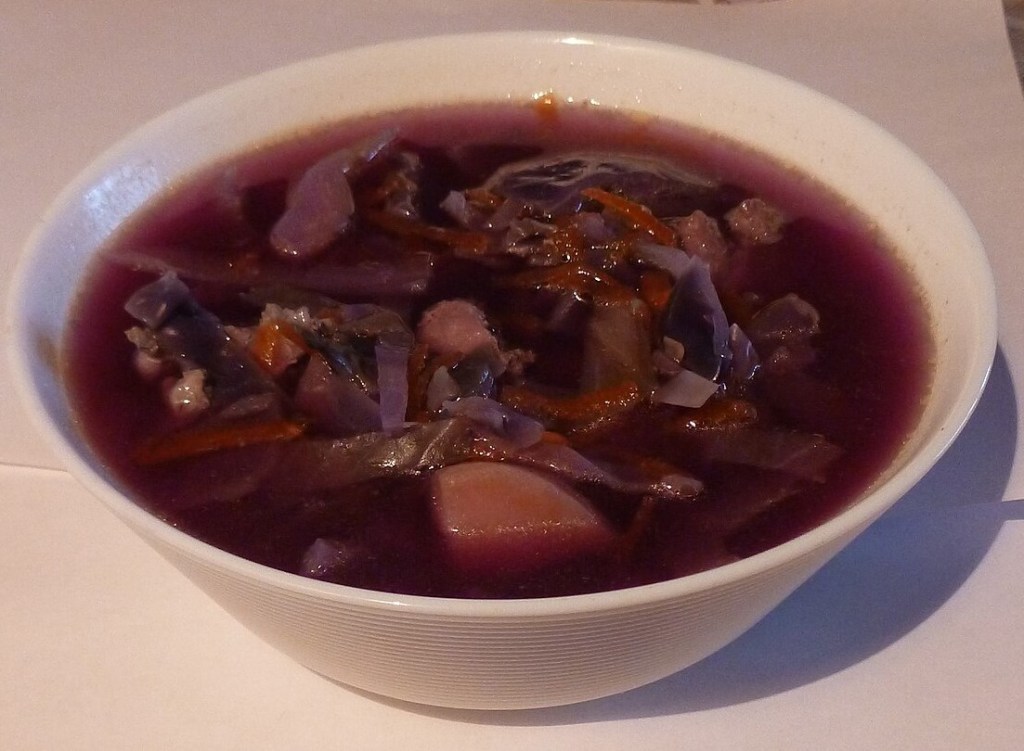
The next interesting dish on my list is one I’ve talked about before. It lives rent free in our (and several others’) minds since we accidently tricked a few people into enjoying it with us back when we were blissfully unaware. Czarnina is a dark, fruity soup that is commonly enjoyed in Poland. Its name clearly refers to the color of the soup as “czarny” means “black” in Polish, but I think we assumed it was beets or something equally pigmented that made the soup that color. Of course, it didn’t take us long to realize czarnina is actually made of duck’s blood. Surprisingly sweet and velvety smooth, this is another dish that is really more of a mental hurdle, at least for me. Definitely interesting though!

Dadinhos de tapioca
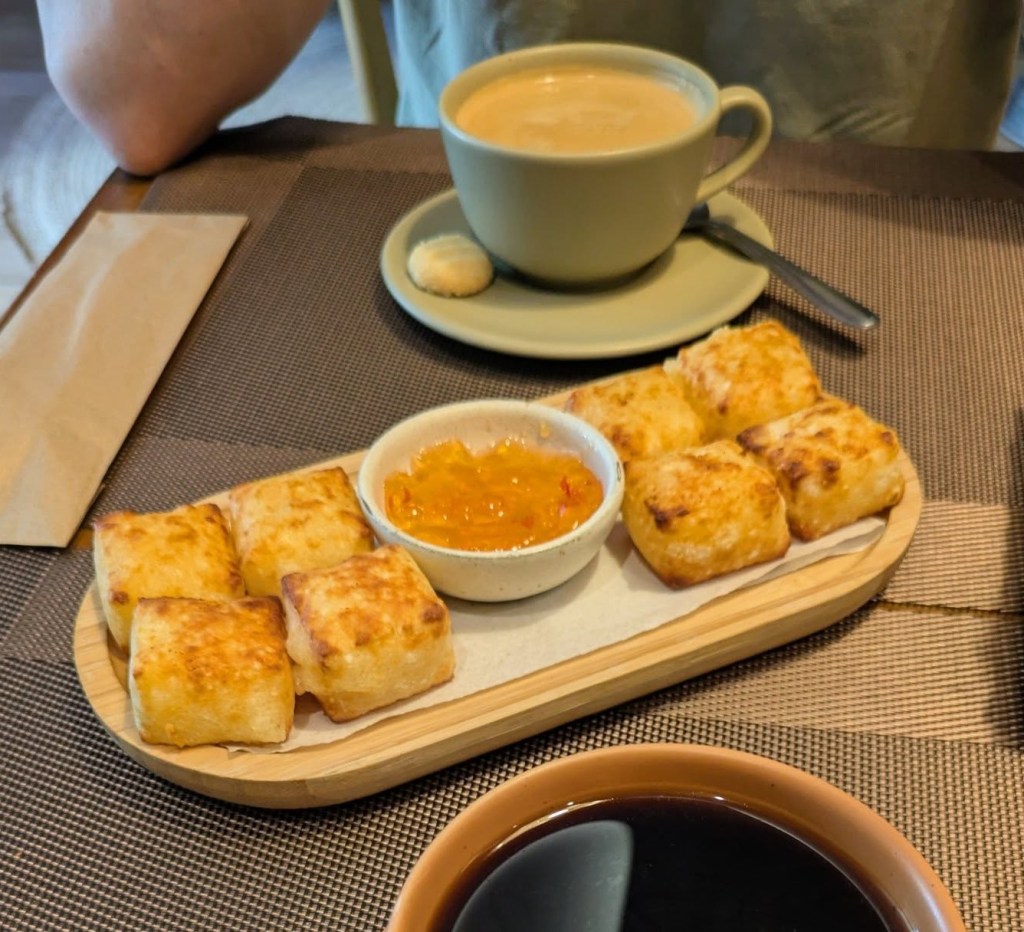
The newest addition to our interesting foods list, dadinhos (or cubes) of tapioca is a snack we recently tried in Brazil. Crispy on the outside, chewy on the inside, often made with added cheese and served with a tangy sauce, they were nothing like the only tapioca dish I had for comparison (tapioca pudding, obviously). In fact, without Google, I’d have been really hard-pressed to tell you what exactly was inside the dadinhos we scarfed down with our afternoon coffee. All I knew was that they tasted good, and that was enough for me!

Frog legs

French cuisine is famous for a reason. Their chefs surely know what they’re doing. With enough butter and garlic, anything tastes good. These are the things I told myself as we worked our way through a plate of frog legs, which look strangely similar to chicken wings by the way. The comparison stops there though, because while their flavor was good, the texture was absolutely nothing like chicken (or any meat that I can remember trying). I’m really not a fan of seafood though, and maybe we were just getting a little too close to the water for my tastes. Anyway, another interesting dish checked off my list. 

Hairy tofu

Honestly, this one almost has to be seen to be believed, and oddly enough, it looks exactly as it sounds…like a block of tofu covered in hair, but in this case, the “hair” is actually a fungus. Okay, I know that doesn’t sound very appetizing, but I love mushrooms and blue cheese, and maybe you do too. Sometimes I think it’s just branding that decides whether foods lean interesting-good or interesting-bad, and unfortunately, the name “hairy tofu” definitely skews bad. In reality, the taste is pretty mild, a lot like a cheese actually, and so incredibly organic, which has to be a plus, right?

Happy pizza

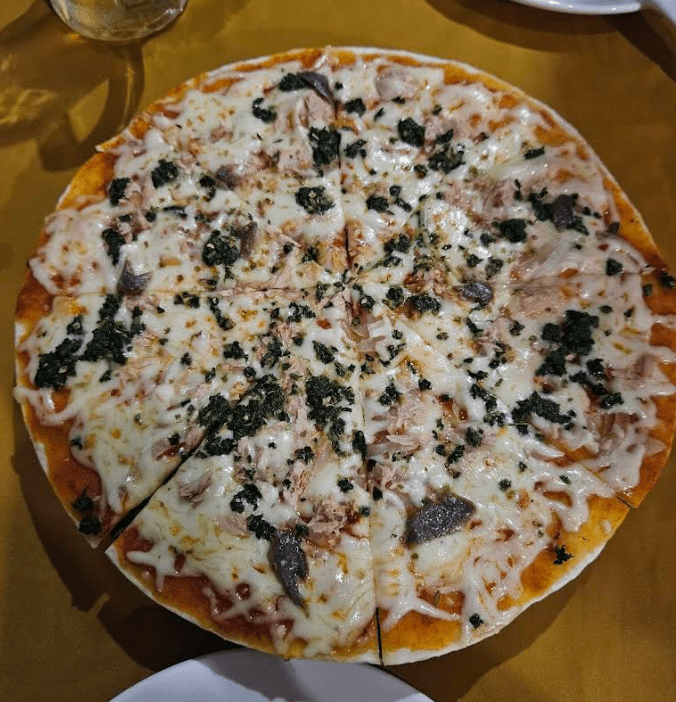
On our very first night in Cambodia, after a long day of travel, we decided to pick up a pizza on the way to the hotel for a relaxing, dinner-in sort of evening. The place we went to was called Happy Pizza, and as Tucker usually does, he got the dish they were proud enough to put their name on. But then they started asking questions about the amount of “happy” we wanted, which definitely threw us off. Turns out, “happy pizza” is pizza with cannabis added among the various toppings. While I can’t say the taste was everything I wanted and more, it was definitely an interesting pizza experience to say the least!  
Hot chocolate with cheese

We had our first hot chocolate served with cheese cubes in Quito, Ecuador, but it’s actually pretty common in Colombia and other South American countries as well. As I deeply love both chocolate and cheese, I was very excited to try this combination; however, my brain just couldn’t compute. Was it sweet or savory? Dessert or salty snack? Drink or food? In the end, we were left saying “that was interesting”, and so it makes the list. I do feel like this one has the potential for a lot of variation though, so we might just need to try again with different chocolates and cheeses.

Huitlacoche
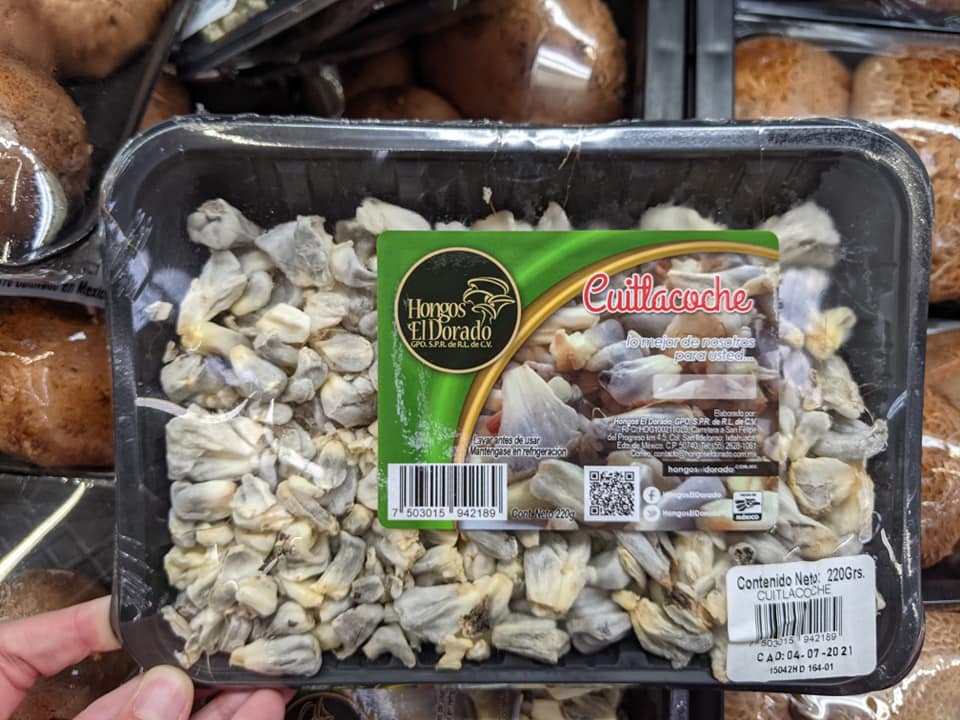
Time for another round of fungi! Huitlacoche is a fungus we encountered regularly while living in Mexico. In fact, it’s so common, they sell it at Walmart! Huitlacoche has a lot of similarities to mushrooms, and you’ll typically find it in the same sorts of dishes: soups, omelets, tacos, etc. Again, I can’t help but think about branding here because a lot of gringos shy away from huitlacoche, but maybe that has less to do with the taste and more to do with the fact that it’s called “corn smut” in English. Or maybe it’s the bulbous-y, blueish-green lobes that turn people off…I guess we’ll never know.   

Pastitsio

Two words: Greek lasagna. Already interested, aren’t you? I can tell you I certainly was after reading the description of pastitsio: pasta, cheese, beef, tomato sauce, cinnamon, clove, and a thick top layer of béchamel. It’s everything I love about lasagna plus a few really interesting additions. After having several versions of this homey dish, I’m not really sure why it hasn’t made it to the top of the Greek food pantheon (with the likes of gyros and spanakopita) because I found it to be much more interesting and easily just as tasty!

Uni (sea urchin)
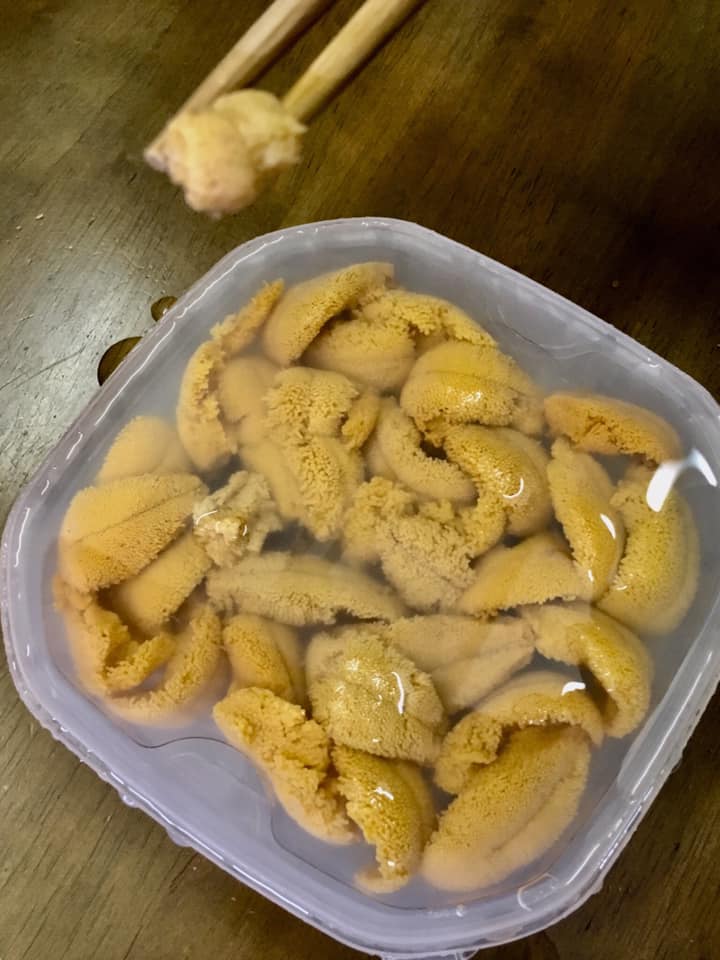
One of the rarer things we’ve eaten would probably be uni (or sea urchin). It’s a little expensive because, I mean, have you seen the creatures? It doesn’t look there’s much “meat” to be harvested there. But that being said, of all the things I’ve ever eaten from the ocean, for me, this was by far the least offensive. There is absolutely no seafood flavor whatsoever. It’s really more like buttery sea water, which really pushes this one beyond interesting and into bizarre. Sometimes I wonder about the person who first discovered that there were tiny, squishy, edible pieces inside those spiky balls at the bottom of the ocean…

Rainbow corndogs

Japan clearly has a lot of fun with food. If I extended this list, I imagine several more entries would be from Japan, often, like this one, purely for their whimsy. And it doesn’t get much more whimsical than cheesy, rainbow corndogs, does it? As a kid of the 90s, I love me some colorful food (purple ketchup, color-changing milk, etc.), and these corndogs were just as fun! Luckily, they were pretty tasty as well – crispy crust, flaky interior, slappy cheese, even the hotdog paired surprisingly well with the colorful condiments. Overall, a playful take on a fast-food classic.

Yak yogurt

And last but not least, a little dessert in the form of yak yogurt. We had a beautiful bowl of this tart, yet creamy concoction out in Qinghai, one of China’s larger, western provinces. I actually think we had just eaten when we came across these, but they looked so pretty, and there was a line of people eating them on the sidewalk, so we had to have a try. I’m so glad we did too, because they were, as you should be expecting by now, very interesting. It was similar to yogurt, but also not. Maybe like a thicker, sweeter kefir? It actually reminded me more of flan than Yoplait, but however it compares, it was definitely still unexpected and delicious.

And that’s my list! So many interesting finds over the years, and I’m sure there will be plenty more to come! Hope you found something to add to your must-try list, even if only for the experience because honestly, that might just be the best part!
The Best Things We’ve Ever Eaten

It’s officially November, which means we’re situated about halfway between the two Thanksgivings, and I think that calls for another food-related post! About this time last year, I wrote about some of our most memorable meals, which was fun and nostalgic, but this year, I wanted a challenge. For this month’s post, Tucker and I debated long and hard to come up with a list of the top ten best things we’ve ever eaten (in no particular order).

Sounds easy, doesn’t it? It was NOT. We struggled with remembering, with choosing, and ultimately with agreeing on a mere ten dishes out of the thousands of meals we’ve enjoyed over the years. But the hardest part, by far, was realizing it’ll be years and years before we can taste all these things again! Ugh! Oh well, let’s all make ourselves hungry, starting with…

Chongqing noodles from pretty much any noodle shop in Chongqing, China

I am borderline obsessed with noodles. I eat them several times a week in one form or another, so of course, a noodle dish had to be on this list. Surprisingly, I didn’t have too much trouble in choosing my absolute favorite noodles I’ve ever had. Probably because I had them every day for about a week while visiting Western China. What makes them so special? If I had to guess, I’d say it’s a few thousand years of practice. But it might also just be the perfect combination of thick noodles, spicy sauce, and crunchy toppings.

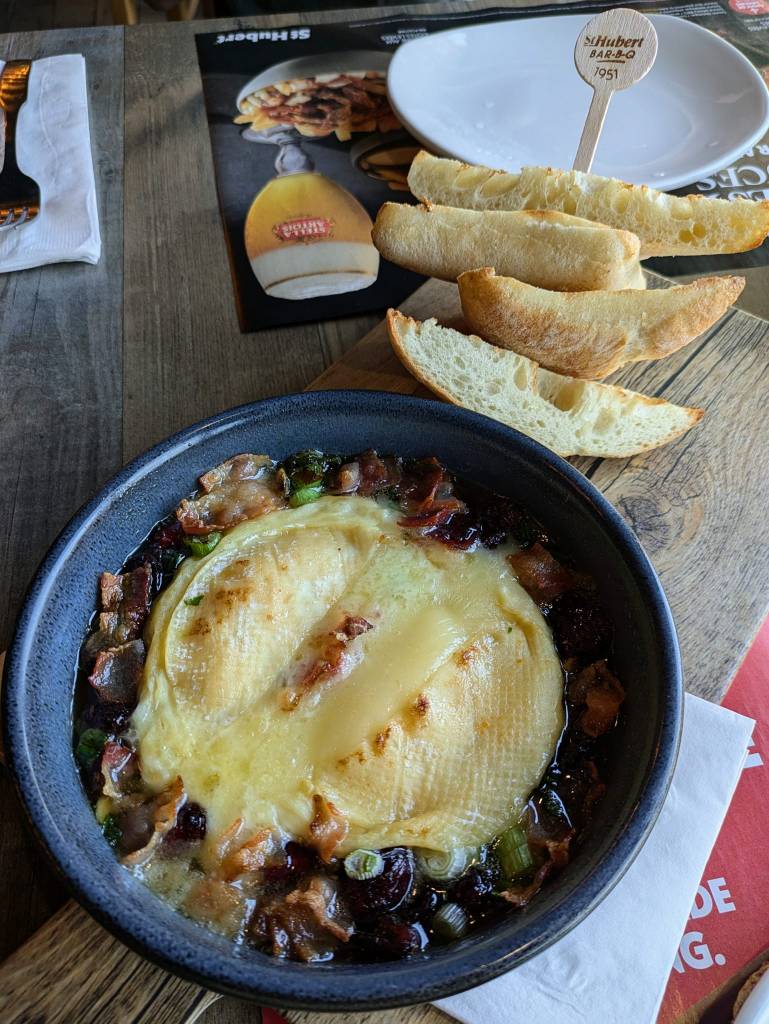
La Sauvagine Fondant from St Hubert in Gatineau, Québec

A somewhat surprising and recent addition to our list is an appetizer we ordered on a whim just last month. We were at one of our favorite restaurants here in Canada and happened to see a melted cheese dish that looked intriguing. Well, not only was it intriguing, it was absolutely addictive! We actually went back and had it again the very next week, which if you know Tucker, you know how big a deal that is. La Sauvagine, the main component, is a soft cheese from Québec to which they add dried cranberries, bacon, pumpkin seeds, green onions, and maple syrup all melted together in a skillet and served with grilled ciabatta. Oh mon dieu!

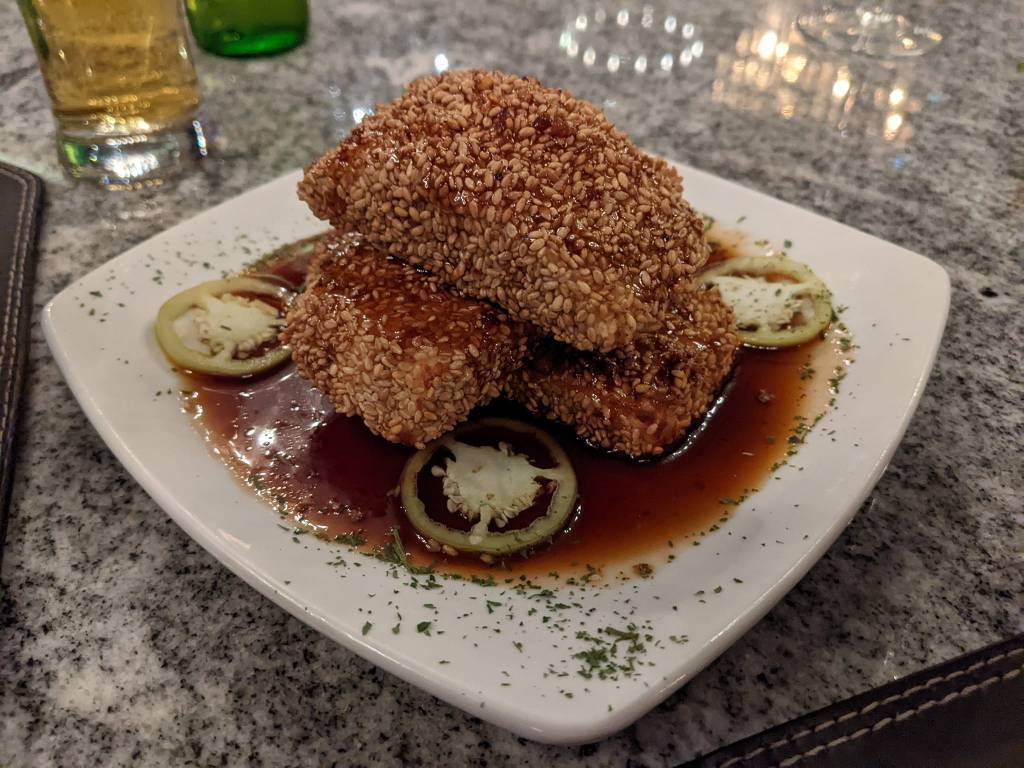
Sonoran specialties from Mochomos in Aguascalientes, México

Next up is really more of the entire menu than one specific dish, but if we had to choose just one, we could and it would still be on this list. Mochomos is a Sonoran-style restaurant with several branches in North and Central Mexico. Their concept is “Requeza Sonorense” or Sonoran Wealth, which means they highlight the best ingredients from the region in a simple but elegant way. The cortes, or cuts of meat, are the biggest draw, and they are done to perfection, but the sweet and spicy sesame panela is the dish we found ourselves going back for.

Zupy i kotlety from Gospoda Koko in Kraków, Poland

This was one dish we had a little trouble naming, but it stood out so clearly in our minds that we had to put it on the list. Tucked away on one of the many side streets of Kraków’s Old Town, there’s a rustic-looking restaurant (think hay and chickens) that’s still using handwritten menus, and they make the most delicious, homey Polish dishes that we’ve ever had outside of a Polish home. Both times we were there we shared a bowl of rosół (chicken noodle soup) and a plate of meat, sauce, and potatoes, which we’re still trying to recreate at home…to no avail, of course.

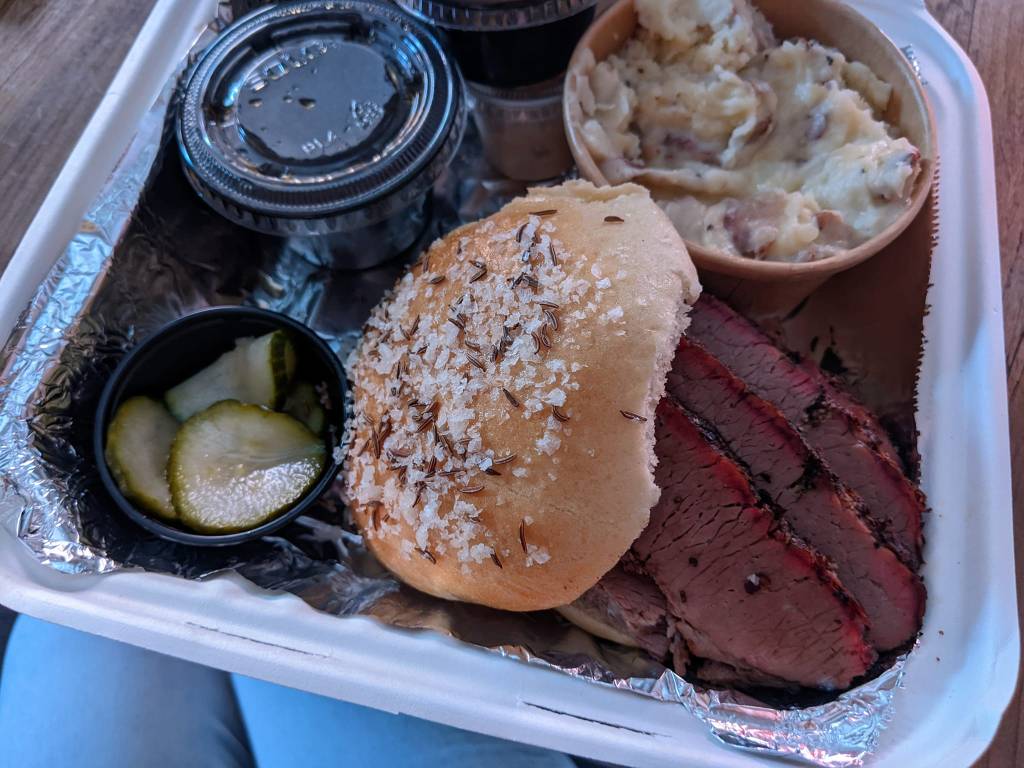
Brisket on weck sandwich from Fat Bob’s Smokehouse in Buffalo, New York

Beef on weck is a Buffalo staple made up of thinly sliced roast beef served on a kummelweck bread roll topped with salt and caraway seeds, and it’s really good! But when a place takes an already delicious traditional dish like that and adds slow-cooked brisket to the mix, well clearly, they make our list of best things we’ve ever eaten! In fact, we’re planning on driving quite a bit out of our way just to get this sandwich the next time we have to go south. And if you’re ever there, don’t forget the extra jus and horseradish! So good!  

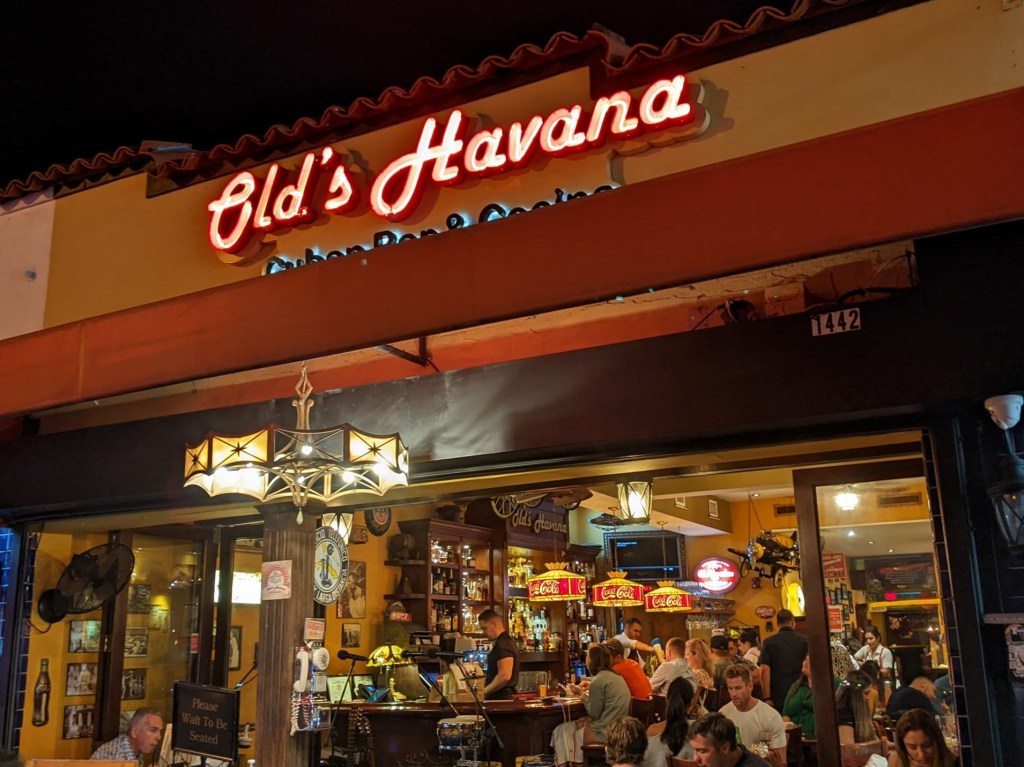
Cuban plates from Old’s Havana in Miami, Florida

Cuban food, in general, is one of our favorites, so we have it fairly often (definitely every time we’re in Florida), and when thinking of the best plate of Cuban cuisine we’ve ever had, Old’s Havana is what comes to mind! It’s there that we had our favorite vaca frita, which is the most incredible mezcla of shredded and fried flank steak topped with sauteed onions and lime, and, of course, everything there is served with the equally delicious Cuban trifecta: rice, beans, and plantains. Also, I’d be remiss if I didn’t admit that the atmosphere of a place can totally affect how much we enjoy it, and Old’s is truly such a fun place that even if you didn’t like the food, you’d still love the experience!  

Katsu from Katsukura in Kyoto, Japan

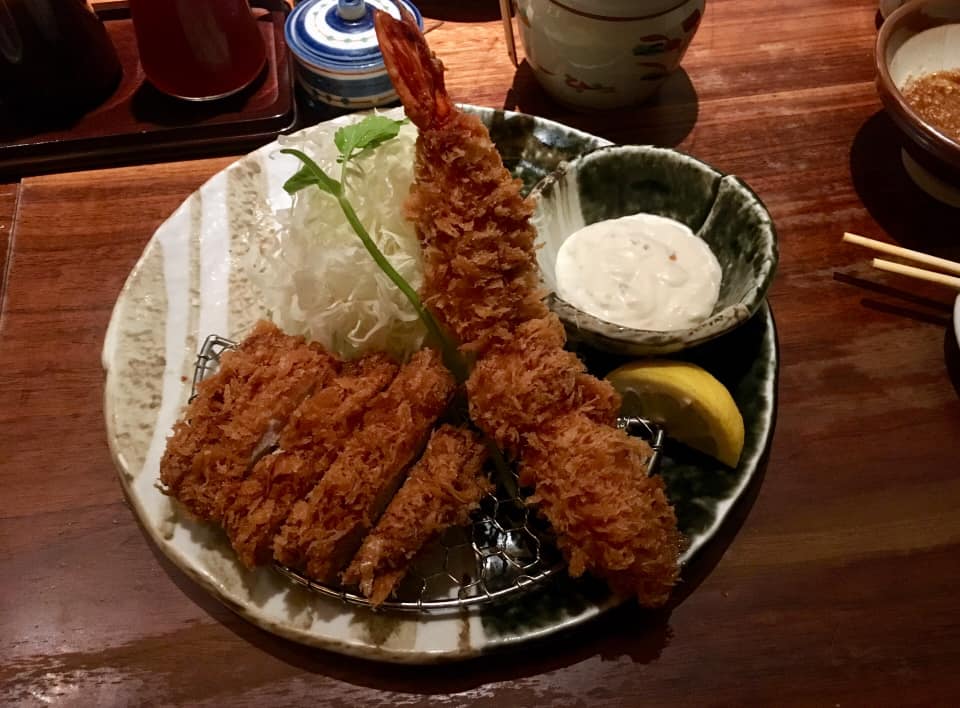
Japan takes their food seriously, and it definitely shows in their restaurant scene. Just like in Japanese architecture, there seems to be a focus on subtlety and presentation, which we absolutely fell in love with at Katsukura. The first thing we did upon sitting down at this gorgeous restaurant was grind a variety of sesame seeds by hand to make our own individualized dipping sauces. That freshness and attention to detail was also evident in each and every bite of our katsu (a panko-encrusted fried pork cutlet served with shredded cabbage). My mouth is literally watering as I write this…

Khao soi (made by Tucker) at Asia Scenic Thai Cooking School in Chiang Mai, Thailand

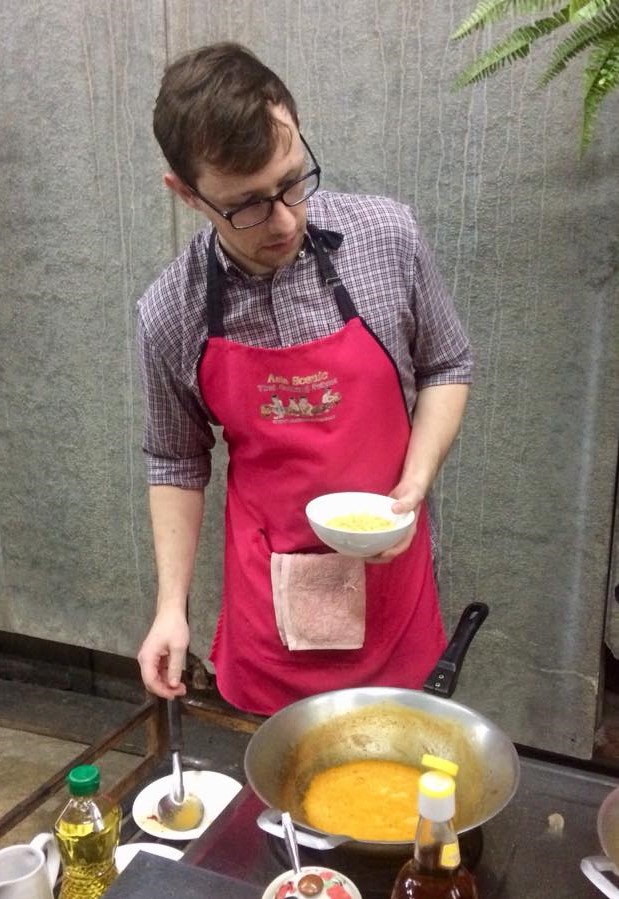
Next up is a dish made by Tucker with the help of Asia Scenic Thai Cooking School. For this one, we procured our own ingredients at a local market and followed along as a master Thai chef showed us how it’s done, and by the end of the class, we had one of our favorite dishes in the world made exactly how we like it. Khao soi is a coconut curry-based soup usually made with egg noodles (both boiled and fried), chicken, chilis, and lime. It is an incredibly unique and delicious dish that Tucker, to this day, has never been able to turn down.

Fugazetta from Lunático in Buenos Aires, Argentina

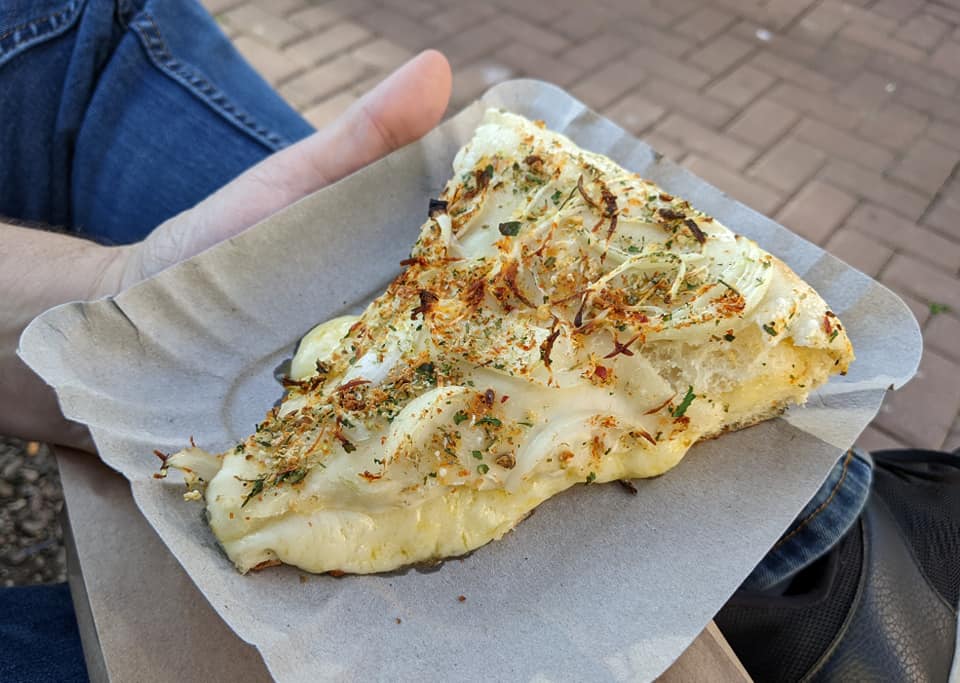
Another somewhat surprising addition to our list is fugazetta. This seemingly simple dish is an Argentine specialty made up of two pizza crusts stuffed with cheese and topped with caramelized onions. I know what you’re thinking, “How can that be special enough to make it onto our top-ten-of-all-time list?” Well, I don’t know what to tell you other than it’s absolutely delicious. The ratio of bread, cheese, and onion is sheer perfection, and the fact that it’s usually made in a woodfire oven, gives it an amazing charred quality as well. ¡Absolutamente delicioso!

Shopska salad from Restaurant Skopski Merak in Skopje, North Macedonia

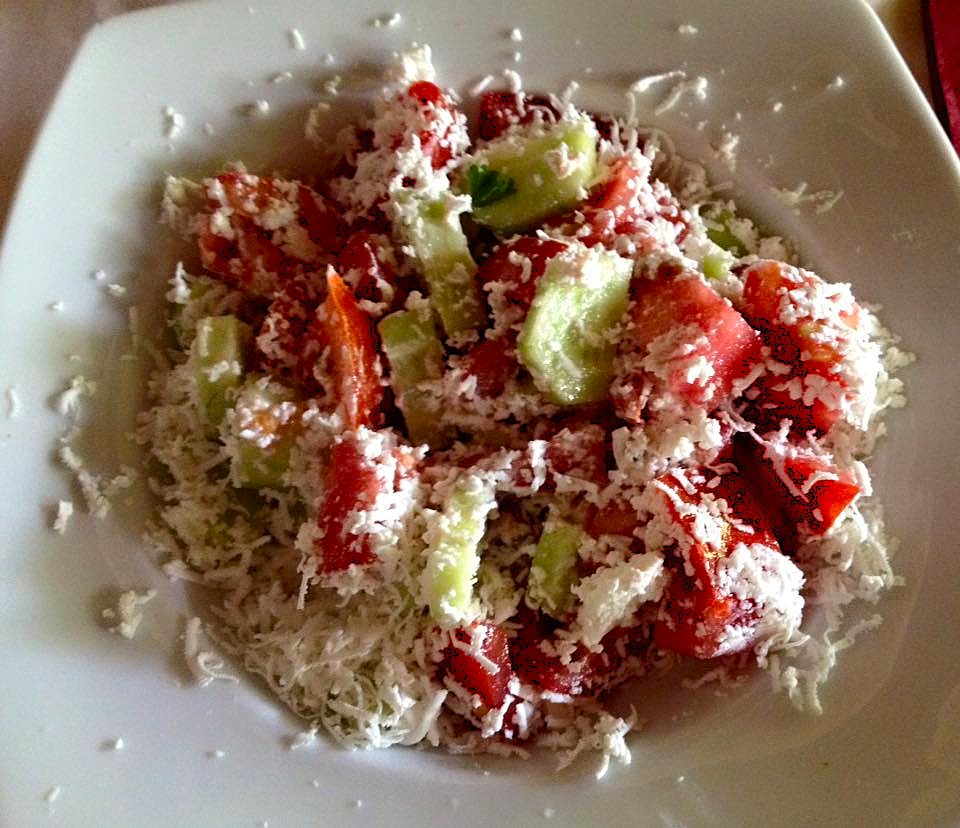
And last but not least, my beloved shopska salad. I feel like I talk about this salad quite a bit, and I make a North American version of it just about every month, but the original just can’t be beat. The shopska salad originates from Southeastern Europe. We first had it in North Macedonia, and as soon as we did, we were hooked. It’s a mix of fresh cucumbers, tomatoes, onions, and sirene cheese (which is kind of like feta) dressed with sunflower oil, vinegar, and salt. It’s incredibly refreshing and is often served with a shot of fruit brandy, so really how could you go wrong?

And that’s it! Our official list of the top ten best things we’ve ever eaten as of November 2024! I really should start keeping a list of all future contenders, so this won’t be quite so hard next time. But honestly, who knows when that’ll be, so until then, bon appétit!

La Comida: The Regional Cuisines of México

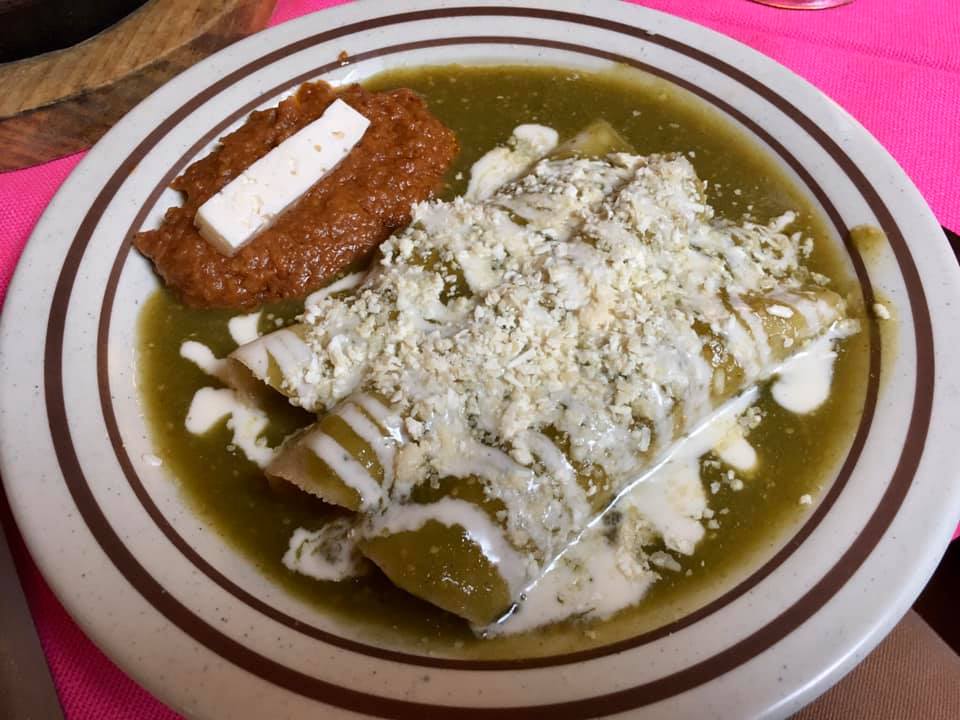
Mmm…enchiladas…

I absolutely love Mexican food! Tacos, enchiladas, guacamole…yes, yes, yes! But what I didn’t know and what I’m still learning is that the old stand-bys that we all know and love are only the teeny tiny tip of the authentic, Mexican food iceberg (quite the image, I know!). After delving a bit deeper into some of the regions of Mexico in 2019, and definitely more so recently, I’ve been discovering (and tasting) a lot of this incredible variety. Here’s what I’ve learned so far:

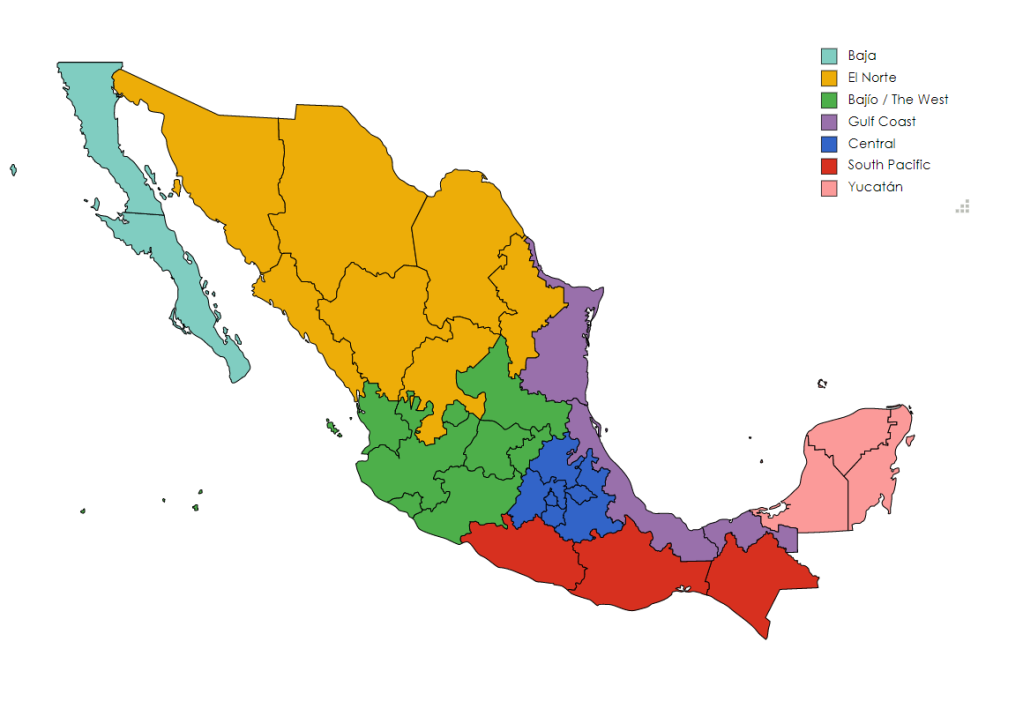
Like in many large, diverse countries, the dishes of Mexico are often grouped by geographical region. The boundaries of these regions might differ slightly from person to person and occasionally a few are lumped together for simplicity, but in general, there are seven main regional cuisines: Baja, El Norte, Bajío/The West, Gulf Coast, Central, South Pacific, and Yucatán. 

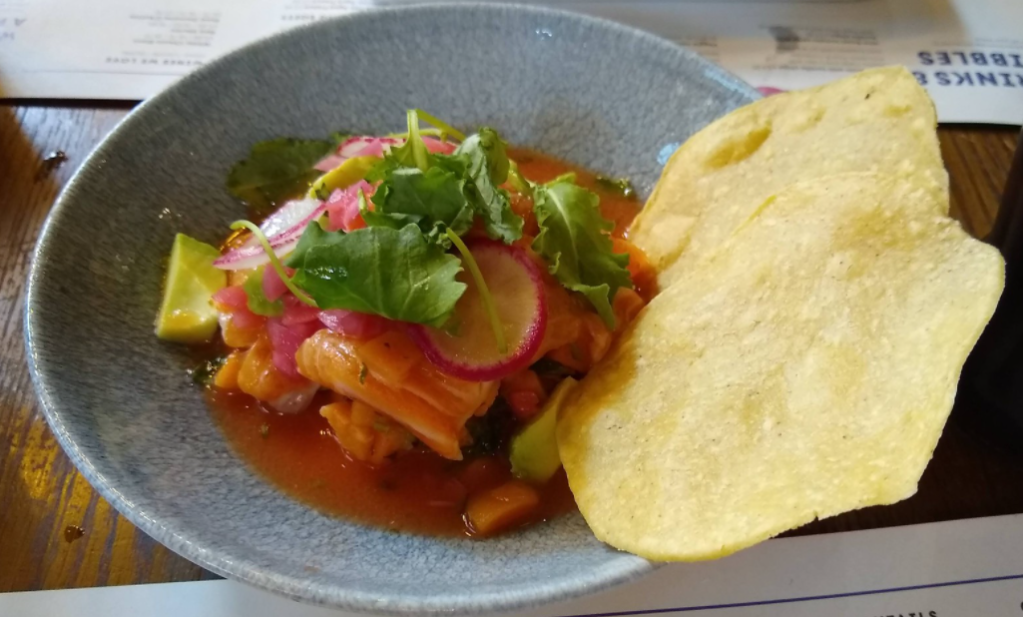
Starting at the top left is the region of Baja, and you guessed it; this region contains the two states that make up the Baja California peninsula. The food of this region is sometimes called Cali-Mex, and it is often seen as somewhat of a fusion of Mexican and Californian fare. Being surrounded in water, seafood is, of course, a big part of the local cuisine there. Baja is well-known for its amazing ceviches (fresh, raw fish cured in citrus juices) as well as the infamous Baja fish tacos. Interestingly, Baja is also the point of origin for the now quite internationally famous Caesar salad.

(ceviche)
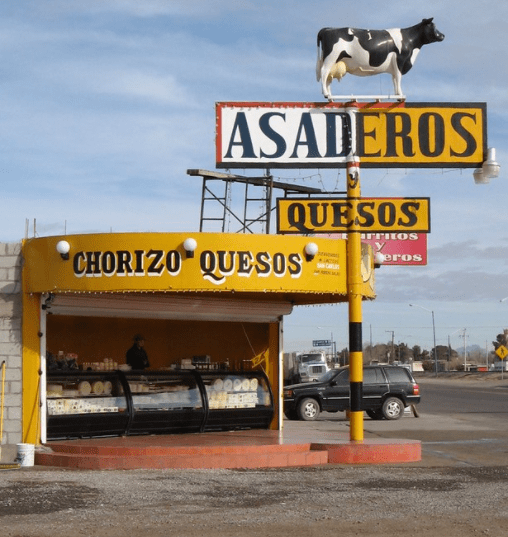
(one-stop, cheese shop)

Next, and easily the largest region in Mexico is El Norte (The North). This is the region that has arguably had the greatest effect on US-Mexican food (including the super Americanized hybrid that is Tex-Mex). This cuisine and culture evolved around ranch life; thus, beef is a main component. Flour (as opposed to corn) also reigns supreme here, and the need for a meal on the go (say via horseback) is how some say the burrito was born. Fajitas and other grilled dishes are also popular, and many of Mexico’s numerous cheeses are made in El Norte.

(carne en su jugo)

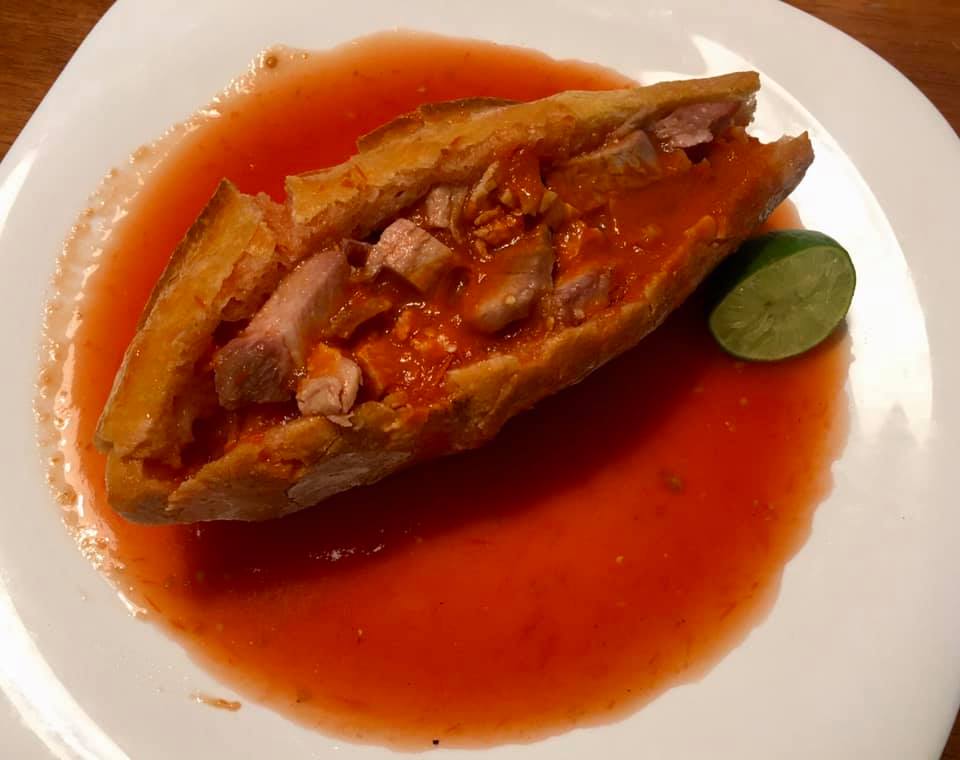
The next region on the list is very close to my heart (I live here), and funnily enough it’s often referred to as the “heart of Mexico”. Bajío means lowlands in Spanish, but the region generally includes states not necessary lying solely in the lowlands. This region, of which Jalisco is front and center, is known for its signature dishes, such as birria (a sort of meat stew), tortas ahogadas (literally “drowned sandwiches”, which are sandwiches swimming in tomato or chili-based sauces), and carne en su jugo (“beef in its juice”), as well as its desserts, like arroz con leche (rice pudding) and the absolutely delicious cajeta (caramel made from goat’s milk). Jalisco is also the birthplace of tequila, so the influence clearly doesn’t stop at food!

(torta ahogada)
(coconut fried shrimp)

Heading east, we come to the Gulf Coast of Mexico. This is the region where the Spanish first landed, and their influence can be seen even in the modern-day cuisine of the area. One of the most popular dishes is Huachinango, or baked snapper flavored with traditional Spanish ingredients like olives, garlic, and capers. The incredibly diverse Caribbean and African influence can also be seen in this region. Unsurprisingly, seafood is generally the protein of choice here, particularly shrimp, although plantains also feature prominently, as well as vanilla, which is indigenous to the area.  

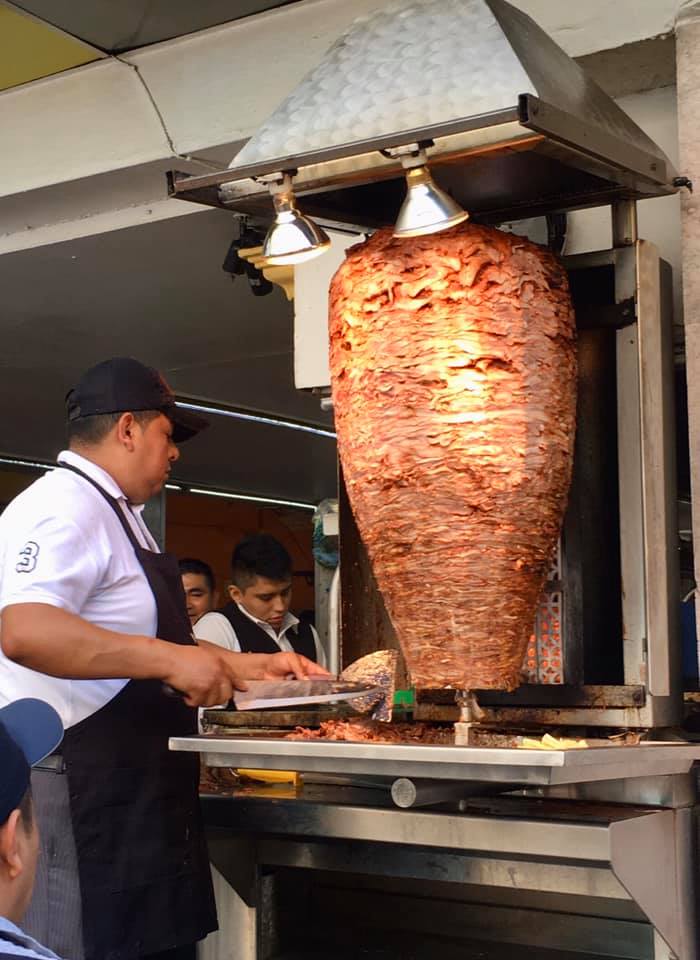
Another big-hitter in the Mexican cuisine line-up is the Central region, which includes Mexico City and Puebla, two very influential areas. Here the Aztec influence can still be felt (and tasted), especially in the abundant use of chili peppers. In fact, Mexico’s most patriotic dish, Chiles en Nogada (which are stuffed chili peppers in a walnut sauce sprinkled with parsley and pomegranate seeds), hails from this region. Street foods such as tacos and tortas are also generally associated with Central Mexico and like El Pastor (spit-grilled pork), probably come from the mixing of cultures that has always been prevalent in this part of Mexico. Interestingly, while the Central region is famous for its street foods and cheap eats, this is also the location for Mexico’s haute cuisine scene as well. 

Down in the South Pacific region, lies another internationally renowned cuisine, particularly the dishes and food culture of Oaxaca. Known for its moles (traditional Mexican sauces/marinades) and the use of chocolate in savory dishes, the South Pacific has been influenced by the Zapotecs and other indigenous peoples. This is the region where chapulines (grasshoppers) can be found as well as other unique ingredients like huitlacoche (corn fungus). Oaxacan cuisine is often touted as one of the greatest untapped resources of the culinary world.

(panuchos)

Finally, we have the oft-visited, Yucatán peninsula. The resort cities of Cancún or Cozumel have their own culinary flair (catered to the needs of their many guests), but this region also has an array of incredible Mayan-influenced dishes. Papadzules (hard-boiled egg-stuffed tortillas covered in a pumpkin seed sauce), Cochinita Pibil (roasted pork), and anything with achiotes (flavorful seeds turned spices), are all unique, colorful, and absolutely delicious. As are the numerous tropical fruits incorporated into this region’s cuisine. Another personal favorite of mine, Yucatán cuisine surprises me at every bite. Even the seemingly simple panuchos (fried tortillas topped with beans, chicken, avocado, and pickled veggies) are just perfect.

(papadzules) (poc chuc) (relleno negro)

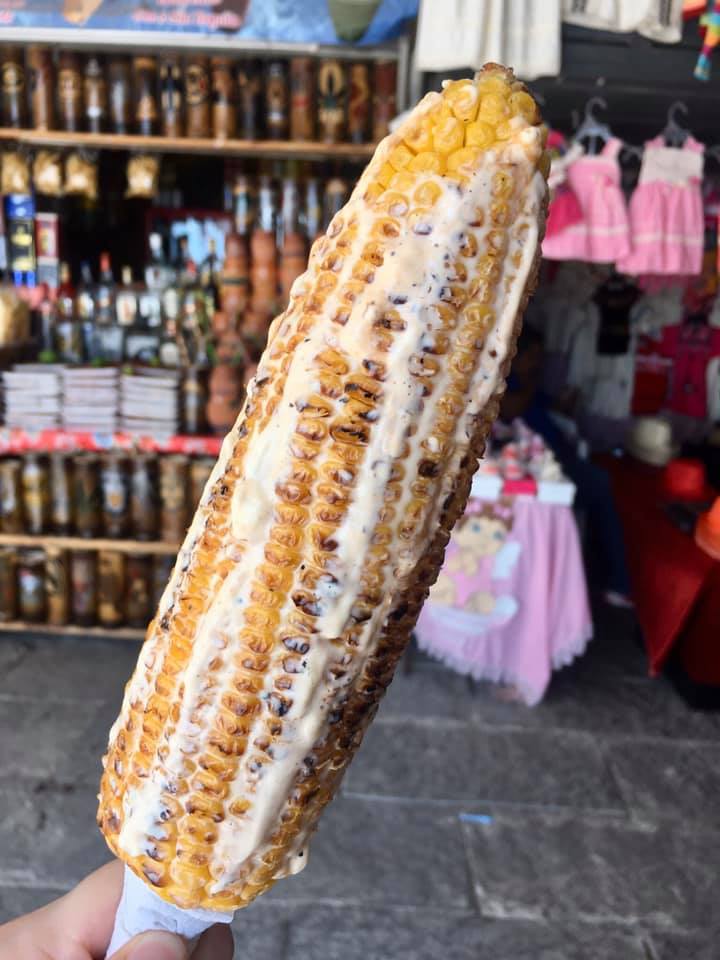
Of course, this is only a sample of the thousands and thousands of dishes that originated in Mexico. In fact, some of the most ubiquitous weren’t even included on this list because they don’t really belong to any particular region; dishes like chilaquiles (sort of like breakfast nachos), tacos, sopes (sometimes called Mexican pizza), tostadas, quesadillas, molletes (toasted bean and cheese flatbreads), pozole (hominy or puffed-corn soup), elotes, and tamales. They instead represent the country and its people as a whole; a country every bit as diverse as its cuisine. So, the next time you find yourself in Mexico (or even in a Mexican restaurant) try to stray away from the classic enchiladas or quesadillas and see what other offerings are available – you might find a few new favorites (much like I certainly have). Either way, ¡buen provecho!

(elotes) (chilaquiles) (flautas, fried tacos, y molletes) (sopes) (pozole)

Chinese Food: Where’s the Sesame Chicken?!

Tucker and I used to order Chinese food fairly often when we lived in Atlanta. It’s quick, it’s cheap, and it’s utterly delicious, but as I’m what I like to call a “safe eater” (read: picky), I only ever ordered Sesame Chicken, Beef with Broccoli, or some other entirely Americanized dish. However, now I find myself living in the Chinese food homeland (allegedly), and since I have yet to see anything remotely resembling those two stand-bys, I’m going to share some of my new favorite Chinese dishes. REAL Chinese food!

But First, About Meals: Mealtimes in China are quite similar to what I’m used to from the US – an early, light breakfast before work, lunch around noon, and a larger, warm dinner in the early evening. A little less familiar is the utter lack of liquids. I’ve previously mentioned the Chinese affinity for drinking hot water throughout the day, but what I haven’t yet described is the fact that it’s rare for locals to have a drink (of anything) while eating. Occasionally they’ll have a small bowl of soup or broth, which they use as a drink substitute, but most people eat OR drink rather than what I previously thought was universal, eat AND drink.

21743187_10214553841508074_4640986990806566948_n
“Broth drink” with chao mian (fried noodles)

Another thing that stands out is the absence of sweet options. I’m used to having the option of a sweet breakfast and almost always being offered dessert after dinner, but these phenomena are rarer in China. Instead of cereal, pop-tarts, waffles, etc. we see people eating noodles and pork buns on their way to work/class. As a fan of leftovers for breakfast and a former noodletarian, I love that there’s no judgment for eating noodles multiple times a day! However, I do miss the occasional dessert. Sometimes in a vain effort to satisfy my sweet tooth, I’ll pick up a dessert-like-thing from Wal-mart or the campus store, and nine times out of ten, I’m disappointed by a bite of red bean instead of chocolate. Our Chinese friends swear red bean is a dessert (and a sweet one at that), but coming from the US, where processed sugar is pretty much its own category in the food pyramid, I haven’t found much that’s up to my “sweet” standard.

21430167_10214475840118088_2088951251781114025_n
Family style eating in China

What we usually think of as “Family Style” serving/eating is another prominent characteristic of Chinese meals. It’s fairly rare to go out with a group (even a small group) and each order one individual dish. Instead everyone agrees on 8-10 dishes and shares everything, often at a table with a large lazy-susan in the middle for easy reaching. Tucker loves this way of dining out because he gets to try many different dishes all at one meal, and, of course, I don’t like it for the same reason. Have I mentioned it’s really difficult to be a picky eater in a foreign country?


Regional Cuisine: Very early on we were told about the different regional cuisines of China, and have since discovered that many restaurants will choose a specialty and run with it. For that reason, we can find Beijing, Sichuan, or Hong Kong style restaurants in pretty much every Chinese city; just like we can go to any city in the US and find Italian, Mexican, and Chinese places. Also similar to the US, many Chinese cities have special foods that are almost synonymous with that place (think deep-dish pizza and Chicago or cheesesteaks and Philadelphia). Every time we tell friends about our travels plans, they immediately tell us which foods we have to try when we get there. We’ve had the Hot Dry Noodles (Re Gan Mian) of Wuhan, the Sweet and Sour Pork (Gou Bao Rou) of Harbin, the Egg Puffs of Hong Kong, and many others.

My Favorite Dishes: Okay, time to make your mouth water! Here are the Chinese foods I’ve come to love over the last 6 months:

Dumplings (Jiao): Of course! Boiled (shui jiao) or fried (guo tie), filled with meat or vegetables, these are a staple in my life. You can get them in soup or not, with sauce or not, and we’ve even been known to buy them by the dozens in the frozen food section of the grocery store. Everyone loves dumplings, and China has the best I’ve ever had.

Noodles (Mian tiao): Another favorite that has more variations than I could possibly write out are the noodles of China. There are noodle soups (mian tang), mixed sauce noodles (zhajiang mian), cold noodles (liang mian), handmade noodles, and the list goes on. Noodles disheds can run the flavor gamut from spicy Sichuan style to sour, vinegar-forward Anhui varieties. I’m pretty sure my Chinese friends, students, and colleagues think the only thing I eat is noodles…

Ji Pai: Translated as “chicken steak”, it’s basically sliced, fried chicken breast served over steamed rice. The campus restaurants serve it with a white sauce (sha la – like salad, as in salad dressing), and it’s delicious! Crispy and juicy with a delicious cream-based sauced (another rarity in China), it ensures I don’t only eat noodles.

Dry Pot Veggies (Gan guo cai): A little difficult to describe, “dry pot” refers to the way these dishes are served: in a wok placed over a small burner on the table. They bubble and continue to soak up the sauces and spices in the wok as everyone works to mix and eat them up. Our favorites include dry pot cabbage with bacon, cauliflower with peppers, and spicy potatoes and onions.

23754724_10215123435787575_8960182072138635696_n
Dry pot cauliflower with Hui style dumplings and noodles

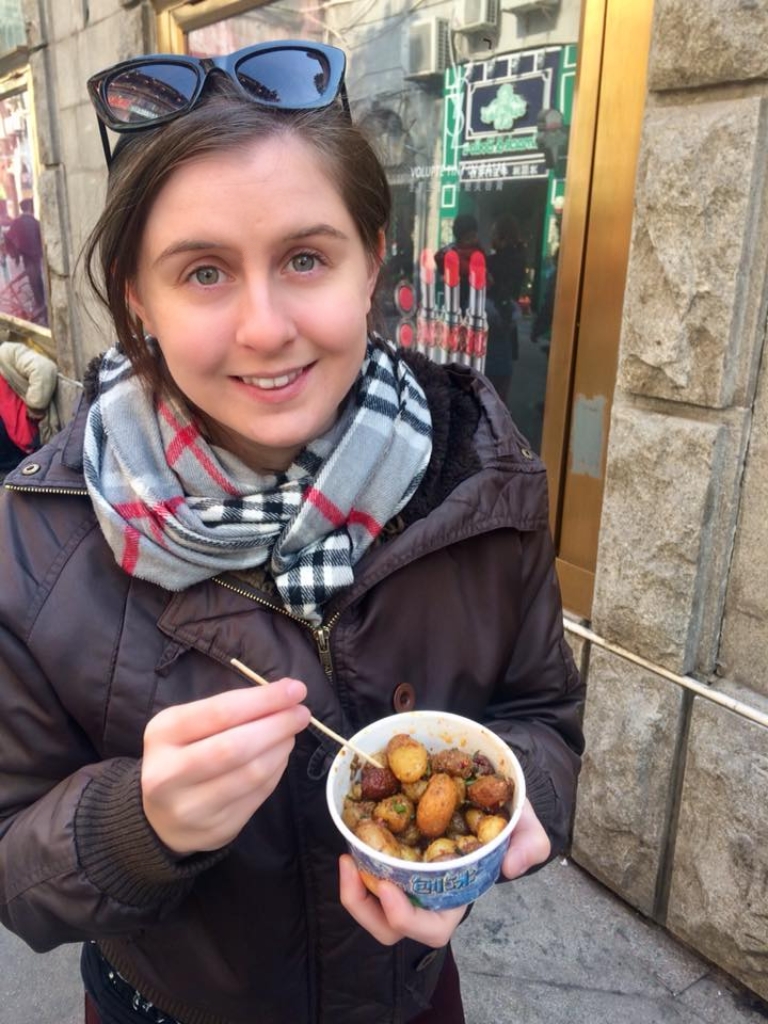
Sticky Potatoes (Ba Si Hongshu): It is no secret that I love potatoes. In Poland I ate boiled potatoes with dill just about every other day, but in China, this is my go-to potato dish. Fried sweet potatoes with a sweet, sticky glaze on top – what’s not to love?

23434747_10215055070598488_974118110432381643_n
Close up of a tiny tomato rabbit (and some sticky potatoes)

Hot Pot (Huo guo): I call this Chinese Fondue, but it’s not quite the same. Hot pot (literally translated as “fire pot”) is a sort of soup or broth that’s used to cook meats and vegetables at your table. There are many choices to be made when eating hot pot, like which style of broth (spicy, mushroom, tomato, etc.) and which foods to cook/eat, meats (the most popular being lamb, pork, beef, and shrimp), vegetables (like cabbage, cucumbers, and potatoes), and many other choices (including bamboo shoots, bread, mushrooms, noodles, etc.).

Fast Food: I’m not going to lie. There have been times I’ve craved “familiar” food, broke down, and went to a fast food chain for some nostalgia (and let’s face it, ease). In China we have plenty of McDonalds, KFCs, Subways, Burger Kings, and Pizza Huts. We’ve also seen Dominos, Dunkin’ Donuts, Haagen Dazs, and an Outback. If ever we find ourselves at a place like this, I safely, happily order something that I know and love, and Tucker tries the more adventurous route: like a shrimp burger at McDonald’s and a coffee and mochi blizzard at Dairy Queen. He’s a food gambler, and it has yet to truly pay off – fast food classics are popular for a reason, regardless of country.

27973116_10215926835712071_909623160974637162_n
Classics for me, shrimp burger for Tucker

To be honest this is just the tip of the Chinese food iceberg. In such a vast, diverse, and old country, there’s bound to be a plethora of culinary options. Maybe in the future I’ll write about Chinese snack foods, holiday foods, crazy menu translations, and/or the dishes that scare the hunger right out of me. Until then, I’m just going to eat some more noodles.

A Taste of Poland

It’s time for the topic you’ve all been waiting for: Polish food! One of the best things about travelling, living abroad, and life, in general, is the food, and I’m happy to say that even after seven months, we are still loving everything Poland is dishing out. I wish I could send everyone reading this a heaping plate of pierogi or some spicy kabanosy to sample, but as that’s just not possible, we’ll have to make do with the power of description.

Fruit/veggie market

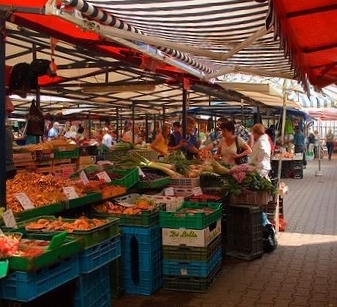
The first thing that must be mentioned when talking about Poland’s food is their produce. It is honestly head and shoulders above what we usually get in the US. Not only is it much cheaper and overall tastier, but it’s everywhere! Good quality produce in Poland can be found at any of the large chains (like Auchan or Real), at pop-up stands in the cities or on rural roadsides, and sometimes even in a local parking lot, out of the trunk of someone’s car. This availability, of course, comes with the season, which is part of why the produce is so good. It’s extremely fresh (mostly grown locally) and only ever includes what’s currently in season. When we arrived in Poland, apples were everywhere (in fact, on one of our first days here, we offered a lady our seat on a bus, and as a thank you, she gave us each an apple). After the apples, came an influx of pumpkins and squash, then the potato section expanded, and now we’re rolling in berries and green veggies.

The quality of produce is very important to Poles because most everything they eat is made from scratch using these ingredients. I’ve mentioned before how grocery shopping in Poland has made me feel more like a lazy American than anything else, and this is exactly why. In the US, I buy soup in a can, croutons in a box, cookie dough in a tube, sauce in a jar, and the list goes on. In Poland people prefer to make all of the components themselves. This is why you’ll hear people raving about the mushroom soup their mom makes when they’re sick, or the ketchup their grandpa made when they were a kid. Every family, every person has a slightly different way of making even the most traditional of Polish dishes.

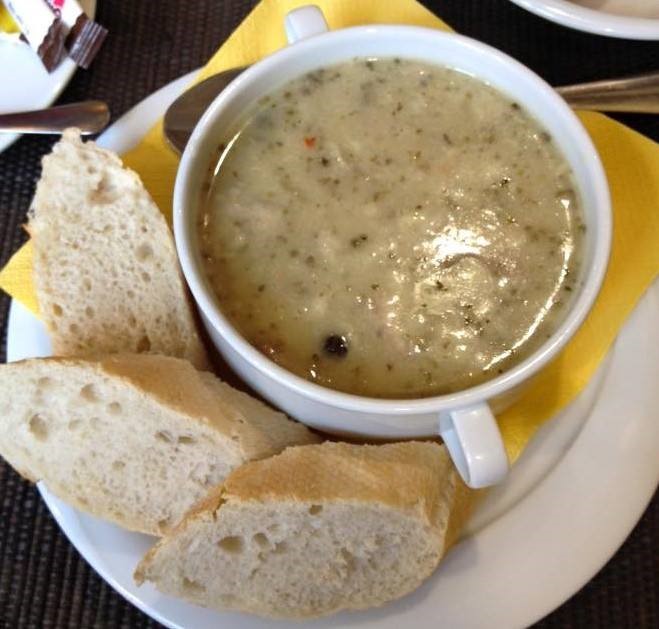
A traditional żurek

The idea of “traditional dishes” is actually a bit difficult to nail down for Americans. Many of our most “patriotic” dishes are not truly from the US. It’s extremely hard to justify the saying “as American as apple pie” when every culture has a version of apple pie! (For example, in Poland it’s called szarlotka, and it’s delicious). However, Poland is quite a few years older than the US and definitely has some dishes that are both nationally and internationally known, such as: żurek (a sour rye soup), bigos (a stew of sauerkraut and meat), pierogi (dumplings usually stuffed with potatoes), naleśniki (thin, stuffed, savory pancakes), rosół (chicken noodle soup with carrots, generally served on Sundays), kiełbasa (which the generic word for sausage of which there are many, many types – trust me, I can’t list them all without losing a few of you), kopytka (my favorite little potato nugget-dumplings), and surówka (a variety of coleslaw blends) just to name a few.

Chicken caprese with kopytka

While it’s true that cooking at home is the norm in Poland, rest assured they also like to eat out on occasion. Restaurants are quite popular in Polish cities; however, in the smaller towns the options are very limited. Luckily for us, lazy Americans, we live in Łódź (one of the largest cities in the country), and have a huge variety of restaurants to choose from. Just like in the US there are “fast food” restaurants such as McDonald’s, KFC, Burger King, North Fish, Döner Kebab, and Solo Pizza. There are also a few of what I would consider “casual dining” restaurants like Greenway (vegetarian cuisine), Mañana (the Polish version of Chipotle – minus the bacteria), and a unique variety of pay-by-weight restaurants. These pay-by-weight places are all around Poland and at first glance look like buffets, but instead of all-you-can-eat, it’s something like 3 żółty (less than a dollar) per 100 grams of food. I particularly like these places 1) because I’m a picky eater and 2) because it allows me to try a tiny bit of everything without fear. Also worth mentioning are the milk bars (bary mleczne) of Poland. These are restaurants leftover from Communist times that look and function like cafeterias. The most authentic milk bars serve mainly dairy-based dishes (hence “milk”) and do not serve dishes with meat, as meat was rationed on and off during the height of milk bar popularity.

Naleśniki with surówka

However, if you come to Poland for the food (and really, why wouldn’t you?) you’ll want to eat at a true restaurant, a sit-down, atmospheric event. In Łódź alone, you can find restaurants that specialize in Bulgarian, Ukrainian, French, American, Mexican and many other national cuisines, but by far, the best restaurants are the Polish ones. Generally, you start your meal with a plate of pickles, bread and lard, and finish with a shot of liquor. Ah, Poland! Another specialty in Polish restaurants is the soup. In most restaurants, many types of soup are offered and are often the reason people return to a given restaurant again and again – you’ve gotta try them all! However, if you’re not into “rustic food”, Poland also boasts some of the most incredible, modern eateries I’ve ever experienced. There is certainly no lack of good food in Poland, no matter what your style or taste.

There’s even a solid option for those days when you don’t want to get out of bed. In Poland, delivery, like all things food-related, is quite cheap. There are the obvious Chinese and pizza options, but in Łódź there are also companies like Pyszne and Pizza Portal, which after you order online, will go to any participating restaurant, pick up the food, and deliver it to your doorstep. This is how I’ve eaten hot wings and bacon cheeseburgers in bed – don’t judge.

Okay, are we all sufficiently hungry now? I really hope that I’ve made each of you consider Poland as your next vacation destination because if you aren’t traveling for food, then you aren’t fully living. Come see me in Poland and smacznego (bon appétit)!