
So, we’re getting close to finishing up our first year in China, and I think it’s about time to share some of our funny little mishaps and the lessons we’ve learned from them because if I’m taking anything home with me from China, it’s definitely the stories! Enjoy:
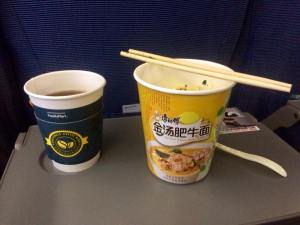
Lessons in Flexibility: Ambiguity and flexibility are a way of life when living abroad. There are so many things that happen around us that we can’t explain, and without command of the local language, what can we do but accept them and move on? Usually it’s just something small that completely confuses us, but also makes us laugh in our ignorance. One such example of this happened when my parents were visiting. We were on a train from Huangshan to Hefei, minding our own business, snacking and playing cards when one of the train attendants stood beside our row and asked us to get out of our seats. Tucker and I have been on a lot of trains in China and had never experienced anything like this before, so we were slightly confused…but we did what they asked. We got up, grabbed all of our belongings, stood in the aisle and watched them switch the seats around, so that they were facing the opposite direction. We sat back down and watched them go row by row, asking everyone to do the same. We thought it was very odd to displace everyone for a little reorganizing; however, we soon realized that at the next station the train would be changing tracks and directions. They wanted everyone to be facing forward for the next leg of the trip, perhaps to ward against any bouts of motion sickness. For us, it was just another go-with-the-flow moment that had us all super confused at the time!
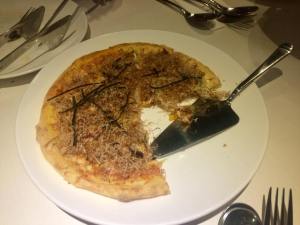
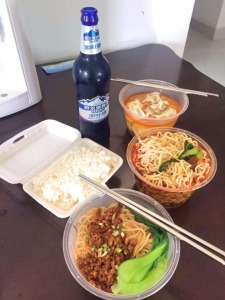
Food is another area where I have had to become pretty flexible. Picky eaters don’t really exist in China, so I’ve been working on my acceptance of various foods (but also on my language skills because there are some things that I just can’t bring myself to try!) However, sometimes the flexibility stems not from the food itself but from my ability (or inability) to successfully da bao. Da bao is essentially “take out” and is very useful on my way home from work, but sometimes I run into issues. One evening on my way home, I stopped at one of the campus canteens to pick up dinner for Tucker and myself. I ordered two noodle dishes for us, but when I was asked about the sides, I mistakenly ordered one bowl of rice instead of two. No big deal, they just put both meals into one container and on top of it, the one bowl of rice. I was a little annoyed with myself for the language mistake, so as I started to bike home with the to-go bag hanging from my handlebars, my mind was elsewhere. Unfortunately, my inattention and a plastic bag that wasn’t quite as strong as I thought led to a slight mishap. I hit a somewhat large bump in the road, and the food hit the ground. The one bowl of rice I had been worried about became one pile of rice, and we ended up having leftovers for dinner instead. Oops. The good news is a couple of students got ringside seats to my little comedy sketch as they sat on the curb right in front of the scene!
Lessons in Safety: Safety in China is a bit different than in the US. There isn’t a litigation mindset here, so it’s pretty much fend for yourself, and if you’re dumb enough to try it, then you deserve any accidents that come your way. For the most part, I have no issue with the safety standards because I typically walk a pretty safe line, no dangling from balconies or standing on ottomans on chairs on tables for me – events we have, indeed, witnessed from our apartment. However, the driving here does scare me a bit. One time on a bus from Hefei to Sanhe (about an hours’ drive) we got a bit of an arm workout and a fun story from this difference in driving habits. The bus driver was clearly a wannabe race car driver, weaving when he could, driving on the wrong side of the road to pass traffic, and subsequently needing to slam on the breaks often. Unfortunately this was a rather full bus, so Tucker and I were dangling from the overhead hand grips, wildly swinging around every time the bus moved. At one point, Tucker was looking at his phone with his free hand when the bus stopped abruptly, sending everyone flying forward so hard that Tucker practically threw his phone. Luckily, it landed in the seat of an older man, who upon sitting back down, felt something a little different, and retrieved the phone for us. We all had a good chuckle, pointed at the crazy driver, and left as new friends.
There’s also a stereotype that things made in China are cheap and possibly unsafe because of the quality. We haven’t found that to be true with most things, but we do live in a converted dorm suite, where the furniture we were provided is possibly a bit on the cheap side and is definitely pre-owned (and owned and owned and owned). Some pieces are clearly showing signs of wear and tear (significant signs that often have me wondering what these students did that was so hard on the furniture!), but generally it all feels pretty sturdy. Or so we thought upon moving in. Flash forward a few months, we’re sitting on the bed voice-calling Tucker’s mom, and we hear some creaking and cracking. The bed slowly starts sinking beneath us until there’s a loud CRACK, and the mattress falls to the floor. Uh oh. Apparently the frame was missing a few screws…good thing we bought a small tool box the week before.
Lessons in Using a Second Language: Eventually I will need to write a post entirely about the language difficulties (and occasional successes) we experience pretty much every day, but for now I’ll limit myself to two incidents that had us laughing for days. The first happened when we were ordering a meal. It’s an incredible challenge to order food here because while we may know the words for a lot of what we like to order and eat, we don’t always know the characters. On this particular day, I wanted something cold, so I asked for cold vegetables. The server pointed to a small section on the menu, and Tucker picked an item at random. No problem, we do this all the time; it’s usually variations of the same dish but prepared with different vegetables. A few minutes later the server comes back not with cold vegetables, but with a cold, fully intact carcass of a small bird. Umm, what?! I’m not a very adventurous eater, so this was a big nope from me. It seems we were randomly choosing from the list of liang cai (cold dishes) instead of liang shucai (cold vegetables). We won’t make that mistake again!
Luckily the language errors (and lessons) are not just on our side. Sometimes it’s our Chinese friends that have us laughing with their choice of words/phrases and their occasional mistakes. One of our best friends in China has beautiful English, but as any great language learner, she is always trying to add new vocabulary and expressions to her repertoire. One time as we were riding downtown on a public bus, we asked her how much further until we needed to get off. She looked ahead and reported that the stop we need is just after we “take a left at the intercourse”. Tucker and I couldn’t keep straight faces. She asked us what was so weird about that – “inter” meaning between and “course” meaning path. It totally makes sense! But nope, intersection, “intersection” was the word she wanted.
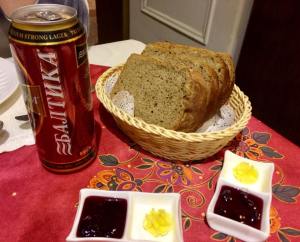
Lessons in Noticing the Small Things: Living abroad brings out the weirdest forms of nostalgia. I’m always up for a good dose of anything 90s related, but now we’re sometimes thrown into reminiscing about the strangest things. While we were visiting Harbin, a city near the Russian boarder, we went to a traditional Russian restaurant. We were so excited to have some of their delicious homemade bread and butter, some potatoes and meat in a thick sauce: the Eastern European specialties that we’ve been missing from Poland. What we did not expect was that the thing that brought on the most nostalgia was being in a restaurant where you could hear the clatter of everyone’s silverware! Eating with chopsticks for the previous six months had deprived us of that particular sound, which surprisingly, was very obvious after its sudden resurgence. I never realized how loud knives and forks can be or how much they remind me of home!
We can buy almost anything in China. I mean this is the land where most of our purchases in the US hail from, so it makes sense that anything and everything we want is available and can be delivered within a day or two here. However, for some reason, China hasn’t warmed up to the use of solid deodorant sticks. We have sprays and roll-ons, but not what I consider to be the “classic” deodorant, the white solid type. After a few months in China, we ran out of the deodorant we brought with us and started using the other types, but for me, it just wasn’t the same! Cue our trip to SE Asia. Thailand, Cambodia, and even Hong Kong had all the solid sticks we could possibly want! So we went a little crazy. We literally bought bagfuls and smuggled (okay, more like lugged) them from country to country until we safely stored them in our now deodorant-full apartment. It’s so interesting which items we’ve found ourselves clinging to! Some of the smallest things can make a huge difference and some of the larger ones we’ve never even noticed!

Lessons in Friendliness: The last couple of stories revolve around the friendliness of Chinese people. Perhaps coming from a particularly turbulent time in the US, after spending a year in famously aloof Europe, China has seemed very different when it comes to strangers and how/when they speak to each other, especially when one of the strangers is a waiguoren (foreigner). During one of the first few weeks of class, I was walking home when I saw a very large group of kids obviously on some type of field trip to the university. There must have been over 150 elementary school children, all in their little orange vests walking towards me in a rough line formation. As soon as one of them saw me, I promptly got approximately 150 different greetings: high fives or waves accompanied by “hello”, “hi”, and even a stunned “waiguoren” or two. It was adorable! After this and other similar experiences, I’ve realized that people here are usually really excited to see and interact with foreigners – they like that more people are choosing to visit or live in China. It’s the ultimate hosting gig for a country that places a lot of value in hospitality, and honestly, since moving here, I’ve found that I’ve also picked up some of these friendly and hospitable traits!
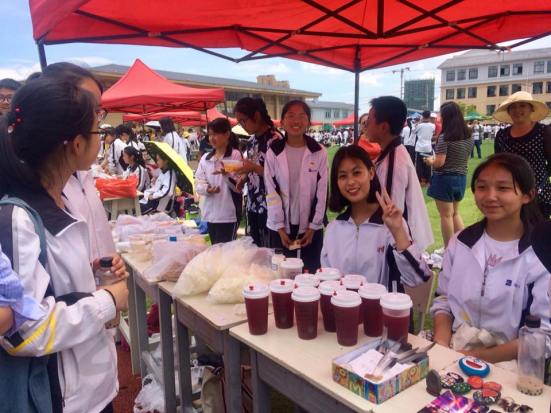
Another incredibly small moment of friendliness that completely caught Tucker and I by surprise happened in a mall elevator of all places. Typically people smile at us or kids will say “hello”, but for adults it’s a lot of pressure to try and speak English. Imagine trying to use your high school Spanish after so many years out of school. Embarrassing to say the least! However, every now and then we are surprised and excited when someone very kindly uses English just to further connect with us or help us out if/when they see us struggling with the extremely difficult Zhongwen (Chinese language). On one of our many mall elevator rides, I (as I happened to be near the front) held the doors open for a man who was at the back of the elevator as he made his way through the crowd. When he stepped out of the elevator, he casually turned back, said “thank you” in perfect standard English, and tipped his hat to us as the doors closed. For a moment I totally forgot where I was! To understand and to be understood is a truly powerful thing – something we take for granted when surrounded by others who speak the same language as we do. However, in this moment I was reminded of all the positive effects using someone’s first language can have on them, even if it’s something simple like “thank you”.
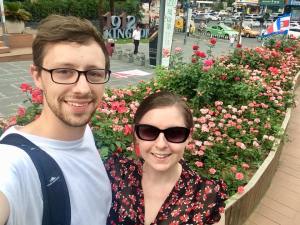
I have about a million more of these anecdotes and their subsequent lessons swirling around in my head. It truly seems like something has us bursting out in laughter just about every day in China. In fact, I think the ultimate lesson I’ve learned from my year living here is that there is no reason to fear the unknown – it’s really much more fun to just go with it and laugh along the way!


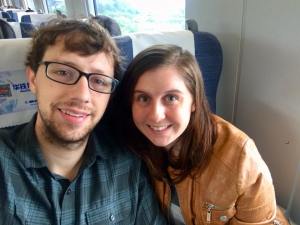










 As always, time seems to be whizzing by, and somehow the halfway point of this year’s EL Fellow Program is only a few days away. For my region’s midyear meeting, we’ll be gathering in Thailand and reflecting, sharing, and discussing what we’ve all been doing these last 5 months. I can’t wait to hear about the other Fellows and their experiences, but I also wanted to take some time to write down some of my own. I did something similar when I was halfway through my Fulbright grant, and I was amazed at how it shaped my focus for the next semester. So here it is: my progress report.
 Teaching: The most familiar part of my job is the teaching. I teach English/Linguistics courses to third year English majors at Anhui University in Hefei, China. Their specializations run from linguistics and translation to literature and journalism, and they have a vast array of future goals and career paths in mind. I absolutely love spending time with them in class, hearing their candid thoughts about American culture and the English language as we discuss the challenges of public speaking and critical thinking. As a teacher at AHU, it’s also part of my job to attend and present at Linguistics-related conferences (like ELTAM’s TESOL Conference in Mongolia and the Teacher’s Development Conference in Wuhan). I’ve also been asked to participate as a coach, a judge, or even a “question master” for the various language competitions that the university and the country seem to love! This semester I’ve been involved with the English writing competition, the public speaking competition, and the American culture competition, just to name a few. Additionally, as a somewhat rare (in Hefei at least), native-speaking English teacher, I was invited to lead the university’s English Corner, which meets every other week. This is a chance for dedicated students wanting additional practice to meet up, play some games, and have general conversation in English. It’s also a place where I can ask all my cultural questions, have a little fun with the students, and at the end of the day, call it “work”!


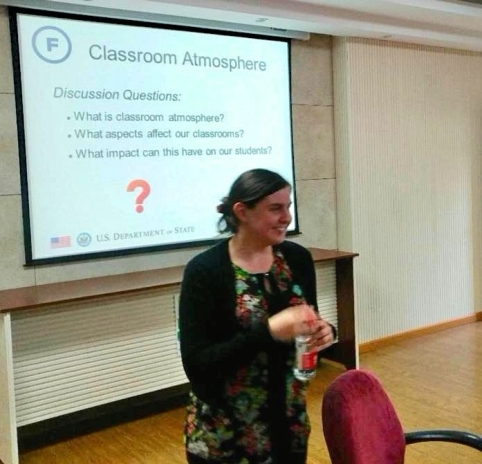 Teacher-Training: Another part of my job is teacher-training. Teachers in China are very interested in Western teaching styles, and are even more interested in teachers trained in Applied Linguistics (like me). For this reason, I usually have at least 1 or 2 visiting observers (usually other English teachers or graduate students) in my classes each week, taking notes on everything from the way I dress to the exact words that come out of my mouth. Luckily I have been able to observe a few of them in return, and we’re working together on blending the education styles of the two countries, as well as discussing concepts like classroom atmosphere and student-teacher roles. I’ve also been really active in facilitating online professional development courses/webinars for my colleagues. They’re extremely motivated teachers, but they don’t always have access to resources like that. Luckily the Fellow program (with the help of American English) provides them in spades. Workshops are another large part of my work here. At my host institution, my supervisor and I have set up monthly seminars where I, a visiting Fellow from another part of China, and occasionally local professors give presentations and workshops to the English department at AHU. I’ve also been able to travel to other universities in China to give these workshops and participate in their professional development activities. It has been a great way to meet new teachers, collaborate with other Fellows, and learn what life is like in other parts of China.


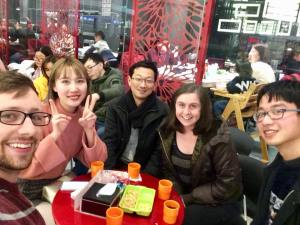 Cultural Exchange: Possibly my favorite part of being in a foreign country is the cultural exchange. Whether it’s through our traveling around the country or through our grocery store encounters, I never get bored of learning the little things about life in a new place. Tucker and I have been very fortunate in the amount of travel we’ve been able to do thus far in and around China. In the last five months we’ve visited Ulaanbaatar, Mongolia and the Chinese cities of Beijing, Nanjing, Shanghai, Wuhan, Huangshan, Xi’an, and Harbin. Some visits were for work, others for pleasure, but all were in the name of cultural exchange. We’ve met so many amazing new friends, seen some absolutely incredible things, and, of course, added to our growing knowledge of this country and its culture. I’m also doing my best to share my experiences (big and small) not only with my students, friends, and colleagues here, but also with anyone else who’s interested (even if it’s just my mom). I’ve become a “social media person”, posting consistently on Facebook, Twitter, Instagram, and WeChat (one of China’s biggest social media apps). I’ve also surprised myself by adding to this blog more than my previously dictated “once a month”. It turns out there is just so much I want to share about living in China! It’s also really fun to share what life was like for us in the US. My colleagues are interested so they can add cultural aspects to their classrooms, my students are interested so they can connect further with the language, and my friends are interested so they can understand why we are so weird about some things (for example, the fact that we enjoy drinking cold water even in winter – weirdos!).


 Expat Life: The last element of my time as an English Language Fellow in China has to be my experience of living the expat life. I decided quite a while ago that the expat life is the life for me, but now in my second year of actually living it, I decided to fully embrace the lifestyle. I’ve joined several expat groups here in Hefei and have met some amazing people that share so much in common with me and Tucker. We’ve had game nights, beer tastings, and other adventures that are made all the more fun by our shared experience of being the “outsiders” here. It’s amazing how quickly groups of expats become like family! Recently I’ve also become a “Warden”, which sounds like a bad thing, but it’s actually sort of a go-between for the US Consulates and any Americans living abroad. Of course, to me another important part of expat life is learning to blend in. Honestly, it’s a bit harder here than it was in Poland, but regardless, Tucker and I are studying Chinese and doing our best to live like locals. We buy our non-perishables from Taobao, we use WeChat or Alipay to pay for everything, and we’ve even been known to yell for the servers (fuwuyuan!) when needed. It’s been an incredibly exciting five months, full of new opportunities, unforgettable experiences, funny situations, personal developments, and so much more. I can’t wait to see what the next half will bring!


 Happy holidays from Hefei! Tucker and I are now into our fifth month of living in China and have just made it through our first holiday season in the Far East. China is the first country we’ve lived in that doesn’t celebrate Christmas as a national holiday, so we were pretty curious to see what it would be like over here. I’ve collected about a month’s worth of holiday observations to share with everyone, so let’s get to it!
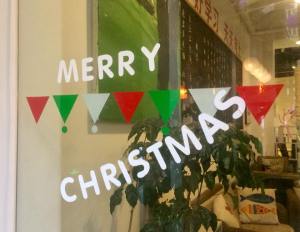
 The Lead Up: Holiday decorations were everywhere! Early in December we started noticing Christmas decorations around the city: large, lighted trees, festive window stickers, red bows, etc. Our local supermarkets put up displays and seasonal aisles that sold everything from ornaments and stuffed Rudolphs to full-sized Santa animatronics (only mildly creepy). I had a great time buying a new set of Christmas décor (we now have a set on three separate continents) for our apartment here: stockings, lights, Santa hats, a small tree, etc. We were also able to find some seasonal treats like Andes candies, hot cocoa, and Ferrero Rochers as well. The malls were probably the biggest Christmas perpetrators with decorations on just about every store front, staircase, and atrium. People were often lined up to get their pictures with Santa or to enter the “Secret Wonderland”, which to us looked like a small, dark room with tons of white Christmas lights on the ceiling. Of course, many American chains like Starbucks and Dairy Queen also had their usual holiday specials advertised in the usual places, and Christmas music (particularly Jingle Bells) could be heard in most stores and restaurants throughout the month.


 Okay, I realize Milwaukee is not the most glamorous or exotic city on anyone’s list, but hear me out. This smallish city, famous for its breweries and cheese, is only about an hour north of Chicago. Perhaps because of this, it can sometimes be overshadowed by the fame of its neighbor; however, in addition to the flavorful brews and delicious cheese curds, the city also lies along Lake Michigan with a river running straight through its center (sound familiar?). It also has a very strong European influence, which can be seen in the architecture and abundance of towering cathedrals. It might be less than half the size of Chicago (and about half as expensive!), but this city has been modernizing in a way that would make any European enthusiast proud. Many historical neighborhoods have been beautifully restored, the additions of a city Riverwalk and a new park have livened up the outdoor scene, and if you’re brave enough to endure the temperatures, the city is absolutely breathtaking in the winter.


 The capital city of Ukraine has had a bit of a bumpy ride over the past few decades, but that isn’t so evident when traipsing around the city as an excited tourist. Although Ukraine is not in the EU yet, you’ll find many of the same European conveniences backpackers and travelers alike have come to expect: wonderful public transportation, many downtown hostels and hotels, and a slew of monuments, churches, and parks to wander around. The city is known for its monasteries and domed, Orthodox churches, but I remember it most for it’s extremely cheap and delicious food! Most signs are in Cyrillic (like the Russian alphabet), which I think adds greatly to the city’s charm, but if you’re worried about language skills, the English spoken is quite common and understandable, especially by the younger generation.


 “Huang-what?”, you might be asking yourself. Huangshan or Yellow Mountain is not particularly well-known outside of China, except perhaps by avid hikers or mountaineers. However, this city and the mountain it takes its name from are spectacular places for anyone to visit. Lying about 4 hours west of Shanghai (by train), Huangshan is a destination that really has it all: beautiful nature, historical sites, and modern shopping. It might not be one of the largest cities in China (or even close), but it’s still pretty large from my perspective, with a population of 1.5 million. Just outside the city, accessible by bus are the mountains (to the north) and the preserved ancient towns of Hongcun and Xidi (to the northwest). All are worth a visit, and will remind people why China is often referred to as a traveler’s dream.


 Known officially as the Former Yugoslav Republic of Macedonia (FYROM), Macedonia is a small country in southern Europe that most people wouldn’t be able to pick out on a map. The capital city of Skopje, lies in the north of the country and is completely surrounded by mountains, giving it spectacular views from every angle. The city was heavily influenced by ancient Greece, which you can easily see in the large stone bridges and plethora of white columns, but it uses the Cyrillic alphabet (like Russia) and also claims one of the largest numbers of mosques in Europe: talk about a melting pot! The culture there is a unique mix all seeming to revolve around food, the incredibly refreshing


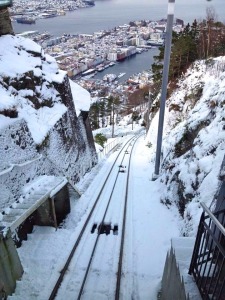 Ah, Norway! Land of trolls, fjords, and the midnight sun. When I hear people planning a trip to Norway, usually Oslo and other cities in the southern part of the country are the first to be mentioned. However, I would much rather choose Bergen, a little further north, nestled into the fjords on the country’s west coast. This city in winter or summer is a great jumping off point for further exploration of the fjords, but it has enough to do in town that you might not even want to leave! From town squares and colorful row houses to funiculars and downhill sledding, Bergen has a lot to offer for those who prefer to spend their time on activities that don’t break the bank. However, when the time comes to spend a little cash, a great way to do it is on the food! There is a wide variety available here from traditional Scandinavian specialties to a TGIFridays; the choice is really up to you!


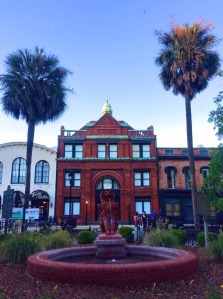 Another destination from my homeland (home state even) is Savannah, GA. This seaside city is always equated with the “old south”: plantation houses, buttery foods, and a slower pace of life come to mind. However, this city is a lot more than that. It can cater to a younger crowd nowadays with its bar streets and beaches, but there are also tree lined avenues, old cemeteries, and little antique shops that are great for the traveler with varied interests. Savannah is not as famous as perhaps New Orleans or Charleston, but maybe for that reason, I found it to be less affected by outside influences. It is a city that it uniquely itself: beautiful and eclectic, much like many Georgians I know.


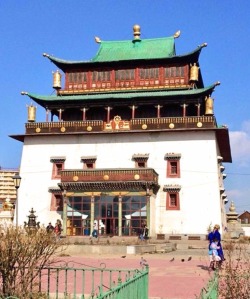 One of my more recent discoveries, Ulaanbaatar is an unexpected gem of the travel world. A unique combination of different cultures set in a landscape like no other I’ve seen. The city itself has plenty of sights and traditional Mongolian activities and foods, but just outside the city is a completely different side of life in one of the largest landlocked countries in the world. A nearby national park gives breathtaking views of the mountains and vast plains of Mongolia, while wild horses and yak stand on the side of the road grazing in the fields or drinking from the winding rivers. It’s a bit more rugged outside the city, but no less friendly. Ulaanbaatar is consistently ranked highly by travelers who are lucky enough to go there. The lamb dumplings alone are worth the journey!


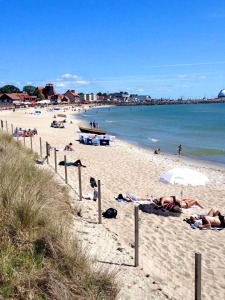 This destination (and the whole country really) is near and dear to my heart. I spent a year living in Poland and made it my job to explore every corner of the country. What I found was a series of destinations that many people gloss over in favor or Warsaw or Krakow, the more international locales. However, when I think of places to visit in Poland, my mind first goes to its Baltic Coast. Just across the Baltic sea from Sweden, Poland’s “Tricity” of Gdansk, Sopot, and Gdynia sits about four hours north of Warsaw (by car). These cities have an incredibly interesting history, which has allowed them to retain their distinct and varied atmospheres. Gdansk, formally German, has an industrious feel, an international airport, and an impressive city center. Sopot is a resort town with Europe’s longest wooden boardwalk and many fancy shops and hotels. And finally Gdynia, the most Polish of the three, boasts beautiful beaches, several hilly parks, and a ferry to Hel and back. Who wouldn’t want to to see all of that?!






 Dani Francuz Rose