
The New Year is here! And like many people, it has me both reminiscing about 2018 and planning for the upcoming year. In particular, Tucker and I have been looking at what we’ve accomplished China-wise since our move to Hefei. It’s beginning to hit us that we only have a few months left of living in this incredible country, so our China bucket list has become a bit of a priority. With this in mind, here are some of the things we accomplished in 2018 and a few more that we’re still hoping to cross off before our impending departure. If you’re ever in China, I highly recommend each item on this list!
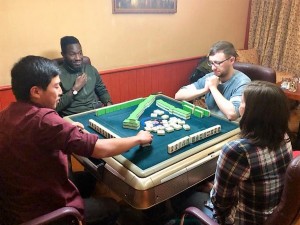 ✔ Learn to play Mahjong
As game lovers, we knew we would have to learn to play Mahjong while in China, but what we didn’t expect was how much we’d love it! Since our learning the game, we have bought our own set of tiles and have played in many a Mahjong room. It’s a bit like Gin Rummy, but with added Chinese practice – perfect for me!
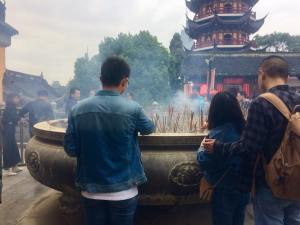 ✔ Visit a Buddhist Temple
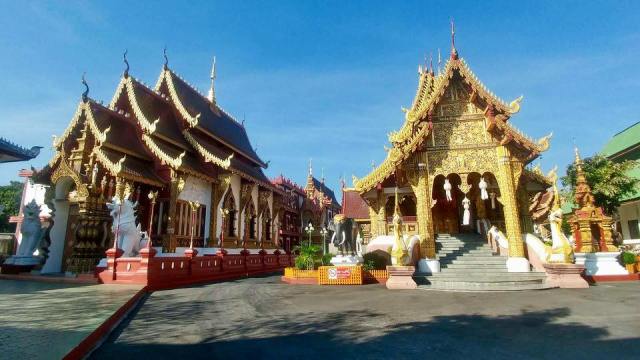
Although China as a whole isn’t very religious, there are many temples still in use around the country. When we visited Nanjing during Golden Week last year, we climbed to the top of Jiming Temple and burned incense in order to strip away our negative qualities and purify our inner-selves (or so they say).
 ✔ Perfect our Chopsticks Skills
Just like many other Chinese takeout lovers around the world, we weren’t exactly new to chopsticks; however, there were many foods we had never attempted to eat with them before (like soup or salad for instance). But it didn’t take long for our hand cramps to disappear, leaving behind beautiful chopstick form and a sense of mastery.
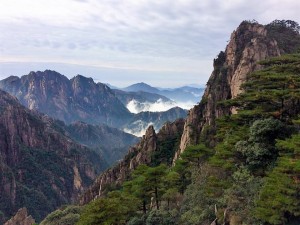 ✔ Hike Huangshan
We live in Anhui province, which is famous for having the most beautiful mountain in China: Huangshan (Yellow Mountain). It was made very clear to us that we had to visit the mountain, preferably once in each season. Well, a year and a half in, and we’ve made it to the top of Huangshan twice – once in November and once in April.
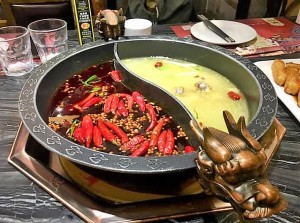 ✔ Share Hotpot and Selfies with Friends
This is a bucket list item that we have happily done dozens of times. If grabbing a burger and a beer is the American way of hanging out with friends, hotpot and selfies are the Chinese way, and we’ve had so much fun every time!
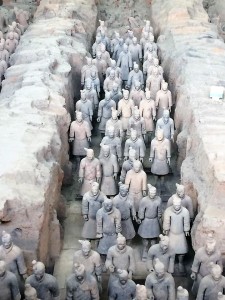
✔ Stare in Awe at the Terra-Cotta Warriors
History was never my favorite subject, but when it’s right in front of you, it’s hard to feel that way. The massive tomb and insane number of true-to-size warriors, horses, and chariots is something I’ll never forget. There is so much history here, and I’m happy to be taking it all in.
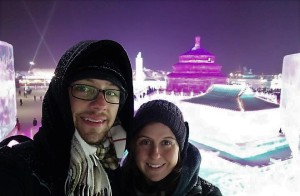
✔ Visit the Harbin Ice and Snow Festival
Another absolute must-do for us in China was the Ice Festival in the far north of Dongbei. We’d heard about and seen many pictures of this event, but being surrounded in buildings made of ice was way cooler (see what I did there) than anything we could have imagined. Honestly, I’m still not sure if it was the cold or the beautiful sculptures that took our breath away.
 ✔ Devour the Dim Sum in South China
When people ask me what my favorite Chinese food is, I often say Guangdong style. Sweet BBQ pork buns, light and fresh spring rolls, fluffy pineapple pastries, never ending tea for the table; dim sum is my favorite, and the best version we’ve ever had was in the region itself, in the city of Guangzhou.
 ✔ Wander around West Lake
There’s a Chinese saying “in Heaven there is paradise, on Earth, Suzhou and Hangzhou”. These are two cities know for their beauty and ancient Chinese charm. Tucker and I have been fortunate enough to visit them both (multiple times), and can now say with certainty that West Lake is one of the prettiest places in all of China.
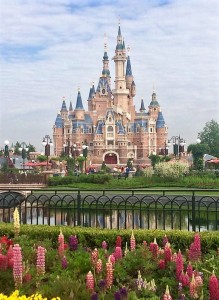 ✔ Feel like a Kid at Disneyland Shanghai
Everyone knows my family loves Disney, so of course it was on our list to visit the newest of the parks. How can I describe it as anything other than magical? A large pink castle, new roller coasters to ride, completely different foods and snacks to try, plus, we went with my parents which meant that we also got a much-needed dose of family time.
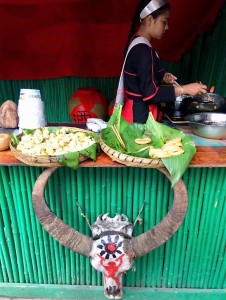 ✔ Learn about the Minority Groups in China
China is a big place with a lot of people, and in many regions that means there are different ethnicities mixed in. When we visited Yunnan (in China’s southwest corner), we were able to learn more about these groups of people, where they live, what languages they speak, and how they have coped with the rapidly changing, modern China.
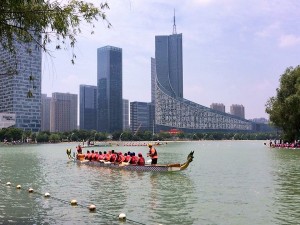 ✔ Celebrate Dragon Boat Festival
Every summer, China celebrates an ancient legend by racing their famous dragon boats and eating lots of zongzi (think Chinese tamales). We were able to take part in these festivities by joining the crowds at Hefei’s Swan Lake for the races and following them up with a home-cooked meal (including many varieties of zongzi) at a colleague’s house.
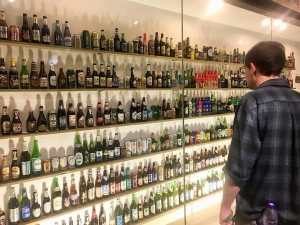 ✔ Drink Tsingtao from the Source
One of the most popular beers in China (thus one of the most popular beers in the world) is Tsingtao, which comes from the previously German-occupied city of Qingdao. As beer lovers, Tucker and I were very excited to traipse around this coastal city tasting all the local brews. We also visited the brewery itself, which had surprises around every corner – including a drunkenness simulator and a pop-up rave with pandas!
✔ Show our Families around our Home
This is one of the things I’m most thankful to have crossed off our list. We have both been lucky enough to host family members in China. It’s so much fun for us to show the places we love to the people we love. My parents visited in the spring, and Tucker’s mom and aunt in the fall. So many memories made and priceless experiences shared in-person this time!



✔ Explore some Rice Paddies
When you picture China maybe you picture vast terraced mountains like these. I can’t remember what I first pictured when thinking of China, but I hope it was this. Although now I know that views like this aren’t around every corner, it doesn’t change the fact that when you do happen across them, you can’t help but be amazed. Definitely makes me think about my daily bowl of rice a little differently.
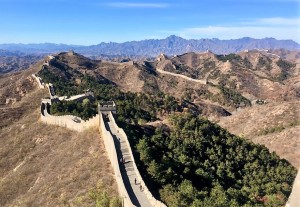 ✔ Walk along the Great Wall
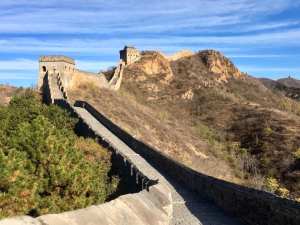
The most famous landmark in all of China has to be the Great Wall. Of course, it’s on every China bucket list, but we took it one step further. We have actually walked on the 3 most famous sections of the Great Wall: Mutianyu, Badaling, and Jinshanling. Three sections, in three different seasons. Maybe we’ll have to come back one winter to see a fourth, snowy section.
 ✔ Make Dumplings from Scratch
Although I’m not really into cooking, I did want to experience the magic of Chinese cuisine firsthand. We made a friend just after we arrived in China who said she loves to cook, and offered to show us how to make our own dumplings. Filling, wrappers, everything! We had a great time shopping, preparing, cooking, and eating, and now I can say I’ve done it at least once!
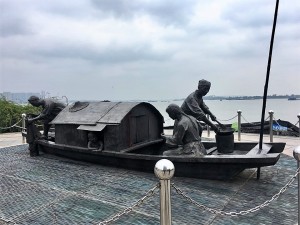 ✔ Crisscross the Yangtze
Along with the Great Wall, the Yangtze river is synonymous with China in my mind. I wanted to walk along it, cruise down it, maybe even swim in it (hard “no” on that now though). The river is central to China in so many ways, and nothing seems to remind me of what I thought about China prior to coming here quite like the Great River.
✔ View the Real Pandora at Zhangjiajie
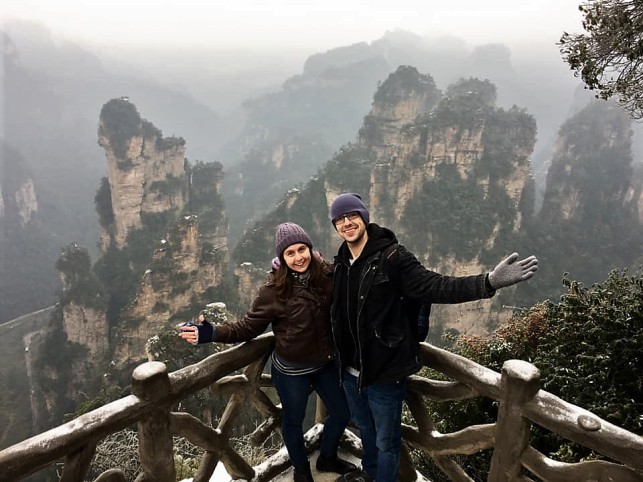
So many places ended up on our list because of the recommendations of others, and Zhangjiajie was one of these. It’s the inspiration behind Pandora’s floating mountains in the movie Avatar, but I think hands down the real mountains were more beautiful. We visited on a snowy day in December and were definitely drawn into another world.
✔ Soak in some Natural Hot Springs
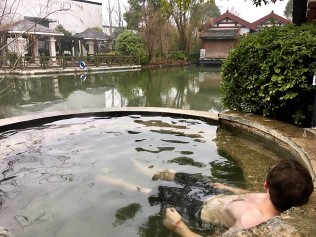
The most recently completed item on our list was to relax and enjoy some of nature’s jacuzzis (otherwise known as hot springs). Near Hefei is a city called Chaohu, which is home to one of the largest freshwater lakes in China as well as a number of natural hot springs. It was a great way to end the semester, and begin thinking about what’s coming up on our collective agenda.
Still to come…
□ See some Pandas in Chengdu
In just a few days, we’ll be on our way to Sichuan – a province in the west of China, famous for housing the country’s national treasure and some of the spiciest food on the continent. Can’t wait!
□ Gamble in Macau
We meant to go to Macau last year, but due to poor planning and holiday crowds, we didn’t make it. Luckily, it’s back on the schedule for later this month! It’s known as the Vegas of the East, so maybe we’ll finally have a little luck at a casino.
□ Try Acupuncture
While not as popular as I thought it would be in China, as a TCM (Traditional Chinese Medicine) practice, both Tucker and I are eager to try it out. He’s not a huge fan of needles though – wish us luck!
□ Practice Chinese Calligraphy
Shufa (or calligraphy) is a well-respected art form here, and it’s easy to see why. Chinese characters are rich in meaning and symbolism, which is why calligraphy here is more than just nice handwriting. It’s often compared to poetry or painting, and I’m super excited to try out my abilities.
□ Sample the Top 10 Noodles and Top 10 Teas of China
One last ongoing item on our list is to try the most famous noodles and most famous teas from around China. We’re always on the lookout for items on our list as we travel around, but we’ve also been able to scout out some imported noodles/teas here in Hefei as well. Gotta try ’em all!
In reality, there are so many more things that made it onto our China bucket list, and we seemingly add something new just about every week, ensuring there’s no end to our exploration. However, these definitely stand out as some of the highlights so far – experiences that we’re not likely to ever forget. What a truly amazing way to spend our 2018! Here’s to even more adventures in 2019!
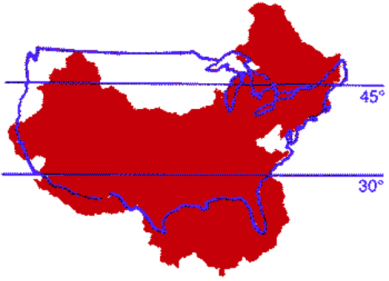
 Perhaps due to its location on the opposite side of the globe or maybe because of its notorious closed-door periods in history, China is a place with a lot of misconceptions. I remember when I first visited China; it was absolutely nothing like I thought it would be. Since then, I’ve continually been surprised by China and have had the pleasure of watching several others break some of their preconceived notions on their first trips to this land in the Far East. While pretty much everything I post (let’s be honest, it’s mostly photos) is in some way shaping people’s views of this country I now call home, sometimes there’s a need for more explicit explanations. Some things just can’t be seen in photos, but can definitely be felt and discussed (and often are if given enough time). However, since not everyone can come to China and experience it all in person, I’d like to share some of my thoughts and discoveries (in written form) on some of the impressions that seem to have a strong effect on outsiders’ views of China, impressions that are often among the first to be thrown into question upon closer observation.

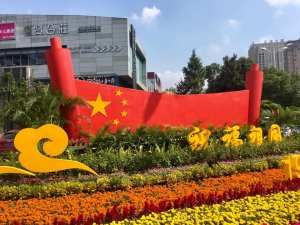 After delving into just one policy that definitely captured the world’s attention, I think another misconception of China lies in the government as a whole. When I told friends and family I’d be coming to China, this was a main point of contention. How could you live in a country that’s not free? Aren’t you worried about the communists? In hindsight, it must have got into my head a little because I now realize that when I first arrived I was a little careful about what I said, how I interacted with Party Members, etc. Now I’ve been here for over a year, and I see that that was totally necessary. While the government has many features of communism, it’s actually a hybrid of several political systems. It’s much more complicated than I care to go into, especially because unlike the US, changes within the government here seem to be made more quickly. China is still figuring out exactly how they want their government and economy to fit and work together, and due to their long history of preferring guidelines to written laws, it’s difficult to nail down the specifics regardless.



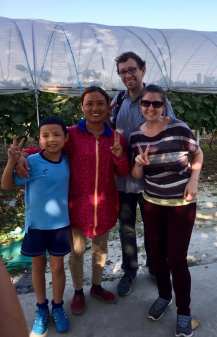


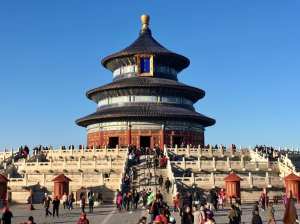 Yikes! That was a lot of information about China! I should probably start writing a book or something because I have learned so much from my time here. More than I could have possibly imagined, and the longer I’m here, the more I know I’ll learn. I’m extremely thankful that I have been given this opportunity to better understand the people and the culture of the China, and I love sharing what I learn on both sides of the world. Recognizing some of my own misconceptions has been fascinating, but equally interesting is discovering others’ misconceptions of me (and America as a whole). Maybe that’ll be a future post! For now, I’m going to continue soaking it all up, remembering that things aren’t often as they first appear.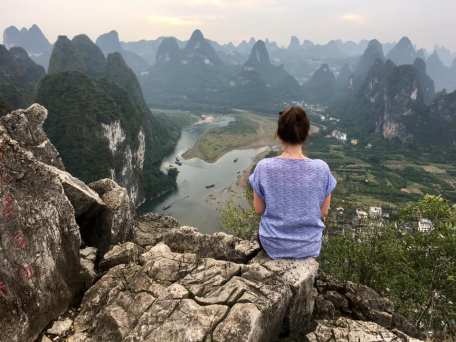
 One of my goals this year, as I mentioned in my last post, is to really focus on my Mandarin skills. I’m planning to take the HSK before we leave next summer, and I’d really like to do well. The HSK is a Chinese proficiency test for foreigners learning the language. The highest score is a 6, which would demonstrate “a learner who can easily understand any information in Chinese and is capable of smoothly expressing themselves in written or oral form”. I’m aiming for a 3 (haha!), and since I’m likely going on this journey alone (Tucker really has no interest), I’d like to at least share a little bit about what makes Chinese such a difficult language to learn.

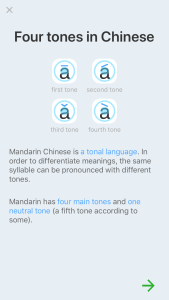 Another problem we often encounter with pinyin is that it is more often than not missing the diacritic marks. Those marks represent the four tones of Mandarin, and are essential in its pronunciation. Unlike in English, changing the pitch of your voice while speaking Chinese can actually change the words you are saying. The pronunciation of mā (“mom”), má (“hemp”), mǎ (“horse”), and mà (“to scold”) only differs in tone. Unfortunately for lazy, toneless English speakers (like me), this makes it really hard for native Mandarin speakers to understand exactly what we’re saying. We try for “mom” and end up with “horse”, something which I hope has been more entertaining than irritating for them!
 Train = Fire + Car
 Alright now! Who’s ready to learn this with me?! Chinese is definitely a language on the rise as far as power and prestige go. Much like what happened to English in the 1700s, increases in immigration, tourism, and business are spreading Chinese to all parts of the globe. In Australia, I was surprised and delighted to find Mandarin on most signage, and, even in Georgia/Florida (quite far away from China), maps and other tourist information can often be found in Mandarin. Some linguists refer to Chinese as the language of the future, and while right now it’s more painfully in my present, I hope to keep it around for my future as well! Wish me luck!

















 Dani Francuz Rose