

Earlier this year I read China in Ten Words by Hua Yu, which I would highly recommend! It’s a short collection of personal stories centered around ten words that the author feels represent China and its history, people, culture, etc. As someone who (at the time) was living in China and had spent the previous two years learning all about said culture, I absolutely loved reading from the perspective of Yu, a native Chinese. He touched on so many of the things I have shared in my various posts and gave new meaning to some of the things Tucker and I experienced ourselves as residents in China. In short, I loved it so much that I thought maybe I could join Yu in sharing a bit about my own culture or at least how I, one American, view it.
Honestly, this is a slight departure for me because I typically choose to write about my discoveries and observations on places and cultures that I am newly discovering myself, but this required a different sort of reflection. Even though I definitely can’t live up to Hua Yu’s work with one short blog post, I hope to share a few of the traits and characteristics (in no particular order) that, for me, make America, America.
#1 Independent
 As an English teacher I’m often asked to describe the United States and Americans, and for as long as I can remember, the first word that has come to mind is: independent. We love to feel independent! Independent financially, politically, emotionally; in our families, in our workplace, and in the world. Many of us longed to “be out on our own” at a very young age, and most Americans follow that course throughout their lives. We love expressions like “pull yourself up by your bootstraps” and “stand on your own two feet”. In our culture, there is an immense pride in (and often an expectation to) figure things out on our own. Whether this comes from the pioneer spirit of our history or from Hollywood’s “steal the spotlight” mentality, we can see the strong value placed on independence in all aspects of American lives. From our first declaration as a prospective country to our preference for ordering individual, non-shared meals, we focus every day on our individuality and personal independence, and if ever we feel it’s being threatened, look out.
#2 Entertainment
 You might have noticed that I didn’t get very far into this post without mentioning Hollywood. As much as many Americans like to think of that place as somehow “other”, the truth is, we are massive consumers (and producers) of entertainment, all thanks to Tinseltown. In fact, many of my students from all over the world have surprised me with facts and details about life in the US that were gleaned entirely from our movies and TV; some have even confessed that’s how they started learning English or even why they continue today. Of course, what they see in the movies is not always true to American life, but there are definitely many of our values and perspectives shared through our obsession with entertainment. It’s hard to imagine America without movie trailers, award shows, film conventions, and dedicated fandoms. As someone who hasn’t seen such American classics as the Godfather, Stars Wars, or Top Gun, I’ve been described a few times as “simply unamerican”, but I promise I’ll get to them eventually!
#3 Direct
Being told I’m unamerican (even jokingly) to my face brings me to my next Americanism. We are a direct people. After living in China for a few years, I know this to be absolutely true of Americans. We like to be told upfront, no matter what it is, and often regardless of how it’s said. I’ve heard people refer to Americans as blunt or straightforward, and although we aren’t always trying to be, we are often quite direct in our daily lives. Imagine communicating with someone (a family member, a colleague, or even a stranger) and not being able to figure out what they mean. You would probably want to shake them and say “stop beating around the bush” or “just break it to me”. We have a certain intolerance for ambiguousness coupled with the idea that things should be said and done as efficiently as possible, feelings be damned. This is why in our culture it’s perfectly normal to decline invitations or to challenge a superior. We would rather ruffle some feathers right off the bat than leave things vague or unclear.
#4 Patriotic
 Another trait that I associate with America is our deep patriotism. We love our flag, our national anthem, and the values that we have long attached to our country, such as freedom, perseverance, and justice. Although patriotism means something a little different to each of us, as Americans this is our home, and we feel a certain pride and responsibility in that. Whether we show these feelings by hanging a flag outside our house, voting in every election, or representing our values abroad, we all like to feel that we have a role to play for America, and we’re happy to do it. Perhaps because we grew up with stories of how hard our forefathers, suffragettes, and civil rights activists fought for us to have what we have today, the sense that we need to take up the baton and continue to work for a better homeland has been deeply instilled. Or who knows, maybe it was just hearing that Lee Greenwood song year after year.
#5 Dreamers
 Although this word has taken on new meaning and significance in the last few years, the American Dream and the people who embody it are not new, nor I think are they bound by political lines. America was founded on dreams: dreams of a new nation, dreams of equal representation, dreams of prosperity. We can still hear the US referred to as a “Land of Opportunity” from both inside and out. We love the fact that “if you can dream it, you can do it”, and thanks to our lack of a formal class system, many Americans have been able to make it happen all throughout our history. Most of us have immigrants in our ancestry, which is maybe one of the most classic versions of the American Dream. Others have seen their dreams come true in regards to socioeconomic status or overall success. Just like independence, Americans value people who dream big and work hard to make it happen. In short, we believe dreams can come true.
#6 Divided
 Dreams are wonderful, but all dreams are based in some sort of reality. And for Americans, right now that reality is a strong division. Party lines are more evident than ever, generation gaps and racial divides exist, and there’s no doubt that whatever the topic of conversation, people tend to divide up into various groups or “sides”. We have the Left and the Right, Boomers and Millennials, white collar and blue collar, Black and white, gay and straight, religious and non-religious, and so many other labels that, like it or not, separate us in some way from our fellow Americans. Although we are the “United” States and a supposed “Melting Pot”, many events have recently been shining a spotlight on our divisions and differences instead. Diversity can often beget division, or at least the perception of division, but I think we’re all also aware of the classic “United we stand; divided we fall”. Trends change everyday, and we can change as well.

#7 Private
Another American feature that stands out to me is our penchant for privacy. On the whole, Americans are quite private (even with the growing popularity of oversharing on social media). We like privacy fences and secure passwords, and we fear Alexa and Siri are gleaning too much information from us. We have all sorts of privacy laws and generally feel that keeping things to ourselves is one of our inalienable rights. I often have students ask me “how old are you?”, “how much do you make?”, “why don’t you have kids?” and other such questions that, as an American, leave me feeling like my privacy has been breached. We talk about “personal boundaries” and “invasions of privacy” fairly regularly – both in the physical and figurative senses. It’s typically very clear to Americans where “the line” is and our use of small talk often demonstrates it: weather, sports, family members – all good; religion, politics, or anything “too personal”, strictly off the table.
#8 Friendly

Although we might like keeping things to ourselves at times, we are usually still quite good at small talk and making friends. From the outside looking in, Americans are often viewed as very friendly. We’re often smiling for no reason, making jokes with strangers about the broken elevator, or lending a hand in the form of opening doors for others or picking up something that has been dropped. Basically, we’re masters at “Meet-Cute Stories”. I think the reason we often come across as overly friendly is because we’re all pretty much willing to do these things regardless of where we are, who we’re with, or what we’re doing. We also tend to retell these little anecdotes throughout the rest of our day: “I ran into a man at the gas station, and you’ll never guess what he said…”, “Sorry, I’m late. I was chatting with a woman outside.”, etc. And don’t even get me started on what it’s like when two Americans meet while abroad; you’d think they had just met their long-lost cousin!
#9 Isolated
The US is big and only has two neighbors, a bit of a rarity in terms of geography, and these facts play into my next feature of “Americanness”: isolation. A large portion of Americans never feel the need to leave their homeland (and why would they with the bounty of things to do and see right at home?) or even keep track of what’s going on outside of their immediate surroundings. However, this tendency to face inward seems to contribute to a bit of ignorance about the rest of the world. You might have seen Jimmy Kimmel testing Americans on world geography, which as a geography nerd, definitely makes me cringe, but unlike other countries whose histories and even present day dealings have required a much more thorough knowledge of their surrounding nations, for Americans, it has rarely mattered (of course with increasing globalization that is changing every day). However, regardless of the underlying reasons, Americans can definitely be said to be “in our own little world”.
#10 Innovative
 Perhaps because we’ve always been in our own little world, the US has also been a hotbed for inventiveness and creativity right from its start. From Thomas Edison and Clara Barton to Bill Gates and Katie Bouman, Americans have contributed a great deal to global innovation. Even the average American likes to think and talk about the future, and we always, as Walt Disney famously said, “keep moving forward”. It’s no wonder our people were among the first to take to the skies, race to space, and create all types of digital media. We simply love to take risks and try something new. We have the phrase “necessity is the mother of invention”, but in America, it might not even require necessity.

So that’s my list. Of course, there are about a hundred words I sifted through before deciding on these ten! America is complicated; culture is complicated! And we can’t always fit everything into ten neat little categories. But maybe we can agree that reflection and openness can be great for developing a better understanding of ourselves and our communities. I would love to see some of the words you would add to your “America in 10 Words” list, or if you’re from another country, what words would you assign to your culture? We have a lot we can learn from each other’s perspectives, and I can’t wait to continue shifting mine!







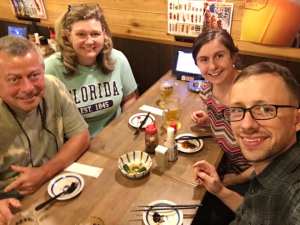


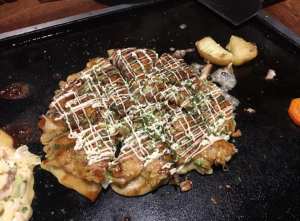


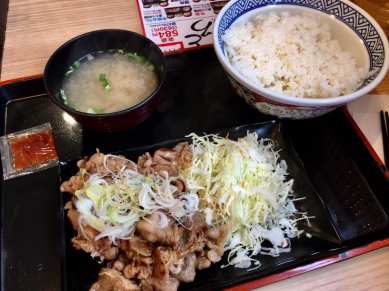


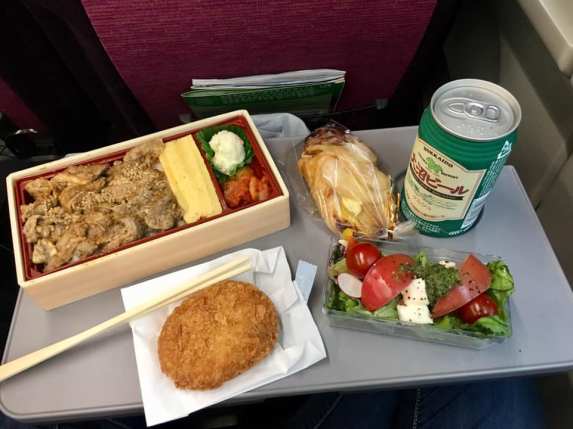








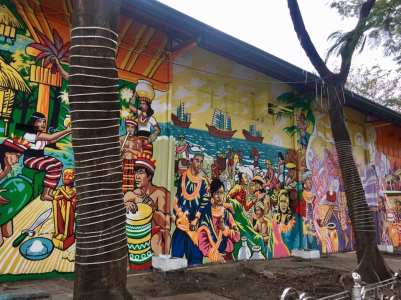



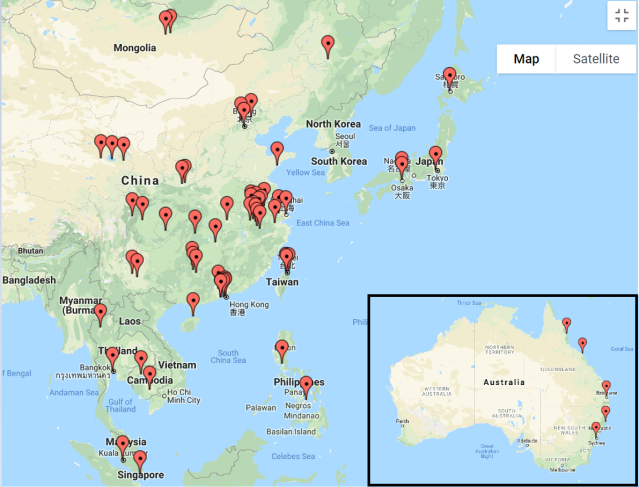


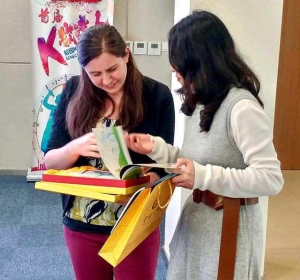
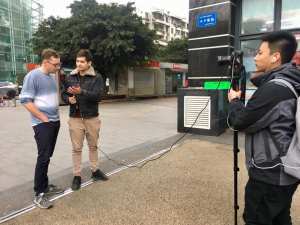

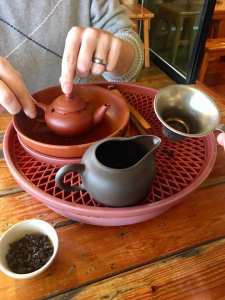


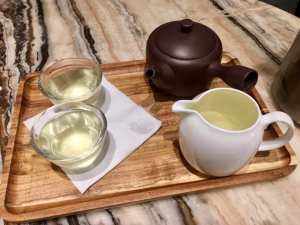





 The second New Year (also known as the Chinese New Year or the Lunar New Year) has come and gone, and with it, possibly our last long winter break off together. Just like last year, the Chinese university semester break coincides with the holiday giving us several weeks off, which, of course, we put to good use! My program had its mid-year meeting and conference in the Philippines this year, and somehow, Tucker and I managed to squeeze in three (and a half) other destinations on our island hopping itinerary. You might have seen the hundreds of photos on Facebook, but I’d also like to share a few words about our time traveling in South Asia. To be honest, it’s a little surreal to be writing this as I watch the snow fall outside, but here we go!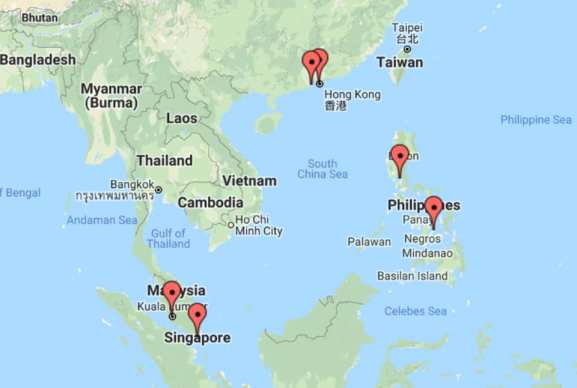
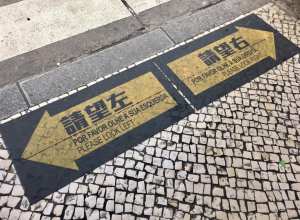
 Our first stop was Macau, a “special administrative region” of China. It gets this rather long name due to it being somewhere in between a province and another country entirely. It’s a part of China, but it’s also not China, which is actually one of the reasons we wanted to visit. We wanted to see if there were any noticeable differences. We also wanted to visit because we were eager for another taste of Portugal. Macau used to be a Portuguese colony and has retained quite a bit of the Portuguese flair in architecture, food, and language.


 After a few days of strolling around Macau’s narrow alleyways, we took a massive speed boat (TurboJet) to our next destination just across the water: Hong Kong. This was actually our second trip to Hong Kong, but last time we didn’t quite get to everything on our list – this short stopover on the way to Midyear was our second chance. We had less than 24 hours in the city, but we managed to make it out to Lantou Island to see the incredible Buddha and cableway there, we took the bus to the top of Victoria Peak to watch the sunset over the city, and we went to Tim Ho Wan for the world’s cheapest Michelin Star eats. While I definitely preferred Macau’s laid back, European vibes, it’s hard to not like Hong Kong as well. Macau and Hong Kong are a couple of tiny islands (and respective peninsulas) that I highly recommend everyone to visit! No visas needed for US citizens! :)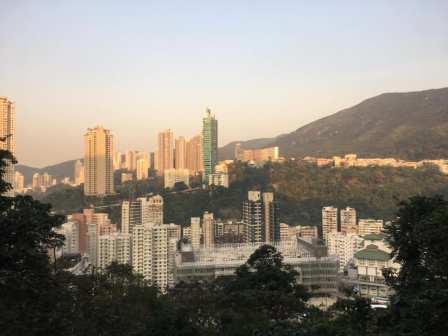
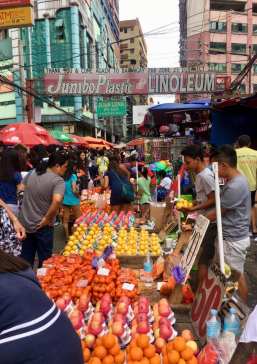 All too soon it was time to fly to the Philippines and get to work. When we first landed in the Philippines it was chaos! Passengers getting up and grabbing their bags before the plane had stopped moving; people sitting on seemingly every inch of the floor in the airport; signs for flight changes being moved by hand from gate to gate; loud cover songs of 2000’s hits playing in every corner of the terminal, etc. All I could think was “Well, we’re definitely not in China anymore.” As we sat waiting for our flight though, the newness wore off, and it was easy to see that the Philippines are just plain fun! In fact, their national slogan is “It’s more fun in the Philippines”, and I totally got it. Smiles were everywhere! The flight attendants wore bright yellow polos and hummed songs as we boarded. Fellow passengers sang along with the music they heard on the plane. The joy was contagious!
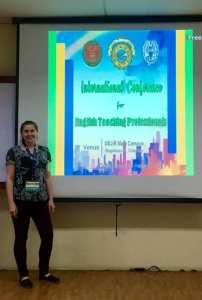 The first week we were in the Philippines I had to “work”. I attended meetings with the other Fellows, we planned and executed various group activities, and generally bonded and reconnected after our last five months apart in our various host cities/countries. For this part of Midyear, we were put up in a resort on Mactan Island, which was incredibly fancy and not the sort of place Tucker and I usually go for (I’ve never heard so many “yes ma’ams” and “hello sirs” in my life). It was beyond beautiful though, and luckily Tucker was able to take full advantage of the beach, the snorkeling, the infinity pool, etc. However, after a few days completely devoid of local culture, I was definitely ready to get to our next location: Cebu City. It was here that we attended and presented at a local teacher training conference held at the University San Jose Recoletos. Easily my favorite part of Midyear, I was able to meet and interact with many local Filipina/o teachers and get a much better feel for what life in the Philippines is really like.

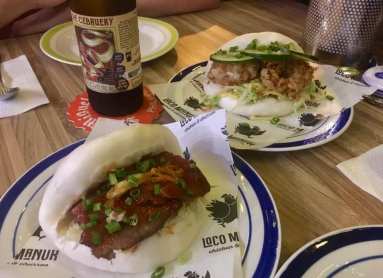 Once the conference and Midyear were officially over, Tucker and I hadn’t quite had our fill of the Philippines, so we headed to Manila for some good old-fashioned touristing. Manila is an incredible city with some of the best food I’ve had in a long while. Their specialty seemed to be fusion restaurants. We had super interesting and delicious food at Loco Manuk (Filipino, Peruvian, and Chinese) and El Chupacabra (Filipino and Mexican), and saw a Japanese-French Cafe that looked amazing as well! In addition to the incredible food, we also had a great time walking around Manila Bay, grabbing a drink in Intramuros (the Old Town), and watching the Super Bowl at a local expat bar. The Philippines boasts an amazing mix of languages and cultures, and it was so fun for us to be able to use English (commonly spoken there) to ask about a million questions of our taxi drivers, servers, and any other local we could find. We learned about the strong influence of Catholicism in the Philippines, the new-ish movement towards environmental clean up, and most of all, we learned how welcoming and friendly the people are.


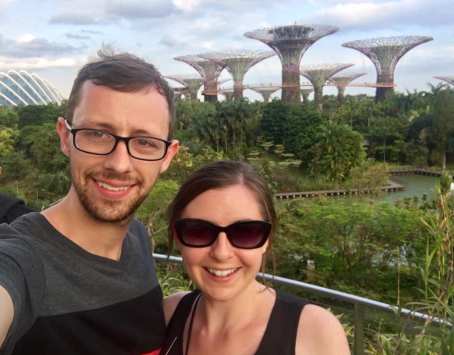
 At this point we were over the halfway mark of our trip, and my body had had enough. I left Manila with a fever and several other ailments (not so fun to describe), but I was still super excited to see Singapore! We watched Crazy Rich Asians on another leg of this trip in preparation, but the movie doesn’t do the city justice. It is by far the cleanest city I’ve ever seen, and has represented its multicultural population incredibly well! Singapore is made up of large groups of ethnic Chinese, Malays, and Indians, and each has a dedicated area of the city where you can find their respective religious buildings, restaurants, and specialized grocery stores. Even with the diverse neighborhoods in place, the city as a whole really seems to cater to each group in so many ways. Colorful, artistic, and clearly very well-off, there are so many lovely parks and public spaces in this city, where we saw families wearing everything from tank tops and sundresses to saris and hijabs. I often talk about places where there is a mix of cultures, but its usually a watered down mix, where clearly one culture has dominated, but in Singapore they were all there loud and proud. It was amazing!



 It turns out KL was full of surprises for us. The majority of people living in Malaysia are Muslim, so it was much more conservative than I was expecting. Most everyone wore long sleeves and pants despite the high temperatures, and the presence of beautiful and delicious “mocktails” was at an all time high for me. KL is actually not on an island, and to us, it seemed like we lost that friendly, carefree island-vibe as soon as we arrived. Interactions were a bit more abrupt and businesslike – like they usually are, I suppose. Another surprise was the color we saw all around us – both the Philippines and Singapore were incredibly colorful cities, but I think any city would be hard pressed to match the vibrancy of KL. Brightly colored murals everywhere, some of the lushest, greenest trees I’ve ever seen against the bluest of skies, and the insanely colorful Batu Caves just outside the city made for some incredible scenes (and photos).

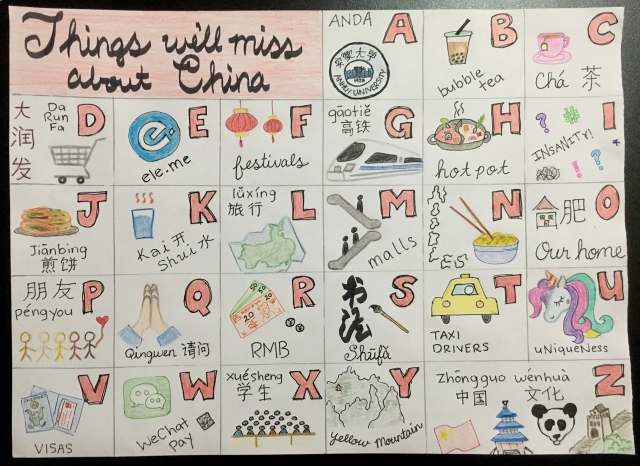
 ✔ Learn to play Mahjong
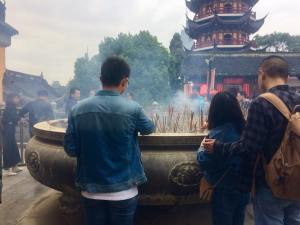 ✔ Visit a Buddhist Temple
 ✔ Perfect our Chopsticks Skills
 ✔ Hike Huangshan
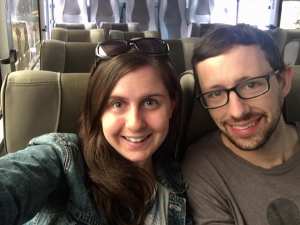
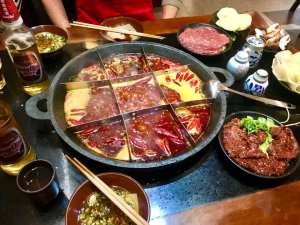
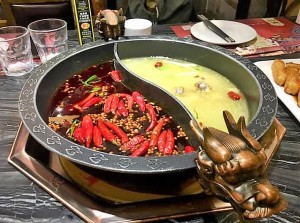 ✔ Share Hotpot and Selfies with Friends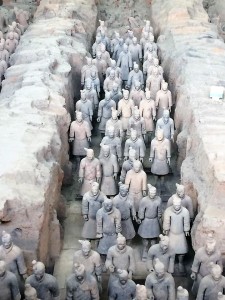

 ✔ Devour the Dim Sum in South China
 ✔ Wander around West Lake
 ✔ Feel like a Kid at Disneyland Shanghai
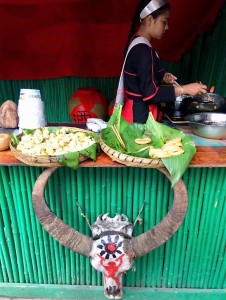 ✔ Learn about the Minority Groups in China
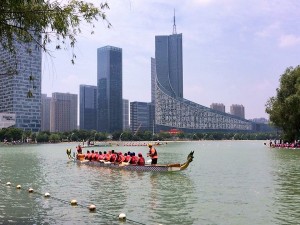 ✔ Celebrate Dragon Boat Festival
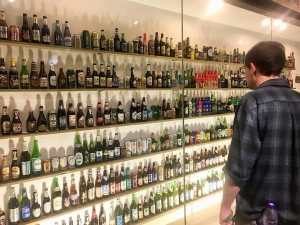 ✔ Drink Tsingtao from the Source


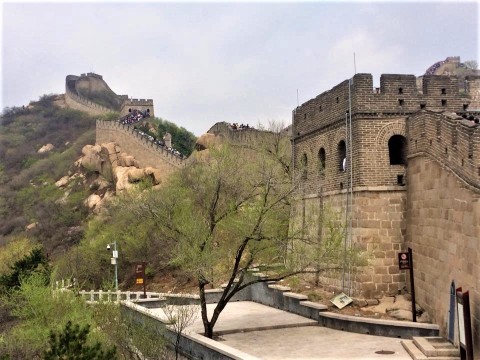
 ✔ Walk along the Great Wall
 ✔ Make Dumplings from Scratch
 ✔ Crisscross the Yangtze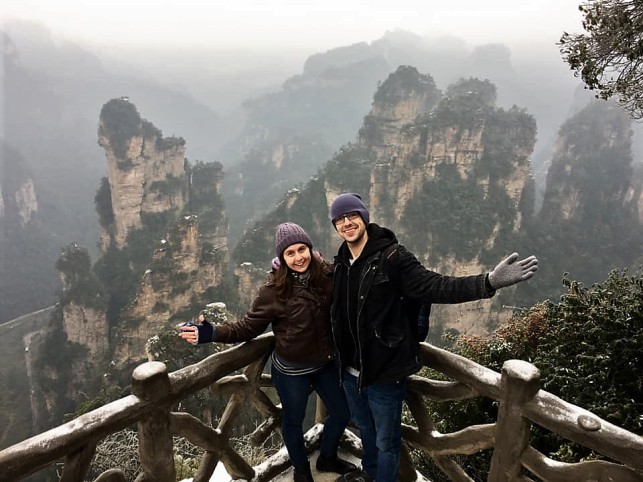
 Perhaps due to its location on the opposite side of the globe or maybe because of its notorious closed-door periods in history, China is a place with a lot of misconceptions. I remember when I first visited China; it was absolutely nothing like I thought it would be. Since then, I’ve continually been surprised by China and have had the pleasure of watching several others break some of their preconceived notions on their first trips to this land in the Far East. While pretty much everything I post (let’s be honest, it’s mostly photos) is in some way shaping people’s views of this country I now call home, sometimes there’s a need for more explicit explanations. Some things just can’t be seen in photos, but can definitely be felt and discussed (and often are if given enough time). However, since not everyone can come to China and experience it all in person, I’d like to share some of my thoughts and discoveries (in written form) on some of the impressions that seem to have a strong effect on outsiders’ views of China, impressions that are often among the first to be thrown into question upon closer observation.

 After delving into just one policy that definitely captured the world’s attention, I think another misconception of China lies in the government as a whole. When I told friends and family I’d be coming to China, this was a main point of contention. How could you live in a country that’s not free? Aren’t you worried about the communists? In hindsight, it must have got into my head a little because I now realize that when I first arrived I was a little careful about what I said, how I interacted with Party Members, etc. Now I’ve been here for over a year, and I see that that was totally necessary. While the government has many features of communism, it’s actually a hybrid of several political systems. It’s much more complicated than I care to go into, especially because unlike the US, changes within the government here seem to be made more quickly. China is still figuring out exactly how they want their government and economy to fit and work together, and due to their long history of preferring guidelines to written laws, it’s difficult to nail down the specifics regardless.








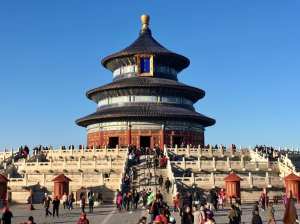 Yikes! That was a lot of information about China! I should probably start writing a book or something because I have learned so much from my time here. More than I could have possibly imagined, and the longer I’m here, the more I know I’ll learn. I’m extremely thankful that I have been given this opportunity to better understand the people and the culture of the China, and I love sharing what I learn on both sides of the world. Recognizing some of my own misconceptions has been fascinating, but equally interesting is discovering others’ misconceptions of me (and America as a whole). Maybe that’ll be a future post! For now, I’m going to continue soaking it all up, remembering that things aren’t often as they first appear.
 Dani Francuz Rose