

This year has thrown a lot of surprises at the world (and some not-so-surprising events as well really), but for me and Tucker one of the most unexpected occurrences has been our prolonged stay in Florida. We were only meant to be here for a few months as we gathered our lives from various corners of the world in order to head north for the next few years. Of course, with a brief snag in our immigration paperwork followed by a global pandemic, we’ve found ourselves in a holding pattern since March. And while, like everyone else, I’m still struggling to figure out what this all means for our jobs, our future, our society, etc. I’ve also been doing what I do best in a new place: exploring. Even though this exploring has taken place mostly online (and occasionally from a socially acceptable distance), life in Florida has still been quite interesting, and in some ways enlightening. Thus, for this month’s post, I have put together a list of my newly gleaned facts (and opinions) to share about our temporary home.

The first thing I have to mention is the fact that everyone seems to have an opinion about Florida. People who have never even been here feel one way or another about it, and plenty of people like to vocalize their opinions (many of which are quite negative) without much regard to facts or feelings. I say this as a non-Floridan, someone who doesn’t have a strong feeling one way or another about this particular state, but sheesh, even I feel bad listening to the many tirades and verbal attacks on the Sunshine State, especially those that can be found online. In our brief time here, I’ve come to view Florida as the state that’s often picked on, but that everyone secretly likes and takes advantage of (like an annoying kid in school that has a really nice pool).
When reflecting on why there are so many negative associations with Florida and Floridians floating around out there, I feel it boils down to two things: 1) the Florida Man and 2) vacationers. Most everyone knows about the Florida Man trope nowadays. A long-lasting meme that has permeated the internet and beyond, it originally referred to the crazy headlines often found in Florida that always begin with “Florida man…” and usually end with his doing something absolutely absurd. But interestingly, one of the first things I learned about the Florida Man origins is that they were sparked by a change in state law. In the 1990’s Florida passed the Sunshine Law, which ensures public access to all government records, including police arrest records. As you can imagine, in 30 years, the spring break capital of the US has racked up quite a few crazy stories, which brings me to my next point.


Vacationers. Probably the first thing we noticed after a few months in Florida was the ebb and flow of the people. Renters in, renters out; snow birds in, snow birds out; spring-breakers in, and (thankfully) spring-breakers out. The state of Florida has approximately 22 million permanent residents, but sees 110 million tourists annually. That’s a lot of YOLOing for any place to deal with. I think I actually first noticed this phenomenon in grocery stores. People in bathing suits, vacation gear (lots of Disney paraphernalia where we are), and a general lack of care for their immediate environment. Many people are here for a short time and their mindset is to live it up; therefore, chaos ensues, sometimes in the form of drunken parties and possible police involvement (which is then publicly documented for all the word to see and share).

Of course, I completely understand why so many people choose to vacation to Florida. It’s an amazing place for affordable and varied entertainment. We’ve got theme parks all over the place: Disney World, Legoland, Universal Studios, SeaWorld, Busch Gardens, (and for a select clientele) Gatorland. There is also an abundance of parks, lakes, and other natural features like the Everglades, hot springs, swamps, and of course, the many, many beaches. Florida actually has the longest coastline of any of the contiguous states, and the climate (especially in south FL) means beach-going is possible year-round.


Speaking of South Florida, another thing that became immediately clear upon moving here was the presence of three distinct regions. You have North Florida, Central Florida, and Southern Florida, and the people who live (and vacation) in these three places often differ as much as the geography. We’ve heard this said a few times now: the further north you go in Florida, the further South you are. This refers to the fact that northern Florida is very much like Georgia, Alabama, the Carolinas, etc. Demographically, linguistically, socially, north of Ocala is really part of the South. On the other side, you have South Florida which held onto its Spanish roots and still welcomes a large influx of immigrants from Central and South America. The influence can be seen, heard, felt, and tasted as soon as you drive south of Lake Okeechobee. And that leaves Central Florida, which is somewhat a mix of the two and also somewhat the result of many retirees from out of state. Orlando and many other cities in Central Florida are very much like any other major city in the US: professional, progressive, and a tad hipster.


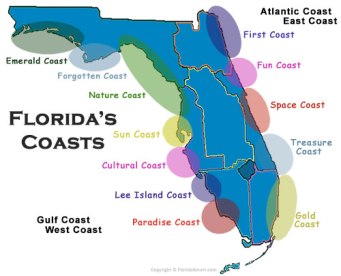
Another part of life in Florida that caught my attention early on was the naming of the coasts. Most likely, at least in part due to tourism, each section of the coastline in Florida has a name and, for lack of a better word, a vibe. You have the Space Coast, which is the location of the Kennedy Space center and where all the rocket launches take place (which we can see from our driveway, btw). You also have the Gold Coast where the big cities (Fort Lauderdale and Miami) and the famous South Beach are located. There’s the Sun Coast with its beautiful sunsets, the Nature Coast with its natural springs and manatees, and even the First Coast, which is where you can find the first and longest continuously inhabited settlement in modern day USA.

Since our trip to Saint Augustine and the First Cost, I’ve been really interested in Florida’s history and particularly how it differs from that of the colonies. Perhaps most people remember that Florida was first claimed by Spain, which is why we still see so many names like: Boca Raton, Punta Gorda, Buena Vista, etc., but what I (having taken Georgia History, not Florida History, in school) found super interesting was the native American history here. Of course, it now seems quite obvious with place names like: Tallahassee, Kissimmee, and Osceola, but I never gave much thought to the tribes that called Florida home and were actually some of the first to be attacked and displaced. Indeed, the Creek/Seminole tribes, in particular, not only found themselves stuck in the middle of a fight between Britain and Spain during the Seven Years’ War, but went on to challenge the US settlers with what is now known as the Seminole Wars, some of the longest and most expensive in early US history. Historically, Florida has seen a lot, and I don’t think it gets much credit for its important place in US history, let alone world history.

Finally, the last surprising fact I am very pleased to share is about the weather. As cold weather people, Tucker and I were very much dreading our time spent in the humid and, yes, extremely sunny Florida, especially as that time started to stretch into summer. However, I’m happy to report that it’s really not so bad! Florida is really breezy, which certainly helps with the heat, and now that we’re officially in summer, I can say that there’s a bit of a rainy season here meaning the afternoon thunderstorms that happen almost every day also help to cool it down. We’ve both commented that while the warmer temps might last longer, they don’t feel near as oppressive as summer in Atlanta. Plus, the produce here is absolutely amazing! In addition to citrus, Florida produces significant percentages of the country’s tomatoes, watermelons, cucumbers, and sugar cane.


All in all, Florida has been a surprise in many ways for us (including the very exciting news that there is no state income tax in Florida!). Ultimately, our time here has really just been another lesson in finding out how much there is to discover/learn, even in a place you think you already know pretty well. So, what have you learned so far in 2020?


 Next up, my dad wanted to try a famous seafood place (Dixie Crossroads) out on the Atlantic coast, which I quickly paired up with a drive to Cocoa Beach and Port Canaveral. Although it was a quick visit, we walked along the beach and the pier, looked for the cruise ships and the Space Center, and learned that Florida has a nickname for every single section of coastline.





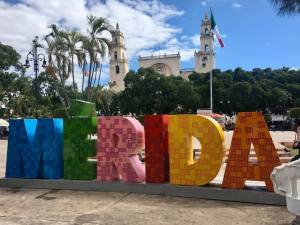

 Our next stop was Guadalajara, the capital city of Jalisco (I’m really beginning to think I must have a thing for capital cities…). Anyway, when we arrived in this larger city, I realized just how much all the negative hearsay (like the number of well-meaning warnings I received before our trip) can really affect first-time travelers. I immediately felt uneasy, like everything was an unforeseen danger. Of course, after only a few hours, that was all wiped away. The people of Guadalajara were just as friendly and carefree as those in Merida. Our Uber drivers, especially, greeted us and patiently listened as we stumbled through Spanish to ask questions or give any necessary additional information. We also noticed that in Guadalajara, and perhaps Mexico as a whole, the timings of things are quite flexible. We often found ourselves checking the hours of one place or another, only to arrive and see they haven’t quite set up yet (even a few hours after opening). We really felt the struggle of coming from a China mindset (up early, asleep by 10pm) to the Mexican way of life, where nothing really gets going until after 8pm, at least!


 Our final stop on this scouting mission was the infamous Mexico City. One of the largest cities in Latin America with about 9 million residents, and easily one of the most welcoming mega-cities I’ve ever been in. Sometimes in cities of this size, the expectations for speed and efficiency can be extremely high, which poses a problem for travelers who are clueless as to how things are usually done. However, I never felt any impatience from the locals in CDMX (Ciudad de Mexico). Things were just as easy-going and friendly as the other cities we visited. Of course, Mexico City is quite big, which does bring about some challenges. For example, it typically took over an hour to get from one side of the city to the other, even with the super convenient (and cheap) metro. A sprawling city combined with loads of commuters, holiday shoppers, and tourists definitely made for a chaotic transportation situation. However, because of that large and diverse group, we were also able to get some Kansas City BBQ when we wanted something a bit different one night. It’s the eternal struggle of city life!









 As an English teacher I’m often asked to describe the United States and Americans, and for as long as I can remember, the first word that has come to mind is: independent. We love to feel independent! Independent financially, politically, emotionally; in our families, in our workplace, and in the world. Many of us longed to “be out on our own” at a very young age, and most Americans follow that course throughout their lives. We love expressions like “pull yourself up by your bootstraps” and “stand on your own two feet”. In our culture, there is an immense pride in (and often an expectation to) figure things out on our own. Whether this comes from the pioneer spirit of our history or from Hollywood’s “steal the spotlight” mentality, we can see the strong value placed on independence in all aspects of American lives. From our first declaration as a prospective country to our preference for ordering individual, non-shared meals, we focus every day on our individuality and personal independence, and if ever we feel it’s being threatened, look out.
 You might have noticed that I didn’t get very far into this post without mentioning Hollywood. As much as many Americans like to think of that place as somehow “other”, the truth is, we are massive consumers (and producers) of entertainment, all thanks to Tinseltown. In fact, many of my students from all over the world have surprised me with facts and details about life in the US that were gleaned entirely from our movies and TV; some have even confessed that’s how they started learning English or even why they continue today. Of course, what they see in the movies is not always true to American life, but there are definitely many of our values and perspectives shared through our obsession with entertainment. It’s hard to imagine America without movie trailers, award shows, film conventions, and dedicated fandoms. As someone who hasn’t seen such American classics as the Godfather, Stars Wars, or Top Gun, I’ve been described a few times as “simply unamerican”, but I promise I’ll get to them eventually!
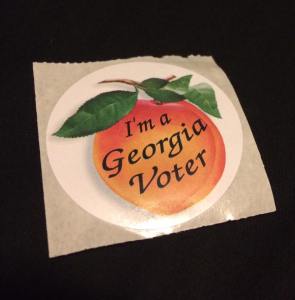 Another trait that I associate with America is our deep patriotism. We love our flag, our national anthem, and the values that we have long attached to our country, such as freedom, perseverance, and justice. Although patriotism means something a little different to each of us, as Americans this is our home, and we feel a certain pride and responsibility in that. Whether we show these feelings by hanging a flag outside our house, voting in every election, or representing our values abroad, we all like to feel that we have a role to play for America, and we’re happy to do it. Perhaps because we grew up with stories of how hard our forefathers, suffragettes, and civil rights activists fought for us to have what we have today, the sense that we need to take up the baton and continue to work for a better homeland has been deeply instilled. Or who knows, maybe it was just hearing that Lee Greenwood song year after year.
 Although this word has taken on new meaning and significance in the last few years, the American Dream and the people who embody it are not new, nor I think are they bound by political lines. America was founded on dreams: dreams of a new nation, dreams of equal representation, dreams of prosperity. We can still hear the US referred to as a “Land of Opportunity” from both inside and out. We love the fact that “if you can dream it, you can do it”, and thanks to our lack of a formal class system, many Americans have been able to make it happen all throughout our history. Most of us have immigrants in our ancestry, which is maybe one of the most classic versions of the American Dream. Others have seen their dreams come true in regards to socioeconomic status or overall success. Just like independence, Americans value people who dream big and work hard to make it happen. In short, we believe dreams can come true.
 Dreams are wonderful, but all dreams are based in some sort of reality. And for Americans, right now that reality is a strong division. Party lines are more evident than ever, generation gaps and racial divides exist, and there’s no doubt that whatever the topic of conversation, people tend to divide up into various groups or “sides”. We have the Left and the Right, Boomers and Millennials, white collar and blue collar, Black and white, gay and straight, religious and non-religious, and so many other labels that, like it or not, separate us in some way from our fellow Americans. Although we are the “United” States and a supposed “Melting Pot”, many events have recently been shining a spotlight on our divisions and differences instead. Diversity can often beget division, or at least the perception of division, but I think we’re all also aware of the classic “United we stand; divided we fall”. Trends change everyday, and we can change as well.

 Perhaps because we’ve always been in our own little world, the US has also been a hotbed for inventiveness and creativity right from its start. From Thomas Edison and Clara Barton to Bill Gates and Katie Bouman, Americans have contributed a great deal to global innovation. Even the average American likes to think and talk about the future, and we always, as Walt Disney famously said, “keep moving forward”. It’s no wonder our people were among the first to take to the skies, race to space, and create all types of digital media. We simply love to take risks and try something new. We have the phrase “necessity is the mother of invention”, but in America, it might not even require necessity.









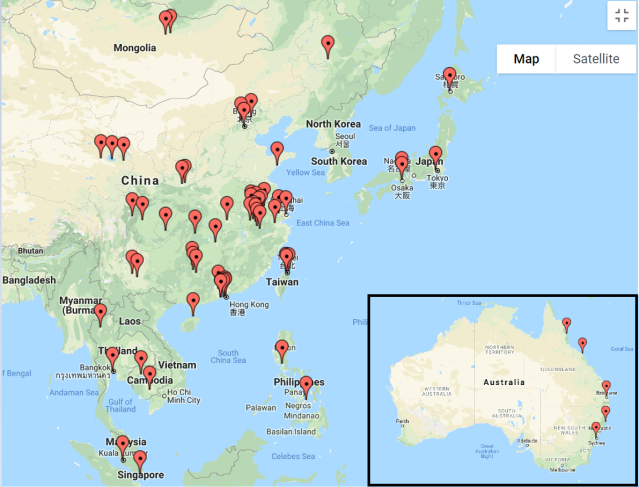
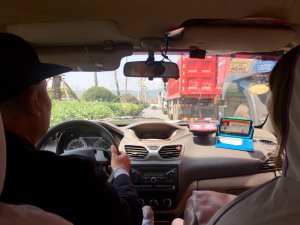

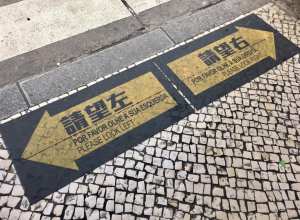










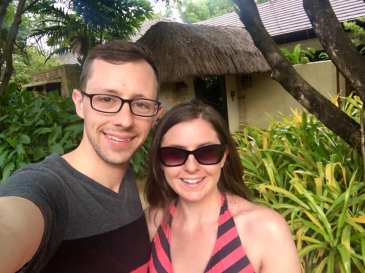 The second New Year (also known as the Chinese New Year or the Lunar New Year) has come and gone, and with it, possibly our last long winter break off together. Just like last year, the Chinese university semester break coincides with the holiday giving us several weeks off, which, of course, we put to good use! My program had its mid-year meeting and conference in the Philippines this year, and somehow, Tucker and I managed to squeeze in three (and a half) other destinations on our island hopping itinerary. You might have seen the hundreds of photos on Facebook, but I’d also like to share a few words about our time traveling in South Asia. To be honest, it’s a little surreal to be writing this as I watch the snow fall outside, but here we go!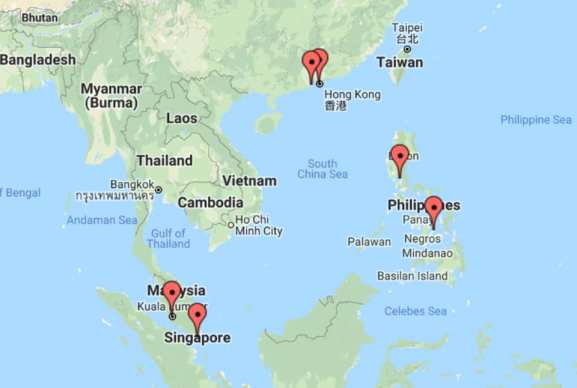
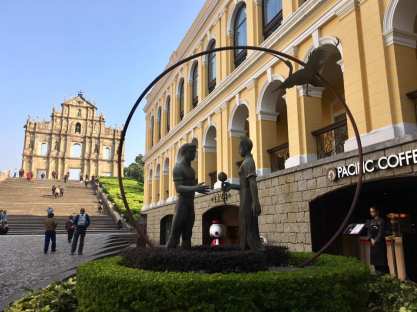 Our first stop was Macau, a “special administrative region” of China. It gets this rather long name due to it being somewhere in between a province and another country entirely. It’s a part of China, but it’s also not China, which is actually one of the reasons we wanted to visit. We wanted to see if there were any noticeable differences. We also wanted to visit because we were eager for another taste of Portugal. Macau used to be a Portuguese colony and has retained quite a bit of the Portuguese flair in architecture, food, and language.


 After a few days of strolling around Macau’s narrow alleyways, we took a massive speed boat (TurboJet) to our next destination just across the water: Hong Kong. This was actually our second trip to Hong Kong, but last time we didn’t quite get to everything on our list – this short stopover on the way to Midyear was our second chance. We had less than 24 hours in the city, but we managed to make it out to Lantou Island to see the incredible Buddha and cableway there, we took the bus to the top of Victoria Peak to watch the sunset over the city, and we went to Tim Ho Wan for the world’s cheapest Michelin Star eats. While I definitely preferred Macau’s laid back, European vibes, it’s hard to not like Hong Kong as well. Macau and Hong Kong are a couple of tiny islands (and respective peninsulas) that I highly recommend everyone to visit! No visas needed for US citizens! :)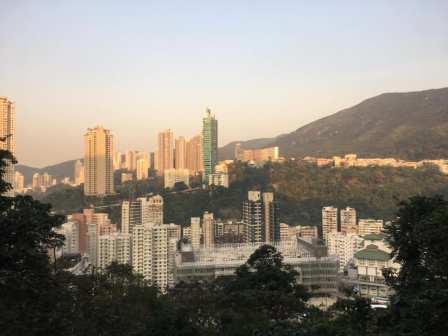
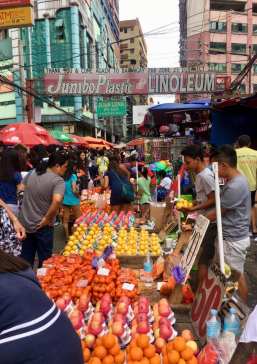 All too soon it was time to fly to the Philippines and get to work. When we first landed in the Philippines it was chaos! Passengers getting up and grabbing their bags before the plane had stopped moving; people sitting on seemingly every inch of the floor in the airport; signs for flight changes being moved by hand from gate to gate; loud cover songs of 2000’s hits playing in every corner of the terminal, etc. All I could think was “Well, we’re definitely not in China anymore.” As we sat waiting for our flight though, the newness wore off, and it was easy to see that the Philippines are just plain fun! In fact, their national slogan is “It’s more fun in the Philippines”, and I totally got it. Smiles were everywhere! The flight attendants wore bright yellow polos and hummed songs as we boarded. Fellow passengers sang along with the music they heard on the plane. The joy was contagious!
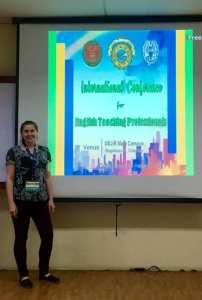 The first week we were in the Philippines I had to “work”. I attended meetings with the other Fellows, we planned and executed various group activities, and generally bonded and reconnected after our last five months apart in our various host cities/countries. For this part of Midyear, we were put up in a resort on Mactan Island, which was incredibly fancy and not the sort of place Tucker and I usually go for (I’ve never heard so many “yes ma’ams” and “hello sirs” in my life). It was beyond beautiful though, and luckily Tucker was able to take full advantage of the beach, the snorkeling, the infinity pool, etc. However, after a few days completely devoid of local culture, I was definitely ready to get to our next location: Cebu City. It was here that we attended and presented at a local teacher training conference held at the University San Jose Recoletos. Easily my favorite part of Midyear, I was able to meet and interact with many local Filipina/o teachers and get a much better feel for what life in the Philippines is really like.

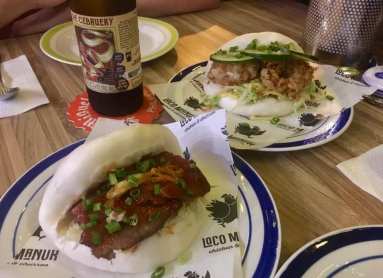 Once the conference and Midyear were officially over, Tucker and I hadn’t quite had our fill of the Philippines, so we headed to Manila for some good old-fashioned touristing. Manila is an incredible city with some of the best food I’ve had in a long while. Their specialty seemed to be fusion restaurants. We had super interesting and delicious food at Loco Manuk (Filipino, Peruvian, and Chinese) and El Chupacabra (Filipino and Mexican), and saw a Japanese-French Cafe that looked amazing as well! In addition to the incredible food, we also had a great time walking around Manila Bay, grabbing a drink in Intramuros (the Old Town), and watching the Super Bowl at a local expat bar. The Philippines boasts an amazing mix of languages and cultures, and it was so fun for us to be able to use English (commonly spoken there) to ask about a million questions of our taxi drivers, servers, and any other local we could find. We learned about the strong influence of Catholicism in the Philippines, the new-ish movement towards environmental clean up, and most of all, we learned how welcoming and friendly the people are.


 At this point we were over the halfway mark of our trip, and my body had had enough. I left Manila with a fever and several other ailments (not so fun to describe), but I was still super excited to see Singapore! We watched Crazy Rich Asians on another leg of this trip in preparation, but the movie doesn’t do the city justice. It is by far the cleanest city I’ve ever seen, and has represented its multicultural population incredibly well! Singapore is made up of large groups of ethnic Chinese, Malays, and Indians, and each has a dedicated area of the city where you can find their respective religious buildings, restaurants, and specialized grocery stores. Even with the diverse neighborhoods in place, the city as a whole really seems to cater to each group in so many ways. Colorful, artistic, and clearly very well-off, there are so many lovely parks and public spaces in this city, where we saw families wearing everything from tank tops and sundresses to saris and hijabs. I often talk about places where there is a mix of cultures, but its usually a watered down mix, where clearly one culture has dominated, but in Singapore they were all there loud and proud. It was amazing!


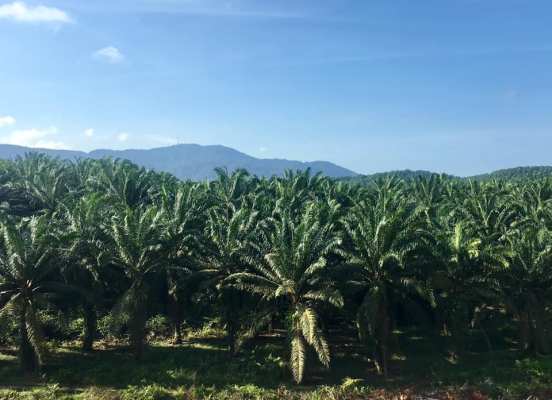
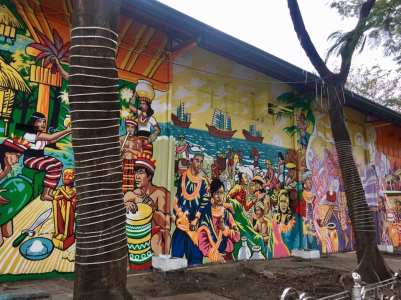
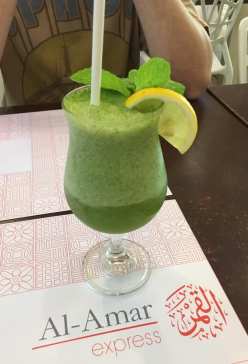 It turns out KL was full of surprises for us. The majority of people living in Malaysia are Muslim, so it was much more conservative than I was expecting. Most everyone wore long sleeves and pants despite the high temperatures, and the presence of beautiful and delicious “mocktails” was at an all time high for me. KL is actually not on an island, and to us, it seemed like we lost that friendly, carefree island-vibe as soon as we arrived. Interactions were a bit more abrupt and businesslike – like they usually are, I suppose. Another surprise was the color we saw all around us – both the Philippines and Singapore were incredibly colorful cities, but I think any city would be hard pressed to match the vibrancy of KL. Brightly colored murals everywhere, some of the lushest, greenest trees I’ve ever seen against the bluest of skies, and the insanely colorful Batu Caves just outside the city made for some incredible scenes (and photos).

 Dani Francuz Rose