Florida Adventures

70592417_10220647136596643_9016034569404547072_n
Contemplating the state of the world

Have I already mentioned what an interesting year 2020 is turning out to be…well, anyway, as you may have heard, we should all be self-quarantining now. So what better time is there to write about all the adventures we had (and some we still have) planned for our sojourn in Florida, which has also been quite unexpected and rife with issues (more on that in a later, much longer post).

For now, let’s focus on Florida: the Sunshine State, the Family Vacation Mecca, the Hotbox of the East Coast. Of course, like most middle-class Americans east of the Mississippi, Tucker and I had been to Florida many times in our lives. Apparently my first ocean experience was as a two month old at New Port Richey Beach; Tucker and I both visited grandparents down here when we were little (mine in St. Pete and his in Fort Pierce), and of course, if you know my family, you know we’ve made our fair share of trips to the big WDW. We actually both remember separate trips to Pensacola for one reason or another, and as I have family in the Villages, we’ve made several stops there as well. But, when my parents officially moved down here back in 2017, Tucker and I planned and took a trip to Fort Lauderdale, Miami, and Key West (with his mom this time), which I believe truly marked the beginning of our new and focused Florida Explorations.

21032627_10214365131750448_6472857985422918898_n
Sunset Key

So, when we came back this year, knowing immigration would take a few months, we decided to really see what Florida has to offer. I made a list, shocking I know, and we’ve done our best amid the global and domestic catastrophes to explore our new state of temporary residency. Here’s what we’ve done:

75580375_10221165485275036_4695034033514479616_n
Butter beer!

1 – Universal Studios

The first place I knew had to be on the list was Universal Studios. Tucker had never been, and the last time I was here was in 2006 with a friend and her family. Since then, they’ve added pretty much the only thing that could draw me away from Disney and into another over-priced theme park: The Wizarding World of Harry Potter. Long story short, it’s no Disney, but you really can’t miss visiting Hogwarts and Diagon Alley, can you?

75317283_10221174483419984_338793823536676864_n
So amazing!

2 – Daytona Beach

We realized pretty early on in our Florida-life that everything in the state is between 1-3 hours away from Orlando, so it was easy to plan Saturday excursions in any direction. One of the first of such excursions was to Daytona Beach, which boasts the title of “The World’s Most Famous Beach”. And while I might not go that far, it’s always great fun to share a fishbowl drink overlooking the waves.

3 – Disney Brunches

Some of the things on our list are events rather than places, as with our plan to go to brunch with family on the first Sunday of each month we are in Florida. This was narrowed down to Disney-specific brunches because my parents get a discount and, well, we love the World. So far we’ve been to Chef Art Smith’s Homecomin’, Boma – Flavors of Africa, and the Whispering Canyon Cafe. Next up was going to be the Wave…of American Flavors, but I think April’s brunch might be an at-home affair.

4 – Cocoa Beach and the Space Coast

82989356_10221868133720808_9032252941439860736_nNext up, my dad wanted to try a famous seafood place (Dixie Crossroads) out on the Atlantic coast, which I quickly paired up with a drive to Cocoa Beach and Port Canaveral. Although it was a quick visit, we walked along the beach and the pier, looked for the cruise ships and the Space Center, and learned that Florida has a nickname for every single section of coastline.

5 – Crystal River Manatees

Of course, I had to include Florida’s friendliest sea creature in our excursions! Tucker and I took a drive up to Crystal River National Wildlife Refuge to see some free range manatees and were blown away by the large numbers of them. While they definitely kept their distance, and rightly so, it was incredible to watch them splash and float around in adorable aggregations (which I learned is the group noun for manatees).

6 – Downtown Orlando

Just as I spent a lot of time exploring Atlanta when we lived there, I knew I wanted to go through the different neighborhoods and attractions of Orlando as well, you know, aside from the theme parks. One day we took a lovely walk around Eola Lake and up around Church Street. We went to see Henry IV at Orlando Shakes and strolled around all the museums on the north side. We’ve also found our new favorite used bookstore in Best Used Books and have been back and forth to all sorts of Orlando hot spots since January.

7 – Hop Passport: Florida Edition89925318_10222367882414213_2624685322386014208_n

Actually, one of the main reasons we’ve been to so many random locations in Florida is due to our quest to get a stamp at as many local breweries as possible. My sister-in-law and her boyfriend gave us the amazing Hop Passport for Christmas this year, and we’ve had a great time checking off places and seeing new cities across Florida. We’re at 14 out of 96 so far, and you should definitely check out the Hop Passport for your state if you’re also a beer-lover. You just can’t beat half-off beers!

8 – Disney (free things)

Another more open-ended item on our list is to finally do some of the free things at Disney that we never had the time or energy to do on previous trips. We haven’t bought park tickets for our time in Florida this year, but we’ve had a great time attending free events, walking the Boardwalk, hanging out at Disney Springs (the free shopping and entertainment area), and so much more. If you want a list of fun, free, and non-kiddie things to do at Disney, please let me know. I’m practically an expert.

87415570_10222269939965713_2691670190680178688_n
The Boardwalk: my favorite Disney place!

9 – Saint Augustine

89857039_10222367888734371_2287005639135723520_n
Castillo de San Marcos

Finally, on our last day of freedom (pre-self-quarentine), Tucker and I drove up to Saint Augustine to learn a bit more about Florida’s very long history. We visited the Fountain of Youth, the Colonial Quarter, the oldest masonry fort in the US, and ultimately saw a completely different side to this seriously diverse state. I’d really love to go back and explore Saint Augustine even more one day; it’s really an awesome city.

And so that brings me to a few things still on our list for the oh-so-tentative future:

* Take a train

I absolutely love trains, and when I saw how frequently they’re actually used in Florida (albeit still over-priced and not terribly convenient), I knew I needed to try them out for myself. Probably after the pandemic though…

Train

* Naples/Everglades

The Naples area is deemed “Paradise Coast” and it’s one part of Florida neither of us have ever been to; therefore, it was an obvious choice for the list. We’ve also never truly been into Everglades National Park (we’ve only driven through parts of it), so we tacked that (and the obligatory airboat ride that accompanies it) on as well.

* Devil’s Den

A place that has been on my travel to-do list for years now, Devil’s Den is an underground spring with clear waters and an abundance of ancient rock formations and fossils. It looks so cool, and I really want to go! Once the water gets a bit warmer though…

Den

* Tampa/deep sea fishing

And for now, the last thing on our list is a trip over to the Gulf Coast for a deep-sea fishing excursion (during which I might just have to close my eyes or ask that we be allowed to catch and release). We’re also planning to do a more thorough exploration of downtown Tampa on this particular trip. I really love the whole two birds, one stone idea.
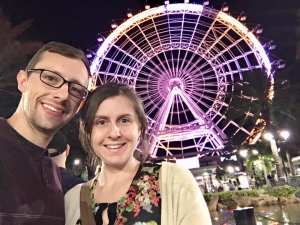
89038730_10222237665158863_5976912390745227264_n
Making lemonade!

Well, that’s our Florida bucket list! Fingers crossed that everyone stays home for the next few weeks/months, so we can get back to exploring once everyone’s healthy again. Until then, I might add a few more things to list now that I have such ample time for research! I also challenge everyone reading this to do the same for your state/region – it’s a great way to pass the time and make the most of our days in the future!

Country Curiosities

InkedAround the World_LII don’t intend on writing about my 30 Day Challenges (see January’s blog) each month, or even ever again; however, I just couldn’t pass up the opportunity to share some of what I have learned this month with my “read about a different country every day” challenge. For each day in February (more or less), I selected a country to explore digitally (i.e. with the help of various web resources), and in the process, I have gleaned a plethora of fun facts!

I went with a round-robin style selection process, where I purposefully chose countries (fully sovereign and UN recognized) that I knew very little about from each of the continents in alphabetical order (Africa, Asia, Europe, North America, Oceania, South America). And even with a few missed days, I was still able to read about 24 lesser-known places: 4 countries from each continent.

IMG_0350
My checklist

To say I learned something new every day would be a gross understatement of this process. It is absolutely incredible how much there is to learn about each and every little corner of the globe, including our own. And now, to help pique your interest in some of these places, here are some of the most interesting tidbits I picked up in my daily readings:


Togo: This small country in West Africa was originally claimed by Germany as “Togoland”, which to me sounds like an amusement park rather than a country.

Georgia: Nestled in the Caucasus Mountains, Georgia (the country, definitely not the state) has two disputed regions that are currently vying for independence: Abkhazia and Adjara.

Andorra: A country (located between France and Spain) that is so tiny, there are no international airports within its borders.

OLYMPUS DIGITAL CAMERA
Beautiful Andorra 

Costa Rica: In 1949 Costa Rica abolished their army, working instead to replace it with “an army of teachers”, thus focusing on education rather than military spending.

Federated States of Micronesia: Includes over 600 islands extending almost 3000 kilometers in the Pacific ocean (that’s about the distance from Atlanta to Salt Lake City).

Suriname: A small country in South America where the official and most commonly spoken language is, you guessed it (not!), Dutch.


Flag
Stars, stripes, guns, and tools

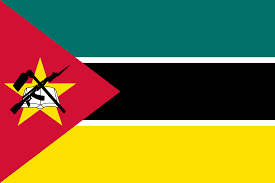
Mozambique: Located on the southeastern coast of Africa, Mozambique has a machine gun and a mattock on its flag, which gives a bit of insight into its checkered (and complicated) past.


Kazakhstan: means the Land of Nomads, who fortunately have a lot of room to roam in the world’s largest land-locked country.

Cyprus: A small island in the Mediterranean that was inhabited by humans before boats were invented (gotta love a good ol’ Ice Age story).

Trinidad and Tobago: Only seven miles off the coast of Venezuela, this pair of islands is the birthplace of Limbo.

Limbo
Think they limbo to Cotton Eye Joe?

Papua New Guinea: PNG is one of very few places on Earth where you can straddle the equator and see snowfall in the same country! Elevation is no joke!

World CupUruguay: A country consistently providing the world with incredible soccer players, Uruguay was the first country to win the FIFA World Cup (in 1930).

Tunisia: I was most interested to learn that the ancient city of Carthage is in modern day Tunisia, but I was told others might find it more interesting to learn that several Star Wars movies were filmed here.

Bhutan: A small, mountainous country in between China and India, the highly Buddhist Bhutan has a Gross Domestic Happiness index, which is used to measure and develop the collective happiness of the nation as a “fundamental human goal”.

Denmark: In the smallest country in Scandinavia, you’re never more than 52 kilometers (32 miles) from the coast.

Belize: Despite sharing English as a national language, Belize has opted not to share in American fast food chains. No McDonalds or KFCs in this Central American country.

Nauru: One of the smallest countries in the world at only 8 square miles, Nauru also has one of the highest obesity rates at almost 72%.

Bolivia: This landlocked country in South America boasts the world’s largest salt flat, half of the highest lake, and an annual rainfall of over 5m (one of the highest in the world). Talk about biodiversity!

Salt Flats
Salar de Uyuni

Chad: Named after Lake Chad, this large central African country lies mostly in the Sahara desert giving it the morbid nickname the “Dead Heart of Africa”.

Pakistan: Although extremely far from Europe, Pakistan was a prominent stop on the Hippie Trail of the 1960s. If you haven’t heard of the Hippie Trail, I highly suggest a quick Google!

Romania: We might know it as the Land of Dracula, but Romania is also home to the heaviest building in the world (at just over 9 billion pounds)! And no, it’s not Bran Castle.

Parliament
Palace of Parliament

Dominica: Often confused for the Dominican Republic, Dominica is a separate island nation known for electing the first female prime minister in the Caribbean (back in 1980).

Kiribati: Another impressive set of islands in the Pacific ocean, Kiribati not only celebrates the New Year first each year, but is also the only country to have land in all four hemispheres.

Paraguay: In part due to its central location, Paraguay was subjected to the bloodiest international conflict in the Americas, the Paraguayan War (1864-1870), in which the country lost 50% of its population in addition to 40% of its land.

Believe me when I say these are just the tip of the iceberg! Each of these countries, and indeed, every country and culture is unique and inspiring. I think this will be an easy challenge to extend past 30 days…I mean there are almost 200 countries out there! What are some of your country curiosities to share?

24 Countries

A Year of 30 Day Challenges

80740455_10221639086954782_4814884047937339392_n
Happy New Year!

It’s January! A new year, a new decade even, which typically means resolution-making and goal-setting. I, personally, love this time of year because 1) I much prefer beginnings to endings and 2) I like a good challenge. This year I’m doing things a little differently though. Rather than setting my usual collection of resolutions (and promptly forgetting about them a few weeks in), I’m focusing on 30 Day Challenges instead. Each month I’ve set two challenges for myself (one mental and one physical) that I’m going to attempt to do every day for 30 days.

72458985_10221020540251501_8945298476674056192_n
In the words of Rocky, “you owe yourself.”

They say you have to do something for at least three weeks for it to become a habit, so perhaps I’m looking at this as a way to develop 24 good habits. Of course, I doubt they’ll all stick, and honestly, as I’m typing this, I’ve already had a slight lapse in one of my challenges. Haha! But I’m not really too concerned about that. I don’t see resolutions or goals as something that I can fail at. For me, it’s just a way to bring new things to my attention every day, which might turn into something lasting or might not. The worst that happens is I bettered myself for a few days rather than not at all.

IMG_9783You may have already heard about 30 Day Challenges. I first heard about them from Matt Cutts’ TED Talk (https://www.youtube.com/watch?v=nzRvMsrnoF8 ). I really like the idea because it allows me to set several shorter goals that can easily build into something bigger. For example, I’d really just like to get into the habit of exercising in some way every day, but in the past, when I have left a goal vague like that, it always feels much more difficult to accomplish. This way I’m able to set mini-goals that will actually lead into the larger ones naturally. I’m basically tricking myself. Lol.

Anyway, for inspiration (or maybe just for entertainment) here is the list of 30 Day Challenges I created for myself, and if you are interested in creating your own set of challenges, here are some other lists I have perused for ideas: https://www.mindfulproductivityblog.com/blog/101-30-day-self-care-challenge-ideas and https://www.developgoodhabits.com/30-day-challenge-ideas/.

-January: read at least one news article every day AND stretch for 15 minutes every day

-February: research a specific country/culture every day AND floss my teeth every day

-March- watch a documentary every day AND walk 10,000 steps every day

-April- learn a new word every day AND do yoga for 30 minutes every day

-May- listen to a new song every day AND eat vegetarian for a month

-June- complete a French lesson every day AND improve my posture every day

-July- meditate for 10 minutes every day AND do 50 sit-ups every day

-August- do a brain-training exercise every day AND do 25 push-ups every day

-September- check email/social media only once per day AND do 50 squats every day

-October- draw a picture every day AND dance for 30 minutes every day

-November- write a book in a month AND eat no processed foods for a month

-December- learn to waltz in a month AND drink 8 glasses of water every day

IMG_9781
Everyone loves stickers!

Of course, the act of accomplishing these tasks every day is a reward in and of itself, but in order to really track my progress and reward myself for even remembering (let alone completing) the challenges each day, I reverted back to elementary school and created a little sticker chart for myself. You might feel like printing a tiny calendar and remembering to put the stickers on every day is another task to add to your list, but for me, it’s fun and a good use of all these random stickers I have saved up! Regardless of your choice of reward, I think it’s a good idea to recognize the little accomplishments you’re making every day or every month towards whatever challenges or goals you have set. I mean, who couldn’t use a few more gold stars in their life, right?

Whether you have made resolutions, plan to give a 30 Day Challenge a shot, or just want to make it through another year in one piece, I wish you the best of luck in 2020! Happy New Year!

81711190_10221639091234889_1992777461414232064_n
Bring it on 2020!

Viva La Mexico

75462500_10221229984407474_1498107330401665024_n
Chichen Itza

Another month, another amazing country explored! Have I mentioned how nice it’s been working entirely online? No, but seriously, we’re incredibly lucky to be able to support these explorations as Tucker and I continue to make plans for what we want to do and where we want to be in the future. For the past 30 days, we’ve been in Mexico, sussing out the situation in three amazing cities, and learning all we could in the process. When planning our Mexican adventure (while happily freezing in Canada), we narrowed our focus down to Merida, Guadalajara, and Mexico City. Through online research and word of mouth, we felt that these were the three most likely candidates for a potential future home that fits our particular set of needs/wishes. So we set out to see which city would reign supreme (in our eyes anyways). Of course, we were also very interested in what living in Mexico would be like in general, having never visited any part of Latin America before, and also in how much tourism we could possibly squeeze into this already packed month of international inquiries! Here’s what we learned:

Merida

74495446_10221209314530740_6741236069137645568_n
Enter a caption

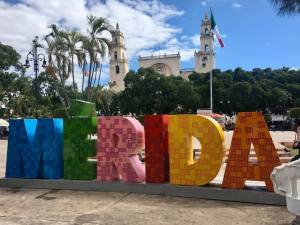
Our first stop was the city of Merida, which is the capital city of Yucatan. We arrived fairly late at night and were quite surprised when the first restaurant we came face-to-face with in Mexico was a Carl’s Jr. Haha! From that moment on, we were constantly reminded how much the US and Mexico have influenced each other over the years. From the abundance of Coke products to the variety of Christmas songs, there were so many things that made us feel like we weren’t too far from home. Some things, however, were very different. For example, the colors of Merida were unlike any city I’ve ever been to! Every building was painted a different, yet equally vibrant shade: coral, sea foam, cyan, olive; I lost count early on. All the color was even more surprising when we learned that Merida’s nickname is “the White City”! Apparently that has more to do with the traditional clothing than a description of the city itself, because Merida is nothing if not colorful.

78275304_10221266073269673_3423646473206628352_n
Pure art!

Merida was also incredibly clean! Everywhere we walked we could smell the scents of soap or laundry detergent wafting out of the various doorways. I had also (wrongly) assumed that in such a warm climate, bugs would be imminent, but we saw none during our 10 days on the peninsula. We what did find was a lot of extremely helpful strangers. As we stood in front of famous buildings or walked back and forth trying to find the correct bus stop, so many people approached us and gave us advice and information. We learned a lot about the Mayan people from locals who kindly shared what they knew in English, just for us. They didn’t ask for tips or for us to buy something from them, they shared because they’re proud of their heritage and wanted foreigners to also soak up some of their history and culture. Overall, Merida was incredibly laid-back, absolutely unique, and unequivocally friendly.

Guadalajara

74469092_10221331106775470_6605481842357305344_nOur next stop was Guadalajara, the capital city of Jalisco (I’m really beginning to think I must have a thing for capital cities…). Anyway, when we arrived in this larger city, I realized just how much all the negative hearsay (like the number of well-meaning warnings I received before our trip) can really affect first-time travelers. I immediately felt uneasy, like everything was an unforeseen danger. Of course, after only a few hours, that was all wiped away. The people of Guadalajara were just as friendly and carefree as those in Merida. Our Uber drivers, especially, greeted us and patiently listened as we stumbled through Spanish to ask questions or give any necessary additional information. We also noticed that in Guadalajara, and perhaps Mexico as a whole, the timings of things are quite flexible. We often found ourselves checking the hours of one place or another, only to arrive and see they haven’t quite set up yet (even a few hours after opening). We really felt the struggle of coming from a China mindset (up early, asleep by 10pm) to the Mexican way of life, where nothing really gets going until after 8pm, at least!

78179675_10221361507455468_8849487578890502144_n
Arco de Zapopan

Once it gets going though, it’s impossible to deny the liveliness of Mexico! Guadalajara in particular has an amazing bar/restaurant street that has so much activity it would take more than a year to see and do everything just on that one strip! From festivals and live music to pub crawls and lucha libre tours, the people in this city know how to party (even on weeknights, which was incredibly impressive, and something I wasn’t quite able to do). While in the city, I was also surprised by the extreme variety of Mexican cuisine. I love Mexican food in the US, but what we typically see is a list of the same 5-6 items with various customization options. In Mexico, the food-scene is much more diverse. From the taco stands and torta kiosks to traditional Aztec/Mayan dishes that look like they came right out of a Top Chef episode (not to mention all the international options). In 30 days, I’ve added countless new dishes to my favorites list, and I can now be absolutely sure that Mexican is my favorite of the world’s cuisines. Of course, my favorite among favorites is still the humble taco, and I feel no shame in admitting that Tucker and I kept track of the 75 tacos we ate in Mexico!

Mexico City

78976206_10221463131596008_7786060591298248704_nOur final stop on this scouting mission was the infamous Mexico City. One of the largest cities in Latin America with about 9 million residents, and easily one of the most welcoming mega-cities I’ve ever been in. Sometimes in cities of this size, the expectations for speed and efficiency can be extremely high, which poses a problem for travelers who are clueless as to how things are usually done. However, I never felt any impatience from the locals in CDMX (Ciudad de Mexico). Things were just as easy-going and friendly as the other cities we visited. Of course, Mexico City is quite big, which does bring about some challenges. For example, it typically took over an hour to get from one side of the city to the other, even with the super convenient (and cheap) metro. A sprawling city combined with loads of commuters, holiday shoppers, and tourists definitely made for a chaotic transportation situation. However, because of that large and diverse group, we were also able to get some Kansas City BBQ when we wanted something a bit different one night. It’s the eternal struggle of city life!

78885940_10221405528475966_2611886976973930496_n
Busy, busy!

Aside from the sheer size and diversity Mexico City (and really all of Mexico), I was also really surprised by the openness we saw and felt. Mexico is a Catholic country, and having lived in Poland, I remember the conservative lean that often goes along with that. However, Mexico proved again and again that if it’s not bothering anyone, who cares? We immediately noticed all the PDA (public displays of affection): lots of kissing, hand holding, etc. anywhere and everywhere, by all sorts of couples: old, young, gay, straight. We also saw more skin than we had grown used to in China (although that is pretty much necessary when it’s still in the 80s in December). And finally, the language used was a bit freer as well. I’ve never seen so many kids shouting curse words as when we went to the lucha libre match (all in good fun though). Ultimately, Mexico had the “anything goes” approach that we sometimes found in China and Poland, but here it was definitely more strongly connected to social issues, and we ultimately found it very refreshing.

Mexico In General

78764319_10221380280924793_7526181912742723584_n
Incredibly lush!

As I’m writing this, I keep thinking of things I want to add. All the information we got in Merida about the Mayan people and the way it influences the modern culture there, all the flowers and fruits of Jalisco that surrounded us even in the middle of a huge city, and all the people in Mexico City, who just like in NYC are trying to make it big in one way or another. As is typical when we travel, we learned so much about the places and people around us, but we also learned more about ourselves: like how strong preconceived notions can be (even in experienced travelers), how many American exports are actually really unhealthy (like sugary drinks and fast food), and ultimately, how similar we all really are. We often found ourselves bonding in limited language over traffic, wifi, cute animals, and delicious food – you know, the important things in life.

In short, Mexico was absolutely amazing, and we could definitely see ourselves living there in the future! We felt safe and welcomed, and we had a great time getting to know our southern neighbors a bit better. As it stands now, we’re muddling our way through Canadian immigration, but at least we now have a solid plan B (Guadalajara won out, by the way). Or, who knows, maybe after a few years in the frigid north, the desire to thaw out in Mexico will draw us south of the border sooner than we think!

76989410_10221225077724810_3533898339529523200_n

A Bit Different, Eh?

72198834_10220829312750933_5214555038575230976_n
Look how Canadian I am!

So we just spent our first month in Canada, and I can tell you I’ve never been more observant in all my life! Tucker and I are in the process of deciding where we want to live for the next few years, so we’ve been looking into everything from neighborhoods and public transportation options to social interactions and local habits, most recently in Ottawa and Montréal, Canada, but with a few cities in Mexico soon to follow (more about that in a subsequent post, I’m sure). Our reason behind these investigations is that neither of us have actually spent any real time in Canada (or Mexico), and we really just didn’t know what to expect. Would I find it too similar to the US (i.e. boring)? Would Tucker be able to get a job without speaking French or Spanish? What would our lives be like on the whole in any one of these places? To get a clearer picture, we first headed up to Ottawa and Montréal to see what we could discover about life in the Great White North. So far, these are a few things that have stood out to us as uniquely Canadian:

Language Uncertainty Dance

71894432_10220781349271876_8900321738064134144_n
Aka “stop”

Many people know that Canada has two official languages, but what exactly does that look like? Well, to us it seems pretty clear cut on paper: in Québec, French is the default language, and everywhere else, English is the go-to. Therefore, signs, menus, and the like carefully follow provincial lines. However, people are bit more mobile than that, and the lines aren’t always so clear when speaking is involved. For example, Montréal is a very international city with immigrants who speak many different languages, and Ottawa is located half in Ontario and half in Québec. This all led to a bit of a which-language-should-we-use dance between us and everyone we encountered. Hotel staff, grocery store clerks, restaurant servers, and literally everyone we talked to had to make a choice of which language to use with us, and we, in turn, also had to choose.

We determined that provincial lines do play a role in the choice, but there were other factors of consideration as well, like the supposed heritage of the speaker (Francophone or Anglophone), how we appeared (clearly lost or in-the-know), and what situation were we in (ordering Vietnamese food or buying food from an outdoor market). Even our names seemed to be used as an indication; at all the ticket checkpoints I received “merci”s and Tucker got “thank you”s, and the only reason we could come up with is that my name is Danielle. For me, this process was fascinating, and I found myself eavesdropping on anyone and everyone just to note which language they were using and why. When so many people are bilingual the possibilities are truly much more interesting!

How Cold It Really Is

72737195_10220909004063166_1287696045052002304_n
Sometimes I wore my hat AND earmuffs…

Canada is quite far north, of course, but when looking at the lines of latitude, Ottawa and Montréal really aren’t that much above what I consider “normal” cities. Łódź, for example, is significantly closer to the Arctic Circle, which began a line of thought that led us severely astray. Because while the latitudes of these two cities are actually well below some well-known (and might I add, temperate) western counterparts like Vancouver or Seattle, their climates are simply different. There’s no large body of water to curb the freezing temperatures, and evidently the “Polar Vortex” is a real thing that starts much earlier than I had anticipated. In short, Ottawa is one of the top ten coldest national capitals in the world, and I didn’t bring my big jacket. Oopsies.

Honestly, even with my big jacket I doubt my small collection of outerwear is actually going to be enough for winter in Canada. Taking a look at some of the clothing stores here, we’ve seen winter gear we didn’t even know existed. Linings for boots, glove extensions, and every possible manner of covering your ears and face. The terminology is also a bit different, as I had to google the word “toque” shortly after our arrival. It’s actually pretty impressive to see the flexibility of clothing in action. Even in October, the temperatures can get below freezing, especially at night, but during the day it can get up to the 60’s. It’s amazing to watch the various pieces come off and go back on throughout the day, sometimes sparked solely because the sun came out from behind the clouds. I vaguely remember the vast temperatures swings of Chicago, but clearly I have yet to master dressing for them.

An Abundance of Animals

72753578_10220909004223170_1004007047059996672_n
Polite squirrels as well!

With our new-found knowledge of how cold and long “winter” in Canada can be, we definitely found the amount of fauna out and about to be rather odd. Immediately upon arrival to Ottawa (which I will remind you is 200kms from the closest Great Lake and almost 500kms away from the ocean) we were met with the loud, annoying cries of seagulls. Seagulls? There are no beaches here! Sure there are rivers, but it’s cold! What’s with the seagulls? In our first week we also came across squirrels of all colors, bunnies, chipmunks, and so so many birds. And that was in the city proper, skyscrapers well in view! It seems nature really is on your doorstep up here in the North. However, if I see a moose or a bear lumbering down Sparks Street, I might just lose my mind.

French/British Combo

IMG_6633
Her majesty

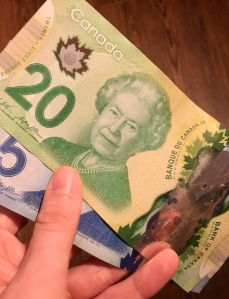
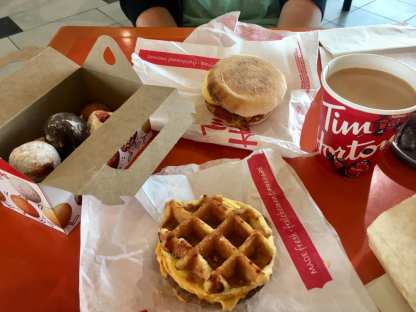
Another surprising insight into life in Canada is that it seems to be less of an American/French fusion and more of a British/French fusion. As a native inhabitant of a former British colony myself, I just assumed all former colonies were quite distinct from Old Blighty, but evidently there’s more of a scale of “Britishness” than I thought. Here in Canada, we have the Queen on the currency, a Prime Minister and Parliament, Celsius and the metric system, traditional tea and pub cultures, and the distinctive, yet eccentric spelling system with all those extra vowels and not enough “z”s. Additionally, as Americans, especially Americans coming from China, we’ve also found an extraordinary penchant for forming lines in Canada. At the train station we wrapped around the entire hall forming two lines to match the two platforms below the station. It seemed very odd to us, inefficient even, but soon we realized lines are a way of life here; basically if it’s a norm at Timmy’s, it’s a norm everywhere.

72112720_10220743900855689_5770965290108059648_n
Ah, Timmy’s

Interesting Fusions

72463415_10220908992302872_8469820978254315520_n
Beyond delicious!

Speaking of combos, we’ve also seen an incredible amount of interesting food fusions in Canada. Early on in our stay I ordered “pierogi eggrolls”, and even after eating them, I couldn’t quite wrap my head around the concept. Canada has seen its fair share of immigration throughout its history, and we can definitely see how that has affected the restaurants and their signature dishes throughout the country. We’ve had tandoori nachos, a turducken club, bruschetta mac and cheese, and many other colorful combinations. It seems even their own, native poutine (which is traditionally French fries covered in cheese curds and thick gravy) is also open to interpretation. We’ve tried jalapeño poutine, butter chicken poutine, and Peking duck poutine just to name a few! Stores and other vendors also seem to cater to this preference for food creativity and variety. We’ve seen ph broths and żurek mixes in grocery stores, Italian sausages served in French bread by street vendors, and vending machines with American, British, and European candy choices.

The Use of “Washroom”

This might be a small thing, but I couldn’t get over the Canadian use of the word “washroom”. I’ve lived in several different cities, on different continents even, thus I have heard many things used to describe the place we go to “relieve ourselves”. I’ve heard bathroom, restroom, toilet, WC, lavatory, powder room, even “the john”, but “washroom” is not one I would have listed as a common occurrence. Until Canada, that is. Here it’s virtually the only word they use! It’s on all the signs, it’s what people say, I was even corrected once when I asked about the location of the “restroom”. They looked a bit confused and clarified with, “the washroom?” Which I then went off in search of, quietly contemplating my accent, word choice, and place in the world.


73052411_10220861734961468_4555528384729317376_n
I bet they have the nicest washrooms in there.

Also of interest on the topic of washrooms in Canada is that they all seem to be located in the basement. At the majority of restaurants and pubs we visited, the washrooms were located under the establishment, often down a very long, steep staircase. I tried to look into why that is so common here, and the best I could find is that it had something to do with the building codes at the time of construction. Whatever the reason, I just hope they keep them well-heated in winter. Thankfully, even if the rooms themselves end up being a bit drafty, at least the hot water in Canada is on point. The tap water, we’ve noticed, goes from ice cold to absolutely steaming hot in about 5 seconds – in a pinch, I actually brewed my tea with the sink water in Montréal. Canada really does seem to love their extremes!

And, For Sure, the Politeness

71598087_10220781345631785_888126007620403200_n
We even got compliments on our photos!

Finally, the last Canadianism that stuck out to us was, indeed, the politeness that perhaps they are so well known for outside of Canada. At first, we noticed all the “no worries” and “of course”s and other pleasant responses to our many “thank you”s. There wasn’t even that tone of you’re-a-bit-of-an-idiot-and-I’m-only-helping-you-because-it’s-my-job sort of thing that’s so common Stateside. We also heard a lot of back channeling or the words you use when showing someone you’re paying attention. Things like “for sure, for sure”, “oh yeah, definitely”, and “wow, great”. There also seemed to be a great deal more small talk. People more frequently asked questions or shared information than what we have grown used to in the US. For example, when our bus cards didn’t work on the STO line, the bus driver took a few minutes to explain to us how the complicated inter-provincial system worked. He then let us ride for free – so nice! We’ve also been given quite a few tips for places to go and things to do, after various locals asked and discovered that we’re not Canadian. These politeness features have definitely made the big cities of Canada feel not quite as big.

71856286_10220743902535731_7367851035752136704_n
O Canada!

So these are some of the most obvious things that immediately reminded us that we’re not in the US; however, I have a feeling there will be many more discoveries like this in the future, should we come back for a longer stint. Every country, even long-time neighboring countries with similar back stories have their little quirks. I can’t wait to find out more about what makes Canada, Canada!


America in Ten Words

Intro
One Cool American

Earlier this year I read China in Ten Words by Hua Yu, which I would highly recommend! It’s a short collection of personal stories centered around ten words that the author feels represent China and its history, people, culture, etc. As someone who (at the time) was living in China and had spent the previous two years learning all about said culture, I absolutely loved reading from the perspective of Yu, a native Chinese. He touched on so many of the things I have shared in my various posts and gave new meaning to some of the things Tucker and I experienced ourselves as residents in China. In short, I loved it so much that I thought maybe I could join Yu in sharing a bit about my own culture or at least how I, one American, view it.

Honestly, this is a slight departure for me because I typically choose to write about my discoveries and observations on places and cultures that I am newly discovering myself, but this required a different sort of reflection. Even though I definitely can’t live up to Hua Yu’s work with one short blog post, I hope to share a few of the traits and characteristics (in no particular order) that, for me, make America, America.

#1 Independent

IndependentAs an English teacher I’m often asked to describe the United States and Americans, and for as long as I can remember, the first word that has come to mind is: independent. We love to feel independent! Independent financially, politically, emotionally; in our families, in our workplace, and in the world. Many of us longed to “be out on our own” at a very young age, and most Americans follow that course throughout their lives. We love expressions like “pull yourself up by your bootstraps” and “stand on your own two feet”. In our culture, there is an immense pride in (and often an expectation to) figure things out on our own. Whether this comes from the pioneer spirit of our history or from Hollywood’s “steal the spotlight” mentality, we can see the strong value placed on independence in all aspects of American lives. From our first declaration as a prospective country to our preference for ordering individual, non-shared meals, we focus every day on our individuality and personal independence, and if ever we feel it’s being threatened, look out.

#2 Entertainment

EntertainmentYou might have noticed that I didn’t get very far into this post without mentioning Hollywood. As much as many Americans like to think of that place as somehow “other”, the truth is, we are massive consumers (and producers) of entertainment, all thanks to Tinseltown. In fact, many of my students from all over the world have surprised me with facts and details about life in the US that were gleaned entirely from our movies and TV; some have even confessed that’s how they started learning English or even why they continue today. Of course, what they see in the movies is not always true to American life, but there are definitely many of our values and perspectives shared through our obsession with entertainment. It’s hard to imagine America without movie trailers, award shows, film conventions, and dedicated fandoms. As someone who hasn’t seen such American classics as the Godfather, Stars Wars, or Top Gun, I’ve been described a few times as “simply unamerican”, but I promise I’ll get to them eventually!
#3 Direct

Being told I’m unamerican (even jokingly) to my face brings me to my next Americanism. We are a direct people. After living in China for a few years, I know this to be absolutely true of Americans. We like to be told upfront, no matter what it is, and often regardless of how it’s said. I’ve heard people refer to Americans as blunt or straightforward, and although we aren’t always trying to be, we are often quite direct in our daily lives. Imagine communicating with someone (a family member, a colleague, or even a stranger) and not being able to figure out what they mean. You would probably want to shake them and say “stop beating around the bush” or “just break it to me”. We have a certain intolerance for ambiguousness coupled with the idea that things should be said and done as efficiently as possible, feelings be damned. This is why in our culture it’s perfectly normal to decline invitations or to challenge a superior. We would rather ruffle some feathers right off the bat than leave things vague or unclear.

#4 Patriotic

PatrioticAnother trait that I associate with America is our deep patriotism. We love our flag, our national anthem, and the values that we have long attached to our country, such as freedom, perseverance, and justice. Although patriotism means something a little different to each of us, as Americans this is our home, and we feel a certain pride and responsibility in that. Whether we show these feelings by hanging a flag outside our house, voting in every election, or representing our values abroad, we all like to feel that we have a role to play for America, and we’re happy to do it. Perhaps because we grew up with stories of how hard our forefathers, suffragettes, and civil rights activists fought for us to have what we have today, the sense that we need to take up the baton and continue to work for a better homeland has been deeply instilled. Or who knows, maybe it was just hearing that Lee Greenwood song year after year.

#5 Dreamers

DreamersAlthough this word has taken on new meaning and significance in the last few years, the American Dream and the people who embody it are not new, nor I think are they bound by political lines. America was founded on dreams: dreams of a new nation, dreams of equal representation, dreams of prosperity. We can still hear the US referred to as a “Land of Opportunity” from both inside and out. We love the fact that “if you can dream it, you can do it”, and thanks to our lack of a formal class system, many Americans have been able to make it happen all throughout our history. Most of us have immigrants in our ancestry, which is maybe one of the most classic versions of the American Dream. Others have seen their dreams come true in regards to socioeconomic status or overall success. Just like independence, Americans value people who dream big and work hard to make it happen. In short, we believe dreams can come true.

#6 Divided

Divided 2Dreams are wonderful, but all dreams are based in some sort of reality. And for Americans, right now that reality is a strong division. Party lines are more evident than ever, generation gaps and racial divides exist, and there’s no doubt that whatever the topic of conversation, people tend to divide up into various groups or “sides”. We have the Left and the Right, Boomers and Millennials, white collar and blue collar, Black and white, gay and straight, religious and non-religious, and so many other labels that, like it or not, separate us in some way from our fellow Americans. Although we are the “United” States and a supposed “Melting Pot”, many events have recently been shining a spotlight on our divisions and differences instead. Diversity can often beget division, or at least the perception of division, but I think we’re all also aware of the classic “United we stand; divided we fall”. Trends change everyday, and we can change as well.

Divided
At least Atlanta can be pretty United!

#7 Private

Another American feature that stands out to me is our penchant for privacy. On the whole, Americans are quite private (even with the growing popularity of oversharing on social media). We like privacy fences and secure passwords, and we fear Alexa and Siri are gleaning too much information from us. We have all sorts of privacy laws and generally feel that keeping things to ourselves is one of our inalienable rights. I often have students ask me “how old are you?”, “how much do you make?”, “why don’t you have kids?” and other such questions that, as an American, leave me feeling like my privacy has been breached. We talk about “personal boundaries” and “invasions of privacy” fairly regularly – both in the physical and figurative senses. It’s typically very clear to Americans where “the line” is and our use of small talk often demonstrates it: weather, sports, family members – all good; religion, politics, or anything “too personal”, strictly off the table.

#8 Friendly

Friendly
Super friendly (and patriotic)

Although we might like keeping things to ourselves at times, we are usually still quite good at small talk and making friends. From the outside looking in, Americans are often viewed as very friendly. We’re often smiling for no reason, making jokes with strangers about the broken elevator, or lending a hand in the form of opening doors for others or picking up something that has been dropped. Basically, we’re masters at “Meet-Cute Stories”. I think the reason we often come across as overly friendly is because we’re all pretty much willing to do these things regardless of where we are, who we’re with, or what we’re doing. We also tend to retell these little anecdotes throughout the rest of our day: “I ran into a man at the gas station, and you’ll never guess what he said…”, “Sorry, I’m late. I was chatting with a woman outside.”, etc. And don’t even get me started on what it’s like when two Americans meet while abroad; you’d think they had just met their long-lost cousin!

#9 Isolated

The US is big and only has two neighbors, a bit of a rarity in terms of geography, and these facts play into my next feature of “Americanness”: isolation. A large portion of Americans never feel the need to leave their homeland (and why would they with the bounty of things to do and see right at home?) or even keep track of what’s going on outside of their immediate surroundings. However, this tendency to face inward seems to contribute to a bit of ignorance about the rest of the world. You might have seen Jimmy Kimmel testing Americans on world geography, which as a geography nerd, definitely makes me cringe, but unlike other countries whose histories and even present day dealings have required a much more thorough knowledge of their surrounding nations, for Americans, it has rarely mattered (of course with increasing globalization that is changing every day). However, regardless of the underlying reasons, Americans can definitely be said to be “in our own little world”.

#10 Innovative

InnovativePerhaps because we’ve always been in our own little world, the US has also been a hotbed for inventiveness and creativity right from its start. From Thomas Edison and Clara Barton to Bill Gates and Katie Bouman, Americans have contributed a great deal to global innovation. Even the average American likes to think and talk about the future, and we always, as Walt Disney famously said, “keep moving forward”. It’s no wonder our people were among the first to take to the skies, race to space, and create all types of digital media. We simply love to take risks and try something new. We have the phrase “necessity is the mother of invention”, but in America, it might not even require necessity.

Innovative 2
Who could ever forget this incredible innovation?

So that’s my list. Of course, there are about a hundred words I sifted through before deciding on these ten! America is complicated; culture is complicated! And we can’t always fit everything into ten neat little categories. But maybe we can agree that reflection and openness can be great for developing a better understanding of ourselves and our communities. I would love to see some of the words you would add to your “America in 10 Words” list, or if you’re from another country, what words would you assign to your culture? We have a lot we can learn from each other’s perspectives, and I can’t wait to continue shifting mine!

Map
???

Traveling and Learning

54436949_10219110534782558_5021852581991809024_n
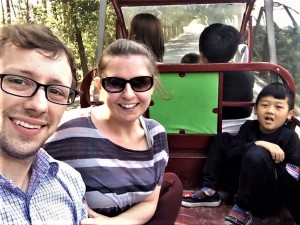
Bus Selfie!

I really love traveling, and recently I’ve been reflecting on why exactly I feel so strongly about it. Is it the break from daily life? A chance to meet new people? Why does anyone choose to travel? I think Tucker enjoys it so much because he loves to try anything new, and going to new places is the perfect way to do that. But I’m not as fond of new things (especially new foods) as he is; I have a different motivation. I like to travel because, ultimately, I like to learn. Originally, I thought I’d be a lifelong student because of my love of learning; however, that turned out to be pretty uneconomical. Fortunately, just after graduation (only a few months after we got married) Tucker and I took our first trip overseas, and I found it: a new way to continue learning – through exploring the world around me.

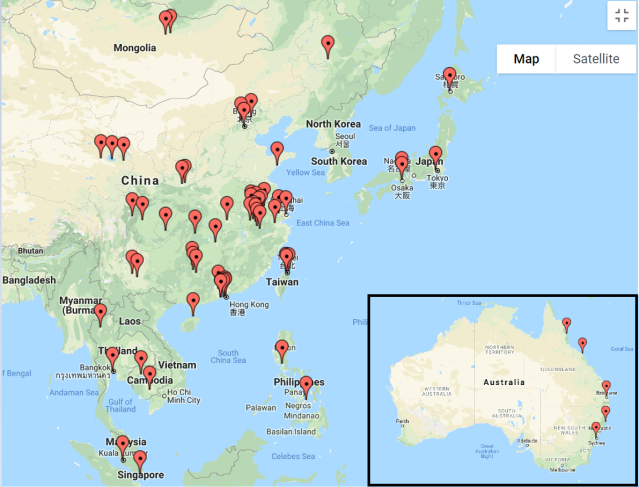
During our subsequent travels I have been amazed at what we’ve ended up learning: geography, history, culture, psychology, self-awareness, the list goes on and on. So this is the force driving my not-so-easily-sated addiction, but thankfully, I’ve also been given ample opportunities to get my fix. Here are the places we’ve traveled and some of the things we’ve learned during my two years as an English Language Fellow (August 2017-July 2019):

Beijing

43823145_10217851094697343_3261443970961506304_n
Hefei

Hefei, Anhui – where we learned about HOME

Through traveling, I think one of the things we’ve learned the most about is the concept of “home”. We’ve learned that a home can really be made anywhere, and that connections with neighbors and friends are absolutely necessary for a place to truly feel like home. In fact, we have often felt closer to the friends we’ve made during our brief stints abroad because these shared experiences bond people together in an incredible way. We become instant family with other expats, and our Chinese friends are literally our lifelines! It’s such an interesting dynamic that definitely opened up our views of family and home. Another interesting aspect of our new perspective on “home” is how well we actually know it. Going into our last two new homes we haven’t known anything about them. Nothing about the neighborhoods we’d be in or even anything past what Wikipedia says about the cities/regions they’re in. This has given us a new outlook on what it means to truly know where you live. We’ve had an amazing time learning more about the places we’ve called home, and it’s made me curious about the places we used to call home and how well we actually knew them.

Nanjing, Jiangsu

22310480_10214825975111244_8420312030420368634_n
Mongolia

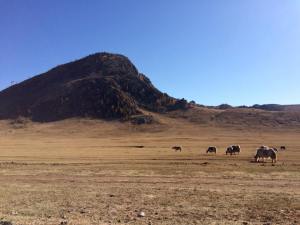
Mongolia (Ulaanbaatar & Gorkhi-Terelj)

Shanghai

Wuhan, Hubei

Huangshan & Hongcun, Anhui

Xi’an & Lintong, Sha’anxi

Harbin, Heilongjiang

Thailand (Chiang Mai & Bangkok)

27459139_10215799887458444_8118480623873599742_n
Cambodia

Cambodia (Siem Reap & Phnom Penh) – where we learned about CONFLICT

In addition to learning about our home (and our views of it), traveling to different places has allowed us to take a closer look at how others view the same places and how they view their own homes. This has led to a better understanding of conflicts and global perspectives, which I am endlessly interested in. When we visited Cambodia, for example, I was immediately struck by their relationship with Thailand. We took a bus from Thailand to Cambodia, and walked across the border through immigration, where the welcome was, well, not so welcome. Cambodia has had a rough history, with its neighbors and with many foreign nations, and that has left an impression on the population. And it’s hard to deny their feelings, especially when one of the other most noticeable features of Cambodia was the number of missing limbs, mostly caused by landmines still implanted within their borders decades after the end of the conflict with Vietnam. The US has its perspective on our many conflicts, but every country, and every person has their own views, which are extremely important to learn in order to really begin understanding each other.

Hong Kong

28056090_10215929639622167_296978710011137587_n
Guangzhou

Shenzhen & Guangzhou, Guangdong

Hangzhou, Zhejiang

Sanhe, Anhui

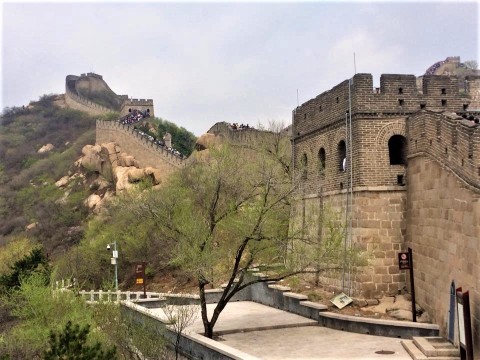
Badaling, Beijing – where we learned about PERCEPTION

On the topic of perception, I’d be amiss if I didn’t mention the fact that traveling has broken pretty much every stereotype I’ve ever had about a place or a group of people. When we traveled with my family in China, it was amazing to watch those stereotypes break for someone other than myself. My parents realized pretty quickly that China was nothing like they had imagined, and Tucker and I have done the same thing in every place we’ve visited. Our perspectives are shaped through all sorts of things (the news, education, movies, etc.), but they’re always seen through our own individual filters as well as through the filters of the sources of information. This has led to many different perspectives on many different things, but seeing and experiencing something for yourself gives you the best insight you could ask for. One of my favorite travel quotes comes from Aldous Huxley: “to travel is to learn that everyone was wrong about other countries.” Even when comparing your experiences with someone else who has been to the same place, a difference in perspective is almost guaranteed, but that’s what makes it so interesting!

31184987_10216476097443271_453332385989628214_n
Badaling

Suzhou, Jiangsu

Kunming & Mile, Yunnan

Australia (Sydney, Port Macquarie, Brisbane, Airlie Beach, Cairns)

36853569_10217054960034474_3599223915928354816_n
Australia

Haikou, Hainan

Qingdao, Shandong

Guilin, Xingping, & Longjin, Guangxi – where we learned about FAMILY

Traveling with family has taught us a lot as well. First, it taught me to be thankful for our family members who are willing and able to travel with us. There have been many expats we’ve met whose family members have never visited them or even want to see the places their loved ones call home. It truly makes me thankful for the open-minded and adventurous spirits of our families. I have also learned a lot about taking care of other people’s needs. In China, independence really only comes with time because with no alphabet and very little English, trying to do things on your own can take a lot of effort and patience. Luckily for Tucker’s mom and aunt (and my parents), we were there to help them answer any questions and provide whatever they needed. Through these trips, I learned a lot about what is required to be responsible for someone other than myself 24/7, and it has left no question in my mind as to why we haven’t had any kids. Haha!

46436774_10218117969609049_117787609782026240_n
Fanchang

Jinshanling, Hebei

Wuhu & Fanchang, Anhui 

Changsha, Hunan

Zhangjiajie, Hunan

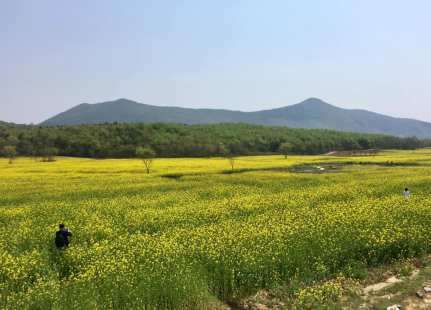
Chaohu, Anhui – where we learned about the PAST

Another set of lessons we have undoubtedly received through our travels has been in regards to history. Coming from the New World, our “history” typically refers to the seventeenth century and onward, but traveling to other parts of the world, we’ve realized just how recent that actually is. Europe showed us their history through maps and architecture; Asia has shown us through traditions and languages. Visiting the outskirts of Chaohu and other cities and villages of Anhui is a bit like stepping back in time. There are farmers whose ancestors have farmed the same land for hundreds of years. Ancient artifacts seem to be dug up every day in this part of China, cooking vessels and jewelry from thousands of years ago. In history classes I was never really good at linking what was happening in ancient Rome with the rest of the world, but after traveling and seeing some of the history for myself, it has gotten much easier, as has the ability to connect what has happened in the past with what is happening in the present.

56770469_10219219416624536_1852154197714141184_n
Chaohu

Chengdu, Sichuan

Siguniangshan, Sichuan

50502210_10218615842735566_3802084494152826880_n
Chongqing

Chongqing

Zhuhai, Guangdong

Macau

Lantau Island, HK

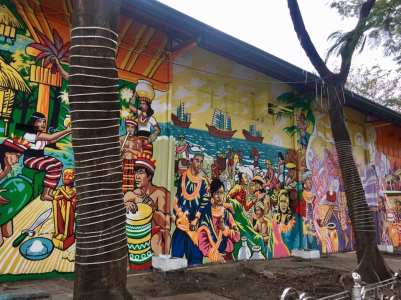
The Philippines (Cebu & Manila) – where we learned about INEQUALITY

Traveling truly brings to light things I never would have given a second thought to in other situations. Throughout our travels, we’ve met many people in many different circumstances. And sadly, we’ve seen that people are almost never treated equally. We, in the US, tend to think of race, gender, and sexual orientation, but there are also issues of class, religion, ethnic background, age, and countless others. Inequality seems to be a shared human trait, but it’s also something we’re all growing increasingly aware of. Sometimes seeing it manifest in a different way, as it often does in different contexts, helps show how ridiculously common, yet unnecessary it really is. Tucker and I were in the Philippines earlier this year, where we saw first hand some of the inequalities experienced by the people who live there versus the people who vacation there. It’s something that allows us to think about the impact we have when we unintentionally aid inequality, not only when traveling but in all aspects of our lives.

51221293_10218735999499410_6899317769305587712_n
The Philippines

Singapore

Malaysia (Kuala Lumpur)

54514796_10219110537662630_6888171968395214848_n
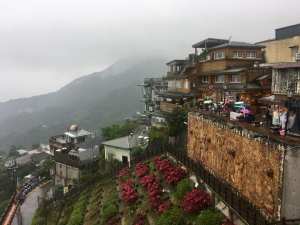
Jiufen

Taiwan (Taipei, Jiufen, & Tamsui)

Anqing, Anhui

Jiuhuashan & Chizhou, Anhui

Xining, Qinghai – where we learned about KINDNESS

Finally, I think the biggest lesson of all has been experiencing the kindness that strangers are capable of showing to each other, which we found empathically on display on our recent trip to Qinghai. It has been a common thread throughout every place we’ve traveled; the help we’ve received from people we had never met before continues to inspire us. Whether it is someone giving directions in multiple languages or simply sharing information about their culture so that we can leave with a more complete understanding, we’ve made friends with people around the world. This is what allows me to not get bogged down in politics or negative stories that are passed around because I have experienced the kindness of humans in every country I’ve been to. I’ve seen our similarities, and they far outweigh any differences. Mark Twain wrote “travel is fatal to prejudice, bigotry, and narrow-mindedness”, and I believe our ability to travel more freely now than ever before has played a big part in the acceptance and compassion people are showing each other around the globe. I want to continue to spread the kindness I’ve received, and I hope that we all continue to do that whether we’re traveling or not.

Chaka & Erlangjian, Qinghai

Japan (upcoming!)

There you have it: 10 different countries, 20ish provinces/regions of China, over 60 cities, and an immeasurable amount of knowledge, experiences, and memories. It’s fun to keep track and even more fun to share, but don’t just take it from me. As the Asian proverb goes, “better to see something once than to hear about it a thousand times.” Hope to see you on our next trip!

Map

Student Perspectives: To Me China Is ______

This semester I’m teaching an English Stylistics course where we delve into the various styles of written English including official documents like resumes and letters of recommendation, but also more creative forms of writing like poetry and blogs. To finish out the unit on creative writing, I had my students use the features we’d been discussing in class to write a blog post of their own, and for added excitement and authenticity, I told them I’d share the best ones with all of you on my own blog.

We decided on the topic “To Me China Is _______” as a way for them to reflect on their own culture and harness their own unique points of view to share something new with an unknown audience. I honestly wish I could share all 46 of them because they all did an amazing job, but for now, here are the links to some of my favorites:

To Me China Is…Golden

To Me China Is…Unequal

To Me China Is…A Land Full of Beauty

To Me China Is…Superficial

To Me China Is…Diverse

To Me China Is…A Peaceful Haven

To Me China Is…Full of Magic Power

To Me China Is…A Treasure-trove of Specialties

To Me China Is…Possibilities

To Me China Is…Changing


New Skills Brought to Us by Life in China

Last month I wrote about the things we’ll be leaving behind when we say goodbye to China, but this month I want to focus on the things we’ll be taking with us when we go: the skills and perspectives we have been developing over the past 20 months.

Flexibility and Patience
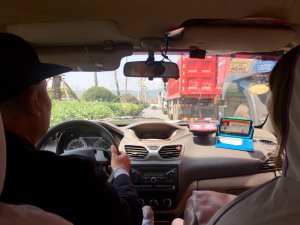
Our taxi drivers might need to work on their patience levels.

The first two skills that we have undoubtedly been cultivating during our China time are our flexibility and patience. Any time you’re in an unfamiliar place or situation these two traits are brought to attention, but China has a unique talent for testing just how flexible and patient a person can be (red tape anyone?). In order to cope with some of the more annoying aspects of life as an American in China, we’ve picked up the phrase “cha bu duo” – it’s a Chinese phrase that has become our hakuna matata, but rather than “no worries” it means “alright” or “close enough”. We use it when plans fall through, when new arrangements pop up over night, or when something that should have taken a few hours ends up taking a few days. It’s all cha bu duo, and it’ll all work out in the end. We’ve definitely become pretty zen in China.

Adaptability
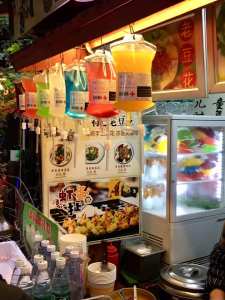
Fruit juice in blood bags? Sure, why not?

Another trait we’ve been honing is our adaptability. China is certainly full of surprises, and keeping up is all any of us can hope for. In fact, early on in our move here we visited Wuhan, a large city in central China, and learned that they have a slogan: “Wuhan: Different Every Day”. However, we’ve long suspected that this particular saying really applies to the country as a whole. I can’t count the number of times we’ve been bewildered by something we’ve seen or heard, but I can say that now it doesn’t really phase us. We’ve learned to take it all in and roll with the punches better than we’ve ever be able to before. From unexplained detours and missing reservations to chicken feet pasta and drinking hot water on 90 degree days, whatever comes, we’ll keep calm, cool, and ready for anything.

Ambiguity
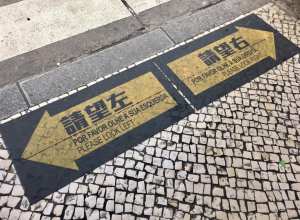
But which way will the cars be coming from?!

Accepting ambiguity is definitely another newly acquired skill. Living abroad always comes with a lot of ambiguity because we’re never quite sure what’s going on (even after asking our thousandth question of the day). However, with China, the ambiguity is off the charts! Partially because the writing system is more like code than language and partially because things have been done in a certain way here for thousands of years – even the locals aren’t always sure why! Luckily rather than frustration, we’ve found peace in not always knowing everything, and more than that, we’ve found that trusting others can really help ease the uncertainty and fear that often accompany ambiguity.

Positivity
On a double-decker bus! Yay, simple things! :)

Perhaps a surprising virtue to have further developed in China is our positivity. Before coming to China most of what we heard was negative, in fact, even while living here, we hear a lot of negative things about the people and culture we’re surrounded in (and other cultures and people as well), but rather than bring us down, it has actually increased our positivity and positive associations. We’ve asked a lot of hard questions, and we’ve be given a lot of really great answers. We’ve met so many friends, colleagues, and students that are extremely positive and excited about both the present and the future of their lives, their country, and the world that it has began to rub off on us. The smallest things now seem to bring us joy, and a positive attitude is our norm. We all really are more alike than different, and it’s easy to stay positive when faced with that reality every day.

Accepting Compliments
Works for accepting gifts too!

While I’m actually still working on this one, I think we have developed a bit of a knack for taking compliments. It is very common here to give compliments to your friends, and at first it made me super uncomfortable. I’ve had compliments about my “jade arms”, my “3D face”, and my “beautiful nail shape”, which all left me completely embarrassed and occasionally speechless. With time, however, I’ve learned to take my well-practiced American/European self-deprecation and turn it into a humble reply followed by a reciprocating compliment. A very useful skill!

Focus
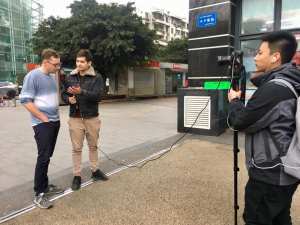
Cameras, cars, crazy onlookers – no problem!

Another really useful skill we’ve definitely sharpened over these two years is our ability to focus. Noise essentially means nothing to us now. The daily (very early) singing street sweeper, the constant construction clatter, the whirring of air filters, all sorts of clamoring people and blaring traffic are so easily blocked out now. Living in close quarters with 8 million other people has allowed us to focus our attention as never before, which is something we’ll forever appreciate as we intend to continue city living for the foreseeable future.

Communication
Her face says it all

In the process of all this development, another set of skills has subsequently been brought to our attention in China: communication methods. It’s clear to me now that words are not truly needed for communication. Gestures, facial expressions, pictures, and so many other visual cues end up being more than sufficient. I’ve actually really enjoyed exploring work-arounds for complex topics such as how to get the grocery store people to understand the fundamentals of American life (ie we need deodorant, garlic powder, and tortillas to sustain life!). We’ve also refined our questioning techniques because in English, questions can be complicated and often ambiguous – another skill I had no idea I needed. And if all else fails, we’ve learned to embrace the complex language of emojis and stickers (although my students say my particular style is old-school…and not in the cool way).

Cultural Skills
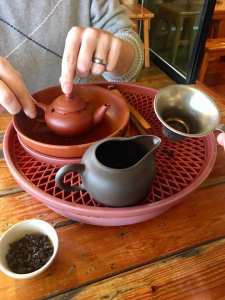
Tea expert Tuck

There are also a handful of cultural skills we’ve been able to adopt such as the precise methods of selecting, brewing, and sipping some of the finest teas in the world. With that, has also come the ability to drink and occasionally be splashed by scalding hot water. We’ve also perfected our chopsticks skills. I actually now prefer them to a knife and fork, which Tucker finds a little strange, but hey, I’m adaptable. ;) And finally, one more modern skill we’ve picked up: the art of online shopping. I was never really into Cyber Monday and often failed at buying products online in the US only to end up giving them away rather than attempting a return and redo. But here in China, we’ve become experts at scanning reviews, looking for the tiniest details in photos, measuring twice and buying once. Taobao has been our teacher, and I can’t wait to test out my new found talent on Amazon when we next visit the US.

So many useful skills and so many new perspectives and changes to our collective mindset. I have to thank China and my Chinese culture guides for so effortlessly guiding us through 20 months of one of the most demanding self-development courses I’ve ever been a part of. Just like when we left Poland, I was sure there were changes we’d undergone that would forever be a part of us, and so it is with China as well. Living in a new place changes you, and for that I’m thankful.

Fitting in
Here’s hoping we’ll “fit in” wherever we go next! ;)

Things We’ll Miss Most About China

I keep furtively glancing at my calendar, realizing that we’re leaving China in a mere 90 days, and I can’t help but feel a little sad. Just like our last few months in Poland, I keep finding myself saying things like “I wonder if this is the last time we’ll eat here” or “this will probably be our last Taobao order”, etc. It’s always hard to say goodbye, but to help make sure I never forget the details of living in China, I created this handy list of things we’ll miss most (one for each letter of the alphabet, of course):

a
Anda

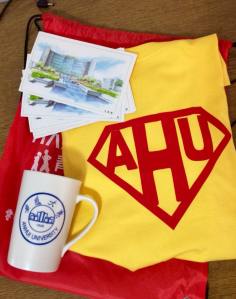
Anda: Anda is the nickname of Anhui University. It’s probably the first Chinese word I learned to say correctly (tones and all) because if not, we’d have ended up in a taxi to who-knows-where rather than on our way home. But much more than the word itself, I will miss what it represents: the students and teachers I’ve gotten to know over the last year and a half. My time in China would have been entirely different without their continued encouragement, support, and friendship, and I’m so thankful for the memories we’ve shared.

Bubble Tea: Although I’m not a bubble tea fanatic (like some people I know), I will definitely still miss this sweet concoction. Tea with milk, sugar, and tapioca pearls; served piping hot in winter or with a mound of ice in summer, what’s not to love?

c
Cha

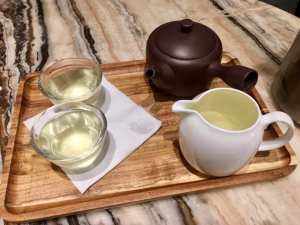
Cha: I never really considered myself a tea (“cha”) snob, but after having some of the best teas in the world readily available and often free at every restaurant and hotel, I might have to accept that moniker in the future. The variety and quality of tea in China really is above the rest, and it’s something I most certainly will miss!

Darunfa: Darunfa is our grocery store of choice, and although it stresses me out at times (especially on the weekends), there are so many things I’ll miss about it. The people keenly observing what Tucker and I are buying, the over-the-top decorations and displays, and especially the freshly made Tiantian balls that rarely made it all the way home, just to name a few.

Eleme: Having a pizza delivered is one thing, but Eleme delivered it all. What a great way to try out all the various Chinese dishes within a 5km radius, and all without having to get dressed!

f
Festivals

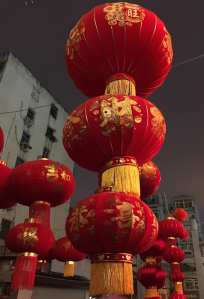
Festivals: After almost two years in China I can safely say the US just doesn’t have enough festivals. I’m going to miss all the talk about Chinese traditions and questions about whether or not I ate the respective holiday snacks: mooncakes, dumplings, zongzi, etc. I’ll also miss all the red and yellow.

Gaotie: Gaotie, or high-speed trains, are my absolute favorite way to travel, and I’ll miss them sorely. From the odd overhead announcements to the constant smell of instant noodles “cooking”, I will be thinking (and talking) about Chinese train travel for years to come.
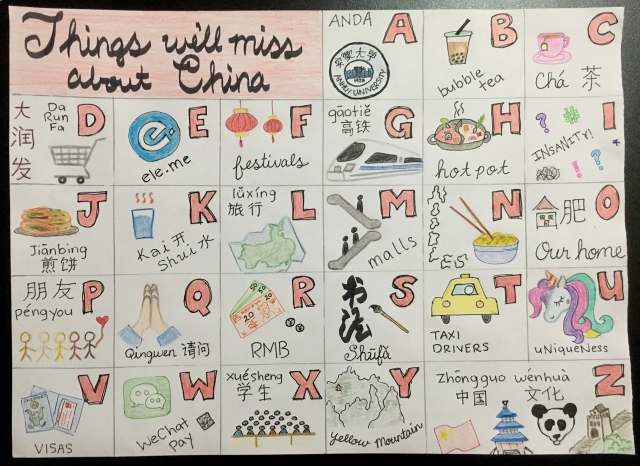
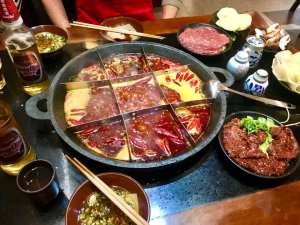
Hotpot: How could we not miss the experience that is going out to hotpot with friends? From deciding which ingredients are okay for Dani to try to testing just how spicy we can go, it doesn’t seem to get old. Although the food itself is delicious and something that will certainly be missed, the time with our friends is even harder to let go of.

i
Insanity

Insanity: China’s crazy! Well, it can be crazy – travel during Golden Week and you’ll see (really even Saturdays at the grocery store or a weekday in rush hour counts as insanity for me), but I’m going to miss it for sure. The atmosphere created when you’re surrounded by so many other people just doing their thing is really something I’ve learned to appreciate. “People mountain, people sea” will be missed, but I’m happy to have been a part of these tides at least for awhile.

Jianbing: Specific street foods are always something we crave, and for me the Chinese street food I’ll miss the most is Jianbing (a crepe-like folded sandwich thing that usually has a crispy cracker in the center). Somehow I always seem to eat them early in the morning when we’re on our way somewhere quick, so I associate them with big events and on-the-go eating, which are just two more things I’ll miss about our time spent in China.

Kaishui: Someone recently asked why I still don’t drink hot water (“kaishui”), and I responded with a loud “I do!” When I’m sick, it’s my new favorite thing to drink, and if that’s not enough, just let me say how much I’ll miss having it readily available for my tea. From classrooms and offices to trains and airports, I’m not sure I’ll be able to handle life without the possibility of a cup of tea wherever I am.

l
Luxing (Traveling)

Luxing: Speaking of trains and planes, I will miss traveling (“luxing”) around China immensely. What an incredibly beautiful (and vast) country this is. I’ll forever talk about the high speed trains, English signs and maps, and ultimately how easy China made it for me and Tucker to simply take it all in.

Malls: I never really understood the importance of malls until I moved abroad. In the US I never went to a mall – foreign brands? Foreign foods? Who needs them? Now I know: expats do! I also love that I now associate Starbucks, Pizzahut, and Walmart with malls! Thanks China!

n
Noodles

Noodles: How will I live without my daily bowl of Chinese noodles? Cheap, delicious, and widely available, I eat a lot of noodles here, and I will definitely miss my favorites when we go. Chongqing mian, dandan mian, niurou banmian; I’m going to have to work through my withdrawals carefully.

Our Home: Hefei is without a doubt my favorite city in China even though I know no local believes me when I say that. It will forever be one of our homes, and the Chinese city we know the best; therefore, it’s my favorite. Whenever we get back to Hefei after traveling we always say “home sweet Hefei”, and that’s what it is: a pretty sweet place to live.

Pengyou: This time leaving our pengyou (“friends”) behind is much harder than before because unlike most of the other places we’ve lived, where we can easily stay connected with the people we’ve met with Facebook or Instagram, China will be different. I will miss reading my friends daily WeChat moments, I will miss being able to share in the seasonal rituals like the uploading of weather events, and I will definitely miss the last minute plans to get together just for fun.

q
Qingwen (Excuse me, may I ask?)

Qingwen: Qingwen means “excuse me, may I ask…”, and it’s a phrase we have used A LOT during our time in China. Although I probably won’t miss the phrase itself, I will miss the ability to ask strangers for help no matter how small or obvious the solution is. We have been helped far and wide in China (we’ve even had a server cut up our food for us), and I will miss this particular brand of hospitality immensely.

RMB: Renmenbin, the people’s currency, has been good to us. It doesn’t take a lot of money to have a really nice life in China – going out with friends, traveling to nearby tourist locations, and so many of the fun parts of our China experience were so easy to do (and do often) because they were extremely affordable. I’ll definitely miss all the quick, cheap fun we’ve had.

s
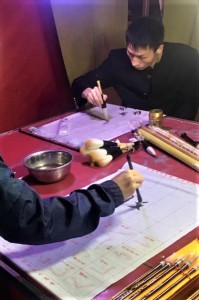
Shufa (calligraphy)

Shufa: Shufa is “calligraphy”, which I’ll miss seeing on every hotel and restaurant wall, but more than that, I’ll miss the characters themselves. There is nothing that warms a Linguist’s heart quite like an ancient and unique writing system. Literally everything around me is an interesting language puzzle to solve, and although Tucker might not miss the headaches that caused, I’ll certainly miss the challenge!

Taxi Drivers: Our “paid friends”, as someone once put it, will definitely be missed. I really enjoyed my chats with drivers all around the country. My Chinese isn’t great, but it’s easy to ask about someone’s kids and let them do all the talking. I also appreciate all those drivers who took their time to teach us new vocabulary or pronunciation details – we have used it all!

u
Uniqueness

Uniqueness: China’s weird! And I love it! I’ve never seen a place that mixes extremes in such a way, and I love how much I have learned from that. I’ll miss the uniqueness of China, and I’ll do my best to continue sharing how awesome being a little different can be.

Visas: I will certainly miss the small piece of paper that allows us to travel freely in and out of this country, and I truly hope to get another one soon. It’s always hard to leave, but it’s especially hard when you can’t necessarily come back whenever you want. Here’s to an upcoming paperwork session!

WeChat Pay: The ease, the security, the practicality, I will miss WeChat Pay more than I can even write right now. I have often said WeChat is the lifeblood of China, and I stand by that. It allowed us to be independent, yet even more connected to the people and culture. I love all the surprised looks we get when we ask, “Weixin keyi ma?”.

x
Xuesheng (students)

Xuesheng: My students (“xuesheng”)! The first group I turn to for cultural/logistical questions! The real reason I do what I do! I will miss spending every week laughing at the cultural faux pas I make, bonding over the non-temperature controlled classrooms, and working together to learn and build their language skills. My students are very fast to tell me they love me, and as culturally awkward as it is for me to return the favor, I do love them, and will miss our class (and non-class) times immensely.

Yellow Mountain: The image I will carry in my head of Anhui province is one of Huangshan (Yellow Mountain). It is arguably one of the most beautiful places in China, and is central to a lot of Eastern China’s history. I’ll miss the fact that it’s only a two hour train ride away, but at least I’ll have a beautiful visual to share when I talk about my people and home in Anhui.

z
Zhongguo Wenhua (Chinese culture)

Zhongguo Wenhua: “Chinese culture” is the only way I could sum up the rest of the things we’re going to miss. We’ve learned so much and have had an incredible time getting to know this country, some of its people, and their culture. From the small things like abundantly available hotel slippers to the large things like the value of community, I’m so thankful for the perspectives we’ve gained and the time we’ve spent in China.

中国,我们已经想念你了。

China, we miss you already.

IMG_6850